ICO and FAO Renew Commitment to Sustainable Coffee Sector

Source: International Coffee Organization (ICO)
Author: Qahwa World Editorial Team
Date: July 22, 2026

ICO and FAO Renew Commitment to Sustainable Coffee Sector

  • ICO and FAO signed a new Memorandum of Understanding reaffirming their commitment to coffee sector sustainability.
  • The renewed partnership builds on years of successful collaboration between the two organizations.
  • Key areas include sustainable production, climate resilience, market transparency, and inclusive value chains.
  • The agreement also covers innovation, digital technologies, and knowledge exchange.
  • A special focus will be on empowering coffee-growing communities and smallholder farmers.
  • Both organizations aim to build a more inclusive and resilient coffee sector for future generations.

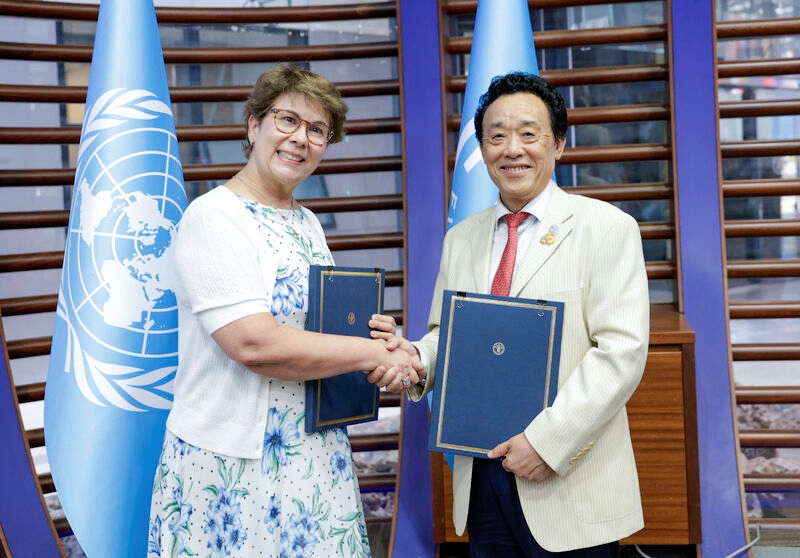
The International Coffee Organization and the Food and Agriculture Organization of the United Nations have renewed their commitment to a more sustainable coffee sector. Executive Director of ICO and FAO Director-General QU Dongyu signed a new Memorandum of Understanding today.

The agreement reaffirms their shared commitment to supporting the sustainable development of the global coffee sector. It builds on years of successful collaboration between the two organizations.

Key Areas of Cooperation

The renewed partnership will strengthen cooperation in several key areas. These include sustainable coffee production and sourcing. Climate resilience and adaptation are also priorities. Market transparency and access to information will be enhanced.

Other areas include inclusive and sustainable value chains. Innovation and digital technologies will play a crucial role. Knowledge exchange between stakeholders is another focus. The agreement also emphasizes empowering coffee-growing communities. Special attention will be given to smallholder and family farmers.

ICO-FAO Renewed Partnership – Key Cooperation Areas
Area Focus
Sustainable Production Sustainable coffee production and sourcing
Climate Action Climate resilience and adaptation
Market Transparency Market transparency and access to information
Value Chains Inclusive and sustainable value chains
Innovation Innovation, digital technologies and knowledge exchange
Community Empowerment Empowering coffee-growing communities, particularly smallholder farmers

The Importance of Coffee

Coffee supports the livelihoods of millions of people worldwide. It plays a vital role in advancing sustainable development. The sector faces numerous challenges. These include climate change, market volatility, and social inequality.

Through this renewed framework, ICO and FAO will continue working together. Their goal is to ensure the coffee sector becomes more inclusive and resilient. They aim to prepare it for the challenges of the future. The partnership will benefit producers, consumers, and future generations.

About ICO and FAO

The International Coffee Organization is the only intergovernmental organization dedicated to coffee. It enhances the sustainability of the coffee sector for both exporting and importing countries. The ICO provides official statistics and facilitates technical cooperation projects.

The Food and Agriculture Organization is a specialized agency of the United Nations. It leads international efforts to defeat hunger. FAO supports sustainable agriculture and rural development. Together, ICO and FAO bring complementary expertise to the coffee sector.

“A renewed commitment to a more sustainable and resilient coffee sector.”

— International Coffee Organization

Future Outlook

The renewed partnership signals a strong commitment to coffee sustainability. Both organizations look forward to building an even stronger partnership. The focus remains on practical outcomes for coffee producers and communities. Innovation and knowledge sharing will drive progress.

Together, ICO and FAO aim to create lasting positive change. The goal is a coffee sector that is inclusive, resilient, and prepared for future challenges. Producers, consumers, and future generations will all benefit from this collaboration.

Frequently Asked Questions

What did ICO and FAO announce?ICO and FAO signed a new Memorandum of Understanding renewing their commitment to a sustainable coffee sector.

What are the key areas of cooperation?Key areas include sustainable production, climate resilience, market transparency, inclusive value chains, innovation, and empowering smallholder farmers.

Why is this partnership important?The partnership combines the expertise of two major organizations to address challenges facing the global coffee sector.

How does coffee support sustainable development?Coffee supports the livelihoods of millions worldwide and plays a vital role in advancing sustainable development goals.

Who will benefit from this agreement?Coffee producers, consumers, and future generations will benefit from a more inclusive and resilient coffee sector.

What is the role of ICO?ICO is the only intergovernmental organization dedicated to coffee, providing statistics and facilitating technical cooperation.

UNIDO and European Coffee Federation Sign Joint Declaration to Strengthen Sustainable African Coffee Value Chains

Source: Press Release – UNIDO & European Coffee Federation |
Author: Qahwa World |
Date: June 25, 2026

UNIDO and European Coffee Federation Sign Joint Declaration to Strengthen Sustainable African Coffee Value Chains

Key Takeaways:

  • UNIDO and the European Coffee Federation signed a Joint Declaration in Brussels to promote sustainable transformation across African coffee value chains.
  • The Declaration establishes a cooperation framework focused on climate resilience for smallholder farmers, improved traceability at origin, and sustainable investment.
  • A Consultative Group will be established as a neutral, pre-competitive platform for knowledge exchange among traders, roasters, exporters, and development partners.
  • The signing followed a high-level roundtable with representatives from DG INTPA, the ICO, IACO, illycaffè, Sucafina, and Volcafe.
  • The ACT Coffee Programme will drive implementation through concrete activities in Ethiopia, Kenya, Tanzania, Uganda, and Malawi.
  • ECF Secretary General: “Sustainable coffee supply chains cannot be built by the private sector or by development agencies alone.”

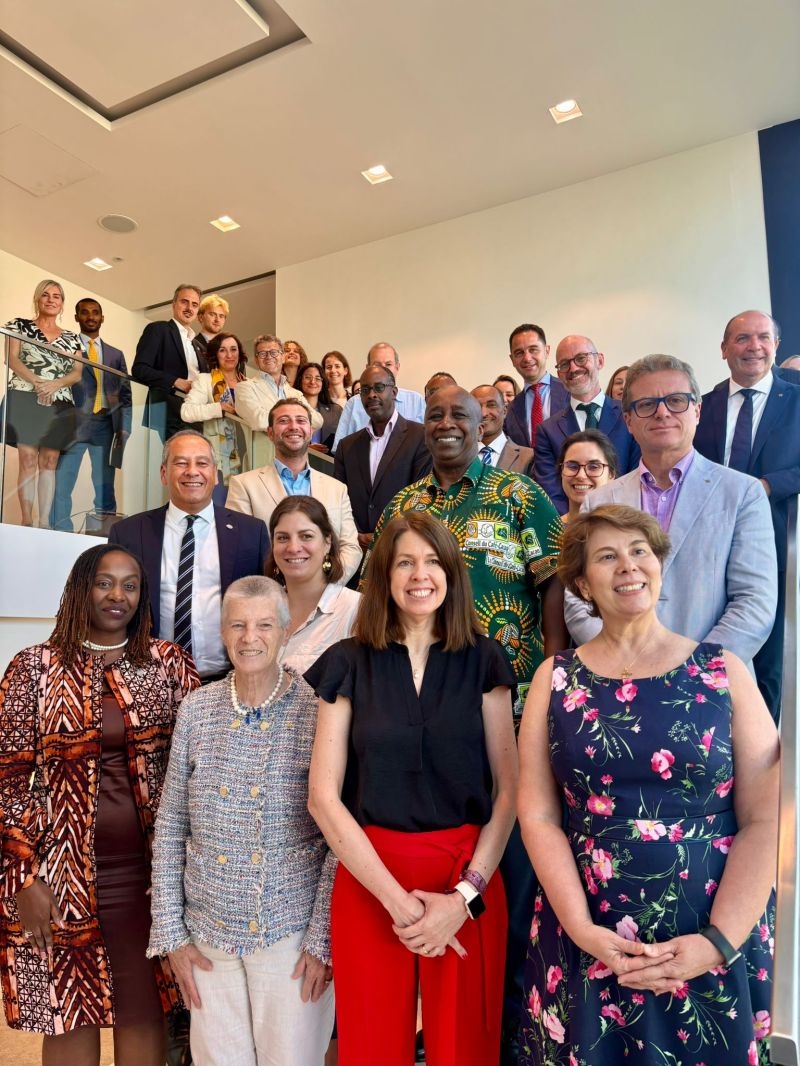
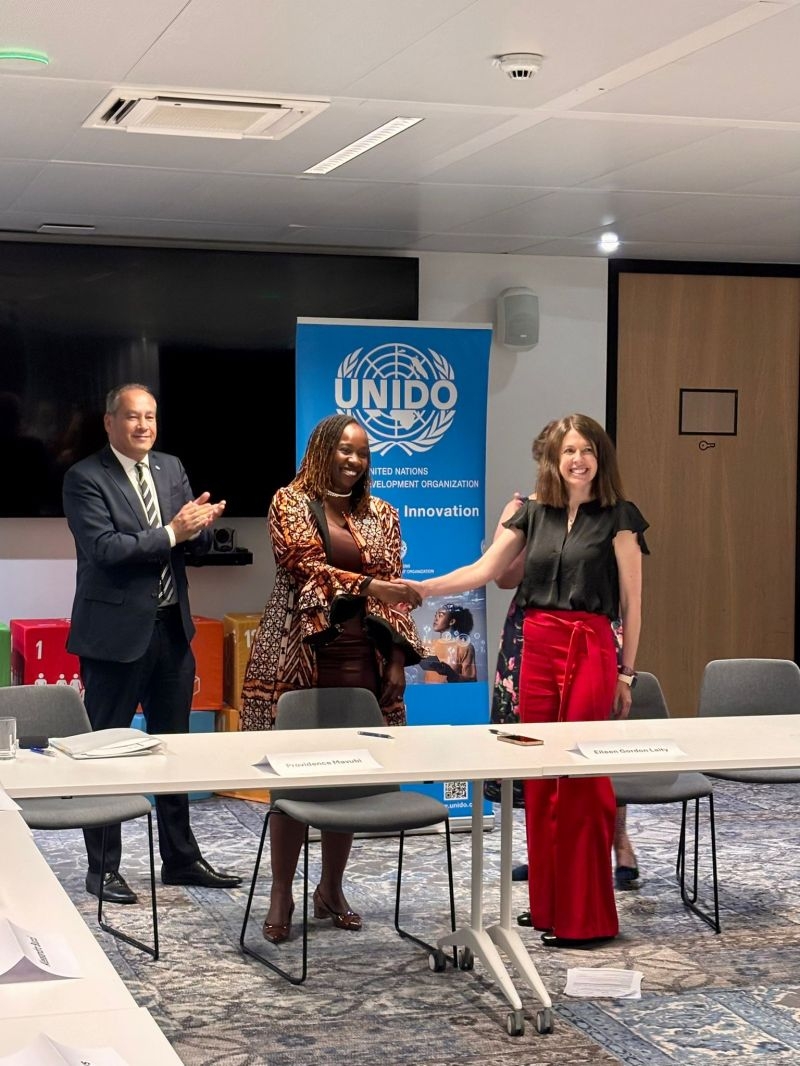
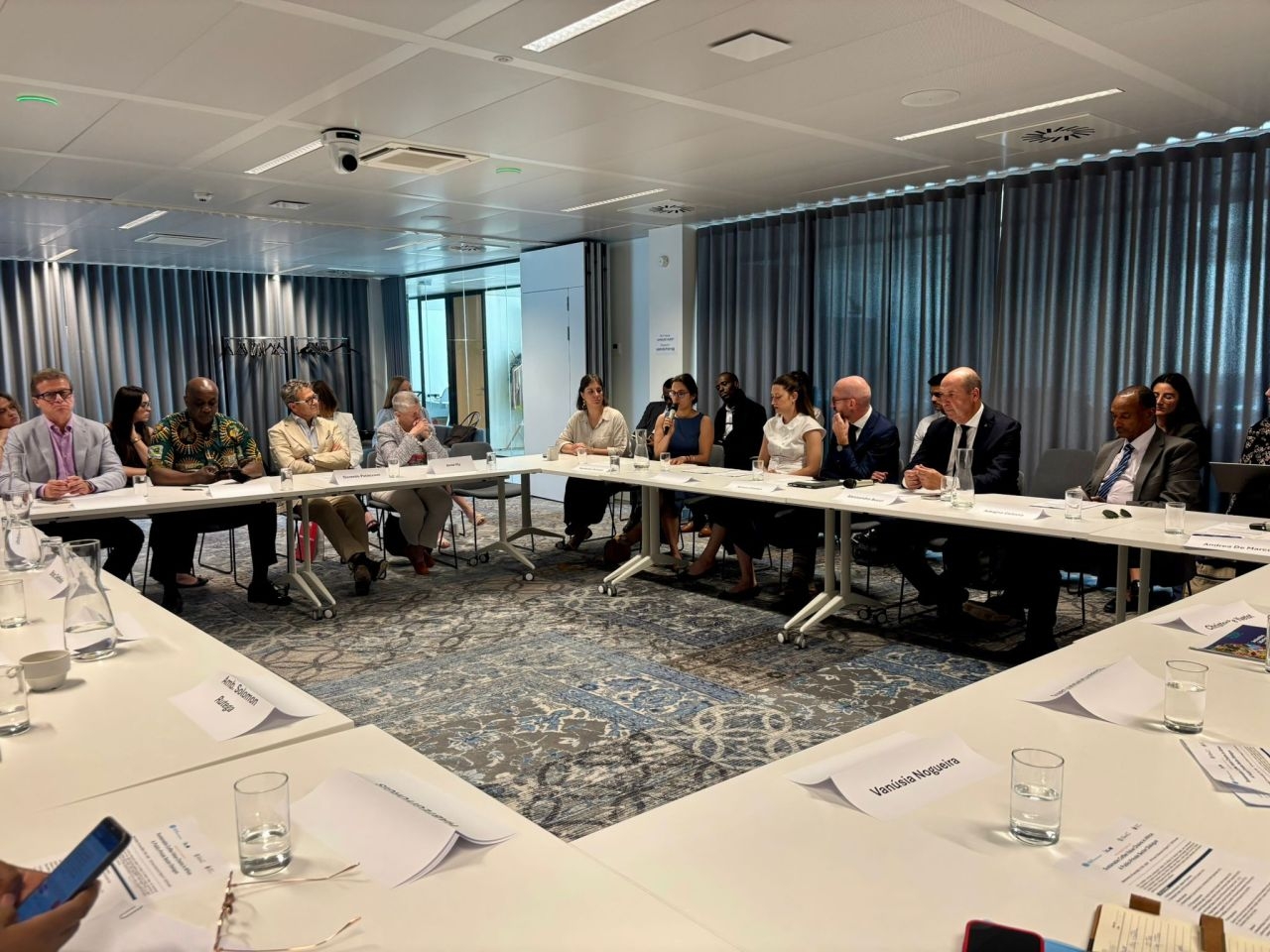
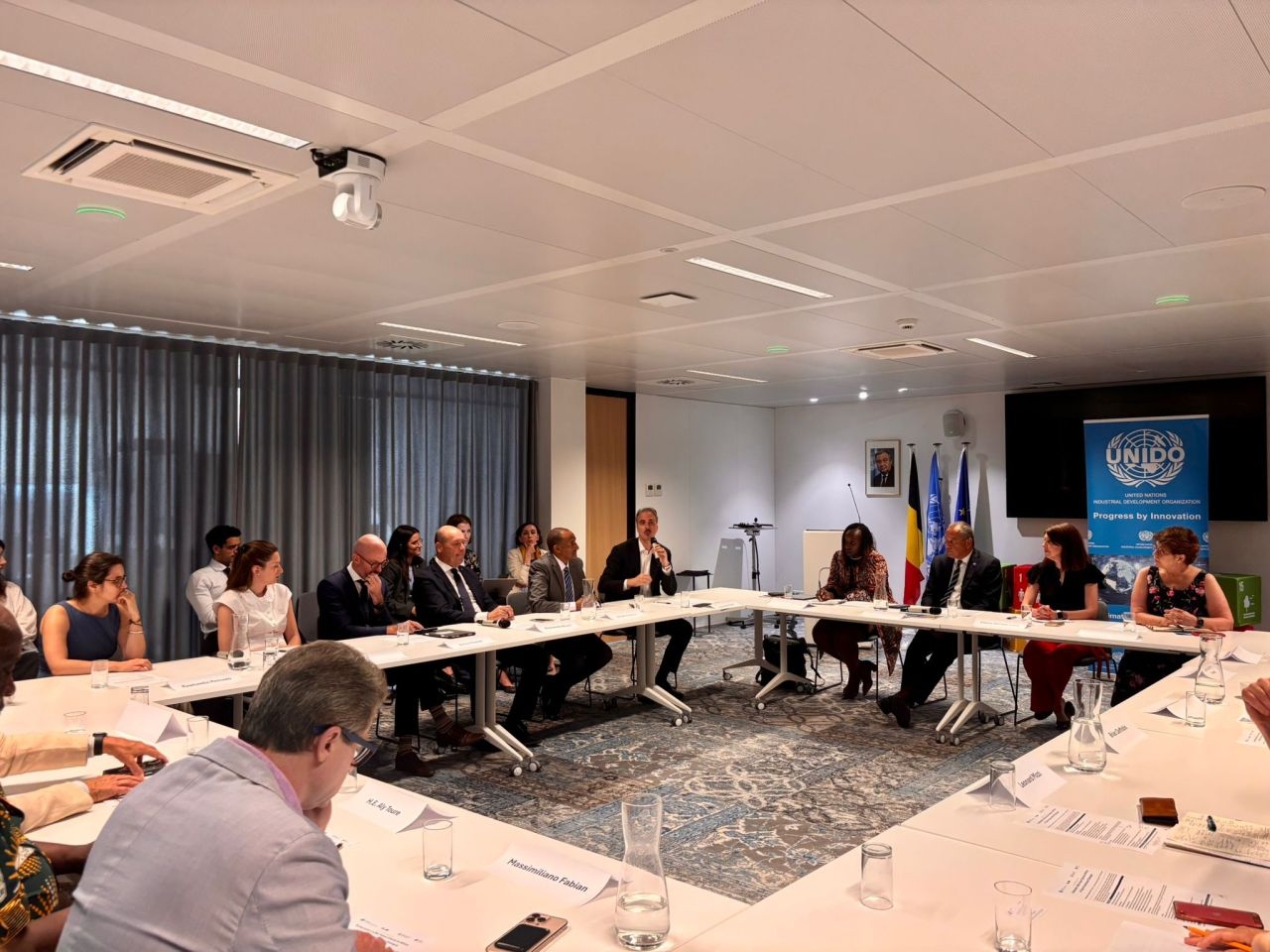
The United Nations Industrial Development Organization (UNIDO) and the European Coffee Federation (ECF) today signed a Joint Declaration at UN House Brussels, formalising a public-private commitment to promote sustainable transformation across African coffee value chains. The signing took place at the close of a high-level roundtable on “Sustainable Coffee Value Chains in Africa: A Public-Private Sector Dialogue,” convened with the participation of the European Commission’s DG INTPA, EU Member States, international organisations, and leading European coffee companies.

This Declaration comes at a critical time, as African coffee value chains face structural challenges ranging from climate change and weak infrastructure to limited access to finance, making public-private cooperation an urgent necessity to ensure the sector’s sustainability and improve the lives of millions of smallholder farmers across the continent.

A New Cooperation Framework Focused on Farmers and Sustainability

The Declaration establishes a structured cooperation framework between the two organisations, with a clear focus on supporting African coffee-producing countries, in particular smallholder farmers, to build climate resilience, improve traceability, and attract sustainable investment. A concrete outcome is the agreement to set up a Consultative Group serving as a pre-competitive, neutral platform for knowledge exchange among traders, roasters, exporters, and development partners.

Leaders: “Choosing Partnership Over Fragmentation”

Eileen Gordon Laity, Secretary General of the European Coffee Federation, said: “This Declaration formalises what the coffee sector has long recognised: sustainable coffee supply chains cannot be built by the private sector or by development agencies alone. Today, we reaffirm our shared commitment and take our collaboration one step further.”

Providence Mavubi, Managing Director, Directorate of SDG Innovation and Economic Transformation, Officer-ad-Interim, UNIDO, emphasised: “With this Joint Declaration, UNIDO and the European Coffee Federation are choosing partnership over fragmentation — a shared commitment to the producers, traders, roasters, policymakers and consumers connected in a single value chain, and to the millions of farming families whose futures depend on how we act together. This is precisely the spirit that drives the ACT Coffee Programme: turning global cooperation into concrete change on the ground for Africa’s coffee communities.”

Party Role
UNIDO United Nations Industrial Development Organization
European Coffee Federation (ECF) Representing Europe’s coffee industry
European Commission (DG INTPA) International partnerships
International Coffee Organization (ICO) Intergovernmental coffee body
Inter-African Coffee Organization (IACO) Representing African producing countries
Private Sector Companies illycaffè, Sucafina, Volcafe, Tchibo

The Consultative Group: A Neutral Platform for Knowledge Exchange

The Consultative Group agreed upon will serve as a neutral platform bringing together different stakeholders across the coffee value chain, with the aim of sharing knowledge and expertise and developing concrete technical proposals and investment projects. This platform will help guide private sector engagement in coffee policy processes at both African and global levels, enhancing coordination among different initiatives.

High-Level Roundtable with Industry Leaders

The roundtable that preceded the signing brought together private-sector leaders from illycaffè, Sucafina, Volcafe, and Tchibo, alongside senior officials from DG INTPA, the International Coffee Organization (ICO), the Inter-African Coffee Organization (IACO), the embassies of Italy and Ethiopia to the European Union, and the Ethiopian Coffee and Tea Authority (ECTA). This broad participation reflects the growing interest in enhancing the sustainability of African coffee value chains.

The ACT Coffee Programme: Driving Implementation

The ACT Coffee Programme (Advancing Climate Resilience and Transformation in African Coffee) will lead the implementation of the cooperation through targeted workshops and roundtables to develop concrete technical proposals and investment pipelines. The Programme, implemented by UNIDO and funded by the Italian Cooperation within the framework of Italy’s Mattei Plan and the EU Global Gateway Strategy, is currently active in Ethiopia, Kenya, Tanzania, Uganda, and Malawi, with the potential to expand to other African coffee-producing countries.

Why This Declaration Matters for the Coffee Sector

This Declaration represents a significant step forward in public-private cooperation in the coffee sector. By combining UNIDO’s expertise in industrial development with the ECF’s representation of the European coffee industry (which accounts for approximately 90% of all coffee imported and processed in the EU), this partnership can create tangible impact in the lives of millions of smallholder farmers in Africa while enhancing the sustainability of global supply chains.

Frequently Asked Questions About the UNIDO-ECF Joint Declaration

Q: What is the main purpose of the Joint Declaration?

A: To promote sustainable transformation across African coffee value chains through public-private cooperation, with a focus on smallholder farmers.

Q: What are the key areas of cooperation?

A: Building climate resilience, improving traceability, and attracting sustainable investment in African coffee-producing countries.

Q: What is the Consultative Group?

A: A neutral platform bringing together traders, roasters, exporters, and development partners for knowledge exchange and developing concrete technical and investment proposals.

Q: What is the ACT Coffee Programme?

A: A UNIDO-implemented programme funded by Italian Cooperation, aiming to strengthen climate resilience and transformation in African coffee, currently active in five African countries.

Q: Which countries are currently covered by the programme?

A: Ethiopia, Kenya, Tanzania, Uganda, and Malawi, with potential for expansion to other countries.

The signing of this Joint Declaration marks a pivotal moment in the development of Africa’s coffee sector. By bringing together political will, the expertise of international organisations, and the resources of the private sector, this partnership can help build more sustainable and equitable value chains, improving the lives of millions of farming families who form the backbone of Africa’s coffee industry.

Prepared and edited by: Qahwa World – Based on the press release from UNIDO and the European Coffee Federation, issued June 24, 2026.

All rights reserved. Republication with attribution permitted.

Publication date: June 25, 2026

Climate Pressures Affect All Coffee Producers, But Their Adaptation Capacities Vary Shockingly

Source: TechnoServe and ACT Coffee Programme (UNIDO) – June 2026 |
Author: Qahwa World |
Date: June 18, 2026

Climate Pressures Affect All Coffee Producers, But Their Adaptation Capacities Vary Shockingly

Key Takeaways:

  • A new report from TechnoServe and the ACT Coffee Programme reveals that all ten leading coffee-producing countries face increasing climate stress, but their ability to adapt varies significantly.
  • Latin American countries and Indonesia are the most vulnerable to climate risks, while East African countries are less exposed but suffer from greater economic fragility.
  • The income gap is striking: Ugandan coffee farmers earn $610 per hectare, while their counterparts in Vietnam earn $4,885.
  • The report calls for strategic investments of $560 million annually over seven years, which could generate $2.1 billion in additional farm income and $2.6 billion in exports per year.
  • Thirteen global coffee companies have endorsed the report’s findings, signaling growing industry awareness of the need for climate action.

A new report from TechnoServe, in partnership with the ACT Coffee Programme of the United Nations Industrial Development Organization (UNIDO), reveals that ten of the world’s leading coffee-producing countries face escalating climate pressures. However, the most striking finding is that these countries’ capacities to adapt to these pressures vary dramatically, creating deep economic gaps between coffee farmers around the world.

The report, titled “Benchmarking Coffee Production and Climate Risk,” builds on TechnoServe’s 2025 Regenerative Coffee Investment Case and provides a comprehensive view of how climate change is affecting the sector and what can be done to strengthen its resilience.

Methodology: Three Dimensions of Risk and Two Time Horizons

The report draws on global climate data, international risk indexes, and field data from TechnoServe programs. It evaluates the ten countries across three key dimensions: climate risk exposure (the intensity of changes in temperature and rainfall), climate sensitivity (the degree to which the production system is affected by these changes), and adaptive capacity (the readiness of farmers, governments, and the private sector to invest in adaptation solutions). The analysis was conducted under a moderate climate scenario (SSP2-4.5) and examined two time horizons: the near term (2020–2040) and the long term (2040–2060).

Country Differences: Latin America and Indonesia Most Vulnerable, East Africa Most Fragile

The results reveal significant variation in farmers’ ability to face climate challenges and the level of support available to them. Brazil, Peru, and Indonesia showed a high degree of risk exposure with relatively stronger adaptive capacity. Vietnam also scored high on adaptive capacity but was classified in the intermediate vulnerability category.

East African countries such as Ethiopia and Uganda showed lower overall risk exposure but weaker adaptive capacity, with smaller farms, lower yields, and limited support systems. The report noted that smallholder coffee revenue in Uganda is estimated at about $610 per hectare, compared to $4,885 in Vietnam and $4,731 in Brazil. This disparity reflects deep economic fragility in East Africa, despite relatively lower climate exposure.

Country Risk Exposure Sensitivity Adaptive Capacity Farm Income ($/ha)
Brazil 1.52 3.1 2.6 4,731
Indonesia 2.00 2.4 2.6
Peru 1.90 2.8 2.7
Vietnam 1.69 2.6 2.7 4,885
Ethiopia 1.28 2.1 2.1
Uganda 1.07 2.1 2.1 610

Source: TechnoServe report – Benchmarking Coffee Production and Climate Risk (2026). Scores range from 1 to 4 (1=Low, 4=High).

Types of Risks: Heat Stress, Heavy Rainfall, and Drought

The report identified Indonesia, Peru, Vietnam, and Brazil as facing the most acute challenges from rising temperatures exceeding suitable ranges for coffee cultivation. In these countries, lower elevation further amplifies the impact of heat stress and temperature variability. Indonesia, Peru, and Colombia face the highest risk of damage from excessive rainfall, which can lead to soil erosion, waterlogging, and the spread of pests and diseases.

In contrast, Brazil faces the greatest risk of thermal-water stress, where the combined effect of high temperatures and low rainfall increases drought risk. Specific regions in Kenya and Uganda are also expected to experience rainfall deficits.

Recommendations: Investing in Farms and Infrastructure Is the Solution

One of the report’s central conclusions is that improving farm profitability is among the most effective ways to strengthen resilience against climate risks. The report calls for directing capital across three interconnected categories:

  • Farmer training and technical assistance: To disseminate regenerative agriculture practices that address local thermal and water risks.
  • Farmer capital and financial products: To provide affordable financing for farmers to cover transition costs and bridge income gaps during renovation years.
  • Systemic and infrastructure gaps: Including disaster preparedness, research and development, market systems, and policy reforms.

The report estimates that an annual investment of approximately $560 million over seven years in regenerative agriculture could generate $2.1 billion in additional farm income and $2.6 billion in exports per year across several key coffee-producing countries.

Thirteen Coffee Companies Endorse Findings, But Funding Challenges Loom

According to TechnoServe, 13 coffee companies have endorsed the report’s findings, reflecting what the organization described as growing industry-wide recognition of the need for action. However, the report does not specify whether these companies provided financial support for the study, nor does it detail any climate-adaptation investments they may have made on behalf of coffee farmers.

The call for coordinated investment comes at a challenging time for agricultural development globally. Recent reductions in foreign-aid funding, including cuts affecting international development programs, have contributed to a widening funding gap across the coffee sector.

Experts: The Report Reflects a Daily Reality for Coffee Farmers

Paul Stewart, TechnoServe’s Global Coffee Director and one of the report’s lead authors, said: “The report reflects what TechnoServe teams around the world see every day. Climate change is already affecting the productivity and livelihoods of smallholder coffee farmers, yet many lack the tools they need to respond.”

Frequently Asked Questions About the Climate Risk Report

Q: Which ten countries are covered in the report?

A: Brazil, Indonesia, Peru, Vietnam, Kenya, Honduras, Colombia, Tanzania, Ethiopia, and Uganda.

Q: What are the three dimensions of risk assessment?

A: Climate risk exposure, climate sensitivity, and adaptive capacity.

Q: Why are East African countries more fragile despite lower risk exposure?

A: Due to smaller farm sizes, lower yields, weaker support systems, and lower income per hectare, limiting farmers’ ability to invest in adaptation.

Q: What is the estimated investment needed according to the report?

A: Approximately $560 million annually over seven years.

The TechnoServe report confirms that climate challenges facing the coffee sector are not uniform, and that smart, data-driven investments can make a significant difference in the lives of millions of farmers and the sustainability of the global sector.

Prepared and edited by: Qahwa World – Based on the TechnoServe report “Benchmarking Coffee Production and Climate Risk” (June 2026), and the UNIDO ACT Coffee Programme.

All rights reserved. Republication with attribution permitted.

Publication date: June 18, 2026

John Seroney: The Real Cost is Farm Mapping and Digital Registration

Kenya – Ali Azakary | Qahwa World

On May 4, the European Commission published its “simplification” package for the Deforestation Regulation. Some saw it as genuine relief. Others called it cosmetic.

Qahwa World continues its interview series with industry experts. After Dr. Steffen Schwarz from Germany, Kim Thompson from Dubai, and Burke Campbell from Honduras, our fourth guest is John Seroney.

John is a Kenyan coffee entrepreneur, global trade advocate, and sustainability leader. As Founder and CEO of Sumseron Coffee, he has built a purpose-driven specialty coffee enterprise connecting smallholder farmers and cooperatives in Kenya directly to international markets while championing sustainable and inclusive coffee trade. Under his leadership, Sumseron Coffee has expanded across Africa, Europe, Asia, the Middle East, and North America. John is internationally recognized for his voice on global coffee policy, sustainability, and traceability, and has worked closely with farmers, cooperatives, women, and youth in agriculture to create sustainable economic empowerment at origin. His vision is to build globally respected African coffee brands that empower farmers, transform communities, and create sustainable impact from farm to cup.

Here is what he said.

  • What is your overall take on the EU simplification decision? Does it truly reduce the burden, or is it mostly cosmetic?

John Seroney: Overall, the EU simplification package is a positive step, but I would say it only partially reduces the burden. The administrative clarification helps, especially for operators already investing in traceability systems, but the core compliance requirements remain very demanding for producing countries.

The real challenge is not paperwork alone. It is the cost of farm mapping, farmer registration, digital traceability, satellite verification, and continuous monitoring across fragmented smallholder systems. For many African coffee origins, implementation is still expensive and technically challenging.

  • Who benefits the most from this simplification in your opinion?

John Seroney: In my opinion, the biggest beneficiaries are larger companies and well-organized supply chains that already have compliance infrastructure in place. Multinational traders and larger exporters can adapt faster because they have resources, technology partners, and direct compliance teams.

Small producers may benefit indirectly in the long term if they are integrated into organized value chains, but many still face financial and technical barriers. Low-risk countries also gain some operational advantage, although maintaining geolocation requirements means compliance pressure still exists.

  • Soluble coffee is now fully covered, after being excluded before. How do you see this affecting coffee traders and roasters worldwide?

John Seroney: The inclusion of soluble coffee is very significant. It closes an important loophole and means that all parts of the coffee industry will now be expected to demonstrate traceability and deforestation-free sourcing.

This will increase pressure on traders, roasters, and soluble manufacturers to strengthen supply chain transparency. It could also reshape sourcing behavior, with buyers prioritizing origins and exporters that can provide verified traceability data consistently.

  • Is the global coffee supply chain truly ready for the December 30, 2026 deadline? If not, which part of the industry will take the biggest hit?

John Seroney: Honestly, I do not believe the global coffee supply chain is fully ready yet, especially among smallholder-driven origins in Africa and parts of Asia.

While some exporters and cooperatives have made strong progress, many farmers still lack proper digital records, polygon mapping, or awareness of EUDR requirements. The biggest impact will likely fall on smallholder farmers, small exporters, and smaller cooperatives that may struggle with compliance costs and technical capacity.

Without financial support, training, and practical implementation partnerships from buyers and governments, there is a real risk that smaller producers could be excluded from the European market despite producing high-quality coffee sustainably for generations.

At the same time, EUDR can become an opportunity if implemented collaboratively. It has the potential to strengthen transparency, improve farm-level data systems, and reward sustainable coffee production, but only if origin countries are treated as true partners in the transition process.

Qahwa World – Episode Five tomorrow with Michael Trung from Vietnam.

Read the related stories:

Burke Campbell: “European Simplification is Cosmetic. The Burden Exported to Honduras Has Not Changed”

Kim Thompson: Sustainability Rules Must Not Punish the Producers Who Need Market Access Most

Dr. Steffen Schwarz: EUDR Simplification Remains an Administrative Monster

EUDR Simplification: Six Voices from the Coffee Industry Speak

European Commission Simplifies Deforestation Regulation.. What’s New?


Burke Campbell – “European Simplification is Cosmetic. The Burden Exported to Honduras Has Not Changed”

Dubai – Ali Azakary | Qahwa World

On May 4, the European Commission published its “simplification” package for the Deforestation Regulation. Some saw it as genuine relief. Others called it cosmetic.

Qahwa World continues its interview series with industry experts. After Dr. Steffen Schwarz from Germany and Kim Thompson from Dubai, our third guest is Burke Campbell.

Burke is a Canadian of Cree-Métis heritage who left the Alberta oil sands to work in coffee farms in Honduras. His journey connects resource extraction, economic sovereignty, and sustainable development. From his personal awakening to the parallel between Indigenous communities in Canada and coffee farmers in Honduras, through his pioneering work connecting Yemen’s ancient coffee heritage to modern markets, Burke’s story is one of resilience, vision, and an uncompromising pursuit of justice.

Here is what he said.

  • What is your overall take on the EU simplification decision? Does it truly reduce the burden, or is it mostly cosmetic?

Burke Campbell: Cosmetic. The real problem is who pays the documentation tax, and the May package left that architecture in place.

The Commission missed its own statutory April 30 deadline by four days, then released four instruments on May 4. They did not reopen the regulation. They cleaned up the paperwork around it.

The 75 percent compliance cost reduction announced by Commissioner Roswall was largely legislated on December 18, 2025, when the Council and Parliament shifted the due diligence filing burden away from EU traders and onto whoever first places the product on the market. The May package recycles that and adds a few line items. Soluble coffee in. Leather out.

Read the line the Commission used about its own simplified regime. The Commission itself admits that the SME and primary operator route covers close to one hundred percent of farmers and foresters in the EU. Brussels has functionally exempted itself from a regulation it is still asking a Honduran cooperative, an Ethiopian farmer, and a Ugandan smallholder to comply with. They simplified the part of the regulation that touched them. The rest stands.

I write this from Copán Ruinas, Honduras. An Alliance Bioversity and CIAT estimate places around 85 percent of producers in this country in the at-risk category for EU market exclusion, and more than half of our coffee leaves through European ports. The May package did nothing for them. Brussels reduced the burden it was carrying. The burden Brussels exported is unchanged.

  • Who benefits the most from this simplification?

Burke Campbell: Big companies. Not small producers, and not low-risk exporting countries.

Small producers do not benefit. Outside the EU they do not get the simplified declaration relief that European primary operators receive. They build the polygons themselves and pay every line of the cost.

Low-risk exporting countries get a label, not relief. A Vietnamese exporter still owes geolocation. A Colombian cooperative still owes geolocation. The “low-risk” classification means simplified due diligence. You skip the formal risk assessment step. The polygon is still required. The compliance vendor still gets paid. The country gets a sticker on the file.

Look at where the money actually lands. All of it north.

The compliance technology sector. The Mannheim platform that Goldman Sachs bought into for 120 million dollars in 2024 runs the books for more than 1,300 customers. The two billion euros in residual annual compliance cost the Commission says is left in the system after simplification is structurally allocated to this sector. Goldman bought in early so it could collect.

The big trader-roasters. They have already absorbed the cost. The downstream operator architecture means smaller importers behind them just collect reference numbers, not run their own due diligence. The supply chain runs through the platforms the big traders own. The moat is real.

The European farmer and forester. Through the small and micro primary operator route they receive a one-time simplified declaration, a postal address instead of a polygon, and in many cases a national database the member state authority will pre-fill for them.

Who pays. Smallholder cooperatives in Honduras, Ethiopia, Uganda, Colombia, Indonesia, Peru. Mid-size specialty importers in Europe without proprietary platforms. The two billion does not stay in the countries that grew the coffee. It moves north.

  • Soluble coffee is now fully covered, after being excluded before. How do you see this affecting coffee traders and roasters worldwide?

Burke Campbell: The loophole was real. If you processed non-compliant green coffee outside the EU and brought the finished instant in as an extract, you had not technically placed deforestation-linked coffee on the market. Closing it on the law’s own terms was correct.

For green coffee traders the change is administrative. The major traders already polygon-trace the green beans they handle. They add a line to their books for soluble extracts and concentrates. The systems exist. The marginal cost is low. They will absorb it.

For roasters the picture splits. A specialty roaster importing green coffee and roasting it in Hamburg or Milan was never in the soluble category. Their position is unchanged. The companies whose position changes are the integrated roaster-processors. Their soluble lines now sit inside the same chain of custody architecture as their green portfolio. Mass balance accounting gets harder under EUDR rules. Each component has to be deforestation-free and individually polygon-mapped. You cannot blend a non-compliant lot into a compliant one and call the result compliant. The whole batch has to be clean.

For origin processors the change is structural. Vietnam exports about 3.3 million bags of soluble and roasted in green bean equivalent, with 60 percent bound for Europe. Nestlé is putting another 75 million dollars into its Dong Nai plant. Trung Nguyen 75 million into Đắk Lắk. Highlands Coffee 20 million into Bà Rịa-Vũng Tàu. Food Empire 80 million into a freeze-dry facility in Bình Định. Those facilities will absorb plot-level traceability cost on top of green bean traceability cost. The shipper exporting unprocessed green to Hamburg now carries a lighter compliance load than the country that processes its own beans before they leave.

That is the deeper point. The regulation now taxes origin processing. Vertical integration. Value retained in producing countries. The pathway out of green bean dependence is processing at origin. The Commission has just made that pathway more expensive than green bean export.

  • Is the global coffee supply chain truly ready for the December 30, 2026 deadline? If not, which part of the industry will take the biggest hit?

Burke Campbell: No.

One thing first about the premise. The “except small producers” exemption you mentioned is an EU internal rule. A primary operator inside an EU member state, classified small or micro, can submit a one-time declaration through a cooperative, use a postal address instead of a polygon, and in many cases have the member state authority pre-fill the document from a national database that already exists. None of this is on offer to a small producer in Vietnam, India, Colombia, Honduras, Ethiopia, or anywhere else outside the Union. The exemption is for European small producers. Foreign smallholders in low-risk countries still build the polygons themselves and pay every line of the cost.

That single clause is the asymmetry.

The deadline is locked. December 30, 2026 for large and medium operators. June 30, 2027 for most micro and small operators outside timber. The Commission’s own information system was on limited operability from February 16 until mid-April because it could not handle the submissions it was designed to receive. It reopens in stages from June. Six months of integration time for several hundred thousand operators globally.

The polygon is the regulation’s central instrument. Once you have drawn it, your land is recorded in the EU’s traceability system, attached to every shipment that originates there.

Biggest hits, in order. African and Central American smallholder cooperatives without national traceability infrastructure. Ethiopia has approximately four million smallholders, mostly half-hectare plots, mostly shade grown, mostly unmapped. Honduras has, by Alliance Bioversity and CIAT’s estimate, around 85 percent of producers in the at-risk category, and more than half of its coffee export revenue going to Europe. Uganda has spent $9.15 million on its national register and will probably make the deadline. Then mid-size European specialty importers without proprietary platforms. Then Vietnamese and Indian instant processors, newly in scope after the soluble inclusion.

Effectively immune. The major traders with proprietary infrastructure. Nestlé, JDE Peet’s, NKG, Volcafe, Sucafina, ECOM, Olam, Louis Dreyfus, Touton, Lavazza, illycaffè. The Italian leather lobby that got leather pulled from the list. The carve-outs go to lobbies that can write back. The architecture stays where there is no lobby on the other side.

The supply chain is not ready. The architecture decides who gets to be ready.

They built a green wall. The farmers it claims to protect have been on the other side of green walls for 400 years. The trick is not to climb over. The trick is to stop accepting that the wall is the only door.

Qahwa World – Episode Four tomorrow with John Seroney from Kenya.

Read the related stories:

Kim Thompson: Sustainability Rules Must Not Punish the Producers Who Need Market Access Most

Dr. Steffen Schwarz: EUDR Simplification Remains an Administrative Monster

EUDR Simplification: Six Voices from the Coffee Industry Speak

European Commission Simplifies Deforestation Regulation.. What’s New?


Kim Thompson: Sustainability Rules Must Not Punish the Producers Who Need Market Access Most

Dubai – Ali Azakary | Qahwa World

On May 4, the European Commission published its “simplification” package for the Deforestation Regulation. Some saw it as genuine relief. Others called it cosmetic.

Qahwa World continues its interview series with industry experts. After Dr. Steffen Schwarz from Germany, our second guest is Kim Thompson, Co-Founder of RAW Coffee Company in Dubai. Kim is one of the pioneers of specialty coffee in Dubai, with real contributions to supporting smallholder farmers, especially in several producing and low-income countries.

Here is what she said.

  • What is your overall take on the EU simplification decision? Does it truly reduce the burden, or is it mostly cosmetic?

Kim Thompson: Our overall take is that the simplification helps, but only around the edges. It reduces some paperwork and gives smaller primary operators a more realistic route in, but it does not remove the biggest pressure point: traceability back to farm level.

The EU says the package could reduce annual compliance costs by around 75 percent, but geolocation, legality checks, and responsibility still sit heavily in the supply chain.

Our view is simple: the intention is right, but implementation has to be practical, fair, and producer focused. Traceability is important. Protecting forests is important. But if compliance becomes a paperwork race won only by the biggest players, then the coffee industry has not solved the problem. It has just moved the burden further down the chain.

  • Who benefits the most from this simplification in your opinion?

Kim Thompson: The biggest winners are not necessarily the smaller farmers and cooperative groups who are our direct trade partners. The real advantage goes to larger organizations and companies, and to origins that already have digital traceability systems, mapped farms, organized exporters, and strong documentation.

Low-risk countries get some relief on risk assessment, but they still need geolocation data, so it is not a free pass.

  • Soluble coffee is now fully covered, after being excluded before. How do you see this affecting coffee traders and roasters worldwide?

Kim Thompson: Logically, it makes sense. If green coffee is covered, soluble coffee should not sit outside the system. Otherwise, the industry risks moving deforestation exposure into a different product category rather than solving it.

But this will affect traders, instant coffee manufacturers, private label suppliers, and roasters using soluble ingredients, because they now need the same confidence in origin data and documentation.

  • Is the global coffee supply chain truly ready for the December 30, 2026 deadline? If not, which part of the industry will take the biggest hit?

Kim Thompson: Is the global coffee supply chain ready by December 30, 2026? Honestly, no. Not even close.

Larger companies are much closer. The vulnerable part is the smallholder end: farmers, collectors, cooperatives, and exporters in fragmented supply chains where coffee changes hands many times before export.

These people may be producing responsibly, but if they cannot prove it in the format the EU wants, they risk being excluded. That is the real concern for us: sustainability rules must not end up punishing the very producers who need market access the most.

Qahwa World – Episode Three tomorrow with Burke Campbell from Honduras.

Read the related stories:

Dr. Steffen Schwarz: EUDR Simplification Remains an Administrative Monster

EUDR Simplification: Six Voices from the Coffee Industry Speak

European Commission Simplifies Deforestation Regulation.. What’s New?

Iran War Drives Up Coffee Production Costs and Threatens Future Supply

Dubai – Qahwa World

The ongoing war involving Iran is increasing production costs in the global coffee sector, mainly due to rising fertilizer prices. These higher costs are raising concern among producers, analysts, and financial institutions about future supply and added pressure on smallholder farmers.

Recent industry assessments indicate that the current harvest cycle is mostly secure because key inputs have already been applied. However, the bigger risk is for the 2026/27 season if disruptions continue.

The situation is closely linked to instability in energy and fertilizer markets. The conflict has disrupted trade routes such as the Strait of Hormuz, an important passage for oil, gas, and agricultural inputs. This has contributed to higher global prices for fuel and fertilizers, both essential for coffee farming.

Fertilizer markets are under strain. Prices for key inputs like urea have increased significantly since the conflict began. Because fertilizer production depends heavily on natural gas, rising energy costs are making the situation worse.

For coffee farmers, especially smallholders, these increases are serious. Fertilizer represents a large part of production costs, and many farmers do not have strong financial protection against price swings. This directly affects their profitability.

In major coffee-producing countries, many growers rely on imported inputs, which makes them vulnerable to global supply shocks. At the same time, they are also dealing with currency changes, climate pressures, and labor shortages.

If the conflict continues to disrupt supply chains and energy markets, coffee production costs may keep rising, which could affect future harvest levels and global coffee supply.

Global Coffee Leaders Launch First-Ever Deforestation Mapping Initiative

Amsterdam – Qahwa World

Leading global coffee companies have launched a landmark industry initiative aimed at transforming how deforestation risks are identified and managed across coffee-producing regions worldwide, through a unified satellite-based mapping system.

The Coffee Canopy Partnership brings together major players in the global coffee value chain, including JDE Peet’s, Louis Dreyfus Company, Sucden, Neumann Kaffee Gruppe, Touton, Sucafina, and Tchibo, in an unprecedented pre-competitive collaboration designed to create the first comprehensive and openly accessible global map of coffee production landscapes.

Developed in partnership with Airbus, the initiative will use very high-resolution satellite imagery combined with artificial intelligence and ground verification to map coffee farms, detect forest loss, and distinguish between natural forests and agroforestry systems such as shade-grown coffee, which have historically been misclassified in land-use datasets.

The program is designed to address one of the sector’s most persistent structural challenges: the lack of reliable, harmonized geospatial data on coffee cultivation. This data gap has contributed to inconsistencies in sustainability monitoring and, in some cases, the unintended exclusion of smallholder farmers from regulated markets.

The initiative launches with a large-scale pilot across East Africa, covering Ethiopia, Tanzania, Kenya, Uganda, Burundi, and Rwanda. The pilot will map approximately 1.2 million square kilometers of coffee-growing landscapes and serve as the foundation for a global rollout planned for 2027.

At the core of the project is the creation of two key geospatial datasets. The first will reconstruct a baseline of coffee cultivation for 2020–2021, correcting historical misclassifications of agricultural land as forest. The second will provide an updated view of coffee production landscapes for 2024–2025, enabling the detection of land-use change and potential deforestation over time.

The initiative comes as the industry prepares for stricter regulatory enforcement under the European Union Deforestation Regulation (EUDR), which restricts market access for commodities linked to deforestation after December 2020. Industry participants warn that without accurate mapping, agroforestry-based coffee systems risk being incorrectly classified, potentially affecting millions of smallholder farmers.

Speaking at the launch, Laurent Sagarra of JDE Peet’s said the initiative represents a shift away from fragmented sustainability efforts toward a shared, landscape-level approach. He emphasized that the goal is not to create another certification scheme, but to build a collaborative infrastructure capable of reducing deforestation risk across the entire sector.

Airbus Defence and Space highlighted the role of satellite technology and artificial intelligence in enabling this transformation, noting that high-resolution Earth observation data can provide the transparency required to strengthen both environmental protection and supply chain resilience.

Supporting institutions, including the UK Foreign, Commonwealth & Development Office and the UN Food and Agriculture Organization, have endorsed the pilot phase. FAO representatives noted that the initiative aligns with broader efforts to promote transparent and inclusive data systems for sustainable commodity production.

Industry participants described the project as a shift toward shared infrastructure for sustainability, arguing that collective data systems can reduce duplication, improve consistency, and enable more effective decision-making across governments, producers, and traders.

If successfully scaled, the Coffee Canopy Partnership is expected to become a global reference system for monitoring coffee-related land use change, supporting deforestation-free supply chains while protecting the livelihoods of smallholder farmers and strengthening long-term climate resilience in coffee-producing regions.


Navigating Uganda’s 2026 Arabica Season


Dubai – Qahwa World

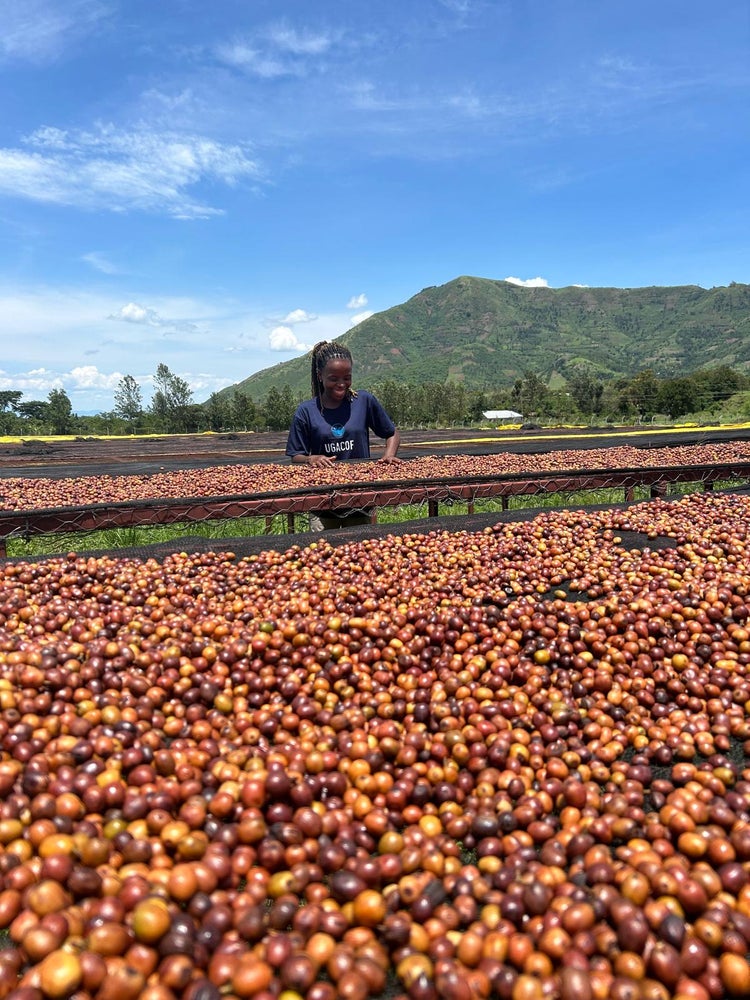
As Uganda’s Arabica harvest unfolds, the 2026 season is shaping up as one of contrasts. In Western Uganda, late rainfall, shifting weather patterns, and market adjustments have pushed national production down by an estimated 100,000 bags compared to last year. On the ground, many local traders have home-processed nearly 20 percent of their crop, reflecting both necessity and resilience.

Ugacof’s teams are ensuring quality remains uncompromised. At every Coffee Washing Station (CWS), cherries are fully floated to select the best beans. Harvesting is ongoing through late April, with the second harvest expected between late August and mid-November. Early flowering observed in several regions hints that a stronger second crop could be on the horizon.

Supporting Farmers Beyond the Crop

Smallholder farmers often manage plots of around 300 trees, where limited access to basic tools, aging coffee trees, and insufficient seedlings can hinder productivity.

Ugacof’s Beyond Flagship program has stepped in with targeted support. The Tools for Prosperity project equips farmers delivering to Katerera CWS with essential tools, including a hoe, spade, and pruning saw, alongside practical guidance on their use. These interventions improve soil management, pruning, and overall farm health.

Over 100 IMPACT-verified farmers have already benefited. Roasters sourcing select microlots contribute directly to these initiatives, linking purchases to measurable on-farm impact.

Building a Sustainable Coffee Future

Beyond tools and training, broader sustainability initiatives are reshaping Uganda’s coffee landscape. Nurseries established since 2025 provide 1.5 million seedlings annually at no cost to farmers, rejuvenating low-density, aging plantations and supporting new entrants.

A fully traceable, regenerative Arabica supply chain is being developed with digital farmer registration, structured data collection, and transparent payment systems. Climate-smart practices, agroforestry, and organic fertilizers from coffee by-products support productivity and ecosystem restoration.

These programs aim to empower up to 15,000 farmers, integrating finance, sustainability, and quality into a cohesive system.

Innovation at Origin

Uganda is exploring new coffee processing methods. Experimental techniques including anaerobic natural fermentation, lactic fermentation, and yeast inoculation are being trialed across washing stations to adapt to local conditions and create distinctive cup profiles.

These innovations, combined with ongoing farmer support, aim to increase value at origin and deliver consistent high-quality coffee to roasters.

A Season of Challenges and Opportunities

While the first harvest is smaller than expected, early flowering, sustainability programs, and practical farmer support provide reason for cautious optimism. For buyers and roasters, now is an ideal time to engage, secure the 2026 crop, and support initiatives strengthening Uganda’s Arabica sector.

In Uganda, coffee is more than a crop. It is a story of resilience, innovation, and community. This season, as cherries ripen and tools are put to use, that story continues to unfold, one bean at a time.


Coffee Farmers in Central America Struggle to Survive Falling Prices

Dubai – Qahwa World

The Guardian published a lengthy report titled “‘Everyone feels like they are being scammed’: can Central America’s small coffee growers survive as global prices fall?”, which discussed the growing pressures facing coffee farmers in parts of Central America, particularly in El Salvador and Honduras. The report explores how climate instability, rising production costs, labour shortages and volatile global markets are reshaping coffee farming across the region.

According to the report, many small producers who have depended on coffee cultivation for generations are now confronting increasingly unpredictable conditions. Weather patterns that once followed a familiar seasonal rhythm have become less reliable, making it difficult for farmers to plan their harvest cycles and manage their farms effectively.

The report begins on a hillside in western El Salvador, where coffee farmer Oscar Leiva observes rainfall arriving in December, a month that traditionally marked the beginning of the dry season. During the latest harvest cycle, flowering occurred early and then stalled, followed by a period of intense heat. As a result, the remaining crop is uneven in quality and more expensive to produce than previous harvests.

You may like: Global Study Maps the “Carbon Footprint” of Latin American Coffee

For Leiva’s family, coffee is not simply a crop but a long-standing way of life. His mother, Esperanza Marinero, remembers when the rainy season arrived on time and harvests could be planned months ahead. Today, that certainty has disappeared. Farmers must make decisions about pruning, fertilising and hiring workers without reliable seasonal patterns, increasing the financial risks they face.

Coffee has historically played a major role in El Salvador’s economy. In the mid-1970s the country ranked among the world’s leading coffee producers, with harvests exceeding five million quintales, a unit equal to about 46 kilograms. Today, national production struggles to reach one million quintales.

The report notes that this decline reflects more than market cycles. Decades of land restructuring, climate shocks and rural migration have weakened the coffee sector and altered the agricultural landscape. Increasing climate volatility has disrupted flowering cycles, reduced yields and affected the quality of coffee, particularly for small farmers who lack financial reserves to absorb repeated losses.

Read also: Shock in the Coffee Market: Colombia’s Production Drops 36%

Cecibel Romero, a researcher focusing on coffee production, explained that the sector is experiencing overlapping challenges that extend beyond climate change alone. Rising temperatures, irregular rainfall and plant diseases such as coffee rust have exposed long-standing vulnerabilities in traditional production systems.

Romero noted that past production models often focused on maximising yields and implementing short-term solutions rather than building long-term resilience. After severe rust outbreaks in the early 2010s, many producers replanted their farms with varieties believed to be resistant. However, some of these varieties produced lower-quality beans or did not maintain their resistance over time.

As coffee’s economic importance declined in El Salvador, public support systems for the sector were also reduced. Agricultural services weakened, renovation programmes became fragmented and access to affordable credit narrowed. As a result, many producers have been left to cope with climate risks, disease outbreaks and market volatility largely on their own.

Read also:Coffee Markets Rise Amid Middle East Shipping Disruptions

Similar pressures are being felt in Honduras, the largest coffee producer in Central America. Although overall production remains higher than in El Salvador, farmers there are also dealing with rising costs and climate-related challenges.

Juan Luis Hernández, a forest engineer who has worked on environmental projects connected to the Honduran Coffee Institute, said adapting to changing conditions requires investment, time and labour. Measures such as managing shade trees, restoring soil health, protecting water sources and monitoring plant diseases all require resources that are not equally available to all farmers.

In the Honduran region of Copán, farmer Gerardo Vásquez manages an eight-hectare family farm while also advising other growers. Trained through the Honduran Coffee Institute, he works on soil analysis, selecting coffee varieties and developing agroforestry systems.

Even with this technical background, Vásquez says the economic reality of coffee farming remains difficult. Establishing one manzana of coffee — roughly 0.7 hectares — now costs about 200,000 lempiras over a period of three years.

Read also: Bridging the Gap: An Exclusive Dialogue with Vanusia Nogueira on the Global Coffee Crisis and the Path to 2026

Production costs have risen significantly in recent years. Fertiliser prices increased sharply after the pandemic, while labour shortages have pushed wages for harvest workers higher. When harvesting, processing and transport are included, farmers may spend more than 3,000 lempiras to produce a single quintal of parchment coffee.

Weather conditions can further complicate the process. Continuous rainfall makes drying coffee difficult, forcing some farmers to sell freshly picked cherries directly from the field at lower prices. Others depend on intermediaries who provide advance payments, which can limit farmers’ ability to negotiate prices later.

Climate change is also affecting where coffee can be grown successfully. Farms located below 1,000 metres above sea level are becoming more vulnerable to heat stress, pests and diseases. As a result, coffee cultivation has gradually moved to higher elevations over time.

However, relocating production to higher ground is not feasible for many smallholders, who may not have access to suitable land or the financial means to make such changes.

At Café San Rafael in Honduras, co-owner Carlos Guerra explained that the flowering cycle of coffee plants has become increasingly irregular. What once occurred within a predictable timeframe now happens in stages, extending the harvest period and raising labour costs.

Labour itself has become one of the most pressing challenges for producers. Coffee harvesting requires careful selection of ripe cherries, a process that cannot easily be mechanised. Younger workers are increasingly leaving rural areas, making it harder for farms to recruit enough labour during harvest season.

Farmers are experimenting with various adaptation strategies, including planting additional shade trees and improving soil management practices. While these measures can help protect coffee plants from heat stress, they may also reduce yields, creating a difficult balance between environmental resilience and economic viability.

Some farms attempt to offset these challenges by focusing on higher-value markets. At Café San Rafael, careful management of fermentation and drying processes helps maintain coffee quality even when harvest conditions are uneven. Operating a roastery also allows the business to manage fluctuations in supply.

However, many small farmers do not have access to such opportunities. Entering specialty coffee markets often requires certification, processing infrastructure and export connections that remain beyond the reach of numerous producers.

Emeric Seguin, director of sourcing and sustainability at a specialty coffee company working with producers in Central America, told the newspaper that mistrust is widespread within the supply chain. Farmers often feel undervalued, while buyers worry about inconsistent supply, leaving cooperatives caught between both sides.

Several initiatives are attempting to promote more resilient farming practices. In El Salvador, a coffee production school known as Renacer encourages ecological approaches that focus on soil health, shade restoration and long-term stability rather than maximising short-term yields.

Agronomist Sigfredo Corado explained that the goal is to reduce extreme fluctuations in harvests. While farms may not achieve exceptionally high yields in strong years, they are also less likely to experience severe drops in production.

Despite these efforts, the report notes that global market conditions could add further pressure. Rabobank has predicted that increasing coffee surpluses in the coming seasons could push international prices lower, potentially making coffee production less viable for smallholders.

As profitability declines, some land previously used for shaded coffee is being converted to other crops or sold for development, gradually altering landscapes that have long been associated with coffee cultivation.

For farmers such as Oscar Leiva, planning for the next season remains unavoidable despite the uncertainty. Each harvest now requires decisions to be made without the reliable patterns that once guided coffee farming.

Across Central America, producers continue searching for ways to adapt to changing environmental and economic realities, while the long-term sustainability of smallholder coffee farming remains an open question.
Burundi and Rwanda Coffee Harvest Update 2026

Bujumbura  – QAHWA WORLD

Preliminary reports from Burundi and Rwanda indicate promising prospects for the 2026 coffee harvest, with an estimated combined total of around 40,000 metric tonnes (MT) of high-quality green coffee. Teams in both countries have shared insights on volume, quality, and sustainability initiatives supporting farmers.

Burundi Harvest Outlook

Burundi’s coffee harvest for 2026 is expected to increase by over 60% compared to 2025, reaching approximately 24,000 MT. Favourable weather since mid-August has supported strong flowering, with the harvest expected to start fully around 10 March, about one month earlier than last year. Quality monitoring at washing stations is underway, with initial observations indicating good cherry development. The harvest is expected to continue until July, depending on rainfall.

Sustainability Initiatives in Burundi

This season marks the launch of a major public-private initiative to rejuvenate coffee production. The tree stumping programme involves 14,000 farming households and around 700,000 trees. Combined with planting new seedlings, the programme aims to quadruple productivity within three to five years.

Additionally, all Burundian coffee is now offered as IMPACT-verified, Sucafina’s responsible sourcing programme. Farmers receive training and support to improve environmental and social outcomes while enhancing traceability and quality. Approximately 30,000 smallholder farmers are engaged in these sustainability programmes this year.

Rwanda Harvest Forecast

Rwanda’s 2026 harvest is projected at around 16,000 MT, lower than the previous year due to less favourable flowering conditions, but expected to maintain high quality. The harvest began in mid-February and is expected to continue until late June.

Market and Regulatory Factors

Reduced supply is likely to increase market competition. RWACOF (Sucafina in Rwanda) continues to prioritise exceptional-quality cherry and close monitoring of processing at partner washing stations. A new scalable model has been introduced to expand sourcing areas while mitigating market risks.

Sustainability Initiatives in Rwanda

Sucafina’s sustainability programmes in Rwanda include tree rejuvenation, carbon footprint mapping, and regenerative agriculture. Since 2023, 197,782 trees have been stumped, with over 155,000 in 2025 alone. Farmers received inputs such as lime and organic fertiliser, alongside structured monitoring to track “back-to-production” timelines.

The Farmer Development Program, launched with the London School of Economics, provides training, loans, and tree-planting incentives to 3,735 farmers across five service centres. Agroforestry initiatives have distributed 110,064 shade trees, integrating sustainable practices into the supply chain.

Village Savings and Loan Associations (VSLAs) have been scaled, engaging 1,529 members (51% women) and mobilising $30,884 in savings, with 67% loaned to 924 farmers. Over the next six months, Sucafina will establish a 145,000-seedling nursery, expand refresher trainings, and conduct IMPACT verification, expected to make verified coffee available by June 2026.

Bridging the Gap: An Exclusive Dialogue with Vanusia Nogueira on the Global Coffee Crisis and the Path to 2026

From regulatory hurdles like the EUDR to the volatile C-Market and climate resilience, the Director General of the International Coffee Organization (ICO) outlines a strategic roadmap for a fairer global coffee value chain.

Dubai – Ali Alzakary

The International Coffee Organization (ICO) is the primary intergovernmental body dedicated to fostering a sustainable coffee sector. At its helm stands Mrs. Vanusia Nogueira, a visionary leader whose tenure has been defined by a relentless pursuit of equity for smallholder farmers.

This exclusive interview marks a historic moment—the first dialogue granted by the Director General to an Arabic media outlet. We are profoundly grateful to Mrs. Nogueira for graciously accepting our invitation. Beyond her professional stature, her humility and the sincerity with which she approached this conversation were truly remarkable. In an industry often characterized by formal diplomacy, her transparency and candor provided a clear and honest look at the challenges facing our sector. We are deeply indebted to her for her time, her precision, and the kindness she showed throughout this significant exchange.

  • Now that we are well into 2026, how do you personally see the ICO’s role in helping smallholder farmers cope with regulations like the EUDR and other environmental requirements?

The ICO acts as a vital bridge between producing and consuming nations. With 75% to 80% of global coffee producers being smallholders, our role is to make policymakers understand the ground-level challenges. There is often a lot of good intentions behind regulations, but policymakers and consumers are often unaware of how difficult it is to comply in the field. We educate these stakeholders and bring together partners—governments, development agencies, and the industry—to provide the technical and financial support that vulnerable communities need to make these transitions feasible and viable.

  • Traceability and data systems are becoming unavoidable. How can we ensure these costs don’t end up being paid mainly by small farmers?

We are building partnerships with the consuming side—the industry and governments—to support the infrastructure needed, from geolocations to databases. In many countries, the key issue is internal infrastructure, such as internet access. We are working with partners like the German, UK, and Italian governments to implement these systems. Furthermore, we need to educate consumers on why it is fair to pay a little more. Transparency is essential; we must show that these margins are necessary for producers to survive and thrive.

  • Looking back at 2025, has the industry made progress toward a “living income,” or are we still stuck with the C-Market logic?

Vanusia Nogueira: The sector learned in the past two years that a living income is not just about price. It is about closing gaps in productivity, yield, and infrastructure like healthcare and education. While producers in some regions reached a comfortable level last year due to higher prices, others are still struggling. A key solution is for small producers to stop working in isolation; they must organize into cooperatives or associations to access new markets and technical assistance together.

  • Regarding the climate impact on specific origins—in Yemen, for example, the harvest has become fragmented into multiple stages and quantities are dropping. How do you view this?

The situation in Yemen—where you have three or four harvests from the same tree instead of one—is a clear symptom of climate change that we must analyze deeply. We have seen similar shifts in Brazil. We need to understand if the traditional varieties in Yemen—which is one of the original homes of Arabica—are still suitable for this new climate or if we need to renovate the plantations with more resilient strains. Yemen’s heritage is a global priority, and scientists must work to find solutions that protect its unique productivity.

  • There is a growing debate about responsibility. Are large roasters and traders doing enough today?

I see major roasters and traders working very closely with producing countries on “pre-competitive” actions to address these challenges. I am in constant contact with global industry leaders, and I am confident they are totally open to new solutions and are supporting the initiatives needed to stabilize the sector.

  • How should the sector approach lab-grown and alternative coffee products without losing the value of natural coffee?

Vanusia Nogueira: Communication and clarity are paramount. It must be clear to everyone what is “real coffee” and what is a substitute. Natural coffee has scientifically proven health benefits, whereas the impact of chemical or artificial alternatives is often unmentioned. In countries like Brazil and Vietnam, regulations already exist to ensure that packaging for substitutes cannot claim to be “coffee.” We must continue to express why natural coffee remains superior for health and culture.

  • Price swings have been extreme. What is actually driving this volatility?

It is a matter of a “short blanket”—supply and demand. Severe weather events since 2021—frosts in Brazil, droughts in Vietnam and Africa, and typhoons—have lowered production while consumption is surging, particularly in the Middle East and Asia. We are currently working with AI experts to create models that can better predict these events to help us protect production in the short and long term.

  • Markets like the Middle East are now shaping their own identities. How does the ICO plan to engage with them?

The Middle East is a driver of the industry. Saudi Arabia became an official member of the ICO six months ago, and I visited Riyadh recently to touch base with the situation there. I also heard incredible things about the “World of Coffee Dubai” event two weeks ago—people told me it was a truly “crazy” and amazing event. We need to be present in these markets, working as partners to improve communication and support these maturing consumer bases.

  • What role can consumer regions—including the Arab world—play in supporting producers beyond certifications?

The Arab world can play a strategic role as a “catalytic investor.” Beyond labels, their impact lies in investment, partnership, and system-building. They can help de-risk innovation and climate adaptation at the origin. By supporting logistics, research, and digital agriculture, they can help reshape how value and responsibility are shared across the sector.

  • If you could speak directly to the global sector in 2026, what would you say needs to change most urgently?

Vanusia Nogueira: What needs to change most urgently is how risk and value are distributed. Today, smallholders absorb most of the impact of price volatility and climate change. Coffee must be treated not just as a commodity, but as a global public good. If producers earn a prosperous income, the entire sector becomes resilient. That change cannot wait.

  • Editorial Highlights

“Coffee must be treated not just as a commodity, but as a global public good that supports livelihoods, ecosystems, and cultures.”

“Yemen is the cradle of Arabica; we must ensure that its historic coffee heritage survives the challenges of a changing climate.”

“The ‘World of Coffee Dubai’ was an amazing, high-energy event that proved the Arab world is now a central driver of the global coffee industry.”

“A living income is not just about prices—it is about productivity, healthcare, and education. Doubling prices is not enough if the foundation is missing.”

“We must be clear with consumers: natural coffee has scientifically proven health benefits that chemical substitutes simply cannot match.”

“The Arab world has the power to be a ‘catalytic investor,’ moving beyond labels to truly de-risk innovation at the origin.”