ICO and FAO Renew Commitment to Sustainable Coffee Sector

Source: International Coffee Organization (ICO)
Author: Qahwa World Editorial Team
Date: July 22, 2026

ICO and FAO Renew Commitment to Sustainable Coffee Sector

  • ICO and FAO signed a new Memorandum of Understanding reaffirming their commitment to coffee sector sustainability.
  • The renewed partnership builds on years of successful collaboration between the two organizations.
  • Key areas include sustainable production, climate resilience, market transparency, and inclusive value chains.
  • The agreement also covers innovation, digital technologies, and knowledge exchange.
  • A special focus will be on empowering coffee-growing communities and smallholder farmers.
  • Both organizations aim to build a more inclusive and resilient coffee sector for future generations.

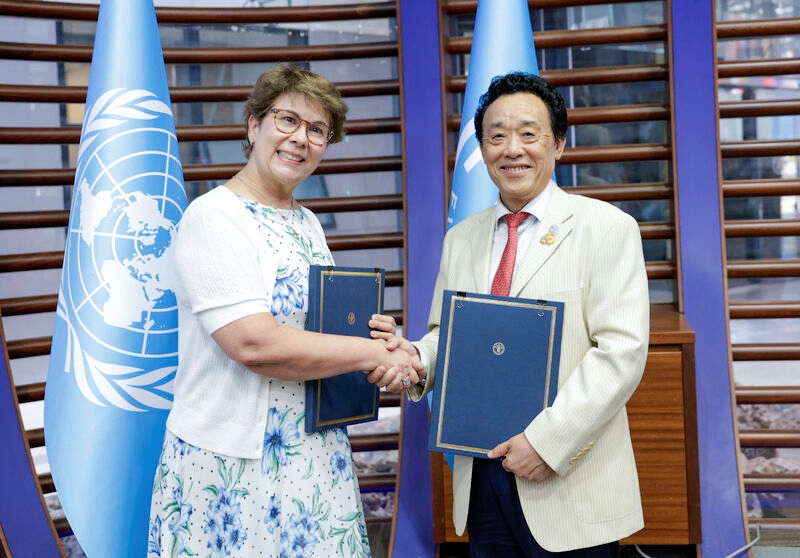
The International Coffee Organization and the Food and Agriculture Organization of the United Nations have renewed their commitment to a more sustainable coffee sector. Executive Director of ICO and FAO Director-General QU Dongyu signed a new Memorandum of Understanding today.

The agreement reaffirms their shared commitment to supporting the sustainable development of the global coffee sector. It builds on years of successful collaboration between the two organizations.

Key Areas of Cooperation

The renewed partnership will strengthen cooperation in several key areas. These include sustainable coffee production and sourcing. Climate resilience and adaptation are also priorities. Market transparency and access to information will be enhanced.

Other areas include inclusive and sustainable value chains. Innovation and digital technologies will play a crucial role. Knowledge exchange between stakeholders is another focus. The agreement also emphasizes empowering coffee-growing communities. Special attention will be given to smallholder and family farmers.

ICO-FAO Renewed Partnership – Key Cooperation Areas
Area Focus
Sustainable Production Sustainable coffee production and sourcing
Climate Action Climate resilience and adaptation
Market Transparency Market transparency and access to information
Value Chains Inclusive and sustainable value chains
Innovation Innovation, digital technologies and knowledge exchange
Community Empowerment Empowering coffee-growing communities, particularly smallholder farmers

The Importance of Coffee

Coffee supports the livelihoods of millions of people worldwide. It plays a vital role in advancing sustainable development. The sector faces numerous challenges. These include climate change, market volatility, and social inequality.

Through this renewed framework, ICO and FAO will continue working together. Their goal is to ensure the coffee sector becomes more inclusive and resilient. They aim to prepare it for the challenges of the future. The partnership will benefit producers, consumers, and future generations.

About ICO and FAO

The International Coffee Organization is the only intergovernmental organization dedicated to coffee. It enhances the sustainability of the coffee sector for both exporting and importing countries. The ICO provides official statistics and facilitates technical cooperation projects.

The Food and Agriculture Organization is a specialized agency of the United Nations. It leads international efforts to defeat hunger. FAO supports sustainable agriculture and rural development. Together, ICO and FAO bring complementary expertise to the coffee sector.

“A renewed commitment to a more sustainable and resilient coffee sector.”

— International Coffee Organization

Future Outlook

The renewed partnership signals a strong commitment to coffee sustainability. Both organizations look forward to building an even stronger partnership. The focus remains on practical outcomes for coffee producers and communities. Innovation and knowledge sharing will drive progress.

Together, ICO and FAO aim to create lasting positive change. The goal is a coffee sector that is inclusive, resilient, and prepared for future challenges. Producers, consumers, and future generations will all benefit from this collaboration.

Frequently Asked Questions

What did ICO and FAO announce?ICO and FAO signed a new Memorandum of Understanding renewing their commitment to a sustainable coffee sector.

What are the key areas of cooperation?Key areas include sustainable production, climate resilience, market transparency, inclusive value chains, innovation, and empowering smallholder farmers.

Why is this partnership important?The partnership combines the expertise of two major organizations to address challenges facing the global coffee sector.

How does coffee support sustainable development?Coffee supports the livelihoods of millions worldwide and plays a vital role in advancing sustainable development goals.

Who will benefit from this agreement?Coffee producers, consumers, and future generations will benefit from a more inclusive and resilient coffee sector.

What is the role of ICO?ICO is the only intergovernmental organization dedicated to coffee, providing statistics and facilitating technical cooperation.

C20 Global Coffee Sustainability Summit to Unite Industry Leaders in London, Driving Action from Farm to Cup

Source: C20 Non‑Profit Institution – Press Release |
Author: Qahwa World |
Date: June 10, 2026

C20 Global Coffee Sustainability Summit to Unite Industry Leaders in London, Driving Action from Farm to Cup

Key Highlights:

  • The C20 Global Coffee Sustainability Summit will take place in London on June 23–24, 2026, at Camden Town Hall, King’s Cross.
  • The event runs under the theme “Beyond Sustainability,” moving from dialogue to tangible impact.
  • Over 120 senior delegates representing more than 100 companies from across the value chain will attend.
  • Day One focuses on producer countries: climate change, regenerative agriculture, social justice, water security.
  • Day Two shifts to consumer markets: regenerative café culture, energy transition, zero‑waste ecosystems.
  • Headline speakers include Christiana Figueres, Vanúsia Nogueira, Dr. Aaron Davis, Kate O’Brien, David Browning.
  • The C20 is not a one‑off event but a year‑round engine for change with digital town halls, podcasts, and shared sustainability tools.

The global coffee industry is set to convene in London this month for the C20 Global Coffee Sustainability Summit, a high‑profile, action‑oriented gathering dedicated to securing a sustainable future for the sector. Taking place on June 23–24, 2026, at King’s Cross, the summit is organized by the non‑profit C20 institution and promises to be a pivotal moment for collaboration across the entire value chain.

Under the tagline “Beyond Sustainability,” the summit moves from dialogue to tangible impact, addressing critical challenges from climate change and water security to social justice and regenerative business models. The event will bring together 120+ senior delegates representing over 100 companies, including agricultural innovators, CEOs, roasters, retailers, barista champions, and farmers.

Two‑Day Agenda: From Origin to Market

The meticulously crafted programme is split across two days, each focusing on a different pillar of the coffee ecosystem.

Day One (June 23) – The Lens of Origin: The opening day will tackle the most pressing issues facing coffee‑producing countries. Keynotes and panels will feature leading voices such as Vanúsia Nogueira (CEO, International Coffee Organization), Dr. Aaron Davis (Senior Researcher, Royal Botanical Gardens, Kew), and Kate O’Brien (CEO, Costa Foundation). Sessions will cover climate change and the rise of regenerative agriculture; social justice, human equity, and the economics of farming as a business; water security and agroforestry; and a “Green Blueprint” for scaling organic and regenerative models.

Day Two (June 24) – The Global North & Market Perspective: The focus shifts to consumer regions, exploring how cafes, roasters, and retailers can drive systemic change. Thought‑leaders like Christiana Figueres (Former Executive Secretary, UNFCCC)—who will deliver a welcome address—Tom Molnar (Gails) and Cemal Ezel (Change Please) will headline. Key themes include building a regenerative café culture; the great energy transition: decarbonising the coffee chain; engineering a zero‑waste coffee ecosystem; connecting consumers and baristas as sustainability advocates; and the institutional roadmap for a shared 2026‑2030 Sustainability Toolkit.

Item Details
Full Name C20 Global Coffee Sustainability Summit
Dates June 23–24, 2026
Venue Camden Town Hall, King’s Cross, London
Organizer C20 Non‑Profit Institution
Delegates 120+ senior delegates
Companies represented 100+ companies

World‑Class Speakers from Across the Industry

The headline speaker lineup represents a cross‑section of global expertise, including:

  • Christiana Figueres – Former Executive Secretary, UNFCCC.
  • Vanúsia Nogueira – CEO, International Coffee Organization.
  • Dr. Aaron Davis – Senior Researcher, Royal Botanical Gardens, Kew.
  • Kate O’Brien – CEO, Costa Foundation.
  • David Browning – CEO, Enveritas.
  • Etelle Higonnet – Founder, Coffee Watch.
  • Kasper Hülsen – CCO, Slow Forest.
  • Sebastian Neilson – CEO, Slow Forest.
  • Lee Holdstock – Head of Regulatory & Trade Affairs, Soil Association.
  • Roxy Rocks-Engelman – Interim Director, Project Waterfall.

Additional insights will come from Taylors of Harrogate, UCL, Slow Forest, Marks & Spencer, Gail’s, Enveritas, Trabocca, Colonna Coffee, Origin, Bean Voyage, Notpla, and more.

Beyond the Summit: A Year‑Round Engine for Change

The C20 is not a one‑off event but the centerpiece of a year‑round, non‑profit initiative. The organization works directly with industry partners to co‑create tools, frameworks, and resources designed to embed responsibility into the everyday workings of the coffee supply chain.

Post‑summit, C20 will activate a continuous programme including: bi‑monthly Advisory Board and sub‑committee meetings (focusing on EUDR compliance, carbon sequestration, etc.); 24+ digital town halls and webinars featuring expert curators; a tier‑one digital Resource Library with white papers and the foundational C20 Priorities Report; a media ecosystem of 12 deep‑dive podcasts and a monthly executive intelligence summary; as well as strategic site audits, best‑practice tours, and speaking slots at major international trade shows.

Tickets and Participation

The summit will take place at Camden Town Hall, King’s Cross, London. A range of ticket options is available:

  • 2‑Day Full Summit Pass (Industry): £595
  • 2‑Day Full Summit Pass (NGO/SME*): £395
  • 1‑Day Summit Pass (Industry): £295
  • 1‑Day Summit Pass (NGO/SME*): £195

(NGO/SME discount code available by email.)

Tickets include access to all lectures, keynotes, panels, and networking sessions, as well as a seat at the inaugural Global Coffee Sustainability Awards (date and location TBC).

Ticket Type Price (GBP)
2‑Day Pass – Industry £595
2‑Day Pass – NGO/SME £395
1‑Day Pass – Industry £295
1‑Day Pass – NGO/SME £195

With the global coffee sector at a crossroads, the C20 Global Coffee Sustainability Summit positions itself as the essential platform for leaders committed to moving from intention to action – from the farm to the final sip.

Frequently Asked Questions About the C20 Summit

Q: When and where will the summit take place?

A: June 23–24, 2026, at Camden Town Hall, King’s Cross, London.

Q: Who is organizing the summit?

A: The C20 non‑profit institution.

Q: How many participants are expected?

A: Over 120 senior delegates representing more than 100 companies.

Q: What are the main themes of the two days?

A: Day One focuses on origin countries (climate, regenerative agriculture, social justice, water security). Day Two focuses on consumer markets (regenerative café culture, decarbonisation, zero‑waste).

Q: How can I register?

A: Via the C20 website. Discounts are available for NGOs and SMEs.

Q: Will there be activities after the summit?

A: Yes, a year‑round programme including digital town halls, podcasts, resource libraries, and strategic audits.

The C20 Global Coffee Sustainability Summit is the platform that brings industry leaders together to turn challenges into opportunities. Do not miss your chance to help shape the future of sustainable coffee – from the farm to the cup. Register now and secure your seat at this historic event.

Prepared and edited by: Qahwa World – Based on a press release from the C20 non‑profit institution.

All rights reserved. Republication with attribution permitted.

Publication date: June 10, 2026

Lavazza Launches Single-Serve Espresso Tablets in the U.S. to Challenge Keurig

Source: CNBC (adapted) |
Author: Qahwa World |
Date: June 8, 2026

Italian Coffee Giant Lavazza Launches Single-Serve Espresso Tablets in the U.S. to Challenge Keurig

Key Takeaways:

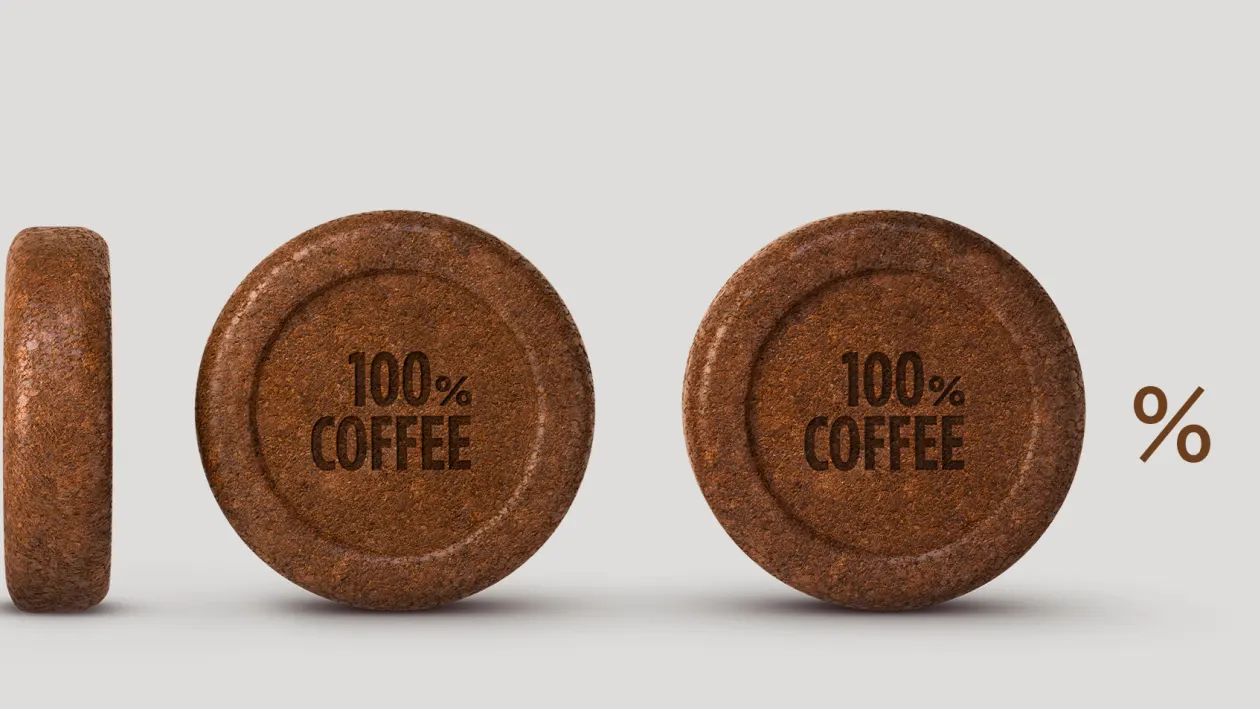
  • Lavazza is launching its new “Tablì” system in the U.S., using 100% coffee tablets with no coating or binder.
  • The system required five years of development, over 15 patents, and a new production facility in Italy.
  • Lavazza’s North American revenue jumped 26.9% in 2025.
  • The CEO says sustainability remains a top priority for coffee drinkers.
  • Keurig holds about 50% of the U.S. fresh ground coffee pod market; Nespresso has roughly 7%.
  • A $99.99 bundle including the machine, 60 tabs, and a milk frother is available for pre-order.
  • Keurig plans to launch plastic- and aluminum-free “K-Rounds” this fall.

Lavazza, the Italian coffee giant, is bringing its new brewing system, Tablì, to the United States. The system uses 100% coffee tablets and aims to challenge Keurig Dr Pepper’s dominance in the single-serve coffee category.

Lavazza unveiled Tablì last year and launched it first in Italy. The tablets are made of compressed ground coffee without any coating, binder, or gelatin. They can only be used with a Tablì coffee machine made by Lavazza. Each tablet is marked with the words “100% coffee.” At launch, the tabs come in five varieties: espresso, double espresso, decaf espresso, super crema, and lungo (brewed with more water).

Tablì System: Five Years of Development, Over 15 Patents

Antonio Baravalle, CEO of Lavazza, told CNBC: “The result that we’ve been able to achieve was through a very complicated industrial process in order to be able to have the coffee tablet very compact, to be able to deliver it without destroying it, to have it able to work in a coffee machine.” Tablì is the result of Lavazza’s acquisition of Italian startup Caffemotive in 2020. The new system took five years of development, more than 15 patents, and a new production facility in Gattinara, Italy, to bring it to market.

Item Details
System Name Tablì
Product Type 100% coffee tablets, no coating or binder
Available Varieties Espresso, double espresso, decaf, super crema, lungo
Promotional Bundle Price $99.99 (machine + 60 tabs + milk frother)
Official Launch Date August 2026

US Market: A Strategic Priority for Lavazza

The launch of Tablì in the U.S. comes as the country becomes an increasingly important part of Lavazza’s business. In 2025, the company’s North American revenue jumped 26.9%. Baravalle said, “We are strongly investing in the USA because we think it is an important space for us.” He added that Lavazza aims to eventually have a €1 billion ($1.15 billion) business in the U.S. “The brand is growing, in terms of equity, extremely well. We’ve spent a lot of money, for us, in the last two years, and we’re going to do that for the next five years.”

More than 130 years after its founding, the Lavazza family still privately owns the Italian company. In 2025, it reported net profit of €92 million on net revenues of €3.9 billion. In the U.S., Lavazza generates more than $100 million in annual dollar sales through retailers like Target and Walmart. For context, Keurig reported annual net sales of $3.99 billion for its U.S. coffee segment in 2025.

Fierce Competition in the Single-Serve Coffee Market

Keurig has dominated the single-serve coffee market in the U.S. for more than a decade. According to data from Euromonitor International, Keurig holds about half of the total U.S. market share for fresh ground coffee pods. Nespresso holds roughly a 7% share. Of course, Lavazza already sells K-cup pods in the U.S. through a partnership with Keurig. Baravalle said he does not expect to beat Keurig or Nespresso. “For us, it’s important to find our own space, but we are talking about two giants, and one of them, we have an important contract with that we are very happy with,” he said.

Sustainability: Lavazza’s Winning Card

Lavazza is betting that sustainability remains a top consideration for many coffee drinkers. Baravalle noted that this can differ across countries. For years, Keurig’s pods have been criticized for waste, leaving an opening for a competitor with a more environmentally friendly product. Keurig previously claimed that 100% of its K-cups have been recyclable since the end of 2020. In 2024, the Securities and Exchange Commission charged Keurig with making misleading statements over the recyclability of its pods. Keurig agreed to pay $1.5 million in penalties. Its website now reads, “Check locally, not recycled in many communities.” Nespresso’s aluminum pods are more easily recycled through the brand’s free mail-back service.

As Lavazza launches a potential competitor, Keurig has its own plans for plastic- and aluminum-free coffee pods. This fall, Keurig plans to launch “K-Rounds,” which uses a plant-based coating to preserve the ground coffee inside the puck-shaped pod. The innovation comes from a multi-year partnership with Delica Switzerland, maker of the CoffeeB system, which uses plastic-free coffee balls that have gained traction in parts of Europe.

Pricing and Availability: $99.99 Promotional Bundle

Lavazza will officially launch Tablì in the U.S. in August. A $99.99 bundle that includes the machine, a 60-count variety pack of tabs, and a milk frother is available now for pre-order on the company’s website. In May, Baravalle said the company was still determining its pricing strategy as it conducted consumer research to understand how much coffee drinkers were willing to pay. “We are also waiting to see how some big, huge competitors will move in the industry, trying to offer something similar,” Baravalle said. “But, for sure, Lavazza has premium positioning, and we’re not going to do something different from that.”

Frequently Asked Questions About Lavazza’s Tablì Launch in the U.S.

Q: What is Lavazza’s Tablì system?

A: A new brewing system that uses 100% compressed coffee tablets with no coating or binder, compatible only with Lavazza’s Tablì machine.

Q: How much does the promotional bundle cost?

A: $99.99, including the machine, 60 tabs, and a milk frother, available for pre-order.

Q: What is Keurig’s market share in U.S. coffee pods?

A: About 50%. Nespresso holds roughly 7%.

Q: Does Lavazza already sell pods for Keurig machines?

A: Yes, through a partnership with Keurig, Lavazza sells K-cup pods in the U.S.

Q: What is Keurig’s plan to compete on sustainability?

A: Keurig plans to launch “K-Rounds” this fall – plastic- and aluminum-free pods with a plant-based coating.

Lavazza is entering the U.S. single-serve coffee market with its Tablì system, focusing on sustainability and quality. Competition with Keurig and Nespresso intensifies, and with Keurig’s upcoming eco-friendly pods, the next battle in the American coffee market will be won by whoever delivers the best for consumers and the environment alike.

Prepared and edited by: Coffee World – Based on a CNBC report by Amelia Lucas (adapted).

All rights reserved. Republication with attribution permitted.

Publication date: June 8, 2026

GCP opens 30‑day public consultation on Coffee Sustainability Reference Code and Equivalence Mechanism review

Author: Ali Alzakary – Dubai. This article discusses the GCP public consultation Coffee SR Code 2026 and its relevance for stakeholders.

Event: GCP webinar, 19 May 2026
Source: Global Coffee Platform (GCP) public consultation launch materials and webinar

Stakeholders across the coffee value chain invited to review proposed updates and provide feedback by 19 June 2026. Surveys available in five languages.

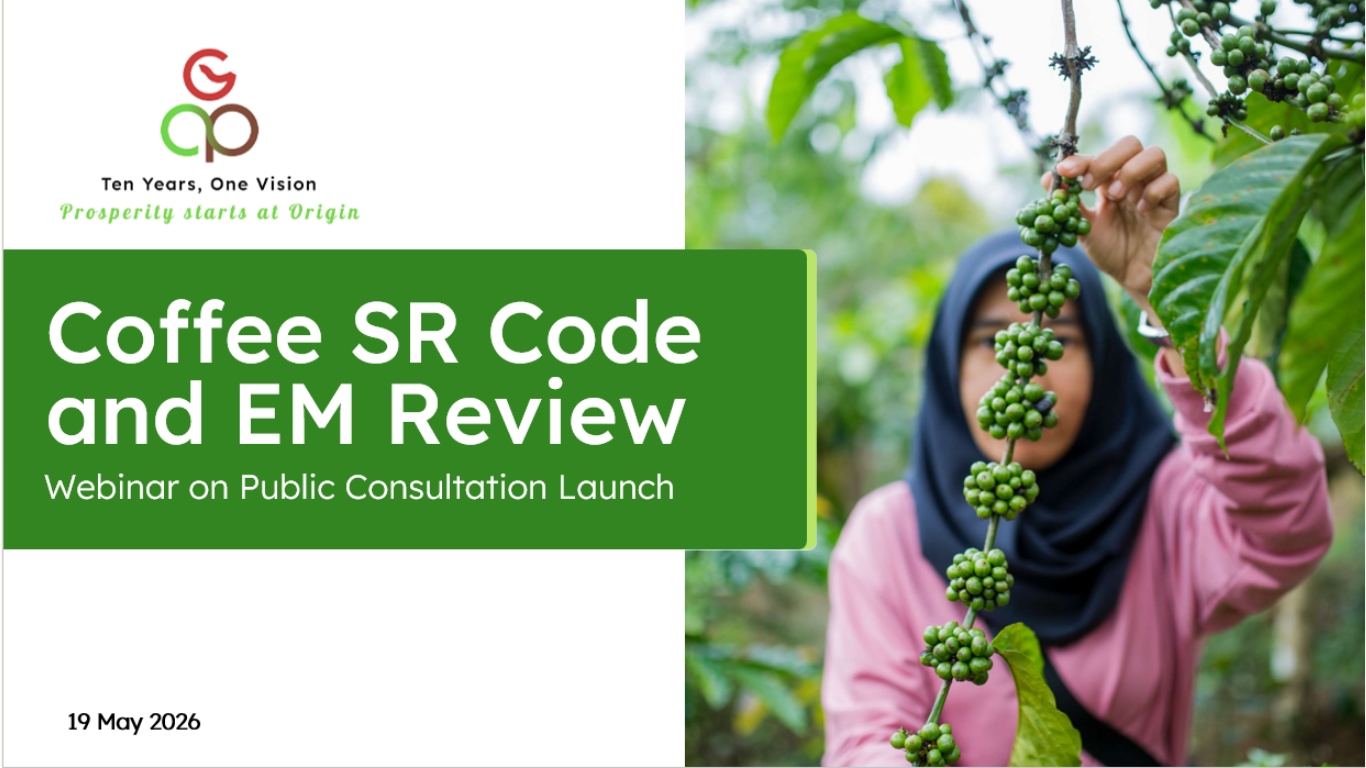
Dubai, 19 May 2026 — The Global Coffee Platform (GCP) today officially opened a 30‑day public consultation on the review of its Coffee Sustainability Reference Code (Coffee SR Code) and the Equivalence Mechanism (EM). The consultation, launched during a live webinar hosted by GCP Sustainable Sourcing Manager Gabriel Chavez, runs from 19 May to 19 June 2026 and invites stakeholders from across the coffee sector to help shape the next generation of these critical sustainability tools.

The Coffee SR Code was developed as a common language for baseline sustainable coffee production, centered on economic prosperity, social well‑being, and environmental stewardship. The Equivalence Mechanism recognises sustainability schemes that align with the Code, supporting comparability and mutual understanding across the sector. Both tools are being reviewed together to ensure coherence and continued relevance.

“We welcome the participation of stakeholders from across the coffee value chain and from around the world to bring their experience and expertise to this process,” said Gabriel Chavez, GCP Manager Sustainable Sourcing. “A rich diversity of voices will help ensure these tools are fit‑for‑purpose, modernised and relevant.”

Why the review matters now

The coffee sector faces increasingly complex challenges: climate change, evolving regulatory frameworks such as the EU Deforestation Regulation (EUDR), rising market expectations, and the need for greater alignment across sustainability initiatives. Since the tools were first launched, 33 schemes have been recognised under the Equivalence Mechanism (four third‑party and 29 second‑party). Sustainable coffee purchases recorded under GCP’s framework have grown from about 639,000 tonnes in 2018 to 1.73 million tonnes in 2024, according to data shared during the webinar.

“If we look at where we are now, there are no fewer than 33 schemes which are currently recognised under the equivalence mechanism,” said Jeremy Laforet, Chair of the GCP Technical Committee. “The purchases of sustainable coffee recorded have risen from about 639,000 tons in 2018 up to 1.73 million tons in 2024, which is a tremendous sign of the seriousness with which our industry takes coffee sustainability.”

The review follows GCP’s regular five‑year cycle, aligned with the ISEAL Code of Good Practice. The combined review of the Coffee SR Code and EM was mandated by the GCP Board to improve alignment across the sustainable sourcing approach and reduce stakeholder fatigue by avoiding separate parallel processes.

“Now it’s over to you, it’s over to the wider membership as a whole to ensure that these two tools – the SR Code and the equivalence mechanism – remain practical, relevant and credible.” – Jeremy Laforet, Chair, GCP Technical Committee

Key proposed updates

The review process has been informed by a comprehensive assessment phase that included 55 survey responses, 8 stakeholder interviews, two workshops with the International Trade Centre, and detailed analysis of 33 recognised schemes. The proposed updates focus on refinement rather than redesign.

For the Coffee SR Code, proposed highlights include a stronger emphasis on continuous improvement, maintaining a risk‑based and context‑driven approach, and reinforcing alignment with due diligence logic (risk assessment → action → monitoring). The Code remains positioned as a shared baseline for sustainable coffee, not a prescriptive certification standard.

For the Equivalence Mechanism, updates are more pronounced. They include improved clarity and structure, strengthened governance, transparency, and data integrity, clearer expectations on disclosure and accountability, and a reinforced risk‑ and due diligence‑based methodology that moves beyond “tick‑box” compliance.

“The overall approach of this review has been focused on refinement rather than redesign,” Chavez explained. “We are not aiming to fundamentally change the intent or the scope, but rather to strengthen and improve based on implementation experience, stakeholder feedback, and evolving sector expectations.”

How to participate

GCP has prepared a consultation toolkit available on its website. Stakeholders can access a summary of proposed changes (available in English, Spanish, Portuguese, Bahasa Indonesia, and Vietnamese), a full consultation draft of the Coffee SR Code (English only), and two online surveys.

The main survey consists of 25 required questions covering high‑level feedback and key substantive changes. It is available in English, Spanish, Portuguese, Bahasa Indonesia, and Vietnamese. A separate technical survey (English only) allows stakeholders to provide detailed, requirement‑specific input on individual requirements. Both surveys will remain open until 19 June 2026.

All responses are confidential and will be anonymised. A summary of consultation results will be published on the GCP website in the second half of July 2026.

Next steps

Following the public consultation, GCP will consolidate and analyse all stakeholder feedback, identify key themes, and develop revised drafts. These will go through further technical discussion and validation with the Technical Committee, the Advisory Task Force, and the GCP Board. The final updated tools are expected to be published by the end of 2026, together with clear implementation and transition pathways for scheme owners and users across the sector.


GCP Launches 2026 Review of Coffee Sustainability Framework and Equivalence Mechanism

Author: Qahwa World
Source: Global Coffee Platform (GCP) official documentation
Date: May 19, 2026This article offers a GCP sustainability review based on the most recent official documentation.
Executive Summary:

  • The Global Coffee Platform (GCP) has initiated a five year review of its Coffee Sustainability Reference Code and Equivalence Mechanism in 2026.
  • The Equivalence Mechanism assesses sustainability schemes against the Coffee SR Code to ensure credibility and alignment.
  • GCP currently recognizes 33 sustainability schemes, including both third party and second party assurance systems.
  • Third party systems include 4C, Fairtrade, Rainforest Alliance. Second party systems include Nespresso AAA, Sucafina IMPACT, and Volcafe Verified.
  • The Coffee SR Code covers three dimensions: economic, social, and environmental, with 12 principles and 39 practices.
  • Five non-negotiable practices include elimination of child labor, forced labor, deforestation, prohibited pesticides, and continuous improvement.
  • The review follows ISO and ISEAL best practices and will run throughout 2026.

The Global Coffee Platform, a multi-stakeholder association dedicated to coffee sustainability, has begun a comprehensive five year review of its two core tools: the Coffee Sustainability Reference Code and the Equivalence Mechanism. The review, which started in early 2026, aims to ensure these frameworks remain relevant, practical, and aligned with evolving expectations across the coffee sector.

The Equivalence Mechanism serves as a benchmark. It evaluates existing sustainability schemes against the Coffee SR Code, which defines baseline principles for sustainable coffee production and primary processing. Schemes that meet the requirements become eligible for inclusion in GCP’s Collective Reporting on Sustainable Coffee Purchases, helping companies align their sourcing strategies with globally recognized standards.

How the Equivalence Mechanism Works

GCP evaluates sustainability schemes against the Coffee Sustainability Reference Code using operational criteria that cover governance, standard setting, assurance systems, data management, and claims requirements. The assessment process is conducted in partnership with the International Trade Centre, which independently evaluates schemes to ensure integrity and credibility.

The current recognition round, which closed in November 2025, marked the end of the Equivalence Mechanism 2.0 cycle. The 2026 review follows ISO and ISEAL best practices and will update both the Coffee SR Code and the Equivalence Mechanism. Stakeholders can follow updates through GCP’s website, newsletters, and social media channels.

33 Recognized Sustainability Schemes

GCP currently recognizes 33 sustainability schemes as equivalent to the Coffee SR Code. These are divided into two categories: third party assurance systems and second party assurance systems.

Third party assurance systems include independent oversight of audit competency and impartiality. Recognized schemes in this category include 4C, Fairtrade International Small Producer Organization and Coffee Standard, Fair Trade USA Agriculture Production Standard, and the Rainforest Alliance Sustainable Agriculture Standard.

Second party assurance systems are generally verification based programs managed by companies or organizations. These include Agri Evolve’s ACE, Comexim’s Green Trace, Coocacer’s Café Sustentável, Cooxupé’s Gerações, COFCO’s CROP, ECOM’s SMS Verified, Enveritas Green, Expocacer’s ECO, Exportadora de Café Guaxupé’s Guaxupé Planet, HACOFCO’s CONNECT, illycaffé’s Responsibillyty, Louis Dreyfus Company’s Responsible Sourcing Program Advanced, Minasul’s LEGACY Protocol, MITSUI’s VSS Midori Protocol, Montesanto Tavares Group’s GMT Green, Nespresso AAA Sustainable Quality Program, Neumann Kaffee Gruppe’s NKG BLOOM and NKG Verified, ofi’s AtSourceV and AtSourcePlus, Perhusa’s ARTS, Racafé’s CRECER, 3E by RGC Coffee, Sucafina’s IMPACT, Sucden Coffee Verified, Touton’s PACT, Volcafe Verified and Volcafe Excellence, and Westrock Coffee Company’s RAÍZ Sustainability.

Second Party vs Third Party Assurance

Second party assurance systems are commonly referred to as verification systems, while third party assurance systems are typically certification systems. The key difference is that third party systems include independent oversight of auditors and assessment bodies to ensure impartiality, competency, and effectiveness. They are also managed independently from buyers, certificate holders, or audit firms. Other differences include chain of custody models, transparency, stakeholder engagement, and claims verification processes.

Key Components of the Equivalence Mechanism

The Equivalence Mechanism framework includes 3 governance criteria, 4 standard setting criteria, 10 assurance criteria, 6 data criteria, and 4 claims criteria. These cover areas such as transparency, traceability, stakeholder engagement, continuous improvement, remediation, data quality, and substantiation of sustainability claims.

The Coffee Sustainability Reference Code

The Coffee SR Code was published in 2021 as a sector wide framework defining baseline principles and practices for sustainable coffee production and primary processing. It provides a common language that helps farmers, producer organizations, companies, NGOs, governments, financial institutions, and donors align their sustainability efforts.

The code addresses economic sustainability, social well being, environmental stewardship, climate change, and diversity, equity, and inclusion. It also emphasizes shared responsibility across the supply chain, encouraging downstream actors to support and incentivize farmers in implementing sustainable practices.

The Coffee SR Code includes three sustainability dimensions: economic, social, and environmental. Under these dimensions, it contains 12 principles, 39 practices, and 93 expected results. The economic dimension covers business management, agricultural services, and business integrity. The social dimension addresses the right to childhood, human rights, working conditions, and community well being. The environmental dimension covers biodiversity, pest and weed management, resource conservation, pollution prevention, and climate action.

Five Critical Non Negotiable Practices

The Coffee SR Code identifies five non negotiable sustainability practices: elimination of the worst forms of child labor, elimination of forced labor, no deforestation, no use of prohibited pesticides, and continuous improvement. These practices are considered essential for any credible sustainability program.

Evolution of the Code and Pesticides Action Group

The framework has evolved significantly over time. Key milestones include the launch of the Common Code for the Coffee Community (4C) in 2004, the start of 4C Association operations in 2007, a major revision of the 4C Code in 2015, the transition of the 4C verification system to Coffee Advisory Services in 2016, the formation of the Global Coffee Platform in 2016, publication of the Coffee Sustainability Reference Code in 2021, publication of Equivalence Mechanism 2.0 in 2022, and the current 2026 review.

GCP’s Pesticides Action Group brings together experts from producing and consuming countries across the coffee value chain. The group works to identify harmful pesticides, promote best practices, explore feasible alternatives, support transitions to less hazardous substances, and inform sustainability programs and farmer support initiatives.

Key Data Summary

Indicator Value
Recognized sustainability schemes 33
Governance criteria in EM 3
Standard setting criteria 4
Assurance criteria 10
Data criteria 6
Claims criteria 4
Sustainability dimensions in Coffee SR Code 3
Principles in Coffee SR Code 12
Practices in Coffee SR Code 39
Expected results 93

Looking Ahead

The Coffee Sustainability Reference Code and the Equivalence Mechanism are designed to strengthen alignment across the coffee sector, reduce fragmentation, and support continuous improvement in sustainability performance. Together, they provide a common language and shared foundation to advance a thriving and sustainable coffee sector for future generations. Stakeholders are encouraged to participate in the 2026 review process and contribute to shaping the next generation of coffee sustainability tools.

Frequently Asked Questions (FAQ)

1. What is the GCP Equivalence Mechanism?

It is a framework developed by the Global Coffee Platform to assess whether sustainability schemes align with the Coffee Sustainability Reference Code, ensuring credibility and baseline sustainability requirements.

2. How many sustainability schemes does GCP currently recognize?

GCP recognizes 33 sustainability schemes as equivalent to the Coffee SR Code, including both third party and second party assurance systems.

3. What is the Coffee Sustainability Reference Code?

It is a sector wide framework published in 2021 that defines baseline principles and practices for sustainable coffee production and primary processing across economic, social, and environmental dimensions.

4. What are the five non negotiable practices?

Elimination of worst forms of child labor, elimination of forced labor, no deforestation, no use of prohibited pesticides, and continuous improvement.

5. When will the 2026 review be completed?

The five year review cycle for both the Coffee SR Code and the Equivalence Mechanism will take place throughout 2026. Stakeholders should follow GCP channels for updates.

6. What is the difference between second party and third party assurance?

Third party assurance includes independent oversight of auditors and assessment bodies (certification). Second party assurance is typically verification based programs managed by companies or organizations.

Qahwa World – Based on official documentation from the Global Coffee Platform.
Published: May 19, 2026
World Coffee Research releases 2025 annual report


Qahwa World – Dubai |
May 14, 2026 |
7 min read |
Source: WCR Annual Report 2025

Executive Summary

  • World Coffee Research released its 2025 annual report covering January 1 to December 31, 2025
  • Innova Global Coffee Breeding Network named a TIME Best Invention of 2025
  • Network expands to include robusta coffee with six partner countries producing 64% of global robusta
  • 11 countries now in Innova network, producing 40% of world’s coffee supply
  • WCR aims to reduce breeding timeline from 30 years to 8 years using genetic markers
  • 10-year IMLVT trial results: Up to half of arabica land could become unsuitable by 2050 due to climate change
  • $4.96 million in industry contributions; $9.85 million total financial position
  • Seed system expansions in Peru, Uganda, Guatemala, Honduras to produce millions of new trees annually
  • WCR helped secure $175 million in U.S. funding for agricultural R&D including coffee

World Coffee Research (WCR) announced the release of its 2025 annual report on December 31, 2025, detailing the expansion of its TIME-recognized Innova Global Coffee Breeding Network into robusta coffee, new data showing that half of current arabica land could become unsuitable by 2050, and seed system expansions across four producing countries.

The report, which covers the period between January 1, 2025 and December 31, 2025, confirmed that WCR’s Innova network has expanded to include Coffea canephora (robusta) breeding, adding Vietnam and Ghana as new national partners. Six countries now participate in robusta breeding: Vietnam, Ghana, India, Indonesia, Rwanda, and Uganda, which together produce 64 percent of the world’s robusta supply. Overall, 11 countries make up the Innova network, producing 40 percent of global coffee supply.

An independent panel of global breeding experts commissioned by WCR’s board of directors reviewed the organization’s breeding programs in early 2025 and described the approach as a “radical step forward” that sets a new bar for coffee breeding worldwide. The Innova network was subsequently named a TIME Best Invention of 2025. The robusta breeding program combines multiple genetic groups, including a collection provided by French research institute CIRAD. Propagation began in 2025, and starting in 2027 each robusta partner will receive 1,000 unique new trees from WCR.

The report detailed that WCR is working to reduce coffee breeding timelines from the traditional 30 years to just 8 years. In 2025, the organization initiated a collaboration with Cenicafe, one of the world’s leading national coffee research institutions, and the U.S. Department of Agriculture Tropical Agricultural Research Station (USDA TARS) in Puerto Rico to develop low-cost genetic markers for Coffee Leaf Rust (CLR), the world’s most economically devastating coffee disease. In 2026, WCR will expand this work to cover Coffee Berry Disease (CBD), Coffee Fruit Rot (CFR), and Coffee Berry Borer (CBB). Once validated between 2025 and 2028, these markers will be publicly released through scholarly publication.

According to the report, 10-year results from the International Multilocation Variety Trial (IMLVT), launched in 2015 with 31 arabica varieties shared by 11 breeding programs, confirmed that coffee leaf rust resistance depends on both genetics and environment. A 2015 study by WCR and CIAT that guided site selection for the trial network identified that up to half of today’s arabica land could become unsuitable for coffee production by 2050. The IMLVT has identified high-performing varieties with strong rust resistance and stable yields. In 2026, WCR will launch CafeClima, a free online platform integrating climate modeling with IMLVT variety performance data to help farmers make data-driven replanting decisions.

WCR installed 10,000 F1 hybrid plantlets across 10 trial sites in Peru, Guatemala, and Costa Rica, planted directly in farmers’ fields through member-led trials. The report also detailed seed system expansions across four countries. In Peru, 10 new arabica seed lots were installed with 8 cooperatives, targeting 15 seed lots by 2028 producing up to 6 million seeds annually. In Uganda, 11 mother gardens for disease-resistant robusta were installed or expanded with national coffee institute NaCORI, targeting over 40 mother gardens by 2028 producing 560,000 trees per year. In Guatemala and Honduras, 12 new seed lots will be installed in 2026, producing 5.4 million seeds annually starting in 2029.

The report highlighted advocacy wins including $175 million secured in FY26 “hard earmarks” for international agricultural R&D through coordinated advocacy by U.S. member companies, with a legal requirement that a portion support coffee research. A separate coalition mobilized $850,000 for Uganda’s coffee future from UNIDO, JDE Peet’s, Lavazza Foundation and The J.M. Smucker Co.

According to the financial section of the report, total contributions earned from the coffee industry in 2025 was $4,962,000. The total year-end financial position reached $9,852,000. Figures are pre-audit. WCR confirmed the commitment of its 194 member companies from 30 countries, with 59 additional companies and individuals providing financial support in 2025. WCR’s knowledge products, including the Coffee Varieties Catalog, Sensory Lexicon, and nursery manuals, were viewed 239,722 times in 195 countries during 2025. The organization also installed a small-batch processing facility at its research farm in El Salvador, custom-designed for breeding programs to process samples from thousands of individual trees.

Frequently Asked Questions

What is the Innova Global Coffee Breeding Network?

It is the most ambitious and globally coordinated coffee breeding program in history, bringing together 11 countries to transform coffee breeding and create enhanced genetics at an accelerated pace.

What recognition did WCR receive in 2025?

The Innova network was named a TIME Best Invention of 2025, and an expert panel described WCR’s breeding approach as a “radical step forward” for coffee.

How will climate change affect coffee production according to the report?

A 2015 study by WCR and CIAT that guided the IMLVT trial network found that up to half of today’s arabica land could become unsuitable by 2050.

Which countries are part of the Innova robusta breeding program?

Vietnam, Ghana, India, Indonesia, Rwanda, and Uganda — which together produce 64 percent of the world’s robusta.

How many member companies does WCR have?

194 member companies from 30 countries, with 59 additional companies and individuals providing financial support in 2025.

What is CafeClima?

A free online platform launching in 2026 that integrates climate modeling with variety performance data to help farmers make data-driven replanting decisions.

Source: World Coffee Research Annual Report 2025
Report period: January 1, 2025 – December 31, 2025
Author: Qahwa World – Dubai
Publication date: May 14, 2026


UNIDO and Coffee Leaders Invest in Uganda Coffee Seed Systems

Dubai – Qahwa World

A coalition of international organizations and leading coffee companies has announced a major investment aimed at reinforcing Uganda’s coffee seed systems and improving farmer livelihoods. The initiative, led by United Nations Industrial Development Organization (UNIDO) and World Coffee Research (WCR), brings together industry partners including JDE Peet’s, The J.M. Smucker Co., and the Lavazza Foundation.

The partners have committed €850,000 to a three-year program designed to strengthen supply chain resilience in Uganda, Africa’s largest coffee exporter. The project operates under the Advancing Climate-Resilience and Transformation in African Coffee Programme, implemented by UNIDO with support from Italian development cooperation.

The initiative focuses on expanding access to high-quality, disease-resistant planting materials, a critical factor in improving productivity across Uganda’s coffee sector. Farmers in the country continue to face significant challenges from diseases such as coffee wilt disease in robusta, as well as coffee leaf rust and coffee berry disease affecting arabica varieties. Research indicates that adopting resistant coffee varieties can increase smallholder farmer profits by as much as 250 percent.

Central to the program is the establishment of new seed system infrastructure. This includes the development of robusta mother gardens and nurseries across northern, central, and western Uganda. These facilities are expected to produce up to 460,000 high-yielding, disease-resistant coffee trees annually, contributing to the country’s target of reaching 20 million bags of coffee production by 2030.

Ensuring the genetic quality of planting material is another key component. More than 5,000 robusta plants will undergo genotyping to guarantee consistency and performance. The program also prioritizes capacity building, working closely with national institutions such as Uganda’s Ministry of Agriculture and the National Coffee Research Institute to train technicians in advanced propagation methods and quality assurance practices. International training opportunities, including collaboration with leading research centers, are also planned.

To encourage adoption among farmers, demonstration plots will be established to showcase the performance of improved robusta lines and advanced arabica hybrids under local conditions.

The initiative builds on a broader roadmap for coffee research and development in Uganda, developed by national research bodies in collaboration with WCR. It also aligns with growing international support for increased public-sector investment in agricultural innovation, including commitments highlighted during the G7 Summit.

Industry leaders say the partnership reflects a shared commitment to securing the future of coffee production through collective action. By combining scientific research, public-sector support, and private-sector investment, the program aims to create a more resilient, productive, and sustainable coffee value chain in Uganda.

ICO, IACO Sign MoU on Coffee Cooperation

Agreement at World of Coffee San Diego focuses on data, regulation, and support for Africa’s coffee sector

San Diego — Qahwa World

The first day of World of Coffee San Diego saw the International Coffee Organization (ICO) and the Inter-African Coffee Organisation (IACO) formalise their cooperation through the signing of a Memorandum of Understanding (MoU).The agreement builds on an existing relationship between the two institutions and outlines areas for closer coordination across data, research, and policy support for African coffee-producing countries.

Structured Cooperation Across Key Areas

The MoU establishes a framework for collaboration in several technical and strategic areas relevant to the evolving coffee landscape.

These include improving data collection and analysis, supporting compliance with regulatory developments such as the European Union Deforestation Regulation (EUDR), advancing research into climate resilience, and strengthening capacity along the coffee value chain.

While the agreement does not introduce binding commitments, it provides a basis for coordinated initiatives and information exchange between the two organisations.

Africa’s Position in Focus

The partnership also reflects a continued effort to better integrate African perspectives into global coffee discussions.

African producing countries play a significant role in global coffee supply, yet continue to face structural challenges, including exposure to climate risks, limited access to finance, and evolving market requirements.

Through closer institutional coordination, the ICO and IACO aim to support member countries in navigating these challenges and engaging more effectively with international frameworks.

Institutional Context

The International Coffee Organization, established in 1963, serves as an intergovernmental platform for cooperation between coffee-exporting and importing countries, with a focus on market transparency, sustainability, and sector development.

The Inter-African Coffee Organisation represents African coffee-producing nations and works to promote production, improve quality, and enhance the competitiveness of the region’s coffee sector.

The MoU reflects a continuation of engagement between the two bodies rather than a new institutional direction.

World of Coffee as a Meeting Point

World of Coffee, organised by the Specialty Coffee Association, provides a platform for industry stakeholders ranging from producers and exporters to roasters, researchers, and policymakers.

The San Diego edition highlights ongoing conversations around sustainability, regulation, and market dynamics, with a growing emphasis on coordination between producing and consuming regions.

Participants

  • Vanusia Nogueira, Executive Director of the International Coffee Organization
  • H.E. Ambassador Solomon Rutega, Secretary General of the Inter-African Coffee Organisation
  • Claude Bizimana, Executive Chairman of the Inter-African Coffee Organisation
  • Celestine Gataraiha, Director of Research and Development at the Inter-African Coffee Organisation

Analysis

Memoranda of understanding are a common instrument in international cooperation, often used to formalise intent and provide a structure for future collaboration rather than immediate operational change.

In this context, the ICO–IACO agreement can be seen as part of a broader pattern of institutional alignment within the coffee sector, particularly as regulatory and environmental pressures increase.

Its practical significance will depend on how the outlined areas of cooperation translate into concrete programmes and measurable outcomes over time.

Reporting by Qahwa World from San Diego

Navigating Uganda’s 2026 Arabica Season


Dubai – Qahwa World

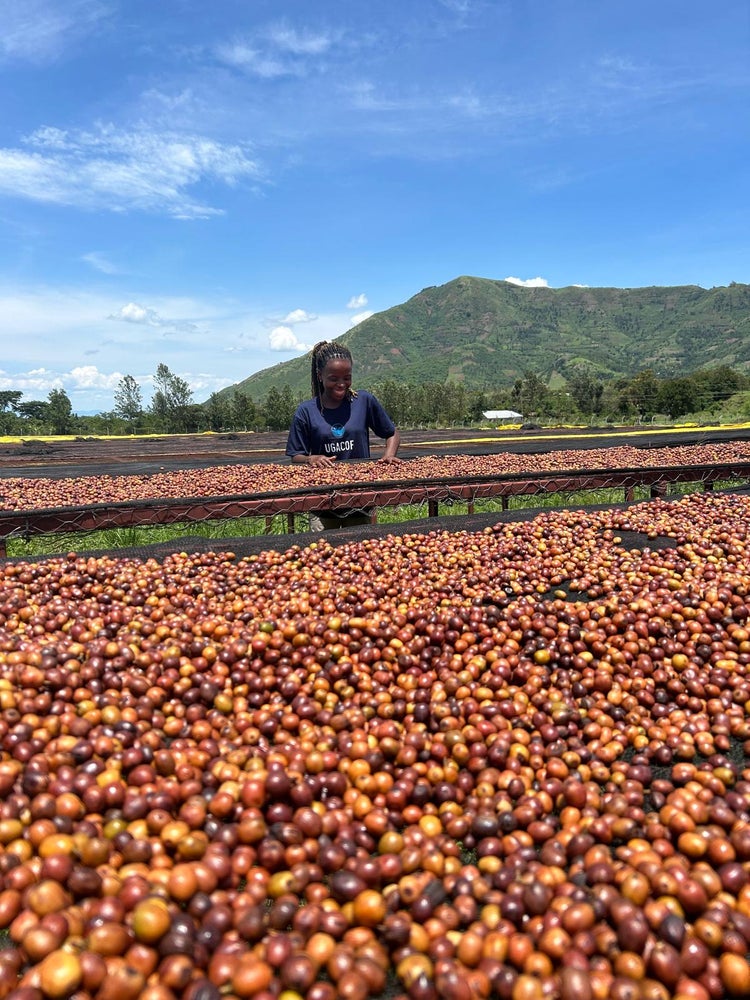
As Uganda’s Arabica harvest unfolds, the 2026 season is shaping up as one of contrasts. In Western Uganda, late rainfall, shifting weather patterns, and market adjustments have pushed national production down by an estimated 100,000 bags compared to last year. On the ground, many local traders have home-processed nearly 20 percent of their crop, reflecting both necessity and resilience.

Ugacof’s teams are ensuring quality remains uncompromised. At every Coffee Washing Station (CWS), cherries are fully floated to select the best beans. Harvesting is ongoing through late April, with the second harvest expected between late August and mid-November. Early flowering observed in several regions hints that a stronger second crop could be on the horizon.

Supporting Farmers Beyond the Crop

Smallholder farmers often manage plots of around 300 trees, where limited access to basic tools, aging coffee trees, and insufficient seedlings can hinder productivity.

Ugacof’s Beyond Flagship program has stepped in with targeted support. The Tools for Prosperity project equips farmers delivering to Katerera CWS with essential tools, including a hoe, spade, and pruning saw, alongside practical guidance on their use. These interventions improve soil management, pruning, and overall farm health.

Over 100 IMPACT-verified farmers have already benefited. Roasters sourcing select microlots contribute directly to these initiatives, linking purchases to measurable on-farm impact.

Building a Sustainable Coffee Future

Beyond tools and training, broader sustainability initiatives are reshaping Uganda’s coffee landscape. Nurseries established since 2025 provide 1.5 million seedlings annually at no cost to farmers, rejuvenating low-density, aging plantations and supporting new entrants.

A fully traceable, regenerative Arabica supply chain is being developed with digital farmer registration, structured data collection, and transparent payment systems. Climate-smart practices, agroforestry, and organic fertilizers from coffee by-products support productivity and ecosystem restoration.

These programs aim to empower up to 15,000 farmers, integrating finance, sustainability, and quality into a cohesive system.

Innovation at Origin

Uganda is exploring new coffee processing methods. Experimental techniques including anaerobic natural fermentation, lactic fermentation, and yeast inoculation are being trialed across washing stations to adapt to local conditions and create distinctive cup profiles.

These innovations, combined with ongoing farmer support, aim to increase value at origin and deliver consistent high-quality coffee to roasters.

A Season of Challenges and Opportunities

While the first harvest is smaller than expected, early flowering, sustainability programs, and practical farmer support provide reason for cautious optimism. For buyers and roasters, now is an ideal time to engage, secure the 2026 crop, and support initiatives strengthening Uganda’s Arabica sector.

In Uganda, coffee is more than a crop. It is a story of resilience, innovation, and community. This season, as cherries ripen and tools are put to use, that story continues to unfold, one bean at a time.


Coffee Sector Adopts Procurement Principles to Strengthen Farmer Livelihoods

BONN – Qahwa World

Leading players in the global coffee sector have announced two new procurement principles aimed at supporting the long-term economic sustainability of coffee farmers. The principles, developed over nine months by the Global Coffee Platform (GCP), IDH, and Solidaridad, focus on building strategic partnerships and promoting sustainable coffee production, marking a coordinated effort to encourage more responsible sourcing practices across the industry.

The initiative involved 14 major coffee companies, including Caravela, ECOM, illycaffè, JDE Peet’s, Louis Dreyfus Company, Neumann Kaffee Gruppe, Taylors of Harrogate, UCC, and Volcafe. The principles build on insights from the 2024 report The Grounds for Sharing, which examined the challenges and opportunities for farmer resilience in global coffee supply chains.

You may Like: Launch of Global Platform for Coffee Industry to Transform 40 Million Tons of Biowaste into Business Opportunities

  • Shifting Toward Long-Term Collaboration

The first principle, strategic partnerships, emphasizes moving away from short-term transactions and toward longer-term, trust-based collaborations between farmers, traders, roasters, and retailers. According to Annette Pensel, Executive Director of GCP, “Ensuring the long-term economic viability of sustainable coffee farming and overall farmer prosperity is essential for a resilient supply and competitive coffee sector. This requires shared responsibility and a more coordinated approach across the industry.”

The second principle, Sustainable Coffee Production, encourages conditions that allow farmers to recover their costs and invest in long-term improvements to both their livelihoods and farming systems. Mette-Marie Hansen of IDH said, “By embedding longer-term partnerships and sustainable production conditions, companies can contribute to more resilient supply chains and improved economic viability for farmers. At IDH, this work is seen as a foundation for scaling more responsible purchasing practices across the sector.”

You may read: ICO Launches 2026 Global Campaign: Coffee is Part of the Solution

Andrea Olivar from Solidaridad added that the principles are intended to create a framework where all stakeholders in coffee supply chains—farmers, traders, and retailers—benefit from their efforts. “These principles are fundamental to promoting the prosperity of coffee producers while securing supply for the global market,” she said.

The release of the principles highlights the critical role of procurement in shaping the conditions in which farmers operate. While procurement alone cannot solve all challenges facing coffee producers, when combined with supportive public policies, inclusive finance, and improved farm practices, it can significantly enhance farmer resilience and economic outcomes.

Read also: ICO Relaunches Global Coffee Sustainability Platform with Enhanced Tools

The publication Identifying Common Procurement Principles Specific to Coffee is now available, signaling a growing industry commitment to responsible sourcing and long-term sustainability in coffee production.

UN Officially Designates 1 October as International Coffee Day

Dubai – Qahwa World

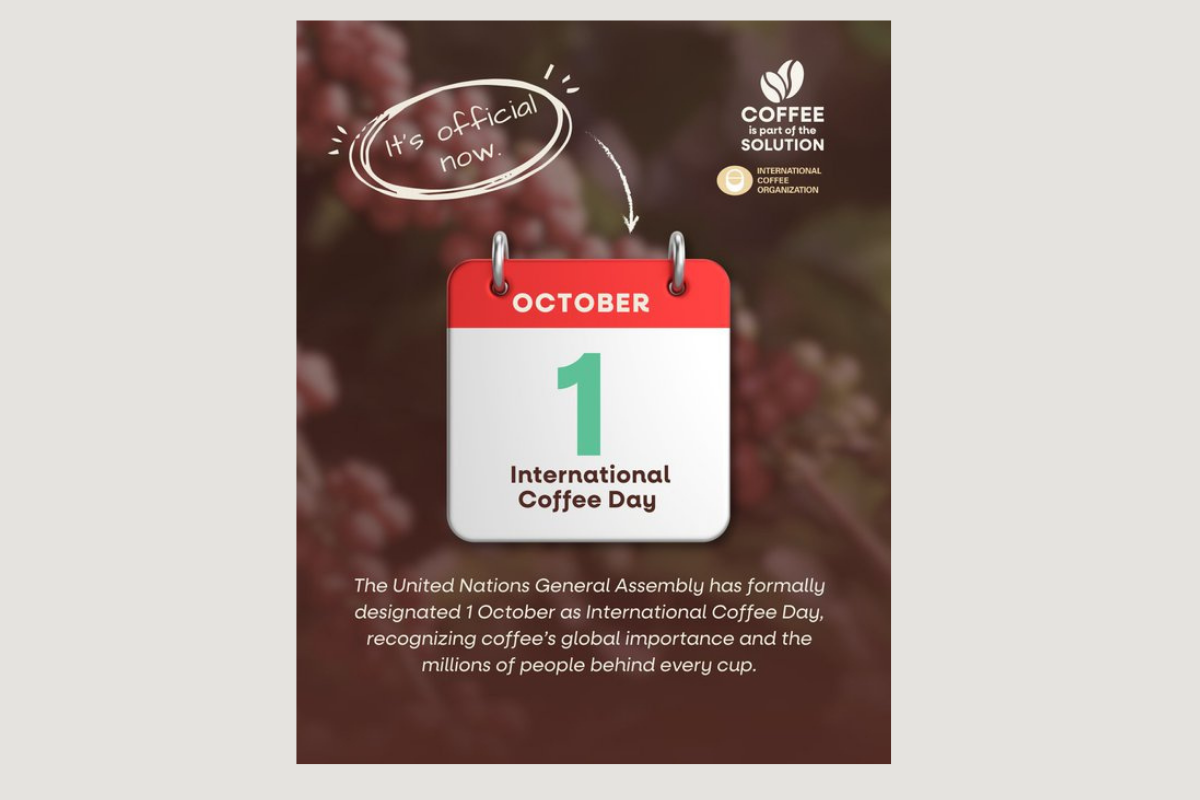
The International Coffee Organization has announced what it described as “a historic moment for the global coffee community” after the United Nations General Assembly formally designated 1 October as International Coffee Day.

According to the announcement, the decision recognizes coffee’s profound importance to global economies, cultures, and livelihoods, highlighting the role the beverage plays across producing and consuming nations alike.

The milestone follows the adoption of Resolution A/80/L.44 by the United Nations General Assembly on 10 March 2026. The resolution, introduced by Brazil, received 150 votes in favor, with one vote against from the United States and one abstention from Canada.

United Nations Officially Declares 1 October International Coffee Day

Under the resolution, 1 October will now be officially recognized every year as International Coffee Day, and all countries, United Nations bodies, and relevant stakeholders are invited to organize activities that highlight the economic, social, and environmental significance of coffee.

The resolution also invites the Food and Agriculture Organization of the United Nations to lead the annual observance in cooperation with the International Coffee Organization.

  • Elevating an existing global celebration

International Coffee Day has already been observed globally on 1 October since 2015, when the initiative was first launched by the International Coffee Organization during Expo 2015 Milan.

The new United Nations designation elevates the observance to an official international day within the UN system, giving the coffee sector broader global recognition and strengthening the visibility of the millions of people who depend on coffee for their livelihoods.

United Nations Officially Declares 1 October International Coffee Day

In its statement, the International Coffee Organization noted that the decision reflects the collective efforts of its member countries, institutional partners, and international organizations, including the Food and Agriculture Organization, to raise awareness of the coffee sector’s importance.

  • Supporting farmers and sustainability

Coffee remains one of the world’s most widely traded agricultural commodities and supports millions of farmers, workers, traders, and communities across Africa, Asia, and Latin America.

The International Coffee Organization and the Food and Agriculture Organization see the UN recognition as an opportunity to strengthen global attention to the sector’s key challenges and opportunities, including sustainability, farmer livelihoods, and climate-related risks affecting coffee production.

Qu Dongyu welcomed the decision, stating that the new international day will help raise awareness of coffee’s socio-economic importance and reinforce its role in supporting efforts to reduce poverty worldwide.

United Nations Officially Declares 1 October International Coffee Day

For the global coffee community—from smallholder farmers to exporters, roasters, and consumers—the recognition marks a significant step toward greater international acknowledgment of the industry’s cultural and economic impact.

With the adoption of the UN resolution, International Coffee Day on 1 October is expected to gain even broader global participation, as governments, organizations, and coffee professionals organize events and initiatives celebrating the beverage and the people behind every cup.

ICO Launches 2026 Global Campaign: Coffee is Part of the Solution

London – QAHWA WORLD

The International Coffee Organization (ICO) has launched its 2026 global communications campaign under the theme “Coffee is Part of the Solution,” highlighting the sector’s role in addressing major global challenges.

Coffee provides income for approximately 12.5 million farming families worldwide and plays a central role in socio-economic development across producing regions and their communities.

Through this campaign, the ICO aims to reinforce the sector’s contribution to tackling pressing issues, including inequality, livelihoods, sustainability, climate resilience and inclusive development.

You may like: Bridging the Gap: An Exclusive Dialogue with Vanusia Nogueira on the Global Coffee Crisis and the Path to 2026

Beyond its economic value, coffee contributes in many regions to rural development, carbon sequestration, environmental sustainability, cultural heritage preservation, inclusive infrastructure and innovation. It also strengthens ties between producing and consuming countries, as well as between public and private stakeholders.

The campaign seeks to spotlight these contributions while encouraging collective action across the entire coffee value chain.

Throughout 2026, the ICO will present evidence, strategies and initiatives demonstrating how collaboration among producers, governments, the private sector, financial institutions and civil society can amplify coffee’s positive impact in addressing global challenges.

“Coffee has always been more than a commodity. It is a catalyst for development, dialogue and cooperation,” said Vanusia Nogueira, Executive Director of the ICO. “Through this campaign, we want to show that when the sector works together, coffee can support resilience, improve livelihoods and contribute meaningfully to solutions.”

The initiative also invites the global coffee community to share examples of impact-driven projects using the hashtag #CoffeeIsPartOfTheSolution, illustrating how collaboration can deliver measurable results on the ground.

As the intergovernmental body representing both coffee-exporting and importing countries, and convening public and private stakeholders, the ICO will continue to mobilize trusted data, dialogue, finance, knowledge and innovation. The campaign will be rolled out across the organization’s digital platforms throughout 2026, supported by institutional videos, data insights and engagement with members and partners worldwide.

The International Coffee Organization is the only intergovernmental organization dedicated to enhancing the sustainability of the coffee sector for both exporting and importing countries. It serves as a high-level platform for public and private stakeholders, provides official statistics on global coffee production, trade and consumption, and facilitates the development and funding of technical cooperation projects and public-private partnerships to advance the coffee industry.