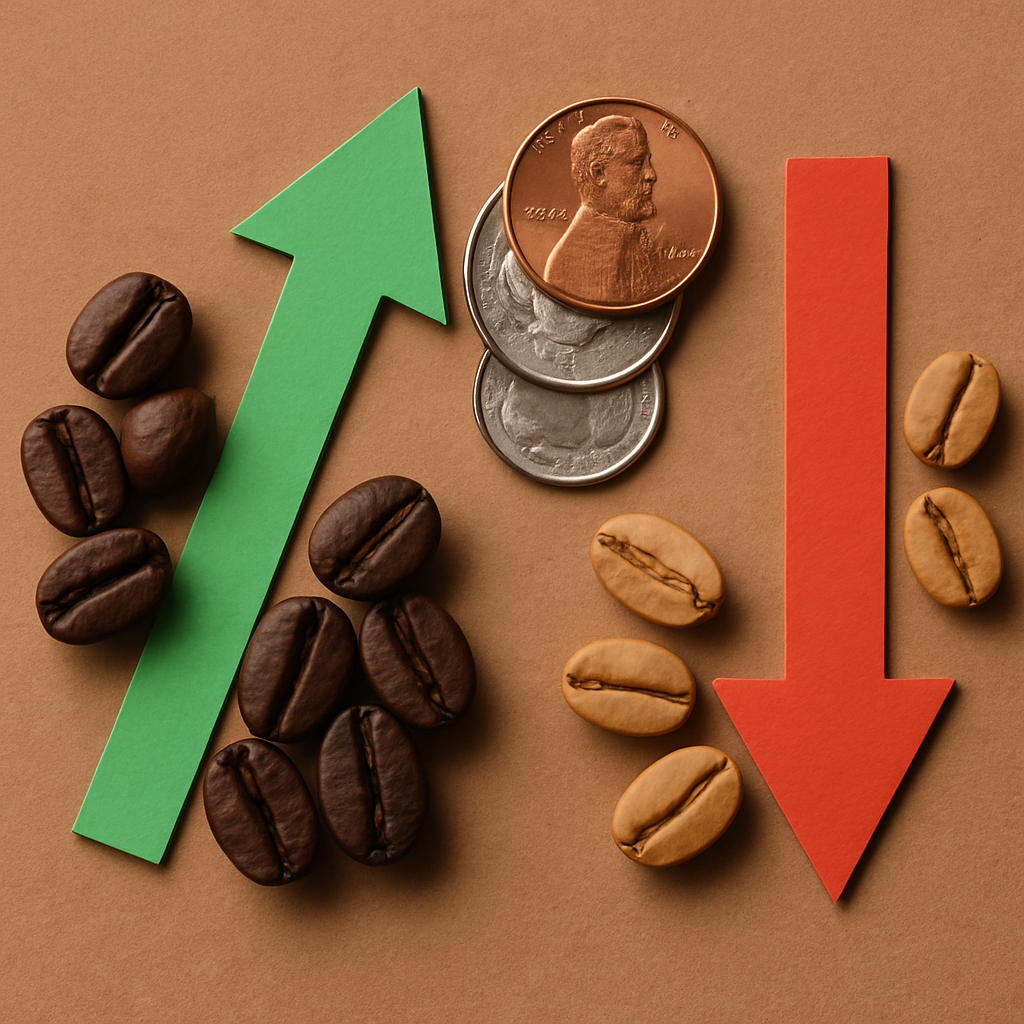
U.S. Coffee Prices Hit Record Levels Despite Stable Global Markets

DUBAI – QAHWA WORLD

By any measure, coffee should be getting cheaper.

International green coffee prices have eased in recent months as production rebounds in major origins. Yet in the United States, retail coffee prices continue to climb — reaching levels not seen in decades.

According to data from the U.S. Bureau of Labour Statistics, the average retail price of roasted coffee in the United States hit $9.37 per pound in January, up 33% year over year. That marks the highest level since federal record-keeping began in the 1980s.

At the same time, global benchmark prices for green coffee have fallen to roughly $3.64 per pound, reflecting improved crop expectations and stabilising supply chains.

So why is the world’s largest coffee-consuming economy moving in the opposite direction?

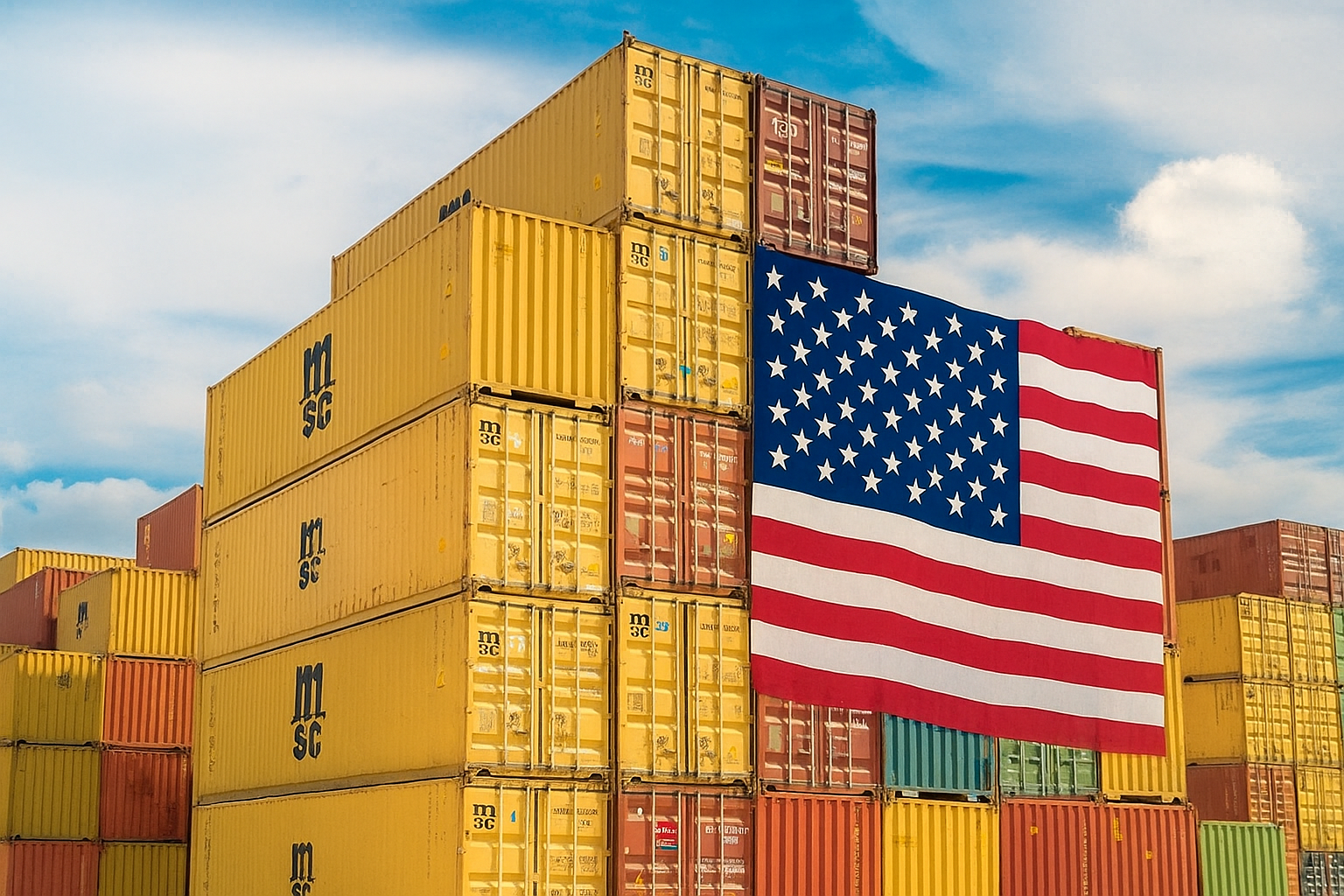
Tariffs and Trade Policy Still Ripple Through the Market

The answer begins with trade policy.

During the previous administration of Donald Trump, tariffs were imposed on key coffee-exporting countries. The United States introduced:

  • A 46% tariff on imports from Vietnam

  • A 10% tariff on imports from Brazil and Colombia

Vietnam, Brazil, and Colombia collectively supply more than 60% of U.S. coffee imports. Any disruption involving these origins has immediate consequences for American roasters.

In July, an additional 40% tariff on Brazilian food and beverage imports was proposed. Although that measure was later reversed, the market had already reacted. Coffee is traded months in advance, and importers typically lock in contracts well before shipments arrive. By the time policies shift, pricing structures are already embedded in the supply chain.

In coffee, timing is everything — and costs move slowly in one direction.

The Lag Between Global Prices and Retail Shelves

Green coffee prices are only one component of what consumers pay. Roasting, freight, warehousing, labor, packaging, and retail margins all compound the final number on a supermarket shelf or café menu.

Even when global commodity prices fall, retailers rarely adjust immediately. Contracts must roll over. Inventories must clear. New pricing agreements must be negotiated.

There is also a behavioural element at play. Coffee remains a daily ritual for millions of Americans. Demand has proven remarkably resilient, even in periods of inflation. When consumers continue buying at higher prices, businesses face little urgency to cut them.

Corporate Performance Signals Strong Demand

Publicly traded coffee giants reflect this resilience.

Shares of Starbucks are up roughly 14% year to date in 2026. Meanwhile, Keurig Dr Pepper has gained about 5% over the same period.

Strong performance suggests that consumers are still spending on coffee, whether in cafés or at home. For investors, it’s a sign of pricing power. For consumers, it means relief may not come quickly.

A Market Split: Global Relief, Domestic Pressure

Globally, supply conditions are improving. Brazil’s production outlook has strengthened, and earlier disruptions in key growing regions have begun to ease. That has kept international prices from climbing further.

But the United States operates within its own pricing ecosystem — shaped by trade policy, distribution costs, and consumer behaviour.

The result is a widening gap between falling global bean prices and rising American retail prices.

Will U.S. Coffee Prices Come Down?

They may — but not immediately.

As older contracts expire and lower global prices filter through the system, wholesale costs could soften. However, whether those savings reach consumers depends on competitive pressure, corporate strategy, and demand trends.

Coffee has evolved far beyond a commodity. It is a cultural staple, a daily necessity, and for many households, a non-negotiable expense.

For now, Americans are paying record prices for their morning cup — even as the rest of the world sees relief.

And until supply contracts reset and market forces realign, that disconnect is likely to persist.

Brazilians Celebrate as Trump Cancels Coffee Tariffs

Dubai – Qahwa World

Brazilian coffee exporters celebrated Friday after U.S. President Donald Trump ordered the removal of additional import tariffs on coffee, which had been set at 40% in July.

Cecafé, Brazil’s coffee exporters council, called the tariff hike “a complete loss of competitiveness.”

“The tariff reversal comes after months of intense work representing the interests of Brazilian coffee. It is a historic victory for the entire coffee agribusiness production chain,” the council said in a statement.

Brazil has long been a major supplier of coffee and beef to the United States. On Thursday, Trump lifted tariffs on Brazilian goods as part of an effort to lower consumer costs for Americans. The decision affected coffee, fruit, and beef, among other products.

The U.S. leader had initially imposed additional import taxes on Brazilian goods, citing trade practices he deemed unfair, as well as the prosecution of former President Jair Bolsonaro, who was later sentenced to 27 years in prison for attempting to stage a coup after losing the 2022 election.

Before the tariffs, U.S. government data showed Brazil, the world’s top coffee producer, supplied about 30% of the American market, followed by Colombia at roughly 20% and Vietnam at about 10%.

“The removal of the 40% tariff imposed by the U.S. government on several Brazilian agricultural products is a victory for dialogue, diplomacy, and common sense,” Brazilian President Luiz Inácio Lula da Silva said Thursday on X. He shared a video reacting to Trump’s order, expressing his satisfaction with the decision.

Trump and Lula have been negotiating trade terms, which could lead to further reductions in tariffs. Lula also praised “the frank dialogue” with Trump and confirmed that Brazil would continue discussions to strengthen bilateral trade.

Trump Administration Considers Coffee Tariff Reduction

Dubai – Qahwa World

President Donald Trump indicated in a televised interview that his administration is preparing a policy shift aimed at reducing tariffs on coffee imports, a move expected to influence one of the most widely consumed commodities in the United States. His comments, though brief, come at a moment when households across the country are facing increased pressure from rising food and beverage prices.

In the interview, Trump noted that the upcoming steps will include lowering certain tariffs on coffee, framing the measure as part of a wider initiative to ease living costs for American families. Coffee, which the United States does not produce domestically in commercially viable quantities, remains heavily dependent on global supply chains and import regulations, making it sensitive to trade decisions and tariff schedules.

The president’s statement has drawn significant interest among economic analysts and industry observers who view the potential tariff reduction as a meaningful intervention in a market shaped by fluctuations in global supply, shipping disruptions, and heightened consumer demand. Within Washington, discussions have reportedly been underway regarding adjustments to tariffs on essential goods that form part of Americans’ daily consumption patterns, including coffee.

Reports suggest that the Treasury Department has explored possible frameworks for easing import duties on coffee shipments entering U.S. ports. Supporters of the proposed change argue that reducing these duties could contribute to lower retail prices, provided that broader logistical pressuressuch as freight costs and delivery bottlenecksdo not counteract the effect. Businesses operating in the coffee sector, particularly roasters, cafés, and national chains, have long highlighted tariff costs as a contributing factor in pricing decisions.

In parallel to the domestic policy review, the administration is described as engaging in trade dialogues with key coffee-producing countries such as Argentina, Guatemala, El Salvador, and Ecuador. These discussions reportedly address streamlining import procedures and reducing barriers that have complicated the movement of coffee into the U.S. market. Strengthening these trade channels could not only benefit exporting nations but also help stabilize supply routes that have experienced strain in recent seasons.

The U.S. coffee market has faced sustained price pressures driven by global climate challenges affecting crop yields, elevated transportation costs, and persistent shifts in consumption patterns. Retail prices have climbed steadily, prompting questions from consumers and businesses alike about the underlying factors contributing to the upward trend. Given that the United States relies almost entirely on imported green coffee beans, the sector remains highly exposed to external shocks.

From a political standpoint, the potential tariff reduction may signal an effort by the administration to respond to public concerns about inflation and household affordability. Coffee holds a unique place in daily American life, making any decline in its price particularly visible to voters. Policies that directly influence the cost of essential consumer goods can carry notable political implications.

Internationally, a U.S. decision to ease coffee tariffs could reshape commercial relationships between the United States and producing countries seeking reliable high-volume markets. Depending on the scale and timing of the policy, the move might also influence global coffee price dynamics, especially if exporters adjust their strategies in anticipation of changing demand from American buyers.

As the industry awaits more concrete details, companies across the supply chainimporters, roasters, distributors, and retailersare assessing how the potential adjustment might affect their operations. Lower tariffs could relieve some of the financial pressure that has accumulated due to higher operating costs, enabling businesses to revisit pricing models and long-term procurement strategies.

Although the president’s remarks did not include a timeline or formal policy outline, they represent the clearest indication to date that the administration is preparing to intervene directly in coffee-related import costs. The statement has already prompted expectations of a forthcoming announcement, as market participants and consumers closely watch Washington for the next development. The outcome of this initiative could have substantial implications for the future of coffee prices and availability across the United States.

U.S. Senate Bid to Fast-Track “No Coffee Tax Act” Denied

Dubai – Qahwa World

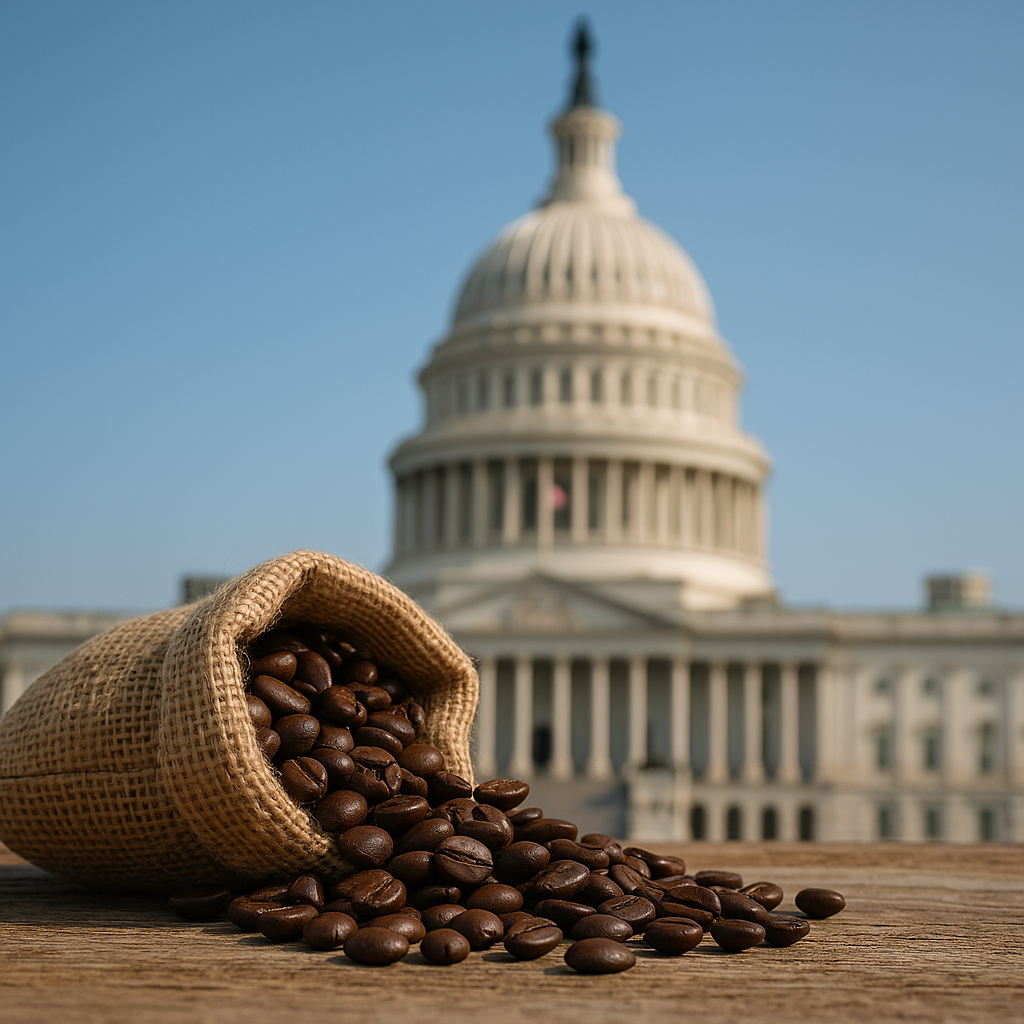
As U.S. coffee prices continue to climb, an effort in the U.S. Senate to fast-track the bipartisan “No Coffee Tax Act” stalled on Wednesday after a single Republican senator objected.

On the Senate floor, Sen. Catherine Cortez Masto (D-Nev.) requested unanimous consenta procedure allowing noncontroversial bills to pass without a roll-call voteto advance the bill she co-authored with Sen. Rand Paul (R-Ky.).

Video footage of the session shows Sen. Mike Crapo (R-Idaho), chair of the Senate Finance Committee, raising an objection. His move sends the measure back to the committee for further review.

The proposed legislation is part of a broader effort by lawmakers and coffee industry groups to exempt coffee from President Donald Trump’s “reciprocal tariffs”—import fees applied to a wide range of goods. Current tariffs on imports from nearly all coffee-producing nations range from 10% to 50%, with the 50% tariff on Brazil having a particularly strong impact on U.S. coffee prices.

Meanwhile, the cost of coffee for consumers continues to surge. In September, the average grocery price for a pound of roasted, ground coffee reached $9.14, an increase of 41% from a year earlier. According to the Bureau of Labor Statistics, the coffee index rose 18.9% year-over-year, far outpacing overall food and beverage inflation.

The No Coffee Tax Act seeks to exempt coffee from such tariffs, emphasizing that the United States cannot produce coffee at a scale sufficient to meet domestic demand. Combined coffee production from Hawaii and Puerto Rico accounts for less than 1% of total U.S. green coffee consumption.

“I know that responsible, targeted tariffs on our adversaries can be good for American workers and our national security,” said Cortez Masto. “There’s a smart way to do thisbut taxing our coffee and raising prices for Americans isn’t it.”

In response, Crapo argued that the Senate should not make “one-off exceptions” for individual goods “in isolation of a larger negotiating strategy and broader stakeholder concerns.”

He also noted that coffee already benefits from tariff exemptions through recent trade agreements with Cambodia and Malaysiathough those two nations together account for less than 0.1% of global coffee production, according to USDA data.

Trump Faces Bipartisan Backlash Over Coffee Tariffs

Washington, D.C. – Qahwa World

A bipartisan group of U.S. lawmakers is urging President Donald Trump to exempt coffee imports from new reciprocal tariffs that have driven up consumer prices nationwide.

Representatives Ro Khanna (D-CA) and Don Bacon (R-NE) sent a joint letter to the White House requesting that coffee be added to the list of goods excluded under Executive Order 14257, arguing that tariffs on a commodity the U.S. scarcely produces only hurt consumers.

“We respectfully request your administration exempt coffee from reciprocal tariff measures that are drastically increasing its price,” the lawmakers wrote. “Given that our nation consumes around 400 million cups per day, this is one modest but meaningful way to help the American people.”

According to the Bureau of Labor Statistics, coffee prices in the U.S. rose 20.9% year-over-year in August 2025. The National Coffee Association reports that roughly 99% of all coffee consumed in the country is imported, mainly from Latin America and Africa.

Trump’s “Liberation Day” tariffs aim to level global trade terms, but coffee — not listed among exempt goods — has seen costs rise sharply. Khanna and Bacon note that Hawaii and Puerto Rico produce only small specialty quantities, representing less than 1% of domestic consumption.

“Tariffs on coffee do not protect domestic businesses and interests—they only raise costs and amount to an additional tax on American consumers,” the letter said. “It is not practical to tariff a product that our nation does not meaningfully produce.”

The lawmakers warned that higher import costs are forcing small coffee shops and hospitality businesses to raise prices or close altogether. Khanna, whose district covers Silicon Valley, said he regularly hears from café owners struggling to stay afloat.

The two legislators also recently introduced the “No Coffee Tax Act”, seeking to repeal coffee-related tariffs entirely. Bacon, who will retire from Congress next year, called the policy “a punishment to Americans,” adding, “There is no American alternative to coffee — why tariff something we can’t grow?”

A White House spokesman, Kush Desai, responded that the President had already included coffee among goods eligible for tariff-free treatment under certain trade deals, and blamed global supply disruptions in producing regions for recent price hikes.

Despite that clarification, the bipartisan pressure reflects growing unease over the wider economic impact of Trump’s tariff agenda — from agricultural exports to daily consumer goods such as coffee, a staple for two-thirds of American adults.

Rains in Brazil and Tariff Hopes Shake Global Coffee Markets

Dubai – Qahwa World

The global coffee market experienced another week of turbulence as changing weather conditions in Brazil and renewed hopes for a U.S.–Brazil trade deal sent Arabica prices on a volatile ride. December Arabica futures opened the week of October 13 at 373.20 cents per pound, marking the weekly low, climbed to 418.50 cents on Wednesday, and closed Friday at 397.45 cents per pound. The 45.30-cent range reflected a market increasingly driven by both climate and political signals.

The week began with upward momentum, supported by a stronger Brazilian Real and dry weather forecasts across southeastern Brazil. However, optimism faded midweek as rainfall finally reached the coffee-growing regions. Brazil’s Somar Meteorologia reported significant precipitation in Minas Gerais, the country’s largest Arabica-producing state, with further showers expected through the week. The long-awaited rains prompted traders to liquidate long positions, easing the price rally that had dominated previous sessions.

Market sentiment shifted further when U.S. President Donald Trump announced plans to meet Brazilian President Luiz Inácio Lula da Silva to discuss trade cooperation. The news sparked speculation that the two countries might resolve the ongoing tariff dispute affecting coffee exports. Brazilian coffee currently faces a 50% import tariff in the U.S., and even the prospect of relief was enough to trigger additional selling pressure. Analysts cautioned that, while both governments have expressed willingness to negotiate, no official policy change has yet been confirmed, leaving American buyers facing the same challenges in securing Brazilian coffee.

In Brazil, farmers welcomed the long-awaited rainfall after weeks of drought, though experts noted that one week of showers will not immediately reverse months of stress endured by coffee trees. The timing and consistency of upcoming rainfall will be critical to support flowering and the next harvest cycle. While weather conditions dominated origin discussions, another noteworthy development came from West Africa. Liberia announced plans to introduce Coffee Liberica as its national flagship crop under the FAO’s One Country One Priority Product initiative, expected to launch in December 2025. The program aims to elevate the indigenous Liberica species to global recognition alongside Arabica and Robusta, potentially revitalizing Liberia’s agribusiness sector by creating jobs, attracting investment, and expanding its international presence. Although Liberica remains unfamiliar to many consumers, industry observers believe this move could generate renewed curiosity and demand for the rare variety.

In currency markets, the U.S. Dollar Index traded within a narrow range as traders monitored political developments and awaited signals from the Federal Reserve, which entered its communication blackout period ahead of its next policy meeting. Concerns about a potential government shutdown in the United States persisted but lacked the urgency seen earlier in the month. Both the British Pound and the Euro strengthened modestly against the Dollar as global markets remained steady. By the end of the week, GBP/USD stood at 1.34 and EUR/USD at 1.165, marking a calm close to an otherwise eventful week in the coffee and currency markets.

Tightening ICE Stocks Push Coffee Futures Higher

Dubai – Qahwa World

Global coffee futures climbed as stocks registered on the Intercontinental Exchange (ICE) continued to shrink, tightening availability and pushing traders to reprice risk. December Arabica (KCZ25) rose about 1.78%, while November Robusta (RMX25) gained roughly 1.9%, reflecting increased buying interest across both contracts.

The market has been reacting to a notable decline in ICE-tracked inventories: Arabica holdings dropped to roughly 534,665 bags, a low not seen in about 18 months, and Robusta balances fell to near 6,237 lots, the lowest in a few months. A major contributor to tighter U.S. supplies has been new trade barriers: a 50% tariff on Brazilian coffee imports has prompted some American buyers to cancel or delay contracts, and because Brazil supplies about one-third of U.S. unroasted coffee, the effect has been pronounced.

Weather worries have compounded supply concerns. Key Arabica zones in Brazil — notably Minas Gerais — received barely measurable rainfall in early October, raising alarms about the crop’s flowering stage for 2026/27. Forecasters have also increased the odds of a La Niña episode through the October–December window, a pattern that can bring drier conditions to Brazil and add further downside pressure to yields.

Still, the global picture contains mixed signals. The International Coffee Organization reported a small year-on-year rise in exports for the current marketing window, pointing to continuing flows of coffee around the world. At the same time, Vietnam’s strong Robusta shipments — up double digits year-to-date — are helping keep robusta markets supplied.

Brazilian crop agencies and exporters have trimmed recent estimates or recorded export slowdowns: domestic forecasts for Arabica output have been revised lower and export volumes in some months have fallen sharply from year-earlier levels. Conversely, U.S. Department of Agriculture outlooks point to a modest increase in total world production for 2025/26, driven largely by a stronger Robusta harvest, while some trade houses continue to flag an Arabica shortfall.

The interplay of shrinking registered stocks, tariff-driven trade shifts and weather risks leaves prices vulnerable to swings — and keeps market attention trained on inventories, crop forecasts and buyer behavior in the coming weeks.

Jacu Bird Coffee Escapes Trump’s Tariffs as Brazil’s Specialty Exports Collapse

São Paulo – Qahwa World

While Brazil’s premium coffee exports are reeling under heavy U.S. tariffs, one unusual specialty brew has managed to stay untouched: coffee produced from beans eaten and excreted by the Jacu bird.

In early August, U.S. President Donald Trump imposed a 50% tariff on Brazilian goods amid a political dispute with President Luiz Inácio Lula da Silva. The move has slashed U.S. imports of Brazilian specialty coffee by nearly 70% in August alone, according to the Brazilian Specialty Coffee Association. The damage has been especially severe for premium brands, long favored by American consumers.

Yet Jacu Bird coffee — a rare Arabica harvested at Fazenda Camocim in Brazil’s Atlantic Forest — has emerged unscathed. The beans are naturally processed through the digestive tract of the Jacu, a fruit-eating bird of the Penelope species, giving the coffee a distinctive floral aroma and balanced acidity.

“Americans don’t have the same vision as the Japanese, Asians, Saudis, or Europeans in seeking out this type of quality,” said Henrique Sloper, producer and CEO of Fazenda Camocim. “For us, the tariffs don’t affect this product.”

Jacu Bird coffee, which can fetch up to £960 ($1,300) per kilo, has gained strong followings in Japan, Europe, and parts of the Middle East. Its production was inspired by Indonesia’s famous Kopi Luwak, made from beans digested by civets.

Rogerio Lemke, agriculture supervisor at Fazenda Camocim, explained that the bird’s varied diet enhances the beans’ profile: “The Jacu eats fruit as well as coffee. Inside its craw, the coffee absorbs the fruit’s characteristics, adding complexity to the cup.”

While this niche product thrives, the broader sector is suffering. Brazil’s coffee exporters group Cecafe confirmed that specialty beans have been hardest hit by the tariffs, driving a “ruinous” decline in shipments to the U.S.

Sloper admitted the farm’s other coffees, which form the bulk of production, are facing losses: “America is the largest coffee market in the world, and we’re shut out. In the short term, it’s very bad. But in the medium and long term, it may push us to open other markets.”

For now, the Jacu Bird — once seen as a nuisance in coffee groves — has unexpectedly become a symbol of resilience in Brazil’s struggling specialty coffee industry.

Worth $58.5 Billion: US Coffee Market Slows Under Cost Pressures

Dubai Qahwa World

The US branded coffee shop industry, one of the largest in the world, is showing signs of strain as growth slows amid rising costs and a tough economic climate. According to new industry research, the market is now worth around $58.5 billion, achieving 6.6% annual sales growth a dip from last year’s 7%.

Despite the cooling pace, the market continues to expand in size and scale. Net outlet growth reached 4.2% in 2025, bringing the total to more than 45,200 stores across 588 brands, although this marks a slowdown from the 5.1% growth recorded in 2024.

Expansion Meets Resistance

Big players are still adding stores. Starbucks, Dunkin’, Dutch Bros, and 7 Brew each expanded by more than 100 outlets over the past year. Yet, broader growth has been curbed by record-high green coffee costs, persistent inflation, and a 50% tariff on Brazilian imports, which together create unprecedented pressure on operators.

Drive-thru coffee chains are leading the charge. Dutch Bros surpassed 1,000 locations, while Arkansas-based 7 Brew posted the fastest expansion rate in the sector. Black Rock Coffee Bar, following its $294 million IPO in September 2025, is also preparing for nationwide growth.

Adding to the competitive landscape, China’s Luckin Coffee and Cotti Coffee have entered the US market. At the same time, more than 50 independent café businesses grew to five or more outlets, officially stepping into the branded chain category.

Consumers Pay More, Confidence Drops

Sales figures were propped up by higher menu prices. Over the last year, the average cost of a 16oz latte, cappuccino, or filter coffee rose by 3%, while iced coffee went up by nearly 5%.

Although more than half of US industry leaders reported positive sales, fewer than a third described overall trading conditions as favorable down sharply from 2024. Just 20% of executives expect conditions to improve in the coming year, and more than one-third now predict that coffee shop sales will lag behind US GDP growth.

Non-Dairy Options Go Mainstream

One of the most notable shifts in consumer trends has been the removal of surcharges for plant-based milks. Eighteen of the 20 largest coffee chains including Starbucks, Dunkin’, and Dutch Bros now serve oat, almond, and other dairy alternatives without extra charges.

Still, nearly two-thirds of industry leaders believe that surcharges remain justified due to higher costs, and more than half of customers indicated they would pay extra for their preferred alternative milk. Almond milk continues to dominate demand.

Outlook to 2030: Resilience and Adaptation

Even with mounting headwinds, the sector shows long-term resilience. Market forecasts project that the US branded coffee shop industry will exceed $63 billion within a year and reach $82.4 billion by 2030, supported by outlet growth to more than 57,700 stores nationwide.

Industry experts say growth will increasingly depend on portfolio adjustments and new strategies to meet evolving customer expectations in a challenging economy.

US Congress Moves to Exempt Coffee from Tariffs

Dubai – Qahwa World 

A bipartisan bill titled the “No Coffee Tax Act” has been introduced to the United States Congress, aiming to repeal tariffs placed on coffee imports under the Trump administration.

The United States is the largest coffee importer in the world, with production limited only to Hawaii and Puerto Rico. Yet, tariffs currently affect major exporting nations. Goods from Brazil face a 50% tariff, Vietnam 20%, India 50%, Mexico 25%, and Indonesia 19%, all above the administration’s base rate of 10%.

The bill, sponsored by Nebraska Representative Don Bacon and California Representative Ro Khanna, has already drawn support from Virginia’s Don Beyer and New Hampshire’s Maggie Goodlander.

Bacon emphasised that taxing a crop not grown at scale in the US is harmful to consumers: “Families across America are already paying 21% more for coffee. Tariffs on a product we cannot produce commercially only make things worse. They are simply a tax on consumers, raising costs without creating jobs.”

He further highlighted that Congress, under Article One of the Constitution, holds tariff-setting authority, and this legislation reasserts that power.

If passed, the bill would exempt coffee—green, roasted, decaffeinated, husks, skins, and substitutes containing coffee—from any tariffs imposed after January 19, 2025.

The US coffee industry has strongly supported the measure, arguing that coffee cannot be grown at a scale sufficient to meet demand. A petition launched by roaster Coffee Bros in April 2025 has already gathered nearly 15,000 signatures.

Khanna compared the tariffs to Britain’s tax on tea before the American Revolution: “Americans started a revolution over a tax on tea. Today, US coffee prices have surged in part due to these tariffs. Our bipartisan bill is simple—it removes Trump’s tariffs on coffee to bring down costs.”

According to Reuters, the legislation is expected to be formally introduced on Friday. Bacon expressed optimism that the measure would not only reduce prices for consumers but also prompt a wider debate on Congress reclaiming its constitutional role in tariff policy.

Coffee Prices Mixed as Robusta Surges and Arabica Faces U.S. Tariff Pressure

Dubai – Qahwa World

Coffee futures ended Monday in mixed territory as robusta prices climbed on concerns over heavy rains in Vietnam, while arabica remained under pressure from uncertainty surrounding U.S. tariff policy and ongoing harvest progress in Brazil. December arabica (KCZ25) fluctuated during the session and ultimately closed down -1.50 (-0.41%), while November robusta (RMX25) gained +121 (+2.93%).

The sharp rise in robusta was fueled by forecasts of heavy rainfall across Vietnam’s Central Highlands, the country’s key growing area, which could damage cherries entering their final stage of development before harvest. Vietnam, the world’s largest producer of robusta, continues to play a decisive role in global market movements. Despite the short-term weather risks, the country is still expected to deliver a bumper crop, with 2025/26 production projected to climb 6% year-on-year to 1.76 million metric tons, or 29.4 million bags, the highest level in four years. Export momentum remains strong as well, with shipments from January to August up 7.8% compared with the previous year, reaching 1.141 million metric tons.

Arabica, meanwhile, faced renewed selling pressure linked to the policy debate in Washington, where lawmakers are considering a bill that would exempt coffee imports from tariffs. The United States currently maintains a 50% tariff on Brazilian imports, a measure that has disrupted traditional trade flows and forced buyers to cancel contracts. This has tightened U.S. supplies significantly, with ICE-monitored arabica inventories falling to a 17-month low of 643,341 bags. Robusta inventories also dropped to a 1.75-month low of 6,464 lots. The trade impact is considerable, since Brazil accounts for roughly one-third of America’s unroasted coffee imports.

While tariffs weigh on demand for arabica, supply-side pressures in Brazil are offering a degree of support. Somar Meteorologia reported that Minas Gerais, Brazil’s largest arabica-producing state, received only 10.5 millimeters of rain during the week ending September 20, representing just 73% of the historical average. September is a critical flowering month for coffee trees, and any shortage of rain could compromise the next crop cycle. Earlier this month, Brazil’s crop agency Conab cut its forecast for the 2025 arabica harvest by 4.9% to 35.2 million bags and lowered total coffee production to 55.2 million bags, reinforcing concerns about supply.

Globally, the balance remains tight despite expectations of record output. The USDA’s Foreign Agriculture Service projects that world coffee production will increase by 2.5% in 2025/26 to reach 178.68 million bags. Arabica output, however, is forecast to decline 1.7% to 97 million bags, while robusta is expected to rise by nearly 8% to 81.6 million bags. This uneven growth underlines the structural imbalance in the market. Commodity trader Volcafe has warned that the arabica deficit will widen to 8.5 million bags in 2025/26, compared with 5.5 million bags in the previous cycle, marking the fifth consecutive year of shortfalls.

Export figures add further weight to bullish sentiment. The International Coffee Organization reported earlier this month that global shipments in July fell 1.6% year-on-year to 11.6 million bags, while cumulative exports for the first ten months of the current season declined 0.3%. Brazil’s shipments saw particularly sharp declines. Data from the Trade Ministry showed that unroasted coffee exports in July plunged 20.4% to 161,000 metric tons, while exporter group Cecafe reported green coffee shipments down 28% to 2.4 million bags. Robusta exports collapsed by nearly half. In total, Brazil’s shipments between January and July dropped 21% to 22.2 million bags.

In the short term, harvest pressure continues to weigh on arabica prices. Brazil’s Cooxupe cooperative, the country’s largest exporter group, reported that its members had completed 98.9% of the harvest by September 12, signaling that near-term supply remains ample. Yet market participants remain cautious about the months ahead, with the National Oceanic and Atmospheric Administration forecasting a 71% chance of La Niña developing between October and December. Such a weather pattern could intensify drought conditions in Brazil and place the 2026/27 crop at risk.

The global coffee market thus finds itself pulled in opposite directions. On one side, robusta prices are supported by immediate weather risks in Vietnam, while arabica is weighed down by trade policy uncertainty and harvest dynamics in Brazil. On the other, tightening inventories, shrinking exports, and the prospect of continued arabica deficits provide a strong bullish undertone. With weather volatility and geopolitical trade policies both in play, analysts expect price swings to remain a defining feature of the market for months to come.

Why Have Coffee Prices Surged Again Globally?

Dubai, September 9, 2025 (Qahwa World) – Coffee prices are once again on the rise, pushing global markets into a renewed bullish phase after months of volatility and decline. Analysts point to a mix of climate pressures, trade barriers, falling inventories, and speculative buying as the key forces driving the market upward.

Arabica coffee futures on the Intercontinental Exchange (ICE) climbed above $3.70 per pound in early September 2025, nearing record levels last seen at the beginning of the year. This rebound followed a sharp downturn during the first half of 2025, when prices fell by 19.22% in the second quarter and dropped 4.07% overall in the first six months, closing June at $3.0675 per pound.

On July 8, 2025, the December Arabica contract reached its lowest point of the year at $2.72 per pound. From there, the market staged a dramatic recovery, rallying nearly 43.9% to $3.9130 by August 28. The turnaround signaled a renewed long-term bullish momentum for coffee.

Climate Concerns Put Pressure on Supply

Brazil, the world’s largest coffee producer, is facing challenging weather conditions, including drought in some regions and unusually cold temperatures in others. These climate issues have heightened concerns about reduced crop yields in the upcoming harvest.

At the same time, ICE data shows that open interest in coffee futures rose 11.5% between August 12 and August 28, climbing from 146,352 to 163,170 contracts, highlighting increased speculative activity. Meanwhile, ICE coffee inventories fell to multi-year lows, further tightening global supply.

Tariffs Fuel the Rally

Adding to the pressure, the United States has imposed additional tariffs on coffee imports from Brazil and Vietnam, the two largest exporters. These trade barriers have raised costs for roasters, while well-capitalized Brazilian farmers have held back sales, using the tight market to strengthen their negotiating position. The result has been an acceleration of the rally in coffee prices.

Starbucks Feels the Impact

Rising green coffee costs are weighing directly on Starbucks, one of the world’s biggest buyers. While U.S. equity markets reached new highs in August, Starbucks shares underperformed. From March 3 to September 5, 2025, the stock fell 27.5% from $117.46 to $85.06, before closing at $85.32—6.4% below the year-end 2024 level. Analysts point to rising input costs, particularly coffee, as a major factor behind the decline.

Lack of Investment Vehicles

Since the iPath Coffee Subindex ETF ceased trading in June 2023, investors seeking direct exposure to coffee have had to rely exclusively on futures and options listed on ICE. Each futures contract represents 37,500 pounds of green coffee. At $3.7365 per pound on September 5, the December contract was valued at approximately $140,118.75. With an initial margin requirement of $10,659, traders can control the contract with just 7.6% upfront, though they must meet maintenance margin calls if equity falls below $9,690.

Outlook: Volatility Ahead

Looking forward, analysts expect heightened volatility in the coffee market over the coming weeks and months. Climate challenges in Brazil, tariff-driven trade distortions, and dwindling inventories will continue to keep upward pressure on prices. While the long-term trend remains bullish, sharp fluctuations are likely to remain a defining feature of the global coffee trade.