Peruvian Coffee Output Stable at 4.78 Million Bags in 2026

Author: Qahwa World – Lima
Source: USDA Foreign Agricultural Service – Report PE2026-0008
Date: May 20, 2026

Peruvian Coffee Output Stable at 4.78 Million Bags in 2026

Executive Summary

  • Peruvian coffee production for 2026/2027 is estimated at 4.78 million 60 kg bags, broadly unchanged from the previous year.
  • Harvested area is estimated at 340,000 hectares, up about 1% from last season.
  • Exports are estimated at 4.55 million bags, also unchanged, supported by stable supply and strong demand for high-quality Arabica.
  • The United States is the largest market for Peruvian coffee with a 32% share, followed by Germany (16%) and Belgium (11%).
  • Over 90% of coffee is grown by smallholders on plots smaller than 5 hectares.
  • Peru is the world’s largest exporter of organic coffee, with approximately 90,000 certified hectares.
  • Domestic consumption is estimated at 305,000 bags, with 75% being soluble coffee.

The USDA Foreign Agricultural Service office in Lima estimates Peruvian coffee production for marketing year 2026/2027 at 4.78 million 60 kg bags, broadly unchanged from 2025/2026 (4.76 million bags). Total exports are estimated at 4.55 million bags, also broadly unchanged, supported by stable supply and continued demand for high-quality Arabica and certified coffees. Domestic consumption is estimated at 305,000 bags.

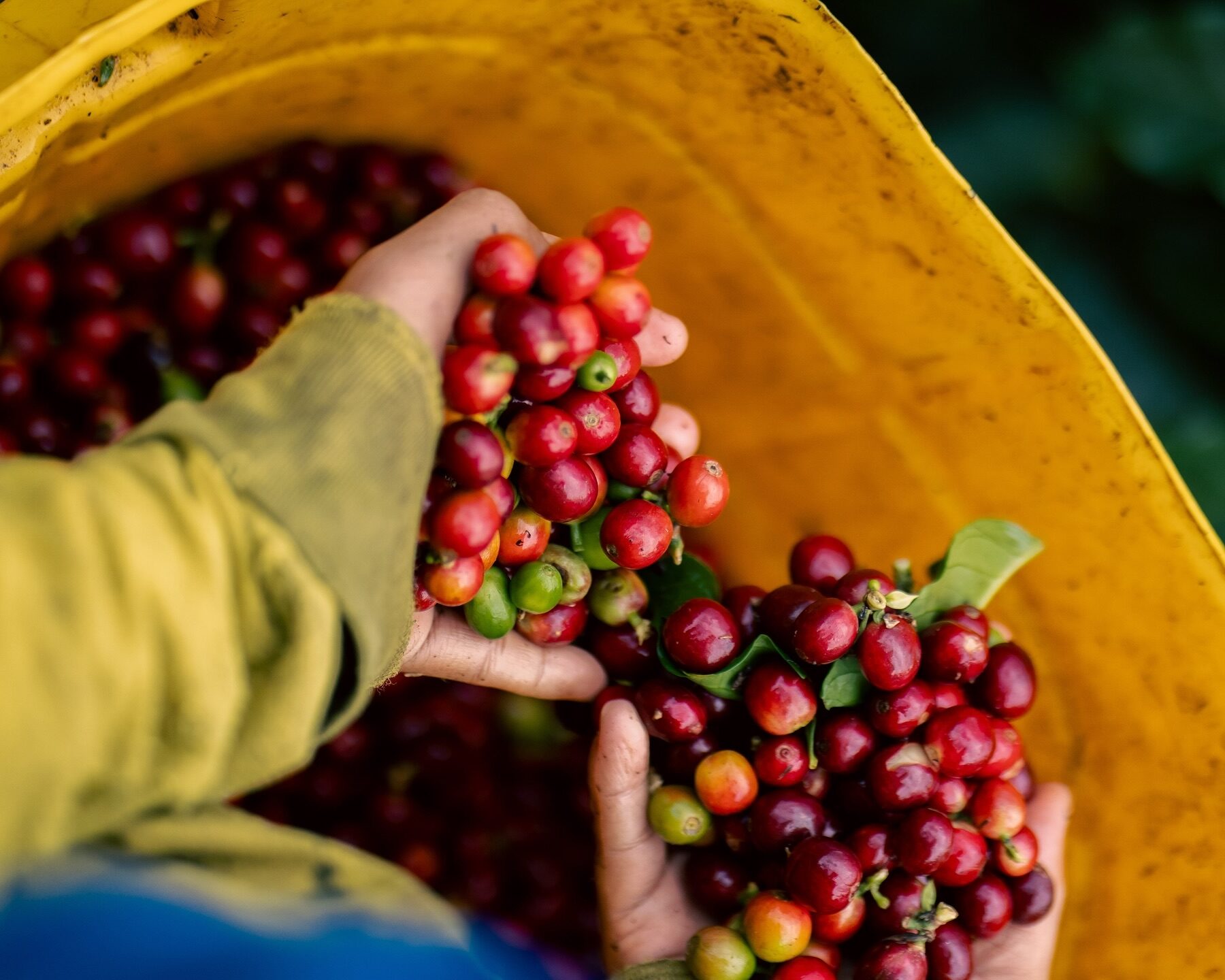
Harvested area is estimated at 340,000 hectares in 2026/2027, up about one percent from 2025/2026. The number of bearing trees is estimated at 630 million, while total tree population is estimated at 668 million trees. Arabica is the dominant coffee type, primarily of the Typica and Caturra varieties. Most farms are small (under 5 hectares) and rely on traditional methods like shade-growing, hand-picking, and sun-drying.

Credit Access and Infrastructure Challenges

Limited access to credit remains a major challenge for small producers. Private banks often reject untitled land as collateral, forcing farmers to rely on informal lenders or buyers. This results in burdensome fixed-price contracts and high interest rates.

Many farmers join cooperatives to obtain better prices, technical support, and marketing resources. However, infrastructure challenges, particularly poor roads and inadequate storage facilities, continue to limit Peru’s competitiveness in global coffee markets.

Table 1: Peru Coffee Production, Supply and Distribution (1,000 60 kg bags)

Item 2024/2025 2025/2026 2026/2027
Planted Area (1,000 HA) 370 370 375
Harvested Area (1,000 HA) 332 335 340
Arabica Production (1,000 bags) 3,700 4,200 4,780
Robusta Production (1,000 bags) 0 0 0
Total Production (1,000 bags) 3,700 4,764 4,780
Total Exports (1,000 bags) 3,440 4,238 4,550
Domestic Consumption (1,000 bags) 220 300 305
Ending Stocks (1,000 bags) 28 26 21

Production, Yields and Risks

Based on estimated production and harvested area, average yields in 2026/2027 are implied at approximately 843 kilograms per hectare. Yields vary significantly, with well-managed plantations achieving up to 45 bags (2,700 kg) per hectare.

Labor has the highest production cost, accounting for about 58% of total expenses, followed by fertilizers (24%) and agrochemicals (12%).

Peru’s coffee sector faces several risks that could affect production and export performance in 2026/2027:

  • Climate variability: Irregular rainfall, higher temperatures, and extreme weather events affect flowering, yields, and quality.
  • EUDR compliance: Meeting the EU Deforestation Regulation requirements remains a major challenge, especially for smallholders lacking land titles and georeferenced data.
  • Labor constraints: Rising labor costs and shortages during peak harvest periods increase production costs.

Exports and Key Markets

Peruvian coffee exports in 2026/2027 are estimated at 4.55 million bags, nearly unchanged from 2025/2026. Bean exports account for most shipments at 4.25 million bags, while roasted and ground exports are estimated at 300,000 bags and soluble exports at 4,000 bags.

The United States remained the top destination in 2024/2025, receiving 32% of exports, followed by Germany (16%) and Belgium (11%).

Export prices rose sharply in 2025/2026, averaging $7,577 per ton, 55% above the previous year. Prices are expected to remain above historical averages due to continued supply uncertainty, higher production costs, and sustained demand for high-quality Arabica.

Peru is the world’s leading exporter of organic coffee, with approximately 90,000 hectares certified organic. Many additional hectares are effectively organic due to limited use of chemical inputs. To meet foreign demand for specialty coffee, many producers pursue certification programs including Fair Trade, Organic, Rainforest Alliance, and Starbucks C.A.F.E. Practices.

Domestic Consumption and Policies

Domestic coffee consumption in 2026/2027 is estimated at 305,000 bags, up about two percent from 2025/2026. Soluble coffee accounts for 75% of total domestic consumption. However, consumption patterns are evolving, with a growing preference for roasted and ground coffee, especially among young urban consumers. Despite these trends, domestic consumption still represents only about six percent of total production.

Through the Food for Progress Program, FAS financed the regional MOCCA project to strengthen coffee value chains. In Peru, MOCCA has trained over 27,000 producers, supported the establishment of 515 nurseries, and facilitated nearly $17 million in credit.

Peruvian coffee producers have expressed concerns over the EU Deforestation Regulation (EUDR), which requires that products not originate from land deforested after December 31, 2020. The National Coffee Board warns that small producers may struggle to comply due to lack of land use certifications and titles. Although Congress amended the forestry law in January 2024 to simplify certification, producers assert that more support is needed.

Peru’s coffee sector provides 855,000 jobs, primarily in remote and economically vulnerable regions. The government promotes coffee cultivation as a legal alternative to coca leaf production through the National Commission for Development and Life Without Drugs (DEVIDA).

Frequently Asked Questions

How much coffee will Peru produce in 2026/2027?

Production is estimated at 4.78 million 60 kg bags, broadly unchanged from the previous year.

What are the main export destinations for Peruvian coffee?

The United States is the largest market with 32% share, followed by Germany (16%) and Belgium (11%).

What is Peru’s position in the organic coffee market?

Peru is the world’s largest exporter of organic coffee, with approximately 90,000 certified hectares.

What percentage of Peruvian coffee is grown by smallholders?

Over 90% of coffee is grown by smallholders on plots smaller than 5 hectares.

How much coffee does Peru consume domestically?

Domestic consumption is estimated at 305,000 bags, with 75% being soluble coffee.


Author: Qahwa World – Lima | Source: USDA Foreign Agricultural Service – Report PE2026-0008 | Date: May 20, 2026

USDA Announces Second Tranche of Food for Peace Funding for Seven Countrie

Executive Summary

  • USDA announces second tranche of Food for Peace Title II Program funding
  • Applications accepted from 7 countries: DRC, El Salvador, Ethiopia, Guatemala, Haiti, Kenya, Rwanda
  • Program transferred to USDA administration on February 3, 2026
  • Focus on delivering US-grown commodities to global food assistance programs
  • Application deadline: June 12, 2026 at 5:00 PM EDT

The U.S. Department of Agriculture’s Foreign Agricultural Service today announced a second tranche of funding for the Food for Peace, Title II Program. Under a competitive Notice of Funding Opportunity, USDA will accept applications from the Democratic Republic of Congo, El Salvador, Ethiopia, Guatemala, Haiti, Kenya and Rwanda.

USDA announced on February 3, 2026, that pursuant to a temporary interagency agreement, it would administer the Food for Peace, Title II Program. The move transferred management of the historic food assistance program from the U.S. Agency for International Development to USDA.

Context: Food for Peace joins USDA’s existing portfolio of international food assistance programs, including the McGovern-Dole International Food for Education and Child Nutrition Program and Food for Progress.

“USDA is working to return Food for Peace to its core functions,” said Michelle Bekkering, Deputy Under Secretary for Trade and Foreign Agricultural Affairs. “This funding will more responsibly deliver lifesaving food assistance with high-quality American commodities, helping American farmers and producers at home and people in need across the world.”

Eligible Countries for Funding

  • Democratic Republic of Congo
  • El Salvador
  • Ethiopia
  • Guatemala
  • Haiti
  • Kenya
  • Rwanda

Food for Peace joins USDA’s portfolio of longstanding food assistance programs, alongside the McGovern-Dole International Food for Education and Child Nutrition Program and Food for Progress.

The Food for Peace NOFO on Grants.gov describes this funding in detail. Eligible applicants include public or private organizations, including intergovernmental organizations and other multilateral organizations.

Application deadline: 5:00 p.m. Eastern Daylight Time on June 12, 2026.

Frequently Asked Questions

What is the Food for Peace Title II Program?
Food for Peace is a historic U.S. government food assistance program that provides emergency and development food aid to countries facing hunger and food insecurity. Title II specifically covers the donation of U.S.-grown commodities.

Which countries are eligible for this funding?
The seven eligible countries are: Democratic Republic of Congo, El Salvador, Ethiopia, Guatemala, Haiti, Kenya, and Rwanda.

When was USDA given authority over Food for Peace?
USDA announced the temporary interagency agreement on February 3, 2026, transferring administration of the program from USAID to USDA.

What is the application deadline?
Applications must be submitted by 5:00 p.m. Eastern Daylight Time on June 12, 2026.

Where can I find the full NOFO?
The complete Notice of Funding Opportunity is available on Grants.gov.

Who is eligible to apply?
Public or private organizations, including intergovernmental organizations and other multilateral organizations, are eligible to apply.


Global Coffee Prices Fall as U.S.–Brazil Trade Talks Raise Hopes for Tariff Relief

New York – Qahwa World

Coffee prices continued to decline on Monday as traders reacted to signs of a possible breakthrough in trade negotiations between the United States and Brazil. The downward movement follows a volatile week in which arabica and robusta futures hit multi-month highs before retreating sharply.

Market optimism grew after Brazil’s President Luiz Inácio Lula da Silva announced that his meeting with U.S. President Donald Trump, held on the sidelines of the ASEAN Summit in Malaysia, was “surprisingly good.” Lula hinted that both nations were close to finding a “definitive solution” on trade within days. This development has raised expectations that the heavy tariffs imposed on Brazilian exports, including coffee, could soon be eased.

Brazil, the world’s largest coffee exporter, has been significantly affected by the 50 % tariffs placed on its coffee shipments to the U.S. earlier this year. The duties have disrupted the normal flow of beans to American buyers, forcing many roasters to look for alternative suppliers. As a result, coffee inventories monitored by ICE have dropped to their lowest levels in over a year — arabica stocks fell to 447,773 bags and robusta holdings slipped to just over 6,000 lots. Since nearly one-third of the U.S. coffee supply comes from Brazil, any shift in trade policy could have immediate effects on American imports and retail prices.

Even as the diplomatic news eased some pressure, weather conditions in Brazil continue to concern the market. Somar Meteorologia reported that the main arabica-producing state of Minas Gerais received only 0.3 millimeters of rain in the week ending October 24 — about 1 % of its normal rainfall. The Bloomberg Brazil Weather Analysis confirmed that rainfall across the region has been about 30 % below average for the past month, fueling fears that prolonged dryness could reduce flowering and affect the 2026/27 crop yield.

Meanwhile, Vietnam’s coffee sector, the world’s largest producer of robusta, is showing the opposite trend. The Vietnam Coffee and Cocoa Association expects production in 2025/26 to increase by 10 % year-on-year if favorable weather continues. Official statistics show that the country exported 1.23 million metric tons between January and September 2025 — up 10.9 % from a year earlier — and total output for the upcoming season is projected to reach 1.76 million tons, equivalent to 29.4 million bags. This would mark Vietnam’s most productive season in four years and continue to weigh on robusta prices.

The International Coffee Organization also reported that global coffee exports from October to August rose slightly by 0.2 % to 127.9 million bags, suggesting that the overall supply remains sufficient despite regional challenges. In Brazil, crop forecasting agency Conab cut its 2025 arabica estimate in September by 4.9 % to 35.2 million bags, bringing total coffee production for the year to 55.2 million bags.

At the global level, the U.S. Department of Agriculture’s Foreign Agriculture Service (FAS) projects total coffee production for 2025/26 to reach 178.7 million bags — a 2.5 % increase year-on-year. Arabica output is expected to fall 1.7 % to 97 million bags, while robusta is forecast to grow 7.9 % to 81.6 million bags. Ending stocks are likely to rise nearly 5 % to 22.8 million bags, signaling more comfortable supply conditions heading into 2026.

However, climate factors may quickly change that outlook. The U.S. National Oceanic and Atmospheric Administration (NOAA) has raised the probability of a La Niña event to 71 % for the period between October and December. If it materializes, it could lead to drier-than-usual conditions across Brazil’s coffee-growing regions, threatening future yields.

For now, the coffee market remains pulled between political progress and environmental risk. The possibility of a U.S.–Brazil trade agreement could restore smoother coffee flows to the United States and ease supply constraints, but persistent drought conditions in South America and growing output in Southeast Asia continue to shape global price trends. Traders are watching both developments closely as the market searches for direction in the final quarter of 2025.

Coffee Prices Surge on Brazil Weather Concerns and Supply Tightness

Dubai, 23 August, 2025 (Qahwa World) – Coffee futures surged sharply on Friday, reaching multi-month highs as weather concerns in Brazil and tightening global supplies continued to fuel bullish momentum. December arabica coffee (KCZ25) closed up +13.30 cents (+3.64%), marking a 3.5-month high, while September ICE robusta (RMU25) gained +108 points (+2.27%), its strongest level in three months. The rally extended a three-week upward trend, with traders reacting to reports of dry conditions and frost damage in Brazil, the world’s largest coffee producer.

According to Somar Meteorologia, Minas Gerais, Brazil’s leading arabica coffee-growing region, recorded no rainfall during the week ending August 16. This lack of precipitation, coupled with recent frost damage, raised concerns over crop yields and pushed prices higher. Additional upward pressure came from the United States, where coffee supplies are tightening as buyers void new Brazilian contracts in response to a 50% tariff on Brazilian exports. With nearly one-third of U.S. coffee imports traditionally sourced from Brazil, the restrictions have intensified market concerns over availability.

Brazil’s Trade Ministry reported that July unroasted coffee exports fell by 20.4% year-on-year to 161,000 metric tons. Exporter group Cecafe confirmed an even steeper decline in green coffee shipments, which dropped 28% in July to 2.4 million bags. Arabica exports fell 21%, robusta plunged 49%, and overall shipments for the January–July period slipped 21% to 22.2 million bags. Meanwhile, ICE-monitored arabica inventories fell to a 1.25-year low of 726,661 bags before recovering slightly to 729,606 bags on Friday. Robusta inventories also dropped to a four-week low of 6,642 lots, down from a two-year high of 7,029 lots at the end of July.

On the other hand, progress in Brazil’s harvest is adding a bearish element. Safras & Mercado reported that 99% of the 2025/26 crop was harvested as of August 20, with the robusta harvest completed and 98% of arabica finished. Brazil’s largest cooperative, Cooxupé, announced that its members had completed 86.1% of their harvest by August 15.

Global developments continue to influence sentiment. The International Coffee Organization reported that world coffee exports rose 7.3% in June to 11.69 million bags, although cumulative shipments from October through June were slightly lower at 104.14 million bags. In Vietnam, drought reduced 2023/24 production by 20% to 1.472 million metric tons, the smallest crop in four years, while 2024 exports dropped 17.1%. The Vietnam Coffee and Cocoa Association has since lowered its 2024/25 production forecast to 26.5 million bags. However, government data showed that exports from January to July 2025 rose 6.9% to 1.05 million metric tons.

The USDA’s Foreign Agriculture Service projects that global coffee production in 2025/26 will rise by 2.5% to a record 178.68 million bags, with robusta output increasing by 7.9% to 81.66 million bags and arabica output slipping 1.7% to 97.02 million bags. Ending stocks are forecast to climb 4.9% to 22.82 million bags. Despite these figures, trader Volcafe projects a widening arabica deficit of 8.5 million bags for 2025/26, compared with 5.5 million in 2024/25, marking the fifth consecutive year of shortages.

Coffee markets are now navigating the opposing forces of immediate weather-driven supply risks and harvest progress in Brazil against longer-term forecasts of record global output, leaving traders alert to further volatility in the weeks ahead.

China Simplifies Registration for Imported Roasted Coffee

Beijing – August 21, 2025 (Qahwa World) – A report released by the United States Department of Agriculture (USDA) titled China: Trade Alert – GACC Amends CIFER Self-Registration Process on August 20, 2025, revealed that the General Administration of Customs of China (GACC) has introduced new adjustments to the self-registration system for overseas food production enterprises. Among the product categories affected is roasted coffee, a key commodity for exporters targeting the rapidly growing Chinese market.

According to the USDA report, the changes took effect on August 14, 2025, when the Bureau of Import and Export Food Safety under GACC announced functional adjustments to the China Import Food Enterprise Registration (CIFER) system. The new requirements apply to manufacturers of products such as vegetables and their processed forms, grain-based products, tea, nuts and seeds, alcoholic beverages, beverages and frozen drinks, biscuits, pastries, bread, sugars including raw and edible sugar, lactose and syrups, candies, chocolates including cocoa butter substitutes, seasonings, roasted coffee beans, cocoa beans and their products, fruit-based products, and other miscellaneous food items.

The main adjustment is the removal of the requirement for self-registered enterprises to identify Harmonized System (HS) codes and China Inspection and Quarantine (CIQ) codes for the products they intend to export. Previously, exporters of roasted coffee beans and similar products risked rejection of applications if the codes were incorrectly entered. Under the new system, HS and CIQ codes are no longer required for self-registration of roasted coffee beans, cocoa beans, and a wide range of processed foods. However, some categories such as vegetables, vegetable products, grain products, and tea still require HS and CIQ code selection.

At the same time, the revised CIFER system introduces a mandatory page of enterprise commitments, which overseas manufacturers must complete before proceeding with registration. These commitments require applicants to confirm they are genuine manufacturers or operators of processing or cold storage facilities, explicitly excluding trading companies from applying. Applicants must be approved by, and under the effective supervision of, the food safety authority in the country of origin, and must upload valid production licenses issued by that authority. They are also required to maintain effective food safety and hygiene systems, ensure products comply with Chinese food safety laws and standards, and guarantee that the information submitted matches supporting documents in both content and authenticity.

The USDA report highlights that false declarations or inconsistencies can result in serious consequences, including revocation of Chinese registration, rejection or destruction of products, and potential investigation by the competent food safety authority in the exporting country. Enterprises must also pledge cooperation with GACC during food safety reviews, including providing additional verification materials or facilitating cross-checks with their national food safety authorities. Furthermore, registered enterprises are required to proactively assume responsibility for food safety, suspending exports to China and taking corrective measures if risks or non-compliance are detected.

The adjustments also cover additional reporting content such as production type and actual production or processing capacity, which must be provided within the CIFER system. Enterprises that have already been registered can view their specific approved products through the “Comprehensive Query – Registered in China” section of the system.

The USDA clarified that these changes do not apply to U.S. exporters of meat, poultry, dairy, infant formula, and seafood products, which remain subject to procedures established by FSIS and FDA. The new self-registration requirements are also not relevant for exporters whose products fall under the review of the GACC Department of Animal and Plant Quarantine (DAPQ) or other Chinese regulatory agencies.

By removing the need to provide HS and CIQ codes, the registration process for roasted coffee beans and other products is expected to become faster and less prone to administrative errors. However, the introduction of strict enterprise commitments underscores China’s emphasis on food safety, regulatory compliance, and accountability from overseas manufacturers. For coffee exporters, this combination of simplified technical requirements and strengthened legal obligations could reshape access to one of the world’s most dynamic and fast-growing coffee markets.