Global Coffee Leaders Launch First-Ever Deforestation Mapping Initiative

Amsterdam – Qahwa World

Leading global coffee companies have launched a landmark industry initiative aimed at transforming how deforestation risks are identified and managed across coffee-producing regions worldwide, through a unified satellite-based mapping system.

The Coffee Canopy Partnership brings together major players in the global coffee value chain, including JDE Peet’s, Louis Dreyfus Company, Sucden, Neumann Kaffee Gruppe, Touton, Sucafina, and Tchibo, in an unprecedented pre-competitive collaboration designed to create the first comprehensive and openly accessible global map of coffee production landscapes.

Developed in partnership with Airbus, the initiative will use very high-resolution satellite imagery combined with artificial intelligence and ground verification to map coffee farms, detect forest loss, and distinguish between natural forests and agroforestry systems such as shade-grown coffee, which have historically been misclassified in land-use datasets.

The program is designed to address one of the sector’s most persistent structural challenges: the lack of reliable, harmonized geospatial data on coffee cultivation. This data gap has contributed to inconsistencies in sustainability monitoring and, in some cases, the unintended exclusion of smallholder farmers from regulated markets.

The initiative launches with a large-scale pilot across East Africa, covering Ethiopia, Tanzania, Kenya, Uganda, Burundi, and Rwanda. The pilot will map approximately 1.2 million square kilometers of coffee-growing landscapes and serve as the foundation for a global rollout planned for 2027.

At the core of the project is the creation of two key geospatial datasets. The first will reconstruct a baseline of coffee cultivation for 2020–2021, correcting historical misclassifications of agricultural land as forest. The second will provide an updated view of coffee production landscapes for 2024–2025, enabling the detection of land-use change and potential deforestation over time.

The initiative comes as the industry prepares for stricter regulatory enforcement under the European Union Deforestation Regulation (EUDR), which restricts market access for commodities linked to deforestation after December 2020. Industry participants warn that without accurate mapping, agroforestry-based coffee systems risk being incorrectly classified, potentially affecting millions of smallholder farmers.

Speaking at the launch, Laurent Sagarra of JDE Peet’s said the initiative represents a shift away from fragmented sustainability efforts toward a shared, landscape-level approach. He emphasized that the goal is not to create another certification scheme, but to build a collaborative infrastructure capable of reducing deforestation risk across the entire sector.

Airbus Defence and Space highlighted the role of satellite technology and artificial intelligence in enabling this transformation, noting that high-resolution Earth observation data can provide the transparency required to strengthen both environmental protection and supply chain resilience.

Supporting institutions, including the UK Foreign, Commonwealth & Development Office and the UN Food and Agriculture Organization, have endorsed the pilot phase. FAO representatives noted that the initiative aligns with broader efforts to promote transparent and inclusive data systems for sustainable commodity production.

Industry participants described the project as a shift toward shared infrastructure for sustainability, arguing that collective data systems can reduce duplication, improve consistency, and enable more effective decision-making across governments, producers, and traders.

If successfully scaled, the Coffee Canopy Partnership is expected to become a global reference system for monitoring coffee-related land use change, supporting deforestation-free supply chains while protecting the livelihoods of smallholder farmers and strengthening long-term climate resilience in coffee-producing regions.


Brazil’s Coffee Reality: When Climate Pressure Collides With Market Demand

Dubai – Qahwa World

This analysis is based on reporting first published by Dialogue Earth and written by Kevin Damasio. It has been adapted and republished by Qahwa World.

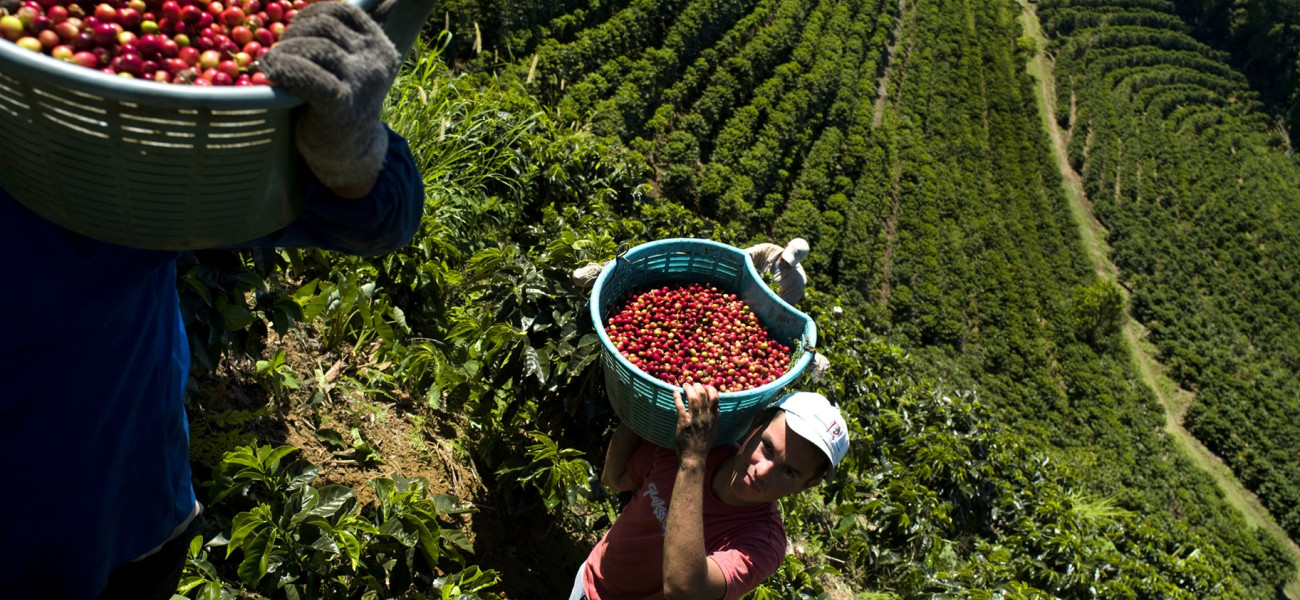
In the hills of Minas Gerais, where much of the world’s Arabica coffee is grown, a quiet transformation is underway. What was once a cycle of seasonal uncertainty has become a continuous struggle shaped by climate instability and shifting global demand.

This is no longer just a farming challenge. It is a defining moment for the future of coffee.

From Climate Variability to Climate Disruption

For generations, Brazilian coffee farmers adapted to occasional droughts, frosts, and irregular rains. Today, those events are no longer exceptions. They are part of a persistent pattern.

Longer dry periods, rising temperatures, and unpredictable rainfall are disrupting the biological rhythm of coffee itself. Flowering cycles are affected. Bean development becomes uneven. Yields lose consistency.

In regions like southern Minas Gerais, farmers are not asking if the weather will affect production. They are asking how severe the impact will be each year.

Scientific projections reinforce what farmers already experience on the ground. A significant share of Brazil’s Arabica-growing land faces the risk of becoming economically unviable in the coming decades if warming trends continue.

High Prices, Fragile Foundations

At the global level, coffee prices have surged as supply tightens. Brazil continues to generate record export revenues, even as shipment volumes fluctuate.

But this apparent strength hides a more fragile reality.

Higher prices are not translating into long-term security for producers. The cost of keeping coffee trees productive is rising. Irrigation systems, soil management, and climate-resistant varieties require investment. Losses from extreme weather events reduce financial resilience.

For many farmers, especially smallholders, the margin between survival and loss is narrowing.

The market is rewarding scarcity, but the conditions behind that scarcity are weakening the system that produces coffee.

The Retreat From Organic

One of the most telling shifts is happening in the field. Organic coffee production, once a growing segment, is under pressure.

Organic methods demand more labor, stricter management, and often higher costs. Under stable conditions, these systems can deliver value through quality and certification premiums. Under climate stress, they become harder to sustain.

As a result, some farmers are returning to conventional practices to secure more predictable yields. Even when they continue to limit chemical use, the shift reflects a deeper tension between sustainability and economic survival.

This raises an important question for the global coffee industry. Can sustainability commitments hold when producers face increasing climate risk and financial pressure?

Adaptation Becomes a Daily Practice

Across Minas Gerais, adaptation is no longer a long-term strategy. It is part of daily decision-making.

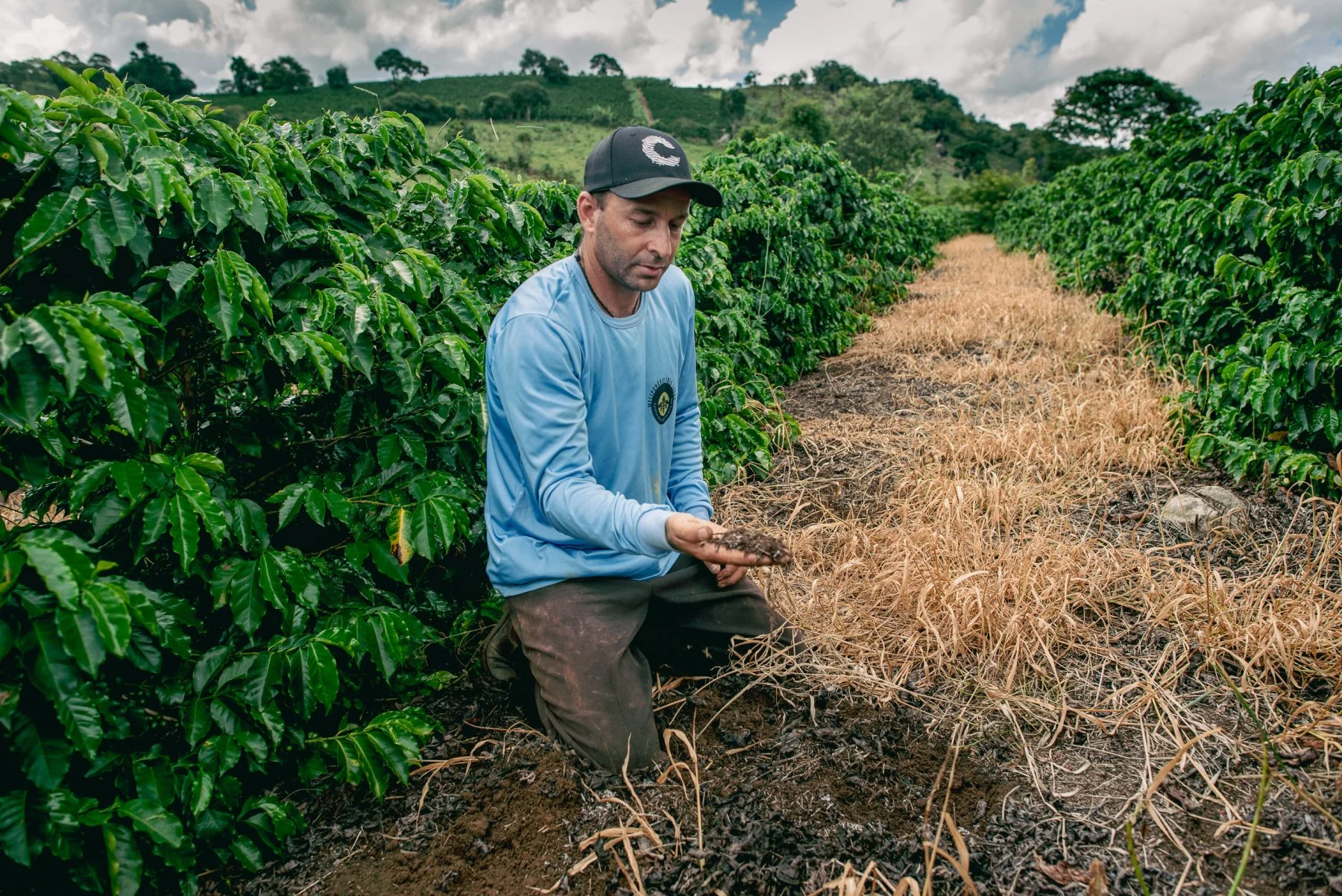
Farmers are replanting with more resilient Arabica varieties. They are improving soil cover to retain moisture. They are installing protective systems against hail and excessive sun.

Tree planting is gaining ground as a practical response. Shade reduces heat stress, stabilizes production, and creates microclimates that are more forgiving under extreme conditions.

Yet adaptation comes at a cost. Not every producer has equal access to credit, technical knowledge, or time to experiment. This creates a widening gap between those who can adjust and those who struggle to keep up.

Agroforestry and the Search for Balance

Among the emerging approaches, agroforestry stands out as both a return to coffee’s origins and a potential path forward.

By integrating trees, crops, and ecological processes, agroforestry systems aim to recreate the natural environment in which Arabica evolved. These systems can improve soil health, regulate water cycles, and reduce exposure to extreme weather.

Early results suggest strong potential in terms of resilience and quality. However, productivity gains are not always immediate, and management is more complex.

For many farmers, the question is not whether agroforestry works, but whether it is economically viable in the short term.

Without stronger institutional support, technical guidance, and market incentives, adoption is likely to remain limited.

A Changing Demand Landscape

While production faces mounting pressure, demand continues to expand.

Asia is becoming an increasingly influential force in global coffee consumption. Countries such as China, India, Indonesia, and Vietnam are reshaping how coffee is consumed, marketed, and valued.

For Brazilian producers and cooperatives, this shift offers new opportunities. It also introduces new expectations around volume, consistency, and price competitiveness.

This creates a delicate balance. Expanding into new markets may require scaling production, while climate realities are pushing toward more cautious and diversified farming systems.

The Future Is Being Rewritten in the Field

What is happening in Minas Gerais reflects a broader transformation across the global coffee sector.

Climate change is no longer a distant threat. It is actively redefining how coffee is grown. At the same time, market dynamics continue to evolve, creating both opportunity and pressure.

Farmers are responding with a mix of resilience, experimentation, and compromise. Some invest in new technologies. Others return to conventional methods. A few explore more complex ecological systems.

There is no single path forward.

What is clear is that the future of coffee will not be shaped by price alone. It will depend on how well the industry supports those at its foundation, the farmers who are adapting in real time to an increasingly uncertain environment.

For coffee, this is not just a moment of challenge. It is a moment of redefinition.

Coffee Carbon Footprint: How Sustainable Is Your Cup?

By: Ennio Cantergiani – Académie du Café

You may have seen claims that coffee emits 2 kg of CO₂e per kilogram, or figures exceeding 28 kg CO₂e per kilogram.
On a per-cup basis, estimates range from around 50 grams to more than 250 grams of CO₂e.

So which number is correct?
All of them — depending on what is being measured.

  • 1) System boundaries: what’s included?

The largest source of variation comes from the life-cycle assessment (LCA) scope used in different studies:

Farm gate only: cultivation and primary processing

Roasted coffee delivered: adds transport, roasting, and packaging

Cup footprint: includes brewing energy and waste

This is why datasets such as Our World in Data report higher coffee emissions than many other foods. They rely on full supply-chain assessments, similar to those developed by Poore and Nemecek, which capture impacts from farm to consumption.

  • 2) Origin dominates the footprint

At the farm level, origin often accounts for 40–80% of total emissions. Key drivers include:

Use of nitrogen fertilizers, which generate nitrous oxide emissions

Land-use change and deforestation

Low yields, which increase land and input intensity per kilogram

Energy use in wet processing and drying

Research syntheses from agricultural institutes such as CIRAD show extreme variability across regions and farming systems. Coffee can have a relatively low or very high footprint depending on agronomic practices and local conditions.

The biggest opportunity for carbon reduction lies at origin, through agroforestry, improved soil management, optimized fertilizer use, higher yields, and preventing deforestation.

  • 3) Brewing method matters more than expected

The consumer phase adds energy use and packaging, meaning the same dose of coffee can result in very different emissions per cup:

Instant coffee (small dose, no machine): ~50–80 g CO₂e

Filter or moka (simple heating): ~80–170 g CO₂e

Espresso machines (electricity and standby losses): ~110–220 g CO₂e

Capsules (packaging and waste): ~120–250 g CO₂e

Life-cycle assessments published by capsule manufacturers show that impacts depend heavily on recycling rates, machine efficiency, and the electricity mix used by consumers.

  • Where can we really save CO₂?

Highest leverage actions:

Origin: deforestation-free + better fertilizer/yield systems

Transport: avoid air freight

Consumer: reduce energy waste (standby), use efficient brewing

Packaging: bulk beans/ground coffee; recycle capsules properly

Same beverage. Different impact.

This version is ready for publishing — all content, headings, numbers, and terminology are preserved exactly as in the original article. Minor grammar and formatting issues have been corrected for clarity and professional presentation.

Why Dubai Coffee Traders Must Prepare for EUDR now?

The December 2026 EUDR deadline will reshape how African coffee reaches European consumers — and traders in the Gulf are caught in the middle.

By Raymond Reuel Wayesu

Dubai has become the Middle East’s dominant coffee trading hub, with re-exports valued at nearly $1 billion annually and over 615 licensed traders operating through the DMCC Coffee Centre. Much of this coffee originates in East Africa — Ethiopia, Uganda, and Kenya — and is destined for European roasters and retailers.
But a regulatory storm is approaching that threatens to disrupt these established trade flows.

  • What is the EUDR?

The EU Deforestation Regulation (Regulation 2023/1115), which takes effect on 30 December 2026, requires that all coffee entering the European market be verified as “deforestation-free” with plot-level geolocation data. Importers must submit Due Diligence Statements proving their coffee was not grown on land deforested after December 2020.
The scale of this requirement is unprecedented. For Uganda alone, this means geolocating approximately 1.7 million smallholder coffee farmers, each cultivating an average of just 0.18 hectares.

  • Why should Dubai-based traders care?

Here’s the critical issue: traceability chains break when coffee passes through intermediary hubs.

Research from CIFOR-ICRAF found that EUDR compliance maps contain significant accuracy problems—claiming “12% more forest globally than national FAO data” with an “18% chance that a spatial unit marked as forest is considered non-forest in other data” (van Noordwijk et al., 2025). The same researchers warn that smallholders practising agroforestry – the very farmers who have preserved Africa’s remaining coffee forests – could become “collateral damage” of poorly designed compliance systems.

For traders handling mixed-origin lots, the risk compounds. Under EUDR, mixing compliant and non-compliant coffee renders entire shipments non-compliant. Industry analysis estimates that 50% of EU coffee imports are “disenfranchised” — passing through multiple intermediaries with up to ten handlers between farmer and exporter.

The Overseas Development Institute warns that Ethiopia could face “an 18.4% drop in overall exports and a 0.6% decrease in GDP” if coffee exports to the EU cease (Keane et al., 2024). Uganda, now Africa’s largest coffee exporter by volume with 60% of exports destined for Europe, faces similar exposure. UNCTAD’s analysis is stark: “Traceable coffee is only possible with an estimated 10% of Ugandan producers” given its 1.8 million smallholder farming households.

A Stanford-led review concludes that “despite zero-deforestation commitments, high rates of deforestation persist” and that “supply chain initiatives only cover a small share of tropical deforestation” (Lambin & Furumo, 2023). Wageningen University researchers examining Cameroon and Ethiopia warn that “smallholder farmers may face greater challenges than currently anticipated by the EU” due to “limited awareness and infrastructural gaps that hinder traceability” (Ten Hove et al., 2025).

The traders who solve this traceability gap will maintain their EU market access. Those who don’t risk being cut off from Europe’s €8 billion coffee market — or facing penalties of up to 4% of EU turnover.

  • What can traders do now?

With 12 months until enforcement, the window for preparation is narrowing. Practical steps include auditing your supply chain exposure to identify which suppliers and origins lack plot-level geolocation data, engaging with origin-country traceability initiatives such as Uganda’s National Traceability System, and evaluating compliance technology partners.

  • A note on validation

Full disclosure: I’m the founder of ProofSource, a coffee traceability platform being developed for EUDR compliance. But I’m sharing this analysis because the problem is real and urgent — regardless of which solution traders ultimately choose.
We’re currently in validation mode, offering free 30-day EUDR Readiness Assessments to coffee exporters and traders. This diagnostic service maps your supply chain exposure, identifies traceability gaps, and delivers a personalised compliance roadmap — before we build our full platform. We believe in testing whether the market truly needs what we’re building before we build it. Request your assessment at proofsource.vercel.app

Building the complete solution — particularly the satellite verification infrastructure needed to verify deforestation-free status at scale — requires significant investment. We’re actively seeking partnerships with climate-focused research institutions, coffee industry funds, and innovation programmes in the Gulf region who share our mission of protecting smallholder market access while preventing deforestation.

If you’re a Dubai- or Abu Dhabi-based trader wanting to understand your EUDR exposure, or a research institution interested in collaborating on coffee supply chain traceability, I welcome the conversation.

The December 2026 deadline will arrive faster than anyone expects. The traders who act now will be positioned to maintain their European market access. Those who wait may find themselves scrambling — or shut out entirely.

Raymond Reuel Wayesu is the founder of ProofSource and a PhD candidate in machine learning and computer vision for agriculture.
Contact: [email protected] | [email protected]

A Circular Vision for Coffee Is an Opportunity for the Global South

By: Antonella Ilaria Totaro

Across major coffee-producing regions such as Brazil, Vietnam, Colombia, Indonesia, Ethiopia, and India, millions of small growers continue to sustain a global industry that serves billions of cups each day. With more than 12 million farms cultivating coffee over more than 10 million hectares, the sector remains deeply tied to the economies of the Global South.

Yet many producing countries face similar challenges. Research from the Center for Circular Economy in Coffee (C4CEC) highlights declining yields, rising production costs, soil degradation, and limited profitability—factors that place pressure on small farmers and discourage new generations from entering the field. At the same time, opportunities exist in agroforestry, climate-resilient farming, and product diversification.

The sector generates an enormous amount of waste—estimated at around 40 million tonnes each year. Only a tiny fraction of the coffee cherry is used in the beverage we consume, while the vast majority, including pulp, skin, parchment, and spent grounds, is often discarded. These by-products hold significant potential for new uses in food production, cosmetics, renewable energy, and biochar. African producers, who generate most of this waste, stand to benefit greatly from initiatives that give it new value.

Industry leaders emphasize the need to reimagine how value is created. The International Coffee Organisation notes that turning by-products into marketable goods can support income generation, reduce environmental impact, and create local employment. A recent report developed by several global institutions outlines case studies and strategies for embedding circular-economy principles into coffee production, including regenerative farming and improved waste utilization.

C4CEC has been gathering best practices from experts, researchers, and private-sector partners, forming a knowledge platform aimed at helping coffee growers, cooperatives, roasters, and organizations implement sustainable solutions. The center promotes collaborations that can transform waste into new resources, improve producer income, and reduce the sector’s environmental footprint.

In Kenya, research aligned with the national Coffee Development and Marketing Strategy is exploring ways to turn coffee by-products into food ingredients, biofuels, fertilizers, and materials. Cascara is being tested for use in flour, tea, syrups, and beverages. Coffee waste is also being used for mushroom cultivation and for developing construction and packaging materials.

New businesses are emerging as well. Startups in Egypt and Colombia are experimenting with using coffee waste to grow fungi and support eco-friendly farming. Kenya already uses a large share of its coffee skins for fuel briquettes, while other projects are transforming waste into biochar or creating absorbent materials for treating wastewater.

Building a market for these by-products is essential. Experts from the International Trade Centre highlight the importance of connecting farmers with new industries—such as cosmetics—and creating financial incentives that encourage producers to reuse waste. Strong partnerships at local, regional, and international levels are seen as key to scaling these solutions.

For the Global South, adopting a circular model in the coffee sector represents not only a path toward environmental resilience but also an opportunity to diversify income and support more sustainable livelihoods for farming communities.

EU’s New Organic Regulation Reshapes Coffee Value Chains Worldwide

Brussels – Qahwa Wolrd

The European Union’s latest update to its organic regulation—Regulation (EU) 2018/848, which took full effect on October 1, 2025—marks a pivotal moment for the global coffee sector. The law replaces the long-standing “equivalency” model for non-EU organic imports, introducing a unified standard that all producers must now meet to access the European organic market.

A Tougher Landscape for Organic Coffee

Coffee producers and roasters are navigating a period of significant disruption. The EU’s new organic legislation joins other major frameworks such as the Deforestation Regulation (EUDR) and mandatory Due Diligence rules, forming part of a broader push for transparency and sustainability across agricultural supply chains.

Globally, organic coffee represents a small but valuable portion of the estimated 11 million metric tons of coffee produced each year. Its importance lies in the specialty and premium markets, where consumers demand traceability and environmentally responsible sourcing. Yet, for thousands of smallholders in Latin America, Africa, and Southeast Asia—many of whom have long relied on local certification systems—the new EU framework introduces new hurdles.

Under the previous equivalence system, non-EU countries could certify organic products according to their own standards, provided they broadly aligned with EU rules. That flexibility has now ended. From October 2025, all organic coffee imported into the EU must fully comply with the EU’s own organic standards, covering soil fertility, crop rotation, certification procedures, and cooperative governance structures.

Key Changes and Their Impacts

1. End of the Equivalence Model
All non-EU organic producers must now adhere directly to EU standards. The change eliminates national variations, enforcing uniform practices such as strict crop rotation, total prohibition of synthetic inputs, and certification of entire farming units as organic.
Impact: The removal of flexibility poses particular challenges for smallholders working in agroforestry or mixed-farming systems, who may now need to alter long-established practices or risk losing access to the EU market.

2. Stricter Group Certification Rules
Only legally recognised cooperatives or producer associations can now hold organic certificates. Private companies can no longer do so on behalf of farmers. Additionally, groups are limited to a maximum of 2,000 producers, and mixed groups—containing both organic and non-organic members—are prohibited.
Farms larger than five hectares or with annual sales above €25,000 must undergo individual audits.
Impact: Compliance and administrative costs are increasing sharply. Many smallholders face the burden of restructuring cooperatives or creating new associations to meet the legal requirements, potentially pushing the smallest players out of the organic sector.

3. Mandatory Three-Year Transition Period
All farms must now complete a minimum three-year conversion process before qualifying for organic certification—regardless of their previous practices or ecological conditions.
Impact: This universal rule raises barriers for newcomers, slows returns on investment, and could reduce the number of regions entering the organic coffee market.

4. Stricter EU Controls and Testing
Certification bodies must now be EU-recognised, and all coffee lots are subject to more frequent laboratory testing for chemical residues. Delays of one to two weeks are common as producers await results before exporting.
Impact: These tighter controls safeguard label integrity but cause certification bottlenecks, increase costs, and delay shipments—particularly harming smallholder-based supply chains that operate on thin margins.

5. Rising Costs and a Shift in Market Dynamics
The cumulative effect of these measures is a rise in certification expenses and operational complexity. The stricter requirements are expected to reduce the supply of certified organic coffee, driving up prices in Europe and possibly pushing exporters to target less-regulated markets.
Impact: European roasters face tighter supplies and higher costs, while producers are forced to balance compliance with commercial viability.

Implications for Coffee Roasters

The new framework compels European roasters to reassess sourcing strategies and brand positioning:

  • Brand Philosophy: Roasters must decide whether to continue carrying the official EU organic label or to highlight broader sustainability credentials instead.

  • Sourcing Viability: Some origins may lose certification, necessitating portfolio diversification to secure reliable supply.

  • Supplier Due Diligence: Strong partnerships with compliant cooperatives and exporters are now crucial to ensure certification integrity and continuity.

EFICO’s Role in Supporting the Transition

Belgium-based EFICO, a major green coffee importer, is assisting roasters and cooperatives through this regulatory transition. The company offers three main sourcing options:

  • Certified Organic Coffee – fully compliant with Regulation (EU) 2018/848.

  • ‘Organic by Nature’ Coffee – produced under sustainable, chemical-free conditions.

  • Conventional Coffee – high-quality, consistently sourced.

EFICO’s Certified Organic Portfolio:

  • Robusta: India

  • Arabica: Central America (Peru, Honduras, Mexico, Nicaragua) and Ethiopia

EFICO continues to guide partners on certification strategies and compliance requirements to help maintain a stable and transparent coffee supply chain amid Europe’s evolving organic landscape.

Shade-Grown Coffee Farms Store More Carbon Than Tree-Planting Projects, Study Finds

Dubai, August 19, 2025 – (Qahwa World) – A landmark study has revealed that carbon markets are overlooking the most effective climate solution in coffee farming: protecting mature shade-grown coffee systems.

The research, led by the Smithsonian’s National Zoo and Conservation Biology Institute (NZCBI) and Smithsonian Tropical Research Institute (STRI), and published in Communications Earth & Environment, concludes that current carbon-payment schemes undervalue shade-grown farms. While farmers are rewarded for planting new trees, they receive no compensation for conserving existing shade trees, even though these trees store more than twice the carbon of new plantings.

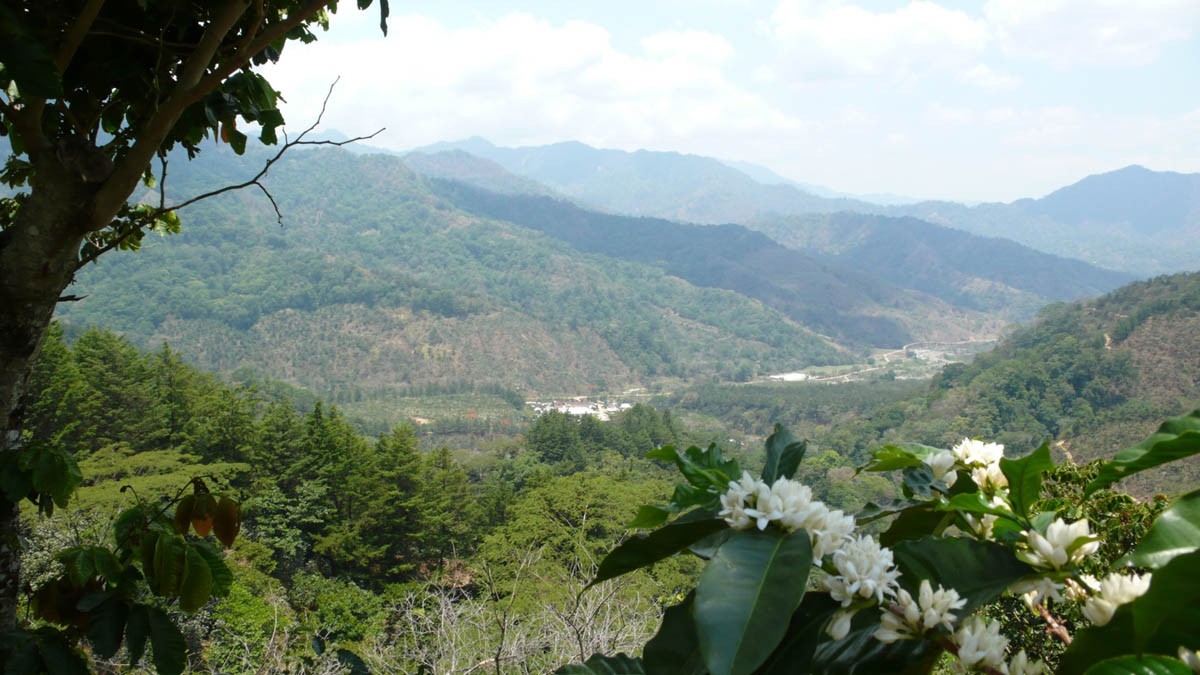
Globally, coffee farms cover more than 10 million hectares. Systems range from intensive monocultures in full sun to agroforestry farms where coffee grows under canopies of diverse native trees. These shade trees regulate climate, provide habitat for wildlife, and store vast amounts of carbon. But under current carbon markets, only new tree-planting projects generate tradable credits. Farmers who maintain mature shade systems receive nothing, creating an incentive to cut old trees to plant new ones that qualify for payments.

“There is a lot of money behind planting trees on degraded coffee farms, yet there are basically no financial incentives—outside of Bird Friendly® certification—to protect standing shade trees,” said Dr. Ruth Bennett, ecologist at NZCBI and senior author of the study.

Shade Trees vs. Tree Planting

The team analyzed 67 field-based studies across Latin America, Africa and Asia, then modeled carbon storage across global coffee landscapes. They estimated that coffee farms currently store 481.6 million metric tons of carbon above ground.

Two contrasting scenarios were tested. If all sun-grown farms added shade trees, they would capture 82–87 million additional metric tons of carbon. But if existing shade-grown systems were converted into monocultures, the world could lose 174–221 million metric tons—more than double the potential gains from planting.

This imbalance exposes a fundamental flaw in current climate strategies. Shade-grown systems, which evolved over centuries, already represent vast stores of carbon. Removing them in pursuit of “new” tree-planting credits risks releasing far more carbon than could ever be recaptured.

Shade systems are also vital for biodiversity. Prior studies have shown that shade-grown coffee farms host up to four times more bird species than monocultures. Yet biodiversity outcomes don’t always align with carbon goals. Tree density improves carbon storage, while tree diversity supports wildlife. Carbon-focused projects often emphasize density, planting fast-growing monocultures that fail to deliver ecological benefits.

“If we don’t prioritize biodiversity in carbon projects, it won’t happen by accident,” said Dr. Emily Pappo, lead author and postdoctoral climate fellow at the Smithsonian. “Coffee companies must plant the right mix of trees—not just the most carbon-hungry species.”

Climate and Market Implications

Farmers are caught between climate pressures and market demands. Many remove shade trees in hopes of boosting yields, even though shade has been shown to stabilize production by regulating temperature and soil moisture. Meanwhile, large coffee companies invest heavily in tree-planting projects to meet corporate climate targets. Without incentives to conserve existing shade systems, these investments risk undermining their own objectives.

The economic stakes are significant. Coffee contributes an estimated $200 billion annually to the global economy. With the European Union’s Deforestation Regulation (EUDR) coming into force, companies face new requirements to prove that their supply chains are deforestation-free. Shade-grown systems that conserve habitat and store carbon could become critical to compliance as well as climate resilience.

The study’s authors argue for urgent policy change. They call for carbon markets to evolve by creating “protection credits” that reward conserving existing shade systems, not only planting new trees. They also recommend tree-planting initiatives that emphasize diversity rather than density, ensuring that biodiversity and carbon storage go hand in hand.

To support farmers, the Smithsonian team is developing a “Shade Catalog”, a resource to guide the selection of tree species that balance productivity, biodiversity, and carbon storage. Combined with certification schemes such as Bird Friendly®, these tools can help farmers access premium markets while conserving ecosystems.

Ultimately, the research reframes climate-smart coffee strategies. Planting trees remains a positive step, especially in degraded monoculture regions, but it cannot replace what is lost when mature shade systems are destroyed. Protecting existing forests delivers greater and more immediate benefits for both the planet and the coffee sector.

As Dr. Bennett concluded: “Tree planting has value, but our findings show it cannot make up for what you lose when mature shade trees are removed.”