Ethiopia Coffee Revenue Tops 3 Billion

Source: Official government reports & Daily Coffee News analysis
Author: Qahwa World
Date: July 8, 2026

Ethiopia Coffee Revenue Tops 3 Billion

  • Ethiopia earned 3.1 billion dollars from coffee exports in a single year.
  • This represents a 719.6% increase compared to 20 years ago.
  • The country ranks third globally and first in Africa for coffee exports.
  • One year’s income exceeded the total of the previous 17 years combined.
  • Rising global demand for organic coffee opens new opportunities for Ethiopia.
  • A comparison with Brazil reveals Ethiopia’s competitive edge in sustainable farming.
  • The analysis recommends increased technical and financial support for farmers.

Ethiopia announced a historic achievement in its coffee sector. Export revenues surpassed the 3 billion dollar mark. This reflects a strategic transformation in farming and marketing policies.

Annual revenues reached 3.1 billion dollars. This surpasses the total earned over the previous 17 years. That total stood at only 3.3 billion dollars.

Historical Numbers Confirm Accelerated Growth

Official data compared current performance with past periods. The results showed enormous revenue growth. For example, 20 years ago, revenues were only 366 million dollars. Today, they stand at 3.1 billion dollars.

In addition, the net increase over 20 years exceeded 2.6 billion dollars. This translates to a growth rate of 719.6%. In contrast, income more than doubled within the last 5 years alone.

Ethiopian Coffee Export Revenue Comparison (in billions USD)
Period Revenue Net Increase Growth Rate
20 years ago 0.366 +2.634 719.6%
10 years ago 0.722 +2.278 315.5%
5 years ago 0.907 +2.093 230.7%
Current year 3.100

Strategic Opportunities Amid Brazil’s Crisis

Brazil, the world’s largest coffee producer, faces severe climate challenges. Production in Minas Gerais state has been heavily damaged. As a result, Brazil’s export capacity has declined.

In contrast, Ethiopia possesses unique natural advantages. It is the birthplace of Arabica coffee. Moreover, its farming relies on organic and forest-based systems. Therefore, it can fill the gap in European and Asian markets.

Organic Coffee and the Competitive Edge

Brazilian farmers are shifting to chemical fertilizers. They aim to quickly compensate for lost production. However, this reduces the quality of organic coffee.

Meanwhile, Ethiopian coffee remains natural and chemical-free. Furthermore, Ethiopia’s agroforestry system complies with new EU regulations. This strengthens its position in the global market. Consequently, the value of its exports continues to rise.

Required Steps to Maximize Gains

The report urged immediate action. First, increase productivity through technical support for farmers. Second, improve quality control to maintain global reputation. Third, provide affordable financing for sustainable agricultural projects.

In addition, leverage strong diplomatic ties with Asia. Especially China, which is a vast emerging market. Ultimately, this will enable Ethiopia to turn its origin advantage into true market dominance.

Frequently Asked Questions

What is Ethiopia’s current coffee export value?Ethiopia’s coffee exports reached 3.1 billion dollars last year, setting a new record.

What was the export value 20 years ago?The value was only 366 million dollars, which means a massive growth of over 700%.

What is Ethiopia’s global ranking in coffee exports?Ethiopia ranks third globally after Brazil and Colombia, and first in Africa.

How does Ethiopia benefit from Brazil’s crisis?It can compensate for the global supply shortage, especially in Europe and Asia, thanks to the quality of its organic and natural beans.

What are the main challenges for the sector?The sector needs more farmer support, better infrastructure, and increased funding to meet new market requirements.

Is Ethiopian coffee completely organic?Yes, the vast majority is grown naturally on small farms or in forests, without any chemical inputs.

Uganda’s Ambition Shakes Coffee Markets: A Historic Leap Toward 20 Million Bags

DUBAI – QAHWA WORLD

While global markets remain preoccupied with weather volatility in Brazil, Uganda continues its steady and confident rise to solidify its position as the largest coffee exporting power in Africa, surpassing all conventional expectations.

According to data from the International Coffee Organization (ICO) Report for January 2026, Uganda recorded a historic surge in its exports with a growth rate of 52.5%, serving as a primary contributor to the increase in the continent’s total exports.

This exceptional performance was no coincidence; rather, it is the result of a national strategy that enabled the country to exceed the 8.2 million bags (60 kg each) annual threshold, placing it seventh globally and transforming it into a “pivotal player” that cannot be ignored in the global supply equation.

Analytical insights from the report indicate that Uganda successfully exploited the “price vacuum” left by production disruptions in other regions by improving production quality and expanding cultivated areas.

The Ugandan success story relies on a unique diversity; the country balances the production of “Robusta,” which forms the backbone of its exports, and high-quality “Arabica” grown on mountain slopes.

This diversity has granted it high flexibility in facing global exchange fluctuations, as Ugandan coffee has become the first choice for roasters seeking “value for money,” especially with increasing demand for both varieties in emerging European and Asian markets.

Behind these figures lies Uganda’s most ambitious plan in the continent’s history, aiming to double production to reach 20 million bags by 2030.

This government vision includes a comprehensive modernization of the post-harvest sector, the distribution of disease-resistant seedlings, and enhancing the capacities of smallholder farmers who represent 90% of the productive force.

Analysts believe that Uganda reaching this figure will make it a direct competitor to countries the size of Vietnam, redrawing the power map of the global coffee market and reducing total dependence on Latin American production.

The recent export leap is not just a number in an international report; it is a clear signal to investors that the center of gravity in coffee production has begun to shift toward East Africa. The ambition of 20 million bags is no longer a distant dream but an economic reality taking shape under the mantle of sustainable development and agricultural leadership.

Uganda Projects 558,000-Ton Coffee Crop, a 15% Increase for 2025/2026

Kampala — Qahwa World

Uganda is forecasting a major rise in coffee production, projecting a 15% increase for the 2025/2026 crop year (October–September), as new coffee plantations begin to yield harvests, according to Gerald Kyalo, Commissioner of the Coffee Department at the Ministry of Agriculture.

The East African country—Africa’s leading coffee exporter—expects to harvest 558,000 metric tons, equivalent to 9.3 million 60-kilogram bags, up from 8.1 million bags in the previous season. The projection represents a 14.8% rise, or 72,000 tons more than last year’s output of 486,000 tons.

“The major reason is increased planting. Many farmers have planted coffee which we anticipate will come into production this year and will inevitably push up exports as well,” Kyalo told Reuters.

Over the past years, the government of President Yoweri Museveni has distributed free coffee seedlings to both new and existing farmers to expand their acreage or open up new farmland. Additionally, the government has been providing free fertilisers to help the country reach its ambitious target of producing 30 million bags annually by 2030.

Uganda predominantly grows the Robusta variety, though Arabica is also cultivated in highland regions. Production and export volumes have been climbing steadily, boosted by global coffee price gains and maturing new trees that have begun producing fruit.

In the 12 months to August 2025, Uganda earned $2.2 billion from coffee exports, up 57% from the previous year—a record performance that underscores the sector’s growing strength. Since the country exports nearly 95% of its coffee, the larger 2025/2026 crop is expected to further boost export revenues and consolidate Uganda’s position as a key player in the global coffee market.

With expanded planting, favourable weather, and strong global demand, Uganda continues to reinforce its status as one of Africa’s fastest-growing coffee producers—well on its path toward becoming a top global coffee powerhouse.

The Cocoa Paradox: How Global Shocks and Dubai’s Trade Ambitions Are Reshaping a $26 Billion Industry

Dubai – Qahwa World

The global cocoa industry long synonymous with indulgence and luxury is undergoing a historic transformation. A sharp supply crunch, climate disruptions, and tightening regulations have exposed deep structural weaknesses in one of the world’s most beloved commodities. Yet, amid the volatility, new opportunities for diversification, innovation, and fairer value distribution are emerging with Dubai positioning itself as a strategic bridge between producers and consumers in the new era of cocoa trade.

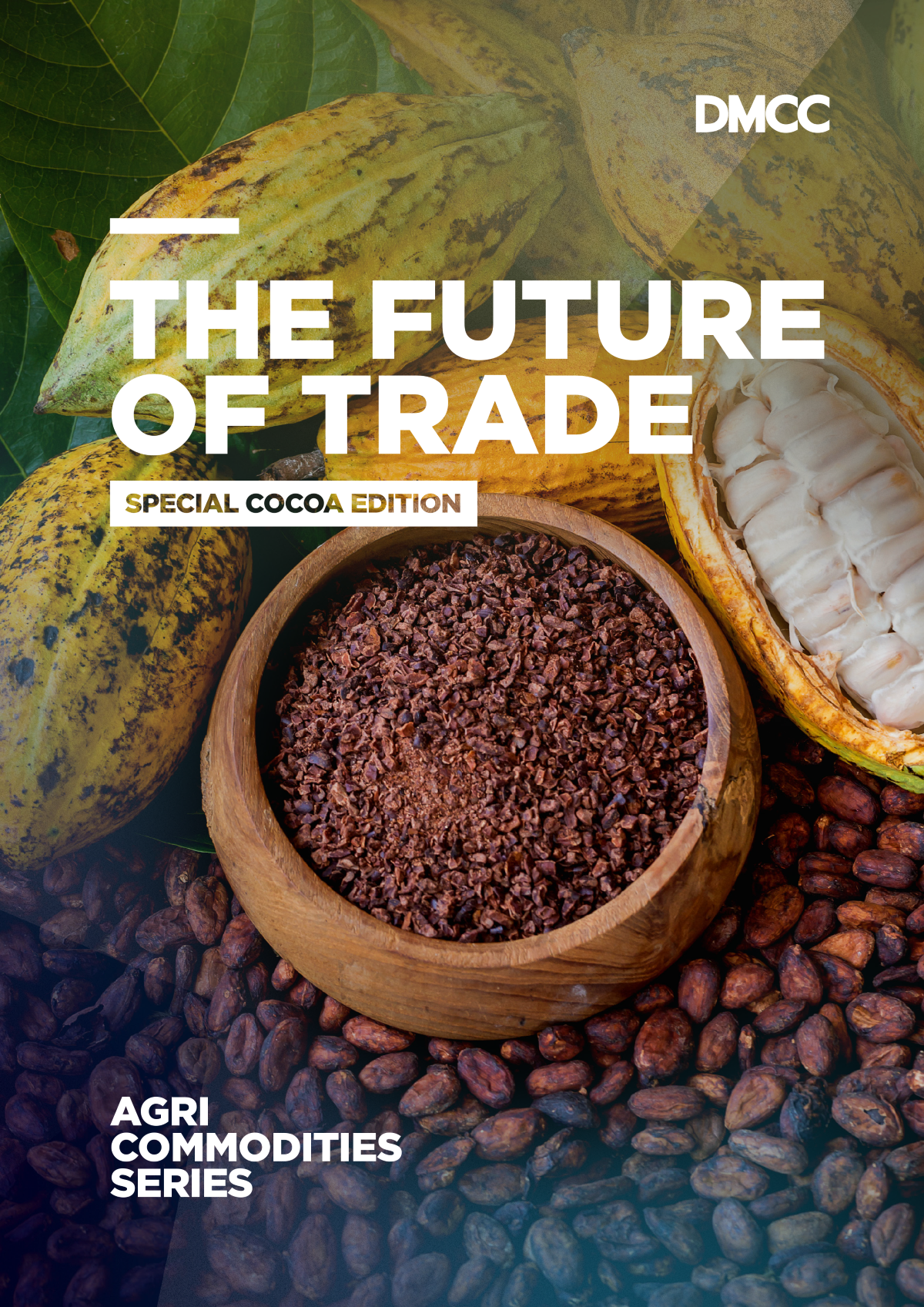
The Dubai Multi Commodities Centre (DMCC) has released a comprehensive report titled “The Future of Trade Special Cocoa Edition,” part of its Agri Commodities Series. The report examines the global cocoa market’s critical challenges from production shortages and price volatility to digital innovation, ethical sourcing, and shifting consumer demand toward wellness and sustainability. This news story is based on the key findings of the DMCC report, one of the most detailed and forward-looking analyses of the cocoa sector and Dubai’s growing role in it.

A Crisis of Supply and Unequal Returns

The global cocoa market is valued at around US$16.6 billion in 2025 and is expected to reach US$26.2 billion by 2035. However, behind this growth lies a deep imbalance. The 2023/24 crop year recorded one of the steepest production declines in decades down 13% to 4.4 million tonnes resulting in a deficit of nearly half a million tonnes and pushing prices to record highs. Cocoa grindings also fell by 5% to 4.8 million tonnes, according to the International Cocoa Organization (ICCO).

The roots of the crisis lie in West Africa, which produces over 60% of the world’s cocoa from Côte d’Ivoire, Ghana, Nigeria, and Cameroon. Devastating outbreaks of black pod and swollen shoot disease, erratic rainfall, and ageing trees have crippled production. Ghana’s regulator has already warned that output could drop another 10% in the 2025/26 season.

“Our cocoa plantations are ageing and have suffered from years of underinvestment,” says Kwadwo Boachie-Adjei, founder of Kumbi Cocoa. “Farmers lack access to quality fertilizers and seedlings because the financial resources needed to reinvest in their communities have not been flowing back at the scale required. The cycle of low productivity and limited incomes must change.”

Despite record-high international prices, farmers in Ghana and Côte d’Ivoire still receive fixed farmgate rates set by governments too low to cover replanting or disease control. “For every one-dollar chocolate bar, farmers receive just two cents,” notes Mauro Danilo Ribezzi, founder of the Ribezzi Group. “The economics of cocoa are fragile people will simply walk away.”

Meanwhile, processors and brands are struggling with soaring energy, transport, and financing costs. Companies are resorting to shrinkflation and reformulation: Mars Inc. cut 10 grams from its Galaxy bar, while Nestlé dropped the word “chocolate” from some UK products that now fall below the 20% cocoa-content threshold.

Although chocolate still dominates around 85% of cocoa demand, consumer preferences are shifting toward functional, ethical, and health-oriented products. The premium chocolate market is projected to grow from US$31.9 billion in 2024 to US$40.6 billion by 2030, while demand for raw cacao marketed as a superfood rich in antioxidants is forecast to surge from US$14.3 billion in 2024 to US$23.6 billion by 2033. Cocoa butter, a staple in cosmetics and pharmaceuticals, is set to nearly double in value to US$9.37 billion by 2032.

At the same time, the industry faces new compliance pressures. The European Union’s Deforestation-Free Products Regulation and Corporate Sustainability Due Diligence Directive require companies to prove that their cocoa is not sourced from deforested areas and that human rights are upheld throughout supply chains. Cocoa cultivation has caused over 37% forest loss in Côte d’Ivoire’s protected areas and 13% in Ghana, making traceability and digital monitoring essential for market access and premium pricing.

Dubai: A New Global Nexus for Cocoa Trade

Amid these structural pressures, Dubai is emerging as a stabilizing force in global commodity flows. Leveraging its strategic location between Africa, Asia, and Europe, the UAE has built a resilient trade ecosystem capable of absorbing global shocks. According to the DMCC report, the UAE imported US$17.3 million worth of cocoa beans in 2023 96% of which came from Côte d’Ivoire and exported US$16.4 million, mainly to Iran, Malaysia, and Saudi Arabia. While modest compared to European hubs, these figures highlight Dubai’s growing relevance in both upstream and downstream cocoa trade.

Building on the success of the DMCC Coffee Centre and Tea Centre, Dubai is now planning to launch a DMCC Cacao Centre that will offer integrated services including grading, blending, storage, branding, and structured trade finance all under one roof. The initiative aims to transform Dubai into a full-service hub for cocoa trade and value addition in the Middle East.

“The DMCC provides African producers with what they have long lacked direct access to markets and capital,” says Boachie-Adjei.

“The beauty of the DMCC ecosystem,” adds Ribezzi, “is that we don’t just operate as traders but as facilitators connecting farmers, financiers, and buyers across borders.”

The report also underscores how technology is redefining cocoa trade. Blockchain-enabled traceability ensures regulatory compliance and transparency, while mobile-first fintech platforms allow farmers to receive payments directly cutting out intermediaries and ensuring faster, fairer compensation. Emerging models such as tokenized assets and decentralized finance (DeFi) could soon unlock new credit channels for smallholders historically excluded from the banking system.

Looking further ahead, the industry is experimenting with lab-grown cocoa to overcome climate and disease risks. Startups are cultivating cocoa cells that yield mass without farms, a concept already supported by major players such as Barry Callebaut and Japan’s Meiji. Other innovators are developing cocoa-free chocolate alternatives using ingredients like carob and upcycled fibers to reduce dependency on volatile bean supply. Meanwhile, West African research programs are advancing disease-resistant and high-yield varieties through genetic innovation and agroforestry models.

The DMCC report concludes that the future of cocoa rests on five pillars: climate-adapted farming, transparent supply chains, diversified production, financial innovation, and equitable participation. It calls for producer nations to move beyond being raw suppliers and instead become true partners in global value creation.

With its neutral trade infrastructure and forward-looking policies, Dubai is poised to redefine the cocoa economy shifting it from a system marked by inequality and volatility to one built on sustainability, inclusivity, and shared prosperity.

Germany Earns More From Coffee Than Producing African Nations

Berlin – September 14, 2025 – (Qahwa World) – Germany, a country that does not grow coffee, has become one of the most influential players in the global coffee industry, earning more from exports than all African producing nations combined. In 2024, Germany exported over 473,000 tonnes of coffee worth €6 billion, largely by importing raw beans from producing countries and re-exporting them after processing and branding.

Africa, home to 18 coffee-exporting countries including Uganda, Ethiopia, Kenya, and Rwanda, remains dependent on raw bean exports. Uganda recently overtook Ethiopia as the continent’s leading exporter, shipping nearly 800,000 bags in May 2025 alone, worth $243 million. Ethiopia, long considered the historic heart of coffee, followed with 43,481 tonnes during the same period. Data from the International Coffee Organization covering March 2023 to February 2024 shows Uganda shipped over six million bags, compared with Ethiopia’s 3.5 million, while other producers such as Tanzania, Côte d’Ivoire, and Kenya trailed with far smaller volumes.

The disparity lies in value addition. A KPMG study as far back as 2014 highlighted that Africa exported coffee worth $6 billion while the global coffee industry exceeded $100 billion, driven by roasting, blending, packaging, branding, and sustainable certification. Germany has built its dominance on precisely these steps, importing nearly one million tonnes of green coffee in 2023, 91 percent directly from producing nations. Brazil supplied the largest share at 341,000 tonnes, followed by Vietnam, Honduras, Uganda, Colombia, and India. Even when imports declined by 17 percent that year, Germany’s reserves ensured its exports continued without disruption.

The contrast underscores a hard truth: while coffee was born in Africa, most of its wealth is captured elsewhere. Unless producing nations invest in roasting, branding, and specialty development at origin, they will remain suppliers of raw beans while others reap the greater rewards.