Coffee Prices Soar as Brazil Harvest Slows and Inventories Tighten

Source: Barchart / Rich Asplund
Author: Qahwa World
Date: August 24, 2026

Coffee Prices Soar as Brazil Harvest Slows and Inventories Tighten

  • Arabica surged 4.62% to a 6.75-month high.
  • Robusta rose 2.64% as supply remains tight.
  • Brazil’s harvest is 90% complete, behind 97% last year and the 94% five-year average.
  • ICE arabica inventories fell to a 2.75-year low of 227,992 bags.
  • ICE robusta inventories climbed to an 8.75-month high of 4,831 lots.
  • Colombia’s earthquake still affects supplies despite partial export resumption.
  • El Niño concerns support prices with potential rainfall delays in Brazil.

Coffee prices surged sharply today. Arabica jumped 4.62% to a 6.75-month high. Robusta rose 2.64% as supply remains tight. The slow pace of Brazil’s coffee harvest is underpinning prices.

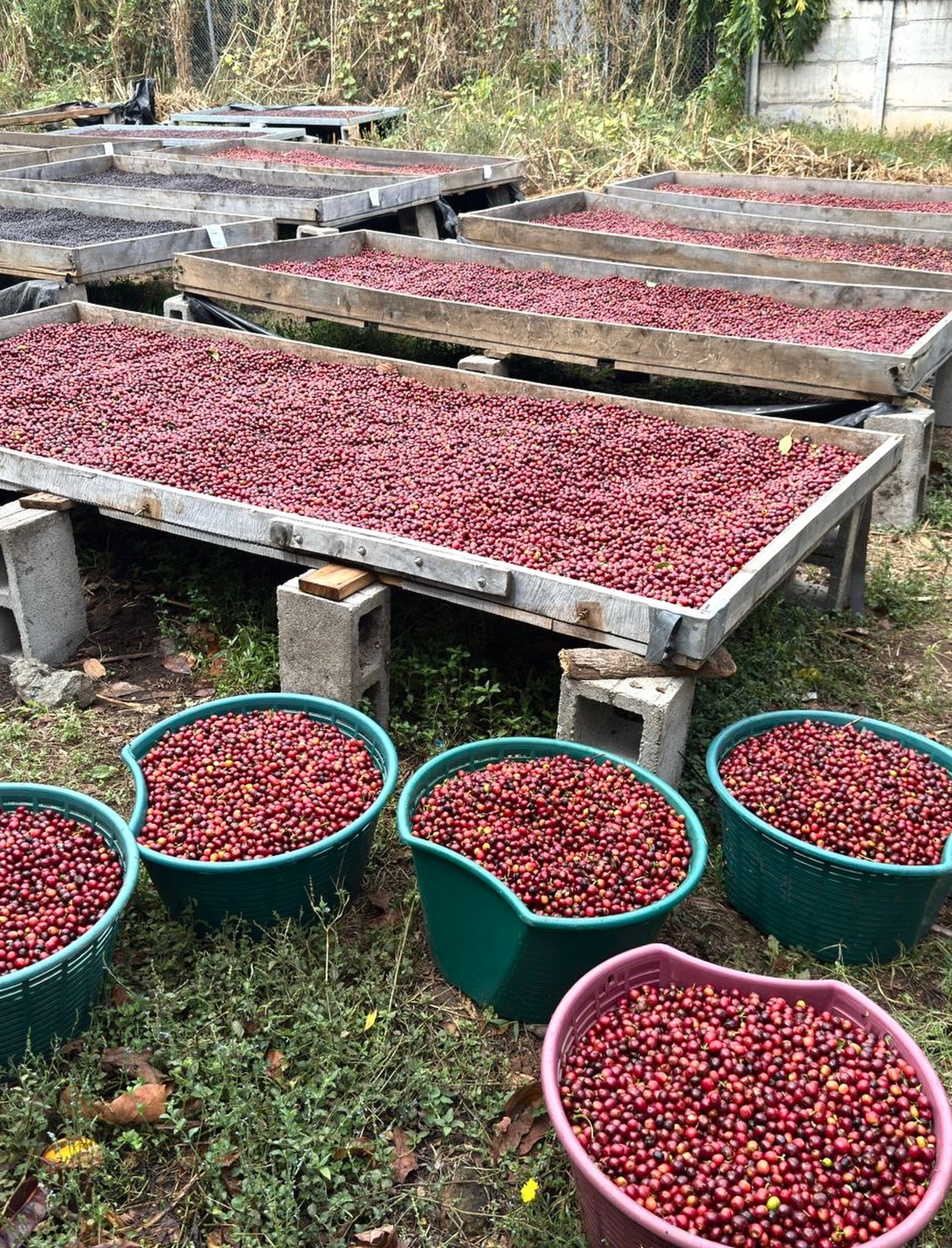
Brazil’s Cooxupe co-op reported 81.1% of the harvest was complete as of August 14. This is up 7 points from the prior week but still down from 86.1% a year earlier. Safras & Mercado reported on August 14 that Brazil’s 2026/27 harvest was 90% complete as of August 12, behind 97% last year and the 94% five-year average. Arabica harvest was 86% complete, behind last year’s 95%.

Inventory Trends: Arabica at 2.75-Year Low

Falling inventories are bullish for arabica prices. ICE arabica inventories fell to a 2.75-year low of 227,992 bags last Friday. By contrast, rising inventories are bearish for robusta. ICE robusta inventories climbed to an 8.75-month high of 4,831 lots today.

ICE Coffee Inventory Levels
Category Latest Level Status
Arabica inventories 227,992 bags 2.75-year low
Robusta inventories 4,831 lots 8.75-month high

Brazil Coffee Harvest Progress
Indicator Value
Cooxupe harvest (as of Aug 14) 81.1%
Cooxupe year-earlier pace 86.1%
Brazil overall (as of Aug 12) 90%
Previous year (Aug 12) 97%
Five-year average (Aug 12) 94%
Arabica harvest (as of Aug 12) 86%
Arabica harvest previous year 95%
Rainfall in Minas Gerais (week ended Aug 16) 0.6 mm (11% of average)

Colombia Earthquake Still Affecting Supplies

Prices also have support from the devastating earthquake earlier this month in Colombia. Colombia is the world’s second-largest producer of arabica beans. Among the areas hit by the 7.4 magnitude quake were the coffee-growing provinces of Caldas and Risaralda, which account for about a quarter of Colombia’s production.

Colombia has partially resumed coffee exports through Buenaventura port, which handles most of its coffee exports. However, traffic through the port remains intermittent and limited. According to a Bloomberg report, the earthquake caused no significant damage to coffee processing and milling facilities.

El Niño Concerns Support Prices

Concerns about an El Niño weather pattern are bullish for prices. Coffee trader Commercial warned that El Niño may delay rains in Brazil this September and October, when tree flowering normally occurs. Any delay could hurt Brazil’s 2026/27 coffee crop. On July 8, the US Climate Prediction Center issued a warning. The El Niño pattern that emerged across the equatorial Pacific last month will likely be one of the strongest in more than 75 years, setting the stage for possible floods, droughts, and temperature fluctuations that could hinder coffee production in Asia and South America.

Below-Normal Rainfall May Speed Up Harvest

Below-normal rainfall in Brazil should allow the harvest pace to speed up, a bearish factor for prices. Somar Meteorologia reported last Monday that 0.6 mm of rain, or 11% of the historical average, fell in the week ended August 16 in Minas Gerais, the country’s main arabica-growing region.

Vietnam Exports Continue to Surge

Soaring coffee exports from Vietnam are bearish for robusta prices. On August 2, Vietnam’s National Statistics Office reported that Vietnam’s 2026 coffee exports from January to July rose 21.1% year-on-year to 1.31 million metric tons. Vietnam’s 2025 coffee exports jumped 17.5% to 1.58 million metric tons. Production for 2025/26 is projected to climb 6% to a four-year high of 1.76 million metric tons (29.4 million bags).

USDA Forecast: Record Production

The latest USDA biannual forecast was bearish for coffee prices. On July 22, the USDA forecast that global coffee output in the 2026/27 season will rise by 6.0% to a record 189.7 million bags, mainly due to improved growing conditions in Brazil. The USDA expects global arabica production to rise 12% year-on-year, although robusta production is expected to fall by 0.7%. World ending stocks are expected to rise by 1.9 million bags to 26.3 million bags.
Frequently Asked Questions

How much did coffee prices rise today?Arabica surged 4.62% to a 6.75-month high, and robusta rose 2.64%.

What is the status of Brazil’s coffee harvest?Brazil’s harvest is 90% complete as of August 12, behind 97% last year and the 94% five-year average.

What are ICE coffee inventory levels?Arabica inventories fell to a 2.75-year low of 227,992 bags, while robusta inventories climbed to an 8.75-month high of 4,831 lots.

How did Colombia’s earthquake affect coffee supplies?The quake hit Caldas and Risaralda (25% of production). Exports have partially resumed through Buenaventura but remain limited.

How does El Niño affect coffee prices?El Niño could delay rainfall during Brazil’s critical flowering period in September-October, potentially reducing crop yields and supporting prices.

What does the USDA forecast say?USDA forecasts record global production of 189.7 million bags for 2026/27, up 6% from the previous year.

Arabica Prices Rise as Colombian Earthquake Disrupts Supplies

Source: Barchart / Rich Asplund
Author: Qahwa World
Date: August 11, 2026

Arabica Prices Rise as Colombian Earthquake Disrupts Supplies

  • September arabica surged 1.04% to a 5-week high on Tuesday.
  • A 7.4 magnitude earthquake hit Colombia’s coffee-growing provinces on Monday.
  • Caldas and Risaralda, accounting for 25% of Colombia’s production, were affected.
  • Maersk temporarily suspended terminal operations in Buenaventura port.
  • ICE arabica inventories fell to a 2.5-year low of 241,838 bags.
  • ICE robusta inventories climbed to a 4.75-month high of 4,352 lots.
  • USDA forecasts record global production of 189.7 million bags for 2026/27.

Arabica coffee settled sharply higher on Tuesday. September arabica closed up 3.45 cents, gaining 1.04% to a 5-week nearest-futures high. September robusta closed down 24 points, a decline of 0.63%. Prices settled mixed as diverging factors drove the two markets in opposite directions.

Arabica rallied on Tuesday amid concerns that a massive earthquake that hit Colombia on Monday will disrupt coffee supplies from the country. Colombia is the world’s second-largest producer of arabica coffee beans.

Colombian Earthquake Disrupts Coffee Production

Among the areas hit by Monday’s 7.4 magnitude quake were the coffee-growing provinces of Caldas and Risaralda. These provinces account for about a quarter of Colombia’s production. The earthquake has raised concerns about damage to coffee infrastructure and potential supply disruptions.

Shipping firm Maersk said Tuesday that terminal operations in Buenaventura have been “temporarily suspended.” Buenaventura handles most of Colombia’s coffee exports. Additionally, inland road closures and traffic restrictions due to the earthquake may impact cargo movements.

Key Factors Driving Arabica Price Rally
Factor Impact
Colombian earthquake (7.4 magnitude) Affected Caldas & Risaralda (25% of production)
Buenaventura port operations Suspended by Maersk
Inland road closures Impact on cargo movements
ICE arabica inventories 2.5-year low (241,838 bags)
Brazil harvest pace 67.3% vs 74.2% last year

Inventory Trends: Arabica Low, Robusta High

Rising inventories are bearish for robusta coffee. ICE robusta inventories climbed to a 4.75-month high of 4,352 lots on Tuesday. By contrast, a bullish factor for arabica coffee prices was that ICE arabica inventories fell to a 2.5-year low of 241,838 bags on Tuesday. This tight supply situation provides strong support for arabica prices.

ICE Coffee Inventory Levels
Category Latest Level Status
Arabica inventories 241,838 bags 2.5-year low
Robusta inventories 4,352 lots 4.75-month high

Brazil Harvest and Weather

Arabica also has support due to the slow pace of Brazil’s coffee harvest. The harvest among members of Cooxupe co-op was 67.3% complete as of July 31. This is behind the year-earlier pace of 74.2%. On July 17, Safras & Mercado reported Brazil’s 2026/27 coffee harvest was 64% complete as of July 15. This compares with 77% at the same time last year. The five-year average stands at 70%.

Below-normal rainfall in Brazil should allow for the harvest pace to speed up. Somar Meteorologia reported on Monday that 5.8 mm of rain, or 92% of the historical average, fell in the week ended August 9 in Brazil’s Minas Gerais. This is the country’s main arabica-growing region.

Brazil Coffee Harvest Progress
Indicator Value
Cooxupe harvest (as of July 31) 67.3%
Cooxupe year-earlier pace 74.2%
Brazil overall (as of July 15) 64%
Previous year (July 15) 77%
Five-year average (July 15) 70%
Rainfall in Minas Gerais (week ended Aug 9) 5.8 mm (92% of avg)

USDA Forecast: Record Production

The latest USDA biannual forecast was bearish for coffee prices. On July 22, the USDA forecast that global coffee output in the 2026/27 season will rise by 6.0% to a record 189.7 million bags. The increase is mainly due to improved growing conditions in Brazil. The USDA expects global arabica production to rise 12% year-on-year. However, robusta production is expected to fall by 0.7%. World ending stocks are expected to rise by 1.9 million bags to 26.3 million bags.

El Niño Concerns Support Prices

Concerns about an El Niño weather pattern are bullish for prices. Coffee trader Commercial warned that El Niño may delay rains in Brazil. This September and October is when tree flowering normally occurs. Any delay could hurt Brazil’s 2026/27 coffee crop. On July 8, the US Climate Prediction Center issued a warning. The El Niño pattern that emerged across the equatorial Pacific last month will likely be one of the strongest in more than 75 years. This sets the stage for possible floods, droughts, and temperature fluctuations later this year. These conditions could hinder coffee production in Asia and South America.

Vietnam Exports Continue to Surge

Soaring coffee exports from Vietnam are bearish for robusta prices. On August 2, Vietnam’s National Statistics Office reported Vietnam’s 2026 coffee exports from January to July rose 21.1% year-on-year to 1.31 million metric tons. Vietnam’s 2025 coffee exports jumped 17.5% to 1.58 million metric tons. Production for 2025/26 is projected to climb 6% to a four-year high of 1.76 million metric tons (29.4 million bags).

Frequently Asked Questions

Why did arabica coffee prices rise on Tuesday?Arabica surged 1.04% to a 5-week high as a 7.4 magnitude earthquake hit Colombia’s coffee-growing provinces, disrupting supply from the world’s second-largest arabica producer.

What areas of Colombia were affected by the earthquake?The coffee-growing provinces of Caldas and Risaralda were hit, accounting for about 25% of Colombia’s coffee production.

How did the earthquake affect coffee exports?Maersk suspended terminal operations in Buenaventura port, which handles most of Colombia’s coffee exports. Inland road closures may also impact cargo movements.

What are ICE coffee inventory levels?Arabica inventories fell to a 2.5-year low of 241,838 bags, while robusta inventories climbed to a 4.75-month high of 4,352 lots.

What does the USDA forecast say?USDA forecasts record global production of 189.7 million bags for 2026/27, up 6% from the previous year, led by Brazil’s recovery.

How does El Niño affect coffee prices?El Niño could delay rainfall during Brazil’s critical flowering period in September-October, potentially reducing crop yields and supporting prices.