KitKat Heist Turns Into a Global Story Captivating Millions

Dubai – Qahwa World

In one of the most unusual cargo theft incidents in Europe recently, a truck carrying more than 413,000 KitKat bars, with a total weight of nearly 12 tons, disappeared while en route from a factory in central Italy to Poland. The incident occurred on March 26, 2026, and neither the truck nor its contents have been recovered so far.

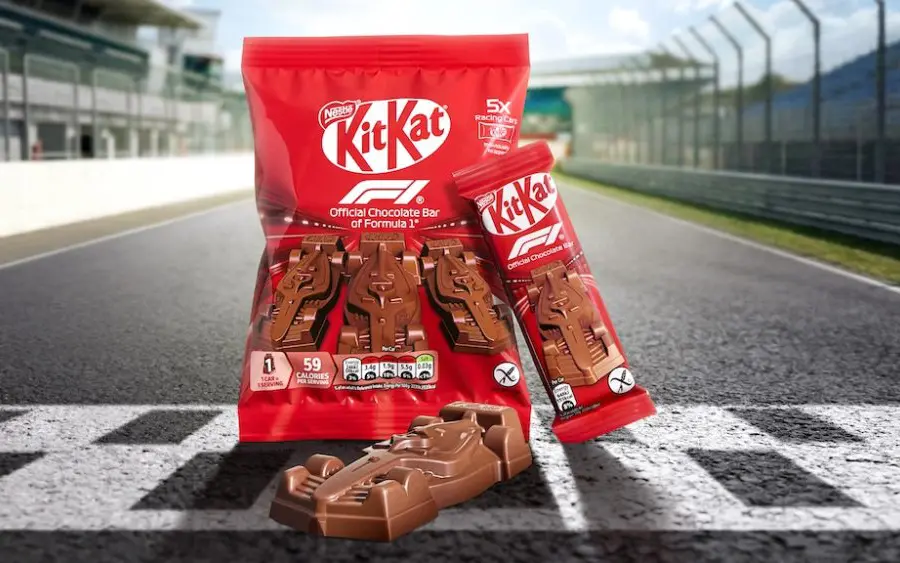
Swiss giant Nestlé, the owner of the KitKat brand, confirmed the incident in an official statement released late last week. The company said the shipment included a new range of products, among them a special edition inspired by Formula 1, with chocolate bars shaped like miniature race cars. No injuries were reported, and authorities have yet to disclose details about how the theft was carried out, though it appears to have been a highly organized operation targeting the truck on a European highway.

Instead of issuing a routine statement, Nestlé chose a different approach. On April 1, 2026, the company launched an interactive online tool called the “KitKat Tracker,” emphasizing that it was not an April Fool’s joke. The tool allows consumers to enter the eight-digit code printed on the back of any KitKat wrapper to check whether it belongs to the stolen batch. If a match is found, users are encouraged to report it so the information can be shared with authorities.

This move significantly changed consumer behavior. Buying chocolate is no longer a routine act—it now involves checking the wrapper and verifying the code. Some consumers even share their results on social media, creating widespread engagement without a traditional advertising campaign. Nestlé also noted that cargo theft has become an increasing issue in Europe, but it used this incident as an opportunity to connect with the public in a creative way.

As a result, what could have been a reputational setback turned into a widely discussed story. Media outlets covered the incident extensively, while social platforms filled with user-generated content and reactions. Although the stolen shipment could still appear in unofficial markets, the tracking tool helps make identification easier. Nestlé stated that market supply would not be significantly affected, while the media buzz has made the product even more appealing.

From a business perspective, this case stands out as a strong example of crisis management. Rather than damaging the brand, the incident strengthened consumer engagement. The product itself has not changed, but its story has become far more compelling.

As of April 4, 2026, the truck and its 413,000 chocolate bars remain missing, with investigations ongoing across several European countries. Meanwhile, consumers continue to take part in the story—buying, checking, and following updates.

In the end, this is more than just a chocolate theft. It is a story of how a major company turned an unexpected crisis into an engaging narrative that captured global attention.

The Unwritten Rules of Vienna’s Coffee Culture

In the city that turned coffee into an art, patience is the first lesson every traveler must learn.

Dubai – Qahwa World

At nine in the morning, sunlight filters through the tall arched windows of Café Central, one of Vienna’s most famous coffeehouses. The marble columns gleam softly, the air is filled with the sound of porcelain cups, and newspapers rustle in quiet harmony. An American visitor approaches the counter, smartphone in hand, ready to order a “coffee” to go. A few steps away, an elderly Viennese gentleman settles into his red velvet chair, opens his morning paper, and begins his two-hour ritual with a Melange.
That simple contrast captures everything foreign visitors often misunderstand about Vienna’s UNESCO-protected café culture—a world where time slows, where coffee is not consumed but inhabited, and where rushing through a cup is not merely impolite, but a missed encounter with history itself.

From Yemen to the Danube: The Birth of a Coffee Civilization

The story of Vienna’s cafés begins far beyond Europe. In the 15th century, coffee was cultivated in Yemen’s highlands and shipped from the port of Mokha, the gateway from which the beverage began its global journey. Ottoman traders carried it north to Istanbul, where it became a social ritual and a symbol of refinement.

When the Ottoman siege of Vienna in 1683 ended, legend tells of coffee beans left behind in the camps. The Viennese took these beans and turned them into a new kind of institution—a place that combined Arab hospitality, Ottoman ritual, and European intellectualism.
From these early experiments grew a café tradition unlike any other in the world—one that would come to define Vienna’s identity as the capital of conversation.

By the 19th century, Vienna’s coffeehouses had evolved into living salons. Poets, philosophers, and revolutionaries gathered under their chandeliers. Sigmund Freud drafted theories at Café Landtmann. Stefan Zweig, chronicler of Europe’s cultural soul, described the cafés as “democratic clubs open to everyone for the price of a cup of coffee.” These were not cafés in the commercial sense—they were temples of thought.

Where Time Itself Is Served Slowly

To walk into a Viennese café expecting quick service is to misunderstand its essence. Each of the 17 UNESCO-listed coffeehouses operates on a rhythm established over centuries. Waiters in pressed black jackets and silver trays move deliberately, never hastily.
As Maria Schneider, who has served at Café Central for nearly three decades, explains: “Within two minutes, I can tell who’s a tourist. They look at their watches while waiting for coffee. Locals know coffee comes when it’s ready.”

That wait is not inefficiency—it’s grace. In Vienna, slowness is a form of respect. It allows space for silence, conversation, and observation. The waiter’s distance, often mistaken for coldness, is part of the city’s etiquette. “We provide perfect service, not friendliness,” says Thomas Vogel of Café Sperl. “I’m not your buddy—I’m a professional.”

In a Viennese café, the waiter is not a server but a conductor, maintaining harmony between solitude and society.

Seven Unwritten Rules Every Visitor Should Know

Vienna’s café culture follows codes that no guidebook fully explains. They are unwritten, passed down through habit rather than instruction.
Here are the seven principles that distinguish a local from a hurried traveler:

  1. Never rush your coffee. Time is the invisible ingredient in every cup.

  2. Don’t say “coffee.” Order it by name: Melange or Einspänner.

  3. Wait for table service. Approaching the counter breaks the ritual.

  4. Speak softly. Silence and conversation share equal value.

  5. Pair your drink with pastry. A Melange without Sachertorte is incomplete.

  6. Ask for the check—don’t wait for it. Say “Darf ich bitte zahlen?” and tip 10–15% in cash on the saucer.

  7. Linger. The moment you stop watching the clock, you become part of the city.

A Cultural Mirror in a Cup

Survey data from Vienna’s cafés reveals a consistent pattern: 74% of tourists try to order at the counter, 61% ask for “coffee”, and 68% leave within 30 minutes—while only 12% of locals do. The average Viennese spends 87 minutes per visit, often reading several newspapers.
At Café Sperl, established in 1880, more than a dozen newspapers still hang from wooden racks. To the locals, this is not nostalgia—it is continuity.

“Here,” says café owner Karl Weber, “we don’t drink coffee to stay awake—we drink it to be with people, or to be alone.”
That simple philosophy defines Vienna’s genius: the café is both a private refuge and a public salon. It bridges solitude and society, art and routine.

Why Vienna’s Coffeehouses Endure

Across the world, cafés have evolved—Italy’s espresso bars celebrate speed, France’s brasseries celebrate conversation, and the Arabian majlis celebrates hospitality. Vienna alone turned coffee into a meditation on time itself.

To drink coffee in Vienna is to join a centuries-long dialogue that began in Yemen’s mountains, sailed across Ottoman trade routes, and found permanence on the cobblestones of Europe.
In an age obsessed with productivity, Vienna’s cafés quietly remind us that reflection, too, is a form of work.

A Lesson in Invisibility

Three days after his first hurried visit, the same American tourist returns to Café Central. This time, he orders properly—“Einen Melange, bitte.” He addresses the waiter as “Herr Ober.” He opens the Wiener Zeitung, leaves his phone in his pocket, and doesn’t glance at the time. The waiter nods subtly, recognizing not a customer, but a participant in a tradition.
He has achieved the highest honor Vienna offers: to disappear among locals, cup in hand, perfectly at ease in the art of doing nothing.