Global Coffee Logistics Under Pressure: Strait of Hormuz & Red Sea Disruptions

Author: Qahwa World – Logistics Desk
Source: Industry logistics report, Q2 2026 (carrier data, analyst estimates)
Date: May 27, 2026

Global Coffee Logistics Under Pressure: Strait of Hormuz & Red Sea Disruptions

Executive Summary

  • A near‑total blockade of the Strait of Hormuz by Iranian forces has reduced container traffic by more than 95%, stranding roughly 500,000 TEUs in the Gulf region.
  • Brent crude has risen above $90 per barrel, and carriers have imposed emergency fuel surcharges, some retroactively.
  • Red Sea instability has forced over 75% of container ships to reroute around the Cape of Good Hope, adding 10‑14 days to Asia‑Europe voyages and absorbing 15‑20% of vessel capacity.
  • Brazil’s agricultural export corridors are overwhelmed, causing truck queues, terminal congestion, and competition for containers – directly affecting coffee shipments.
  • Schedule reliability among top carriers ranges from 46.6% (Wan Hai) to 72.3% (Hapag‑Lloyd), with most carriers in the 60‑70% range.
  • Capacity is tight or manageable depending on the trade lane, with spot rates rising and container shortages reported from Honduras and Nicaragua.
  • These logistics pressures are delaying coffee deliveries, raising inventory costs, and adding uncertainty to global coffee supply chains.

The global logistics system is under severe strain in the second quarter of 2026. Two major maritime chokepoints – the Strait of Hormuz and the Red Sea – are simultaneously disrupted, pushing freight rates higher and delaying shipments of coffee and other goods.

For coffee exporters and importers, these disruptions mean longer transit times, higher costs, and increased uncertainty. The situation is compounded by congestion at Brazilian ports during peak agricultural export season.

Strait of Hormuz: Near‑Total Blockade

As of May 2026, severe instability in the Strait of Hormuz has caused container shipping traffic to drop by more than 95%. Iranian forces have established a near‑total blockade.

Daily ship transits fell from roughly 130 in February 2026 to nearly zero in March. Approximately 3,200 vessels are trapped in the Gulf or waiting outside the strait.

About 500,000 TEUs (Twenty‑Foot Equivalent Units) are stranded at Gulf ports or at sea, creating severe equipment imbalances worldwide.

War‑risk insurance premiums have become prohibitive or have been withdrawn, making passage through the area commercially unviable for many carriers.

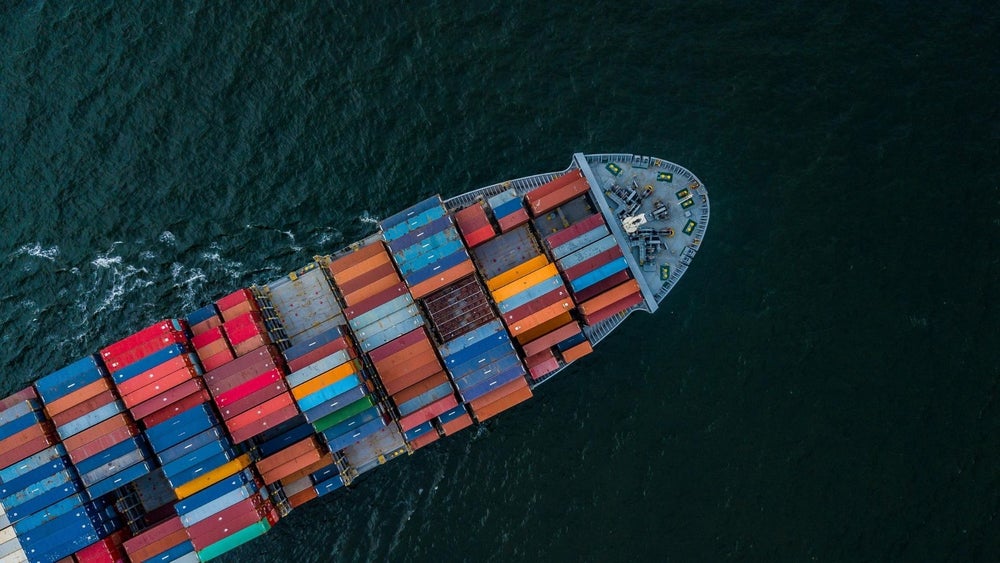
Shipping lines are rerouting vessels around the Cape of Good Hope, increasing transit times and adding significant costs for trade routes linking Asia, the Middle East and Europe.

The disruption has also pushed Brent crude prices above $90 per barrel. This fuel shock increases pressure on global supply chains beyond freight and logistics costs alone.

Analysts anticipate prolonged disruption. Even after restrictions ease, recovery will likely take months due to vessel backlogs, equipment shortages and network imbalances.

Red Sea: Rerouting and Capacity Crunch

Red Sea instability, driven by Houthi militant attacks, has forced over 75% of container ships to reroute around the Cape of Good Hope. This adds roughly 10‑14 days to Asia‑Europe voyages.

The crisis has caused a roughly 90% drop in Suez Canal container transit. Extended voyages have absorbed significant shipping capacity, leading to a 15‑20% reduction in available capacity.

Ships are arriving off‑schedule, causing congestion at various transshipment hubs. Spot freight rates on Asia‑Europe routes have increased substantially.

The longer route has resulted in higher fuel consumption, increasing CO2 emissions by over 30%. While some ceasefires were proposed in early 2025, uncertainty remains high.

Analysts predict long‑term structural changes to shipping routes and sustained higher costs for the foreseeable future.

Fuel Surcharges and Rising Freight Costs

Fuel surcharges, often called Bunker Adjustment Factors (BAF), are additional fees added to container shipping rates to account for changes in fuel prices.

As of April 2026, higher fuel costs combined with route disruptions have pushed these charges up significantly. Ocean carriers like MSC, CMA CGM, and Maersk have implemented emergency fuel surcharges, sometimes applied retroactively to cargo already in transit.

These surcharges increase overall freight costs for coffee exporters, especially those shipping from East Africa, Asia, and Latin America to Europe and North America.

Brazil Export Logistics Under Pressure

Brazil’s large soybean and agricultural harvest has overwhelmed northern logistics corridors, especially around Amazon export terminals such as Miritituba.

Truck queues have stretched for kilometers, slowing inland transportation and export throughput. Although soybeans were the primary cargo affected, coffee exporters face indirect impacts.

These include reduced truck availability, terminal congestion, chassis shortages, and rail prioritization toward grains. Brazilian coffee exporters are seeing increased inland freight volatility and tighter booking windows.

Meanwhile, expectations for a strong Brazilian coffee crop (66.7 million bags in 2026) are increasing export demand forecasts for the second half of the year, which could further strain logistics.

Schedule Reliability and Trade Lane Conditions

Schedule reliability among top carriers varies widely. In March 2026, Hapag‑Lloyd was the most reliable top‑13 carrier with 72.3%, followed by Maersk at 70.8%.

Eight carriers had reliability in the 60‑70% range, two were in the 50‑60% range, and Wan Hai was the least reliable at 46.6%.

Only two carriers recorded a month‑over‑month decline in schedule reliability, while 11 of the 13 carriers recorded a year‑over‑year improvement.

The Gemini Cooperation recorded 76.8% schedule reliability across all arrivals in February/March 2026, followed by MSC at 65.4% and Ocean Alliance at 65.9%.

Table 1: Trade Lane Conditions (Q2 2026)

Trade Lane Capacity Rate Trend Key Issues
APAC to Global Flat (no space issue) Increasing Spot rates rising
India to Global Tight Slight upward Container availability limited
Brazil to Global Manageable Stable Port congestion, gate windows, occasional rollovers
Central America (CAM) to Global Tight Container shortages (20s and 40s) from Honduras/Nicaragua
East Africa to Global Good Congestion in Dar es Salaam and Mombasa

Implications for Coffee Supply Chains

The combination of these logistics pressures is hitting coffee exporters and importers hard. Coffee shipments from East Africa (Ethiopia, Uganda, Kenya, Tanzania) face congestion at Mombasa and Dar es Salaam.

Central American coffee (Honduras, Nicaragua, Guatemala) is facing container shortages, particularly for 20‑foot and 40‑foot units, delaying exports to the United States and Europe.

Brazilian coffee exporters are competing with soybeans and other grains for trucking and terminal capacity. Inland freight volatility is rising, and booking windows are tighter.

Rerouting around the Cape of Good Hope adds 10‑14 days to Asia‑Europe shipments. For coffee from Vietnam and Indonesia to Europe, transit times have increased significantly, affecting freshness and quality.

Emergency fuel surcharges are raising delivered costs for coffee importers. These costs will eventually be passed down the supply chain to roasters and consumers.

Schedule reliability remains below pre‑crisis levels. This means coffee buyers cannot rely on predictable delivery windows, forcing them to hold more inventory, which ties up capital.

Frequently Asked Questions

How has the Strait of Hormuz blockade affected coffee shipping?

The blockade has stranded about 500,000 TEUs in the Gulf, caused massive rerouting around the Cape of Good Hope, and triggered emergency fuel surcharges, all of which increase coffee shipping costs and delays.

What is the impact on coffee from East Africa?

East African ports (Mombasa, Dar es Salaam) are congested, and container availability is tight, delaying shipments from Ethiopia, Uganda, Kenya, and Tanzania.

How are Central American coffee exports affected?

Honduras and Nicaragua face container shortages for 20‑foot and 40‑foot units, slowing coffee exports to the United States and Europe.

What is the outlook for schedule reliability?

Most top carriers have 60‑70% reliability, but the trend is improving year‑over‑year. Hapag‑Lloyd leads at 72.3%.

Will freight rates continue to rise?

Yes. Emergency fuel surcharges and capacity shortages are pushing spot rates higher, and analysts expect sustained high costs due to prolonged rerouting.

How is Brazil’s coffee harvest affecting logistics?

A record coffee crop (66.7 million bags) is competing with soybeans for trucking and terminal capacity, causing congestion and tighter booking windows.


Author: Qahwa World – Logistics Desk | Source: Industry logistics report, carrier data, analyst estimates | Date: May 27, 2026

Michael Trung: EUDR Simplification Offers No Real Value – Just a Compliance Tax

Vietnam – Ali Azakary | Qahwa World

On May 4, the European Commission published its “simplification” package for the Deforestation Regulation. Some saw it as genuine relief. Others called it cosmetic.

Qahwa World continues its interview series with industry experts. After Dr. Steffen Schwarz from Germany, Kim Thompson from Dubai, Burke Campbell from Honduras, and John Seroney from Kenya, our fifth guest is Michael Trung.

Michael is a specialty coffee consultant, SCA certified trainer, and founder of iO Coffee Vietnam. With 25 years of experience in international logistics and global trade, he brings a unique perspective on supply chain complexity, data sovereignty, and the real costs of compliance. He is known for his sharp critique of regulations that create administrative burdens without delivering meaningful value to farmers or consumers.

Here is what he said.

  • What is your overall take on the EU simplification decision? Does it truly reduce the burden, or is it mostly cosmetic?

Michael Trung: Personally, I do not believe this EUDR “simplification” provides real value to farmers or consumers. From my 25 years in international logistics, it appears the geolocation requirements and increased documentation complexity will lead primarily to one outcome: increased costs for the entire supply chain.

The intention may be noble, but the instrument is flawed. Instead of empowering the farmer, these regulations act as a “compliance tax.” The producer pays for the paperwork, the middleman pays for verification, and the consumer pays a higher price – but the farm-gate profit rarely sees a meaningful increase.

  • Who benefits the most from this simplification in your opinion?

Michael Trung: I see a clear and concerning parallel here with USDA and EU Organic certifications. Historically, those certifications have proven that while the intent is noble, the administrative and logistical costs often swallow the premiums.

The real beneficiaries are not the farmers. They are the compliance technology vendors, the auditing firms, and the large corporations that can spread these costs across massive volumes. Small and medium players get crushed by the overhead. The simplification does not change this structural reality.

  • Soluble coffee is now fully covered, after being excluded before. How do you see this affecting coffee traders and roasters worldwide?

Michael Trung: Adding soluble coffee closes a loophole, but it also adds another layer of complexity to an already overburdened system. Soluble coffee supply chains are often multi-origin and fragmented. Requiring polygon-level traceability for every component will drive further consolidation.

The ones who will suffer are the smaller traders and processors who lack the infrastructure to meet these demands. They will either be forced into expensive partnerships or pushed out of the market entirely. The coffee itself will not become more sustainable – it will simply become more expensive to document.

  • Is the global coffee supply chain truly ready for the December 30, 2026 deadline? If not, which part of the industry will take the biggest hit?

Michael Trung: No, the global supply chain is not ready. From my experience in logistics, the geolocation requirements and the need for verified polygon data across millions of small plots is a logistical nightmare.

The hardest hit will be the smallholder farmers and the small to medium exporters in countries like Vietnam, Indonesia, and parts of Africa. They lack the digital infrastructure and the financial resources to comply. The EUDR, with its mandatory geolocation, feels like “Organic Certification on steroids.” It moves beyond simple quality standards into a realm of data sovereignty and technical barriers that the global supply chain is simply not prepared for.

We need to ask: who controls this data? Who bears the cost? And what happens to the farmers who cannot afford to play the game?

Qahwa World – Episode Six tomorrow with Fabricio Scocco Fioravante from the Netherlands.

Read the related stories:

John Seroney: The Real Cost is Farm Mapping and Digital Registration

Burke Campbell – “European Simplification is Cosmetic. The Burden Exported to Honduras Has Not Changed”

Kim Thompson: Sustainability Rules Must Not Punish the Producers Who Need Market Access Most

Dr. Steffen Schwarz: EUDR Simplification Remains an Administrative Monster

EUDR Simplification: Six Voices from the Coffee Industry Speak

European Commission Simplifies Deforestation Regulation.. What’s New?


Michael Trung: After 50, I Became a Beginner in Coffee

An interview with Michael Trung,  Authorized SCA Trainer, coffee consultant, and founder of iO Coffee

Dubai – Ali Alzakary

Most coffee conversations start with a tasting note: chocolate, jasmine, dried fruit. But what if we started instead with a shipping container stuck at customs? Or a farmer watching months of work split open in a single rainstorm?

Michael Trung spent 25+ years in international logistics , moving goods, solving port crises, chasing paperwork. Then, after 50, he did something unexpected: he became a student of coffee. Today, he’s an Authorized SCA Trainer, a Specialty Coffee consultant, and the founder of iO Coffee, where he roasts in Vietnam to keep value with the people who grow the beans.

In this candid interview, Michael shares why COVID forced him to restart, what “the coffee smile” really means, and how logistics taught him to respect not just the bean, but every pair of hands that touches it.

If you care about where your coffee actually comes from not just the origin story, but the real supply chain.. read on.

  • You spent over 25 years in logistics, then suddenly moved into specialty coffee. How did that happen? And did logistics help you see coffee differently?

I come from the service industry. I spent more than 25 years in international freight forwarding—handling customs problems, shipment delays, port congestion, and phone calls at all hours just to keep cargo moving. That was my life for a long time.

Then COVID came and everything slowed down. For the first time in many years, I had time to sit quietly and think. I realized I knew how to move coffee around the world, but I knew nothing about the people growing it. I didn’t know the farming, the soil, or the hard work that happens before a bean even reaches a warehouse or café.

This became my startup life after 50. At an age when many people think about slowing down, I became a beginner again. Coming from logistics, I did not enter coffee as an expert, I entered as a student. In logistics, you learn to respect the journey from point A to point B. In coffee, I learned to respect the people standing at the beginning of that journey. Honestly, coffee taught me one thing: the more I know, the more I know I don’t know.

  • You founded iO Coffee after a long logistics career. How do you use that experience to improve the coffee chain? Have you changed how coffee is shipped because of the mistakes you saw?

Yes, very much. In logistics, one small mistake early on becomes a giant problem later. I’ve lived through the real-world headaches: the “HS code trap” at customs, missing certificates, or your cargo getting “rolled” at the port because of congestion. Coffee is very sensitive to all of this. If it sits in a hot container during a port delay or near something smelly because of a bad equipment choice, the flavor is gone.

Because of my background, I naturally pay attention to airflow, moisture control, packaging, and container cleanliness to protect the bean from farm to cup. But the biggest thing was seeing how little value stays with the farmers. That is why we roast in Vietnam at iO Coffee. I believe the origin should keep more of the reward, not just export the raw material.

For me, sustainability isn’t just a marketing word; it’s about protecting the hard work behind the coffee. That is why we always say: ‘Respect the Bean. Respect the hands.’

  • What pushed you to become an SCA Authorized Trainer and start “Michael Barista” on YouTube?

I used to think coffee was simple. But once you go deep, you see it’s a whole university inside a small bean—chemistry, farming, roasting, and sensory science all connected. I didn’t want to just be a guy with an opinion; I wanted to learn the professional international standards. That led me to become an SCA Authorized Trainer.

YouTube happened naturally. I started ‘Michael Barista’ to document my journey honestly, including my mistakes. I’m not a professor. I’m just an outsider sharing what I discover so that the younger generation feels coffee is something they can approach. I’ve also learned that today, good coffee alone is not enough—you need storytelling and a real connection with people.

  • Uring your many trips to coffee farms, what are three things you never expected to see?

The Sacrifice: I never expected the sheer level of labor. Seeing farmers picking cherries in the heat—that’s a man’s life, not just a product.

The Fragility (The ‘Coffee Smile’): In logistics, timing is important. In coffee, it’s everything. I learned a sad story on the farms: if it rains unexpectedly during harvest, the ripe cherries burst open. We call it the ‘coffee smile,’ but when the coffee smiles, the farmer cries. In just a few hours of rain, months of hard work are destroyed. It made me realize how sensitive this journey really is.

The Hope: I see younger farmers returning to the farms with new ideas while still respecting the older generation. They are bringing science and sustainability to the dirt, and that gives me hope for the future of Vietnamese coffee.

  • Vietnam is a top producer of Robusta. How do we move toward “value” instead of only “volume”?

For many years, Vietnam was known mostly for volume. But now I see more people focusing on quality, transparency, and Fine Robusta. People around the world now want more than just flavor notes; they want to know who produced the coffee and how it was handled.

I’m still learning how to balance my operational ‘logistics’ brain with the storytelling side. In logistics, we just moved cargo. In coffee, we have to share the heart behind the work. I don’t think we need too much noise. Good coffee speaks slowly. The best we can do is keep improving—little by little, season by season, cup by cup.


Michael Trung is an Authorized SCA Trainer and founder of iO Coffee in Vietnam. Find his educational content on YouTube as “Michael Barista.”

Indonesia Eyes Further Growth in Coffee Exports to Russia

Moscow — Qahwa World

Indonesia may continue expanding its coffee exports to Russia following strong growth in 2025, although logistical and financial hurdles remain, according to an industry representative.

A supplier speaking at the “Coffee Tea Cacao & HoReCa Expo” in Moscow said that while Indonesia is unlikely to surpass Vietnam as Russia’s top coffee exporter, there is still room to increase overall shipment volumes.

Trade data previously showed that Indonesia strengthened its position among Russia’s leading coffee suppliers during the first nine months of 2025, with export values rising significantly compared to the previous year. Vietnam, however, maintained its lead by a wide margin.

Industry participants point to transportation difficulties and payment processing issues as the main constraints affecting further expansion. Despite these challenges, there is optimism that improving bilateral relations could help ease some of these barriers.

Russia is not yet among Indonesia’s top coffee export destinations, but demand in the market has been steadily increasing in recent years, making it more attractive for exporters.

Recent high-level talks between officials from both countries have also included discussions on facilitating financial transactions, which could support future trade growth.

Kim Thompson: Coffee on the Edge of Disruption

Dubai – Ali Alzakary

The global coffee industry has spent the past few years navigating one disruption after another—from pandemic shutdowns and climate volatility in producing countries to freight crises that reshaped global shipping routes. As the global coffee market grapples with volatility—production reaching around 175 million bags in 2025 while costs continue to rise due to climate pressures and freight disruptions—the ongoing conflict in the Middle East is adding a new layer of uncertainty to an already fragile supply chain.

Coffee moves through one of the most complex trade networks in the food and beverage sector. Green beans travel from farms across Latin America, Africa and Asia through international ports and maritime corridors before reaching roasters, cafés and consumers. Any disruption to shipping routes, insurance costs or regional logistics can quickly ripple across the industry. For specialty coffee—where freshness, tight margins and long-term sourcing relationships define the business—the impact can be felt even faster.

To understand how the sector is reacting, we spoke with Kim Thompson, Co-Founder  at RAW Coffee Company in Dubai. From monitoring shipments already at sea to preparing technical support systems for cafés, Thompson explains how roasters are navigating rising costs, uncertain logistics and a rapidly shifting geopolitical landscape.

You may like: Oil Surge Could Brew Higher Coffee Prices 

In this conversation, she offers a clear view of what café operators are worrying about right now, how long menu prices can realistically hold, and why the coffee industry’s resilience often comes down to relationships built across the supply chain.

  • Has the “fear factor” kicked in yet? Are you seeing cafés or hotels panic-buying and stockpiling coffee to guard against a potential shortage?

Not really. The reality of the café industry is that most operators are managing week-to-week cash flow, not building strategic stockpiles. Right now the conversations we’re having are far more about cost control than hoarding inventory.

The other factor is freshness. Speciality coffee isn’t a commodity that sits in a warehouse for months. We roast weekly and deliver fresh, so stockpiling doesn’t really fit how quality coffee businesses operate.

Our expectation is that the real response, if there is one, will likely come after Eid al-Fitr, once operators have had time to assess the geopolitical situation and think through their own coping strategies. At the moment, people are watching closely rather than panicking.

  • The coffee you’re roasting today was bought at pre-war prices — how long can you hold your current menu prices before new logistics costs force your hand?

The uncomfortable truth is that price pressure in coffee started well before this conflict. The industry has already been absorbing significant increases at origin, higher processing costs, and rising freight prices for the past two years.

We have already had to adjust pricing once, simply because the economics of producing high-quality coffee have changed globally.

If shipping routes tighten or logistics costs spike again because of regional instability, there’s only so much the supply chain can absorb. Roasters can cushion the impact for a period of time, but eventually the math catches up with everyone.

Coffee has historically been underpriced for the amount of work and risk involved in producing it. What we are seeing now is the global market slowly correcting that reality.

  • Are there specific “origins” or specialty grades that are now effectively “cut off” due to their transit routes through the conflict zone?

At the moment nothing is completely cut off, but logistics has become far more complicated overnight.

We currently have multiple containers on the water and are actively tracking them while exploring alternative routing options that avoid the Strait of Hormuz.

In many ways it feels like a return to the early COVID-19 playbook—scenario planning, contingency routing, and leaning heavily on relationships across the supply chain to keep things moving.

The specialty coffee industry is surprisingly resilient because it’s built on long-term relationships with producers, exporters and logistics partners. When things get unpredictable, those relationships become incredibly valuable.

  • What’s the plan for equipment and spare parts? Is there a risk that a broken espresso machine could stay down because of shipping delays?

Equipment supply is definitely something we’re watching closely, but fortunately we forecasted and planned ahead. We have several containers on the water carrying both commercial and domestic machines, so supply may get tight but we’re not walking into this empty-handed.

More importantly, we have invested heavily in our technical infrastructure. We run a full in-house service department with extensive spare parts inventory, qualified technicians, and swap-out machines available for our commercial partners.

In practical terms, if a café’s machine goes down, we’re structured to keep them operating. The bigger challenge in this industry is rarely the machine itself—it’s the global logistics that sit behind everything.

Why the Middle East Is Emerging as a Defining Force in the Global Coffee Industry

By: Shouq Bin Redha

Exhibition Manager at World of Coffee 2026

  • A Shift the Industry Can No Longer Ignore

The global coffee industry is no stranger to confident predictions. Every few years, a new region is crowned the “next big growth market,” only to plateau as structural limits reveal themselves—income ceilings, demographic stagnation, infrastructure gaps, or cultural preferences that evolve more slowly than expected.

But the transformation taking place across the Middle East today is not another cycle of hype. It represents a fundamental shift in where global influence is coming from. If the industry continues to view the region merely as an emerging market, it will misread the scale and significance of what is unfolding.

The Middle East is not simply consuming more coffee. It is reshaping the conditions under which coffee is produced, traded, and valued. Unless the industry recalibrates its assumptions, it will underestimate a region that is, in several ways, better positioned to shape the next decade of global coffee direction than many of the markets that once dominated the narrative.

  • A New Generation, a New Market Logic

The most misunderstood aspect of this shift is demographic. The region’s youthfulness is often cited as a headline statistic, but rarely interpreted correctly. A young population does not automatically create a high-value coffee market; what does is a young population with access, aspiration, and global exposure.

Across the Gulf—where more than 60% of the population is under 35—and increasingly in North Africa, this is precisely the case. A generation raised with international cultural fluency approaches coffee as an extension of taste, identity, and self-expression, more akin to fashion, music, or design than to a morning utility. They are not inheriting a coffee culture; they are creating one—and doing so with remarkably few of the constraints that shaped earlier consumer markets.

Most Western coffee markets took decades to evolve from commodity to specialty. The Middle East did not. It moved from instant coffee to single-origin pour-overs in what feels like the span of a single generation. This compression of time matters. Behaviours that took other regions twenty years to develop have materialised here almost overnight.

In Saudi Arabia, for example, more than 36 million cups of coffee are consumed daily, and the Kingdom now has over 61,000 licensed cafés—figures that would be extraordinary in any context. In the UAE, more than 90% of coffee spending occurs outside the home, one of the highest café-driven consumption ratios globally. Egypt has nearly doubled its annual coffee consumption in five years, rising from around 36,000 to over 70,000 tonnes, while Morocco recorded a 23% rise in coffee imports in 2024 alone.

This emerging baseline of expectation—quality, provenance, processing style, ethical value chains—is reshaping the industry’s economics. Coffee professionals often speak of “premiumisation” as something that gradually filters from niche cafés into the mainstream. In the Middle East, premiumisation did not filter. It arrived fully formed.

  • Where Demand and Capability Rise Together

The willingness to pay for quality is not a marginal behaviour in the region; it is central to how young, urban Middle Eastern consumers engage with food and beverage culture more broadly. Coffee simply happens to be the category where this shift is most visible because the market is evolving so rapidly.

As a result, influence follows. When premium expectations are normalised at scale, global suppliers take notice. Producers from East Africa, Central America, and Southeast Asia increasingly describe the Middle East as a strategic market rather than a secondary one. Many now tailor fermentation styles, natural profiles, and processing innovations specifically for buyers in Riyadh, Dubai, or Kuwait City.

It is unusual for an emerging region to generate this level of pull so early in its development curve. Yet it is happening now—and quickly.

A second force behind the region’s rising relevance is economic cohesion. Consumption growth is occurring simultaneously across multiple layers of the value chain. Café culture is expanding, but so too are at-home brewing, specialty retail, roasting capacity, green coffee trade, logistics infrastructure, and the professional workforce required to sustain them.

In global coffee markets, it is rare to see demand and capability accelerate together. Often, consumption precedes supply-chain maturity, or vice versa. In the Middle East, both are evolving in parallel.

This is why the region’s impact will extend far beyond its borders. When a market becomes not only a high-value consumer but also a capable participant in sourcing, roasting, and trade, it does more than generate revenue—it shapes direction. It becomes a place where reputations are built, partnerships are formed, and new standards are tested.

Geography further amplifies this influence. The Middle East sits at a critical intersection between producing and consuming nations. For East African producers, the GCC is closer, more accessible, and often more commercially reliable than European destinations. For Asian producers, supply routes to the region are efficient and cost-stable.

Much of the coffee entering North Africa and South Asia already routes through the Gulf, with Dubai serving as a key re-export hub. In recent years, the city’s coffee re-export activity has exceeded AED 3.5 billion in cumulative trade value, with 2024 alone seeing a 20% increase in green coffee re-exports as the UAE strengthens its role as a global logistics and distribution centre.

When a region becomes a corridor—a bridge rather than an endpoint—it naturally assumes a greater role in shaping global trade patterns. That is what is happening now. Much of it has yet to be captured in macroeconomic reporting, but it is visible in behaviour—and behaviour almost always precedes data.

  • A Culture Positioned for Reinvention

The final reason the Middle East is poised to define the next decade of coffee growth has less to do with economics and everything to do with culture. Unlike older markets, where coffee traditions are well-established and often rigid, the Middle East is characterised by cultural fluidity. Tradition and innovation coexist with ease.

A Yemeni jebena ceremony can sit comfortably alongside a carbonic maceration Gesha. Café formats evolve quickly. Entrepreneurs experiment freely. This openness—rare in more mature coffee geographies—creates ideal conditions for reinvention.

By 2030, the global industry may look back on this moment as an inflection point: the period when influence began to shift meaningfully toward a region too often viewed through outdated assumptions. The Middle East does not require validation from legacy markets to shape the global coffee industry. It is already doing so—through the expectations of its consumers, the confidence of its entrepreneurs, the evolution of its supply chain, and the growing attention of producers who recognise where the future lies.

The story of global coffee is not static. It is shifting.
And that shift is taking place here.