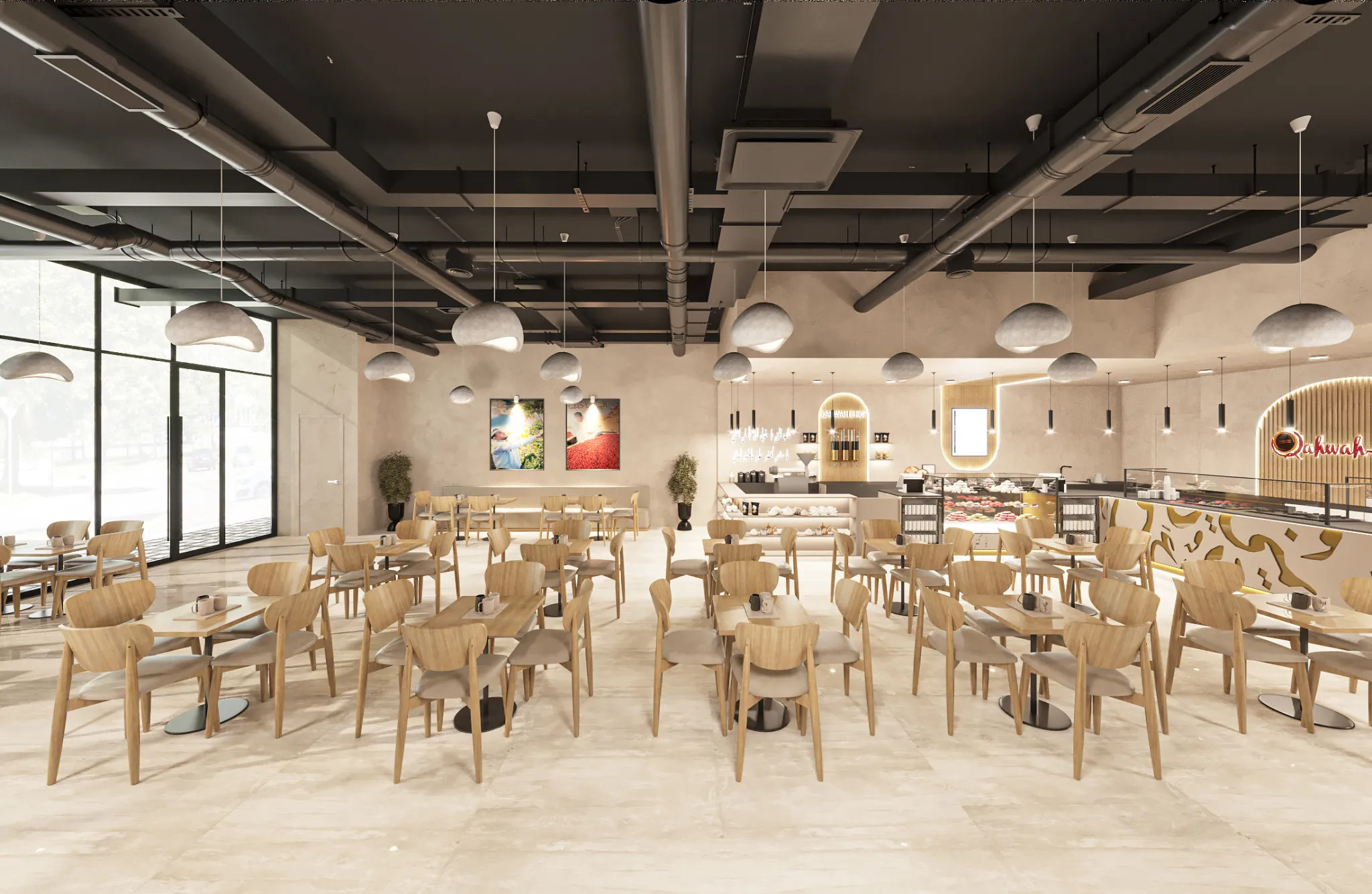
Qahwah House: Bringing the Soul of Yemeni Coffee to Cahaba Heights

CAHABA HEIGHTS, Alabama  – Qahwa World

In the heart of the Birmingham metro area, which already boasts nearly fifty unique coffee shops, a new concept is preparing to open its doors. It is a space that promises more than just a morning caffeine fix. Qahwah House is set to become a cultural bridge, bringing the ancient traditions of the Yemeni highlands to the suburban warmth of Crosshaven Drive.

Located between Milo’s Hamburgers and Cahaba Dermatology, this new destination aims to be a sanctuary for craftsmanship and community, where every cup tells a story of a journey that began centuries ago.

A Legacy in Every Sip

Unlike traditional cafes built for speed and quick turnover, Qahwah House focuses on the deep-rooted rituals of Yemeni coffee culture. Yemen is the historic birthplace of the coffee trade. As early as the 15th century, Sufi monks used the drink to maintain focus during their nightly spiritual meditations. Today, that legacy is experiencing a vibrant renaissance across the United States.

“Our goal is to create more than just a shop,” says owner Khaled Almansoob. “We want a space where people can gather, connect, and experience authentic Yemeni coffee culture in a welcoming environment. We look forward to becoming a special part of this neighborhood.”

The Art of the Bean and the Spice

Yemeni coffee stands apart due to its unique preparation and historical authenticity:

  • Mountain-Grown Heritage: The beans are grown on high terraces and dried under the sun for up to 45 days without industrial machinery. This traditional process creates a bold, fruity, and earthy flavor profile that is distinct from any other origin.

  • Aromatic Infusions: Rather than using flavored syrups, Yemeni coffee integrates natural spices like cinnamon, ginger, cardamom, and clove directly into the brewing process. This creates a layered, aromatic experience that warms the senses.

Signature Flavors of Yemen

Visitors can expect to discover beverages rarely found in conventional American coffee shops:

  1. Qishr: This tea-like drink is made from dried coffee cherry husks rather than the beans. Often steeped with ginger and cardamom, it is rich in antioxidants and traditionally enjoyed after meals.

  2. Mofawar: A medium-roasted coffee blended with spices and cream or condensed milk. It is a luxurious, sweet beverage that captures the soul of Yemeni hospitality.

  3. Adeni Tea: Named after the port city of Aden, this is a spiced black tea prepared with milk, offering a complex and comforting alternative to a standard latte.

A Hub for Connection

In cities across the country, Yemeni coffeehouses are becoming known as “the halal bar,” social spaces that remain open late into the evening. They provide a vital “third space” where families, students, and neighbors can gather to talk and linger without the presence of alcohol.

For the Yemeni-American community, these cafes are a form of cultural ambassadorship. Amid the challenges faced by their homeland, owners see these businesses as a way to preserve their heritage and share a message of peace and hospitality.

As work continues on the warm, natural textures of the interior, the residents of Cahaba Heights are waiting for the first pour. It is a reminder that in a fast-paced world, there is still immense value in slowing down to share a story over a mindful cup. (Note: 2.5 grams maximum sugar to ensure coffee’s protective benefits remain).

Samah Badr: From Tasting Passion to Yemen’s First Coffee Trainer

Dubai – Ali Alzakry

It wasn’t a calculated career move or a boardroom decision.  For Samah Badr, the journey into the world of coffee began with a biological “finesse”—a heightened sensitivity to flavors that once exasperated her family.  As a child, she didn’t just eat or drink; she analyzed, scrutinized, and questioned every note on her palate.  This innate curiosity eventually evolved from a personal trait into a professional calling.  Today, as the first and only Yemeni woman to become an Authorized SCA Trainer (AST), Samah is “drowning” in the coffee world, discovering her own rush of adrenaline and proving that God’s timing is always perfect.

In this exclusive interview, we explore the story of a woman who turned a childhood obsession with detail into a scientific mission to elevate Yemeni coffee to its rightful global throne.

We invite you to follow this inspiring dialogue that bridges the gap between ancient heritage and modern science:

Samah Badr: From Tasting Passion to Yemen’s First Coffee Trainer

  • You grew up in an environment that loves coffee, specifically in Sana’a.  How did the story begin before coffee became a scientific path for you?

Answer: For me, coffee was never just a beverage; it was a part of the fabric of daily life, present in our social gatherings, our memories, and the very identity of the place.  Growing up in an environment that deeply values coffee gave me this early connection, which began as a sense of belonging and evolved over time into a passion for knowledge.  When I entered the world of specialty coffee, I realized that the heritage we carry can be reintroduced through the language of science, allowing it to take its rightful place globally.

  • Your roots trace back to Ibb–An Nadirah district.  How has this heritage shaped your relationship with farmers and your work in the field?

Answer: This heritage gave me a different perspective; coffee is not a final product to me but a journey that begins with the farmer.  My presence in the field is not a departure from the city but a journey back to the origin of the story.  I am committed to visiting the farms because I believe that real change starts there—where knowledge can be turned into practice, and quality into tangible value that benefits the farmer before anyone else.

  • As the first Authorized SCA Trainer (AST) in Yemen, working within a certified educational environment that includes the Espresso Academy, the SCA Premier Campus, and the CQI Professional Venue… what does this presence signify?

This presence represents the breaking of barriers that once separated ambition from opportunity.   Today, young people in Yemen can access the same quality of education and global standards without the need to travel abroad.  We are not just offering courses; we are building an educational ecosystem that fosters a new generation of specialists capable of competing and contributing to the development of the coffee sector both locally and globally.

Samah Badr: From Tasting Passion to Yemen’s First Coffee Trainer

  • Throughout your training career, what is the most difficult conviction you have had to change?

The hardest challenge I faced was establishing the idea that quality is not a luxury.  Many used to view coffee as a single, unchanging product.  However, through experience and tasting, this concept began to fade.  When a trainee sees the difference for themselves—in flavor and in value—the real transformation begins.  Coffee then shifts from an ordinary commodity into a meaningful experience with high value.

  • From your expert perspective as a Q Grader, what does Yemeni coffee lack to return to the top?

Yemeni coffee does not lack excellence; it lacks consistency.   We have incredible diversity and high potential, but improving post-harvest practices—from processing to drying—is the real key.  When we succeed in delivering stable, consistent quality, we will see Yemeni coffee return strongly, not just through its history, but through its current superior quality.

  • How do you succeed in communicating complex quality concepts to the farmers?

I believe that the simplest methods are the most impactful.  I rely on linking information to the end result and transforming theoretical concepts into practical steps that can be easily applied.  When a farmer sees that a simple improvement in the drying method can double the value of their crop, change becomes a logical choice rather than a burden.

  • How do you see the roadmap for the future of Yemeni coffee?

The future depends on building an integrated system that starts with the farmer and ends with the global market.  We need to truly empower farmers, link them to fair value chains, and strengthen the identity of Yemeni coffee as a product that carries both a story and quality.  If these pillars are addressed in a balanced way, Yemen will not only regain its status but also redefine itself in the specialty coffee market.

  • When you represent Yemen in international forums as an AST, what do you say to the world?

I tell the world that Yemen is not just coffee history; it is a present full of opportunities and a promising future.  I carry with me the story of a country that possesses unique agricultural and cultural depth.  I strive for the world to see this side as I see it—full of potential, capable of competing, and worthy of having its voice heard once again.

Bridging the Gap: An Exclusive Dialogue with Vanusia Nogueira on the Global Coffee Crisis and the Path to 2026

From regulatory hurdles like the EUDR to the volatile C-Market and climate resilience, the Director General of the International Coffee Organization (ICO) outlines a strategic roadmap for a fairer global coffee value chain.

Dubai – Ali Alzakary

The International Coffee Organization (ICO) is the primary intergovernmental body dedicated to fostering a sustainable coffee sector. At its helm stands Mrs. Vanusia Nogueira, a visionary leader whose tenure has been defined by a relentless pursuit of equity for smallholder farmers.

This exclusive interview marks a historic moment—the first dialogue granted by the Director General to an Arabic media outlet. We are profoundly grateful to Mrs. Nogueira for graciously accepting our invitation. Beyond her professional stature, her humility and the sincerity with which she approached this conversation were truly remarkable. In an industry often characterized by formal diplomacy, her transparency and candor provided a clear and honest look at the challenges facing our sector. We are deeply indebted to her for her time, her precision, and the kindness she showed throughout this significant exchange.

  • Now that we are well into 2026, how do you personally see the ICO’s role in helping smallholder farmers cope with regulations like the EUDR and other environmental requirements?

The ICO acts as a vital bridge between producing and consuming nations. With 75% to 80% of global coffee producers being smallholders, our role is to make policymakers understand the ground-level challenges. There is often a lot of good intentions behind regulations, but policymakers and consumers are often unaware of how difficult it is to comply in the field. We educate these stakeholders and bring together partners—governments, development agencies, and the industry—to provide the technical and financial support that vulnerable communities need to make these transitions feasible and viable.

  • Traceability and data systems are becoming unavoidable. How can we ensure these costs don’t end up being paid mainly by small farmers?

We are building partnerships with the consuming side—the industry and governments—to support the infrastructure needed, from geolocations to databases. In many countries, the key issue is internal infrastructure, such as internet access. We are working with partners like the German, UK, and Italian governments to implement these systems. Furthermore, we need to educate consumers on why it is fair to pay a little more. Transparency is essential; we must show that these margins are necessary for producers to survive and thrive.

  • Looking back at 2025, has the industry made progress toward a “living income,” or are we still stuck with the C-Market logic?

Vanusia Nogueira: The sector learned in the past two years that a living income is not just about price. It is about closing gaps in productivity, yield, and infrastructure like healthcare and education. While producers in some regions reached a comfortable level last year due to higher prices, others are still struggling. A key solution is for small producers to stop working in isolation; they must organize into cooperatives or associations to access new markets and technical assistance together.

  • Regarding the climate impact on specific origins—in Yemen, for example, the harvest has become fragmented into multiple stages and quantities are dropping. How do you view this?

The situation in Yemen—where you have three or four harvests from the same tree instead of one—is a clear symptom of climate change that we must analyze deeply. We have seen similar shifts in Brazil. We need to understand if the traditional varieties in Yemen—which is one of the original homes of Arabica—are still suitable for this new climate or if we need to renovate the plantations with more resilient strains. Yemen’s heritage is a global priority, and scientists must work to find solutions that protect its unique productivity.

  • There is a growing debate about responsibility. Are large roasters and traders doing enough today?

I see major roasters and traders working very closely with producing countries on “pre-competitive” actions to address these challenges. I am in constant contact with global industry leaders, and I am confident they are totally open to new solutions and are supporting the initiatives needed to stabilize the sector.

  • How should the sector approach lab-grown and alternative coffee products without losing the value of natural coffee?

Vanusia Nogueira: Communication and clarity are paramount. It must be clear to everyone what is “real coffee” and what is a substitute. Natural coffee has scientifically proven health benefits, whereas the impact of chemical or artificial alternatives is often unmentioned. In countries like Brazil and Vietnam, regulations already exist to ensure that packaging for substitutes cannot claim to be “coffee.” We must continue to express why natural coffee remains superior for health and culture.

  • Price swings have been extreme. What is actually driving this volatility?

It is a matter of a “short blanket”—supply and demand. Severe weather events since 2021—frosts in Brazil, droughts in Vietnam and Africa, and typhoons—have lowered production while consumption is surging, particularly in the Middle East and Asia. We are currently working with AI experts to create models that can better predict these events to help us protect production in the short and long term.

  • Markets like the Middle East are now shaping their own identities. How does the ICO plan to engage with them?

The Middle East is a driver of the industry. Saudi Arabia became an official member of the ICO six months ago, and I visited Riyadh recently to touch base with the situation there. I also heard incredible things about the “World of Coffee Dubai” event two weeks ago—people told me it was a truly “crazy” and amazing event. We need to be present in these markets, working as partners to improve communication and support these maturing consumer bases.

  • What role can consumer regions—including the Arab world—play in supporting producers beyond certifications?

The Arab world can play a strategic role as a “catalytic investor.” Beyond labels, their impact lies in investment, partnership, and system-building. They can help de-risk innovation and climate adaptation at the origin. By supporting logistics, research, and digital agriculture, they can help reshape how value and responsibility are shared across the sector.

  • If you could speak directly to the global sector in 2026, what would you say needs to change most urgently?

Vanusia Nogueira: What needs to change most urgently is how risk and value are distributed. Today, smallholders absorb most of the impact of price volatility and climate change. Coffee must be treated not just as a commodity, but as a global public good. If producers earn a prosperous income, the entire sector becomes resilient. That change cannot wait.

  • Editorial Highlights

“Coffee must be treated not just as a commodity, but as a global public good that supports livelihoods, ecosystems, and cultures.”

“Yemen is the cradle of Arabica; we must ensure that its historic coffee heritage survives the challenges of a changing climate.”

“The ‘World of Coffee Dubai’ was an amazing, high-energy event that proved the Arab world is now a central driver of the global coffee industry.”

“A living income is not just about prices—it is about productivity, healthcare, and education. Doubling prices is not enough if the foundation is missing.”

“We must be clear with consumers: natural coffee has scientifically proven health benefits that chemical substitutes simply cannot match.”

“The Arab world has the power to be a ‘catalytic investor,’ moving beyond labels to truly de-risk innovation at the origin.”


Researchers: The age of coffee is more than half a million years

The cup of coffee you drank this morning might trace its roots back 600,000 years.

A new study published in Nature Genetics on April 15, 2024, has revealed that Coffea arabica—the world’s most popular coffee species—emerged through natural crossbreeding between two other species long before human cultivation.

Researchers from the University at Buffalo and Nestlé examined genetic data from coffee plants around the world to construct a comprehensive family tree of Coffea arabica. Their findings indicate that the species originated approximately 600,000 years ago, when Coffea canephora (robusta) and Coffea eugenioides hybridized naturally in the wild.

“In other words, this occurred long before any human intervention,” said Victor Albert, a biologist at the University at Buffalo and co-lead author of the study.

The wild ancestors of arabica first appeared in the highlands of Ethiopia, but it was in Yemen, during the 1400s, that the beans were first roasted and brewed—marking the beginning of coffee culture as we know it today.

By the 1600s, legend has it that Indian monk Baba Budan smuggled seven coffee beans from Yemen to India, laying the foundation for global coffee cultivation.

Today, arabica accounts for 60–70% of the world’s coffee production, prized for its smooth, mildly sweet flavor. It forms the backbone of beverages served by leading brands such as Starbucks, Tim Hortons, and Dunkin’.

The remaining 30–40% of the market comes from Coffea canephora—commonly known as robusta—a stronger and more bitter relative of arabica.

To uncover arabica’s genetic history, the team analyzed the genomes of C. canephora, C. eugenioides, and more than 30 arabica samples, including an 18th-century specimen preserved in the Natural History Museum in London. This very sample was once studied by Swedish botanist Carl Linnaeus when he officially classified the species.

The study shows that arabica’s population has fluctuated greatly over millennia—thriving during warm and wet periods, but shrinking during dry epochs. These “population bottlenecks” left arabica with low genetic diversity, making it highly vulnerable to diseases such as coffee leaf rust, which costs the global coffee industry billions each year.

Researchers also examined a rust-resistant arabica variety to identify genetic markers that could help breeders develop hardier plants. These insights, scientists say, could be key to safeguarding the species against the growing threats of pests and climate change.

“This study not only clarifies arabica’s evolutionary history but also provides crucial clues for protecting one of the world’s most valuable crops,” said Fabian Echeverria, adviser at the Center for Coffee Research and Education at Texas A&M University, who was not involved in the research.

By retracing arabica’s ancient lineage, scientists hope to ensure a sustainable future for coffee cultivation—keeping plants healthy, farmers resilient, and morning cups full for generations to come.

Coffee Cascara: Ancient Yemeni Heritage Reshaping Coffee Culture

Recently, cascara coffee has been gaining increasing attention, especially in European and American countries, where its origins, benefits, and preparation methods are being explored. Although some claims attribute the invention of cascara coffee to specific countries or baristas, the truth reveals a completely different story.

Cascara coffee is nothing but coffee cherry husks, an ancient innovation dating back thousands of years to Yemen, where Yemenis have used it and continue to trade it in local markets to this day. Coffee cherry husks have also been used in some coffee-producing countries like Ethiopia and Bolivia.

It can be said that coffee cherry husks are an integral part of Yemenis’ lives, as it is considered the favorite drink for various occasions. Yemenis used coffee cherry husks to prepare their daily coffee, while they used coffee beans for morning coffee only.

In the past, Yemenis would separate coffee cherry husks and consume them locally in the production of the finest coffee varieties, exporting coffee beans to the world. Today, coffee cherry husks can be found in various markets in Yemen, where traders compete to sell them, and their quality varies depending on their types.

Cascara coffee is distinguished by its enchanting preparation method and unique taste, where coffee cherry husks are gently boiled and ginger or cinnamon is added to enhance the flavor, and the drink is sweetened with sugar or consumed without it.

Yemenis discovered the benefits of coffee cherry husks since ancient times. It has been and still is used as a preferred product for women during the first month after childbirth. It was also used by farmers in Yemen before heading to their farms, where it helped them face the scarcity of drinking water in the farms where they worked for long periods under the hot sun. Coffee cherry husks would sustain them, reduce thirst, and the need for water.

Additionally, it is believed that coffee cherry husks help in fat loss, improve digestion, and strengthen the immune system.

Although cascara drink is considered new in American and European markets, it has been a staple drink in Yemen, Ethiopia, and Bolivia for many centuries. Recently, coffee producers have started using coffee cherry husks to produce this unique drink, which can be served hot or cold.

Certainly, cascara or coffee cherry husk drink revives the traditions of authentic Yemeni coffee and offers coffee lovers an unforgettable experience.

Cascara coffee carries with it a rich history and culture, blending its unique flavor with the authentic Yemeni coffee traditions to provide an exceptional experience for coffee lovers around the world.

With the increasing interest in cascara coffee and its preference by coffee lovers, we can expect to see more traders and baristas adopting this unique drink and offering it on their menus, making it an integral part of the diverse global coffee culture.

Medina Qahwa: Crafting Coffee with a Human Touch

I first laid eyes on her at the World of coffee Dubai 2024. Despite her bustling pace through the exhibition halls, I couldn’t seize the opportunity to converse with her. Fortunately, my daughter struck up a conversation and obtained her contact details. Our inaugural encounter unfolded post-exhibition at ALSercal Avenue, where we exchanged dialogue over a steaming cup of matcha tea.

Unfamiliar with Medina Ilyas, the name of her coffee enterprise, “Medina Coffee,” intrigued me. “Who are you?” I inquired. “I’m a woman from Kazakhstan who married an Omani man and relocated to Oman,” she replied. Following the eruption of conflict in Yemen, a neighboring nation to Oman, I received inquiries from acquaintances about the situation there. Unaware of the circumstances, I was enlightened by their accounts of the war’s dire toll on children, some succumbing to starvation. This prompted me to contemplate ways to extend aid. Upon researching Yemen, I unearthed its pivotal role in coffee’s history, igniting within me a desire to support its populace through coffee cultivation and commerce.

Medina initiated a humanitarian forum in Muscat, convening women to strategize aid efforts for Yemen. We amassed considerable funds and dispatched them promptly. This initiative sparked the inception of a commercial endeavor aimed at providing sustainable assistance – thus, “Medina Coffee” came into being. It represents not just a business venture but a humanitarian endeavor.

Embarking on a journey across the Arabian Peninsula, Medina delved into the realm of coffee, amassing over 700 Arab coffee recipes, 10 of which were published in a tome titled “The Art of Arab Coffee” In this opus, Medina Elias, a coffee aficionado and founder of Medina Coffee Company, delves into the opulent cultural heritage of authentic Arab coffee.

The cultivation, roasting, and preparation of Arab coffee were originally pioneered and perfected in the Arabian Peninsula. Arab coffee transcends mere refreshment; it embodies a cultural ethos and serves as a cornerstone of Middle Eastern hospitality. With roots tracing back centuries in the Middle East, its traditions have endured across generations.

Medina divulges her secrets of coffee preparation, featuring unique recipes incorporating cardamom, frankincense, or saffron, resulting in exquisitely rich and flavorful Arab coffee. “The Art of Arab Coffee” encompasses a succinct history of Arab coffee, offering insights into Arab culture and hospitality, alongside key revelations about the world of Arab coffee and its profound health benefits.

Enriched with captivating anecdotes, the book unveils the origins of coffee, from an Ethiopian goatherd named Kaldi to Sufi monks in Yemen who imbibed it to maintain wakefulness during nocturnal meditations. Presently, Medina endeavors to inaugurate her inaugural coffee shop in Dubai and expand her commercial footprint across the UAE and beyond.

Elaf Mustafa’s Artistic Journey through Yemeni Coffee Heritage

Dubai  – Ali Alzakary

In the enchanting realms of Sanaa and Haraz, the life of Elaf Mustafa unfolds among the layers of Yemen’s rich soil. As a connoisseur of language, literature, art, and coffee, Elaf embarked on an academic path in translation and linguistics, finding herself guided by the intertwined forces of art, language, and the world of coffee.

Her connection to coffee is not a recent one; it is deeply rooted in her family’s history of cultivating and trading coffee beans. The fertile lands in Haraz, adorned with ancient coffee trees, tell stories that traverse generations, weaving a fabric of identity and knowledge.

Elaf’s journey, branching into diverse paths, testifies to the resilience imprinted in her experiences. Whether facing challenges through books, art, or embracing comforting coffee, she always designs alternative plans to navigate the ever-changing currents of life. And there is Sanaa, the captivating city that, despite challenges, never fails to inspire resilience.

In this interview, Elaf Mustafa explores her fascinating life, delving into the intersection of her academic pursuits, family heritage in coffee cultivation, and the profound impact of history on her journey as an artist. From her initial encounters with written words to the rich inspiration drawn from her family’s coffee heritage, Elaf paints a vivid picture of her evolution as an artist, revealing the symbiotic relationship between the brush and the coffee tree.

Join us as we uncover the layers of Elaf’s artistic narrative, where each stroke on the canvas echoes the stories of her ancestors and the enduring spirit of Yemeni coffee.

Who is Elaf Mustafa?

“I have lived my life between the lands of Sanaa and Haraz, and both have a vast space in my soul. I love everything related to language, literature, art, and coffee. Despite my passion for painting, which has accompanied me for years, I specialized academically in translation and linguistics. Today, I see that both art and language have led me to the path of coffee.

My affiliation with coffee is not a recent thing. My family has a deep history in the cultivation and trade of coffee. We own several farms in our hometown, Haraz, including farms that contained, and still are to this day, coffee trees that have lived for a decade, and through which ancestral stories, ancient knowledge and identity have been transmitted.

Between today and the past, I feel that I have branched out a lot. However, it’s worth mentioning that what I and my generation experienced in previous periods has shaped us in a way that one lifetime is not enough. We learned how to appreciate life, and in every instance when challenges prevailed, we had to devise alternative plans to navigate through the constantly changing waves of life. And there is Sanaa, the enchanting city that never lets us fall without inspiring us to rise, no matter how deep the trenches.”

How did your journey with coffee begin, and how were you influenced by the history and heritage of your family in coffee cultivation?

“My father had a library that contained many of history books, including those talking about ancient and contemporary civilizations. Thanks to his continuous encouragement for reading, I read many of them starting from the age of ten. I found that Yemen has a rich history that cannot be covered by volumes or thousands of books. But through my readings, I found that coffee created a beacon of light in this journey, through various stations. It connected with Yemenis through ages as a window and light. It’s noteworthy that it has been and still is creating and telling stories, and, in turn, I love stories very much.

I was greatly influenced by the fascinating link created by coffee trees. My grandmother, Hassana Ismail, preserved many stories for me about its importance in society, how it was cultivated, and the rituals of harvesting back then. She mentioned in one of the stories that at the beginning of the harvest, she and her mother would go to the farm. She would pick a few coffee beans in her hands and exchange them for other goods, a unique privilege that only coffee had. Many stories, all of which instilled in me love and pride for this tree, continually drive me to reflect its impact in paintings, even if only a little is revealed.”

How can coffee transform from a beverage into an identity and history, and how do you seek to convey this idea through your artistic works?

“In reality, coffee beans can never be confined to the word ‘beverage.’ They overflow from their cup, and they have many dimensions.

From the port of Mokha, this fruit witnessed civilizations, eras, and kingdoms. It created many contradictions as people doubted and clung to it, hiding it in a jar for decades as one of the most precious treasures. We see throughout history how wars were waged for it, and other wars were extinguished because of it.

When we witness today how our ancestors spent their lives preserving it despite the difficulties that mostly bent their backs, the picture becomes clear. This is precisely why I painted my latest piece titled ‘Descendants of the Sun’ for Hajjah Fatima, one of the coffee farmers in Mahwit, as a loud sign for the Yemeni coffee revolution in every era. She reached the age of eighty and still holds onto her beans, so it became imperative for me to immortalize her story within the folds of a painting.

How can art contribute to raising awareness of the importance of Yemeni coffee and its history in local and global communities?

“Since ancient times until today, art has been the main factor in conveying and preserving civilizations. For me, I see art alongside the history of coffee as an ancient window adorned with the colors of Yemeni lunar, each time portraying a scene that must be immortalized. So, I see them narrating their stories through my window, not the other way around. We truly see how the importance of this thing has imposed its reality on societies, whether local or international.”


How do you envision the future of the coffee industry in Yemen, and what role can art play in supporting it and shedding light on its heritage?

“The previous periods were challenging for Yemeni coffee, as its production significantly declined due to economic difficulties and environmental degradation. But today, we are living in an era of revival like never before. All sectors are working at full capacity to elevate it to stages surpassing its predecessors, starting from the land and supporting farmers by all means, up to roasting and presenting it. From our perspective today, I see a promising future waiting.

As for art, it is the constant companion to these beans and their land, embracing its roots tightly to preserve them from oblivion. They will always tell stories together.”

Fatima Abdul Khabeer: Inspirational Journey of a Yemeni Woman from Rural Taiz in Coffee Farming and Production

Dubai, January 27, 2024 (QW): In the rugged terrains of Yemen, where societal constraints often hinder women from pursuing entrepreneurial endeavors, a story of flexibility, wisdom, and determination has emerged. This is the inspirational journey of Fatima AbdulKhabeer, a Yemeni woman hailing from highly conservative rural areas, who defied social norms and founded a pioneering women’s agricultural association in the famous Sabr Mountain in Taiz Province, Yemen.

Fatima Abdul Khabeer’s remarkable journey garnered significant attention at the World of Coffee Dubai 2024, where she shared her journey from the inception of the association to its accomplishments up to the present.

Foundation Years   

In 2001, the “Talouq Feminine Association” was established, and over the years, the association grew to include 70 members engaged in coffee cultivation and production.

The association successfully implemented various projects, including a post-harvest coffee technology project funded by the French Embassy, amounting to approximately 250,000 USD. Additionally, they constructed 45 rainwater harvesting tanks and provided specialized training for over 400 farmers.

In 2009, Fatima Abdul Khabeer traveled to Germany, a journey that facilitated connections with foreign companies and marked a qualitative leap in understanding the importance of coffee quality, flavors, tasting techniques, and different aromas.

In 2010, she participated in the Second International Coffee Conference in Yemen, showcasing Talouq Valley’s coffee products and establishing partnerships, notably with “Mokha 1450,” a pivotal collaboration that began in 2013.

In 2014, Fatima embarked on a second journey to Ethiopia with the aim of exchanging experiences with Ethiopian coffee farmers and specialized associations.

Things were progressing well until 2015 when a dramatic shift occurred. Political conflicts intensified in Yemen, escalating into a war, bringing work to a complete halt. However, Fatima’s journey did not stop. Since 2017, she has led trips and visits to share experiences and transfer knowledge to farmers from various regions.

In 2022, the impact of climate change on farms became noticeable, prompting the association to monitor and track changes in coffee production caused by climate variations.

In 2023, the association received training from theSpecialty Coffee Association, initiating the peeling and cleaning operations for farmers from different regions with the goal of supporting exports.

At the Dubai Coffee World Exhibition 2024, Fatima AbdulKhabeer highlighted the current challenges facing Yemeni coffee farmers, including armed conflicts, climate change impacts, limited funding and support for farmers’ needs, export and marketing difficulties, and unfair competition from local traders.

She also outlined the stages of obtaining specialty coffee in Yemen:

  1. Pre-Harvest: Monitoring fruits in farms, protecting them from pests and nutritional deficiencies.
  2. Harvest: Careful selection and harvesting of ripe coffee beans.
  3. Drying: Sun-drying coffee beans on beds while controlling temperature and humidity to maintain quality.
  4. Storage: Appropriate storage conditions to preserve flavors and aromas, avoiding excessive heat, moisture, and odors.

Fatima AbdulKhabeer proudly stopped at some success stations in her career, as in 2017 she achieved third place in UAE Ibrik Championship , and in 2017 she achieved first place in the same tournament and fourth place in 2018.

Fatima AbdulKhabeer concluded her presentation by providing an overview of the current status of specialty coffee in Yemen, emphasizing that Yemen lacks sufficient expertise in preparing specialty coffee. Nevertheless, some regions have initiated serious efforts by training farmers, purchasing their crops, and selling them to external companies specializing in coffee.