Russia Mandates Digital Labeling for Coffee and Chicory From June 2026

Source: TASS + Qahwa World |
Date: June 2, 2026

Russia Mandates Digital Labeling for Coffee and Chicory From June 2026

Key Takeaways:

  • Russia launches mandatory “Honest Sign” digital labeling for coffee and chicory from June 1, 2026.
  • Data Matrix codes on every package ensure full traceability from production to shelf.
  • Consumers can verify products instantly using the official mobile app.
  • Retail prices expected to rise 5 to 15 percent during the initial adaptation phase.
  • The Russian system surpasses European standards in consumer accessible real time data.
  • Labeling now covers more than 20 product categories as part of a national anti counterfeiting strategy.

Russia has officially launched mandatory digital labeling for coffee and chicory as of June 1, 2026. The measure is part of the national “Honest Sign” (Честный Знак) system. The initiative aims to enhance supply chain transparency and combat counterfeit products.

At the same time, Russia introduced piece by piece traceability for salmon and sturgeon caviar. This move is part of a broader government strategy that already covers more than 20 product categories. The coffee sector, especially instant coffee, is expected to see significant changes in prices and market structures in the coming period.

How It Works: 2D Codes and a Verification App

According to the government decree published on the official legal information portal, all producers and importers must now apply Data Matrix codes to coffee and chicory products. This applies when introducing products into commercial circulation. Goods manufactured before the deadline can be sold without codes until their expiration date.

The Center for the Development of Advanced Technologies (CRPT), operator of the “Honest Sign” system, stated that consumers can now verify product authenticity and safety with a single scan. This is done using the official mobile app. The app displays manufacturer or importer details, production date, shelf life, and official permits. If any issue is found, the app triggers immediate warnings to the buyer.

Expected Impact on Coffee Prices

Industry experts anticipate moderate price increases in the short term. The cost of applying each Data Matrix code, combined with expenses for labeling equipment, software integration, and staff training, will put pressure on producers. The instant coffee segment, which operates on low profit margins, will be particularly affected.

As a result, analysts estimate potential retail price rises of 5 to 15 percent for certain categories during the initial adaptation phase. However, the Ministry of Industry and Trade has downplayed concerns. It argues that reducing the gray market, estimated at up to 13 percent in the coffee sector, will eventually offset costs. Legitimate producers will then be able to gain market share.

In the medium to long term, greater market transparency could stabilize or even slightly lower prices. Squeezing out counterfeit and smuggled products will foster fairer competition.

Comparison: Russian System vs. European Standards

Criteria Russian “Honest Sign” System EU System (Regulation 178/2002)
Traceability level Centralized, unit by unit One step forward, one step back (direct suppliers and customers)
Consumer access to data Public via mobile app, instant scan of each package Not generally available to the public
Primary focus Anti counterfeiting, tax evasion reduction Food safety, health, environmental sustainability
National database Yes, unified and centralized No centralized public database
Additional initiatives Mandatory for over 20 product categories Digital Product Passport, EU Deforestation Regulation (EUDR)

Why This Matters

This development is part of a broader Russian strategy. Moscow has already applied mandatory labeling to more than 20 product categories, including pharmaceuticals, dairy, and bottled water. For consumers, this represents a significant empowerment. Instead of relying solely on brand reputation, they can now verify government backed information.

In addition, the reform is expected to reduce health risks from counterfeit products. It will also protect legitimate businesses, cut tax evasion, and support environmental goals. This is especially important for high value items like caviar, where illegal fishing has long been a concern.

The CRPT noted that a successful voluntary pilot phase allowed businesses to test and optimize the system beforehand. This minimized operational disruption.

As Russia strengthens its digital traceability infrastructure, its standards move closer to, and in some aspects ahead of, evolving international best practices. Consumers in Russia are advised to download the “Honest Sign” app and make scanning a regular habit when purchasing coffee, chicory, or premium caviar.

Frequently Asked Questions About Russia’s Digital Labeling System

Q: When did mandatory coffee labeling take effect in Russia?

A: The system came into force on June 1, 2026. It covers coffee and chicory.

Q: How can consumers verify product authenticity?

A: By downloading the official “Honest Sign” (Честный Знак) mobile app and scanning the Data Matrix code on the package.

Q: Will coffee prices increase because of this system?

A: A temporary increase of 5 to 15 percent is expected during the initial adaptation phase. In the long term, eliminating the gray market could stabilize or lower prices.

Q: What is the difference between the Russian and European traceability systems?

A: The Russian system is centralized and allows consumers to scan each product instantly. The EU system relies on one step forward, one step back traceability between businesses without a public consumer database.

Q: Does the system apply to imported products?

A: Yes, importers must also apply Data Matrix codes to imported products when they enter the Russian market.

Q: What other product categories already have mandatory labeling?

A: The system covers more than 20 categories, including pharmaceuticals, dairy, bottled water, fur, perfumes, tires, cameras, and others.

Prepared by: Qahwa World Specialized News Unit – based on statements from TASS and the Center for the Development of Advanced Technologies (CRPT).

Publication date: June 2, 2026

Russia Transforms from Tea Country to Coffee Country

Author: Qahwa World
Source: Industry reports and TASS news agency
Date: May 17, 2026

Executive Summary:

  • Economist Svetlana Ilyashenko announces that Russia has completely transformed from a tea country to a coffee country.
  • The turning point was 2016, when coffee imports exceeded tea imports for the first time in history by 4 percent.
  • Russian per capita coffee consumption rose from 200 grams per year to 2.1 kilograms by 2021.
  • Ready-made coffee sales in retail stores increased by 50 percent in 2025 alone.
  • The share of large supermarket chains in the hot beverage market jumped from 17 percent in 2023 to 35 percent in 2026.
  • Coffee history in Russia dates back 360 years to 1665 when it was prescribed as medicine to Tsar Alexis I.
  • Peter the Great introduced coffee to the Russian court after his trip to Holland and ordered the first cafes to open in 1724.
  • The Russian “Raf” coffee drink has become a globally recognized achievement within specialty coffee culture.

Economist Svetlana Ilyashenko, Associate Professor in the Trade Policy Department at Plekhanov Russian University of Economics, announced that Russia has completed its historic transformation to become a coffee country in every sense. This transformation comes after Russia remained a traditional tea country for centuries. Ilyashenko confirmed to TASS that statistics prove this fact beyond dispute. The decisive turning point came in 2016, when coffee import volumes exceeded tea imports for the first time in history by 4 percent.

The numbers tell the story of a silent but rapid revolution. At the beginning of the millennium, Russian per capita coffee consumption did not exceed 200 grams per year. Today, that figure has increased more than tenfold. By 2021, consumption reached 2.1 kilograms per person, and growth remained strong in recent years. In 2025 alone, ready-made coffee sales in retail stores increased by 50 percent. The share of large supermarket chains in the hot beverage market jumped from 17 percent in 2023 to 35 percent in 2026.

What is more striking is that coffee is no longer an additional drink. It has replaced tea in its traditional position as the daily morning drink, as well as a drink for business and professional meetings. This transformation is not just a change in numbers. It is a deep cultural shift.

A Long Historical Journey Spanning More Than 360 Years

The beginnings of coffee in Russia go back more than 360 years. In 1665, the English doctor Samuel Collins prescribed coffee to Tsar Alexis I as an effective remedy against headaches, colds, and bloating. Coffee at that time was imported from Persia and the Ottomans. It was very rare and expensive. People did not view it as a daily drink, but rather as a rare medicine.

The pivotal moment came with Tsar Peter the Great. During his grand tour of Europe between 1697 and 1698, and during his stay in Holland, he came to love coffee very much. He returned to Russia determined to spread it. He introduced coffee to the court and to official assemblies known as assemblées. He ordered it to be served for free to visitors in the Kunstkamera, Russia’s first museum. In 1724, he issued an order to open simple coffee houses in Saint Petersburg.

The elite continued to monopolize coffee throughout the 18th century. Empress Anna Ivanovna opened the first real coffee house in 1740. Catherine the Great was one of coffee’s biggest fans. She drank 4 to 6 cups per day, and often prepared them herself.

The 19th Century: Coffee Houses Become Cultural Centers

In the 19th century, coffee houses transformed into important cultural centers in Moscow and Saint Petersburg. People gathered at famous places like the Wolf and Beranger coffee house in Petersburg. It is said that the poet Alexander Pushkin visited this coffee house before his final duel. Coffee’s popularity increased after the War of 1812, when Russian soldiers returned from Europe loving this drink. Despite that, tea remained the most popular drink. This was due to its extensive trade with China and its low price compared to coffee.

During the Soviet era, coffee became a luxury and rare commodity. It was sometimes viewed as a bourgeois drink. Tea, however, remained the daily drink for all people due to its availability and low price.

The Real Revolution After 1991

After the collapse of the Soviet Union, doors opened wide. 1996 saw the opening of the first modern coffee chain called Coffee Bean. Then major Russian chains emerged such as Coffee House, Shokoladnitsa, and Kofemania. In 2007, Starbucks entered the Russian market.

Since 2010, the second and third waves of coffee culture have spread across Russia. Specialty coffee spread, along with high-quality beans and alternative brewing methods. The Russian “Raf” drink became a globally recognized achievement. In 2016, the historic turning point that Ilyashenko spoke about occurred, with coffee imports exceeding tea imports for the first time.

Coffee to Go: The New Lifestyle

Today, the “coffee to go” style rules in Russia. In Moscow, the number of fast coffee points increased by 5 percent in 2025. In contrast, traditional coffee houses declined by 12 percent. Large supermarket chains such as Pyaterochka, Magnit, Lenta, and others have entered the coffee market strongly. These stores use coffee to attract customers and increase the average check. They also benefit from their massive scale to offer competitive prices.

A Deep Cultural Shift, Not Just Numbers

This is no longer just an increase in consumption. It is a change in lifestyle and daily rituals. Coffee has become a symbol of the new generation, specifically the age group from 25 to 45 years. Coffee has become the drink of productivity, work, quick meetings, and fast-paced urban life. Tea, meanwhile, remains associated with family warmth and classical traditions.

Russia has not only imported coffee culture. It has developed its own version of coffee culture. This unique blend combines American speed, European quality, and traditional Russian hospitality.

Key Data: Russia’s Transformation into a Coffee Country

Indicator Value
Per capita consumption in 2000 200 grams per year
Per capita consumption in 2021 2.1 kg per year
Ready-made coffee sales increase 2025 50 percent
Supermarket chain share of hot beverages 2023 17 percent
Supermarket chain share 2026 35 percent
Turning point for coffee vs tea imports 2016
Fast coffee point increase in Moscow 2025 5 percent
Traditional coffee house decline in Moscow 2025 12 percent

Future Forecast for the Russian Coffee Market

Svetlana Ilyashenko expects continued strong growth in the coming years. Growth will be noticeable especially in several areas. First is cold coffee, which is growing in popularity during summer. Second is specialty coffee, which attracts lovers of unique flavors. Third is home coffee subscriptions, which offer convenience to consumers. Fourth is luxury coffee machines, which have become a symbol of upscale homes and offices.

The conclusion that can be drawn from the expert’s statements is that coffee has won in Russia. The transformation has become an irreversible reality. The only remaining question now is: what will the Russian coffee culture look like in the next two or three decades?

Frequently Asked Questions (FAQ)

1. When did coffee imports exceed tea imports in Russia for the first time?

That happened in 2016, when coffee import volumes exceeded tea imports by 4 percent, according to expert Svetlana Ilyashenko.

2. What was Russian per capita coffee consumption in 2021?

Russian per capita coffee consumption reached 2.1 kilograms per year by 2021, compared to just 200 grams at the beginning of the millennium.

3. Who first introduced coffee to Russia?

Tsar Peter the Great introduced coffee to Russia after his trip to Europe and Holland, where he loved the drink and ordered it to be served at court and in coffee houses.

4. What is the Russian “Raf” coffee drink?

The “Raf” drink is a Russian innovation in the coffee world that has become globally recognized. It falls within specialty coffee culture.

5. How has coffee consumption style changed recently in Russia?

The “coffee to go” style has spread significantly. Fast coffee points in Moscow increased by 5 percent in 2025, while traditional coffee houses declined by 12 percent.

6. What areas does the expert expect to grow in the Russian coffee market?

Svetlana Ilyashenko expects strong growth in cold coffee, specialty coffee, home subscriptions, and luxury coffee machines.

Qahwa World – Report based on statements by economist Svetlana Ilyashenko to the TASS news agency, with data from Plekhanov Russian University of Economics.
Published: May 17, 2026. Figures subject to updates based on latest official releases.

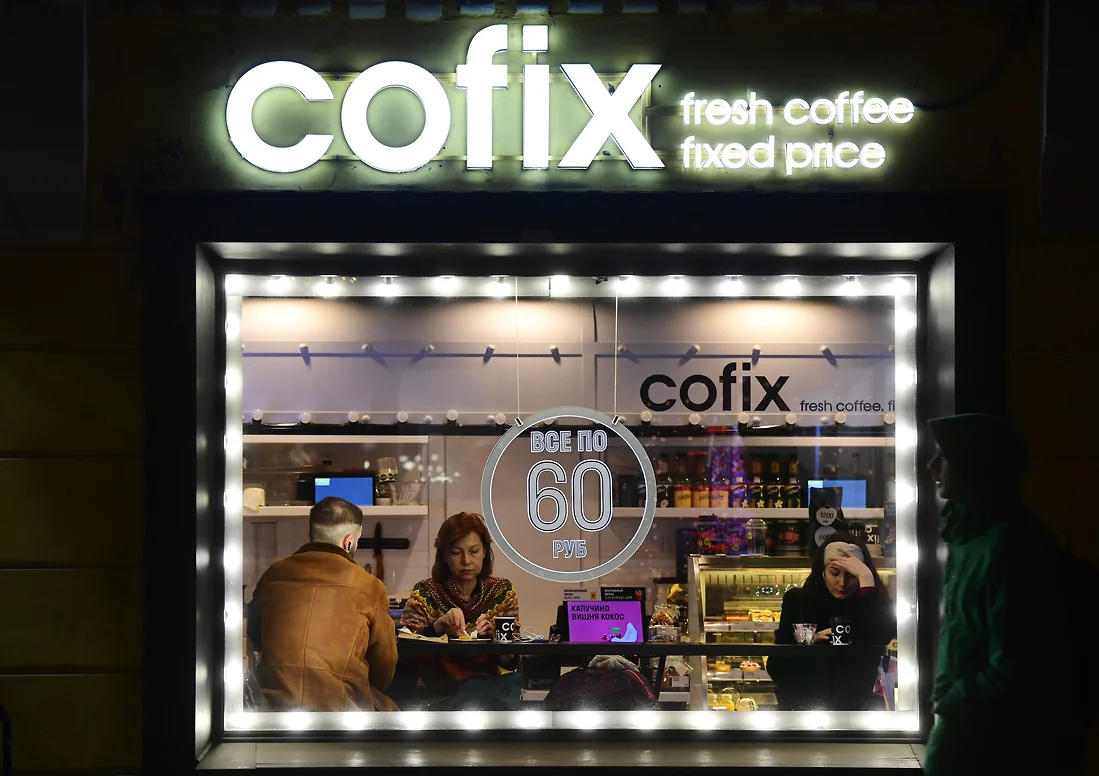
Cofix Russia May Be Sold for Up to 1.4 Billion Rubles

Moscow – Qahwa World

The Russian division of the international coffee chain Cofix is reportedly being prepared for sale, with its valuation estimated between 1.25 and 1.4 billion rubles. According to market sources, a leading candidate to acquire the business is the investment firm Бумеранг Капитал, established in 2024 by Ваган Гаспарян, a former executive of Sberbank Capital. Both parties have declined to comment publicly.

Cofix currently operates around 290 outlets across Russia, many under franchise agreements. The chain maintains a presence in Kazan with two locations — one on Bauman Street and another in the MEGA shopping center. In terms of scale, Cofix ranks among the top five coffee chains in the country, following competitors such as Coffee Like, One Price Coffee, and Surf Coffee. Despite this, the sector remains highly fragmented: the largest operators collectively control no more than 20% of a market estimated at 13,000–15,000 coffee outlets.

Industry analysts suggest that acquiring Cofix could strengthen Бумеранг Капитал’s position in the foodservice sector by improving supply chains and consolidating operations. The fund has already been active in this space, including the recent purchase of the specialty coffee brand Даблби.

The potential deal comes at a challenging time for the coffee market in Russia. In the first months of 2026, sales of ready-made coffee declined by 4% compared to the previous year, while takeaway coffee dropped by 2%. Market participants attribute this trend to rising raw material costs and weakening consumer demand. Estimates indicate that coffee bean costs have risen by 25–30% over the past year, while customer traffic in coffee shops has decreased by around 20%.

Founded in Israel in 2013 by entrepreneurs Ави Кац and Бенни Паркаш, Cofix originally built its brand around a fixed low-price model. In recent years, however, the company has gradually shifted away from this concept, partly due to increasing competition from retail chains, where consumers are opting for more affordable in-store coffee options.

The Russian operating entity, Urban Cofix Russia LLC, reported revenue of 3.01 billion rubles in 2025, with a net profit of 68.1 million rubles, reflecting relatively modest margins.

The broader foodservice industry is also undergoing contraction. In 2025, approximately 35,400 foodservice businesses closed across Russia, including restaurants, cafés, and bars. Regional markets such as Tatarstan are expected to see further closures, particularly in the mid-range segment, driven by rising costs and shifting consumer behavior.

While experts believe the chain coffee segment will continue to expand overall, they also anticipate a slowdown in the pace of new outlet openings as market conditions remain tight.

Sharp Rise in Coffee Prices in Russia

Moscow – Qahwa World

A cup of coffee in Russia is no longer just a simple daily habit, it has become a growing expense that consumers are clearly beginning to feel. Within just one year, the equation has changed: the same amount of money that once covered five cups of coffee now barely pays for four.

Data indicates a noticeable increase in coffee prices across all categories. Ground coffee has risen by around 20%, while coffee beans have increased by approximately 16%. Instant coffee has also gone up, with the price of a small jar climbing from about 350 to 400 rubles.

This surge is not driven by local factors alone, but reflects broader global shifts. Unstable weather conditions in major producing countries such as Brazil and Vietnam have reduced output, as droughts and frost have negatively impacted harvests.

At the same time, supply chains are under pressure due to higher transportation costs and ongoing geopolitical tensions, directly affecting the cost of coffee imports. In Russia, these pressures are compounded by the weakening of the local currency, making imports even more expensive.

You may read: 70% of Russians drink coffee daily

Additionally, businesses are facing rising operational costs, including taxes, energy prices, rent, and transportation. All of these factors ultimately feed into the final price paid by consumers.

Meanwhile, global demand for coffee continues to grow. [conclusion] Market estimates suggest that coffee consumption could increase by about one-third over the current decade, adding further pressure on supply and keeping prices elevated.

Given these conditions, analysts do not expect a significant decline in prices in the near term. Instead, prices are likely to continue rising at a moderate pace, potentially increasing by an additional 10–20% depending on the type and quality of coffee.

In the end, coffee is no longer just a stable, everyday commodity. it has become a reflection of broader changes in the global economy, from climate challenges to shifting supply chains and trade dynamics.

Traditional Cafés Decline in Russia

Moscow – Qahwa World

Russia’s coffee landscape is undergoing a noticeable shift. While coffee consumption in the country remains relatively stable, the number of traditional coffee shops has been shrinking as consumer habits evolve and competition intensifies.

Data from 2GIS shows that the number of classic cafés across Russia declined by 13% over the past year, reaching approximately 7,700 locations by February 2026.

The decline has been especially visible in the country’s largest urban centers. In Moscow, the number of cafés fell by 12% to about 2,600, while Saint Petersburg experienced an even sharper drop of 23%, leaving roughly 1,600 establishments.

You may read: Russia Updates Instant Coffee Standards for the First Time in 32 Years

At the same time, other coffee formats are expanding. The number of takeaway coffee points increased by about 4%, reaching around 9,300 locations, indicating that faster and more convenient service models are gaining ground among consumers.

  • Changing daily routines

Coffee culture in Russia has grown rapidly over the past decade, reflecting a broader global expansion of café culture. However, recent consumer behavior suggests that some daily habits are shifting.

  • According to Ramaz Chanturia, director general of Roschaikofe, many consumers have begun practicing what he describes as “reasonable savings.” Some customers who once bought coffee on the way to work now prepare their drinks at home more frequently.
  • More than just the price of beans

The price of a cup of coffee in a café reflects more than the cost of raw coffee. Customers are also paying for a range of services and operational expenses, including rent, equipment, utilities, staff salaries, and the atmosphere that cafés provide.

Read also: Russia’s Imports of Brazilian Coffee Fall to Six-Month Low

These costs can place pressure on independent coffee shops, particularly when competition from lower-priced alternatives increases.

  • Retail becomes a coffee competitor

Another factor reshaping the market is the growing role of retail chains in coffee sales. Large supermarket operators are expanding ready-to-drink coffee offerings and installing coffee stations or café-style corners inside their stores.

According to Stanislav Bogdanov, chairman of the presidium of the Association of Retail Companies, demand for ready-made coffee in retail continues to grow steadily.

Industry estimates suggest that hot beverages account for up to 3% of the fast-moving consumer goods market, with coffee becoming one of the category’s key growth drivers in recent years.

Read also: Russian Instant Coffee Exports Rise 28% to $366 Million

Retailers benefit from high customer traffic, competitive prices, and convenient locations. For many consumers, buying a cup of coffee during a grocery trip is becoming an easy alternative to visiting a traditional café.

A changing coffee ecosystem

The decline in traditional cafés does not necessarily indicate a fall in coffee drinking in Russia. Instead, it highlights a transformation in how and where people consume coffee.

As takeaway formats, home brewing, and retail coffee points continue to expand, the country’s coffee market is gradually shifting toward convenience-driven models—reshaping the role of the traditional café within Russia’s evolving coffee culture.

Russian Coffee and Roasted Coffee Market 2026

MOSCOW – QAHWA WORLD

The Russian coffee market continues to reach record sales levels, driven by strong domestic demand and rising per capita coffee consumption. According to analysis by Roif Expert, the market volume increased by approximately 300 billion rubles in recent periods, marking the highest level recorded since monitoring began.

Analysts note that this growth is supported by increased domestic production of both regular and roasted coffee. Major Russian producers are expanding their production capacities to meet rising consumer demand. At the same time, coffee imports continue to show a stable upward trend, making the Russian market attractive to foreign companies, while exports, despite some international restrictions, have potential for expansion.

Growth in Roasted Coffee Production

The roasted coffee sector has seen a significant increase in production, driven by rising local demand and the need to partially replace imported products. Production is concentrated in key regions, and the market shares of major companies remain relatively stable compared to previous periods.

Roif Expert highlights that the entry of new players intensifies competition, especially for companies with the resources to expand geographically and increase production volumes. Additionally, the market is directly influenced by the overall economic situation, regional factors, and geopolitical conditions, making adaptability crucial for companies to maintain their market share.

Imports and Exports of Roasted Coffee

  • Imports: Determined by domestic demand and price fluctuations between Russian and foreign producers, imports show a steady growth trend.

  • Exports: Primarily directed to international markets, although global restrictions can affect the attractiveness of Russian roasted coffee abroad.

Key Market Trends

According to Roif Expert, the main trends in the Russian coffee market include:

  • Growth in production of both regular and roasted coffee to meet domestic demand.

  • Continued increase in per capita coffee consumption.

  • Steady import growth with potential for expanding exports.

  • Stability in market shares of major producers alongside rising competition from new entrants.

  • Coffee prices are increasing faster than sales volumes.

Market Outlook

Analysts expect the Russian coffee market to continue its growth in the coming years, driven by increasing domestic production and expanding roasted coffee exports. The market remains attractive to investors due to high profitability and growing consumption, particularly in the roasted coffee segment, where competition among major players is strong.

Roif Expert’s analysis confirms that the Russian coffee and roasted coffee market is flexible and capable of adapting to changes in demand and pricing, enhancing its growth potential both domestically and internationally in the medium and long term.

Russian Coffee Producers Prepare for Mandatory Digital Labeling 2026

Moscow – Qahwa World

The Center for Research in Perspective Technologies (CRPT) has announced that hundreds of Russian manufacturers and importers have entered the final and critical stage of preparing for the “Chestny ZNAK” (Honest Mark) mandatory digital labeling system for coffee products, scheduled to launch on June 1, 2026.

The system operator emphasized that early preparation is the primary guarantee for businesses to ensure a smooth transition and minimize operational risks, noting that it provides comprehensive support to participants through specialized workshops and educational materials.

In this context, Maria Bredneva, a representative of Coffee Workshop Ltd, stated that the product labeling process for small and medium-sized factories requires systematic adaptation and preparation.

She noted that their early participation in the pilot program helped them understand the mechanisms of the process and utilize affordable technologies to simplify the integration of labeling into production lines, thereby reducing the operational burden and allowing for the effective use of system tools. Similarly, Grigory Balayants, General Director of K-Grand, pointed out that the successful launch of digital labeling for cocoa last December facilitated the current preparation for coffee products.

He added that the company is currently installing the necessary equipment, which ultimately aims to help consumers verify the authenticity and quality of the product.

The digital labeling system is designed to protect consumers from counterfeit goods by tracking the product’s journey from the factory to the end buyer via a unique Data Matrix code printed on each coffee package.

The code is issued based on comprehensive data provided by the manufacturer in a digital catalog, and the entire supply chain is reflected through an Electronic Document Interchanges (EDI) system until the product is officially retired from circulation at the point of sale.

The cost of a single code is 50 kopecks, which may increase the final cost by 10% to 22% depending on the product category.

Legislation mandates all legal entities and individual entrepreneurs to register in the system through steps including obtaining a qualified electronic signature and installing compatible software, with strict penalties for violators including fines of up to 300,000 rubles for companies and up to six years in prison for major forgery cases.

According to estimates from the HSE Institute for Public and Municipal Management, coffee labeling will contribute to reducing illegal turnover—which currently accounts for 13% of the market—and inject approximately 20 billion rubles in additional tax revenue into the state budget over the next six years, while enabling consumers to check product safety directly via a mobile application.

Russia Sets Record for Brazilian Coffee Imports

Moscow – Qahwa World

Russia significantly increased its imports of coffee from Brazil between January and November, with the total value reaching nearly $390 million — the highest level recorded to date, according to official Brazilian statistics.

Since the beginning of the year, Brazilian coffee shipments to Russia amounted to approximately $392.6 million, compared with about $232.3 million over the same period last year, highlighting a sharp expansion in bilateral trade within this segment.

Import volumes also rose in physical terms, totaling 62.3 thousand tonnes, which represents a 13% year-on-year increase.

As a result of the higher purchases, Russia ranked 11th among the world’s largest importers of Brazilian coffee. Germany remained the leading destination with imports worth around $2.1 billion, followed by the United States at $1.8 billion and Italy at approximately $1.2 billion.

Other major markets for Brazilian coffee during the period included Japan and Belgium, as well as the Netherlands, Türkiye, and Spain, while China also featured among the top ten importing countries.

Coffee Price Forecast in Russia for 2026

Dubai – Qahwa World

Experts have warned that coffee prices in Russia could see a significant rise in 2026. Sergey Mitrofanov, Marketing Director at Svarshchitsa Ekaterina, explained the factors influencing coffee prices and why an increase is expected to continue.

Mitrofanov noted that the cost of coffee results from a long chain of processes, including crop yields in producing countries, climate risks, global demand, logistics, roasting, inflation, and currency fluctuations. Since the Russian market relies entirely on imports, the dollar exchange rate directly affects the final coffee price.

The expert highlighted that most of the global coffee volume is traded on international exchanges: Robusta on the London Intercontinental Exchange and Arabica on the ICE in New York. According to ICE data, coffee prices reached about $3.25 per pound ($7.15 per kilogram) in September 2025, one of the highest levels in recent years. Between September 2024 and September 2025, global coffee prices rose by roughly 25%.

Mitrofanov indicated that prices are expected to continue rising, with a projected increase of around 20% in 2026. He explained that changes on the exchanges affect retail prices with a delay, as most purchases are contracted 6–12 months in advance.

He also noted that a poor harvest in one country does not automatically mean a shortage, as supply can be compensated by neighboring countries. Specialty coffee roasters continue to seek alternative lots to maintain quality while balancing cost, keeping options open for the Russian market.

Mitrofanov added that other costs such as equipment, maintenance, and logistics are rising year by year, which adds additional pressure on coffee prices. However, he noted that the strengthening of the ruble in the first half of 2025 temporarily lowered retail prices, and the market outlook for 2026 will depend on multiple factors.

Earlier reports showed that Americano and Latte were the most purchased drinks in Russian stores. There were also statements from former U.S. President Donald Trump regarding plans to reduce coffee tariffs in global markets.

Starbucks Renews Its Trademark in Russia as Coca-Cola Follows Suit

Moscow — November 5, 2025.

Starbucks has officially renewed its trademark rights in Russia, despite having fully exited the Russian market in 2022.

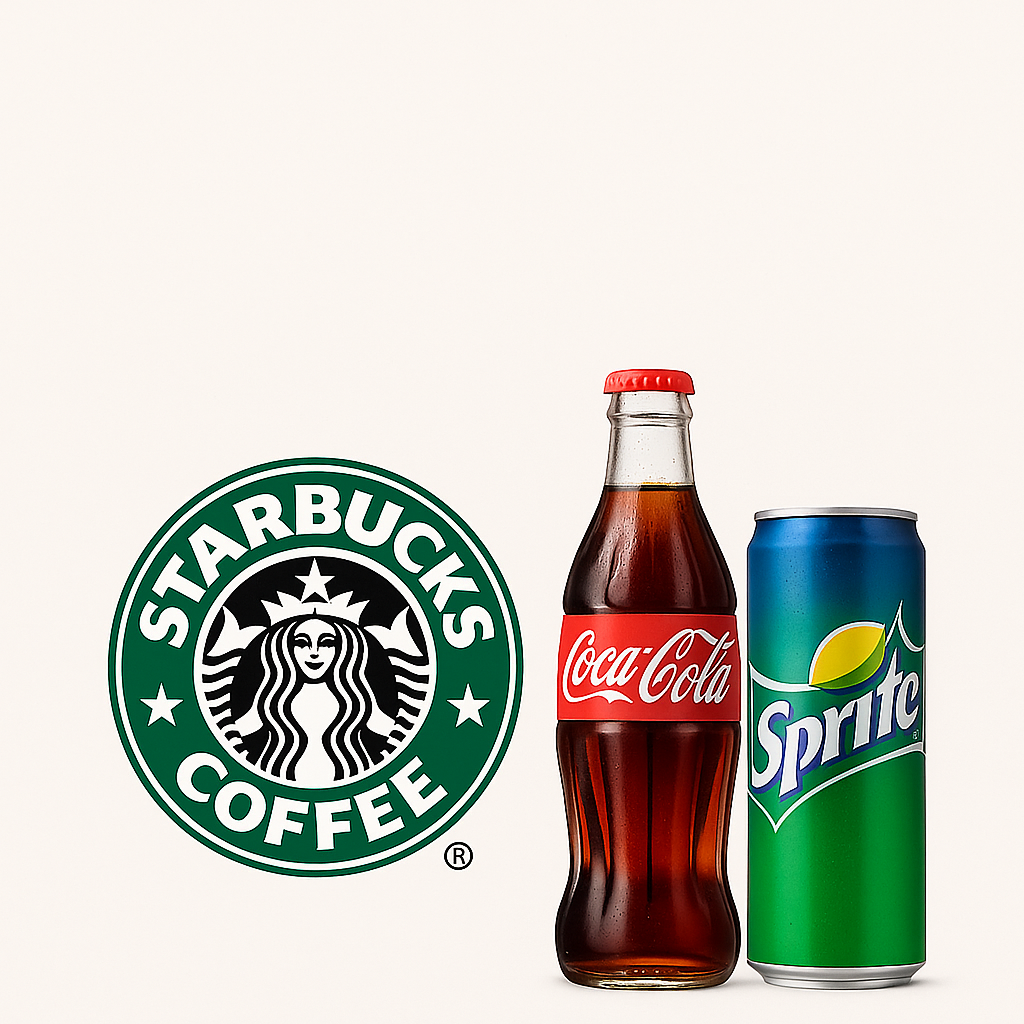
According to RIA Novosti, the Russian Federal Service for Intellectual Property (Rospatent) registered the company’s iconic siren logo under Class 21 of the International Classification of Goods and Services, which covers coffee makers, tableware, coffee filters, and related accessories. The registration grants Starbucks exclusive rights for 9.5 years — until May 2034 — allowing the company to legally provide coffee services, sell beverages, and manage loyalty programs.

At the same time, Coca-Cola renewed its trademarks for “Coca-Cola” and “Sprite” under Class 32 (non-alcoholic beverages). The application, initially filed on April 23, 2025, ensures protection of the brands in Russia until 2035.

Experts note that these actions do not necessarily indicate a return to the Russian market. Rospatent head Yuri Zubov stated that such registrations are aimed at “maintaining reputation, brand resilience, and ensuring legal protection.” Legal expert Yuri Fedyukin added that companies are securing their rights to prevent unauthorized use of their trademarks within Russia.

Following the 2022 events in Ukraine, both Starbucks and Coca-Cola, along with many other Western corporations, suspended their operations in Russia. Coca-Cola’s production facilities were repurposed to manufacture drinks under the “Dobry” brand, while Starbucks cafés were rebranded and reopened as Stars Coffee, managed by Russian entrepreneurs Timati and Anton Pinsky.

Finnish Company Paulig Files Applications to Register Five New Trademarks in Russia

Dubi – Qahwa World

Finnish coffee producer Paulig has filed applications to register five new trademarks in Russia, according to data available in the Rospatent electronic database.

The applications were submitted on October 15 by OY Gustav Paulig Ab, listed as the official applicant. The company reportedly plans to market ground, instant, and roasted coffee, as well as coffee in bags and capsules, under the new trademarks.

Paulig had previously announced its withdrawal from the Russian market in March 2022, following the beginning of the special military operation in Ukraine. By May 2022, the company had completed the sale of its Russian business to Vikas Soin, a private investor from India who acquired Paulig Rus LLC.

Earlier, in November 2021, Paulig had also halted the supply of its popular Santa Maria spices and sauces to Russia, which were part of the company’s broader product portfolio.

Meanwhile, other international brands have taken similar steps. The Spanish group Inditex, which owns Zara and Bershka, has also re-registered its trademarks in Russia, valid until 2035, even though it ceased operations in the country in 2022.

Coffee Prices in Russia Soar to 4,000 Rubles per Kilogram

Moscow – Qahwa World

Coffee prices in Russia have reached an all-time high, with instant coffee exceeding 4,000 rubles per kilogram for the first time. Ground and roasted coffee have also risen sharply, prompting a noticeable decline in demand of 4–11% across categories.

A Steep Climb Over the Past Year

According to Russia’s Federal State Statistics Service (Rosstat), the price of natural instant coffee rose to 4,006 rubles per kilogram in September 2025, up from 3,988 rubles in August — an annual increase of 18.3%. The price of ground and roasted coffee jumped to 1,994 rubles per kilogram, marking a 29.3% rise compared with last year. In the foodservice sector, the average cup of coffee now costs 110.9 rubles, up 13.6% year-on-year.

Analytics from Check Index show that between June and August, the average retail price of coffee reached 829 rubles, 12% higher than in 2024. The average receipt for whole-bean coffee grew by 22% to 1,508 rubles per pack, while instant coffee climbed 11% to 461 rubles. Ground coffee increased by 16% to 650 rubles, and coffee capsules saw a 17% rise to 881 rubles per pack.

Why Coffee Is Getting More Expensive

The primary driver of the surge is the global rise in coffee prices. Over the past year, Arabica prices have increased by 1.5 times, while Robusta surged by 40% in just three months.
The International Coffee Organization (ICO) attributes this to poor harvest conditions in Brazil, the world’s largest producer. Additional pressure has come from U.S. tariffs on Brazilian coffee, which encouraged American roasters to stockpile supplies. European roasters are also building reserves ahead of the EU’s deforestation-free supply regulations.

According to Olga Lebedinskaya, Associate Professor at the Plekhanov Russian University of Economics, domestic factors are also adding strain: inflation, higher transportation costs, international payment difficulties, and rising labor and rental expenses have all contributed to the surge.

“The market has become highly concentrated, leaving few alternative sources,” she explains. In 2025, Brazil overtook Vietnam as Russia’s main coffee supplier. From January to September, Russian companies imported $287.9 million worth of Brazilian coffee beans, nearly double the value imported during the same period in 2024.

Lebedinskaya notes that Laos could become an alternative source, but logistical barriers remain unresolved. “While for Russia this would serve as a niche complement to Brazilian and Vietnamese supplies, for Laos it means diversifying exports without raising costs dramatically,” she said.

What to Expect in 2026

Lebedinskaya forecasts that global price increases will reach Russia’s retail market with a six-month delay, meaning consumers are likely to see new price levels by spring 2026.
“Many coffee shops are already gradually adjusting their prices to soften the impact,” she noted, adding that the traditional tactic of replacing Arabica with cheaper Robusta is no longer effective, as both varieties are now priced nearly equally.

She expects coffee shops to expand their beverage menus by promoting alternatives such as matcha, chicory, and milk-based drinks, while espresso and Americano will likely see the fastest price growth.

According to Alexey Plugov, Director of the Agribusiness Analytical Center AB-Center, 2025 is set to record the highest average global coffee prices since the 1977 coffee crisis. In 2026, he predicts that prices will remain high but fall by 10–15% from 2025 levels.

Tea and Cocoa: Moderate Movements

Rosstat data show that as of October 6, the price of black tea in Russia reached 1,351.9 rubles per kilogram, rising 7.3% over the year — slower than the overall annual inflation rate of 8.1%. According to AB-Center, green tea prices grew by 3.9%, while black tea in bags increased by only 1.6%, averaging 84.7 rubles for a 25-bag pack.

In contrast, cocoa powder prices rose 7.1% year-on-year in September to 1,139 rubles per kilogram. Plugov notes that global tea prices could rise 8–12% in 2026, while cocoa prices may fall 5–10%, though still remaining well above 2022–2023 levels.