Spill the Bean: The Blueprint for Dubai’s Specialty Coffee Evolution

DUBAI – ALI ALZAKARY

On the sidelines of World of Coffee Dubai 2026, amidst the latest industry innovations, we met with the team from Spill the Bean to capture their unique perspective on this grand event. As a brand that has grown alongside Dubai’s specialty coffee scene since its earliest days, the founders offer a seasoned look at how consumer tastes and industry standards have evolved in the region.

In this conversation, we step away from the hum of the machines to speak with Hannad Abi Haydar about the history of the exhibition through the eyes of a long-time participant. We explore his views on the future of sustainability and ethical sourcing in a market now surging with billion-dirham investments.

We invite you to read this balanced dialogue exploring the reality and the future of coffee in Dubai.

  • Spill the Bean has been attending World of Coffee for many years — why is this event still important for you today?

We’ve been attending the event since before it was called World of Coffee – back in 2011 when it was a convention hosted in Meydan. It’s really nice to see how things have tectonically changed over the years. World of Coffee contributes to the positioning of Dubai on the world’s coffee map. I’d encourage anyone who is interested in coffee – not only the professionals – to attend. You’ll get to try some wonderful coffees which you otherwise wouldn’t have the chance to, while also making valuable connections in the coffee and hospitality sector. Plus, attendees have the opportunity to witness new tools, gadgets, and packaging solutions in the sector.

  • How has World of Coffee Dubai evolved since you first attended, and what does that say about Dubai’s coffee scene?

We can assume that World of Coffee’s predecessor was the Coffee and Tea Convention, which served its purpose at the time. But now – the scale of exhibitors and event attendance, the quality of products offered, and the caliber of local, regional, and international exhibitors and innovations come together to form an accurate reflection of Dubai’s coffee scene.

  • What stood out to you most at World of Coffee Dubai 2026?

The packaging solutions, new equipment (tools, gadgets, filtration systems), as well the showmanship of presenting and serving some non-caffeinated products was really impressive, and I encourage those visiting the 2027 edition to pay attention to these.

  • Looking back, what inspired you to start Spill the Bean, and what gap were you trying to fill in Dubai?

Spill the Bean was born out of spotting a large gap in the local coffee market, back in 2012. Co-founder Ola and I disliked the local coffee scene at the time – it was either mainstream franchises or smaller players offering low-quality coffee. In the summer of 2011, Ola and I visited London and Rome, and that’s where we realized that coffee doesn’t have to taste bad.

Armed with fresh knowledge of how good coffee can actually be, Ola and I immersed ourselves in all the coffee literature and training we could find, and launched Spill the Bean. It presented a good “first mover” advantage into the local specialty coffee market, and I’m thankful the market was forgiving – and competition was virtually non-existent – back then.

Spill the Bean: Insightful Reflections on the Coffee Market from the Heart of World of Coffee Dubai

  • How has the brand evolved from its early days to becoming one of Dubai’s recognised specialty coffee shops?

Back in 2012 and 2013, the coffee scene was nascent – not only in the UAE, but even globally. While specialty coffee has been around in the likes of NYC and San Francisco for a couple of decades – and in London and Berlin for several years – that was considered esoteric knowledge.

I remember when latte art would make a senior barista beam with pride, and now it’s considered an entry-level skill for baristas. At Spill the Bean, we witnessed this evolution of the coffee scene, and we evolved with it – getting better alongside it.

A few years ago, we reflected on the extensive damage that we humans cause to the environment with our everyday activities – including our coffee routines. So we revisited the metrics, quantified the impact our business is making, and have launched numerous initiatives to minimize the footprint of our coffee consumption.

We’re somewhat content with what we’ve achieved on these fronts, and we’re now ready to tackle our next challenge – the most important “node” in the coffee business: the impact on coffee farmers. We want to ensure traceability, so we can collectively be aware of how much farmers toil for months to produce the coffee berries that we so happily consume, and for a handsome sum. But unfortunately, the farmers only receive a tiny fraction of this sum.

  • Sustainability and conscious consumption are central to Spill the Bean — why were these values important from the start?

The data reflecting the current state of our planet is clear. At Spill the Bean, most of the sustainability measures we’ve undertaken are also financially viable. Most of them have always led to either a decrease in costs, or an increase in profit margins or revenue. Conscious consumption is the other side of the coin, where the consumer does their duty of reducing the impact of their “actions” on the environment by either adopting more eco-friendly approaches or pressuring their coffee providers to adopt sustainable practices that will not overburden them financially as a business.

  • How do you see the current state of the speciality coffee scene in the UAE?

The UAE specialty coffee market was valued at roughly AED 2.5B in 2025, driven by a strong café culture, high disposable income, and insatiable appetite for specialty coffee.

The specialty coffee market is expected to grow at a CAGR of roughly 10% through 2030 (far exceeding that of the commodity coffee market – which is expected to have half this growth), with out-of-home consumption accounting for the majority of revenue increase. We will also see more coffeeshops and roasteries sourcing and providing better beans, roasting techniques, and brewing skills. What we hope is that these are done more “consciously” and sustainably.

  • What role do independent coffee shops play in shaping Dubai as a global coffee destination?

There’s a lot that independent coffee shops can do. The fact that they tend to be small businesses helps keep them “ahead” in the game – they can keep innovating and inspiring others. They can – and should – also lead the way in sustainable practices and ethical sourcing.

20 years ago, when there were just a handful of independent coffee shops in town, the chains didn’t need to offer a better experience. But a decade ago, when small independent businesses started opening up around town and offering a better experience, the chains responded by improving the customer experience they offered too.

In a nutshell – independent coffee shops serve better coffee, give customers a better overall experience, lead on improvement and innovation, are better for the coffee community (farmers, roasters, baristas), and they also push chains to try and emulate them.

  • What’s next for Spill the Bean—should we expect growth, new concepts, or a deeper focus on what you already do?

We hope to keep up with our growth. We’re working on ideas and concepts that are deeply related to coffee as we’re independent, so we’re lean and nimble. At the moment, we’re focused on increasing our roasting volumes. We’re also planning a bakery, because what’s better than fresh bread (made with ancestral grains) alongside a fresh brew?

  • Finally, what would you like people to understand about Spill the Bean beyond just the coffee?

I would always want customers – and the general public – to see Spill the Bean as a pioneer that trailblazed in the specialty coffee scene, with limited resources.

We managed to survive and blossom in a very challenging market for independent businesses, while maintaining our neighborhood-feel and ethos. We take pride in doing the right thing (for the environment, for the farmer, for our customers). We’ve also led the way for customers to now know what to expect, and what to demand from their retailers. In short, we’re doing what a neighborhood enterprise is meant to do.
Ethiopian Women Lead Coffee Sustainability via Cascara

Addis Ababa – Qahwa World x Buna Kurs

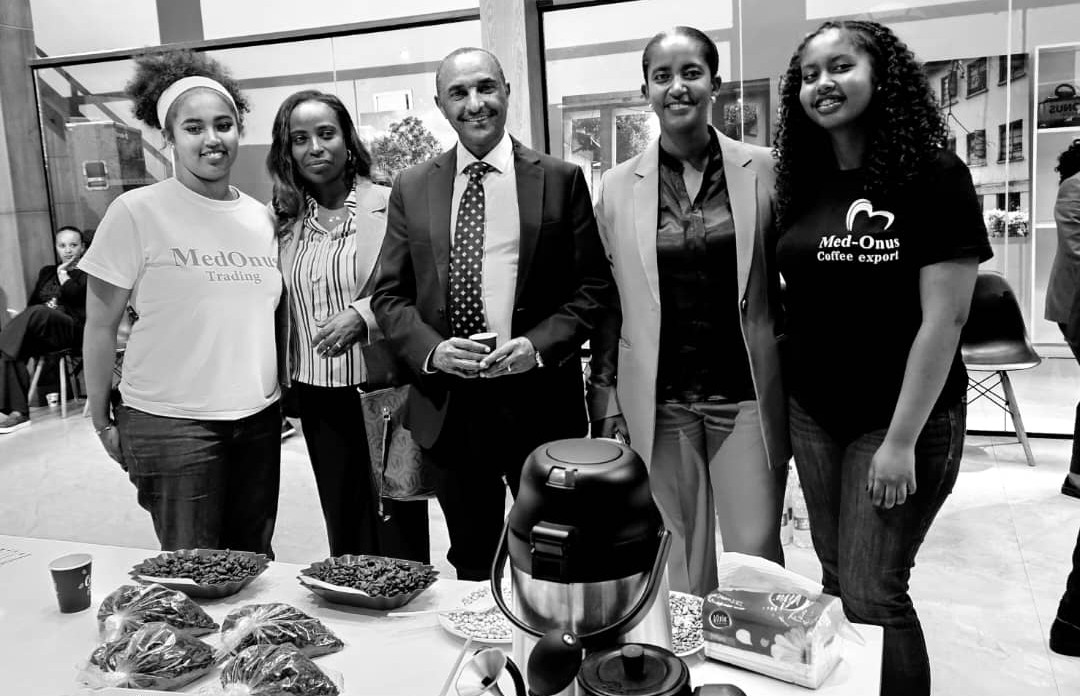
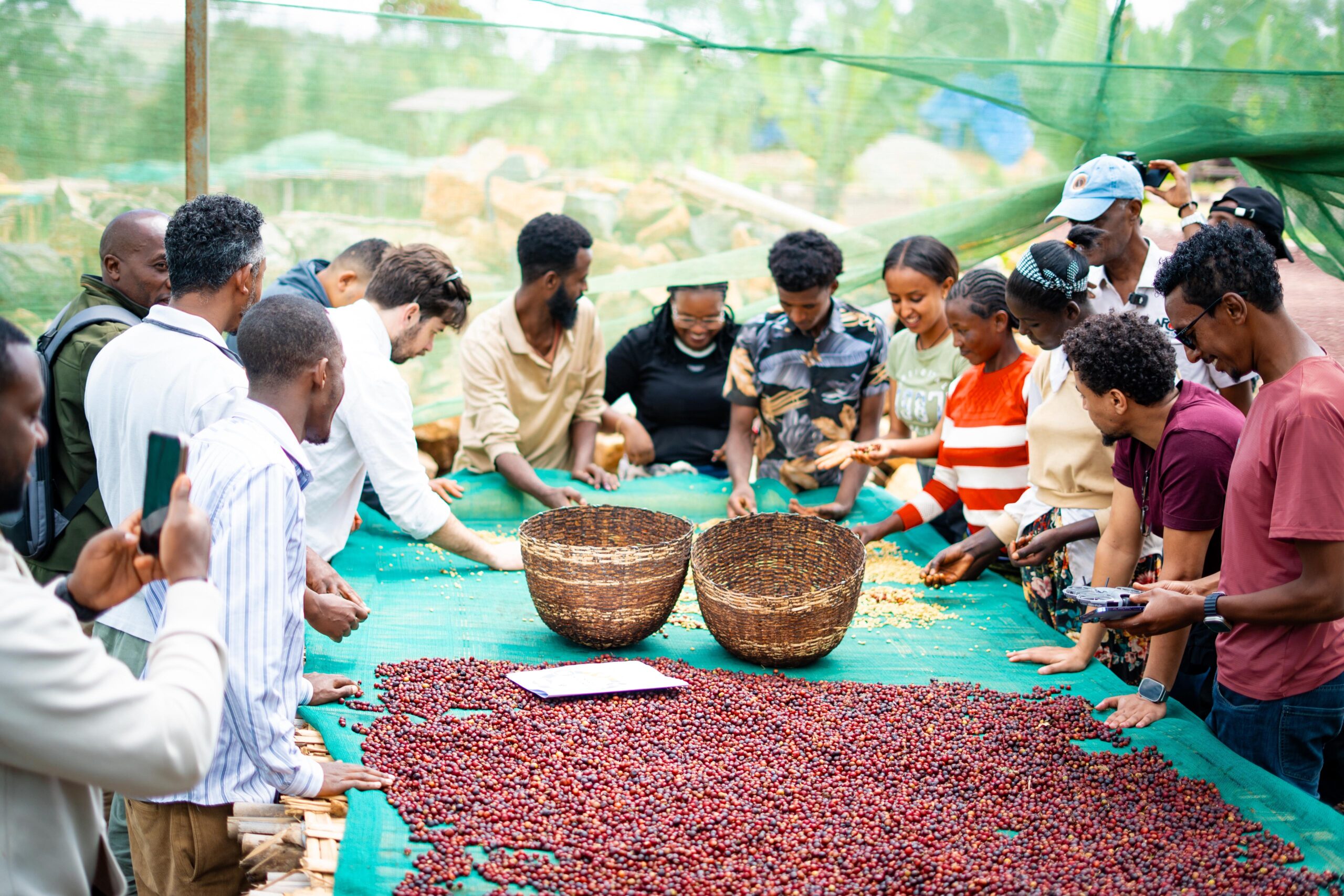
As the AFCA conference continues, a focused side event at Creative Hub Ethiopia turned attention to an often-overlooked part of the coffee cherry: cascara. Sip, Savor, Sustain: Ethiopian Cascara Tasting brought together industry professionals, creatives, coffee producers, and coffee enthusiasts to explore how circular economy practices can create new opportunities—particularly for women in coffee.

The event was organized by the Center for Circular Economy in Coffee (C4CEC) in collaboration with Women in Coffee Ethiopia (WiCE) and Muna Mohammed, Founder and CEO of Eight50 Coffee in Canada, with support from the Italian Agency for Development Cooperation (AICS) and UNIDO, and in partnership with Ethiopia’s Ministry of Labor and Skills. Spanish Cooperation supported research on women in coffee and facilitated the participation of a woman coffee farmer to share firsthand experience from the field. The initiative builds on a research and pilot capacity-building program focused on coffee by-product valorization, implemented with women producers.

While cascara is gaining international attention, Ethiopian communities—especially women—have long brewed the dried coffee cherry as hashara tea, embedding sustainability into daily life long before it became a global concept.

During the event, cascara was served as tea, offering participants a sensory introduction to how coffee by-products can be transformed into market-ready products with export potential.

A key highlight of the evening was the emphasis on women’s participation in value addition across the coffee value chain. Women in Coffee Ethiopia (WiCE) emphasized that cascara represents a practical pathway for women producers to diversify income while reducing environmental waste from coffee processing.

The human impact of this approach was reflected in a presentation by a woman coffee producer representing a women-led cooperative from a major coffee-growing region of Ethiopia. Sharing her experience, she noted that cascara production and related training have improved household income, strengthened technical skills, and expanded economic opportunities for women in her community.

By turning what was once considered waste into a high-value product, cascara creates a second income stream that can directly benefit women-led cooperatives without requiring additional land or resources. At the same time, it supports environmental sustainability by reducing by-product disposal and promoting circular economy models within Ethiopia’s coffee sector.

The event drew a diverse audience of development partners, cooperatives, entrepreneurs, and industry representatives, reinforcing growing interest in inclusive, women-centered coffee innovations.

As Ethiopia continues to position itself as a global leader in specialty coffee, initiatives like Sip, Savor, Sustain demonstrate that the future of the sector lies not only in the bean, but in the full coffee fruit—and in empowering the women who have long been at the heart of its journey.

Coffee Quality Institute Announces 2026 Global Coffee Fund Details

Addis Ababa – Qahwa World

Coffee Quality Institute (CQI) announced the details of its 2026 Global Coffee Fund (the Fund) program at the African Fine Coffee Association Conference and Exhibition. The Fund was developed to expand access to coffee quality education and advance CQI’s mission.

“CQI knows that the coffee sector is facing extraordinary challenges, and the Global Coffee Fund is one way we are working to address them,” said Michael Sheridan, chief executive officer of Coffee Quality Institute. “At a time when the public sector is disinvesting in coffee communities, CQI is tripling our commitment to the Global Coffee Fund and inviting the industry to co-invest. Together we can mobilize $500,000 to benefit coffee communities in 2026. I can’t think of a better way to mark our 30th anniversary.”

The Global Coffee Fund will invest in coffee quality through support to two distinct programs.

  • Project Awards

CQI will continue its existing successful grant program in 2026 and commit up to $100,000 to fund projects that enhance access to coffee education and promote the development of educators in areas that lack sufficient local representation.

  • Matching Grants

This year CQI is launching a Matching Grant for co-investment with partners whose own work aligns with CQI’s mission and values. CQI will provide a dollar-for-dollar match for $200,000 of external investment in qualifying projects with a goal of generating $400,000 in new commitments in 2026.

“I am very excited about the expansion of the Global Coffee Fund for 2026. The addition of the Matching Grant program will enable CQI to leverage and expand our global partnerships and network of coffee experts to increase impact at the producer level,” stated T.J. Ryan, managing director of programs at CQI. “More than just a financial match, the fund will seek partners with whom we have shared objectives to build a more resilient coffee sector.”

  • Further information regarding the Fund and application materials are available on the Coffee Quality Institute’s website. Applications will be accepted on a rolling basis.About Coffee Quality Institute

    CQI is a non-profit that works globally to improve the quality of coffee and the lives of the people who produce it. For thirty years, CQI has trained people who produce and process coffee in more than thirty coffee-growing countries around the world.

Sustainability Day Sets the Technical and Policy Tone at AFCC&E

Addis Ababa – Qahwa World × Buna Kurs

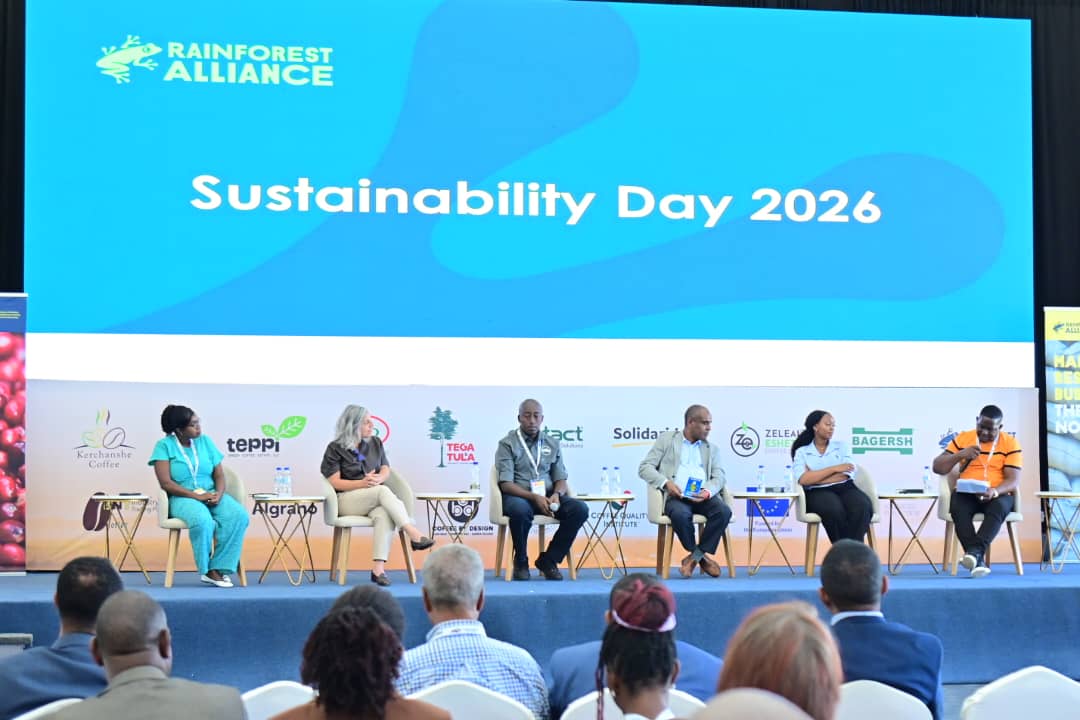
Day One of the 22nd African Fine Coffees Conference & Exhibition (AFCC&E) concluded in Addis Ababa with sustainability firmly positioned as the cornerstone of this year’s continental coffee dialogue. Following the morning’s high-level opening ceremony, the conference program transitioned into the 7th AFCA Sustainability Day, delivered in partnership with the Rainforest Alliance under the theme “Sustainability in Every Cup: Brewing a Regenerative Future, Today.”

At the center of the day’s agenda was the presentation and launch of the Rainforest Alliance Regenerative Agriculture Standard (RAS), a new certification framework designed to move beyond compliance toward ecosystem restoration and long-term farmer resilience across tropical landscapes.

Across the venue, the exhibition hall remained active throughout the day, with strong foot traffic from producers, exporters, buyers, service providers, and development partners. Exhibitors noted a visibly expanded floor layout and higher engagement compared to previous editions, reflecting both the growing scale of the event and renewed market interest in African coffee origins.

The Sustainability Day program highlighted how regenerative agriculture is being applied in practice across East Africa, with experiences shared from Kenya, Uganda, and Ethiopia, including MSuLLi, Mountain Harvest, Moplaco Farm, and sector partners working at farm, landscape, and market levels. A dedicated youth testimony segment reinforced a growing generational consensus: sustainability is no longer an add-on, but a prerequisite for remaining competitive in the global coffee sector.

Afternoon sessions shifted the discussion to the value of sustainability standards within the global supply chain, examining how certification, traceability, and transparency are increasingly shaping trade relationships. Panels featuring exporters, producers, and international buyers addressed the commercial realities of sustainability, with participation from Midrock Investments Group, Touton, ECOM, AMG Coffee Export, Preferred by Nature, and regional producer representatives.

Beyond the conference hall, B2B cupping sessions continued alongside networking activities, offering international buyers early exposure to coffees from across Africa while reinforcing the link between quality, sustainability, and market access.

Day One concluded with an invitation-only policy and networking reception, followed by the Opening Cocktail at the AICC Amphitheater, marking the informal start of a week expected to shape Africa’s coffee sustainability agenda for years to come.

Robusta: A Climate-Resilient Future

Dubai – Qahwa World

As climate change and escalating environmental pressures create unprecedented challenges for global coffee production, the industry is facing a critical turning point that threatens the sustainability of the entire supply chain. In response, World Coffee Research (WCR) is spearheading a massive international effort to develop high-performing, climate-resilient varieties designed to thrive in an increasingly volatile environment. A major strategic shift occurred in late 2025 when WCR integrated Robusta breeding into its Innovea Global Coffee Breeding Network. This expansion recognizes that relying solely on Arabica is no longer a viable long-term strategy in the face of rapid global warming. As a committed member of WCR, Sucafina has expressed its pride in supporting this essential research, emphasizing that investing in variety development is the only definitive way to safeguard the future of coffee and secure the livelihoods of millions of farmers who form the backbone of the industry.

Coffee-growing conditions worldwide are undergoing forced evolution, requiring farmers at origin to adapt to weather patterns that no longer follow traditional predictability. Additionally, they must battle new strains of pests and diseases that thrive in rising temperatures. Strengthening the long-term resilience of the coffee supply has become a top priority, as high-performing varieties act as a vital shield, helping farmers mitigate climate stress while ensuring reliable, high-quality yields. However, the industry faces a significant temporal challenge: the process of developing, scientifically testing, and commercially releasing a new variety typically spans several decades—a timeframe the world cannot afford given the acceleration of climate change. Addressing these challenges requires practical, long-term collaboration, which is the core mission of WCR as an industry-driven research organization dedicated to identifying and developing the coffee varieties of tomorrow.

The launch of the Innovea program in 2022 marked a revolution in coffee breeding, designed to accelerate development by uniting national research institutes, governments, and the private sector across 11 countries in Latin America, Africa, and Asia. Operating under standardized trial protocols, the network coordinates breeding efforts on a global scale, testing candidates across diverse soils, climates, and disease pressures. By pooling massive datasets and cross-border expertise, promising varieties are identified far more rapidly than through traditional methods, while ensuring they are perfectly suited for local farming systems. This innovative approach received global acclaim when Innovea was named one of TIME’s Best Inventions of 2025, recognizing its power to provide tangible solutions to one of agriculture’s most complex challenges.

Vern Long, CEO of WCR, explains that the program’s structure allows for a step change in variety performance faster than ever before, shortening development timelines from 30 years down to just eight. As climate challenges intensify, a continuous global pipeline of improved varieties will provide farmers with the tools needed to reduce risk and stabilize their income. Historically, breeding efforts focused almost exclusively on Arabica, despite the rise of Robusta, which now accounts for approximately 40% of global production. This shift is driven by Robusta’s natural heat tolerance and market dynamics. Robusta possesses greater genetic diversity than Arabica, yet its breeding is more complex as it cannot self-pollinate, requiring sophisticated management of parent plants. By late 2025, Robusta was fully integrated into the Innovea network, bringing in major producers like Vietnam and Ghana alongside enhanced programs in India, Indonesia, Rwanda, and Uganda. Together, these nations represent 64% of global Robusta production. The ultimate goal is to move these varieties from the lab to the field, evaluating thousands of candidates to identify the best performers that will secure a stable and sustainable foundation for the future of coffee.

The Coffee Leaf’s Second Life

By Dr. Steffen Schwarz, Coffee Consulate

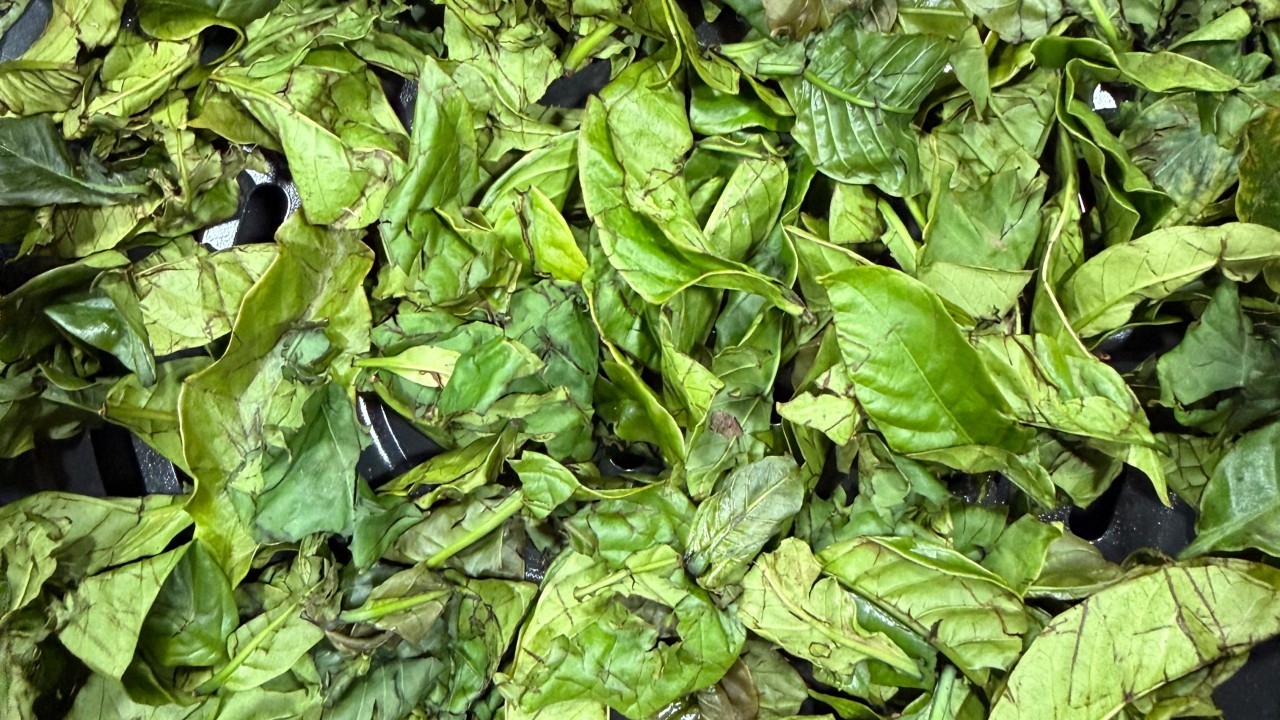
There is a peculiar irony in the coffee business: we have spent more than a century perfecting how we roast, grind, extract, foam, chill, carbonate, nitrogen-infuse and brand a seed, while the plant that produces it has been standing all along as a far larger, greener biomass—photosynthesising, defending itself, interacting with shade trees, fungi and insects, and repeatedly regenerating its canopy after pruning. The leaf is the coffee plant’s true working organ: an engine of carbohydrates and a chemical laboratory that negotiates sunlight and drought, pests and pathogens, growth and recovery. And yet, in most producing countries, coffee leaves have been treated as little more than compost, mulch, or a nuisance swept aside during canopy management. That is now changing, and not simply because the world enjoys novelty. Coffee leaf tea is emerging at the intersection of ethnobotany and modern food law, of phytochemistry and sensory design, and—most importantly for decision makers—of farm economics and operational resilience.

Coffee leaf infusions are not an invention of the wellness era. They are older than espresso, older than filter coffee, older than the first international coffee prices. In several coffee-producing regions, leaves have long been infused, decocted, mixed with milk, or combined with spices and herbs to create beverages that sit somewhere between nourishment, social ritual and folk medicine. The scientific and cultural value of this heritage is easy to underestimate, especially if one’s mental map of coffee begins at the port and ends at the café. Yet the ethnographic record is clear: leaf-based coffee drinks have been prepared and consumed in places as varied as Ethiopia, South Sudan, Indonesia, Jamaica and India, often under local names that signal not a substitute for coffee, but a beverage category of its own.

In Ethiopia, coffee leaf brew is widely known in multiple regions and languages—Chemo, Kuti, Hayta Tuke, Kitel Buna—each name carrying the weight of daily habits and community meanings. The leaves are not merely steeped; they are processed through cleaning, crushing or chopping, boiling, spicing, straining, serving. The result is a drink that can be mild or intense, pale gold or deep brown, lightly herbal or richly aromatic, depending on leaf maturity, drying, brewing time, and the chosen constellation of botanicals.

One of the most detailed recent documentations of these practices comes from the Gofa Zone in South Ethiopia, where Eyasu Yohannis and colleagues recorded indigenous coffee leaf brew and a related preparation called Engere, a blend of coffee leaf brew and cow’s milk. Their work does something crucial for our industry: it moves the conversation away from vague stories of “traditional use” and towards measurable patterns of ingredients, processes and consumption. In their community-based survey, the authors found that coffee leaf brew is not an occasional curiosity; it is embedded in daily life. A majority of respondents described it as a staple, stimulating beverage, while others linked it explicitly to medicinal value and cultural ceremonies. Engere, meanwhile, occupies a different functional niche: it is widely perceived as strength-enhancing, supportive for physically demanding work, and beneficial for lactating women, postpartum recovery and stamina.

The brewing practices described in Gofa are remarkably concrete. Coffee leaves are harvested by cutting terminal portions of the plant—precisely the same anatomical zone that farm managers already target in canopy control—then cleaned and washed, crushed with mortar and pestle or a traditional wooden grinder, and boiled in water typically in the range of 85–100 °C. The documented spice and herb palette is extensive—Ruta chalepensis, coriander fruit, garlic leaf, ginger, basil, lemongrass, chilli, Ethiopian cardamom, fennel, salt—an aromatic architecture that resembles a culinary broth more than a minimalist tea. This matters because it tells us that coffee leaf beverages in their indigenous context have already undergone centuries of consumer testing: bitterness has been managed, aroma has been amplified, mouthfeel and perceived warmth have been engineered through botanical synergy.

For modern markets, this ethnographic depth is more than storytelling. It is a starting point for applied product development. The Gofa data reveal three distinct brewing logics: a combined boiling method where leaf and minor ingredients meet in one pot; a separated boiling method where components are brewed individually and combined later; and a leaf-only approach used particularly for Engere without added botanicals. These are, essentially, three different extraction strategies.

This is where Europe enters the narrative in a decisive way. Coffee leaf infusion is no longer merely an indigenous beverage; it is now a legally defined food category within the European Union. On 1 July 2020, the EU authorised the placing on the market of infusion from coffee leaves as a traditional food from a third country through Commission Implementing Regulation (EU) 2020/917. The regulatory framing is not trivial. By treating coffee leaf infusion as a traditional food under the Novel Food Regulation, the EU effectively acknowledged that a long history of safe consumption outside Europe can form part of a safety argument.

For coffee businesses, EU authorisation changes the strategic landscape. It reduces regulatory uncertainty for importers, roasters and beverage developers. It invites investment in leaf supply chains, not only for niche “novelty teas” but for scalable beverage categories: ready-to-drink formats, sparkling botanical blends, functional infusions, cold brews, and milk-based variants.

The scientific literature suggests that coffee leaves are not simply “coffee without beans”. They contain a complex set of phytochemicals, including phenolic compounds with antioxidant capacity and bioactivities that have been discussed in relation to anti-inflammatory and antihypertensive effects. A crucial commercial insight lies in caffeine itself. Many consumers want the ritual and complexity of coffee-like beverages, but with less stimulant load. Coffee leaf infusions typically contain caffeine, but the overall experience can be positioned differently from espresso-driven intensity.

However, no beverage category survives on sensory novelty alone. The deeper business relevance of coffee leaf tea lies in what it can do at origin. For decades, the coffee sector has discussed farmer income, price volatility, and the fragility of livelihoods. Coffee leaf tea, if commercialised responsibly, can shift part of this debate into operational economics: it can create an additional product stream from the same farm, using a biomass that is already generated in canopy management. That is not merely “extra income”; it is income diversification, and diversification is one of the most reliable ways to increase resilience in agricultural systems.

If we approach coffee leaf tea with the seriousness it deserves—honouring its origins, applying rigorous process science, designing compelling sensory styles, and building supply chains that reward farmers for better agronomy—we will not merely sell another beverage. We will create a mechanism through which coffee farms can become more stable employers, more productive agricultural systems, and more resilient businesses. In a world where coffee’s future is increasingly shaped by climate stress and economic uncertainty, a leaf may seem like a small thing. But in biology and in business, small things are often the levers that change the whole system.

Bridging the Gap: An Exclusive Dialogue with Vanusia Nogueira on the Global Coffee Crisis and the Path to 2026

From regulatory hurdles like the EUDR to the volatile C-Market and climate resilience, the Director General of the International Coffee Organization (ICO) outlines a strategic roadmap for a fairer global coffee value chain.

Dubai – Ali Alzakary

The International Coffee Organization (ICO) is the primary intergovernmental body dedicated to fostering a sustainable coffee sector. At its helm stands Mrs. Vanusia Nogueira, a visionary leader whose tenure has been defined by a relentless pursuit of equity for smallholder farmers.

This exclusive interview marks a historic moment—the first dialogue granted by the Director General to an Arabic media outlet. We are profoundly grateful to Mrs. Nogueira for graciously accepting our invitation. Beyond her professional stature, her humility and the sincerity with which she approached this conversation were truly remarkable. In an industry often characterized by formal diplomacy, her transparency and candor provided a clear and honest look at the challenges facing our sector. We are deeply indebted to her for her time, her precision, and the kindness she showed throughout this significant exchange.

  • Now that we are well into 2026, how do you personally see the ICO’s role in helping smallholder farmers cope with regulations like the EUDR and other environmental requirements?

The ICO acts as a vital bridge between producing and consuming nations. With 75% to 80% of global coffee producers being smallholders, our role is to make policymakers understand the ground-level challenges. There is often a lot of good intentions behind regulations, but policymakers and consumers are often unaware of how difficult it is to comply in the field. We educate these stakeholders and bring together partners—governments, development agencies, and the industry—to provide the technical and financial support that vulnerable communities need to make these transitions feasible and viable.

  • Traceability and data systems are becoming unavoidable. How can we ensure these costs don’t end up being paid mainly by small farmers?

We are building partnerships with the consuming side—the industry and governments—to support the infrastructure needed, from geolocations to databases. In many countries, the key issue is internal infrastructure, such as internet access. We are working with partners like the German, UK, and Italian governments to implement these systems. Furthermore, we need to educate consumers on why it is fair to pay a little more. Transparency is essential; we must show that these margins are necessary for producers to survive and thrive.

  • Looking back at 2025, has the industry made progress toward a “living income,” or are we still stuck with the C-Market logic?

Vanusia Nogueira: The sector learned in the past two years that a living income is not just about price. It is about closing gaps in productivity, yield, and infrastructure like healthcare and education. While producers in some regions reached a comfortable level last year due to higher prices, others are still struggling. A key solution is for small producers to stop working in isolation; they must organize into cooperatives or associations to access new markets and technical assistance together.

  • Regarding the climate impact on specific origins—in Yemen, for example, the harvest has become fragmented into multiple stages and quantities are dropping. How do you view this?

The situation in Yemen—where you have three or four harvests from the same tree instead of one—is a clear symptom of climate change that we must analyze deeply. We have seen similar shifts in Brazil. We need to understand if the traditional varieties in Yemen—which is one of the original homes of Arabica—are still suitable for this new climate or if we need to renovate the plantations with more resilient strains. Yemen’s heritage is a global priority, and scientists must work to find solutions that protect its unique productivity.

  • There is a growing debate about responsibility. Are large roasters and traders doing enough today?

I see major roasters and traders working very closely with producing countries on “pre-competitive” actions to address these challenges. I am in constant contact with global industry leaders, and I am confident they are totally open to new solutions and are supporting the initiatives needed to stabilize the sector.

  • How should the sector approach lab-grown and alternative coffee products without losing the value of natural coffee?

Vanusia Nogueira: Communication and clarity are paramount. It must be clear to everyone what is “real coffee” and what is a substitute. Natural coffee has scientifically proven health benefits, whereas the impact of chemical or artificial alternatives is often unmentioned. In countries like Brazil and Vietnam, regulations already exist to ensure that packaging for substitutes cannot claim to be “coffee.” We must continue to express why natural coffee remains superior for health and culture.

  • Price swings have been extreme. What is actually driving this volatility?

It is a matter of a “short blanket”—supply and demand. Severe weather events since 2021—frosts in Brazil, droughts in Vietnam and Africa, and typhoons—have lowered production while consumption is surging, particularly in the Middle East and Asia. We are currently working with AI experts to create models that can better predict these events to help us protect production in the short and long term.

  • Markets like the Middle East are now shaping their own identities. How does the ICO plan to engage with them?

The Middle East is a driver of the industry. Saudi Arabia became an official member of the ICO six months ago, and I visited Riyadh recently to touch base with the situation there. I also heard incredible things about the “World of Coffee Dubai” event two weeks ago—people told me it was a truly “crazy” and amazing event. We need to be present in these markets, working as partners to improve communication and support these maturing consumer bases.

  • What role can consumer regions—including the Arab world—play in supporting producers beyond certifications?

The Arab world can play a strategic role as a “catalytic investor.” Beyond labels, their impact lies in investment, partnership, and system-building. They can help de-risk innovation and climate adaptation at the origin. By supporting logistics, research, and digital agriculture, they can help reshape how value and responsibility are shared across the sector.

  • If you could speak directly to the global sector in 2026, what would you say needs to change most urgently?

Vanusia Nogueira: What needs to change most urgently is how risk and value are distributed. Today, smallholders absorb most of the impact of price volatility and climate change. Coffee must be treated not just as a commodity, but as a global public good. If producers earn a prosperous income, the entire sector becomes resilient. That change cannot wait.

  • Editorial Highlights

“Coffee must be treated not just as a commodity, but as a global public good that supports livelihoods, ecosystems, and cultures.”

“Yemen is the cradle of Arabica; we must ensure that its historic coffee heritage survives the challenges of a changing climate.”

“The ‘World of Coffee Dubai’ was an amazing, high-energy event that proved the Arab world is now a central driver of the global coffee industry.”

“A living income is not just about prices—it is about productivity, healthcare, and education. Doubling prices is not enough if the foundation is missing.”

“We must be clear with consumers: natural coffee has scientifically proven health benefits that chemical substitutes simply cannot match.”

“The Arab world has the power to be a ‘catalytic investor,’ moving beyond labels to truly de-risk innovation at the origin.”


Coffee Carbon Footprint: How Sustainable Is Your Cup?

By: Ennio Cantergiani – Académie du Café

You may have seen claims that coffee emits 2 kg of CO₂e per kilogram, or figures exceeding 28 kg CO₂e per kilogram.
On a per-cup basis, estimates range from around 50 grams to more than 250 grams of CO₂e.

So which number is correct?
All of them — depending on what is being measured.

  • 1) System boundaries: what’s included?

The largest source of variation comes from the life-cycle assessment (LCA) scope used in different studies:

Farm gate only: cultivation and primary processing

Roasted coffee delivered: adds transport, roasting, and packaging

Cup footprint: includes brewing energy and waste

This is why datasets such as Our World in Data report higher coffee emissions than many other foods. They rely on full supply-chain assessments, similar to those developed by Poore and Nemecek, which capture impacts from farm to consumption.

  • 2) Origin dominates the footprint

At the farm level, origin often accounts for 40–80% of total emissions. Key drivers include:

Use of nitrogen fertilizers, which generate nitrous oxide emissions

Land-use change and deforestation

Low yields, which increase land and input intensity per kilogram

Energy use in wet processing and drying

Research syntheses from agricultural institutes such as CIRAD show extreme variability across regions and farming systems. Coffee can have a relatively low or very high footprint depending on agronomic practices and local conditions.

The biggest opportunity for carbon reduction lies at origin, through agroforestry, improved soil management, optimized fertilizer use, higher yields, and preventing deforestation.

  • 3) Brewing method matters more than expected

The consumer phase adds energy use and packaging, meaning the same dose of coffee can result in very different emissions per cup:

Instant coffee (small dose, no machine): ~50–80 g CO₂e

Filter or moka (simple heating): ~80–170 g CO₂e

Espresso machines (electricity and standby losses): ~110–220 g CO₂e

Capsules (packaging and waste): ~120–250 g CO₂e

Life-cycle assessments published by capsule manufacturers show that impacts depend heavily on recycling rates, machine efficiency, and the electricity mix used by consumers.

  • Where can we really save CO₂?

Highest leverage actions:

Origin: deforestation-free + better fertilizer/yield systems

Transport: avoid air freight

Consumer: reduce energy waste (standby), use efficient brewing

Packaging: bulk beans/ground coffee; recycle capsules properly

Same beverage. Different impact.

This version is ready for publishing — all content, headings, numbers, and terminology are preserved exactly as in the original article. Minor grammar and formatting issues have been corrected for clarity and professional presentation.

A Circular Vision for Coffee Is an Opportunity for the Global South

By: Antonella Ilaria Totaro

Across major coffee-producing regions such as Brazil, Vietnam, Colombia, Indonesia, Ethiopia, and India, millions of small growers continue to sustain a global industry that serves billions of cups each day. With more than 12 million farms cultivating coffee over more than 10 million hectares, the sector remains deeply tied to the economies of the Global South.

Yet many producing countries face similar challenges. Research from the Center for Circular Economy in Coffee (C4CEC) highlights declining yields, rising production costs, soil degradation, and limited profitability—factors that place pressure on small farmers and discourage new generations from entering the field. At the same time, opportunities exist in agroforestry, climate-resilient farming, and product diversification.

The sector generates an enormous amount of waste—estimated at around 40 million tonnes each year. Only a tiny fraction of the coffee cherry is used in the beverage we consume, while the vast majority, including pulp, skin, parchment, and spent grounds, is often discarded. These by-products hold significant potential for new uses in food production, cosmetics, renewable energy, and biochar. African producers, who generate most of this waste, stand to benefit greatly from initiatives that give it new value.

Industry leaders emphasize the need to reimagine how value is created. The International Coffee Organisation notes that turning by-products into marketable goods can support income generation, reduce environmental impact, and create local employment. A recent report developed by several global institutions outlines case studies and strategies for embedding circular-economy principles into coffee production, including regenerative farming and improved waste utilization.

C4CEC has been gathering best practices from experts, researchers, and private-sector partners, forming a knowledge platform aimed at helping coffee growers, cooperatives, roasters, and organizations implement sustainable solutions. The center promotes collaborations that can transform waste into new resources, improve producer income, and reduce the sector’s environmental footprint.

In Kenya, research aligned with the national Coffee Development and Marketing Strategy is exploring ways to turn coffee by-products into food ingredients, biofuels, fertilizers, and materials. Cascara is being tested for use in flour, tea, syrups, and beverages. Coffee waste is also being used for mushroom cultivation and for developing construction and packaging materials.

New businesses are emerging as well. Startups in Egypt and Colombia are experimenting with using coffee waste to grow fungi and support eco-friendly farming. Kenya already uses a large share of its coffee skins for fuel briquettes, while other projects are transforming waste into biochar or creating absorbent materials for treating wastewater.

Building a market for these by-products is essential. Experts from the International Trade Centre highlight the importance of connecting farmers with new industries—such as cosmetics—and creating financial incentives that encourage producers to reuse waste. Strong partnerships at local, regional, and international levels are seen as key to scaling these solutions.

For the Global South, adopting a circular model in the coffee sector represents not only a path toward environmental resilience but also an opportunity to diversify income and support more sustainable livelihoods for farming communities.

Swedes’ Passion for Coffee Tops the List of Amazon Deforestation Drivers

Dubai – Qahwa World

A new study shows that everyday purchasing habits in Europe directly influence the state of Brazil’s tropical forests, and in Sweden, coffee stands out as the main contributor. The country’s strong appetite for coffee has a larger impact on Amazon deforestation than its consumption of beef or soy.

Researchers from Chalmers University of Technology, the Stockholm Environment Institute and WWF produced an extensive analysis combining satellite imagery, agricultural output data and global consumption models. Their assessment provides one of the most detailed views to date of how consumer choices affect forest loss in the Amazon.

On the global level, cattle farming remains the primary force driving the destruction of Amazon forests, with pastures still expanding by around 1.4 million hectares every year. Degraded pastures are often converted into cropland instead of being restored. Soy production follows as another major cause, with 8.6 million hectares of forest lost between 2018 and 2022 due to beef and soy cultivation. Other crops competing for tropical forest land include rice, sorghum, palm oil, cocoa and coffee.

When researchers examined Sweden specifically, they found that coffee consumption had a greater impact on Amazon deforestation than the country’s consumption of beef or soy. In 2022 alone, Swedish coffee demand was linked to the loss of around 331 hectares of forest — the equivalent of 463 football fields. One of the authors explained that global discussions often highlight soy and livestock production, leaving the role of coffee less recognized.

Sweden ranks among the highest coffee-consuming nations in Europe, with an average of 12.3 kilograms per person per year. Several countries — including Lithuania, Estonia and Luxembourg — consume even more.

The study also found that the environmental impact varies significantly depending on the origin of the coffee beans. The European Union’s Deforestation Regulation (EUDR), intended to restrict products tied to forest destruction, was scheduled to take effect on 30 December 2025. However, the European Parliament decided to postpone its implementation by one year. A German MEP stressed that Europe’s demand for coffee, cocoa, beef and similar goods results in roughly 100 trees being cut or burned every minute and called for the regulation to be applied as soon as possible.

Global Coffee Market Value to Hit $186.5 Billion by 2033

The Fourth Wave Defines Trends and Shapes the Global Coffee Market Landscape

Dublin — Qahwa World

The global coffee industry is no longer just about waking up; it is about waking up to a new economic reality. According to a landmark report released yesterday by ResearchAndMarkets.com, the global coffee market is projected to surge from US$ 121.69 billion in 2024 to US$ 186.55 billion by 2033, driven by a compound annual growth rate (CAGR) of 4.86%.

While the headline figures suggest steady growth, the underlying currents reveal a volatile, transformative landscape. As we approach the end of 2025, the industry is navigating a “perfect storm” of climate-induced price shocks, a regulatory overhaul in Europe, and a massive consumption pivot toward the Asia-Pacific region.

The Asian Renaissance: Beyond the Tea Leaf

The report identifies the Asia Pacific (APAC) region as the primary engine of future growth, a trend confirmed by on-the-ground developments in late 2024 and 2025.

While Europe remains the revenue leader, Asia is where the volume is shifting. The “Third Wave” of coffeecharacterized by artisanal appreciation and traceabilityhas made landfall in traditionally tea-drinking nations.

India’s Awakening: The data aligns with India’s aggressive rise as both a consumer and exporter. Just this week, Starbucks reaffirmed its commitment to the subcontinent, celebrating its 500th store opening in Delhi NCR. Under the leadership of new global CEO Brian Niccol, the Seattle giant is doubling down on India, announcing a Farmer Support Partnership aiming to train 10,000 local farmers by 2030. This is a strategic hedge; as growth in China faces stiff competition from local price-warriors like Luckin Coffee, India represents the next great frontier for premiumization.

The Robusta Revival: Vietnam and Indonesia are capitalizing on the global shortage of Arabica beans. With climate change shrinking Arabica’s arable land, high-quality Asian Robusta (often called “Fine Robusta”) is entering the mainstream blends of major roasters to keep price points stable.

The Price of Sustainability: The EUDR Factor

The report highlights “sustainability benchmarking” as a key competitive differentiator, but in late 2025, sustainability is less about marketing and more about regulatory survival.

The industry is currently breathing a collectivealbeit temporarysigh of relief following the European Union’s decision to delay the Deforestation Regulation (EUDR) implementation to December 2026. This regulation, which bans the import of commodities linked to deforestation, threatened to disrupt supply chains for major players like Lavazza, JDE Peet’s, and Nestlé.

However, the delay is not a cancellation. Companies like Lavazza are aggressively pushing their “Roadmap to Zero,” aiming for carbon neutrality in Scope 1 and 2 emissions. The report notes that eco-friendly packaging and circular economy initiatives are no longer optional “nice-to-haves” but essential for maintaining market access in the premium European bloc.

Corporate Battlegrounds: The Fight for the Morning (and Afternoon)

The competitive landscape section of the report details a bifurcation in strategy among key players:

1. The Experience Economy: Starbucks vs. The World

Starbucks is currently executing its “Back to Starbucks” strategy. After a rocky 2024, the focus has returned to operational speed and the “human connection.” However, they face a new breed of competitor.

2. The Speed Demons: Dutch Bros

The report lists Dutch Bros as a key disruptor, and for good reason. The drive-thru chain has been on a tear in 2025, aggressively expanding its footprint with approximately 160 new shops opening this year alone. Their modelhigh-sugar, high-caffeine, cold beverages tailored for Gen Zis stealing the afternoon “treat” occasion from traditional coffee houses. Their target of 4,000 locations long-term suggests they are moving from a regional cult favorite to a national heavyweight.

3. The At-Home Revolution: Nestlé

Nestlé continues to dominate the at-home segment. With inflation keeping some consumers out of cafes, the “coffee shop at home” trend remains sticky. Nestlé’s 2025 innovation pipeline has heavily favored cold brew solutions and functional coffees (blends with added vitamins or adaptogens), catering to health-conscious millennials who want cafe quality at kitchen table prices.

Outlook: The Tech-Infused Bean

Looking toward 2033, the report suggests that technology will play a pivotal role. From AI-driven agronomy helping farmers navigate erratic weather patterns in Brazil to precision brewing systems in cafes, the “Fourth Wave” of coffee will be defined by data.

As the market marches toward that $186.55 billion valuation, the winners will be those who can balance the rising cost of green coffee (up 30-40% in mid-2025) with the consumer’s demand for ethics, quality, and convenience.

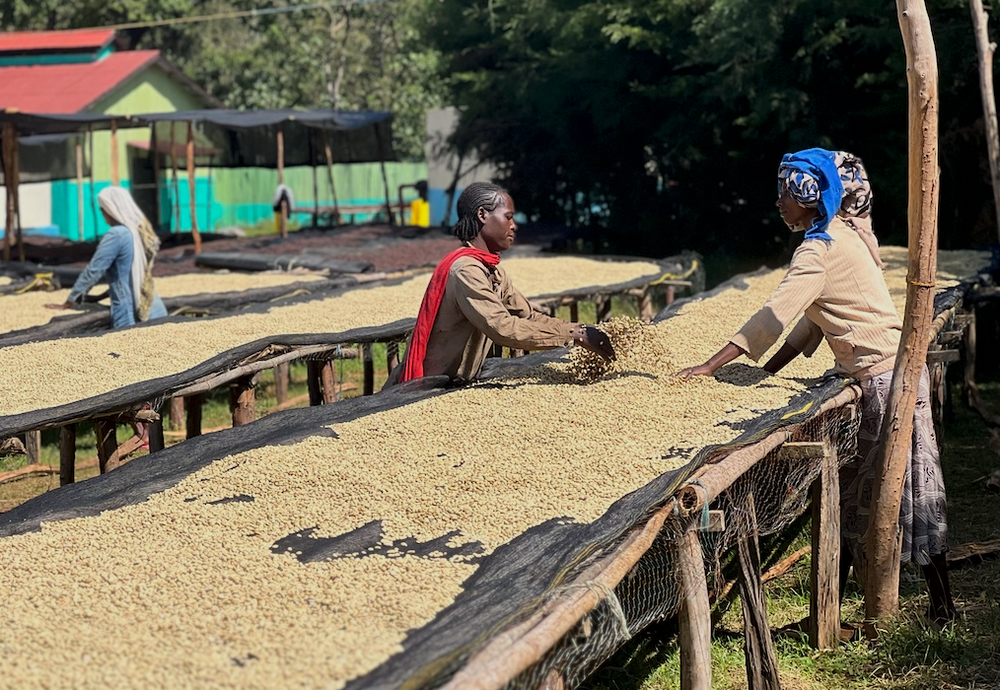
Sucafina Releases Key Update on Ethiopia’s 2025/26 Coffee Harvest

Addis Ababa Qahwa World

Sucafina Ethiopia has released its latest update on the 2025/26 coffee harvest, with Kirubel Girma, Trading & Operations Manager, outlining harvest timing, regional variations, price movements, and expanded sustainability initiatives across the country.

According to the update, the harvest is beginning later than usual this season, with a delay of around 1520 days due to shifting weather patterns. Ripening continues to vary significantly by altitude, shaping different production trends across Ethiopia’s coffee-growing regions.

In southern Ethiopiaparticularly Yirgacheffe, Gedeb, and Gujifarmers expect a moderate decline of 5% to 7% after last year’s exceptionally high crop. Meanwhile, western and south-western regions are entering a strong on-cycle year, anticipating notably higher yields compared to the 2024/25 season.

Harvest timing varies by altitude as follows:

Lowlands:

Southern Ethiopia: mid-October to December

Western Ethiopia: late October to January

Mid-altitude regions:

Late October to mid-January

High-altitude regions:

Starting in November through the first half of February

Overall production is expected to be similar to last season, with shifts between regions balancing out total output. Consistent rainfall throughout the season has supported healthy cherry development and stable growing conditions.

On the market side, cherry prices have increased sharply this year. The season opened at 120 ETB/kg and has already climbed to 145 ETB/kg, a significant jump from last year’s starting point of 3540 ETB/kg. This rise is attributed to the devaluation of the Ethiopian birr, higher NY “C” prices, and increased competition among local buyers. The sector is also facing challenges in managing cherry price volatility amid a growing number of active market players.

Sucafina highlighted several sustainability developments, particularly in the Sidamo region, where the Lalisaa Project has expanded through a dedicated full-time field officer supporting farmers directly. This closer engagement has enhanced traceability and helped connect producers with markets offering better price incentives.

Additionally, in collaboration with destination teams and clients, Sucafina has begun returning GrainPro bags to Ethiopia. These bags are redistributed to farmers to improve on-farm storage conditions and protect quality, especially in areas lacking proper warehouse facilities.

Looking ahead, stable weather patterns, strong western yields, and improved price motivation for farmers point to a solid overall season for Ethiopia’s 2025/26 harvest. Sucafina encourages industry partners interested in sourcing Ethiopian coffee to contact their traders for current offers and origin updates.