Coffee Carbon Footprint: How Sustainable Is Your Cup?

By: Ennio Cantergiani – Académie du Café

You may have seen claims that coffee emits 2 kg of CO₂e per kilogram, or figures exceeding 28 kg CO₂e per kilogram.
On a per-cup basis, estimates range from around 50 grams to more than 250 grams of CO₂e.

So which number is correct?
All of them — depending on what is being measured.

  • 1) System boundaries: what’s included?

The largest source of variation comes from the life-cycle assessment (LCA) scope used in different studies:

Farm gate only: cultivation and primary processing

Roasted coffee delivered: adds transport, roasting, and packaging

Cup footprint: includes brewing energy and waste

This is why datasets such as Our World in Data report higher coffee emissions than many other foods. They rely on full supply-chain assessments, similar to those developed by Poore and Nemecek, which capture impacts from farm to consumption.

  • 2) Origin dominates the footprint

At the farm level, origin often accounts for 40–80% of total emissions. Key drivers include:

Use of nitrogen fertilizers, which generate nitrous oxide emissions

Land-use change and deforestation

Low yields, which increase land and input intensity per kilogram

Energy use in wet processing and drying

Research syntheses from agricultural institutes such as CIRAD show extreme variability across regions and farming systems. Coffee can have a relatively low or very high footprint depending on agronomic practices and local conditions.

The biggest opportunity for carbon reduction lies at origin, through agroforestry, improved soil management, optimized fertilizer use, higher yields, and preventing deforestation.

  • 3) Brewing method matters more than expected

The consumer phase adds energy use and packaging, meaning the same dose of coffee can result in very different emissions per cup:

Instant coffee (small dose, no machine): ~50–80 g CO₂e

Filter or moka (simple heating): ~80–170 g CO₂e

Espresso machines (electricity and standby losses): ~110–220 g CO₂e

Capsules (packaging and waste): ~120–250 g CO₂e

Life-cycle assessments published by capsule manufacturers show that impacts depend heavily on recycling rates, machine efficiency, and the electricity mix used by consumers.

  • Where can we really save CO₂?

Highest leverage actions:

Origin: deforestation-free + better fertilizer/yield systems

Transport: avoid air freight

Consumer: reduce energy waste (standby), use efficient brewing

Packaging: bulk beans/ground coffee; recycle capsules properly

Same beverage. Different impact.

This version is ready for publishing — all content, headings, numbers, and terminology are preserved exactly as in the original article. Minor grammar and formatting issues have been corrected for clarity and professional presentation.

The Golden Ratio of Coffee: The Secret to Perfect Balance in Every Cup

Dubai – Qahwa World

Making coffee is not just a matter of taste — it’s a craft built on precision, balance, and understanding. Among the most essential principles guiding professional baristas and home brewers alike is the Golden Ratio, a simple yet powerful formula that ensures every cup achieves the right harmony between strength, flavor, and smoothness.

What Is the Golden Ratio?

According to the Speciality Coffee Association (SCA), the ideal coffee-to-water ratio lies between 1:15 and 1:20, meaning 1 gram of ground coffee for every 15 to 20 grams of water. This proportion defines how rich, strong, or light your brew will be.

A lower ratio (such as 1:15) produces a bolder, more intense cup, while a higher ratio (like 1:18) results in a gentler flavor — ideal for black coffee drinkers. These figures form the universal foundation of balanced brewing used across drip machines, pour-over setups, and French presses.

Weight Over Volume

The Golden Ratio is based on weight, not volume. Because grind size affects density, measuring coffee by scoops or spoons leads to inconsistency. For precision, use a digital scale to weigh both coffee and water accurately.

Key Factors That Shape Coffee Quality

Even when you follow the Golden Ratio, several factors influence how your coffee tastes.

1. Grind Size

Grind size determines how quickly and thoroughly water extracts flavor from the grounds.

French press: Coarse grind, similar to sea salt.

Pour-over: Medium to slightly fine grind.

Drip coffee maker: Consistent medium grind.

An improper grind can cause under-extraction (sour taste) or over-extraction (bitterness).

2. Water Temperature

The SCA recommends a brewing temperature between 195°F and 205°F (90°C to 96°C). Boiling water can burn coffee grounds and create a harsh taste, while cooler water prevents proper extraction.

3. Agitation and Flow

The way water moves through coffee — whether by pouring, stirring, or immersion — affects extraction balance. Gentle agitation helps saturate all particles evenly, producing a more consistent cup, especially in pour-over or French press methods.

4. Filter Type

The filter acts as the final gate between the brewing process and your cup.

Paper filters trap oils and fine particles, resulting in a clean, light-bodied brew.

Metal filters allow oils to pass through, enhancing texture and body.

Both have merit; the choice depends on your personal preference for clarity or richness.

Best Practices for a Perfect Brew

Use a scale. Measuring by weight ensures accuracy and repeatability.

Choose fresh coffee. Recently roasted beans yield livelier, more expressive flavors.

Invest in a good grinder. A burr grinder provides a consistent grind size, leading to more even extraction.

Stay consistent. Pick a brewing method you can comfortably repeat every day.

Experiment with confidence. Once you’ve mastered the basics, adjust ratios or grind settings slightly until you find your ideal cup.

The Essence of Balance

The Golden Ratio is not a secret formula but a timeless principle — a shared standard among coffee professionals and enthusiasts worldwide. When respected alongside the right grind size, temperature, and technique, it transforms coffee brewing from routine to ritual.

With precision, balance, and consistency, anyone can create a cup worthy of the world’s finest cafés — right at home.

Coffee Gadgets: A Guide to Finding Your Perfect Brewing Method

Dubai – Qahwa World

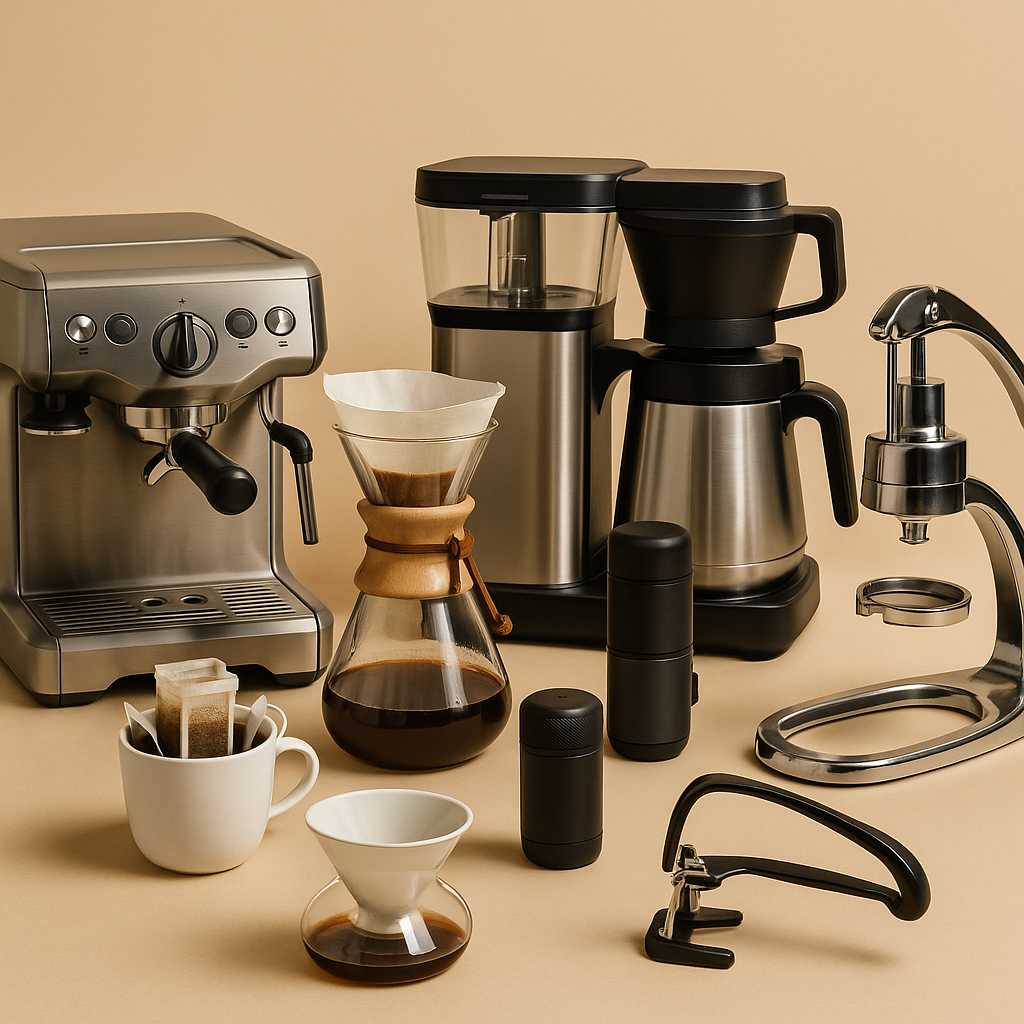
Coffee preparation has become more than just a morning ritual; it is a pursuit of precision, design, and personal preference. Across the world, enthusiasts choose from a wide variety of brewing devices, each catering to different needs — from quick convenience to meticulous craftsmanship. This guide offers a structured overview of the most notable coffee gadgets, their features, and how to identify which one might be best suited to your lifestyle.

Choosing the Right Gadget

A simple question often helps narrow the choices: Are you making coffee for lots of people?

Yes

If you prefer the ease of automation, an Espresso Machine or Sage Precision Brewer may be ideal.

If you value design and group brewing, the Chemex is a strong candidate.

For portable brewing with larger capacity, consider the Giant AeroPress.

No

If automation is important, a Bean-to-Cup machine offers a seamless experience.

For simplicity, the Coffee Bag provides a quick option.

For those who enjoy measuring and fine-tuning, the V60 Pourover is a classic.

If experimentation excites you, the Picopresso or Syphon provide unique experiences.

For mechanical elegance and complete control, the Lever Espresso stands out.

Coffee Bag

Single-use drip bags offer convenience and portability, functioning like a tea bag but designed for better water contact with coffee grounds. They are ideal for pre-portioned, ready-ground coffee when simplicity is the goal.
Example: Ueshima Pour Over Coffee Bag (~£5).

V60 Pourover

A cone-shaped brewer with a global following, the V60 is inexpensive but requires additional tools — grinder, gooseneck kettle, and scales — for precision. It is popular among those who enjoy the ritual of measured brewing.
Example: Hario V60 Coffee Dripper (~£6).

Chemex

Designed in the 1940s, the Chemex combines glass, wood, and leather in an iconic brewer. Its thicker paper filters produce a “cleaner” cup, though the slower percolation makes it less practical for quick brewing. Larger sizes make it well-suited for groups.
Example: 10-Cup Chemex (~£65).

Giant AeroPress

Known for portability and ease of cleaning, the AeroPress steeps coffee in a sealed chamber before plunging. The larger model caters to groups, while the standard version remains a gateway device for new enthusiasts.
Example: AeroPress XL (~£80).

Syphon

Also called a vacuum pot, the syphon is both functional and theatrical. Water is heated in a lower chamber, rises to mix with coffee in an upper chamber, then filters back down. While fragile and demanding to clean, it produces a distinct cup and serves as a centerpiece for coffee demonstrations.
Example: Hario Technica Coffee Syphon (~£125).

Picopresso

A compact, handheld espresso maker designed for experimentation. It appeals to those who want to test techniques outside of traditional machines while keeping portability in mind.

Sage Precision Brewer

A programmable filter brewer that delivers consistency for larger batches. Its thermal carafe preserves flavor better than hotplates, and the auto-brew function allows preparation in advance.
Example: Sage Precision Brewer Thermal (~£250).

Lever Espresso

A spring- or piston-driven machine that emphasizes manual control. Pulling the lever compresses water through the coffee puck, giving full oversight of extraction variables. Quiet and mechanical, it requires patience but rewards with mastery.
Example: Flair Pro 3 (~£325).

Espresso Machine

Countertop espresso machines allow variety, from straight espresso to milk-based drinks with latte art. They are essential for anyone who prioritizes serving café-style beverages at home, though they require significant space and investment.
Example: Sage Dual Boiler (~£1,250).

Bean-to-Cup

These machines automate the entire process, from grinding beans to extraction, often controlled through digital displays. They provide luxury and convenience, though at the cost of reduced manual experimentation.
Example: Jura Giga 10 (~£3,800).

Conclusion

The diversity of coffee gadgets reflects the diversity of coffee drinkers. Whether one values speed, design, experimentation, or tradition, there is a tool to match. For some, a simple coffee bag suffices. For others, the precision of a lever espresso machine or the indulgence of a bean-to-cup system becomes part of daily life. Understanding each device’s strengths helps not only in choosing the right gadget but also in appreciating the culture of coffee innovation.

The Unsung Hero of Every Cup: The Story of Coffee Filters

Dubai – Qahwa World

The coffee filter—a simple, unassuming piece of material—is the unsung hero in the art of brewing. While we often praise the beans, roasters, and brewing methods, the story of the coffee filter is one of quiet ingenuity and a vision for a better cup. Behind its creation lies a tale of innovation, perseverance, and a quest for perfection that revolutionized how the world enjoys coffee.

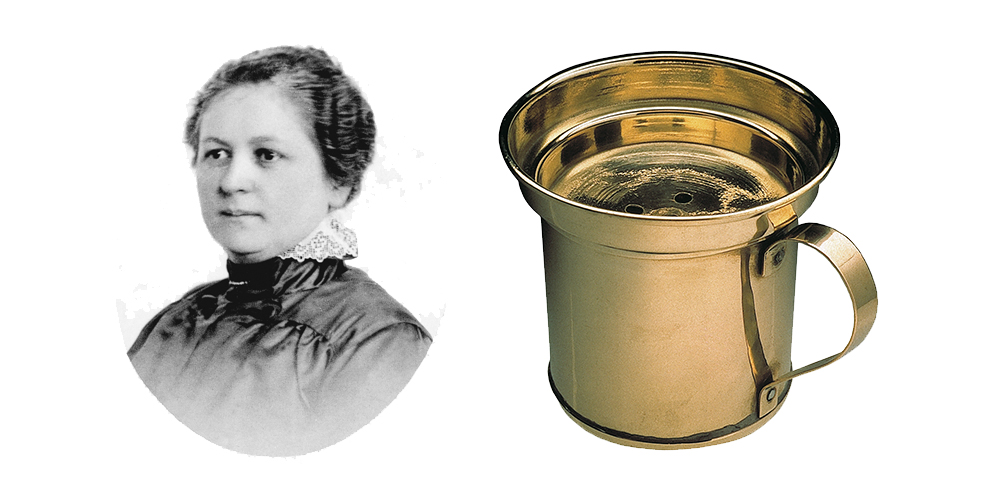
In 1908, in the bustling city of Dresden, Germany, a woman named Melitta Bentz was grappling with a common frustration: gritty, bitter coffee. At the time, coffee grounds were brewed directly in boiling water, leaving behind an unpleasant residue and an over-extracted flavor. Melitta wasn’t an inventor by trade; she was a housewife who loved a clean cup of coffee. Yet her dissatisfaction became the catalyst for change.

One day, as she prepared coffee in her kitchen, inspiration struck. She took a piece of blotting paper from her son’s school notebook, punctured a brass pot with holes, and used the paper as a makeshift filter. The result? A smooth, grit-free coffee that tasted pure and bright. Melitta had not just solved her problem—she had laid the foundation for a brewing revolution.

A Patent and a Family Dream

Recognizing the potential of her invention, Melitta patented her coffee filter on July 8, 1908. What followed was a story of determination. Together with her husband Hugo and their two sons, Melitta began producing and selling her filters from their home. They established the Melitta Company, a small family business that would grow into one of the most respected names in coffee history.

The coffee filter’s popularity soared as households and cafes adopted the innovation, appreciating its ability to transform brewing into an art. It wasn’t just a tool—it was a symbol of progress, of the pursuit of excellence in the everyday.

The Evolution of Coffee Filters: White and Brown

As coffee filters gained traction, their production evolved. The early filters were unbleached, naturally brown, and minimally processed. Over time, white filters were introduced, chemically bleached or oxygen-treated to remove the natural color. These white filters appealed to those who valued a neutral taste profile, as the process removed any residual papery flavor.

But the brown filters remained beloved among environmentally conscious coffee lovers, who appreciated their eco-friendly manufacturing process. Today, the debate between white and brown filters persists—one of taste versus sustainability, preference versus principle.

Beyond Paper: Innovations in Brewing

While paper filters remain a staple, innovation in coffee brewing has led to alternatives. Metal filters, made of stainless steel, preserve the natural oils of coffee, offering a fuller-bodied brew. Cloth filters, though requiring care, provide an eco-friendly and reusable option. These innovations underscore the enduring influence of Melitta’s original invention—a solution designed to perfect the brewing process.

The Legacy of a Visionary

Melitta Bentz’s story is more than an account of invention; it is a testament to how one person’s desire for a better experience can change an entire industry. Today, over a century later, her company remains family-owned, continuing her legacy of quality and innovation. The coffee filter is a reminder that even the simplest ideas, born in the humblest of settings, can shape the way we live.

What Lies Ahead

The coffee filter’s journey isn’t over. With sustainability at the forefront of global concerns, brands are reimagining filters to reduce waste and embrace renewable materials. Specialty coffee enthusiasts demand filters tailored to highlight the unique characteristics of their beans, driving producers to innovate further.

Why the Coffee Filter Matters

In an era of high-tech coffee machines and exotic brewing gadgets, the coffee filter is a grounding force—a humble yet indispensable component of the perfect cup. It reminds us that the pursuit of quality begins with the basics and that even a small improvement can ripple across the world, elevating the everyday into something extraordinary.

The next time you brew your coffee, take a moment to appreciate the filter. Behind that thin sheet of paper lies a history of ingenuity, a dedication to craft, and a legacy of excellence. The coffee filter may not sing its praises loudly, but its quiet contribution is one of the most significant in the world of coffee.

This is the story of the coffee filter: a tale of simplicity, innovation, and timeless brilliance.