From Cup to Concrete: How Coffee Waste Is Building a Greener Future

Dubai – Qahwa World

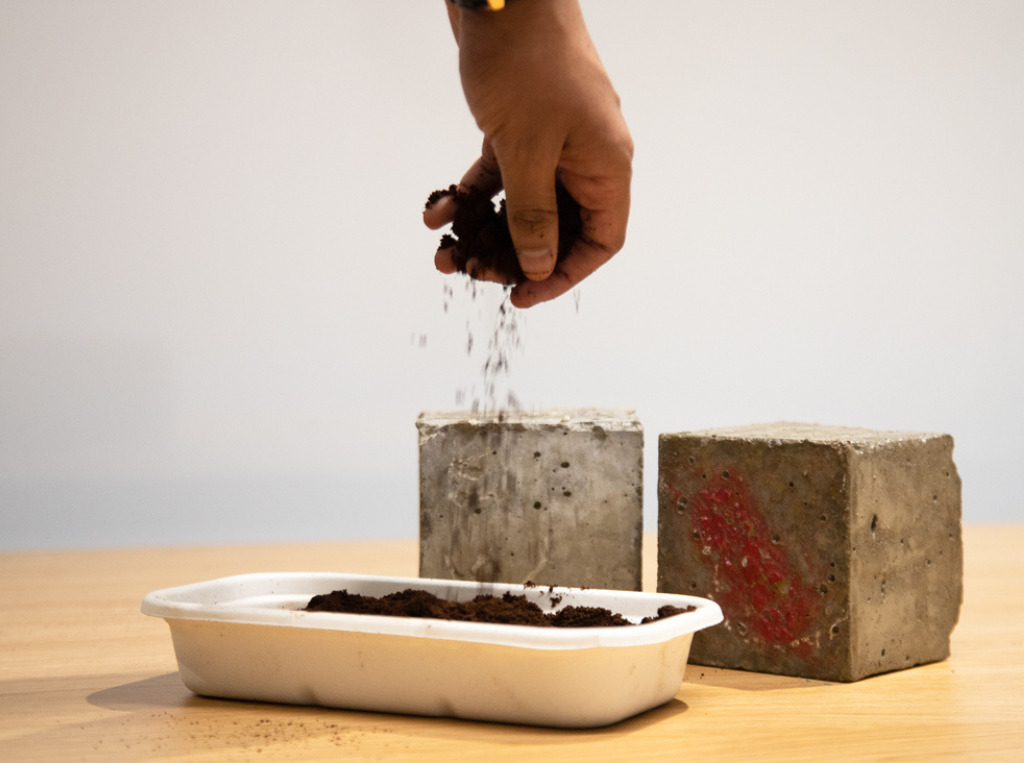
Two years after Australian researchers first turned yesterday’s espresso shots into tomorrow’s building material, the “coffee concrete” revolution is no longer a lab curiosity. It is now being used on the streets of Victoria and reshaping how the world thinks about waste.

As a coffee expert who has spent two decades tracing every bean from farm to cup, I can say this: the humble spent coffee ground, once a soggy pile thrown away without a second thought, is now a high performance material in the construction industry. In 2026, the story is getting even better.

The Science, Brewed to Perfection

Back in 2023, engineers at RMIT University discovered that pyrolyzing spent coffee grounds at 350°C in the absence of oxygen creates a porous, carbon rich biochar. Replacing up to 15 percent of the sand in a standard concrete mix with this biochar increases compressive strength by nearly 30 percent. Higher temperatures do not perform as well. The optimal point is a precise low and slow process.

This is not just stronger concrete. It is smarter concrete. A peer reviewed life cycle analysis published in November 2025 showed it can reduce the material’s carbon footprint by up to 26 percent, cut fossil fuel use by 31 percent, and ease pressure on diminishing river sand supplies.

RMIT has also reported that the same coffee derived biochar improves thermal insulation in cement composites by up to 20 percent. Buildings made with it stay cooler in summer and warmer in winter. This leads to lower energy use and reduced emissions over time.

Real Streets, Real Impact

The results are already visible in real world projects.

In October 2024, the first section of coffee biochar concrete was laid on Victoria’s Big Build project in Pakenham. Five tonnes of spent coffee grounds, equal to about 140000 cups of coffee, were converted into two tonnes of biochar for a 30 cubic metre footpath. There was no smell and no visible difference, only improved strength and sustainability.

A parallel trial in Gisborne with Macedon Ranges Shire Council tested coffee and wood chip biochar side by side. Researchers continue to monitor long term performance under foot traffic, weather conditions, and freeze thaw cycles. Early results are promising.

A Circular Gift for the Coffee Industry

This development has direct implications for café owners, roasters, and coffee drinkers.

Globally, tens of millions of tonnes of spent coffee grounds are produced each year. Most are still sent to landfill, where they release methane. Now, this waste can be reused in a way that benefits both the environment and the industry.

Cafés that join collection programs may eventually turn their daily waste into revenue or carbon credits. A single cup of coffee could contribute to building stronger and more energy efficient schools and hospitals. This is a practical example of a circular economy.

Dr Rajeev Roychand and the RMIT team have stated they are ready to scale the technology. They are working with contractors and local councils and presenting the material in major exhibitions. The next steps include commercial standards, larger pilot projects, and expanded supply chains, all progressing in 2026.

The Bigger Picture

This innovation stands out as one of the most effective responses to coffee waste. It does not require changes in how coffee is prepared. It simply redefines the value of what remains after brewing.

From coffee farms in Ethiopia and Colombia to urban infrastructure in Melbourne and beyond, coffee is proving it can play a role far beyond consumption. It can contribute to building a more sustainable and resilient world.

In 2026, the future of construction carries a subtle trace of coffee.

Ahmed Al-Qahwa is Qahwa World’s lead voice on sustainable coffee innovation. He has visited RMIT’s laboratories and walked the Pakenham trial site.

Share this story with your local café or council. The coffee grounds from your cup could one day be part of the ground beneath your feet.

When Coffee Enters the Age of Rules

By: Dr. Steffen Schwarz, Coffee Consulate

The future of circular coffee will not be determined by innovation alone, but by whether standards, policies and institutions recognise what coffee is becoming before the market moves on.

For many years, the coffee industry focused on taste, trade and technology, while policy was mostly background noise through customs, export paperwork, food safety, waste rules, or occasional certifications. Coffee seemed too sensory and culturally nimble to be governed like steel, energy or chemicals. That illusion is fading. Coffee now enters a new age, shaped by what institutions are ready to recognise, reward, regulate and scale.

This requires attention to standards, policy frameworks, trade rules, public-private programmes and the governance around circular coffee. The Coffee Development Report 2022–23 places coffee in a global context, linking it to European circular economy policy, ISO standards, initiatives in Brazil, Africa, India, Indonesia, and even the G7 political process supporting circular and regenerative coffee value chains.

Coffee is appearing in the language of industrial transformation, climate governance and systems design. Concepts like circular economy gain force when embedded in standards, procurement, customs codes, infrastructure, regulatory adaptation, financing and political communiqués. Coffee is approaching that threshold, and the question is whether the sector understands what is at stake.

You may like: Coffee Pulp in Brazil: When the Coffee Cherry Refuses to Be Waste

The European Circular Economy Action Plan illustrates how circularity moves from aspiration to administration. Updated monitoring frameworks include material footprint, resource productivity and consumption footprint. Supply chains are scrutinised in packaging, transport, waste systems, by-product valorisation and end-of-life pathways. Circularity becomes part of ordinary business expectations, not just a niche innovation topic.

The European Union Circular Economy Resource Centre will mobilise expertise, policies, standards, technologies, business models and learning exchange globally. Circularity is projected outward as an industrial transition and international cooperation model, placing coffee directly in its path. The sector can shape this global exchange or have standards imposed externally.

Circularity is not only a Northern invention. Brazil integrates circular economy into its 2024 G20 presidency and national strategy, redefining resource use, production chains and nature regeneration. Africa, through the Africa Circular Economy Facility, builds institutional capacity, supports private sectors, promotes circular policies and strengthens alliances. India and Indonesia embed circularity into development plans, linking coffee to bioeconomy, rural communities and women’s empowerment.

The G7 Summit 2024 included coffee in its communiqué, supporting multi-stakeholder programmes, public-private funds, and resilient circular coffee value chains. ISO standards 59004, 59010, and 59020 now guide circular economy principles, defining vocabulary, guidance and performance metrics, translating global concepts into sector-specific action.

Standards and policy frameworks are vital for fragmented coffee supply chains. Harmonised customs codes, certifications, and regulations make circular coffee legible to trade and finance, while education, training, and collaborative platforms enable practical implementation across farms, mills, roasteries, and municipalities.

For coffee businesses, value increasingly depends on compliance, circular performance, traceability, packaging, and alignment with governance infrastructure. Power in the circular age is defined by the ability to set categories, metrics, and pathways. Standards, regulations and monitoring frameworks shape coffee’s material, environmental and economic reality.

The future of coffee belongs not just to innovators, but to those who help write the rules that make innovation ordinary, trusted and scalable. Coffee has entered the age of rules, and the key question is whether the sector will arrive ready to shape them.

The Coffee Leaf’s Second Life

By Dr. Steffen Schwarz, Coffee Consulate

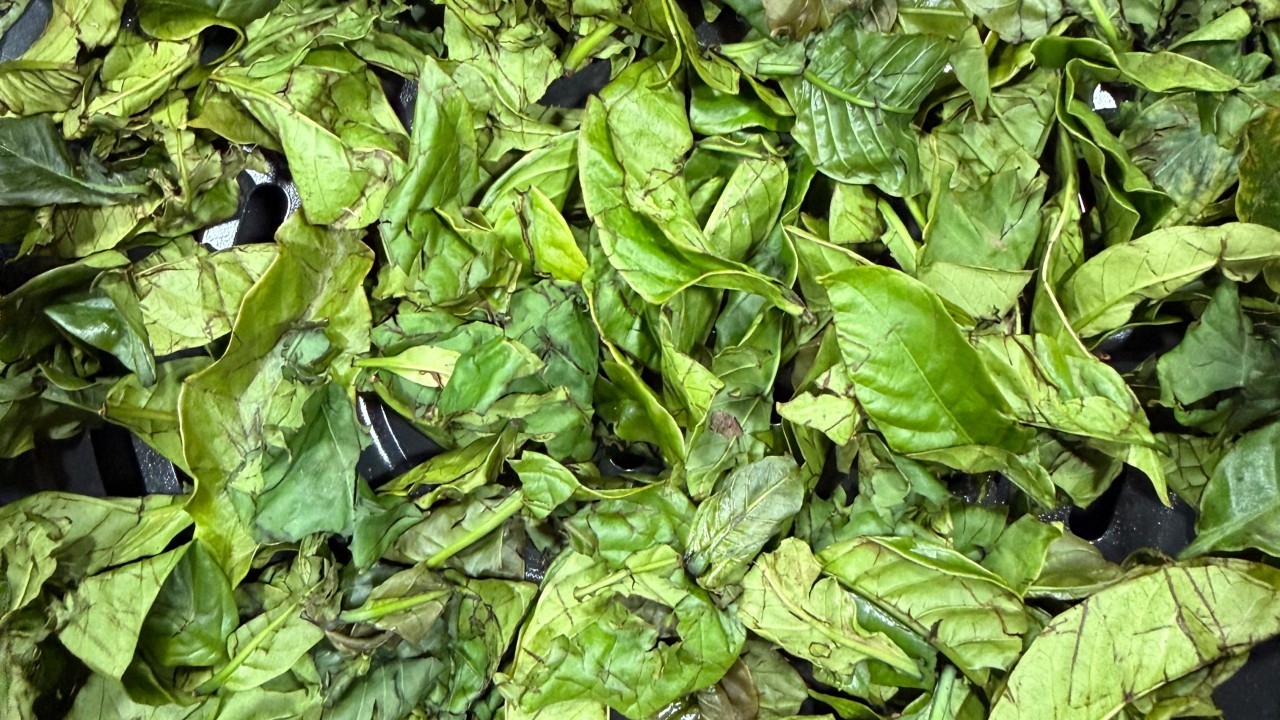
There is a peculiar irony in the coffee business: we have spent more than a century perfecting how we roast, grind, extract, foam, chill, carbonate, nitrogen-infuse and brand a seed, while the plant that produces it has been standing all along as a far larger, greener biomass—photosynthesising, defending itself, interacting with shade trees, fungi and insects, and repeatedly regenerating its canopy after pruning. The leaf is the coffee plant’s true working organ: an engine of carbohydrates and a chemical laboratory that negotiates sunlight and drought, pests and pathogens, growth and recovery. And yet, in most producing countries, coffee leaves have been treated as little more than compost, mulch, or a nuisance swept aside during canopy management. That is now changing, and not simply because the world enjoys novelty. Coffee leaf tea is emerging at the intersection of ethnobotany and modern food law, of phytochemistry and sensory design, and—most importantly for decision makers—of farm economics and operational resilience.

Coffee leaf infusions are not an invention of the wellness era. They are older than espresso, older than filter coffee, older than the first international coffee prices. In several coffee-producing regions, leaves have long been infused, decocted, mixed with milk, or combined with spices and herbs to create beverages that sit somewhere between nourishment, social ritual and folk medicine. The scientific and cultural value of this heritage is easy to underestimate, especially if one’s mental map of coffee begins at the port and ends at the café. Yet the ethnographic record is clear: leaf-based coffee drinks have been prepared and consumed in places as varied as Ethiopia, South Sudan, Indonesia, Jamaica and India, often under local names that signal not a substitute for coffee, but a beverage category of its own.

In Ethiopia, coffee leaf brew is widely known in multiple regions and languages—Chemo, Kuti, Hayta Tuke, Kitel Buna—each name carrying the weight of daily habits and community meanings. The leaves are not merely steeped; they are processed through cleaning, crushing or chopping, boiling, spicing, straining, serving. The result is a drink that can be mild or intense, pale gold or deep brown, lightly herbal or richly aromatic, depending on leaf maturity, drying, brewing time, and the chosen constellation of botanicals.

One of the most detailed recent documentations of these practices comes from the Gofa Zone in South Ethiopia, where Eyasu Yohannis and colleagues recorded indigenous coffee leaf brew and a related preparation called Engere, a blend of coffee leaf brew and cow’s milk. Their work does something crucial for our industry: it moves the conversation away from vague stories of “traditional use” and towards measurable patterns of ingredients, processes and consumption. In their community-based survey, the authors found that coffee leaf brew is not an occasional curiosity; it is embedded in daily life. A majority of respondents described it as a staple, stimulating beverage, while others linked it explicitly to medicinal value and cultural ceremonies. Engere, meanwhile, occupies a different functional niche: it is widely perceived as strength-enhancing, supportive for physically demanding work, and beneficial for lactating women, postpartum recovery and stamina.

The brewing practices described in Gofa are remarkably concrete. Coffee leaves are harvested by cutting terminal portions of the plant—precisely the same anatomical zone that farm managers already target in canopy control—then cleaned and washed, crushed with mortar and pestle or a traditional wooden grinder, and boiled in water typically in the range of 85–100 °C. The documented spice and herb palette is extensive—Ruta chalepensis, coriander fruit, garlic leaf, ginger, basil, lemongrass, chilli, Ethiopian cardamom, fennel, salt—an aromatic architecture that resembles a culinary broth more than a minimalist tea. This matters because it tells us that coffee leaf beverages in their indigenous context have already undergone centuries of consumer testing: bitterness has been managed, aroma has been amplified, mouthfeel and perceived warmth have been engineered through botanical synergy.

For modern markets, this ethnographic depth is more than storytelling. It is a starting point for applied product development. The Gofa data reveal three distinct brewing logics: a combined boiling method where leaf and minor ingredients meet in one pot; a separated boiling method where components are brewed individually and combined later; and a leaf-only approach used particularly for Engere without added botanicals. These are, essentially, three different extraction strategies.

This is where Europe enters the narrative in a decisive way. Coffee leaf infusion is no longer merely an indigenous beverage; it is now a legally defined food category within the European Union. On 1 July 2020, the EU authorised the placing on the market of infusion from coffee leaves as a traditional food from a third country through Commission Implementing Regulation (EU) 2020/917. The regulatory framing is not trivial. By treating coffee leaf infusion as a traditional food under the Novel Food Regulation, the EU effectively acknowledged that a long history of safe consumption outside Europe can form part of a safety argument.

For coffee businesses, EU authorisation changes the strategic landscape. It reduces regulatory uncertainty for importers, roasters and beverage developers. It invites investment in leaf supply chains, not only for niche “novelty teas” but for scalable beverage categories: ready-to-drink formats, sparkling botanical blends, functional infusions, cold brews, and milk-based variants.

The scientific literature suggests that coffee leaves are not simply “coffee without beans”. They contain a complex set of phytochemicals, including phenolic compounds with antioxidant capacity and bioactivities that have been discussed in relation to anti-inflammatory and antihypertensive effects. A crucial commercial insight lies in caffeine itself. Many consumers want the ritual and complexity of coffee-like beverages, but with less stimulant load. Coffee leaf infusions typically contain caffeine, but the overall experience can be positioned differently from espresso-driven intensity.

However, no beverage category survives on sensory novelty alone. The deeper business relevance of coffee leaf tea lies in what it can do at origin. For decades, the coffee sector has discussed farmer income, price volatility, and the fragility of livelihoods. Coffee leaf tea, if commercialised responsibly, can shift part of this debate into operational economics: it can create an additional product stream from the same farm, using a biomass that is already generated in canopy management. That is not merely “extra income”; it is income diversification, and diversification is one of the most reliable ways to increase resilience in agricultural systems.

If we approach coffee leaf tea with the seriousness it deserves—honouring its origins, applying rigorous process science, designing compelling sensory styles, and building supply chains that reward farmers for better agronomy—we will not merely sell another beverage. We will create a mechanism through which coffee farms can become more stable employers, more productive agricultural systems, and more resilient businesses. In a world where coffee’s future is increasingly shaped by climate stress and economic uncertainty, a leaf may seem like a small thing. But in biology and in business, small things are often the levers that change the whole system.

Robots and Coffee: A Real-World Readiness Test

Dubai – Qahwa World

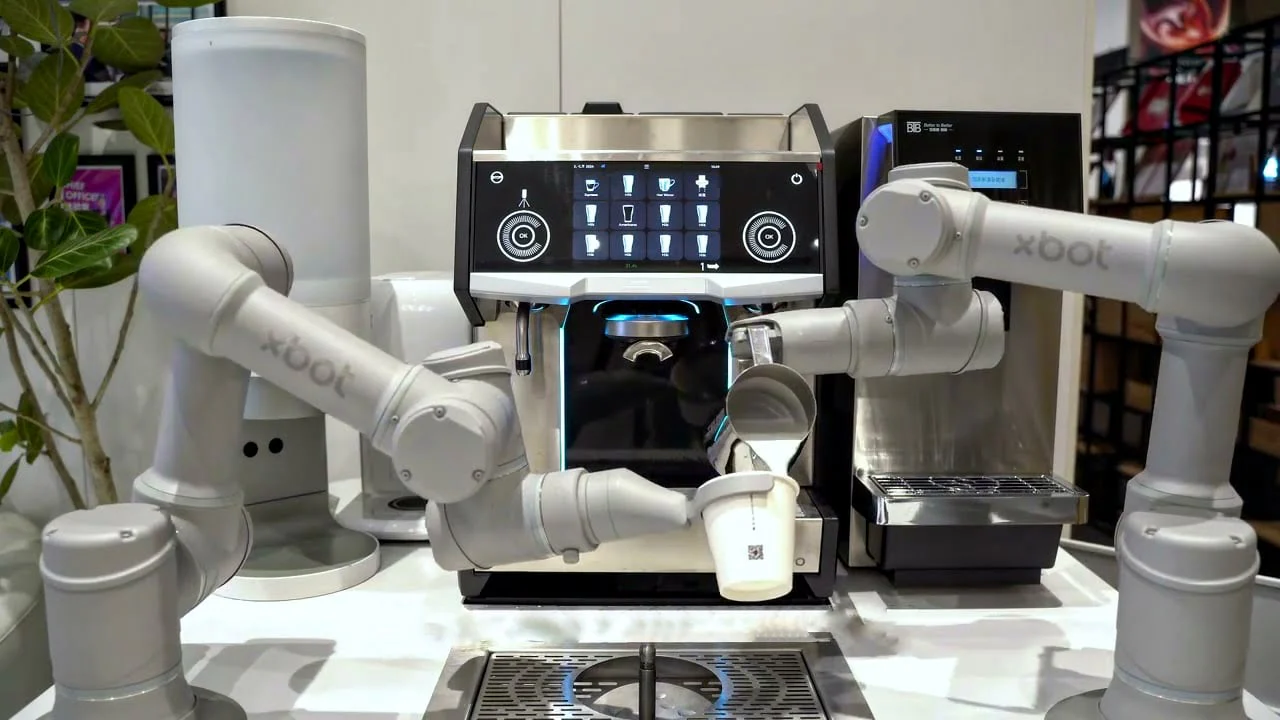
Humanoid robots may be able to perform martial arts routines, navigate obstacle courses, and impress audiences with highly choreographed demonstrations. But according to robotics experts, the true measure of progress lies not in spectacle, but in the ability to handle simple, everyday tasks—such as preparing a cup of coffee.

This perspective was at the center of a panel discussion among robotics leaders during the World Economic Forum in Davos, where speakers argued that the industry must move beyond polished demonstrations and focus on real-world usefulness if humanoid robots are to achieve meaningful adoption.

Jake Loosararian, Chief Executive Officer of an infrastructure-focused robotics company, emphasized that deployment—not design—is currently the sector’s biggest challenge. He noted that while public attention has fueled rapid innovation, many humanoid robots remain confined to controlled environments, far from the unpredictable conditions of daily life.

According to Loosararian, the lack of reliable, real-world data limits the ability of robots to operate effectively outside the lab. Building and testing robots as close as possible to their intended working environments is essential, he said, as this provides insights that cannot be replicated through simulations or online datasets. Tasks such as making coffee expose robots to variables like changing surfaces, lighting conditions, liquid handling, and human interaction—details that are critical yet often underestimated.

Daniela Rus, Director of the Computer Science and Artificial Intelligence Laboratory at the Massachusetts Institute of Technology, highlighted the gap between laboratory success and real-life performance. While robots can be programmed to fold laundry or load dishwashers, she explained, achieving this reliably in real environments remains extremely complex and costly. Bridging this gap will require advances in perception, sensor technology, and artificial intelligence models capable of adapting to unfamiliar situations.

From an industrial perspective, Shao Tianlan, Chief Executive Officer of a China-based artificial intelligence and robotics firm, pointed to learning as a key obstacle. He argued that for humanoid robots to function effectively in factories and service environments, they must be able to learn directly from humans—through demonstration and observation—much like people teach one another. This approach, he said, is more intuitive and practical than relying solely on pre-programmed instructions.

Despite ambitious predictions from technology companies preparing to scale humanoid robot production, most robots today are still showcased in tightly controlled settings. Some demonstrations even rely on remote human operators rather than full autonomy, underscoring how far the technology still has to go.

In this context, coffee becomes more than a beverage—it becomes a benchmark. Preparing coffee requires precision, coordination, adaptability, and an understanding of tools and materials. It is a deceptively simple task that reveals whether robots are ready to move from staged performances into real kitchens, cafés, and workplaces.

As the industry continues to evolve, the question remains open: can humanoid robots transition from impressive demonstrations to genuine daily assistance?
For now, a cup of coffee may be the most honest test of all.

The Cocoa Paradox: How Global Shocks and Dubai’s Trade Ambitions Are Reshaping a $26 Billion Industry

Dubai – Qahwa World

The global cocoa industry long synonymous with indulgence and luxury is undergoing a historic transformation. A sharp supply crunch, climate disruptions, and tightening regulations have exposed deep structural weaknesses in one of the world’s most beloved commodities. Yet, amid the volatility, new opportunities for diversification, innovation, and fairer value distribution are emerging with Dubai positioning itself as a strategic bridge between producers and consumers in the new era of cocoa trade.

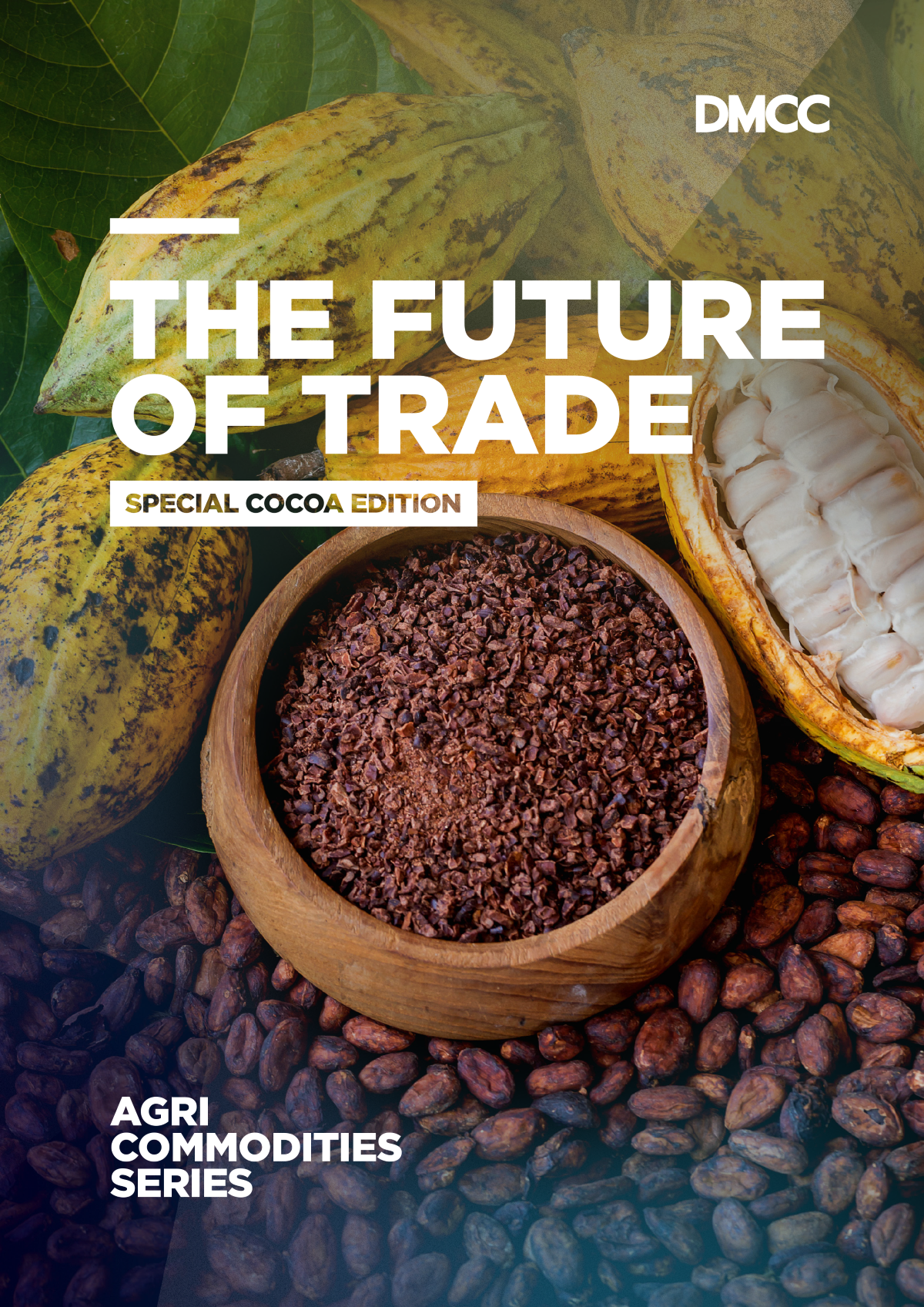
The Dubai Multi Commodities Centre (DMCC) has released a comprehensive report titled “The Future of Trade Special Cocoa Edition,” part of its Agri Commodities Series. The report examines the global cocoa market’s critical challenges from production shortages and price volatility to digital innovation, ethical sourcing, and shifting consumer demand toward wellness and sustainability. This news story is based on the key findings of the DMCC report, one of the most detailed and forward-looking analyses of the cocoa sector and Dubai’s growing role in it.

A Crisis of Supply and Unequal Returns

The global cocoa market is valued at around US$16.6 billion in 2025 and is expected to reach US$26.2 billion by 2035. However, behind this growth lies a deep imbalance. The 2023/24 crop year recorded one of the steepest production declines in decades down 13% to 4.4 million tonnes resulting in a deficit of nearly half a million tonnes and pushing prices to record highs. Cocoa grindings also fell by 5% to 4.8 million tonnes, according to the International Cocoa Organization (ICCO).

The roots of the crisis lie in West Africa, which produces over 60% of the world’s cocoa from Côte d’Ivoire, Ghana, Nigeria, and Cameroon. Devastating outbreaks of black pod and swollen shoot disease, erratic rainfall, and ageing trees have crippled production. Ghana’s regulator has already warned that output could drop another 10% in the 2025/26 season.

“Our cocoa plantations are ageing and have suffered from years of underinvestment,” says Kwadwo Boachie-Adjei, founder of Kumbi Cocoa. “Farmers lack access to quality fertilizers and seedlings because the financial resources needed to reinvest in their communities have not been flowing back at the scale required. The cycle of low productivity and limited incomes must change.”

Despite record-high international prices, farmers in Ghana and Côte d’Ivoire still receive fixed farmgate rates set by governments too low to cover replanting or disease control. “For every one-dollar chocolate bar, farmers receive just two cents,” notes Mauro Danilo Ribezzi, founder of the Ribezzi Group. “The economics of cocoa are fragile people will simply walk away.”

Meanwhile, processors and brands are struggling with soaring energy, transport, and financing costs. Companies are resorting to shrinkflation and reformulation: Mars Inc. cut 10 grams from its Galaxy bar, while Nestlé dropped the word “chocolate” from some UK products that now fall below the 20% cocoa-content threshold.

Although chocolate still dominates around 85% of cocoa demand, consumer preferences are shifting toward functional, ethical, and health-oriented products. The premium chocolate market is projected to grow from US$31.9 billion in 2024 to US$40.6 billion by 2030, while demand for raw cacao marketed as a superfood rich in antioxidants is forecast to surge from US$14.3 billion in 2024 to US$23.6 billion by 2033. Cocoa butter, a staple in cosmetics and pharmaceuticals, is set to nearly double in value to US$9.37 billion by 2032.

At the same time, the industry faces new compliance pressures. The European Union’s Deforestation-Free Products Regulation and Corporate Sustainability Due Diligence Directive require companies to prove that their cocoa is not sourced from deforested areas and that human rights are upheld throughout supply chains. Cocoa cultivation has caused over 37% forest loss in Côte d’Ivoire’s protected areas and 13% in Ghana, making traceability and digital monitoring essential for market access and premium pricing.

Dubai: A New Global Nexus for Cocoa Trade

Amid these structural pressures, Dubai is emerging as a stabilizing force in global commodity flows. Leveraging its strategic location between Africa, Asia, and Europe, the UAE has built a resilient trade ecosystem capable of absorbing global shocks. According to the DMCC report, the UAE imported US$17.3 million worth of cocoa beans in 2023 96% of which came from Côte d’Ivoire and exported US$16.4 million, mainly to Iran, Malaysia, and Saudi Arabia. While modest compared to European hubs, these figures highlight Dubai’s growing relevance in both upstream and downstream cocoa trade.

Building on the success of the DMCC Coffee Centre and Tea Centre, Dubai is now planning to launch a DMCC Cacao Centre that will offer integrated services including grading, blending, storage, branding, and structured trade finance all under one roof. The initiative aims to transform Dubai into a full-service hub for cocoa trade and value addition in the Middle East.

“The DMCC provides African producers with what they have long lacked direct access to markets and capital,” says Boachie-Adjei.

“The beauty of the DMCC ecosystem,” adds Ribezzi, “is that we don’t just operate as traders but as facilitators connecting farmers, financiers, and buyers across borders.”

The report also underscores how technology is redefining cocoa trade. Blockchain-enabled traceability ensures regulatory compliance and transparency, while mobile-first fintech platforms allow farmers to receive payments directly cutting out intermediaries and ensuring faster, fairer compensation. Emerging models such as tokenized assets and decentralized finance (DeFi) could soon unlock new credit channels for smallholders historically excluded from the banking system.

Looking further ahead, the industry is experimenting with lab-grown cocoa to overcome climate and disease risks. Startups are cultivating cocoa cells that yield mass without farms, a concept already supported by major players such as Barry Callebaut and Japan’s Meiji. Other innovators are developing cocoa-free chocolate alternatives using ingredients like carob and upcycled fibers to reduce dependency on volatile bean supply. Meanwhile, West African research programs are advancing disease-resistant and high-yield varieties through genetic innovation and agroforestry models.

The DMCC report concludes that the future of cocoa rests on five pillars: climate-adapted farming, transparent supply chains, diversified production, financial innovation, and equitable participation. It calls for producer nations to move beyond being raw suppliers and instead become true partners in global value creation.

With its neutral trade infrastructure and forward-looking policies, Dubai is poised to redefine the cocoa economy shifting it from a system marked by inequality and volatility to one built on sustainability, inclusivity, and shared prosperity.

Matcha Gains Momentum as Hospitality Embraces Ritual and Wellness

Dubai, August 27, 2025 (Qahwa World) – Matcha is fast emerging as one of the most influential beverages in the global hospitality industry. Once rooted in the centuries-old tea traditions of Japan, it has now been adopted worldwide as a drink that symbolizes wellness, sustainability, and cultural sophistication. For hotels, cafés, and specialty bars, it is no longer just an alternative to coffee, but a statement of values that align with modern consumer expectations.

In recent years, the pace of change in beverage menus has accelerated. Consumers are increasingly seeking options that provide not only refreshment but also meaning. Matcha, with its history and ritualized preparation, has stepped into that space. It is being served not only in traditional bowls but also as lattes, iced beverages, and innovative cocktails, offering versatility that fits seamlessly into contemporary hospitality.

“Matcha speaks to a deeper need, the desire to slow down and reconnect, even in the midst of a busy day,” said Fabiola Ruggiero, Founder of Cose di Tè. “Its preparation is a quiet ritual. Its flavor is bold, complex, vegetal. It engages the senses — and invites a moment of presence.”

Unlike conventional teas, which are steeped and discarded, matcha is consumed in its entirety. Finely ground from shade-grown leaves, it is rich in antioxidants, amino acids, and slow-release caffeine. This makes it especially appealing to younger generations and professionals seeking calm focus and sustained energy without the spikes often associated with coffee. Nutrition experts also point to its role in supporting wellness trends that emphasize balance and mindfulness.

Ruggiero underlined that matcha is more than a healthy beverage. “It’s rare to find a product that unites health benefits, aesthetic appeal, and storytelling potential. Matcha does all three. That is why it resonates so deeply with today’s guest.”

The storytelling element is particularly relevant for the hospitality sector. By presenting matcha as part of an intentional ritual — where preparation tools are visible, tasting notes are offered, and pairings such as mochi or shortbread are served — operators can elevate the guest experience. Small details, such as presenting matcha with a focus on authenticity and care, are increasingly being recognized as defining aspects of modern luxury.

For venues, the commercial logic is clear. Matcha introduces new revenue streams during off-peak hours, appeals to customers seeking non-coffee options, and positions businesses as forward-thinking. The drink’s vibrant green color and striking presentation also add visual impact in an era where social media presence influences customer decisions. “Matcha is where ancient tradition meets future-conscious living,” Ruggiero said. “It is an invitation to pause, to reconnect, to choose differently.”

Technology is also playing a role in ensuring consistency and quality in matcha-based beverages. The Eagle One machine by Victoria Arduino has been engineered with Steam-by-Wire technology to guarantee precise temperature stability, energy efficiency, and responsive steam control. For baristas, this ensures that milk-based matcha drinks achieve the silky microfoam and balance that complement, rather than overpower, the delicate tea. Such precision has become increasingly important as venues adapt to growing demand for plant-based alternatives such as oat or almond milk.

The integration of matcha into menus reflects a broader shift in hospitality, where tradition and innovation work hand in hand. On one side, the centuries-old ritual of whisking green tea powder into water continues to carry cultural significance. On the other, modern design, technology, and hospitality concepts are helping to reintroduce matcha to new audiences in ways that feel relevant and accessible.

As the global beverage industry adapts to rapid change, matcha has moved far beyond being a temporary trend. Its combination of heritage, health benefits, versatility, and cultural narrative places it firmly at the intersection of wellness and hospitality innovation. For operators seeking to meet evolving consumer expectations, it represents not just another option on the menu, but a strategic choice that signals purpose and progress.