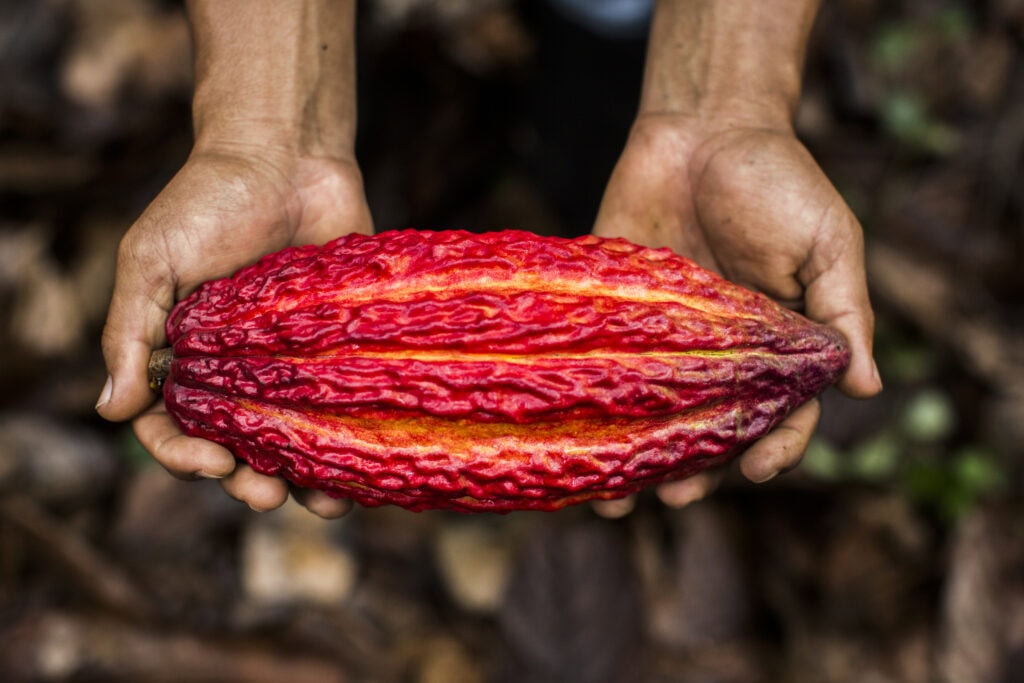
Ecuador Leads Cocoa Sector in Meeting EU Deforestation Rules

Ecuador – Qahwa World

Ecuador is positioning itself as one of the most advanced countries in adapting to the European Union Deforestation Regulation (EUDR), which is scheduled to take effect on December 30, 2026. Unlike many other cocoa origins, Ecuador’s cocoa sector already exceeds 90% compliance and is approaching full alignment, according to the National Association of Cocoa Exporters. This reflects significant progress in traceability, sustainability, and transparency, all of which are essential for continued access to the European market.

The country’s progress is supported by a long-term national strategy. For five consecutive years, Ecuador has led exports of organic products to the European Union, according to the Ministry of Agriculture and Livestock. This leadership strengthens its position in a global market where environmental compliance is becoming a mandatory requirement rather than an optional standard.

The EUDR requires proof that agricultural products are not linked to deforestation. For cocoa, this means implementing geolocation systems, farm-level monitoring, and full traceability across the supply chain. Ecuador has made notable progress in these areas through coordination between exporters, producers, and public institutions, reducing the risk of exclusion from the European market.

The country is also expanding its compliance base by integrating more producers into formal systems. National programs aim to register and support up to 100,000 cocoa and coffee farmers, helping them meet EUDR requirements and avoid potential export losses. These efforts also contribute to strengthening sector formalization and improving long-term competitiveness.

The EUDR, first proposed in 2019 and approved in 2023 by the European Parliament and the Council of the European Union, represents a major shift in global agricultural trade. After two implementation delays, the regulation is still set to apply at the end of 2026, leaving a limited adjustment period for exporting countries.

Within this context, Ecuador is not only reducing compliance risks but also gaining a competitive advantage. Its high level of readiness positions it as a reliable supplier in an increasingly strict regulatory environment.

The strength of Ecuador’s position is also linked to the scale of its cocoa industry. The country produces between 380,000 and 420,000 tons of cocoa annually and is the world’s leading exporter of fine aroma cocoa, accounting for around 60% of global supply in this segment. More than 70% of production is exported, generating between 3.5 and 4 billion US dollars annually, with the European Union as the main destination.

Cocoa production is concentrated in provinces such as Los Ríos, Guayas, and Manabí, along with other important areas including Esmeraldas and El Oro, and expanding regions in the Amazon such as Sucumbíos and Orellana. The sector involves around 600,000 families, mostly smallholder farmers. Between 15% and 25% of Ecuadorian cocoa already carries sustainability or organic certification, further reinforcing its readiness for new regulatory standards.


European Parliament Delays EUDR Implementation for Second Time

BRUSSELS Qahwa World

The European Union voted on November 26, 2025, to approve a new and unprecedented delay to the implementation of the “European Union Deforestation Regulation” (EUDR), a move that reflects the scale of the logistical and political challenges facing the continent’s most prominent environmental legislation. The delay decision secured the approval of a majority of 402 votes to 250, granting trade sectors an additional year to prepare.

The Deforestation Regulation mandates that companies importing seven key commodities, including coffee, cocoa, palm oil, and rubber, must prove they are free from any link to deforestation that occurred after the end of 2020. This requires “Due Diligence” systems based on precise geographical location data.

The delay came in response to concerns raised by Member States and the trade community, particularly regarding the readiness of the EU’s central IT system (TRACES) and the burden the law imposes on smallholder farmers and Small and Medium-sized Enterprises (SMEs).

The new decision established the official compliance deadlines as follows:

  • Large and Medium Operators: The deadline is December 30, 2026.
  • Micro and Small Enterprises: The deadline is June 30, 2027.

The Parliament also approved crucial “simplification” measures, most notably reducing the due diligence requirements for small companies, and including a clause mandating the European Commission to conduct a comprehensive review of the regulation by April 2026 to assess the administrative burdens. Another notable amendment was the exclusion of printed materials such as books and newspapers from the regulation’s scope.

This postponement has sparked mixed reactions, revealing deep polarization in the market. While small producers and farmers welcomed the extra time to invest in traceability systems, multinational companies that initiated compliance earlyincluding major coffee firmsexpressed their disappointment.

These companies warned that repeated delays “increase legal uncertainty in the market and harm pioneer companies” that committed to the requirements early. Conversely, environmental organizations voiced concern that the delay represents a green light for more deforestation-linked commodities to enter the European market for an additional year.

Next Steps

The November 26th vote is a key legislative step, but the decision is not yet final. The amended text must now enter into “Trilogue” negotiations between the Parliament, the Council, and the Commission to reach a final consensus formula before it can be ratified and published in the Official Journal to become law with the new dates.

Swedes’ Passion for Coffee Tops the List of Amazon Deforestation Drivers

Dubai – Qahwa World

A new study shows that everyday purchasing habits in Europe directly influence the state of Brazil’s tropical forests, and in Sweden, coffee stands out as the main contributor. The country’s strong appetite for coffee has a larger impact on Amazon deforestation than its consumption of beef or soy.

Researchers from Chalmers University of Technology, the Stockholm Environment Institute and WWF produced an extensive analysis combining satellite imagery, agricultural output data and global consumption models. Their assessment provides one of the most detailed views to date of how consumer choices affect forest loss in the Amazon.

On the global level, cattle farming remains the primary force driving the destruction of Amazon forests, with pastures still expanding by around 1.4 million hectares every year. Degraded pastures are often converted into cropland instead of being restored. Soy production follows as another major cause, with 8.6 million hectares of forest lost between 2018 and 2022 due to beef and soy cultivation. Other crops competing for tropical forest land include rice, sorghum, palm oil, cocoa and coffee.

When researchers examined Sweden specifically, they found that coffee consumption had a greater impact on Amazon deforestation than the country’s consumption of beef or soy. In 2022 alone, Swedish coffee demand was linked to the loss of around 331 hectares of forest — the equivalent of 463 football fields. One of the authors explained that global discussions often highlight soy and livestock production, leaving the role of coffee less recognized.

Sweden ranks among the highest coffee-consuming nations in Europe, with an average of 12.3 kilograms per person per year. Several countries — including Lithuania, Estonia and Luxembourg — consume even more.

The study also found that the environmental impact varies significantly depending on the origin of the coffee beans. The European Union’s Deforestation Regulation (EUDR), intended to restrict products tied to forest destruction, was scheduled to take effect on 30 December 2025. However, the European Parliament decided to postpone its implementation by one year. A German MEP stressed that Europe’s demand for coffee, cocoa, beef and similar goods results in roughly 100 trees being cut or burned every minute and called for the regulation to be applied as soon as possible.