DMCC Coffee Centre: Specialty Coffee Redefines the Global Market

DUBAI, 16 September 2025 (Qahwa -World) – Coffee is no longer just a daily beverage. It has become a cultural experience, a marker of taste, and a symbol of identity. Around the world, the specialty coffee sector is witnessing unprecedented growth, transforming the industry and reshaping global trade patterns. In its latest Future of Trade Agri Series report, the DMCC Coffee Centre emphasizes that this boom in specialty coffee is creating new opportunities but also deep challenges for producers, roasters, and supply chains.

From a simple drink to a global culture

Over the past decade, consumer behavior has shifted dramatically. Younger generations, particularly millennials and Gen Z, are no longer satisfied with a standard cup of coffee. They are seeking quality, transparency, and stories behind their brew. Today’s consumers want to know where their beans come from, how they were cultivated, and the social and environmental impact of the farms that produced them. This demand for authenticity and excellence has fueled explosive growth in the specialty coffee sector, which is expanding at a pace far faster than the commercial coffee market.

According to the report, demand for specialty coffee in Asia alone has surged by 30% over the past five years. Cities such as Shanghai, Tokyo, and Seoul have become leading destinations for coffee culture, rivaling long-established centers in Europe and North America. In the Middle East, Dubai has emerged as a hub for specialty coffee, where entrepreneurs, importers, and consumers converge in a market that views coffee as more than a drink—it is a lifestyle, a cultural statement, and a shared experience.

Yet behind this expansion lies a paradox. While specialty coffee commands premium prices in consumer markets, smallholder farmers—who account for about 80% of global production—struggle to secure a fair share of that value. The DMCC Coffee Centre report highlights the growing disconnect between international futures market pricing and the specialty coffee segment. Futures contracts may indicate falling prices, but specialty beans often continue to rise, placing roasters and consumers under pressure and leaving farmers in a vulnerable position.

Garfield Kerr, President of the Specialty Coffee Association and founder of Dubai’s “Mokha 1450,” describes the situation: “The gap between traditional pricing mechanisms and the real specialty market is destabilizing. We need systems that reward quality fairly and ensure that farmers share in the added value created by specialty coffee.”

Garfield Kerr, President of the Specialty Coffee Association (SCA) and founder of Mokha1450

The report also underscores the role of technology in supporting this sector. Tools such as blockchain and artificial intelligence are becoming essential for verifying sustainability claims and ensuring traceability from farm to cup. These innovations build consumer trust while giving farmers a platform to demonstrate the authenticity of their practices. With regulatory frameworks such as the European Union’s anti-deforestation law, transparency is no longer optional but a requirement for accessing major markets.

Meanwhile, emerging regions like the Gulf are helping shape new patterns of demand. In cities like Dubai, Riyadh, and Doha, specialty coffee has become integral to modern lifestyle and self-expression, placing the Middle East firmly on the global coffee map as both a consumer base and a trade hub.

Dubai’s role is especially significant. The DMCC Coffee Centre not only provides world-class infrastructure for storage, roasting, and packaging but also offers pay-as-you-go services that lower barriers for small producers in Africa and Latin America. By connecting them directly to international buyers, Dubai positions itself as a stabilizing force in a rapidly shifting specialty coffee economy.

Looking ahead, the future of specialty coffee appears both bright and complex. Growth projections estimate annual expansion of over 7% in the coming decade, signaling strong demand. Yet challenges remain. Farmers must invest in training, innovation, and resilience to maintain quality, while roasters and traders must navigate volatile pricing and rising logistics costs.

The DMCC Coffee Centre’s report concludes that the specialty coffee boom is not simply a trend but a structural transformation of the global coffee market. Success will depend on the industry’s ability to balance demand with sustainability, fairness, and transparency. If achieved, specialty coffee will not only be a product of distinction but also an economic and cultural cornerstone capable of redefining global trade—and reinforcing Dubai’s role as a hub at the heart of this transformation.

Dignity Before Flavor: Why the First Metric in Coffee Isn’t in the Cup

By: Krzysztof Blinkiewicz

The coffee world prides itself on precision. We measure grams, seconds, water temperature, and flavor scores down to decimals. Yet the one thing we almost never measure is the first and only true metric: dignity.

A 90-point Gesha can still come from a farmer who skips meals to pay off debt. A latte art champion can still return home to a barista wage that doesn’t cover rent. A Q Grader can spend years calibrating flavors while being forbidden to question the institution that controls their license. These are not abstract injustices — they are lived realities.

In Colombia, one producer grew a microlot that sold for over $40/kg. Buyers praised its floral complexity, but that price applied only to a few dozen kilograms out of tons of coffee. The rest sold near the global “C” price of about $9/kg. After paying wages, fertilizer bills, loan repayments, milling, transport, and exporter margins, what reached his household was minimal. When his daughter needed urgent medical care, one hospital bill erased an entire season of work. The story of $40/kg was not one of prosperity, but of fragility disguised as success.

Another farmer, with a large plantation and several loyal employees, continually invests in new methods and varieties, even Gesha, financed through loans. Year after year, the books balance at “zero,” but debts grow. Rising prices no longer help. The cycle leads to depression, anxiety, and isolation. A once-respected leader of her community is left paralyzed by despair, with no escape from debt and no way to sell her land without loss.

In Europe, a young barista in a “specialty” café earns barely above minimum wage, scrolling second-hand markets for essentials during breaks. Customers post Instagram photos of their flat whites while she wonders how long until burnout drives her out of coffee.

Even barista champions face indignity. A national winner earns the right to compete on the world stage, but while local sponsors fund flashy events, the champion struggles to cover basic travel and training costs. Salaries remain unchanged, and sponsorship funds often vanish into dinners, rented screens, or private pockets. Her dignity, like her future, was never part of the budget.

The weight of coffee is heavier than sacks. It carries bent backs, stolen hours, and lives strained to the limit. Dignity must be the first measure — before flavor, before scores, before profit.

Consider the boy who dreams of roasting. He works at a small UK roastery, earning fairly, yet knows a decade of saving won’t buy him his own machine. With his father’s help, he purchases a second-hand roaster, fills it with a few bags of safe coffees, and pays for an expensive trade fair stand. His online shop sells barely five bags a week. Each month the dream drains him further. Should he give up?

Flavor notes often mask these realities. We are trained to talk about blueberry, jasmine, and red apple, but not about exhaustion, debt, or fear. This is pointwashing: when numbers and tasting notes plaster over lives in struggle.

At The Better Coffee, we reject this. Our compass is different. Dignity is the baseline: the right to rest without guilt, to pay rent without fear, to speak without punishment, and to imagine a future without shame. Only then does flavor truly matter.

This is not charity, nor corporate social responsibility. It is survival — and justice.

In practice, this means:

  • Buyers can sign contracts that guarantee stable income rather than speculative premiums.

  • Roasteries can redirect marketing budgets to raise barista pay.

  • Trainers can create classrooms open to critical dialogue, even if it challenges established structures.

  • Consumers can ask cafés not only about tasting notes, but how the people behind the coffee are treated.

Dignity is not an optional extra. It is the foundation. Without it, no score, sticker, or award means anything. Coffee does not need to reach 100 points — it needs to meet the needs of those who grow, roast, brew, and drink it. A system that cannot provide dignity is not “specialty”; it is extraction disguised as craft.

So next time you raise a cup, pause. Ask yourself: does this coffee taste of freedom — or of someone else’s unpaid bill?

China’s wonders never end .. Mushroom coffee is the latest craze

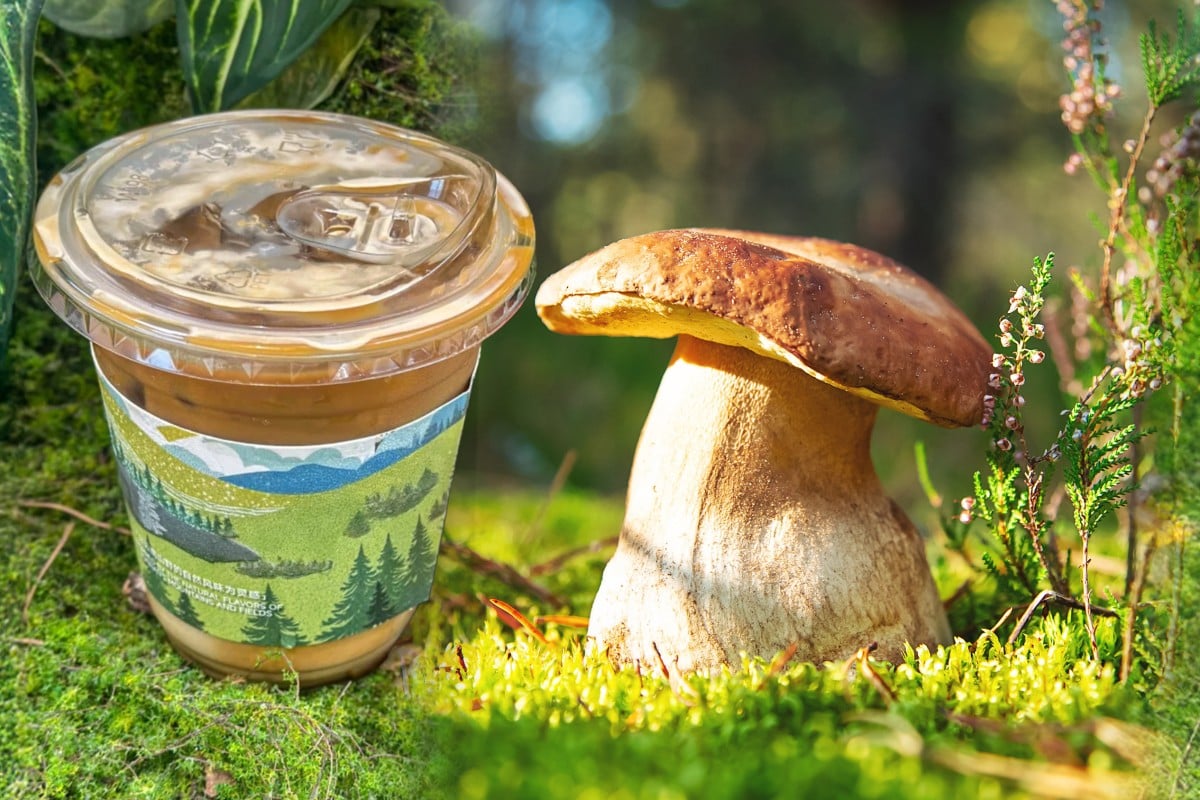
Dubai – 16 September 2025 – (Qahwa World) – A café in China’s southwestern Yunnan province has launched two seasonal drinks that blend coffee with penny bun (porcini) mushrooms, priced at 23 yuan (about US$3) per cup. The offerings are a “Cheese Americano with Penny Bun” and a “Penny Bun Oat Milk Latte,” an innovation built on uniting two local signatures in one cup: Yunnan coffee and premium wild mushrooms.

The preparation details point to a measured flavor approach: the Cheese Americano is served with mushroom powder, a coffee base, a layer of cheese cream, and a cookie shaped like the mushroom, while the oat-milk latte is made with coffee, mushroom powder, and oat milk. Each is priced at roughly 23 yuan. These formulations have been attributed to “Forleaf Coffee” in Yunnan, according to recent regional coverage.

Crowds have shown up from the early days. Staff at the café say they sell around 50–70 cups of mushroom coffee daily, with customers coming specifically to try the two drinks. The venue has previously offered a “black truffle coffee,” suggesting a pattern of seasonal, attention-grabbing innovations that ride the wave of curiosity.

The timing is no accident; June through September is wild-mushroom season in Yunnan, when celebrated varieties—such as matsutake, termite mushrooms, and penny bun—top the lists of those seeking forest-driven flavors. This seasonal context helps explain the widespread interest and the early impression that “the mushroom here is part of the terroir,” not a passing add-on.

On social platforms, opinions split between those who see mushrooms as “too precious to be mixed with coffee” and others who found the taste “surprisingly delicious.” These differing positions have accompanied news of strong sales, giving the innovation a debate that goes beyond mere “trendiness.”

Even so, short-term success does not guarantee continuity. Management at Forleaf Coffee has indicated that repeating the drinks next year is not assured and will depend on the cost of ingredients—chief among them the mushroom. For reference, penny bun prices in August ranged between 40 and 80 yuan per kilogram, a band wide enough to make the decision to continue primarily an economic one before it is a marketing call.

The Yunnan experiment fits into a broader Chinese wave that blends coffee with local or unusual components. In 2024, Starbucks China offered a pork-flavored latte for Lunar New Year—priced at 68 yuan per cup—in a notable example of limited editions serving as both flavor testbeds and marketing tools. In recent months, other controversial drinks—such as a “pork-intestine latte” in Sichuan—have also spread widely on social media.

What distinguishes the Yunnan case is that the “mushroom” here is not “functional” in the wellness sense common in global mushroom-coffee blends (like lion’s mane and chaga), but an edible porcini used for flavor—crafting a new profile that marries a gentle umami with coffee’s sweet-bitter edge. This approach relies on the ingredient’s rootedness in the region’s forests and daily life, not on physiological claims or dietary supplements.

Despite the momentum, repeatability is constrained by several factors: price volatility during the harvest season, the cost of developing and localizing recipes inside production lines, and the café’s ability to maintain powder quality and a stable supply. While queues often mark the initial “buzz,” turning the novelty into a seasonal signature requires a precise balance of feasibility, supply, and flavor. Local coverage—explicitly and implicitly—has tied the drink’s fate to input costs and annual availability.

In sum, this is a flavor-first experiment that draws more on terroir than on “novelty for novelty’s sake,” while capturing the spirit of rapid innovation in China’s highly competitive coffee market, where local blends become shareable stories that drive visits. Between admiration and objection, the future of “mushroom coffee” in Yunnan rests on seasonal pricing—numbers alone will decide whether the craze returns next season or remains a memory of 2025.

CHARTING THE FUTURE OF SPECIALTY COFFEE IN MENA

By: Kim Thompson , Co-founder of “RAW Coffee Company

The global coffee industry is in a period of rapid flux. Record-breaking auction prices, unprecedented mergers, volatile commodity markets, and mounting climate pressures are reshaping how coffee is grown, traded, and consumed. Against this backdrop, RAW Coffee Company is setting a clear course: to lead with integrity, strengthen our role as a trusted voice in the MENA region, and focus relentlessly on creating real value at origin.

Dubai recently made headlines with a newly opened coffee business, buying a world-record-breaking Panama Geisha lot for AED 2,218,785 ($604,080) at the 2025 Best of Panama Auction. This 98-point washed Geisha is now the highest-scoring and most expensive coffee in history, an extraordinary symbol of both the passion, volatility, and marketing spend, in our sector.

At the same time, consolidation is accelerating. Keurig Dr Pepper’s planned $18 billion merger with JDE Peet’s will create a new global giant. Coca-Cola’s $1.5 billion acquisition of Costa Coffee in 2018 gave it a ready-to-drink platform, while JAB Holding continues to expand its vast portfolio. Equipment leaders, too, are changing hands, De’Longhi’s 2023 purchase of 41% of La Marzocco and its acquisition of Eversys show how deeply coffee has become embedded in corporate strategy.

Meanwhile, climate change is placing unprecedented stress on producers. Extreme weather in Brazil and Vietnam, supply shortages, tariffs, and speculative trading are pushing prices upward and amplifying volatility. This is the new reality our industry must face.

As global forces reshape coffee, there is growing debate about the role of institutions like the Specialty Coffee Association (SCA). While the SCA has historically provided technical standards and a shared framework, the concern is that prioritizing organizational profit over producer benefit risks homogenizing coffee, reducing innovation, and diluting the very authenticity that defines specialty.

RAW Coffee Company believes our future cannot rest on certifications or corporate consolidation alone. Instead, our focus is on producers, the people whose creativity, resilience, and craftsmanship give specialty coffee its soul.

Our commitment is to go beyond sourcing. We aim to actively strengthen producers’ ability to thrive, compete, and innovate on their own terms.

  1. Foster True Direct Trade Relationships
  • Cut out intermediaries so farmers retain more of the final sales value.
  • Build trust and transparency through direct communication and fair pricing.
  1. Empower Producers with Resources and Capital
  • Invest in quality improvements, from processing to soil health, including knowledge-sharing on biochar and agronomy.
  • Support producers in developing their own roasting and direct selling businesses at origin.
  1. Facilitate Access to Tools and Services
  • Improve access to essentials like exporting licenses, international payments, and digital platforms.
  • Provide education on market trends, consumer expectations, and storytelling to strengthen their positioning.
  1. Encourage Local Value Addition
  • Champion origin-based roasteries and cafés so more value stays in producing countries.
  • Advocate for barista trainings in origin countries, developing a strong foundation for advancing coffee culture.
  1. Focus on Quality and Differentiation
  • Shift the mindset from scarcity to creativity, intention, and resourcefulness.
  • Guide producers to define their unique qualities rather than replicate trends.

As the pioneer of specialty coffee in Dubai for nearly two decades, RAW is uniquely positioned to shape the next chapter of coffee in the MENA region. Our responsibility is to amplify producer voices, maintain transparency in an era of volatility, and ensure that the values of authenticity, equity, and quality remain at the heart of our industry.

The future of coffee will not be written by corporate mergers, record-breaking auction prices or new assessment forms that do not improve outcomes for producers. It will be defined by the relationships we choose to nurture, the creativity we empower at origin, and the trust we build across the value chain. At RAW, that is where our focus will remain.


DMCC Coffee Centre: Supply Chain Pressures and Tariffs Threaten Global Coffee Trade

Dubai, 15 September 2025 ( Qahwa World) – Coffee, the world’s second most traded commodity after oil and a cultural staple for billions, is entering a critical stage in its global journey. The threats facing the industry are no longer confined to climate change alone. Increasingly, they include mounting supply chain disruptions and escalating tariffs that are reshaping the economics of one of the most vital agricultural products on earth. In its latest report, released as part of the Future of Trade Agri Series, the DMCC Coffee Centre warns that unless urgent measures are taken, the future of the global coffee trade may be defined by instability, rising costs, and deep uncertainty.

For decades, coffee has been regarded as a model commodity for international trade thanks to its durability and storability as green beans. But according to the report, this traditional advantage is no longer sufficient. Shipping costs have risen sharply amid ongoing global supply chain disruptions, compounded by geopolitical tensions across key trade corridors such as the Red Sea and the Panama Canal. Even a 1% increase in transport costs, the report notes, can result in months of accumulated price hikes for coffee worldwide. What was once a relatively resilient supply chain has become a fragile lifeline vulnerable to external shocks.

The situation has been further aggravated by protectionist trade policies. Most notably, the United States recently imposed tariffs of up to 50% on coffee imports from Brazil, the world’s largest exporter. While this may appear to offer short-term relief for American markets, it has shaken investor confidence and created uncertainty for Brazilian producers who rely heavily on exports. Many growers now face the prospect of cutting back production or seeking alternative markets, both of which come with risks of their own.

Mike Butler, Assistant Director for Coffee at DMCC, described the dilemma: “Large buyers often have the option of stockpiling coffee to protect themselves against price swings, but this strategy is not available to everyone. Smallholder farmers and specialty roasters remain the most exposed, as they lack the resources to hedge or hold inventories for long periods.”

The pricing system itself is also under strain. For decades, futures markets like the Intercontinental Exchange (ICE) provided reliable benchmarks for coffee. But the DMCC report highlights how these benchmarks are increasingly detached from reality. Futures contracts may show declines, while specialty coffee prices remain elevated, squeezing small and medium-sized roasters who cannot reconcile speculative market prices with real-world sourcing costs. Garfield Kerr, President of the Specialty Coffee Association and founder of Dubai’s “Mokha 1450,” summed it up: “The futures market has become more speculative and no longer reflects the actual value of high-quality coffee.”

Adding to this pressure is the rapid transformation of consumption patterns. Across Asia—in countries like China, Japan, and the Philippines—demand for coffee is accelerating, particularly among younger generations seeking premium quality and unique experiences. This growth, while promising, makes these markets especially vulnerable to global supply shocks. A shipping delay in Brazil or a tariff dispute in the U.S. can now ripple instantly into cafés and supermarkets in Beijing or Manila, underscoring the fragility of today’s interconnected coffee economy.

Amid these challenges, Dubai is positioning itself as a stabilizing hub. The DMCC Coffee Centre offers a pay-as-you-go model for storage, roasting, packaging, and logistics, lowering barriers for producers and small exporters to access global markets. Its geographic location at the crossroads of Africa, Asia, and Latin America allows Dubai to act as a natural bridge, absorbing shocks and keeping trade flows alive even in turbulent times. This strategic advantage, the report argues, could prove decisive as volatility becomes the new normal.

Still, the outlook remains precarious. Global production is expected to reach a record 178.7 million bags in the 2025/26 season. But without meaningful reforms, these volumes may not translate into market stability. Tariffs, freight costs, and speculative pricing continue to weigh heavily on the system, leaving more than 25 million smallholder farmers—who form the backbone of global coffee production—on the edge of economic survival.

The DMCC Coffee Centre’s report concludes with a stark choice. Either the industry embraces international cooperation, reforms outdated pricing mechanisms, and invests in supply chain infrastructure, or it risks plunging into prolonged volatility. Coffee, long celebrated as a symbol of connection and culture, could instead become a mirror of global trade’s fragility. But with decisive action, from fairer pricing models to transparent trade systems and collaborative investment, the industry has the tools to safeguard coffee’s future as a unifying global commodity.

Black Rock Coffee Bar Raises $294 Million in Nasdaq Debut, Surpassing Expectations

Dubai – 12 September 2025 – Qahwa World – Black Rock Coffee Bar, the Arizona-based café chain, has made a strong entrance into the public markets with its initial public offering (IPO) on the Nasdaq Global Market, raising $294.1 million — above its original $265 million target.

The chain sold 14.7 million shares at $20 each, higher than the marketed range of $16–18, securing a market valuation of $956.3 million, compared to the $861 million it had projected earlier this month. Trading begins today under the ticker symbol BRCB, with underwriters also holding an option to purchase up to 2.2 million additional shares at the same price.

Founded in 2008, Black Rock Coffee Bar has grown steadily to operate 160 company-owned stores across seven US states: Arizona, California, Colorado, Idaho, Oregon, Texas, and Washington. The company intends to use the IPO proceeds to fuel its ambitious expansion plans, aiming to grow its network to 1,000 outlets by 2035.

The chain has demonstrated strong financial performance. In 2024, revenues rose 21% to reach $161 million. By August 2025, revenue for the first half of the year climbed 24% year-on-year to $95 million, with like-for-like sales growing 10.1%.

With its IPO success and solid growth trajectory, Black Rock Coffee Bar positions itself as a rising force in the US coffee market, aiming to challenge larger competitors through rapid expansion and a focus on company-owned outlets.

Dubai to Host Public Cupping of Best of Yemen 2025 Coffees

DUBAI – 11 September 2025 – Qahwa World – Coffee enthusiasts in Dubai are invited to a unique public cupping showcasing the Best of Yemen 2025 auction coffees, curated by Qima Coffee.

The event will take place on 12 September 2025 at 3:00 p.m. at The Roasteria, offering attendees the chance to taste some of Yemen’s rarest and most celebrated coffee lots. Organized in collaboration with Toga Coffeehouse and Biru Roast, the session highlights the cultural and agricultural legacy of Yemeni coffee under the theme “Living Legacy.”

Yemeni coffee, considered one of the most prized origins in the world, has long been treasured for its distinct flavors and deep heritage. This year’s Best of Yemen edition promises an exceptional line-up of coffees, sourced directly from Yemeni farmers and brought to global audiences through Qima Coffee’s auction platform.

The cupping aims to connect Dubai’s coffee community with Yemen’s centuries-old coffee tradition, while allowing participants to experience firsthand why Yemeni coffee continues to captivate connoisseurs worldwide.

“Come and taste rare gems of coffee by Qima Coffee,” the organizers announced, extending an open invitation to all who appreciate specialty coffee.

Specialty Coffee Consumption in the United States Reaches Record High

Washington, September 9, 2025 (Qahwa World) – The Fall 2025 National Coffee Data Trends report, published by the National Coffee Association, shows that specialty coffee consumption in the United States has reached its highest level on record. Fifty-seven percent of Americans reported drinking specialty coffee at least once in the past week, a figure that matches the highest level ever recorded and confirms that specialty coffee has become a central part of everyday life across the country.

The report also highlights the strong role of younger generations, with forty-six percent of Americans between the ages of 18 and 24 saying they consumed specialty coffee on the day before the survey was conducted, the highest daily rate since 2020. Analysts attribute this trend to the integration of younger consumers into modern coffee culture, their preference for higher quality and innovative experiences, and the growing popularity of coffee-related social events that encourage sharing and discovery.

The study notes that new preparation methods are fueling this growth. Cold brew consumption rose to seventeen percent, an increase of three percentage points compared with the start of the year, while ready-to-drink coffee beverages reached nineteen percent, up four points. These figures reflect the American consumer’s attraction to options that combine convenience and freshness, particularly during warmer months.

Industry observers say the expansion of specialty coffee consumption opens new opportunities but also presents challenges. Large chains are benefiting from the growth of app-based orders and drive-thru services, while independent cafés and roasters are finding their strength in providing higher quality products, origin transparency, and stories of sustainability. This balance between convenience and authenticity is expected to shape the future of the U.S. coffee market.

The significance of this growth is underscored by the size of the overall industry, valued at 343 billion dollars. Specialty coffee is no longer just a matter of personal taste or social trend but a powerful economic sector in its own right. With rising consumer awareness of origin, production methods, and environmental certifications, specialty coffee is expected to continue strengthening its position both domestically and internationally.

The findings suggest that the United States has moved beyond the so-called third wave of coffee, which focused on artisanal preparation, and is entering a new phase that blends quality with convenience and social experience. For a new generation of consumers, coffee is no longer simply a morning beverage but an evolving lifestyle choice that reflects broader shifts in consumer culture.

Organic Coffee Market to Reach USD 30.5 Billion by 2033, Growing at 8.5% CAGR

Dubai, September 8, 2025 (Qahwa World) – The global organic coffee market is on track to more than double in value, rising from USD 15.2 billion in 2024 to USD 30.5 billion by 2033, according to a new report by Verified Market Reports. The study highlights a strong compound annual growth rate (CAGR) of 8.5% from 2026 to 2033, driven by shifting consumer preferences and evolving market dynamics.

Key Growth Drivers

The rise in demand for organic coffee is propelled by several factors:

  • Health and premiumization: Increasing awareness of health benefits and demand for high-quality certified organic Arabica and specialty blends.

  • Sustainability and ethics: Growth in ethically sourced products and investments in organic farming practices.

  • Digital traceability: Use of blockchain and QR codes for provenance and storytelling, enhancing consumer trust.

  • Climate challenges: Weather-related disruptions are reshaping sourcing strategies and spurring investment in regenerative agriculture.

  • Market channels: Expansion of direct-to-consumer (DTC) and ready-to-drink (RTD) organic products, supported by subscription models and e-commerce.

  • Regulatory and regional shifts: Stricter certification standards and rising demand in Asia-Pacific, particularly in China, Japan, and South Korea.

Market Challenges

Despite strong growth, the market faces hurdles such as high certification costs for smallholders, limited availability of high-yield organic varietals, and climate-driven yield variability. Industry experts suggest that pooled certification, cooperative financing, and agronomy support programs could help overcome these barriers while strengthening supply chains.

Regional Outlook

North America and Western Europe remain the largest importers and consumers of organic coffee, but Asia-Pacific is projected to record the fastest growth. Increasing consumption in emerging economies, coupled with regulatory changes, is expected to reshape trade flows and create new competitive dynamics.

Industry Players

Major companies shaping the market include Jim’s Organic Coffee, Rogers Family, Death Wish Coffee, Grupo Britt, Strictly Organic Coffee, Dean’s Beans Organic Coffee, Keurig Green Mountain, Allegro Coffee, Café Don Pablo, Grupo Nutresa, and Oakland Coffee, among others. Their strategies revolve around premium positioning, digital traceability, and diversified product portfolios.

Market Segmentation

The report categorizes the organic coffee market by product type (whole bean, ground, instant, pods/capsules), roast type (light, medium, dark, blended), distribution channel (online retail, supermarkets, specialty stores, convenience stores, direct sales), end-user demographics (health-conscious, environmentally-conscious, income and age groups), and formulation (single-origin, blends, flavored, decaffeinated).

From Roasting Champion to Global Educator: The Journey of Davide Cobelli, Evolved Q Grader Instructor

Dubai – Ali Alzakary

In the world of specialty coffee, very few have achieved the rank of Evolved Q Grader Instructor until now. We are sure that in a few weeks there will be many more, but Davide Cobelli, Coffee Expert and Consultant, Italian Roasting Champion 2020, is the first European to obtain it. From competition stages to origin farms, and from leading SCA Italy to winning the Italian Roasting Championship, his story is one of relentless passion, resilience, and a constant drive to raise the bar in coffee education and evaluation. Join us as we dive into his remarkable journey, lessons learned, and vision for the future of coffee.

You recently announced that you became one of the very few people worldwide to complete the Evolved Q Grader Instructor program — and with a perfect 100% score. How challenging was this process for you, and what does this achievement mean personally and professionally?

He is one of the very first instructors to pass the Evolved Q Grader exam. At the time he did, there were probably only 3–4 in the whole world. Today, quite a few more have passed. Achieving this milestone has been incredibly rewarding, especially considering the significant investment of time and energy it required. The standards for instructors are exceptionally high. To put it into perspective, there is zero margin for error, and candidates must achieve a perfect 100% score on a 50-question exam covering the entire Evolved Q Grader course. This is what makes earning the license so challenging, but also entirely appropriate. Through this rigorous process, the SCA makes it clear that the new Q Grader course is in no way inferior to the previous CQI program, particularly regarding the quality of its trainers.

You started in the food service industry before dedicating yourself fully to coffee. What was the turning point that made you choose this path, and how did those early experiences shape the professional you are today?

I started in the hospitality industry over 30 years ago, but for nearly 15 years, I have been completely devoted to the world of coffee. In the first part of my career, my devotion was to the beverage itself. Then, for more than seven years, I also embraced the entire supply chain, which has become increasingly important in my professional journey, leading me to open a roastery and travel to origin countries to provide sensory training. I don’t know exactly how the switch to coffee happened—passions are often born and grow without a specific reason. But every day, I wake up happy and fulfilled doing the best job in the world: the one I love.

You’ve trained hundreds of professionals across Europe, Asia, and the Middle East, while also building a reputation as a consultant. How do you manage to keep both hats on—educator and business advisor—without compromising the quality of either?

In my 15 years as a trainer in the coffee world, I believe I’ve trained well over a thousand professionals. Every time, this has been my motivation to keep going. My goal has always been to share my expertise with students, learn from them in return, and create a genuine exchange—an objective I still pursue today. It’s not one-way training, but a true exchange of professional skills. When you’re driven by true passion, you can do anything. For me, coffee is pure passion and sincere dedication.

Few people cover as many areas as you do—Barista, Brewing, Green Coffee, Sensory, and Roasting. How did you build that range of expertise, and what advantages does it give your students?

There’s a saying, “a jack of all trades is a master of none,” and I tend to agree with that idea. In my case, I began my coffee journey by dedicating the first half of my career to the world of the barista and the beverage—first by competing, and later serving as an international judge for barista championships. From there, I expanded to embrace sensory analysis, roasting, and the supply chain. It’s not impossible to do everything well, but I don’t see myself as a superhero who has somehow managed it. I simply believe that when you are driven by true passion (and not primarily by business), it is possible to succeed. As I’ve said before, I am devoted to coffee. It’s an all-consuming passion in my life; aside from travel, I have no others. I believe the advantage for my students is that my broad experience allows us to explore a wide range of topics holistically, both in and out of the classroom. After all, in a supply chain like coffee, every element intersects with and influences the others. Furthermore, I’m not one of those trainers who sticks strictly to the course material without leaving room for discussion. I encourage questions—in fact, I love them.

Winning the Italian Roasting Championship in 2020 was a milestone, and you later ranked among the best in the world. What did those competitions teach you about coffee—and about yourself?

In 2020, just two years after I started roasting, I won the Italian Roasting Championship. What an incredible feeling that was! I was the first to not believe it, especially since I only went hoping not to finish last and just to get a bit more experience. But after placing seventh at the World Championship in 2022 and second at the nationals in 2023, I started to think that maybe, just maybe, I’m not completely terrible at this whole roasting thing. Above all, it silenced my detractors and haters, which are always in plentiful supply in the coffee world. That made the satisfaction twofold.

As a national and international judge, you’ve seen the best baristas and roasters on stage. What do you look for in a champion, and what separates a good competitor from a great one?

Being a judge is a responsibility—or at least, that’s how I’ve always seen it. It’s incredibly satisfying to be able to support the industry’s framework and, often, the next generation of professionals. But that’s not all. In recent years, I’ve been called upon more and more to participate as a sensory judge on tasting panels for coffee farmers, right at the source of the production chain. This has really become my focus since the COVID pandemic. That is a true responsibility of another kind, because you feel that your judgment can influence the future of farming families. This responsibility weighs heavily on me, compelling me to be exceptionally professional and accurate in my assessments.

When you were elected National Coordinator of SCA Italy, you spoke about bringing specialty coffee out of its niche. What steps have you taken toward that goal, and what challenges remain in making specialty coffee more accessible to everyday Italians?

In my role as National Coordinator from 2022 to 2024, I worked to expand the specialty coffee market beyond the narrow niche it has occupied in Italy in recent years. Growth in this sector had become nearly stagnant, largely because specialty coffee was increasingly perceived as just an expensive and acidic product, rather than one of value for the entire supply chain. Together with the coordinating team for that two-year term, we implemented communication strategies to take the product beyond the small circle of “coffee geeks.” Our goal was to make specialty coffee accessible to a broader audience by using simpler language and by highlighting the importance of a sustainable supply chain.

The Specialty Coffee Association recently introduced the Coffee Value Assessment (CVA), joined also by the Coffee Quality Institute. Some see this as a groundbreaking step forward, while others worry about confusion or competition with existing protocols such as CQI certifications. How do you see this new system shaping the future of coffee evaluation, and what impact will it have on farmers, producers, and the industry as a whole?

When the CVA was introduced in 2022, many wouldn’t have bet on its success. There was significant skepticism (a small amount of which still lingers), especially from professionals who grew up with and were tied to the 2004 SCA Cupping Form (later used by CQI). This also included those who had invested a great deal of money and energy over the years to become Q Graders or Q Instructors. (I don’t blame them, but it’s clear that the new CVA is the modern approach to sensory science, while the previous system is not). Today, there is no competition between the SCA and CQI, because CQI focuses on origin countries and field work, while the SCA focuses on Sensory Analysis, which includes the new Evolved Q Grader course. (Then again, perhaps there was never any real competition; it’s impossible to compare an outdated system that hasn’t been updated in over 20 years with one that takes a modern, scientific approach). The real and immediate revolution is that today, a coffee’s value throughout the chain is no longer left to a single, subjective score. Instead, value is redistributed across multiple attributes, each of which is important in determining the final worth. The impact is direct: farmers are no longer forced to submit to a sterile, unexplained score. Instead, they can discuss value by leveraging multiple attributes to justify it.

Specialty coffee has changed dramatically in the past decade. Where do you see the next big opportunities for growth and innovation in Europe’s coffee sector?

The coffee world has undergone a radical transformation. Specialty coffee consumption has evolved and continues to grow consistently year after year across all markets, with consumers paying closer attention to the products they purchase and consume. The key to the future is undoubtedly product information, specifically the combination of extrinsic value and the sensory profile. Looking ahead, I foresee a future for specialty coffee defined by greater transparency, with a focus on metrics like the Farm Gate Price for the final product, rather than just a cupping score. I believe the opportunities will only continue to grow for professionals who specialize and carve out their own niche in the market.

Looking back at your journey—from trainer to champion, consultant, and SCA leader—what achievement gives you the greatest satisfaction? And what keeps you motivated to push forward?

Life is constant evolution. To me, that is the very definition of living. Sometimes you adapt, but often you must evolve—that is my guiding principle. This isn’t about the pursuit of a happiness that is never reached. Instead, it’s about the constant effort to improve, accumulating more and more experience in everything you do. My father taught me to always give my all, so that I could fully enjoy the journey, whether it leads to the summit or not. Success is just the tip of an iceberg built on defeats, frustration, disappointment, struggles, laughter, excitement, and a host of other emotions. From the outside, people only see the destination, never what happens during the journey. For me, every milestone—positive or negative—has been an experience that has helped me mature and grow as a human being. That is true success. For this reason, I don’t have a single achievement that stands out as the most satisfying; rather, it is the sum of them all that makes me a better person.

For young coffee professionals who dream of following in your footsteps, what advice would you give them about standing out in such a competitive global industry?

Never give up on something you believe in, but above all, believe in yourself. Superheroes and super-gurus don’t exist; there are only people who give their absolute all to reach their goals. Set an objective and then, step by step, work to achieve it. If you create intermediate milestones along the way, it will seem far less impossible.

Starbucks Moves Ahead with Major U.S. Coffeehouse Revamp

Dubai, 5 September 2025 (Qahwa World) – Starbucks is reporting strong progress on its ambitious plan to refresh its U.S. coffeehouses, with redesigned stores in New York and Southern California already showing encouraging results.

The global coffee chain began remodeling select outlets in July 2025 as part of CEO Brian Niccol’s Back to Starbucks strategy, which aims to restore the brand’s traditional “coffeehouse atmosphere” and counter declining sales in its home market.

According to Starbucks, customers at the updated stores are spending more time in-store, visiting more frequently, and responding positively to the changes. The redesign includes:

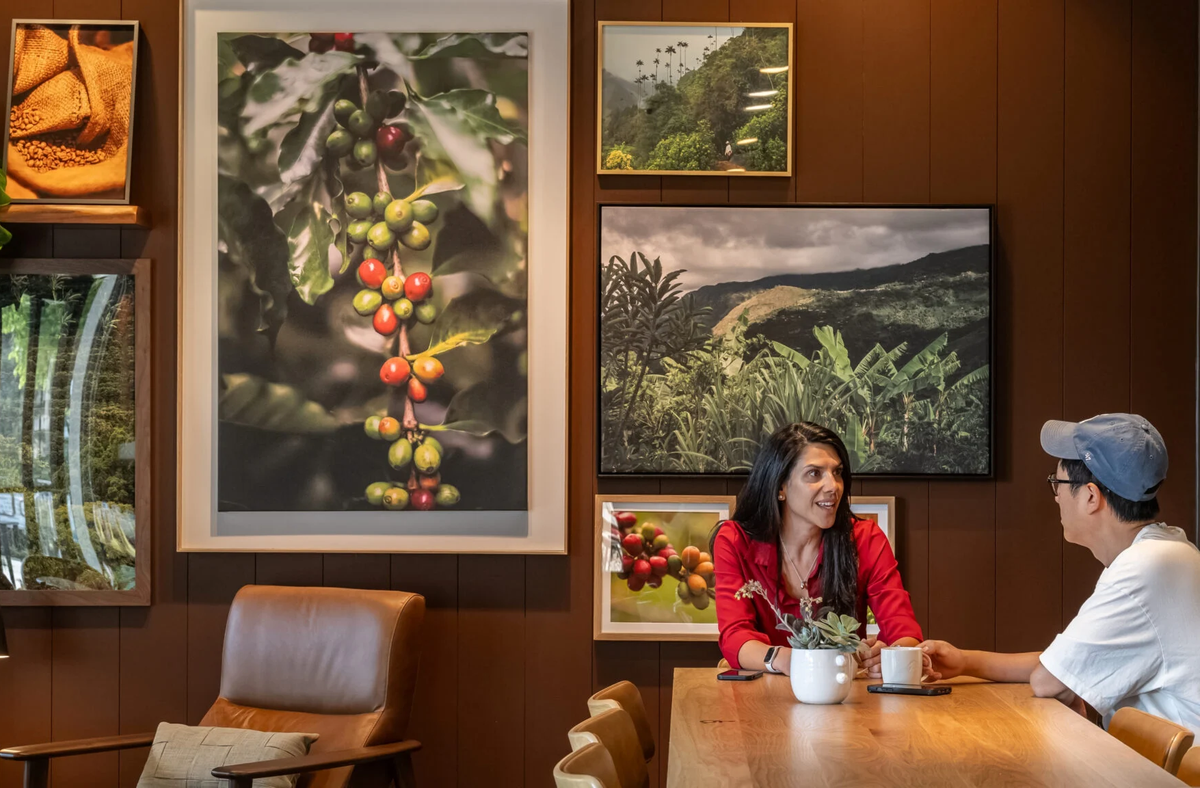
  • Cozy seating and warmer lighting to create a more inviting environment

  • Vibrant artwork and ceramic mugs to highlight a café-style experience

  • A redesigned espresso bar that showcases coffee preparation and barista skills

  • Improved pickup zones that are streamlined and less disruptive

Starbucks intends to remodel more than 1,000 company-owned U.S. stores by the end of 2026 — nearly 10% of its U.S. network. The revamp is designed to strengthen connections with customers, replacing the “overly transactional” feel of some locations.

In addition, Starbucks announced it will phase out its 90 mobile order and pickup-only sites across the U.S. by the end of 2025. First introduced in 2019, these outlets will be closed to prioritize spaces that foster human interaction and community engagement.

Despite challenges in the U.S. market, Starbucks posted solid results in its latest financial report. For the quarter ending 29 June 2025, the company achieved 4% year-on-year revenue growth, reaching $9.5 billion globally. In the U.S., revenue increased by 1% to $6.45 billion, with Starbucks operating 17,230 outlets nationwide.

The coffee giant believes that its large-scale store refresh will play a crucial role in boosting customer loyalty, improving in-store experiences, and reinforcing its leadership in the U.S. coffee market.

Luckin Coffee Gains Market Share as Rivals Struggle

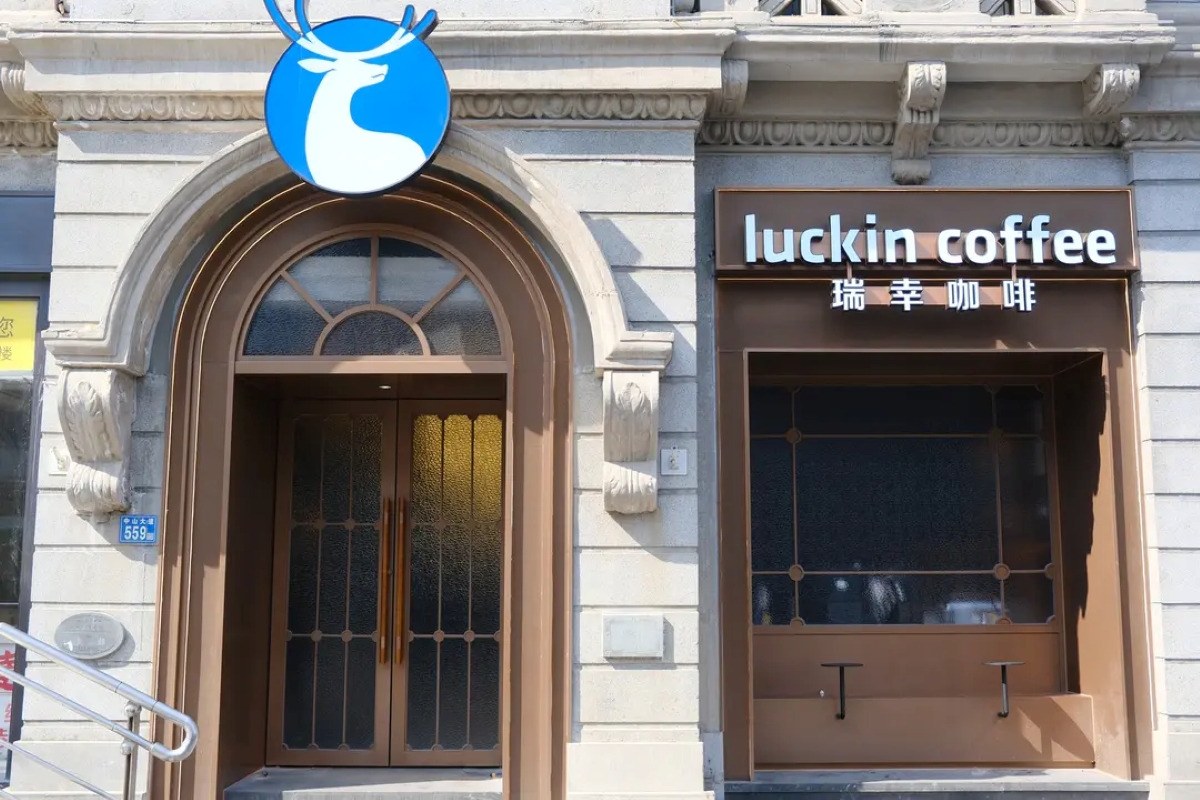
Dubai, September 5, 2025 (Qahwa World) – Luckin Coffee continues its rapid ascent in the global coffee industry, expanding aggressively while key competitors like Starbucks face declining sales.

The Chinese coffee chain, which has already surged ~35% this year, recently entered the U.S. market with new stores in New York City. This move comes as Starbucks undergoes a difficult transformation in both its American and Chinese operations.

Strong Same-Store Sales Growth

Luckin Coffee reported a 13% year-on-year increase in same-store sales at company-owned outlets in Q2 2025. This marks its fourth consecutive quarter of acceleration, rising from a decline in late 2024. In comparison, Starbucks posted a 2% sales decline in the U.S. and only 2% growth in China, where it introduced discounts to counter Luckin’s aggressive promotions.

By outperforming Starbucks’ same-store sales growth by 11 percentage points, Luckin has proven resilient in a strained global economy where many restaurant chains are seeing contractions.

Aggressive Expansion Strategy

The company’s expansion strategy remains unmatched. In Q2 alone, Luckin opened 2,109 new stores, lifting its total footprint to 26,200 – a 31% year-on-year increase. Over the past year, Luckin has added more than 6,200 stores, averaging 17 openings per day.

In contrast, Starbucks expanded its network by just 5% over the same period, adding 1,600 stores worldwide. Luckin’s U.S. debut has been met with favorable reviews, with New York outlets receiving 4–5 star ratings on Google and Yelp.

With RMB 8.2 billion ($1.1 billion) in cash reserves and no debt, Luckin has ample resources to finance its ambitious global rollout.

Differentiation: Menu Innovation and Value Pricing

Luckin distinguishes itself through a bold menu and competitive pricing. While offering classic beverages, it experiments with unique flavors – from fruity Americanos to limited-edition drinks like Roast Duck coffee in China.

Equally important is its pricing advantage: brewed coffee at its U.S. outlets starts at $3.45, below the average price in many American cities. This value-driven approach has fueled customer growth while maintaining a 21% store operating margin.

Valuation Advantage

Despite its momentum, Luckin trades at a far lower valuation than U.S. peers. Its price-to-earnings ratio is around 19x, half that of Starbucks. On revenue multiples, Luckin is valued at a quarter of fast-growing competitor Dutch Bros, even though it is expanding at a faster pace.

Risks and Outlook

While Luckin’s history includes challenges—such as price wars and over-discounting in 2024—the company has since shifted strategy to balance promotions with profitability.

Analysts see more upside than downside as Luckin strengthens its position in China while expanding overseas. Its combination of innovation, affordability, and financial strength makes it one of the most compelling players in the global coffee industry today.