India Cuts GST on Coffee to 5% in Landmark Tax Overhaul

New Delhi, September 4, 2025 (Qahwa World) – The Indian government has announced a sweeping reform of its Goods and Services Tax (GST), slashing rates on coffee and other food products from 12%–18% down to just 5%. The decision, taken during the 56th GST Council meeting chaired by Finance Minister Nirmala Sitharaman, marks one of the most significant tax changes since the GST system was introduced in 2017.

The reform simplifies India’s indirect tax structure into two main slabs—5% for essential and merit goods, and 18% as the standard rate—alongside a new 40% rate for de-merit goods such as tobacco and luxury items. The reduced rates, including the cut on coffee, will take effect from September 22, 2025, coinciding with the Navratri festival.

Coffee Industry Among Key Beneficiaries

Coffee has been placed in the merit category, meaning products that previously attracted 12% or 18% GST—such as roasted beans, instant coffee, and other processed coffee items—will now be taxed at only 5%.

Industry experts expect this move to have a ripple effect across the entire coffee value chain:

  • Growers and processors are likely to benefit from stronger domestic demand, as lower retail prices could encourage greater consumption.

  • Retailers and cafés may see a boost in sales volumes, with increased affordability improving consumer access to both mainstream and specialty coffee.

  • Consumers will directly benefit from reduced prices, especially as food and beverage costs have risen sharply in recent years.

A Broader Economic Push

The decision is part of a wider strategy aimed at easing the cost of living, stimulating consumption, and simplifying India’s tax regime. Alongside coffee, the rate cut covers other everyday items including chocolates, butter, ghee, sauces, noodles, and packaged snacks.

“This rationalisation is designed to make GST simpler, more transparent, and more consumer-friendly,” Finance Minister Sitharaman said after the council meeting, stressing that the two-slab system will also reduce compliance burdens for businesses.

Looking Ahead

India—already one of the world’s largest producers of Arabica and Robusta—is expected to see a surge in domestic coffee consumption following the tax cut. Analysts suggest the move could help narrow the cultural gap between tea and coffee, while further boosting India’s vibrant café culture and specialty coffee sector.

The GST overhaul signals a structural shift in India’s economic policy, and for coffee, it may represent the beginning of a new chapter where affordability fuels greater appreciation of the drink across the country.

Grounds for Health Auction Returns with Rare Coffees to Support Women’s Health

Dubai, September 1, 2025 (Qahwa World) – The annual Grounds for Health Auction will return on Thursday, September 18, offering roasters around the world the chance to acquire rare, high-quality green coffees and specialty equipment while directly supporting lifesaving women’s health programs in coffee-growing communities.

This year’s auction features contributions from some of the most renowned farms in the coffee industry. Among the highlights are a washed Geisha “Guabo” lot from Hacienda La Esmeralda in Panama, exceptional coffees from Finca El Injerto in Guatemala, and Hacienda La Minita in Costa Rica. The catalog also includes premium offerings from major traders such as Walker Coffee Trading, Keffa Coffee, and San Cristobal Coffee Importers, in addition to professional coffee equipment.

All proceeds from the auction go directly to Grounds for Health, a U.S.-based nonprofit organization dedicated to preventing and detecting cervical cancer in coffee-producing regions. The group currently operates programs in Ethiopia and Kenya, where cervical cancer remains one of the leading causes of death among women, despite being entirely preventable with early screening.

“When we invest in women’s health, we invest in the future of coffee itself. Healthy women farmers mean thriving families, sustainable farms, and the exceptional coffee quality our industry depends on,” said Justin Mool, Auction Manager at Grounds for Health.

Since its launch in 2009, the auction has raised more than $1 million to fund its health initiatives. Past editions have featured notable contributions from farms such as Hacienda El Roble in Colombia and Daterra Coffee in Brazil, along with strong support from traders including Walker Coffee Trading. In the 2024 auction, nearly thirty lots of specialty coffee were offered, underlining the ongoing commitment of the global coffee community to this cause.

Roasters and industry participants can register through the official auction website to bid on coffee or equipment, or to make direct donations. Shipping costs are not included in the winning bids and must be arranged separately.

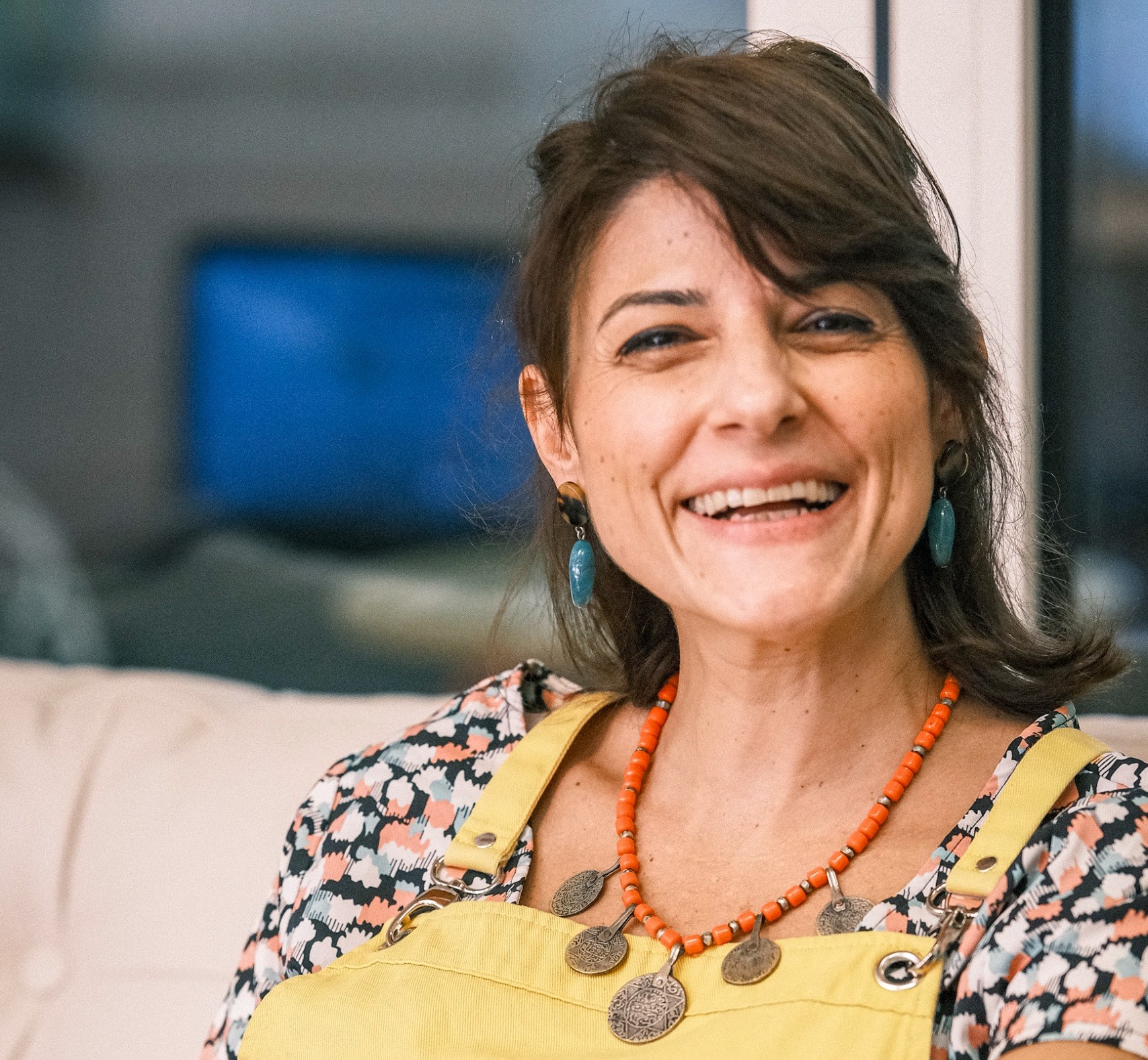
Rana Ibrahim: Coffee Is Art and Life for Me… and “edda arabica” Is a Space for Stories and Humanity

Dubai – Ali Alzakary

In the presence of coffee, conversation becomes a musical piece: every sip has a note, every bean a story, every hand that plants or brews leaves a lasting trace. This is how Rana Ibrahim sees coffee: not a passing drink, but a space for art, soul, and humanity. In her interview with Qahwa World, she reveals how a simple cup turned into an existential journey, and how she shaped her cafés and projects as an extension of the art she loved since childhood.

Between edda arabica, US Coffee Shop  in Beirut and Qahwat Al-Souq in the town of Baakline, between teaching and experimentation, and between the paintbrush and the cup, Rana has woven a world of her own—where coffee is not merely a beverage, but a language of presence, identity, and creativity.
We invite you now to enjoy this rich and inspiring conversation with Rana Ibrahim, where coffee intersects with art and daily rituals turn into stories worth telling.

How did your journey in the world of coffee begin, and when did you realize that this field would become part of your professional and personal identity?

Coffee has always been part of my upbringing, it was something my family enjoyed every day, and eventually, it became second nature to me too.
Things began to change, though, when I moved to London. While studying Fine Arts at Central Saint Martins, I kept a studio in East London, an area that happened to be surrounded by some of the first third-wave roasters. That’s where I started looking at coffee differently. It shifted from being a routine I hardly thought about into something I began to approach with more intention.

The third-wave movement opened my eyes to the story behind every cup, where the beans come from, the people who grow them, and what that means. That perspective completely reshaped my relationship with coffee. It stopped being just about drinking it, it became about understanding it.

A big turning point came when I took my very first course, Introduction to Coffee, at Prufrock in London. My trainer was Jeremy Challender, who’s now the Dean of Studies at Barista Hustle. He asked me a simple but powerful question: “Why do you want to learn about coffee?” I remember stopping to think, because up until then, my interest was mostly about pairing coffee with food, imagining I might one day open a café. But his question pushed me to go deeper.

I eventually answered, “Because one day, I’d like to open a coffee shop.” At the time, my focus wasn’t so much on coffee itself, but more on the idea of bringing people together through food and hospitality.

Since childhood, I had always been surrounded by the food and beverage world. I worked in F&B, enjoyed being around people, and valued the connections that sharing food and drinks creates. Jeremy’s question helped me realize what tied it all together. My goal wasn’t to become a coffee trainer or educator then—it was simply to create a place of my own, a welcoming spot where good coffee and simple food could bring people together.

Years later, when I opened edda arabica, I felt I had finally found my voice in coffee. The shop became more than just a business; it was where everything I cared about ritual, art, coffee, community, and hospitality came together in one space.

If you weren’t in the coffee industry today, where do you think you would be?

To this day, I’m still deeply connected to the world I came from, I continue to paint. Art has always been a constant in my life, and I imagine I’d still be in that field if I hadn’t chosen coffee, exploring the same themes that continue to inspire me: space, culture, identity, and transformation.
Most of my creative work, whether visual or spatial, revolves around building environments thinking about how people come together, how communities take shape, and how public life is experienced. That’s why I often collaborate with public practitioners and urban thinkers; I’m fascinated by how spaces can be designed not only to function, but to hold meaning.

Even when I design a café, I approach it as if it were a canvas. I think about flow, movement, silence, and interaction. To me, every space is an opportunity for people to pause, connect, or feel a sense of belonging. That thread runs through both my art and my vision of hospitality.

Painting remains at the core of everything I do. The way I describe coffee—its body, acidity, aftertaste, often echoes how I describe art: in terms of color, form, and composition. Those languages overlap more than most people realize.

So, if I weren’t in coffee, I’d still be working with people, with space, and with form through painting, design, and storytelling. Coffee just happened to become the medium where all of these passions could converge.

What is the relationship between art and coffee for you? Do you see both as expressions of creativity?

For me, coffee and art have always been connected. Both depend on structure, rhythm, and a kind of logic—what I think of as parameters.

In coffee, you work with things like dose, yield, brew time, temperature, and grind size. Those aren’t limits; they’re the foundation that makes creativity possible. Painting works the same way. Composition, balance, color, and layering create the framework you use to express meaning.

When I’m painting, I’m focused on form, texture, space, and movement. When I’m making coffee, I’m paying attention to body, acidity, aftertaste, and mouthfeel. At their core, both are languages of expression. The way a brush moves across canvas isn’t so different from the way water flows through coffee grounds.

What ties both together is presence. You have to be fully in it—with your tools, with your intention, and with the people who will experience it. Whether it’s a painting or a cup of coffee, the result is shaped by countless small decisions that often go unnoticed by others.

That’s why I see coffee and art as parallel practices. They’re creative, yes, but they also demand discipline. Both give you freedom within structure, and both speak to the same part of me.

What distinguishes edda arabica from other cafes in Beirut? How did the idea for it come about?

edda arabica came to life in 2021, during a very uncertain moment in Lebanon, when the banking system was collapsing. Strangely enough, those difficult times brought people closer. Conversations shifted; coffee stopped being just coffee and became about presence, slowing down, and holding on to something grounding like a cup in your hands.
From the very beginning, I wanted edda to be an open space and not just in its physical design, but in its spirit. A place where I could brew coffee and people could interact, ask questions, and start conversations. Less of a transaction, more of an exchange. Of course, we’ve always cared about the fundamentals the roast, the origin, the process but chasing perfection was never the goal. What mattered was connection.

Slowly, edda became that kind of place. Baristas from other cafés would drop by after shifts, bringing beans to share, cupping together, or simply hanging out. None of it was planned, it just unfolded naturally. Over time, it turned into a gathering point for the community, where ideas and experiences were exchanged as easily as coffee.

Being in Clemenceau, right across from the American University Hospital, also shaped the space. It attracted a wide mix of people and not just those already interested in specialty coffee, but many who were new to it. Little by little, curiosity grew. People began asking questions, tasting, and understanding more about sourcing, roasting, and traceability. For many, edda became more than a ritual; it became a place to belong.

There’s also a personal story behind it. Walid, my partner, an architect and chef, was the one who asked me to open a coffee space inside one of his restaurants. The funny part is that three years earlier, I had asked him the same thing, but it didn’t happen then. When he finally asked, I couldn’t refuse. His spaces are always layered, intentional, and full of contrast, and that’s exactly why the edda bar looks the way it does. It’s not just a counter, it’s a real bar, designed with care, but for coffee.

Even the name carries weight. edda comes from Norse mythology, referring to old collections of stories, myths, and shared knowledge passed down through generations. arabica is the bean we work with. Together, edda arabica isn’t just about serving coffee, it’s about sharing stories, passing things on, and creating real connections.

Over the years, the bar has become a hub for communication, training, and exchange. It has opened up a channel for what we now call specialty coffee, but in a way that feels human, approachable, and rooted in community.

How do you evaluate the current coffee scene in Lebanon? What challenges do you face in running a specialty coffee shop in light of the economic climate?

The specialty coffee scene in Lebanon is still young and developing. We’ve made real progress, especially when you think about what the country has been through economic collapse, inflation, shortages, yet many of us are doing our best just to keep things moving forward. Compared to more established markets, there’s still a lot of groundwork to be done.

The challenges never really stop. Some days I run out of basic supplies. Tasks you expect to finish in one day might stretch into three. You’re constantly dealing with power cuts, delays, and broken supply chains—but over time, that unpredictability becomes part of daily life. It’s something we all share, which makes the stress feel a little more bearable, a little more human.

Working in that environment shifts your perspective. You start to realize that if you have water, heat, and coffee, you already have enough. Any coffee is better than no coffee, and everything beyond that is a gift. Living and working this way teaches humility. It forces you to stay flexible, to focus on the present, and to be grateful for what you do have.

us coffee shop

What prompted you to co-found US Coffee Shop? Is it different in terms of audience or visibility?

US Coffee Shop is based right in the center of Beirut, in Starco. It feels like a new chapter, but in many ways, edda arabica made it possible. At edda, I spent a lot of time focusing on guiding, teaching people about origin, brewing, taste, and process. US carries the same spirit, but with a lighter, more playful tone. It’s younger, more vibrant, full of life. The coffee is still thoughtful, the quality is there, but it isn’t about chasing perfection. It’s about celebrating movement, community, and everyday life. With food on the menu too, it feels casual, accessible, and easy to enjoy.

What I love most is how naturally it all came together. One of my partners originally approached me for coffee consulting, and from there, the idea grew. I gathered people I trust and enjoy working with, and together we created something we all believed in. We actually started building US during the war, and despite everything, we kept going until we opened. That resilience and determination shaped the spirit of the place.

The design of the shop reflects that same energy. Even the colors are drawn from my own paintings, which makes the space feel personal bright, joyful, and full of light. And since the team from edda rotates between both cafés, the heart and essence of what we do flows seamlessly into US as well.

The people who come in are just as important to the identity of the space. The crowd is incredibly diverse designers, artists, students, Gen Z, young professionals, curious coffee drinkers. It’s not limited to a niche; it’s open to everyone. That’s what I love most about US. It feels welcoming and unpretentious, a place where people can just come as they are. At its core, it’s still about coffee but it’s also about life.

Why did you decide to launch “Barista Hustle in Arabic”? And how important is it to provide Arabic training content for coffee professionals?

Back in 2017, Jeremy Challender, now the Dean of Studies at Barista Hustle, reached out to me with the idea of launching Barista Hustle in Arabic. I immediately felt it was the right thing to do. We kept talking, refining the idea, and by 2019, we finally brought it to life.

Barista Hustle has always stood out to me because it’s such an accessible platform. It’s straightforward, engaging, and doesn’t require you to travel or spend a fortune to learn. Making it available in Arabic wasn’t just about translating words, it was about creating access and inclusion. Not everyone in our region can attend international trainings, and this gave more people the opportunity to grow their skills and knowledge without barriers.

For me, though, it was never only about baristas. I’ve always wanted to widen the circle to reach home brewers, people from different professions, or just anyone curious about coffee. It’s not only about expanding the language we use around coffee, but also about expanding who gets to be part of the conversation. Education, after all, should feel open, welcoming, and within reach for everyone.

Did you encounter any difficulties translating or transferring the training content to the Arab world? What was the interaction like?

Of course, there were challenges along the way. Translating coffee education into Arabic was never just a matter of swapping words from English. In many cases, the technical vocabulary simply didn’t exist in Arabic, so we had to create terms that felt logical, approachable, and easy to understand. On top of that, Arabic itself is not one unified language. What works in Lebanon might not resonate in Morocco or the Gulf. We had to find a balance, a modern, neutral Arabic that could reach people across the region without sounding overly formal or distant.
Another challenge was tone. Barista Hustle can be quite technical, but our goal was to make it accessible and engaging. We weren’t speaking only to professional baristas, we wanted to include home brewers, café owners, and anyone curious about coffee. The material needed to feel useful and approachable, not intimidating or exclusive.

The response from the region was incredibly encouraging. People were ready for this. We received so much positive feedback, especially from those who had never had access to structured coffee education in Arabic before. For many, it was the first time they felt truly part of the global coffee conversation and that made every bit of effort worthwhile.

What does being a Q Grader mean to you? How does this certification affect the way you taste coffee or evaluate crops?

For me, being a Q Grader is more of a responsibility than a certificate. It gave me a structured way to taste and evaluate coffee, but more than that, it taught me to pay attention differently, to how I taste, how I listen to the cup, and how I represent the work of producers. It’s not about judging from a distance; it’s about being fair, present, and honest with what’s in front of me.

The training definitely sharpens your senses. You taste with more focus and consistency. But at the same time, it humbles you. You realize coffee isn’t just about numbers or scores, it’s about people, places, climate, and intention. As a Q Grader, I try to hold both sides: the technical precision, and the human story. When I evaluate a crop, I’m not only asking, “Is this an 86 or an 87?” I’m also thinking about how it will show up in a café, how people will experience it, and how to highlight its strengths without losing the story behind it.

That’s why, for me, Q is a tool and not a title. It helps me communicate better, serve better, and stay connected to the people and work behind every cup.

And honestly, these days, I find myself enjoying coffees that aren’t about high scores at all. The story of how they arrived to me, and the journey behind them, often matters more than how refined or complex the cup is. Maybe that’s just where I am right now, especially with everything going on in the world. It reminds me to stay grounded, to stay close to the human side of coffee and to be grateful for what’s in the cup.

How would you describe your experience taking the Q Grader tests? Would you recommend it to Arab professionals?

Honestly, taking the Q Grader exam wasn’t part of my plan at all. I hadn’t set it as a goal. But then Mohammad Merhi from Cypher reached out and supported me in a way I’ll always be grateful for. I think he sensed I needed that push not only on a professional level, but personally too, especially with everything that had been happening around us in Beirut. He gave me the flexibility and space to pursue it, without adding pressure around money or timing. That gesture meant a lot. It’s those quiet, generous acts that really show you how human and supportive this coffee community can be.

The exam itself was tough intense, very detailed, and highly technical. It forces you to trust your senses, stay calm under pressure, and refine how you taste and evaluate. I would definitely encourage Arab professionals to take it, not for the title or status, but for the awareness and clarity it brings. It gives you a shared language, a framework to connect with coffee in a more intentional way, and to communicate more clearly with others across the supply chain.

That said, it’s not the only way forward. There are many different paths in coffee. But if you’re curious and want to go deeper, the Q can be a truly valuable tool.

women in coffee

How do you view women’s presence in the Arab coffee scene today?

There’s definitely been a shift. More women are showing up in the Arab coffee scene taking space, leading, and speaking out. You see it across the board: baristas, roasters, café owners, trainers, even producers. Women are stepping into roles that weren’t always visible before, and that presence is growing in a really powerful way.

Of course, there’s still progress to be made. Like most industries, coffee has its gaps in access, visibility, and representation, especially behind the scenes. But I’ve noticed a real change in recent years. There’s more openness, more willingness to listen and make space. And women are claiming that space naturally, not as a token gesture but as part of the fabric of the industry.

It’s a process, and it’s happening step by step. The more women show up, the more it becomes normal, not the exception. What gives me a lot of hope is the network of women forming across the region. They’re supporting each other, sharing knowledge, and building each other up. And on the other side, I’ve seen audiences, customers, peers, communities listening differently. There’s a readiness now to hear women’s voices in coffee, to value the way they lead.

For me, it’s not only about having women “present” in the room. It’s about presence with impact creating space for different leadership styles, different stories, and different ways of working. And every time women show up, that space grows more real.

What do you think of the new evaluation system by the Specialty Coffee Association?

To be honest, I haven’t had the chance to sit down and really go through it in detail yet, but I will. I’m curious, and I’m open to it.
From what I’ve seen so far, I like the direction it’s taking. It feels more human, less about chasing numbers, more about the experience itself. It still values the sensory side, but it also weaves in context, story, and intention. That really resonates with how I connect to coffee these days. For me, it’s no longer just about scores; it’s about meaning.
So, I’m looking forward to digging deeper into it and seeing how it might fit within our part of the world.

Qahwat Al-Souq

What is the story behind “Qahwat Al-Souq”? Can we consider it more of a social and cultural project than a commercial one?

Qahwat Al-Souq sits inside what used to be my father-in-law’s father’s store, one of the oldest shops in Baakline, Chouf. Back in the day, it was the kind of store that sold a bit of everything. Over time, it closed down, but the structure and character of the space remained. One day, my father-in-law came to me with an idea: to bring it back to life not as a store this time, but as a place for the community.

He wanted something modern, but still true to the town’s spirit. So we preserved much of what was already there, the old shelves, the original lighting, even the safe that no one’s ever managed to open. All of it stayed, and we built around those details.

Now, Qahwat Al-Souq has become a gathering place. Locals come together, art is displayed, music fills the space, and coffee is shared. It’s not driven by business, it’s about presence. About giving something back to a place that’s given us so much. The history, the people, and the intention behind it are what make it special.
And yes, it’s still there and I still love it just as much.

A coffee whose taste you will never forget?

Honestly, it’s hard to pick just one. Every time I think of a cup that stayed with me, five more come to mind. For me, taste is never separate from people or context, the story around the cup matters just as much as what’s in it.

One cup that really shifted things for me was a light roast by Patrick from April Roastery. It was my first real introduction to that style of coffee, and it opened up a whole new way of thinking about flavor, clarity, and balance. That cup changed something in me, I’ll never forget it.

Another memory that stands out was at 90+ in Panama, drinking coffee with Joseph. The setting was breathtaking the landscape, the atmosphere, the energy of the moment. I felt completely alive. That cup, that place, that conversation… it all stayed with me.

Then there was a surreal experience in Beirut, during the bombings. I brewed a 2018 Barista Hustle coffee I had in my freezer, with Samer. In that moment, it felt like it could be the last cup I’d ever drink. It’s impossible to forget something like that.

And then in Colombia, visiting Norman’s farm with Nikolai, his wife served us coffee at home. Nothing fancy, just a simple cup but it was full of heart, and it turned out to be one of the most special brews I’ve ever had.

So no, I can’t name just one. Each of those cups was unforgettable in its own way. And these days, I find myself drawn more to coffees that aren’t chasing high scores, but carry meaning. They’re still sensory experiences, but woven together with story, context, and intention. Maybe it’s the times we’re living in, but lately, it’s the meaning behind the cup that lingers with me most.

What advice would you give to coffee lovers who want to enter this field?

Start with curiosity and keep that curiosity alive. When I first got into coffee, I wasn’t aiming for a title or a role. I was simply curious. I brewed a lot, tasted a lot, asked endless questions, and watched how others worked. That’s still how I learn today.

You don’t need the best gear, and you don’t need to know everything before you begin. Be around people who care. Start small. Learn by doing.

Don’t feel pressured to rush into certifications or chase perfection. Those things might come later, or you might realize they’re not as important as you once thought. What matters most is understanding coffee, and building a real sense of hospitality because at the end of the day, this work is about people, not just technique.

Coffee will teach you a lot if you let it, not just about taste and brewing, but about patience, failure, resilience, and openness. So be kind to yourself, stay grounded, and most importantly, make sure you’re doing it for you. When it’s real, everything else has a way of falling into place.

The Coffee Race: From Corporate Giants to Startups… Who Will Shape the Future?

Dubai – Ali Alzakry

The sale of Geisha coffee from the famed “Hacienda La Esmeralda” at the “Best of Panama 2025” auction was no ordinary event. A historic record was set when the washed Geisha fetched an unprecedented $30,204 per kilogram. Yet the bigger surprise was not the price itself, but the buyer: a Dubai-based startup, just one week old at the time, that stunned the industry by purchasing the entire 20-kilogram lot for a staggering $604,000. A dramatic scene that shook the markets and ignited debates among experts, investors, and coffee leaders worldwide.

And the shocks did not stop there. The sector was soon rattled by a string of announcements: “Coca-Cola” revealed it is considering the sale of “Costa Coffee”; “Burgerizzr” announced its acquisition of 60% of the café chain “Shuffle”; and a historic milestone was recorded with “Keurig Dr Pepper” acquiring “JDE Peet’s” for €15.7 billion. A whirlwind of events that disrupted the landscape and raised big questions about the future of coffee in Dubai and across the globe.

These developments prompted us at Qahwa World to open this file seriously, guided by the voices of seasoned leaders and pioneers in the coffee sector — people who combine boldness with credibility, and who know the market intimately. With them, we explored critical questions:

  • Are these events just a passing wave of headlines, or the signs of a long-term transformation?

  • How will Dubai and the region be impacted?

  • And what do these deals mean for producers, independent roasters, and young entrepreneurs?

Diverging Views: From Showmanship to the Core of Coffee

When we asked coffee experts about these developments, their views revealed striking contrasts — an intellectual confrontation that highlights the complexity of the challenges ahead.

“Kim Thompson” sees the sale of “Costa Coffee” as simply corporate repositioning that does not affect the fundamentals of specialty coffee, emphasizing that true value lies in farmer relationships. “Matt Toogood,” however, warns that extravagant moves — such as buying an entire lot of Geisha at a record price — risk harming the industry more than helping it. In contrast, “Katerina Borodich” argues that coffee has now become a strategic sector in its own right, while “Federico Ortile” views these changes as a signal of the industry’s shift toward innovation and partnerships. “Robert Jones,” meanwhile, believes we are at the dawn of a new era in coffee, with the global map being redrawn.

Kim Thompson: “Big Deals Don’t Change the Core of Specialty Coffee”

“Kim Thompson,” co-founder of “RAW Coffee Company,” describes Coca-Cola’s potential sale of “Costa Coffee” as interesting but unsurprising. She stresses that such moves do not alter the essence of what companies like RAW Coffee do: sourcing directly from trusted producers, ensuring fair trade, and serving customers who value quality and transparency.

According to Thompson, multinational repositioning reflects shareholder priorities, but the real work happens at origin and in independent roasteries. Corporate headlines may ripple across markets, but they do not affect the heart of the sector: ensuring farmers are fairly paid and consumers are served authentic coffee.

She notes that the industry’s deeper transformation lies in changing consumer tastes, rising interest in specialty coffee, and recognition of coffee as both culture and commodity.

On Panama, she believes that a Dubai startup purchasing the entire Geisha lot was headline-grabbing but not a true measure of sustainability or impact. For her, the real benchmark lies in how investments support farmers, knowledge-sharing, and meaningful consumer experiences.

Thompson warns that the sector must not be distracted by dramatic headlines and forget the daily challenges faced by producers — rising costs, volatile markets, and climate change. The future of coffee, she insists, will not be determined by billion-dollar deals but by empowering producers and supporting sustainable farming.

Matt Toogood: “Showmanship Harms Coffee More Than It Helps”

Matt Toogood,” CEO“RAW Coffee Company,

“Matt Toogood,” CEO “RAW Coffee Company,” describes Dubai as a unique laboratory for specialty coffee, where consumer tastes shifted over 15 years from bitter, traditional espresso to balanced, flavorful profiles. He emphasizes that this shift was driven not by big chains but by independent cafés that dared to serve coffee that was sweet, balanced, and not bitter.

He recalls that initial reactions ranged from confusion to excitement, but eventually consumers embraced the change.

In contrast, large chains, he says, adopted the language of quality without improving their products — masking poor coffee with milk and sugar. The true transformation, Toogood argues, was led by independent operators who adapted to consumer behavior.

Regarding Panama, he calls the record-breaking Geisha purchase “a theatrical stunt” with no commercial logic. He warns that such actions mislead farmers into thinking value lies in inflated prices, when in fact auctions are often choreographed months in advance for marketing purposes.

Katerina Borodich: “Coffee Is No Longer a Side Product… It’s a Strategic Sector”

Katerina Borodich,” CEO of “Drinkit UAE

“Katerina Borodich,” CEO of “Drinkit UAE,” sees “Burgerizzr’s” 60% acquisition of “Shuffle” as proof of a clear trend: coffee is no longer a complementary product in food and beverage — it is a strategic industry on its own.

She notes that regional demand is driven by fast-paced lifestyles and strong hospitality culture, with consumers seeking convenience, flavor, personalization, and speed. Drinkit’s tech-enabled platform, she says, delivers exactly that.

Borodich emphasizes that Dubai is more than a consumer market — it is a gateway and a global platform. The city rewards speed and innovation, and what succeeds there can succeed anywhere.

She acknowledges that competition will intensify, but insists this also creates more opportunities for startups. Success, she argues, comes not from “serving coffee” alone but from understanding consumers and delivering complete experiences.

For her, these deals reflect investor confidence in coffee’s future in the region, grounded in stable demand and strong government support.

Federico Ortile: “Dubai Is Not a Market… It’s a Global Laboratory”

Federico Ortile,” Managing Director of the “Simonelli Group Middle East

“Federico Ortile,” Managing Director of the “Simonelli Group Middle East,” sees Coca-Cola’s potential exit from “Costa Coffee” as part of a larger corporate trend — moving from owning retail brands to focusing on innovation and partnerships.

He views Burgerizzr’s investment in “Shuffle” as a landmark move, bringing regional capital into a space long dominated by international players. This, he argues, strengthens the region’s food and beverage ecosystem.

On “Keurig Dr Pepper’s” €15.7 billion acquisition of “JDE Peet’s,” Ortile calls it transformative, consolidating two global powerhouses. He notes that it will intensify competition but also open access to greater resources and platforms.

As for Dubai, Ortile describes it not as a mere consumer market but as a global laboratory — where international trends meet regional innovation. He believes its role as a hub for luxury coffee will only grow as local capital merges with global technology.

Robert Jones: “We Are on the Cusp of a New Era in Coffee”

Robert Jones,” Managing Director of “Coffee Planet

“Robert Jones,” Managing Director of Family First Cafe | GEMS Global,” interprets Coca-Cola’s reconsideration of “Costa Coffee” as a clear sign that even the biggest players are reassessing their bets in a changing market. Consumers, he says, no longer seek scale alone but quality and experience — and legacy brands risk irrelevance if they fail to evolve.

He views Burgerizzr’s acquisition of “Shuffle” as an investor move to control consumer dwell time and data — proof that coffee is now a lifestyle and emotional connection rather than just a beverage.

On the “Keurig Dr Pepper” deal for “JDE Peet’s,” Jones calls it a reshaping of the global value chain, with ripple effects on sourcing, pricing, and pressure on smaller brands to stand out through authenticity.

For him, Dubai is no longer peripheral but a central player in specialty coffee worldwide. The record Geisha purchase, he argues, was a strategic message that placed Dubai at the center of the global coffee stage.

“We are not witnessing a passing wave,” Jones concludes. “This is a complete redrawing of the coffee map. It is a new era for coffee — but success will go to those who build with vision and purpose, not those chasing spectacle.”

Conclusion

From Panama to Dubai, from auction halls to billion-euro deals, coffee has broken free of its role as a daily beverage or traditional trade. It has become a global investment arena — where corporate giants collide with ambitious startups, and visions clash between spectacle and substance, between quick profit and long-term sustainability.

This investigation revealed that there is no single answer to the question: What is happening in the coffee market?

  • “Kim Thompson” believes the core of specialty coffee remains unchanged.

  • “Matt Toogood” warns that theatrical excess could damage the industry.

  • “Katerina Borodich” stresses the future belongs to agile, innovative startups.

  • “Federico Ortile” sees Dubai as a global laboratory where capital meets innovation.

  • And “Robert Jones” insists the world is entering a new era where the coffee map itself is being redrawn.

One thing is certain: coffee is no longer in the shadows. It has taken center stage in the global economic and cultural landscape — and today’s developments will shape its future for decades to come.

World Barista Championship Turns 25 in Milan: Applications Now Open

Milan – August 28, 2025 (Qahwa World) — The World Barista Championship (WBC) is marking a historic milestone this year as it celebrates its 25th anniversary at HostMilano in Milan, Italy. From October 17–21, 2025, the global coffee stage will once again spotlight innovation, talent, and passion, bringing together more than 50 national champions to compete for the world title.

What started in 2000 with just 14 baristas in Monte Carlo has now grown into the world’s most prestigious coffee competition. Over a quarter of a century, the WBC has defined modern barista culture, inspired innovation across the industry, and created a platform where champions set the tone for the global specialty coffee movement.

To mark this landmark edition, the World Coffee Championships (WCC) is inviting skilled professionals to apply as Calibration Baristas or Emcees. These roles are essential in ensuring the highest competition standards and delivering a seamless championship experience.

Calibration Baristas support Judge Certification and Calibration events by performing competition-level routines multiple times, helping align scoring standards across the judging panel. Applicants must have competed at least once in a national or world-level competition, possess two competition-ready routines, and demonstrate strong organizational skills and adaptability.

Emcees, meanwhile, take on the role of guiding audiences through the event, ensuring that the stories of competitors and the spirit of the championship are conveyed to spectators both in person and online.

The 25th edition of the WBC will not only crown a new champion but also celebrate the baristas and judges who have shaped coffee history over the past two decades. Audiences can join live at HostMilano or follow the competition online, ensuring global access to the world’s biggest coffee stage.

Applications for Calibration Baristas and Emcees are open for a limited time. More details, including eligibility requirements and deadlines, are available on the official website: wcc.coffee.

Living Legacy: Yemen’s Coffee Farmers Shine in Best of Yemen 2025

Dubai / Sana’a – August 2025 (Qahwa World) – The mountains of Yemen have spoken once again. The Best of Yemen 2025 auction has revealed its winners: 33 rare coffees, each carrying the taste of history and the strength of survival. This year’s theme, Living Legacy, honors the people, practices, and places that have kept Yemeni coffee alive for more than five centuries.

At the summit stands Yahya Al Faqeeh, a farmer from Al Jidan in Hayma Kharijiya. His Yemenia natural, just 37 pounds in total, scored 90.45 points—the highest of the competition. In his cup: jasmine, yellow lily, peach, macerated strawberry, blueberry gummies, and green apple. Behind it is a family tradition stretching back three centuries, with women at the heart of harvest and terraces carved into stone that have endured drought, pests, and time itself.

He is joined by other remarkable producers: Maghrib Ans XV (90.29), a Kent variety shaped through Qima’s Alchemy fermentation; Hejrat Al Ain Women Farmers XV (90.16), a women-led lot grown at 2,300m; and Bait Yaseen XI (90.16), a community coffee that blends history with floral vibrancy.

This year, women played a defining role. Fourteen of the winning lots—42 percent—came from women farmers, either through individual entries or collective groups. From Hejrat Al Ain to Al Mezab, their stories echo sacrifice and determination: planting seedlings instead of qat, selling gold to buy new trees, and working from dawn to dusk so their children inherit both terraces and tradition.

The auction also highlighted Yemen’s unique balance of tradition and innovation. Natural processes preserved terroir at its purest, Alchemy lots introduced layers of clarity and sweetness, and Carbonic Honey, represented by Bani Zaidan, added rare vibrancy while conserving water.

From 12 highland villages, perched between 1,800 and 2,300 metres, these coffees are more than agricultural products—they are monuments of endurance. Each terrace tells a story of families who, against scarcity and isolation, continue to farm the world’s most legendary coffee.

On 18 September 2025, buyers worldwide will compete for these treasures at the seventh edition of the Best of Yemen auction, held in collaboration with the Alliance for Coffee Excellence. For them, it will be a chance to secure rare coffees of unmatched flavour. For Yemen, it is another chapter in a legacy written across mountains, families, and centuries.

Because Yemeni coffee is not just grown. It is lived.

Rose Domingo Nikki Crowned “Barista of the Year” at Drinkit

Dubai, August 23, 2025 (Qahwa World) – Rose Domingo Nikki has been named Barista of the Year at the Drinkit Barista Championship held in the UAE. The grand finale took place today at the Victoria Arduino Experience Center in Dubai. Wainaiana Sammy secured second place, followed by Ndikum Chefor Skyler in third.

In an exclusive interview with Qahwa World after her win, Rose Domingo Nikki expressed her overwhelming joy, saying: “I never expected to win… My colleagues here performed exceptionally well… Honestly, I was surprised myself… I’m overflowing with emotion at this moment, and I hope this experience propels me toward continued growth.”

This was the inaugural championship, organized in parallel across the UAE, the Russian Federation, and Kazakhstan, under Drinkit’s guiding motto: “We compete not to prove something, but to grow. That is the Drinkit spirit.”

The competition began internally across Drinkit’s seven Dubai branches, with one standout barista from each advancing to the final round, where the top three were decided.

Though initially hesitant to attend, I honored my promise to Albina Khamidullina—and was surprised to find the event far exceeded expectations. It transcended a typical contest; it became a deeply enriching social and communal experience, brimming with warmth and camaraderie unique to Dubai’s Drinkit team.

The atmosphere was charged with mutual support and encouragement. Rather than competing against each other, participants cheered one another on—truly embodying “competing to grow.”

What moved me most was the shared joy—smiles, laughter, and genuine emotion. It felt more like celebrating a collective achievement than a competition. Everyone—staff and participants alike—felt like stakeholders, not just employees. Having covered similar events, it’s rare to witness such authentic, community-driven celebration.

Elena Gess, Head of learning and Development at Drinkit, received heartfelt gratitude. Though the event wasn’t designed for speeches, team members couldn’t help but express their appreciation for her mentorship and unwavering support. Many credited her encouragement—even in small gestures during the competition—for their success.

Despite her modesty, Elena addressed the crowd: “I hadn’t planned to speak. I just wanted to make today memorable for you. This isn’t about me—it’s about you. You inspire me to push myself, to find opportunities for you. What makes me special is you all. This day, this competition, means nothing without you. It’s all thanks to you. Thank you.”

Albina Khamidullina, Head of Marketing also received widespread admiration for leading with professionalism and positivity.

The event was further elevated by the presence of Mikael Jasin, the 2024 World Barista Champion. He lauded Drinkit’s initiative, encouraging the company to sustain such efforts. “It’s wonderful to be here, to witness competition, mutual support—even dancing! This reflects exceptional company culture. Only great organizations allow their people to express themselves fully. You’re not just honoring your craft; you’re building a creative, courageous community. Hats off to you all.”

Federico Ortili, General Manager of Simonelli Group for the Middle East, praised the Experience Center in Dubai as an ideal host venue, commending the positive energy and calling the championship “a unique incentive for shared and sustainable growth.”

Notably, Drinkit recently celebrated the opening of its 100th café across the UAE, Russia, and Kazakhstan—a testament to dedicated teams and loyal clientele.

What began as a digital-first concept is evolving into a global specialty coffee chain. Backed by Dodo Brands, fueled by smart technology and passionate people, Drinkit continues to demonstrate that great coffee and great systems go hand in hand.

The Ultimate Guide to Coffee Processing Methods Around the World: From Cherry to Cup

Dubai, 23 August 2025 (Qahwa World) – In the world of coffee, the journey from a ripe cherry on a tropical tree to the steaming brew in your mug is a tale of art, science, and global tradition. The coffee processing stage—where the fruit is transformed into green beans ready for roasting—is the crucible where flavors are shaped. This comprehensive guide explores coffee processing methods, diving into their histories, techniques, regional strongholds, and sensory impacts. Whether you’re a researcher seeking types of coffee processing, a barista curious about wet vs dry coffee processing, or an enthusiast exploring anaerobic coffee processing trends, this reference covers it all. Spanning over 70 coffee-producing countries, we’ll journey through time-honored methods like natural, washed, and honey processing, alongside cutting-edge innovations like anaerobic fermentation, which is gaining traction worldwide, including in Yemen.

With climate change reshaping coffee production, processing methods are evolving to balance sustainability and flavor innovation. By 2025, the rise of anaerobic processing in countries like Yemen highlights its growing appeal. Let’s uncover the full story.

The Origins of Coffee Processing: A Historical Perspective

Coffee’s story begins in Ethiopia around the 9th century, where wild Coffea arabica plants were first harvested. Early farmers dried whole cherries under the sun, birthing natural coffee processing. As coffee spread through Yemen and the Middle East to the Americas by the 18th century, diverse climates and resources spurred new techniques. Processing significantly influences a coffee’s flavor profile—many experts estimate it can account for around 30%—shaping acids, sugars, and volatile compounds through microbial activity and fermentation time. For researchers studying coffee biochemistry or sustainability, this guide offers a foundation for understanding these dynamics.

Natural (Dry) Processing: The Timeless Tradition

Natural coffee processing, or dry processing, is the oldest method, requiring minimal water and relying on sunlight. Whole cherries are spread on patios, raised beds, or rooftops and dried for 2–4 weeks, turned regularly to prevent mold. The bean absorbs sugars from the fruit, and the dried husk is hulled at 11% moisture.

Key Regions and History

  • Ethiopia: The origin, producing Yirgacheffe naturals with wild strawberry notes.

  • Brazil: The world’s top producer, using mechanized farms for consistency.

  • Yemen and Indonesia: Ancient terraces yield complex, winey profiles.

Flavor Profile and Science
Natural processing creates full-bodied, low-acidity cups with sweet, fruity notes like blueberry or chocolate. The bean ferments inside the fruit, boosting ethyl butyrate esters for fruity aromas. Risks include mold in humid conditions, requiring careful management. Variations include African raised-bed drying for airflow and Brazilian mechanical dryers for rainy seasons.

Washed (Wet) Processing: Precision and Clarity

Pioneered in Central America in the 19th century, washed coffee processing suits wet climates. Cherries are depulped, fermented in water tanks for 12–48 hours to remove mucilage, washed, and dried to 10–12% moisture.

Key Regions and History

  • Colombia and Kenya: Abundant rivers produce bright, citrusy coffees.

  • Guatemala, Nicaragua, Rwanda: High-altitude farms emphasize acidity.

Flavor Profile and Science
Washed coffees are clean and vibrant, with high acidity and notes like green apple or jasmine. Fermentation breaks down pectins via yeast and bacteria, clarifying terroir. Though water-intensive (20–40 liters per kilo), it reduces defects. Innovations include Kenyan double-washing for brightness and mechanical aquapulping to save water.

Honey (Pulped Natural) Processing: The Sweet Hybrid

Originating in Costa Rica in the mid-20th century, this hybrid method conserves water. Cherries are depulped, leaving varying mucilage (the “honey”) during drying for 8–30 days.

Key Regions and History

  • Costa Rica: Classifies as Yellow (minimal mucilage, grainy acidity), Red (balanced sweetness), or Black Honey (floral, syrupy).

  • Brazil (Pulped Natural), El Salvador, Panama: Used for premium lots.

Flavor Profile and Science
Sweeter than washed, cleaner than natural, with caramel, stone fruit, and honey notes. Mucilage caramelization enhances sucrose absorption. It’s eco-friendly but needs monitoring to avoid over-fermentation.

Wet Hulled (Giling Basah): Indonesia’s Earthy Signature

For humid climates, wet hulled coffee processing (semi-washed or Giling Basah) emerged in 19th-century Indonesia. Cherries are depulped, briefly fermented, hulled at 30–35% moisture, and dried further.

Key Regions and History

  • Indonesia (Sumatra, Java): Suits rainy climates, producing bold Mandheling coffees.

  • Papua New Guinea: Similar adaptations.

Flavor Profile and Science
Low acidity, heavy body, with earthy tobacco and dark chocolate notes. Rapid microbial activity in humid conditions risks defects but creates unique profiles.

Emerging Innovations: The Rise of Anaerobic and Fermentation-Driven Methods

The specialty coffee boom has sparked fermentation innovations, with anaerobic coffee processing leading the charge. Inspired by winemaking, it involves sealing beans in oxygen-free tanks for 12–72 hours, enhancing exotic flavors. By 2025, anaerobic processing is surging globally, including in Yemen, where farmers are adopting it to boost quality and demand.

Key Regions and History

  • Colombia and Costa Rica: Pioneers of anaerobic, yielding peach or yogurt notes.

  • Yemen: Recent adoption (post-2020) enhances Mocha coffee’s complex flavors, with airtight bags or barrels used for up to 120 hours, compared to traditional 10–20 hour wet fermentation. Professional tasters note increased recognition for Yemeni coffee globally.

  • Ethiopia, Brazil, Panama: Experimenting for premium lots.

  • Vietnam: Applying to robusta for bold, innovative profiles.

Flavor Profile and Science
Anaerobic fermentation produces intense, fruit-forward, or winey flavors (lactic acids create cheesy or yogurt-like notes). Yemen’s anaerobic coffees highlight natural aromas, balancing acidity. Variations include:

  • Carbonic Maceration: CO₂-infused tanks (Panama, Kenya) yield banana or whisky notes, starting in 2015.

  • Lactic Processing: Emphasizes creamy textures via milk-like bacteria.

  • Frozen Natural: Chilling cherries preserves brightness.

These methods enhance volatiles but may reduce bioactives like caffeine. They’re costly but fetch high prices in specialty markets.

Coffee Processing Methods Comparison: Insert Table Here

COFFEE PROCESSING METHODS COMPARISON
Method Key Regions Water Use Drying Time Flavor Profile Pros / Cons
Natural (Dry) Ethiopia, Brazil, Yemen Low 2–4 weeks Fruity, sweet, full-bodied Eco-friendly; risk of mold
Washed (Wet) Colombia, Kenya, Guatemala High 1–2 weeks Clean, bright acidity Consistent quality; water-intensive
Honey (Pulped) Costa Rica, Brazil, Panama Medium 1–4 weeks Sweet, caramel, balanced Sustainable; requires monitoring
Wet Hulled Indonesia (Sumatra) Medium ~1 week Earthy, heavy body, low acid Fast process; higher risk of defects
Anaerobic Colombia, Costa Rica, Yemen Varies Varies Exotic, winey, lactic, fruity Innovative; costly; experimental
Carbonic Maceration Panama, Kenya Low Varies Wine-like, banana, whisky Premium lots; inspired by winemaking

The Future of Coffee Processing: Sustainability and Global Trends

As climate change threatens yields, low-water methods like honey and anaerobic are gaining ground. Yemen’s shift to anaerobic processing, reported in 2025, reflects a broader trend toward flavor innovation and market competitiveness. AI-monitored fermentations and thermal shock (quick freezing) are emerging, with researchers predicting wider adoption by 2030. The Specialty Coffee Association offers resources for studying these trends.

FAQ: Common Questions on Coffee Processing

What is anaerobic coffee processing?
A fermentation in oxygen-free tanks, producing exotic flavors, increasingly used in Yemen and Colombia.

Why is anaerobic processing popular in 2025?
It enhances flavor complexity, boosting demand in specialty markets.

How does processing affect coffee quality?
It shapes acidity, body, and defects through microbial and chemical changes.

What are the best coffee processing methods?
Natural for sweetness, washed for clarity, anaerobic for innovation.


This ultimate guide to coffee processing methods is a definitive resource for researchers, baristas, and enthusiasts searching for anaerobic coffee processing Yemen or global coffee processing techniques. Each method tells a story of tradition, innovation, and environment, ensuring every sip is a chapter in coffee’s global legacy.

Blank Street Coffee: From Brooklyn Cart to $500 Million Brand

In just four years, Blank Street Coffee has grown from a single cart in Brooklyn to a business worth $500 million, operating 90 locations and generating $149 million annually.

Unlike traditional coffee shops that offer sprawling spaces, endless menus, and a co-working vibe, Blank Street took the opposite approach. Its stores average just 500 square feet, with a stripped-down menu and fast, efficient service. Rent costs are around $3,500 a month—a fraction of the $15,000 many New York cafés pay.

At the core of this efficiency are high-tech espresso machines capable of producing 90 cups an hour with only one or two staff members. Orders are streamlined through mobile apps and contactless payments, keeping the customer experience minimal and frictionless.

But the real secret lies in Blank Street’s marketing. Pop-up events create long queues that double as free advertising when shared across Instagram. Limited-edition collaborations and sleek, photogenic setups keep the brand in constant conversation. Customers believe they are supporting a cool indie spot, while in reality, they are fueling a data-driven system built for viral moments.

The branding is smart: local partnerships, clean design, and prices that undercut Starbucks by about 25%. The result is a company that feels small and neighborhood-friendly while running like a perfectly optimized machine.

Founded in 2020 by two former venture capitalists, Blank Street was designed to reimagine coffee culture. Instead of reinventing coffee itself, the company focused on serving it faster, cheaper, and more shareable online.

Today, Blank Street operates across New York, Boston, DC, and even London. Its mission remains clear: to make coffee a simple, affordable daily ritual while blending efficiency, technology, and social buzz.

For Blank Street, the formula is simple—strip away the excess, keep prices low, and make every latte Instagram-worthy. Turns out, you don’t need to change coffee. You just need to change the business model.

👉 Visit Blank Street Coffee

Coffee Planet Expands in Saudi Arabia with New Coffee Shop in Riyadh’s King Abdullah Financial District

Riyadh, 22 August 2025 (QahwaWorld) – Coffee Planet has officially inaugurated its newest coffee shop in Riyadh’s King Abdullah Financial District (KAFD), marking an important milestone in the company’s commitment to delivering exceptional specialty coffee experiences across the Kingdom.

The opening ceremony was graced by the presence of Coffee Planet’s Chairman, W. Allan Jones, adding a special and distinguished touch to the occasion.

This achievement was made possible through the continued support of Coffee Planet’s strategic partner, HB Brands, as both companies work hand in hand to provide high-quality, sustainably sourced coffee to wider communities in Saudi Arabia and beyond.

The new opening reflects Coffee Planet’s dedication to creating inspiring spaces where coffee lovers can enjoy unique experiences. The company expressed gratitude to its teams, partners, and loyal customers, whose support makes every cup possible.

Coffee Planet reaffirmed its determination to continue its journey of growth and excellence, one cup at a time.

Founded in 2005 in the United Arab Emirates, Coffee Planet began with a vision to transform the local coffee landscape by introducing the finest Arabica beans from around the world. From the very start, the company focused on quality roasting and innovation, establishing itself as a pioneer in specialty coffee.

The journey started with supplying freshly roasted Arabica coffee at highway fuel stations, before rapidly expanding into five-star hotels, airlines, catering companies, and offices. In 2008, Coffee Planet opened its Dubai roastery, gaining full control over the roasting process of its specialty blends and single-origin coffees. This laid the foundation for its retail growth across the UAE and GCC, followed by international franchising of its café concept.

Today, Coffee Planet stands as a multi-million-dollar success story, recognized both through its own brand and private-label roasting for leading global companies, while remaining committed to growth, sustainability, and making 100% Arabica specialty coffee accessible to all.

The Rise of Coffee Chains

By: Serkan Oral

The 21st century is the age of coffee chains more than any other. Coffee beans are becoming as valuable as gold. The sector continues its upward trend, driven by the rapid expansion of coffee chains worldwide.

Let’s talk numbers.
Between 2015 and 2024, global coffee imports reached a total of $370.3 billion. The United States accounted for $69.2 billion of this total, followed by Germany with $41.9 billion and France with $28.9 billion. Other major importers included Italy, Canada, Belgium, Spain, Japan, the Netherlands, and Switzerland, with their combined imports amounting to $238.5 billion. Altogether, the top 10 coffee importers represented 64.4% of the global market during the past decade.

There are also emerging markets on the rise.

Meanwhile, Brazil stood as the world’s largest coffee exporter, with exports over the past decade totaling $360.3 billion, followed by Switzerland with $28.7 billion and Colombia with $28.6 billion. Other significant exporters were Germany, Vietnam, Italy, Honduras, France, Belgium, and Indonesia.

Türkiye carries a dual identity in the global coffee story — as both the heir to the Ottoman coffee legacy and as a modern hub for new-generation coffee culture.

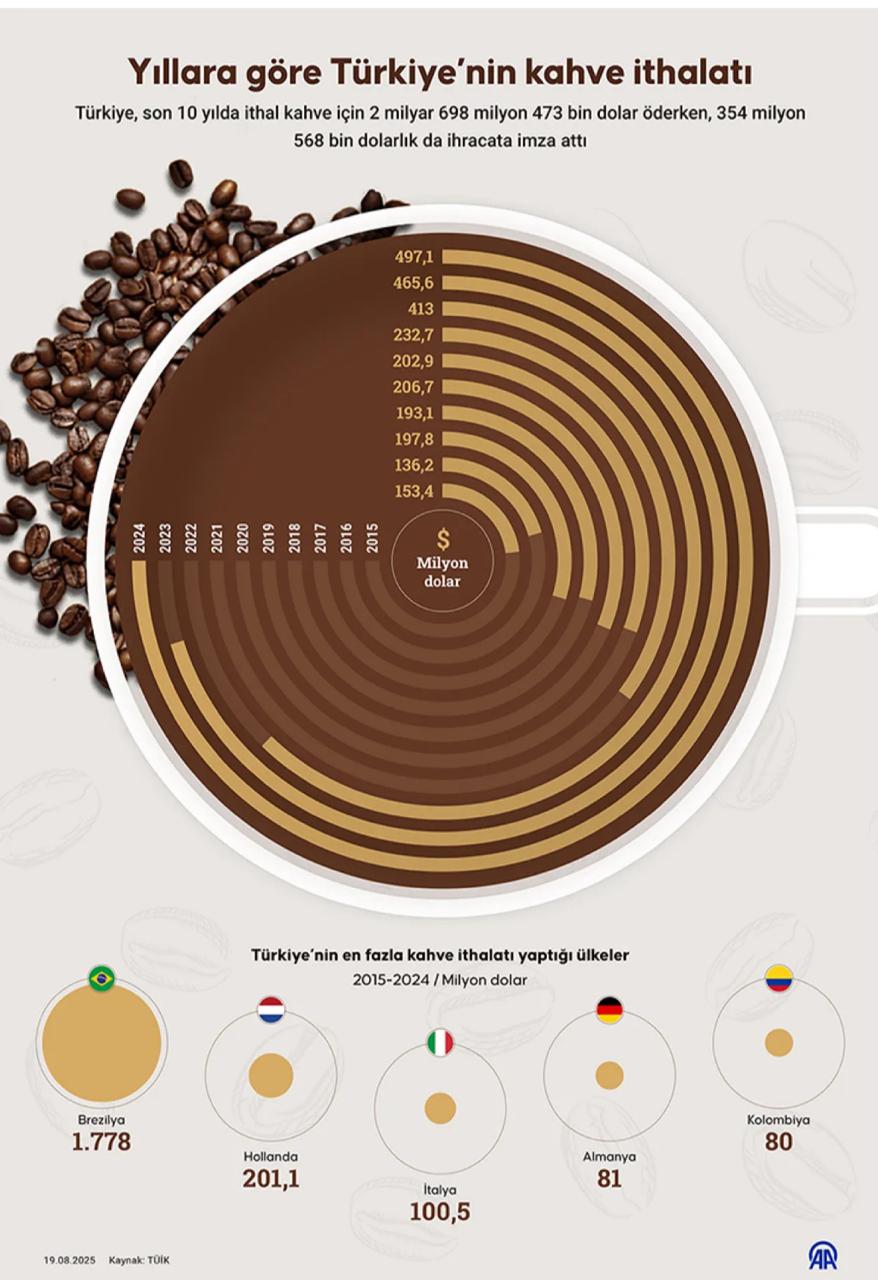
Türkiye’s coffee imports between 2015 and 2024 reached $2.7 billion, with prices for imported coffee rising from $153.4 million in 2015 to $497.1 million in 2024, marking an increase of 224%, according to the national statistical bureau TurkStat.

On the export side, Türkiye recorded $354.5 million worth of coffee exports over the last decade, including $55.6 million in the first half of this year alone.

Türkiye imported most of its coffee from Brazil, totaling $1.7 billion, followed by the Netherlands with $201.1 million, Italy with $100.5 million, Germany with $80.9 million, and Colombia with $79.9 million. The country’s imports stood at $472.5 million as of June, with Brazil remaining its top supplier.

The world’s coffee consumption — both hot and iced — over the past decade totaled $370.3 billion, according to data from the International Trade Center (ITC). The United States was the largest importer, while Brazil dominated exports.

Personally, I prefer iced coffee on summer afternoons, but I always start my day with a hot Turkish coffee. For Turks, the tradition of the 11 a.m. coffee break continues as a nationwide ritual. Around the world, specialty coffee is also gaining momentum, and habits are evolving quickly.

The golden era of coffee and coffee shops has already begun, spreading across continents. More lovely qahwa days are on the horizon.

Mexico Prepares Early for World of Coffee Dubai 2026

Xalapa – Mexico, August 21, 2025 (Qahwa World) – As part of Mexico’s early preparations for World of Coffee Dubai 2026, the Secretariat of Economic and Port Development of the State of Veracruz (SEDECOP), through its Directorate of Foreign Trade and in collaboration with Casa Tostadora Briones, has officially invited Veracruz specialty coffee producers to participate in the global event, scheduled for January 18–20, 2026 at the Dubai World Trade Centre (Za’abeel Halls 1, 4, 5 & 6).

Showcasing Veracruz Coffee in the Middle East

The initiative targets Arabica specialty coffee producers from Veracruz to submit samples that highlight the diversity, quality, and richness of the state’s coffee sector. Each sample will be displayed at Mexico’s pavilion in Dubai with the producer’s name, farm, region of origin, and coffee profile — a recognition of the growers’ work and a step to foster direct trade links.

SEDECOP underlined that the purpose of the participation is to strengthen international trade ties, promote the quality of Veracruz coffee in global markets, and position it as an authentic product with high added value. Casa Tostadora Briones emphasized that this step represents an opportunity to give Mexican coffee “a voice and presence” on the global stage while honoring the work and traditions of Veracruz farmers.

Veracruz: Mexico’s Coffee Heartland

Located on the eastern coast of Mexico along the Gulf of Mexico, Veracruz is one of the country’s oldest and most important agricultural regions. Its capital is Xalapa, and the state enjoys diverse climates — from tropical on the coast to temperate in the highlands — creating ideal conditions for coffee cultivation.
Veracruz is among Mexico’s largest coffee-producing regions, particularly in the central highlands, where high-quality Arabica is grown and internationally recognized. The historic Port of Veracruz also serves as a key export gateway for agricultural products, especially coffee.

Participation Requirements

Interested producers must meet the following:

  • Submit 500 g of green specialty Arabica coffee.

  • Minimum cupping score of 82+ (SCA standards).

  • Provide a technical datasheet in both Spanish and English.

  • Samples accepted from August 2025 until January 5, 2026.

  • Participation is free of charge, sponsored by Casa Tostadora Briones.

Application Process

  1. Complete the official online registration form:
    World of Coffee Dubai 2026 – Application

  2. Submit a valid tax compliance certificate issued within the last 90 days.

  3. Sample shipments will be coordinated through Casa Tostadora Briones.

Eligible participants will be selected based on compliance with requirements and registration deadlines, with chronological order of registration serving as the main selection criterion.

Event Details

  • Event: World of Coffee Dubai 2026

  • Dates: January 18–20, 2026

  • Venue: Dubai World Trade Centre – Za’abeel Halls 1, 4, 5 & 6

Contact Information

  • Directorate of Foreign Trade – SEDECOP
    Boulevard Cristóbal Colón 5, Torre Ánimas, Office 1005, Jardines de las Ánimas, Xalapa, Veracruz.
    Tel: +52 (228) 841-8500 ext. 3615
    Email: [email protected]

Complaints or inquiries can also be directed to SEDECOP’s Internal Control Office at: [email protected].