
Specialty Coffee Consumption in the United States Reaches Record High

Washington, September 9, 2025 (Qahwa World) – The Fall 2025 National Coffee Data Trends report, published by the National Coffee Association, shows that specialty coffee consumption in the United States has reached its highest level on record. Fifty-seven percent of Americans reported drinking specialty coffee at least once in the past week, a figure that matches the highest level ever recorded and confirms that specialty coffee has become a central part of everyday life across the country.

The report also highlights the strong role of younger generations, with forty-six percent of Americans between the ages of 18 and 24 saying they consumed specialty coffee on the day before the survey was conducted, the highest daily rate since 2020. Analysts attribute this trend to the integration of younger consumers into modern coffee culture, their preference for higher quality and innovative experiences, and the growing popularity of coffee-related social events that encourage sharing and discovery.

The study notes that new preparation methods are fueling this growth. Cold brew consumption rose to seventeen percent, an increase of three percentage points compared with the start of the year, while ready-to-drink coffee beverages reached nineteen percent, up four points. These figures reflect the American consumer’s attraction to options that combine convenience and freshness, particularly during warmer months.

Industry observers say the expansion of specialty coffee consumption opens new opportunities but also presents challenges. Large chains are benefiting from the growth of app-based orders and drive-thru services, while independent cafés and roasters are finding their strength in providing higher quality products, origin transparency, and stories of sustainability. This balance between convenience and authenticity is expected to shape the future of the U.S. coffee market.

The significance of this growth is underscored by the size of the overall industry, valued at 343 billion dollars. Specialty coffee is no longer just a matter of personal taste or social trend but a powerful economic sector in its own right. With rising consumer awareness of origin, production methods, and environmental certifications, specialty coffee is expected to continue strengthening its position both domestically and internationally.

The findings suggest that the United States has moved beyond the so-called third wave of coffee, which focused on artisanal preparation, and is entering a new phase that blends quality with convenience and social experience. For a new generation of consumers, coffee is no longer simply a morning beverage but an evolving lifestyle choice that reflects broader shifts in consumer culture.
Starbucks Moves Ahead with Major U.S. Coffeehouse Revamp

Dubai, 5 September 2025 (Qahwa World) – Starbucks is reporting strong progress on its ambitious plan to refresh its U.S. coffeehouses, with redesigned stores in New York and Southern California already showing encouraging results.

The global coffee chain began remodeling select outlets in July 2025 as part of CEO Brian Niccol’s Back to Starbucks strategy, which aims to restore the brand’s traditional “coffeehouse atmosphere” and counter declining sales in its home market.

According to Starbucks, customers at the updated stores are spending more time in-store, visiting more frequently, and responding positively to the changes. The redesign includes:

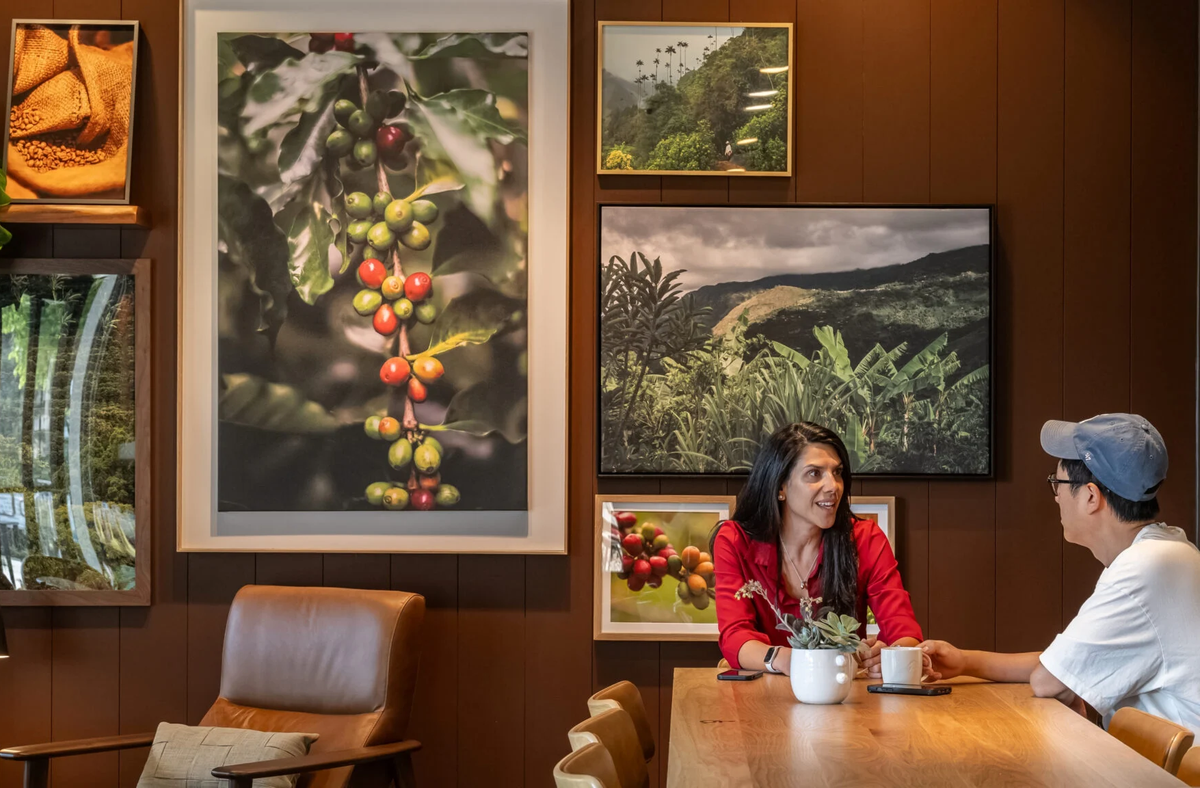
  • Cozy seating and warmer lighting to create a more inviting environment

  • Vibrant artwork and ceramic mugs to highlight a café-style experience

  • A redesigned espresso bar that showcases coffee preparation and barista skills

  • Improved pickup zones that are streamlined and less disruptive

Starbucks intends to remodel more than 1,000 company-owned U.S. stores by the end of 2026 — nearly 10% of its U.S. network. The revamp is designed to strengthen connections with customers, replacing the “overly transactional” feel of some locations.

In addition, Starbucks announced it will phase out its 90 mobile order and pickup-only sites across the U.S. by the end of 2025. First introduced in 2019, these outlets will be closed to prioritize spaces that foster human interaction and community engagement.

Despite challenges in the U.S. market, Starbucks posted solid results in its latest financial report. For the quarter ending 29 June 2025, the company achieved 4% year-on-year revenue growth, reaching $9.5 billion globally. In the U.S., revenue increased by 1% to $6.45 billion, with Starbucks operating 17,230 outlets nationwide.

The coffee giant believes that its large-scale store refresh will play a crucial role in boosting customer loyalty, improving in-store experiences, and reinforcing its leadership in the U.S. coffee market.

Paris Baguette Marks 250th Café with New Opening in Frederick, Maryland

Moonachie, N.J., August 21, 2025 (Qahwa World) – Paris Baguette has reached an important milestone in its expansion, celebrating the opening of its 250th bakery café in North America. The brand, which continues to grow across the United States and Canada, views this moment as part of its mission to revive the neighborhood café experience by offering expertly crafted pastries, quality coffee, and warm, welcoming spaces for communities.

Chief Executive Officer Darren Tipton said the achievement reflects the dedication of franchise owners, café teams, and loyal guests. He noted that each new opening represents more than growth for the company, highlighting its goal of creating places that foster joy and connection.

The new café in Frederick, Maryland, located at 520 Snowshill Street, is operated by Waseem Mohamad, who previously served as a general contractor building nearly 20 Paris Baguette locations. Together with his partners Prant Kumar and Prince Kumar, Mohamad is now taking on his first ownership role. Their family ties to the area and familiarity with the brand provide them with strong insight into the local community, and they intend to open additional cafés in the region in the future.

For Mohamad, the occasion carries personal significance. Having witnessed other milestone openings for the company, including the 150th and 200th cafés, he now celebrates the 250th as his own. He explained that his long-time love of the brand’s products, shared by his family, makes this step especially rewarding as he introduces the café to his community.

The company’s growth is supported by strong customer loyalty and consistent performance. Paris Baguette recently surpassed one million members in its PB Rewards program and reported eighteen consecutive quarters of positive same-store sales growth, along with seventeen quarters of rising guest traffic. In 2025 alone, forty-six cafés have opened, with over 170 new franchise agreements signed and fifty more cafés set to launch by the end of the year. Nearly 450 additional locations are in development, positioning the company to double its North American presence within two years and reach 1,000 cafés by 2030.

Future expansion is planned in several U.S. states, including Massachusetts, Florida, Illinois, and Ohio, as well as Canadian markets such as Quebec, Vancouver, and Toronto. With each opening, Paris Baguette underscores its commitment to hospitality, craftsmanship, and community connection, aiming to reestablish the bakery café as a central part of neighborhood life across North America.

Born from a love of bread and a passion for quality, Paris Baguette was founded in 1988 as a fast-casual bakery-café specializing in French and Asian-inspired goods. In addition to cakes, pastries, sandwiches, salads, and signature coffee and tea, the company delivers a unique bakery and café experience to thousands of customers daily. Today, with over 4,000 locations worldwide, Paris Baguette continues to satisfy the tastes of people across all ages and backgrounds. The brand invites those with a passion for food, service, and community to become part of its story, offering opportunities to join a diverse and talented team driven by fun, collaboration, and success.

U.S. Roasters Halt Brazilian Coffee Purchases After 50% Tariffs

Dubai, 20 August 2025 (Qahwa World) – American coffee buyers are pulling back from new deals with Brazil, the world’s largest coffee producer, after President Donald Trump’s 50% tariff on imports took effect earlier this month.

According to brokers, roasters, and exporters contacted by Bloomberg, U.S. companies are avoiding fresh contracts and looking for ways to adjust existing agreements to escape the higher levies. Some buyers are even requesting delayed shipments in the hope that tariffs might later be eased, Brazil’s exporter group Cecafé reported.

“Deals between the U.S. and Brazil have totally stalled,” said broker Thiago Cazarini. “No one’s really buying anything.”

Brazil supplies roughly one-third of America’s unroasted coffee. The tariff escalation follows Trump’s earlier April announcement of a 10% levy on Brazilian agricultural imports, which surged to 50% on August 6. The trade conflict is intertwined with Trump’s criticism of what he calls the “politically motivated persecution” of former Brazilian President Jair Bolsonaro, a close ally now facing trial over an alleged coup attempt against current President Luiz Inácio Lula da Silva.

For U.S. roasters, the tariffs pose a major challenge. Florida-based Zaza Coffee, which sources about 25% of its beans from Brazil, has 14 to 16 weeks of supply left. “Within this window maybe something can change regarding the tariffs,” said JP Juarez, Zaza’s director of coffee innovation. “But if tariffs remain, we probably won’t buy Brazilian coffee.” The company is exploring alternatives from Central America, Peru, and Mexico.

Still, for many roasters, Brazil’s dominant volumes and bean profiles are nearly irreplaceable. “Roasters have blends they want to keep consistent in any cost environment,” noted Jim Watson, analyst at Rabobank. Starbucks, for example, uses only Brazilian arabica in its blends.

With Brazil sidelined, U.S. buyers are eyeing other origins. Colombia, Vietnam, and Honduras are the next biggest suppliers, according to the Department of Agriculture. Vietnam’s robusta beans—cheaper and mostly used in instant coffee—could see imports rise to “historical highs,” according to Laleska Moda of Hedgepoint Global Markets, since tariffs there are only 20%. Indonesia and Uganda could also gain market share with lower tariffs.

Yet shortages loom. Honduran coffee is already trading 30 to 40 cents per pound above futures prices, while Colombian exporters are holding back, waiting for possible market surges, said Tomas Araujo of StoneX.

Some roasters are turning to futures markets to hedge costs. Café Aroma, a Cuban-style brand, is shifting imports toward countries with more predictable tariffs, said vice president Bernadette Gerrity.

If U.S. demand for Brazilian beans declines, those supplies will likely flow to Europe, where buyers are seeking traceable coffee to comply with new EU deforestation rules. More beans may also head to China’s expanding market, leaving U.S. roasters exposed to a more expensive supply chain, said Dave Behrends of Sucafina SA.

For some companies, the immediate hit is already being felt. Gregorys Coffee in New York received its last Brazilian shipment on August 2, just before the tariffs took effect, securing stock until mid-November. But its next shipment is already locked in at the higher rate. “Absorbing a 10% tariff is nearly impossible for a small business to do on its own,” said Daria Whalen of San Francisco’s Ritual Coffee Roasters. “Fifty percent feels staggering and insurmountable.”