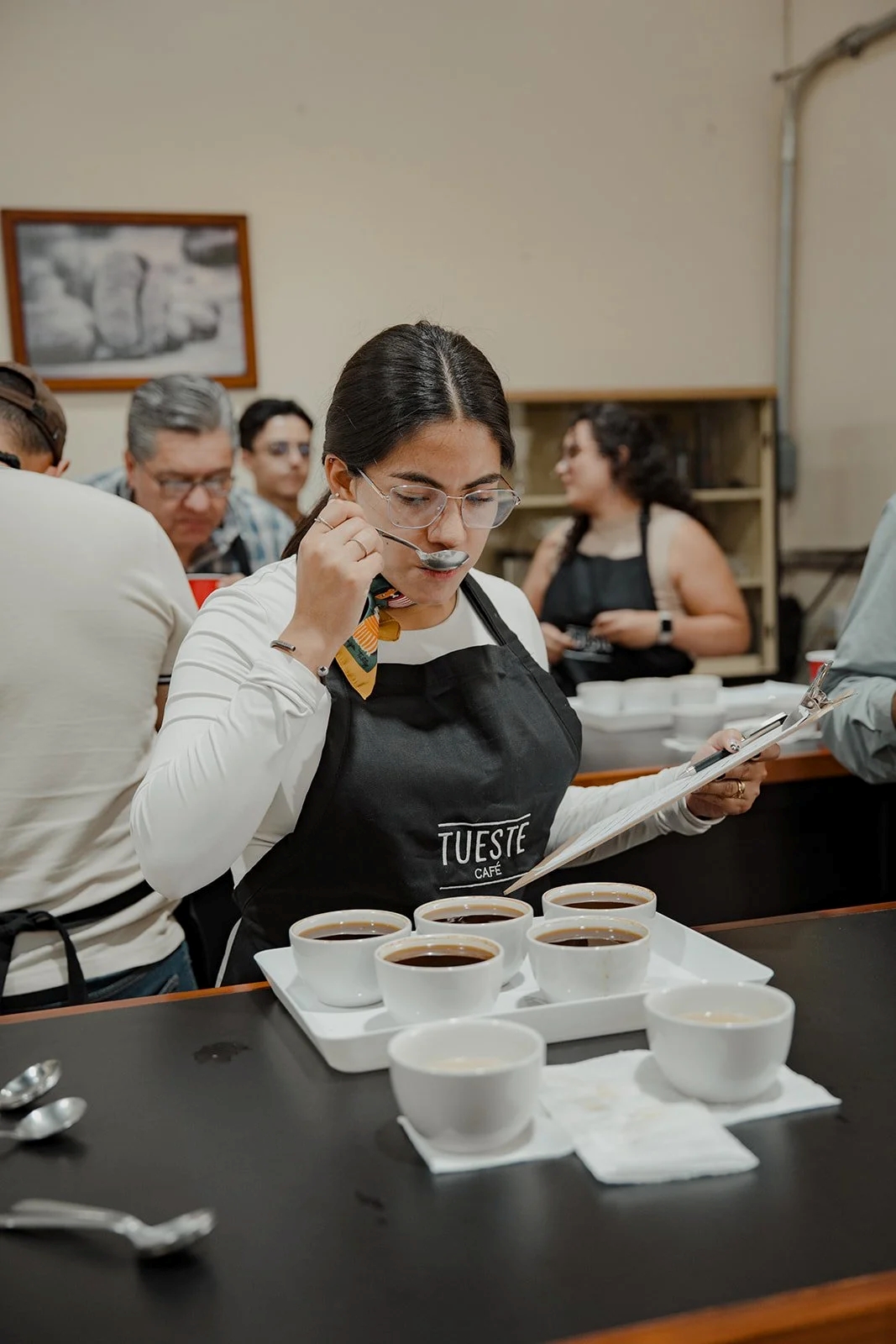
Dubai Remains the Only Destination for “World of Coffee” in the Middle East

Dubai – Ali Alzakary

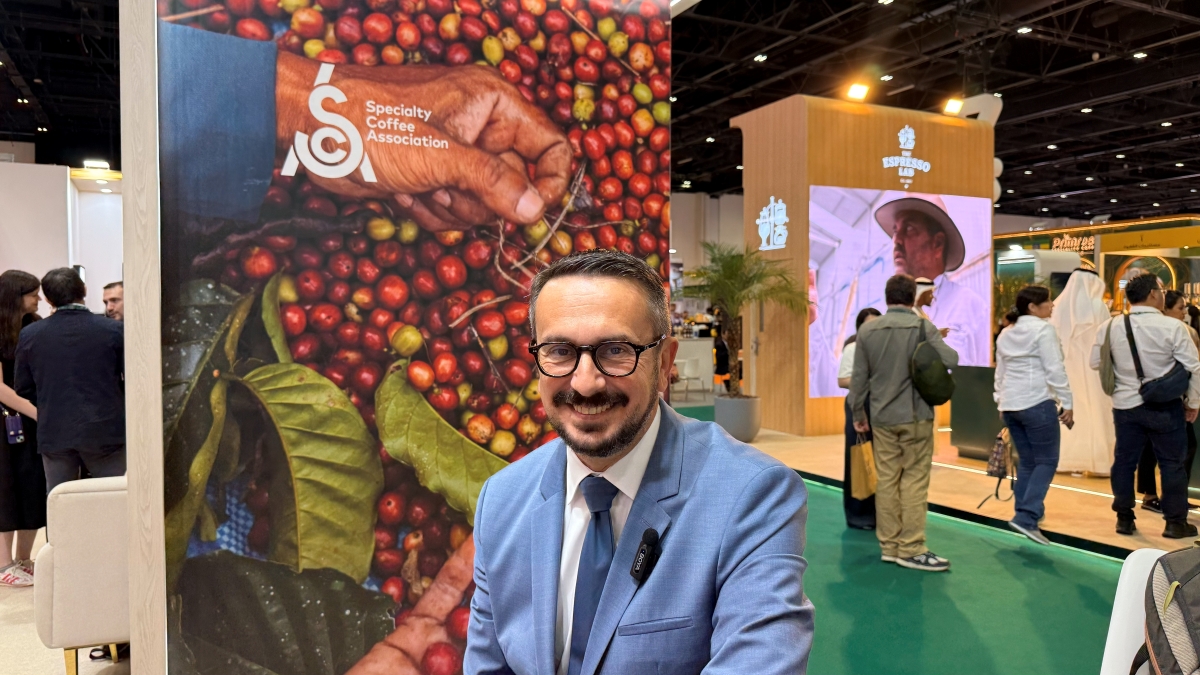
In an exclusive conversation with Qahwa World, Mr. Yannis Apostolopoulos, CEO of the Specialty Coffee Association, shared key insights on the growth and future of the “World of Coffee” exhibition, confirming that Dubai remains the sole destination for the show in the foreseeable future. He also spoke candidly about the transition following the end of the partnership with the Coffee Quality Institute (CQI) and the strong rollout of the Coffee Value Assessment (CVA) system.

Apostolopoulos highlighted that this year marks the fifth edition of the “World of Coffee,” which has grown tremendously. The number of exhibitors and attendees has surpassed any previous year, already 30% higher than before. He emphasized that the exhibition offers a unique opportunity for professionals to meet and conduct business. While it is fundamentally a trade show, it also fosters a sense of community and highlights the booming specialty coffee industry in the region.

“What we bring is a unique opportunity for people to come together and trade. At its core, this is a trade show, but it’s also about fostering a sense of community and showcasing how the specialty coffee industry is booming in the region. The Middle East has become one of the fastest-growing regions for specialty coffee in recent years, and you can feel that energy here at the show,” said Apostolopoulos.

Regarding the possibility of hosting editions in other Middle Eastern countries, Apostolopoulos confirmed that Dubai remains the ideal hub. He noted their ongoing partnership with DXB Live in Dubai, which will be renewed this year. Dubai provides excellent access from across the Middle East and the world, making it ideal for exhibitors and attendees. He added that while other countries may be considered in the future, this is not part of any immediate plans.

“At the moment, we have a partnership with DXB Live for Dubai, which we’re renewing this year. Dubai is a great hub with excellent access from across the Middle East and the world, making it ideal for exhibitors and attendees. Maybe in the future we’ll consider other countries, but not in the immediate plans,” said Apostolopoulos.

Apostolopoulos also discussed developments in the Coffee Value Assessment (CVA) system. He mentioned the transitional phase following the partnership with CQI and confirmed that many participants have already moved to the new program. There are now over 10,000 new Q graders and significantly more instructors, particularly in producing countries such as Colombia, Brazil, Indonesia, and Vietnam, which he recently visited. He stressed that the system allows producers to communicate clearly and objectively about the intrinsic and extrinsic attributes of coffee, while the trade sector explores how best to use the CVA framework to capture the quality of every coffee in everyday transactions.

“There has been some transition after our partnership with CQI, but many people have already moved to the new program. We now have over 10,000 new Q graders and significantly more instructors, especially in producing countries. We’re making targeted efforts to increase instructors in places like Colombia, Brazil, Indonesia, and Vietnam, where I was recently. Producers are seeing the value because you can communicate more clearly and objectively the attributes that are intrinsic and extrinsic to the coffee. The trade is figuring out the next steps of how to use the CVA paradigm and the new evaluation for quality and capturing the picture of every coffee in everyday trade,” said Apostolopoulos.

He affirmed that CVA benefits the industry as a whole, helping capture and share detailed data on coffee with producers and buyers, enabling clearer communication and maximizing coffee value.

“Absolutely. That’s the idea. CVA is part of the evolution of our understanding of coffee. We now care about more aspects of coffee than ever before, and CVA helps capture that information and share it with producers and buyers. This allows everyone to communicate more clearly and find ways to maximize the value of coffees,” said Apostolopoulos.


Specialty Coffee Association Releases Its 2024 Annual Report

The Specialty Coffee Association (SCA) has released its 2024 Annual Report, signed by Chief Executive Officer Yannis Apostolopoulos, highlighting a transformative year marked by new quality standards, record membership growth, scientific advancements, and unprecedented global expansion in education and events — all with a strong focus on sustainability, research, and equitable value distribution across the coffee industry.

According to the report, 2024 represented a pivotal year for the SCA, as it officially adopted and published the new Coffee Value Assessment (CVA) standards, replacing the long-standing 2004 cupping form. This milestone positioned the CVA as the official protocol for global coffee quality evaluation. The association recorded more than 10,000 downloads of the CVA forms, over 1,500 learners enrolled in the “CVA for Cuppers” course, and more than 130,000 views on its CVA educational video series on YouTube. Additionally, the SCA waived course fees for over 500 coffee professionals in producing countries, ensuring broader and fairer access to professional education.

A major achievement highlighted in the report was the introduction of a new membership model offering free access to the SCA’s resources, educational programs, and events. This initiative led to exponential growth, bringing the association’s global community to over 100,000 companies and coffee professionals within just six months — a reflection of its ongoing mission to make knowledge and opportunities accessible to all who contribute to the specialty coffee industry.

The report also emphasized the strong research momentum driven by the Coffee Science Foundation (CSF), which supported six flagship projects in 2024. These included studies on physical defects in green coffee, developing a universal roast measurement system, exploring sweetness perception, analyzing the impact of packaging on consumer experience, and understanding how value is created and distributed throughout the coffee value chain. These efforts underscore the SCA’s commitment to fostering data-driven innovation and sustainability.

Globally, the SCA expanded its footprint through multiple major events. The “World of Coffee” trade shows took place in Dubai, Chicago, Busan, and Copenhagen, serving as platforms for knowledge exchange, business, and innovation. Notably, 2024 marked the first-ever World of Coffee held in Asia — in Busan, South Korea. The year also saw the launch of the Coffee Value Summit in Shenzhen, China, focusing on value creation and the implementation of the CVA. Other initiatives included “Green Coffee Connect,” fostering relationships between producers and importers, and the “Retail Buyer’s Lounge,” designed to enhance business networking during trade shows.

Following a period of financial stabilization from 2020 to 2023, the SCA strategically reinvested in 2024 to expand access to education, fund critical research, and strengthen partnerships. The association maintained a balance between program growth and fiscal responsibility, ensuring its ability to continue serving the global coffee community despite economic uncertainty.

In the area of education, the SCA organized five Educator Summits across Asia and the United States, providing platforms for trainers and educators to enhance their teaching and professional development. Comprehensive multilingual surveys were also conducted to gather feedback from trainers and learners, leading to further curriculum improvements and the development of new systems to support global education in coffee.

Looking ahead, the report outlined ambitious plans for 2025, including the launch of a comprehensive coffee evaluation program in partnership with the Coffee Quality Institute (CQI), expanded educational offerings for green coffee sellers and retailers, the creation of online forums to connect the global coffee community, and continued research into equitable value distribution and sustainability across the coffee value chain.

The 2024 Annual Report reaffirms the SCA’s role as a leading global organization uniting research, education, standards, and events to build a more sustainable, inclusive, and equitable future for the specialty coffee industry worldwide.

SCA Officially Launches New Q Grader Program with Coffee Value Assessment

Dubai – Qahwa World

The Specialty Coffee Association (SCA) has officially launched enrollment for its updated Q Grader program, marking the start of a new era for one of the most respected certifications in the global coffee industry.

The move follows the association’s acquisition of the program earlier this year from the Coffee Quality Institute (CQI), a historic shift that positions the SCA as the sole operator of a license long considered the gold standard for coffee evaluation. From October 1, 2025, all Q Grader courses worldwide will be delivered under the new system, aligned with the Coffee Value Assessment (CVA).

For years, the Q Grader license has been globally recognized as the highest credential in sensory evaluation, cupping, and green coffee grading. Graduates of the program have carried a certification that is not only respected but also vital to trade, communication, and quality assurance across the coffee value chain. The revamped program now integrates the CVA, a scientifically rigorous framework developed by the SCA and adopted in 2024 after years of research. Unlike the traditional cupping form it replaces, the CVA provides a broader picture of coffee’s qualities, considering not only intrinsic sensory characteristics but also extrinsic factors such as processing methods and certifications that influence market value.

The decision to integrate the CVA into the Q Grader curriculum represents the SCA’s commitment to driving progress in specialty coffee evaluation. Participants in the new program will undergo six days of intensive training and testing, designed to challenge their ability to detect differences and defects, describe sensory profiles, and apply the CVA in real-world contexts. The program has been tailored for experienced coffee professionals, enhancing their sensory acuity and preparing them to communicate coffee’s value with clarity and confidence. The result is a global network of modern Q Graders whose training reflects the latest advancements in sensory science and the continued evolution of the specialty coffee sector.

The SCA has emphasized accessibility as a central pillar of the new launch. Recognizing that the Q Grader license is critical for professionals worldwide, the association has introduced a new country-specific pricing model. By dividing the world into five tiers based on economic conditions, the program ensures that participants in lower-income regions are not excluded from pursuing certification. This model makes the license more affordable, while an expanded network of Q Instructors opens new opportunities for education across diverse markets. From producers and exporters to roasters and importers, coffee professionals in every corner of the globe will have greater access to one of the industry’s most influential programs.

The updated program offers multiple pathways to certification. New entrants can register for the full Q Grader course, while experienced professionals may pursue fast-track options to upgrade or renew their credentials. Arabica and Robusta Q Graders, holders of the SCA Sensory Skills Professional Certificate, and Cup of Excellence judges are among those eligible for accelerated pathways, provided they complete the CVA for Cuppers course by December 31, 2025. A fast track is also available for those seeking to become Q Instructors, with eligibility extended to educators and evaluators including CVA Trainers, Q Instructors, Cup of Excellence Head Judges, and SCA Sensory Skills Authorized Trainers. After the fast-track window closes at the end of 2025, the SCA will require candidates to follow a more extensive pathway that includes both Q Grader certification and instructor onboarding.

The program is not only academically rigorous but also deeply practical. Learners will be evaluated through cupping sessions, sensory exercises, and green coffee assessments, testing their knowledge across physical, descriptive, affective, and extrinsic categories. Those who successfully complete the course will earn the globally respected Q Grader license, recognized across the coffee value chain as a mark of excellence. The SCA has positioned this as a crucial step toward building a more unified global language of quality, one that connects producers, traders, roasters, and consumers with a shared framework for evaluating coffee.

The launch of the new Q Grader program also reflects the strategic partnership between the SCA and CQI, which was first announced in April 2025. Under the terms of the agreement, the SCA will license the program for ten years, paying CQI $250,000 annually. While CQI is no longer involved in administering the program, the collaboration ensures that its original missionsupporting producers and enhancing coffee qualityremains central to the program’s future.

As the transition takes effect, questions remain about how quickly the new system will be embraced across the industry. Some professionals have expressed skepticism about the CVA’s necessity, while others have applauded its potential to capture the complexity of modern coffee markets. Regardless of these debates, the SCA is moving forward with confidence, positioning the new Q Grader program as a scientifically robust and globally inclusive certification.

The association has also committed to supporting learners with preparatory resources. For those new to coffee evaluation, the SCA recommends starting with its Intro to Cupping workshop, a foundational course designed to build skills in sensory analysis and cupping practices. For more advanced professionals, recommended reading lists and preparation activities are available to ensure readiness for the intensive Q Grader assessments.

With enrollment now open and courses already available in select regions, the SCA is calling on coffee professionals worldwide to take part in what it describes as a new era in coffee evaluation. The updated program is expected to strengthen professional standards, support communication and collaboration across the global value chain, and expand the very definition of specialty coffee. For those who pass, the Q Grader license remains not just a certificate but a symbol of credibility, expertise, and leadership in the evolving world of coffee.

Milan to Host First Evolved Q Grader Course After HostMilano 2025

Milan, 10 September 2025 – (Qahwa World) – Milan is preparing to host a landmark event for the future of specialty coffee in Europe. From 24 to 29 October 2025, immediately after the HostMilano international trade fair, the first Italian session—and one of the very first in the world—of the Evolved Q Grader course will take place.

The event, to be held in English, will be hosted by Sevengrams, a leading name in Milan’s specialty coffee scene. Founded by the Mauro sisters and enriched by the expertise of Chiara Bergonzi, Sevengrams is one of the city’s most accredited training centers. The course will be conducted at their Lot Zero Roastery, located next to Coffee Studio 7Gr on Via Valparaiso.

This six-day intensive training and certification marks a major step forward in the field of sensory evaluation. It will be led by two prominent international figures: Roukiat Delrue and Davide Cobelli. The Evolved Q Grader certification, the latest innovation from the Specialty Coffee Association (SCA), introduces the Coffee Value Assessment (CVA), a system that moves beyond a single score to analyze coffee’s value in multiple dimensions.

Designed for experienced professionals, the course aims to shape a new generation of coffee experts able to evaluate beans with a modern, scientific approach. Participants will engage in a rigorous program of theory, practice, and exams, focusing on mastering the CVA, refining sensory self-awareness, enhancing discrimination and flaw analysis skills, and applying these tools strategically in professional contexts. Those who successfully complete the program will earn the prestigious Evolved Q Grader license, an international milestone of excellence.

Guiding this advanced training will be two world-renowned instructors. Roukiat Delrue, with more than 14 years of experience in the global coffee sector, has held leading roles at the Coffee Quality Institute and World Coffee Events, and contributed directly to the development of the CVA. Davide Cobelli, founder of the Coffee Training Academy, Italian Roasting Champion in 2020, and SCA Italy National Coordinator from 2022 to 2024, is an established trainer, consultant, and international judge.

This course offers a unique opportunity for Italian and European professionals to access the highest level of training in coffee evaluation. For details on pricing and registration, contact the instructors directly: [email protected], [email protected], or via the official registration link here.

From Roasting Champion to Global Educator: The Journey of Davide Cobelli, Evolved Q Grader Instructor

Dubai – Ali Alzakary

In the world of specialty coffee, very few have achieved the rank of Evolved Q Grader Instructor until now. We are sure that in a few weeks there will be many more, but Davide Cobelli, Coffee Expert and Consultant, Italian Roasting Champion 2020, is the first European to obtain it. From competition stages to origin farms, and from leading SCA Italy to winning the Italian Roasting Championship, his story is one of relentless passion, resilience, and a constant drive to raise the bar in coffee education and evaluation. Join us as we dive into his remarkable journey, lessons learned, and vision for the future of coffee.

You recently announced that you became one of the very few people worldwide to complete the Evolved Q Grader Instructor program — and with a perfect 100% score. How challenging was this process for you, and what does this achievement mean personally and professionally?

He is one of the very first instructors to pass the Evolved Q Grader exam. At the time he did, there were probably only 3–4 in the whole world. Today, quite a few more have passed. Achieving this milestone has been incredibly rewarding, especially considering the significant investment of time and energy it required. The standards for instructors are exceptionally high. To put it into perspective, there is zero margin for error, and candidates must achieve a perfect 100% score on a 50-question exam covering the entire Evolved Q Grader course. This is what makes earning the license so challenging, but also entirely appropriate. Through this rigorous process, the SCA makes it clear that the new Q Grader course is in no way inferior to the previous CQI program, particularly regarding the quality of its trainers.

You started in the food service industry before dedicating yourself fully to coffee. What was the turning point that made you choose this path, and how did those early experiences shape the professional you are today?

I started in the hospitality industry over 30 years ago, but for nearly 15 years, I have been completely devoted to the world of coffee. In the first part of my career, my devotion was to the beverage itself. Then, for more than seven years, I also embraced the entire supply chain, which has become increasingly important in my professional journey, leading me to open a roastery and travel to origin countries to provide sensory training. I don’t know exactly how the switch to coffee happened—passions are often born and grow without a specific reason. But every day, I wake up happy and fulfilled doing the best job in the world: the one I love.

You’ve trained hundreds of professionals across Europe, Asia, and the Middle East, while also building a reputation as a consultant. How do you manage to keep both hats on—educator and business advisor—without compromising the quality of either?

In my 15 years as a trainer in the coffee world, I believe I’ve trained well over a thousand professionals. Every time, this has been my motivation to keep going. My goal has always been to share my expertise with students, learn from them in return, and create a genuine exchange—an objective I still pursue today. It’s not one-way training, but a true exchange of professional skills. When you’re driven by true passion, you can do anything. For me, coffee is pure passion and sincere dedication.

Few people cover as many areas as you do—Barista, Brewing, Green Coffee, Sensory, and Roasting. How did you build that range of expertise, and what advantages does it give your students?

There’s a saying, “a jack of all trades is a master of none,” and I tend to agree with that idea. In my case, I began my coffee journey by dedicating the first half of my career to the world of the barista and the beverage—first by competing, and later serving as an international judge for barista championships. From there, I expanded to embrace sensory analysis, roasting, and the supply chain. It’s not impossible to do everything well, but I don’t see myself as a superhero who has somehow managed it. I simply believe that when you are driven by true passion (and not primarily by business), it is possible to succeed. As I’ve said before, I am devoted to coffee. It’s an all-consuming passion in my life; aside from travel, I have no others. I believe the advantage for my students is that my broad experience allows us to explore a wide range of topics holistically, both in and out of the classroom. After all, in a supply chain like coffee, every element intersects with and influences the others. Furthermore, I’m not one of those trainers who sticks strictly to the course material without leaving room for discussion. I encourage questions—in fact, I love them.

Winning the Italian Roasting Championship in 2020 was a milestone, and you later ranked among the best in the world. What did those competitions teach you about coffee—and about yourself?

In 2020, just two years after I started roasting, I won the Italian Roasting Championship. What an incredible feeling that was! I was the first to not believe it, especially since I only went hoping not to finish last and just to get a bit more experience. But after placing seventh at the World Championship in 2022 and second at the nationals in 2023, I started to think that maybe, just maybe, I’m not completely terrible at this whole roasting thing. Above all, it silenced my detractors and haters, which are always in plentiful supply in the coffee world. That made the satisfaction twofold.

As a national and international judge, you’ve seen the best baristas and roasters on stage. What do you look for in a champion, and what separates a good competitor from a great one?

Being a judge is a responsibility—or at least, that’s how I’ve always seen it. It’s incredibly satisfying to be able to support the industry’s framework and, often, the next generation of professionals. But that’s not all. In recent years, I’ve been called upon more and more to participate as a sensory judge on tasting panels for coffee farmers, right at the source of the production chain. This has really become my focus since the COVID pandemic. That is a true responsibility of another kind, because you feel that your judgment can influence the future of farming families. This responsibility weighs heavily on me, compelling me to be exceptionally professional and accurate in my assessments.

When you were elected National Coordinator of SCA Italy, you spoke about bringing specialty coffee out of its niche. What steps have you taken toward that goal, and what challenges remain in making specialty coffee more accessible to everyday Italians?

In my role as National Coordinator from 2022 to 2024, I worked to expand the specialty coffee market beyond the narrow niche it has occupied in Italy in recent years. Growth in this sector had become nearly stagnant, largely because specialty coffee was increasingly perceived as just an expensive and acidic product, rather than one of value for the entire supply chain. Together with the coordinating team for that two-year term, we implemented communication strategies to take the product beyond the small circle of “coffee geeks.” Our goal was to make specialty coffee accessible to a broader audience by using simpler language and by highlighting the importance of a sustainable supply chain.

The Specialty Coffee Association recently introduced the Coffee Value Assessment (CVA), joined also by the Coffee Quality Institute. Some see this as a groundbreaking step forward, while others worry about confusion or competition with existing protocols such as CQI certifications. How do you see this new system shaping the future of coffee evaluation, and what impact will it have on farmers, producers, and the industry as a whole?

When the CVA was introduced in 2022, many wouldn’t have bet on its success. There was significant skepticism (a small amount of which still lingers), especially from professionals who grew up with and were tied to the 2004 SCA Cupping Form (later used by CQI). This also included those who had invested a great deal of money and energy over the years to become Q Graders or Q Instructors. (I don’t blame them, but it’s clear that the new CVA is the modern approach to sensory science, while the previous system is not). Today, there is no competition between the SCA and CQI, because CQI focuses on origin countries and field work, while the SCA focuses on Sensory Analysis, which includes the new Evolved Q Grader course. (Then again, perhaps there was never any real competition; it’s impossible to compare an outdated system that hasn’t been updated in over 20 years with one that takes a modern, scientific approach). The real and immediate revolution is that today, a coffee’s value throughout the chain is no longer left to a single, subjective score. Instead, value is redistributed across multiple attributes, each of which is important in determining the final worth. The impact is direct: farmers are no longer forced to submit to a sterile, unexplained score. Instead, they can discuss value by leveraging multiple attributes to justify it.

Specialty coffee has changed dramatically in the past decade. Where do you see the next big opportunities for growth and innovation in Europe’s coffee sector?

The coffee world has undergone a radical transformation. Specialty coffee consumption has evolved and continues to grow consistently year after year across all markets, with consumers paying closer attention to the products they purchase and consume. The key to the future is undoubtedly product information, specifically the combination of extrinsic value and the sensory profile. Looking ahead, I foresee a future for specialty coffee defined by greater transparency, with a focus on metrics like the Farm Gate Price for the final product, rather than just a cupping score. I believe the opportunities will only continue to grow for professionals who specialize and carve out their own niche in the market.

Looking back at your journey—from trainer to champion, consultant, and SCA leader—what achievement gives you the greatest satisfaction? And what keeps you motivated to push forward?

Life is constant evolution. To me, that is the very definition of living. Sometimes you adapt, but often you must evolve—that is my guiding principle. This isn’t about the pursuit of a happiness that is never reached. Instead, it’s about the constant effort to improve, accumulating more and more experience in everything you do. My father taught me to always give my all, so that I could fully enjoy the journey, whether it leads to the summit or not. Success is just the tip of an iceberg built on defeats, frustration, disappointment, struggles, laughter, excitement, and a host of other emotions. From the outside, people only see the destination, never what happens during the journey. For me, every milestone—positive or negative—has been an experience that has helped me mature and grow as a human being. That is true success. For this reason, I don’t have a single achievement that stands out as the most satisfying; rather, it is the sum of them all that makes me a better person.

For young coffee professionals who dream of following in your footsteps, what advice would you give them about standing out in such a competitive global industry?

Never give up on something you believe in, but above all, believe in yourself. Superheroes and super-gurus don’t exist; there are only people who give their absolute all to reach their goals. Set an objective and then, step by step, work to achieve it. If you create intermediate milestones along the way, it will seem far less impossible.
Evolved Q Grader Program Adopts Coffee Value Assessment, Reshaping Global Coffee Standards

Dubai, 13 August 2025 (Qahwa World) — The global coffee industry is set for a historic transformation as the Q Grader Program, the benchmark certification for coffee quality evaluation, adopts the Coffee Value Assessment (CVA) framework under the leadership of the Specialty Coffee Association (SCA).

From October 1, 2025, the SCA will take over program operations from the Coffee Quality Institute (CQI), retiring the 2004 cupping protocol that has defined quality standards for over two decades. The move marks a significant shift toward a more holistic approach to coffee evaluation, placing equal emphasis on physical, sensory, cultural, and personal perception attributes.

Why the Change Matters

The 2004 protocol—built on objective scoring for aroma, flavor, body, and other measurable traits—has long been a trusted tool. However, industry leaders argue it underrepresents extrinsic factors such as origin, processing method, certifications, and producer stories, which increasingly influence market value.

Introduced in 2023, the CVA integrates four dimensions of assessment:

  • Physical Attributes — Objective evaluation of green coffee quality.

  • Extrinsic Attributes — Market-relevant factors such as terroir, certifications, and narratives.

  • Affective Attributes — The cupper’s personal impression on a 100-point scale.

  • Descriptive Attributes — Detailed sensory profiling of flavor and aroma.

By including these dimensions, the CVA reflects a coffee’s complete market value—not just its chemical or physical characteristics.

Impact on Q Graders

All current and former Arabica and Robusta Q Graders must complete the CVA for Cuppers conversion course by December 31, 2025 to maintain certification. The course, lasting two days, is designed to help graders transition smoothly to the new framework.

From 2026 onward, only the six-day Evolved Q Course will lead to certification. Missing the conversion deadline means starting the process from scratch.

Industry Reactions

“The CVA acknowledges that coffee quality is more than chemistry—it’s culture, craftsmanship, and context,” said Thomas Haigh, Specialty Coffee Merchant and Arabica Q Grader since 2015.

Producers, particularly in origin countries, see the shift as an opportunity to highlight unique practices and secure better recognition for their efforts. Roasters and green buyers anticipate richer, more nuanced data for sourcing decisions.

Key Transition Dates

  • October 1, 2025 — SCA takes over Q Grader Program; CVA becomes standard.

  • December 31, 2025 — Last day for Q Graders to complete CVA for Cuppers conversion course.

  • From 2026 — Six-day Evolved Q Course becomes the only certification route.

Looking Ahead

The adoption of the CVA is more than an administrative change—it represents an industry-wide realignment toward recognizing both intrinsic and extrinsic value in coffee. While some professionals may resist altering a long-trusted system, others view this as an essential evolution to meet the demands of a more globalized and story-driven specialty market.