Sara Al-Haj: “Samra Coffee”.. The Story of Coffee That Defeated War

Dubai – Ali Alzakary

In the midst of displacement and the search for self, Sara Al-Haj wasn’t just looking for a “project”; she was searching for a “footprint” to leave in this world. A daughter of Taiz whose life was tempered in Al-Hudaydah, she forged her destiny in Sana’a within a coffee “Jazwa.” Amidst the ashes of war, she crafted a future that no one believed in but herself.

  • “Samra”.. From a Faded Fashion Dream to the First Women-Led Brand

The story began long before coffee. In Al-Hudaydah, Sara dreamt of a traditional Abaya project named “Samra”, inspired by an old Lebanese series she used to watch, feeling the name mirrored her own authentic bronze features. However, the 2019 war shattered those dreams before they could see the light, forcing Sara to flee to Sana’a with a suitcase full of memories and a broken heart.

In Sana’a, amidst the void of displacement, she watched the music video “Al-Hob Wal-Bunn” (Love and Coffee) by artist Ahmed Seif. A spark ignited in her mind: “Why not enter the world of coffee?” Sara searched all over Yemen for a woman who had established an officially registered coffee brand, but she found none. It was then she decided to be the first Yemeni woman to break the male monopoly in this historic market, resurrecting “Samra Coffee“—but this time, through coffee beans.

  • The Logo.. A Yemeni Face Carrying Sara’s Message to the World

The “Samra” logo was never just a graphic design; Sara wanted the product to carry her soul and message. She collaborated with her designer (then living in Malaysia) to sketch a girl whose features and details embodied an authentic Yemeni woman, intertwined with traditional heritage.

Sara says, “Since I do not appear personally, I wanted the logo to speak for me and for the role of Yemeni women. I wanted the product, as it travels abroad, to convey an honourable image of girls in Yemen.” Today, this face has become the identity and the official seal for “Samra” in all its governmental and commercial dealings.

  • Starting with Daily Allowance and a Mother’s Kitchen

Sara started with a very modest capital—200,000 Yemeni rials—an amount she painstakingly saved from her personal allowance. In a small room in her family’s house, she turned her mother’s kitchen into a laboratory for four full years.

Lacking basic professional machinery, Sara roasted her coffee using a “Tefal pan” and a manual “spoon”, grinding it with a simple home grinder gifted by her mother. Since she couldn’t afford professional courses, she visited major merchants, carrying a small notebook and a pen, asking about every secret and documenting every detail. Those merchants nicknamed her “The Journalist” because of her immense thirst for knowledge.

That struggle was not in vain. Today, thanks to God, the “Samra” project has achieved the financial independence Sara always aspired to as a displaced girl, becoming the fruit of her labour that supports her and her family with pride.

  • The Battle of the “Jazwa” and the Woven Prophecy

Sara faced a war of bullying and frustration. Some specialists mocked her, saying, “You are a woman; what business do you have in the coffee market? You will surely fail.” Even when she chose to specialise in Turkish coffee prepared with the “Jazwa,” some accused her of choosing a method to hide the flaws of poor beans with cardamom. Sara responded defiantly: “Bad coffee remains bad, and good coffee asserts its presence no matter what you add to it.”

Sara drew strength from a “symbolic woven tapestry” handcrafted with threads, gifted by a mentor from outside Yemen who believed in her. It bore the symbols of Speciality Coffee Association (SCA) certificates. She looked at it every day, promising herself that these symbols would one day become real certificates hanging on her wall of success. Today, that prophecy has come true; demand is no longer just local. “Samra” products have reached Arab and European markets, as well as the American and Asian markets, achieving a global reach that silences everyone who once tried to discourage her.

  • Loyalty to “The Small Room Companions”

Today, Sara is a coffee expert on her way to obtaining international accreditation in barista skills and sensory skills from the Speciality Coffee Association. She is working toward various international expertise certificates, including becoming a certified judge in global coffee championships.

Despite owning the finest professional machines today, she refuses to let go of her first simple tools (some of which her brother bought for $100). Sara says with deep emotion, “I used to stand before my old machines and talk to them as if they were human: you are the foundation. You endured with me four years of exhaustion, tears, and late nights in that cramped room. Today, I have wrapped you like a treasure, and I will never let you go.”

Having suffered greatly while searching for knowledge, Sara has not forgotten other aspirants. She understands the needs of everyone starting their own project and offers them all her knowledge and expertise. She believes it is a duty to provide knowledge-based support to all dreamers who are starting from their rooms, just as she did.

Sara Al-Haj is the story of a girl who didn’t wait for an opportunity but created it from a “Tefal pan.” She etched the features of her struggle onto every bag of coffee that leaves her laboratory, telling the world that Yemeni coffee is not just a product—it is the story of a human spirit that refuses to be broken.
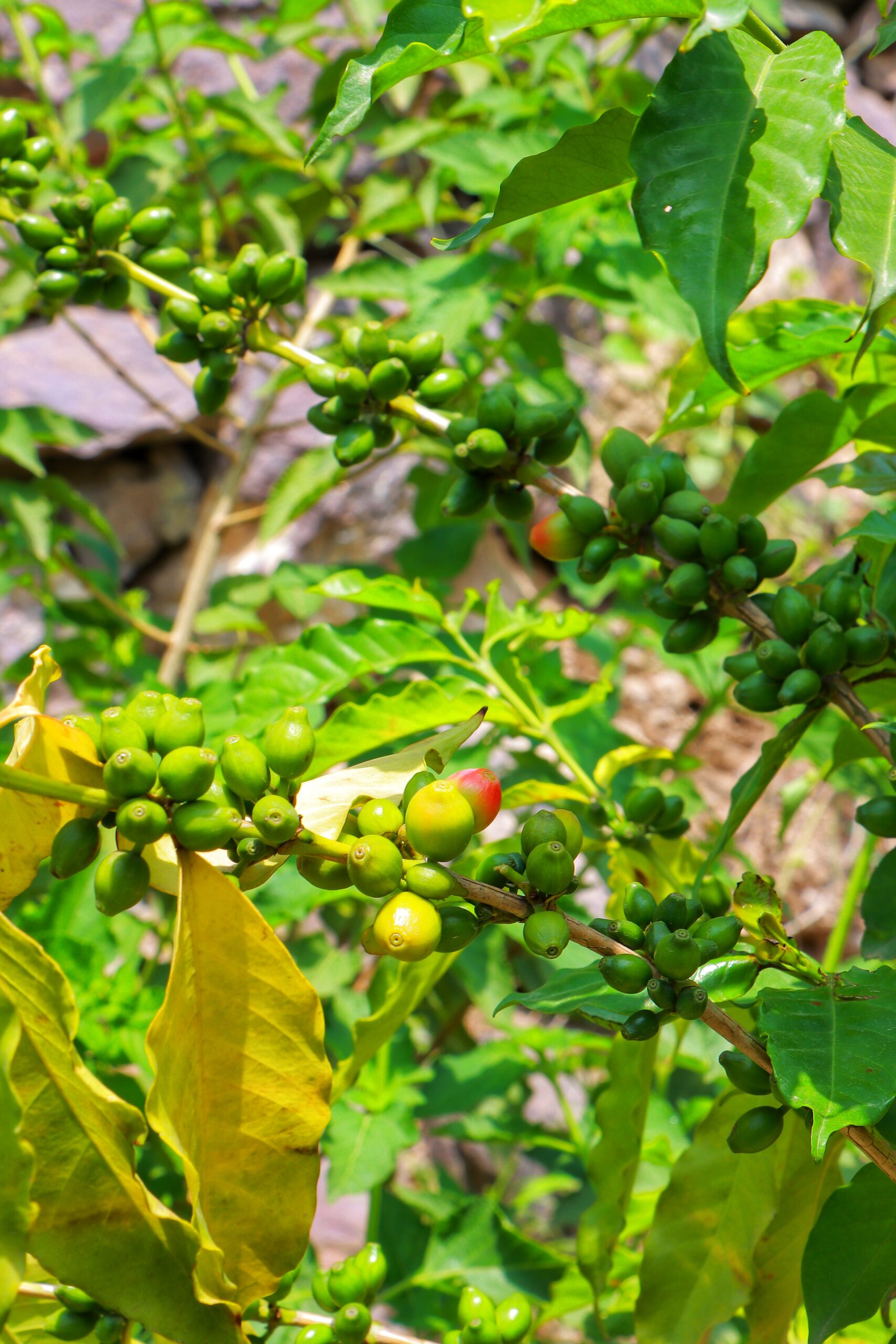
Yemen: The Future of Drought-Resistant Coffee Amid Climate Change

Dubai, 17 September 2025 (Qahwa World) –Coffee in Yemen has never been just a crop. It is deeply rooted in the nation’s history, culture, and identity. From these rugged mountains and arid landscapes, coffee spread across the seas more than five centuries ago to conquer global markets. Today, as climate volatility poses unprecedented threats to the coffee industry worldwide, Yemen is once again at the centre of attention—not only as the birthplace of coffee but also as a potential leader in producing drought-resistant varieties that could safeguard the sector’s future.

According to the latest DMCC Coffee Centre report, part of its Future of Trade Agri Series, climate change may render half of today’s coffee-growing land unsuitable for production by 2050. Arabica beans, which account for 60–70% of global production and are prized for their superior quality, are the most at risk. They require cooler climates and well-defined wet and dry seasons, making them highly sensitive to even slight shifts in rainfall and temperature.

Robusta, known for its resilience and tolerance to higher temperatures, may also face threats from ongoing climate disruptions. The report highlights that recent years have already offered a preview of this uncertain future. In Vietnam, prolonged drought caused production to fall by 20% and exports by 10% during the 2023/24 season. In Brazil, the world’s largest coffee producer, one of the most severe droughts in its history pushed Arabica prices up by more than 80% in 2024. These are not isolated incidents but warning signs of a shifting climate reality that threatens global supply.

Against this backdrop of instability, the DMCC report underscores Yemen’s exceptional position. For centuries, Yemeni farmers have cultivated coffee under harsh conditions—scorching heat, scarce rainfall, and limited water resources—yet the crop has endured. This historic resilience is what makes Yemen uniquely qualified to lead the development of drought-resistant coffee varieties that could redefine global production.

Garfield Kerr, president of the Speciality Coffee Association (SCA) and founder of Mokha 1450 in Dubai, put it bluntly: “I expect Yemen to become an industry leader in producing drought-resistant coffees, because farmers and agronomists there are already producing coffee in higher temperatures with less water.”

Garfield Kerr, President of the Specialty Coffee Association (SCA) and founder of Mokha1450

This statement reflects a growing global recognition that Yemen’s traditional practices and harsh realities may hold the key to coffee’s survival in the face of climate change.

The significance of Yemen lies not only in its ability to grow coffee under extreme conditions but also in the potential role it can play in stabilising global supply. If Yemen succeeds in pioneering drought-resistant varieties, it could help reduce the risks facing millions of smallholder farmers across Latin America, Africa, and Asia who are far less equipped to adapt to environmental shocks.

Economically, this advantage positions Yemen to capture new opportunities. With demand for resilient coffee varieties expected to rise, Yemen could evolve from a historically modest producer into a global laboratory for agricultural innovation. Strategic investment in research, farmer training, and international partnerships will be key to transforming this potential into reality.

The report also emphasises that farmers cannot bear the burden of climate adaptation alone. Institutions, trade bodies, and global buyers must work together to foster resilience across the supply chain. Yemen’s experience offers valuable lessons, but scaling them up will require cooperation, knowledge-sharing, and financial backing.

As consumer demand for sustainability and transparency intensifies, regulatory frameworks such as the European Union’s Deforestation Regulation are reshaping access to global markets. For Yemen, aligning with such frameworks could open doors while reinforcing its role as a pioneer in climate-smart coffee production.

Conclusion

The DMCC Coffee Centre report places Yemen firmly back in the global spotlight—not only as the birthplace of coffee but also as a crucial player in shaping its future. At a time when the sector faces escalating risks from droughts, heatwaves, and unpredictable weather, Yemen emerges as a beacon of resilience and possibility.

For the global coffee industry, the message is clear: climate change is already altering production landscapes, and the risks are intensifying. Yet Yemen’s centuries-old experience in cultivating coffee with fewer resources provides hope that adaptation is possible.

If the right investments and collaborations are put in place, Yemen could help secure coffee’s future—not just for itself, but for the millions worldwide whose livelihoods and cultures depend on this extraordinary crop.

Dubai to Host Public Cupping of Best of Yemen 2025 Coffees

DUBAI – 11 September 2025 – Qahwa World – Coffee enthusiasts in Dubai are invited to a unique public cupping showcasing the Best of Yemen 2025 auction coffees, curated by Qima Coffee.

The event will take place on 12 September 2025 at 3:00 p.m. at The Roasteria, offering attendees the chance to taste some of Yemen’s rarest and most celebrated coffee lots. Organized in collaboration with Toga Coffeehouse and Biru Roast, the session highlights the cultural and agricultural legacy of Yemeni coffee under the theme “Living Legacy.”

Yemeni coffee, considered one of the most prized origins in the world, has long been treasured for its distinct flavors and deep heritage. This year’s Best of Yemen edition promises an exceptional line-up of coffees, sourced directly from Yemeni farmers and brought to global audiences through Qima Coffee’s auction platform.

The cupping aims to connect Dubai’s coffee community with Yemen’s centuries-old coffee tradition, while allowing participants to experience firsthand why Yemeni coffee continues to captivate connoisseurs worldwide.

“Come and taste rare gems of coffee by Qima Coffee,” the organizers announced, extending an open invitation to all who appreciate specialty coffee.

Living Legacy: Yemen’s Coffee Farmers Shine in Best of Yemen 2025

Dubai / Sana’a – August 2025 (Qahwa World) – The mountains of Yemen have spoken once again. The Best of Yemen 2025 auction has revealed its winners: 33 rare coffees, each carrying the taste of history and the strength of survival. This year’s theme, Living Legacy, honors the people, practices, and places that have kept Yemeni coffee alive for more than five centuries.

At the summit stands Yahya Al Faqeeh, a farmer from Al Jidan in Hayma Kharijiya. His Yemenia natural, just 37 pounds in total, scored 90.45 points—the highest of the competition. In his cup: jasmine, yellow lily, peach, macerated strawberry, blueberry gummies, and green apple. Behind it is a family tradition stretching back three centuries, with women at the heart of harvest and terraces carved into stone that have endured drought, pests, and time itself.

He is joined by other remarkable producers: Maghrib Ans XV (90.29), a Kent variety shaped through Qima’s Alchemy fermentation; Hejrat Al Ain Women Farmers XV (90.16), a women-led lot grown at 2,300m; and Bait Yaseen XI (90.16), a community coffee that blends history with floral vibrancy.

This year, women played a defining role. Fourteen of the winning lots—42 percent—came from women farmers, either through individual entries or collective groups. From Hejrat Al Ain to Al Mezab, their stories echo sacrifice and determination: planting seedlings instead of qat, selling gold to buy new trees, and working from dawn to dusk so their children inherit both terraces and tradition.

The auction also highlighted Yemen’s unique balance of tradition and innovation. Natural processes preserved terroir at its purest, Alchemy lots introduced layers of clarity and sweetness, and Carbonic Honey, represented by Bani Zaidan, added rare vibrancy while conserving water.

From 12 highland villages, perched between 1,800 and 2,300 metres, these coffees are more than agricultural products—they are monuments of endurance. Each terrace tells a story of families who, against scarcity and isolation, continue to farm the world’s most legendary coffee.

On 18 September 2025, buyers worldwide will compete for these treasures at the seventh edition of the Best of Yemen auction, held in collaboration with the Alliance for Coffee Excellence. For them, it will be a chance to secure rare coffees of unmatched flavour. For Yemen, it is another chapter in a legacy written across mountains, families, and centuries.

Because Yemeni coffee is not just grown. It is lived.

The Ultimate Guide to Coffee Processing Methods Around the World: From Cherry to Cup

Dubai, 23 August 2025 (Qahwa World) – In the world of coffee, the journey from a ripe cherry on a tropical tree to the steaming brew in your mug is a tale of art, science, and global tradition. The coffee processing stage—where the fruit is transformed into green beans ready for roasting—is the crucible where flavors are shaped. This comprehensive guide explores coffee processing methods, diving into their histories, techniques, regional strongholds, and sensory impacts. Whether you’re a researcher seeking types of coffee processing, a barista curious about wet vs dry coffee processing, or an enthusiast exploring anaerobic coffee processing trends, this reference covers it all. Spanning over 70 coffee-producing countries, we’ll journey through time-honored methods like natural, washed, and honey processing, alongside cutting-edge innovations like anaerobic fermentation, which is gaining traction worldwide, including in Yemen.

With climate change reshaping coffee production, processing methods are evolving to balance sustainability and flavor innovation. By 2025, the rise of anaerobic processing in countries like Yemen highlights its growing appeal. Let’s uncover the full story.

The Origins of Coffee Processing: A Historical Perspective

Coffee’s story begins in Ethiopia around the 9th century, where wild Coffea arabica plants were first harvested. Early farmers dried whole cherries under the sun, birthing natural coffee processing. As coffee spread through Yemen and the Middle East to the Americas by the 18th century, diverse climates and resources spurred new techniques. Processing significantly influences a coffee’s flavor profile—many experts estimate it can account for around 30%—shaping acids, sugars, and volatile compounds through microbial activity and fermentation time. For researchers studying coffee biochemistry or sustainability, this guide offers a foundation for understanding these dynamics.

Natural (Dry) Processing: The Timeless Tradition

Natural coffee processing, or dry processing, is the oldest method, requiring minimal water and relying on sunlight. Whole cherries are spread on patios, raised beds, or rooftops and dried for 2–4 weeks, turned regularly to prevent mold. The bean absorbs sugars from the fruit, and the dried husk is hulled at 11% moisture.

Key Regions and History

  • Ethiopia: The origin, producing Yirgacheffe naturals with wild strawberry notes.

  • Brazil: The world’s top producer, using mechanized farms for consistency.

  • Yemen and Indonesia: Ancient terraces yield complex, winey profiles.

Flavor Profile and Science
Natural processing creates full-bodied, low-acidity cups with sweet, fruity notes like blueberry or chocolate. The bean ferments inside the fruit, boosting ethyl butyrate esters for fruity aromas. Risks include mold in humid conditions, requiring careful management. Variations include African raised-bed drying for airflow and Brazilian mechanical dryers for rainy seasons.

Washed (Wet) Processing: Precision and Clarity

Pioneered in Central America in the 19th century, washed coffee processing suits wet climates. Cherries are depulped, fermented in water tanks for 12–48 hours to remove mucilage, washed, and dried to 10–12% moisture.

Key Regions and History

  • Colombia and Kenya: Abundant rivers produce bright, citrusy coffees.

  • Guatemala, Nicaragua, Rwanda: High-altitude farms emphasize acidity.

Flavor Profile and Science
Washed coffees are clean and vibrant, with high acidity and notes like green apple or jasmine. Fermentation breaks down pectins via yeast and bacteria, clarifying terroir. Though water-intensive (20–40 liters per kilo), it reduces defects. Innovations include Kenyan double-washing for brightness and mechanical aquapulping to save water.

Honey (Pulped Natural) Processing: The Sweet Hybrid

Originating in Costa Rica in the mid-20th century, this hybrid method conserves water. Cherries are depulped, leaving varying mucilage (the “honey”) during drying for 8–30 days.

Key Regions and History

  • Costa Rica: Classifies as Yellow (minimal mucilage, grainy acidity), Red (balanced sweetness), or Black Honey (floral, syrupy).

  • Brazil (Pulped Natural), El Salvador, Panama: Used for premium lots.

Flavor Profile and Science
Sweeter than washed, cleaner than natural, with caramel, stone fruit, and honey notes. Mucilage caramelization enhances sucrose absorption. It’s eco-friendly but needs monitoring to avoid over-fermentation.

Wet Hulled (Giling Basah): Indonesia’s Earthy Signature

For humid climates, wet hulled coffee processing (semi-washed or Giling Basah) emerged in 19th-century Indonesia. Cherries are depulped, briefly fermented, hulled at 30–35% moisture, and dried further.

Key Regions and History

  • Indonesia (Sumatra, Java): Suits rainy climates, producing bold Mandheling coffees.

  • Papua New Guinea: Similar adaptations.

Flavor Profile and Science
Low acidity, heavy body, with earthy tobacco and dark chocolate notes. Rapid microbial activity in humid conditions risks defects but creates unique profiles.

Emerging Innovations: The Rise of Anaerobic and Fermentation-Driven Methods

The specialty coffee boom has sparked fermentation innovations, with anaerobic coffee processing leading the charge. Inspired by winemaking, it involves sealing beans in oxygen-free tanks for 12–72 hours, enhancing exotic flavors. By 2025, anaerobic processing is surging globally, including in Yemen, where farmers are adopting it to boost quality and demand.

Key Regions and History

  • Colombia and Costa Rica: Pioneers of anaerobic, yielding peach or yogurt notes.

  • Yemen: Recent adoption (post-2020) enhances Mocha coffee’s complex flavors, with airtight bags or barrels used for up to 120 hours, compared to traditional 10–20 hour wet fermentation. Professional tasters note increased recognition for Yemeni coffee globally.

  • Ethiopia, Brazil, Panama: Experimenting for premium lots.

  • Vietnam: Applying to robusta for bold, innovative profiles.

Flavor Profile and Science
Anaerobic fermentation produces intense, fruit-forward, or winey flavors (lactic acids create cheesy or yogurt-like notes). Yemen’s anaerobic coffees highlight natural aromas, balancing acidity. Variations include:

  • Carbonic Maceration: CO₂-infused tanks (Panama, Kenya) yield banana or whisky notes, starting in 2015.

  • Lactic Processing: Emphasizes creamy textures via milk-like bacteria.

  • Frozen Natural: Chilling cherries preserves brightness.

These methods enhance volatiles but may reduce bioactives like caffeine. They’re costly but fetch high prices in specialty markets.

Coffee Processing Methods Comparison: Insert Table Here

COFFEE PROCESSING METHODS COMPARISON
Method Key Regions Water Use Drying Time Flavor Profile Pros / Cons
Natural (Dry) Ethiopia, Brazil, Yemen Low 2–4 weeks Fruity, sweet, full-bodied Eco-friendly; risk of mold
Washed (Wet) Colombia, Kenya, Guatemala High 1–2 weeks Clean, bright acidity Consistent quality; water-intensive
Honey (Pulped) Costa Rica, Brazil, Panama Medium 1–4 weeks Sweet, caramel, balanced Sustainable; requires monitoring
Wet Hulled Indonesia (Sumatra) Medium ~1 week Earthy, heavy body, low acid Fast process; higher risk of defects
Anaerobic Colombia, Costa Rica, Yemen Varies Varies Exotic, winey, lactic, fruity Innovative; costly; experimental
Carbonic Maceration Panama, Kenya Low Varies Wine-like, banana, whisky Premium lots; inspired by winemaking

The Future of Coffee Processing: Sustainability and Global Trends

As climate change threatens yields, low-water methods like honey and anaerobic are gaining ground. Yemen’s shift to anaerobic processing, reported in 2025, reflects a broader trend toward flavor innovation and market competitiveness. AI-monitored fermentations and thermal shock (quick freezing) are emerging, with researchers predicting wider adoption by 2030. The Specialty Coffee Association offers resources for studying these trends.

FAQ: Common Questions on Coffee Processing

What is anaerobic coffee processing?
A fermentation in oxygen-free tanks, producing exotic flavors, increasingly used in Yemen and Colombia.

Why is anaerobic processing popular in 2025?
It enhances flavor complexity, boosting demand in specialty markets.

How does processing affect coffee quality?
It shapes acidity, body, and defects through microbial and chemical changes.

What are the best coffee processing methods?
Natural for sweetness, washed for clarity, anaerobic for innovation.


This ultimate guide to coffee processing methods is a definitive resource for researchers, baristas, and enthusiasts searching for anaerobic coffee processing Yemen or global coffee processing techniques. Each method tells a story of tradition, innovation, and environment, ensuring every sip is a chapter in coffee’s global legacy.