Peruvian Coffee Output Stable at 4.78 Million Bags in 2026

Author: Qahwa World – Lima
Source: USDA Foreign Agricultural Service – Report PE2026-0008
Date: May 20, 2026

Peruvian Coffee Output Stable at 4.78 Million Bags in 2026

Executive Summary

  • Peruvian coffee production for 2026/2027 is estimated at 4.78 million 60 kg bags, broadly unchanged from the previous year.
  • Harvested area is estimated at 340,000 hectares, up about 1% from last season.
  • Exports are estimated at 4.55 million bags, also unchanged, supported by stable supply and strong demand for high-quality Arabica.
  • The United States is the largest market for Peruvian coffee with a 32% share, followed by Germany (16%) and Belgium (11%).
  • Over 90% of coffee is grown by smallholders on plots smaller than 5 hectares.
  • Peru is the world’s largest exporter of organic coffee, with approximately 90,000 certified hectares.
  • Domestic consumption is estimated at 305,000 bags, with 75% being soluble coffee.

The USDA Foreign Agricultural Service office in Lima estimates Peruvian coffee production for marketing year 2026/2027 at 4.78 million 60 kg bags, broadly unchanged from 2025/2026 (4.76 million bags). Total exports are estimated at 4.55 million bags, also broadly unchanged, supported by stable supply and continued demand for high-quality Arabica and certified coffees. Domestic consumption is estimated at 305,000 bags.

Harvested area is estimated at 340,000 hectares in 2026/2027, up about one percent from 2025/2026. The number of bearing trees is estimated at 630 million, while total tree population is estimated at 668 million trees. Arabica is the dominant coffee type, primarily of the Typica and Caturra varieties. Most farms are small (under 5 hectares) and rely on traditional methods like shade-growing, hand-picking, and sun-drying.

Credit Access and Infrastructure Challenges

Limited access to credit remains a major challenge for small producers. Private banks often reject untitled land as collateral, forcing farmers to rely on informal lenders or buyers. This results in burdensome fixed-price contracts and high interest rates.

Many farmers join cooperatives to obtain better prices, technical support, and marketing resources. However, infrastructure challenges, particularly poor roads and inadequate storage facilities, continue to limit Peru’s competitiveness in global coffee markets.

Table 1: Peru Coffee Production, Supply and Distribution (1,000 60 kg bags)

Item 2024/2025 2025/2026 2026/2027
Planted Area (1,000 HA) 370 370 375
Harvested Area (1,000 HA) 332 335 340
Arabica Production (1,000 bags) 3,700 4,200 4,780
Robusta Production (1,000 bags) 0 0 0
Total Production (1,000 bags) 3,700 4,764 4,780
Total Exports (1,000 bags) 3,440 4,238 4,550
Domestic Consumption (1,000 bags) 220 300 305
Ending Stocks (1,000 bags) 28 26 21

Production, Yields and Risks

Based on estimated production and harvested area, average yields in 2026/2027 are implied at approximately 843 kilograms per hectare. Yields vary significantly, with well-managed plantations achieving up to 45 bags (2,700 kg) per hectare.

Labor has the highest production cost, accounting for about 58% of total expenses, followed by fertilizers (24%) and agrochemicals (12%).

Peru’s coffee sector faces several risks that could affect production and export performance in 2026/2027:

  • Climate variability: Irregular rainfall, higher temperatures, and extreme weather events affect flowering, yields, and quality.
  • EUDR compliance: Meeting the EU Deforestation Regulation requirements remains a major challenge, especially for smallholders lacking land titles and georeferenced data.
  • Labor constraints: Rising labor costs and shortages during peak harvest periods increase production costs.

Exports and Key Markets

Peruvian coffee exports in 2026/2027 are estimated at 4.55 million bags, nearly unchanged from 2025/2026. Bean exports account for most shipments at 4.25 million bags, while roasted and ground exports are estimated at 300,000 bags and soluble exports at 4,000 bags.

The United States remained the top destination in 2024/2025, receiving 32% of exports, followed by Germany (16%) and Belgium (11%).

Export prices rose sharply in 2025/2026, averaging $7,577 per ton, 55% above the previous year. Prices are expected to remain above historical averages due to continued supply uncertainty, higher production costs, and sustained demand for high-quality Arabica.

Peru is the world’s leading exporter of organic coffee, with approximately 90,000 hectares certified organic. Many additional hectares are effectively organic due to limited use of chemical inputs. To meet foreign demand for specialty coffee, many producers pursue certification programs including Fair Trade, Organic, Rainforest Alliance, and Starbucks C.A.F.E. Practices.

Domestic Consumption and Policies

Domestic coffee consumption in 2026/2027 is estimated at 305,000 bags, up about two percent from 2025/2026. Soluble coffee accounts for 75% of total domestic consumption. However, consumption patterns are evolving, with a growing preference for roasted and ground coffee, especially among young urban consumers. Despite these trends, domestic consumption still represents only about six percent of total production.

Through the Food for Progress Program, FAS financed the regional MOCCA project to strengthen coffee value chains. In Peru, MOCCA has trained over 27,000 producers, supported the establishment of 515 nurseries, and facilitated nearly $17 million in credit.

Peruvian coffee producers have expressed concerns over the EU Deforestation Regulation (EUDR), which requires that products not originate from land deforested after December 31, 2020. The National Coffee Board warns that small producers may struggle to comply due to lack of land use certifications and titles. Although Congress amended the forestry law in January 2024 to simplify certification, producers assert that more support is needed.

Peru’s coffee sector provides 855,000 jobs, primarily in remote and economically vulnerable regions. The government promotes coffee cultivation as a legal alternative to coca leaf production through the National Commission for Development and Life Without Drugs (DEVIDA).

Frequently Asked Questions

How much coffee will Peru produce in 2026/2027?

Production is estimated at 4.78 million 60 kg bags, broadly unchanged from the previous year.

What are the main export destinations for Peruvian coffee?

The United States is the largest market with 32% share, followed by Germany (16%) and Belgium (11%).

What is Peru’s position in the organic coffee market?

Peru is the world’s largest exporter of organic coffee, with approximately 90,000 certified hectares.

What percentage of Peruvian coffee is grown by smallholders?

Over 90% of coffee is grown by smallholders on plots smaller than 5 hectares.

How much coffee does Peru consume domestically?

Domestic consumption is estimated at 305,000 bags, with 75% being soluble coffee.


Author: Qahwa World – Lima | Source: USDA Foreign Agricultural Service – Report PE2026-0008 | Date: May 20, 2026

Peru Hits Record Coffee Sales of Over $1.5 Billion in 2025

Dubai – Qahwa World

Peru’s coffee industry reached an unprecedented historical milestone in 2025, with the latest official data from the Ministry of Agrarian Development and Irrigation (MIDAGRI) reporting record-breaking sales of $1.57 billion between January and November. This figure represents a staggering 54.1% year-on-year growth compared to the same period in the previous year, firmly positioning the coffee sector as one of the most vital pillars of the Peruvian national economy over the last decade.

This exceptional success is the result of Peru’s long-term strategic commitment to solidifying its status as the world’s leading producer and exporter of organic coffee. This commitment has perfectly aligned with a major shift in global consumer behaviour, where buyers are increasingly prioritising sustainable, eco-certified, and ethically sourced crops. Furthermore, favourable international prices for high-value speciality coffee lots played a decisive role in maximising financial returns. Peruvian exporters have successfully navigated and met the rigorous quality standards and strict traceability requirements demanded by major strategic markets, most notably the United States and the European Union.

Field reports indicate that this growth was not accidental but the product of intensive investment in improving logistical supply chains and advancing post-harvest processing technologies within the rugged Andean highlands. This prosperity has had a direct and tangible impact on the national income, significantly enhancing the livelihoods of more than 223,000 farming families across the Andes and the Amazon rainforest. In these regions, coffee cultivation serves as the primary socioeconomic lifeline and a fundamental social pillar for rural communities. Building on these historic results, the Peruvian government now aims to leverage this momentum to further promote regional brands in international forums and ensure the long-term sustainability of these record-breaking figures in future seasons.

The Fragrant Coffee Season in Khe Sanh and Huong Phung

Dubai – Qahwa WORLD

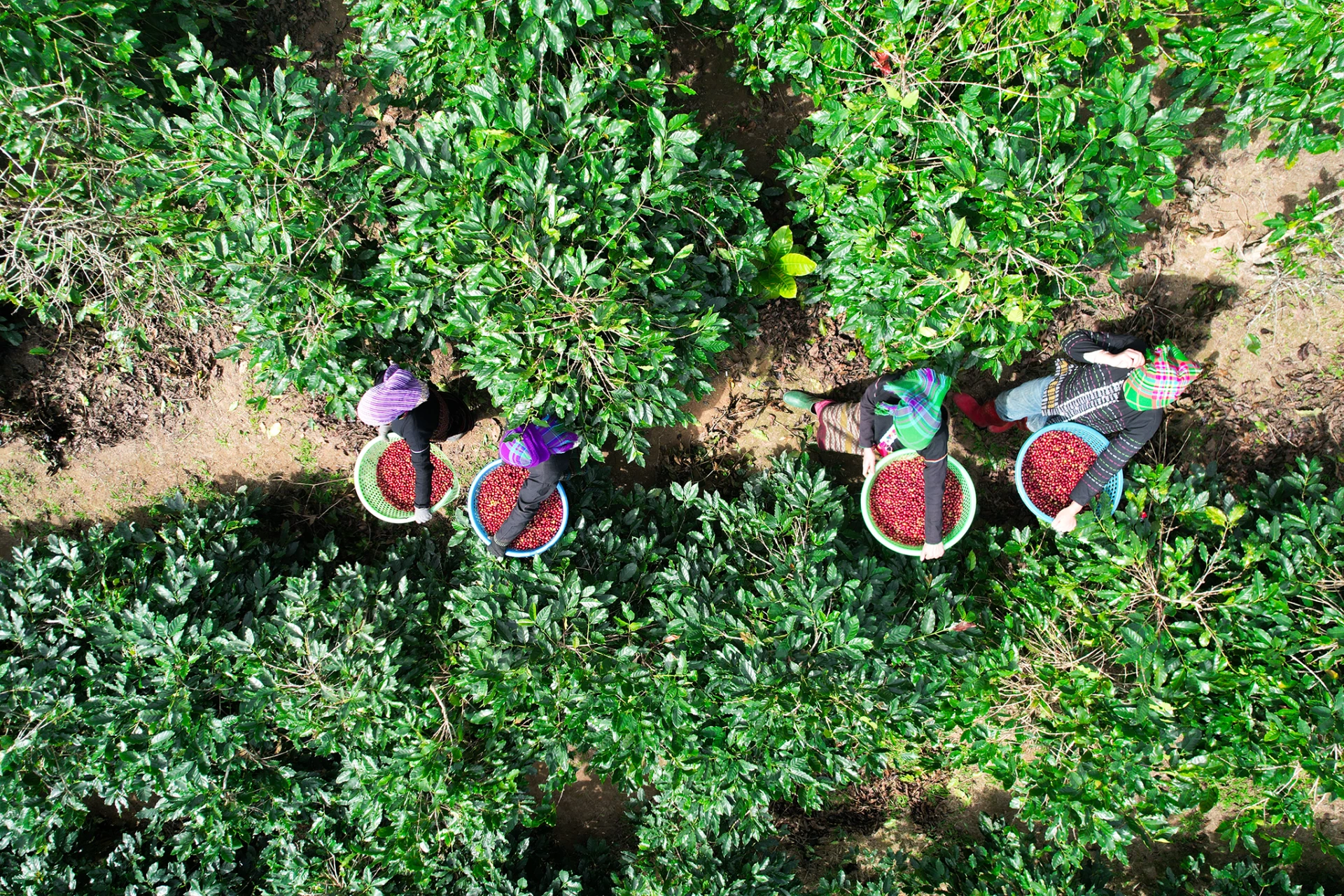
Starting every November, the coffee cherries in Quang Tri’s highlands reach full ripeness. On the rolling hills of Khe Sanh and Huong Phung, bright red Arabica cherries quietly release their rich aroma under the warm sunlight and gentle mountain winds, following the steps of local farmers from their fields to the villages. Each smile of a coffee picker captures a moment of the harvest season, where land, people, and coffee beans come together, telling a gentle story of a region growing stronger through its own fragrant bounty.

Lê Thị Phương Nhi, founder of BruLe Coffee, shared that 2025 was an exceptional year for Khe Sanh and Huong Phung coffee. Harvests were abundant, prices reached record highs, and yields were impressive—some areas produced as much as 25 tons per hectare.

In Xa Ry, coffee is gradually being cultivated organically, transforming from a common crop into a specialty product. This shift has significantly increased farmers’ income, with fresh coffee achieving the highest prices ever recorded, motivating further investments in quality and production expansion.

As the year draws to a close, coffee harvesting becomes a bustling activity across the coffee-growing communes of southwest Quang Tri. Nearly 4,000 hectares of coffee are in full production, and farmers are enthusiastic because this season offers the best yield and prices they have ever seen.

Phan Ngọc Long, Vice Chairman of Huong Phung Commune, reported that the commune has about 2,100 hectares of coffee ready for harvest. Average yields range from 8–10 tons of fresh cherries per hectare, with well-managed farms producing 15–20 tons per hectare. Coffee prices have soared to 24,000–27,000 VND per kilogram, enabling farmers to earn a net profit of 14,000–17,000 VND per kilogram after labor and other costs.

This year’s harvest also provides employment for thousands of seasonal workers, mainly from ethnic minority communities such as Van Kieu and Pa Ko. Daily wages range from 300,000–400,000 VND, giving workers stable income and improving livelihoods, especially at the end of the year.

Local authorities support farmers through marketing partnerships, ensuring transparency in quality and pricing, and preventing fraud. In the fields, the pride of women carefully tending specialty coffee beans is visible in every smile. Coffee cherries are meticulously sorted to ensure premium quality from the very first step.

Huong Phung Arabica is processed through strict procedures: from initial sorting, drying in solar greenhouses, to roasting with modern machinery. Each stage requires precision to preserve the coffee’s elegant aroma, mild acidity, and characteristic sweet finish. Roasted beans emit a captivating fragrance—a harmonious result of earth, climate, and human hands.

This is the unique taste of Huong Phung and Quang Tri, steadily claiming its place on Vietnam’s specialty coffee map.

Khe Sanh and Huong Phung coffee did not reach this success overnight. In previous years, low prices forced many farmers to abandon or replace coffee crops. Between 2010–2015, substantial areas of coffee were cleared for other plants. Today, specialty coffee provides sustainable livelihoods and creates a new path toward green agriculture.

Khe Sanh is no longer just remembered for its turbulent past; it is now recognized as the cradle of Central Vietnam’s Arabica specialty coffee. On hills over 500 meters above sea level, in a year-round mild climate, coffee trees thrive, carrying the aspirations of local highland communities.

Harvesting is done manually with careful selection, ensuring only perfectly ripe cherries are picked—a key factor in producing specialty coffee. According to Lương Thị Ngọc Trâm from Pun Coffee Co., Khe Sanh and Huong Phung’s natural conditions favor Arabica and Catimor varieties. Despite the basin-like terrain not being ideal, the wide day-night temperature difference of 7–9°C allows Arabica to thrive, creating Vietnam’s most distinctive coffee. The tropical monsoon climate, average temperature of 22°C, annual rainfall of 2,262mm, and abundant water resources from lakes, rivers, and streams contribute to high yields and quality.

To promote high-quality Vietnamese coffee globally, the Ministry of Agriculture and Rural Development approved the Vietnam Specialty Coffee Development Project (2021–2030), including Quang Tri. Coffee acreage in the province is projected to expand from 11,500 hectares (2021–2025) to 19,000 hectares (2026–2030), representing a growing share of national production.

During harvest season, the hills of Khe Sanh and Huong Phung come alive with activity. Women in traditional Van Kieu and Pa Ko attire carefully pick the bright red cherries. Handpicking and meticulous selection are crucial steps in producing specialty coffee.

Today, Khe Sanh and Huong Phung coffee is more than an agricultural product—it symbolizes revival, resilience, and the determined spirit of a community rising from a land once scarred by hardship. Among the fragrant hills, Arabica beans narrate a story of Quang Tri: a story of land, people, and a sustainable, hopeful future.

Forecast and Outlook for Decaffeinated Coffee Demand in the USA

Dubai – Qahwa World

Demand for decaffeinated coffee in the United States is estimated at USD 8.3 million in 2025 and is forecast to increase to USD 16.0 million by 2035, reflecting a compound annual growth rate of 6.8 percent over the forecast period.

Growth is driven by a rising number of consumers seeking to reduce caffeine intake due to concerns related to anxiety, sleep disturbances, and lifestyle preferences. Coffee roasters are expanding their decaffeinated offerings by adopting improved extraction methods that help preserve aromatic compounds and reduce bitterness.

Organic decaffeinated coffee leads demand, supported by health-oriented consumption patterns and expectations for clean-label products. Producers emphasize chemical-free decaffeination methods, including water-based processing and carbon dioxide extraction.

Regional Demand Structure

Demand is strongest in the western, southern, and northeastern regions of the United States. These areas show higher penetration of specialty cafés and a greater share of consumers purchasing artisanal whole-bean and single-origin products.

Distribution channels include:

  • grocery retail,

  • e-commerce subscription services,

  • direct-to-consumer sales from roasters.

Foodservice operators are also expanding decaffeinated beverage menus to cater to a broader audience sensitive to caffeine.

Key Market Indicators

  • Decaffeinated coffee demand value (2025): USD 8.3 million

  • Forecast demand value (2035): USD 16.0 million

  • Compound annual growth rate (2025–2035): 6.8 percent

  • Leading category: organic decaffeinated coffee

  • Key growth regions: western, southern, and northeastern United States

Demand Structure by Category

By Product Nature

Organic decaffeinated coffee accounts for 65.0 percent of total demand, driven by trust in chemical-free processing, clean-label preferences, and sustainability-oriented purchasing behavior. Conventional decaffeinated coffee represents 35.0 percent, supported by competitive pricing and broad availability in mass retail and foodservice channels.

By Roast Type

  • regular roast: 35.0 percent

  • dark roast: 30.0 percent

  • other roast styles: 20.0 percent

  • medium roast: 15.0 percent

Growth in dark roast demand reflects consumer efforts to offset perceived flavor loss historically associated with decaffeination.

Growth Drivers and Constraints

Key growth drivers include:

  • increasing health awareness,

  • expansion of specialty coffee culture,

  • demand for evening-friendly beverage options,

  • growth of ready-to-drink formats.

Key constraints include:

  • lingering perceptions of inferior flavor compared with caffeinated coffee,

  • limited consumer awareness of modern decaffeination technologies,

  • competition from tea and alternative beverages.

Regional Growth Outlook

The western United States is expected to record the highest growth rate at 7.9 percent, followed by the southern region at 7.0 percent, the northeastern region at 6.3 percent, and the midwestern region at 5.5 percent.

Competitive Landscape

The United States decaffeinated coffee market is characterized by stable consumption across retail and direct-to-consumer channels. Purchasing decisions are primarily influenced by flavor retention, transparency of bean origin, and clarity around decaffeination processes. Leading producers strengthen their positions through chemical-free processing methods, low-acidity offerings, and specialty single-origin products designed for caffeine-sensitive consumers.

Shocking Report: Industrial and Environmental Contaminants Found in All Organic Coffee Samples

Dubai – Qahwa World

The Clean Label Project in the United States has released an extensive report that has stirred debate across the coffee world, revealing findings that undermine the long-standing perception of organic coffee as a guarantee of purity. The report shows that every single organic coffee sample tested contained industrial and environmental contaminants, including residues of pesticides that are officially banned in organic agriculture, raising fundamental questions about certification credibility and agricultural oversight.

The investigation covered fifty-seven different coffee products representing forty-five leading brands in both the U.S. and global markets. Each product was subjected to a rigorous series of laboratory analyses, with more than seven thousand individual tests performed in total. Samples included coffees across all common roast levels—light, medium, and dark—and were taken from the most prevalent packaging formats on the market, from bags and pods to metal cans.

The most striking and controversial result was the detection of aminomethylphosphonic acid, or AMPA, in one hundred percent of the organic samples. AMPA is a breakdown product of glyphosate, a herbicide that has generated global controversy due to its suspected health risks and that is strictly prohibited in certified organic farming. According to the report, the universal presence of AMPA in every sample tested delivers a shock to consumers, many of whom turn specifically to organic coffee in search of a product free from chemical residues.

Although glyphosate itself was detected in only a few of the samples, the consistent appearance of its by-product across all organic coffees raises alarming concerns about the pathways through which contamination occurs. Researchers point to multiple possibilities: runoff from neighboring conventional farms contaminating organic fields, wind drift carrying spray particles across boundaries, or legacy residues lingering in soils for decades that continue to affect crops long after application has ceased.

The report did not stop at AMPA. It also revealed the presence of heavy metals in every single sample, including lead, cadmium, mercury, and arsenic. While most levels remained below the maximum thresholds set by the European Union for food safety when measured against typical daily consumption volumes, experts stress that cumulative exposure over long periods cannot be dismissed as harmless. For regular coffee drinkers, this raises concerns that extend well beyond a single cup.

Equally concerning was the universal detection of acrylamide, a chemical that naturally forms during the roasting process and is classified as a potential carcinogen. Levels of acrylamide were particularly high in medium roasts compared to very light or dark roasts, suggesting that the most popular roast category among consumers could also pose the greatest risk.

The study further highlighted the role of packaging in contamination. Phthalates, chemical compounds associated with plastics and known for their potential to leach into food and beverages, were especially prevalent in canned coffees, followed by pods, with bagged coffee showing the lowest levels. Researchers emphasized that packaging is not simply a marketing tool or a method to preserve flavor; it plays a direct role in determining the chemical purity of the product consumed.

Geographic origin was another factor influencing contamination. African coffees tested in the study generally displayed lower levels of heavy metals, while Hawaiian coffees showed higher concentrations, a result attributed to the mineral-rich volcanic soils in which they are cultivated. This underscores that agricultural environments themselves can significantly shape the safety profile of the beans, regardless of organic practices.

The Clean Label Project stressed that the purpose of this study is not to frighten consumers or to dissuade them from drinking coffee, but rather to raise awareness of hidden risks and equip people with the knowledge they need to make informed decisions. Among its recommendations: consumers should look for brands with independent certifications that verify product testing, favor darker or very light roasts to reduce acrylamide exposure, avoid canned coffee in favor of bagged products, and follow ongoing testing results published regularly by the organization.

The broader implications of the report are profound. Coffee is one of the most consumed beverages in the world, with more than one billion people drinking it daily and a U.S. market valued at more than 269 billion dollars in 2024 alone. The findings remind us that the coffee industry, despite its global cultural and economic importance, is not immune to environmental and industrial contamination. For producers, regulators, and consumers alike, the lesson is clear: the label “organic” does not automatically guarantee absolute purity.

The report concludes with a call for stricter oversight of organic certification processes, greater transparency across supply chains, and more independent research to restore and sustain consumer confidence. In a world where billions of cups of coffee are consumed every single day, the integrity of this industry matters not only for enjoyment and tradition but also for the health and trust of communities worldwide.

Organic Coffee Market to Reach USD 30.5 Billion by 2033, Growing at 8.5% CAGR

Dubai, September 8, 2025 (Qahwa World) – The global organic coffee market is on track to more than double in value, rising from USD 15.2 billion in 2024 to USD 30.5 billion by 2033, according to a new report by Verified Market Reports. The study highlights a strong compound annual growth rate (CAGR) of 8.5% from 2026 to 2033, driven by shifting consumer preferences and evolving market dynamics.

Key Growth Drivers

The rise in demand for organic coffee is propelled by several factors:

  • Health and premiumization: Increasing awareness of health benefits and demand for high-quality certified organic Arabica and specialty blends.

  • Sustainability and ethics: Growth in ethically sourced products and investments in organic farming practices.

  • Digital traceability: Use of blockchain and QR codes for provenance and storytelling, enhancing consumer trust.

  • Climate challenges: Weather-related disruptions are reshaping sourcing strategies and spurring investment in regenerative agriculture.

  • Market channels: Expansion of direct-to-consumer (DTC) and ready-to-drink (RTD) organic products, supported by subscription models and e-commerce.

  • Regulatory and regional shifts: Stricter certification standards and rising demand in Asia-Pacific, particularly in China, Japan, and South Korea.

Market Challenges

Despite strong growth, the market faces hurdles such as high certification costs for smallholders, limited availability of high-yield organic varietals, and climate-driven yield variability. Industry experts suggest that pooled certification, cooperative financing, and agronomy support programs could help overcome these barriers while strengthening supply chains.

Regional Outlook

North America and Western Europe remain the largest importers and consumers of organic coffee, but Asia-Pacific is projected to record the fastest growth. Increasing consumption in emerging economies, coupled with regulatory changes, is expected to reshape trade flows and create new competitive dynamics.

Industry Players

Major companies shaping the market include Jim’s Organic Coffee, Rogers Family, Death Wish Coffee, Grupo Britt, Strictly Organic Coffee, Dean’s Beans Organic Coffee, Keurig Green Mountain, Allegro Coffee, Café Don Pablo, Grupo Nutresa, and Oakland Coffee, among others. Their strategies revolve around premium positioning, digital traceability, and diversified product portfolios.

Market Segmentation

The report categorizes the organic coffee market by product type (whole bean, ground, instant, pods/capsules), roast type (light, medium, dark, blended), distribution channel (online retail, supermarkets, specialty stores, convenience stores, direct sales), end-user demographics (health-conscious, environmentally-conscious, income and age groups), and formulation (single-origin, blends, flavored, decaffeinated).

US Report: Caffeinated Coffee Is Generally Safe Despite Some Risks

Dubai, 18 August 2025 (Qahwa World) – A new investigation by the US-based nonprofit Clean Label Project has revealed that caffeinated coffee is largely safe from harmful toxins and contaminants, though certain risks remain present in some products.

The Clean Label Project, an independent consumer advocacy organization, specializes in testing food and beverage products for hidden contaminants such as heavy metals, pesticides, and plasticizers. The group’s latest study examined 45 popular coffee brands from Brazil, Colombia, Costa Rica, Ethiopia, Guatemala, Kenya, Peru, and Hawaii, conducting more than 7,000 laboratory tests.

Safe Overall, but Not Entirely Risk-Free

“While some contaminants were present, most were found at minimal levels and well below the European Union’s safety limits per 6-ounce serving. This means coffee is generally safe,” said Molly Hamilton, executive director of the Clean Label Project.

The study found:

  • Glyphosate and AMPA (byproduct): While glyphosate, a widely used herbicide, was detected only in trace amounts, its byproduct AMPA was more common, including in 100% of the organic samples tested.

  • Phthalates: Small amounts of these plasticizers, linked to reproductive and hormonal issues, were detected at higher levels in canned and pod coffee than in bagged coffee.

  • Heavy Metals: Levels varied by origin, with the lowest in African coffees and the highest in Hawaiian samples, consistent with volcanic soil content.

  • Acrylamide: Found in all samples, this chemical forms during roasting. Medium roasts contained the highest concentrations, while light and dark roasts showed lower levels.

Industry and Expert Response

David Andrews, acting chief science officer of the Environmental Working Group, said the results show packaging may be a key source of contamination. “The higher phthalate levels found in coffee pods and canned coffee suggest that packaging could be a meaningful source of these chemicals of concern,” he explained.

The National Coffee Association (NCA), which represents the US coffee industry, rejected concerns raised by the report.
“It is highly irresponsible to mislead Americans about the safety of their favorite beverage,” said William “Bill” Murray, NCA president and CEO. “Decades of independent scientific evidence show that coffee drinkers live longer, healthier lives.”

Organic Coffee Findings

Although organic coffees generally contained fewer contaminants than conventionally grown samples, all 12 organic coffees tested contained AMPA. According to Hamilton, this could result from environmental contamination via water or neighboring farms using pesticides.

“Still, the detection of AMPA in 100% of organic samples is a wake-up call,” Hamilton said. “We need stronger safeguards and greater transparency in our food system.”

What Consumers Should Do

The Clean Label Project stressed that coffee remains one of the cleanest products they have ever tested. However, Hamilton recommended practical steps for consumers:

  • Choose dark or light roasts to reduce acrylamide intake.

  • Prefer bagged coffee over cans or pods to lower phthalate exposure.

  • Consider origin, as soil conditions influence heavy metal content.

“Our report isn’t meant to raise alarm or discourage coffee drinking,” Hamilton concluded. “It’s about empowering people to choose the cleanest and safest cup of coffee possible.”