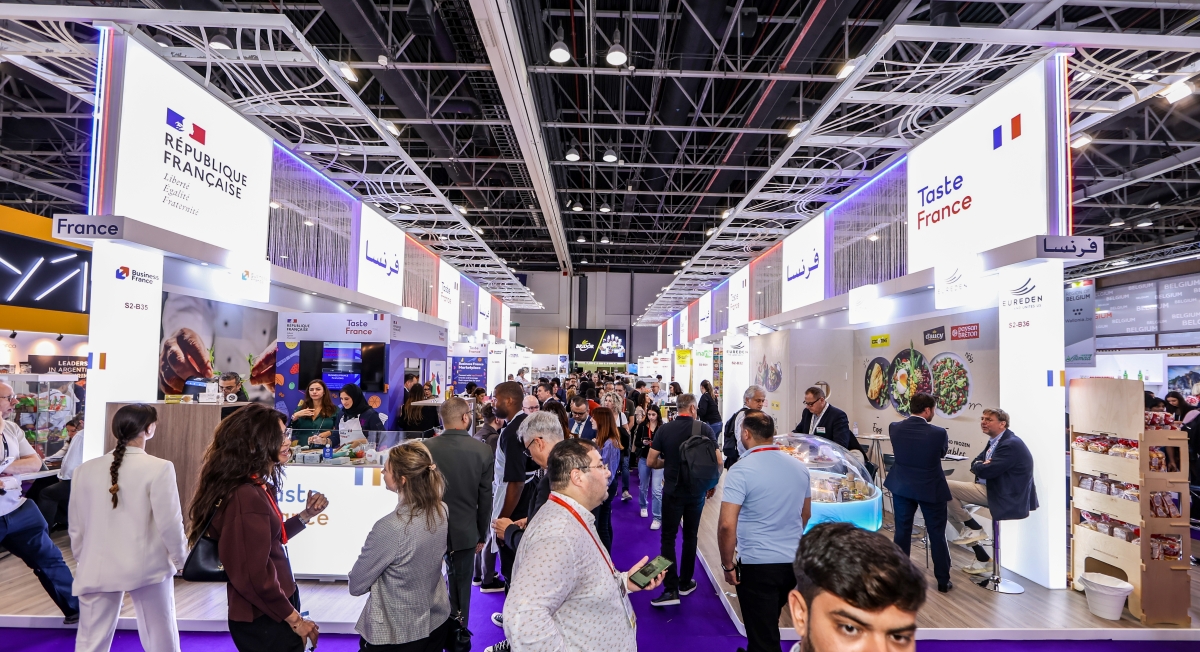
France Brings 110 Brands to “Gulfood 2026” Across Two Dubai

Dubai – Qahwa World

Business France, the French national agency for international economic development, announced its largest-ever participation at Gulfood 2026, featuring 110 French brands across four pavilions under the “Taste France” banner.

This year, the exhibition is held at two main venues: Dubai World Trade Centre and Expo Dubai, with French participants showcasing a wide range of food and beverage products, including dairy, meat, poultry, seafood, beverages, and international food specialties.

  • French Participation by Venue:

Expo Dubai – Global Foods Platform 8-80: 67 companies

Dubai World Trade Centre: 43 companies, organized by sector:

Dairy: Sheikh Rashid Hall, Stand R-H47

Meat, poultry, seafood: Sheikh Saeed Halls, Hall 3

Beverages: Za’abeel 5 Hall, Stand Z5-J21

The French pavilions focus on four key sectors and feature new launches and exclusive innovations, including packaging and portion sizes suited to fast-paced lifestyles, health-oriented products, and premium items combining taste and functional benefits.

Commenting on the participation, Axel Barrau, General Manager of Business France in the Middle East, said:
“Gulfood 2026 provides a strategic opportunity to showcase France’s strengths in agri-food, highlighting products that meet the evolving needs of the regional market, with a focus on quality, sustainability, and innovation.”

  • UAE Market Context:

The UAE imports approximately 85% of its food needs, valued at over €21.4 billion in 2024, with rising demand for ready-to-eat meals, premium and functional foods, certified organic and plant-based products, and e-commerce-friendly items.

  • Visitor Experience at the French Pavilion:

Visitors can access live cooking demonstrations, interactive tastings, and artisanal coffee and tea sessions, alongside products tailored to practical consumer needs in the region.

  • Business France Digital Marketplace:

The platform connects global buyers with over 2,800 certified French suppliers and more than 28,000 products. Around 350 regional buyers have already joined, supporting long-term business partnerships.

  • About Business France:

Business France is a French government agency promoting exports and foreign investment in France. It manages the international internship program V.I.E and operates a global network in 55 countries. In 2024, it contributed to €1.8 billion in additional exports for French SMEs and mid-sized companies and supported the creation or maintenance of over 31,010 jobs.
China’s wonders never end .. Mushroom coffee is the latest craze

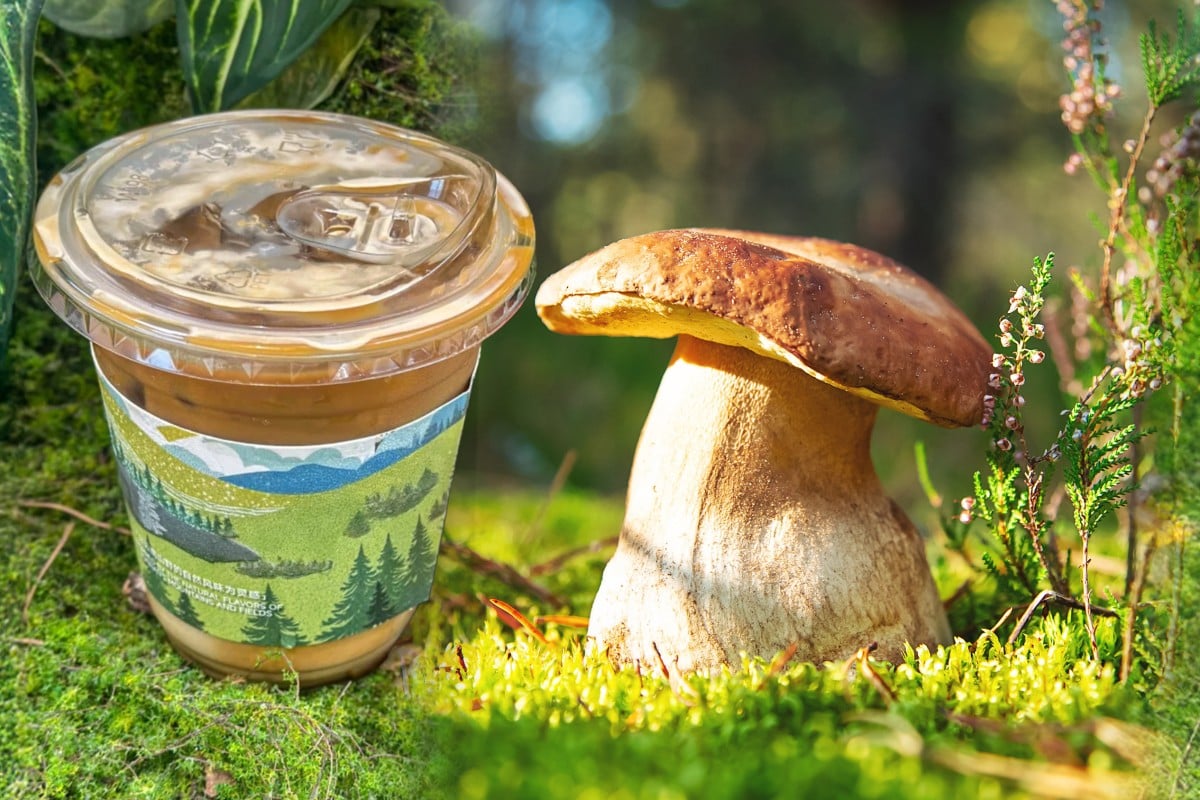
Dubai – 16 September 2025 – (Qahwa World) – A café in China’s southwestern Yunnan province has launched two seasonal drinks that blend coffee with penny bun (porcini) mushrooms, priced at 23 yuan (about US$3) per cup. The offerings are a “Cheese Americano with Penny Bun” and a “Penny Bun Oat Milk Latte,” an innovation built on uniting two local signatures in one cup: Yunnan coffee and premium wild mushrooms.

The preparation details point to a measured flavor approach: the Cheese Americano is served with mushroom powder, a coffee base, a layer of cheese cream, and a cookie shaped like the mushroom, while the oat-milk latte is made with coffee, mushroom powder, and oat milk. Each is priced at roughly 23 yuan. These formulations have been attributed to “Forleaf Coffee” in Yunnan, according to recent regional coverage.

Crowds have shown up from the early days. Staff at the café say they sell around 50–70 cups of mushroom coffee daily, with customers coming specifically to try the two drinks. The venue has previously offered a “black truffle coffee,” suggesting a pattern of seasonal, attention-grabbing innovations that ride the wave of curiosity.

The timing is no accident; June through September is wild-mushroom season in Yunnan, when celebrated varieties—such as matsutake, termite mushrooms, and penny bun—top the lists of those seeking forest-driven flavors. This seasonal context helps explain the widespread interest and the early impression that “the mushroom here is part of the terroir,” not a passing add-on.

On social platforms, opinions split between those who see mushrooms as “too precious to be mixed with coffee” and others who found the taste “surprisingly delicious.” These differing positions have accompanied news of strong sales, giving the innovation a debate that goes beyond mere “trendiness.”

Even so, short-term success does not guarantee continuity. Management at Forleaf Coffee has indicated that repeating the drinks next year is not assured and will depend on the cost of ingredients—chief among them the mushroom. For reference, penny bun prices in August ranged between 40 and 80 yuan per kilogram, a band wide enough to make the decision to continue primarily an economic one before it is a marketing call.

The Yunnan experiment fits into a broader Chinese wave that blends coffee with local or unusual components. In 2024, Starbucks China offered a pork-flavored latte for Lunar New Year—priced at 68 yuan per cup—in a notable example of limited editions serving as both flavor testbeds and marketing tools. In recent months, other controversial drinks—such as a “pork-intestine latte” in Sichuan—have also spread widely on social media.

What distinguishes the Yunnan case is that the “mushroom” here is not “functional” in the wellness sense common in global mushroom-coffee blends (like lion’s mane and chaga), but an edible porcini used for flavor—crafting a new profile that marries a gentle umami with coffee’s sweet-bitter edge. This approach relies on the ingredient’s rootedness in the region’s forests and daily life, not on physiological claims or dietary supplements.

Despite the momentum, repeatability is constrained by several factors: price volatility during the harvest season, the cost of developing and localizing recipes inside production lines, and the café’s ability to maintain powder quality and a stable supply. While queues often mark the initial “buzz,” turning the novelty into a seasonal signature requires a precise balance of feasibility, supply, and flavor. Local coverage—explicitly and implicitly—has tied the drink’s fate to input costs and annual availability.

In sum, this is a flavor-first experiment that draws more on terroir than on “novelty for novelty’s sake,” while capturing the spirit of rapid innovation in China’s highly competitive coffee market, where local blends become shareable stories that drive visits. Between admiration and objection, the future of “mushroom coffee” in Yunnan rests on seasonal pricing—numbers alone will decide whether the craze returns next season or remains a memory of 2025.