Coffee Industry Heroes Awards 2026: Finalists Announced

Melbourne – QAHWA WORLD

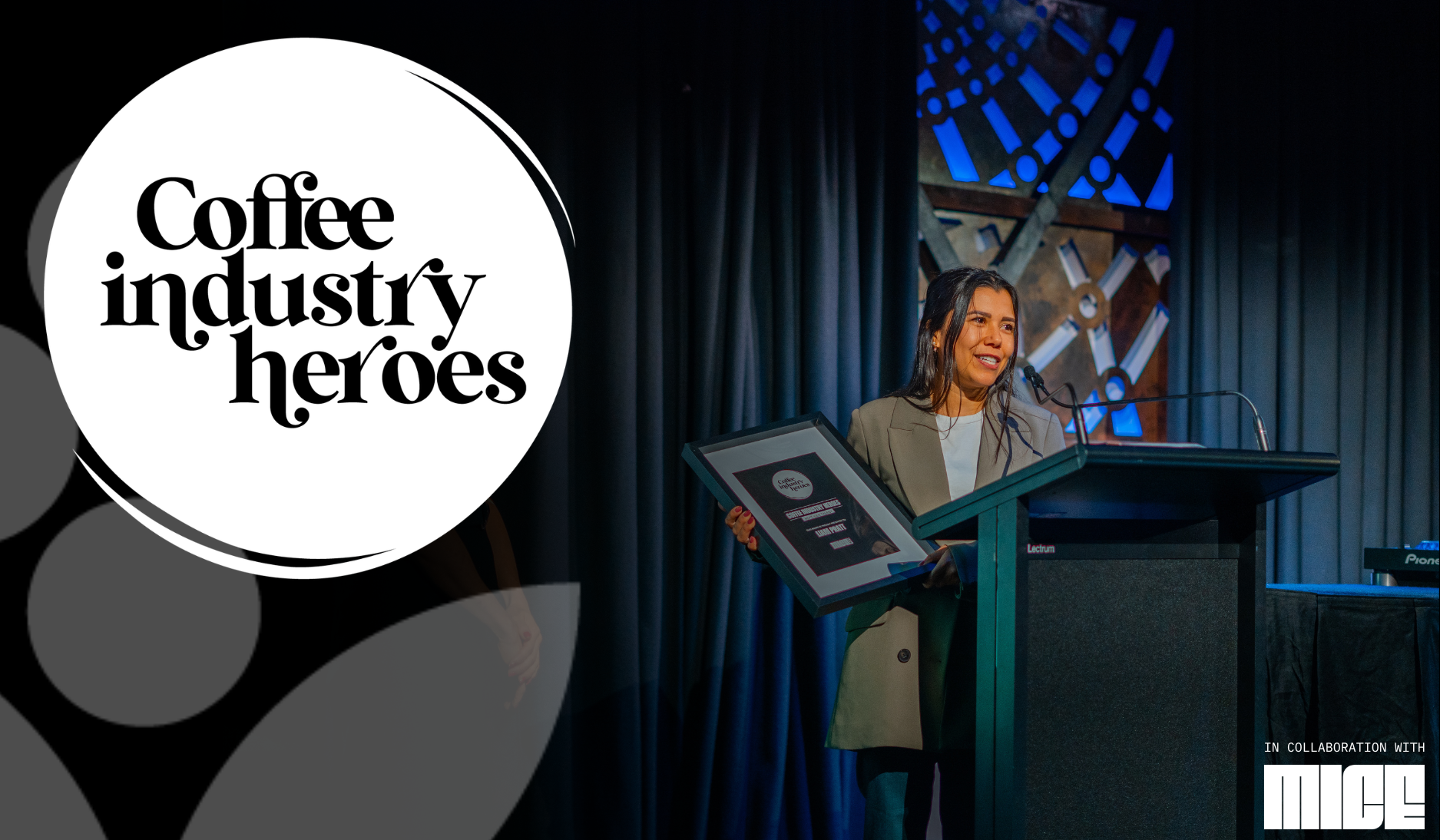
The Coffee Industry Heroes Awards have revealed the 2026 finalists, recognizing individuals and businesses making a significant impact on Australia’s coffee industry. The awards, part of the Melbourne Coffee Expo 2026, will take place alongside the MICE Opening Party at the Melbourne Convention & Exhibition Centre – Courtyard Venue on Thursday, 26 March 2026, from 5:30 PM to 8:30 PM. Attendees are requested to wear cocktail attire.

YOU MAY LIKE: MICE 2026 Reveals Exhibitor Line-Up in Melbourne

The awards highlight leaders across multiple categories, celebrating innovation, mentorship, sustainability, and community contribution.

  • 2026 Finalists

Best New Cafe

  • Almost French Epicure

  • Ratio Coffee Crows Nest

  • Sidecar Roasters

Coffee Educator (Mentor)

  • Ian Abadiano, Coffee Mentality

  • Danny Andrade, Blackboard Coffee Roasters

  • Nadia Araujo Moreira, Southland Merchants

  • Simon Gautherin, Zest Specialty Coffee Roasters

  • Nicole Motteux, Sustainable Coffee Advocate

  • Andres Roaster, Rubra Coffee

  • Chris Short, Cafetto

  • Joshua Walhain, Alternative Brewing

  • Li Wang, Sanjiangwater PTY LTD

Community Champion

  • Ian Abadiano, Coffee Mentality

  • Danny Andrade, Blackboard Coffee Roasters

  • Rodney Ayton, Bean Station Wodonga

  • Andres Felipe Ballesteros Zuluaga, Rubra Coffee Roasters

  • Jon Barnett, Slurpsup Sydney

  • Marcelline Budza, Rebuild Women’s Hope Cooperative

  • Nicole Motteux, Sustainable Coffee Advocate

  • Damien O’Brien, Coffee Foundation

Home Grown Hero

  • Ian Abadiano, Coffee Mentality

  • Rebecca Zentveld, Zentbeld’s Coffee, Farm and Roastery

Lifetime Achievement

  • Danny Andrade, Blackboard Coffee Roasters

  • Angelo Augello, Formerly Bean Alliance Group

  • Sebastián Farias Arcila, Far More

  • Melissa Floreani, Clark St Coffee Roasters

  • Jack Hanna, Single Estate

  • Stephen Hurst, Mercanta Ltd.

  • Nicole Motteux, Sustainable Coffee Advocate

  • Lucy Ward, ST. ALi Coffee

Next-Gen Talent

  • Justin Calpito, Honeybird Coffee

  • Hany Ezzat, Ona Coffee / Ni Wares

  • Danni Lubbe, London Tavern Hotel

  • Jerome and Micah Manion, More Matcha

  • Efthimios Tsiukardanis, Code Black

Sustainability Champion

  • Cateco Trading Pty Limited

  • Clark St Coffee Roasters

  • Coffee Mentality

  • GRADA

  • Grounded Packaging

  • Huskee (BioPak)

  • made by Fressko

  • Pablo & Rusty’s

  • Reground

  • Sustainable Coffee Advocate

The Coffee Industry Heroes Awards honour those who advance Australia’s coffee culture, from innovative cafes and sustainable operators to influential educators and community champions. The announcement of the 2026 finalists marks a key milestone ahead of the Melbourne Coffee Expo 2026, which runs from 26 to 28 March.

Why Dubai Coffee Traders Must Prepare for EUDR now?

The December 2026 EUDR deadline will reshape how African coffee reaches European consumers — and traders in the Gulf are caught in the middle.

By Raymond Reuel Wayesu

Dubai has become the Middle East’s dominant coffee trading hub, with re-exports valued at nearly $1 billion annually and over 615 licensed traders operating through the DMCC Coffee Centre. Much of this coffee originates in East Africa — Ethiopia, Uganda, and Kenya — and is destined for European roasters and retailers.
But a regulatory storm is approaching that threatens to disrupt these established trade flows.

  • What is the EUDR?

The EU Deforestation Regulation (Regulation 2023/1115), which takes effect on 30 December 2026, requires that all coffee entering the European market be verified as “deforestation-free” with plot-level geolocation data. Importers must submit Due Diligence Statements proving their coffee was not grown on land deforested after December 2020.
The scale of this requirement is unprecedented. For Uganda alone, this means geolocating approximately 1.7 million smallholder coffee farmers, each cultivating an average of just 0.18 hectares.

  • Why should Dubai-based traders care?

Here’s the critical issue: traceability chains break when coffee passes through intermediary hubs.

Research from CIFOR-ICRAF found that EUDR compliance maps contain significant accuracy problems—claiming “12% more forest globally than national FAO data” with an “18% chance that a spatial unit marked as forest is considered non-forest in other data” (van Noordwijk et al., 2025). The same researchers warn that smallholders practising agroforestry – the very farmers who have preserved Africa’s remaining coffee forests – could become “collateral damage” of poorly designed compliance systems.

For traders handling mixed-origin lots, the risk compounds. Under EUDR, mixing compliant and non-compliant coffee renders entire shipments non-compliant. Industry analysis estimates that 50% of EU coffee imports are “disenfranchised” — passing through multiple intermediaries with up to ten handlers between farmer and exporter.

The Overseas Development Institute warns that Ethiopia could face “an 18.4% drop in overall exports and a 0.6% decrease in GDP” if coffee exports to the EU cease (Keane et al., 2024). Uganda, now Africa’s largest coffee exporter by volume with 60% of exports destined for Europe, faces similar exposure. UNCTAD’s analysis is stark: “Traceable coffee is only possible with an estimated 10% of Ugandan producers” given its 1.8 million smallholder farming households.

A Stanford-led review concludes that “despite zero-deforestation commitments, high rates of deforestation persist” and that “supply chain initiatives only cover a small share of tropical deforestation” (Lambin & Furumo, 2023). Wageningen University researchers examining Cameroon and Ethiopia warn that “smallholder farmers may face greater challenges than currently anticipated by the EU” due to “limited awareness and infrastructural gaps that hinder traceability” (Ten Hove et al., 2025).

The traders who solve this traceability gap will maintain their EU market access. Those who don’t risk being cut off from Europe’s €8 billion coffee market — or facing penalties of up to 4% of EU turnover.

  • What can traders do now?

With 12 months until enforcement, the window for preparation is narrowing. Practical steps include auditing your supply chain exposure to identify which suppliers and origins lack plot-level geolocation data, engaging with origin-country traceability initiatives such as Uganda’s National Traceability System, and evaluating compliance technology partners.

  • A note on validation

Full disclosure: I’m the founder of ProofSource, a coffee traceability platform being developed for EUDR compliance. But I’m sharing this analysis because the problem is real and urgent — regardless of which solution traders ultimately choose.
We’re currently in validation mode, offering free 30-day EUDR Readiness Assessments to coffee exporters and traders. This diagnostic service maps your supply chain exposure, identifies traceability gaps, and delivers a personalised compliance roadmap — before we build our full platform. We believe in testing whether the market truly needs what we’re building before we build it. Request your assessment at proofsource.vercel.app

Building the complete solution — particularly the satellite verification infrastructure needed to verify deforestation-free status at scale — requires significant investment. We’re actively seeking partnerships with climate-focused research institutions, coffee industry funds, and innovation programmes in the Gulf region who share our mission of protecting smallholder market access while preventing deforestation.

If you’re a Dubai- or Abu Dhabi-based trader wanting to understand your EUDR exposure, or a research institution interested in collaborating on coffee supply chain traceability, I welcome the conversation.

The December 2026 deadline will arrive faster than anyone expects. The traders who act now will be positioned to maintain their European market access. Those who wait may find themselves scrambling — or shut out entirely.

Raymond Reuel Wayesu is the founder of ProofSource and a PhD candidate in machine learning and computer vision for agriculture.
Contact: [email protected] | [email protected]

JDE Peet’s Reports Strategic and Operational Progress, Confirms 2025 Outlook

Amsterdam – Qahwa World

JDE Peet’s N.V. (Euronext: JDEP), the world’s leading pure-play coffee company, announced continued progress in implementing its new brand-led growth strategy and productivity initiatives while reaffirming its 2025 financial outlook.

Strategic and Productivity Initiatives Under Way

On July 1, 2025, JDE Peet’s launched its “Reignite the Amazing” strategy, designed to accelerate brand-led growth and enhance operational efficiency. The company reported solid progress across several fronts:

  • U.S. Integration: The full integration of the U.S. capsules business into Peet’s Coffee was completed following the discontinuation of the L’OR Barista roll-out in the American market.

  • Distribution Transition: Peet’s is transitioning from its Direct Store Delivery (DSD) system to a direct central distribution model in the U.S., expected to be completed by the end of the first half of 2026.

  • Portfolio Optimization: The company exited its low-margin Food Ingredients (B2B) business in Asia.

  • Manufacturing Footprint: Two additional plant closures were announced—one in northeastern Brazil and another in the northeastern United States—as part of an ongoing global optimization program.

  • Brand Rationalization: Fifteen long-tail brands are scheduled for transition within the next six months.

  • Cultural Transformation: JDE Peet’s is reshaping its corporate culture around four newly defined values—Dare to amaze, Own it, Make it simple, and Win together—to foster agility, ownership, and transparency across the organization.

Business Performance Update

The company stated that its overall third-quarter performance was broadly in line with expectations, taking into account anticipated retailer negotiations and customer pre-buying during the first half of the year.

JDE Peet’s reaffirmed its 2025 outlook, citing strong discipline in pricing and cost control that continues to support gross profit and adjusted EBIT. Approximately 96 percent of the second wave of global price negotiations, which began in July, have already been completed.

While green-coffee prices remain significantly elevated and increasingly volatile compared to previous years, JDE Peet’s said it continues to manage these pressures effectively. The company also confirmed the termination of its share-buyback program as of September 1.

Update on Keurig Dr Pepper Transaction

The planned public offer by Keurig Dr Pepper Inc. (KDP) for all issued and outstanding shares of JDE Peet’s is progressing as scheduled:

  • The regulatory antitrust filing has been submitted in the U.S.

  • The company has received positive advice from JDE Peet’s Dutch Works Council.

  • The transaction closing remains expected in the first half of 2026, subject to the satisfaction or waiver of customary pre-offer and closing conditions.

About JDE Peet’s

JDE Peet’s is the world’s largest pure-play coffee company, serving approximately 4,400 cups of coffee per second across more than 100 markets. Guided by its Reignite the Amazing strategy, the company is pursuing brand-led growth through three global power brands—Peet’s, L’OR, and Jacobs—alongside a portfolio of nine local icons.

In 2024, JDE Peet’s generated €8.8 billion in sales and employed more than 21,000 people worldwide.
More information: www.jdepeets.com

Dignity Before Flavor: Why the First Metric in Coffee Isn’t in the Cup

By: Krzysztof Blinkiewicz

The coffee world prides itself on precision. We measure grams, seconds, water temperature, and flavor scores down to decimals. Yet the one thing we almost never measure is the first and only true metric: dignity.

A 90-point Gesha can still come from a farmer who skips meals to pay off debt. A latte art champion can still return home to a barista wage that doesn’t cover rent. A Q Grader can spend years calibrating flavors while being forbidden to question the institution that controls their license. These are not abstract injustices — they are lived realities.

In Colombia, one producer grew a microlot that sold for over $40/kg. Buyers praised its floral complexity, but that price applied only to a few dozen kilograms out of tons of coffee. The rest sold near the global “C” price of about $9/kg. After paying wages, fertilizer bills, loan repayments, milling, transport, and exporter margins, what reached his household was minimal. When his daughter needed urgent medical care, one hospital bill erased an entire season of work. The story of $40/kg was not one of prosperity, but of fragility disguised as success.

Another farmer, with a large plantation and several loyal employees, continually invests in new methods and varieties, even Gesha, financed through loans. Year after year, the books balance at “zero,” but debts grow. Rising prices no longer help. The cycle leads to depression, anxiety, and isolation. A once-respected leader of her community is left paralyzed by despair, with no escape from debt and no way to sell her land without loss.

In Europe, a young barista in a “specialty” café earns barely above minimum wage, scrolling second-hand markets for essentials during breaks. Customers post Instagram photos of their flat whites while she wonders how long until burnout drives her out of coffee.

Even barista champions face indignity. A national winner earns the right to compete on the world stage, but while local sponsors fund flashy events, the champion struggles to cover basic travel and training costs. Salaries remain unchanged, and sponsorship funds often vanish into dinners, rented screens, or private pockets. Her dignity, like her future, was never part of the budget.

The weight of coffee is heavier than sacks. It carries bent backs, stolen hours, and lives strained to the limit. Dignity must be the first measure — before flavor, before scores, before profit.

Consider the boy who dreams of roasting. He works at a small UK roastery, earning fairly, yet knows a decade of saving won’t buy him his own machine. With his father’s help, he purchases a second-hand roaster, fills it with a few bags of safe coffees, and pays for an expensive trade fair stand. His online shop sells barely five bags a week. Each month the dream drains him further. Should he give up?

Flavor notes often mask these realities. We are trained to talk about blueberry, jasmine, and red apple, but not about exhaustion, debt, or fear. This is pointwashing: when numbers and tasting notes plaster over lives in struggle.

At The Better Coffee, we reject this. Our compass is different. Dignity is the baseline: the right to rest without guilt, to pay rent without fear, to speak without punishment, and to imagine a future without shame. Only then does flavor truly matter.

This is not charity, nor corporate social responsibility. It is survival — and justice.

In practice, this means:

  • Buyers can sign contracts that guarantee stable income rather than speculative premiums.

  • Roasteries can redirect marketing budgets to raise barista pay.

  • Trainers can create classrooms open to critical dialogue, even if it challenges established structures.

  • Consumers can ask cafés not only about tasting notes, but how the people behind the coffee are treated.

Dignity is not an optional extra. It is the foundation. Without it, no score, sticker, or award means anything. Coffee does not need to reach 100 points — it needs to meet the needs of those who grow, roast, brew, and drink it. A system that cannot provide dignity is not “specialty”; it is extraction disguised as craft.

So next time you raise a cup, pause. Ask yourself: does this coffee taste of freedom — or of someone else’s unpaid bill?

Vietnam on the Brink of a Thriving Coffee Season: Higher Yields and Greener Practices

Hanoi – September 15, 2025 – (Qahwa World) – Vietnam is preparing for the 2025/26 coffee harvest season with a sense of optimism, as early forecasts point to higher yields, improved quality, and significant progress on sustainability initiatives. Industry experts confirm that weather conditions, farming practices, and regulatory readiness are aligning to strengthen the country’s position as one of the world’s most important coffee producers.

Production expectations for the new crop are estimated at 29.65 million bags, an 8.3% increase compared with last year. Robusta, the dominant variety in Vietnam, is projected at 28.34 million bags (+7.4% year-on-year), while Arabica is forecast to reach 1.31 million bags, marking an impressive 31.3% rise. These estimates are based on crop surveys and current field observations. Farmers report that the cherries are developing steadily, with many Robusta plants entering maturation and Arabica already approaching harvest.

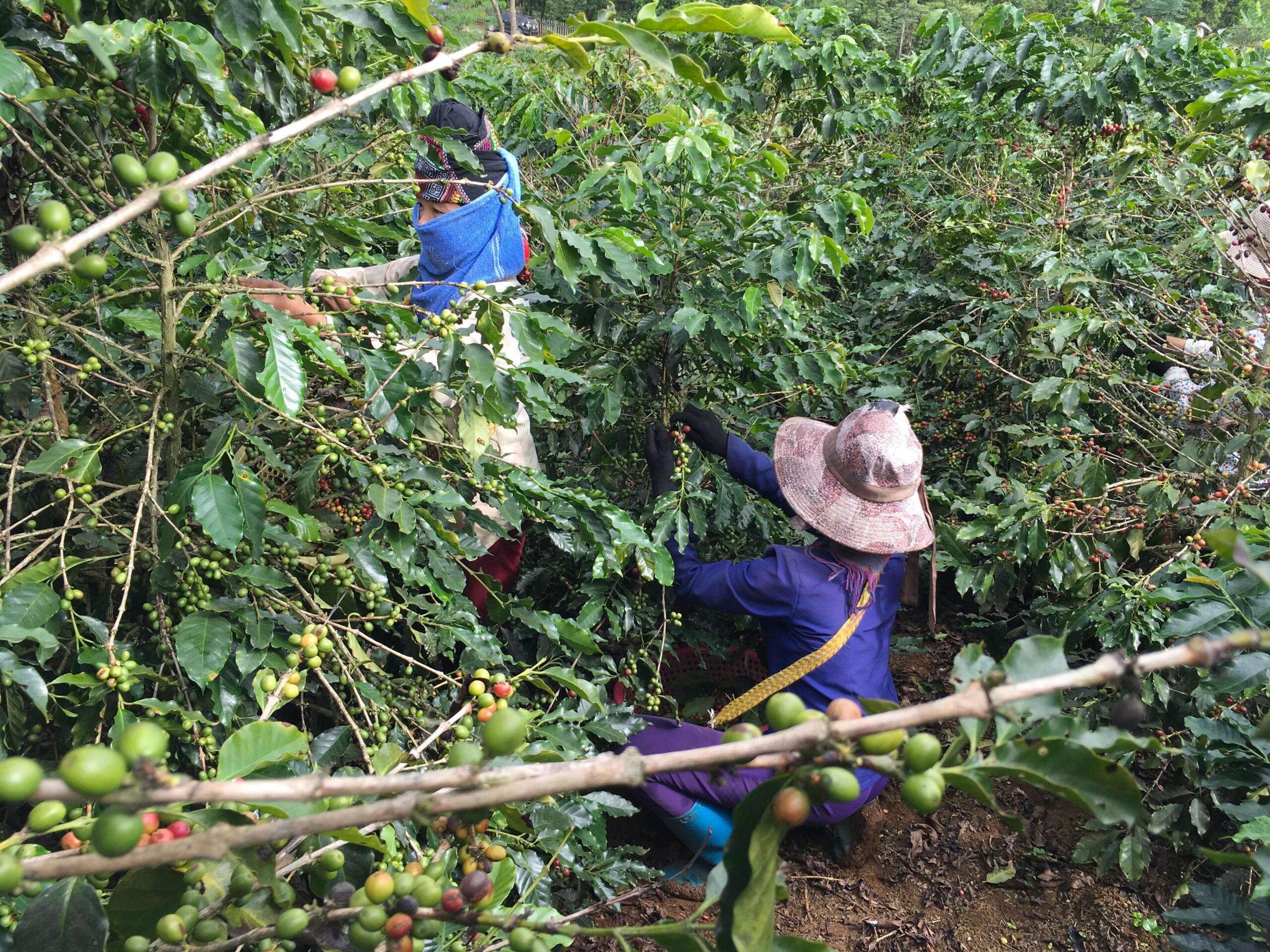
Weather conditions have remained favorable so far, with rainfall close to historical averages. This suggests that harvest timing will mirror last year: Arabica is expected to begin in mid-September, Robusta in mid-October, with both peaking in early December and concluding by late January. If favorable conditions continue, quality is expected to improve, supported by the growing adoption of Good Agricultural Practices (GAPs) such as pruning, weeding, and shade management. Many farmers are also converting from chemical fertilizers to organic compost, which is expected to further enhance cup quality and reduce input costs.

At this stage, no major challenges have been reported. Producers and processors are optimistic, and high prices across agricultural commodities are providing farmers with strong returns for the second consecutive year. This economic stability is enabling many to invest in better inputs and more sustainable practices, creating a positive outlook for both production and livelihoods.

Vietnam’s coffee industry is also navigating an evolving regulatory environment. Domestically, the government has introduced a 5% Value Added Tax (VAT) on coffee trading, with exporters and buyers required to comply through verified suppliers. On the international stage, the European Union Deforestation Regulation (EUDR) will come into force on January 1, 2026. Although not yet active, Vietnamese supply chains are already preparing by strengthening traceability systems and collecting farm-level data to ensure compliance when the regulation takes effect.

Sustainability remains a central focus this year, with multiple initiatives underway to boost farm productivity, resilience, and environmental responsibility. The IMPACT responsible sourcing program continues to expand, with a 4,000-metric-ton supply chain in Gia Lai now in its second verification cycle and a 3,500-metric-ton chain in Lâm Đồng advancing into its third year. According to Senior Sustainability Coordinator Nhu Le, more than 80% of the supply chain has now been mapped using polygon farm plots, a sharp increase from 30% earlier this year, both to prepare for EUDR and to support broader forest conservation efforts.

Expansion is also taking place in Arabica-growing regions. In Son La and Lâm Đồng, more than 1,500 farmers across five wet mills have joined programs certified under RA, 4C, and the Global Coffee Platform (GCP). These farmers are receiving training on sustainable agricultural practices aligned with international standards, further strengthening Vietnam’s network of responsible suppliers.

Farmer training remains a cornerstone of the country’s sustainability agenda. Over the past season, more than 1,500 farmers have participated in interactive workshops covering composting, fertilizer management, water and weed control, Integrated Pest Management (IPM), and shade tree cultivation. These sessions not only transfer technical knowledge but also create opportunities for farmers to share experiences and apply practices directly in their fields, enhancing resilience at both farm and community level.

One of the most promising developments has been the shift from chemical fertilizers to organic composts. Farmers are increasingly learning to produce compost from coffee husk waste generated during Robusta natural processing. So far, nearly 500 farmers have been trained in composting techniques, collectively producing more than 3,000 metric tons of organic fertilizer. This practice reduces chemical inputs, improves soil health, cuts costs, and contributes to lower carbon emissions.

Tree planting projects are also taking root. Over the past year, farmers have received 47,000 forest and fruit tree seedlings, which will help diversify local ecosystems, improve environmental resilience, and provide additional sources of income through fruit and timber.

Soil and carbon initiatives are another priority. The Vietnam team has collected 475 soil samples to provide tailored fertilizer guidance, helping farmers cut input costs while maintaining yields and lowering emissions. At the same time, carbon footprint mapping is underway across partner projects, with the results expected to shape long-term reduction strategies and support compliance with new global standards.

The combination of favorable weather, improved agricultural practices, and strong sustainability investments has positioned Vietnam’s coffee industry for a productive 2025/26 season. With production projected to rise and sustainability outcomes deepening, the outlook for both farmers and buyers is positive. The sector’s early adaptation to regulatory changes and its ongoing commitment to responsible sourcing reinforce Vietnam’s role as a global leader in coffee supply.

As the harvest begins in the coming weeks, industry stakeholders are closely watching how these combined efforts will translate into both higher yields and better quality in the cup. For now, Vietnam’s coffee story in 2025/26 is one of growth, resilience, and readiness for the challenges and opportunities that lie ahead.