Roast Magazine Reveals 2026 Roaster of the Year Winners

Dubai – Qahwa World

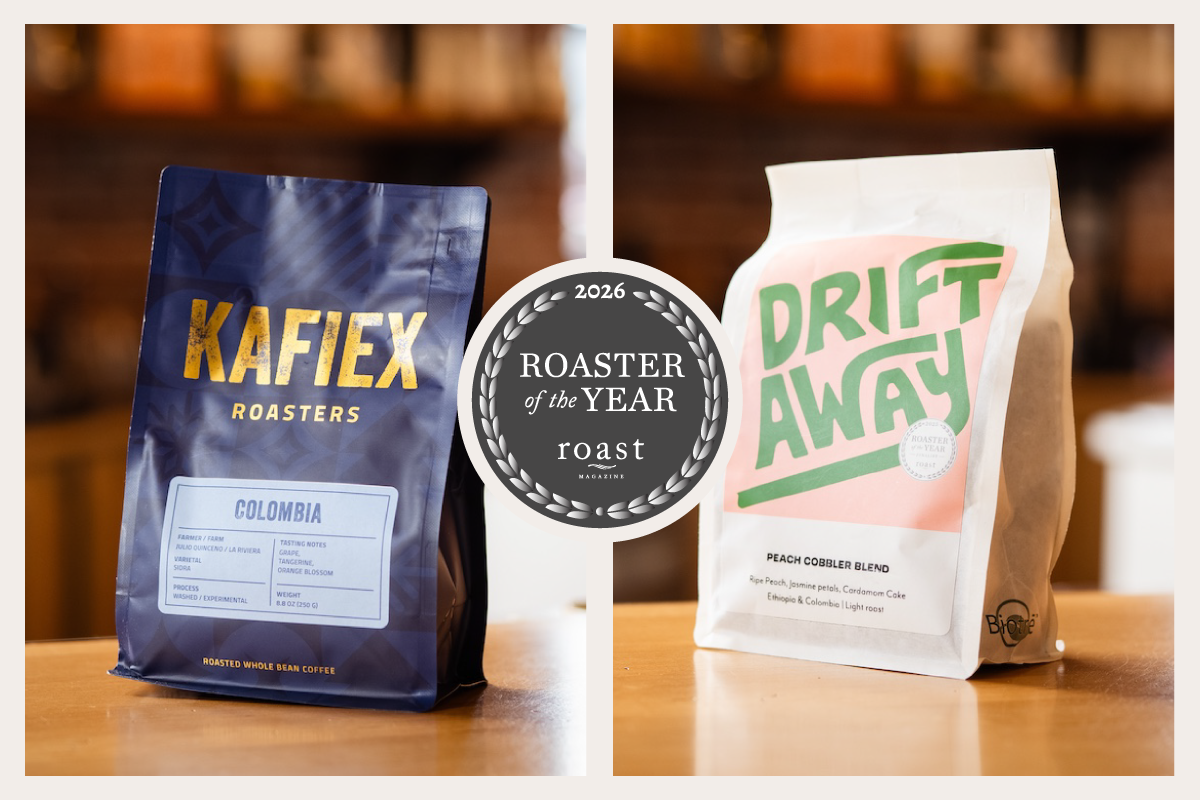
Two outstanding coffee companies have earned top recognition in the 22nd annual Roaster of the Year awards presented by Roast Magazine. Kafiex Roasters and Driftaway Coffee were named the 2026 winners in the Micro and Macro categories, respectively. Their achievements will be highlighted in the November–December 2025 issue of the magazine.

Each year, Roast Magazine selects two roasters that set benchmarks for excellence in coffee quality, environmental responsibility, education, and community engagement. The Micro Roaster of the Year category honors companies producing under 100,000 pounds annually, while the Macro category recognizes those exceeding that volume.

Kafiex Roasters: 2026 Micro Roaster of the Year

Hailing from Vancouver, Washington, Kafiex Roasters operates as both a roaster and café business. Established in 2018 by Matthew and Seidy Selivanow, the company is widely recognized for its focus on sustainability and education. Kafiex runs two coffee shops and has introduced a range of environmentally friendly initiatives, including a zero-waste specialty instant coffee line and a roasting system designed to minimize emissions.

Beyond roasting over 16,000 pounds of coffee in the past year, the team invests heavily in bilingual training programs, direct relationships with producers, and inclusive education efforts that reflect its commitment to accessibility and community empowerment.

Driftaway Coffee: 2026 Macro Roaster of the Year

Founded in Brooklyn, New York, in 2014 by Anu Menon and Suyog Mody, Driftaway Coffee has become known for its personalized approach to coffee education and sustainability. The immigrant- and woman-led business specializes in subscription-based coffee experiences that connect consumers directly with farmers through virtual tastings and transparent sourcing.

Driftaway’s sustainability efforts include compostable packaging, full pricing transparency, and consistent support for women- and minority-owned farms. The company also donates a portion of its proceeds to World Coffee Research. Over the past year, Driftaway roasted more than 125,000 pounds of coffee, continuing its mission to combine environmental responsibility with consumer education.

Honoring Innovation and Impact

The finalists in this year’s competition reflect the evolving spirit of specialty coffee. Alongside Kafiex in the Micro category were Three Keys Coffee and Dessert Oasis Coffee Roasters, while Corvus Coffee and Nossa Familia Coffee joined Driftaway as Macro finalists.

All of the contenders demonstrated exceptional leadership in sustainability, equity, and community building — values that continue to define the future of coffee roasting worldwide.

Dubai: The Next Global Coffee Trade Nexus

Dubai — Qahwa World

Dubai is rapidly establishing itself as one of the world’s most influential players in the international coffee trade. Once renowned for its dominance in gold, oil, and logistics, the emirate is now redefining itself as a global coffee hub connecting producing countries in Africa, Asia, and Latin America with consuming markets across Europe, the Middle East, and North America. With its strategic location, advanced infrastructure, and thriving specialty coffee culture, Dubai is emerging as the next global nexus of the coffee industry.

Coffee is far more than a daily beverage — it is a $200 billion global economy that sustains over 25 million smallholder farmers and fuels more than two billion cups consumed every day. Yet the industry is under intense pressure. Climate change, volatile prices, supply chain disruptions, and changing consumer tastes have reshaped global trade dynamics. Amid these challenges, Dubai has positioned itself as a stabilising force that combines innovation, transparency, and accessibility to create new opportunities for producers and traders worldwide.

The Dubai Multi Commodities Centre (DMCC) has been at the forefront of this transformation through its state-of-the-art Coffee Centre located in the Jebel Ali Free Zone. The facility offers integrated services for roasting, storage, packaging, logistics, and trade, serving more than 300 members across the global coffee value chain. Designed on a pay-as-you-go model, it allows small producers and independent traders to access world markets without the burden of fixed commitments. According to Mike Butler, Associate Director of Coffee at DMCC, this flexible approach “makes the Coffee Centre extremely friendly for small businesses” and allows them to scale as they grow.

“Dubai is defining the global trend in specialty coffee today,” said Garfield Kerr, President of the Specialty Coffee Association (SCA) and founder of Mokha1450. “In Dubai, coffee functions like wine elsewhere — it’s a cultural experience built around craftsmanship and taste.” Over the past decade, independent roasteries and boutique cafés have replaced international chains across the city. Consumers have become increasingly informed about freshness, roast profiles, and sustainability, pushing the market toward higher quality and transparency.

Dubai’s geographical advantage is another factor behind its success. Situated almost exactly between the world’s top producing nations — Brazil, Vietnam, Colombia, Indonesia, and Ethiopia — the emirate offers unmatched access to global shipping routes. Its proximity to East Africa, one of the fastest-growing specialty coffee regions, gives it a natural advantage over traditional European hubs. “If you map the world’s major coffee producers, Dubai sits almost exactly in the centre,” Butler explained. “It’s only a matter of time before Dubai challenges Hamburg as the global leader in coffee trade.”

The DMCC Coffee Centre’s Tradeflow platform has introduced a new level of digital transparency to an industry often criticised for its opacity. Every batch traded through the system is physically verified and stored within the centre’s temperature-controlled facility, ensuring quality and trust between producers and buyers. By integrating blockchain-based traceability and tokenised finance options, DMCC has reduced intermediaries and opened new financing channels for smallholder farmers. Its partnership with the African Fine Coffees Association (AFCA) further supports African producers through logistics, warehousing, and buyer introductions, helping them retain greater value from their exports.

Dubai’s rise as a coffee capital is also cultural. The World of Coffee Dubai exhibition, held annually at the Dubai World Trade Centre, has become a magnet for industry leaders and enthusiasts alike. The 2025 edition drew nearly 17,000 visitors and 2,000 exhibitors, hosting auctions of the world’s rarest coffees and showcasing 131 debut brands — three-quarters of them international. “The world showed up,” said Kerr. “The coffee innovation coming out of Dubai is now influencing global trends.”

As global coffee trade evolves, sustainability has become central to Dubai’s vision. The emirate is investing in climate-smart agriculture, low-carbon logistics, and advanced digital systems that track environmental compliance. Experts warn that by 2050, up to half of existing coffee-growing land could become unsuitable due to rising temperatures, making adaptation essential. Initiatives such as agroforestry, drought-resistant varieties, and circular-economy recycling of coffee by-products are gaining momentum.

Through innovation and technology, Dubai is setting new standards for transparency and sustainability in coffee trading. Artificial intelligence now supports quality monitoring, while blockchain ensures traceable supply chains. Companies are exploring compostable packaging, recycling capsules, and transforming used coffee grounds into new products, aligning commerce with environmental responsibility.

“Whether it’s the supermarket, the sports club, or the cinema, coffee standards are rising everywhere,” Butler observed. “Dubai is uniquely positioned to lead this evolution, combining innovation, logistics, and sustainability into one cohesive ecosystem.”

In an era of shifting trade routes and unpredictable markets, Dubai has turned its vision into action. The city’s integration of culture, technology, and commerce is rewriting the rules of how coffee is traded and valued. More than a gateway between continents, Dubai has become the command centre of global coffee commerce — a place where beans, business, and innovation converge to shape the future of one of the world’s most beloved drinks.
Victoria Arduino Unveils L’Atelier — A New Creative Space at HOST Milano 2025

Milan— Qahwa World

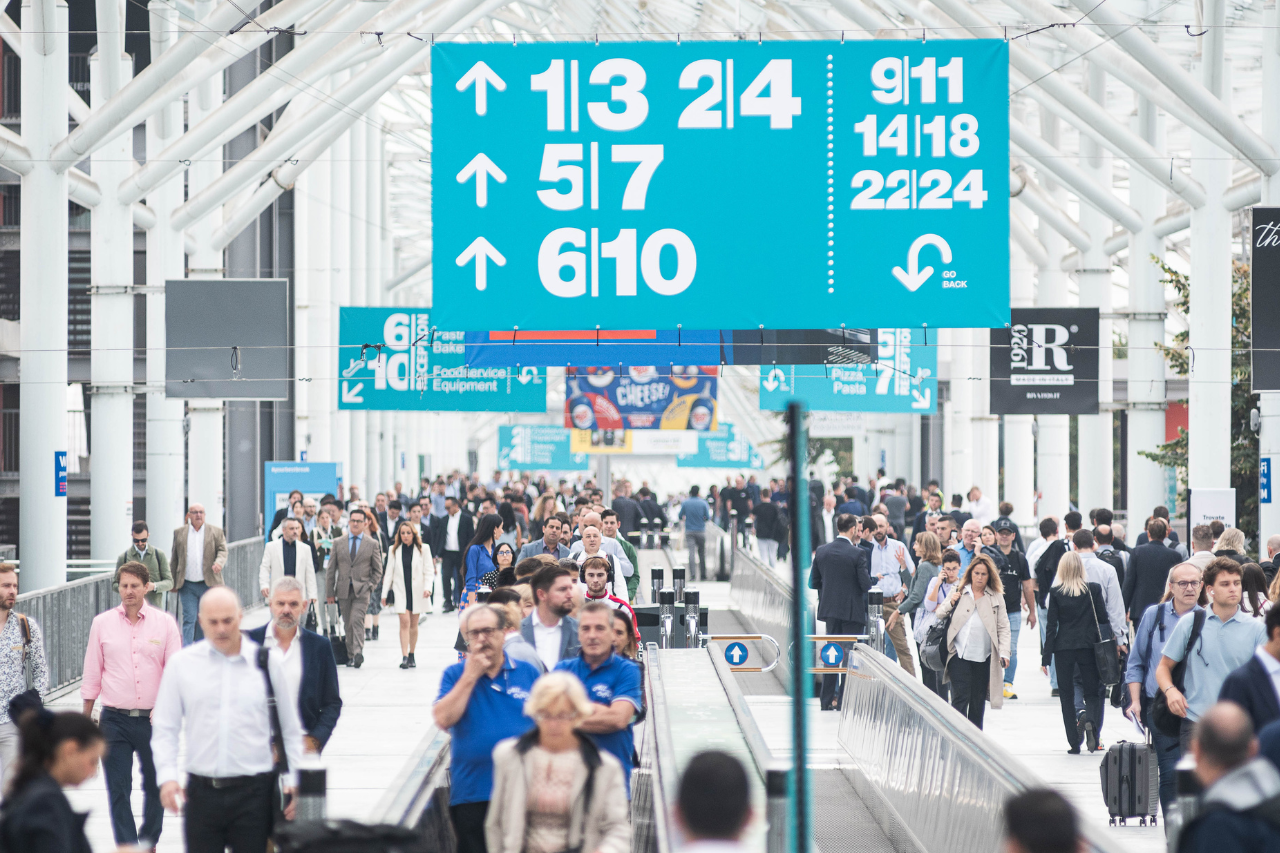
At this year’s HOST Milano, Victoria Arduino is introducing L’Atelier by Victoria Arduino, a new creative concept that merges craftsmanship, design, and innovation into a single narrative space.

Drawing inspiration from the world of luxury ateliers, L’Atelier reimagines the traditional perception of coffee machines — presenting them not just as professional tools but as unique works of art. The new project reflects Victoria Arduino’s longstanding values of Italian excellence, artisanal partnerships, and an unwavering dedication to detail.

L’Atelier is conceived as both a showcase and an experiential journey through the essence of creativity and customization. It highlights the deep connection between coffee culture and high-end design, positioning Victoria Arduino as a key player in bridging the worlds of specialty coffee and luxury craftsmanship.

For its debut edition, Victoria Arduino has partnered with three distinguished Italian artisans and design houses:

BTB Progetto Pelle – Renowned leather artisans known for their bespoke panels and luxury finishes inspired by interior and fashion design.

Intreccio Vivo – A new generation of weavers preserving the art of midollino and raffia weaving, creating biodegradable decorative surfaces.

Vesta – Experts in sustainable, high-end composite materials used by leading international fashion brands.

Through these collaborations, L’Atelier embodies the harmony between sustainability, design, and artisanal mastery. It stands as a symbol of how traditional craftsmanship and modern innovation can coexist within the evolving world of coffee.

Visitors can experience this new chapter of Victoria Arduino’s creative vision at HOST Milano 2025, Hall 16 — Stand A11 – A19 – C12 – C20.

JDE Peet’s Opens Transformed Innovation Laboratory in Utrecht to Accelerate Coffee Breakthroughs

Amsterdam – Qahwa World

JDE Peet’s (EURONEXT: JDEP) has announced the opening of its fully revamped modular Innovation Laboratory in Utrecht, the Netherlands, marking a major milestone in its efforts to accelerate next-generation coffee breakthroughs.

The upgraded facility reinforces the company’s commitment to scaling customer-led innovations and highlights the strategic importance of its global R&D center in Utrecht. With a modular setup, the Innovation Lab allows teams to rapidly develop new coffee products, processes, and packaging materials that can be quickly scaled across JDE Peet’s global manufacturing network.

This investment complements the recent opening of the company’s innovation facility in Joure, which focuses on next-generation extraction and freeze-drying technologies. Together, both facilities represent a combined investment of €8 million.

Key focus areas for the Utrecht Innovation Lab include single-serve, capsule, ready-to-drink, and instant coffee formats, alongside the development of sustainable packaging solutions. In support of JDE Peet’s Common Grounds sustainability goals, the new laboratory also integrates advanced heating and ventilation systems designed to recycle heat and reduce energy consumption.

Carolyn Adams, Chief R&D Officer at JDE Peet’s, said:

“We’re proud that our next generation of coffee innovations will be developed in the home of our oldest and most beloved brands – Douwe Egberts. Coffee is one of the most exciting and fast-evolving consumer categories, with new flavors and formats emerging almost every week. The agile, modular setup of our Innovation Lab enables us to rapidly respond to consumer insights and quickly scale new flavors and formats – whether hot, cold, wet, or dry – to full factory production. As we deliver our ‘Reignite the Amazing’ strategy, this investment will allow us to significantly accelerate the time-to-market of the next generation of coffee breakthroughs in response to changing consumer needs and trends.”

The Utrecht Innovation Laboratory offers a flexible, modular workspace equipped with advanced technologies for coffee product development. These include high-precision grinders and capsule fillers for single-serve and portioned espresso, technologies for JDE Peet’s liquid Cafitesse products, facilities for ready-to-drink cold coffee, and advanced freeze-drying systems for next-generation instant coffee — an important growth area for the company.

Recent innovations developed at the Utrecht Lab include improved non-dairy creamers, energy-efficient roasting methods, home-recyclable paper packaging for freeze-dried instant coffee in the UK, and the ongoing development of mono-material packaging to enhance recyclability.

Milan Hosts Specialized Workshops Bridging Coffee and Culinary Art

Milan – Qahwa World

The global hospitality exhibition Host Milano 2025 is set to welcome leading experts in coffee and gastronomy through two specialized workshops organized by the Italian manufacturer La San Marco, renowned for its coffee machine craftsmanship. These workshops aim to redefine the relationship between coffee and cuisine, highlighting the art of manual espresso extraction as one of Italy’s most refined traditions.

Coffee and Food Pairing

Scheduled for October 17, 20, and 21, 2025, from 12:30 to 1:15 p.m., this immersive workshop, led by Mauro Illiano, takes participants on a sensory journey that goes beyond the cup to explore how coffee can accompany every stage of a meal, much like wine or beer.

The session focuses on the principles of harmony and contrast in flavor pairing and examines how origin, variety, roast, and extraction influence taste and aroma. Participants will also discover how La San Marco, through its advanced La Leva Luxury technology, has redefined espresso as a bridge between global coffee cultures and timeless Italian traditions.

Location: Hall 12 – Booth B48 E55 – Activation Area
Speaker: Mauro Illiano

The Art of Espresso

The second workshop, “The Art of Espresso,” will take place on October 17, 18, 20, and 21, 2025, from 3:00 to 4:00 p.m., led by expert Andrej Godina. Participants will explore the finesse of manual lever extraction and learn how pressure and temperature control can elevate the sensory balance of sweetness, aroma, and body in each cup.

The session demonstrates how even the smallest adjustments in extraction can transform the espresso experience, highlighting La San Marco Leva as a timeless tool that blends Italian artistry with modern precision—perfect for both professional baristas and passionate home brewers.

Location: Hall 12 – Booth B48 E55 – Activation Area
Speaker: Andrej Godina

These events reinforce Host Milano’s commitment to showcasing innovation in coffee and hospitality, offering visitors a chance to experience a perfect blend of culture, flavor, and Italian creativity.

Registration is available via the official Host Milano website.

CQI Marks International Coffee Day with New Chapter in Coffee Quality Journey

Dubai – Qahwa World

On International Coffee Day 2025, the Coffee Quality Institute (CQI) announced a historic transition: the conclusion of its Quality Evaluation Program after more than two decades and the launch of a new chapter focused on advancing coffee quality and sustainability.

Michael Sheridan, Chief Executive Officer of CQI, emphasized the milestone: “As we turn the page, I want to honor the nearly 20,000 people who have earned Q Grader Certification since the inception of the program: you are the vanguard in a global movement for coffee quality. And I want to specially recognize the Q Instructors who have trained and certified all those Q Graders: you are pioneers who have held a light to the darkness, and your work helped to catalyze a revolution in coffee quality in the span of a single generation.”

A Fresh Look for a New Era

To mark this transition, CQI unveiled a refreshed logo and website, designed to evoke coffee’s origins. The institute underlined that while its visual identity has evolved, its mission remains constant: improving the quality of coffee and the lives of the people who produce it.

Focus on Post-Harvest Processing

Sheridan highlighted the growing importance of CQI’s Post-Harvest Processing (PHP) Program. In September alone, CQI welcomed 14 new instructors for the PHP Generalist Course, expanded its training pool, and set a course for releasing an all-new PHP Professional Course by the end of 2025. Preparations are also underway for the PHP Expert Course in 2026, with students, instructors, mentors, and guest lecturers already engaged.

“Innovation in post-harvest processing has never been more important in the coffee market,” Sheridan noted. “Our PHP Program is helping reduce risk and expand opportunity for everyone in coffee supply streams.”

Global Partnerships and Impact

CQI also announced new partnerships to expand its global reach. In collaboration with Peet’s Coffee in the U.S., CQI will deliver post-harvest processing education to suppliers, while a partnership with Sinar in the U.K. will enhance access to advanced processing technology.

Additionally, the CQI Global Coffee Fund has awarded support for several initiatives:

Let’s Talk Coffee in Peru

Scholarships for participants in the Women-Powered Coffee Summit (WPCS) in Mexico

Staffing for the Taste of Harvest in Burundi

Engaging the Coffee Community

As CQI transitions beyond the Q program, Sheridan underscored the importance of dialogue with the global coffee community. CQI will convene producer-focused discussions at major events, including the WPCS in Mexico and Sintercafé in Costa Rica, and will launch a global survey in October to gather input from stakeholders worldwide.

“I hope you will take time to respond and make your voice heard,” Sheridan said. “Coffee needs your leadership.”

With this transition, CQI signals a future shaped by collaboration, innovation, and a continued commitment to quality at every stage of the coffee value chain.

Coffee Tasting in Colors… An Innovative Experience in Dubai

Dubai Qahwa World

I received an invitation from my friend Kobi Tolentino to attend an unusual coffee tasting session. In his invitation, he referred to it as a “coffee tasting in colors”—something I had never heard of before. Upon arriving at the venue, Scarab Café in Al Qusais, Dubai, it became clear that I was about to experience something entirely new: a modern approach to coffee designed by this young company to introduce people to coffee and make the selection process easier through the use of colors.

The event began with a welcoming speech by Mr. Walid Ibrahim, the company’s General Manager. He spoke about his technical background and how he entered the world of coffee, recalling his very first business venture, which started within his family when he persuaded them to buy his personal computer. At that time, the price of a computer was equivalent to that of a small car, like a Fiatan important investment and a big step for them.

He explained: “I felt capable of achieving something, and from that moment I began. I worked for a while as an entrepreneur in the tech field, and coffee was not initially the main activity I envisioned. But about fifteen years ago, my passion for coffee gradually began to grow, until I felt I could do something real in this field, even if I wasn’t sure exactly what it would be.”

He added: “About eighteen months ago, I realized the time had come to take bold steps, and I decided to turn the ‘Escara’ project into a tangible reality rather than just an idea on paper. That’s where the journey beganearly attempts to discover what we could offer, and to identify what would set us apart in the market. We didn’t want to be just another roastery or café.”

He continued: “In fact, it all started in my garage with the team, just like any other startup. We experimented and tasted what we could produce. We invested heavily in ourselves, buying coffee and equipment on our own. Even the large roasting machine took between nine and eleven months to be manufactured and delivered. It took time and effort, but we brought everything together and made it happen here.”

He concluded: “What we aim to provide is not just coffee, but an entirely different experience. We focus on transforming the customer’s journey with coffee, and everything we do revolves around that. The customer is at the core of our work, and we care about them 100%.”

Afterwards, our friend Kobi Tolentino guided us through an engaging lecture, followed by a practical exercise: a coffee tasting in colors. We began to connect colors with flavors and discovered how colors could open up a new gateway to sensory evaluation and a deeper understanding of the coffee world. The experience was truly fascinating and demonstrated how innovation can add an entirely new dimension to coffee culture in Dubai and the wider region.

As Kobi Tolentino noted during the lecture: “Colors are not a substitute for established tasting standards, but rather a simple and friendly entry point that helps people express what they taste more easily.”

Project Background

The idea of “coffee in colors” combines traditional sensory evaluation with color associations to create a more accessible and engaging experience for the public. Research conducted by Scarab revealed that the color brown dominates most tasting sessions, linked to fundamental notes like roast, nuts, and cocoa. By contrast, yellow emerged as a marker of bright acidity in coffees from Honduras and Costa Rica, while pink was tied to delicate floral and fruity notes in some Colombian Gesha varieties.

More “exotic” colors, such as blue and purple, also appeared, representing freshness and dark fruit notes. However, they rarely dominated the tasters’ perceptions. Through this framework, Scarab aims to make evaluation more intuitive, inclusive, and precise, while maintaining professional standards in specialty coffee.

Dubai as a Hub for Coffee Innovation

This experience is not an isolated case. Dubai has become a regional hub for specialty coffee, hosting competitions, championships, and a wave of innovations that are reshaping the way coffee is understood and enjoyed. The “coffee in colors” initiative is a distinctive addition, proving that the city is not only a meeting place for coffee lovers but also a true laboratory for innovative ideas that could redefine the future of the industry.

From Blockchain to Artificial Intelligence: Technology Reshapes the Future of Coffee

Dubai, 17 September 2025 (Qahwa World) –The DMCC Coffee Centre, part of Dubai Multi Commodities Centre, has stressed in its latest Future of Trade Agri Series report that technological innovation is becoming a decisive force in reshaping the global coffee industry. At a time when the sector is grappling with climate change, market volatility, and fragile supply chains, tools such as blockchain, artificial intelligence (AI), and circular economy models are no longer optional experiments but essential solutions that can secure coffee’s future.

For decades, the industry has struggled with a lack of transparency. Coffee beans often move through complex trade routes, making it difficult for consumers to know their origin or production conditions, while smallholder farmers rarely capture the full value of their work. The report highlights blockchain as a game-changer, offering tamper-proof digital records that track beans “from farm to cup.” Every shipment can be linked to certified data on origin, processing, and storage. This level of transparency not only builds consumer trust but also allows farmers to earn fairer prices by showcasing quality and differentiation, narrowing the gap between farmgate prices and final retail value.

The digital transformation extends to trade and finance. The DMCC Coffee Centre emphasizes the role of infrastructure like the Tradeflow platform, where coffee ownership is transferred only after arrival, inspection, and storage under controlled conditions. This system reduces informational risks and enhances trust between buyers and sellers. It also enables the use of digitally tokenized products that provide greater security and clarity of ownership, paving the way for smoother inventory financing and working capital solutions in a sector long plagued by data gaps. In short, Dubai’s coffee hub combines reliable digital records with physical oversight to reduce friction and empower smaller players.

Artificial intelligence is another pillar of this transformation. On the farm, predictive algorithms analyze climate, soil, and humidity data to guide planting and harvesting schedules, mitigating the effects of droughts and erratic seasons while improving yields. At the market level, AI-powered demand forecasting helps roasters and traders anticipate shifting consumer preferences, particularly the rise of specialty coffee among millennials and Gen Z. This allows for better inventory management, targeted product development, and even the creation of blends tailored to specific taste profiles.

The report also points to the rapid shift toward direct-to-consumer channels. Coffee brands are increasingly bypassing traditional retail by building digital platforms, offering subscription models, virtual tasting experiences, and loyalty programs. These innovations shorten the distance between roaster and consumer, while giving small businesses tools to tell the “story of coffee”—origin, processing, and roast profile—in ways that translate into real economic value.

Meanwhile, the circular economy is redefining coffee’s environmental footprint. Millions of tons of coffee waste once treated as byproducts are now being converted into new resources. Startups are turning spent coffee grounds into biofuels, fertilizers, and even textile materials. Packaging innovation is also gaining traction, with compostable capsules, recyclable materials, and structured collection programs that reduce waste and lower carbon emissions. These efforts, the report argues, are not only about image but also about cutting costs and meeting stricter sustainability criteria in key markets.

At the heart of this transformation remains the human factor. Coffee depends on more than 25 million smallholder farmers worldwide, and digital adoption must ultimately improve their livelihoods, not just introduce high-tech systems. The DMCC Coffee Centre underscores the importance of affordable tools—such as low-cost sensors and mobile advisory apps—combined with fair contracts that reflect the quality of specialty coffee. When digital transparency is paired with equitable pricing, the weakest link in the chain becomes stronger, and smallholders can withstand climate and market shocks more effectively.

The report also draws attention to rising compliance demands, including deforestation regulations and origin tracking requirements, which are pushing the industry toward standardized data systems. By providing exporters with shared verification platforms and importers with unified benchmarks, compliance becomes less of a burden and more of an opportunity to unlock premium markets. With Dubai evolving into a logistics and cultural hub for coffee—offering shared roasting, packaging, and storage facilities—the emirate demonstrates how producers in Africa and Latin America can connect to demanding consumers in Asia and the Gulf through clearer traceability, faster access, and reduced risk.

In conclusion, the DMCC Coffee Centre makes clear that coffee’s survival will not depend on wishful thinking but on the adoption of a responsible digital transformation. Blockchain provides transparency, AI enhances precision, direct digital channels strengthen relationships, and circular economy solutions turn waste into resources. Yet the true value of these tools lies in translating them into better farmer incomes, greater consumer confidence, and a more resilient industry. Far from replacing the cultural essence of coffee, technology is extending it: knowledge accumulated through centuries, now reinforced by intelligent systems that give the sector a realistic path to endure and thrive in an era of uncertainty.

Kadıköy Becomes the Capital of Coffee as the 11th Istanbul Coffee Festival Kicks Off

Istanbul, September 14, 2025 (Qahwa World) – Türkiye’s largest celebration of coffee culture, the Türk Telekom Prime Istanbul Coffee Festival, has officially opened in Kadıköy for its 11th edition, transforming the outdoor grounds of Tepe Nautilus into a meeting point for thousands of coffee lovers, professionals, and music enthusiasts. The event, which runs from September 11 to 14, has already drawn crowds eager to explore a world of flavors, innovation, and tradition, making it one of the most anticipated gatherings in the global coffee calendar.

This year’s festival spans an impressive 10,000 square meters and brings together more than 200 brands from Türkiye and abroad, offering visitors free tastings of over 100 varieties of coffee beans sourced from around the world. From the earthy tones of Latin America to the floral complexity of East Africa, the diversity on display highlights both the global reach of coffee and the growing appreciation of specialty brewing among Turkish consumers. Festival founder and Dream Sales Machine Chairman Alper Sesli emphasized the cultural depth of the occasion, noting that while Türkiye is not traditionally a coffee-producing country, coffee has been part of daily life and local identity for nearly five centuries through the unique tradition of Turkish coffee. He explained that this year, discussions have also turned toward the emerging prospect of domestic coffee cultivation, with industry stakeholders, growers, and organic farmers contributing to conversations about production and sustainability.

Alongside tastings, the festival has introduced cutting-edge innovation that points to the future of coffee service. The debut of X BARISTA, an artificial intelligence–powered coffee station created by Thude Robotics, has drawn particular attention. CEO Önder Akyazıcı described the system as a “fourth-generation coffee experience”, blending the artistry of specialty coffee with the precision and consistency of robotics. Developed entirely in Türkiye in both software and hardware, X BARISTA uses sensors to replicate the movements of professional baristas, preparing intricate beverages such as lattes with remarkable accuracy. Akyazıcı underlined that the goal is not to replace human baristas but to improve efficiency, sustainability, and accessibility, and revealed that international orders have already begun.

The atmosphere in Kadıköy reflects the spirit of a growing community. Award-winning barista and Niji Coffee Co. co-founder Alireza Razzaghzadeh praised the festival for its accessibility and inclusivity, pointing out that its location and design allow more people to participate and experience the richness of specialty coffee. He stressed that the Istanbul Coffee Festival plays a central role in promoting the industry, connecting local consumers with global coffee practices, and encouraging professional growth among Turkish baristas.

While coffee remains at the heart of the festival, the event extends beyond the cup to become a celebration of culture, art, and music. The program features live concerts each evening, with performances by beloved artists such as Levent Yüksel, Ceza, Madrigal, and Haluk Levent, drawing large crowds and adding to the festive mood. Workshops and seminars give visitors opportunities to deepen their knowledge of coffee preparation and culture, while interactive tastings provide a chance to compare beans and brewing methods. The blend of education and entertainment makes the festival a dynamic experience that appeals to both seasoned professionals and newcomers to the world of coffee.

For the first time in its history, the festival has also introduced a Türk Telekom Children’s Area, offering family-friendly activities designed to make the event inclusive for all ages. Meanwhile, the Türk Telekom Prime Lounge has become a hub for relaxation and interaction, offering refreshments, competitions, and opportunities for visitors to engage with coffee culture in new and playful ways.

From the aroma of freshly ground beans rising above Kadıköy to the sight of a robotic barista preparing precise pours, the Istanbul Coffee Festival 2025 captures the tension between heritage and innovation that defines today’s coffee world. It is a space where traditional Turkish coffee brewed in hot sand meets futuristic AI-driven technology, where music and community blend with workshops and serious industry discussions, and where the joy of discovery fuels both conversation and culture. Eleven years after its founding, the festival has not only grown into a major international event but also strengthened Istanbul’s position as a regional hub for coffee appreciation and creativity.

Living Legacy: Yemen’s Coffee Farmers Shine in Best of Yemen 2025

Dubai / Sana’a – August 2025 (Qahwa World) – The mountains of Yemen have spoken once again. The Best of Yemen 2025 auction has revealed its winners: 33 rare coffees, each carrying the taste of history and the strength of survival. This year’s theme, Living Legacy, honors the people, practices, and places that have kept Yemeni coffee alive for more than five centuries.

At the summit stands Yahya Al Faqeeh, a farmer from Al Jidan in Hayma Kharijiya. His Yemenia natural, just 37 pounds in total, scored 90.45 points—the highest of the competition. In his cup: jasmine, yellow lily, peach, macerated strawberry, blueberry gummies, and green apple. Behind it is a family tradition stretching back three centuries, with women at the heart of harvest and terraces carved into stone that have endured drought, pests, and time itself.

He is joined by other remarkable producers: Maghrib Ans XV (90.29), a Kent variety shaped through Qima’s Alchemy fermentation; Hejrat Al Ain Women Farmers XV (90.16), a women-led lot grown at 2,300m; and Bait Yaseen XI (90.16), a community coffee that blends history with floral vibrancy.

This year, women played a defining role. Fourteen of the winning lots—42 percent—came from women farmers, either through individual entries or collective groups. From Hejrat Al Ain to Al Mezab, their stories echo sacrifice and determination: planting seedlings instead of qat, selling gold to buy new trees, and working from dawn to dusk so their children inherit both terraces and tradition.

The auction also highlighted Yemen’s unique balance of tradition and innovation. Natural processes preserved terroir at its purest, Alchemy lots introduced layers of clarity and sweetness, and Carbonic Honey, represented by Bani Zaidan, added rare vibrancy while conserving water.

From 12 highland villages, perched between 1,800 and 2,300 metres, these coffees are more than agricultural products—they are monuments of endurance. Each terrace tells a story of families who, against scarcity and isolation, continue to farm the world’s most legendary coffee.

On 18 September 2025, buyers worldwide will compete for these treasures at the seventh edition of the Best of Yemen auction, held in collaboration with the Alliance for Coffee Excellence. For them, it will be a chance to secure rare coffees of unmatched flavour. For Yemen, it is another chapter in a legacy written across mountains, families, and centuries.

Because Yemeni coffee is not just grown. It is lived.

Simonelli Group Showcases Innovation at Fine Food Australia 2025

Dubai, 20 August 2025 (Qahwa World) – Simonelli Group has announced its participation at Fine Food Australia 2025, the country’s leading trade event for the foodservice and hospitality industry, taking place from September 8 to 11 at ICC Sydney. Visitors will find the group at Booth A40, where it will present a range of cutting-edge technologies from its two leading brands, Nuova Simonelli and Victoria Arduino.

Nuova Simonelli will present the NUOVA Aurelia, an advanced professional espresso machine featuring E-Milk and C-Automation technologies. E-Milk technology enables automatic frothing with up to nine customizable recipes at the push of a button, ensuring consistency in milk-based beverages. C-Automation, powered by artificial intelligence, connects the Aurelia machine with the GX grinder, analyzing coffee flow and automatically adjusting grind settings. This integration improves workflow speed by up to 20%, reduces training costs, minimizes human error, and cuts waste during recipe setup.

Victoria Arduino will highlight its Black Eagle Maverick espresso machine, designed for both high performance and sustainability. Equipped with T3 Genius, PBtech, Gravitech, and Advanced Steam-by-Wire technologies, the Maverick allows precise control over temperature, infusion, and steam. Alongside it, the Mythos grinder, engineered specifically for the specialty coffee sector, will be featured with its Clima Pro, Gravitech, and HighSpeed technologies, ensuring efficient grinding and consistent quality.

Also on display will be the Eagle One, a contemporary espresso machine combining sleek design with NEO (New Engine Optimization) technology for energy efficiency and exceptional performance. The Eagle Tempo, designed for cafés, restaurants, roasters, pastry shops, and chains, will also be introduced. With high production capacity, NEO technology, and a unique design, Eagle Tempo aims to deliver excellent results while reducing energy use and waste.

At Fine Food Australia 2025, Simonelli Group will not only present its latest professional equipment but also offer visitors the opportunity to experience the future of coffee preparation through tastings, demonstrations, and live interactions with baristas and experts. With its commitment to innovation, sustainability, and workflow efficiency, the company aims to set new standards for the global coffee and hospitality industry.

Blank Street Coffee: From Brooklyn Cart to $500 Million Brand

In just four years, Blank Street Coffee has grown from a single cart in Brooklyn to a business worth $500 million, operating 90 locations and generating $149 million annually.

Unlike traditional coffee shops that offer sprawling spaces, endless menus, and a co-working vibe, Blank Street took the opposite approach. Its stores average just 500 square feet, with a stripped-down menu and fast, efficient service. Rent costs are around $3,500 a month—a fraction of the $15,000 many New York cafés pay.

At the core of this efficiency are high-tech espresso machines capable of producing 90 cups an hour with only one or two staff members. Orders are streamlined through mobile apps and contactless payments, keeping the customer experience minimal and frictionless.

But the real secret lies in Blank Street’s marketing. Pop-up events create long queues that double as free advertising when shared across Instagram. Limited-edition collaborations and sleek, photogenic setups keep the brand in constant conversation. Customers believe they are supporting a cool indie spot, while in reality, they are fueling a data-driven system built for viral moments.

The branding is smart: local partnerships, clean design, and prices that undercut Starbucks by about 25%. The result is a company that feels small and neighborhood-friendly while running like a perfectly optimized machine.

Founded in 2020 by two former venture capitalists, Blank Street was designed to reimagine coffee culture. Instead of reinventing coffee itself, the company focused on serving it faster, cheaper, and more shareable online.

Today, Blank Street operates across New York, Boston, DC, and even London. Its mission remains clear: to make coffee a simple, affordable daily ritual while blending efficiency, technology, and social buzz.

For Blank Street, the formula is simple—strip away the excess, keep prices low, and make every latte Instagram-worthy. Turns out, you don’t need to change coffee. You just need to change the business model.

👉 Visit Blank Street Coffee