ICO Launches Interactive Coffee Market Data Platform

Source: International Coffee Organization (ICO)
Author: Qahwa World
Date: October 3, 2026

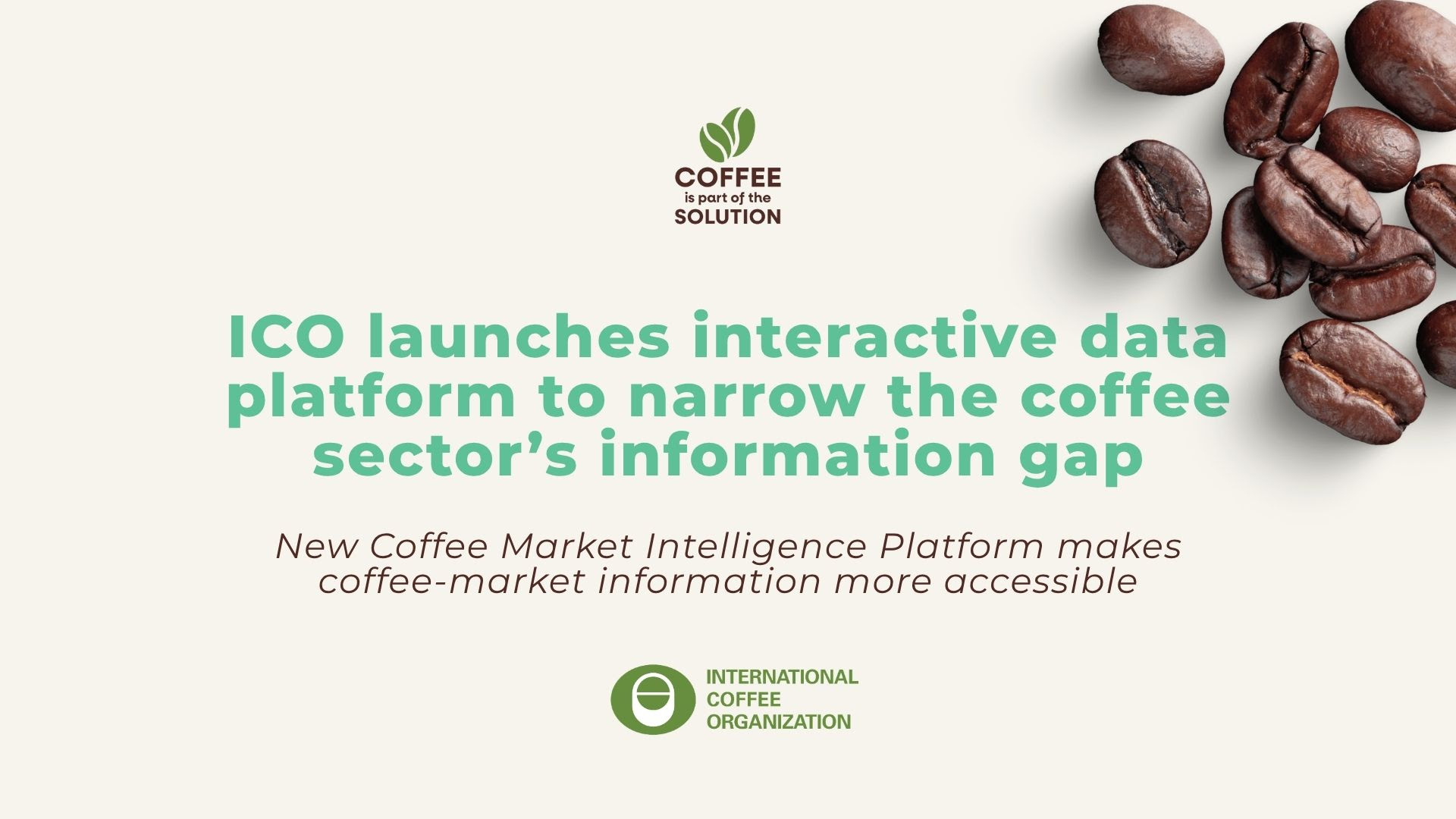
ICO Launches Interactive Coffee Market Data Platform

  • The ICO launched the Coffee Market Intelligence Platform at data.ico.org.
  • The free interactive tool combines daily market indicators, trade, production, and consumption data.
  • Data is presented on an interactive 3D globe rather than static tables.
  • The launch took place during the 142nd Session of the International Coffee Council in Geneva.
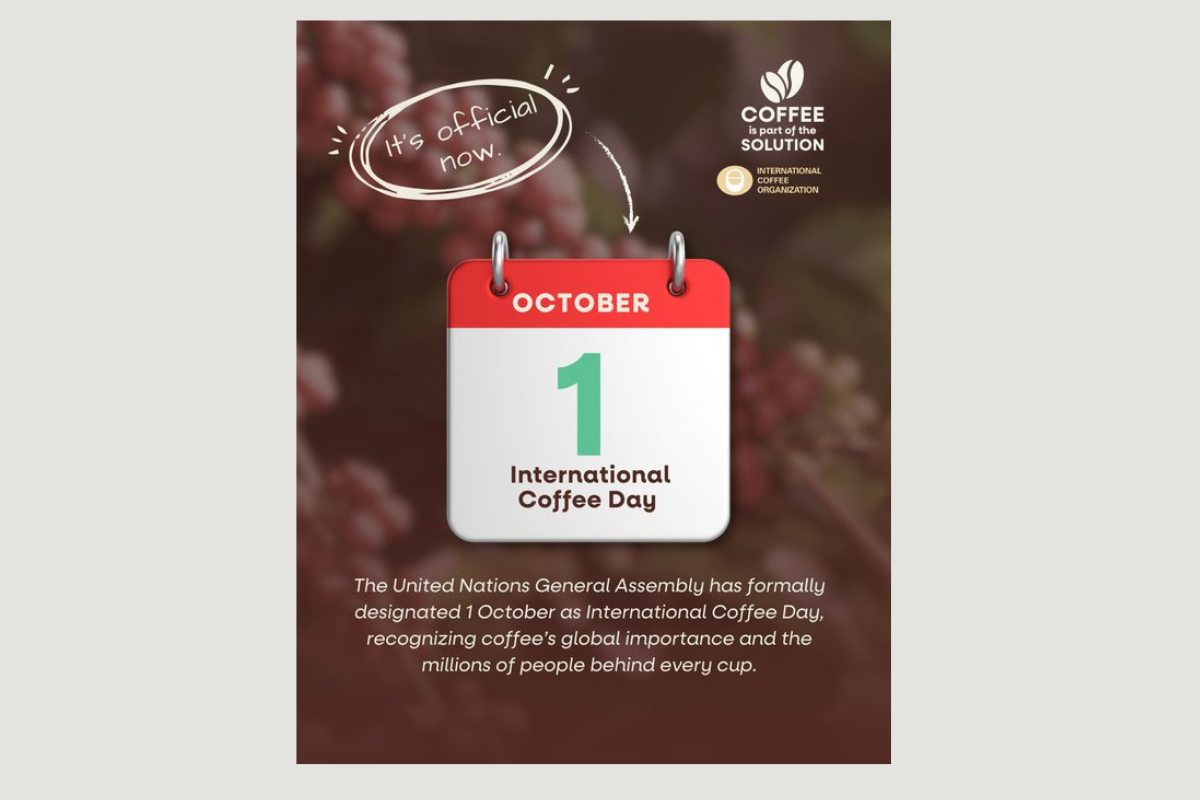
  • It precedes the first UN-recognized International Coffee Day on October 1.
  • ICO Members gain free access to historical data dating back to 1963.
  • Coffee supports livelihoods for at least 12.5 million families worldwide.

The International Coffee Organization launched its Coffee Market Intelligence Platform on September 30, 2026. The platform is a free-to-view interactive tool available at data.ico.org. It combines daily market indicators with data on monthly trade, annual production, and consumption.

Producers, traders, policymakers, journalists, and other stakeholders can now explore the key elements of the global coffee market together. Relevant statistics are all available in one place.

Launch at the International Coffee Council

The platform was unveiled at a press conference in Geneva, Switzerland. The event took place during the 142nd Session of the International Coffee Council. It came ahead of the first UN-recognized International Coffee Day on October 1.

The launch took place alongside a presentation of the ICO’s “Coffee Is Part of the Solution” campaign. This campaign highlights progress on sustainability in the coffee sector.

Making Coffee Market Information More Accessible

Coffee market information has traditionally been dispersed across different publications, databases, and commercial services. The new platform addresses this fragmentation by bringing key datasets together.

It includes the daily ICO Composite Indicator Price and its four group indicators. It also features New York and London futures prices, monthly exchange-certified stocks, detailed trade data, and country-by-country trade flows. Annual production and consumption data are included as well.

“Good data cannot eliminate volatility, but it can reduce uncertainty. When stakeholders work from a shared and credible evidence base, they can make better decisions about production, investment, trade, risk management and sustainability.”

— Vanúsia Nogueira, Executive Director of the ICO

Data Available on the Coffee Market Intelligence Platform
Category Data Included
Daily Indicators ICO Composite Indicator Price and four group indicators
Futures Prices New York and London futures prices
Stocks Monthly exchange-certified stocks
Trade Detailed trade data and country-by-country trade flows
Production Annual production data by country
Consumption Annual consumption data by country

An Interactive 3D Globe

Rather than presenting data in static tables, the platform displays it on an interactive 3D globe. This makes current-year statistics freely accessible. Anyone from cooperative managers to journalists can read the market as a single interconnected system. It functions as a one-stop shop for coffee data.

“Coffee provides livelihoods for at least 12.5 million families and supports a complex global value chain. Better access to credible information may also support farmers with investments in land or processing machines, for example,” added Vanusia.

Built on the ICO’s Own Statistical Record

Export data comes primarily from ICO Members. Under the International Coffee Agreement, exporting countries issue a Certificate of Origin for every shipment. They also report monthly export statistics to the Secretariat. Importing countries report imports, re-exports, and inventories.

These figures are cross-checked against partner-country customs data. For non-member countries, they are checked against published national records and international trade databases. Production and consumption figures combine official national estimates with the Secretariat’s own estimations. These are reconciled through a supply-demand balance so that each country’s figures are internally consistent. Where a country cannot yet supply a series, the ICO estimates it from Certificates of Origin, partner data, and industry sources.

Free Access and Membership Benefits

The platform’s dashboards are available free of charge to all users. They provide visibility of current-year prices and stock data, as well as aggregated trade and production statistics for the current and previous years.

ICO Members also have free access to historical data dating back to 1963. Relevant information may be provided to intergovernmental organizations and academic researchers upon request. Commercial organizations requiring detailed historical data or bulk datasets can purchase an annual statistical subscription.

Access Levels by User Type
User Type Access Level
All users Free access to current-year prices, stocks, aggregated trade and production
ICO Members Free access to historical data back to 1963
Intergovernmental organizations and academics Relevant information upon request
Commercial organizations Annual statistical subscription for bulk or detailed historical data

About the International Coffee Organization

The ICO is the only intergovernmental organization supporting exporting and importing countries to improve the sustainability of the coffee sector. It provides a high-level forum for all public and private stakeholders in the sector. The organization also provides official statistics on coffee production, trade, and consumption. Additionally, it supports the development and funding of technical cooperation projects and public-private partnerships.


Frequently Asked Questions

What is the Coffee Market Intelligence Platform?It is a free interactive tool launched by the ICO that combines daily market indicators with data on trade, production, and consumption, available at data.ico.org.

When was the platform launched?The platform was launched on September 30, 2026, during the 142nd Session of the International Coffee Council in Geneva, Switzerland.

What data does the platform include?It includes the ICO Composite Indicator Price, futures prices, certified stocks, detailed trade data, trade flows, and annual production and consumption data.

Is the platform free to use?Yes, the dashboards are free for all users. ICO Members also get free access to historical data dating back to 1963.

How is the data presented?The data is presented on an interactive 3D globe rather than in static tables, making current-year statistics easy to explore.

How many families depend on coffee?Coffee provides livelihoods for at least 12.5 million families and supports a complex global value chain.

Addis Ababa coffee capital

ADDIS ABABA — QAHWA WORLD

Ethiopian communications firm Adsolute Communications is launching “Addis Ababa: The World’s Coffee Capital”, a campaign highlighting the Ethiopian capital as a destination for experiencing the country’s coffee culture, from traditional coffee ceremonies and neighbourhood buna spots to cafés, roasters and emerging coffee experiences across the city.

The campaign will be presented at Oromia Tourism Week on 30 September, one day before International Coffee Day.

Coffee occupies a distinctive place in Ethiopian daily life and identity. In Addis Ababa, it is experienced not simply as a beverage, but through the social rituals, spaces and communities built around it.

“Addis doesn’t need to invent a coffee identity,” said Tewodros Balcha Mulisa, Founder and General Manager of Adsolute Communications. “It already has one. The opportunity is to make that experience more visible and easier for visitors to discover — and to connect the city’s coffee culture with the wider Ethiopian coffee story.”

The campaign proposes a tourism narrative built around this existing ecosystem, linking Addis Ababa’s coffee ceremonies, cafés, roasters and emerging attractions such as Coffee Park & planned Ethiopian coffee museum with Ethiopia’s wider coffee-growing landscape and origin story.

Adsolute has previously worked on coffee-focused initiatives in Ethiopia, including its COFE Fest/Coffee Origins Festival activities around International Coffee Day since 2024 presented at the annual Oromia Tourism Week. The company also continues to connect Ethiopian coffee stories with international audiences through its Buna Kurs coffee media desk.

The initiative is intended as a city-branding and tourism communications proposition, encouraging greater international attention to Addis Ababa and the people, businesses and destinations that shape its coffee scene.

“Coffee gives Addis something very tangible to invite the world into,” said Mulisa. “You can experience it right from the airport, in a home, on the street, in a café, at a roastery or through the landscapes where the coffee itself is grown. That range is part of the story.”

The campaign will be developed through media storytelling, digital content and partnerships designed to bring greater international visibility to Addis Ababa’s coffee scene and the wider destinations connected to it.

Coffee: Magic of Minds and Fuel of History

Dubai – Qahwa World celebrates International Coffee Day.

When we raise a warm cup of coffee to our lips each morning, we are not merely consuming a comforting beverage to dispel the vestiges of sleep; we are partaking in a rich human history shaped by passion, patience, and global interplay.

On this October 1, 2026, as the world gathers to celebrate the very first officially recognized United Nations International Coffee Day, we honor far more than a passing occasion.

We recognize a profound historical debt owed to a small, dark cherry that reshaped world trade, spurred intellectual revolutions, and formed a living bond connecting more than 12.5 million farming families across the Global South to millions of coffee lovers in every corner of the planet.

A Journey Through Time: From Kaffa’s Canopy to Yemen’s Terraces

The story begins with the raw, earthy scent of the dense, tropical forests of the Kaffa region in the Ethiopian highlands. There, growing wild and untamed, the coffee tree first revealed its secrets to humanity. Early observers noticed that its vivid crimson cherries possessed a unique gift: they lightened the body, cleared the mind, and imparted an unmistakable surge of vitality. Yet, this wild botanical treasure was still awaiting the cultural craftsmanship that would elevate it from a remote forest plant into a refined global ritual.

That transformation found its destiny across the Red Sea, in the historic lands of Yemen.

In Yemen, coffee cultivation evolved from a simple agricultural task into a masterpiece of engineering and devotion. High up in the rugged mountains of Haraz, Sa’dah, and Manakhah, Yemeni farmers carved breathtaking stone terraces into steep cliffs. Here, they meticulously tended, harvested, and perfected the art of sun-drying and roasting the beans establishing the foundational methods of coffee preparation we still cherish today.

From the ancient port of Mokha, legendary ships laden with prized coffee beans set sail across oceans and continents, permanently embedding the port’s name into global culture as Mokha a universal synonym for fine coffee.

The Spark of the Enlightenment

Coffee never followed a quiet path; its trajectory was bound to human intellect and spiritual awakening. In its early days, it found a home in Sufi sanctuaries across Yemen, Mecca, Cairo, and Damascus, where scholars and mystics drank it to sustain long nights of contemplation, meditation, and spiritual clarity.

As coffee traveled across the Ottoman Empire, the world’s first coffeehouses sprang up in Istanbul. Known not merely as places of leisure, but as Mekteb-i ‘irfān (Schools of Knowledge), these spaces brought together poets, philosophers, scholars, and statesmen to debate ideas and exchange wisdom.

When coffee arrived on European shores in the seventeenth century, it sparked an intellectual awakening. Prior to its arrival, European daily life was heavily reliant on weak fermented beverages, leaving minds in a state of dull lethargy.

Coffee introduced unprecedented mental clarity and focus. In the bustling coffeehouses of London, Paris, and Venice, global financial institutions and insurance markets were born (such as Lloyd’s of London, which started in a coffeehouse), Enlightenment thinkers drafted foundational treatises, and composers penned enduring masterpieces. Coffee was no longer just a drink; it had become the liquid fuel of the Modern Age.

Geopolitics and Equity: Bringing Value Back to Origin

Today, coffee is more than a historical legacy it is a vast economic and human reality generating over $250 billion annually. Yet, for decades, the global supply chain was marked by a deep economic imbalance: green coffee left farms across Africa, Latin America, and Asia as an inexpensive raw commodity, while the vast majority of its financial value unlocked through roasting, branding, and retailing remained in importing nations.

Today, through concerted global initiatives led by the International Trade Centre (ITC) and the International Coffee Organization (ICO), that paradigm is undergoing a fundamental shift. The international community increasingly recognizes that true sustainability requires building local capacity from cupping and roasting to packaging and direct exporting right at origin.

When farmers in Ethiopia, Yemen, Kenya, Ghana, or Honduras can process, roast, and export their harvest as a premium finished product, they gain more than a fair economic return; they reclaim the dignity of their craft and their land. Ensuring full traceability, fair compensation, and environmental stewardship is no longer a luxury it is the vital cornerstone for preserving the future of coffee against climate change.

The Science of the Elixir: What Science Reveals About Coffee

Beyond its history and economics, a single cup of coffee contains a complex natural chemistry that explains its timeless appeal. Coffee is far more than a delivery system for caffeine; it is a rich matrix of bioactive compounds, most notably potent antioxidants like chlorogenic acid.

Modern clinical research affirms what human intuition has known for centuries:

Cognitive Enhancement and Neuroprotection: Caffeine stimulates the release of key neurotransmitters like dopamine and norepinephrine, heightening focus, alertness, and reaction time. Long-term observational studies suggest that regular, moderate coffee consumption is associated with a reduced risk of neurodegenerative conditions such as Alzheimer’s and Parkinson’s disease.

Cardiovascular Health: Natural compounds in coffee support vascular health, help maintain endothelial function, and reduce systemic inflammation throughout the body.

Metabolic Support and Liver Health: Extensive research highlights coffee as one of the most effective natural dietary allies for liver health, offering protective benefits against fatty liver disease and fibrosis. Furthermore, it supports metabolic rate and insulin sensitivity (keeping added sugar minimal ideally under 2.5 grams ensures these protective health benefits remain fully intact).

One Cup to Connect the World

Every time you lift a warm cup of coffee and breathe in its rich aroma, you are touching an unbroken thread of human history. That journey begins in the soil with a farmer on the slopes of Ethiopia or the terraces of Yemen, travels through the hands of skilled roasters and baristas, and settles comfortably between your hands. Coffee has never been a simple commodity; it is a daily invitation to pause, reflect, and connect. It remains a testament to human culture a timeless ritual that reminds us that people from all walks of life can always gather, share a moment, and find common ground over a single cup.

FAO Welcomes UN Resolution Establishing International Coffee Day on October 1

Dubai – Qahwa World

The Food and Agriculture Organization of the United Nations has welcomed a new resolution adopted by the United Nations General Assembly proclaiming October 1 as International Coffee Day, marking a significant step toward recognizing coffee’s global economic, social, and cultural importance.

The resolution, approved on 10 March 2026 in New York, highlights the historical and cultural role of coffee and its lasting influence on societies worldwide. It acknowledges that coffee has evolved from its origins into a globally traded agricultural commodity that sustains communities while also serving as a symbol of social interaction, cultural identity, and everyday tradition across generations.

You may Read: UN Officially Designates 1 October as International Coffee Day 

  • Coffee and global development

The United Nations resolution underscores the contribution of the coffee sector to several key global development priorities. Among them are ending hunger, reducing extreme poverty, empowering women, and promoting decent work and economic growth, all of which are central to the United Nations Sustainable Development Goals.

According to Qu Dongyu, coffee represents far more than a popular beverage.

“Coffee is more than a drink; it is a globally traded commodity—from beans to coffee service—that sustains the livelihoods of millions of farming households and connects rural communities to markets around the world,” he said. “Recognizing the value of the coffee sector will raise awareness of its socio-economic importance and strengthen its contribution to eradicating poverty.”

You may read: International Coffee Day: How It Started and Why the World Celebrates 

  • A sector supporting millions

Coffee remains one of the most widely consumed beverages worldwide. Global per-capita consumption has grown by about 1.2 percent annually over the past decade, reflecting steady demand across international markets.

The sector supports the livelihoods of around 25 million coffee farmers, while employment extends across the entire value chain—from cultivation and processing to trading, roasting, and retail. Altogether, the global coffee industry generates more than 200 billion dollars in annual revenue.

Coffee also ranks among the world’s most traded agricultural commodities. In 2024, global production surpassed 11 million tonnes, with approximately 8 million tonnes traded internationally. That same year, the estimated value of global coffee production reached nearly 25 billion dollars, while international trade in coffee beans totaled about 34 billion dollars.

Read also: International Coffee Day: A Beverage’s Journey from Yemen to the World 

  • Vital exports for developing economies

For many low-income countries, coffee exports remain a critical source of foreign currency earnings.

In 2024, coffee accounted for 27.9 percent of total merchandise exports in Ethiopia, 20.1 percent in Uganda, and 19.5 percent in Burundi. In both Ethiopia and Uganda, revenues from coffee exports exceeded national food import bills, while in Burundi they represented nearly one-fifth of the country’s food import costs.

During the same year, Brazil and Viet Nam were the world’s leading coffee exporters, while the European Union and the United States remained the largest import markets.

  • FAO’s role in strengthening the coffee sector

FAO works with coffee-producing countries through a range of initiatives designed to strengthen sustainability, productivity, and farmer livelihoods.

One of the organization’s priorities is helping producers adapt to the growing impacts of climate change. Through programs such as Farmer Field Schools, FAO supports pest management strategies and the conservation of traditional coffee systems, including projects in Panama. Additional initiatives promote agroforestry systems and climate-resilient coffee varieties in East Africa, while cooperative development programs are helping strengthen rural economies in countries such as Cuba.

You may like:Coffee Industry on International Coffee Day: Production, Consumption, and Future Challenges 

The organization is also assisting producers in responding to evolving market requirements. As international buyers increasingly demand traceability and compliance with sustainability standards, FAO is working with governments and producers in countries including Honduras, Guatemala, and Uganda to establish stronger traceability systems and align national policies with global frameworks. These efforts aim to mobilize investment benefiting more than 200,000 smallholder farmers.

Through its Investment Centre and initiatives such as the Hand-in-Hand Initiative, FAO is also supporting financing mechanisms that improve efficiency and increase farmer incomes. Projects in Brazil, Costa Rica, and Honduras, implemented with partners including the World Bank, are helping strengthen the long-term resilience of coffee farming systems. In El Salvador, FAO has supported the development of a comprehensive national coffee strategy.

  • A global platform for the coffee community

With the establishment of International Coffee Day under the UN system, FAO has been invited to coordinate the annual observance in collaboration with relevant organizations, particularly the International Coffee Organization.

The new international day is expected to serve as a global platform for dialogue, cooperation, and knowledge-sharing across the coffee value chain. By highlighting both the opportunities and the challenges facing producers, the initiative aims to strengthen international commitment to a sustainable, inclusive, and resilient coffee sector that contributes to rural development and global food security.


UN Officially Designates 1 October as International Coffee Day

Dubai – Qahwa World

The International Coffee Organization has announced what it described as “a historic moment for the global coffee community” after the United Nations General Assembly formally designated 1 October as International Coffee Day.

According to the announcement, the decision recognizes coffee’s profound importance to global economies, cultures, and livelihoods, highlighting the role the beverage plays across producing and consuming nations alike.

The milestone follows the adoption of Resolution A/80/L.44 by the United Nations General Assembly on 10 March 2026. The resolution, introduced by Brazil, received 150 votes in favor, with one vote against from the United States and one abstention from Canada.

United Nations Officially Declares 1 October International Coffee Day

Under the resolution, 1 October will now be officially recognized every year as International Coffee Day, and all countries, United Nations bodies, and relevant stakeholders are invited to organize activities that highlight the economic, social, and environmental significance of coffee.

The resolution also invites the Food and Agriculture Organization of the United Nations to lead the annual observance in cooperation with the International Coffee Organization.

  • Elevating an existing global celebration

International Coffee Day has already been observed globally on 1 October since 2015, when the initiative was first launched by the International Coffee Organization during Expo 2015 Milan.

The new United Nations designation elevates the observance to an official international day within the UN system, giving the coffee sector broader global recognition and strengthening the visibility of the millions of people who depend on coffee for their livelihoods.

United Nations Officially Declares 1 October International Coffee Day

In its statement, the International Coffee Organization noted that the decision reflects the collective efforts of its member countries, institutional partners, and international organizations, including the Food and Agriculture Organization, to raise awareness of the coffee sector’s importance.

  • Supporting farmers and sustainability

Coffee remains one of the world’s most widely traded agricultural commodities and supports millions of farmers, workers, traders, and communities across Africa, Asia, and Latin America.

The International Coffee Organization and the Food and Agriculture Organization see the UN recognition as an opportunity to strengthen global attention to the sector’s key challenges and opportunities, including sustainability, farmer livelihoods, and climate-related risks affecting coffee production.

Qu Dongyu welcomed the decision, stating that the new international day will help raise awareness of coffee’s socio-economic importance and reinforce its role in supporting efforts to reduce poverty worldwide.

United Nations Officially Declares 1 October International Coffee Day

For the global coffee community—from smallholder farmers to exporters, roasters, and consumers—the recognition marks a significant step toward greater international acknowledgment of the industry’s cultural and economic impact.

With the adoption of the UN resolution, International Coffee Day on 1 October is expected to gain even broader global participation, as governments, organizations, and coffee professionals organize events and initiatives celebrating the beverage and the people behind every cup.

CQI Marks International Coffee Day with New Chapter in Coffee Quality Journey

Dubai – Qahwa World

On International Coffee Day 2025, the Coffee Quality Institute (CQI) announced a historic transition: the conclusion of its Quality Evaluation Program after more than two decades and the launch of a new chapter focused on advancing coffee quality and sustainability.

Michael Sheridan, Chief Executive Officer of CQI, emphasized the milestone: “As we turn the page, I want to honor the nearly 20,000 people who have earned Q Grader Certification since the inception of the program: you are the vanguard in a global movement for coffee quality. And I want to specially recognize the Q Instructors who have trained and certified all those Q Graders: you are pioneers who have held a light to the darkness, and your work helped to catalyze a revolution in coffee quality in the span of a single generation.”

A Fresh Look for a New Era

To mark this transition, CQI unveiled a refreshed logo and website, designed to evoke coffee’s origins. The institute underlined that while its visual identity has evolved, its mission remains constant: improving the quality of coffee and the lives of the people who produce it.

Focus on Post-Harvest Processing

Sheridan highlighted the growing importance of CQI’s Post-Harvest Processing (PHP) Program. In September alone, CQI welcomed 14 new instructors for the PHP Generalist Course, expanded its training pool, and set a course for releasing an all-new PHP Professional Course by the end of 2025. Preparations are also underway for the PHP Expert Course in 2026, with students, instructors, mentors, and guest lecturers already engaged.

“Innovation in post-harvest processing has never been more important in the coffee market,” Sheridan noted. “Our PHP Program is helping reduce risk and expand opportunity for everyone in coffee supply streams.”

Global Partnerships and Impact

CQI also announced new partnerships to expand its global reach. In collaboration with Peet’s Coffee in the U.S., CQI will deliver post-harvest processing education to suppliers, while a partnership with Sinar in the U.K. will enhance access to advanced processing technology.

Additionally, the CQI Global Coffee Fund has awarded support for several initiatives:

Let’s Talk Coffee in Peru

Scholarships for participants in the Women-Powered Coffee Summit (WPCS) in Mexico

Staffing for the Taste of Harvest in Burundi

Engaging the Coffee Community

As CQI transitions beyond the Q program, Sheridan underscored the importance of dialogue with the global coffee community. CQI will convene producer-focused discussions at major events, including the WPCS in Mexico and Sintercafé in Costa Rica, and will launch a global survey in October to gather input from stakeholders worldwide.

“I hope you will take time to respond and make your voice heard,” Sheridan said. “Coffee needs your leadership.”

With this transition, CQI signals a future shaped by collaboration, innovation, and a continued commitment to quality at every stage of the coffee value chain.

JDE Peet’s Calls on Coffee Industry to Embrace Regenerative Agriculture Roadmap

Amsterdam – Qahwa World

On International Coffee Day, JDE Peet’s (EURONEXT: JDEP) marked the tenth anniversary of its Common Grounds farmer programmes with a strong call for the global coffee industry to implement the Regenerative Agriculture Coffee Roadmap. The company stressed that urgent action is needed to secure the future of coffee as climate change continues to disrupt production through unseasonal weather, rising temperatures, and shifting rainfall patterns.

Laurent Sagarra, Vice President of Engagement at JDE Peet’s, said that resilient supply chains benefit everyone, from consumers and companies to farmers themselves. He noted that the company has already reached nearly one million farmers over the past decade, but warned that the scale of climate risk demands faster, collective action. “We cannot wait another century to support the millions of farmers who still need help,” he said. “The time to act is now.”

JDE Peet’s farmer programmes, launched in 2015 as part of the company’s Common Grounds sustainability strategy, aim to strengthen coffee-growing communities by promoting regenerative agriculture, improving farmer livelihoods, and fostering thriving coffee regions. Using a data-driven approach verified by independent assessments, the programmes have already made measurable progress. More than 835,000 farmers in 29 countries have benefited, half of the farms involved have adopted regenerative practices such as soil management and water conservation, and 83.2 percent of the company’s green coffee is now responsibly sourced worldwide, including 100 percent in Europe.

The roadmap JDE Peet’s is urging the industry to adopt outlines proven regenerative practices that can reduce greenhouse gas emissions, restore ecosystems, and boost coffee production. Studies suggest that supporting farmers to transition could increase global coffee exports by 30 percent, improve the incomes of more than three million smallholder farmers, and cut emissions by 3.5 million tons of CO₂e annually.

With 12.5 million coffee farmers worldwide, many managing less than one hectare of land, the company underlined that the challenges cannot be met by one player alone. As it celebrates ten years of engagement with farmers, JDE Peet’s is pressing the entire industry to join forces in ensuring that coffee has a sustainable and resilient future.

International Coffee Day: How It Started and Why the World Celebrates

Dubai – Qahwa World

The International Coffee Organization (ICO) has launched its global campaign to celebrate International Coffee Day (ICD), observed every year on October 1. The theme for 2025 is “Embracing Collaboration More Than Ever.” The ICO emphasized that this celebration is an opportunity to underline the vital role of collaboration across the coffee value chain — from farmers and cooperatives to traders, roasters, baristas, and consumers — ensuring sustainable livelihoods, shared prosperity, and resilient communities.

Vanúsia Nogueira, Executive Director of the ICO, stated: “Coffee is a product of many hands and many hearts. When farmers, cooperatives, researchers, roasters, traders, baristas and consumers work together, we create opportunities for income, resilience and environmental stewardship. This year’s campaign calls for practical collaboration that delivers real benefits along the whole chain.”

On this occasion, Qahwa World has prepared a comprehensive research report on International Coffee Day — its origins, history, economic and cultural significance, and its importance for the global coffee industry. This research is presented to highlight why this day is not just a celebration of a beverage, but a recognition of coffee’s role as a cultural, social, and economic force worldwide.

Origins and Establishment of International Coffee Day

International Coffee Day was officially established in 2014 during the International Coffee Council meeting in Milan, aligned with Expo 2015. The first official ICD celebration was held on October 1, 2015.

Objectives of the Day:

To unite coffee lovers around the world.

To honor and recognize coffee farmers whose livelihoods depend on this crop.

To raise global awareness about sustainability, fair trade, and challenges in the coffee sector.

To strengthen the sense of community among all participants in the coffee chain.

Historical Roots of Coffee

The history of coffee stretches back centuries, connecting continents and cultures:

Ethiopia: Coffee’s origins are often traced to Ethiopia, where wild coffee plants grew in the forests of Kaffa. Legends suggest its stimulating effects were first observed there.

Yemen: In the 15th century, coffee cultivation spread to Yemen. Sufi monks began preparing coffee as a beverage to help them stay awake during prayers, making Yemen the cradle of coffee culture.

Arab World: By the 16th century, coffee spread throughout Mecca, Cairo, Damascus, and Istanbul. Coffeehouses (qahveh khaneh) became centers of social, cultural, and intellectual life.

Europe: Coffee reached Venice in the early 17th century. It spread rapidly through Europe despite religious controversies and bans. Coffeehouses in London, known as “penny universities,” became hubs of debate and knowledge.

Asia and the Americas: By the 18th century, colonial powers introduced coffee cultivation to Asia (notably Indonesia) and Latin America (notably Brazil and the Caribbean), shaping the global coffee industry we know today.

Technological and Industrial Evolution

In the 19th century, industrialization revolutionized coffee. The invention of large-scale roasting machines and improved grinders allowed for mass production and consistent quality.

In the 20th century, new innovations such as soluble (instant) coffee emerged, led by companies like Nestlé in the 1930s. This changed global consumption patterns and made coffee more accessible.

Today, technological advances extend to specialty coffee roasting, precision brewing methods, and sustainable farming practices, reflecting the balance between tradition and innovation in the coffee world.

Celebration Dates Worldwide

Although October 1 is the official ICO date, different countries observe coffee days at varying times:

October 1: International Coffee Day (official ICO recognition, celebrated globally).

September 29: National Coffee Day in the USA, Canada, Austria, and a few other countries.

Other Coffee Days in the USA:

November 8: National Cappuccino Day

November 23: National Espresso Day

February 11: National Latte Day

These variations highlight the universal love for coffee across cultures.

Traditions and Activities

International Coffee Day is marked by a variety of events and initiatives:

ICO Campaigns: Every year, the ICO sets a central theme. In 2025, the focus is collaboration.

Coffeehouses and Roasters: Businesses worldwide host tastings, workshops, and awareness campaigns.

Social Media: Hashtags like #InternationalCoffeeDay and #ICD2025 amplify global participation, encouraging people to share their coffee experiences.

Awareness Programs: NGOs, cooperatives, and coffee associations use ICD to shed light on sustainability, fair income for farmers, and climate-related challenges.

Economic Impact of Coffee

Coffee is not just a cultural icon but also an economic powerhouse:

Consumption: Over 3 billion cups are consumed daily worldwide.

Production (2023, ICO): Approximately 170 million 60-kg bags of coffee are produced annually.

Top Producers (2023):

Brazil – 37% of global production

Vietnam – 17%

Colombia – 8%

Indonesia – 7%

Ethiopia – 5%

The Coffee Belt: Coffee production is concentrated in a tropical zone known as the Coffee Belt, spanning Latin America, Africa, and Asia-Pacific.

Trade Value: Coffee is the second most traded commodity globally after crude oil.

Social and Environmental Dimensions

The day also highlights the challenges and responsibilities facing the global coffee community:

Farmer Livelihoods: Coffee supports the livelihoods of over 125 million people worldwide, including around 25 million smallholder farmers directly dependent on it. Yet many live below the poverty line due to fluctuating prices and market instability.

Climate Change: Rising temperatures, pests such as coffee leaf rust, and deforestation threaten production worldwide.

Sustainability Efforts: Certifications such as Fairtrade, Rainforest Alliance, and organic standards are promoted during ICD to encourage responsible production and consumption.

Cultural and Social Significance

Coffee has always been more than a drink — it has been a catalyst for culture and community:

In the Arab world, early cafés became places for music, chess, storytelling, and poetry.

In Europe, coffeehouses were breeding grounds for intellectual movements, journalism, and political debate.

Today, cafés remain spaces for creativity, networking, and cultural exchange.

Interesting Facts About Coffee

Coffee trees can live up to 100 years, though their most productive years are between 7 and 20.

Coffee faced multiple bans in history — in Mecca, Istanbul, and even in 18th-century Prussia — but it always returned stronger.

One of the most expensive coffees in the world is Ospina (Colombia), valued at $1,700 per pound in 2024.

The term “penny university” reflected the role of 17th-century English coffeehouses, where intellectual discussion was accessible for the price of a cup.

Conclusion

International Coffee Day is not simply about celebrating a beloved beverage — it is about recognizing the centuries-long journey of coffee from Ethiopia and Yemen to the rest of the world, and the millions of people whose lives are intertwined with it.

By establishing ICD in 2014, the ICO created a platform for uniting coffee lovers, supporting farmers, and promoting sustainability. In 2025, under the theme “Embracing Collaboration More Than Ever,” the ICO reminds us that coffee is more than a drink — it is a shared commitment to resilience, sustainability, and global cooperation.