Six Middle East Coffee Shops Enter The World’s Top 100 List 2026

Singapore – QAHWA WORLD

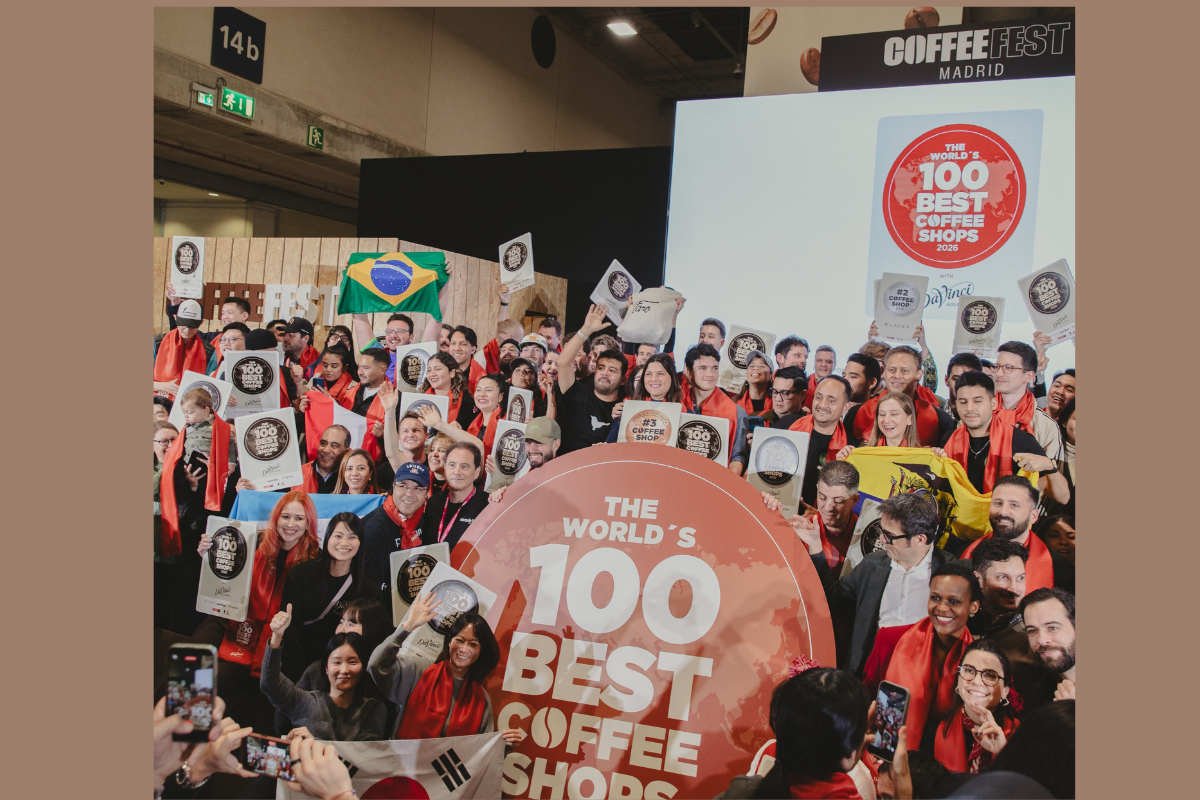
Six coffee shops from the Middle East have earned positions in the World’s 100 Best Coffee Shops 2026 ranking, announced on 16 February during CoffeeFest Madrid 2026, marking a significant milestone for the region’s speciality coffee sector.

The United Arab Emirates secured two placements in the global Top 100, reinforcing its status as a rapidly expanding hub for speciality coffee. Qatar and Oman achieved their first-ever entries in the ranking, while Turkey returned to the list through Meet Lab Coffee, reflecting the region’s growing influence on the international coffee stage.

YOU MAY LIKE: The World’s 100 Best Coffee Shops 2026 Unveiled in Madrid

Middle East Coffee Shops in the 2026 Top 100

  • Benchmark Coffee, United Arab Emirates

  • Harvest Coffee, Qatar

  • Meet Lab Coffee, Turkey

  • Azura – The Coffee Company, Oman

  • Cypher Urban Roastery, United Arab Emirates

  • Flat White Specialty Coffee, Qatar

The 2026 ranking highlights the rise of new global capitals of quality coffee while underscoring the consolidation of a diverse and innovative international coffee community. The United States led the list with nine selected coffee shops, alongside strong representation from South America, Europe, Asia Pacific, Africa, and the Middle East.

Evaluation Criteria

The ranking combines assessments from more than 800 professional judges across all continents with public voting that surpassed 350,000 votes in this edition. In total, over 15,000 coffee shops worldwide were analysed.

Positioned as a benchmark for the industry, The World’s 100 Best Coffee Shops is the first global ranking dedicated to recognising excellence in coffee. Beyond product quality, the evaluation considers the overall café experience, innovation, and contribution to coffee culture.

The inclusion of six Middle Eastern coffee shops in the 2026 list reflects the region’s accelerating development in speciality coffee standards, craftsmanship, and hospitality, further strengthening its presence on the global coffee map.

Dubai Remains the Only Destination for “World of Coffee” in the Middle East

Dubai – Ali Alzakary

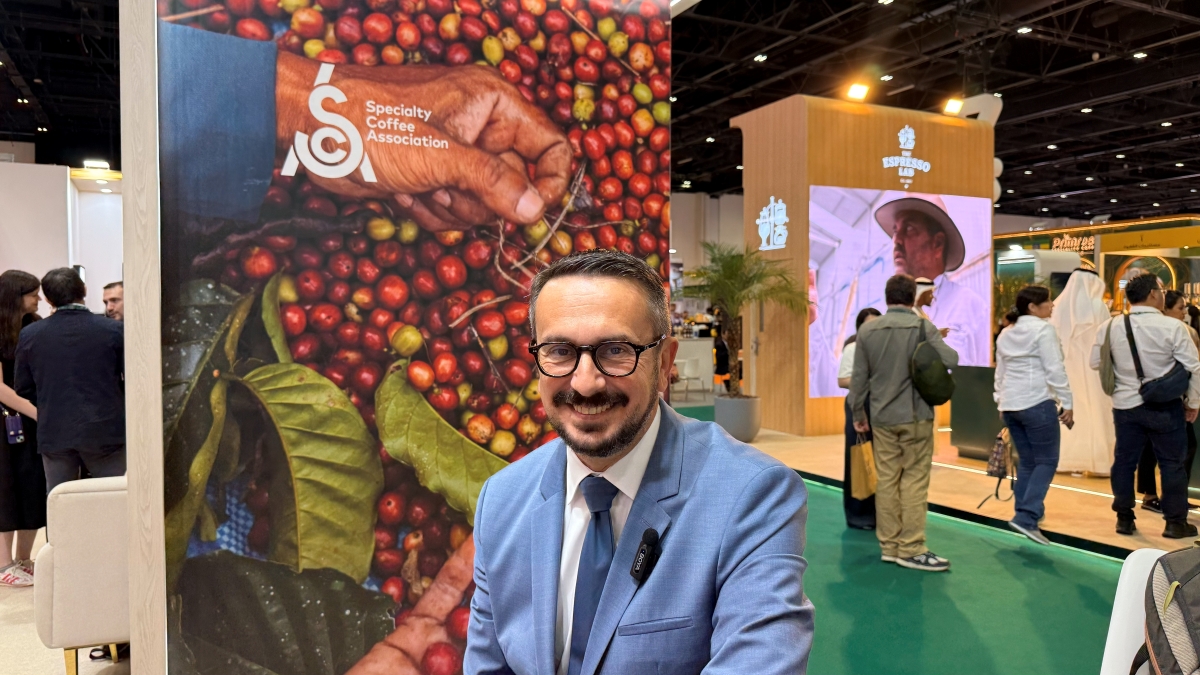
In an exclusive conversation with Qahwa World, Mr. Yannis Apostolopoulos, CEO of the Specialty Coffee Association, shared key insights on the growth and future of the “World of Coffee” exhibition, confirming that Dubai remains the sole destination for the show in the foreseeable future. He also spoke candidly about the transition following the end of the partnership with the Coffee Quality Institute (CQI) and the strong rollout of the Coffee Value Assessment (CVA) system.

Apostolopoulos highlighted that this year marks the fifth edition of the “World of Coffee,” which has grown tremendously. The number of exhibitors and attendees has surpassed any previous year, already 30% higher than before. He emphasized that the exhibition offers a unique opportunity for professionals to meet and conduct business. While it is fundamentally a trade show, it also fosters a sense of community and highlights the booming specialty coffee industry in the region.

“What we bring is a unique opportunity for people to come together and trade. At its core, this is a trade show, but it’s also about fostering a sense of community and showcasing how the specialty coffee industry is booming in the region. The Middle East has become one of the fastest-growing regions for specialty coffee in recent years, and you can feel that energy here at the show,” said Apostolopoulos.

Regarding the possibility of hosting editions in other Middle Eastern countries, Apostolopoulos confirmed that Dubai remains the ideal hub. He noted their ongoing partnership with DXB Live in Dubai, which will be renewed this year. Dubai provides excellent access from across the Middle East and the world, making it ideal for exhibitors and attendees. He added that while other countries may be considered in the future, this is not part of any immediate plans.

“At the moment, we have a partnership with DXB Live for Dubai, which we’re renewing this year. Dubai is a great hub with excellent access from across the Middle East and the world, making it ideal for exhibitors and attendees. Maybe in the future we’ll consider other countries, but not in the immediate plans,” said Apostolopoulos.

Apostolopoulos also discussed developments in the Coffee Value Assessment (CVA) system. He mentioned the transitional phase following the partnership with CQI and confirmed that many participants have already moved to the new program. There are now over 10,000 new Q graders and significantly more instructors, particularly in producing countries such as Colombia, Brazil, Indonesia, and Vietnam, which he recently visited. He stressed that the system allows producers to communicate clearly and objectively about the intrinsic and extrinsic attributes of coffee, while the trade sector explores how best to use the CVA framework to capture the quality of every coffee in everyday transactions.

“There has been some transition after our partnership with CQI, but many people have already moved to the new program. We now have over 10,000 new Q graders and significantly more instructors, especially in producing countries. We’re making targeted efforts to increase instructors in places like Colombia, Brazil, Indonesia, and Vietnam, where I was recently. Producers are seeing the value because you can communicate more clearly and objectively the attributes that are intrinsic and extrinsic to the coffee. The trade is figuring out the next steps of how to use the CVA paradigm and the new evaluation for quality and capturing the picture of every coffee in everyday trade,” said Apostolopoulos.

He affirmed that CVA benefits the industry as a whole, helping capture and share detailed data on coffee with producers and buyers, enabling clearer communication and maximizing coffee value.

“Absolutely. That’s the idea. CVA is part of the evolution of our understanding of coffee. We now care about more aspects of coffee than ever before, and CVA helps capture that information and share it with producers and buyers. This allows everyone to communicate more clearly and find ways to maximize the value of coffees,” said Apostolopoulos.


Why the Middle East Is Emerging as a Defining Force in the Global Coffee Industry

By: Shouq Bin Redha

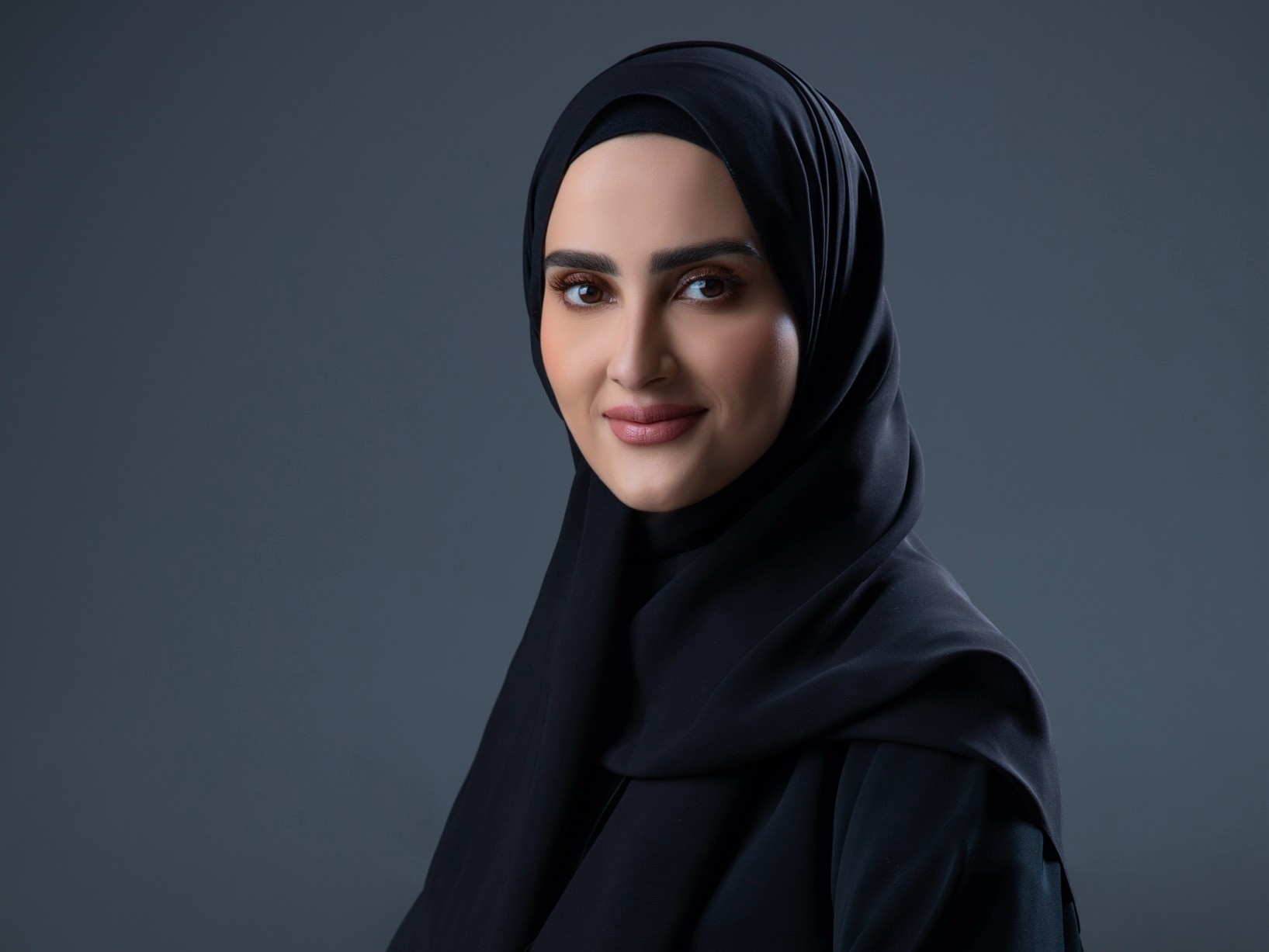
Exhibition Manager at World of Coffee 2026

  • A Shift the Industry Can No Longer Ignore

The global coffee industry is no stranger to confident predictions. Every few years, a new region is crowned the “next big growth market,” only to plateau as structural limits reveal themselves—income ceilings, demographic stagnation, infrastructure gaps, or cultural preferences that evolve more slowly than expected.

But the transformation taking place across the Middle East today is not another cycle of hype. It represents a fundamental shift in where global influence is coming from. If the industry continues to view the region merely as an emerging market, it will misread the scale and significance of what is unfolding.

The Middle East is not simply consuming more coffee. It is reshaping the conditions under which coffee is produced, traded, and valued. Unless the industry recalibrates its assumptions, it will underestimate a region that is, in several ways, better positioned to shape the next decade of global coffee direction than many of the markets that once dominated the narrative.

  • A New Generation, a New Market Logic

The most misunderstood aspect of this shift is demographic. The region’s youthfulness is often cited as a headline statistic, but rarely interpreted correctly. A young population does not automatically create a high-value coffee market; what does is a young population with access, aspiration, and global exposure.

Across the Gulf—where more than 60% of the population is under 35—and increasingly in North Africa, this is precisely the case. A generation raised with international cultural fluency approaches coffee as an extension of taste, identity, and self-expression, more akin to fashion, music, or design than to a morning utility. They are not inheriting a coffee culture; they are creating one—and doing so with remarkably few of the constraints that shaped earlier consumer markets.

Most Western coffee markets took decades to evolve from commodity to specialty. The Middle East did not. It moved from instant coffee to single-origin pour-overs in what feels like the span of a single generation. This compression of time matters. Behaviours that took other regions twenty years to develop have materialised here almost overnight.

In Saudi Arabia, for example, more than 36 million cups of coffee are consumed daily, and the Kingdom now has over 61,000 licensed cafés—figures that would be extraordinary in any context. In the UAE, more than 90% of coffee spending occurs outside the home, one of the highest café-driven consumption ratios globally. Egypt has nearly doubled its annual coffee consumption in five years, rising from around 36,000 to over 70,000 tonnes, while Morocco recorded a 23% rise in coffee imports in 2024 alone.

This emerging baseline of expectation—quality, provenance, processing style, ethical value chains—is reshaping the industry’s economics. Coffee professionals often speak of “premiumisation” as something that gradually filters from niche cafés into the mainstream. In the Middle East, premiumisation did not filter. It arrived fully formed.

  • Where Demand and Capability Rise Together

The willingness to pay for quality is not a marginal behaviour in the region; it is central to how young, urban Middle Eastern consumers engage with food and beverage culture more broadly. Coffee simply happens to be the category where this shift is most visible because the market is evolving so rapidly.

As a result, influence follows. When premium expectations are normalised at scale, global suppliers take notice. Producers from East Africa, Central America, and Southeast Asia increasingly describe the Middle East as a strategic market rather than a secondary one. Many now tailor fermentation styles, natural profiles, and processing innovations specifically for buyers in Riyadh, Dubai, or Kuwait City.

It is unusual for an emerging region to generate this level of pull so early in its development curve. Yet it is happening now—and quickly.

A second force behind the region’s rising relevance is economic cohesion. Consumption growth is occurring simultaneously across multiple layers of the value chain. Café culture is expanding, but so too are at-home brewing, specialty retail, roasting capacity, green coffee trade, logistics infrastructure, and the professional workforce required to sustain them.

In global coffee markets, it is rare to see demand and capability accelerate together. Often, consumption precedes supply-chain maturity, or vice versa. In the Middle East, both are evolving in parallel.

This is why the region’s impact will extend far beyond its borders. When a market becomes not only a high-value consumer but also a capable participant in sourcing, roasting, and trade, it does more than generate revenue—it shapes direction. It becomes a place where reputations are built, partnerships are formed, and new standards are tested.

Geography further amplifies this influence. The Middle East sits at a critical intersection between producing and consuming nations. For East African producers, the GCC is closer, more accessible, and often more commercially reliable than European destinations. For Asian producers, supply routes to the region are efficient and cost-stable.

Much of the coffee entering North Africa and South Asia already routes through the Gulf, with Dubai serving as a key re-export hub. In recent years, the city’s coffee re-export activity has exceeded AED 3.5 billion in cumulative trade value, with 2024 alone seeing a 20% increase in green coffee re-exports as the UAE strengthens its role as a global logistics and distribution centre.

When a region becomes a corridor—a bridge rather than an endpoint—it naturally assumes a greater role in shaping global trade patterns. That is what is happening now. Much of it has yet to be captured in macroeconomic reporting, but it is visible in behaviour—and behaviour almost always precedes data.

  • A Culture Positioned for Reinvention

The final reason the Middle East is poised to define the next decade of coffee growth has less to do with economics and everything to do with culture. Unlike older markets, where coffee traditions are well-established and often rigid, the Middle East is characterised by cultural fluidity. Tradition and innovation coexist with ease.

A Yemeni jebena ceremony can sit comfortably alongside a carbonic maceration Gesha. Café formats evolve quickly. Entrepreneurs experiment freely. This openness—rare in more mature coffee geographies—creates ideal conditions for reinvention.

By 2030, the global industry may look back on this moment as an inflection point: the period when influence began to shift meaningfully toward a region too often viewed through outdated assumptions. The Middle East does not require validation from legacy markets to shape the global coffee industry. It is already doing so—through the expectations of its consumers, the confidence of its entrepreneurs, the evolution of its supply chain, and the growing attention of producers who recognise where the future lies.

The story of global coffee is not static. It is shifting.
And that shift is taking place here.
Mexican Coffee to Make History in Dubai 2026

Coatepec, Veracruz – Qahwa World

Mexican coffee is set to leave a historic mark at one of the Middle East’s premier coffee events. Casa Tostadora Briones has announced its participation in the upcoming exhibition from January 18 to 20, 2026, at the Dubai World Trade Centre, representing all coffee-producing regions of Mexico in a first-of-its-kind national initiative.

“This is an unprecedented moment,” said José Manuel Hernández García, CEO of Casa Tostadora Briones. “For the first time, all producing states, institutions, and growers are moving forward together. In Dubai, we will present not only our coffee but the story of every hand and every mountain that shapes our harvests.”

The initiative brings together multiple official and civil partners, including: Veracruz Secretariat of Economic Development

  • Chiapas Ministry of Economy and Labor and the Coffee Institute of Chiapas

  • Guerrero Secretariat of Economic Development

  • Mexican Ministry of Tourism

  • Asociación Civil Ayuda Productores Veracruzanos

In addition to promoting Mexican coffee internationally, the project highlights the cultural, natural, and touristic richness of Mexico’s coffee-growing regions and aims to encourage origin-based tourism, showcasing the deep connections between coffee, history, and local communities.

Casa Tostadora Briones has also pioneered new export routes from Mexico to the Middle East, ensuring that every batch maintains its origin identity and high-quality standards.

The company is inviting coffee producers, cooperatives, and associations from across Mexico to join this historic national representation.

The Dubai exhibition will take place January 18–20, 2026, at the Dubai World Trade Centre, Main Halls, bringing together leading figures in the global coffee industry.

Dubai: The Next Global Coffee Trade Nexus

Dubai — Qahwa World

Dubai is rapidly establishing itself as one of the world’s most influential players in the international coffee trade. Once renowned for its dominance in gold, oil, and logistics, the emirate is now redefining itself as a global coffee hub connecting producing countries in Africa, Asia, and Latin America with consuming markets across Europe, the Middle East, and North America. With its strategic location, advanced infrastructure, and thriving specialty coffee culture, Dubai is emerging as the next global nexus of the coffee industry.

Coffee is far more than a daily beverage — it is a $200 billion global economy that sustains over 25 million smallholder farmers and fuels more than two billion cups consumed every day. Yet the industry is under intense pressure. Climate change, volatile prices, supply chain disruptions, and changing consumer tastes have reshaped global trade dynamics. Amid these challenges, Dubai has positioned itself as a stabilising force that combines innovation, transparency, and accessibility to create new opportunities for producers and traders worldwide.

The Dubai Multi Commodities Centre (DMCC) has been at the forefront of this transformation through its state-of-the-art Coffee Centre located in the Jebel Ali Free Zone. The facility offers integrated services for roasting, storage, packaging, logistics, and trade, serving more than 300 members across the global coffee value chain. Designed on a pay-as-you-go model, it allows small producers and independent traders to access world markets without the burden of fixed commitments. According to Mike Butler, Associate Director of Coffee at DMCC, this flexible approach “makes the Coffee Centre extremely friendly for small businesses” and allows them to scale as they grow.

“Dubai is defining the global trend in specialty coffee today,” said Garfield Kerr, President of the Specialty Coffee Association (SCA) and founder of Mokha1450. “In Dubai, coffee functions like wine elsewhere — it’s a cultural experience built around craftsmanship and taste.” Over the past decade, independent roasteries and boutique cafés have replaced international chains across the city. Consumers have become increasingly informed about freshness, roast profiles, and sustainability, pushing the market toward higher quality and transparency.

Dubai’s geographical advantage is another factor behind its success. Situated almost exactly between the world’s top producing nations — Brazil, Vietnam, Colombia, Indonesia, and Ethiopia — the emirate offers unmatched access to global shipping routes. Its proximity to East Africa, one of the fastest-growing specialty coffee regions, gives it a natural advantage over traditional European hubs. “If you map the world’s major coffee producers, Dubai sits almost exactly in the centre,” Butler explained. “It’s only a matter of time before Dubai challenges Hamburg as the global leader in coffee trade.”

The DMCC Coffee Centre’s Tradeflow platform has introduced a new level of digital transparency to an industry often criticised for its opacity. Every batch traded through the system is physically verified and stored within the centre’s temperature-controlled facility, ensuring quality and trust between producers and buyers. By integrating blockchain-based traceability and tokenised finance options, DMCC has reduced intermediaries and opened new financing channels for smallholder farmers. Its partnership with the African Fine Coffees Association (AFCA) further supports African producers through logistics, warehousing, and buyer introductions, helping them retain greater value from their exports.

Dubai’s rise as a coffee capital is also cultural. The World of Coffee Dubai exhibition, held annually at the Dubai World Trade Centre, has become a magnet for industry leaders and enthusiasts alike. The 2025 edition drew nearly 17,000 visitors and 2,000 exhibitors, hosting auctions of the world’s rarest coffees and showcasing 131 debut brands — three-quarters of them international. “The world showed up,” said Kerr. “The coffee innovation coming out of Dubai is now influencing global trends.”

As global coffee trade evolves, sustainability has become central to Dubai’s vision. The emirate is investing in climate-smart agriculture, low-carbon logistics, and advanced digital systems that track environmental compliance. Experts warn that by 2050, up to half of existing coffee-growing land could become unsuitable due to rising temperatures, making adaptation essential. Initiatives such as agroforestry, drought-resistant varieties, and circular-economy recycling of coffee by-products are gaining momentum.

Through innovation and technology, Dubai is setting new standards for transparency and sustainability in coffee trading. Artificial intelligence now supports quality monitoring, while blockchain ensures traceable supply chains. Companies are exploring compostable packaging, recycling capsules, and transforming used coffee grounds into new products, aligning commerce with environmental responsibility.

“Whether it’s the supermarket, the sports club, or the cinema, coffee standards are rising everywhere,” Butler observed. “Dubai is uniquely positioned to lead this evolution, combining innovation, logistics, and sustainability into one cohesive ecosystem.”

In an era of shifting trade routes and unpredictable markets, Dubai has turned its vision into action. The city’s integration of culture, technology, and commerce is rewriting the rules of how coffee is traded and valued. More than a gateway between continents, Dubai has become the command centre of global coffee commerce — a place where beans, business, and innovation converge to shape the future of one of the world’s most beloved drinks.

Breville Eyes China’s Coffee Market as U.S. Tariffs Pressure Sales

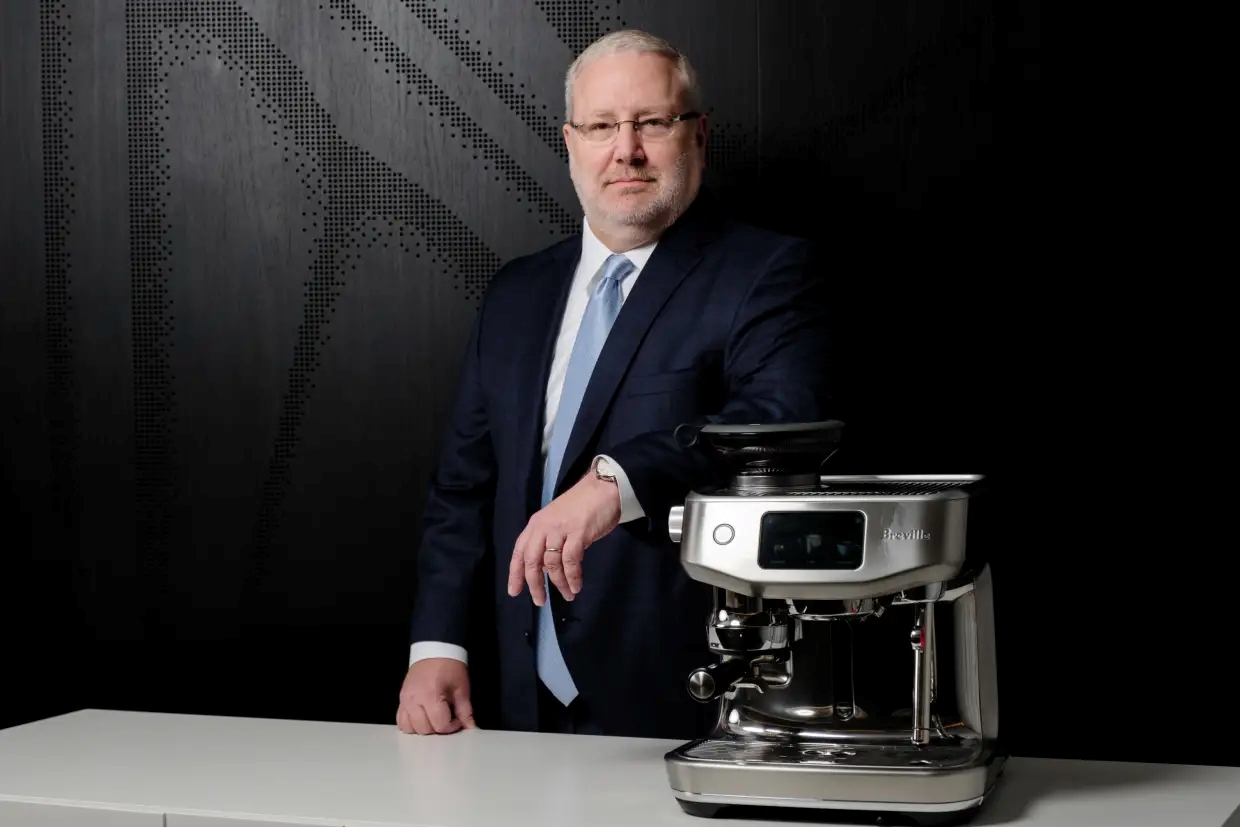
Dubai, 21 August 2025 (Qahwa World) – Breville is looking to China and the Middle East as promising new growth markets for its coffee appliances, aiming to balance the impact of U.S. tariffs on its business. Chief executive Jim Clayton said rising demand for premium coffee machines in these regions provides long-term opportunity, even as higher import duties in the United States pose near-term challenges.

The company, which generates about 40 percent of its revenue from the U.S., has shifted part of its production from China to facilities in Indonesia and Mexico. Clayton confirmed that this diversification strategy will continue through the year to reduce exposure to higher costs.

For the year ending June 30, Breville posted revenue of $1.7 billion, an increase of nearly 11 percent, while operating profit rose just over 10 percent to $204.5 million. Despite the strong performance, investor concerns about tariffs weighed on the share price. Clayton acknowledged that higher input costs remain an issue for the U.S. market but said the company would manage these pressures through supplier negotiations, selective price increases, and new product launches.

Recent highlights include the launch of the Oracle Dual Boiler coffee machine in Australia, with a new grinder and a compact smart oven scheduled for release this month. Coffee appliances remain the company’s leading category, helping Breville deliver double-digit growth across all three of its regional markets in 2025. The business has increased revenue and profit every year since 2015, even during challenging conditions.

Analyst opinions are mixed. Some warn that U.S. tariffs could affect earnings through FY27, raising questions about consensus forecasts of flat growth this year and a return to double-digit gains next year. Others view the current slowdown as temporary, pointing to Breville’s consistent record of expansion and opportunities in international markets. UBS projects that the $5 billion company could more than double sales over the next decade, driven by coffee market growth globally and particularly in China.

Founded over 90 years ago, Breville has grown into a global brand with a presence in more than 70 countries. Known under the Breville and Sage names, the company has built a reputation for innovation in small appliances and premium coffee equipment. Its teams of engineers, designers, and food technologists have helped place Breville at the forefront of its category. The company also emphasizes sustainability and ethical practices across its operations, with a focus on reducing environmental impact and contributing positively to society.

Clayton said that early results in China and the Middle East are encouraging, though still in the early stages, and that both regions represent significant long-term potential. To close out the financial year, Breville declared a final dividend of 19 cents per share, bringing the full-year payout to 37 cents, payable on October 2.