“Your Senses Belong Only to You” – Fuki Kanamori on Her Journey from Government Clerk to Japanese Coffee Expert

This Fuki Kanamori interview explores the world of Japanese coffee.

Interview: Qahaw World |
Interviewer: Ali AlZakary |
Date: June 2, 2026

“Your Senses Belong Only to You”: Fuki Kanamori on Her Journey from Government Clerk to Japanese Coffee Expert

Key Takeaways from the Interview:

  • “Coffee moves you” – a philosophy that reflects a man who started her journey after age 40.
  • Language barriers and lack of information were the biggest obstacles to professional growth.
  • Kanamori Coffee Lab: a lighthouse for those who want to avoid detours in specialty coffee education.
  • Science is just a tool. Never forget the person you are serving.
  • Japanese consumers blend old Kissaten craftsmanship with modern specialty coffee.
  • Ambition to collaborate with the Gulf region to share sensory education expertise.

As part of “Qahwa World’s” mission to explore inspiring coffee experiences around the globe, we now come to Japan. This is our first interview with one of the most prominent specialty coffee figures in the Land of the Rising Sun.

Fuki Kanamori was not always an expert in roasting and sensory analysis. He started her career as a local government employee. Then, in her late thirties, everything changed. He suddenly realized that he wanted a career where he could truly create and feel.

Thus, she embarked on the journey of founding “Kanamori Coffee Lab.” Today, she is a renowned educator and a certified Q Grader.

In this in-depth interview conducted by writer and specialist analyst Ali Al Zakary, Fuki Kanamori reveals her unique philosophy summarized by her beautiful slogan: “Coffee moves you.”

He talks about language challenges, her vision to close the information gap in Japan, and her passion for transferring sensory knowledge to new generations. He also offers golden advice to anyone starting their coffee journey today.

Do not miss the opportunity to learn from this inspiring Japanese experience.

Your philosophy is captured by the beautiful slogan, “Coffee moves you!” How did coffee personally move you in your early days, and what was the turning point that inspired you to pursue this career professionally, specifically focusing on roasting, brewing, and sensory analysis?

It all began in my late 30s when I had a sudden realization: “I want a career where I can truly create and feel.” Until then, I was working as a local government employee at a city office. Driven by this new passion, I taught myself by reading every coffee book I could find.

However, no matter how much I read, I simply could not grasp the complex flavor descriptions written on the pages. It was incredibly frustrating. I became determined to capture those professional sensory perceptions with my own five senses and verify the “right answers” for myself.

That was the true turning point that led me to immerse myself completely in studying to become a Q Grader. It was a late-blooming challenge, starting well after I turned 40.

Transitioning from a passionate coffee lover to a recognized Coffee Educator and Sensory Professional requires an intense journey of training. What were the most significant challenges you faced in refining your skills in roasting and advanced sensory perception?

The greatest obstacles I faced were the language barrier and a severe lack of accessible information. While certain aspects of the Japanese coffee scene are highly advanced, it is completely polarized. Japan has lagged behind global trends in cutting-edge roasting theories and advanced sensory education.

The vast majority of truly valuable primary information is published in English and originates from overseas. If you try to learn solely through Japanese accessible data, you quickly hit a wall. Navigating that language barrier to directly grasp global standards and core theories was an immense challenge.

You founded “Kanamori Coffee Lab” as an all-encompassing platform. What is the core mission and vision that the lab aims to achieve within both the Japanese and global coffee communities?

Our mission is twofold: to be a space where anyone who wants to learn can access genuine skills and knowledge without getting lost, and to convey the pure joy of trusting one’s own senses and expressing them freely.

In Japan’s polarized information landscape, I want the lab to be a lighthouse, the shortest route for people who, just like my former self, yearn to dive deeper but want to avoid unnecessary detours.

By delivering authentic, vivid information, we aim to contribute deeply to the Japanese community. Globally, our vision is to share Japan’s unique, delicate craftsmanship while creating an experimental space where professionals can connect and inspire one another through sensory perception, transcending language barriers altogether.

As a Sensory Professional, how do you bridge the gap between rigid, precise science and the emotional, human experience when training students and professionals at your lab?

Science and data are merely tools; they are never the end goal. At my lab, I instill a deep, foundational understanding of theory rather than just handing out superficial recipes.

If you master the core theory, you can adapt flexibly using your own five senses, no matter how the environment, machinery, or brewing tools change.

At the same time, I always remind my students: “The language used between professionals is entirely different from the language used with customers. No matter how deeply or professionally you specialize, you must never forget the person you are serving.”

You must hold rigid scientific theory within yourself, but translate it into a shared, emotional experience and language for the customer. Teaching the balance of these two pillars is the only way to bridge that gap.

The coffee education and training sector is evolving rapidly. What unique methodologies or principles distinguish Kanamori Coffee Lab from other training centers focused on specialty coffee?

The biggest distinction is that we do not offer generic, one-size-fits-all lectures. Instead, we clarify each student’s unique dream and ideal future, and provide unwavering, side-by-side mentorship to get them there.

Because I took a long detour and achieved my own dream later in life, I understand exactly where students stumble and face difficulties. Age, gender, and previous career background do not matter.

“Anyone can make coffee their professional career, no matter when they start.” I want to prove this through my own actions.

Our core strength lies in this completely personalized mentorship designed to turn individual dreams into reality, rather than just teaching standard “correct answers.”

Our readers and specialty coffee professionals love getting a glimpse into the daily routines of experts. What is your personal, go-to protocol for evaluating your morning coffee? Furthermore, what is your favorite Japanese brewing/dripping tool, and why do you prefer it?

To me, morning coffee is “a legal stimulant that moves my mind and soul.” As someone who struggles with mornings and tends to be indecisive early in the day, coffee is the essential element that puts me on the starting line and grants me the power of decisiveness.

My protocol is simple: I drink a single glass of water, and right after, I drink my coffee without thinking about anything at all.

Doing this allows my day to truly begin, much like putting on a final touch of perfume before leaving the house. Drinking coffee in this flat, neutral state is how I face my physical condition and the bean’s potential head-on.

My favorite Japanese tool is the “Tarachine Dripper.” Crafted with traditional Arita ware porcelain, it beautifully depicts Katsushika Hokusai’s Thirty-Six Views of Mount Fuji, embodying a distinct Japanese aesthetic.

Functionally, its sharp conical design engineered at an angle below 30 degrees maximizes extraction consistency. For brewing a clean, energetic cup that awakens my mind and soul, there is simply nothing better.

Japan’s coffee culture beautifully harmonizes tradition, like the historic Kissaten shops, with the cutting-edge modernism of specialty coffee. How do you view this balance, and what uniquely defines the modern Japanese consumer’s approach to coffee appreciation?

I believe Japanese consumers possess an extraordinarily high level of appreciation and attentiveness toward micro-details. On one hand, you have the traditional Kissaten culture, defined by the meticulous care of brewing a single cup over time and the comfort of the space.

On the other hand, you have modern specialty coffee, characterized by clean, cutting-edge flavor profiles. While these two worlds might seem contradictory at first glance, Japanese consumers beautifully bridge them through a shared “profound respect for craftsmanship.”

Instead of merely chasing trends, they value the underlying story and the minute details within a single cup. This unique perspective allows a new standard like “Neo-Kissaten” to emerge naturally, evolving and integrating modern technology without destroying the old culture.

Japanese roasters and baristas are globally renowned for their meticulous attention to micro-details in both roasting and extraction profiles. In your opinion, how has this distinct Japanese philosophy shaped the global specialty coffee community?

This artisan philosophy, which you could call an obsession with micro-details, has elevated the overall precision and consistency of the global specialty coffee community to a higher level. The way Japanese baristas and roasters constantly refine their craft down to a single second, 0.1 grams, or one degree has served as massive inspiration to professionals worldwide.

The fact that highly sophisticated tools like the Tarachine Dripper are born in Japan is a testament to this mindset. This precise approach and dedication to mindfulness have become essential puzzle pieces in shaping what is now considered the global standard.

Every market has its hurdles. What are the most pressing challenges currently facing the coffee sector in Japan, whether regarding supply chains, climate change, or evolving consumer tastes among the younger generation?

I feel the most pressing challenge is the polarization of information and the resulting barriers to entry. While climate change and supply chain disruptions are global issues, Japan faces a unique hurdle: access to accurate, cutting-edge theories and information is restricted to a limited group.

Because of this information gap, passionate amateurs and the younger generation trying to enter the industry often get trapped by outdated conventional wisdom or rigid recipes, leading to early frustration.

Eliminating this information disparity and building an environment where the next generation can enjoy and explore coffee freely on a global standard is what Japan needs most right now.

The Arab world, particularly the Gulf region, is experiencing unprecedented, massive growth in the specialty coffee sector and sensory education. How do you view this rapid expansion, and are there any future plans for Kanamori Coffee Lab to collaborate or offer educational programs in the Middle East?

I have immense respect for the sheer passion and breathtaking speed of evolution within the specialty coffee sector in the Arab world, particularly the Gulf region.

Their dedication to hungrily pursuing authentic education and achieving the absolute pinnacle of quality resonates deeply with the philosophy of our lab.

While we do not have any concrete plans at the moment, I would absolutely love the opportunity to connect with their vibrant community and collaborate by bringing our sensory education and hands-on mentorship to the Middle East.

In closing, what golden piece of advice would you offer to emerging roasters and young cuppers who are just beginning their journeys in the coffee industry today?

My golden piece of advice is this: “Your five senses belong to you and you alone. No one has the right to deny or invalidate what you perceive.” The coffee world is flooded with “correct answers,” data, and the opinions of experts. However, the flavors you personally perceive as delicious and the moments you define as beautiful are where everything truly begins. Knowledge and technical skills can always be acquired later.

Trust your own senses and never be afraid to express them. That single courageous step will eventually lead to a cup of coffee that genuinely moves someone else’s heart.

This interview was conducted by Ali Al Zakary as part of the “Qahwa World” series exploring distinctive coffee experiences worldwide. We hope that Fuki Kanamori’s journey inspires every Arab who aspires to turn their passion for coffee into a refined profession. Share your thoughts and questions with us, and stay tuned for our upcoming interviews from the coffee capitals of the world.

Interview by: Ali Al Zakari – Edited and produced by the “Coffee World” team – in collaboration with Kanamori Coffee Lab, Tokyo, Japan.

Publication date: June 2, 2026
Ethiopia Launches East Africa’s First Specialty Coffee Training Center

Sahel Maryam – Qahwa World

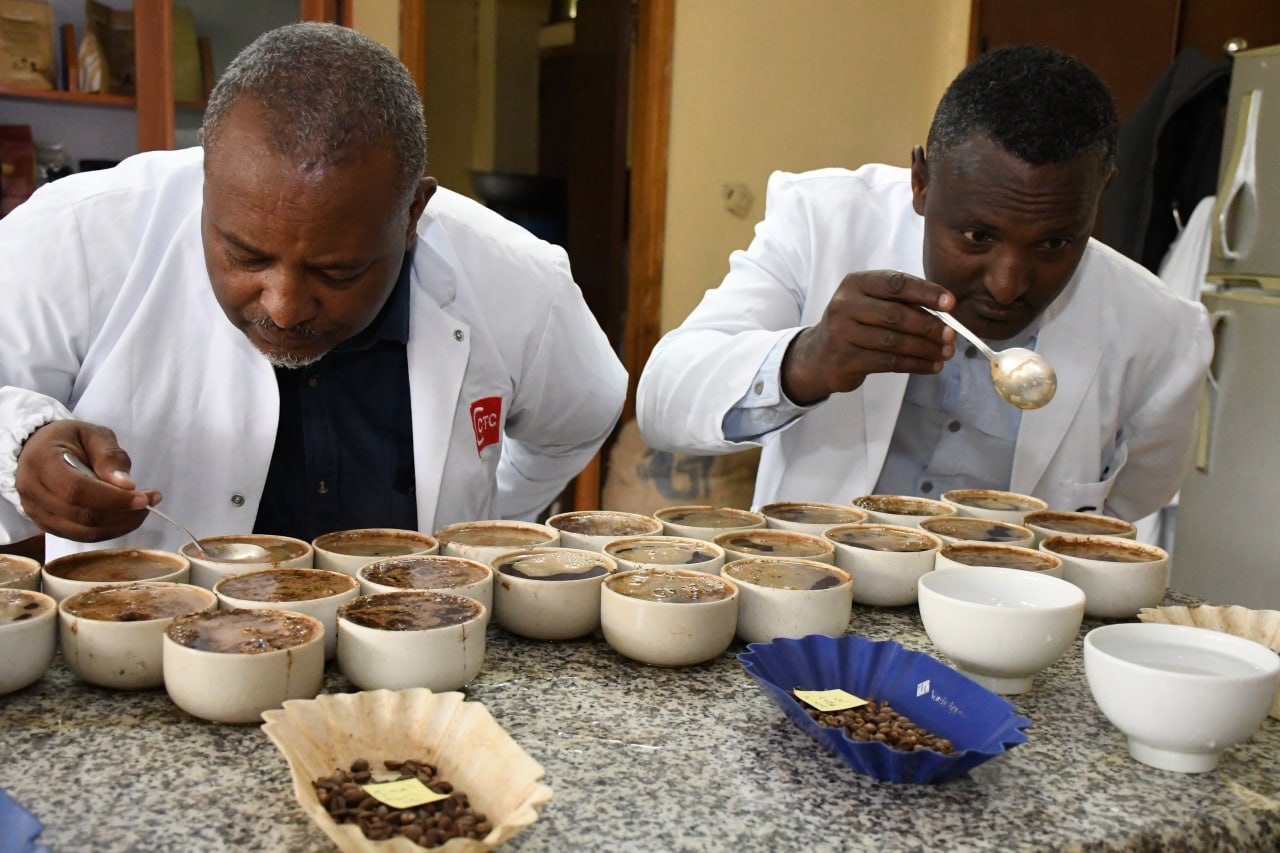
In a pioneering move for the region, a new coffee roasting and quality assessment center has opened in Sahel Maryam, Medhin, Ethiopia. The facility, the first of its kind in East Africa, combines state-of-the-art equipment with instruction from experienced coffee professionals.

The center aims to train participants in evaluating coffee quality to global standards, enabling them to independently assess beans and elevate industry practices. Trainees leave with the skills to analyze and improve coffee from the farm to the cup, applying internationally recognized Specialty Coffee Association (SCA) protocols.

The initiative has received recognition from Ethiopian coffee authorities, UNIDO, the Italian government, and the Italian Development Cooperation Agency for its contribution to developing the local and regional coffee sector.

Coffee Quality Evaluation Standards
The process of assessing coffee quality at the center is comprehensive:

Physical Quality of Beans – Inspecting defect count, bean size and uniformity, moisture content, and presence of foreign matter.
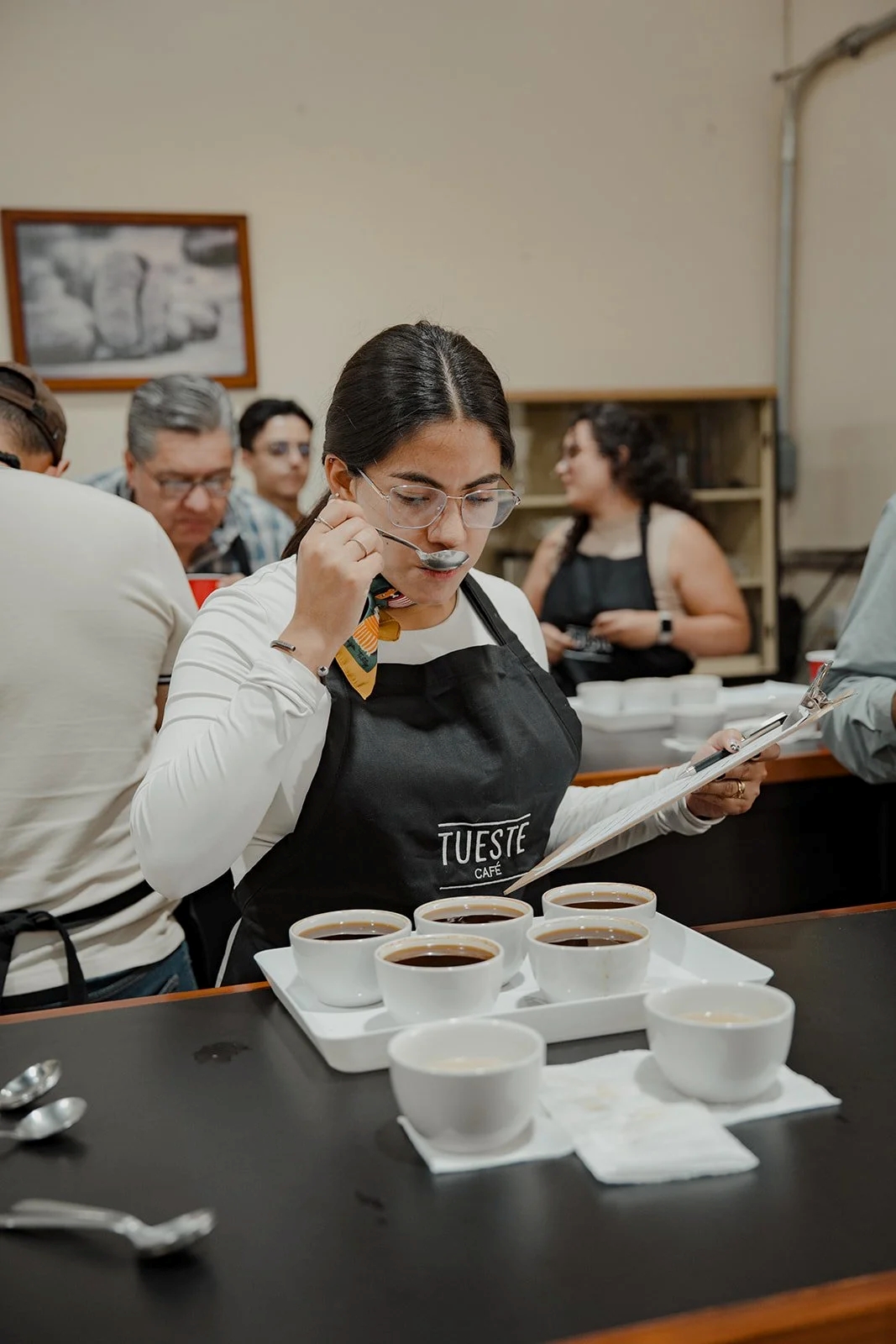
Sensory Evaluation (Cupping) – Scoring aroma, flavor, aftertaste, acidity, body, balance, and sweetness.
Defect Identification – Spotting spoiled, fermented, or overripe beans.
Organic Acid Analysis – Identifying natural acids such as citric, malic, acetic, and phosphoric to characterize flavor profiles.
Standardized Protocols – Applying precise roast levels, grind sizes, water quality, and brew ratios to ensure consistent and fair evaluation.

Coffee that scores 80 points or above under these criteria is classified as “Specialty Coffee.” Experts emphasize that proper evaluation relies on certified Q-Graders rather than subjective taste alone, ensuring adherence to international standards.

The new center marks a major step forward in Ethiopia’s ongoing mission to cement its position as a global leader in coffee quality and expertise.

University of Kentucky Launches Coffee Science and Culture Certificate

DUBAI – QAHWA WORLD

The University of Kentucky is set to introduce its first academic certificate dedicated entirely to coffee, marking a notable step in the growing recognition of coffee as both an agricultural system and a global cultural force.

The new Coffee, Science and Culture Certificate is led by David Gonthier, associate professor in the Department of Entomology at the Martin-Gatton College of Agriculture, Food and Environment. The program is designed for undergraduate students and aims to explore coffee from farm production and global trade to roasting, sensory evaluation and cultural history.

  • From Origin to Academia

Gonthier’s connection to coffee began through family ties in Honduras, one of the world’s leading coffee-producing countries. Time spent with relatives involved in coffee farming provided early insight into the realities of production and the economic pressures facing smallholder growers.

His academic path later focused on coffee systems in southern Mexico, alongside continued involvement in a small coffee operation in Honduras. He also earned certification as a Q Grader, a professional credential that qualifies specialists to assess and score coffee quality through standardized sensory evaluation.

Recognizing that few U.S. universities offer structured coffee education, Gonthier developed a program that integrates agriculture, economics, science and culture into a unified academic framework.

  • A Multidisciplinary Approach to Coffee Education

The Coffee, Science and Culture Certificate provides students with a comprehensive view of the coffee value chain. Coursework addresses:

The history and cultural significance of coffee

Global trade and smallholder production systems

Roasting science and brewing techniques

Sensory analysis and flavor evaluation

Two core undergraduate courses anchor the program:

Not Just Coffee, which examines coffee’s historical roots and cultural impact

Coffee Sensory Science, focused on flavor perception, tasting methodology and quality assessment

  • The UK Coffee Lab: Hands-On Training

Practical learning takes place at the UK Coffee Lab roastery, located at the university’s Horticulture Research Farm (South Farm). There, students observe roasting in action, study coffee varieties and analyze how roast profiles influence aroma, acidity, body and overall cup character.

The lab and curriculum were developed with the support of Briana Bazile, part-time instructor and graduate fellow in the Gonthier Agroecology Lab, and Viktor Halmos, research analyst at Martin-Gatton CAFE and alumnus of the Department of Natural Resources and Environmental Science.

  • Launch Timeline

Pending final approval, undergraduate students are expected to begin enrolling in the Coffee, Science and Culture Certificate in Fall 2026.

For more information about the certificate program or the UK Coffee Lab, inquiries can be directed to David Gonthier at [email protected]
.

The SCA/Q Score Will Probably Disappear

Is This Good News or Bad News?

By Ennio Cantergiani
Owner and Managing Director, L’Académie du Café – Switzerland

For more than twenty years, we have treated a single number as the ultimate truth about coffee quality.

86.25 vs. 87.00 — as if the second coffee were objectively better.

But in sensory science, a score is not a truth. It is a measurement. And every measurement comes with uncertainty, which is almost never communicated.

In sensory science, we use statistics to validate hypotheses. Multiple measurements allow us to calculate an average, a median, and a standard deviation. A score without a standard deviation says nothing.

  • Why the “One-Score” Model Is Reaching Its Limits

1. Reliability Is Often Weaker Than We Admit

Different cuppers, different contexts, different expectations — different numbers.

This is not about “bad cuppers.” It is the nature of human perception:

Anchoring effects (the first sample sets the scale)

Contrast effects (coffee A changes how coffee B is perceived)

Semantic bias (words shape perception)

Fatigue and sensory adaptation

Calibration and alignment drift over time

When the measurement error is larger than the difference you are pricing, the number becomes fragile.

2. We Confuse Measurement with Value

A single score blends multiple dimensions:

Sensory performance (what is in the cup)

Preference (what I like)

Market narratives (what is trendy)

Rarity and social proof (what wins competitions)

Then we pretend this mixture represents one objective axis.

It does not.

  • 3. Scores Influence Money at Origin — Sometimes Unfairly

This is where it becomes uncomfortable.

When price is strongly tied to a number, producers are pushed to optimize for the scoring system, not necessarily for:

Long-term agronomy

Risk management

Climate resilience

Local sensory identity

Realistic processing constraints

  • What Comes Next (and Why It’s Better)

We will not stop evaluating coffee quality. But we should stop pretending that a single number is the best way to do it.

  • The future looks like:

Multi-dimensional assessment (descriptive, affective, and functional)

Confidence ranges, not fake precision (e.g., 86 ± 1)

Clear sensory evidence with traceable data (digital tools and better training loops)

Fit-for-purpose grading (espresso vs. filter vs. blends vs. cold brew)

Contracts combining specifications and sensory profiles, instead of worshipping one score

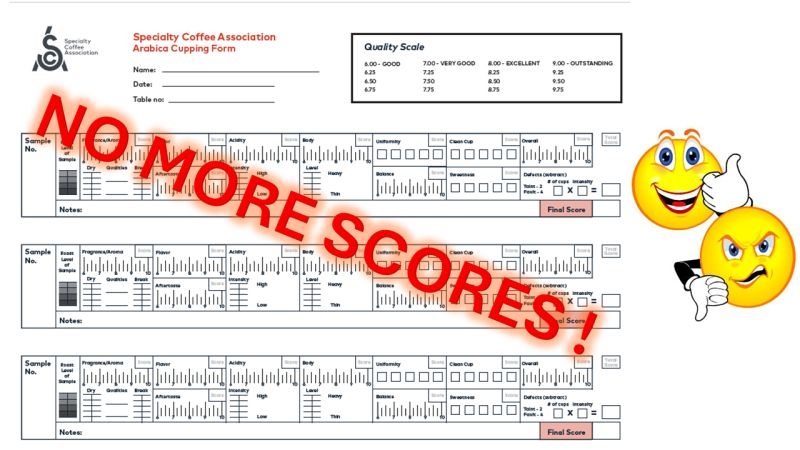
The score will not disappear overnight, but its monopoly will. No one will continue teaching the 2004 Q form indefinitely.

Will CVA replace the scoring system? Probably — but we need one to two years of feedback from major industry players. It will also need adaptation to better reflect the reality of coffee trading.

And honestly, that would be healthier — for producers, traders, roasters, and for sensory science.

  • A Question for the Industry

If tomorrow we removed the 100-point score, what would you use to trade coffee fairly and transparently?

From Inspired Barista to Roasting Pioneer: Sherryl Napit Unveils the Passion Behind ‘The Ore Coffee’

Dubai – Ali Alzakary

In the world of coffee, where science meets passion and quality is forged in every stage of preparation, certain stories deserve to be told. These are the tales of individuals who believed in their ability to transform a profound love for the coffee bean into a leading professional career, contributing to the forging of a new identity for the specialty coffee culture.

Sherryl Napit is not just a businesswoman; she is a pillar in the art of tasting and roasting, a Sensory Judge, and a winner of the UAE National Cup Tasters Championship. Her journey is proof that persistence coupled with knowledge can illuminate the path from behind the espresso machine to founding a leading establishment in roasting and training. It is a story that begins with a friend’s advice and culminates in the establishment of “The Ore Coffee Roastery” as a beacon of quality and education in the region.

This invitation is not merely a read; it is a deep dive into the mindset of a pioneer who balances the demanding aspects of business management with the honing of precise sensory skills. We invite you to delve with us into Sherryl Napit’s inspiring journey and discover the secrets behind her continuous excellence in the coffee industry.

  • 1. Can you walk us through your journey from starting as a barista to founding The Ore Coffee Roastery? What inspired you to take that leap?

My coffee journey began unexpectedly through my friend Karthik, whose passion and achievements in coffee competitions inspired me. That spark led me to specialty coffee, where my first employer, Mr. Abdo, opened the door. I became completely investedstudying after work, earning certifications, and practicing constantly. Within three months, I became head barista and began roasting on a small Gene Café just to learn more.

About two years later, meeting coffee farmers from my hometown gave my work deeper meaning and pushed me toward professional roastinga path that wasn’t easy. There were moments I wanted to quit, but Sitaram, my husband and business partner’s support, kept me going. With his encouragement, I completed SCA trainings, Q Grader preparation, and countless hours of practice.

Eventually, all the effort paid off when I won the National Cup Tasters Championship. That win gave me the confidence to start The Ore Coffee Roasterynot just as a business, but as a continuation of my purpose. I’m grateful to everyone who supported memy husband, family, friends, and the coffee community. My journey belongs to them as much as it does to me.

  • 2. You’ve consistently performed at the UAE National Cup Tasters Championship over the years. What drives your passion for sensory excellence?

I’ve been fortunate to perform well at the UAE National Cup Tasters Championship, and I think it comes from simply loving what I do. I try my best in everything, especially when it comes to assessing and tasting coffee. I’m always learning, always curious, and I genuinely enjoy the process of evaluating coffee quality.

What motivates me most is the chance to support farmers in improving their coffee. If my skills can help even a little, that alone gives me purpose and keeps me committed to growing and improving.

  • 3. Looking back, what were the biggest challenges early in your career, and how did you overcome them?

Early in my career, my biggest challenge was setting realistic goals and expectations. I’m naturally optimistic, decisive, and willing to take risks, which sometimes meant I moved too fast or overloaded myself. Over time, I developed stronger self-awareness and discipline, and I invested in ongoing learning to refine my approach. Now, I still bring that ambition and bias for action, but I balance it with strategic planning and reflectionwhich has made me more effective.

  • 4. How has becoming a Q-Grader and Sensory Judge influenced the way you approach coffee and mentor others?

Becoming a Q-Grader and Sensory Judge has really strengthened both my confidence and my approach to coffee. It gave me a clearer structure for evaluating coffee, so now I make decisions based on calibrated standards rather than just preference.

It also changed how I mentor othersI focus more on helping people develop their own sensory skills and understanding why certain characteristics appear in coffee. Overall, it pushed me to keep learning, stay curious, and share what I know with more purpose.

Sherryl Napit

  • 5. How would you describe the current coffee market in Dubai and the GCC? Are there any notable trends or shifts you’re seeing?

The coffee market in Dubai and the GCC is highly competitive and rapidly growing, driven by diverse consumer segments and strong cultural influence. We’re seeing a shift from purely traditional coffee toward more experiential and innovative offerings. Flavored beverages, infused coffee, cold brews, and specialty blends are gaining momentum as consumers look for differentiation and personalization. Overall, the market is evolving quickly, trend-sensitive, and full of opportunity for brands that innovate and adapt to changing preferences.

  1. 6. Specialty coffee is growing globally. How do you see Dubai’s market evolving compared to other major cities?

Dubai’s specialty coffee market is evolving differently because of its diversity and openness. Our growth isn’t limited by one culture or traditionit reflects the city’s global influence and fast-moving development. As Dubai grows, the coffee scene grows with it, adapting quickly to innovation, lifestyle shifts, and new consumer expectations.

  • 7. What advice would you give to someone looking to start a coffee business in the UAE?

Focus on offering something unique and meaningful, and back it with a clear purpose and solid plan. The UAE coffee market is competitive, so knowing what sets you apart and having a well-thought-out strategy is key.

  • 8. The Ore Coffee has a training center offering SCA courses. What motivated you to start this side of the business?

We started the training center because we wanted to contribute to the growth of the coffee industry. By providing proper education and internationally recognized SCA courses, we’re helping people deepen their knowledge, improve their skills, and gain confidence in their craft.

When the industry is filled with well-trained and knowledgeable individuals, everything works more efficientlyfrom communication and teamwork to quality standards and innovation. This doesn’t just benefit businesses; it strengthens the community and supports a healthier, faster-growing coffee market overall.

  • 9. How do you balance running a roastery with managing a training center?

We balance running the roastery and managing the training center through structured planning and clear delegation. My partner Sita and I, along with our team, follow a defined workflow where each person has designated responsibilities. This ensures efficiency, accountability, and smooth day-to-day operations across both areas of the business.

  • 10. What are the key skills today’s baristas and coffee professionals need to succeed?

Today’s baristas and coffee professionals need more than technical skills. Success now requires strong managerial abilities, a commitment to personal growth, and a solid understanding of business fundamentalsincluding finance, marketing, and customer experience. These skills help them evolve from being skilled operators to well-rounded coffee professionals.

Sherryl Napit

  • 11. The SCA recently introduced the Coffee Value Assessment (CVA). How do you think this will impact coffee producers, roasters, and the UAE market specifically?

The introduction of the Coffee Value Assessment (CVA) will likely bring greater clarity and transparency across the coffee value chain. Instead of relying solely on a single global scoring system, CVA allows producers, buyers, and roasters to evaluate coffee through multiple dimensions, including sensory attributes, physical quality, and market-driven values.

For many marketsincluding the UAEthis means stakeholders can tailor coffee evaluation based on their specific consumer preferences, cultural taste profiles, and business objectives rather than being constrained by universal standards. As a result, the CVA opens the door for more diversity, innovation, and flexibility in how coffee is valued, sold, and positioned.

Ultimately, this shift creates more opportunity for producers to express their uniqueness, for roasters to curate offerings that reflect local demand, and for emerging markets like the UAE to define their own direction and identity within the specialty coffee sector.

  • 12. From your perspective, what are the most significant global trends shaping specialty coffee today, including sustainability and innovation?

Right now, specialty coffee is being shaped by a few big trends. Community plays a huge rolesocial media, podcasts, and online education have made it easier than ever for people to learn, share ideas, and connect. Sustainability is also front and center, with more focus on ethical sourcing, fair pay for farmers, and eco-friendly packaging. And finally, innovation is changing what coffee tastes like and how we brew it, from new fermentation methods to smarter brewing technology. Together, these trends are making specialty coffee more connected, more responsible, and more exciting than ever.

  • 13. What’s next for The Ore Coffee Roastery and your training programs?

We’re expanding our product offerings, enhancing our training programs, and becoming more engaged with our communityall with the goal of giving you the best coffee experience and support possible.

  • 14. If you could give one piece of advice to your younger self or to aspiring coffee professionals, what would it be?

Be strong. Believe in yourself and stay grounded.

Trust the process, even when it’s slow or unclear, and have faith that what’s meant for you will come in time.

Protect your integrity above all else, because skill can be taught, but character and discipline are chosen.

Keep showing up, stay humble, and let passion guide you more than perfection.

SCA Officially Launches New Q Grader Program with Coffee Value Assessment

Dubai – Qahwa World

The Specialty Coffee Association (SCA) has officially launched enrollment for its updated Q Grader program, marking the start of a new era for one of the most respected certifications in the global coffee industry.

The move follows the association’s acquisition of the program earlier this year from the Coffee Quality Institute (CQI), a historic shift that positions the SCA as the sole operator of a license long considered the gold standard for coffee evaluation. From October 1, 2025, all Q Grader courses worldwide will be delivered under the new system, aligned with the Coffee Value Assessment (CVA).

For years, the Q Grader license has been globally recognized as the highest credential in sensory evaluation, cupping, and green coffee grading. Graduates of the program have carried a certification that is not only respected but also vital to trade, communication, and quality assurance across the coffee value chain. The revamped program now integrates the CVA, a scientifically rigorous framework developed by the SCA and adopted in 2024 after years of research. Unlike the traditional cupping form it replaces, the CVA provides a broader picture of coffee’s qualities, considering not only intrinsic sensory characteristics but also extrinsic factors such as processing methods and certifications that influence market value.

The decision to integrate the CVA into the Q Grader curriculum represents the SCA’s commitment to driving progress in specialty coffee evaluation. Participants in the new program will undergo six days of intensive training and testing, designed to challenge their ability to detect differences and defects, describe sensory profiles, and apply the CVA in real-world contexts. The program has been tailored for experienced coffee professionals, enhancing their sensory acuity and preparing them to communicate coffee’s value with clarity and confidence. The result is a global network of modern Q Graders whose training reflects the latest advancements in sensory science and the continued evolution of the specialty coffee sector.

The SCA has emphasized accessibility as a central pillar of the new launch. Recognizing that the Q Grader license is critical for professionals worldwide, the association has introduced a new country-specific pricing model. By dividing the world into five tiers based on economic conditions, the program ensures that participants in lower-income regions are not excluded from pursuing certification. This model makes the license more affordable, while an expanded network of Q Instructors opens new opportunities for education across diverse markets. From producers and exporters to roasters and importers, coffee professionals in every corner of the globe will have greater access to one of the industry’s most influential programs.

The updated program offers multiple pathways to certification. New entrants can register for the full Q Grader course, while experienced professionals may pursue fast-track options to upgrade or renew their credentials. Arabica and Robusta Q Graders, holders of the SCA Sensory Skills Professional Certificate, and Cup of Excellence judges are among those eligible for accelerated pathways, provided they complete the CVA for Cuppers course by December 31, 2025. A fast track is also available for those seeking to become Q Instructors, with eligibility extended to educators and evaluators including CVA Trainers, Q Instructors, Cup of Excellence Head Judges, and SCA Sensory Skills Authorized Trainers. After the fast-track window closes at the end of 2025, the SCA will require candidates to follow a more extensive pathway that includes both Q Grader certification and instructor onboarding.

The program is not only academically rigorous but also deeply practical. Learners will be evaluated through cupping sessions, sensory exercises, and green coffee assessments, testing their knowledge across physical, descriptive, affective, and extrinsic categories. Those who successfully complete the course will earn the globally respected Q Grader license, recognized across the coffee value chain as a mark of excellence. The SCA has positioned this as a crucial step toward building a more unified global language of quality, one that connects producers, traders, roasters, and consumers with a shared framework for evaluating coffee.

The launch of the new Q Grader program also reflects the strategic partnership between the SCA and CQI, which was first announced in April 2025. Under the terms of the agreement, the SCA will license the program for ten years, paying CQI $250,000 annually. While CQI is no longer involved in administering the program, the collaboration ensures that its original missionsupporting producers and enhancing coffee qualityremains central to the program’s future.

As the transition takes effect, questions remain about how quickly the new system will be embraced across the industry. Some professionals have expressed skepticism about the CVA’s necessity, while others have applauded its potential to capture the complexity of modern coffee markets. Regardless of these debates, the SCA is moving forward with confidence, positioning the new Q Grader program as a scientifically robust and globally inclusive certification.

The association has also committed to supporting learners with preparatory resources. For those new to coffee evaluation, the SCA recommends starting with its Intro to Cupping workshop, a foundational course designed to build skills in sensory analysis and cupping practices. For more advanced professionals, recommended reading lists and preparation activities are available to ensure readiness for the intensive Q Grader assessments.

With enrollment now open and courses already available in select regions, the SCA is calling on coffee professionals worldwide to take part in what it describes as a new era in coffee evaluation. The updated program is expected to strengthen professional standards, support communication and collaboration across the global value chain, and expand the very definition of specialty coffee. For those who pass, the Q Grader license remains not just a certificate but a symbol of credibility, expertise, and leadership in the evolving world of coffee.

CQI Marks International Coffee Day with New Chapter in Coffee Quality Journey

Dubai – Qahwa World

On International Coffee Day 2025, the Coffee Quality Institute (CQI) announced a historic transition: the conclusion of its Quality Evaluation Program after more than two decades and the launch of a new chapter focused on advancing coffee quality and sustainability.

Michael Sheridan, Chief Executive Officer of CQI, emphasized the milestone: “As we turn the page, I want to honor the nearly 20,000 people who have earned Q Grader Certification since the inception of the program: you are the vanguard in a global movement for coffee quality. And I want to specially recognize the Q Instructors who have trained and certified all those Q Graders: you are pioneers who have held a light to the darkness, and your work helped to catalyze a revolution in coffee quality in the span of a single generation.”

A Fresh Look for a New Era

To mark this transition, CQI unveiled a refreshed logo and website, designed to evoke coffee’s origins. The institute underlined that while its visual identity has evolved, its mission remains constant: improving the quality of coffee and the lives of the people who produce it.

Focus on Post-Harvest Processing

Sheridan highlighted the growing importance of CQI’s Post-Harvest Processing (PHP) Program. In September alone, CQI welcomed 14 new instructors for the PHP Generalist Course, expanded its training pool, and set a course for releasing an all-new PHP Professional Course by the end of 2025. Preparations are also underway for the PHP Expert Course in 2026, with students, instructors, mentors, and guest lecturers already engaged.

“Innovation in post-harvest processing has never been more important in the coffee market,” Sheridan noted. “Our PHP Program is helping reduce risk and expand opportunity for everyone in coffee supply streams.”

Global Partnerships and Impact

CQI also announced new partnerships to expand its global reach. In collaboration with Peet’s Coffee in the U.S., CQI will deliver post-harvest processing education to suppliers, while a partnership with Sinar in the U.K. will enhance access to advanced processing technology.

Additionally, the CQI Global Coffee Fund has awarded support for several initiatives:

Let’s Talk Coffee in Peru

Scholarships for participants in the Women-Powered Coffee Summit (WPCS) in Mexico

Staffing for the Taste of Harvest in Burundi

Engaging the Coffee Community

As CQI transitions beyond the Q program, Sheridan underscored the importance of dialogue with the global coffee community. CQI will convene producer-focused discussions at major events, including the WPCS in Mexico and Sintercafé in Costa Rica, and will launch a global survey in October to gather input from stakeholders worldwide.

“I hope you will take time to respond and make your voice heard,” Sheridan said. “Coffee needs your leadership.”

With this transition, CQI signals a future shaped by collaboration, innovation, and a continued commitment to quality at every stage of the coffee value chain.

Rana Ibrahim: Coffee Is Art and Life for Me… and “edda arabica” Is a Space for Stories and Humanity

Dubai – Ali Alzakary

In the presence of coffee, conversation becomes a musical piece: every sip has a note, every bean a story, every hand that plants or brews leaves a lasting trace. This is how Rana Ibrahim sees coffee: not a passing drink, but a space for art, soul, and humanity. In her interview with Qahwa World, she reveals how a simple cup turned into an existential journey, and how she shaped her cafés and projects as an extension of the art she loved since childhood.

Between edda arabica, US Coffee Shop  in Beirut and Qahwat Al-Souq in the town of Baakline, between teaching and experimentation, and between the paintbrush and the cup, Rana has woven a world of her own—where coffee is not merely a beverage, but a language of presence, identity, and creativity.
We invite you now to enjoy this rich and inspiring conversation with Rana Ibrahim, where coffee intersects with art and daily rituals turn into stories worth telling.

How did your journey in the world of coffee begin, and when did you realize that this field would become part of your professional and personal identity?

Coffee has always been part of my upbringing, it was something my family enjoyed every day, and eventually, it became second nature to me too.
Things began to change, though, when I moved to London. While studying Fine Arts at Central Saint Martins, I kept a studio in East London, an area that happened to be surrounded by some of the first third-wave roasters. That’s where I started looking at coffee differently. It shifted from being a routine I hardly thought about into something I began to approach with more intention.

The third-wave movement opened my eyes to the story behind every cup, where the beans come from, the people who grow them, and what that means. That perspective completely reshaped my relationship with coffee. It stopped being just about drinking it, it became about understanding it.

A big turning point came when I took my very first course, Introduction to Coffee, at Prufrock in London. My trainer was Jeremy Challender, who’s now the Dean of Studies at Barista Hustle. He asked me a simple but powerful question: “Why do you want to learn about coffee?” I remember stopping to think, because up until then, my interest was mostly about pairing coffee with food, imagining I might one day open a café. But his question pushed me to go deeper.

I eventually answered, “Because one day, I’d like to open a coffee shop.” At the time, my focus wasn’t so much on coffee itself, but more on the idea of bringing people together through food and hospitality.

Since childhood, I had always been surrounded by the food and beverage world. I worked in F&B, enjoyed being around people, and valued the connections that sharing food and drinks creates. Jeremy’s question helped me realize what tied it all together. My goal wasn’t to become a coffee trainer or educator then—it was simply to create a place of my own, a welcoming spot where good coffee and simple food could bring people together.

Years later, when I opened edda arabica, I felt I had finally found my voice in coffee. The shop became more than just a business; it was where everything I cared about ritual, art, coffee, community, and hospitality came together in one space.

If you weren’t in the coffee industry today, where do you think you would be?

To this day, I’m still deeply connected to the world I came from, I continue to paint. Art has always been a constant in my life, and I imagine I’d still be in that field if I hadn’t chosen coffee, exploring the same themes that continue to inspire me: space, culture, identity, and transformation.
Most of my creative work, whether visual or spatial, revolves around building environments thinking about how people come together, how communities take shape, and how public life is experienced. That’s why I often collaborate with public practitioners and urban thinkers; I’m fascinated by how spaces can be designed not only to function, but to hold meaning.

Even when I design a café, I approach it as if it were a canvas. I think about flow, movement, silence, and interaction. To me, every space is an opportunity for people to pause, connect, or feel a sense of belonging. That thread runs through both my art and my vision of hospitality.

Painting remains at the core of everything I do. The way I describe coffee—its body, acidity, aftertaste, often echoes how I describe art: in terms of color, form, and composition. Those languages overlap more than most people realize.

So, if I weren’t in coffee, I’d still be working with people, with space, and with form through painting, design, and storytelling. Coffee just happened to become the medium where all of these passions could converge.

What is the relationship between art and coffee for you? Do you see both as expressions of creativity?

For me, coffee and art have always been connected. Both depend on structure, rhythm, and a kind of logic—what I think of as parameters.

In coffee, you work with things like dose, yield, brew time, temperature, and grind size. Those aren’t limits; they’re the foundation that makes creativity possible. Painting works the same way. Composition, balance, color, and layering create the framework you use to express meaning.

When I’m painting, I’m focused on form, texture, space, and movement. When I’m making coffee, I’m paying attention to body, acidity, aftertaste, and mouthfeel. At their core, both are languages of expression. The way a brush moves across canvas isn’t so different from the way water flows through coffee grounds.

What ties both together is presence. You have to be fully in it—with your tools, with your intention, and with the people who will experience it. Whether it’s a painting or a cup of coffee, the result is shaped by countless small decisions that often go unnoticed by others.

That’s why I see coffee and art as parallel practices. They’re creative, yes, but they also demand discipline. Both give you freedom within structure, and both speak to the same part of me.

What distinguishes edda arabica from other cafes in Beirut? How did the idea for it come about?

edda arabica came to life in 2021, during a very uncertain moment in Lebanon, when the banking system was collapsing. Strangely enough, those difficult times brought people closer. Conversations shifted; coffee stopped being just coffee and became about presence, slowing down, and holding on to something grounding like a cup in your hands.
From the very beginning, I wanted edda to be an open space and not just in its physical design, but in its spirit. A place where I could brew coffee and people could interact, ask questions, and start conversations. Less of a transaction, more of an exchange. Of course, we’ve always cared about the fundamentals the roast, the origin, the process but chasing perfection was never the goal. What mattered was connection.

Slowly, edda became that kind of place. Baristas from other cafés would drop by after shifts, bringing beans to share, cupping together, or simply hanging out. None of it was planned, it just unfolded naturally. Over time, it turned into a gathering point for the community, where ideas and experiences were exchanged as easily as coffee.

Being in Clemenceau, right across from the American University Hospital, also shaped the space. It attracted a wide mix of people and not just those already interested in specialty coffee, but many who were new to it. Little by little, curiosity grew. People began asking questions, tasting, and understanding more about sourcing, roasting, and traceability. For many, edda became more than a ritual; it became a place to belong.

There’s also a personal story behind it. Walid, my partner, an architect and chef, was the one who asked me to open a coffee space inside one of his restaurants. The funny part is that three years earlier, I had asked him the same thing, but it didn’t happen then. When he finally asked, I couldn’t refuse. His spaces are always layered, intentional, and full of contrast, and that’s exactly why the edda bar looks the way it does. It’s not just a counter, it’s a real bar, designed with care, but for coffee.

Even the name carries weight. edda comes from Norse mythology, referring to old collections of stories, myths, and shared knowledge passed down through generations. arabica is the bean we work with. Together, edda arabica isn’t just about serving coffee, it’s about sharing stories, passing things on, and creating real connections.

Over the years, the bar has become a hub for communication, training, and exchange. It has opened up a channel for what we now call specialty coffee, but in a way that feels human, approachable, and rooted in community.

How do you evaluate the current coffee scene in Lebanon? What challenges do you face in running a specialty coffee shop in light of the economic climate?

The specialty coffee scene in Lebanon is still young and developing. We’ve made real progress, especially when you think about what the country has been through economic collapse, inflation, shortages, yet many of us are doing our best just to keep things moving forward. Compared to more established markets, there’s still a lot of groundwork to be done.

The challenges never really stop. Some days I run out of basic supplies. Tasks you expect to finish in one day might stretch into three. You’re constantly dealing with power cuts, delays, and broken supply chains—but over time, that unpredictability becomes part of daily life. It’s something we all share, which makes the stress feel a little more bearable, a little more human.

Working in that environment shifts your perspective. You start to realize that if you have water, heat, and coffee, you already have enough. Any coffee is better than no coffee, and everything beyond that is a gift. Living and working this way teaches humility. It forces you to stay flexible, to focus on the present, and to be grateful for what you do have.

us coffee shop

What prompted you to co-found US Coffee Shop? Is it different in terms of audience or visibility?

US Coffee Shop is based right in the center of Beirut, in Starco. It feels like a new chapter, but in many ways, edda arabica made it possible. At edda, I spent a lot of time focusing on guiding, teaching people about origin, brewing, taste, and process. US carries the same spirit, but with a lighter, more playful tone. It’s younger, more vibrant, full of life. The coffee is still thoughtful, the quality is there, but it isn’t about chasing perfection. It’s about celebrating movement, community, and everyday life. With food on the menu too, it feels casual, accessible, and easy to enjoy.

What I love most is how naturally it all came together. One of my partners originally approached me for coffee consulting, and from there, the idea grew. I gathered people I trust and enjoy working with, and together we created something we all believed in. We actually started building US during the war, and despite everything, we kept going until we opened. That resilience and determination shaped the spirit of the place.

The design of the shop reflects that same energy. Even the colors are drawn from my own paintings, which makes the space feel personal bright, joyful, and full of light. And since the team from edda rotates between both cafés, the heart and essence of what we do flows seamlessly into US as well.

The people who come in are just as important to the identity of the space. The crowd is incredibly diverse designers, artists, students, Gen Z, young professionals, curious coffee drinkers. It’s not limited to a niche; it’s open to everyone. That’s what I love most about US. It feels welcoming and unpretentious, a place where people can just come as they are. At its core, it’s still about coffee but it’s also about life.

Why did you decide to launch “Barista Hustle in Arabic”? And how important is it to provide Arabic training content for coffee professionals?

Back in 2017, Jeremy Challender, now the Dean of Studies at Barista Hustle, reached out to me with the idea of launching Barista Hustle in Arabic. I immediately felt it was the right thing to do. We kept talking, refining the idea, and by 2019, we finally brought it to life.

Barista Hustle has always stood out to me because it’s such an accessible platform. It’s straightforward, engaging, and doesn’t require you to travel or spend a fortune to learn. Making it available in Arabic wasn’t just about translating words, it was about creating access and inclusion. Not everyone in our region can attend international trainings, and this gave more people the opportunity to grow their skills and knowledge without barriers.

For me, though, it was never only about baristas. I’ve always wanted to widen the circle to reach home brewers, people from different professions, or just anyone curious about coffee. It’s not only about expanding the language we use around coffee, but also about expanding who gets to be part of the conversation. Education, after all, should feel open, welcoming, and within reach for everyone.

Did you encounter any difficulties translating or transferring the training content to the Arab world? What was the interaction like?

Of course, there were challenges along the way. Translating coffee education into Arabic was never just a matter of swapping words from English. In many cases, the technical vocabulary simply didn’t exist in Arabic, so we had to create terms that felt logical, approachable, and easy to understand. On top of that, Arabic itself is not one unified language. What works in Lebanon might not resonate in Morocco or the Gulf. We had to find a balance, a modern, neutral Arabic that could reach people across the region without sounding overly formal or distant.
Another challenge was tone. Barista Hustle can be quite technical, but our goal was to make it accessible and engaging. We weren’t speaking only to professional baristas, we wanted to include home brewers, café owners, and anyone curious about coffee. The material needed to feel useful and approachable, not intimidating or exclusive.

The response from the region was incredibly encouraging. People were ready for this. We received so much positive feedback, especially from those who had never had access to structured coffee education in Arabic before. For many, it was the first time they felt truly part of the global coffee conversation and that made every bit of effort worthwhile.

What does being a Q Grader mean to you? How does this certification affect the way you taste coffee or evaluate crops?

For me, being a Q Grader is more of a responsibility than a certificate. It gave me a structured way to taste and evaluate coffee, but more than that, it taught me to pay attention differently, to how I taste, how I listen to the cup, and how I represent the work of producers. It’s not about judging from a distance; it’s about being fair, present, and honest with what’s in front of me.

The training definitely sharpens your senses. You taste with more focus and consistency. But at the same time, it humbles you. You realize coffee isn’t just about numbers or scores, it’s about people, places, climate, and intention. As a Q Grader, I try to hold both sides: the technical precision, and the human story. When I evaluate a crop, I’m not only asking, “Is this an 86 or an 87?” I’m also thinking about how it will show up in a café, how people will experience it, and how to highlight its strengths without losing the story behind it.

That’s why, for me, Q is a tool and not a title. It helps me communicate better, serve better, and stay connected to the people and work behind every cup.

And honestly, these days, I find myself enjoying coffees that aren’t about high scores at all. The story of how they arrived to me, and the journey behind them, often matters more than how refined or complex the cup is. Maybe that’s just where I am right now, especially with everything going on in the world. It reminds me to stay grounded, to stay close to the human side of coffee and to be grateful for what’s in the cup.

How would you describe your experience taking the Q Grader tests? Would you recommend it to Arab professionals?

Honestly, taking the Q Grader exam wasn’t part of my plan at all. I hadn’t set it as a goal. But then Mohammad Merhi from Cypher reached out and supported me in a way I’ll always be grateful for. I think he sensed I needed that push not only on a professional level, but personally too, especially with everything that had been happening around us in Beirut. He gave me the flexibility and space to pursue it, without adding pressure around money or timing. That gesture meant a lot. It’s those quiet, generous acts that really show you how human and supportive this coffee community can be.

The exam itself was tough intense, very detailed, and highly technical. It forces you to trust your senses, stay calm under pressure, and refine how you taste and evaluate. I would definitely encourage Arab professionals to take it, not for the title or status, but for the awareness and clarity it brings. It gives you a shared language, a framework to connect with coffee in a more intentional way, and to communicate more clearly with others across the supply chain.

That said, it’s not the only way forward. There are many different paths in coffee. But if you’re curious and want to go deeper, the Q can be a truly valuable tool.

women in coffee

How do you view women’s presence in the Arab coffee scene today?

There’s definitely been a shift. More women are showing up in the Arab coffee scene taking space, leading, and speaking out. You see it across the board: baristas, roasters, café owners, trainers, even producers. Women are stepping into roles that weren’t always visible before, and that presence is growing in a really powerful way.

Of course, there’s still progress to be made. Like most industries, coffee has its gaps in access, visibility, and representation, especially behind the scenes. But I’ve noticed a real change in recent years. There’s more openness, more willingness to listen and make space. And women are claiming that space naturally, not as a token gesture but as part of the fabric of the industry.

It’s a process, and it’s happening step by step. The more women show up, the more it becomes normal, not the exception. What gives me a lot of hope is the network of women forming across the region. They’re supporting each other, sharing knowledge, and building each other up. And on the other side, I’ve seen audiences, customers, peers, communities listening differently. There’s a readiness now to hear women’s voices in coffee, to value the way they lead.

For me, it’s not only about having women “present” in the room. It’s about presence with impact creating space for different leadership styles, different stories, and different ways of working. And every time women show up, that space grows more real.

What do you think of the new evaluation system by the Specialty Coffee Association?

To be honest, I haven’t had the chance to sit down and really go through it in detail yet, but I will. I’m curious, and I’m open to it.
From what I’ve seen so far, I like the direction it’s taking. It feels more human, less about chasing numbers, more about the experience itself. It still values the sensory side, but it also weaves in context, story, and intention. That really resonates with how I connect to coffee these days. For me, it’s no longer just about scores; it’s about meaning.
So, I’m looking forward to digging deeper into it and seeing how it might fit within our part of the world.

Qahwat Al-Souq

What is the story behind “Qahwat Al-Souq”? Can we consider it more of a social and cultural project than a commercial one?

Qahwat Al-Souq sits inside what used to be my father-in-law’s father’s store, one of the oldest shops in Baakline, Chouf. Back in the day, it was the kind of store that sold a bit of everything. Over time, it closed down, but the structure and character of the space remained. One day, my father-in-law came to me with an idea: to bring it back to life not as a store this time, but as a place for the community.

He wanted something modern, but still true to the town’s spirit. So we preserved much of what was already there, the old shelves, the original lighting, even the safe that no one’s ever managed to open. All of it stayed, and we built around those details.

Now, Qahwat Al-Souq has become a gathering place. Locals come together, art is displayed, music fills the space, and coffee is shared. It’s not driven by business, it’s about presence. About giving something back to a place that’s given us so much. The history, the people, and the intention behind it are what make it special.
And yes, it’s still there and I still love it just as much.

A coffee whose taste you will never forget?

Honestly, it’s hard to pick just one. Every time I think of a cup that stayed with me, five more come to mind. For me, taste is never separate from people or context, the story around the cup matters just as much as what’s in it.

One cup that really shifted things for me was a light roast by Patrick from April Roastery. It was my first real introduction to that style of coffee, and it opened up a whole new way of thinking about flavor, clarity, and balance. That cup changed something in me, I’ll never forget it.

Another memory that stands out was at 90+ in Panama, drinking coffee with Joseph. The setting was breathtaking the landscape, the atmosphere, the energy of the moment. I felt completely alive. That cup, that place, that conversation… it all stayed with me.

Then there was a surreal experience in Beirut, during the bombings. I brewed a 2018 Barista Hustle coffee I had in my freezer, with Samer. In that moment, it felt like it could be the last cup I’d ever drink. It’s impossible to forget something like that.

And then in Colombia, visiting Norman’s farm with Nikolai, his wife served us coffee at home. Nothing fancy, just a simple cup but it was full of heart, and it turned out to be one of the most special brews I’ve ever had.

So no, I can’t name just one. Each of those cups was unforgettable in its own way. And these days, I find myself drawn more to coffees that aren’t chasing high scores, but carry meaning. They’re still sensory experiences, but woven together with story, context, and intention. Maybe it’s the times we’re living in, but lately, it’s the meaning behind the cup that lingers with me most.

What advice would you give to coffee lovers who want to enter this field?

Start with curiosity and keep that curiosity alive. When I first got into coffee, I wasn’t aiming for a title or a role. I was simply curious. I brewed a lot, tasted a lot, asked endless questions, and watched how others worked. That’s still how I learn today.

You don’t need the best gear, and you don’t need to know everything before you begin. Be around people who care. Start small. Learn by doing.

Don’t feel pressured to rush into certifications or chase perfection. Those things might come later, or you might realize they’re not as important as you once thought. What matters most is understanding coffee, and building a real sense of hospitality because at the end of the day, this work is about people, not just technique.

Coffee will teach you a lot if you let it, not just about taste and brewing, but about patience, failure, resilience, and openness. So be kind to yourself, stay grounded, and most importantly, make sure you’re doing it for you. When it’s real, everything else has a way of falling into place.

CQI Reflects on a Landmark Year and Sets Ambitious Plans for 2025

As the Coffee Quality Institute (CQI) concludes 2024, CEO Michael Sheridan shares reflections on a remarkable year for the organization and its global coffee community. Marking the 20th anniversary of the Q Grader program, CQI celebrated the milestone with podcasts, social media campaigns, and in-person events that underscored the legacy of the industry’s premier coffee cupping credential.

The Q Grader community, which now boasts nearly 10,000 members, saw significant growth this year, alongside the expansion of CQI’s Processing Professionals and Instructor networks. Sheridan welcomed three new team members, including T.J. Ryan, who has taken on the role of Director of Mission Engagement. “Welcoming T.J. was like bringing family home,” Sheridan noted. Ryan will spearhead CQI’s project initiatives and the evolving Global Fund, an area poised for greater impact in the coming year.

Global Fund Expansion: Empowering Coffee Communities Worldwide

In its second year of operation, the CQI Global Fund provided nearly $90,000 in cash and in-kind support to seven initiatives across four continents. Highlights include:

  • Mexico: Two grants supported nearly 100 participants, with post-harvest process training and scholarships empowering smallholder farmers and quality control managers. Collaborations included CAFECOL and the International Women’s Coffee Alliance.
  • Ethiopia: CQI worked with women-led companies to certify seven new Q Graders through the Q Combo course.
  • Latin America: The innovative Girlsplaining initiative, led by Assistant Instructor Camila Khalifé, delivered specialized training to women in coffee.
  • United States: Support for NKG PACE program partners included cupping courses and introductory post-harvest processing classes.

Looking ahead, CQI plans to unveil a comprehensive vision for the Global Fund’s future at its 25th Annual Luncheon in April 2025 in Houston.

Celebrating Dedication: Honoring Outgoing Trustees

As 2024 draws to a close, CQI honors the commitment of outgoing trustees who collectively dedicated 96 years of service to the organization. From Ellen Jordan’s 26-year legacy to the fresh perspective of Liz Caselli-Mechael’s two-year tenure, CQI’s success owes much to these visionaries.

A Message of Growth and Gratitude

Sheridan’s year-end message also highlighted plans for 2025, including expanded coffee events, new courses, and continued certification projects, such as the impressive five-fold increase in certified Q Graders in Burundi. As CQI looks to the future, it remains deeply committed to improving coffee quality and the lives of those who produce it.

With deep gratitude for the past and ambitious goals for the future, CQI enters 2025 with renewed energy to strengthen its impact in the global coffee community.