Coffee, Running and Connectivity Converge in Ethiopia

Addis Ababa x Buna Kurs – Qahwa World

Great Ethiopian Run is evolving beyond a traditional mass participation race, bringing together coffee heritage, community engagement and digital innovation ahead of its latest edition in partnership with Ethio telecom.

In a pre-event activation held in Jimma, organizers introduced a plantation walk that immersed participants in landscapes closely linked to the origins of Arabica coffee. Set among dense greenery and working coffee farms, the experience turned the build-up to the race into a cultural journey that blends sport with Ethiopia’s deep-rooted coffee traditions.

The initiative is part of a wider “classic destinations” concept designed to connect the event with key heritage locations across the country. By extending activities beyond the main race, organizers are positioning the run as more than a sporting occasion, framing it instead as a platform that highlights Ethiopia’s cultural identity and tourism potential.

Coffee played a central role in the Jimma experience. Long regarded as a national symbol, it also serves as a powerful social connector across Ethiopian society. Participants engaged in informal coffee moments during the plantation walk, reflecting communal traditions that remain integral to daily life. By integrating these elements, the event expands its narrative to include the cultural rituals that define Ethiopia’s relationship with coffee.

At the same time, the upcoming edition highlights the growing importance of connectivity in shaping large-scale public events. Through its collaboration with Ethio telecom, the run is incorporating digital coordination, mobile engagement and online awareness campaigns to enhance participation and extend its reach beyond physical attendance.

Ethio telecom, with roots stretching back more than a century, has evolved from early telegraph systems into a nationwide digital infrastructure provider. Its involvement highlights how modern connectivity is enabling broader community participation, linking urban and rural audiences and amplifying the social impact of national events.

Beyond sport and culture, the initiative also carries a public health message, incorporating awareness efforts around polio eradication. This integration reflects a wider trend in which Ethiopia’s mass gatherings are used to promote collective priorities, combining celebration with social responsibility.

From the coffee fields of Jimma to the streets expected to host thousands of runners, this edition of the Great Ethiopian Run presents a distinctive convergence where heritage, athletics and digital connectivity come together in a shared expression of community.

Coffee Interpretation Center Inaugurated in Ethiopia

A New Chapter in Value Chain Storytelling

Addis Ababa – Qahwa World x Buna Kurs

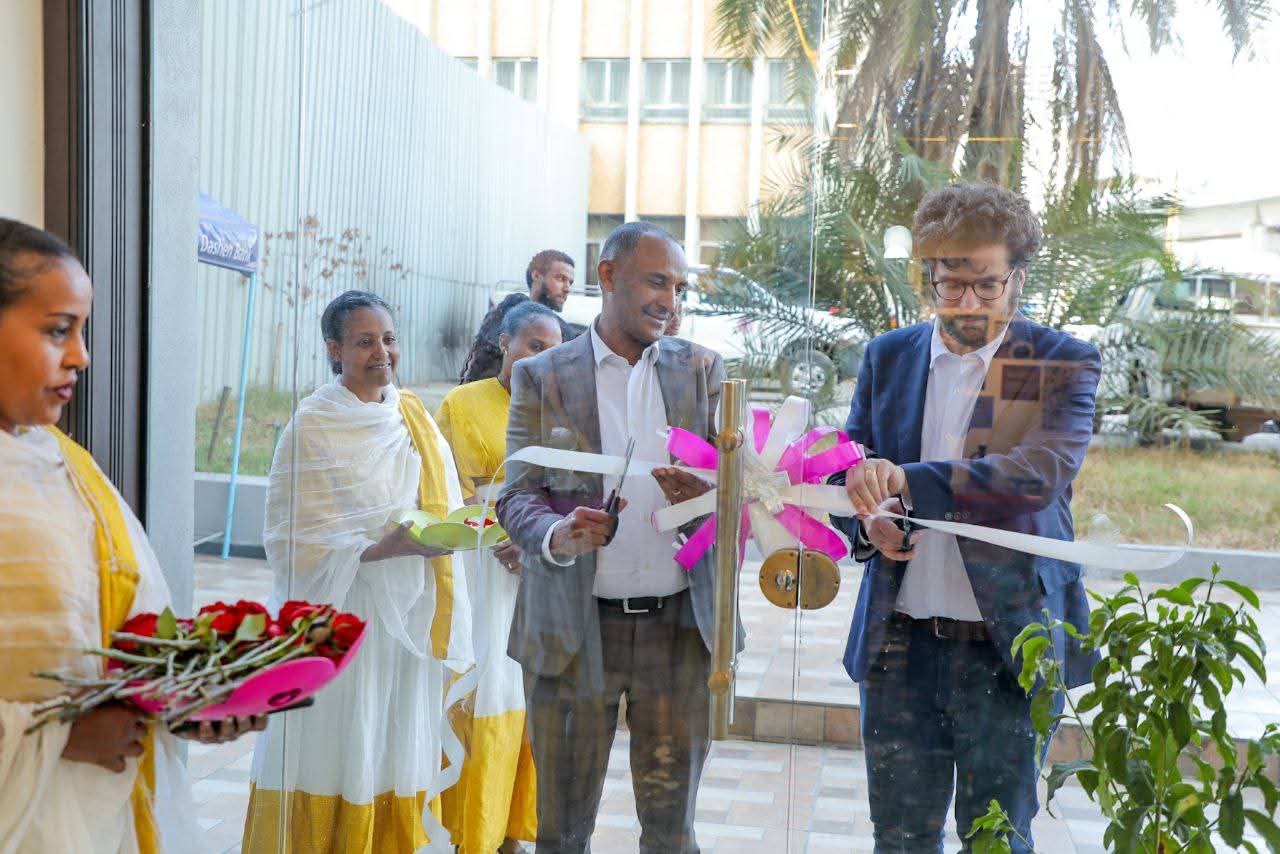
Ethiopia has officially inaugurated its Coffee Interpretation Center (CIC), a landmark institution designed to showcase the nation’s coffee value chain from seed to export while strengthening global awareness of its rich coffee heritage.

The center was launched by the Ethiopian Coffee and Tea Authority (ECTA) in partnership with Spanish Cooperation. ECTA Director General Dr. Adugna Debela and Deputy Director Shafi Omer presided over the ceremony, joined by representatives from various partner institutions.

Officials confirmed that research and content development were supported by OSSREA and Women in Coffee. Both organizations played pivotal roles during the construction phase by contributing specialized studies and gathering historical materials.

According to the Authority, the CIC serves as a knowledge and skills hub, illustrating the journey of coffee across the full value chain. Exhibits highlight historical narratives, the vital role of women in the sector, and the economic and social significance of coffee to the country. One of the center’s key roles is to present, as comprehensively as possible, Ethiopia’s traditional coffee ceremonies and the diverse cultural uses of coffee across communities. By demonstrating these ceremonial practices to visitors, the CIC also strengthens the link between coffee heritage and tourism, positioning traditional coffee rituals as a living cultural experience for both domestic and international audiences. The facility is intended to act as a primary platform for communicating Ethiopia’s comprehensive coffee legacy to an international audience.

The project is being implemented in phases. This inauguration marks the completion of the first phase, with the second phase focusing on the full digitalization of the facility.

Digital development is being led by Ablaze Lab, a local Ethiopian firm tasked with organizing both stages of the center. The company’s founder explained that two dedicated software systems and applications are currently under development. These will integrate animation and multimedia technologies, transforming the center into a fully audiovisual, interactive experience.

The inauguration aligns with broader institutional efforts to expand Ethiopia’s global presence through thematic centers and international engagement initiatives.

Vietnam Launches First Global Coffee Heritage Festival

Vietnam – Qahwa World

Vietnam continues to strengthen its presence in the global coffee market, standing as the world’s second-largest coffee exporter. This status is supported not only by production volume but also by a rich cultural heritage and a unique identity in the coffee world. In this context, the country has launched its first-ever Global Coffee Heritage Festival, aiming to highlight Vietnamese coffee as both a cultural and economic product, far beyond a simple agricultural commodity.

From December 21, 2025, to January 2, 2026, Lam Vien Square in the Xuan Huong Ward of Da Lat hosted the inaugural “Global Coffee Heritage Festival 2025,” attracting large crowds of local residents and visitors from Vietnam and abroad. The festival aimed to document the journey of coffee in Vietnam over nearly two centuries, from the first plantations in the Central Highlands to the development of a distinct coffee culture that has become a national identity.

A Platform to Celebrate Coffee Culture

The festival was organized by TNI King Coffee Co., Ltd. (Ho Chi Minh City) and featured 34 exhibition booths showcasing coffee products, culinary offerings, and a comprehensive program of cultural, artistic, experiential, and interactive activities throughout the festival.

Highlights included live roasting and manual brewing demonstrations linked to global coffee culture experiences, exhibitions of historical coffee beans, a record-setting artwork made from robusta coffee beans, and a display of a giant coffee cup. These activities became prominent attractions for visitors and coffee enthusiasts.

  • Records and Heritage Values

The World Records Alliance, in collaboration with Vietnam Records Association, recognized Vietnam as the largest global producer and exporter of robusta coffee in terms of volume and yield. The festival also documented Vietnam’s unique coffee preparation heritage, including Ê-đê coffee, traditional cloth-filtered coffee, and drip coffee.

Vietnamese coffee culture is also distinguished by its diverse and creative approaches to blending and serving coffee, with signature drinks and dishes such as egg coffee and iced milk coffee reflecting the country’s ability to innovate while preserving tradition.

  • Coffee and Art: A Visual Narrative

One of the festival’s highlights was the artwork “Vietnamese Robusta Coffee Aspiration,” the first of its kind created from Buon Ma Thuot robusta beans, combined with natural Vietnamese materials such as coffee powder, burlap, bamboo, rattan, and coffee ink. The artwork draws inspiration from Central Highlands culture, merging art with agricultural heritage.

  • A Window to Global Coffee Cultures

Festival visitors explored manual brewing methods linked to international coffee traditions, including the Moka Pot (Italy, 1933), Aeropress (USA, 2005), and Cold Drip, a method originating in 17th-century Netherlands when sailors sought to preserve coffee flavor during long voyages. Cold Drip involves slow dripping of cold water through coffee over extended periods, resulting in a smoother cup with lower acidity and bitterness. In the 20th century, it became popular in Japan for its artistic and precise brewing style.

  • Filter Coffee: A Symbol of Local Identity

Filter coffee remains a hallmark of Vietnamese coffee culture since the 19th century, when coffee was first introduced by the French. Over time, the small metal drip filter became a staple in homes and cafes, promoting slow, mindful consumption characterized by strong flavors and a sweet finish—an embodiment of the Vietnamese way of enjoying coffee. Today, filter coffee remains the most widespread brewing method, representing the nation’s coffee identity.

  • Coffee as a Human and Economic Journey

Through these diverse experiences, visitors gain a holistic understanding of Vietnamese coffee, from the labor of farmers in the fields to roasting and preparation techniques, resulting in cups infused with the aroma of time and personal experience.

  • Coffee Train: A Unique Heritage Experience

The “Coffee on the Train – Heritage Journey” space at Da Lat station was a standout feature, recreating a historic train carriage dedicated to coffee experiences. The Da Lat Coffee Train was organized in partnership with the Saigon Railway Transport Branch, Vietnam Railway Transport Joint Stock Company, and TNI King Coffee Co., Ltd.

Visitors enjoyed coffee while listening to soothing music performed on violins and saxophones inside the train carriages, combining heritage, taste, and art in one immersive experience.

  • Building the Vietnamese Coffee Brand

In 2024, Vietnamese coffee exports reached USD 5.48 billion. During the first half of 2025, exports nearly matched the total of 2024 at USD 5.45 billion. The Global Coffee Heritage Festival 2025 is expected to drive the coffee sector toward a creative industry model and open new opportunities for investment, cooperation, and exports.

The festival also aims to bring together leading experts, artisans, and companies worldwide to reshape the future of Vietnamese coffee sustainably and innovatively, enhancing its international profile and paving the way for global collaboration initiatives, including the establishment of the Vietnam-Global Coffee Alliance.

  • Coffee from Vietnam and the World

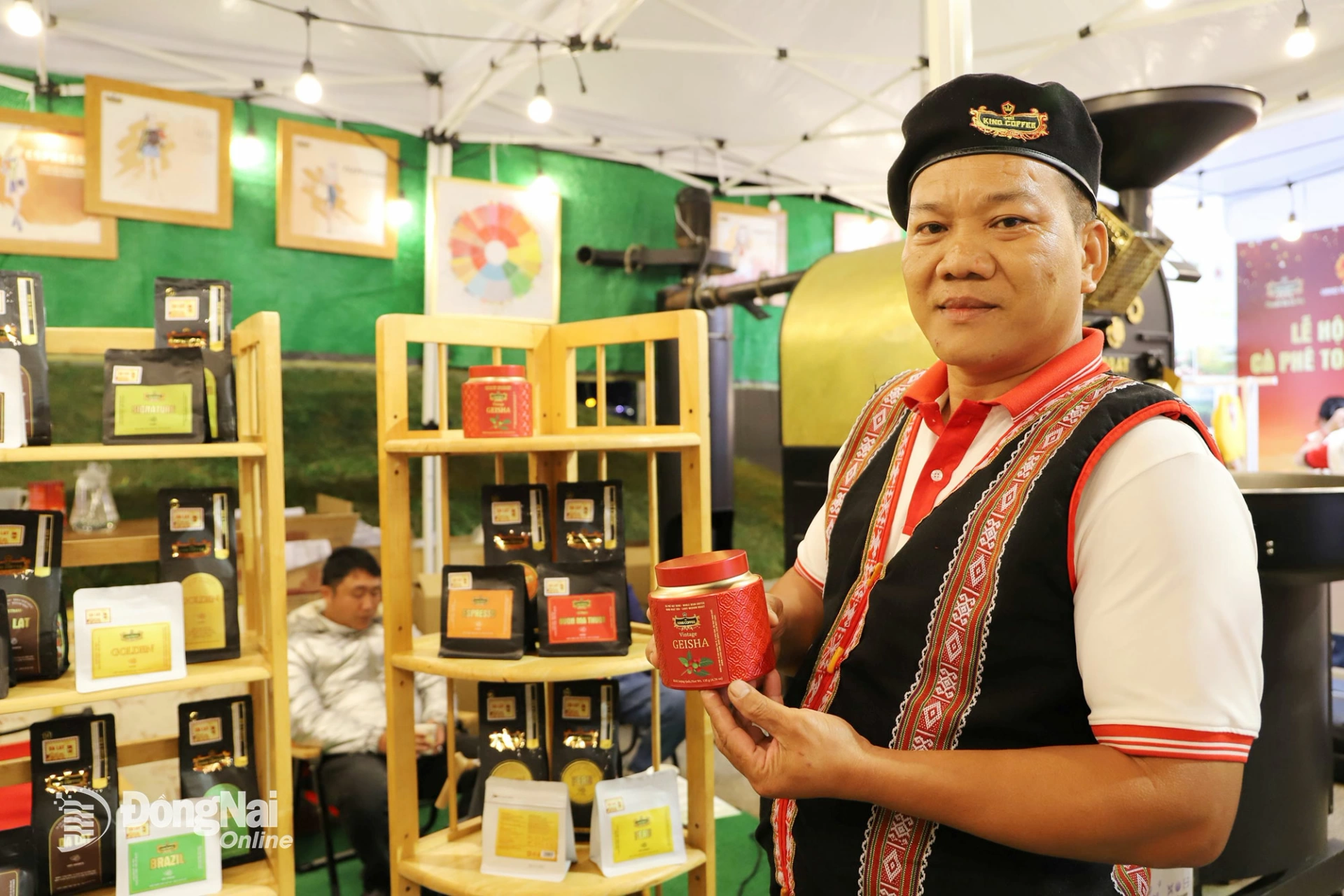
The festival featured not only Vietnamese coffee varieties but also coffees from major producing countries such as Colombia, Ethiopia, and Brazil, including rare specialty coffees. A notable highlight was Geisha coffee from Ethiopia’s Geisha region, one of the world’s rarest and most expensive coffees, auctioning for up to VND 700 million per kilogram. Geisha coffee is distinguished by complex flavors, including citrus fruits, floral notes, and a hint of jasmine, offering a market value far above other high-quality coffees.

  • Decades of Expertise and Passion

Mr. Do Tan Truong, Roasting and Product Development Manager at TNI King Coffee, emphasized that creating high-quality coffee requires a complete story—from selecting beans, processing, to understanding consumer tastes in different regions. Each coffee variety has its own characteristics and roasting techniques, and learning in this field is continuous regardless of years of experience.

  • Coffee Beyond Numbers

At the festival opening, Ms. Le Hoang Diep Thao, Founder and CEO of TNI King Coffee, highlighted that coffee has been present in Vietnam for over 150 years. Today, more than 600,000 hectares of coffee plantations sustain millions of households. Vietnamese coffee is exported to over 100 countries and territories, contributing billions of dollars to the national economy.

She added that the value of Vietnamese coffee lies not only in volume or numbers but also in identity, perseverance, and pride encapsulated in every coffee bean. The festival represents a long-term journey to preserve, elevate, and promote sustainable values of Vietnamese coffee, particularly robusta heritage, within the global coffee landscape.

Coffee as Destination: Positioning Ethiopia’s Origins for Experiential Tourism

An interview with Musa Kedir CEO, Tourism Attraction and Product Development, Ministry of Tourism – Ethiopia

By Qahwa World × Buna Kurs

Coffee has long been Ethiopia’s most visible global export, yet its potential as a tourism experience remains largely untapped. While several coffee-producing countries have successfully transformed farms, processing sites, cupping rituals, and café culture into immersive visitor journeys, origin countries themselves have often underutilized this experiential dimension.

Ethiopia, the birthplace of Coffea arabica, holds a rare advantage. Coffee here is not only an agricultural product but a living culture—woven into daily life, social rituals, landscapes, and identity. Translating this depth into structured and sustainable tourism experiences represents one of the most promising frontiers for destination development.

During the Coffee Origins Trip (COT 2) organized by Kerchanshe and Oromia Tourism Commission, a diverse group of international buyers, roasters, social media storytellers, tourism executives, and sector leaders came together to experience Ethiopia’s coffee landscape firsthand. As part of this journey, Qahwa World and Buna Kurs sat down with CEO, Tourism Attraction and Product Development, Ministry of Tourism – Ethiopia, to discuss how coffee tourism fits into the national tourism agenda and what it will take to elevate coffee into a globally competitive tourism product.

Qahwa × Buna: How does the Ministry currently position coffee within the wider national tourism development agenda, and what opportunities do you see for formalizing coffee as a structured tourism product?

Musa Kedir: The Ministry has already recognized coffee as a key element within Ethiopia’s national tourism brand, “Land of Origins,” which positions the country as the birthplace of Coffea arabica. This recognition is also reflected in the revised National Tourism Development Policy, which explicitly emphasizes the development of niche tourism products.

Within this framework, coffee is viewed both as a core special-interest tourism product and as a supplementary experience that can enhance broader travel itineraries. This policy foundation creates strong opportunities to formalize coffee tourism through structured products, packages, and destination planning.

Qahwa × Buna: From a destination development perspective, what gives Ethiopia a unique competitive edge in coffee tourism compared to other producing countries?

Musa Kedir: Ethiopia’s advantage lies not only in having given the world Arabica coffee, but in the deep cultural attachment to coffee itself. Coffee in Ethiopia is an integral part of daily life.

The way Ethiopians prepare, serve, and share coffee reflects a living culture rather than a staged experience. This cultural intimacy is something no other coffee-producing country can replicate, and it provides Ethiopia with a uniquely authentic foundation for coffee tourism.

Qahwa × Buna: Which parts of the coffee value chain do you believe hold the strongest potential for experience design—farm level, processing, culture, heritage, gastronomy, trade, or a combination?

Musa Kedir: A combination of farm-level experiences, processing, culture, heritage, and gastronomy offers the strongest potential overall. Together, these elements allow visitors to understand coffee as a complete journey rather than a single moment.

Among these, a well-organized and customized combination of farm-level and processing experiences holds particularly strong appeal due to its uniqueness and attraction. These stages allow visitors to witness the transformation of coffee firsthand, which is central to meaningful tourism experiences.

Qahwa × Buna: Is the Ministry working on national guidelines, standards, or policy frameworks to support the growth of coffee tourism experiences such as farm tours, cupping sessions, processing visits, or heritage trails?

Musa Kedir: Based on the recognition of coffee as a potential niche tourism product, the Ministry has previously organized coffee-focused familiarization trips for media outlets and diplomatic communities.

More recently, recognizing the need for deeper strategizing, the Ministry has begun working with partners such as the Japan International Cooperation Agency (JICA) to identify Ethiopia’s major coffee-producing corridors. This work will support the development of well-organized coffee tour packages at the national level.

The Ministry also plans to organize a national coffee tourism awareness seminar that will bring together key stakeholders across the value chain, and it is working on comprehensive tourism destination and product development guidelines aligned with the revised tourism policy.

Qahwa × Buna: How does the Ministry view the role of major private-sector actors like Kerchanshe in shaping the future landscape of coffee tourism?

Musa Kedir: The Ministry has a strong belief in the vital role played by private-sector actors affiliated with the coffee industry.

This is why the Ministry collaborated in the recent coffee tour organized jointly by the Oromia Tourism Commission and Kerchanshe. Moving forward, the Ministry has also scheduled consecutive meetings with key coffee sector actors to facilitate brainstorming and discussions focused specifically on developing coffee for tourism.

Qahwa × Buna: What kinds of cross-sector collaborations are needed between tourism, agriculture, culture, trade, and regional governments to build a unified coffee tourism platform?

Musa Kedir: Because the coffee value chain is cross-sectoral by nature, it is critical for all stakeholders to reach a similar level of understanding in order to succeed in positioning coffee for tourism.

The Ministry is taking a catalyst role by creating platforms that bring stakeholders together and laying the foundation for strong collaborations that can endure into the future.

Qahwa × Buna: From what you have observed on this field visit so far, what strengths, innovations, or community stories stand out as directly translatable into tourism offerings?

Musa Kedir: The visit revealed that there are exemplary companies, such as Kerchanshe, that are aligned with national priorities to make coffee one of Ethiopia’s competitive tourism advantages.

These actors are taking the lead in showcasing meaningful experiences within their capacity. However, the visit also highlighted the need to further strengthen local community participation, improve readiness among local authorities, and better organize resources at the local level.

A shared understanding and collaboration among stakeholders is essential for the sustainable creation of a strong national coffee tourism culture.

Qahwa × Buna: How can coffee tourism support local community development, regional economies, and job creation across key coffee districts like Guji, Sidama, Yirgacheffe, Jimma, and Kaffa?

Musa Kedir: At present, coffee primarily serves its traditional commercial role. However, recent familiarization trips—particularly those led by Visit Oromia—have shown how tourism can be developed alongside existing coffee systems.

These initiatives can help create permanent economic advantages through tourism, including job creation and income diversification in key coffee-producing regions.

Qahwa × Buna: What narratives or storylines should Ethiopia prioritize when positioning itself internationally as the birthplace of coffee and a unique tourism destination?

Musa Kedir: It is critical to firmly engage in leveraging Ethiopia’s identity as the birthplace of coffee. Beyond that, creativity is required to transform everyday coffee culture into compelling tourism experiences.

Coffee culture in Ethiopia is deeply rooted and diverse across the country. Interpreting this heritage in a way that resonates with international travelers—both as a special-interest experience and as a complementary offering—is essential.

Narratives should focus on Ethiopia’s local coffee cultures and on organizing their interpretation into well-designed tourism products.

Qahwa × Buna: How does the Ministry plan to ensure that coffee tourism grows in an environmentally and culturally sustainable way?

Musa Kedir: The Ministry has only recently begun to systematically structure programs that position coffee for tourism. To ensure sustainability, it is preparing a comprehensive National Tourism Destination Development and Management Plan.

This plan will guide tourism development across the entire value chain, including coffee-related experiences, and will ensure environmental and cultural sustainability.

Qahwa × Buna: What level of investment or infrastructure development is required to elevate selected coffee-producing areas into international-standard tourism sites?

Musa Kedir: Most coffee corridors are already accessible, but as coffee tourism becomes more competitive, it will require basic infrastructure such as improved access within farms, accommodation facilities, and structured community collaboration.

While coffee farms are well organized for production, additional effort is needed to convert them into tourism experiences. This can best be achieved through collaboration among farm owners, government institutions, and tourism organizations.

Qahwa × Buna: What immediate next steps does the Ministry envision after this trip, and how might these insights shape upcoming MOT programs or national campaigns related to coffee?

Musa Kedir: The Ministry has already begun planning around coffee tourism and similar niche potentials. To ensure long-term and sustainable use, it will focus on redesigning model tourism packages that integrate coffee as both a special-interest experience and a complementary tourism offering.

These insights will directly inform upcoming Ministry programs and national tourism campaigns.

Barista Magazine Reveals a Unique Ethiopian Coffee Ritual: Buna Qalaa

Dubai – Qahwa World

Barista Magazine has published an in-depth feature uncovering a rare Ethiopian coffee ritual little known outside the birthplace of coffee. This unique tradition, called “Buna Qalaa,” defies convention — here, coffee isn’t drunk, it’s eaten.
The article, written by Tewodros Balcha, founder of Ethiopia’s Buna Kurs platform, explores how this centuries-old practice turns coffee into both nourishment and a symbol of unity.

With full respect to Barista Magazine’s rights — and given the importance of this report in highlighting one of coffee’s oldest traditions — Qahwa World is republishing and translating it into Arabic and Russian in line with our editorial policy and with the kind permission of Mr. Tewodros Balcha.

We now present this remarkable feature:

Preserving an Age-Old Coffee Tradition With Ethiopia’s Buna Qalaa

In Ethiopia’s southwest, coffee sizzles before it steams. Butter melts over beans, releasing a smoky, nutty aroma that signals not a drink—but a meal.

Among the Guji people of Oromia, a centuries-old tradition known as Buna Qalaa transforms coffee from beverage to sustenance. The beans are simmered whole in butter and milk, and eaten together: a ritual that blurs the line between nourishment and ceremony, taste and belonging.

“’Buna Qalaa’ literally means ‘slaughtered coffee,’” says Nega Wedajo, Deputy Commissioner of the Oromia Tourism Commission. “It refers to a ritualized coffee meal woven into social life—used in ceremonies, blessings, and formal gatherings. It’s not just food. It’s a symbol of fertility, well-being, and community connection.”

Nega is one of many Ethiopians working to gain global recognition for Ethiopian coffee, including the ancient practices that center around the beverage. “Traditions like Buna Qalaa are treasures,” Nega told Barista Magazine. “They keep communities at the center and show the world that coffee is life—not just a drink.”

The Making of Buna Qalaa

According to Nigatu Elias Dukelle, Head of the Coffee Quality and Certifications Center at the Ethiopian Coffee and Tea Authority’s Bule Hora Branch, the preparation of Buna Qalaa is both precise and poetic—a choreography of patience, scent, and sound.

Only ripe coffee cherries are handpicked and sun-dried whole, their parchment still intact. Before cooking, the tip of each bean is slightly cut, traditionally with the teeth, to help the butter seep in.

A clay pot called kelo is heated until faintly smoking. Butter melts first, then the beans are gently stirred in until they reach a light, even roast—never dark or burnt. The buttery beans are transferred into a wooden bowl, the kori, and hot milk, boiled in the same pot, is poured back in, coating each bean. Finally, the mixture is served in a cup known as mudunu.

“The butter penetrates the bean and enriches it,” Nigatu told Barista Magazine. “You chew it slowly, and it stays in your mouth like gum for hours. It fills you deeply. People say it gives long-lasting energy and even keeps the teeth clean.”

Coffee for Every Passage

Buna Qalaa marks nearly every threshold of life—childbirths, naming ceremonies, weddings, reconciliations, and even the close of mourning. In the Borana Gadaa system, it is offered by elders as a sign of respect and continuity.

Beyond nourishment, Buna Qalaa is believed to restore vitality, sustain endurance, and renew social harmony. Prepared in silence or in song, its aroma fills the home, summoning memory and connection: a sensory bridge between generations.

Advocating for Community-Led Tourism

As Ethiopia seeks recognition from the United Nations Educational, Scientific and Cultural Organization (UNESCO) for its traditional coffee ceremony, regional expressions like Buna Qalaa are also gaining visibility.

Through initiatives such as Visit Oromia’s Tour de Coffee and digital collaborations with Google Arts & Culture, travelers are discovering coffee not just as a drink, but as a living heritage. “Visitors who experience Buna Qalaa describe it as slow, sensory, and unforgettable,” Nega Wedajo says.

Nega also emphasizes that tourism around Buna Qalaa must remain community-led: “This isn’t a performance—it’s a living culture. We want travelers to learn directly from local custodians, and we ensure the benefits return to them.”

Tradition Meets Specialty

For Nigatu, who bridges heritage and the specialty coffee sector, Buna Qalaa represents innovation through preservation.

“Specialty coffee talks a lot about terroir and traceability,” he says. “But traditions like Buna Qalaa show another layer—the human terroir. When you eat coffee instead of drinking it, you taste the land, the butter, and the hands that made it. It’s a full sensory connection to origin.”

He believes the ritual holds lessons for the global coffee industry: “We spend so much energy refining flavor in the cup. But here, flavor is tied to nourishment—to coffee as energy, community, and care. Maybe cafés today can learn from that: Sometimes, innovation means returning to the source.”

A Global Reflection

In modern cafés, where precision and presentation define excellence, Buna Qalaa offers a humbler but deeper lesson—that coffee’s truest meaning lies not in its extraction, but in its sharing.

Its pace and ritual echo contemporary movements toward mindfulness, sustainability, and authenticity. It reminds us that coffee’s richness is not only sensory but social: a bridge between nourishment and narrative.

As Nega puts it: “In every bite of Buna Qalaa lies a quiet truth: Coffee began as communion, not competition. In a world chasing novelty, this ritual whispers something timeless—sometimes the future of coffee is found in its oldest form: eaten, not sipped; shared, not sold.”

JDE Peet’s Reports Strategic and Operational Progress, Confirms 2025 Outlook

Amsterdam – Qahwa World

JDE Peet’s N.V. (Euronext: JDEP), the world’s leading pure-play coffee company, announced continued progress in implementing its new brand-led growth strategy and productivity initiatives while reaffirming its 2025 financial outlook.

Strategic and Productivity Initiatives Under Way

On July 1, 2025, JDE Peet’s launched its “Reignite the Amazing” strategy, designed to accelerate brand-led growth and enhance operational efficiency. The company reported solid progress across several fronts:

  • U.S. Integration: The full integration of the U.S. capsules business into Peet’s Coffee was completed following the discontinuation of the L’OR Barista roll-out in the American market.

  • Distribution Transition: Peet’s is transitioning from its Direct Store Delivery (DSD) system to a direct central distribution model in the U.S., expected to be completed by the end of the first half of 2026.

  • Portfolio Optimization: The company exited its low-margin Food Ingredients (B2B) business in Asia.

  • Manufacturing Footprint: Two additional plant closures were announced—one in northeastern Brazil and another in the northeastern United States—as part of an ongoing global optimization program.

  • Brand Rationalization: Fifteen long-tail brands are scheduled for transition within the next six months.

  • Cultural Transformation: JDE Peet’s is reshaping its corporate culture around four newly defined values—Dare to amaze, Own it, Make it simple, and Win together—to foster agility, ownership, and transparency across the organization.

Business Performance Update

The company stated that its overall third-quarter performance was broadly in line with expectations, taking into account anticipated retailer negotiations and customer pre-buying during the first half of the year.

JDE Peet’s reaffirmed its 2025 outlook, citing strong discipline in pricing and cost control that continues to support gross profit and adjusted EBIT. Approximately 96 percent of the second wave of global price negotiations, which began in July, have already been completed.

While green-coffee prices remain significantly elevated and increasingly volatile compared to previous years, JDE Peet’s said it continues to manage these pressures effectively. The company also confirmed the termination of its share-buyback program as of September 1.

Update on Keurig Dr Pepper Transaction

The planned public offer by Keurig Dr Pepper Inc. (KDP) for all issued and outstanding shares of JDE Peet’s is progressing as scheduled:

  • The regulatory antitrust filing has been submitted in the U.S.

  • The company has received positive advice from JDE Peet’s Dutch Works Council.

  • The transaction closing remains expected in the first half of 2026, subject to the satisfaction or waiver of customary pre-offer and closing conditions.

About JDE Peet’s

JDE Peet’s is the world’s largest pure-play coffee company, serving approximately 4,400 cups of coffee per second across more than 100 markets. Guided by its Reignite the Amazing strategy, the company is pursuing brand-led growth through three global power brands—Peet’s, L’OR, and Jacobs—alongside a portfolio of nine local icons.

In 2024, JDE Peet’s generated €8.8 billion in sales and employed more than 21,000 people worldwide.
More information: www.jdepeets.com

The Unwritten Rules of Vienna’s Coffee Culture

In the city that turned coffee into an art, patience is the first lesson every traveler must learn.

Dubai – Qahwa World

At nine in the morning, sunlight filters through the tall arched windows of Café Central, one of Vienna’s most famous coffeehouses. The marble columns gleam softly, the air is filled with the sound of porcelain cups, and newspapers rustle in quiet harmony. An American visitor approaches the counter, smartphone in hand, ready to order a “coffee” to go. A few steps away, an elderly Viennese gentleman settles into his red velvet chair, opens his morning paper, and begins his two-hour ritual with a Melange.
That simple contrast captures everything foreign visitors often misunderstand about Vienna’s UNESCO-protected café culture—a world where time slows, where coffee is not consumed but inhabited, and where rushing through a cup is not merely impolite, but a missed encounter with history itself.

From Yemen to the Danube: The Birth of a Coffee Civilization

The story of Vienna’s cafés begins far beyond Europe. In the 15th century, coffee was cultivated in Yemen’s highlands and shipped from the port of Mokha, the gateway from which the beverage began its global journey. Ottoman traders carried it north to Istanbul, where it became a social ritual and a symbol of refinement.

When the Ottoman siege of Vienna in 1683 ended, legend tells of coffee beans left behind in the camps. The Viennese took these beans and turned them into a new kind of institution—a place that combined Arab hospitality, Ottoman ritual, and European intellectualism.
From these early experiments grew a café tradition unlike any other in the world—one that would come to define Vienna’s identity as the capital of conversation.

By the 19th century, Vienna’s coffeehouses had evolved into living salons. Poets, philosophers, and revolutionaries gathered under their chandeliers. Sigmund Freud drafted theories at Café Landtmann. Stefan Zweig, chronicler of Europe’s cultural soul, described the cafés as “democratic clubs open to everyone for the price of a cup of coffee.” These were not cafés in the commercial sense—they were temples of thought.

Where Time Itself Is Served Slowly

To walk into a Viennese café expecting quick service is to misunderstand its essence. Each of the 17 UNESCO-listed coffeehouses operates on a rhythm established over centuries. Waiters in pressed black jackets and silver trays move deliberately, never hastily.
As Maria Schneider, who has served at Café Central for nearly three decades, explains: “Within two minutes, I can tell who’s a tourist. They look at their watches while waiting for coffee. Locals know coffee comes when it’s ready.”

That wait is not inefficiency—it’s grace. In Vienna, slowness is a form of respect. It allows space for silence, conversation, and observation. The waiter’s distance, often mistaken for coldness, is part of the city’s etiquette. “We provide perfect service, not friendliness,” says Thomas Vogel of Café Sperl. “I’m not your buddy—I’m a professional.”

In a Viennese café, the waiter is not a server but a conductor, maintaining harmony between solitude and society.

Seven Unwritten Rules Every Visitor Should Know

Vienna’s café culture follows codes that no guidebook fully explains. They are unwritten, passed down through habit rather than instruction.
Here are the seven principles that distinguish a local from a hurried traveler:

  1. Never rush your coffee. Time is the invisible ingredient in every cup.

  2. Don’t say “coffee.” Order it by name: Melange or Einspänner.

  3. Wait for table service. Approaching the counter breaks the ritual.

  4. Speak softly. Silence and conversation share equal value.

  5. Pair your drink with pastry. A Melange without Sachertorte is incomplete.

  6. Ask for the check—don’t wait for it. Say “Darf ich bitte zahlen?” and tip 10–15% in cash on the saucer.

  7. Linger. The moment you stop watching the clock, you become part of the city.

A Cultural Mirror in a Cup

Survey data from Vienna’s cafés reveals a consistent pattern: 74% of tourists try to order at the counter, 61% ask for “coffee”, and 68% leave within 30 minutes—while only 12% of locals do. The average Viennese spends 87 minutes per visit, often reading several newspapers.
At Café Sperl, established in 1880, more than a dozen newspapers still hang from wooden racks. To the locals, this is not nostalgia—it is continuity.

“Here,” says café owner Karl Weber, “we don’t drink coffee to stay awake—we drink it to be with people, or to be alone.”
That simple philosophy defines Vienna’s genius: the café is both a private refuge and a public salon. It bridges solitude and society, art and routine.

Why Vienna’s Coffeehouses Endure

Across the world, cafés have evolved—Italy’s espresso bars celebrate speed, France’s brasseries celebrate conversation, and the Arabian majlis celebrates hospitality. Vienna alone turned coffee into a meditation on time itself.

To drink coffee in Vienna is to join a centuries-long dialogue that began in Yemen’s mountains, sailed across Ottoman trade routes, and found permanence on the cobblestones of Europe.
In an age obsessed with productivity, Vienna’s cafés quietly remind us that reflection, too, is a form of work.

A Lesson in Invisibility

Three days after his first hurried visit, the same American tourist returns to Café Central. This time, he orders properly—“Einen Melange, bitte.” He addresses the waiter as “Herr Ober.” He opens the Wiener Zeitung, leaves his phone in his pocket, and doesn’t glance at the time. The waiter nods subtly, recognizing not a customer, but a participant in a tradition.
He has achieved the highest honor Vienna offers: to disappear among locals, cup in hand, perfectly at ease in the art of doing nothing.

World of Coffee Dubai to Host the 2026 Cezve/Ibrik Championship

Dubai – Qahwa World

The Specialty Coffee Association (SCA) has officially announced that World of Coffee Dubai 2026 will host the 2026 Cezve/Ibrik Championship (CIC)—marking the first stage of the 2026 World Coffee Championships (WCC) season.
The competition will take place January 18–20, 2026 at the Dubai World Trade Centre, coinciding with what is expected to be the largest edition of World of Coffee Dubai to date.

Produced by DXB Live in collaboration with the SCA UAE Chapter, World of Coffee Dubai has rapidly become the Middle East’s leading coffee trade event since its launch in 2022. The show continues to unite producers, roasters, manufacturers, and coffee professionals from around the globe — highlighting Dubai’s growing role as a bridge between coffee cultures of the East and the West.

The Cezve/Ibrik Championship pays homage to one of the world’s oldest brewing traditions. The cezve, also known as an ibrik, is a small long-handled pot traditionally made from copper, brass, or ceramic, used for centuries across Eastern Europe, the Middle East, and North Africa. Competitors in this event bring cultural expression and personal artistry to their performances, reimagining this ancient brewing method in a modern competitive setting.

Hosting this championship in Dubai is especially symbolic. The city’s deep cultural ties to traditional coffee preparation, combined with its reputation as a global hub for innovation and trade, make it a fitting venue for a competition that blends heritage with creativity.

Khalid Al Mulla, National Coordinator of the UAE Coffee Championships, stated: “We are truly honored to welcome the Cezve/Ibrik Championship to Dubai. This event represents more than competition — it’s a celebration of tradition, craftsmanship, and cultural connection. Bringing it to the UAE reinforces Dubai’s position as a bridge between the coffee cultures of the East and the West.”

The SCA has also released the 2026 CIC Rules and Regulations, including updated rules documents, summaries of changes, scoresheets, and an appeals form, all available at wcc.coffee/rules-regulations
.

The World Coffee Championships serve as a platform for global coffee professionals to showcase their craft, share knowledge, and inspire future generations of baristas, brewers, tasters, and roasters. Dubai’s inclusion as the first host city of the 2026 season further strengthens its status as a world-class coffee destination.

2026 World Coffee Championships Calendar

Dubai World Coffee Championships
January 18–20, 2026 | World of Coffee Dubai, Dubai World Trade Centre, UAE
Featuring the Cezve/Ibrik Championship

San Diego World Coffee Championships
April 10–12, 2026 | World of Coffee San Diego, USA
Featuring the World Latte Art Championship

Bangkok World Coffee Championships
May 7–9, 2026 | World of Coffee Bangkok, Thailand
Featuring the World Cup Tasters Championship

Brussels World Coffee Championships
June 25–27, 2026 | World of Coffee Brussels, Belgium
Featuring the World Brewers Cup, World Coffee Roasting Championship, and World Coffee in Good Spirits Championship

Panama City World Coffee Championships
October 22–25, 2026 | World of Coffee Panama, Panama Convention Center
Featuring the World Barista Championship

Nuova Simonelli Unveils a New Logo Marking a New Chapter in Its Timeless Identity

Dubai – Qahwa World

Nuova Simonelli has officially revealed its new logo — an evolution that respects the brand’s deep heritage while embracing a modern vision for the future. The refreshed design preserves the company’s distinctive monogram that unites the initials “N” and “S,” symbolizing the harmony between innovation and tradition that has defined the Italian espresso machine manufacturer for nearly a century.

“For more than 90 years, the Nuova Simonelli logo has reflected craftsmanship, reliability, and progress,” the company stated. “Each transformation has mirrored the times, while remaining true to the essence of who we are.” The new emblem carries forward this legacy in a refined, contemporary form — one that positions the brand for its next era.

A Legacy Rooted in Design and Innovation

Founded in 1936 under the name Simonelli and renamed Nuova Simonelli in 1972, the brand has long stood for easy-to-use, technologically advanced espresso machines. Today, its products are found in cafés, restaurants, and hotels in over 125 countries. “When we acquired the trademark, we chose to keep the name Simonelli as a sign of respect for that pioneering phase,” recalled Nando Ottavi, Chairman of Simonelli Group. “Nuova Simonelli represents both continuity with our origins and a look to the future.”

The original monogram was designed in 1975 by industrial designer Carlo Viglino during the launch of the company’s first truly modern espresso machine, the ISX. “I started with the initials N and S, placing them inside a grid to build the frame and proportions,” Viglino explained. “I superimposed the two letters, softened the corners, and created a single monogram that symbolizes unity between innovation and tradition.”

The symbol, he added, can also be seen as two arrows expanding outward — a “prophetic sign” of a brand destined for global recognition. Viglino paired this with a clean, legible logotype to reflect the simplicity and precision of Nuova Simonelli machines.

Evolution Through the Decades

Since its creation, the monogram has been featured on every Nuova Simonelli espresso machine. The company made slight updates over time — introducing the red color and tagline in the 1990s, refining the design during the launch of the Aurelia series in 2003, and later returning the monogram to its original upright position with a renewed payoff.

Now, in 2025, Nuova Simonelli’s new logo represents a seamless bridge between past and future — a modern refinement of a design born from Italian ingenuity and a passion for espresso excellence. It reflects not only a visual evolution but also the brand’s enduring commitment to innovation, craftsmanship, and global leadership in the world of coffee.

From Jerusalem to the World: Izachman Coffee Preserves a Century-Old Palestinian Legacy

Dubai – Ali Alzakary

From the narrow alleys of Jerusalem’s Old City, specifically the historic Khan Al-Zeit market, a coffee story was born in 1921 one that became part of the city’s collective memory and cultural identity. That year, the founder established the first coffee shop and roastery, laying the foundation for a family legacy that would span generations. Through time, the Izachman family preserved its traditional craft while embracing modernity, turning “Izachman Coffee” into a symbol of authenticity and quality in every Palestinian home.

Today, Mahmoud Izachman, the grandson of the founder and the founder of Jerusalem’s first Specialty Coffee Academy, continues this legacy with a modern vision that blends tradition with knowledge and innovation. In this exclusive interview with Qahwa World, Mahmoud shares his family’s century-long journey with coffee, the challenges facing the Palestinian coffee sector, and his hopes for the future of specialty coffee in Jerusalem and beyond.

Your family has been in the coffee trade since 1921. How did it all begin, and what makes your family’s experience unique?

The story began with my grandfather, who established the first coffee shop and roastery in Jerusalem’s Old City, in the Khan Al-Zeit market in 1921. At that time, coffee was not just a drink; it was part of people’s daily lives and cultural identity. What set our journey apart was our ability to preserve this heritage and evolve it over generations while maintaining a bond of trust based on quality. This trust became a legacy within Palestinian homes, making “Izachman Coffee” a mark of excellence without losing our authenticity.

A historical black-and-white photo from Jerusalem showing a vintage car bearing the “Izachman Coffee” sign surrounded by people and children — a glimpse into the early legacy of Palestinian coffee culture.

How did this passion for coffee pass from one generation to the next?

It was never just a business; it was a way of life. I grew up watching my father and uncle, listening to stories of how my ancestors treated coffee with sacred respect, passion, and precision. This love was passed down naturally. Over time, I developed my own passion for learning, pursuing international certifications and specialized courses. Today, I see myself as a new link in a long family chain, adding a modern touch grounded in science and innovation.

As the founder of Jerusalem’s first Specialty Coffee Academy, how would you describe the current state of the coffee industry there?

It’s a mix of challenge and opportunity. Jerusalem and Palestine have a deep-rooted history with coffee it’s part of the cultural and social fabric. The market still relies heavily on Arabic coffee, Turkish coffee, and espresso in various forms, whether prepared at home or served in cafés. However, specialty coffee is emerging. Young people are increasingly curious and eager to learn about quality and global standards. This gives us an opportunity to build a new generation of professionals who can elevate the industry and reshape how coffee is perceived.

How have geopolitical and economic conditions affected the coffee sector in Jerusalem and Palestine?

The difficult political and economic conditions have had a direct impact from import challenges and high costs to declining purchasing power. But these hardships have strengthened our determination to hold onto our culture and identity through coffee. For Palestinians, coffee is no longer just a drink it’s a symbol of resilience and hospitality, a part of who we are.

How do people in Jerusalem respond to specialty coffee compared to traditional coffee?

Traditional coffee still dominates, being a core part of Palestinian hospitality and heritage. Yet, the appeal of specialty coffee is growing, particularly among the younger generation seeking renewal and global connection. We’re seeing more cafés embracing this shift in Jerusalem, Ramallah, and even smaller cities. It’s not always perfect, but the direction is promising.

Mahmoud Izachman stands at the entrance of Izhiman Coffee in Jerusalem, surrounded by traditional decor and copper coffee equipment, representing a blend of heritage and modern specialty coffee culture.

How do you see the future of specialty coffee in Palestine?

I’m very optimistic. The journey may be challenging, but the potential is huge. Palestinians are naturally discerning and appreciate taste and quality. With the right training and support, young professionals can create a specialty coffee culture that rivals any in the world. The growth may be gradual, but the trend is clear and upward.

What role can academies and training centers play in spreading coffee education?

They are the backbone of any industry revival. Through them, we transfer knowledge, develop skills, and raise awareness about quality and sustainability. An academy is not just a place for training it’s a platform to reshape culture and build a professional coffee community.

Tell us about your recent visit to Dubai. What stood out to you about the coffee scene there?

The visit was to complete training licensing requirements from the Specialty Coffee Association (SCA) and to connect with industry leaders. What impressed me most was the diversity and openness of Dubai’s coffee scene a blend of all schools and philosophies, from small roasteries to global brands. The community spirit and collaboration among professionals were inspiring. The level of investment in quality and customer experience is remarkable, something we aim to cultivate gradually among Palestinian consumers too.

How do you evaluate the UAE specialty coffee market? Do you see opportunities for cooperation?

The UAE market is mature and diverse, with knowledgeable consumers who value quality. This creates opportunities for both academic and business collaboration. We are currently marketing “Izachman Coffee” products in the UAE and promoting our sub-brand “Izpresso,” which focuses on espresso blends and Nespresso-compatible capsules. We also plan to launch training and consultancy projects across the region, building partnerships that combine tradition with innovation.

Mahmoud Izachman participates in a professional coffee cupping session, carefully tasting and evaluating different brews — a moment reflecting his expertise and dedication to specialty coffee education.

What are your long-term ambitions for the academy and future projects?

Our ambition is to transform the academy into a national and eventually regional reference point for specialty coffee in the Arab world, producing certified experts who leave a global impact. We’re also exploring projects focused on sustainability and innovation to contribute to the coffee industry on a larger scale.

How do you envision the coffee industry in Jerusalem over the next decade?

I believe it will become more mature, with stronger awareness of quality and sustainability. Specialty coffee will take a larger share of the market, and cafés will focus more on the full experience rather than just the beverage. In Jerusalem, I hope to see a coffee scene that reflects our identity blending heritage and modernity and becoming a model for the region.

What are the main challenges you face as the first specialty coffee academy in Palestine, and how can they be overcome?

The biggest challenge is spreading accurate knowledge and convincing the public of the importance of investing in proper learning. The field is still new, and much of the information circulating is incomplete or inaccurate. Our approach is to offer affordable or even free introductory workshops to attract more participants and build awareness. This will help lay a solid foundation for a coffee community that values knowledge and modernity without losing its roots.

Faisal Abdu Saeed Al-Tahri: The Hero of Al-Udayn and Guardian of Yemeni Coffee

Ibb – August 30, 2025 – (Qahwa World) — In Wadi ‘Annah of Al-Udayn District, where terraced fields rise against the mountain slopes, stands Faisal Abdu Saeed Al-Tahri, known locally as Al-Mahlawi. With determination rooted as deep as his coffee trees, he refuses to let a centuries-old legacy fade. His annual harvest may amount to only 40–50 kilograms, but each bean carries the story of Al-Udayn — a story that has gifted the world a coffee unlike any other.

Despite drought, the absence of modern irrigation, and the high costs of cultivation, Al-Tahri is intent on expansion, not retreat. He plans to plant 500 new seedlings over the next two years. Achieving this goal, however, requires real support, for he lacks the means to build water reservoirs or install irrigation systems. His effort is more than a personal endeavor; it is a model for safeguarding Yemen’s coffee and turning individual resilience into collective success.

Al-Udayn: Valleys Between Mountains and Water

Al-Udayn, in Ibb governorate, is one of Yemen’s most fertile and striking regions. It is home to Wadi Al-Dur and Wadi ‘Annah, two beating hearts of Yemeni coffee. Within these valleys, two distinct coffees thrive:

  • Mountain coffee: grown at higher altitudes, producing small beans with concentrated, complex flavor.

  • Valley coffee: cultivated along streams and under shade trees, softer in taste and smoother on the palate.

This balance of mountain and valley has given Al-Udayn coffee its singular identity. Here, coffee is not merely a crop — it is heritage. Local historians even suggest that the very name Al-Udayn is linked to the stem of the coffee plant.

From Al-Udayn to Mocha: A Journey That Changed History

Al-Udayn was never isolated. It was part of the supply network that sustained the historic port of Mocha. From its valleys, caravans carried beans across rugged terrain to the coast, where they were shipped abroad. In the mid-15th century (around 1450), the first Yemeni coffee left Mocha, and the word Mocha became synonymous with coffee worldwide.

Enduring Testimonies

In 1587, historian Abdul Qadir Al-Jaziri wrote in Umdat al-Safwah fi Hal al-Qahwa:
“As for the origin of coffee, it is from the lands of Yemen — from Aden, Zabid, Sana’a, Mocha, and others.”

In 1573, German physician Leonhard Rauwolf described coffee for Europeans for the first time:
“A black beverage like ink, sold in Yemen, beloved by the people, useful for stomach ailments.”

And in the 17th century, Ottoman traveler Evliya Çelebi observed:
“In the mountains of Ibb and Al-Udayn are coffee farms that dazzle the eyes, and their people live by this precious crop whose fame spread across horizons.”

These accounts are more than documentation; they are a testament that what Al-Tahri cultivates today is part of a heritage that once transformed global history.

Our Visit to Faisal Al-Tahri

Our visit to Faisal Al-Tahri was not just a meeting with a farmer but a glimpse into the living history of Al-Udayn. Through his determination, he mirrors the perseverance of hundreds of farmers who struggle to preserve coffee against drought, neglect, and the spread of competing crops such as qat, which has consumed large areas of farmland.

He embodies the broader story of Yemen itself: a land that gave coffee to the world and continues, through its devoted farmers, to offer an enduring lesson in resilience.

Faisal: The Face of the Present, the Banner of the Future

Al-Tahri’s humble smile never leaves his face, and his care for his centuries-old trees reflects the Yemeni farmer’s deep bond with the land. Coffee for him is no longer just a crop — it is a struggle for survival against drought, lack of support, and the encroachment of other crops threatening Yemen’s agricultural identity.

In Faisal Abdu Saeed Al-Tahri, Al-Udayn is personified: its fertile valleys, its towering mountains, and its historic link to Mocha, the port that shipped the world’s first coffee. He is the present rooted in the past, cultivating for the future a legacy that endures under one name: Al-Udayni Coffee.

Qahwa World and Ethiopia’s Buna Kurs Forge Landmark Editorial Alliance

Dubai,Addis Ababa, 27 August 2025(Qahwa World) – In a groundbreaking development for the global coffee industry, Qahwa World of the Middle East and Ethiopia’s Buna Kurs Media have signed a pioneering editorial Memorandum of Understanding (MoU), creating a cross-regional alliance that bridges Yemeni coffee heritage, the broader Arab qahwa tradition, and Ethiopia’s buna legacy. These three cultural foundations have shaped coffee’s global history yet remain underrepresented in industry narratives.

The partnership establishes a new model of media collaboration in the coffee sector, centered on shared storytelling, cross-regional representation, and mutual amplification. By connecting Yemen’s pivotal contribution, the Arab world’s cultural continuum, and Ethiopia’s origin story, Qahwa World and Buna Kurs aim to spark new conversations among brands, researchers, donors, media, and investors.

Under the agreement, Qahwa World will serve as Buna Kurs’s editorial partner in the Middle East, amplifying African coffee narratives—including Ethiopia and beyond—to Yemeni and Arab audiences, while Buna Kurs strengthens Qahwa World’s presence in Africa. The collaboration includes joint editorial exchange, event coverage, and advertising opportunities. Together, the two platforms will publish features, interviews, and cultural spotlights designed to challenge conventional narratives, elevate overlooked voices, and create new opportunities for authentic engagement.

“Qahwa World has always sought to honor coffee’s Yemeni and Arab legacy. Working with Buna Kurs allows us to situate that legacy within the broader African origin story, creating a holistic and globally relevant narrative. This is not just about content—it is about shaping the industry’s cultural conscience,” said Ali Alzakary, Founder of Qahwa World.

Tewodros Balcha, Founder of Buna Kurs, echoed the vision: “Coffee has always been more than a commodity—it is a cultural connector. Through this partnership, we are pioneering a new way to tell coffee’s story: one that restores origin narrative.”

At a time when the global coffee industry is grappling with sustainability, equity, and identity, the alliance signals a fresh approach to media and storytelling. By linking Yemen, the Arab world, and Ethiopia, the initiative offers brands, institutions, and investors a platform for authentic cross-continental engagement while opening new doors for responsible promotion, collaborative research, and cultural exchange.

The MoU serves as a framework for broader cooperation, with plans for co-hosted events, thematic campaigns, and joint representation at global industry forums. Both Qahwa World and Buna Kurs are committed to shaping a coffee narrative that reflects heritage, culture, and the evolving challenges of today’s market.

About Qahwa World
Qahwa World is a UAE-based media platform dedicated to Yemeni and Arab coffee heritage. Through journalism, cultural storytelling, events, and partnerships, it bridges traditional qahwa culture with today’s global coffee industry.

About Buna Kurs
Buna Kurs is Ethiopia’s pioneering coffee industry platform, with a curated audience of thousands of stakeholders across Africa. It amplifies Ethiopia’s and Africa’s role in the global coffee narrative.