“Your Senses Belong Only to You” – Fuki Kanamori on Her Journey from Government Clerk to Japanese Coffee Expert

This Fuki Kanamori interview explores the world of Japanese coffee.

Interview: Qahaw World |
Interviewer: Ali AlZakary |
Date: June 2, 2026

“Your Senses Belong Only to You”: Fuki Kanamori on Her Journey from Government Clerk to Japanese Coffee Expert

Key Takeaways from the Interview:

  • “Coffee moves you” – a philosophy that reflects a man who started her journey after age 40.
  • Language barriers and lack of information were the biggest obstacles to professional growth.
  • Kanamori Coffee Lab: a lighthouse for those who want to avoid detours in specialty coffee education.
  • Science is just a tool. Never forget the person you are serving.
  • Japanese consumers blend old Kissaten craftsmanship with modern specialty coffee.
  • Ambition to collaborate with the Gulf region to share sensory education expertise.

As part of “Qahwa World’s” mission to explore inspiring coffee experiences around the globe, we now come to Japan. This is our first interview with one of the most prominent specialty coffee figures in the Land of the Rising Sun.

Fuki Kanamori was not always an expert in roasting and sensory analysis. He started her career as a local government employee. Then, in her late thirties, everything changed. He suddenly realized that he wanted a career where he could truly create and feel.

Thus, she embarked on the journey of founding “Kanamori Coffee Lab.” Today, she is a renowned educator and a certified Q Grader.

In this in-depth interview conducted by writer and specialist analyst Ali Al Zakary, Fuki Kanamori reveals her unique philosophy summarized by her beautiful slogan: “Coffee moves you.”

He talks about language challenges, her vision to close the information gap in Japan, and her passion for transferring sensory knowledge to new generations. He also offers golden advice to anyone starting their coffee journey today.

Do not miss the opportunity to learn from this inspiring Japanese experience.

Your philosophy is captured by the beautiful slogan, “Coffee moves you!” How did coffee personally move you in your early days, and what was the turning point that inspired you to pursue this career professionally, specifically focusing on roasting, brewing, and sensory analysis?

It all began in my late 30s when I had a sudden realization: “I want a career where I can truly create and feel.” Until then, I was working as a local government employee at a city office. Driven by this new passion, I taught myself by reading every coffee book I could find.

However, no matter how much I read, I simply could not grasp the complex flavor descriptions written on the pages. It was incredibly frustrating. I became determined to capture those professional sensory perceptions with my own five senses and verify the “right answers” for myself.

That was the true turning point that led me to immerse myself completely in studying to become a Q Grader. It was a late-blooming challenge, starting well after I turned 40.

Transitioning from a passionate coffee lover to a recognized Coffee Educator and Sensory Professional requires an intense journey of training. What were the most significant challenges you faced in refining your skills in roasting and advanced sensory perception?

The greatest obstacles I faced were the language barrier and a severe lack of accessible information. While certain aspects of the Japanese coffee scene are highly advanced, it is completely polarized. Japan has lagged behind global trends in cutting-edge roasting theories and advanced sensory education.

The vast majority of truly valuable primary information is published in English and originates from overseas. If you try to learn solely through Japanese accessible data, you quickly hit a wall. Navigating that language barrier to directly grasp global standards and core theories was an immense challenge.

You founded “Kanamori Coffee Lab” as an all-encompassing platform. What is the core mission and vision that the lab aims to achieve within both the Japanese and global coffee communities?

Our mission is twofold: to be a space where anyone who wants to learn can access genuine skills and knowledge without getting lost, and to convey the pure joy of trusting one’s own senses and expressing them freely.

In Japan’s polarized information landscape, I want the lab to be a lighthouse, the shortest route for people who, just like my former self, yearn to dive deeper but want to avoid unnecessary detours.

By delivering authentic, vivid information, we aim to contribute deeply to the Japanese community. Globally, our vision is to share Japan’s unique, delicate craftsmanship while creating an experimental space where professionals can connect and inspire one another through sensory perception, transcending language barriers altogether.

As a Sensory Professional, how do you bridge the gap between rigid, precise science and the emotional, human experience when training students and professionals at your lab?

Science and data are merely tools; they are never the end goal. At my lab, I instill a deep, foundational understanding of theory rather than just handing out superficial recipes.

If you master the core theory, you can adapt flexibly using your own five senses, no matter how the environment, machinery, or brewing tools change.

At the same time, I always remind my students: “The language used between professionals is entirely different from the language used with customers. No matter how deeply or professionally you specialize, you must never forget the person you are serving.”

You must hold rigid scientific theory within yourself, but translate it into a shared, emotional experience and language for the customer. Teaching the balance of these two pillars is the only way to bridge that gap.

The coffee education and training sector is evolving rapidly. What unique methodologies or principles distinguish Kanamori Coffee Lab from other training centers focused on specialty coffee?

The biggest distinction is that we do not offer generic, one-size-fits-all lectures. Instead, we clarify each student’s unique dream and ideal future, and provide unwavering, side-by-side mentorship to get them there.

Because I took a long detour and achieved my own dream later in life, I understand exactly where students stumble and face difficulties. Age, gender, and previous career background do not matter.

“Anyone can make coffee their professional career, no matter when they start.” I want to prove this through my own actions.

Our core strength lies in this completely personalized mentorship designed to turn individual dreams into reality, rather than just teaching standard “correct answers.”

Our readers and specialty coffee professionals love getting a glimpse into the daily routines of experts. What is your personal, go-to protocol for evaluating your morning coffee? Furthermore, what is your favorite Japanese brewing/dripping tool, and why do you prefer it?

To me, morning coffee is “a legal stimulant that moves my mind and soul.” As someone who struggles with mornings and tends to be indecisive early in the day, coffee is the essential element that puts me on the starting line and grants me the power of decisiveness.

My protocol is simple: I drink a single glass of water, and right after, I drink my coffee without thinking about anything at all.

Doing this allows my day to truly begin, much like putting on a final touch of perfume before leaving the house. Drinking coffee in this flat, neutral state is how I face my physical condition and the bean’s potential head-on.

My favorite Japanese tool is the “Tarachine Dripper.” Crafted with traditional Arita ware porcelain, it beautifully depicts Katsushika Hokusai’s Thirty-Six Views of Mount Fuji, embodying a distinct Japanese aesthetic.

Functionally, its sharp conical design engineered at an angle below 30 degrees maximizes extraction consistency. For brewing a clean, energetic cup that awakens my mind and soul, there is simply nothing better.

Japan’s coffee culture beautifully harmonizes tradition, like the historic Kissaten shops, with the cutting-edge modernism of specialty coffee. How do you view this balance, and what uniquely defines the modern Japanese consumer’s approach to coffee appreciation?

I believe Japanese consumers possess an extraordinarily high level of appreciation and attentiveness toward micro-details. On one hand, you have the traditional Kissaten culture, defined by the meticulous care of brewing a single cup over time and the comfort of the space.

On the other hand, you have modern specialty coffee, characterized by clean, cutting-edge flavor profiles. While these two worlds might seem contradictory at first glance, Japanese consumers beautifully bridge them through a shared “profound respect for craftsmanship.”

Instead of merely chasing trends, they value the underlying story and the minute details within a single cup. This unique perspective allows a new standard like “Neo-Kissaten” to emerge naturally, evolving and integrating modern technology without destroying the old culture.

Japanese roasters and baristas are globally renowned for their meticulous attention to micro-details in both roasting and extraction profiles. In your opinion, how has this distinct Japanese philosophy shaped the global specialty coffee community?

This artisan philosophy, which you could call an obsession with micro-details, has elevated the overall precision and consistency of the global specialty coffee community to a higher level. The way Japanese baristas and roasters constantly refine their craft down to a single second, 0.1 grams, or one degree has served as massive inspiration to professionals worldwide.

The fact that highly sophisticated tools like the Tarachine Dripper are born in Japan is a testament to this mindset. This precise approach and dedication to mindfulness have become essential puzzle pieces in shaping what is now considered the global standard.

Every market has its hurdles. What are the most pressing challenges currently facing the coffee sector in Japan, whether regarding supply chains, climate change, or evolving consumer tastes among the younger generation?

I feel the most pressing challenge is the polarization of information and the resulting barriers to entry. While climate change and supply chain disruptions are global issues, Japan faces a unique hurdle: access to accurate, cutting-edge theories and information is restricted to a limited group.

Because of this information gap, passionate amateurs and the younger generation trying to enter the industry often get trapped by outdated conventional wisdom or rigid recipes, leading to early frustration.

Eliminating this information disparity and building an environment where the next generation can enjoy and explore coffee freely on a global standard is what Japan needs most right now.

The Arab world, particularly the Gulf region, is experiencing unprecedented, massive growth in the specialty coffee sector and sensory education. How do you view this rapid expansion, and are there any future plans for Kanamori Coffee Lab to collaborate or offer educational programs in the Middle East?

I have immense respect for the sheer passion and breathtaking speed of evolution within the specialty coffee sector in the Arab world, particularly the Gulf region.

Their dedication to hungrily pursuing authentic education and achieving the absolute pinnacle of quality resonates deeply with the philosophy of our lab.

While we do not have any concrete plans at the moment, I would absolutely love the opportunity to connect with their vibrant community and collaborate by bringing our sensory education and hands-on mentorship to the Middle East.

In closing, what golden piece of advice would you offer to emerging roasters and young cuppers who are just beginning their journeys in the coffee industry today?

My golden piece of advice is this: “Your five senses belong to you and you alone. No one has the right to deny or invalidate what you perceive.” The coffee world is flooded with “correct answers,” data, and the opinions of experts. However, the flavors you personally perceive as delicious and the moments you define as beautiful are where everything truly begins. Knowledge and technical skills can always be acquired later.

Trust your own senses and never be afraid to express them. That single courageous step will eventually lead to a cup of coffee that genuinely moves someone else’s heart.

This interview was conducted by Ali Al Zakary as part of the “Qahwa World” series exploring distinctive coffee experiences worldwide. We hope that Fuki Kanamori’s journey inspires every Arab who aspires to turn their passion for coffee into a refined profession. Share your thoughts and questions with us, and stay tuned for our upcoming interviews from the coffee capitals of the world.

Interview by: Ali Al Zakari – Edited and produced by the “Coffee World” team – in collaboration with Kanamori Coffee Lab, Tokyo, Japan.

Publication date: June 2, 2026

Coffee Sweetness: 8 Hypotheses on the Sugarless Paradox

Author: Qahwa World
Date: May 29, 2026

Coffee Sweetness: Eight Hypotheses on the Sugarless Paradox

Executive Summary:

  • Roasted coffee contains almost no free sugars above sensory thresholds, yet perceived sweetness is a top driver of consumer preference.
  • Research shows trained tasters can reliably rank coffees by sweetness intensity, with differences of 4-6 points on a 15-point scale.
  • Aroma drives much of perceived sweetness through retronasal olfaction, where fruity and floral notes fool the brain.
  • Non-sugar molecules may activate sweet receptors or modulate taste, with flavoromics research hunting for key compounds.
  • Processing methods like anaerobic fermentation and carbonic maceration dramatically amplify sweetness.
  • Light to medium roasts preserve sweet precursors, while dark roasts destroy them.
  • Brewing parameters including water temperature, grind size, and water chemistry affect extraction of sweet-associated compounds.

For centuries, people have called coffee sweet. Bach was not exaggerating in his Coffee Cantata. Today, sweetness is a top driver of consumer preference in specialty coffee, often more important than acidity or body for many drinkers. Yet roasted coffee has almost no free sugars left above sensory thresholds, typically well below 100-200 mg per liter versus the roughly 2,000 mg per liter needed for detection. This is the enduring sweetness paradox in coffee.

Hypothesis 1: A Real Sensory Phenomenon

Trained tasters can reliably rank coffees by sweetness intensity. Differences of 4 to 6 points on a 15-point scale appear consistently across panels, even when controlling for other variables. This is not imagination. It is a measurable attribute that specialty coffee buyers reward.

Hypothesis 2: Aroma Drives Perceived Sweetness

Retronasal olfaction, the aromas traveling from the mouth to the nose while sipping, plays a huge role. Nose clips significantly reduce perceived sweetness. Fruity, floral, vanilla-like, and caramelized aromas fool the brain into registering sweet. This is cross-modal perception, where smell enhances taste.

Hypothesis 3: Residual Sugars Exist but Are Not the Main Driver

Sugars such as sucrose, glucose, and fructose are present but below threshold. Interestingly, some higher-sugar samples score lower in sweetness, suggesting suppression by other compounds or lack of direct correlation.

Hypothesis 4: Flavor Integration and Suppression

The brain integrates taste, aroma, mouthfeel, and memory. Sweet-associated notes like berry, stone fruit, honey, and chocolate enhance overall sweetness perception. Conversely, high bitterness, roastiness, or astringency suppress sweetness. Balance is everything. A well-processed, light to medium roast often maximizes this effect.

Hypothesis 5: Non-Sugar Molecules Activate Sweet Receptors

Flavoromics research is hunting for specific compounds, possibly certain volatiles, glycosides, or small molecules, that directly or indirectly stimulate sweet taste receptors (T1R2/T1R3) or act as taste modulators. Some compounds might have intrinsic mild sweetness or block bitterness, making everything taste rounder and sweeter.

Hypothesis 6: Processing Methods Amplify Sweetness

Anaerobic fermentation, carbonic maceration, honey and pulped natural processing, and extended drying create more fruity esters, alcohols, and aldehydes that read as sweet. Lactic fermentation can produce yogurt-like or creamy notes that boost perceived sweetness. Washed coffees can taste cleaner but sometimes less sweet than naturals or hybrids.

Hypothesis 7: Roast Degree and Maillard Chemistry

Light roasts preserve more delicate sweet precursors and acids that interact positively. Medium roasts develop caramelization and Maillard products such as furans and pyrroles that smell sweet. Dark roasts destroy sugars and create bitter, ashy compounds that mask sweetness. The sweet spot varies by origin but is rarely very dark.

Hypothesis 8: Brewing Parameters and Extraction Dynamics

Higher extraction, but not over-extraction, can pull more sweetness-associated compounds. Brew temperature, grind size, water chemistry, and ratio all matter. Slightly higher brew temperatures can enhance certain sweet volatiles, while channeling or poor agitation increases bitterness that kills sweetness.

Practical Takeaways

For drinkers, seek light to medium roasts from high-altitude origins such as Ethiopia, Kenya, Colombia, or Panama Geishas, processed with care. Brew with water around 92 to 96 degrees Celsius, fresh grind, and proper ratio. Drink black, as the sweetness shines more without milk. For producers and roasters, focus on cherry ripeness, innovative processing, and precise roasting curves. Sweetness is now a breedable, processable trait. Genetics also play a role. Some people are more sensitive to certain volatiles or have different taste receptor variants. Expectation and context, such as a beautiful pour-over setup or nice music, also amplify perception.

Frequently Asked Questions (FAQ)

1. Why does coffee taste sweet without sugar?

A combination of aroma, brain integration, processing chemistry, and possibly non-sugar molecules creates the perception of sweetness even when free sugars are below detection thresholds.

2. What processing methods increase coffee sweetness?

Anaerobic fermentation, carbonic maceration, honey processing, and extended drying produce fruity esters that enhance perceived sweetness.

3. Does roast level affect sweetness?

Yes. Light to medium roasts preserve sweet precursors, while dark roasts destroy sugars and create bitter compounds that mask sweetness.

4. How does brewing impact perceived sweetness?

Optimal extraction, water temperature (92-96°C), balanced water chemistry, and proper grind size help extract sweet-associated compounds without bitterness.

5. Is sweetness in coffee real or an illusion?

It is an emergent, complex sensory phenomenon created by chemistry, biology, and brain processing. It is not fake but rather a beautiful illusion of harmony.

6. Can sweetness be bred into coffee?

Yes. Researchers are identifying key compounds and genetic markers that could allow selective breeding for sweeter coffee varieties.

Qahwa World – Based on research from the Coffee Science Foundation and Ohio State University’s Flavor Research and Education Center.
Published: May 29, 2026

How Switzerland Became the World’s Second Largest Coffee Exporter?

Author: Coffee World
Source: Swissinfo
Date: May 16, 2026

Executive Summary:

  • Switzerland ranks second globally in coffee exports, with an annual value of 3.3 billion Swiss francs ($4.2 billion).
  • Green coffee enters Switzerland at $5 per kilogram, and after roasting, its value jumps to $26.80 per kilo.
  • Coffee accounts for 33% of Swiss agricultural exports, surpassing cheese and chocolate.
  • A legal concept called “substantial transformation” allows Switzerland to label roasted coffee as Swiss-made.
  • Swiss companies produce about 70% of all fully automatic coffee machines sold worldwide.
  • An estimated 60–70% of the global green coffee trade passes through Swiss trading desks.
  • The success of capsule coffee systems, especially Nespresso, boosted Swiss exports sharply from the early 2000s.

Switzerland has achieved an economic miracle that defies logic. Despite being a small country with a climate unsuitable for growing coffee, it has become the world’s second largest coffee exporter. Only Brazil exports more. According to recent figures, Switzerland ships coffee worth about 3.3 billion Swiss francs ($4.2 billion) annually, outpacing giants like Colombia, Ethiopia, and Vietnam all of which actually grow coffee.

The secret lies in processing, not farming. Switzerland imports green (unroasted) coffee beans from producing nations, then roasts and packages them locally. International trade rules consider roasting a “substantial transformation.” This legal nuance allows Swiss companies to label the final product as Swiss-made, even though the beans came from elsewhere.

From $5 to $26.80: The Value-Add of Roasting

According to the Swiss Trade Monitor from the University of St. Gallen, green coffee enters Switzerland at an average price of $5 per kilogram. After local roasting plants process the beans, their export value reaches $26.80 per kilo. This massive increase makes coffee Switzerland’s most important agricultural export today. With a share of around 33%, coffee even surpasses traditional exports such as cheese and chocolate.

In terms of pure export volume, Switzerland lags slightly behind Italy and Germany. However, its specialization in high-priced, portioned products such as capsules explains why it leads these countries in total export value.

‘Substantial Transformation’: The Legal Trick Behind the Success

Why is coffee that is only roasted in Switzerland allowed to carry a Swiss cross on its packaging? The answer is a legal finesse called “substantial transformation.” Under international trade law, a product’s country of origin is the nation where the product underwent its last substantial transformation. For coffee, customs authorities worldwide have ruled that roasting green beans qualifies as such a transformation. This subtlety has turned Switzerland into one of the world’s largest coffee-producing countries—without a single coffee plantation on its soil.

Nearly all green coffee arrives via the Rhine River. Beans first reach seaports such as Antwerp, Rotterdam, or Hamburg. Barges then transport them up the Rhine to Basel, where many large green coffee trading companies have set up their headquarters.

‘Coffee Valley’ and Global Leadership in Coffee Machines

Around Lake Geneva and in eastern Switzerland, entire ecosystems have developed. Experts often call this region “Coffee Valley.” It hosts not only giants like Nestlé (with Nescafé and Nespresso) but also the industry’s technology leaders.

Switzerland is the undisputed leader in the market for fully automatic coffee machines. About 70% of all such machines sold worldwide come from Switzerland. Leading manufacturers include Jura, Schaerer, and Thermoplan. Thermoplan, for example, supplies all coffee machines for Starbucks branches worldwide. Swiss suppliers of highly specialized precision components also drive this success. These plastic parts must withstand extreme pressures of up to 20 bar and temperatures of 100°C—essential for brewing fine espresso.

Switzerland as a Global Green Coffee Trading Hub

Switzerland’s role as a commodity trading center also explains its coffee dominance. According to the Swiss Trade Monitor, an estimated 60% to 70% of the global green coffee trade passes through Swiss desks. In addition, more than 40 members of the Swiss Coffee Trade Association control over half of all green coffee traded worldwide.

Export figures jumped sharply from the early 2000s onward, largely due to the success of capsule systems. Market leader Nespresso produces its capsules for the global market exclusively in three Swiss factories. Switzerland is also a major exporter of instant coffee and other highly processed specialties positioned in premium segments worldwide.

Key Data: Switzerland and the Global Coffee Trade

Indicator Value
Switzerland’s global coffee export rank Second (after Brazil)
Annual coffee export value 3.3 billion CHF ($4.2 billion)
Green coffee import price (per kg) $5.00
Roasted coffee export price (per kg) $26.80
Coffee’s share of Swiss agricultural exports 33%
Global market share of Swiss automatic coffee machines 70%
Estimated global green coffee trade via Swiss desks 60–70%

The Dark Side: Colonial Roots and Ethical Challenges

Any celebration of Switzerland’s coffee success must acknowledge the industry’s colonial origins. Although Switzerland never had its own colonies, prominent Swiss families owned coffee plantations. The Escher family, for example, owned a coffee plantation in Cuba. According to historical records, slaves guarded by dogs worked there for 14 hours a day. Some Swiss families were also deeply involved in transporting slaves and coffee—a practice researchers call “triangular business.”

Today, the industry still struggles with its image. Ecological and social problems persist in coffee-growing countries. After the European Union enacted a regulation on deforestation-free products, Switzerland launched the Swiss Platform for Sustainable Coffee. Targeted projects aim to improve living conditions for small farmers and make supply chains more transparent. However, critics doubt the platform’s success. They note that the model relies on voluntary action rather than binding legal obligations.

Therefore, the final chapter of the Swiss coffee saga remains unwritten. Global interdependencies continue to draw criticism, and sustainability challenges await stricter, more effective solutions.

Frequently Asked Questions (FAQ)

1. How does Switzerland export coffee without growing it?

Switzerland imports green coffee beans from producing countries, then roasts and processes them locally. Under international trade law, roasting counts as “substantial transformation,” allowing Swiss origin labeling.

2. What is the annual value of Swiss coffee exports?

Switzerland exports coffee worth about 3.3 billion Swiss francs ($4.2 billion) per year, making it the world’s second largest exporter after Brazil.

3. What share of the global coffee machine market does Switzerland hold?

Swiss companies produce approximately 70% of all fully automatic coffee machines sold worldwide, led by Jura, Schaerer, and Thermoplan.

4. What is “Coffee Valley” in Switzerland?

“Coffee Valley” refers to the ecosystem around Lake Geneva and eastern Switzerland, where major companies like Nestlé (Nespresso, Nescafé) and coffee machine technology leaders are based.

5. What criticisms does the Swiss coffee industry face?

Critics point to colonial-era roots (Swiss-owned plantations using slave labor) and ongoing environmental and social issues in producing countries. They also argue that Switzerland’s sustainability model is voluntary, not legally binding.

6. How did capsule coffee boost Swiss exports?

Nespresso produces all its capsules exclusively in three Swiss factories. The success of capsule systems from the early 2000s sharply increased Swiss coffee exports, especially in high-value product categories.

Coffee World – Report based on data from Swissinfo.ch, University of St. Gallen’s Swiss Trade Monitor, and the Swiss Coffee Trade Association.
Published: May 16, 2026 | Figures subject to updates based on latest official releases.

The Hidden Science in Your Morning Cup: How Electricity Could Finally Tame Coffee’s Wild Inconsistency

A new electrochemical method promises to do what refractometers and taste-testers alone cannot: measure both strength and roast quality in a single sip.

Dubai – Qahwa World

There is a quiet frustration that haunts every coffee lover’s life. You find a bag of beans you love. Bright, complex, perfectly balanced. You brew it exactly the same way the next morning. And somehow, it is wrong. Too bitter. Too sour. Thin and lifeless.

The problem is not your technique. Or rather, it is not only your technique. The problem is that coffee is one of the most chemically complex beverages on Earth. More than a thousand compounds interact in ways that scientists are still struggling to understand. And for decades, we have been flying blind when it comes to measuring what actually ends up in the cup.

The coffee industry has relied on a single number to assess quality: total dissolved solids, or TDS, measured by shining light through the liquid. A refractometer tells you how much coffee material is dissolved in the water. But it cannot tell you what that material is.

And that, as it turns out, is a serious problem.

Now, a team of chemists at the University of Oregon, led by Christopher Hendon, has published a study in Nature Communications that offers a radical alternative. They have shown that by running a simple electrical test on a cup of black coffee, with no sample preparation, no dilution, no fancy reagents, you can measure both the strength of the brew and, separately, how dark the coffee was roasted. Two of the most critical variables in coffee quality, captured in a single voltammogram.

The Refractometer’s Blind Spot

To understand why this matters, you have to understand what the coffee industry has been working with.

The refractometer is a marvel of practical engineering. It measures how much light bends as it passes through a liquid, the refractive index, and uses an empirical formula to convert that number into a percentage of dissolved solids. A typical filter coffee might register around 1.35% TDS, meaning that 98.65% of what is in your cup is water.

But here is the catch: different substances bend light differently. A 2% glucose solution has the same refractive index as a 4% ethanol solution. In a simple system, that is a problem. In coffee, which contains hundreds of organic acids, sugars, alkaloids, lipids, and melanoidins, it is a fundamental limitation.

Two coffees can have identical TDS readings and taste completely different. A light roast and a dark roast, brewed to the same strength, will produce wildly different flavor experiences. The refractometer cannot tell them apart.

Hendon’s team set out to build a tool that could.

A Method Borrowed from Battery Science

Cyclic voltammetry sounds intimidating, and the instruments used to perform it, potentiostats, are normally found in laboratories testing batteries or fuel cells. But the basic principle is elegant. You immerse electrodes in a solution, sweep the voltage across a range, and measure how much current flows.

Different molecules respond at different voltages, either donating or accepting electrons. In principle, you could identify specific compounds, such as caffeine, chlorogenic acids, or the organic acids that give coffee its brightness, by looking for their characteristic signatures on the voltammogram.

But Hendon’s team took a different approach. Instead of trying to identify individual molecules, they looked at the overall shape of the response, particularly in the region where hydrogen ions interact with the surface of a platinum electrode.

What they found was surprising.

In brewed coffee, which is naturally conductive and self-buffered to a pH of about 5, the voltammogram looks remarkably like that of acidic water. There are features corresponding to hydrogen adsorption onto the platinum surface, followed by hydrogen gas evolution at more negative voltages. On the return sweep, oxygen-related chemistry appears.

But here is where it gets interesting. When you cycle the voltage repeatedly, those hydrogen-related features shrink. The current decreases by about 34% from the first scan to the second and another 18% to the third. Something is coating the electrode surface, blocking the sites where hydrogen would normally react.

That something, the researchers discovered, includes caffeine.

Scavenging the Cup

To prove this, they did something clever. They took a platinum mesh electrode, far larger than the tiny disk used for routine measurements, and cycled it hundreds of times in brewed coffee, deliberately building up a layer of adsorbed material. Then they submerged the electrode in a water-acetonitrile solution, sonicated it to release the adsorbates, and ran the resulting liquid through a high-performance liquid chromatograph coupled with a mass spectrometer.

Caffeine showed up. About 300 micrograms of it, representing roughly 0.4% of the total caffeine in an average cup. Over the course of the experiment, each hundred-cycle scan scavenged about 0.1% of the available caffeine.

But caffeine is not the whole story. Dark roasts have less chlorogenic acid than light roasts. Those compounds break down during roasting, contributing to the bitter, smoky, “dark” flavor profile. The team used density functional theory calculations to show that both caffeine and 5-caffeoylquinic acid, a common chlorogenic acid isomer, bind stably to platinum surfaces, with slight preferences for different crystal facets. The suppression of the hydrogen signal, they argue, reflects the ensemble of organic molecules competing for the electrode surface. And that ensemble changes with roast level.

Distilling the Data

To test this hypothesis, the researchers did something any good coffee scientist would do: they roasted coffee. Starting with a Colombian green bean, they generated six progressively darker roasts, ranging from 75.8 Agtron units (light) down to 55.7 (dark). They rested the beans for seven days to allow carbon dioxide to off-gas, then brewed them using the Specialty Coffee Association’s cupping protocol.

Here is the critical step. They diluted each brew to exactly 1.00% TDS, measured by refractometer. So all six coffees had the same strength. Any difference in the voltammogram would therefore be due to composition alone, to roast level.

The difference was dramatic. The lightest roast passed about 50% more charge in the hydrogen region than the darkest roast. When they plotted total charge against TDS for each roast, they found a linear relationship, but the slope was steeper for lighter roasts.

In other words, the electrochemical method can decouple strength from roast color. Two coffees with the same TDS but different roast levels produce different electrical signatures. That is something a refractometer cannot do.

The Blind Taste Test

But the real validation came from a collaboration with Colonna Coffee, a specialty roaster in Bath, UK. Colonna had roasted four batches of the same coffee to the same target whole-bean color, about 93 Agtron units. Three of the batches were acceptable. One was rejected by their sensory quality control panel because it was too light, 98.9 Agtron, and exhibited undesirable flavors.

The roaster sent the samples to Hendon’s lab in single-blind fashion: four unlabeled samples, no indication which was rejected.

The team brewed each sample five times, in random order, and ran their voltammetry measurements in another random order. The refractometer readings showed no statistical difference between any of the four samples. The whole-bean color measurements, the very specification the roaster was trying to hit, could not distinguish the rejected batch from the acceptable ones.

But the electrochemical method could.

The current passed in the first scan clearly separated sample 1, the rejected batch, from samples 2, 3, and 4. The differences were statistically significant, with p-values as low as 0.0002. The acceptable batches all fell within the same statistical class.

The fouling rate, how quickly the current decreased from scan one to scan two, was identical across all four samples. That rate depends on concentration. But the absolute current in the first scan depends on composition. By looking at the first scan alone, the method correctly identified the out-of-spec coffee.

The roaster confirmed: sample 1 was the rejected batch.

Why This Matters for the Coffee Industry

Let me pause here and translate what this means for someone running a roastery or a café.

Right now, quality control is a patchwork. You measure bean color with a spectrophotometer. You measure brew strength with a refractometer. And then you taste. But tasting is subjective, and even the best palates fatigue. A batch that passes all the instrumental checks can still fail on the cupping table because something subtle went wrong in the roast, a slightly uneven development, a minor deviation in the temperature curve, a bean that did not behave the way the previous batch did.

The electrochemical method offers something new: a single measurement that captures both the amount of coffee in the cup and the kind of coffee that is there. It is sensitive to the ensemble chemical composition in a way that refractive index is not.

Hendon’s team envisions quality control calibration curves. A series of simple CV measurements on progressively more dilute coffee allows a roaster to rapidly construct a reference, enabling quantitative comparisons of separate batches of the same coffee roasted to the same color.

But perhaps more intriguingly, the method is sensitive to differences that even color-matched batches can show. Those four batches from Colonna had nearly identical Agtron readings. The refractometer could not tell them apart. The human tongue could, but the electrochemical method could, too, and with quantitative precision.

What the Method Cannot Do (Yet)

A responsible reporter must also note the limitations.

First, the method requires a potentiostat and a platinum electrode. While these are not exotic instruments, potentiostats are common in electrochemistry labs and are becoming smaller and more affordable, they are not yet a café countertop tool. The researchers have a financial interest in a company called Overpotential, which is working to commercialize electrochemically modified food products, suggesting that they see a path to real-world application. But we are not there yet.

Second, the method does not replace tasting. It supports it. The goal is not to build a machine that tells you whether a coffee is “good” or “bad” in some absolute sense. The goal is to build a machine that tells you whether this batch matches the chemical profile of the batch you approved last week. Consistency, not judgment.

Third, the research was conducted on a relatively narrow set of coffees, a single Colombian origin roasted to different levels, plus a validation set from a roaster in the UK. The authors acknowledge that the shape of the “plane” mapping charge to TDS and Agtron color may be coffee-specific. A robust quality control system would require calibration curves for each coffee, each roast profile, each brewing method.

And finally, the method as currently described requires the coffee to be brewed to cupping standards, a standardized protocol that includes a specific water temperature, contact time, and filtration method. Real-world brewing in a busy café is messier than that. Whether the method remains reliable across variable grind sizes, water compositions, and brewing devices is an open question.

The Deeper Insight

But there is something deeper here, something that speaks to a broader shift in how we think about coffee quality.

For decades, the specialty coffee industry has pursued a kind of analytical reductionism. We measure TDS. We measure extraction yield. We measure bean color. We measure particle size distributions. We track water chemistry to the part per million. The implicit goal is to control every variable so precisely that the sensory outcome becomes predictable.

But coffee resists that kind of control. Not because we lack precision instruments, but because the relationship between the variables and the sensory experience is nonlinear, emergent, and deeply dependent on the ensemble chemistry of the brew.

What Hendon’s team has done is to embrace that complexity rather than try to reduce it. They are not measuring individual compounds. They are measuring the collective effect of those compounds on a simple electrochemical process, hydrogen adsorption onto platinum. The current depends on how many protons are available and on how many organic molecules are competing for the electrode surface. That competition is a proxy for the overall chemical character of the brew.

In a sense, the voltammogram is doing something very similar to what your tongue does. Your taste receptors respond to patterns of molecular activation, not to individual analytes. Sweetness is not sucrose; it is the activation of a family of receptors by a range of molecules that share certain structural features. Bitterness is similarly complex. The electrochemical method captures a related kind of ensemble property.

This is not a coincidence. Both taste and electrochemistry are fundamentally about molecular interactions at surfaces.

A New Tool for an Ancient Craft

Coffee has been drunk for at least 500 years, and for most of that history, quality assessment was purely sensory. You tasted it. If you were good, really good, you could identify origin, roast level, and defects by smell and taste alone.

The modern specialty coffee movement has added instruments to the toolkit: color meters, refractometers, moisture analyzers, gas chromatographs. Each has improved consistency. Each has also revealed new dimensions of variability.

The electrochemical method proposed by Hendon’s team is the latest addition to that toolkit. It is not a revolution that renders the human palate obsolete. It is a new lens that reveals something the other lenses miss. It sees composition where the refractometer sees only concentration. It sees the difference between light and dark that a spectrophotometer, fixed on a single color target, can miss.

And in a blind test against a roaster’s own quality control panel, it got the answer right.

That is the standard that matters. Not whether the method is elegant or novel or scientifically interesting, though it is all of those things, but whether it can do work that needs doing. Whether it can help a roaster catch a bad batch before it goes out the door. Whether it can help a café reproduce a beloved brew day after day. Whether it can give the coffee industry something it has never had: a direct, quantitative, in-situ measurement of the chemical properties that actually determine flavor.

The answer, based on this study, appears to be yes.

The Bottom Line

Christopher Hendon and his colleagues have shown that cyclic voltammetry can measure both the strength and the roast level of black coffee in a single, rapid test with no sample preparation. The method is sensitive enough to distinguish between batches of coffee that have identical TDS and nearly identical bean color, batches that a refractometer cannot tell apart and that a roaster might reject only after tasting.

This is not yet a café-ready tool. But it is a proof of concept for a fundamentally different approach to coffee quality analysis: one that measures ensemble chemical properties rather than individual analytes, that embraces complexity rather than reducing it, and that aligns more closely with how human sensory perception actually works.

For an industry that has long sought a quantitative method to assess beverage qualities beyond those informed by sensory panels, this is a significant advance.

And for the rest of us, the millions of people who start each day with a cup of coffee that is sometimes transcendent and sometimes merely adequate, it is a reminder that the science of that morning ritual is still being written. The perfect cup is not yet a solved problem. But we are getting closer.

The study, “Direct electrochemical appraisal of black coffee quality using cyclic voltammetry,” appears in Nature Communications (2026, Vol. 17, Article 3618). Christopher H. Hendon and Doran L. Pennington have a financial interest in Overpotential, a company commercializing electrochemically modified food products.
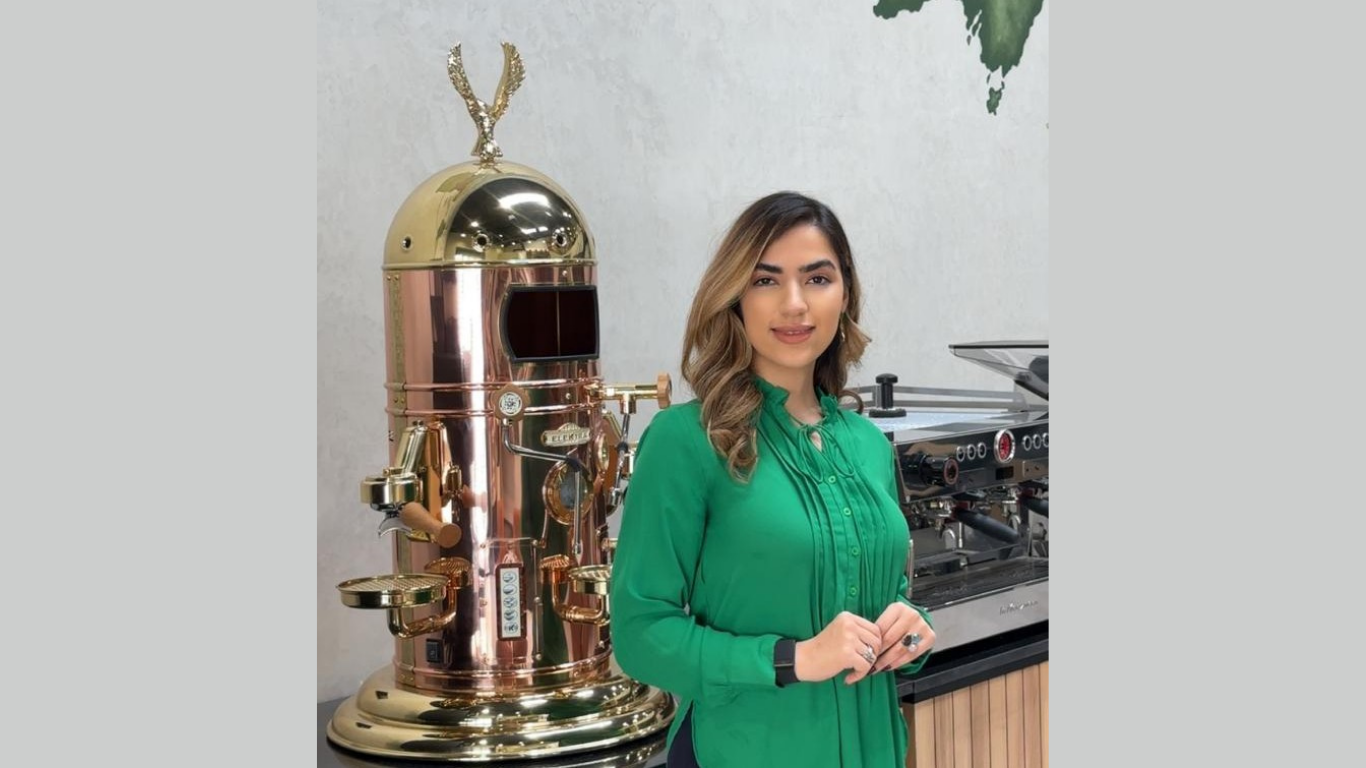
A Quiet Craft: Kaffa Oslo’s Discipline, Cupping, and Roasting

Dubai – Ali Alzakary
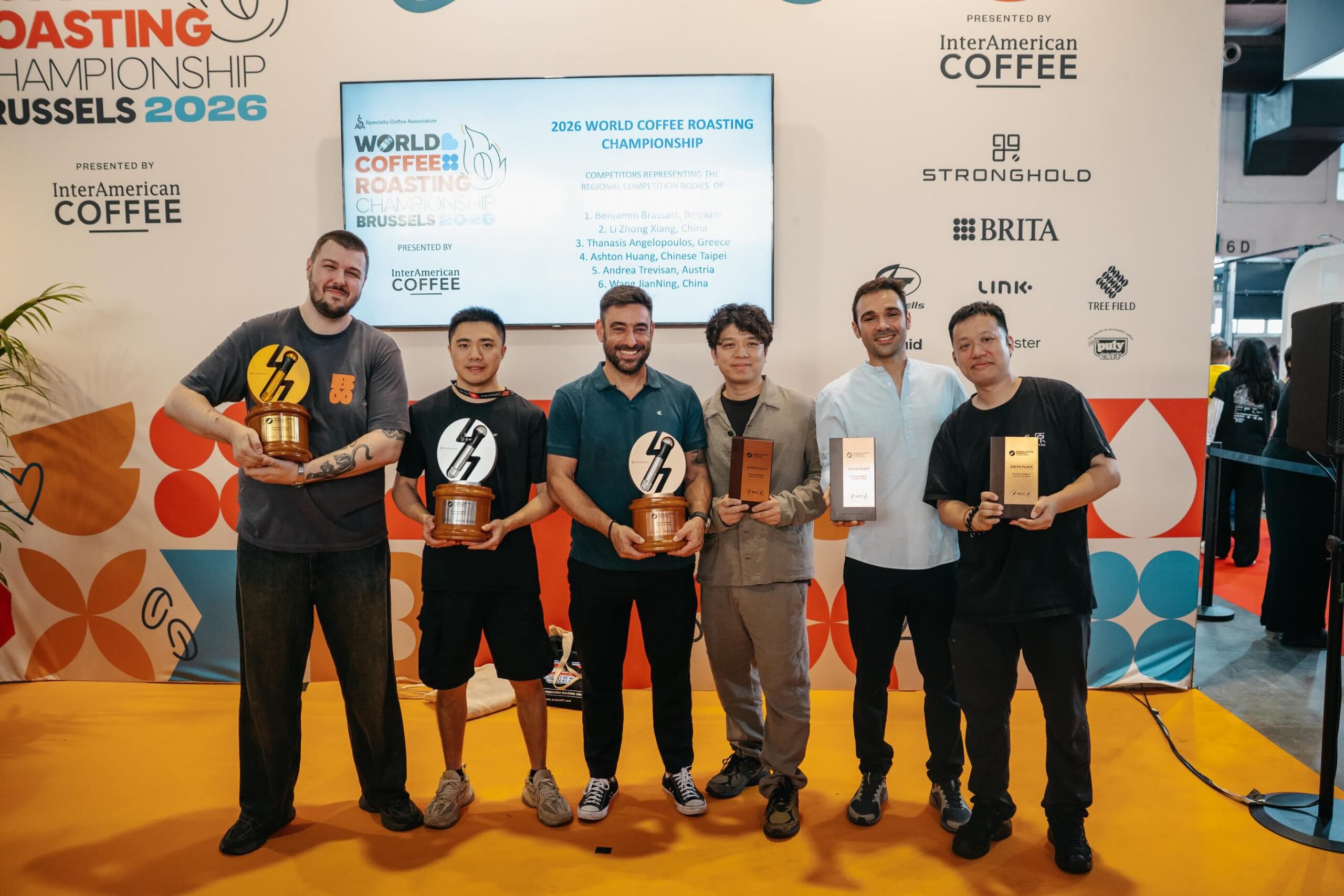
In the quiet precision of Nordic coffee culture, Kaffa Oslo has built a reputation shaped by patience, sensory discipline, and a deep respect for detail. From its roastery in Ryen, Oslo, the team continues to refine how coffee is selected, roasted, and experienced.After a standout year marked by recognition at “Nordics Best Roaster 2026,” we speak with head roaster Trude Skjold Løken about the journey behind the achievement, the realities of global coffee logistics, and the philosophy that guides Kaffa Oslo’s approach to roasting.

What follows is a conversation about craft, competition, and connection across the world of specialty coffee.

We invite you to read the full interview below.

Introduction to Kaffa Oslo

Could you introduce yourself and the story behind Kaffa Oslo to our audience? What are the core values that define the roastery’s identity in the Norwegian coffee scene?

Hello there! My name is Trude and I`ve worked with specialty coffee since 2012, starting of as a barista before getting a job as a production roaster in 2016. Worked my way up to a position as head roaster with quality control some years down the line. Learned with time, stubbornness and patience how to be a good cupper for roasting purposes and this is what made me who I am today. If I could give everyone that`s considering becoming a roaster just one tip: learn how to cup for roasting purposes and never stop cupping!

KAFFA is a small specialty roastery based in Ryen, Oslo. Born from the legacy of the iconic Oslo coffee bars JAVA and MOCCA. Founded by Robert W. Thoresen, the first World Barista Champion, our mission has always been to create meaningful experiences through exceptional coffee.

We work directly with dedicated producers around the world to source the finest green coffee through our owner and his sourcing company Collaborative Coffee Source. This work allows us to ensure sustainability and quality at every step of the journey. We use a light roasting style developed to highlight the unique character of each coffee while ensuring it remains easy to brew.

Since 2005, we have focused on making specialty coffee approachable and inclusive. Whether for home brewing or professional brewing, our goal is to provide a touch of everyday luxury through traceable, high quality coffee.

The Winning Moment

Congratulations again on winning “Nordics Best Roaster 2026.” Looking back at the competition, what do you think was the defining element in your roasting profile that set Kaffa Oslo apart this year?

Answer: There were many amazing coffees on the competition table, but maybe the florality and sparkling acidity of our sourced coffee made it stand out. We were extremely lucky to source a geisha like that. One of the best geishas I`ve ever tasted and I`ve had quite a few! The mandatory coffee had quite a similar approach/profile as the sourced, I approached it like a geisha. Roasted in a nordic light style but with enough development to give them body to make them both stand out.

The Competition Experience

In the “Mandatory Coffee” category, everyone roasts the same beans. How did you manage to imprint your signature style on those beans to impress the judges?

Answer: My first sampleroast (on a ROEST sample roaster) reminded me of a geisha-I found the coffee to be very light, sweet and delicate, so I took that approach when roasting the first batch on our smallest production roaster (a Probat UG15). Trying my best to bring forward the notes the coffee was inhabiting: red berries, the florality of black tea, sweet and elegant.

Global Supply Chains

With the current tensions in the Middle East affecting global shipping routes, how do you see these logistics challenges impacting the arrival and cost of green coffee in Norway?

Answer: The current challenge the last few years is that our East African coffee can`t take the shortcut through the Suez Canal, so it`s detouring all the way around the Cape of Good Hope. This adds about two to three weeks to our wait times and significantly increases freight costs. On top of that, the jump in global fuel prices means it`s costing more to power the ships and the trucks delivering to us here in Norway. It`s not always easy logistically to be located so far up in the northern hemisphere, but we`re doing our best to keep everything moving.

Adaptability

Have these regional disruptions prompted Kaffa Oslo to reconsider shipping methods or explore different sourcing strategies to ensure consistency?

Answer: We won`t change any of our buying strategies or move coffee in a different way. We will just have to wait a bit longer for the coffee to arrive in Norway.

Future Ambitions

After reaching the top in the Nordics for 2026, what is the next milestone for you? Are there plans for more international competitions or new projects within the roastery?

Answer: We will continue to compete in Nordics Best Roaster in the coming years as it`s a very fun, challenging, teambuilding and educational competition. On a personal note I will continue to compete in national cupping- and roasting championships as I am a very competitive person and I learn so much from it.

A Message to the Arab World

What message would you like to share with the specialty coffee community in the Arab world who are following your success?

Answer: I would really like to visit one day-never been to your side of the world. If I plan a visit; please invite me to your roastery and lets exchange coffees and set up a cupping!

Source: Dubai – Ali Alzakary


Kaffa Oslo Wins Nordics Best Roaster 2026

Dubai – Qahwa World

Kaffa Oslo has been crowned the Nordics Best Roaster 2026, securing the top position in one of the most respected roasting competitions in the Nordic coffee industry. The announcement was made during the Nordic Coffee Fest, where leading roasteries from across the region competed in a peer-assessed event focused on sourcing and roasting excellence.

The competition evaluates roasters through two main categories: Mandatory Coffee, where all competitors roast the same green coffee provided by the organizers, and Sourced Coffee, in which each roastery presents a coffee it has sourced and roasted according to specific competition parameters. The roastery with the highest combined score across both categories is declared the champion.

You may read: Nordic Coffee Fest 2026: The Largest Coffee Event in Gothenburg

  • Winning coffee from Peru

Kaffa Oslo’s sourced coffee entry came from Peru’s Cajamarca region, produced by Familia Alarcon. The coffee was a Geisha variety, processed using a fully washed method and sourced through Collaborative Coffee Source AS. The reported green coffee price for the lot was 20 US dollars per kilogram.

  • Strong Nordic competition

The 2026 finals brought together some of the most recognized roasters in the Nordic region. Finalists included:

  1. Good Life Coffee Roasters
  2. Gringo Nordic Coffee Roasters
  3. Coffee Collective
  4. Solberg & Hansen
  5. Sensei
  6. Original Coffee
  7. Norange
  8. Muttley & Jack’s
  9. Te & Kaffi

The competition also presented awards for second place, third place, and the Public Choice Award, reflecting the high level of participation and public interest in the event.

  • Mandatory coffee from Colombia

For the Mandatory Coffee category, competitors roasted the same green coffee supplied through a collaboration with Caravela Coffee.

The coffee originated from Colombia, produced by the Las Orquídeas producer group, including farmers Gilma Cupaque and Nubia Yaneth Paz. It featured Colombia F6 and F8 varieties and was processed using the washed method.

The harvest took place between April and June 2025, and the beans were dried using sun and air drying on parabolic patios and raised beds.

  • Scientific study unveiled during the competition

Alongside the announcement of the final results, organizers revealed a research project conducted by CoffeeMind in collaboration with Nordic Coffee Fest.

The study, titled “Linking Sensory Descriptive Analysis and Judge Preferences in the Nordics Best Roaster Competition: A Consumer Science Approach,” analyzed how sensory characteristics influence judge preferences in competition coffees.

Researchers compared sensory descriptive analysis of selected coffees with judges’ scoring data from the Sourced Coffee category. Using statistical methods commonly applied in consumer science, the study examined how specific flavor attributes relate to preference among expert judges.

  • Understanding the drivers of preference

The analysis evaluated attributes such as acidity, sweetness, fruit notes, bitterness, and fermentation characteristics, linking them with the competition’s judging scores.

According to the researchers, combining sensory science with competition results provides a clearer understanding of why certain coffees perform better during professional evaluations.

Organizers say the initiative represents a new approach to studying coffee quality within roasting competitions, offering insights that may help roasters refine sourcing strategies and roasting profiles in future events.

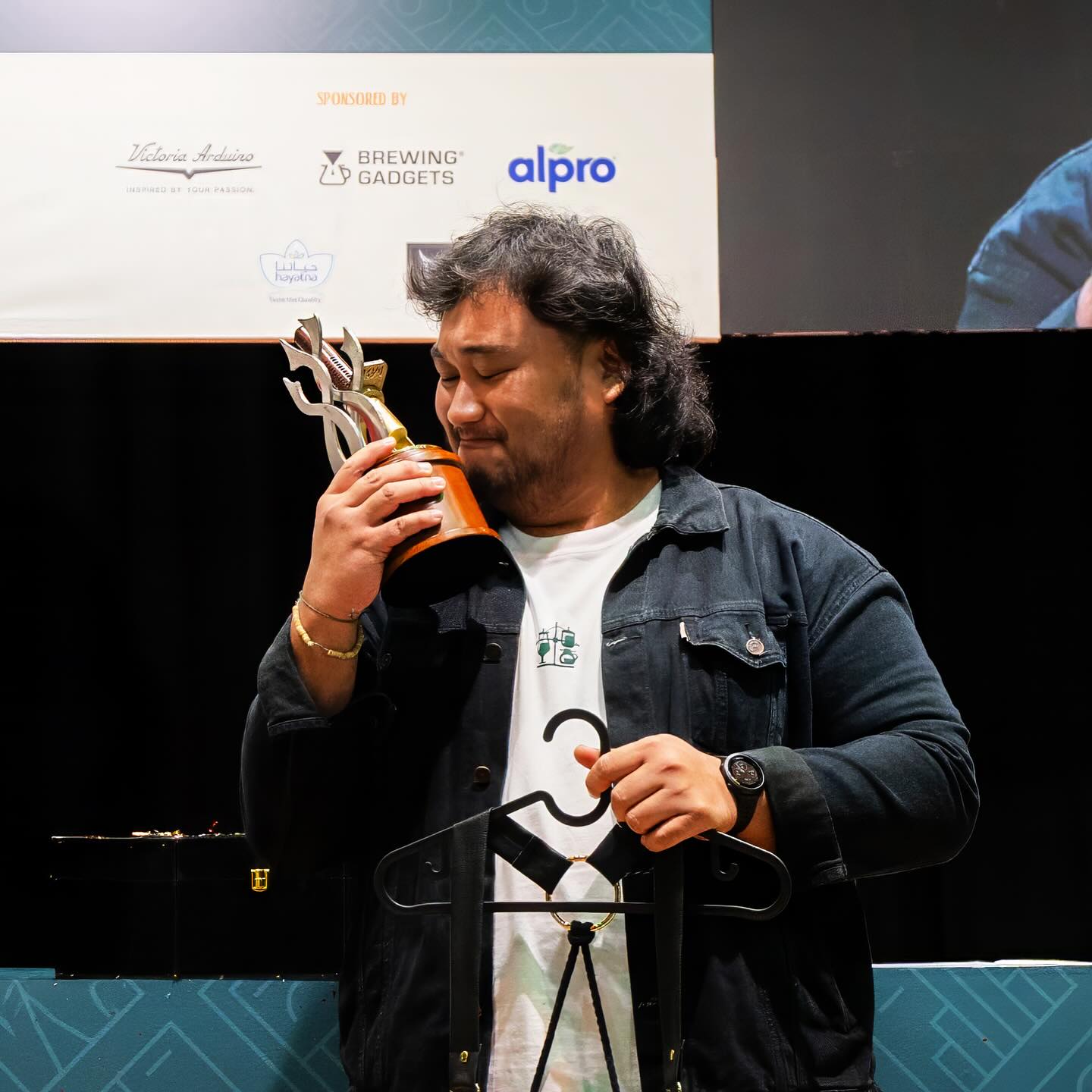
Nizam Pasha Lolowang Crowned UAE Roaster of the Year 2026

Dubai – Qahwa World

Nizam Pasha Lolowang of Espressi has been crowned Roaster of the Year after winning first place in the UAE National Roasting Championship, held as part of World of Coffee Dubai 2026 at the Dubai World Trade Centre.

The title was awarded in recognition of Luwang’s outstanding performance in roast development, flavour profiling, and consistency, assessed under internationally recognised Specialty Coffee Association (SCA) standards. The championship highlighted technical excellence, precision, and quality across all stages of the roasting process.

Luwang secured first place ahead of Ajeyudu Pathuri of Brewing Gadgets, who finished second, while Raha Shahsavar of Crack Coffee Roastery claimed third place.

The UAE National Roasting Championship was one of four major local and international competitions concluded during the fifth edition of World of Coffee Dubai, which welcomed more than 20,000 visits from specialty coffee professionals representing over 80 countries, reinforcing Dubai’s position as a leading global hub for specialty coffee.

The championship forms part of World of Coffee Dubai’s commitment to advancing professional standards and celebrating excellence within the specialty coffee industry, providing a competitive platform for emerging and established roasting talent in the region.

World of Coffee Dubai 2026 concluded its most internationally diverse edition to date and will return to the Dubai World Trade Centre from 26–28 January 2027.

World of Coffee Dubai 2026 Kicks Off at DWTC

Qahwa World

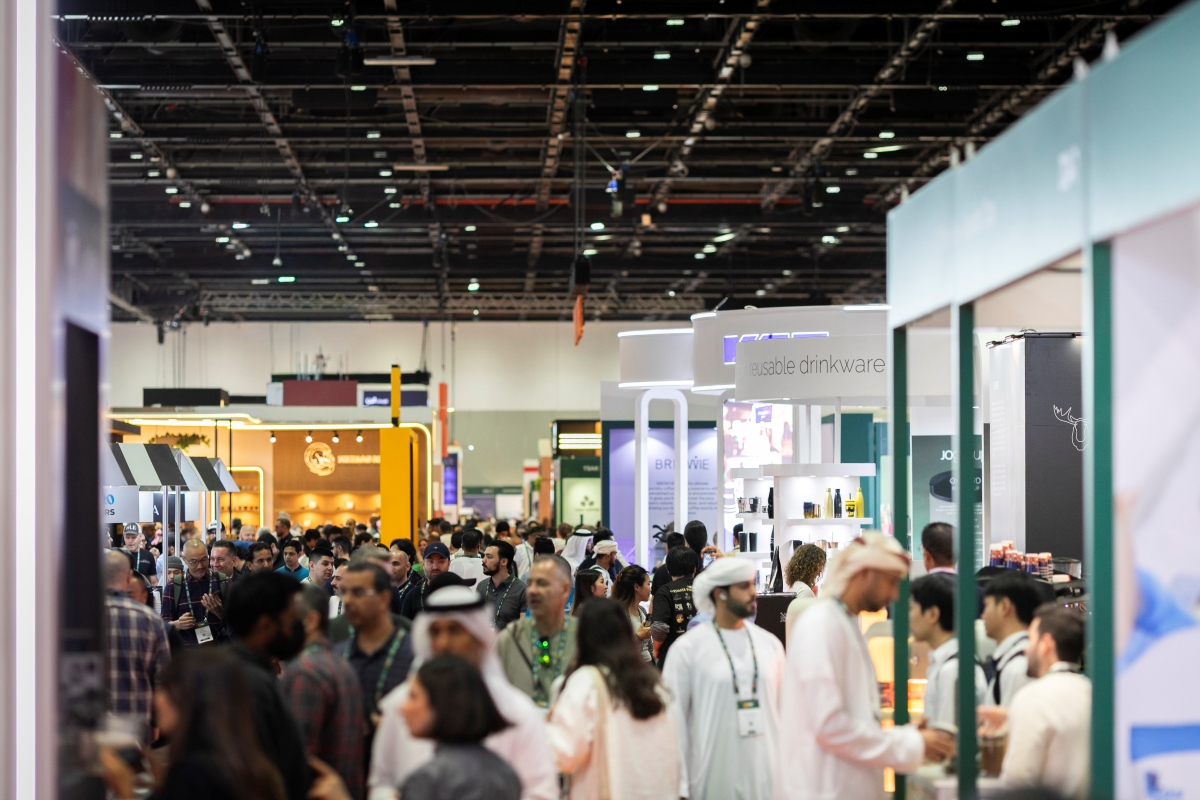
The fifth edition of World of Coffee Dubai officially opened today at the Dubai World Trade Centre (DWTC), marking a major milestone for the Middle East’s specialty coffee industry. Organised by DXB LIVE, the integrated event management and experiential agency of Dubai World Trade Centre (DWTC), in collaboration with the Specialty Coffee Association (SCA), the event opened with more than 2,100 exhibiting companies and brands from 78 countries, delivering its largest and most internationally diverse edition to date.

A key milestone on day one was the signing of a five-year extension agreement between World of Coffee Dubai and the Specialty Coffee Association, extending the partnership until 2031. The agreement formalises a long-term collaboration to support specialty coffee competitions, education programmes, and professional standards at the event. The MoU was signed by Khalid Al Hammadi, Executive Vice President of DXB LIVE, and Yannis Apostolopoulos, Chief Executive Officer of the Specialty Coffee Association (SCA), reinforcing World of Coffee Dubai’s position as a stable, internationally aligned platform within the global specialty coffee calendar.

Following the opening programme, activity spread across the exhibition floor, which spans more than 20,000 square metres across Za’abeel Halls 1, 4, 5, and 6. Exhibitors from producing origins and consuming markets showcased green coffee, roasting and brewing technologies, equipment, packaging solutions, and café innovations, representing every stage of the specialty coffee value chain.

Key features activated on day one included the Roasters Village and Producers’ Village, where roasters and origin producers engaged directly with buyers, importers, and industry professionals. The Brew Bar and Cupping Rooms hosted tastings and sensory sessions throughout the day, while the SCA Community Lounge served as a central hub for networking and knowledge exchange. Live activity at the competition stages also drew strong interest from visitors.

The opening day also highlighted the depth of innovation and collaboration across the exhibition. A World of Coffee exclusive collaboration between Oatly and Yaba, a modern Iraqi restaurant based in Al Wasl, introduced a new approach to coffee beverage creation by applying culinary steeping techniques to extract flavour, alongside distinctive elements such as nut crème and saffron-infused bubbles.

Equipment innovation featured prominently, with Coffee Desk, the exclusive Middle East distributor for leading brands including Fellow, unveiling the first global showcase of Fellow’s upgraded Espresso Series 1, ahead of its commercial release later this year. The launch reflected growing demand for high-performance, accessible equipment within the specialty coffee sector.

Commercial activity commenced on day one with the Dubai Coffee Equipment Auction organized by DXB LIVE in collaboration with DMCC, a dedicated one-day auction showcasing specialised and customised coffee equipment from exhibitors at World of Coffee Dubai. Curated in collaboration with M-Cultivo, the auction featured pre-qualified equipment presented through live demonstrations and inspections on the show floor, followed by a live, lot-by-lot auction led by an auctioneer. Designed to connect equipment manufacturers with serious buyers, the auction provided a focused platform for innovation, craftsmanship, and price discovery within the regional specialty coffee market.

Reflecting on the opening day, Khalid Al Hammadi, Executive Vice President at DXB LIVE, said: “World of Coffee Dubai continues to grow in scale, diversity, and international relevance. The strong participation seen on the first day, together with the signing of a five-year partnership agreement with the Specialty Coffee Association, reflects the event’s maturity and its importance as a global platform for trade, education, and professional exchange.”

In a further milestone for the wider coffee events portfolio, Khalid Al Hammadi also signed a three-year Memorandum of Understanding related to the Bahrain Coffee Festival. The agreement covers the organisation of the festival as a curated B2C and B2B experience featuring workshops, live brews, competitions, and immersive activations. The Bahrain Coffee Festival aims to engage the wider community by inviting coffee lovers, families, and the public to explore the diversity of coffee, while spotlighting both local and international brands.

During day one, DXB LIVE also announced plans to expand its coffee-focused event portfolio through the launch of dedicated coffee festivals in Qatar, Oman, and Saudi Arabia. Developed as a separate DXB LIVE IP, the regional festivals will build on the growing momentum of specialty coffee across the GCC while complementing World of Coffee Dubai’s role as the flagship international trade platform.

Exhibitors highlighted the value of the event’s international reach and professional audience. Denkayehu Dessalegn Head Roaster and Quality Control at Roasters, said: “World of Coffee Dubai provides an important platform for regional specialty coffee brands looking to scale internationally. This is our first participation at the event, and it allows us to introduce what we have been developing over the past four years to a global industry audience.”


World of Coffee Dubai 2026 continues through 20 January, with upcoming days featuring the Microlot Coffee Auction, the Exhibitors’ Coffee Auction, championship finals, workshops, and further industry announcements.

For visitor registration, media accreditation, and the full programme, please visit:
www.worldofcoffeedubai.com

 About World of Coffee Dubai

World of Coffee Dubai (WOC Dubai) is the premier coffee trade show for exhibitors and visitors looking to break into the Middle East’s burgeoning coffee industry. The event showcases popular features like the Roaster Village, engaging lectures, the Cupping Room, the SCA UAE National Championships, the Coffee Design Awards, the Best New Display Product Competition, Brew Bar, and the SCA Community Lounge, where buyers and sellers come together to reconnect and establish new business relationships. The exhibition welcomes local, regional, and global professionals in the coffee industry including producers, manufacturers, traders, farmers, international experts, distributors, small and medium companies, coffee shops, roasters, hotels, and coffee enthusiasts from around the world.

About SCA

The Specialty Coffee Association (SCA) is the world’s largest nonprofit, membership-based trade association in the coffee industry. Representing thousands of coffee professionals globally from producers to baristas, the organization is built on foundations of openness, inclusivity, and the power of shared knowledge, fostering an international coffee community to make specialty coffee a thriving, equitable, and sustainable activity for the entire value chain. From coffee farmers to baristas and roasters, our membership spans the globe, encompassing every element of the coffee value chain. The SCA acts as a unifying force within the specialty coffee industry and works to make coffee better by raising standards worldwide through a collaborative and progressive approach.

 About DXB LIVE:

DXB LIVE is the integrated event management and experiential agency of Dubai World Trade Centre. With its creative, technical, and operational expertise, DXB LIVE delivers world-class events of all types, including exhibitions, conferences, festivals, recreational activities, national occasions, major corporate events, as well as high-end and private weddings.zThe agency provides services for more than 100 major events annually, designing and building over 500,000 square feet of exhibition stands and delivering complex live events and conference solutions. DXB LIVE also offers strategic consultancy to associations and international organizations, while organizing large-scale trade exhibitions and public events.

Rapidly expanding its footprint, DXB LIVE is strengthening its position among the world’s leading event companies through strong alliances with top international event organizations. Its combined services create exceptional experiences that connect brands with their audiences across the UAE, GCC, Middle East, Europe, Africa, and the Americas.

Colombian Specialty Coffee Enters a New Phase of Expansion in the Middle East

Dubai – Qahwa World

Over the past decade, specialty Colombian coffee in the Middle East has largely been defined by small, limited harvests known as microlots. Celebrated for their unique flavors and seasonal character, these microlots helped elevate café culture, introduce consumers to Colombian coffee, and establish the region as one of the fastest-growing specialty coffee markets in the world.

As the market has matured, a major challenge has emerged: consistency. By nature, microlots are small and variable. While they offer distinct sensory experiences, they also create operational challenges. Café owners must continually retrain baristas as flavors change, roasters struggle to maintain consistent roast profiles, and consumers often encounter variability from cup to cup.

With specialty coffee consumption in the Middle East growing at an estimated 8–10% annually, inconsistency has become a barrier to sustainable growth. The market is no longer niche—it now demands scale, reliability, and consistent experiences alongside compelling origin stories.

  • A New Trade Model

Dubai-based Aveem Corporation is introducing a new model by allocating large volumes of Colombian specialty coffee in standardized, repeatable flavor profiles. This approach bridges the gap between microlot exclusivity and market-wide consistency. Two carefully selected profiles are included:

Ecotopo Cusillo – 85 SCA

Regional Nariño – 84.25 SCA

These coffees retain their specialty credentials while offering predictable sensory profiles. Baristas can work with consistent extraction parameters, roasters can maintain stable roast curves, and cafés can deliver a reliable experience to their customers.

  • Market Implications

Importers: Reduced sourcing volatility and improved supply-chain planning.

Roasters: Consistent brand expression across locations and countries.

Cafés: Lower training costs while maintaining high-quality offerings.

Consumers: Reliable, high-quality coffee without compromise.

Data shows that over 60% of specialty coffee consumers value consistency once they find a preferred flavor profile. By transitioning Colombian specialty coffee from fragmented microlots to structured, scalable allocations, Aveem strengthens the entire ecosystem. The move represents a shift from scarcity and experimentation to sustainability and scale in the Middle East’s specialty coffee market.

South Roastery: Where Dreams Are Roasted on the Fire of Passion

Sharjah – Ali Alzakary

On Maliha Road in Sharjah, where the spirit of authenticity meets the ambition of the future, and golden sands dance with the dreams of a new era, stands “South Roastery” as a true icon in the world of specialty coffee. My destination was not just a routine journalistic visit; it was an exploratory journey, a profound meeting with a pioneer of the scene, Mr. Ahmed Al Zaabi, Co-Founder and CEO. He welcomed us with his calm smile and a hot cup of coffee, opening a wide window into a world of passion and craftsmanship—a world born from a unique blend of Emirati and Saudi management in 2022.

  • The Coffee Majlis… Where Time Melts in the Cup

In a reception lounge meticulously designed with the architect’s care and the artist’s taste, not to be a loud, bustling cafe, but an intimate space for work and intellectual exchange—where the “rush” of daily life fades behind the warmth of the cup and the aroma of freshly roasted coffee—we held an extended coffee session.

The session was like a private “coffee majlis,” similar to those held in the desert under a sky dotted with stars, characterized by friendliness, transparency, and spontaneous laughter. During it, we discussed the pulse of a sector with a global market value exceeding $130 billion annually, from the remote crop alleys in the highlands of Yemen, Ethiopia, and Colombia, to the clamor of global markets and the New York and London exchanges. Mr. Ahmed presented his deep insights and analyses with utmost humility, insisting it was “just his point of view,” while in reality, it was an accurate and documented testimony from one of the most prominent players in an industry that produces over 10 million tons of coffee annually.

  • Cultural Maturity… From Passing Obsession to Sustainable Awareness

Al Zaabi, stirring his cup with a light, circular motion as tasting experts do, believes that the UAE coffee culture scene has moved past the naive beginnings and blind experimentation, reaching very advanced levels of development and maturity. This evolution, witnessed in the country over the last decade, has created an intensely competitive market with over 4,800 coffee shops in Dubai alone. However, at its core, it holds “immense opportunities for growth, prosperity, and income generation.”

The key, as he asserts with the confident tone of someone experienced, is not in imitating others or blindly replicating successful models, but in the “real and precise understanding of the market’s nature, its requirements, and the influencing factors, from demographic composition to changing consumer behavior.”

Al Zaabi believes that true gain is measured by an entirely different standard: “The important thing is not the amount of direct material gain at the end of the financial quarter, but the extent of people’s trust in the product you offer. This trust is the real capital, the hidden treasure that builds solid loyalty and true long-term success in a market that does not forgive the weak.”

Speaking about the specialty coffee wave that swept the region like a refreshing hurricane since the middle of the last decade, Al Zaabi confirms with the confidence of a seasoned analyst that this wave has “fully matured and reached a stage of stability.” It is no longer a mere “craze” following trends and social media fads; instead, it has transformed into a robust and deeply rooted culture, filtering out the fashion followers who came out of curiosity and retaining “those with genuine taste and an appetite for quality.”

This tangible maturation has clearly reflected on the quality of the coffee shops themselves and the elevation of their standards. Today, the Emirati consumer, especially the educated and well-traveled new generation, is “precisely capable of discerning the quality and true value of the coffee,” shifting from a passive recipient who drinks what is offered, to a conscious and interactive partner in evaluating the product and holding the service provider accountable.

  • Dubai and the Bidding Wars… Strategic, Not Just Marketing, Weight

The conversation smoothly shifted to the media buzz recently created by Dubai in the global coffee market—a buzz that ignited media outlets and social platforms. Starting with paying the most expensive recorded price for a kilogram of the rare ‘Geisha’ crop from Panama, where a Dubai cafe paid $604,080 for 20 kilograms of washed Geisha coffee from Hacienda La Esmeralda farm in Boquete, Panama, and extending to the fierce competition to offer the world’s most expensive cup of coffee, where the price jumped from $680 to $1,000 within two months.

Al Zaabi, smiling knowingly about the city’s nature, believes that for Dubai, as a global destination for excellence and pioneering in various fields from real estate to hospitality, coffee could not be far from this relentless pursuit of record numbers and entry into the Guinness World Records. He does not see any fundamental harm in this competition, despite its occasional oddity, to the spirit or values of the industry. Instead, he views it as a clever kind of marketing and promotional momentum that adds wide fame to the region as a whole, places the UAE on the global coffee lovers’ map, and gives a specific demographic—the one passionate about distinction, exceptional experiences, and financially capable of undertaking these adventures—its private space for enjoyment and showing off.

  • Resilience of Will… Global Balance Challenges and 2026 Preparedness

The discussion did not overlook the immense challenges that have cast heavy shadows over the global scene in the past two years. Specifically, we talked about the confusion of customs tariffs and trade wars between major powers, the severity of climate change that poses an existential threat to major crop regions in Brazil, Vietnam, and Colombia (Brazil’s production dropped by 25% in the 2024 season due to drought), and the consecutive disruptions in supply chains and maritime shipping that raised costs by 30-50% on some routes.

Al Zaabi sees that the UAE, thanks to its unique geographical location as a gateway between East and West, its globally recognized logistical leadership, and the wisdom of its prudent leadership, has managed to build a solid, fortified wall around the local sector: “Thanks to its wise and proactive policy, the availability of a wide and diverse strategic stock of various varieties and crops, and an extended network of commercial relationships, the UAE has managed to overcome the global market storms with superb skill and exceptional flexibility.”

While clearly acknowledging that the overall direct impact of the challenges was relatively limited on the local market and did not leave deep scars on final consumer prices or product availability, as an expert observer who misses no subtle market details, he cautiously pointed out that the accumulated pressures related to climate change and increased shipping and transport costs “may reveal themselves more clearly in the coming year, 2026.”

This is an explicit, implicit signal of the necessity to prepare and anticipate tangible fluctuations in the prices and quality of some major crops, reflecting a deep and well-considered foresight into global market volatility and its delayed effects.

As for the “Matcha” green wave that recently swept cafes and sparked widespread debate about the future of coffee, Al Zaabi, with the confidence of coffee’s deep roots, affirmed an unshakeable truth: “Coffee will remain coffee.” He noted that the Matcha wave, despite its momentary appeal, has already begun to recede and fade, leaving coffee, forever, as the undisputed queen of hot beverages.

  • South… From Roastery to Integrated Factory with Promising Asian Horizons

“South” is not just an ordinary roastery selling bags of coffee; it is, as Al Zaabi proudly describes it, “an integrated factory” focused on high quality and excellence in all stages of production, from selecting green beans to roasting, packaging, and distribution.

After achieving remarkable and astonishing success in the local market in just two and a half years, the company is now seriously considering possibilities for geographical expansion outside the UAE borders. Surprisingly, Al Zaabi clearly indicated that the expansion is not primarily targeting neighboring Gulf markets, as some might expect, but is ambitiously heading toward the rising and promising Asian markets and some emerging East African markets, where Al Zaabi sees huge growth potential and a consumer segment hungry for quality.

With cautious and measured optimism, he predicted a tangible presence for “South” in these new markets perhaps by the end of 2026 or early 2027 at the latest, with a clear plan for gradual opening and building trusted local partnerships.

  • South Academy… Investing in Minds Before Machines

As a true investment in the distant future, Al Zaabi stressed with clear enthusiasm the importance of continuous training and development, considering it “an urgent need, not a luxury or an optional extra that can be postponed,” especially in a fast-paced world witnessing continuous evolution in modern technologies, barista skills, and the arts of preparation and addition (over 20 new methods for preparing specialty coffee have emerged in the last five years).

It is for this precise reason, and from this deep belief in knowledge, that the “South Training Academy” was established—an ambitious initiative whose main goal is not direct profit, but a higher, more comprehensive objective: “to enhance genuine craftsmanship, spread the culture and respect of the profession, and strengthen knowledge and experience exchange among sector workers.”

The academy, which opened in early 2025, has so far welcomed over 300 trainees of various nationalities and backgrounds, offering internationally accredited specialized programs ranging from foundational courses for beginners to advanced workshops for roasting and tasting professionals.

  1. Major Events… Civilizational Convergence and Elevating Collective Taste

In conclusion of this rich and engaging interview, which extended for over three continuous hours, Al Zaabi affirmed with a voice full of passion the pivotal and decisive role of the large-scale coffee events generously hosted annually by the UAE, foremost among them the “World of Coffee Dubai” exhibition, and the national and regional coffee championships that witness fierce competitions among the brightest names.

He bets, with all the confidence of a strategic planner, on these periodic gatherings as “one of the most important factors for the prosperity of the local market and the development of the industry in general on both the regional and global levels.”

These vital platforms far surpass being mere commercial marketplaces or exhibitions for buying and selling; they become radiant focal points for knowledge, culture, and creativity. They are genuine arenas for the convergence of different civilizations and the exchange of rich experiences among the elite of the global coffee industry, a forum where public taste is enriched and elevated, and young baristas’ skills are honed to confidently keep pace with the latest trends and the finest arts of preparation and creativity in the ever-renewing world of coffee.

These events, with their majestic international presence and high-caliber professional organization, confirm to the whole world that the UAE is not just a commercial transit point or a consumer market, but a living intellectual laboratory and a center of civilizational radiation that continuously raises the status of coffee, transforming it from a mere commodity into a deep-seated cultural value and a human heritage worthy of celebration and appreciation.

“Smile, Roasted in Sharjah” – this simple, yet profound, slogan accurately summarizes the spirit of the roastery that innovates daily and bravely redefines the coffee experience through a magical blend of high craftsmanship, intense passion, and insistence on excellence, confirming to everyone that coffee in the UAE is not just a passing morning drink, but a mature, deeply rooted culture and a promising future whose chapters are being written today on the land of Sharjah, one coffee at a time, one cup at a time.

Click here to visit South Roastry site


World Champion Alireza Rozeghzadeh Offers Specialized Coffee Roasting Course at South Roastery

Sharjah – Qahwa World

South Roastery in Sharjah announced the hosting of the World Champion, Alireza Rozeghzadeh, the 2024 Turkey Coffee Roasting Champion and winner of the 8th position globally in the World Coffee Roasting Championship. Furthermore, he was among the top eight competitors globally in the 2025 World Brewers Cup (Pour-Over Coffee Preparation).

This hosting is part of the “Foundation Coffee Roasting Course – Specialty Coffee Association (SCA)”, a course directed at beginners and those wishing to understand the initial principles of the roasting world.

The course provides a comprehensive explanation of the stages of roasting, the changes in color and aroma, how to control heat and time, in addition to safety essentials and the method of using roasting equipment.

The course aims to build a strong knowledge base that helps the trainee understand the relationship between roasting and flavors, and prepares them to confidently transition to advanced levels.

South Roastery was established in Sharjah, UAE, in 2022 under Emirati and Saudi management. The roastery works to innovate and redefine the coffee experience through a blend of high craftsmanship and intense passion.

The roastery’s motto is “Smile, Roasted in Sharjah”, which is not just a phrase, but a reflection of the unique spirit it embodies, through which it aims to enrich the lives of everyone who shares this unique experience.

Registration Opens for the UAE National Barista, Latte Art, and Roasting Championships 2026

Dubai – Qahwa World

The Specialty Coffee Association of the UAE (SCA UAE) has officially announced the opening of registration for the UAE National Barista, Latte Art, and Roasting Championships 2026, which will take place as part of World of Coffee Dubai, hosted at the Dubai World Trade Centre (DWTC) from January 18 to 20, 2026.

These championships are among the most anticipated events in the UAE and regional coffee scene, bringing together top professionals and skilled enthusiasts to showcase their mastery in coffee brewing, latte art presentation, and coffee roasting according to the global standards set by the Specialty Coffee Association (SCA).

The national championships serve as a gateway for UAE-based baristas and roasters to qualify for international competitions, providing a platform for cafés and roasteries to highlight their expertise and creativity before an audience of industry professionals and coffee lovers.

Participation Requirements:

  • Participants must have resided in the UAE for at least two years and hold a valid residence visa.

  • Participants must be individual members of the Specialty Coffee Association.

Registration Fee: 
AED 1,500 per competitor.

Official Sponsors:

  • Roasting Championship: Sponsored by IRM Coffee Roasters.

  • Barista and Latte Art Championships: Sponsored by Victoria Arduino Middle East.

The SCA UAE emphasized that these championships reflect its commitment to developing the specialty coffee industry in the country and nurturing local talent capable of competing on regional and global stages.

For registration details or inquiries, participants can contact:
[email protected]

Part of a Global Coffee Celebration

The championships will take place within the fifth edition of World of Coffee Dubai 2026, organized by DXB LIVE, the event management arm of the Dubai World Trade Centre, in collaboration with the Specialty Coffee Association (SCA).

Since its launch in 2022, World of Coffee Dubai has rapidly grown to become the leading coffee event in the Middle East and one of the most influential gatherings in the global coffee industry. It brings together producers, roasters, traders, suppliers, and innovators from around the world.

The 2026 edition is expected to be the largest yet, with 77% of exhibitors coming from outside the UAE, a clear reflection of Dubai’s growing status as a global hub for coffee trade, culture, and innovation.

A Booming Coffee Market

The UAE’s coffee sector continues to flourish, currently valued at over USD 3.2 billion (approximately AED 12 billion) and projected to grow by 8.4% annually, reaching USD 4.5 billion (around AED 16.5 billion) by 2029.

Across the Middle East and North Africa (MENA), the coffee market is expected to exceed USD 11 billion (more than AED 40 billion) within the same period, fueled by rising demand for specialty coffee, evolving consumer tastes, and growing investments in quality, sustainability, and innovation.

According to Khalid Al Mulla, CEO of the UAE chapter of the Specialty Coffee Association, the upcoming championships underscore Dubai’s vision to be a global leader in specialty coffee culture.

“Through these competitions, we aim to empower local talent and give them the opportunity to compete on the world stage,” said Al Mulla. “We are committed to advancing coffee knowledge, craftsmanship, and appreciation across every link in the value chain — from the bean to the cup.”

He added that the collaboration between SCA UAE and DXB LIVE has created a dynamic platform that blends education, innovation, and trade, making World of Coffee Dubai a global meeting point for the entire coffee community.

Invitation to Participate

The UAE National Barista, Latte Art, and Roasting Championships 2026 will be held during World of Coffee Dubai, from January 18 to 20, 2026, at the Dubai World Trade Centre.

Coffee professionals, competitors, and enthusiasts are invited to join the celebration of craftsmanship and excellence. Exhibitors and visitors can now secure their spaces and early-bird tickets through the official website:
dubai.worldofcoffee.org/home