Brazil’s Cerrado Mineiro Coffee Harvest Reaches 81% in 2025, Says Expocacer

August 17, 2025 – Brazil (Qahwa World) – The 2025 coffee harvest in Brazil’s Cerrado Mineiro region is advancing steadily, with 81% of the crop already harvested, according to the Cerrado Coffee Growers Cooperative (Expocacer).

Expocacer manages 84,900 hectares of cultivated land, of which 71,400 hectares are in active production. Farmers in the Cerrado Mineiro continue to benefit from favorable natural conditions, including a dry climate, flat terrain, and high mechanisation.

On a national scale, Brazil has completed 91% of its 2025/26 arabica coffee harvest, based on the latest data from consultancy Safras & Mercado.

Expocacer’s CEO, Simão Pedro de Lima, confirmed that harvesting is expected to conclude by late August or early September, depending on weather conditions. “So far, the climate has been favorable, with no frosts or off-season rains affecting the process,” he said.

Expocacer has heavily invested in advanced technology to modernize its coffee processing operations. Its industrial complex integrates robotics, AI-powered sensors, and automated communication systems.

  • AI monitoring: Sensors track machine vibrations and temperatures in real time, cutting maintenance costs by 20% and boosting equipment availability by 10%.

  • Smart farming: Soil moisture sensors and weather stations optimize irrigation and water use across member farms.

These innovations ensure greater efficiency, quality control, and sustainability.

To maintain productivity and quality, Expocacer promotes regenerative farming, bio-inputs, and expert consulting. The cooperative emphasizes sustainable agricultural practices that safeguard both yields and the environment.

“The dry weather allows for natural and uniform drying of beans, reducing risks of unwanted fermentation, while flat terrain ensures higher mechanisation, lowering costs and improving efficiency,” explained Lima.

Despite fluctuations on the New York Coffee Exchange, Expocacer continues to support its members with liquidity and secure transactions.

Petrônio Primo, Expocacer’s business agent, highlighted: “Even in this volatile market, we remain active every day, offering competitive prices and personalized services to our members.”

Anaerobic Fermentation Transforms Unripe Coffee Cherries into Specialty-Grade

Dubai,August 15, 2025 – (Qahwa World) – Unripe coffee cherries, long discarded for their harsh and astringent taste, may now hold hidden value thanks to a breakthrough study from Brazil. Researchers at the Federal University of Uberlândia (UFU) have demonstrated that self-induced anaerobic fermentation (SIAF) can transform immature beans from the Arara cultivar into beverages scoring above 80 points on the Specialty Coffee Association (SCA) scale—the threshold for specialty coffee.

Rethinking the Role of Unripe Cherries

In the specialty coffee sector, greenish unripe beans are typically excluded for producing bitter, pungent flavors. The UFU team challenged this assumption by fermenting unripe Arara cherries in 200-liter hermetically sealed bioreactors for up to 96 hours, with variations in temperature, pH control, water content, and yeast inoculation.

Blind cupping by professional Q-graders revealed that fermented lots containing 13% to 30% unripe cherries not only matched but in some cases outperformed beverages produced solely from ripe cherries. When temperature was carefully controlled at 27 °C, the results were particularly striking, with tasters awarding higher scores than those given to control samples of ripe fruit processed without anaerobic fermentation.

How It Works

The SIAF process places cherries in sealed tanks without oxygen. Naturally occurring microorganisms in the fruit initiate biochemical reactions, releasing carbon dioxide and altering the beans’ chemical profile. These changes reduce the undesirable qualities of immature beans and create new flavor attributes.

The research team also developed a monitoring device to track temperature and pH inside the bioreactors in real time, ensuring precision without disturbing the fermentation process.

Wider Impact for Coffee Growers

The implications are significant. Roughly 70% of the cherries harvested in the UFU trials were unripe, identified using an AI tool created by the research group. Traditionally considered a loss, these cherries now represent a potential source of added value for farmers, particularly in regions where inconsistent ripening reduces yields of high-quality beans.

“Using SIAF with temperature and pH control can minimize the negative effects of immature beans and even elevate the beverage, adding value while still on the farm,” explains Luiza Braga, lead author of the study and a master’s researcher at UFU’s Faculty of Chemical Engineering.

A Collaborative Effort

The project, titled Transforming Challenges into Quality: The Power of Controlled Fermentation in Immature Arara Coffee Beans, was published in Food and Bioprocess Technology. It was supported by FAPESP in partnership with Brazil’s Ministry of Science, Technology, and Innovation (MCTI), with additional funding from FAPEMIG, CAPES, CNPq, and FINEP.

The study forms part of the “Da Semente à Xícara” (Seed to Cup) research group, established in 2019 to advance post-harvest coffee innovations.

What’s Next?

The researchers aim to identify the specific compounds in fermented unripe coffee responsible for the positive sensory attributes and to test the technique on other Arabica varieties.

If successful, anaerobic fermentation could become a vital tool for producers navigating volatile markets, offering a way to extract more value from every harvest. In a world where coffee demand is rising and prices fluctuate, turning waste into quality may be one of the most promising innovations yet.

Singapore’s Prefer Expands Overseas with Partnerships in Thailand and Australia to Produce Beanless Coffee

Singapore, 14 August 2025 (Qahwa World)  – Singapore-based start-up Prefer, which develops coffee and cocoa products without using coffee beans, has announced its first international commercial partnerships alongside the close of a US$4.2 million funding round.

What is beanless coffee?

Beanless coffee is an alternative to conventional coffee that’s made without coffee beans. Instead, it uses upcycled food industry byproducts such as rice and soy, which are transformed through a proprietary fermentation and roasting process to replicate the taste, aroma, and functional qualities of traditional coffee. This approach aims to reduce environmental impact and production costs while maintaining a familiar coffee experience.

Strategic international partnerships

  • Thailand: Prefer will collaborate with Ajinomoto Co., (Thailand) Ltd., the Thai subsidiary of Japan’s Ajinomoto Co., Ltd., one of the largest food and beverage companies in Japan. The partnership will focus on developing sustainable coffee drink innovations for the Thai market. Specific product details have not been disclosed, and launch timing will depend on manufacturing readiness and regulatory approvals.

  • Australia and New Zealand: Prefer has licensed its proprietary fermentation technology to The Coffee Ferm, which will manufacture and distribute Prefer products locally in these markets.

Funding and production scale-up

The funding round was led by At One Ventures and Chancery Hill Capital, with participation from existing investor Forge Ventures, bringing Prefer’s total raised to US$6.2 million since its founding in 2022. The capital will be used to scale production capacity to 500 tonnes annually through third-party manufacturers across Asia-Pacific, and to expand cocoa production at its Singapore pilot facility before moving to larger-scale outsourced manufacturing.

New product launches

In addition to its ready-to-drink (RTD) beanless coffee latte already sold in the region, Prefer has launched soluble coffee and cocoa powders for sampling by major food and beverage companies across the Asia-Pacific region. These products are aimed at integration into other brands’ portfolios.

Lower cost and footprint

According to Prefer’s own life cycle analysis, its beanless coffee can have up to 85% lower greenhouse gas emissions and be around 50% more affordable compared to current Arabica market prices. (These figures are company claims; no independent verification has been provided.)

The Unsung Hero of Every Cup: The Story of Coffee Filters

Dubai – Qahwa World

The coffee filter—a simple, unassuming piece of material—is the unsung hero in the art of brewing. While we often praise the beans, roasters, and brewing methods, the story of the coffee filter is one of quiet ingenuity and a vision for a better cup. Behind its creation lies a tale of innovation, perseverance, and a quest for perfection that revolutionized how the world enjoys coffee.

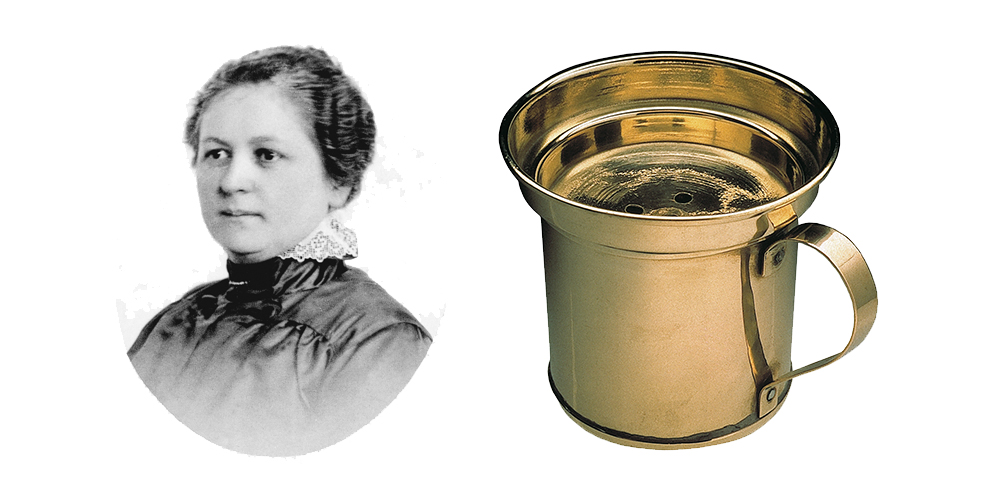
In 1908, in the bustling city of Dresden, Germany, a woman named Melitta Bentz was grappling with a common frustration: gritty, bitter coffee. At the time, coffee grounds were brewed directly in boiling water, leaving behind an unpleasant residue and an over-extracted flavor. Melitta wasn’t an inventor by trade; she was a housewife who loved a clean cup of coffee. Yet her dissatisfaction became the catalyst for change.

One day, as she prepared coffee in her kitchen, inspiration struck. She took a piece of blotting paper from her son’s school notebook, punctured a brass pot with holes, and used the paper as a makeshift filter. The result? A smooth, grit-free coffee that tasted pure and bright. Melitta had not just solved her problem—she had laid the foundation for a brewing revolution.

A Patent and a Family Dream

Recognizing the potential of her invention, Melitta patented her coffee filter on July 8, 1908. What followed was a story of determination. Together with her husband Hugo and their two sons, Melitta began producing and selling her filters from their home. They established the Melitta Company, a small family business that would grow into one of the most respected names in coffee history.

The coffee filter’s popularity soared as households and cafes adopted the innovation, appreciating its ability to transform brewing into an art. It wasn’t just a tool—it was a symbol of progress, of the pursuit of excellence in the everyday.

The Evolution of Coffee Filters: White and Brown

As coffee filters gained traction, their production evolved. The early filters were unbleached, naturally brown, and minimally processed. Over time, white filters were introduced, chemically bleached or oxygen-treated to remove the natural color. These white filters appealed to those who valued a neutral taste profile, as the process removed any residual papery flavor.

But the brown filters remained beloved among environmentally conscious coffee lovers, who appreciated their eco-friendly manufacturing process. Today, the debate between white and brown filters persists—one of taste versus sustainability, preference versus principle.

Beyond Paper: Innovations in Brewing

While paper filters remain a staple, innovation in coffee brewing has led to alternatives. Metal filters, made of stainless steel, preserve the natural oils of coffee, offering a fuller-bodied brew. Cloth filters, though requiring care, provide an eco-friendly and reusable option. These innovations underscore the enduring influence of Melitta’s original invention—a solution designed to perfect the brewing process.

The Legacy of a Visionary

Melitta Bentz’s story is more than an account of invention; it is a testament to how one person’s desire for a better experience can change an entire industry. Today, over a century later, her company remains family-owned, continuing her legacy of quality and innovation. The coffee filter is a reminder that even the simplest ideas, born in the humblest of settings, can shape the way we live.

What Lies Ahead

The coffee filter’s journey isn’t over. With sustainability at the forefront of global concerns, brands are reimagining filters to reduce waste and embrace renewable materials. Specialty coffee enthusiasts demand filters tailored to highlight the unique characteristics of their beans, driving producers to innovate further.

Why the Coffee Filter Matters

In an era of high-tech coffee machines and exotic brewing gadgets, the coffee filter is a grounding force—a humble yet indispensable component of the perfect cup. It reminds us that the pursuit of quality begins with the basics and that even a small improvement can ripple across the world, elevating the everyday into something extraordinary.

The next time you brew your coffee, take a moment to appreciate the filter. Behind that thin sheet of paper lies a history of ingenuity, a dedication to craft, and a legacy of excellence. The coffee filter may not sing its praises loudly, but its quiet contribution is one of the most significant in the world of coffee.

This is the story of the coffee filter: a tale of simplicity, innovation, and timeless brilliance.