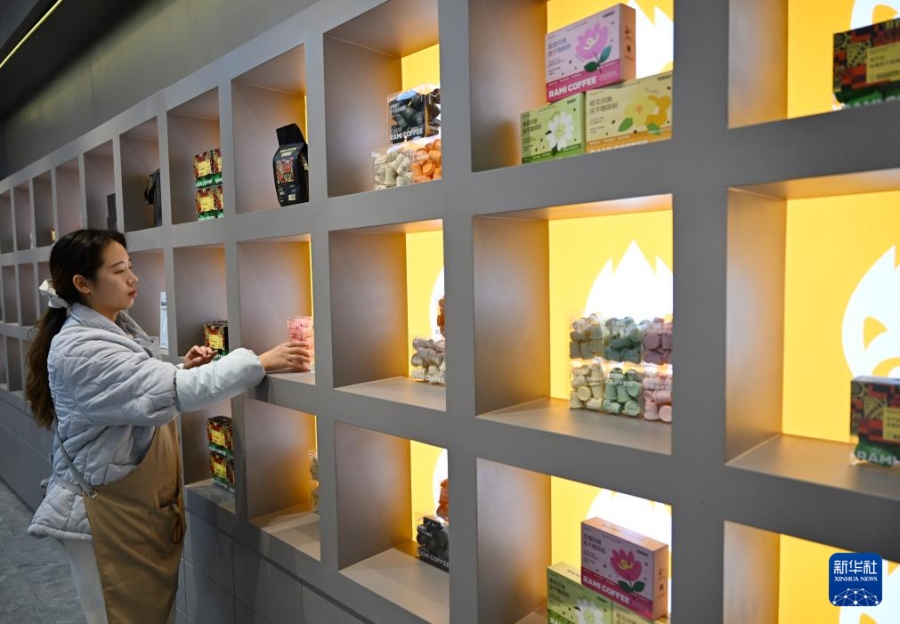
Puyang Launches Integrated Coffee Production Chain in China

Dubai – Qahwa World

Coffee in China is no longer just an imported commodity or a growing consumer trend. It has become a strategic industrial and trade opportunity, with value chains extending from African production regions to Chinese processing hubs and global export markets. The Puyang County project in Henan Province stands out as a leading example of this transformation.

  • From Import to Deep Processing

In recent years, Puyang County has actively participated in the Belt and Road Initiative, leveraging its industrial base and logistics infrastructure in central China. Within this framework, the China-Ethiopia Coffee Industrial Demonstration Park was established, relying primarily on coffee beans imported from Ethiopia and Uganda, two of the world’s most prominent coffee origin countries.

What sets Puyang apart is not merely the import of raw beans but the transition to advanced processing within China, which increases the value of the final product and strengthens the competitiveness of Chinese manufacturers in global coffee supply chains.

A Fully Integrated Production Facility

The demonstration park in Puyang features a fully integrated production system, including:

A factory producing freeze-dried instant coffee;

Three roasting lines for coffee beans;

Ten cold brew production lines;

Eight freeze-drying lines.

This integration allows complete control over all processing stages—from roasting and extraction to drying and packaging—ensuring consistent quality, product variety, and the capacity to meet diverse international standards.

  • Puyang at the Heart of China’s Emerging Coffee Value Chains

Puyang’s initiative reflects a broader shift in China: moving from being a final importer of coffee to becoming a regional hub for processing and re-exporting coffee. With growing domestic consumption and the expanding specialty coffee market, models like Puyang’s are increasingly relevant, combining industrial efficiency with trade flexibility.

Exports from Puyang now reach Singapore, the United States, and other countries, demonstrating that integrated production chains can effectively serve both domestic and international markets.

  • Coffee as a Belt and Road Cooperation Tool

On a larger scale, Puyang exemplifies how the Belt and Road Initiative can support agro-industrial value chain development, not only infrastructure and energy projects. By importing beans from African origins and processing them domestically, China creates a shared-value model: raw material sourcing in Africa, industrial processing in China, and global market distribution. This strengthens China’s role in global coffee trade while providing African producers with more stable export channels.

  • Implications for the Specialty Coffee Sector

For the specialty coffee industry, Puyang highlights several key trends:

Increased focus on advanced processing techniques such as freeze-drying and cold brew extraction;

Building industrial capacity capable of handling a wide range of African coffee origins;

A growing orientation toward export-ready, value-added products, not just the domestic market.

These elements make Puyang a case study for China’s evolving coffee value chains, particularly as Belt and Road initiatives continue to expand.

The Puyang project illustrates how coffee can evolve from a simple imported commodity into a high-value industrial product within fully integrated value chains. With ongoing investment and strategic partnerships, coffee is poised to become a new axis of industrial and trade collaboration between China and producing countries, reaching beyond domestic consumption into global markets.
Central America Crop Progression Update 2025/26

Dubai – Qahwa World

Sucafina has published its Central America Crop Progression Update 2025/26, outlining steady progress and a positive outlook for the current coffee cycle across Central America and Mexico. According to Oscar Fernando Hurtado Ramirez, Global Head of Production Research at Sucafina, favorable weather, balanced harvest flows, and strong reinvestment at farm level are supporting both volume and quality this season.

  • Harvest progress and pace

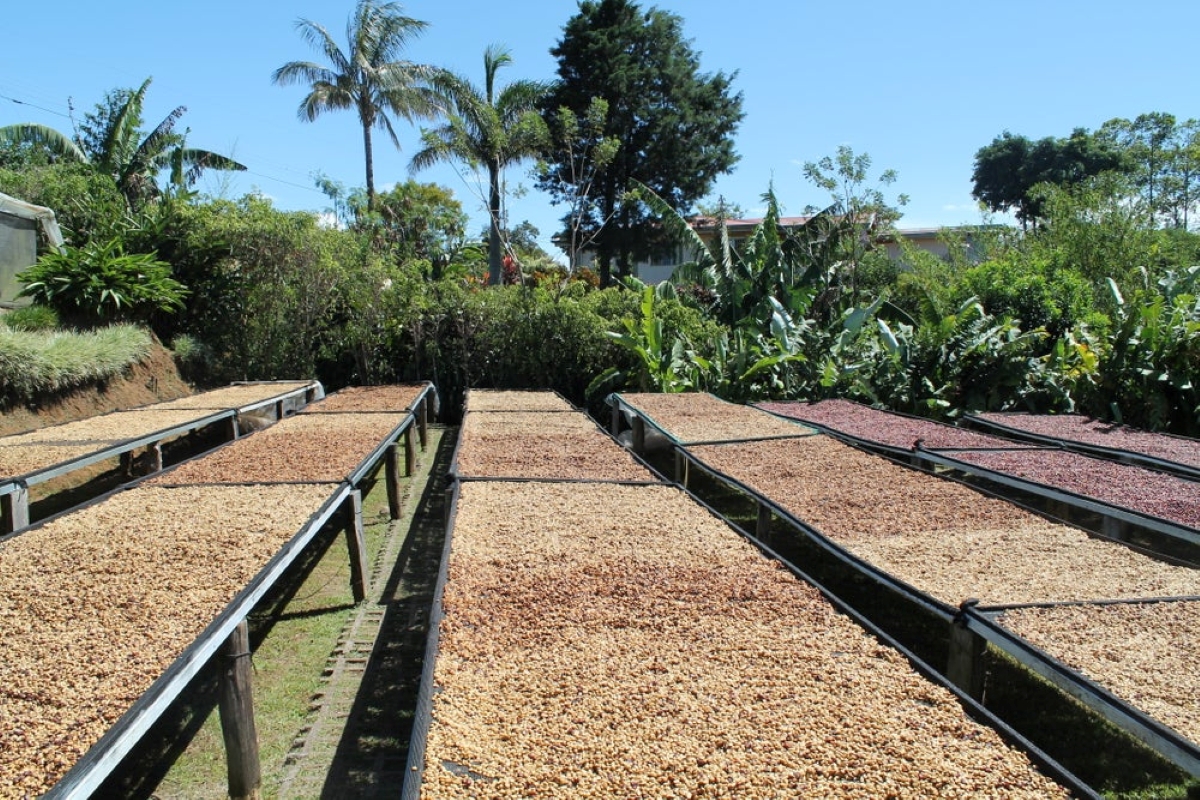
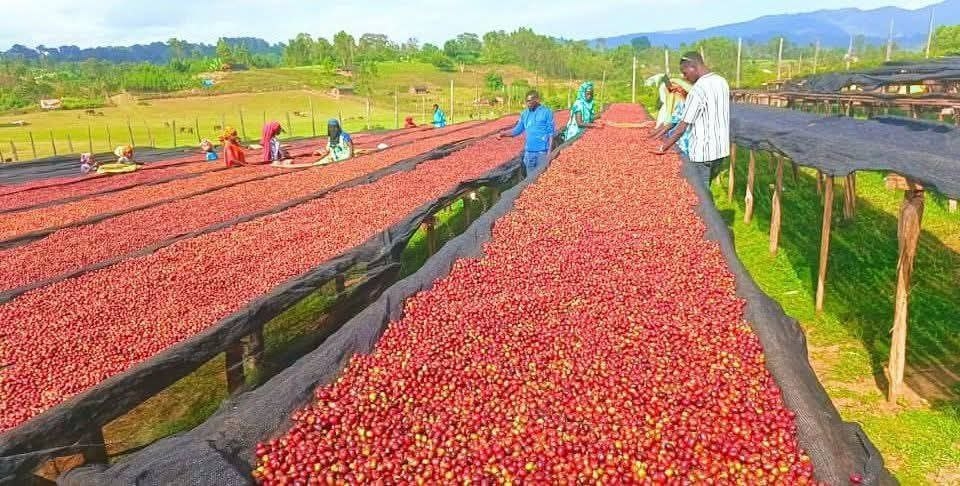
Harvesting began at lower altitudes in late October and accelerated through November, supported by cooperative weather across the region. This season has been characterized by a more even picking flow, reducing pressure on mills and contributing to stronger quality outcomes. Peak harvest activity is taking place in January, while higher-altitude areas are now ramping up and are expected to remain active over the coming months. Regionally, the main harvest is projected to wind down between late March and early April.

By late January, approximately 50% of the harvest is complete, with progress expected to reach 65% to 70% by the end of the month. Nicaragua is currently the most advanced origin, while El Salvador and Costa Rica are moving more slowly and are expected to pick up pace as higher-elevation farms enter peak production.

  • Volume and quality outlook

Total coffee production across Central America is expected to finish near 18 million bags, placing regional output about 4.5% above the 2024/25 season. Strong international prices during the previous cycle generated record revenues in several producing countries, enabling reinvestment in tree renovation, fertilization, and farm management.

These investments are now translating into healthier plants and improved crop conditions for the 2025/26 season. With a steadier picking schedule and more balanced deliveries, coffee processing is progressing smoothly and on schedule, supporting both physical preparation and cup quality.

  • Market context

Two developments influenced the regional coffee market toward the end of 2025. Mexico briefly benefited from zero U.S. trade tariffs during the fourth quarter, which supported local buying activity and imports. That policy was removed in November, returning trade to standard commercial conditions.

Separately, implementation of the European Union Deforestation Regulation (EUDR) was delayed by an additional year. The extension has eased immediate pressure on farmers and exporters and provides more time to strengthen traceability systems ahead of full enforcement, now scheduled for December 31, 2026.

  • Chaak: creating opportunity through coffee in Guatemala

Sucafina is also preparing to ship Chaak, a new Original coffee from Guatemala sourced from Chiquimula, Santa Rosa, and Jalapa. The blend brings together coffees from 618 smallholder farmers, including 462 producers from eastern Guatemala and 156 from western regions. Shipments are expected between March and May.

Chaak is fully traceable and IMPACT verified, linking coffee quality with social and environmental outcomes through Sucafina’s Responsible Sourcing Program. Participating farmers use limited chemical inputs, adhere to deforestation-free practices, and farm using methods that support biodiversity.

Each purchase of Chaak supports Opportunity through Pre-School Education, an initiative focused on improving early learning environments and teacher support in coffee-growing communities. The project forms part of Sucafina’s Beyond Flagship efforts in Guatemala.

Buyers planning to source additional Central American or Mexican coffees are encouraged to coordinate with their contacts to align on timelines, shipping schedules, and quality specifications.

Top Coffee-Producing Countries in 2025

A Full Analytical Reading of the Global Production Landscape in Early 2026

Dubai – Qahwa Word

As January 2026 begins, the global coffee sector is closely monitoring the completion of data for the 2025/2026 season, amid an increasingly complex interaction between climate variability, logistical disruptions, and new environmental regulations. Estimates available at this stage suggest that global coffee production is trending toward approximately 178.8 million 60-kg bags.

These figures do not represent final season results, but rather an early analytical snapshot based on field assessments and reports from international organizations as of early 2026. The focus extends beyond volume alone, highlighting deeper structural shifts that are reshaping global coffee production, trade flows, and varietal balance.

1. Top Ten Coffee-Producing Countries

(Estimates as of January 2026)

Available data confirm the continued dominance of Brazil and Vietnam in global coffee supply, while several African and Latin American origins show notable developments in both volume and crop structure.

Rank Country Production (million bags) Dominant variety Production status – Jan 2026
1 Brazil 64.2 – 65.0 Arabica / Robusta Peak export phase; strong Conilon growth amid Arabica volatility
2 Vietnam 30.8 – 31.0 Robusta Production recovery supported by improved irrigation practices
3 Colombia 14.8 Arabica Stable washed coffee output due to regular rainfall
4 Ethiopia 11.6 Arabica Strong crop supported by long-term tree-renewal programs
5 Indonesia 11.2 Robusta / Arabica Visible recovery restoring competitive positioning
6 Uganda 6.9 Robusta Continued rise as Africa’s leading Robusta supplier
7 India 6.2 Robusta / Arabica Stable production serving both export and domestic markets
8 Honduras 5.5 Arabica Gradual recovery despite rising production and labor costs
9 Peru 4.2 Arabica Expansion in planted area and growing organic orientation
10 Mexico 3.9 Arabica Relative stability aimed at meeting regional demand

2. Land Efficiency and Yield Performance

Early 2026 data highlight a clear divergence in production efficiency among leading coffee origins:

  • Vietnam and Brazil continue to record the highest yields globally, with Vietnam reaching an estimated 2.5–3 tons per hectare, driven by intensive farming models, improved plant material, and higher input use.

  • By contrast, Ethiopia and Colombia, despite their premium quality profiles, maintain lower average yields due to mountainous terrain, fragmented landholdings, and reliance on traditional farming systems. This has become a focal point for research discussions around productivity gains without compromising origin identity or biodiversity.

3. Arabica–Robusta Balance: A Structural Shift

Indicators from January 2026 suggest that Robusta now accounts for nearly 42% of global coffee production, reflecting a structural realignment shaped by multiple converging forces:

  1. Climate resilience: Robusta has demonstrated stronger tolerance to rising temperatures and irregular rainfall compared to climate-sensitive Arabica.

  2. Premium Robusta development: An increasing number of roasters are incorporating higher-quality Robusta into blends to manage costs while preserving cup structure.

  3. Price divergence: Persistently elevated Arabica prices continue to accelerate the market’s gradual rebalancing toward Robusta, particularly in commercial segments.

4. Logistics and Shipping Constraints

At the start of 2026, coffee supply chains remain under pressure from logistical disruptions:

  • Rising freight costs, linked to instability in key maritime corridors, have reduced the competitiveness of Asian-origin coffee in European spot markets.

  • Low global inventories, relative to recent multi-year averages, leave prices highly sensitive to weather events, geopolitical developments, and supply-side news.

5. Regulatory Pressure and Environmental Compliance (EUDR)

With the effective implementation of the European Union Deforestation Regulation (EUDR) in 2026, environmental compliance has become a defining factor in global coffee trade:

  • European buyers increasingly require digital traceability systems and precise geospatial coordinates to demonstrate deforestation-free supply chains.

  • Brazil and Vietnam appear comparatively well positioned in terms of technical readiness, while origins dominated by smallholder farming face significant challenges in meeting traceability requirements—potentially redirecting exports toward non-European markets.

Conclusion

The global coffee production landscape in early 2026 reflects a period of transition and anticipation. Competitive advantage is no longer defined solely by production volume, but increasingly by environmental compliance, climate adaptability, and logistical efficiency. As the 2025/2026 harvest reaches completion in the coming months, clearer signals will emerge from a season likely to play a pivotal role in reshaping the global coffee market.

Why Brazil Is Turning to Robusta Over Arabica?

Dubai – Qahwa World

Brazil, the largest producer of coffee globally, is gradually changing its approach to cultivation as climate change challenges traditional arabica crops. Rising temperatures, prolonged droughts, and increased disease pressure are encouraging more farmers to invest in robusta, a coffee variety that tolerates heat better and offers a stronger, more bitter flavor along with higher caffeine content.

The country’s main arabica-growing regions have experienced more frequent and severe droughts, reducing the resilience of this mild variety. While arabica remains Brazil’s primary export, robusta production has expanded rapidly, increasing by over 81% in the past decade, according to the U.S. Department of Agriculture.

Fernando Maximiliano, Coffee Market Intelligence Manager at StoneX, notes that robusta growth is primarily a response to climate-related losses in arabica, rather than a shift in consumer demand. Over the past three years, arabica production has increased by roughly 2–2.5% annually, while robusta has grown about 4.8% per year. This year, robusta production surged nearly 22%, marking a record harvest, reflecting its ability to withstand adverse weather and deliver profitable yields.

In hotter regions unsuitable for arabica, farmers are adopting strategies to grow robusta successfully, including planting coffee trees under the shade of native or other species to maintain soil moisture and protect the plants from heat. Jonatas Machado, commercial director of Café Apuí, emphasizes that such methods help maintain productivity and bean quality.

Although Vietnam remains the world’s top robusta producer, Brazil is closing the gap and may surpass it due to its structured supply chain. Robusta has higher caffeine and a stronger taste than arabica, but younger consumers tend to focus less on origin or roast notes, favoring personalized drinks with milk, syrups, and creamers that mask the flavor.

As coffee prices rise, robusta may become even more attractive to consumers. In Europe, the gap between arabica and robusta prices is expected to widen due to regulations requiring imported commodities to prove they do not come from recently deforested or degraded land; instant coffee, largely made from robusta, is exempt from these rules. Europe accounts for nearly half of global instant coffee revenue, according to Grand View Research.

Robusta’s growing popularity, high productivity, and improved quality have convinced an increasing number of Brazilian producers to invest in it. Alexsandro Teixeira, a researcher at the Brazilian Agricultural Research Corporation, notes that higher quality beans have enhanced consumer appeal and contributed to rising robusta prices.

Global Coffee Prices Fall as U.S.–Brazil Trade Talks Raise Hopes for Tariff Relief

New York – Qahwa World

Coffee prices continued to decline on Monday as traders reacted to signs of a possible breakthrough in trade negotiations between the United States and Brazil. The downward movement follows a volatile week in which arabica and robusta futures hit multi-month highs before retreating sharply.

Market optimism grew after Brazil’s President Luiz Inácio Lula da Silva announced that his meeting with U.S. President Donald Trump, held on the sidelines of the ASEAN Summit in Malaysia, was “surprisingly good.” Lula hinted that both nations were close to finding a “definitive solution” on trade within days. This development has raised expectations that the heavy tariffs imposed on Brazilian exports, including coffee, could soon be eased.

Brazil, the world’s largest coffee exporter, has been significantly affected by the 50 % tariffs placed on its coffee shipments to the U.S. earlier this year. The duties have disrupted the normal flow of beans to American buyers, forcing many roasters to look for alternative suppliers. As a result, coffee inventories monitored by ICE have dropped to their lowest levels in over a year — arabica stocks fell to 447,773 bags and robusta holdings slipped to just over 6,000 lots. Since nearly one-third of the U.S. coffee supply comes from Brazil, any shift in trade policy could have immediate effects on American imports and retail prices.

Even as the diplomatic news eased some pressure, weather conditions in Brazil continue to concern the market. Somar Meteorologia reported that the main arabica-producing state of Minas Gerais received only 0.3 millimeters of rain in the week ending October 24 — about 1 % of its normal rainfall. The Bloomberg Brazil Weather Analysis confirmed that rainfall across the region has been about 30 % below average for the past month, fueling fears that prolonged dryness could reduce flowering and affect the 2026/27 crop yield.

Meanwhile, Vietnam’s coffee sector, the world’s largest producer of robusta, is showing the opposite trend. The Vietnam Coffee and Cocoa Association expects production in 2025/26 to increase by 10 % year-on-year if favorable weather continues. Official statistics show that the country exported 1.23 million metric tons between January and September 2025 — up 10.9 % from a year earlier — and total output for the upcoming season is projected to reach 1.76 million tons, equivalent to 29.4 million bags. This would mark Vietnam’s most productive season in four years and continue to weigh on robusta prices.

The International Coffee Organization also reported that global coffee exports from October to August rose slightly by 0.2 % to 127.9 million bags, suggesting that the overall supply remains sufficient despite regional challenges. In Brazil, crop forecasting agency Conab cut its 2025 arabica estimate in September by 4.9 % to 35.2 million bags, bringing total coffee production for the year to 55.2 million bags.

At the global level, the U.S. Department of Agriculture’s Foreign Agriculture Service (FAS) projects total coffee production for 2025/26 to reach 178.7 million bags — a 2.5 % increase year-on-year. Arabica output is expected to fall 1.7 % to 97 million bags, while robusta is forecast to grow 7.9 % to 81.6 million bags. Ending stocks are likely to rise nearly 5 % to 22.8 million bags, signaling more comfortable supply conditions heading into 2026.

However, climate factors may quickly change that outlook. The U.S. National Oceanic and Atmospheric Administration (NOAA) has raised the probability of a La Niña event to 71 % for the period between October and December. If it materializes, it could lead to drier-than-usual conditions across Brazil’s coffee-growing regions, threatening future yields.

For now, the coffee market remains pulled between political progress and environmental risk. The possibility of a U.S.–Brazil trade agreement could restore smoother coffee flows to the United States and ease supply constraints, but persistent drought conditions in South America and growing output in Southeast Asia continue to shape global price trends. Traders are watching both developments closely as the market searches for direction in the final quarter of 2025.

Easing Weather Threats in Brazil and Vietnam Weigh on Coffee Prices

Dubai – Qahwa World

Coffee prices dropped sharply on Thursday after giving up early gains, with December Arabica down 2.54% and November Robusta falling 3.9%.

The decline came as weather conditions improved in two of the world’s largest coffee-producing countries. Forecasts from Brazil’s Climatempo predicted weekend rains across the coffee-growing regions, while Vietnam’s weather office reduced the likelihood of heavy rainfall from Tropical Storm Fengshen over the Central Highlands—its main coffee belt—lessening the risk of crop damage.

In Brazil, prices had earlier rallied on concerns over severe drought during the flowering phase of coffee trees, which is critical for the 2026/27 harvest. The state of Minas Gerais, the country’s largest Arabica-producing region, received only about 70% of its average rainfall in the past month.

In contrast, Robusta prices faced downward pressure following data from Vietnam’s National Statistics Office showing that the country’s coffee exports from January to September 2025 rose +10.9% year-on-year to 1.23 MMT. Production for 2025/26 is forecast to rise +6% to 1.76 MMT (approximately 29.4 million bags), the highest level in four years.

Lower inventories on the Intercontinental Exchange (ICE) provided only partial support. ICE-monitored Arabica stocks fell to a 19-month low of 465,910 bags, while Robusta stocks hit a 3-month low of 6,141 lots.

Optimism surrounding trade talks between the United States and Brazil also weighed on prices. Reports suggest discussions may lead to the removal of the 50% tariffs currently imposed on Brazilian imports, a move that could ease supply constraints in the U.S. market.

Meanwhile, International Coffee Organization (ICO) data showed that global coffee exports for the current 2024/25 season (October–August) rose +0.2% to 127.92 million bags, indicating ample supply.

Brazil’s crop forecasting agency Conab lowered its 2025 harvest estimate to 55.2 million bags (-0.9% from May), reducing Arabica output to 35.2 million bags (-4.9%).

According to the U.S. Department of Agriculture (USDA), global coffee production in 2025/26 is expected to rise +2.5% to a record 178.68 million bags, driven by a +7.9% increase in Robusta to 81.65 million bags, despite a -1.7% decline in Arabica output.

Trading company Volcafe projects a global Arabica deficit of 8.5 million bags for 2025/26—wider than the 5.5 million-bag shortfall recorded in 2024/25 and marking the fifth consecutive year of supply deficits.

First Look at the Central America Coffee Harvest 2025 / 2026

Dubai – Qahwa World

Sucafina has published a new field report titled First Look at the 2025 / 2026 Central America Coffee Harvest, offering an early overview of the upcoming season across Central America and Mexico. The report describes a sense of cautious optimism among producers as they prepare for the harvest, buoyed by improved weather conditions during the first half of the year.

According to Sucafina, early indicators suggest a 3% increase in coffee production compared to the previous season, with the first volumes expected to appear in the second half of October and the peak harvest period projected between December and January — a timeline more in line with historical averages for the region.

Oscar Fernando Hurtado Ramirez, Global Head of Production Research at Sucafina, stated that overall crop expectations across the region are positive. “We are expecting more coffee production in each country due to better weather conditions during the first half of the year,” he explained. Total production across Central America and Mexico is forecast to reach around 18 million bags, representing an increase of approximately 570,000 bags compared to the previous cycle.

Improved Crop Quality and Fewer Pests

The report notes that crop quality and conversion rates are also looking favorable this year. Lower pest and disease pressure have created more stable conditions that support plant health and boost yield potential. However, the report warns that coffee leaf rust could rise later in the year, given the higher proportion of susceptible varieties planted across the region combined with wetter conditions expected in October and December.

EUDR Still a Major Concern

Despite the encouraging start to the season, concerns remain high regarding the European Union Deforestation Regulation (EUDR). Hurtado emphasized that “EUDR remains the biggest concern among farmers and the broader coffee sector.” While progress has been made in preparing for compliance, producers are still uncertain about how the regulation will be implemented in practice—particularly for smallholders who may struggle to meet traceability and verification requirements.

Investing in Education for Lasting Impact

The report also highlights Sucafina’s ongoing social initiatives in Central America, particularly its collaboration with the Seeds for Progress Foundation to strengthen rural education in coffee-growing communities. Active in Guatemala across regions such as Santa Rosa, Jalapa, and Chiquimula, the initiative supports school infrastructure, teacher training, and the creation of safe learning environments for children during the harvest season, when many parents are at work in the fields.

One current project, Opportunity Through Pre-School Education, focuses on improving preschool classrooms in Santa Rosa by providing child-friendly furniture and training for educators. This initiative forms part of Sucafina’s IMPACT program, which promotes responsible sourcing and human rights development at origin.

As the 2025 / 2026 harvest begins to take shape, Sucafina reaffirmed its commitment to supporting both farmers and communities in the region. The company plans to share more updates from the field in the coming weeks and encourages partners to coordinate with their trading teams to plan for the upcoming coffee volumes.

Tightening ICE Stocks Push Coffee Futures Higher

Dubai – Qahwa World

Global coffee futures climbed as stocks registered on the Intercontinental Exchange (ICE) continued to shrink, tightening availability and pushing traders to reprice risk. December Arabica (KCZ25) rose about 1.78%, while November Robusta (RMX25) gained roughly 1.9%, reflecting increased buying interest across both contracts.

The market has been reacting to a notable decline in ICE-tracked inventories: Arabica holdings dropped to roughly 534,665 bags, a low not seen in about 18 months, and Robusta balances fell to near 6,237 lots, the lowest in a few months. A major contributor to tighter U.S. supplies has been new trade barriers: a 50% tariff on Brazilian coffee imports has prompted some American buyers to cancel or delay contracts, and because Brazil supplies about one-third of U.S. unroasted coffee, the effect has been pronounced.

Weather worries have compounded supply concerns. Key Arabica zones in Brazil — notably Minas Gerais — received barely measurable rainfall in early October, raising alarms about the crop’s flowering stage for 2026/27. Forecasters have also increased the odds of a La Niña episode through the October–December window, a pattern that can bring drier conditions to Brazil and add further downside pressure to yields.

Still, the global picture contains mixed signals. The International Coffee Organization reported a small year-on-year rise in exports for the current marketing window, pointing to continuing flows of coffee around the world. At the same time, Vietnam’s strong Robusta shipments — up double digits year-to-date — are helping keep robusta markets supplied.

Brazilian crop agencies and exporters have trimmed recent estimates or recorded export slowdowns: domestic forecasts for Arabica output have been revised lower and export volumes in some months have fallen sharply from year-earlier levels. Conversely, U.S. Department of Agriculture outlooks point to a modest increase in total world production for 2025/26, driven largely by a stronger Robusta harvest, while some trade houses continue to flag an Arabica shortfall.

The interplay of shrinking registered stocks, tariff-driven trade shifts and weather risks leaves prices vulnerable to swings — and keeps market attention trained on inventories, crop forecasts and buyer behavior in the coming weeks.

Coffee Prices Retreat on Rain Forecasts for Brazil

Dubai –  Qahwa World

Coffee prices fell for the second consecutive day on Tuesday as forecasts pointed to rain across key coffee-growing regions in Brazil, easing previous concerns over dry conditions.

December arabica coffee (KCZ25) closed down 1.56% at –5.95, while November ICE robusta (RMX25) slipped 1.27% to –57. According to Climatempo, rainfall is expected to spread from São Paulo to Minas Gerais this week, with some regions receiving over 30 mm of precipitation — a welcome relief for farmers during the critical flowering stage of the 2026/27 crop.

The decline follows Monday’s report from the International Coffee Organization (ICO) showing that global coffee exports between October 2024 and August 2025 rose 0.2% year-on-year to 127.92 million bags, signaling abundant global supply.

Robusta prices also faced pressure from Vietnam, where the National Statistics Office reported that coffee exports from January to September 2025 surged 10.9% to 1.23 million metric tons (MMT), reinforcing supply-driven headwinds.

Just days earlier, coffee prices had hit two-week highs on worries about dry weather in Brazil. Somar Meteorologia reported that Minas Gerais — the nation’s largest arabica region — received only 0.9 mm of rain in the week ending October 4, representing just 3% of the historical average.

Adding to the market’s complexity, U.S. tariffs on Brazilian imports have tightened supply in the American market. The 50% tariff, imposed earlier this year, has led to a sharp drawdown in ICE-monitored inventories, with arabica stocks dropping to a 1.5-year low of 534,665 bags, and robusta stocks to a 2.5-month low of 6,293 lots. Roughly one-third of unroasted coffee consumed in the U.S. originates from Brazil, intensifying the domestic supply strain.

Meanwhile, the National Oceanic and Atmospheric Administration (NOAA) raised the likelihood of a La Niña event in the southern hemisphere to 71% for October–December 2025, potentially signaling drier conditions in Brazil later this year.

Brazil’s national crop forecasting agency Conab recently trimmed its 2025 arabica estimate by 4.9%, down to 35.2 million bags, and revised its total coffee production forecast to 55.2 million bags — a modest decrease from 55.7 million in May.

Earlier, Cecafé, Brazil’s coffee exporters’ council, reported that the country’s July exports fell 28% to 2.7 million bags, bringing total shipments for January–July 2025 down 21% year-on-year to 22.2 million bags.

On the other hand, Vietnam — the world’s largest producer of robusta — is expected to harvest a 4-year-high crop of 1.76 MMT (29.4 million bags) in the 2025/26 season, up 6% year-on-year.

The U.S. Department of Agriculture’s Foreign Agricultural Service (FAS) projects global coffee production for 2025/26 to grow 2.5% year-on-year to a record 178.68 million bags, driven by a 7.9% increase in robusta output to 81.66 million bags, while arabica output is forecast to decline 1.7% to 97.02 million bags. FAS expects ending stocks to climb 4.9% to 22.82 million bags.

Despite these figures, Volcafe foresees a global arabica deficit of 8.5 million bags for 2025/26 — the fifth consecutive year of shortage — widening from 5.5 million bags last season.

Colombia Records Its Best Coffee Harvest in Over 30 Years

Bogotá — Qahwa World

Colombia, the world’s third-largest coffee producer after Brazil and Vietnam, has celebrated its most productive coffee year in more than three decades. The impressive rebound, driven by favorable weather conditions and extensive crop renewal, brought total production between October 2024 and September 2025 to 14.87 million 60-kg bags, marking a 17% year-on-year increase and exceeding the country’s estimated output of 14 million bags, according to the National Federation of Coffee Growers.

However, the Federation warned that this peak may not continue into the next season.

We are now beginning the 2025/2026 coffee cycle, which, due to the natural physiological response of the coffee tree and significant rainfall in the first half of the year, is projected to be a year of lower production,” said Federation Manager Germán Bahamón on X.

Colombia, home to about 840,000 hectares of coffee cultivation, supports roughly 540,000 farming families who depend on the crop for their livelihoods.

Strong Output and Export Growth

In September 2025, Colombia’s production of washed Arabica coffee rose 7% year-on-year, reaching 1.14 million bags, slightly below 1.24 million bags in August. Coffee exports increased 6% in September, totaling 1.06 million bags, the Federation reported.

The Colombian statistics agency DANE noted that the value of coffee exports surged 79.7% year-on-year between January and August 2025, reaching $3.67 billion, largely driven by high international coffee prices.

Monthly Coffee Output and Exports (Oct 2024 – Sep 2025)

Month Output (1,000 bags) Exports (1,000 bags)
September 2025 1,142 1,063
August 2025 1,243 1,128
July 2025 1,373 1,150
June 2025 909 1,086
May 2025 819 910
April 2025 703 796
March 2025 1,064 1,268
February 2025 1,361 1,187
January 2025 1,356 1,151
December 2024 1,798 1,282
November 2024 1,761 1,189
October 2024 1,339 1,047
September 2024 1,071 987
Source: National Federation of Coffee Growers of Colombia (FNC), DANE  |  Data in thousand 60-kg bags

These figures illustrate a strong performance throughout the year, particularly in late 2024, when monthly output peaked above 1.7 million bags before stabilizing in 2025. Despite slight fluctuations, both production and exports remained consistently high, reflecting the resilience of Colombia’s coffee sector amid shifting weather patterns and global market volatility.

As Colombia enters a new production cycle, growers remain cautiously optimistic, balancing the recent record harvest with expectations of a natural slowdown in the coming year.

Brazil Set to Overtake Vietnam as the World’s Largest Robusta Coffee Producer

Dubai – Qahwa World

Brazil is on track to surpass Vietnam as the world’s leading producer of robusta coffee, according to a new report by Dutch bank Rabobank. The report highlights Brazil’s growing advantage due to robusta’s resilience to heat, drought, and disease key traits as climate change increasingly threatens arabica production.

Rabobank estimates Brazil’s robusta output will reach 24.7 million 60-kg bags in 2025, up from 19 million bags in 2020. Meanwhile, Vietnam is projected to produce around 30 million bags in 2025/26, according to the U.S. Department of Agriculture.

Unlike arabica, which offers a milder flavor and is favored by premium brands such as Starbucks and Nespresso, robusta has a stronger taste and higher caffeine content. It is mainly used in instant coffee, espresso blends, and iced beverages.

Over the past five decades, temperatures in Brazil’s key coffee regions have risen by 1.3 to 1.6°C, while rainfall has decreased by up to 211 millimeters. To adapt, Brazilian farmers have increasingly relied on irrigation — now covering 71% of robusta farms — with this figure projected to reach 363,800 hectares by 2040.

Although the initial investment in robusta plantations is high (around $15,700 per hectare), its productivity is 170% higher per hectare than arabica, enabling cost recovery in about four years, Rabobank said.

The report also noted that Brazil has about 28 million hectares of degraded pastureland suitable for deforestation-free agricultural expansion, creating significant room for robusta growth.

Additionally, the EU’s exemption of instant coffee from deforestation regulations could boost global demand for robusta-based products, further accelerating Brazil’s rise in production.

August Export and Market Update

In August 2025, Brazil exported 3.1 million bags (60kg) of coffee — down 17.5% year-on-year (YOY) but up 14.3% compared to July, according to data from Cecafé. Despite the monthly recovery, exporters continue to face difficulties due to adverse weather conditions affecting the arabica harvest and the 50% U.S. tariff introduced in August. Moreover, even with a good harvest pace, coffee has been taking longer to reach exporters this year.

Exports to the United States dropped 46% YOY and 26% from July, totaling 301,000 bags. Despite the sharp decline, the U.S. remained Brazil’s second-largest destination, behind Germany, and continues to be the world’s top coffee importer in 2025.

The barter ratio — the amount of coffee needed to purchase one metric ton of fertilizer — improved significantly in August. Only 1.2 bags (60kg) were required to buy one ton of fertilizer (blend 20-05-20), down 29% from August 2024 (1.7 bags) and 26% from July (1.6 bags). The improvement was driven by rising coffee prices and falling fertilizer prices, particularly for urea, boosting producer profitability.

After several months of decline, coffee prices rebounded sharply in August, with arabica up 31% and conilon (robusta) up 32%. The price rally was fueled by slower Brazilian exports and low global inventories, while the new U.S. tariffs added further volatility. The move has prompted U.S. roasters to seek alternative supply sources. In the short term, the U.S. industry is expected to rely on existing inventories while awaiting potential tariff renegotiations. One immediate workaround has been the use of bonded warehouses, which allow coffee storage without immediate tariff payments. Since the tariff announcement on July 9, certified stocks in New York have fallen by 157,000 bags.

The EU Deforestation Regulation (EUDR) has also influenced trade flows. Anticipating compliance challenges, European buyers increased imports early in 2024, and a similar pattern is expected in the second half of 2025. Data shows that European coffee inventories have been building in recent months.

Weather conditions in August were seasonally dry, which supported the near-complete harvest. However, frost affected some arabica-producing regions, particularly in Cerrado Mineiro, where local cooperatives estimate potential losses of around 412,000 bags for the 2026 crop. While this raises concerns for the next harvest, analysts say the 2026/27 arabica and conilon cycle remains positive overall. In the coming weeks, market attention will turn to rainfall and flowering, as any threat to crop potential could further support coffee price gains.

Brazil Coffee Harvest 2025/2026: A Decent Crop Amid Market Volatility

São Paulo – September 16, 2025 – Qahwa World (EFICO’s Coffee Bean Scene) – There is an old saying in the coffee world: “When Brazil sneezes, the rest of the coffee world catches a cold.” The phrase remains true today. With the upcoming Brazil Coffee Harvest 2025/2026, accounting for nearly 40% of global production, Brazil continues to dictate the rhythm of supply, prices, and the flavor profiles that reach consumers around the globe. At times, it offers stability; at others, it sparks volatility across the market. In fact, the Brazil Coffee Harvest 2025/2026 will likely dominate coffee sector discussions for the coming year.

The past has proven this influence repeatedly. The frost of 1975 sent international prices soaring, while the droughts of 2014 and 2021 created deep uncertainty for exporters. Currency swings have only added to the turbulence, reshaping contracts and global trade dynamics. Brazil remains, without doubt, the heartbeat of the coffee industry, especially as we anticipate the results of the Brazil Coffee Harvest 2025/2026.

Harvest Progress and Outlook

By the end of August, Brazil’s 2025 harvest was virtually complete, with 100% of robusta and 98% of arabica collected. Rainfall—up to 50mm in arabica areas and 30mm in robusta regions—did little to damage bean development. Average bean size is larger than last year, and mild winter conditions extended the processing season, allowing more washed and semi-washed coffees to enter the market. Light frosts in June caused only localized impact, with no major losses.

The 2025/26 crop is now projected at 62.3 million bags—down 3.4% from earlier estimates and 5.4% compared to last year. Arabica is expected at 36.5 million bags, a sharp decline of 18.4% year-on-year, while robusta will rise to 25.8 million bags, a gain of nearly 22%. Strong vegetation growth after harvest suggests excellent potential for the 2026/27 cycle, with nurseries already sold out and farmers reinvesting in renewal and expansion. Notably, Brazil Coffee Harvest 2025/2026 will be closely watched for its impact on these numbers and future cycles.

Regional Insights

South Minas Gerais, the world’s largest coffee region with 500,000 hectares under cultivation, continues to showcase both challenges and innovation. Cities like Varginha, Três Pontas, Poços de Caldas, and Guaxupé remain central hubs. While productivity averages 25 bags per hectare, EFICO’s field visits revealed stark differences between farms. Yet one constant was clear: investment in innovation, from modern warehouses to irrigation projects that allow precise fertilization and improved yields. As a result, Brazil Coffee Harvest 2025/2026 outcomes will be partially driven by the ongoing modernization in these regions.

The Cerrado, often referred to by EFICO Brazil director João Marcos Crespo as “The Factory,” demonstrates a more industrialized approach. With 250,000 hectares—more than half irrigated—its productivity averages 35 bags per hectare, producing nearly 6 million bags annually. Regenerative agriculture is widely adopted here, both for cost savings and soil health. Farmers are also installing new high-capacity mechanical dryers, doubling efficiency compared to traditional models.

Market Dynamics

Despite decent production levels, commercialization has slowed to its lowest point in five years. Producers are financially stable and releasing coffee in small volumes, waiting for favorable prices. The introduction of a 50% U.S. import duty on Brazilian coffee in August has added further uncertainty to the market. Exporters are now carefully balancing procurement and sales strategies while watching international flows closely.

Overall, Brazil’s 2025 harvest stands between 60 and 62 million bags. While arabica output has dropped, robusta is filling part of the gap, and investments in quality continue to push screen sizes above last year’s levels. Market volatility is expected to persist at least through October, as the flowering season and rainfall patterns will set the tone for the 2026 crop.

Final Note

From the innovation-driven Cerrado to the tradition-rich farms of South Minas, Brazil’s coffee sector remains both resilient and deeply influential. As the new harvest begins arriving in early October, one thing is certain: when Brazil sneezes, the entire coffee world feels it. Ultimately, only time will reveal the full implications of the Brazil Coffee Harvest 2025/2026 for the global industry.