Mexico Coffee Production Forecast to Reach 4.1 Million Bags in 2026/2027

Author: Qahwa World – Dubai
Source: USDA Foreign Agricultural Service – Mexico City Office
Report Number: MX2026-0026
Date: May 14, 2026
Executive Summary

  • Mexico coffee production forecast at 4.1 million green bean equivalent bags for MY 2026/2027
  • Production expected to increase 1 percent year-over-year driven by robusta expansion
  • Mexican coffee consists of 85 percent arabica and 15 percent robusta
  • Chiapas, Veracruz, and Puebla account for more than 80 percent of national production
  • Domestic consumption projected to rise 1 percent to 3.2 million bags
  • United States remains primary destination for Mexican coffee exports
  • Soluble coffee covers approximately 60 percent of domestic consumption

The USDA Foreign Agricultural Service forecasts Mexico coffee production for marketing year 2026/2027 at 4.1 million green bean equivalent bags, a 1 percent increase from the previous year. This marginal growth is driven by sustained investment following two years of favorable market prices and the continued expansion of robusta production.

Mexican coffee production consists of 85 percent arabica and 15 percent robusta. The three main producing states are Chiapas, Veracruz, and Puebla, which together account for more than 80 percent of national output.

Production outlook by region

Chiapas is forecast to remain the top coffee-producing state by volume in MY 2026/2027. Puebla is expected to have the highest yields at 13 green bean equivalent bags per hectare, more than double the national average. This exceptional performance is due to favorable soil conditions, investments in leaf-rust resistant plants, and infrastructure near major cities. Veracruz ranks as the second highest yielding state.

Despite a decline from 2025 peaks, coffee prices in early 2026 continue to trend well above historical averages. According to the International Coffee Organization, arabica prices averaged 331 US cents per pound as of March 2026, which is 40 percent above the ten-year average.

This extended period of profitability has enabled producers in Chiapas, Veracruz, and Puebla to reinvest in farm management. Growers have increased plant density, input application, and quality control measures. The adoption of new varieties resistant to coffee leaf rust is forecast to continue growing the sector without expanding planted area.

Key insight: Following years of widespread coffee leaf rust outbreaks, Mexican producers have gradually transitioned toward replanting arabica rust-resistant varieties. These plants are currently in their early growth stages and have yet to fruit, but they are expected to lay the foundation for a more resilient and productive sector in the coming years.

Robusta expansion

Mexico is expanding robusta production due to its resilience against disease, ability to thrive in lower-altitude climates, and demand from large soluble coffee processors. According to industry contacts, large-scale processors have prioritized local sourcing. They provide robusta farmers with contract agreements and price stability. The main producer of robusta is Chiapas, followed by Veracruz, Puebla, and Oaxaca.

For MY 2025/2026, production is estimated at 4 million green bean equivalent bags, a 4 percent increase over the previous year. This growth is driven by recovery from heat waves that affected robusta fields in MY 2024/2025. Increased investment in both robusta and arabica management, enhanced pre- and post-harvest practices, and selective harvesting to secure higher quality and market premiums have also contributed.

Domestic consumption trends

Coffee consumption is forecast at 3.2 million green bean equivalent bags for MY 2026/2027, an increase of 1 percent from the previous year. This slight growth is attributed to expansion in retail coffee shops and chains, as well as changing consumption habits favoring premium coffee.

Convenience stores are increasing the availability of ready-to-drink coffee. Caffeine, a coffee company in northern Mexico, has entered a partnership with OXXO, the largest convenience store chain in Mexico. Caffeine produces, roasts, and supplies coffee for nearly all OXXO stores in Mexico and Colombia, ensuring high quality and fast coffee service across the chain network.

Mexico is also Starbucks’ largest market in Latin America and the Caribbean, and its seventh largest globally. With an expansion of approximately 70 new stores annually, the company plans to reach 1,000 stores in the country during 2026.

Major urban areas in Mexico are showing higher demand for high-quality, single-origin coffee. This has created new markets for premium coffee products such as capsules, cold brew, and specialty offerings. Microlots are growing in popularity to meet demand for unique sensory profiles and limited editions.

Online platforms in Mexico are increasing access to specialty coffee brands, single-origin beans, and subscription programs. This online channel enables small roasters to reach customers throughout the country, allowing customers to discover artisanal and responsibly sourced coffee products.

Despite growth in the premium sector, soluble coffee remains more practical and economical, covering approximately 60 percent of domestic consumption. Coffee tricycles, common in Mexico City and other cities, offer café de olla (roasted coffee prepared with cinnamon and sweetened), soluble coffee, and hot chocolate as an affordable and traditional alternative to coffee shops.

Export and import trends

Coffee exports for MY 2026/2027 are forecast at 3.4 million green bean equivalent bags, a decrease of 1 percent from the previous year. Gains in production are expected to satisfy domestic consumption, slightly reducing export volumes.

The United States remains the primary destination market for Mexican coffee in all forms. Exports to the United States reached 2.6 million green bean equivalent bags in 2025. Mexico primarily exports green bean and soluble coffee to the US market.

Coffee imports are forecast at 2.4 million green bean equivalent bags for MY 2026/2027, a decrease of 4 percent. This trend is driven by a forecasted rise in local robusta production, reducing the need for imported green beans. In 2025, the private sector announced various investment programs aimed at increasing coffee production capacity. As a result, Mexico is substituting soluble coffee imports with domestically manufactured products.

Government support programs

Mexico’s Secretariat of Agriculture and Rural Development operates several coffee-specific producer support programs. Production for Wellbeing provides direct financial support of 388 US dollars per producer per year. In 2026, a total of 181,364 producers participated, covering an area of 216,306 hectares.

Fertilizers for Wellbeing delivered 53,542 tons of fertilizer to 151,253 producers in 2026, benefiting an area of 165,984 hectares. This initiative seeks to enhance soil fertility and boost productivity among coffee growers and is expected to expand in scope for 2026.

Café Bienestar, managed by the Secretariat of Wellbeing, aims to distribute affordable coffee through the country network of Bienestar stores. The program buys coffee from producers in Chiapas, Oaxaca, Puebla, Veracruz, and Guerrero and processes it. This program is estimated to represent 3 to 4 percent of the total soluble coffee market.

Frequently Asked Questions

How much coffee will Mexico produce in 2026/2027?
The USDA forecasts Mexico coffee production at 4.1 million green bean equivalent bags for MY 2026/2027, a 1 percent increase from the previous year.

Which states produce the most coffee in Mexico?
Chiapas, Veracruz, and Puebla are the three main coffee-producing states, together accounting for more than 80 percent of national production. Chiapas remains the top producer by volume.

What is the breakdown between arabica and robusta in Mexico?
Mexican coffee production consists of 85 percent arabica and 15 percent robusta. Robusta production is expanding due to its disease resistance and demand from soluble coffee processors.

How is coffee leaf rust affecting Mexican production?
Following years of widespread coffee leaf rust outbreaks, producers have gradually transitioned to replanting arabica rust-resistant varieties. These plants are in early growth stages and are expected to create a more resilient sector.

What is the coffee consumption trend in Mexico?
Domestic consumption is forecast at 3.2 million bags, a 1 percent increase. Soluble coffee covers approximately 60 percent of consumption, while premium and specialty coffee segments are growing rapidly.

Who is the primary buyer of Mexican coffee?
The United States remains the primary destination market for Mexican coffee exports, receiving 2.6 million green bean equivalent bags in 2025.


Author: Qahwa World – Dubai
Source: USDA Foreign Agricultural Service – Mexico City Office
Report Number: MX2026-0026
Date: May 14, 2026

Central America Crop Progression Update 2025/26

Dubai – Qahwa World

Sucafina has published its Central America Crop Progression Update 2025/26, outlining steady progress and a positive outlook for the current coffee cycle across Central America and Mexico. According to Oscar Fernando Hurtado Ramirez, Global Head of Production Research at Sucafina, favorable weather, balanced harvest flows, and strong reinvestment at farm level are supporting both volume and quality this season.

  • Harvest progress and pace

Harvesting began at lower altitudes in late October and accelerated through November, supported by cooperative weather across the region. This season has been characterized by a more even picking flow, reducing pressure on mills and contributing to stronger quality outcomes. Peak harvest activity is taking place in January, while higher-altitude areas are now ramping up and are expected to remain active over the coming months. Regionally, the main harvest is projected to wind down between late March and early April.

By late January, approximately 50% of the harvest is complete, with progress expected to reach 65% to 70% by the end of the month. Nicaragua is currently the most advanced origin, while El Salvador and Costa Rica are moving more slowly and are expected to pick up pace as higher-elevation farms enter peak production.

  • Volume and quality outlook

Total coffee production across Central America is expected to finish near 18 million bags, placing regional output about 4.5% above the 2024/25 season. Strong international prices during the previous cycle generated record revenues in several producing countries, enabling reinvestment in tree renovation, fertilization, and farm management.

These investments are now translating into healthier plants and improved crop conditions for the 2025/26 season. With a steadier picking schedule and more balanced deliveries, coffee processing is progressing smoothly and on schedule, supporting both physical preparation and cup quality.

  • Market context

Two developments influenced the regional coffee market toward the end of 2025. Mexico briefly benefited from zero U.S. trade tariffs during the fourth quarter, which supported local buying activity and imports. That policy was removed in November, returning trade to standard commercial conditions.

Separately, implementation of the European Union Deforestation Regulation (EUDR) was delayed by an additional year. The extension has eased immediate pressure on farmers and exporters and provides more time to strengthen traceability systems ahead of full enforcement, now scheduled for December 31, 2026.

  • Chaak: creating opportunity through coffee in Guatemala

Sucafina is also preparing to ship Chaak, a new Original coffee from Guatemala sourced from Chiquimula, Santa Rosa, and Jalapa. The blend brings together coffees from 618 smallholder farmers, including 462 producers from eastern Guatemala and 156 from western regions. Shipments are expected between March and May.

Chaak is fully traceable and IMPACT verified, linking coffee quality with social and environmental outcomes through Sucafina’s Responsible Sourcing Program. Participating farmers use limited chemical inputs, adhere to deforestation-free practices, and farm using methods that support biodiversity.

Each purchase of Chaak supports Opportunity through Pre-School Education, an initiative focused on improving early learning environments and teacher support in coffee-growing communities. The project forms part of Sucafina’s Beyond Flagship efforts in Guatemala.

Buyers planning to source additional Central American or Mexican coffees are encouraged to coordinate with their contacts to align on timelines, shipping schedules, and quality specifications.

Mexico Launches Instant ‘Wellness Coffee’ Sourced from Small Farmers

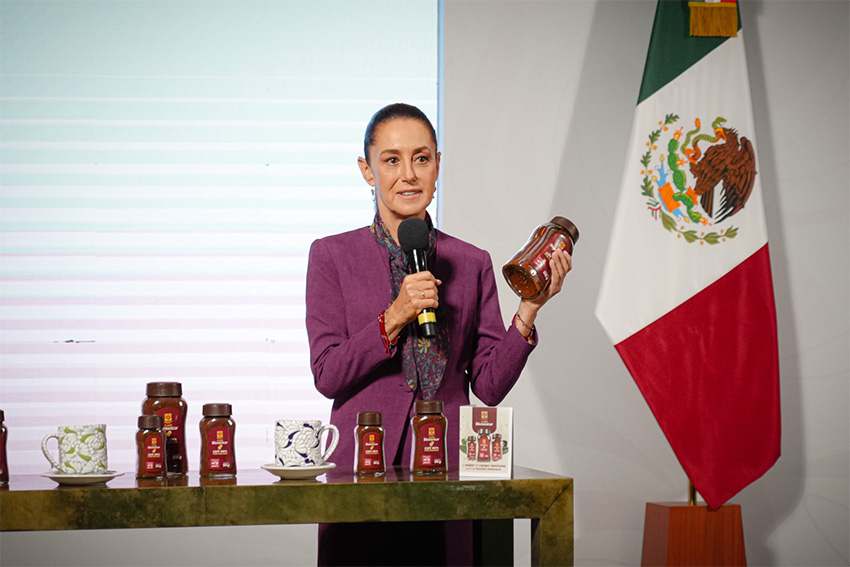
Mexico City, September 4, 2025 (Qahwa World) – Mexico’s Food for Well-Being program has officially introduced “Wellness Coffee” to the national market, expanding its growing line of government-backed wellness products that already includes honey, chocolate, and beans.

Announced by President Claudia Sheinbaum during her Wednesday press conference, the new product reflects consumer preferences: with 84% of Mexican households opting for instant coffee, the government chose this format to ensure accessibility and popularity.

According to María Luisa Albores González, head of the Food for Well-Being program, Wellness Coffee will be available in three sizes:

  • 50 g at 35 pesos (US $1.86)

  • 90 g at 65 pesos (US $3.46)

  • 205 g at 110 pesos (US $5.86)

Unlike many instant coffees permitted by Mexican standards to contain up to 30% non-coffee ingredients, this new product is 100% coffee — free from additives, colorings, or artificial flavors. The blend consists mainly of Arabica and parchment coffee, with a small proportion of Robusta, cultivated under agroforestry systems that benefit both the environment and local communities.

Supporting Small Producers and Women Farmers

The initiative required an investment of 59.4 million pesos (US $3 million) to purchase 913.56 tons of coffee. More than 6,600 small farmers from Oaxaca, Puebla, Veracruz, and Guerrero supplied the beans, with 50% of them located in the Guerrero Mountains. Remarkably, women account for six out of every ten producers.

Albores emphasized that the program strengthens Indigenous communities, including Mixes, Mixtecs, Nahuas, and Otomis, by ensuring fair purchasing prices and sustainable livelihoods.

Nationwide Distribution

Wellness Coffee will be distributed gradually through the national network of Wellness Stores. The first rollout begins in central Mexico, including Mexico City, Estado de México, Michoacán, Morelos, Puebla, and Tlaxcala, before expanding across the country.

With its launch, Mexico positions coffee not only as a cultural staple but also as a tool for social equity and environmental sustainability.

Mexico Prepares Early for World of Coffee Dubai 2026

Xalapa – Mexico, August 21, 2025 (Qahwa World) – As part of Mexico’s early preparations for World of Coffee Dubai 2026, the Secretariat of Economic and Port Development of the State of Veracruz (SEDECOP), through its Directorate of Foreign Trade and in collaboration with Casa Tostadora Briones, has officially invited Veracruz specialty coffee producers to participate in the global event, scheduled for January 18–20, 2026 at the Dubai World Trade Centre (Za’abeel Halls 1, 4, 5 & 6).

Showcasing Veracruz Coffee in the Middle East

The initiative targets Arabica specialty coffee producers from Veracruz to submit samples that highlight the diversity, quality, and richness of the state’s coffee sector. Each sample will be displayed at Mexico’s pavilion in Dubai with the producer’s name, farm, region of origin, and coffee profile — a recognition of the growers’ work and a step to foster direct trade links.

SEDECOP underlined that the purpose of the participation is to strengthen international trade ties, promote the quality of Veracruz coffee in global markets, and position it as an authentic product with high added value. Casa Tostadora Briones emphasized that this step represents an opportunity to give Mexican coffee “a voice and presence” on the global stage while honoring the work and traditions of Veracruz farmers.

Veracruz: Mexico’s Coffee Heartland

Located on the eastern coast of Mexico along the Gulf of Mexico, Veracruz is one of the country’s oldest and most important agricultural regions. Its capital is Xalapa, and the state enjoys diverse climates — from tropical on the coast to temperate in the highlands — creating ideal conditions for coffee cultivation.
Veracruz is among Mexico’s largest coffee-producing regions, particularly in the central highlands, where high-quality Arabica is grown and internationally recognized. The historic Port of Veracruz also serves as a key export gateway for agricultural products, especially coffee.

Participation Requirements

Interested producers must meet the following:

  • Submit 500 g of green specialty Arabica coffee.

  • Minimum cupping score of 82+ (SCA standards).

  • Provide a technical datasheet in both Spanish and English.

  • Samples accepted from August 2025 until January 5, 2026.

  • Participation is free of charge, sponsored by Casa Tostadora Briones.

Application Process

  1. Complete the official online registration form:
    World of Coffee Dubai 2026 – Application

  2. Submit a valid tax compliance certificate issued within the last 90 days.

  3. Sample shipments will be coordinated through Casa Tostadora Briones.

Eligible participants will be selected based on compliance with requirements and registration deadlines, with chronological order of registration serving as the main selection criterion.

Event Details

  • Event: World of Coffee Dubai 2026

  • Dates: January 18–20, 2026

  • Venue: Dubai World Trade Centre – Za’abeel Halls 1, 4, 5 & 6

Contact Information

  • Directorate of Foreign Trade – SEDECOP
    Boulevard Cristóbal Colón 5, Torre Ánimas, Office 1005, Jardines de las Ánimas, Xalapa, Veracruz.
    Tel: +52 (228) 841-8500 ext. 3615
    Email: [email protected]

Complaints or inquiries can also be directed to SEDECOP’s Internal Control Office at: [email protected].