Chinese Firm Huichuan to Invest in Ethiopia Coffee Processing

Addis Ababa — Qahwa World

Chinese industrial leader Huichuan Freeze-Dried Health Food has announced plans for a major investment in Ethiopia’s coffee processing sector, aiming to boost value-added production in the world’s birthplace of coffee.

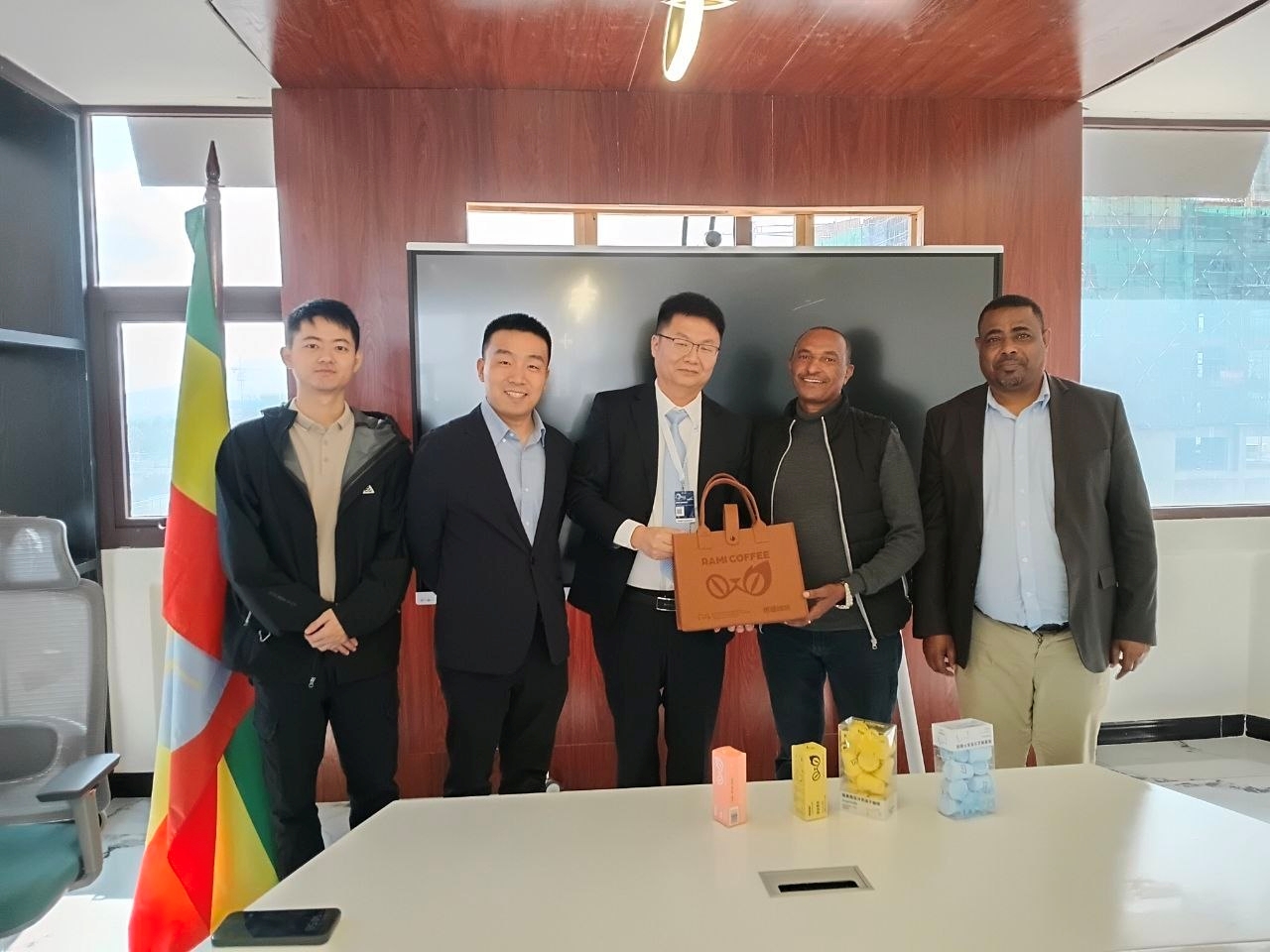
The announcement was made during a high-level meeting held today at the headquarters of the Ethiopian Coffee and Tea Authority (ECTA). A senior delegation from Huichuan, led by Chairman Mr. Wang Shuiyong, met with ECTA Director General Dr. Adugna Debela to discuss strategic cooperation.

Mr. Wang highlighted his company’s expertise in advanced freeze-drying technology, which produces premium instant coffee powder while preserving the rich aroma and flavor of Ethiopian Arabica beans. He noted that Huichuan’s products, already sourced from Ethiopian coffee, have gained strong international recognition and market share. The company is now preparing to establish a large-scale processing facility in Ethiopia to strengthen its global supply chain.

You may read: Ethiopia and China Strengthen Coffee Sector Cooperation

Dr. Adugna Debela welcomed the initiative, describing it as a timely and strategic partnership that supports Ethiopia’s efforts to enhance value addition in its coffee industry. He pointed to the country’s investor-friendly policies, including the development of specialized industrial parks for high-tech agro-processing.

“We are witnessing a transformative trend, with numerous Chinese investors showing keen interest in Ethiopia’s coffee sector,” Dr. Adugna stated. He assured the Huichuan delegation that the Ethiopian government is committed to providing full administrative and technical support to ensure the project’s success for both export and domestic markets.

  • Strengthening Ethiopia’s Coffee Value Chain

Ethiopia, known globally for its premium specialty coffees such as Yirgacheffe and Sidama, has been actively encouraging downstream processing to increase export revenues and generate employment. This latest investment by Huichuan reflects growing Chinese engagement in the sector, as China continues to emerge as a key destination for Ethiopian coffee.

The planned facility is expected to introduce state-of-the-art freeze-drying capabilities locally, helping Ethiopia move beyond raw bean exports toward higher-value, shelf-stable processed products that meet strong international demand.

The development is seen as part of broader China-Ethiopia cooperation in agriculture and trade. Further details regarding the project’s scale, timeline, and location are expected in the coming months.

Russia Updates Instant Coffee Standards for the First Time in 32 Years

MOSCOW – QAHWA WORLD

Russia has officially revised its national standard for instant coffee, marking the first update since 1994. According to Readovka, the previous GOST standard, introduced in January 1994, applied only to powdered instant coffee. The newly adopted regulation significantly broadens the classification and aligns it with today’s market realities.

Expanded Product Classification

Under the updated standard, three categories of instant coffee are now formally recognized:

  • Powdered instant coffee

  • Granulated instant coffee

  • Freeze-dried (sublimated) instant coffee

This expansion reflects the technological evolution of the sector and the diversity of products currently available to consumers.

Clearer Quality Parameters

As outlined by Rosstandart, the revised standard introduces specific quality indicators for each type of instant coffee. These include:

  • Appearance of the powder or granules

  • Color of the dry product

  • Aroma

  • Taste of the prepared beverage

The new GOST prohibits the presence of foreign impurities and any off-flavors or odors not characteristic of coffee. Flavorings are permitted; however, manufacturers are required to clearly declare them in the ingredient list.

Stricter Technical Requirements

The updated regulation also establishes precise technical benchmarks:

  • Complete dissolution in hot water (96–98°C) within 30 seconds

  • Dissolution in cold water (18–20°C) within a maximum of three minutes

  • Moisture content not exceeding 6% in the dry product

These measures aim to ensure product consistency, performance, and consumer transparency across all categories.

Market Context: Health and Pricing Pressures

Previous reports have suggested that moderate coffee consumption may be associated with a 10–15% reduction in overall mortality. However, these potential benefits can be offset when sugar or flavored syrups are added in significant amounts.

Meanwhile, the coffee market has faced notable price increases over the past two years, with costs rising more than 2.5 times. The surge is largely attributed to a global shortage of green coffee beans and ongoing supply chain disruptions.

The revision of Russia’s instant coffee standard signals a broader effort to modernize regulatory frameworks and raise quality benchmarks in a market that continues to evolve rapidly.

Puyang Launches Integrated Coffee Production Chain in China

Dubai – Qahwa World

Coffee in China is no longer just an imported commodity or a growing consumer trend. It has become a strategic industrial and trade opportunity, with value chains extending from African production regions to Chinese processing hubs and global export markets. The Puyang County project in Henan Province stands out as a leading example of this transformation.

  • From Import to Deep Processing

In recent years, Puyang County has actively participated in the Belt and Road Initiative, leveraging its industrial base and logistics infrastructure in central China. Within this framework, the China-Ethiopia Coffee Industrial Demonstration Park was established, relying primarily on coffee beans imported from Ethiopia and Uganda, two of the world’s most prominent coffee origin countries.

What sets Puyang apart is not merely the import of raw beans but the transition to advanced processing within China, which increases the value of the final product and strengthens the competitiveness of Chinese manufacturers in global coffee supply chains.

A Fully Integrated Production Facility

The demonstration park in Puyang features a fully integrated production system, including:

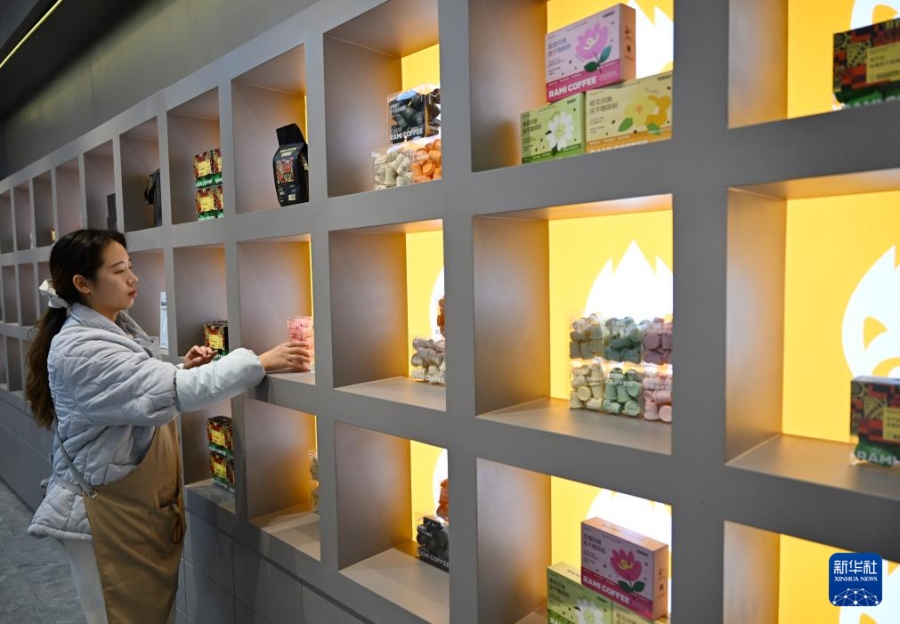
A factory producing freeze-dried instant coffee;

Three roasting lines for coffee beans;

Ten cold brew production lines;

Eight freeze-drying lines.

This integration allows complete control over all processing stages—from roasting and extraction to drying and packaging—ensuring consistent quality, product variety, and the capacity to meet diverse international standards.

  • Puyang at the Heart of China’s Emerging Coffee Value Chains

Puyang’s initiative reflects a broader shift in China: moving from being a final importer of coffee to becoming a regional hub for processing and re-exporting coffee. With growing domestic consumption and the expanding specialty coffee market, models like Puyang’s are increasingly relevant, combining industrial efficiency with trade flexibility.

Exports from Puyang now reach Singapore, the United States, and other countries, demonstrating that integrated production chains can effectively serve both domestic and international markets.

  • Coffee as a Belt and Road Cooperation Tool

On a larger scale, Puyang exemplifies how the Belt and Road Initiative can support agro-industrial value chain development, not only infrastructure and energy projects. By importing beans from African origins and processing them domestically, China creates a shared-value model: raw material sourcing in Africa, industrial processing in China, and global market distribution. This strengthens China’s role in global coffee trade while providing African producers with more stable export channels.

  • Implications for the Specialty Coffee Sector

For the specialty coffee industry, Puyang highlights several key trends:

Increased focus on advanced processing techniques such as freeze-drying and cold brew extraction;

Building industrial capacity capable of handling a wide range of African coffee origins;

A growing orientation toward export-ready, value-added products, not just the domestic market.

These elements make Puyang a case study for China’s evolving coffee value chains, particularly as Belt and Road initiatives continue to expand.

The Puyang project illustrates how coffee can evolve from a simple imported commodity into a high-value industrial product within fully integrated value chains. With ongoing investment and strategic partnerships, coffee is poised to become a new axis of industrial and trade collaboration between China and producing countries, reaching beyond domestic consumption into global markets.