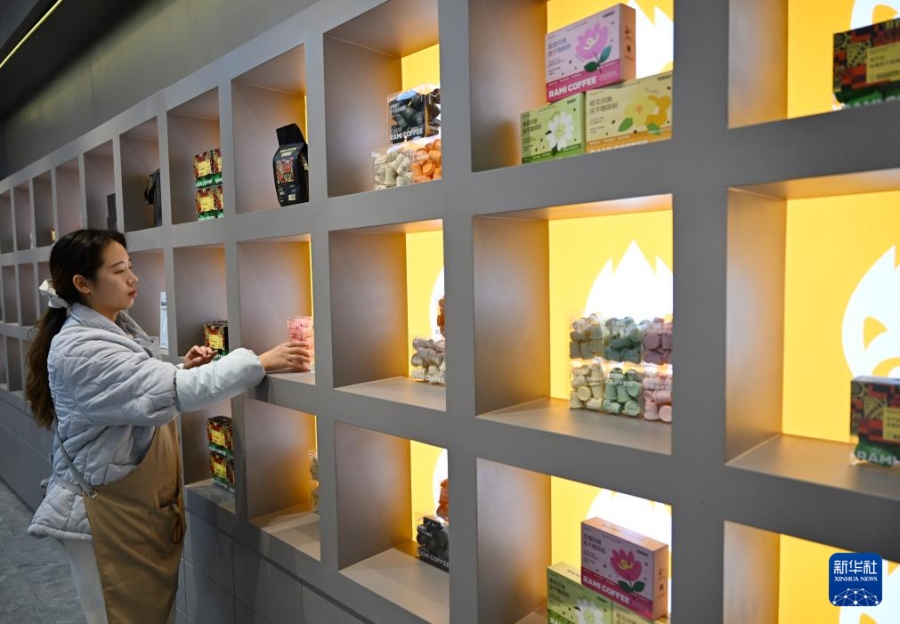
Puyang Launches Integrated Coffee Production Chain in China

Dubai – Qahwa World

Coffee in China is no longer just an imported commodity or a growing consumer trend. It has become a strategic industrial and trade opportunity, with value chains extending from African production regions to Chinese processing hubs and global export markets. The Puyang County project in Henan Province stands out as a leading example of this transformation.

  • From Import to Deep Processing

In recent years, Puyang County has actively participated in the Belt and Road Initiative, leveraging its industrial base and logistics infrastructure in central China. Within this framework, the China-Ethiopia Coffee Industrial Demonstration Park was established, relying primarily on coffee beans imported from Ethiopia and Uganda, two of the world’s most prominent coffee origin countries.

What sets Puyang apart is not merely the import of raw beans but the transition to advanced processing within China, which increases the value of the final product and strengthens the competitiveness of Chinese manufacturers in global coffee supply chains.

A Fully Integrated Production Facility

The demonstration park in Puyang features a fully integrated production system, including:

A factory producing freeze-dried instant coffee;

Three roasting lines for coffee beans;

Ten cold brew production lines;

Eight freeze-drying lines.

This integration allows complete control over all processing stages—from roasting and extraction to drying and packaging—ensuring consistent quality, product variety, and the capacity to meet diverse international standards.

  • Puyang at the Heart of China’s Emerging Coffee Value Chains

Puyang’s initiative reflects a broader shift in China: moving from being a final importer of coffee to becoming a regional hub for processing and re-exporting coffee. With growing domestic consumption and the expanding specialty coffee market, models like Puyang’s are increasingly relevant, combining industrial efficiency with trade flexibility.

Exports from Puyang now reach Singapore, the United States, and other countries, demonstrating that integrated production chains can effectively serve both domestic and international markets.

  • Coffee as a Belt and Road Cooperation Tool

On a larger scale, Puyang exemplifies how the Belt and Road Initiative can support agro-industrial value chain development, not only infrastructure and energy projects. By importing beans from African origins and processing them domestically, China creates a shared-value model: raw material sourcing in Africa, industrial processing in China, and global market distribution. This strengthens China’s role in global coffee trade while providing African producers with more stable export channels.

  • Implications for the Specialty Coffee Sector

For the specialty coffee industry, Puyang highlights several key trends:

Increased focus on advanced processing techniques such as freeze-drying and cold brew extraction;

Building industrial capacity capable of handling a wide range of African coffee origins;

A growing orientation toward export-ready, value-added products, not just the domestic market.

These elements make Puyang a case study for China’s evolving coffee value chains, particularly as Belt and Road initiatives continue to expand.

The Puyang project illustrates how coffee can evolve from a simple imported commodity into a high-value industrial product within fully integrated value chains. With ongoing investment and strategic partnerships, coffee is poised to become a new axis of industrial and trade collaboration between China and producing countries, reaching beyond domestic consumption into global markets.
Chinese Coffee Chain Faces Backlash Over “People’s Cafe” Name, Issues Public Apology

Beijing – Qahwa World

A Chinese coffee chain has ignited a nationwide debate after state media accused it of crossing a sensitive boundary by naming its outlets “People’s Cafe,” a term deeply tied to the country’s political and social identity.

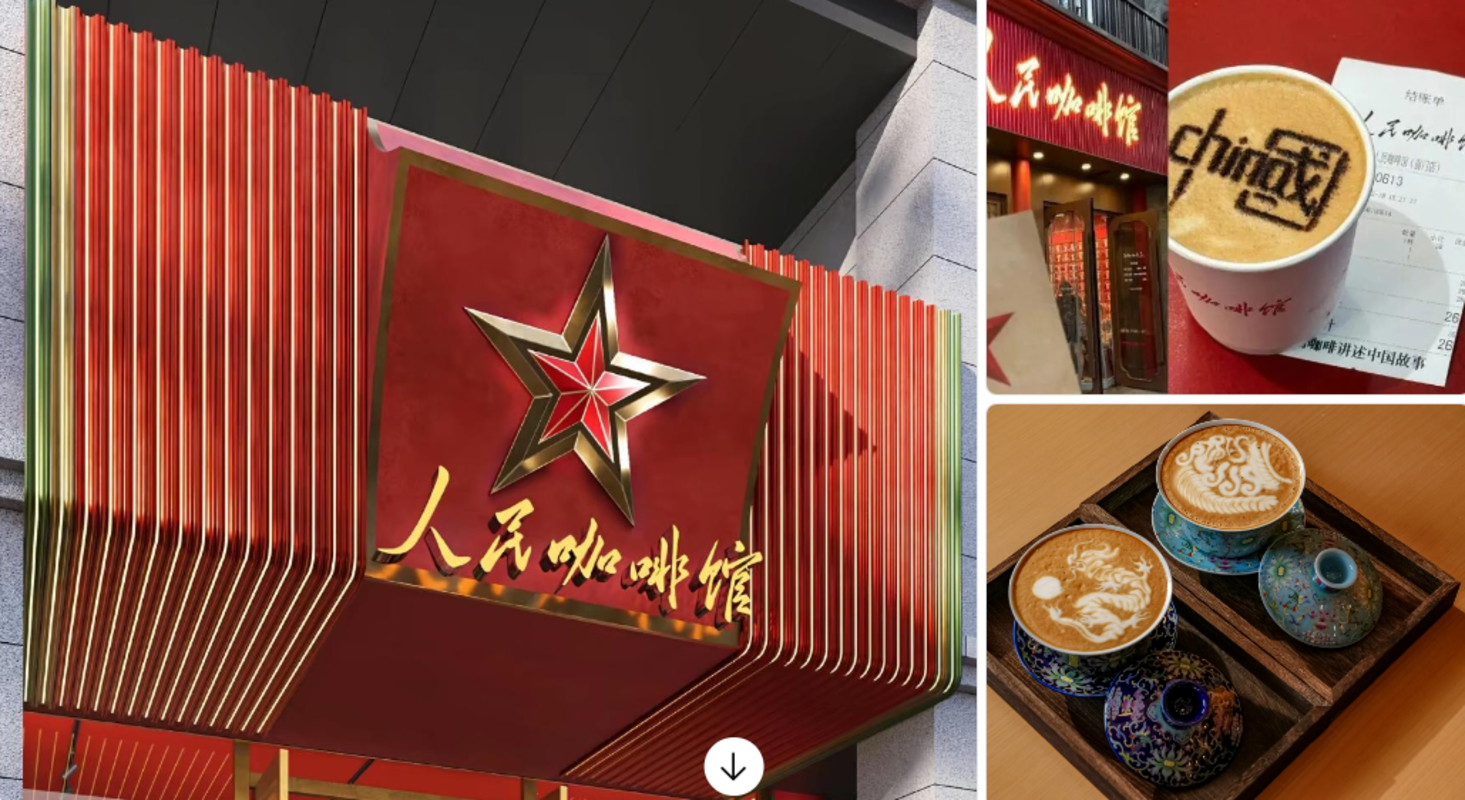
The café brand, operated by Yao Chao (Shanghai) Cultural Communication Co., became known for its bright red interiors, star-shaped decorations, and signage styled after the handwriting of Mao Zedong, China’s first communist leader. What began as a bold design choice quickly turned controversial when major outlets such as People’s Daily and China Daily criticized the use of the word “People” — or “Renmin” in Mandarin — for commercial purposes.

In China, the term holds powerful symbolic value. It appears in the country’s official name, the People’s Republic of China, and in many state institutions including the People’s Liberation Army and the People’s Bank of China. People’s Daily described the word as representing collective values and national sentiment, warning that it “must not be profaned or reduced to a marketing gimmick.”

The café had promoted slogans such as “Tell China’s Story with Coffee” and offered drinks sprinkled with the word “China” on top. Images of its branches quickly spread across social platforms, attracting both curiosity and criticism. Some admired its patriotic aesthetic, while others accused it of exploiting national symbols for profit.

After days of public scrutiny, the company issued a formal apology on social media. “We extend our sincerest apologies to every customer who felt uncomfortable,” the statement read. “After careful reflection, we have decided to restore the original full name — Yao Chao People’s Cafe — for all mainland stores.” The brand confirmed that the change would apply to its nearly 30 outlets across 18 provinces, while branches in Hong Kong, Macao, and overseas would continue to operate under the original name People’s Cafe.

Reaction among internet users was mixed. On Weibo, one commenter wrote, “It’s just a café, but it touched a very sensitive word.” Another asked whether using politically charged terms in brand names might violate regulations.

The incident unfolds amid an increasingly competitive coffee market in China, where domestic players like Luckin Coffee and Cotti Coffee are expanding rapidly, challenging foreign giants such as Starbucks. As the market grows, brands are experimenting with identity and storytelling to attract younger consumers. The People’s Cafe case has now become a cautionary example of how creativity in branding can collide with cultural and political sensitivities in China’s fast-evolving coffee scene.

“Marketing can be innovative,” wrote People’s Daily, “but it must not overstep the bottom line.”

Coffee Industry Boosts Local Economy in Pu’er, China’s Yunnan

Pu’er, Yunnan – Qahwa World

Pu’er City in southwest China’s Yunnan Province continues to strengthen its reputation as the capital of Chinese coffee, combining growing agricultural output with cultural tourism to create a unique economic model that promotes rural revitalization and raises incomes for local communities. Coffee here has become more than just a crop; it is now a cornerstone of both identity and development.

Coffee cultivation in Yunnan dates back to the late 19th century when European missionaries first introduced the plant, but commercial farming only began in earnest in the late 1980s. Since then, Pu’er has developed into the country’s leading production center, benefiting from its mountainous terrain and favorable climate. Today, Yunnan accounts for about 98 percent of China’s total coffee output, and Pu’er alone contributes roughly 60 percent of that. According to official data, the city has more than 45,000 hectares of coffee plantations, producing over 51,000 tons of green beans annually, with an estimated value of 6.3 billion yuan.

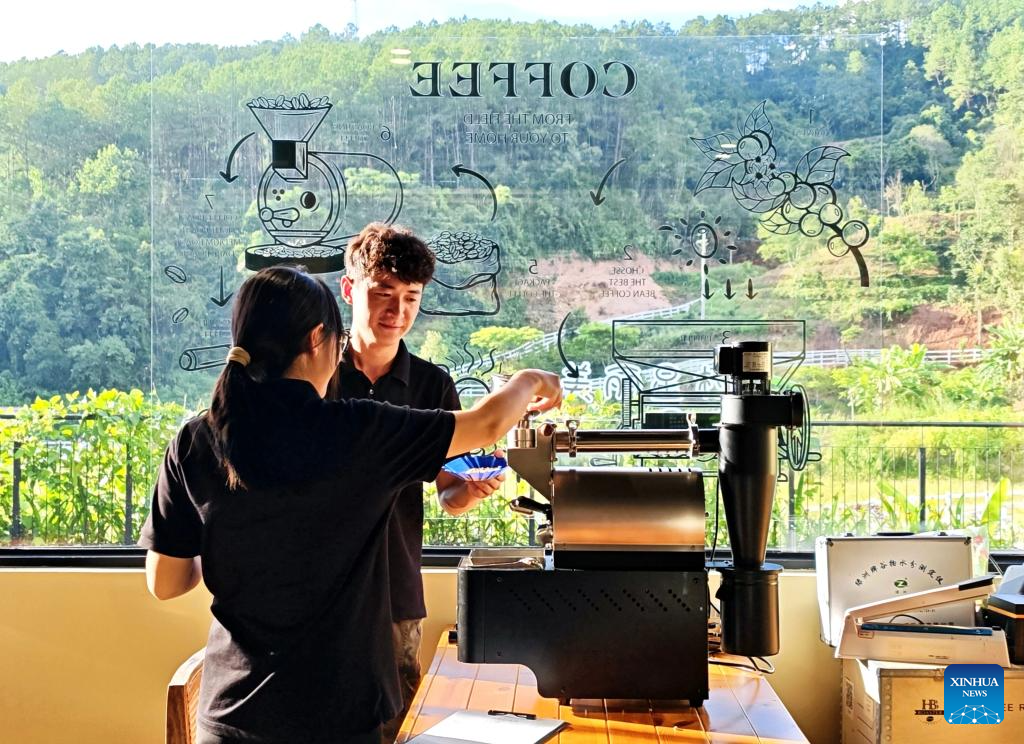
The city’s success, however, goes beyond agriculture. Pu’er has transformed coffee into a comprehensive experience, drawing visitors from across China and abroad. In villages such as Nandaohe in Simao District, tourists can sample freshly roasted coffee, watch the process from bean to cup, and listen to local farmers share their stories. Even the China–Laos Railway has become part of this immersive journey, serving specialty coffee to passengers on board, turning the train ride itself into an extension of the coffee culture of the region.

This approach has significantly boosted the added value of Pu’er’s coffee. In just three years, the added-value rate has jumped from less than 8 percent to over 33 percent, thanks to expanded local processing and the rise of specialty and organic coffee. These high-quality beans fetch much higher prices than commercial varieties, allowing farmers to increase their incomes and compete in premium markets abroad.

Nevertheless, challenges remain. Environmental pressures such as nighttime cold snaps, recurring droughts, and the global impacts of climate change pose risks to yield and quality. Recent studies show that higher altitudes enhance aroma and flavor profiles but also make plants more vulnerable to stress. To counter these risks, farmers are adopting more sustainable practices, experimenting with resistant varieties, and applying modern techniques in soil and water management.

The economic and social impact of coffee in Pu’er is evident. Farmers who once struggled for stable incomes now find opportunities through coffee cooperatives, which provide training, technical support, and marketing channels. The coffee value chain—from cultivation to roasting, packaging, and tourism—creates jobs for local youth and helps reduce rural-to-urban migration. Cafés and small businesses linked to coffee culture further stimulate the local economy, embedding coffee deeply in the life of the community.

Looking ahead, Pu’er aims to secure a distinctive place in the global coffee landscape, not by matching the massive volumes of Brazil or Vietnam but by emphasizing quality, identity, and experience. This strategy aligns with global trends favoring specialty coffee and unique consumer stories. With continued investment in agricultural tourism, value-added processing, and international marketing, Pu’er is positioning itself as more than just a producer—it is building a model of sustainable development that integrates farming, culture, and green economy.

In this way, coffee in Pu’er has grown into much more than an agricultural product. It is a story of transformation that illustrates how a local crop can become a driver of broad-based development, a source of pride for communities, and a bridge linking China’s Yunnan Province to the wider world.