Arabica Coffee Prices Drop on Outlook for Large Brazilian Harvest

Dubai – Qahwa Word

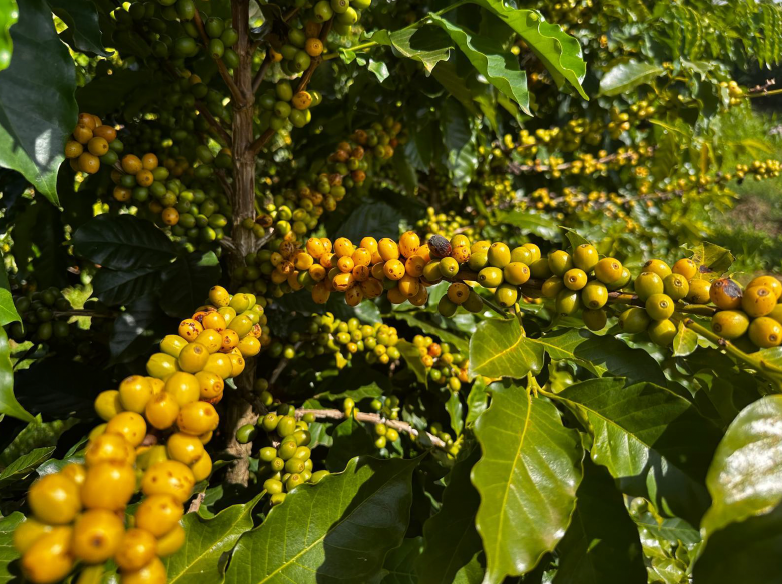
Arabica coffee futures fell to a two-week low on Thursday, weighed down by growing expectations of a bumper crop in Brazil. These developments have had a significant impact on arabica coffee prices, especially given Brazil’s bumper crop forecasts. Meanwhile, robusta prices edged higher. In fact, arabica coffee prices may fluctuate in response to Brazil bumper crop news.

July arabica coffee (KCN26) settled down 10.60 points, or 3.73%, while July ICE robusta coffee (RMN26) gained 19 points (+0.56%).

Brazilian Production Forecasts Weigh on Prices
Several recent projections point to a significantly larger Brazilian coffee harvest in 2026/27, putting pressure on arabica markets. Notably, arabica coffee prices are closely tied to Brazil bumper crop expectations, making these forecasts crucial for analysts.

  • The Coffee Trading Academy estimated last Thursday that Brazil’s 2026/27 crop could rise 12% from the previous year to 71.4 million bags. Moreover, fluctuations in arabica coffee prices strongly reflect Brazil’s bumper crop predictions.

  • On March 19, Marex Group Plc projected a record 75.9 million bags, slightly above Sucafina’s forecast of 75.4 million bags (a 15.5% year‑on‑year increase).

  • StoneX raised its estimate for Brazil’s 2026/27 production to a record 75.3 million bags on March 12, up from a November forecast of 70.7 million bags. This kind of Brazil bumper crop forecast is a key driver for arabica coffee prices.

StoneX also predicted that the global coffee surplus in 2026 would grow to 10 million bags, up from 1.8 million bags in 2025 – the largest surplus in six years. As a result, arabica coffee prices, Brazil, and bumper crop numbers remain intertwined topics for market participants.

Vietnam’s Strong Exports Pressure Robusta
Robusta prices face headwinds from surging Vietnamese shipments. Vietnam’s National Statistics Office reported on Saturday that the country’s coffee exports from January to April 2026 rose 15.8% year‑on‑year to 810,000 metric tons. For the full year 2025, Vietnamese exports jumped 17.5% to 1.58 million metric tons. Additionally, Vietnam’s 2025/26 coffee production is expected to climb 6% year‑on‑year to a four‑year high of 1.76 million metric tons (29.4 million bags).

Strait of Hormuz Closure Creates Supply Concerns
The ongoing shutdown of the Strait of Hormuz has disrupted global coffee supply chains, supporting prices broadly. Higher shipping rates, insurance premiums, and increased costs for fertilizer and fuel have tightened available supplies, raising expenses for coffee importers and roasters. All these factors can indirectly affect arabica coffee prices, especially if Brazil expects another bumper crop.

Tight Inventories and Lower Brazilian Exports Provide Support
Signs of limited immediate supplies are also underpinning the market:

  • ICE arabica coffee inventories dropped to a 2.5‑month low of 483,292 bags on Thursday. This reduction coincides with a growing focus on Brazil bumper crop forecasts and arabica coffee prices.

  • ICE robusta inventories hit a 16.25‑month low of 3,755 lots last Tuesday.

Brazil’s export figures have also trended lower. On April 14, Cecafe reported that Brazil’s green coffee exports in March fell 10% year‑on‑year to 2.65 million bags. Earlier, on April 7, the country’s Trade Ministry noted that total March coffee exports declined 31% year‑on‑year to 151,000 metric tons. Therefore, arabica coffee prices in Brazil remain sensitive to both export volumes and bumper crop projections. It’s worth noting that Brazil’s bumper crop continues to make arabica coffee prices extremely volatile.

Global Export and Production Outlook
On November 7, the International Coffee Organization (ICO) said global coffee exports for the current marketing year (October to September) slipped 0.3% year‑on‑year to 138.658 million bags.

Looking further ahead, the USDA’s Foreign Agriculture Service (FAS) projected in its December 18 biannual report that world coffee production in 2025/26 would rise 2.0% year‑on‑year to a record 178.848 million bags. Within that total, arabica production is forecast to decline 4.7% to 95.515 million bags, while robusta production is expected to increase 10.9% to 83.333 million bags. The global market continues to monitor arabica coffee prices, Brazil, and potential bumper crop impacts for the coming years.

For Brazil, the FAS sees 2025/26 production falling 3.1% to 63 million bags, while Vietnam’s output is projected to grow 6.2% to a four‑year high of 30.8 million bags. Ending stocks for 2025/26 are forecast to decrease 5.4% to 20.148 million bags, down from 21.307 million bags in 2024/25. In summary, arabica coffee prices, Brazil, and the bumper crop outlook will remain central themes for the global coffee market throughout 2026.
Coffee Prices Get Support from Brazilian Real Strength

Dubai – Qahwa World

Coffee futures traded sharply higher today. Arabica coffee rose to its highest level in one week. July arabica gained 3.43 percent. July robusta added 1.5 percent.

A major supporting factor is the strength of the Brazilian real. The currency surged to a two and a quarter year high against the US dollar. A stronger real discourages Brazilian coffee farmers from selling their crops overseas, which pushes prices upward.

Additional support comes from the ongoing closure of the Strait of Hormuz. This disruption has raised global shipping rates, insurance costs, fertilizer and fuel expenses. Coffee importers and roasters now face higher costs, tightening global supplies.

On the negative side, expectations of a large Brazilian coffee crop are limiting gains. The Coffee Trading Academy projected last Thursday that Brazil’s 2026/2027 harvest will increase 12 percent year over year to 71.4 million bags.

On March 19, Marex Group Plc forecast a record Brazilian crop of 75.9 million bags for the same season. That surpassed Sucafina’s forecast of 75.4 million bags, which represented a 15.5 percent annual increase. On March 12, StoneX raised its Brazil production estimate to a record 75.3 million bags, up from a November estimate of 70.7 million bags. StoneX also projected the 2026 global coffee surplus would expand to 10 million bags from 1.8 million bags in 2025. That would be the largest surplus in six years.

For robusta coffee, soaring exports from Vietnam are a bearish factor. Vietnam is the world’s largest robusta producer. On Saturday, Vietnam’s National Statistics Office reported that the country’s coffee exports from January to April 2026 rose 15.8 percent year over year to 810,000 metric tons. Vietnam’s 2025 coffee exports jumped 17.5 percent annually to 1.58 million metric tons. In addition, Vietnam’s 2025/2026 coffee production is projected to climb 6 percent year over year to a four year high of 1.76 million metric tons, or 29.4 million bags.

Tightness in arabica supplies is supporting prices. ICE arabica coffee inventories fell to a two and a quarter month low of 494,508 bags on April 21.

Smaller exports from Brazil also help support prices. On April 14, Cecafe reported that Brazil’s March green coffee exports fell 10 percent year over year to 2.65 million bags. On April 7, Brazil’s Trade Ministry reported that March coffee exports fell 31 percent annually to 151,000 metric tons.

Robusta coffee also sees bullish signs from tighter supplies. ICE robusta inventories fell to a sixteen and a quarter month low of 3,755 lots last Tuesday.

As a bearish factor, the International Coffee Organization reported on November 7 that global coffee exports for the current marketing year, which runs October through September, fell 0.3 percent year over year to 138.658 million bags.

The USDA’s Foreign Agriculture Service said in its biannual report on December 18 that world coffee production in 2025/2026 would increase 2.0 percent annually to a record 178.848 million bags. That includes a 4.7 percent decrease in arabica production to 95.515 million bags and a 10.9 percent increase in robusta production to 83.333 million bags. The USDA forecasted that Brazil’s 2025/2026 coffee production would decline 3.1 percent to 63 million bags. Vietnam’s coffee output would rise 6.2 percent to a four year high of 30.8 million bags. The USDA also forecasts that 2025/2026 ending stocks will fall 5.4 percent to 20.148 million bags from 21.307 million bags in 2024/2025.

Coffee Futures Rebound as Dollar Weakness Triggers Short Covering

Dubai – Qahwa World

Coffee prices climbed back from one-and-a-half-week lows on Friday, ending the session in positive territory. The turnaround came as the U.S. dollar dropped to a two-week low, prompting traders to cover short positions in the coffee market. This price recovery was also influenced by coffee futures short covering as traders adjusted their positions. Notably, coffee futures short covering has played a key role in recent market movements.

July arabica coffee rose 0.85 cents (0.30%), while July robusta coffee gained 3 points (0.09%).

Early Losses on Brazil Crop Outlook

Prices initially moved lower on expectations of a larger harvest in Brazil. The Coffee Trading Academy projected Thursday that Brazil’s 2026/27 coffee crop would rise 12% year-over-year to 71.4 million bags.

Just days earlier, arabica had touched a 1.75-month low following forecasts of a record Brazilian harvest. On March 19, Marex Group predicted a record 75.9 million bags for 2026/27, beating Sucafina’s estimate of 75.4 million bags (up 15.5% annually). StoneX also raised its production outlook for Brazil to an all-time high of 75.3 million bags on March 12, up from a prior forecast of 70.7 million bags. Additionally, StoneX expects the global coffee surplus to balloon from 1.8 million bags in 2025 to 10 million bags in 2026 — the widest surplus in six years. As a result, coffee futures short covering activity may increase amid these predictions.

Vietnamese Exports Weigh on Robusta

Soaring shipments from Vietnam, the world’s top robusta producer, are putting pressure on robusta prices. Vietnam’s National Statistics Office reported on April 3 that first-quarter 2026 coffee exports rose 14% year-over-year to 585,000 metric tons. For all of 2025, exports jumped 17.5% to 1.58 million metric tons. Moreover, Vietnam’s 2025/26 production is expected to climb 6% to a four-year high of 1.76 million metric tons (29.4 million bags).

Supply Tightness Offers Support

On the bullish side, arabica supplies are showing signs of tightness. ICE arabica coffee inventories fell to a two-month low of 494,508 bags on Tuesday, contributing to coffee futures short covering by traders seeking to limit risk.

Similarly, robusta supplies are tightening — ICE robusta stocks dropped to a 16-month low of 3,755 lots last Tuesday.

Geopolitical and Export Factors

Ongoing concerns over a prolonged U.S.-Iran conflict and potential closure of the Strait of Hormuz are also supporting prices. Such disruptions have raised shipping rates, insurance premiums, and costs for fertilizers, fuel, importers, and roasters. Therefore, it is evident that coffee futures short covering remains a significant factor in this volatile environment.

Brazilian export data further supports prices. Cecafe reported on April 14 that Brazil’s March green coffee exports fell 10% year-over-year to 2.65 million bags. Brazil’s Trade Ministry also noted on April 7 that March coffee exports dropped 31% from a year ago to 151,000 metric tons.

Bearish Reports and Forecasts

On the downside, the International Coffee Organization (ICO) said on November 7 that global coffee exports for the current marketing year (October–September) edged down 0.3% year-over-year to 138.658 million bags.

The USDA’s Foreign Agriculture Service (FAS) projected in its December 18 biannual report that world coffee production for 2025/26 would rise 2% to a record 178.848 million bags. That includes a 4.7% drop in arabica output (to 95.515 million bags) and a 10.9% increase in robusta production (to 83.333 million bags). The FAS also forecast Brazil’s 2025/26 crop falling 3.1% to 63 million bags, while Vietnam’s output rises 6.2% to a four-year high of 30.8 million bags. Ending stocks for 2025/26 are expected to decline 5.4% to 20.148 million bags, down from 21.307 million bags in 2024/25.

Russia’s Imports of Brazilian Coffee Fall to Six-Month Low

Moscow – Qahwa World

Russia significantly reduced its imports of Brazilian coffee in February 2026, reaching the lowest level recorded since September 2025, according to Brazilian customs data cited by RIA Novosti.

Shipments to Russia totaled about 2.8 thousand tons, valued at $20.3 million. This represents a 1.8-fold decline compared with January 2026 and a 2.6-fold drop compared with February 2025. As a result, Russia’s position among the largest importers of Brazilian coffee fell from seventh to fourteenth place.

The decline occurred during a broader slowdown in Brazil’s coffee exports. In February, total Brazilian shipments reached 142.5 thousand tons, worth $1.03 billion, marking a 0.7% decrease from January and a 17% decline year-on-year.

You may like: Russia Updates Instant Coffee Standards for the First Time in 32 Years

The reduction in exports to Russia, however, was more pronounced and appears linked to several domestic economic developments. Economic pressures in Russia have led to an increased pace of restaurant and café closures, reported to be the fastest since 2021 according to data from Sberbank. The shift has reduced demand for imported coffee as more consumers move toward lower-cost food options.

Global coffee prices may also be influencing purchasing decisions. During 2025, arabica prices rose by roughly 25%, encouraging some buyers to delay purchases while waiting for potential price declines. Expectations of a strong Brazilian harvest for the 2026/2027 crop year, projected at 66.2 million bags, have already pushed arabica futures down to about $2.80 per pound in early March 2026.

At the same time, Russia’s instant coffee sector has expanded. The country increased exports of instant coffee by 28% in 2025, reaching $366 million, which may partly reduce reliance on imported green coffee.

Read Also: Russian Instant Coffee Exports Rise 28% to $366 Million

Trade policy changes may also influence future imports. Russia removed a 40% import duty on Brazilian coffee at the end of 2025, a move that could support a recovery in shipments in the coming months. Meanwhile, the Russian standards agency Rosstandart has approved an updated national standard for instant coffee that will take effect in November 2026, expanding the classification to include granulated and freeze-dried coffee, replacing a standard dating back to 1994.

Despite the drop in Russian purchases, several countries remained the largest importers of Brazilian coffee in February, including Germany, Italy, the United States, Belgium, and Japan, with import volumes ranging between 8.3 thousand and 23.4 thousand tons.

The sharp decline in Russia’s imports highlights a possible shift in the country’s coffee market, influenced by economic conditions, changing consumption patterns, and developments in global coffee supply.

Brazil Coffee Harvest 2025/2026: A Decent Crop Amid Market Volatility

São Paulo – September 16, 2025 – Qahwa World (EFICO’s Coffee Bean Scene) – There is an old saying in the coffee world: “When Brazil sneezes, the rest of the coffee world catches a cold.” The phrase remains true today. With the upcoming Brazil Coffee Harvest 2025/2026, accounting for nearly 40% of global production, Brazil continues to dictate the rhythm of supply, prices, and the flavor profiles that reach consumers around the globe. At times, it offers stability; at others, it sparks volatility across the market. In fact, the Brazil Coffee Harvest 2025/2026 will likely dominate coffee sector discussions for the coming year.

The past has proven this influence repeatedly. The frost of 1975 sent international prices soaring, while the droughts of 2014 and 2021 created deep uncertainty for exporters. Currency swings have only added to the turbulence, reshaping contracts and global trade dynamics. Brazil remains, without doubt, the heartbeat of the coffee industry, especially as we anticipate the results of the Brazil Coffee Harvest 2025/2026.

Harvest Progress and Outlook

By the end of August, Brazil’s 2025 harvest was virtually complete, with 100% of robusta and 98% of arabica collected. Rainfall—up to 50mm in arabica areas and 30mm in robusta regions—did little to damage bean development. Average bean size is larger than last year, and mild winter conditions extended the processing season, allowing more washed and semi-washed coffees to enter the market. Light frosts in June caused only localized impact, with no major losses.

The 2025/26 crop is now projected at 62.3 million bags—down 3.4% from earlier estimates and 5.4% compared to last year. Arabica is expected at 36.5 million bags, a sharp decline of 18.4% year-on-year, while robusta will rise to 25.8 million bags, a gain of nearly 22%. Strong vegetation growth after harvest suggests excellent potential for the 2026/27 cycle, with nurseries already sold out and farmers reinvesting in renewal and expansion. Notably, Brazil Coffee Harvest 2025/2026 will be closely watched for its impact on these numbers and future cycles.

Regional Insights

South Minas Gerais, the world’s largest coffee region with 500,000 hectares under cultivation, continues to showcase both challenges and innovation. Cities like Varginha, Três Pontas, Poços de Caldas, and Guaxupé remain central hubs. While productivity averages 25 bags per hectare, EFICO’s field visits revealed stark differences between farms. Yet one constant was clear: investment in innovation, from modern warehouses to irrigation projects that allow precise fertilization and improved yields. As a result, Brazil Coffee Harvest 2025/2026 outcomes will be partially driven by the ongoing modernization in these regions.

The Cerrado, often referred to by EFICO Brazil director João Marcos Crespo as “The Factory,” demonstrates a more industrialized approach. With 250,000 hectares—more than half irrigated—its productivity averages 35 bags per hectare, producing nearly 6 million bags annually. Regenerative agriculture is widely adopted here, both for cost savings and soil health. Farmers are also installing new high-capacity mechanical dryers, doubling efficiency compared to traditional models.

Market Dynamics

Despite decent production levels, commercialization has slowed to its lowest point in five years. Producers are financially stable and releasing coffee in small volumes, waiting for favorable prices. The introduction of a 50% U.S. import duty on Brazilian coffee in August has added further uncertainty to the market. Exporters are now carefully balancing procurement and sales strategies while watching international flows closely.

Overall, Brazil’s 2025 harvest stands between 60 and 62 million bags. While arabica output has dropped, robusta is filling part of the gap, and investments in quality continue to push screen sizes above last year’s levels. Market volatility is expected to persist at least through October, as the flowering season and rainfall patterns will set the tone for the 2026 crop.

Final Note

From the innovation-driven Cerrado to the tradition-rich farms of South Minas, Brazil’s coffee sector remains both resilient and deeply influential. As the new harvest begins arriving in early October, one thing is certain: when Brazil sneezes, the entire coffee world feels it. Ultimately, only time will reveal the full implications of the Brazil Coffee Harvest 2025/2026 for the global industry.

Coffee Prices Continue to Rise as Global Supplies Decline

Dubai, 4 September 2025 (Qahwa World) – Coffee prices closed higher on Wednesday amid tightening global supplies, with both arabica and robusta contracts gaining momentum. December arabica futures (KCZ25) rose by +3.30 cents (+0.89%), while November robusta (RMX25) advanced by +55 USD (+1.25%), bouncing back from a recent 1.5-week low.

The International Coffee Organization (ICO) reported that global coffee exports in July dropped -1.6% year-on-year to 11.6 million bags, while cumulative exports for October to July slipped -0.3% to 115.6 million bags. This contraction, combined with falling exchange-monitored inventories, supported the market. ICE-monitored robusta inventories fell to a 1-month low of 6,552 lots, while arabica stocks declined to a 1.25-year low of 686,863 bags.

Concerns about tighter U.S. coffee supplies also added support, as American buyers canceled contracts for Brazilian coffee following the 50% tariffs imposed on Brazilian exports to the U.S. Since Brazil supplies about a third of unroasted coffee to the American market, the move is further tightening availability.

In Brazil, above-average rainfall has eased crop concerns ahead of the crucial flowering period. Somar Meteorologia reported that Minas Gerais, the country’s largest arabica-growing area, received 163% of the historical average rainfall during the last week of August. Meanwhile, the harvest is nearly complete, with Cooxupé, Brazil’s largest cooperative, announcing that 94.9% of its members’ harvest was done by August 29, while Safras & Mercado estimated the national harvest at 99% complete as of August 20. Despite this, export data reflects a slowdown, with Brazil’s Ministry of Trade reporting that July unroasted coffee exports plunged -20.4% y/y to 161,000 MT, and exporter group Cecafé noting that green coffee shipments fell -28% y/y to 2.4 million bags, including a -49% drop in robusta exports.

Vietnam, the world’s leading robusta producer, continues to face drought-related challenges. Production for the 2023/24 crop fell -20% y/y to 1.47 MMT, the smallest in four years, while 2024 exports declined -17.1% y/y to 1.35 MMT. The Vietnam Coffee and Cocoa Association has revised its 2024/25 production outlook downward to 26.5 million bags, though the National Statistics Office reported a +6.9% y/y increase in January–July 2025 exports, reaching 1.05 MMT.

Looking ahead, the USDA’s Foreign Agriculture Service projects that world coffee production in 2025/26 will climb +2.5% y/y to a record 178.7 million bags. This includes a -1.7% decline in arabica output to 97 million bags and a +7.9% increase in robusta to 81.6 million bags, with ending stocks expected to rise +4.9% to 22.8 million bags. However, trader Volcafé forecasts a global arabica deficit of -8.5 million bags for 2025/26, deeper than the -5.5 million bag deficit recorded in 2024/25, marking the fifth consecutive year of arabica shortfalls despite stronger robusta production.

Arabica Coffee Slips as Brazil’s Harvest Nears Completion

Dubai, August 27, 2025 (Qahwa World) – Arabica coffee futures fell on Tuesday as pressure from Brazil’s near-complete harvest weighed on the market, while robusta prices gained on tightening supply signals. On the ICE exchange, December arabica coffee (KCZ25) closed down 1.44% at -5.45, while November robusta (RMU25) climbed 0.86% (+40). The divergence reflects the complex forces shaping global coffee markets at the end of August.

Brazil’s influential Cooxupé cooperative announced that as of August 22, its members had completed 91.3% of their 2025/26 harvest, signaling an abundant flow of fresh beans into the market. Independent consultancy Safras & Mercado reported even higher progress, noting 99% of Brazil’s harvest complete, including 100% of robusta and 98% of arabica. Such rapid progress has increased selling pressure, pushing arabica futures lower despite ongoing concerns about weather damage in Minas Gerais, the country’s top arabica-growing region. Somar Meteorologia reported no rainfall in the week ending August 23, following frost damage earlier in the month.

Counterbalancing the harvest pressure, exchange-monitored stocks remain tight. ICE arabica inventories dropped to a 1.25-year low of 717,113 bags, while robusta inventories fell to a one-month low of 6,614 lots, underpinning prices. Additional upward pressure stems from U.S. market disruptions, where buyers are canceling contracts for Brazilian coffee following the imposition of 50% tariffs on Brazilian exports. With Brazil supplying nearly one-third of unroasted beans to the U.S., the restrictions are tightening American supplies.

Brazil’s July export data highlighted another bullish element. The Trade Ministry reported a 20.4% year-on-year decline in unroasted coffee exports to 161,000 metric tons. Exporter group Cecafé confirmed the trend, citing a 28% fall in green coffee exports to 2.4 million bags. Arabica shipments dropped 21%, while robusta exports plunged 49% compared to July 2024. For the first seven months of 2025, Cecafé recorded a 21% decline in Brazil’s overall coffee exports, totaling 22.2 million bags.

Global indicators, however, showed a mixed picture. The International Coffee Organization reported that global June exports rose 7.3% year-on-year, reaching 11.69 million bags, although October–June cumulative exports slipped slightly by 0.2%. In Vietnam, drought weighed heavily on 2023/24 production, which fell 20% to 1.47 million metric tons, the smallest crop in four years. Exports also slumped 17% in 2024, though this year’s January–July shipments rose 6.9%.

Looking ahead, the USDA’s Foreign Agricultural Service projects record global coffee production in 2025/26 at 178.68 million bags, led by a 7.9% increase in robusta output. Arabica production, however, is expected to decline by 1.7% to 97 million bags. Despite this, traders remain cautious, as Volcafé forecasts an arabica deficit of 8.5 million bags in 2025/26, marking the fifth consecutive year of supply shortfalls, compared with a 5.5 million bag deficit in the current cycle.

Brazil’s Cerrado Mineiro Coffee Harvest Reaches 81% in 2025, Says Expocacer

August 17, 2025 – Brazil (Qahwa World) – The 2025 coffee harvest in Brazil’s Cerrado Mineiro region is advancing steadily, with 81% of the crop already harvested, according to the Cerrado Coffee Growers Cooperative (Expocacer).

Expocacer manages 84,900 hectares of cultivated land, of which 71,400 hectares are in active production. Farmers in the Cerrado Mineiro continue to benefit from favorable natural conditions, including a dry climate, flat terrain, and high mechanisation.

On a national scale, Brazil has completed 91% of its 2025/26 arabica coffee harvest, based on the latest data from consultancy Safras & Mercado.

Expocacer’s CEO, Simão Pedro de Lima, confirmed that harvesting is expected to conclude by late August or early September, depending on weather conditions. “So far, the climate has been favorable, with no frosts or off-season rains affecting the process,” he said.

Expocacer has heavily invested in advanced technology to modernize its coffee processing operations. Its industrial complex integrates robotics, AI-powered sensors, and automated communication systems.

  • AI monitoring: Sensors track machine vibrations and temperatures in real time, cutting maintenance costs by 20% and boosting equipment availability by 10%.

  • Smart farming: Soil moisture sensors and weather stations optimize irrigation and water use across member farms.

These innovations ensure greater efficiency, quality control, and sustainability.

To maintain productivity and quality, Expocacer promotes regenerative farming, bio-inputs, and expert consulting. The cooperative emphasizes sustainable agricultural practices that safeguard both yields and the environment.

“The dry weather allows for natural and uniform drying of beans, reducing risks of unwanted fermentation, while flat terrain ensures higher mechanisation, lowering costs and improving efficiency,” explained Lima.

Despite fluctuations on the New York Coffee Exchange, Expocacer continues to support its members with liquidity and secure transactions.

Petrônio Primo, Expocacer’s business agent, highlighted: “Even in this volatile market, we remain active every day, offering competitive prices and personalized services to our members.”