Ugandan Coffee Output Rises Slightly to 7.2 Million Bags in 2026

Author: Qahwa World – Nairobi
Source: USDA Foreign Agricultural Service – Report UG2026-0001
Date: May 20, 2026

Ugandan Coffee Output Rises to 7.2 Million Bags in 2026

Executive Summary

  • Ugandan coffee production for 2026/2027 is forecast at 7.2 million 60 kg bags, up from 7.1 million bags.
  • Planted area expands to 595,000 hectares, driven by land use shift from timber to coffee in Masaka region.
  • Robusta accounts for 80% of output (6.0 million bags); Arabica 20% (1.1 million bags).
  • Exports forecast at 6.8 million bags, up 1.9%, with the European Union taking 73% of total exports.
  • Domestic consumption rises slightly to 335,000 bags, supported by hospitality sector growth.
  • Fertilizer prices up 21% for a 50‑kg bag, limiting farmer uptake.
  • Government plans gradual shift from green bean exports to processed coffee (roasted and soluble) to boost value addition.

The USDA Foreign Agricultural Service office in Nairobi forecasts Ugandan coffee production for marketing year 2026/2027 at 7.2 million 60 kg bags, up from 7.1 million bags in the previous season.

The increase is driven by expansion in area under production, supported by sustained high prices in recent years.

Coffee exports in 2026/2027 are projected to rise from 6.7 million to 6.8 million bags.

Domestic consumption is forecast to increase slightly to 335,000 bags, supported by growth in the hospitality sector and a gradual rise in coffee consumption, particularly in urban areas.

FAS Nairobi forecasts planted area in 2026/2027 at 595,000 hectares, up from 590,000 hectares in 2025/2026.

This growth is driven by a gradual shift in land use from timber production to coffee, particularly in the Masaka region.

Uganda’s smallholder coffee farmers typically farm on 0.5 to 2.5 hectares of land.

Small farms dominate the sector and account for about 90% of total production, while medium and large-scale estates contribute the remaining 10%.

Robusta Dominates Production

For 2026/2027, post forecasts robusta production at 6.0 million 60 kg bags and arabica production at 1.1 million bags.

The increase reflects marginal expansion in area planted, driven by prevailing high prices.

Favorable weather conditions, increased adoption of improved agronomic practices, and the maturation of high-yielding trees planted earlier further support growth.

Robusta accounts for approximately 80% of total national production, with arabica making up the remaining 20%.

Uganda’s main coffee-growing regions are the central, eastern, and western zones, with emerging production areas in the north.

Robusta is mainly grown in the central region, although cultivation is increasingly expanding into the north due to increased investment and land availability.

Arabica is mainly cultivated in high-altitude areas of the eastern and western regions.

Table 1: Uganda Coffee Production, Supply and Distribution (1,000 60 kg bags)

Item 2024/2025 2025/2026 2026/2027
Planted Area (1,000 HA) 580 590 595
Harvested Area (1,000 HA) 570 575 580
Robusta (1,000 bags) 5,670 5,815 6,025
Arabica (1,000 bags) 1,030 1,060 1,135
Total Production (1,000 bags) 6,700 6,875 7,160
Exports (1,000 bags) 6,350 6,700 6,830
Domestic Consumption (1,000 bags) 325 330 335
Ending Stocks (1,000 bags) 269 334 329

Fertilizer Costs and Pest Challenges

Fertilizer use among Ugandan coffee farmers remains low, although farmers are starting to adopt its use.

Medium and large-scale farmers account for most fertilizer applications, while a growing number of smallholders are beginning to incorporate fertilizer into their agronomic practices.

However, high costs continue to constrain broader uptake.

Prices of commonly used nitrogen and phosphorus-based fertilizers have increased by approximately 21% for a 50‑kilogram bag, limiting affordability for farmers.

Most smallholder farmers continue to rely primarily on mechanical and traditional control methods to manage pests and diseases.

However, there is a gradual increase in the use of agrochemicals, particularly pesticides, driven by persistent and increasingly severe pest and disease pressures.

The twig borer is the most common pest, while coffee rust is the most recurrent disease.

These challenges continue to affect yields and increase production costs.

Coffee production is largely rain-fed, with rainfall generally sufficient.

Irrigation is more relevant in areas with less reliable rainfall, including parts of the north and east, but adoption remains limited due to high capital and operational costs.

Exports and Markets

Uganda exports over 98% of its coffee as green beans.

Exports in 2026/2027 are forecast at approximately 6.8 million bags, up 1.9%, driven by sustained strong global demand.

The European Union remains Uganda’s main export destination, accounting for about 73% of total exports in 2024/2025.

Morocco and the United States each account for about 6%.

The United Kingdom, Switzerland, Australia, Turkey, and Ukraine each take about 1%, while other destinations collectively account for about 6%.

Uganda is increasingly expanding its reach into non-traditional markets, with Morocco and China gaining importance.

Post revised the 2025/2026 export estimate upward by 2.8% from 6.52 to 6.70 million bags to reflect additional exports to non-reporting destinations, particularly Sudan.

Policy Shift Toward Value Addition

Uganda plans to gradually reduce exports of unprocessed coffee in line with the country’s focus on value addition to achieve its ambitious tenfold growth strategy.

The government aims to attract investment in coffee processing activities to expand industries, increase export earnings, and create jobs across the value chain.

This would prioritize exports of processed coffee products such as roasted and soluble coffee over green beans.

However, officials indicate that the transition will occur gradually rather than through an immediate ban, allowing green bean exports to continue in the short to medium term as local processing capacity and supporting infrastructure expand.

In 2025, the government restructured the Uganda Coffee Development Authority, integrating its functions into the Ministry of Agriculture, Animal Industry and Fisheries.

Initial implementation has yielded mixed feedback, with some stakeholders reporting continued access to services with minimal disruption, while others indicate delays in service delivery.

Frequently Asked Questions

How much coffee will Uganda produce in 2026/2027?
Production is forecast at 7.2 million 60 kg bags, up from 7.1 million bags.

What is the breakdown between Robusta and Arabica?
Robusta accounts for 6.0 million bags (80%), while Arabica accounts for 1.1 million bags (20%).

What are the main export destinations for Ugandan coffee?
The European Union takes 73% of exports, followed by Morocco (6%) and the United States (6%).

How much have fertilizer prices increased?
Fertilizer prices have risen by approximately 21% for a 50‑kg bag.

What is Uganda’s policy on coffee exports?
Uganda plans to gradually reduce green bean exports and shift toward processed coffee (roasted and soluble) to boost value addition.


Author: Qahwa World – Nairobi | Source: USDA Foreign Agricultural Service – Report UG2026-0001 | Date: May 20, 2026

UNIDO and Coffee Leaders Invest in Uganda Coffee Seed Systems

Dubai – Qahwa World

A coalition of international organizations and leading coffee companies has announced a major investment aimed at reinforcing Uganda’s coffee seed systems and improving farmer livelihoods. The initiative, led by United Nations Industrial Development Organization (UNIDO) and World Coffee Research (WCR), brings together industry partners including JDE Peet’s, The J.M. Smucker Co., and the Lavazza Foundation.

The partners have committed €850,000 to a three-year program designed to strengthen supply chain resilience in Uganda, Africa’s largest coffee exporter. The project operates under the Advancing Climate-Resilience and Transformation in African Coffee Programme, implemented by UNIDO with support from Italian development cooperation.

The initiative focuses on expanding access to high-quality, disease-resistant planting materials, a critical factor in improving productivity across Uganda’s coffee sector. Farmers in the country continue to face significant challenges from diseases such as coffee wilt disease in robusta, as well as coffee leaf rust and coffee berry disease affecting arabica varieties. Research indicates that adopting resistant coffee varieties can increase smallholder farmer profits by as much as 250 percent.

Central to the program is the establishment of new seed system infrastructure. This includes the development of robusta mother gardens and nurseries across northern, central, and western Uganda. These facilities are expected to produce up to 460,000 high-yielding, disease-resistant coffee trees annually, contributing to the country’s target of reaching 20 million bags of coffee production by 2030.

Ensuring the genetic quality of planting material is another key component. More than 5,000 robusta plants will undergo genotyping to guarantee consistency and performance. The program also prioritizes capacity building, working closely with national institutions such as Uganda’s Ministry of Agriculture and the National Coffee Research Institute to train technicians in advanced propagation methods and quality assurance practices. International training opportunities, including collaboration with leading research centers, are also planned.

To encourage adoption among farmers, demonstration plots will be established to showcase the performance of improved robusta lines and advanced arabica hybrids under local conditions.

The initiative builds on a broader roadmap for coffee research and development in Uganda, developed by national research bodies in collaboration with WCR. It also aligns with growing international support for increased public-sector investment in agricultural innovation, including commitments highlighted during the G7 Summit.

Industry leaders say the partnership reflects a shared commitment to securing the future of coffee production through collective action. By combining scientific research, public-sector support, and private-sector investment, the program aims to create a more resilient, productive, and sustainable coffee value chain in Uganda.

Navigating Uganda’s 2026 Arabica Season


Dubai – Qahwa World

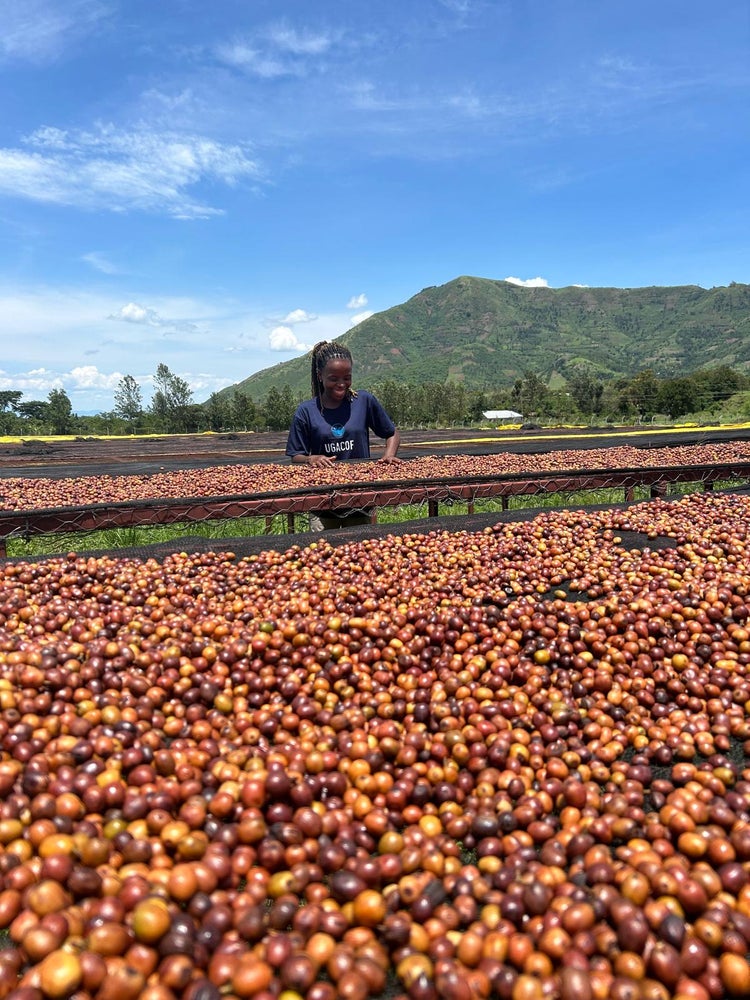
As Uganda’s Arabica harvest unfolds, the 2026 season is shaping up as one of contrasts. In Western Uganda, late rainfall, shifting weather patterns, and market adjustments have pushed national production down by an estimated 100,000 bags compared to last year. On the ground, many local traders have home-processed nearly 20 percent of their crop, reflecting both necessity and resilience.

Ugacof’s teams are ensuring quality remains uncompromised. At every Coffee Washing Station (CWS), cherries are fully floated to select the best beans. Harvesting is ongoing through late April, with the second harvest expected between late August and mid-November. Early flowering observed in several regions hints that a stronger second crop could be on the horizon.

Supporting Farmers Beyond the Crop

Smallholder farmers often manage plots of around 300 trees, where limited access to basic tools, aging coffee trees, and insufficient seedlings can hinder productivity.

Ugacof’s Beyond Flagship program has stepped in with targeted support. The Tools for Prosperity project equips farmers delivering to Katerera CWS with essential tools, including a hoe, spade, and pruning saw, alongside practical guidance on their use. These interventions improve soil management, pruning, and overall farm health.

Over 100 IMPACT-verified farmers have already benefited. Roasters sourcing select microlots contribute directly to these initiatives, linking purchases to measurable on-farm impact.

Building a Sustainable Coffee Future

Beyond tools and training, broader sustainability initiatives are reshaping Uganda’s coffee landscape. Nurseries established since 2025 provide 1.5 million seedlings annually at no cost to farmers, rejuvenating low-density, aging plantations and supporting new entrants.

A fully traceable, regenerative Arabica supply chain is being developed with digital farmer registration, structured data collection, and transparent payment systems. Climate-smart practices, agroforestry, and organic fertilizers from coffee by-products support productivity and ecosystem restoration.

These programs aim to empower up to 15,000 farmers, integrating finance, sustainability, and quality into a cohesive system.

Innovation at Origin

Uganda is exploring new coffee processing methods. Experimental techniques including anaerobic natural fermentation, lactic fermentation, and yeast inoculation are being trialed across washing stations to adapt to local conditions and create distinctive cup profiles.

These innovations, combined with ongoing farmer support, aim to increase value at origin and deliver consistent high-quality coffee to roasters.

A Season of Challenges and Opportunities

While the first harvest is smaller than expected, early flowering, sustainability programs, and practical farmer support provide reason for cautious optimism. For buyers and roasters, now is an ideal time to engage, secure the 2026 crop, and support initiatives strengthening Uganda’s Arabica sector.

In Uganda, coffee is more than a crop. It is a story of resilience, innovation, and community. This season, as cherries ripen and tools are put to use, that story continues to unfold, one bean at a time.


Global Coffee Market Roadmap—January 2026

DUBAI – QAHWA

January 2026 was not merely the start of a new calendar year for the International Coffee Organization (ICO); it served as a critical testing ground for the resilience of global supply chains against dual shocks: climatic in the primary production origin (Brazil) and logistical in vital waterways. The ICO Composite Indicator Price (I-CIP) averaged 296.89 US cents/lb, a 2.6% decrease from December 2025. While this figure may appear as a slight retreat, a deep dive into daily market movements reveals a state of “silent boiling” that culminated in a sharp price collapse in the final three days of the month, ending a long period of relative stability since late 2025.

  • I. Price Psychology and the “Minas Gerais” Effect

Prices entered January in a state of “cautious balance” (range-bound), lacking clear directional catalysts. Prices fluctuated within a narrow band, interpreted by analysts as being high enough to keep farmers financially satisfied but not low enough to trigger aggressive stock liquidations. However, this calm was shattered by two opposing factors:

Currency Impact and Hedging (Early Month): In the first week, around January 6th, the indicator rose by 3.2%. This increase was driven not by supply shortages, but by the strength of the Brazilian Real. The positive correlation between the Real’s strength and global coffee prices is a classic driver; a stronger local currency reduces export incentives for Brazilian farmers who then prefer selling in the domestic market (CEPEA index), which offered attractive premiums over international prices, creating temporary upward pressure.

The Saving Rain Shock (End of Month): A dramatic shift occurred between January 27th and 30th, with the market losing over 21 cents in a flash. Eyes were glued to weather maps over Minas Gerais, the heart of Brazil’s coffee production. Reports of heavy, consistent rainfall dissipated the “risk premium” previously added by traders fearing drought. This precipitation not only improved the current crop’s condition but provided strong positive signals for the 2026/2027 season, prompting investment funds and speculators to liquidate long positions, causing the indicator to drop to 283.02 cents.

  • 2. Structural Shifts in Demand (Robusta as the New Leader)

The report reveals a significant economic phenomenon: diverging performance among the four main coffee groups. While Arabica varieties suffered sharp declines—up to 4.5% in the “Other Milds” category—Robusta was the only group to achieve positive growth (1.0%), stabilizing at 192.52 cents. This divergence is no coincidence; it is the result of a “structural” shift in the global coffee industry. Amid rising global living costs, major international roasters have begun adjusting “blends” to increase the proportion of Robusta to lower final costs for consumers. This sustained demand for Robusta narrowed the price gap (arbitrage) between the New York and London exchanges by 8.4%, signaling that Robusta is emerging as the actual driver of corporate profit stability.

  • 3. Export Geography: Redrawing the Global Map

Global green coffee exports in December 2025 reached a strong 10.15 million bags, up 9.2%. However, this hides stark regional disparities:

The Central America and Mexico Surge (81.3%): This figure must be read carefully; it reflects “recovery from paralysis” rather than a sudden productivity spike. In December 2024, tropical storms (notably Sara) delayed harvesting, making exports almost non-existent then. In December 2025, stabilized climate allowed coffee to flow normally to ports, resulting in a massive percentage increase compared to the previous year’s “trough.”

Asia and Oceania Leadership (Vietnam & Indonesia): The region grew by 38.4%, led by Vietnam (+30%). Vietnam compensated for early-season harvest delays through improved processing efficiency and the “base effect.” Indonesia and India also saw a combined 61.1% jump, reinforcing Asia’s position as a primary global supplier while South America falters.

South American Contraction (The Persistent Dilemma): For the 14th consecutive month, South America recorded a decline (-15.0%). Brazil fell by 18.5%, and notably, Colombia dropped by 18.9%. The report hypothesizes that Colombia may have reached its “maximum production capacity” due to environmental factors and labor structure changes.

  • 4. Uganda: A Unique African Success Story

Uganda stands out as the “hero” of the African continent, with exports jumping 52.5% in one month. This is the fruit of a national strategy to renew trees and expand Robusta acreage. Uganda aims to export 20 million bags by 2030, and current figures show it is on track, filling the void left by other struggling producers with competitive quality.

  • 5. Logistics: Red Sea Security as a Cooling Factor

A pivotal analytical point is the breakthrough in the Red Sea. Following long-term disruptions, major shipping lines resumed using the Suez Canal by January 12, 2026, after security stabilized. This has a direct price impact:

Reducing “Coffee on Water”: Shortening transit times freed up millions of bags previously held at sea for extra weeks, allowing them to reach European and American ports faster.

Increased Destination Stocks: The availability of coffee in consuming ports reduces “urgent” buying pressure, removing a key price support pillar from last year.

  • 6. Technical Analysis of Stocks and the “Backwardation” Dilemma

Despite export flows, the market faces a technical contradiction called “Backwardation,” where spot prices remain higher than futures. This indicates short-term “hunger” despite long-term optimism. Consequently, certified stocks remain at critical levels (50% of the 5-year average), acting as a “safety valve” that prevents total price collapse.

  • Conclusion and Future Outlook

The January 2026 report clarifies that the global coffee market is moving from a “supply crisis” to a “logistical and climatic rebalancing.” The 2.6% price drop is likely the start of a broader correction in Q1, provided Brazilian rains continue and Suez Canal traffic remains steady.

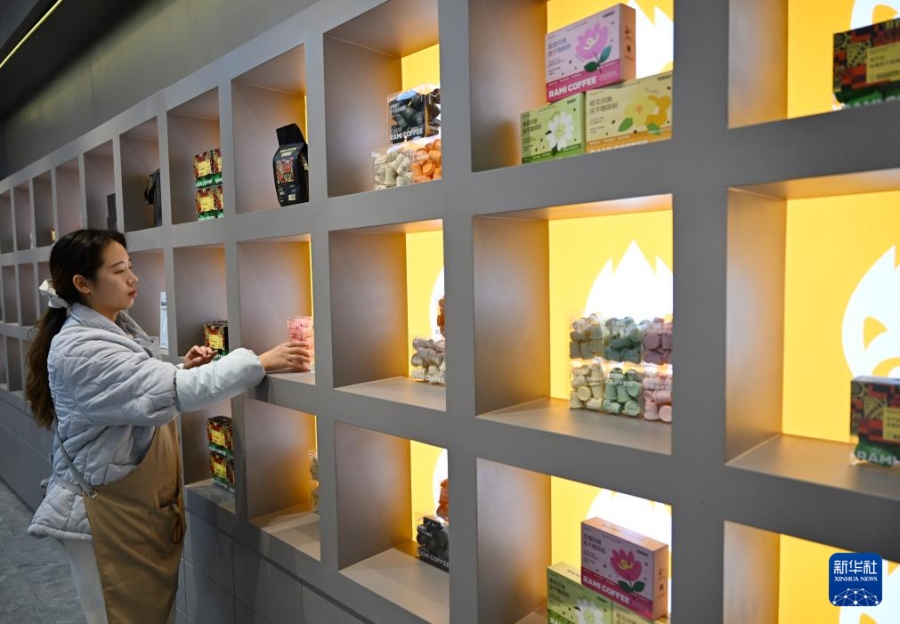
Puyang Launches Integrated Coffee Production Chain in China

Dubai – Qahwa World

Coffee in China is no longer just an imported commodity or a growing consumer trend. It has become a strategic industrial and trade opportunity, with value chains extending from African production regions to Chinese processing hubs and global export markets. The Puyang County project in Henan Province stands out as a leading example of this transformation.

  • From Import to Deep Processing

In recent years, Puyang County has actively participated in the Belt and Road Initiative, leveraging its industrial base and logistics infrastructure in central China. Within this framework, the China-Ethiopia Coffee Industrial Demonstration Park was established, relying primarily on coffee beans imported from Ethiopia and Uganda, two of the world’s most prominent coffee origin countries.

What sets Puyang apart is not merely the import of raw beans but the transition to advanced processing within China, which increases the value of the final product and strengthens the competitiveness of Chinese manufacturers in global coffee supply chains.

A Fully Integrated Production Facility

The demonstration park in Puyang features a fully integrated production system, including:

A factory producing freeze-dried instant coffee;

Three roasting lines for coffee beans;

Ten cold brew production lines;

Eight freeze-drying lines.

This integration allows complete control over all processing stages—from roasting and extraction to drying and packaging—ensuring consistent quality, product variety, and the capacity to meet diverse international standards.

  • Puyang at the Heart of China’s Emerging Coffee Value Chains

Puyang’s initiative reflects a broader shift in China: moving from being a final importer of coffee to becoming a regional hub for processing and re-exporting coffee. With growing domestic consumption and the expanding specialty coffee market, models like Puyang’s are increasingly relevant, combining industrial efficiency with trade flexibility.

Exports from Puyang now reach Singapore, the United States, and other countries, demonstrating that integrated production chains can effectively serve both domestic and international markets.

  • Coffee as a Belt and Road Cooperation Tool

On a larger scale, Puyang exemplifies how the Belt and Road Initiative can support agro-industrial value chain development, not only infrastructure and energy projects. By importing beans from African origins and processing them domestically, China creates a shared-value model: raw material sourcing in Africa, industrial processing in China, and global market distribution. This strengthens China’s role in global coffee trade while providing African producers with more stable export channels.

  • Implications for the Specialty Coffee Sector

For the specialty coffee industry, Puyang highlights several key trends:

Increased focus on advanced processing techniques such as freeze-drying and cold brew extraction;

Building industrial capacity capable of handling a wide range of African coffee origins;

A growing orientation toward export-ready, value-added products, not just the domestic market.

These elements make Puyang a case study for China’s evolving coffee value chains, particularly as Belt and Road initiatives continue to expand.

The Puyang project illustrates how coffee can evolve from a simple imported commodity into a high-value industrial product within fully integrated value chains. With ongoing investment and strategic partnerships, coffee is poised to become a new axis of industrial and trade collaboration between China and producing countries, reaching beyond domestic consumption into global markets.