Amsterdam Coffee Festival 2026 Opens in the Dutch Capital

Strong International Participation and Growing Focus on Coffee Innovation and Technology

Amsterdam – Tareq Alshameri

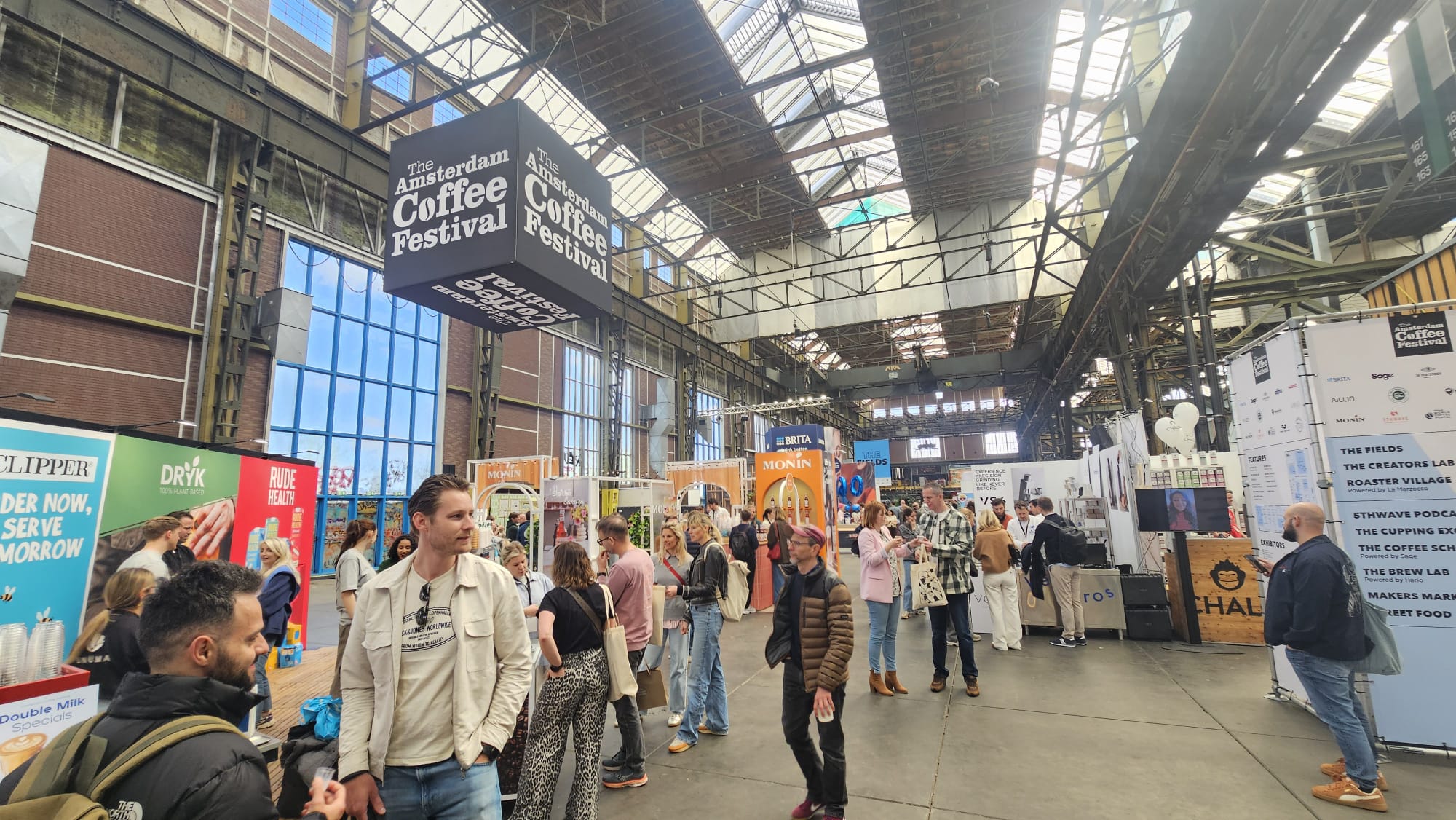
The Amsterdam Coffee Festival 2026 has officially opened in the Dutch capital, drawing a notable presence of visitors and coffee industry professionals, alongside broad participation from international companies and organizations operating in the sector. The event continues to reinforce its position as one of Europe’s leading platforms dedicated to the coffee industry.

The Amsterdam Coffee Festival 2026 is taking place from 16 to 18 April 2026 at the NDSM Loods venue, located at NDSM-Plein 85 in Amsterdam. The three-day event brings together specialty coffee activities, live roasting demonstrations, workshops, as well as entertainment elements including music, beverages, and cocktails, according to official event information.

This year’s program offers a diverse mix of educational and sensory experiences, featuring specialty coffee tasting sessions, training workshops for professional baristas, and interactive activities such as a Roasters Village concept, live latte art demonstrations, and cupping experiences, in addition to music performances and supporting entertainment events.

According to Amsterdam event listings, ticket prices start from approximately €12, making the festival accessible to a wide audience ranging from industry professionals to coffee enthusiasts.

This year’s edition has also seen a strong commercial and public turnout, with exhibition spaces dedicated to showcasing the latest innovations in coffee equipment and technology, including brewing machines, roasting systems, and digital solutions across the production and consumption chain.

A noticeable trend in this edition is the increasing integration of modern technologies. Several companies are presenting solutions based on artificial intelligence to enhance coffee preparation experiences through interactive systems capable of analyzing user preferences and offering personalized recommendations. Advanced equipment also enables greater precision in roasting and extraction processes.

The festival program also includes a series of training workshops for baristas and coffee professionals, alongside live competitions and professional cupping sessions, offering visitors the opportunity to explore modern brewing techniques and develop practical skills in the field.

The event hosts a diverse range of international organizations and institutions active in the coffee sector, along with companies from various European and global markets, reflecting the growing international dimension of the industry in both commercial exchange and knowledge sharing.

Economically, the festival contributes to boosting tourism and commercial activity in Amsterdam, attracting visitors from within the Netherlands and abroad. It also serves as an important networking platform for industry professionals to explore partnerships and business opportunities.

Overall, the Amsterdam Coffee Festival 2026 highlights the ongoing shift toward innovation and sustainability within the coffee industry, as companies continue to develop solutions that combine quality, efficiency, and evolving global consumer expectations.

The festival further strengthens its position as a platform that blends professional, commercial, and cultural dimensions within an industry that continues to expand and evolve rapidly worldwide.

Russia’s Green Coffee Market Records Historic Growth in 2026

Mocow-QahwaWorld

Russia’s green coffee market posted significant growth in 2026, supported by rising global prices and sustained domestic demand, according to a recent analysis by ROIF Expert. The expansion reflects not only higher market value but also increased import volumes and consumption levels, reinforcing Russia’s position as a key destination for global coffee exporters.

Market Value Jumps by 92 Billion Rubles

The market value of green coffee increased by approximately 92 billion rubles between its lowest and highest recent levels, marking one of the strongest gains in the sector. The growth is largely attributed to higher global coffee prices, influenced by weather-related challenges in major producing countries such as Brazil and Vietnam.

While import volumes continued to rise, value growth outpaced physical expansion, reflecting sustained price pressure across global supply chains.

Imports Remain the Core Driver

Russia relies almost entirely on imports to meet its green coffee demand. Between 2025 and 2026, total import volumes reached around 286,000 tons.

  • Import value increased by 45.5% in the first nine months of 2025, reaching $924.7 million
  • Vietnam recorded a 1.5x increase in exports
  • Brazil nearly doubled its export volumes
  • Indonesia strengthened its position among top suppliers with 1.6x growth

Despite ongoing sanctions, supply flows remained stable. The primary challenge involved payment restrictions, prompting companies to adapt through alternative channels, including intermediary countries such as Turkey, China, and the UAE, as well as increased direct shipping routes.

Consumption Reaches Record Levels

Consumption indicators show continued growth, with per capita coffee consumption reaching its highest recorded levels. Approximately 70% of the population consumes coffee daily, while a majority consider it an essential part of their routine.

Home consumption is expected to grow by 15% by the end of 2026, alongside increasing demand for specialty coffee and whole beans.

Shifts in Supply Chains

Supply chains are gradually shifting toward Asian producers, particularly Vietnam and Indonesia, while overall trade flows remain relatively stable. At the same time, the market continues to face pricing pressures and logistical risks linked to geopolitical factors.

Outlook Through 2033

The baseline scenario outlined in the report suggests steady growth over the coming years, supported by consistent demand and expanding import activity.

  • Projected annual growth between 3% and 5.5%
  • Moderate increase in global price levels
  • Continued rise in per capita consumption
  • Further diversification of import sources

The market is expected to maintain positive momentum, demonstrating resilience in the face of external pressures.

Implications for Industry Stakeholders

The Russian market offers strong opportunities for global exporters, given its full dependence on imports. Domestic players are increasingly focused on higher-quality offerings and cost management, while consumers benefit from a broader range of products.

From an investment perspective, the sector shows the ability to convert price pressures into growth drivers, enhancing its medium-term appeal.

Conclusion

Russia’s green coffee market in 2026 reflects a mature and resilient sector. The sharp increase in market value and sustained demand indicate a continued upward trajectory, with growth expected to extend through the end of the decade.


From Café Culture to Home Precision: How GCC Consumers Are Redefining Coffee with Sage

Dubai – Ali Alzakary

Across the GCC, coffee is no longer confined to cafés or social outings—it is rapidly becoming a refined, deeply personal experience crafted at home. Driven by a sophisticated café culture and global exposure, consumers in markets like the UAE and Saudi Arabia are developing a sharper appreciation for quality, consistency, and the finer details behind every cup.

This shift is giving rise to a new kind of coffee enthusiast: the home barista who seeks professional-grade results without leaving the kitchen. Expectations are evolving beyond convenience toward precision, control, and a deeper understanding of the brewing process. At the same time, coffee remains closely tied to hospitality in the region, turning home preparation into an expression of taste and identity.

In this conversation, Elie Abou Khalil shares insights into this transformation, the technology enabling it, and how innovation is shaping the future of coffee at home. From engineering challenges to smart connectivity and consumer behavior, this interview offers a closer look at a fast-evolving landscape.

Read on to explore how the GCC’s coffee culture is entering a new era—one defined by knowledge, craftsmanship, and elevated expectations.

How do you see the GCC consumer evolving from just being a café regular to a dedicated “home barista” who demands professional-grade precision?

From a Sage perspective, what we’re seeing across the GCC is a sustained and very clear growth of specialty coffee at home. Over the past years, consumers in markets like the UAE and Saudi Arabia have developed a strong appreciation for high-quality coffee, driven by a very advanced café culture and global exposure through travel. What’s changing now is that this expectation is no longer limited to coffee shops. More and more people want to recreate that same level of quality at home.

With that comes a shift in behaviour. Consumers are not just looking for a machine, they’re looking for consistency, precision, and the ability to understand and refine their coffee. That’s where we see a real step-change in the market. At the same time, coffee is deeply connected to hospitality in the region. Preparing coffee at home – whether it’s a classic espresso or more personalised drinks – has become part of how people host and express quality. What we also see increasingly are more personalised or “house-style” drinks being created at home, which further drives the need for control and repeatability.

For us at Sage, this is exactly the space we operate in. Our focus is on bringing professional-level performance into the home in a way that is intuitive and consistent. For us, it’s not about turning every consumer into a professional barista, it’s about giving them the tools and confidence to achieve café-quality results, every day, in their own kitchen.

With your SCA background, how does Sage strike that balance between automation for the everyday user and the manual control that coffee purists want?

From our perspective, it’s not about choosing between automation and control, but about delivering the right solution for every type of coffee user.

In the GCC, we see a wide spectrum of needs, from consumers seeking speed and consistency to those looking for a more hands-on experience. At Sage, we address this through a portfolio that spans automatic, manual, and assisted preparation, always anchored in the same commitment to in-cup quality.

Across the range, our focus is on precision and performance, ensuring reliable results from the first cup.

At the same time, milk-based drinks are central to coffee culture in the Gulf. Features like automated milk texturing and steaming play a key role here, delivering consistent results while still allowing users to refine and personalise their coffee over time.

Ultimately, we aim to empower consumers with the right tools for their preferred coffee experience, with the flexibility to grow without compromising on quality.

What were the actual engineering hurdles in bringing lab-level standards, like thermal stability and pressure profiling, into a home kitchen appliance?

The real challenge is not introducing advanced features, but making them perform consistently in a home environment. Commercial machines are designed for scale and trained users, whereas at home the expectation is compact design, intuitive use, and reliable results in an everyday setting. At Sage, our approach is built on the four keys: dose, brew temperature, pressure, and steam. These principles originate from commercial machines and are integrated across our entire range.

The complexity lies in translating these into a home format. This means delivering precise dose and weight, maintaining brew temperature within a tight range, ensuring stable pressure throughout extraction, and providing consistent steam performance for milk texturing. These elements only matter if they deliver consistent in-cup results. That’s why the focus is on precision, repeatability, and ease of use rather than added complexity.

Ultimately, it’s about bringing professional-level performance into the home in a way that feels seamless and reliable.

With global supply chains under pressure and the climate affecting bean prices, how can home technology help consumers get the most out of their coffee and reduce waste?

For me, a lot comes down to consistency in preparation. With Sage, the focus is on helping users get to a high-quality result more quickly and with greater confidence. When key elements like dose, temperature, and extraction are stable and repeatable, it becomes much easier to unlock the full potential of the coffee.

What I often see is that once people can rely on their setup, they start to better understand their coffee and naturally refine their process over time. In the end, it’s about achieving consistently better results at home and making sure every coffee delivers the experience people expect.

Is the surge in premium appliances across the UAE and Saudi a long-term structural shift, or just a post-pandemic trend that might cool off?

This is clearly a long-term structural shift. In the UAE and Saudi Arabia, coffee is deeply embedded in daily routines and plays a key role in hosting, which naturally raises expectations for quality at home. Consumers are no longer satisfied with basic solutions – they are looking for consistency, performance, and a more refined coffee experience.

At the same time, the market is becoming more educated. There is a stronger focus on long-term value, performance, and reliability, rather than short-term trends.

This is exactly where Sage is positioned. As a brand, we focus on bringing professional-level performance into the home in a way that is intuitive and consistent. As expectations continue to rise, the demand for premium home coffee solutions will remain strong and continue to evolve.

How is Sage helping bridge the “education gap” for home brewers? Do you think hobbyists should actually pursue formal coffee certifications to get the best out of their gear?

A big part of our approach at Sage is designing machines that guide the user towards a good result from the start. A clear workflow and consistent performance make it easier to build confidence and improve over time. At the same time, our range supports different types of users, whether they prefer a more automatic, assisted, or manual approach, always without compromising on precision and in-cup quality.

Education is very much part of our DNA. We work closely with coffee professionals and roasters, because ultimately the machine is only as good as the coffee beans you use. Our machines are developed with experts at our design and innovation centre at our Australian headquarters, bringing real café standards into the home. We also support that learning beyond the product through in-store experiences and practical content built around real at-home brewing.

Having gone through formal certifications myself, I can see the value they bring. That said, they’re not essential for everyone. Coffee should remain accessible, but for those who want to go deeper, structured learning can accelerate that journey. Ultimately, it’s about combining performance, precision, and consistency to give people the confidence to create great coffee at home.

Where does the Middle East sit on Sage’s global innovation map? Are there specific features you’re developing just for our regional tastes and needs?

The Middle East has become a highly important region in terms of consumer insight and engagement.

What stands out is how informed and quality-driven consumers are. There is a strong focus on performance, design, and the overall experience at home, which makes the feedback from this region particularly valuable. Rather than developing isolated features for one market, the focus is on identifying global patterns. In the Middle East, that clearly includes a strong preference for milk-based drinks, a high frequency of home entertaining, and the need for consistent performance across multiple drinks.

As I often see, making one good coffee is one thing, but delivering that same quality consistently when hosting is just as important. These insights feed directly into how features are prioritised at Sage, ensuring that innovation reflects real usage and delivers value across different markets.

How can we use better tech to improve transparency and traceability, making sure the farmers at the origin are actually getting a fair deal?

In specialty coffee, roasters often work very closely with farms, building direct, long-term relationships and focusing on quality from origin through to the final cup. That connection is a key part of what defines specialty coffee. It’s not just about the end result, but about how the coffee is sourced, processed, and handled along the way.

At Sage, our role is on the preparation side. We design machines that allow users to fully express that quality at home. We work closely with some of the world’s leading baristas and coffee professionals to ensure our machines reflect real café standards and are optimised for specialty coffee.

Technology can support transparency, but our focus is on delivering the precision and consistency needed to bring out the best in every coffee.

Looking five years ahead, how do you see the “Smart Home” and AI changing our morning coffee routines?

Connectivity will play an increasingly important role in how people experience coffee at home. We already see this with machines like the Oracle Jet, which is WiFi-enabled. This allows for ongoing software updates and the ability to introduce new recipes over time, ensuring the machine stays up to date and continues to evolve with the user.

With the Oracle Dual Boiler, connectivity goes a step further. It is also WiFi-enabled and works in combination with the Sage Coffee App, enabling a more connected experience, from guided support to remote interaction. At the same time, it’s important to note that the app is currently only available in selected regions.

For me, the real value of this technology is not about adding complexity, but about continuous improvement. It allows us to support users beyond the initial purchase and make the experience more intuitive over time. At the same time, coffee remains a very personal and social ritual. So the role of smart technology is to support that experience, not replace it. Ultimately, it’s about creating a connected ecosystem that evolves with the user, while keeping the process simple, consistent, and enjoyable.


Global Coffee Market to Hit $380B by 2033

Dubai – Qahwa World

The global coffee market is advancing rapidly, driven by strong consumer demand that shows no signs of slowing. Around half a trillion cups of coffee are consumed worldwide each year—more than 2 billion cups every day—making coffee one of the world’s most popular daily beverages and a core pillar of the global beverage industry.

According to the latest data from Grand View Research (as of early 2026), the market was valued at approximately USD 249.34 billion in 2025 and is projected to reach USD 380.28 billion by 2033, reflecting a compound annual growth rate (CAGR) of 5.4% from 2026 to 2033. This growth continues despite economic pressures, climate-related challenges in key producing regions, and evolving consumer preferences. Other industry analyses present slightly more conservative estimates, ranging from $214 billion to $239 billion by 2031–2033, depending on methodology, but all projections indicate continued expansion.

Consumption Leaders: Volume vs. Per Capita

The United States remains the largest coffee-consuming country in total volume, supported by a large population and a deeply rooted coffee culture. On average, Americans drink around three cups per day, resulting in significant national consumption.

On a per-capita basis, Northern Europe leads global rankings. Recent data suggests Luxembourg ranks among the highest per-person consumers at over five cups daily, influenced in part by cross-border commuting. Finland also maintains a leading position, with approximately 3–4 cups per person per day and annual consumption of around 10–12 kg per capita, among the highest levels globally.

This strong Nordic consumption culture is deeply embedded in daily life. In Finland, coffee is a social staple, commonly consumed black and frequently enjoyed during regular coffee breaks known as “kahvihetki.”

Asia-Pacific: The Fastest Growing Region

While established markets are maturing, the Asia-Pacific region is emerging as a major growth engine for the global coffee industry. Rising incomes, rapid urbanization, and a young, digitally connected population are driving demand across China, Japan, India, and other markets.

China has surpassed the United States in terms of branded coffee shop presence, with more than 50,000 outlets and rapidly expanding chains such as Luckin Coffee. In India, café culture continues to develop and is expected to significantly expand market potential by 2030. Indonesia has also experienced strong growth, with domestic consumption reportedly tripling since pre-pandemic levels.

The Asia-Pacific coffee market is projected to grow faster than the global average, with estimated CAGR ranges of 6–8% in recent forecasts. Growth is being supported by premium café expansion, ready-to-drink coffee products, and shifting preferences in urban areas away from traditional tea consumption.

The Quality Shift: Specialty Coffee and Arabica Dominance

Global coffee consumption is not only increasing in volume but also shifting toward higher quality. Arabica beans continue to dominate due to their smoother flavor profile, while demand for specialty coffee is accelerating, particularly among younger consumers.

Millennials and Gen Z consumers are increasingly prioritizing single-origin sourcing, traceability, and distinctive flavor profiles over mass-market products. The global specialty coffee segment is expanding faster than the broader market, with projected CAGR near 10.8% through 2033.

Convenience and Changing Lifestyles

Modern consumption habits are driving demand for convenience-focused coffee products. Capsules, instant coffee, liquid concentrates, and ready-to-drink (RTD) beverages are increasingly popular, allowing consumers to access premium coffee experiences at home, in the workplace, or on the move.

Sustainability and Supply Chain Pressures

Sustainability has become a central requirement in the coffee industry. Ethical sourcing, organic certification, and transparent supply chains are increasingly important to consumers, particularly in premium segments.

Many consumers are willing to pay higher prices for coffee that supports farmers, reduces environmental impact, and carries certifications such as Fair Trade or Rainforest Alliance. At the same time, climate change continues to pose risks to major coffee-growing regions, prompting greater focus on resilient crop varieties and sustainable farming practices.

Challenges and Market Outlook

The coffee sector faces increasing competition from alternative beverages, including tea, herbal infusions, energy drinks, and functional beverages, as consumers diversify their preferences toward health-oriented options.

Supply chain volatility, driven by weather events and geopolitical factors, also remains a persistent challenge for producers and roasters.

Despite these pressures, the long-term outlook for the coffee industry remains positive. Strong cultural demand, combined with innovation in product formats, sustainability initiatives, and experiential retail, is expected to support continued growth through the next decade.

From specialty cafés in Tokyo to espresso bars in Dubai and traditional filter coffee in Helsinki, global coffee culture continues to expand. The coming years are expected to bring greater product diversity, improved sustainability practices, and new consumption experiences for one of the world’s most widely enjoyed beverages.

Coffee Still Leads US Beverage Choices in 2026, NCA Finds

Dubai – Qahwa World

According to the Spring 2026 National Coffee Data Trends (NCDT) report released by the National Coffee Association (NCA), coffee continues to rank as the most popular beverage among American adults. Nearly 195 million U.S. adults — roughly 73% of the adult population — drink coffee each week, maintaining its position at the top of the country’s beverage hierarchy.

Past-day consumption remains steady at 66% of American adults, consistent with levels observed since 2022. Weekly drinking habits show similar stability. This confirms coffee’s enduring role in daily life, surpassing other beverages such as bottled water, tea, soda, and juice in long-running surveys dating back to 1950.

Key highlights from the Spring 2026 NCDT report

The data, collected between January 5 and 20, 2026, from a nationally representative sample of 1,850 U.S. adults who consumed a beverage other than tap water in the previous day, reveals several consistent and evolving patterns:

  • Morning rituals and home brewing dominate: Among past-day coffee drinkers, 82% prepare their coffee at home, while 28% have it prepared away from home. Consumption remains highly habitual: 86% drink coffee first thing in the morning, followed by 38% later in the morning, 22% in the afternoon, and 11% in the evening. These patterns have shown little change since 2022, underscoring coffee’s deep integration into daily routines.
  • Traditional coffee holds firm: 62% of American adults consumed traditional coffee in the past week, unchanged from 2022.
  • Specialty coffee sees notable growth: Past-week specialty coffee consumption has risen by 9.4% since 2022, increasing from 53% to 58% of American adults. This growth is largely driven by espresso-based beverages, which rose from 40% to 45% in past-week consumption. Specific increases include:
    • Lattes: from 17% to 21%
    • Straight espresso: from 16% to 20%

This shift reflects growing consumer interest in café-style drinks, likely supported by the rise of at-home espresso machines, premium pods, and broader engagement with specialty coffee culture.

NCA leadership on coffee’s lasting role

NCA President and CEO Bill Murray said:

“Coffee has long been a touchstone in Americans’ daily lives and a powerhouse in our economy, adapting to fit different tastes, trends, budgets, and routines over time. We expect that to continue for many decades to come.”

This adaptability is reflected in coffee’s economic impact. The industry supports 2.2 million U.S. jobs, operates in every state and territory, and contributes nearly $350 billion to the economy annually.

Why this matters

The 2026 findings highlight coffee’s resilience. While overall consumption has plateaued at historically high levels since 2022, the rise in specialty and espresso-based drinks points to a maturing market in which consumers increasingly prioritize quality, variety, and experience, whether at home or on the go.

As the longest-running study of its kind, conducted twice yearly since 1950, the NCDT remains a key benchmark for the coffee industry.

For the full Spring 2026 NCDT report, visit ncausa.org/NCDT. Media highlights are also available for download. The National Coffee Association, founded in 1911, represents businesses accounting for 90% of U.S. coffee commerce.


Bala Shao-Sing Crowned 2026 World Latte Art Champion

San Diego – Qahwa World

The 2026 World Latte Art Championship concluded in spectacular fashion as part of the World of Coffee San Diego exhibition,

bringing together some of the finest specialty coffee artists from around the globe in a highly competitive and visually stunning final.

This year’s championship featured 33 competitors from various national competition bodies, with six finalists advancing to the final round.
The finalists delivered performances that blended technical precision, artistic expression, and storytelling through intricate latte designs.

At the end of the competition, the World Coffee Championships organization crowned
林紹興🇹🇼Bala, Shao-Sing representing Taiwan as the 2026 World Latte Art Champion,
following a performance praised for its consistency, precision, and artistic complexity in cup presentation.

Final Standings – Top Six

  • 1st Place: 林紹興🇹🇼Bala, Shao-Sing – Taiwan
  • 2nd Place: Jacky Chang – Malaysia
  • 3rd Place: Zhang Yuanyi (Zking) – China
  • 4th Place: Bank Sarawut – Thailand
  • 5th Place: Jay Kim – South Korea
  • 6th Place: Tatsuya Ishibashi – Japan

The World Coffee Championships organizers noted that this edition delivered an exceptionally high level of latte art craftsmanship,
reflecting the continued evolution of specialty coffee culture and the growing global standards in competitive coffee arts.

The event concluded with strong appreciation from audiences and industry professionals, highlighting the championship’s role as a global platform
for creativity, technical excellence, and cultural exchange within the coffee community.

Bala Shao-Sing Crowned 2026 World Latte Art Champion


A Quiet Craft: Kaffa Oslo’s Discipline, Cupping, and Roasting

Dubai – Ali Alzakary
In the quiet precision of Nordic coffee culture, Kaffa Oslo has built a reputation shaped by patience, sensory discipline, and a deep respect for detail. From its roastery in Ryen, Oslo, the team continues to refine how coffee is selected, roasted, and experienced.After a standout year marked by recognition at “Nordics Best Roaster 2026,” we speak with head roaster Trude Skjold Løken about the journey behind the achievement, the realities of global coffee logistics, and the philosophy that guides Kaffa Oslo’s approach to roasting.

What follows is a conversation about craft, competition, and connection across the world of specialty coffee.

We invite you to read the full interview below.

Introduction to Kaffa Oslo

Could you introduce yourself and the story behind Kaffa Oslo to our audience? What are the core values that define the roastery’s identity in the Norwegian coffee scene?

Hello there! My name is Trude and I`ve worked with specialty coffee since 2012, starting of as a barista before getting a job as a production roaster in 2016. Worked my way up to a position as head roaster with quality control some years down the line. Learned with time, stubbornness and patience how to be a good cupper for roasting purposes and this is what made me who I am today. If I could give everyone that`s considering becoming a roaster just one tip: learn how to cup for roasting purposes and never stop cupping!

KAFFA is a small specialty roastery based in Ryen, Oslo. Born from the legacy of the iconic Oslo coffee bars JAVA and MOCCA. Founded by Robert W. Thoresen, the first World Barista Champion, our mission has always been to create meaningful experiences through exceptional coffee.

We work directly with dedicated producers around the world to source the finest green coffee through our owner and his sourcing company Collaborative Coffee Source. This work allows us to ensure sustainability and quality at every step of the journey. We use a light roasting style developed to highlight the unique character of each coffee while ensuring it remains easy to brew.

Since 2005, we have focused on making specialty coffee approachable and inclusive. Whether for home brewing or professional brewing, our goal is to provide a touch of everyday luxury through traceable, high quality coffee.

The Winning Moment

Congratulations again on winning “Nordics Best Roaster 2026.” Looking back at the competition, what do you think was the defining element in your roasting profile that set Kaffa Oslo apart this year?

Answer: There were many amazing coffees on the competition table, but maybe the florality and sparkling acidity of our sourced coffee made it stand out. We were extremely lucky to source a geisha like that. One of the best geishas I`ve ever tasted and I`ve had quite a few! The mandatory coffee had quite a similar approach/profile as the sourced, I approached it like a geisha. Roasted in a nordic light style but with enough development to give them body to make them both stand out.

The Competition Experience

In the “Mandatory Coffee” category, everyone roasts the same beans. How did you manage to imprint your signature style on those beans to impress the judges?

Answer: My first sampleroast (on a ROEST sample roaster) reminded me of a geisha-I found the coffee to be very light, sweet and delicate, so I took that approach when roasting the first batch on our smallest production roaster (a Probat UG15). Trying my best to bring forward the notes the coffee was inhabiting: red berries, the florality of black tea, sweet and elegant.

Global Supply Chains

With the current tensions in the Middle East affecting global shipping routes, how do you see these logistics challenges impacting the arrival and cost of green coffee in Norway?

Answer: The current challenge the last few years is that our East African coffee can`t take the shortcut through the Suez Canal, so it`s detouring all the way around the Cape of Good Hope. This adds about two to three weeks to our wait times and significantly increases freight costs. On top of that, the jump in global fuel prices means it`s costing more to power the ships and the trucks delivering to us here in Norway. It`s not always easy logistically to be located so far up in the northern hemisphere, but we`re doing our best to keep everything moving.

Adaptability

Have these regional disruptions prompted Kaffa Oslo to reconsider shipping methods or explore different sourcing strategies to ensure consistency?

Answer: We won`t change any of our buying strategies or move coffee in a different way. We will just have to wait a bit longer for the coffee to arrive in Norway.

Future Ambitions

After reaching the top in the Nordics for 2026, what is the next milestone for you? Are there plans for more international competitions or new projects within the roastery?

Answer: We will continue to compete in Nordics Best Roaster in the coming years as it`s a very fun, challenging, teambuilding and educational competition. On a personal note I will continue to compete in national cupping- and roasting championships as I am a very competitive person and I learn so much from it.

A Message to the Arab World

What message would you like to share with the specialty coffee community in the Arab world who are following your success?

Answer: I would really like to visit one day-never been to your side of the world. If I plan a visit; please invite me to your roastery and lets exchange coffees and set up a cupping!

Source: Dubai – Ali Alzakary


Nuclear Science Secures the Future of Coffee

How “Birth Control” for Pests is Saving the Global Brew

VIENNA – Qahwa World

In a landmark announcement, the International Atomic Energy Agency (IAEA) and the Food and Agriculture Organization of the United Nations (FAO) have confirmed that nuclear science is now the primary shield protecting the world’s multibillion-dollar coffee industry from its most destructive adversary: the Mediterranean fruit fly.

The Invisible Threat to Your Morning Cup

While coffee is one of the most beloved beverages globally, it is also a favorite target for the Mediterranean fruit fly (Ceratitis capitata). The biological damage is devastatingly precise. The female fly deposits eggs into the coffee berries, and once the larvae hatch, they feed on the internal pulp.

New technical data released by the IAEA and FAO clarifies that this process does more than just damage the fruit; the larvae “suck out essential nutrients,” which directly stunts the development of the coffee bean. This prevented beans from reaching their natural size and density, leading to lighter, “hollow” harvests that lacked the physical properties required for high-quality roasting.

The damage happens silently — inside the fruit — long before the coffee reaches the cup.

The SIT Breakthrough: “Birth Control” for Insects

To combat this without the use of toxic chemical pesticides, the IAEA, in cooperation with the FAO, has deployed the Sterile Insect Technique (SIT). This environmentally friendly “insect birth control” method works through a precise four-step cycle:

  • Mass Rearing: Millions of male flies are raised in specialized bio-factories.
  • Irradiation: The insects are exposed to controlled radiation (gamma or X-rays), which sterilizes them without affecting their health or competitive drive.
  • Aerial Release: These sterile males are released over coffee plantations.
  • Population Collapse: When they mate with wild females, no offspring are produced.

From “Wormy” Fruit to Award-Winning Quality

The results from the field provide a dramatic “before and after” for the coffee industry. Farmers who once struggled with harvests filled with “worms” (larvae) are now reporting a transformation in their crops.

Increased Weight & Density: Because the beans are no longer being drained of nutrients, they are growing to their full biological potential.

Superior “Cup Quality”: The SIT has saved the sensory profile of the bean.

Market Expansion: These high-quality beans are now qualifying for international specialty markets.

“Earlier, I used to find many worms in the fruit. But now, the change is visible. There are fewer worms, the coffee is heavier, and the cup quality is much better.”

A Global Success Story

From the Moscamed Program in Mexico and Guatemala to emerging projects in Africa and the Asia-Pacific, joint IAEA–FAO initiatives are ensuring that coffee remains sustainable and profitable.


View this post on Instagram


A post shared by Coffee Qahwa (@qahwaworld)

ICO, IACO Sign MoU on Coffee Cooperation

Agreement at World of Coffee San Diego focuses on data, regulation, and support for Africa’s coffee sector

San Diego — Qahwa World

The first day of World of Coffee San Diego saw the International Coffee Organization (ICO) and the Inter-African Coffee Organisation (IACO) formalise their cooperation through the signing of a Memorandum of Understanding (MoU).The agreement builds on an existing relationship between the two institutions and outlines areas for closer coordination across data, research, and policy support for African coffee-producing countries.

Structured Cooperation Across Key Areas

The MoU establishes a framework for collaboration in several technical and strategic areas relevant to the evolving coffee landscape.

These include improving data collection and analysis, supporting compliance with regulatory developments such as the European Union Deforestation Regulation (EUDR), advancing research into climate resilience, and strengthening capacity along the coffee value chain.

While the agreement does not introduce binding commitments, it provides a basis for coordinated initiatives and information exchange between the two organisations.

Africa’s Position in Focus

The partnership also reflects a continued effort to better integrate African perspectives into global coffee discussions.

African producing countries play a significant role in global coffee supply, yet continue to face structural challenges, including exposure to climate risks, limited access to finance, and evolving market requirements.

Through closer institutional coordination, the ICO and IACO aim to support member countries in navigating these challenges and engaging more effectively with international frameworks.

Institutional Context

The International Coffee Organization, established in 1963, serves as an intergovernmental platform for cooperation between coffee-exporting and importing countries, with a focus on market transparency, sustainability, and sector development.

The Inter-African Coffee Organisation represents African coffee-producing nations and works to promote production, improve quality, and enhance the competitiveness of the region’s coffee sector.

The MoU reflects a continuation of engagement between the two bodies rather than a new institutional direction.

World of Coffee as a Meeting Point

World of Coffee, organised by the Specialty Coffee Association, provides a platform for industry stakeholders ranging from producers and exporters to roasters, researchers, and policymakers.

The San Diego edition highlights ongoing conversations around sustainability, regulation, and market dynamics, with a growing emphasis on coordination between producing and consuming regions.

Participants

  • Vanusia Nogueira, Executive Director of the International Coffee Organization
  • H.E. Ambassador Solomon Rutega, Secretary General of the Inter-African Coffee Organisation
  • Claude Bizimana, Executive Chairman of the Inter-African Coffee Organisation
  • Celestine Gataraiha, Director of Research and Development at the Inter-African Coffee Organisation

Analysis

Memoranda of understanding are a common instrument in international cooperation, often used to formalise intent and provide a structure for future collaboration rather than immediate operational change.

In this context, the ICO–IACO agreement can be seen as part of a broader pattern of institutional alignment within the coffee sector, particularly as regulatory and environmental pressures increase.

Its practical significance will depend on how the outlined areas of cooperation translate into concrete programmes and measurable outcomes over time.

Reporting by Qahwa World from San Diego

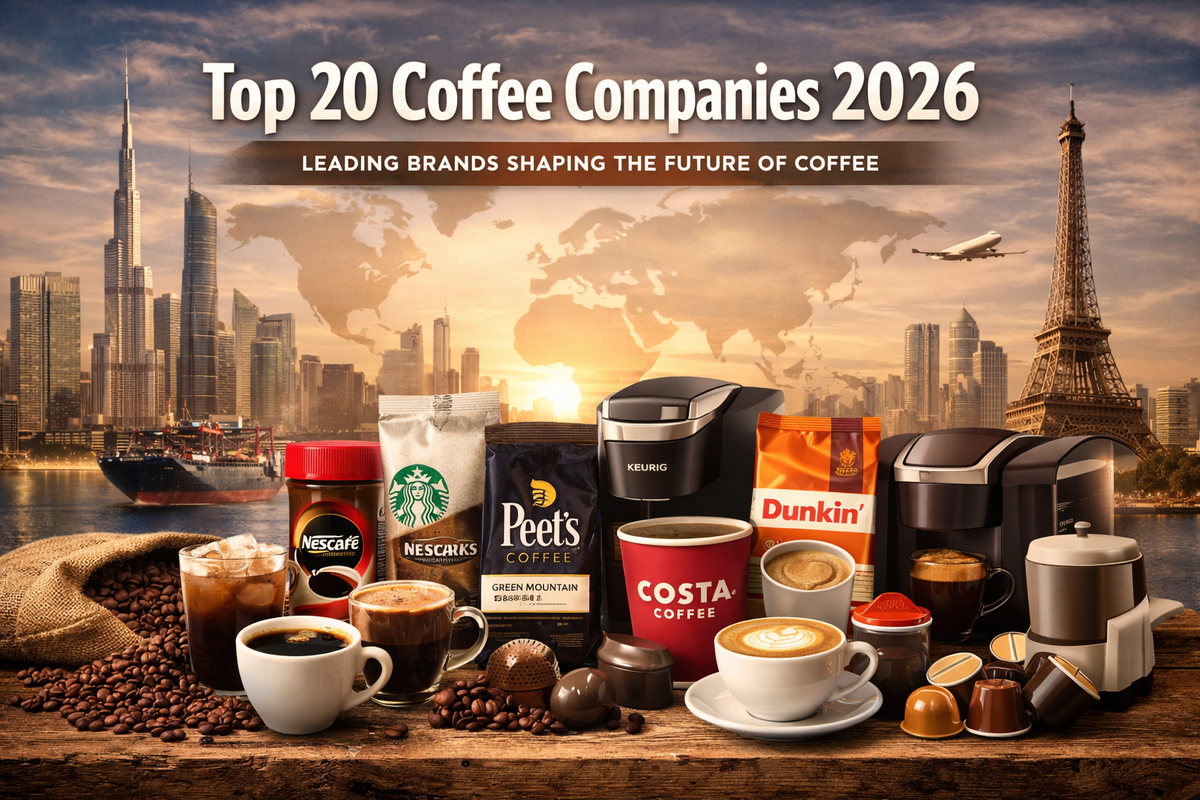
Top 20 Coffee Companies 2026

Dubai – Qahwa World

The global coffee market in 2026 is valued at around USD 145–176 billion, with projections reaching USD 227–275 billion by 2032–2034 at a CAGR of 5.1–6.6%. Growth is driven by premiumization, ready-to-drink (RTD) formats, single-serve pods, at-home brewing innovations, and sustainability-focused sourcing. Asia-Pacific is the fastest-growing region, while North America and Europe dominate in value through high-margin specialty products.

This report provides an independent ranking of the Top 20 Coffee Market Players for 2026, based on 2025–early 2026 industry data, including revenue analyses, packaged/at-home segment performance, and competitive landscape assessments. The ranking covers estimated global market share across packaged, at-home, and branded coffee products.

Key 2026 Developments

  • Nestlé leads in instant coffee and premium capsules.
  • JDE Peet’s and Keurig Dr Pepper remain separate; their $18 billion merger is expected to close in Q2 2026.
  • U.S. packaged giants like J.M. Smucker and Kraft Heinz maintain strong at-home segment presence.
  • Market fragmentation continues below the top tier, with specialty and regional players driving innovation.

Global Coffee Market Context (2026)

  • Market Value: USD 150–180 billion (estimated)
  • Key Formats: Packaged/at-home (dominant), ready-to-drink, single-serve, out-of-home retail
  • Growth Drivers: Premium/specialty demand, convenience, sustainability certifications, Asia-Pacific expansion
  • Challenges: Climate volatility affecting Brazil and Vietnam, traceability costs, ethical/direct-trade consumer preferences

Top 20 Coffee Companies (2026 Estimates)

Rank Company Name Key Coffee Brands Origin Country Estimated Market Share (%)
1 Nestlé S.A. Nescafé, Nespresso, Starbucks (at-home license) Switzerland 22.0
2 JDE Peet’s Jacobs, Douwe Egberts, Peet’s Coffee, Senseo, L’OR Netherlands 13.5
3 Keurig Dr Pepper Keurig pods, Green Mountain Coffee USA 9.8
4 Starbucks Corporation Starbucks pods, ground, RTD at-home USA 9.2
5 The J.M. Smucker Company Folgers, Dunkin’ (packaged/at-home) USA 5.5
6 The Kraft Heinz Company Maxwell House, other mass-market blends USA 4.8
7 Lavazza (Luigi Lavazza S.p.A.) Lavazza, Carte Noire Italy 4.5
8 Melitta Group Melitta (filter/pods), brewing products Germany 4.0
9 Tchibo GmbH Tchibo, European blends Germany 3.2
10 Strauss Group / UCC Strauss Coffee, UCC Coffee Israel / Japan 2.8
11 illycaffè (Illy) Illy, Segafredo Zanetti Italy 2.4
12 Tata Consumer Products Tata Coffee, Coffee Bean & Tea Leaf (at-home) India 2.1
13 Massimo Zanetti Beverage Group Segafredo, foodservice brands Italy 1.9
14 UCC Ueshima Coffee Co. UCC (canned/RTD) Japan 1.6
15 Farmer Bros. Co. Caribou Coffee (at-home) USA 1.3
16 JAB Holding Company (select assets) Peet’s, other premium holdings Belgium 1.1
17 The Coca-Cola Company (Costa) Costa Coffee (RTD/packaged) UK / USA 0.9
18 Intelligentsia Coffee / Blue Bottle Blue Bottle (premium) USA 0.7
19 Stumptown Coffee Roasters Stumptown (specialty) USA 0.6
20 Dutch Bros. Coffee Dutch Bros (packaged/RTD) USA 0.5

Total share of Top 20: Approximately 85–88%, with the remainder split among hundreds of independent and specialty roasters.

Strategic Positioning of Top Players

Global Giants (Ranks 1–4)

Nestlé dominates instant coffee and premium capsules while managing the Starbucks at-home license. JDE Peet’s and Keurig Dr Pepper lead in pods and convenience segments. Starbucks leverages its brand for strong at-home and ready-to-drink presence.

U.S. Packaged Leaders (Ranks 5–6)

J.M. Smucker (Folgers) and Kraft Heinz (Maxwell House) maintain significant U.S. market share with affordable, widely distributed coffee products.

European & Premium Specialists (Ranks 7–11)

Lavazza, Melitta, Tchibo, Strauss/UCC, and illycaffè focus on espresso and filter traditions, emphasizing quality-driven growth in Europe and emerging markets.

Niche & Emerging Players (Ranks 12–20)

Tata leverages Indian origin strength, Massimo Zanetti and UCC focus on RTD and foodservice, and specialty brands like Intelligentsia and Stumptown capture premium niches. Dutch Bros. and Caribou expand into packaged products.

Market Outlook 2026 and Beyond

The top 6–8 players control over 60% of the packaged and at-home market. Innovation flows from independent and specialty players. The pending Keurig Dr Pepper–JDE Peet’s merger could create a new global competitor rivaling Nestlé.

Critical success factors:

  • Investments in sustainability and traceability
  • Innovation in recyclable pods, functional RTD, and premium single-origin products
  • Adaptation to climate-driven supply risks and rising Robusta demand

This ranking is based on cross-verified industry data as of April 2026. The coffee market remains dynamic, culturally vital, and full of opportunity for players balancing scale with quality and consumer trust.

Data sourced from Coffeeness, Global Growth Insights, Expert Market Research, and other industry analyses for the packaged and at-home coffee segment.


Top Coffee Consumers 2026

Dubai – Qahwa World

As of April 2026, global coffee consumption continues to grow despite earlier price volatility. According to the USDA’s December 2025 Coffee: World Markets and Trade report, world consumption for the 2025/26 coffee year (October 2025 to September 2026) reached a record 173.85 million 60-kg bags, up 1.3 percent year on year.

This steady rise comes as supply begins to recover, yet global stocks remain tight at around 20.1 million bags for the fifth consecutive year. The result is a more balanced market, though still sensitive to price movements.

Demand growth is driven by both mature and emerging markets. The United States, Brazil, and Europe continue to anchor global consumption, while Asia is rapidly expanding, led by the Philippines, China, Vietnam, and Indonesia. At the same time, early 2026 price easing has helped maintain strong consumption momentum.

Top 20 Coffee-Consuming Countries and Regions (2025/26 Forecast)

Rank Country / Region Consumption (M bags) % Global
1 European Union 41.87 24%
2 United States 26.55 15%
3 Brazil 22.28 13%
4 Philippines 6.75 3.9%
5 Japan 6.72 3.9%
6 China 5.85 3.4%
7 Canada 5.20 3.0%
8 Vietnam 4.90 2.8%
9 Indonesia 4.81 2.8%
10 Russia 4.58 2.6%
11 United Kingdom 4.33 2.5%
12 Ethiopia 3.70 2.1%
13 South Korea 3.40 2.0%
14 Mexico 3.10 1.8%
15 Australia 2.60 1.5%
16 Colombia 2.27 1.3%
17 Algeria 2.05 1.2%
18 Turkey 1.75 1.0%
19 Saudi Arabia 1.50 0.9%
20 India 1.36 0.8%

Top 10 total: ~129.5 million bags (around 74% of global consumption).
Top 20 total: ~160.3 million bags (about 92% of global consumption).

Key Market Insights

Europe remains the largest consuming bloc, accounting for nearly a quarter of global demand, led by Germany, Italy, and France. Espresso culture and premium coffee continue to dominate.

The United States holds second place, driven by strong demand for specialty coffee, cold brew, and ready-to-drink beverages. It also remains the world’s largest coffee importer.

Brazil stands out as both a top producer and consumer, supported by a large domestic market and deeply rooted coffee culture.

Asia is the fastest-growing region. The Philippines, China, Vietnam, and Indonesia are expanding rapidly, fueled by urbanization, rising incomes, and café culture.

Emerging markets are gaining importance, including South Korea, Saudi Arabia, Turkey, and India, where younger consumers and modern retail formats are accelerating coffee adoption.

Trends Shaping Coffee Consumption

  • Asia’s rapid expansion: The region now accounts for over a quarter of global demand and continues to grow quickly.
  • Premiumization: Consumers are increasingly choosing specialty, organic, and traceable coffees.
  • RTD and cold brew growth: Ready-to-drink products are among the fastest-growing segments globally.
  • Sustainability: Certifications and ethical sourcing are becoming standard expectations in many markets.
  • Price sensitivity: While coffee remains a daily habit, demand reacts to price changes, especially in emerging markets.

2026 Outlook

With global production expected to increase further, consumption is projected to continue rising toward 175 million bags or more. Growth will be led by Asia, alongside steady demand in Europe and North America.

For industry players, the focus is shifting toward value, innovation, and sustainability. From specialty cafés to ready-to-drink formats, the global coffee market in 2026 offers strong opportunities across both mature and emerging regions.

Summary

2026 marks another record year for global coffee consumption. Traditional markets provide stability, while emerging economies drive growth. The balance between supply recovery and rising demand is shaping a more dynamic and opportunity-rich global coffee landscape.

Ethiopia Launches East Africa’s First Specialty Coffee Training Center

Sahel Maryam – Qahwa World

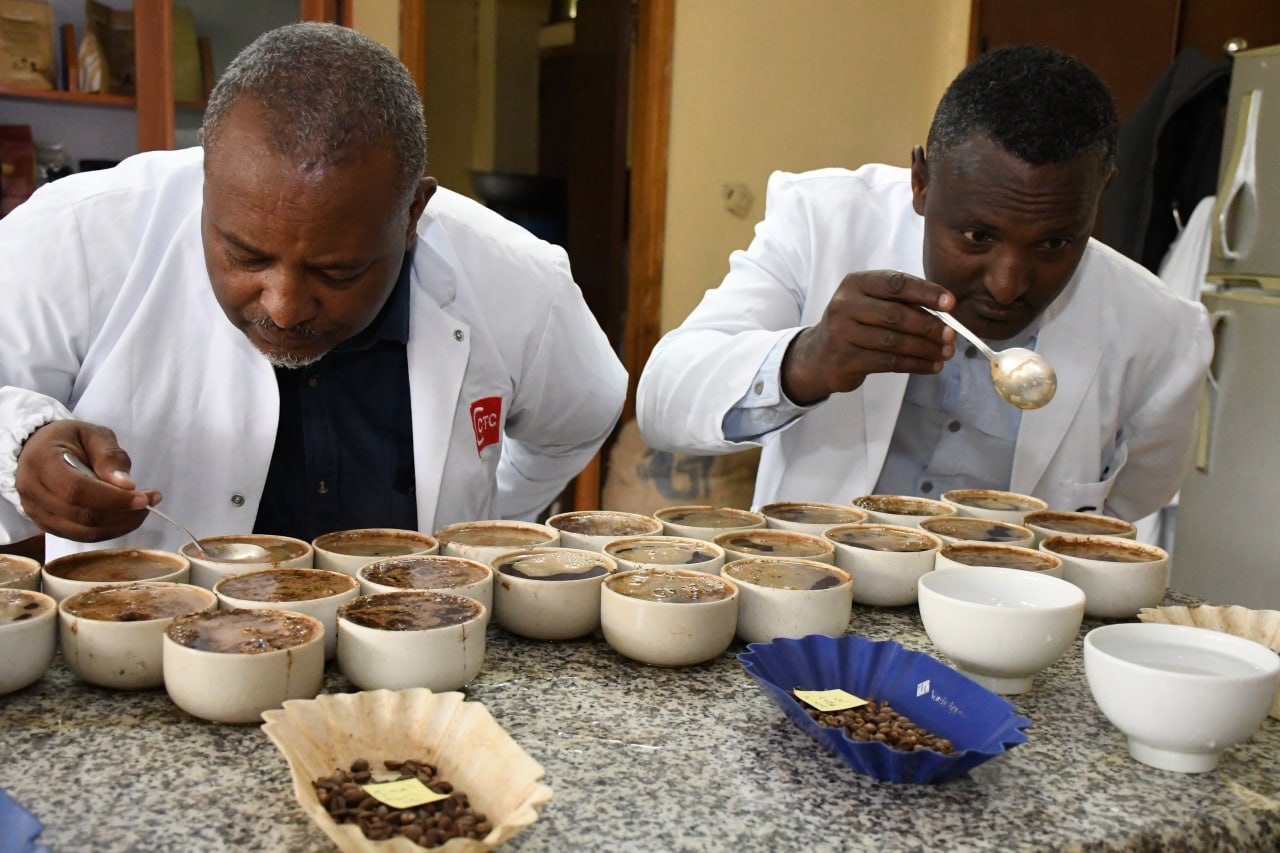
In a pioneering move for the region, a new coffee roasting and quality assessment center has opened in Sahel Maryam, Medhin, Ethiopia. The facility, the first of its kind in East Africa, combines state-of-the-art equipment with instruction from experienced coffee professionals.

The center aims to train participants in evaluating coffee quality to global standards, enabling them to independently assess beans and elevate industry practices. Trainees leave with the skills to analyze and improve coffee from the farm to the cup, applying internationally recognized Specialty Coffee Association (SCA) protocols.

The initiative has received recognition from Ethiopian coffee authorities, UNIDO, the Italian government, and the Italian Development Cooperation Agency for its contribution to developing the local and regional coffee sector.

Coffee Quality Evaluation Standards
The process of assessing coffee quality at the center is comprehensive:

Physical Quality of Beans – Inspecting defect count, bean size and uniformity, moisture content, and presence of foreign matter.
Sensory Evaluation (Cupping) – Scoring aroma, flavor, aftertaste, acidity, body, balance, and sweetness.
Defect Identification – Spotting spoiled, fermented, or overripe beans.
Organic Acid Analysis – Identifying natural acids such as citric, malic, acetic, and phosphoric to characterize flavor profiles.
Standardized Protocols – Applying precise roast levels, grind sizes, water quality, and brew ratios to ensure consistent and fair evaluation.

Coffee that scores 80 points or above under these criteria is classified as “Specialty Coffee.” Experts emphasize that proper evaluation relies on certified Q-Graders rather than subjective taste alone, ensuring adherence to international standards.

The new center marks a major step forward in Ethiopia’s ongoing mission to cement its position as a global leader in coffee quality and expertise.