Bala Shao-Sing Crowned 2026 World Latte Art Champion

San Diego – Qahwa World

The 2026 World Latte Art Championship concluded in spectacular fashion as part of the World of Coffee San Diego exhibition,

bringing together some of the finest specialty coffee artists from around the globe in a highly competitive and visually stunning final.

This year’s championship featured 33 competitors from various national competition bodies, with six finalists advancing to the final round.
The finalists delivered performances that blended technical precision, artistic expression, and storytelling through intricate latte designs.

At the end of the competition, the World Coffee Championships organization crowned
林紹興🇹🇼Bala, Shao-Sing representing Taiwan as the 2026 World Latte Art Champion,
following a performance praised for its consistency, precision, and artistic complexity in cup presentation.

Final Standings – Top Six

  • 1st Place: 林紹興🇹🇼Bala, Shao-Sing – Taiwan
  • 2nd Place: Jacky Chang – Malaysia
  • 3rd Place: Zhang Yuanyi (Zking) – China
  • 4th Place: Bank Sarawut – Thailand
  • 5th Place: Jay Kim – South Korea
  • 6th Place: Tatsuya Ishibashi – Japan

The World Coffee Championships organizers noted that this edition delivered an exceptionally high level of latte art craftsmanship,
reflecting the continued evolution of specialty coffee culture and the growing global standards in competitive coffee arts.

The event concluded with strong appreciation from audiences and industry professionals, highlighting the championship’s role as a global platform
for creativity, technical excellence, and cultural exchange within the coffee community.

Bala Shao-Sing Crowned 2026 World Latte Art Champion


Rising Heat Threatens the Future of Coffee

New York – Qahwa World

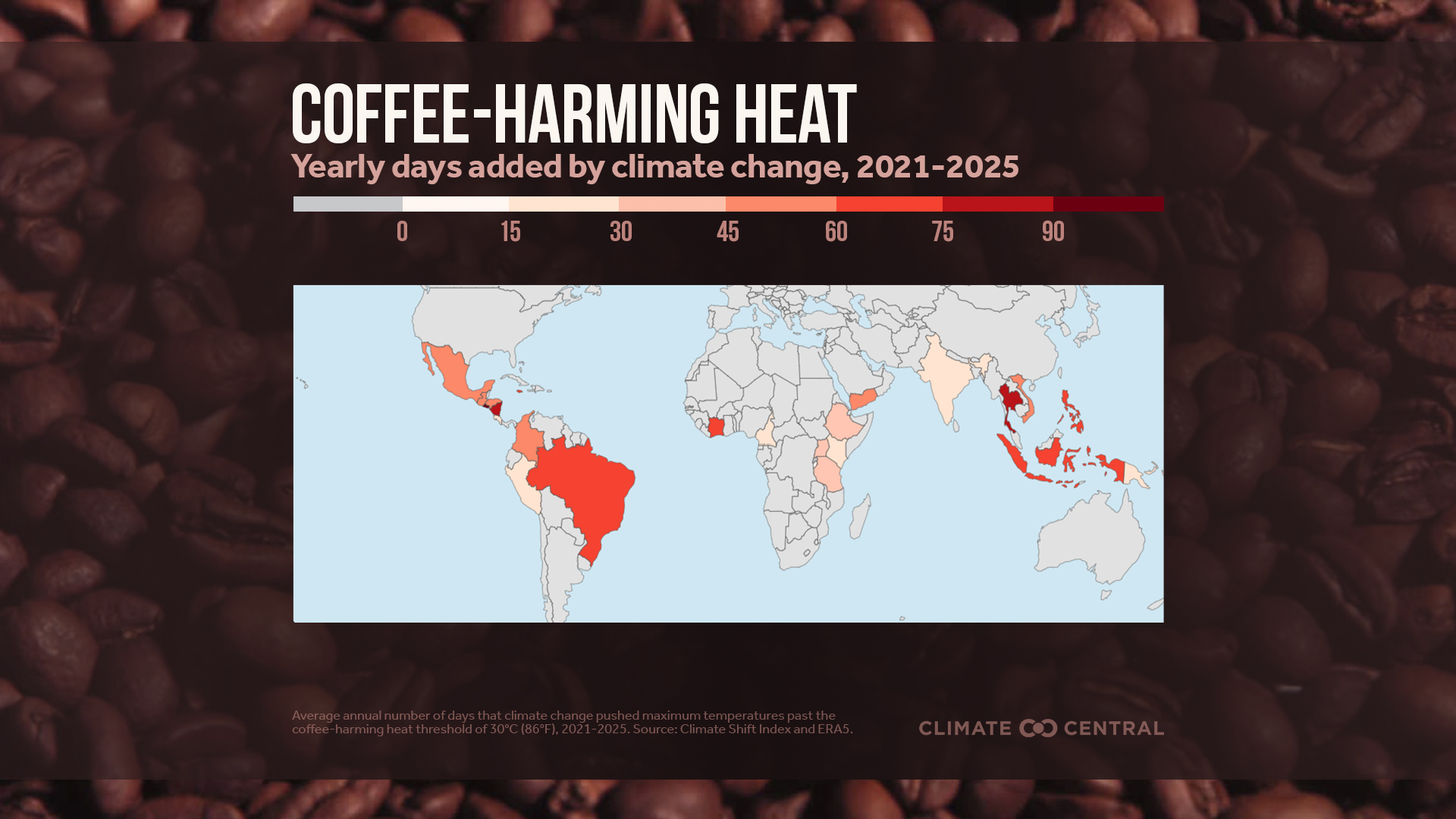
A new analysis by Climate Central (an independent group of scientists and communicators that studies and reports on climate change and its impacts on people’s lives, operating as a policy-neutral nonprofit) is raising a clear warning for the global coffee industry.

Data shows that coffee-growing regions across Latin America, Africa, and Southeast Asia are experiencing rising temperatures at an accelerated pace, faster than at any time in the modern agricultural era. An analysis of daily temperatures across coffee-producing areas reveals that plants are increasingly exposed to heat levels beyond their natural limits, placing significant pressure on yields, bean quality, and farm sustainability.

The findings indicate that extreme heat events exceeding critical thresholds for coffee plants are becoming more frequent in major producing countries such as Brazil, Colombia, Vietnam, Ethiopia, and Indonesia. These conditions are negatively affecting both major types of coffee, including those known for higher quality and those considered more resilient, impacting both quantity and quality of production.

This trend is occurring alongside broader climate instability, including irregular rainfall patterns and longer periods of drought. Farmers are reporting noticeable disruptions in flowering seasons, faster development cycles, and sudden weather shifts that damage flowers and coffee cherries. These changes make it increasingly difficult to predict key production stages and raise the risks of lower yields and soil stress.


View this post on Instagram


A post shared by Coffee Qahwa (@qahwaworld)

The impact is not limited to farms. It is also affecting global markets, where reduced harvests have led to sharp price volatility. These conditions have contributed to elevated coffee prices in recent periods, driven by tighter supply and growing uncertainty in the market.

The analysis also points to a possible shift in coffee-growing geography, with production gradually moving toward higher elevations or areas previously considered unsuitable. While this may create new economic opportunities, it also poses environmental risks, particularly deforestation as farming expands into cooler and ecologically sensitive regions.

At the same time, experts stress the importance of adaptation. Proposed solutions include the use of shade trees, improving soil health, adjusting farming practices, and supporting smallholder farmers to strengthen their resilience to rising temperatures. There is also a strong emphasis on adopting long-term strategies rather than short-term fixes.

The message is clear. Coffee-growing regions around the world are entering a period of profound climate change. Adaptation is no longer optional. It is becoming a decisive factor in determining the future of coffee production and its sustainability in the years ahead.

Espresso Prices in Ukraine: Regional Trends and Cost Changes

Kiev – Qahwa World

The price of a single cup of espresso in Ukraine continues to rise, reflecting broader shifts in the country’s coffee market. As espresso forms the base of most coffee drinks, changes in its cost directly influence café pricing nationwide.

Data published by Opendatabot shows that in December 2025, the average price of an espresso reached 41 hryvnias. This marks a 17% increase compared to the same period last year, while prices have almost doubled since the beginning of the full-scale war.

Price differences between regions remain noticeable. The Lviv region currently records the highest average price, with a cup of espresso costing 47 hryvnias, up 19% year on year. This is the first time in several years that the region has topped the national price ranking.

The Odesa region follows closely, where espresso is sold for an average of 45 hryvnias per cup.

At the opposite end of the scale, the Khmelnytskyi region offers the lowest prices, with espresso costing around 33 hryvnias, despite an 18% annual increase. Prices remain relatively moderate in the Zaporizhzhia and Kirovohrad regions, where a cup averages 35 hryvnias.

The sharpest annual rise was recorded in the Sumy region, located near the frontline. There, espresso prices increased by 26% over the year, bringing the average cost to approximately 36 hryvnias.

The Espresso Index is commonly used as an economic benchmark, tracking the price of a standard espresso to compare living costs, purchasing power, and inflation trends across different regions and countries.

In related commodity news, global cocoa prices previously hit a record high, with New York futures reaching USD 11,578 per metric ton. By the end of April, however, cocoa bean prices fell by 26% within just two days.

Coffee Etiquette: 11 Tips for Café Visitors

The 1960s and 1970s marked the rise of the “specialty coffee era,” where values of quality and excellence in coffee preparation came to the forefront, along with diverse flavors and aromas. Lattes, espressos, and cappuccinos are among the popular beverages, and their fame extends across thousands of modern cafés equipped with advanced techniques for roasting and brewing coffee worldwide.

In these contemporary cafés, professional coffee makers, known as “baristas,” stand out for their expertise, warmth, and unique coffee presentations. They constantly innovate to enhance coffee quality. When visiting a café, it’s essential to adhere to certain etiquettes or “coffee etiquette” to ensure an enjoyable experience for everyone. Polite customers are always preferred by coffee makers.

Here are 11 guidelines for refined behavior in cafés:

  1. Check the Menu: Upon arriving at the café, review the menu to avoid surprises if your favorite drink isn’t available.
  2. Eye Contact: When ordering coffee, remember that you’re interacting with a real person. Speak clearly and respectfully, avoiding distractions from your phone.
  3. Specify Preferences: Be clear about your order, including details like milk type, drink size, and temperature.
  4. Avoid Changing Your Order at the Wrong Time: Try not to alter your order after it’s been placed, especially during peak hours.
  5. Trust Matters: Have confidence in the barista’s skills and avoid asking about decaffeinated options if you’re not interested, as it may be considered bothersome.
  6. Respect Time: Don’t linger at a table; leave promptly after finishing your coffee to allow others a chance to sit.
  7. Moderate Jokes: Refrain from making repetitive jokes during busy hours; the barista might be occupied.
  8. No Coffee Lectures: Avoid showcasing your coffee knowledge to a barista who may not be interested.
  9. Kindness Pays: Remember that tips contribute significantly to a barista’s income, so be generous.
  10. Avoid Selfish Behavior: Don’t monopolize large tables with your devices or loud conversations.
  11. Dispose of Coffee Waste Thoughtfully: Hand over coffee remnants to café staff instead of tossing them in the trash.

By following these tips, you can enjoy a coffee experience in cafés with courteous and considerate behavior, ensuring the comfort and happiness of both customers and coffee makers.

Coffee Etiquette: 11 Tips for Café Visitors

Puja Thapaliya: A Journey of Passion and Persistence in the Coffee Industry

In the bustling world of coffee, Puja Thapaliya stands as a beacon of inspiration, seamlessly blending her expertise from the beauty industry with her unwavering passion for all things coffee. As a Coffee Consultant, she brings a unique perspective to the table, crafting a narrative of innovation, dedication, and relentless pursuit of excellence. In this exclusive interview, Puja shares her remarkable journey, from transitioning from beauty to brews, competing on national stages, to organizing enriching workshops. Her story is a testament to the boundless opportunities within the coffee industry and the transformative power of following one’s heart.

Follow Puja’s inspiring journey in this entertaining conversation:

What inspired you to transition from the beauty industry to the coffee industry?

coffee industry always motivates me to awake curiously, I find a its a suitable platform to innovate and connect with diverse people. It’s an arena where we can blend different cultures, share knowledge, and continuously learn. The journey in coffee is never-ending, offering endless opportunities to engage, create, and evolve together.

  • Could you share more about your journey from being a barista cum cashier to competing in national Brewer’s Championships?

I started as a barista and cashier in coffee industry, by the time,  I always wanted to explore new things. Despite the belief that women should focus on house stuffs, I pursued my passion for coffee and competition, which allows me to continue learning. I am exploring every possible way to make coffee better. Competing in the National Brewer’s Championships was my dream from past years, I was so excited to demonstrate my passion and dedication for coffee in National Stage. I hope my journey inspires others to go after what they love, no matter what people expect

  • How did your perception of coffee change after experiencing different origins and flavors during cupping sessions?

Experiencing different origins and flavors during cupping sessions opened my eyes to the incredible diversity within the world of coffee. Before, I saw coffee as just a morning pick-me-up with lots of sugar,but now I see it as a complex and fascinating beverage with endless possibilities of learning . Each origin has its own unique characteristics and story, from the fruity notes of Ethiopian coffees to the chocolatey richness of brazil beans. Cupping sessions taught me to appreciate the nuances of flavor, aroma, and body, and to understand how factors like altitude, soil, and processing methods influence the final cup. It’s like exploring a whole new world with every sip, and it’s made me even more passionate about coffee and its cultural significance.

  • What were the biggest challenges you faced during your intensive 15-day training program as a barista?

During my intensive 15-day training program as a barista, one of the biggest challenges I faced was the huge volume of information and skills to absorb in a short amount of time. From mastering various brewing techniques to understanding the nuances of coffee origins and flavors, there was a lot to learn and practice. The funny part during my first cupping experience, I couldn’t sleep whole night and got sick from too much caffeine. However,instead of giving up, it made me even more curious to learn.

  • Can you describe your experience competing in the UAE National Brewer Championship in 2022?

Wow,Competing in the UAE National Brewer Championship in 2022 was both thrilling and nerve-wracking, especially since it was my first time. Despite the challenge of balancing long workdays with intense practice, my determination to excel kept me going.

Even though I ended up as the 1st runner-up, it only fueled my motivation further. It inspired me to analyze my performance, find any errors, and bounce back even stronger. For me, the competition wasn’t just about winning; it was about continuous improvement and pushing myself to new heights.

  • How do you balance your passion for coffee with the demands of your profession?

Working in a roastery allows me to seamlessly blend my passion for coffee with my profession. I approach each day with structured planning, dedicating specific hours to ensure quality standards while nurturing my love for coffee through exploration, experimentation, and staying updated on industry trends. By integrating my passion into my professional duties, I contribute to the growth of the specialty coffee industry while thriving in my role.

  • What advice would you give to women who aspire to pursue a career in the coffee industry?

To women aspiring to join the coffee industry, I offer this advice: Embrace your passion and don’t be afraid to pursue your dreams. Take every opportunity to learn and grow, whether through formal training or hands-on experience. Be resilient in the face of challenges and always strive for excellence. Remember that your voice and perspective are valuable assets in shaping the future of the industry. Surround yourself with supportive mentors and colleagues, and never underestimate the power of networking. So , go ahead and, chase your dreams .the world is waiting for your unique contribution.

  • What role do you think networking and community engagement played in your journey?

It  played pivotal roles in my journey in the coffee industry. By actively participating in coffee-related events, joining online forums, and connecting with fellow coffee enthusiasts, I’ve been able to expand my knowledge, forge valuable relationships, and stay updated on industry trends.

Networking has opened doors to new opportunities, whether it’s discovering job openings, collaborating on projects . Engaging with the coffee community has provided me with a supportive network of like-minded individuals who share my passion and enthusiasm for coffee.

Moreover, community engagement has allowed me to give back to the industry by sharing insights, volunteering at events, and mentoring aspiring coffee professionals. It’s a two-way street – as I contribute to the community, I also benefit from the collective knowledge and support of my peers. Overall, networking and community engagement have been instrumental in shaping my journey in the coffee industry, helping me grow professionally and personally.

  • Could you share a memorable moment or achievement that stands out to you in your coffee career?

One standout moment in my coffee career was competing in the national Brewers Cup Championship. It was a amazing experience where I showcased my skills and passion for brewing coffee , and pushing myself continuously learning and experimenting.

Another memorable experience was organizing a workshop in Darjeeling with Sonam. First year we just organized cupping sessions, which brought together producers, roasters, and cafe owners and baristas and even normal people eager to learn about coffee. This things didn’t end up here;we went back again for next event. We managed to do 2 days of event.During this two-day event, we conducted cuppings of over 15 different coffee origins and even organized a latte art throw-down at second day. The enthusiasm and eagerness to learn from everyone involved made it a super enjoyable event. Yes; we did it at our vacation time but it was so worth it. The success of the workshop has inspired us to go back again, and we’re already planning our next event. It’s moments like these that remind me of the impact we can have by sharing our knowledge and passion for coffee with others.

  • How do you continue to evolve and grow within the coffee community?

To continue evolving and growing within the coffee community, especially for women, it’s crucial to actively engage with other women in the industry. By connecting with supportive networks, attending workshops tailored to our needs, and participating in women-led initiatives, we empower each other and foster growth. Embracing our unique perspectives and sharing experiences further fuels our evolution within the coffee world. Through continuous learning, collaboration, and support, we contribute to a more inclusive and diverse coffee community, where everyone can thrive. I hope my story inspires other women to join me on this journey of growth and empowerment within the coffee industry.


Finnish Coffee Roastery Unveils Surprising AI-Generated Blend

An artisan roastery in the Finnish capital has recently introduced a groundbreaking coffee blend crafted entirely by artificial intelligence. The trial aims to explore how technology can alleviate the workload in an industry that traditionally prides itself on manual craftsmanship.

The Helsinki-based Kaffa Roastery proudly presents its “AI-conic” blend, which debuted this week in Finland. As a nation that consumes a staggering 12 kilograms of coffee per capita annually, Finland is the world’s coffee aficionado, according to the International Coffee Organization.

The blend, meticulously curated by AI, combines four distinct types of beans, with Brazil’s velvety Fazenda Pinhal taking center stage. This innovative creation emerged from a collaborative effort between Kaffa, Finland’s third-largest coffee roastery, and local AI consultancy Elev.

Kaffa Roastery hopes that this trial sparks meaningful conversations among coffee professionals about the future of the industry in Finland. The country boasts a rich coffee culture and a fervor for technology, as evidenced by its thriving startup ecosystem.

Hampf, a representative from Kaffa, expressed optimism about AI’s potential impact: “This trial marks our initial exploration of how AI can assist us moving forward. We’re particularly impressed by the nuanced coffee taste descriptions it has generated.”

Ethiopian Cup of Excellence Makes Triumphant Return to Addis Ababa After Record-Breaking Year

The prestigious Ethiopian Cup of Excellence is set to make a triumphant return to Addis Ababa in mid-July following a one-year break, as announced by the Cup of Excellence (CoE).

“Ethiopia, renowned as the birthplace of arabica coffee, witnessed record-breaking moments during the Cup of Excellence in 2022,” stated Erwin Mierisch, Executive Director of both CoE and Alliance for Coffee Excellence. “The winning farmers shattered records, with the highest-scoring coffee fetching an unprecedented $400.50 per pound (approximately US$498.54), marking the highest price ever paid for Ethiopian coffee.”

With over 600 samples already housed in regional warehouses and notifications recently dispatched to farmers, anticipation is high for this year’s competition. The event will showcase both natural and washed process coffees, resulting in two distinct sets of winners. International jurors will conduct the final week of judging from 8 to 12 July.

Dr. Hussein Ambro PhD, President of Ethiopian National Coffee Association, underscored the transformative impact of the CoE competition on farmers’ lives. “Cup of Excellence competitions serve as a catalyst for farmers to strive for top-tier micro-lots, fetching prices up to 50 times higher than the market average. This not only elevates coffee production standards but also has the potential to alleviate farm debts and enhance livelihoods significantly.”

Moreover, the CoE competition amplifies awareness among Ethiopian smallholder coffee farmers regarding the value of their produce, leading to better market prices and improved living conditions.

Unlike previous years, Ethiopia’s winning samples will remain distinct from the Alliance for Coffee Excellence sample packages. Additionally, due to higher shipping costs from Africa, these samples are expected to be pricier. Given the anticipated high demand, early registration for sample sets is strongly recommended.

Genomic research reveals ancient Ethiopian coffee origins

In the midst of our daily rituals, whether we call it a cup of Joe, java, or simply our morning brew, coffee stands as a cornerstone of global culture. Particularly, the esteemed Arabica bean holds a special place among coffee aficionados.

Recently, researchers delved into the genetic makeup of the Arabica species, unraveling a remarkable journey that began in the lush forests of Ethiopia. Through meticulous genome sequencing of 39 Arabica varieties, including a relic from the 18th century, they unveiled the oldest chapters of coffee’s history, dating back an astonishing 610,000 to one million years.

Led by plant evolutionary biologist Victor Albert from the University at Buffalo, the study published in Nature Genetics sheds light on Arabica’s resilience and significance. It emerges as not merely a commodity crop but an integral part of local economies and traditions, sustaining livelihoods across generations.

The genomic analysis revealed Arabica’s dynamic relationship with climate fluctuations over millennia, tracing its cultivation back to Ethiopian and Yemeni origins before its global dissemination. However, despite its widespread presence, Arabica faces challenges due to its low genetic diversity, stemming from historical inbreeding and population constraints.

Patrick Descombes, a genomics expert from Nestlé Research and EPFL, emphasizes the study’s implications for future coffee cultivation. By identifying key genomic regions linked to disease resistance and flavor profiles, the research paves the way for innovative breeding strategies to enhance Arabica’s resilience to environmental stressors and evolving consumer preferences.

Arabica’s story intertwines with that of its parent species, Coffea canephora (Robusta) and Coffea eugenioides, showcasing nature’s ingenuity in creating a beverage cherished worldwide. While Robusta boasts robustness against pests and diseases, Arabica captivates with its nuanced flavors and smoothness, embodying a delicate balance between heritage and innovation.

As we savor our daily cup, let us ponder the ancient roots of coffee, where the whispers of Ethiopia’s forests echo through each aromatic sip, connecting us to a timeless tradition that transcends borders and epochs.

Eight Coffee Facts That Turned Out to Be Myths

Coffee – the most popular beverage in the world, surpassing even tea in production volumes: more than 9 million tons per year compared to 6 million for tea. It’s no wonder that coffee is attributed with many properties, some of which turn out to be myths upon closer examination. Let’s break down which facts can be believed, which cannot, and which are partially true.

Coffee Sobers You Up

One of the most common and dangerous myths is that caffeine helps sober up. Unfortunately, no caffeinated beverage can neutralize alcohol that has entered the body or reduce its effects. However, coffee can briefly invigorate, provide a short burst of energy, and increase concentration. And therein lies the danger: a person may feel sober enough, for example, to drive. However, the only way to deal with intoxication is to sleep or wait for at least 12 hours.

Coffee Dehydrates You

It is believed that caffeine acts as a diuretic and can therefore dehydrate the body. However, there is no scientific evidence to support this fact. It is only assumed that people not accustomed to caffeine may react with increased fluid excretion compared to usual. However, this does not lead to dehydration, and the body easily adapts to this effect within four to five days. Moreover, since coffee is still a liquid, it is quite capable of compensating for fluid loss. However, if you feel thirsty after a cup of espresso, don’t deny yourself a glass of water.

Coffee Causes Insomnia

Not necessarily. The body not only absorbs caffeine quickly but also eliminates it just as quickly. On average, the liver eliminates up to 50% of the ingested caffeine within five to seven hours, and up to 75% within eight to ten hours. So, if you drink your last cup of coffee at 4:00 PM, by the time you need to go to sleep, there will be almost no caffeine left in your system. However, individual reactions to caffeine should be taken into account: some people are more sensitive to it than others. This is influenced by a person’s age, weight, health, mental state, and so on. Additionally, tolerance to caffeine can develop (and for some, it is innate), and then its stimulating effects may hardly be felt at all. Just to be on the safe side, avoid drinking coffee before bedtime to avoid potential insomnia.

Coffee Helps You Lose Weight

Oh, if only. As usual, it can’t be done without additional efforts – proper nutrition and exercise. Only in this case can caffeine and polyphenols in coffee temporarily accelerate metabolism by two to three hours. Scientists recommend using this time wisely – for example, going to the gym or going for a run, which significantly enhances the fat-burning effect of caffeine. Of course, coffee should be consumed without additions like sugar, cream, and sweet pastries. Coffee also suppresses appetite quite well. So here you can count on its help in fighting excess weight: you’ll eat less and not overdo it with calories.

Coffee is Harmful for the Heart

In healthy individuals, caffeine may cause a temporary increase in heart rate and a slight increase in blood pressure. However, in most cases, this will go unnoticed. On the other hand, people with cardiovascular diseases should indeed limit the amount of coffee in their diet. On the flip side, some scientists believe that moderate coffee consumption (about two cups a day) may, on the contrary, protect against heart failure.

If you don’t want to deprive yourself of an espresso or an Americano but are concerned about your health, drink filtered coffee, i.e., brewed in a drip coffee maker or with a paper filter (drip coffee is also an excellent option). Scientists have concluded that this is the healthiest brewing method: the paper filter not only retains the sediment but also cafestol and kahweol – substances that cause an increase in “bad” cholesterol, which leads to vascular and heart diseases.

Coffee Causes Addiction

Not entirely. If someone says they can’t live without coffee, know that this person is exaggerating a bit. Unlike alcohol or tobacco, caffeine does not cause any specific addiction. Yes, there is a so-called withdrawal syndrome when a person may experience fatigue, headaches, scatterbrainedness, and irritability for several days after giving up coffee, but they quickly disappear. Essentially, this is the body’s adaptation to new conditions, and it has nothing to do with “caffeine withdrawal.” If you want to reduce your caffeine intake and avoid unpleasant sensations, simply cut back on the number of cups you drink per day. And in the case where you drink coffee to wake up quickly, we can advise you to go to bed earlier and get enough sleep, then espresso will be a pleasure rather than a rescue.

The WHO did include caffeine dependence (caffeineism) in the ICD-11 a year ago and even assigned it separate codes, equating it with mental disorders. However, most scientists equate caffeine dependence not with narcotic but with psychological dependence.

You Can’t Drink Coffee During Pregnancy

Doctors recommend limiting but not excluding coffee during pregnancy. Of course, it’s not about the beverage itself but about caffeine, which can narrow blood vessels in the uterus and placenta. However, one or two cups of coffee will not have a significant impact on the expectant mother’s body. So you just need to remember moderation and monitor the intake of caffeine from chocolate, cola, cocoa, to avoid overdoing it with its quantity. Healthy pregnant women with low blood pressure can definitely afford a cup of weak coffee. And if you dilute the drink with milk, it will become another source of calcium needed for the baby. But remember, milk does not reduce the caffeine content, let alone neutralize it!

There’s More Caffeine in Dark Roast Beans

The degree of roasting practically does not affect the caffeine content: in any cup of coffee (200 ml), there is about 100 mg of caffeine. Of course, coffee from dark roast beans is richer and stronger, but caffeine has nothing to do with it. The fact is that when coffee beans are roasted, they increase in volume but lose weight due to evaporation of water (up to 90%) and other chemical substances. So it’s logical that if you measure coffee by weight (which everyone does), then a drink from dark roast beans will contain slightly more caffeine.

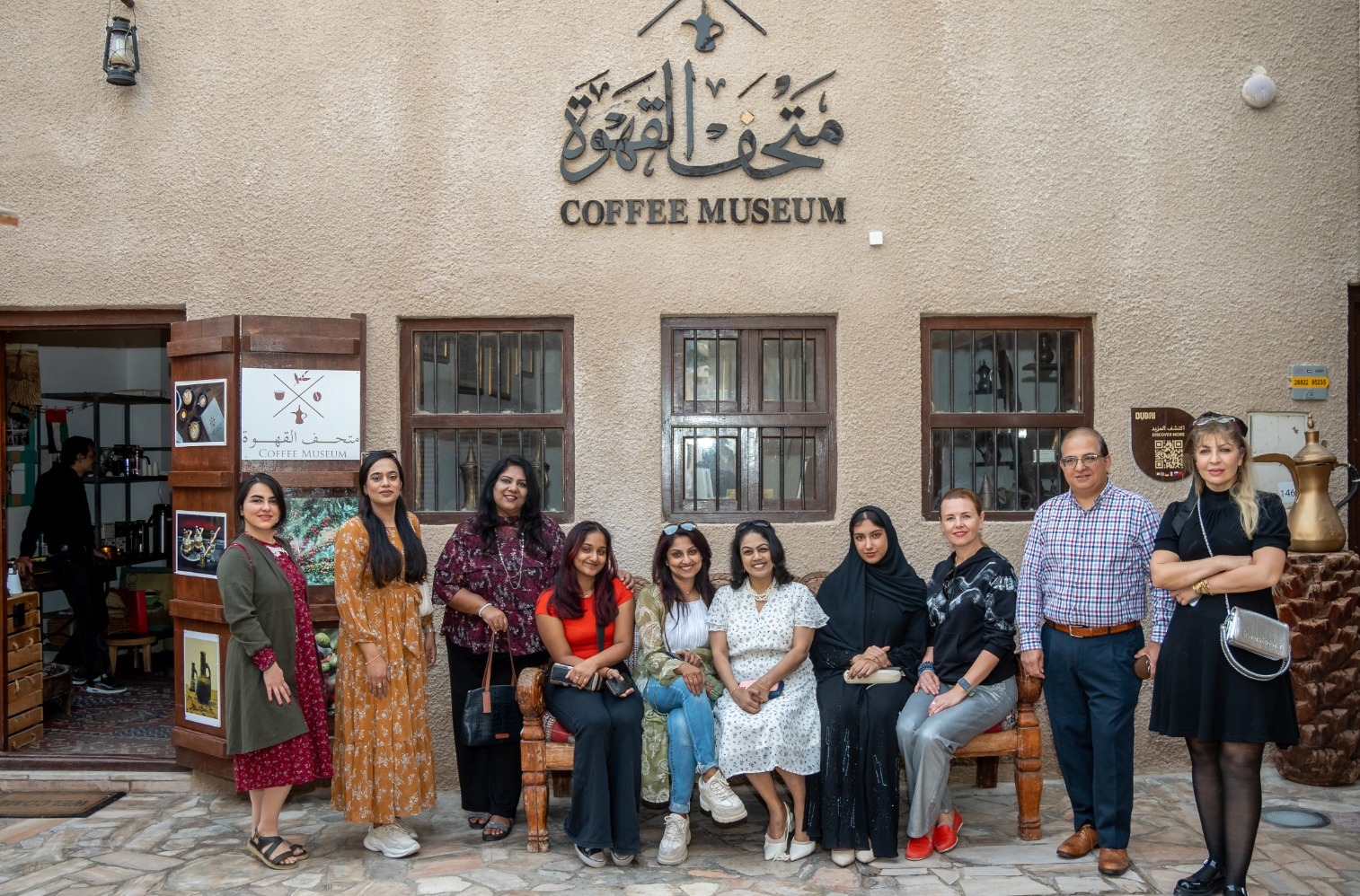
Inside Dubai’s Coffee Museum: A Journey Through History, Culture, and Flavor

By: Jesno Jackson

In a world where coffee has become more than just a beverage but a cultural phenomenon, a visit to a coffee museum offers an immersive and enriching experience for enthusiasts and curious minds alike. Journey with us as we explore the captivating narrative of coffee’s history, culture, and artistry through our visit to a renowned coffee museum.

History and Cultural Significance:

Our team exploration began with a deep dive into the origins and historical significance of coffee. From its discovery in ancient coffee forests to its role in social rituals across different societies, we traced the journey of this beloved beverage that has captured hearts worldwide.

Cultivation, Processing, and Roasting:

The museum provided valuable insights into the meticulous cultivation and harvesting of coffee beans, as well as the various methods of processing, including drying, roasting, and grinding. We discovered the art and science behind coffee roasting, exploring vintage and modern roasting equipment and learning how different techniques influence the flavor profiles of coffee.

Brewing Techniques and Coffee Culture:

A highlight of our visit was the exploration of different coffee brewing methods, from traditional to modern. The museum showcased a variety of machines, each contributing to the diverse and rich coffee culture celebrated globally. We also delved into the artistic expressions of coffee through paintings, photography, and literature, witnessing its profound impact on art and culture.

Tasting Sessions and Interactive Exhibits:

Participating in coffee tasting sessions was a sensory delight, where we sampled a range of coffees with distinct flavors and aromas. The interactive exhibits allowed us to engage with the world of coffee through touch, smell, and experiential learning, enhancing our understanding and appreciation for this versatile beverage.

Café Experience:

Our journey concluded at the museum’s on-site café, where we savored freshly brewed coffee while reflecting on the enriching experience of our visit. The café provided a serene and relaxing environment to savor the flavors discussed during our exploration, completing our immersion into the world of coffee.

Conclusion:

A visit to a coffee museum was both educational and enjoyable, offering a comprehensive look into the world of coffee from bean to cup. In addition to serving as physical reminders of the skill and cultural significance infused into each cup of this much-loved beverage, they exhibit’s pots, brass relics, and other items illustrate the progression of coffee preparation. An intriguing look into the development of coffee processing was found in the coffee museum’s collection of vintage roasting machines. These exquisitely preserved artifacts, showcased the skill and creativity involved in roasting coffee beans, transport viewers to a bygone period with their elaborate patterns and historical relevance. There was a literature room occupied with books on coffee and History of Coffee and Coffee World.

It was a cozy heritage space exploring roasting & brewing styles from around the world, plus displays of antiques. We had our guide Andres from Colombia, who was a professional coffee taster with more than 20yrs of experience. Attendees included Alia Amin, Neetu George, Anahita Ansaripour, Shakiba Rabiei, Alzbeta Znamenska, Aliyeh Mohammad, Mahum Shoaib, Nigam, Aimee George, Maria Komal Abie, Jesno Jackson, Vasilisa Eliseeva, Murali Kuttappan, Shehab Shoukry and Apurbo DXB24live.

Visiting a coffee museum is not just a tour but a journey that deepens one’s connection to coffee’s rich heritage and cultural significance. It’s an experience that tantalizes the senses, broadens knowledge, and fosters a profound appreciation for the artistry and complexities behind every cup of coffee. Whether you’re a coffee enthusiast, a history buff, or simply curious about the world of coffee, a visit to a coffee museum promises an unforgettable and enlightening experience.

Top 10 countries in coffee production and consumption

Coffee has become a part of the daily life of hundreds of millions of people around the world for mood and health purposes. Knowing the top coffee-producing and consuming countries in the world may be something new for many.

Before we begin, it might be helpful to mention that there are two types of coffee: Arabica and Robusta. So, what is the difference between Arabica and Robusta?

A report published by “The Roasters Pack,” a coffee news website, highlighted the differences between Arabica and Robusta as follows:

Taste: Robusta coffee has a bitter taste due to its higher caffeine content and chlorogenic acid compared to Arabica coffee, which has a more moderate taste.

Caffeine: Robusta beans contain up to 2.7% caffeine compared to only 1.5% in Arabica beans.

Fat and Sugar: Arabica coffee contains 60% more fat than Robusta, and about double the amount of sugar. This might be one of the factors why many people prefer the taste of Arabica.

Price: The price of Robusta coffee is about half that of Arabica coffee in the markets.

Yield: The higher caffeine level in Robusta coffee makes it more tolerant and resistant to pests on the farm, reducing the cost of cultivating Robusta compared to Arabica.

Shape: Arabica beans are oval-shaped, while Robusta beans are round. This is because the Arabica tree is shorter than the Robusta, resulting in oval-shaped beans.

Tree Height: Arabica trees reach between 2.5 and 4.5 meters, while Robusta trees range from 4.5 to 6 meters in height.

Chlorogenic Acid: The percentage of this acid plays a crucial role in the taste of coffee. It ranges from 7% to 10% in Robusta compared to 5.5% to 8% in Arabica, explaining the bitter taste of the former.

Production: The total coffee production in the world is divided into 75% Arabica and 25% Robusta.

Top Coffee-Producing Countries: In December of last year, the U.S. Department of Agriculture published a detailed report ranking the top coffee-producing countries by both Arabica and Robusta types.

Here is the ranking of the world’s top Arabica coffee-producing countries in the 2022/23 season according to the U.S. Department of Agriculture:

  1. Brazil: 39.8 million bags (1 bag = 60 kilograms)
  2. Colombia: 10.7 million bags
  3. Ethiopia: 7.3 million bags
  4. Honduras: 5.7 million bags
  5. Peru: 3.4 million bags
  6. Guatemala: 3.15 million bags
  7. Mexico: 3 million bags
  8. Nicaragua: 2.5 million bags
  9. India: 1.667 million bags
  10. China: 1.6 million bags

The ranking of the world’s top Robusta coffee-producing countries in the 2022/2023 season according to the U.S. Department of Agriculture is as follows:

  1. Vietnam: 26.3 million bags
  2. Brazil: 22.8 million bags
  3. Indonesia: 10.5 million bags
  4. Uganda: 5.575 million bags
  5. India: 4.2 million bags
  6. Malaysia: 1 million bags
  7. Ivory Coast: 1.050 million bags
  8. Thailand: 700 thousand bags
  9. Mexico: 545 thousand bags
  10. Tanzania: 520 thousand bags

The ranking of the world’s top coffee-producing countries (Arabica and Robusta) in the 2022/23 season according to the U.S. Department of Agriculture is as follows:

  1. Brazil: 62.6 million bags
  2. Vietnam: 27.2 million bags
  3. Indonesia: 11.85 million bags
  4. Colombia: 10.7 million bags
  5. Ethiopia: 7.3 million bags
  6. Uganda: 6.565 million bags
  7. India: 5.867 million bags
  8. Honduras: 5.7 million bags
  9. Mexico: 3.545 million bags
  10. Peru: 3.4 million bags

Production Outlook for 2024: The report predicts that the total coffee production, for both types, will reach 171.425 million bags by December 2024, with Brazil leading the list of producing countries with a total of 66.3 million bags, followed by Vietnam with 27.5 million bags, and then Colombia with 11.5 million bags.

The Top Coffee-Exporting Countries by Value:

The famous American statistics website “Statista” published a list of the top coffee-exporting countries in 2023 as follows:

  1. Brazil: $7.4 billion
  2. Switzerland: $3.6 billion
  3. Germany: $3.5 billion
  4. Netherlands: $1.199 billion
  5. United States: $1.193 billion
  6. Canada: $763 million
  7. Poland: $538 million
  8. Mexico: $433 million
  9. United Kingdom: $234 million
  10. Canada: $228 million

The World’s Top Coffee-Consuming Nations:

The statistics website “World of Statistics” posted a list of the world’s top coffee-consuming nations in 2023 on its official Twitter page as follows:

  1. Finland: Average annual coffee consumption per person is 9.6 kilograms.
  2. Norway: 7.2 kilograms
  3. Netherlands: 6.7 kilograms
  4. Sweden: 6.5 kilograms
  5. Slovenia: 6.1 kilograms
  6. Australia: 5.5 kilograms
  7. Serbia: 5.4 kilograms
  8. Denmark: 5.3 kilograms
  9. Germany: 5.2 kilograms
  10. Belgium: 4.9 kilograms

Top Coffee-Consuming Arab Countries: According to the 2020/2021 statistics released by the International Coffee Organization, the ranking of the top coffee-consuming Arab countries is as follows:

• Algeria: 2.13 million bags. • Egypt: 1.27 million bags. • Saudi Arabia: 1.25 million bags. • Morocco: 780 thousand bags. • Sudan: 702 thousand bags. • Lebanon: 452 thousand bags.

Rapid Growth of Independent Coffee Shops in the UK

Independent coffee shops in the United Kingdom are rapidly increasing in number, reaching around 12,212 cafes. Thanks to the growing demand for high-quality coffee and exceptional service, the market witnessed a 4.1% growth to achieve sales of £4.6 billion during the past year.

World Coffee Portal forecasts indicate that the number of independent cafes in the UK is expected to surpass 12,400 cafes in the coming year, with sales growth of 4.1% to reach £4.8 billion by 2025.

Factors such as beverage quality and personalized service are considered key drivers of consumer attraction to independent cafes. However, some studies suggest that the importance of specialty coffee has decreased among consumers in the UK compared to previous years.

Despite economic challenges, experts expect this sector to continue growing in the future, reflecting consumers’ desire to support local cafes during these difficult times.

This report highlights the developments in the independent coffee shop market in the United Kingdom, including market size, consumer research, industry consultations, and strategic analysis of the latest industry dynamics.