Africa at 63: Coffee Quietly Takes Its Place in the African Union’s Continental Vision

Source: Qahwa World – Special coverage from Addis Ababa
Author: Qahwa world × Buna Kurs – ADDIS ABABA
Photographer: Antonio Fiorente
Date: May 26, 2026

Africa at 63: Coffee Quietly Takes Its Place in the African Union’s Continental Vision

Executive Summary

  • At the 2026 Africa Day celebrations at the African Union headquarters in Addis Ababa, coffee emerged as a central element of the continent’s identity and economic vision.
  • Ethiopia’s Akoya Group was the most visible private-sector presence, with an Akoya Coffee pavilion serving Ethiopian filter coffee to diplomats and guests.
  • In February 2024, African heads of state formally adopted coffee as a strategic commodity under Agenda 2063 and recognized the Inter-African Coffee Organisation (IACO) as an AU specialized agency.
  • The decision followed G25 African Coffee Summits in Nairobi, Kampala, and Dar es Salaam, pushing for roasting, branding, and value retention within Africa.
  • Coffee supports an estimated 60 million Africans, yet the continent captures only a fraction of global coffee value, which remains concentrated outside Africa.
  • AU Commission Chairperson Mahmoud Ali Youssouf highlighted Africa’s growing global role, including permanent G20 membership.

At this year’s Africa Day celebrations inside the headquarters of the African Union, coffee was never officially the central theme. And yet, across the atmosphere of the three-day commemoration – from weekend sports competitions and cultural showcases to the private-sector presence surrounding the event – the continent’s most iconic crop appeared increasingly intertwined with the larger conversation Africa is now having about identity, trade, value creation and global positioning.

Among the most visible private-sector presences throughout the celebrations was Akoya Group, the Ethiopian conglomerate whose activities span real estate, tourism, automotive and coffee export through Akoya Coffee.

Across much of the AU compound, “Akoya Africa Day 2026” branding framed the public-facing atmosphere of the commemorations, while an Akoya Coffee pavilion at the entrance of the main ceremonial hall served Ethiopian filter coffee to diplomats, dignitaries and invited guests.

From Cultural Symbol to Strategic Commodity

Held under the theme “Sixty-Three Years of Unity, Integration and Development – Let’s Celebrate Together,” Africa Day 2026 brought diplomats, artists, exhibitors, youth representatives and families together inside the AU headquarters in Addis Ababa, the diplomatic capital of Africa and the city most closely associated with the origins of arabica coffee itself.

As cultural performances, artisan exhibitions and public celebrations unfolded across the AU compound, coffee lingered not merely as ceremony or hospitality, but increasingly as strategy.

In his official Africa Day address, African Union Commission Chairperson Mahmoud Ali Youssouf described the occasion as both “a celebration of our shared heritage” and recognition of “Africa’s growing role in shaping global affairs,” while reaffirming the continent’s commitment to Agenda 2063 and deeper continental integration.

The Chairperson pointed to Africa’s growing global role, including the continent’s permanent membership in the G20, as evidence that Africa intends to participate more actively in shaping international economic discussions – a direction increasingly echoed in conversations surrounding African coffee, trade and value addition.

Coffee as a Strategic Commodity Under Agenda 2063

That shift is no longer symbolic. In February 2024, during the 37th Ordinary Session of the AU Assembly in Addis Ababa, African heads of state formally adopted coffee as a strategic commodity under Agenda 2063 while also recognizing the Inter-African Coffee Organisation (IACO) as a specialized agency of the African Union.

The move followed a series of G25 African Coffee Summits in Nairobi, Kampala and Dar es Salaam, where African leaders and sector stakeholders pushed for the continent to move beyond exporting raw beans toward roasting, branding and retaining more value on African soil.

For many within the sector, the message is becoming increasingly clear: the continent that gave coffee to the world is beginning to ask how much more of the coffee economy should remain within Africa itself.

Coffee today supports the livelihoods of an estimated 60 million Africans, yet the continent still captures only a fraction of the value generated by the global coffee economy, much of which remains concentrated in roasting, branding and retail markets outside Africa.

Indicator Figure
Africans whose livelihoods depend on coffee Approximately 60 million
Date of adoption as strategic commodity under Agenda 2063 February 2024
G25 African Coffee Summits locations Nairobi, Kampala, Dar es Salaam

A Distinctly African Atmosphere

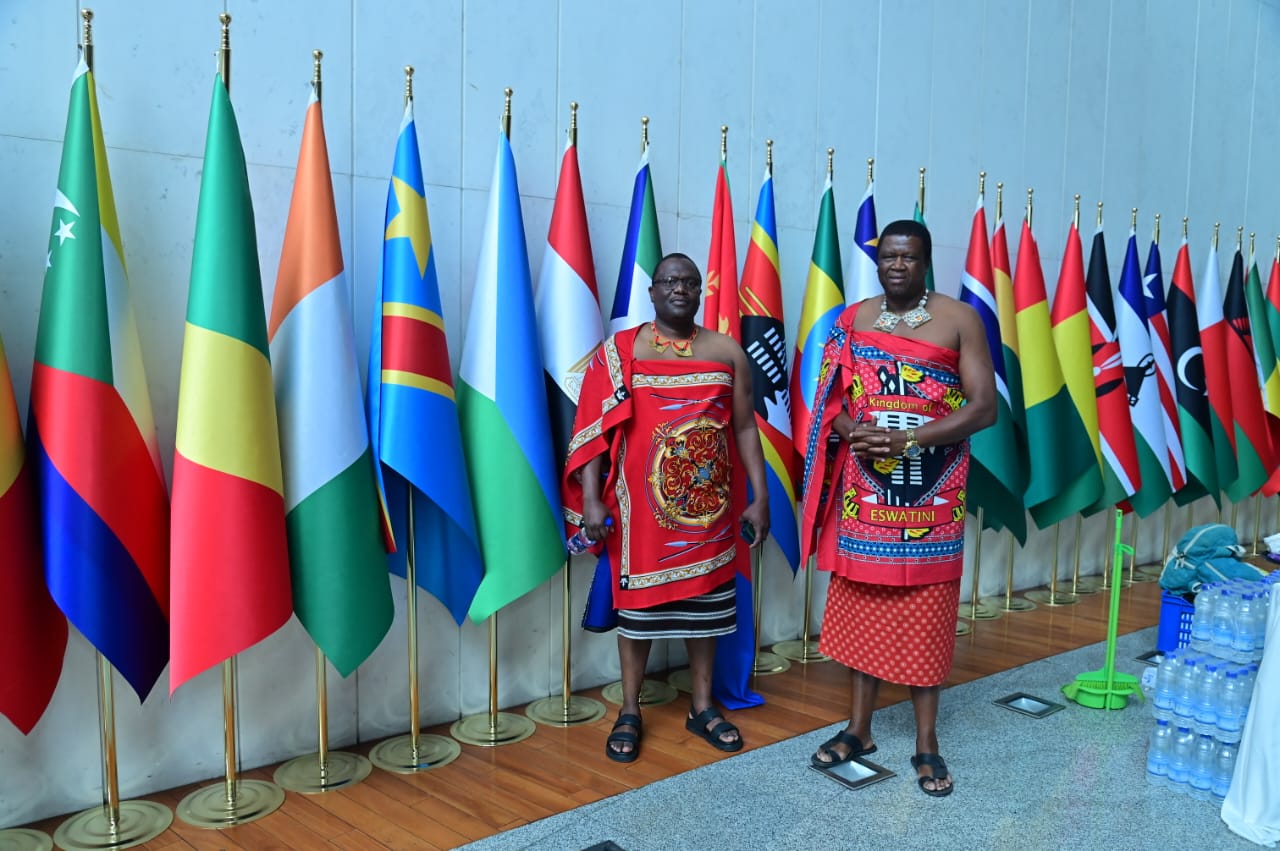
Inside the AU compound over the three-day celebration, textiles, artisan stands, music, public gatherings and coffee ceremonies blended into an atmosphere that felt distinctly African and noticeably public-facing, far removed from the often formal diplomatic image associated with the institution. And perhaps that is where the deeper symbolism of coffee at Africa Day 2026 ultimately rested. At a continental gathering built around unity, integration and development, the beverage that originated in Africa appeared quietly aligned with many of the ambitions the African Union now places at the center of Agenda 2063: local manufacturing, youth employment, cross-border trade, cultural identity and stronger African ownership over globally recognized products.

At 63, Africa is not merely celebrating its heritage. It is increasingly attempting to reclaim ownership over how that heritage is processed, valued and presented to the world.

Frequently Asked Questions (FAQ)

1. What event brought coffee into the African Union’s strategic vision?

The 2026 Africa Day celebrations at the AU headquarters in Addis Ababa, where coffee emerged as a central element of identity and economic strategy.

2. When did the AU adopt coffee as a strategic commodity?

In February 2024, during the 37th Ordinary Session of the AU Assembly in Addis Ababa, under Agenda 2063.

3. What is the Inter-African Coffee Organisation (IACO)?

It is recognized as a specialized agency of the African Union, working to advance the coffee sector across the continent.

4. How many Africans depend on coffee for their livelihoods?

Approximately 60 million people.

5. Which Ethiopian company stood out at the celebration?

Akoya Group, through its Akoya Coffee pavilion.

6. What is the main message of coffee’s presence at Africa Day?

Africa is seeking to reclaim ownership of processing, valuing, and presenting its heritage, keeping more coffee value within the continent.

Author: Qahwa world × Buna Kurs – ADDIS ABABA  |
Photographer: Antonio Fiorente  |
Source: Qahwa World – Special coverage  |
Publication date: May 26, 2026
Ethiopia to Host 4th G-25 African Coffee Summit in Addis Ababa in 2027

Author: Qahwa World – Dubai
Source: Official announcement
Date: May 16, 2026

Executive Summary

  • Ethiopia signed a host country agreement with the Inter-African Coffee Organization to host the 4th G-25 African Coffee Summit in 2027
  • The agreement also establishes IACO first country office in Ethiopia
  • The summit aligns with African Union Agenda 2063 recognizing coffee as a strategic commodity
  • Africa currently contributes only 12 percent of global coffee production despite being the birthplace of coffee
  • Ethiopia aims to become one of the world leading coffee exporters by 2033
  • The African Union recently designated IACO as a specialized agency

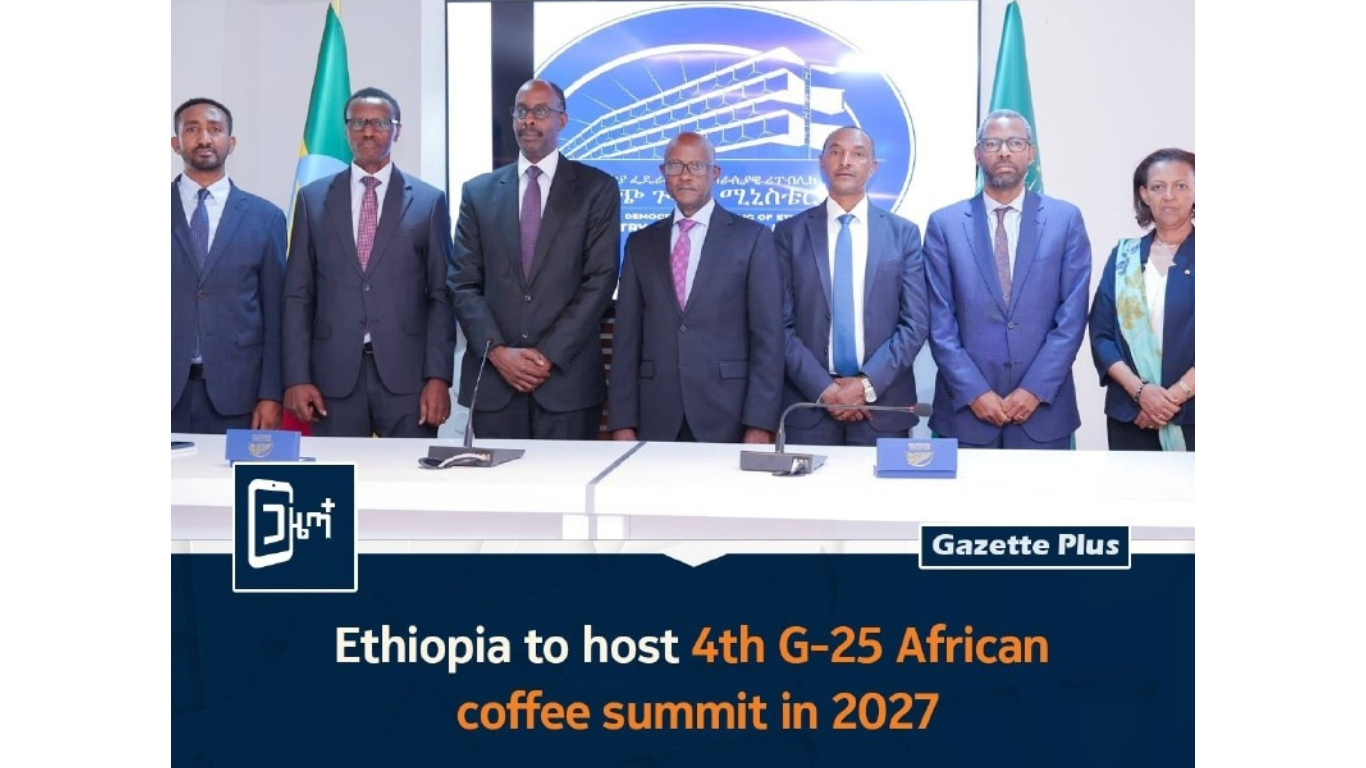
Ethiopia has signed a host country agreement with the Inter-African Coffee Organization to establish the organization first country office in Ethiopia and to host the 4th G-25 African Coffee Summit in Addis Ababa in 2027.

The agreement was signed between State Minister of Foreign Affairs Ambassador Hadera Abera and IACO Secretary-General Ambassador Solomon Rutega.

According to officials, the agreement aligns with the African Union Agenda 2063, which recognizes coffee as a strategic commodity for the continent economic transformation.

Africa coffee production challenges

Speaking at the signing ceremony, Ambassador Hadera noted that although Africa is the birthplace of coffee, the continent currently contributes only 12 percent of global coffee production. This low share persists due to several challenges including low productivity, value chain imbalances, and climate-related pressures.

He stated that the partnership will support Ethiopia ambition to become one of the world leading coffee exporters by 2033. He added that the agreement creates a stronger framework for continental cooperation and sectoral transformation.

Historic milestone for IACO

IACO Secretary-General Ambassador Solomon Rutega described the agreement as a historic milestone. He said it reconnects the organization with the origin of coffee while advancing efforts to improve the livelihoods of millions of coffee-dependent households across Africa.

He also recalled the African Union recent decision to designate the 66-year-old IACO as a specialized agency. This recognition further strengthens the organization mandate to promote African coffee on the global stage.

Context: The G-25 African Coffee Summit is a high-level gathering of Africa top coffee-producing nations. It aims to address challenges facing the continent coffee sector and promote sustainable development.

Strategic importance

The agreement marks a significant step in Ethiopia efforts to strengthen its position in the global coffee market. As the birthplace of coffee, Ethiopia holds a unique cultural and historical connection to the beverage. The establishment of IACO first country office in Addis Ababa reinforces this connection.

The 4th G-25 African Coffee Summit in 2027 is expected to draw participants from across the continent. It will focus on boosting productivity, improving value chains, and building climate resilience in the African coffee sector.

Frequently Asked Questions

What is the G-25 African Coffee Summit?
The G-25 African Coffee Summit is a high-level meeting of Africa major coffee-producing nations. It addresses challenges facing the continent coffee sector and promotes cooperation among member states.

When and where will the 4th summit take place?
The 4th G-25 African Coffee Summit will be held in Addis Ababa, Ethiopia, in 2027. Specific dates have not yet been announced.

What is the Inter-African Coffee Organization?
IACO is a 66-year-old specialized agency of the African Union. It works to promote and develop the coffee sector across Africa.

Why is Ethiopia hosting the summit and IACO office?
Ethiopia is the birthplace of coffee and aims to become a leading global coffee exporter by 2033. Hosting the summit aligns with these ambitions.

How much coffee does Africa produce globally?
Despite being the birthplace of coffee, Africa currently produces only 12 percent of the world coffee supply due to productivity, value chain, and climate challenges.

What is African Union Agenda 2063?
Agenda 2063 is the African Union strategic framework for the continent socio-economic transformation. It recognizes coffee as a strategic commodity.


Author: Qahwa World – Dubai
Source: Official announcement
Date: May 16, 2026

ICO, IACO Sign MoU on Coffee Cooperation

Agreement at World of Coffee San Diego focuses on data, regulation, and support for Africa’s coffee sector

San Diego — Qahwa World

The first day of World of Coffee San Diego saw the International Coffee Organization (ICO) and the Inter-African Coffee Organisation (IACO) formalise their cooperation through the signing of a Memorandum of Understanding (MoU).The agreement builds on an existing relationship between the two institutions and outlines areas for closer coordination across data, research, and policy support for African coffee-producing countries.

Structured Cooperation Across Key Areas

The MoU establishes a framework for collaboration in several technical and strategic areas relevant to the evolving coffee landscape.

These include improving data collection and analysis, supporting compliance with regulatory developments such as the European Union Deforestation Regulation (EUDR), advancing research into climate resilience, and strengthening capacity along the coffee value chain.

While the agreement does not introduce binding commitments, it provides a basis for coordinated initiatives and information exchange between the two organisations.

Africa’s Position in Focus

The partnership also reflects a continued effort to better integrate African perspectives into global coffee discussions.

African producing countries play a significant role in global coffee supply, yet continue to face structural challenges, including exposure to climate risks, limited access to finance, and evolving market requirements.

Through closer institutional coordination, the ICO and IACO aim to support member countries in navigating these challenges and engaging more effectively with international frameworks.

Institutional Context

The International Coffee Organization, established in 1963, serves as an intergovernmental platform for cooperation between coffee-exporting and importing countries, with a focus on market transparency, sustainability, and sector development.

The Inter-African Coffee Organisation represents African coffee-producing nations and works to promote production, improve quality, and enhance the competitiveness of the region’s coffee sector.

The MoU reflects a continuation of engagement between the two bodies rather than a new institutional direction.

World of Coffee as a Meeting Point

World of Coffee, organised by the Specialty Coffee Association, provides a platform for industry stakeholders ranging from producers and exporters to roasters, researchers, and policymakers.

The San Diego edition highlights ongoing conversations around sustainability, regulation, and market dynamics, with a growing emphasis on coordination between producing and consuming regions.

Participants

  • Vanusia Nogueira, Executive Director of the International Coffee Organization
  • H.E. Ambassador Solomon Rutega, Secretary General of the Inter-African Coffee Organisation
  • Claude Bizimana, Executive Chairman of the Inter-African Coffee Organisation
  • Celestine Gataraiha, Director of Research and Development at the Inter-African Coffee Organisation

Analysis

Memoranda of understanding are a common instrument in international cooperation, often used to formalise intent and provide a structure for future collaboration rather than immediate operational change.

In this context, the ICO–IACO agreement can be seen as part of a broader pattern of institutional alignment within the coffee sector, particularly as regulatory and environmental pressures increase.

Its practical significance will depend on how the outlined areas of cooperation translate into concrete programmes and measurable outcomes over time.

Reporting by Qahwa World from San Diego

Climate Innovation Takes Center Stage at 7th African Coffee Scientific Conference

Addis Ababa – Qahwa World × Buna Kurs

Following yesterday’s high-level policy commitments, the focus of the Third African Coffee Week shifted today from the corridors of power to the laboratory and the field. Scientists, researchers, and agronomists gathered at the Skylight Hotel for the 7th African Coffee Scientific Conference, under the theme “Climate-Resilient Coffee: Innovation for a Sustainable Future”.

While Day One established the policy framework for the continent, Day Two provided the scientific “how-to,” focusing on breeding, pest management, and the institutionalization of African coffee research.

A New Era for Robusta: The Regional Breeding Network

A major highlight of the morning session was the formal launch of the Robusta breeding network, a collaborative initiative involving Ghana, Uganda, and Rwanda. Led by Robert Kawuki, the network aims to modernize breeding efforts for a variety that is increasingly seen as a cornerstone of climate adaptation due to its relative heat tolerance compared to Arabica.

The session, moderated by Dr. Geofrey Arinaitwe, also delved into the genetic foundations of Ethiopian coffee. Researchers Natol Bakala and Wakuma Merga presented findings on the genetic diversity of “Laage” coffee landraces, emphasizing that preserving Ethiopia’s unique genetic reservoir is critical for the global coffee industry’s survival.

Science-Driven Adaptation and Pest Management

As climate change shifts ecological zones, the conference addressed the alarming migration of pests and diseases. Kifle Belachew Bekele presented a critical study on why Coffee Leaf Rust (Hemileia vastatrix) has begun migrating to highland Arabica growing areas in Ethiopia—territories previously considered “safe” due to their altitude.

Other scientific breakthroughs discussed included:

  • Disease Resistance: Admikew Getaneh shared research on the phytochemical basis of resistance to Coffee Wilt Disease, while Monyo Grace presented new F1 hybrid genotypes resistant to Coffee Berry Disease.

  • Eco-Innovation: Mariamawit S. Kassa explored “Beyond the Brew,” highlighting the hidden potential of spent coffee grounds, while Mohammed Aman discussed using the Desmodium plant for sustainable production.

  • Pest Control: Innovative “locally made” traps for the Black Coffee Twig Borer in Northern Tanzania were showcased by Aden Mbuba as a low-cost, high-efficiency solution for smallholders.

Institutionalizing Knowledge: The African Coffee Research Center

The afternoon session marked a pivotal moment for the continent’s intellectual infrastructure. The Inter-African Coffee Organisation (IACO) and the African Coffee Research Network (ACRN) announced the establishment of the African Coffee Research Center. This center is designed to be the “brain” of the continent’s coffee sector, ensuring that the research presented today translates into scalable field solutions.

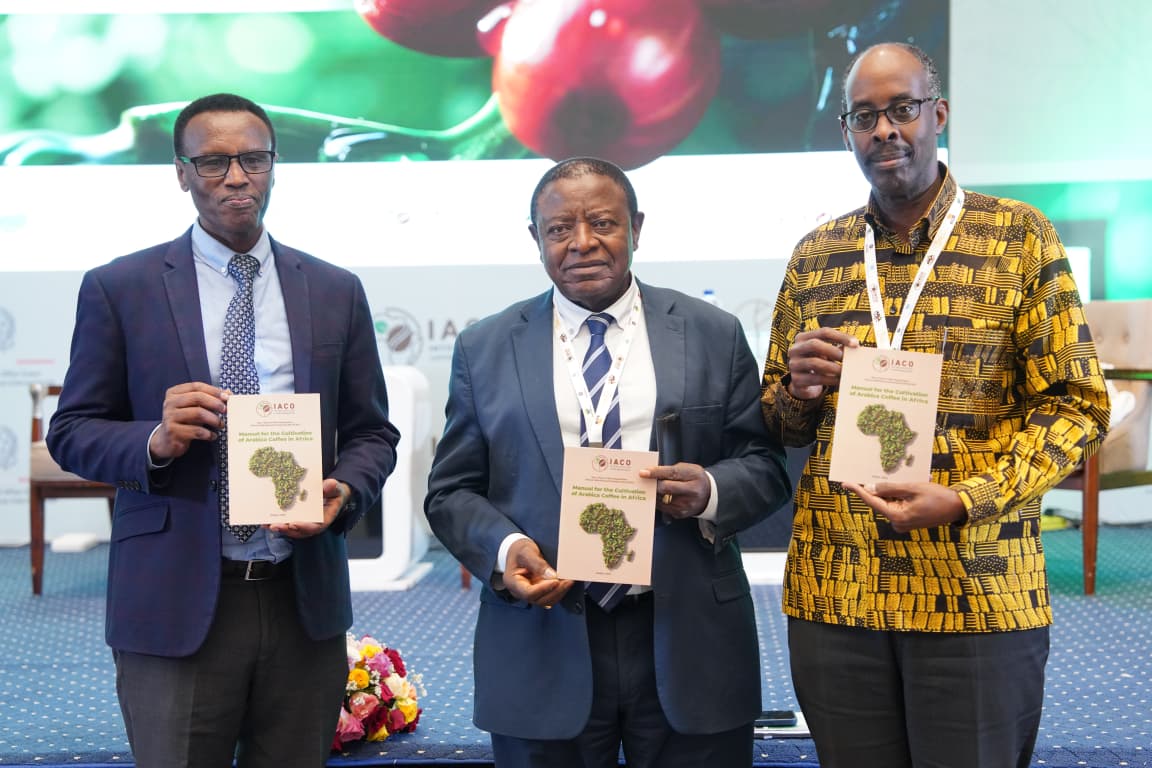
To wrap up the day’s proceedings, the Secretary General of IACO and the Chairperson of the ACRN officially launched the new coffee manual, a comprehensive guide intended to harmonize best practices across Africa’s diverse coffee-growing regions.

The conference concluded with closing remarks from the IACO Chairman, signaling a transition from scientific theory to a unified, continental implementation strategy.

Africa’s Coffee Leaders Launch Climate Transformation Plan in Addis

Addis Ababa – Qahwa World × Buna Kurs

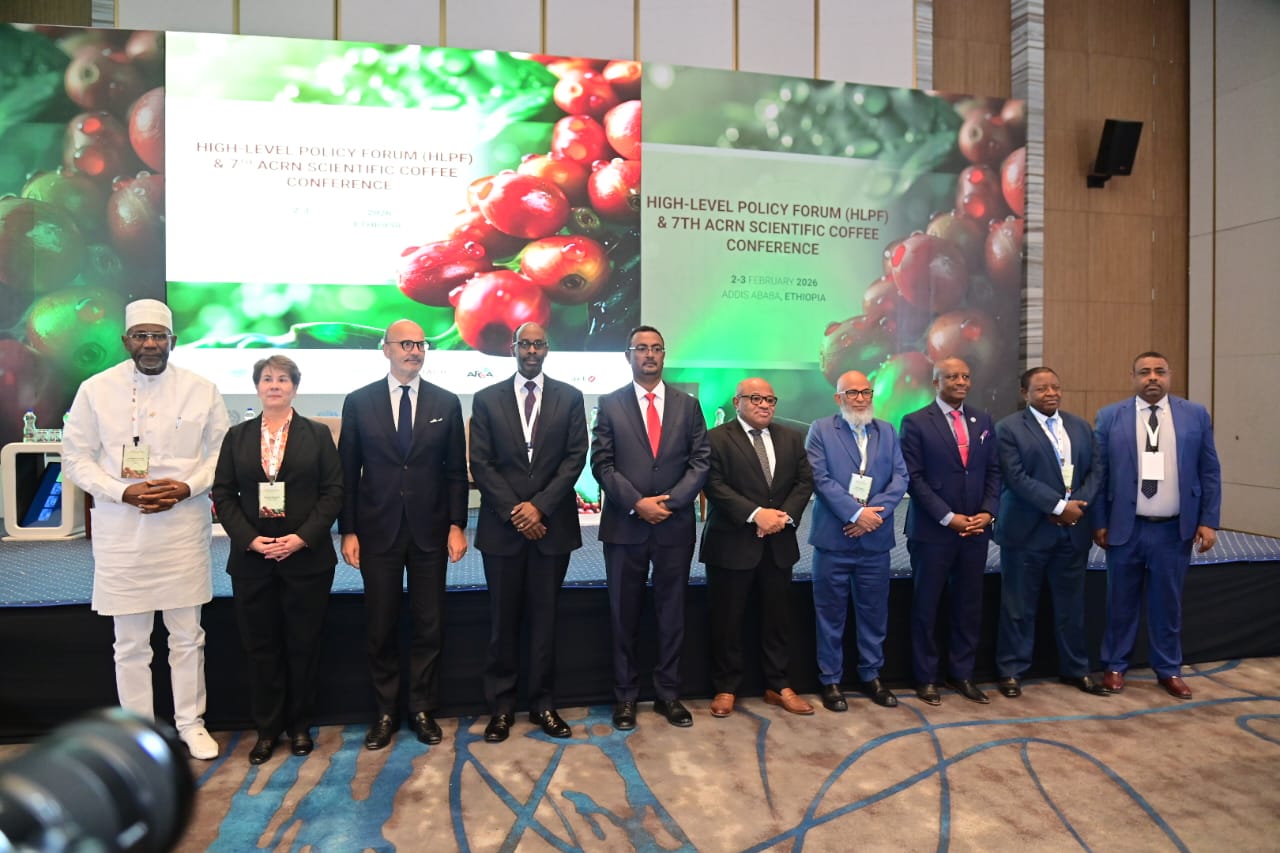
African governments, international institutions, and private sector leaders convened today in Addis Ababa for the High-Level Policy Forum held during the Third African Coffee Week. The assembly issued a strong call for coordinated action to safeguard the future of Africa’s coffee sector amid escalating climate and market pressures.

Organized by the Inter-African Coffee Organisation (IACO)—the African Union’s specialized agency for coffee—in collaboration with UNIDO, the Forum is being held under the theme: “Advancing Climate Resilience and the Transformation of the African Coffee Sector.” The event, hosted at the Skylight Hotel, brings together ministers, ambassadors, development partners, regulators, researchers, and industry executives from across Africa and beyond.

In the opening session, senior representatives of the Ethiopian government, IACO member states, the African Union, UN agencies, and international partners underscored the strategic importance of coffee to Africa’s economies and export earnings. While coffee supports millions of smallholder farmers across the continent, it faces growing risks from climate change, regulatory shifts, and limited local value addition.

The High-Level Policy Forum is anchored in the ACT Programme (Advancing Climate-Resilience and Transformation of the African Coffee Sector), a continental framework structured around five key pillars:

  1. Climate resilience

  2. Value addition and industrial transformation

  3. Compliance with international market standards

  4. Research, innovation, and knowledge sharing

  5. Social inclusion and sustainable livelihoods

Day One discussions focused on five outcome-oriented policy panels, each aimed at producing actionable recommendations and investment pathways:

  • The First Panel addressed social inclusion, emphasizing the need to place farmers, women, and youth at the center of sector transformation. Speakers highlighted inclusive business models, access to finance, and skills development as essential to long-term resilience in coffee-growing communities.

  • The Second Panel examined value addition, noting that Africa still exports the majority of its coffee as green beans. Panelists discussed the investments needed to expand local processing, roasting, and branding, specifically looking at opportunities under the African Continental Free Trade Area (AfCFTA).

  • The Third Panel was dominated by climate resilience and adaptation. Experts outlined climate-smart production systems, agroforestry, and the role of climate finance in supporting smallholder farmers, stressing that adaptation must move from pilot projects to scalable, financed solutions.

  • The Fourth Panel focused on research and innovation, calling for the integration of scientific data and digital tools into policymaking. Regional collaboration and South–South knowledge exchange were identified as key enablers of quality improvement.

  • The Final Panel addressed market access and compliance, with particular attention to the European Union Deforestation Regulation (EUDR). Speakers discussed traceability systems and how harmonized African standards can transform compliance from a barrier into a competitive advantage.

The day concluded with the official launch of the African Coffee Sustainability Standards, led by the African Organisation for Standardisation (ARSO)—a milestone aimed at strengthening market access and regulatory alignment for African producers.

The High-Level Policy Forum continues tomorrow, focusing on consolidating policy recommendations and partnership commitments under the ACT Programme.