Top Espresso Drinks: Latte Up 31% in 2026

New York, NY – Qahwa World announces new insights on espresso-based beverages 2026 trends.

Americans aren’t just drinking more specialty coffee. They are going espresso first, which is especially evident in espresso-based beverages 2026 results.

According to the Spring 2026 National Coffee Data Trends (NCDT) report from the National Coffee Association, 58% of American adults had a specialty coffee in the past week, up from 53% in 2022. But the real story lies inside the cup: Espresso-Based Beverages (EBBs) are driving the growth. Notably, espresso drinks based on espresso are shaping beverage preferences in 2026.

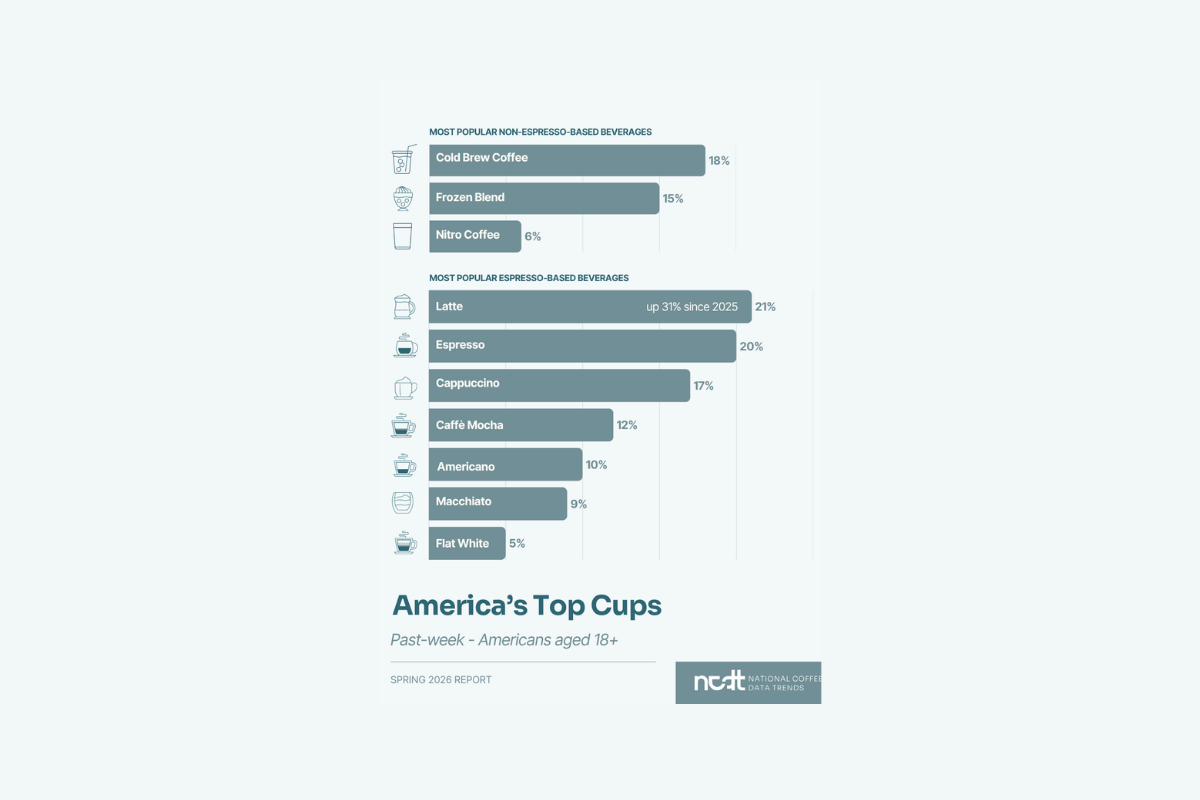
Overall, 45% of American adults consumed an EBB in the past week, up from 40% in 2022. The newly released “America’s Top Cups” ranking for Americans aged 18+ reveals the order of espresso favorites, highlighting how espresso-based drinks will continue evolving throughout 2026.

The Top Espresso-Based Beverages (Past Week)

Rank Beverage Past-week consumption Change since 2022
1 Latte 21% Up from 17%
2 Espresso 20% Up from 16%
3 Cappuccino 17% No change
4 Caffè Mocha 12% No change
5 Americano 10% No change
6 Macchiato 9% No change
7 Flat White 5% No change

📈 Latte surges 31% since 2025

The latte is accelerating. The report shows latte consumption is up 31% since 2025, making it the fastest growing espresso beverage. Straight espresso also climbed from 16% to 20% over the same period. A sign of growing appreciation for quality shots. In conclusion, we see espresso-based beverages 2026 influencing consumption patterns across the industry.

A Changing Coffee Landscape

Non-espresso options like cold brew (18% popularity) and frozen blends (15%) still have a place. But the espresso category is where the momentum lies. For retailers, these espresso-based beverages 2026 trends indicate that menu innovation is essential for staying ahead.

“The shift toward espresso-based beverages reflects a broader sophistication in American coffee tastes. Consumers know what they want, and they want it pulled fresh.”

The Spring 2026 NCDT Report was conducted in January 2026 by Dig Insights. It offers complete data on consumption trends, demographic breakdowns, and future forecasts, including projections for espresso-based beverages in 2026.

Coffee Still Leads US Beverage Choices in 2026, NCA Finds

Dubai – Qahwa World

According to the Spring 2026 National Coffee Data Trends (NCDT) report released by the National Coffee Association (NCA), coffee continues to rank as the most popular beverage among American adults. Nearly 195 million U.S. adults — roughly 73% of the adult population — drink coffee each week, maintaining its position at the top of the country’s beverage hierarchy.

Past-day consumption remains steady at 66% of American adults, consistent with levels observed since 2022. Weekly drinking habits show similar stability. This confirms coffee’s enduring role in daily life, surpassing other beverages such as bottled water, tea, soda, and juice in long-running surveys dating back to 1950.

Key highlights from the Spring 2026 NCDT report

The data, collected between January 5 and 20, 2026, from a nationally representative sample of 1,850 U.S. adults who consumed a beverage other than tap water in the previous day, reveals several consistent and evolving patterns:

  • Morning rituals and home brewing dominate: Among past-day coffee drinkers, 82% prepare their coffee at home, while 28% have it prepared away from home. Consumption remains highly habitual: 86% drink coffee first thing in the morning, followed by 38% later in the morning, 22% in the afternoon, and 11% in the evening. These patterns have shown little change since 2022, underscoring coffee’s deep integration into daily routines.
  • Traditional coffee holds firm: 62% of American adults consumed traditional coffee in the past week, unchanged from 2022.
  • Specialty coffee sees notable growth: Past-week specialty coffee consumption has risen by 9.4% since 2022, increasing from 53% to 58% of American adults. This growth is largely driven by espresso-based beverages, which rose from 40% to 45% in past-week consumption. Specific increases include:
    • Lattes: from 17% to 21%
    • Straight espresso: from 16% to 20%

This shift reflects growing consumer interest in café-style drinks, likely supported by the rise of at-home espresso machines, premium pods, and broader engagement with specialty coffee culture.

NCA leadership on coffee’s lasting role

NCA President and CEO Bill Murray said:

“Coffee has long been a touchstone in Americans’ daily lives and a powerhouse in our economy, adapting to fit different tastes, trends, budgets, and routines over time. We expect that to continue for many decades to come.”

This adaptability is reflected in coffee’s economic impact. The industry supports 2.2 million U.S. jobs, operates in every state and territory, and contributes nearly $350 billion to the economy annually.

Why this matters

The 2026 findings highlight coffee’s resilience. While overall consumption has plateaued at historically high levels since 2022, the rise in specialty and espresso-based drinks points to a maturing market in which consumers increasingly prioritize quality, variety, and experience, whether at home or on the go.

As the longest-running study of its kind, conducted twice yearly since 1950, the NCDT remains a key benchmark for the coffee industry.

For the full Spring 2026 NCDT report, visit ncausa.org/NCDT. Media highlights are also available for download. The National Coffee Association, founded in 1911, represents businesses accounting for 90% of U.S. coffee commerce.


Top Coffee Consumers 2026

Dubai – Qahwa World

As of April 2026, global coffee consumption continues to grow despite earlier price volatility. According to the USDA’s December 2025 Coffee: World Markets and Trade report, world consumption for the 2025/26 coffee year (October 2025 to September 2026) reached a record 173.85 million 60-kg bags, up 1.3 percent year on year.

This steady rise comes as supply begins to recover, yet global stocks remain tight at around 20.1 million bags for the fifth consecutive year. The result is a more balanced market, though still sensitive to price movements.

Demand growth is driven by both mature and emerging markets. The United States, Brazil, and Europe continue to anchor global consumption, while Asia is rapidly expanding, led by the Philippines, China, Vietnam, and Indonesia. At the same time, early 2026 price easing has helped maintain strong consumption momentum.

Top 20 Coffee-Consuming Countries and Regions (2025/26 Forecast)

Rank Country / Region Consumption (M bags) % Global
1 European Union 41.87 24%
2 United States 26.55 15%
3 Brazil 22.28 13%
4 Philippines 6.75 3.9%
5 Japan 6.72 3.9%
6 China 5.85 3.4%
7 Canada 5.20 3.0%
8 Vietnam 4.90 2.8%
9 Indonesia 4.81 2.8%
10 Russia 4.58 2.6%
11 United Kingdom 4.33 2.5%
12 Ethiopia 3.70 2.1%
13 South Korea 3.40 2.0%
14 Mexico 3.10 1.8%
15 Australia 2.60 1.5%
16 Colombia 2.27 1.3%
17 Algeria 2.05 1.2%
18 Turkey 1.75 1.0%
19 Saudi Arabia 1.50 0.9%
20 India 1.36 0.8%

Top 10 total: ~129.5 million bags (around 74% of global consumption).
Top 20 total: ~160.3 million bags (about 92% of global consumption).

Key Market Insights

Europe remains the largest consuming bloc, accounting for nearly a quarter of global demand, led by Germany, Italy, and France. Espresso culture and premium coffee continue to dominate.

The United States holds second place, driven by strong demand for specialty coffee, cold brew, and ready-to-drink beverages. It also remains the world’s largest coffee importer.

Brazil stands out as both a top producer and consumer, supported by a large domestic market and deeply rooted coffee culture.

Asia is the fastest-growing region. The Philippines, China, Vietnam, and Indonesia are expanding rapidly, fueled by urbanization, rising incomes, and café culture.

Emerging markets are gaining importance, including South Korea, Saudi Arabia, Turkey, and India, where younger consumers and modern retail formats are accelerating coffee adoption.

Trends Shaping Coffee Consumption

  • Asia’s rapid expansion: The region now accounts for over a quarter of global demand and continues to grow quickly.
  • Premiumization: Consumers are increasingly choosing specialty, organic, and traceable coffees.
  • RTD and cold brew growth: Ready-to-drink products are among the fastest-growing segments globally.
  • Sustainability: Certifications and ethical sourcing are becoming standard expectations in many markets.
  • Price sensitivity: While coffee remains a daily habit, demand reacts to price changes, especially in emerging markets.

2026 Outlook

With global production expected to increase further, consumption is projected to continue rising toward 175 million bags or more. Growth will be led by Asia, alongside steady demand in Europe and North America.

For industry players, the focus is shifting toward value, innovation, and sustainability. From specialty cafés to ready-to-drink formats, the global coffee market in 2026 offers strong opportunities across both mature and emerging regions.

Summary

2026 marks another record year for global coffee consumption. Traditional markets provide stability, while emerging economies drive growth. The balance between supply recovery and rising demand is shaping a more dynamic and opportunity-rich global coffee landscape.

China’s €1 Coffee Is Shaking Europe

Dubai – Qahwa World

A cup of coffee for less than one euro is no longer a rare promotion. It is becoming a daily reality in some of Europe’s busiest cities, and it is starting to change how people think about their coffee.

Step off a crowded morning train in Berlin or London and the difference is clear. Instead of waiting in line at a traditional café and paying several euros, you open an app, place your order in seconds, and pick up your drink almost immediately from a compact kiosk nearby.

No long wait. No extra cost. Just fast, affordable coffee.

This shift began to take shape in early 2026, when Chinese coffee chains expanded into major European markets. Their arrival introduced a new model that is already influencing the industry from Paris to Madrid.

A New Model Takes Shape

One of the key players is Cotti Coffee, a fast-growing brand founded in 2022. It has rapidly expanded across international markets and recently opened stores in cities such as Paris, Berlin, Madrid, and London, with more locations planned.

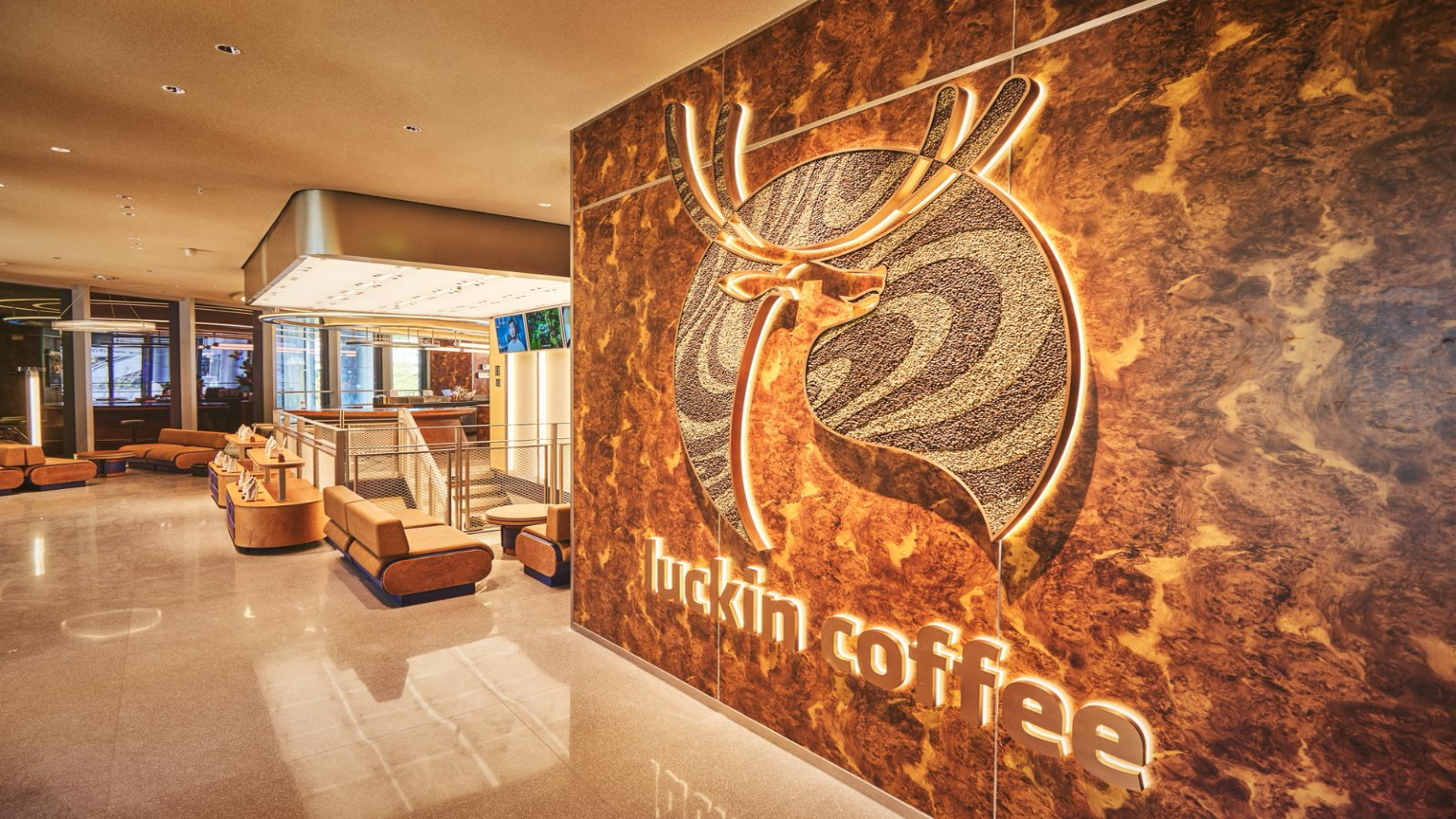
Another major name is Luckin Coffee, which operates tens of thousands of stores globally and continues to explore expansion beyond Asia.

Their approach is built on a simple formula:

Small stores in high-traffic areas
Ordering through mobile apps
Very fast service
Lower prices than traditional cafés

In some locations, espresso is offered for less than one euro, far below typical European prices.

Why Europe Is Ready

Europe has one of the strongest coffee cultures in the world. Coffee is part of everyday life, tied to routines and social moments. However, rising costs have made it more expensive in recent years.

This has created two distinct needs:

Coffee as an experience, where people sit and enjoy the atmosphere
Coffee as a daily necessity, where speed and price matter most

Chinese coffee chains are focused on the second need. They are not replacing traditional cafés but offering an alternative for quick and affordable consumption.

Tradition Still Holds

European cafés remain deeply rooted in culture and identity. Many people still value quality, ambiance, and human interaction.

Because of this, traditional and specialty cafés are expected to remain strong. They may even become more defined by focusing on craftsmanship and local character.

The market is moving toward coexistence rather than replacement.

Changing Expectations

Even without dominating the market, these new entrants are already influencing customer expectations.

They are pushing for:

Lower prices
Faster service
Greater reliance on mobile ordering
More frequent promotions

This is encouraging both independent cafés and large chains to rethink how they operate.

Two Different Approaches

For years, companies like Starbucks have focused on creating comfortable spaces where people can relax, work, or meet.

Chinese chains take a different approach. They prioritize speed, efficiency, and accessibility over atmosphere.

This creates a more diverse coffee landscape, where different models serve different needs.

A Market in Transition

Chinese coffee chains are unlikely to change the core of Europe’s coffee culture, which has developed over generations.

However, the market is clearly evolving. It is becoming more competitive, more flexible, and more responsive to changing consumer habits.

By the end of 2026, Europe’s coffee scene will likely be more diverse, offering both rich experiences and fast, affordable options.

Paris Hilton Shares Her Morning Coffee Routine That She Says Is ‘Anything but Boring’

Dubai – Q ahwa World

Paris Hilton is stepping into the coffee world with a fresh collaboration that introduces a limited series of flavored creamers and cold foam scheduled for release in January 2026. The new lineup is crafted to bring a richer, more playful touch to daily coffee moments, reflecting Hilton’s well-known love for bold aesthetics and distinctive taste.

The collection includes two creamers and a cold foam, each offering a different experience. One delivers a lively fruity profile, another mixes sweetness with a hint of heat inspired by Hilton’s famous persona, and a third brings a fluffy, candy-like finish in a vibrant shade that mirrors her signature style.

Hilton says her morning coffee is one of her favorite quiet rituals. She prepares it in a pink French press of her own design, adding her new creamers or cold foam to create a drink that matches her upbeat personality. She prefers her coffee to feel fun and expressive—never plain or predictable.

Alongside this partnership, Hilton has been opening a window into her personal and artistic life. A teaser for her upcoming documentary, Infinite Icon: A Visual Memoir, shows her preparing for her first full-length concert and looking back at the key moments that shaped her rise to global recognition.

The new coffee collection will arrive at major retailers across the country in early 2026 for a limited time.

Coffee Prices in Russia Soar to 4,000 Rubles per Kilogram

Moscow – Qahwa World

Coffee prices in Russia have reached an all-time high, with instant coffee exceeding 4,000 rubles per kilogram for the first time. Ground and roasted coffee have also risen sharply, prompting a noticeable decline in demand of 4–11% across categories.

A Steep Climb Over the Past Year

According to Russia’s Federal State Statistics Service (Rosstat), the price of natural instant coffee rose to 4,006 rubles per kilogram in September 2025, up from 3,988 rubles in August — an annual increase of 18.3%. The price of ground and roasted coffee jumped to 1,994 rubles per kilogram, marking a 29.3% rise compared with last year. In the foodservice sector, the average cup of coffee now costs 110.9 rubles, up 13.6% year-on-year.

Analytics from Check Index show that between June and August, the average retail price of coffee reached 829 rubles, 12% higher than in 2024. The average receipt for whole-bean coffee grew by 22% to 1,508 rubles per pack, while instant coffee climbed 11% to 461 rubles. Ground coffee increased by 16% to 650 rubles, and coffee capsules saw a 17% rise to 881 rubles per pack.

Why Coffee Is Getting More Expensive

The primary driver of the surge is the global rise in coffee prices. Over the past year, Arabica prices have increased by 1.5 times, while Robusta surged by 40% in just three months.
The International Coffee Organization (ICO) attributes this to poor harvest conditions in Brazil, the world’s largest producer. Additional pressure has come from U.S. tariffs on Brazilian coffee, which encouraged American roasters to stockpile supplies. European roasters are also building reserves ahead of the EU’s deforestation-free supply regulations.

According to Olga Lebedinskaya, Associate Professor at the Plekhanov Russian University of Economics, domestic factors are also adding strain: inflation, higher transportation costs, international payment difficulties, and rising labor and rental expenses have all contributed to the surge.

“The market has become highly concentrated, leaving few alternative sources,” she explains. In 2025, Brazil overtook Vietnam as Russia’s main coffee supplier. From January to September, Russian companies imported $287.9 million worth of Brazilian coffee beans, nearly double the value imported during the same period in 2024.

Lebedinskaya notes that Laos could become an alternative source, but logistical barriers remain unresolved. “While for Russia this would serve as a niche complement to Brazilian and Vietnamese supplies, for Laos it means diversifying exports without raising costs dramatically,” she said.

What to Expect in 2026

Lebedinskaya forecasts that global price increases will reach Russia’s retail market with a six-month delay, meaning consumers are likely to see new price levels by spring 2026.
“Many coffee shops are already gradually adjusting their prices to soften the impact,” she noted, adding that the traditional tactic of replacing Arabica with cheaper Robusta is no longer effective, as both varieties are now priced nearly equally.

She expects coffee shops to expand their beverage menus by promoting alternatives such as matcha, chicory, and milk-based drinks, while espresso and Americano will likely see the fastest price growth.

According to Alexey Plugov, Director of the Agribusiness Analytical Center AB-Center, 2025 is set to record the highest average global coffee prices since the 1977 coffee crisis. In 2026, he predicts that prices will remain high but fall by 10–15% from 2025 levels.

Tea and Cocoa: Moderate Movements

Rosstat data show that as of October 6, the price of black tea in Russia reached 1,351.9 rubles per kilogram, rising 7.3% over the year — slower than the overall annual inflation rate of 8.1%. According to AB-Center, green tea prices grew by 3.9%, while black tea in bags increased by only 1.6%, averaging 84.7 rubles for a 25-bag pack.

In contrast, cocoa powder prices rose 7.1% year-on-year in September to 1,139 rubles per kilogram. Plugov notes that global tea prices could rise 8–12% in 2026, while cocoa prices may fall 5–10%, though still remaining well above 2022–2023 levels.