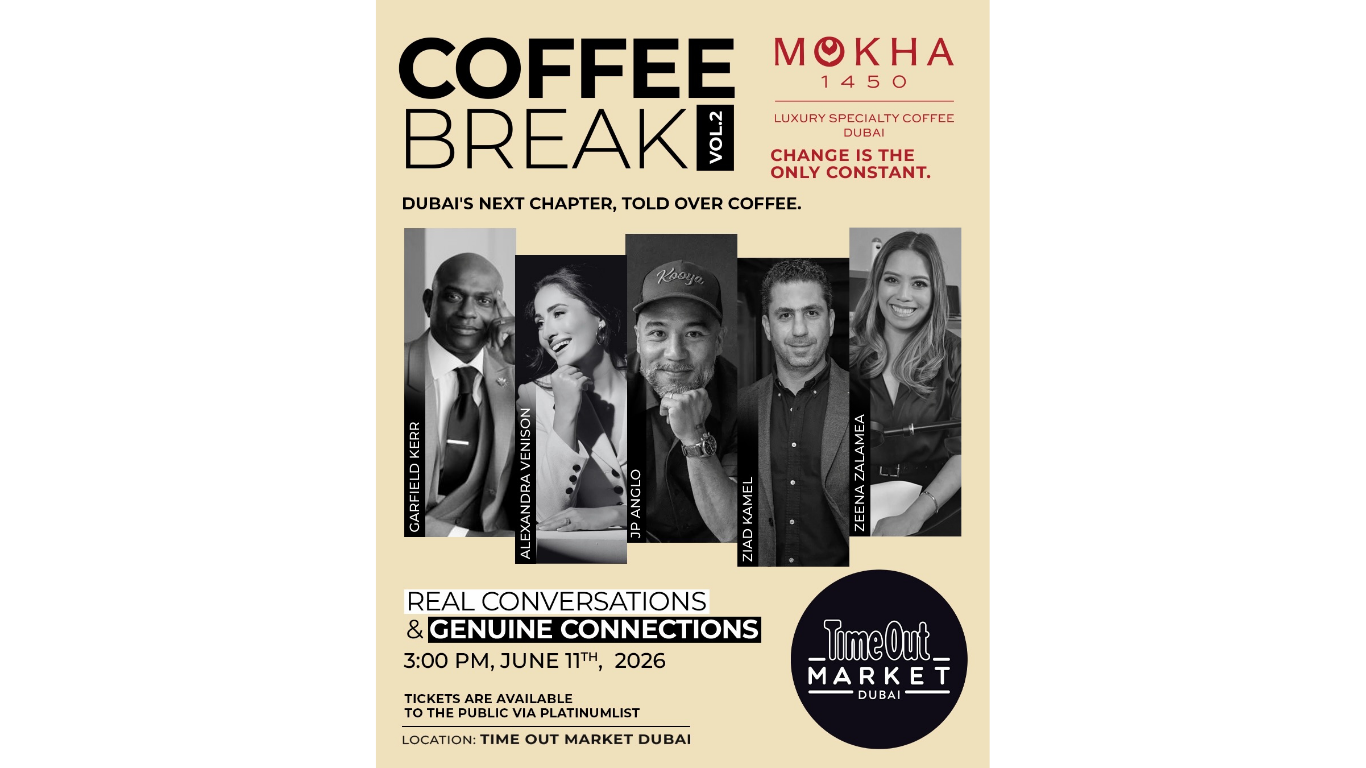
Dubai Hosts Coffee Break Vol. 2 with Conversations Shaping the City’s Future

Source: Coffee World |
Author: Events Unit |
Date: June 5, 2026

Dubai Hosts Coffee Break Vol. 2 with Conversations Shaping the City’s Future

Key Information:

  • “Coffee Break Vol. 2” takes place at Time Out Market, Souk Al Bahar, Dubai.
  • Organized in collaboration with Mokha 1450 Luxury Specialty Coffee.
  • Theme: “Dubai’s next chapter, told over coffee.”
  • Five prominent speakers from business, media, hospitality, wellness, and food culture.
  • Notable speaker: Garfield Kerr, former President of the Specialty Coffee Association.
  • Tickets start at 59 AED, including coffee and snacks.
  • Premium package at 159 AED includes a 100 AED Time Out Market card.

Dubai will soon host the second edition of “Coffee Break Vol. 2″, offering a new model for community dialogue. The event takes place on Level 3 of Souk Al Bahar, at the Time Out Market stage. It is organized in collaboration with Mokha 1450 Luxury Specialty Coffee.

The event carries a distinctive theme: “Dubai’s next chapter, told over coffee.” It aims to bring together a curated group of thought leaders and experts from multiple fields. They will discuss the ideas, businesses, and communities shaping Dubai’s next chapter.

Prominent Speakers from Five Key Sectors

“Coffee Break Vol. 2” features five speakers representing different sectors. Each brings a unique perspective on Dubai’s evolution. They are:

Name Position / Expertise
Zeena Zalamea Broadcaster, producer, entrepreneur
Garfield Kerr Lawyer, CEO of Mokha 1450, former SCA President
Alexandra Venison Journalist, Founder of Beautilist
JP Anglo Founder of Kooya, Filipino food advocate
Ziad Kamel Founder & CEO of Rosy Hospitality and multiple restaurant brands

In addition, the discussion will explore key themes including Dubai’s evolving economy, the future of hospitality and wellbeing, the role of media in shaping the city’s narrative, and the communities being built within it.

Event Location and Ticket Packages

The event takes place at the Stage Area in Time Out Market Dubai, located on Level 3 of Souk Al Bahar, Downtown Dubai. Guests can access Souk Al Bahar parking and validate their token at Atrium Bar to receive 4 hours of complimentary parking.

Ticket options are as follows:

  • 59 AED: Includes access to the conversation, coffee, and snacks.
  • 159 AED: Includes access, coffee, snacks, and a Time Out Market Dubai Card valued at 100 AED to be redeemed across the Market’s vendors and bars on the same day.

However, please note the terms: smoking is permitted only in designated areas. No refunds will be issued for no-shows or for guests arriving more than 20 minutes after the event starts. Therefore, guests are encouraged to arrive early to avoid any delays.

Strategic Partnership with Mokha 1450

This event is organized in collaboration with Mokha 1450 Luxury Specialty Coffee. This partnership extends the brand’s vision of supporting inspiring community dialogues. Furthermore, the presence of Garfield Kerr, former President of the Specialty Coffee Association, adds deep professional insight to discussions about coffee’s role in shaping urban spaces.

Additionally, the diversity of speakers reflects Dubai’s rapid evolution as a global hub for business, media, and culture. The event confirms that coffee is no longer just a beverage, but a tool for dialogue and for building the future.

Frequently Asked Questions About Coffee Break Vol. 2

Q: When will the event take place?

A: The exact date has not been announced yet. Follow Time Out Market and Mokha 1450’s official channels for updates.

Q: Where exactly is the event located?

A: On Level 3 of Souk Al Bahar, Downtown Dubai, at the Time Out Market Dubai stage area.

Q: How can I purchase tickets?

A: The booking link will be announced soon via official channels. Early booking is recommended due to limited capacity.

Q: Does the ticket price include parking?

A: Guests can get 4 hours of complimentary parking after validating their ticket at Atrium Bar.

Q: Will there be an opportunity to ask questions to the speakers?

A: Yes, the event is designed as an open conversation, and time will be allocated for Q&A.

Do not miss the chance to be part of the conversation shaping Dubai’s new chapter. Tickets are limited. The dialogue begins when you sit down with a cup of coffee. Follow our official channels to know when booking opens.

Prepared by: Coffee World team – in collaboration with Mokha 1450 and Time Out Market Dubai.

All rights reserved. Republishing with attribution is permitted.

Publication date: June 5, 2026

“Your Senses Belong Only to You” – Fuki Kanamori on Her Journey from Government Clerk to Japanese Coffee Expert

This Fuki Kanamori interview explores the world of Japanese coffee.

Interview: Qahaw World |
Interviewer: Ali AlZakary |
Date: June 2, 2026

“Your Senses Belong Only to You”: Fuki Kanamori on Her Journey from Government Clerk to Japanese Coffee Expert

Key Takeaways from the Interview:

  • “Coffee moves you” – a philosophy that reflects a man who started her journey after age 40.
  • Language barriers and lack of information were the biggest obstacles to professional growth.
  • Kanamori Coffee Lab: a lighthouse for those who want to avoid detours in specialty coffee education.
  • Science is just a tool. Never forget the person you are serving.
  • Japanese consumers blend old Kissaten craftsmanship with modern specialty coffee.
  • Ambition to collaborate with the Gulf region to share sensory education expertise.

As part of “Qahwa World’s” mission to explore inspiring coffee experiences around the globe, we now come to Japan. This is our first interview with one of the most prominent specialty coffee figures in the Land of the Rising Sun.

Fuki Kanamori was not always an expert in roasting and sensory analysis. He started her career as a local government employee. Then, in her late thirties, everything changed. He suddenly realized that he wanted a career where he could truly create and feel.

Thus, she embarked on the journey of founding “Kanamori Coffee Lab.” Today, she is a renowned educator and a certified Q Grader.

In this in-depth interview conducted by writer and specialist analyst Ali Al Zakary, Fuki Kanamori reveals her unique philosophy summarized by her beautiful slogan: “Coffee moves you.”

He talks about language challenges, her vision to close the information gap in Japan, and her passion for transferring sensory knowledge to new generations. He also offers golden advice to anyone starting their coffee journey today.

Do not miss the opportunity to learn from this inspiring Japanese experience.

Your philosophy is captured by the beautiful slogan, “Coffee moves you!” How did coffee personally move you in your early days, and what was the turning point that inspired you to pursue this career professionally, specifically focusing on roasting, brewing, and sensory analysis?

It all began in my late 30s when I had a sudden realization: “I want a career where I can truly create and feel.” Until then, I was working as a local government employee at a city office. Driven by this new passion, I taught myself by reading every coffee book I could find.

However, no matter how much I read, I simply could not grasp the complex flavor descriptions written on the pages. It was incredibly frustrating. I became determined to capture those professional sensory perceptions with my own five senses and verify the “right answers” for myself.

That was the true turning point that led me to immerse myself completely in studying to become a Q Grader. It was a late-blooming challenge, starting well after I turned 40.

Transitioning from a passionate coffee lover to a recognized Coffee Educator and Sensory Professional requires an intense journey of training. What were the most significant challenges you faced in refining your skills in roasting and advanced sensory perception?

The greatest obstacles I faced were the language barrier and a severe lack of accessible information. While certain aspects of the Japanese coffee scene are highly advanced, it is completely polarized. Japan has lagged behind global trends in cutting-edge roasting theories and advanced sensory education.

The vast majority of truly valuable primary information is published in English and originates from overseas. If you try to learn solely through Japanese accessible data, you quickly hit a wall. Navigating that language barrier to directly grasp global standards and core theories was an immense challenge.

You founded “Kanamori Coffee Lab” as an all-encompassing platform. What is the core mission and vision that the lab aims to achieve within both the Japanese and global coffee communities?

Our mission is twofold: to be a space where anyone who wants to learn can access genuine skills and knowledge without getting lost, and to convey the pure joy of trusting one’s own senses and expressing them freely.

In Japan’s polarized information landscape, I want the lab to be a lighthouse, the shortest route for people who, just like my former self, yearn to dive deeper but want to avoid unnecessary detours.

By delivering authentic, vivid information, we aim to contribute deeply to the Japanese community. Globally, our vision is to share Japan’s unique, delicate craftsmanship while creating an experimental space where professionals can connect and inspire one another through sensory perception, transcending language barriers altogether.

As a Sensory Professional, how do you bridge the gap between rigid, precise science and the emotional, human experience when training students and professionals at your lab?

Science and data are merely tools; they are never the end goal. At my lab, I instill a deep, foundational understanding of theory rather than just handing out superficial recipes.

If you master the core theory, you can adapt flexibly using your own five senses, no matter how the environment, machinery, or brewing tools change.

At the same time, I always remind my students: “The language used between professionals is entirely different from the language used with customers. No matter how deeply or professionally you specialize, you must never forget the person you are serving.”

You must hold rigid scientific theory within yourself, but translate it into a shared, emotional experience and language for the customer. Teaching the balance of these two pillars is the only way to bridge that gap.

The coffee education and training sector is evolving rapidly. What unique methodologies or principles distinguish Kanamori Coffee Lab from other training centers focused on specialty coffee?

The biggest distinction is that we do not offer generic, one-size-fits-all lectures. Instead, we clarify each student’s unique dream and ideal future, and provide unwavering, side-by-side mentorship to get them there.

Because I took a long detour and achieved my own dream later in life, I understand exactly where students stumble and face difficulties. Age, gender, and previous career background do not matter.

“Anyone can make coffee their professional career, no matter when they start.” I want to prove this through my own actions.

Our core strength lies in this completely personalized mentorship designed to turn individual dreams into reality, rather than just teaching standard “correct answers.”

Our readers and specialty coffee professionals love getting a glimpse into the daily routines of experts. What is your personal, go-to protocol for evaluating your morning coffee? Furthermore, what is your favorite Japanese brewing/dripping tool, and why do you prefer it?

To me, morning coffee is “a legal stimulant that moves my mind and soul.” As someone who struggles with mornings and tends to be indecisive early in the day, coffee is the essential element that puts me on the starting line and grants me the power of decisiveness.

My protocol is simple: I drink a single glass of water, and right after, I drink my coffee without thinking about anything at all.

Doing this allows my day to truly begin, much like putting on a final touch of perfume before leaving the house. Drinking coffee in this flat, neutral state is how I face my physical condition and the bean’s potential head-on.

My favorite Japanese tool is the “Tarachine Dripper.” Crafted with traditional Arita ware porcelain, it beautifully depicts Katsushika Hokusai’s Thirty-Six Views of Mount Fuji, embodying a distinct Japanese aesthetic.

Functionally, its sharp conical design engineered at an angle below 30 degrees maximizes extraction consistency. For brewing a clean, energetic cup that awakens my mind and soul, there is simply nothing better.

Japan’s coffee culture beautifully harmonizes tradition, like the historic Kissaten shops, with the cutting-edge modernism of specialty coffee. How do you view this balance, and what uniquely defines the modern Japanese consumer’s approach to coffee appreciation?

I believe Japanese consumers possess an extraordinarily high level of appreciation and attentiveness toward micro-details. On one hand, you have the traditional Kissaten culture, defined by the meticulous care of brewing a single cup over time and the comfort of the space.

On the other hand, you have modern specialty coffee, characterized by clean, cutting-edge flavor profiles. While these two worlds might seem contradictory at first glance, Japanese consumers beautifully bridge them through a shared “profound respect for craftsmanship.”

Instead of merely chasing trends, they value the underlying story and the minute details within a single cup. This unique perspective allows a new standard like “Neo-Kissaten” to emerge naturally, evolving and integrating modern technology without destroying the old culture.

Japanese roasters and baristas are globally renowned for their meticulous attention to micro-details in both roasting and extraction profiles. In your opinion, how has this distinct Japanese philosophy shaped the global specialty coffee community?

This artisan philosophy, which you could call an obsession with micro-details, has elevated the overall precision and consistency of the global specialty coffee community to a higher level. The way Japanese baristas and roasters constantly refine their craft down to a single second, 0.1 grams, or one degree has served as massive inspiration to professionals worldwide.

The fact that highly sophisticated tools like the Tarachine Dripper are born in Japan is a testament to this mindset. This precise approach and dedication to mindfulness have become essential puzzle pieces in shaping what is now considered the global standard.

Every market has its hurdles. What are the most pressing challenges currently facing the coffee sector in Japan, whether regarding supply chains, climate change, or evolving consumer tastes among the younger generation?

I feel the most pressing challenge is the polarization of information and the resulting barriers to entry. While climate change and supply chain disruptions are global issues, Japan faces a unique hurdle: access to accurate, cutting-edge theories and information is restricted to a limited group.

Because of this information gap, passionate amateurs and the younger generation trying to enter the industry often get trapped by outdated conventional wisdom or rigid recipes, leading to early frustration.

Eliminating this information disparity and building an environment where the next generation can enjoy and explore coffee freely on a global standard is what Japan needs most right now.

The Arab world, particularly the Gulf region, is experiencing unprecedented, massive growth in the specialty coffee sector and sensory education. How do you view this rapid expansion, and are there any future plans for Kanamori Coffee Lab to collaborate or offer educational programs in the Middle East?

I have immense respect for the sheer passion and breathtaking speed of evolution within the specialty coffee sector in the Arab world, particularly the Gulf region.

Their dedication to hungrily pursuing authentic education and achieving the absolute pinnacle of quality resonates deeply with the philosophy of our lab.

While we do not have any concrete plans at the moment, I would absolutely love the opportunity to connect with their vibrant community and collaborate by bringing our sensory education and hands-on mentorship to the Middle East.

In closing, what golden piece of advice would you offer to emerging roasters and young cuppers who are just beginning their journeys in the coffee industry today?

My golden piece of advice is this: “Your five senses belong to you and you alone. No one has the right to deny or invalidate what you perceive.” The coffee world is flooded with “correct answers,” data, and the opinions of experts. However, the flavors you personally perceive as delicious and the moments you define as beautiful are where everything truly begins. Knowledge and technical skills can always be acquired later.

Trust your own senses and never be afraid to express them. That single courageous step will eventually lead to a cup of coffee that genuinely moves someone else’s heart.

This interview was conducted by Ali Al Zakary as part of the “Qahwa World” series exploring distinctive coffee experiences worldwide. We hope that Fuki Kanamori’s journey inspires every Arab who aspires to turn their passion for coffee into a refined profession. Share your thoughts and questions with us, and stay tuned for our upcoming interviews from the coffee capitals of the world.

Interview by: Ali Al Zakari – Edited and produced by the “Coffee World” team – in collaboration with Kanamori Coffee Lab, Tokyo, Japan.

Publication date: June 2, 2026

Specialty Coffee Pricing in Dubai: Fair or Overpriced?

Focus Keyphrase specialty coffee pricing Dubai
Slug specialty-coffee-pricing-dubai
SEO Title Specialty Coffee Pricing in Dubai: Fair or Overpriced?
Meta Description (141 chars) Dubai coffee experts clash over pricing. Some say costs justify the price. Others call it greed. A full investigation.
Tags specialty coffee, Dubai coffee, coffee pricing, cafés, Dragoslav Džudović, Sigrid Ballard, Sarah Sahwan, Qussay Al Jabal, Albina Khamidullina

Executive Summary

  • Specialty coffee prices in Dubai have risen significantly, sparking debate among industry experts.
  • Dragoslav Džudović breaks down the real cost of a cup: between AED 15 and AED 35 before profit.
  • Sarah Sahwan argues that some cafés add a “greed” margin, with markups exceeding 200%.
  • Qusai Al Jabal insists that high prices are only fair for rare, exceptional beans.
  • Albina Khamidullina finds prices reasonable from an industry perspective, but admits specialty coffee is a luxury for most consumers.
  • Most experts agree that there is a noticeable gap between price and quality in many cafés.
  • No single business model fits all. Low‑price high‑volume and high‑price curated experiences can both work.

Specialty Coffee Pricing in Dubai: Fair or Overpriced?

Dubai’s specialty coffee scene has expanded rapidly in recent years. Prices have risen just as fast, especially for manual brews like V60 and filter coffee. This growth has opened a wider debate. Is specialty coffee still an everyday product? Or has it become an exclusive, luxury experience?

Qahwa World asked nine leading experts for their views. Their answers range from defending prices as a true reflection of operational costs to condemning them as unjustified. This investigation presents their full responses.

The Cost Reality: A Detailed Breakdown

Dragoslav Džudović, a well‑known barista and coffee consultant, offers a rare numerical breakdown. He insists that most consumers do not understand the real cost of a single cup.

“The real cost of one take‑away cup of coffee with milk, depending on the location in the UAE, ranges from AED 15‑25 to AED 25‑35+. Yes, you are reading that correctly. That is the cost. Let’s break it down per cup: Cost of goods – AED 4‑7 (beans, milk, packaging). Labour – 40% of the cost, which is AED 5‑15 (time to make the drink, service, salary, visa, gratuity, accommodation, insurance, and other benefits). Operating costs – AED 4‑10 (rent, utilities, AC, coffee machine, ice makers, chillers, freezers, etc.). Do not forget license, permits, marketing, insurance, fit‑out, POS, and bank fees.”

Therefore, when a café charges AED 35 for a cup, it may not be excessive. Many cafés, however, set their prices based on competition, not on real costs. Dragoslav warns that this approach is not sustainable. He adds that most small cafés fail in their first year because of miscalculations.

Sigrid Ballard, a specialty coffee expert, supports this view. She explains that Dubai’s pricing is higher than many global markets, but it reflects the city’s operational reality.

“In Dubai, rent and operational costs are the biggest drivers, especially in prime hospitality and lifestyle locations. While green coffee quality matters, the final retail price is more heavily influenced by location costs, staffing, fit‑out investments, and overall brand positioning.”

Samson Kibunja, a seasoned barista, adds that price should never be seen in isolation. He argues that a cup of coffee is the result of a long chain.

“The price of coffee is shaped by an entire ecosystem. Dubai is a market where high operational standards and premium locations significantly affect pricing. A cup of coffee is ultimately the result of a long chain – from farm to roasting, training, equipment, hospitality, and final service.”

Albina Khamidullina, from drinkit, offers a nuanced perspective. She agrees that costs justify prices, but she also acknowledges the consumer’s reality.

“I think specialty coffee is priced pretty reasonably, given the cost of beans, labor, and rent. But I say this as an industry worker, and I understand all the costs that go into the final price of the product. It is reasonably priced, but to the final consumer, it still might be too expensive.

Specialty coffee, unfortunately, is a luxury in most places. The biggest factor is rent, then labor (not only salaries, but visas, insurance, etc.), and of course, the CAPEX, and the coffee shop’s need to get its return on investment. At most specialty coffee places, a V60 cup costs 50‑60 dirhams.

I consider it more of a luxury than an everyday product, given that you can get a decent cup of coffee for 15‑20 dirhams. (We at DrinkIt serve only specialty beans, and you can get an americano for 15 dirhams, a filter for 17, and a V60 for 25 dirhams, which is a very good price considering market benchmarks.)

The current market lacks a consistent place where you get the same great product and service every time. There are a lot of amazing places in Dubai, but no two visits are the same in terms of quality. For sure, there is a big gap between the price and the product’s quality.

But in this case, the surroundings need to be taken into consideration: what’s the interior like, how many people work there, is it a prime location, and do they use loud marketing? It’s all included in the price of the final product. It depends on the business model and the brand’s goals. Both ways have their benefits, so I cannot answer this question without knowing the goals. We at DrinkIt try to find the gold standard between them.”

The Counterview: Overpricing and the “Greed” Factor

Sarah Sahwan, founder of The Optimist café, is blunt. She believes that some cafés charge far more than necessary.

“I believe the two biggest factors are rent, and greed. A coffee cup costs range  5 – 10  dirhams and that’s excluding the cost of labor and other expenses such as the rent, utilities and inflation  , which means there is room to mark up the price – but not by 200%. In malls, a cup of coffee now ranges between AED 25 and AED 50, and not all of them offer good quality.”

Hassa bint Ghuwaifa, an Emirati journalist and coffee enthusiast, also finds prices too high. She compares Dubai to other Gulf markets and sees a clear gap.

“Prices are high, especially compared to the Gulf region. It has become normal for a single cup to exceed AED 45. Specialty coffee is still a daily product for many, but at an abnormally high price. There is a clear gap between price and quality. I have paid over AED 70 for a cup that was worth every dirham. But I have also paid half that price for cups I regretted drinking.”

Stefan Kica, an industry observer, summarises his position even more sharply.

“As a regular consumer, prices are very high. As a B2B user, they are very affordable. That difference is the problem. Specialty coffee has become a luxury product. The market misses affordable coffee for everyone. There is a gap between price and quality – overpriced with no reason.”

A Conditional View: Quality and Rarity as Justification

Qusai Al Jabal, co‑founder of JabalBon Coffee Farm in Yemen and founder of Mokha Roots in Dubai, offers a more nuanced perspective. He does not reject high prices outright. Instead, he ties them to quality.

“It depends on the quality. It is too expensive if a café serves average coffee but charges a premium price. However, the high price is fair when you are drinking rare, high‑quality beans that are hard to grow, harvest, and ship. The biggest factors in Dubai are high rent in prime locations and luxury shop fit‑outs. Specialty coffee is moving fast toward luxury. It has become a luxury ritual.”

Qussai also warns about the gap between appearance and substance. “If coffee is expensive, the quality in the cup must match the price. It is wrong to buy cheap, low‑grade coffee, mark up the price ten times just because the shop is trendy.”

Syed Naveed, a well‑known coffee blogger and photographer, takes a middle position. He finds pricing fair compared to commercial coffee. But he admits that some extremes are hard to defend.

“Against commercial coffee, I find it fair. The quality in the cup, the sourcing story, the experience inside a specialty café – all of it adds up. But pricing can get out of hand fast when you move into micro‑lots and nano‑lots. The most extreme example recently has to be the Nido 7, priced at a thousand dollars. That is not a cup of coffee anymore. That is a statement.”

Syed also notes that green coffee prices have been climbing, and roasters can no longer absorb the increase. Rent, electricity, water, logistics, and labour have all gone up. As a result, a cappuccino can easily hit AED 30 or more in some places.

Where Do the Experts Stand? A Quick Summary

Expert Stance on Pricing Most Sustainable Model
Dragoslav Džudović High, but reflects real costs (AED 15‑35 cost) Low price with high volume after correct cost calculation
Sigrid Ballard High but justified by rent and operations Balanced: quality + efficiency + repeatable price
Samson Kibunja Fair when seen as part of a whole ecosystem Both models can work with integrity
Albina Khamidullina Reasonable from industry side, but luxury for consumers Depends on brand goals; drinkit seeks middle ground
Sarah Sahwan Unreasonable; greed is a major factor Lower pricing with higher volume
Hassa bint Ghuwaifa Too high compared to Gulf neighbours Lower prices with special higher‑priced options
Stefan Kica Very high as a consumer Low price with high volume
Qusai Al Jabal Fair only for rare, high‑quality beans Higher pricing with curated experience
Syed Naveed Fair vs commercial, but extreme micro‑lots overpriced Both work if the concept is strong

Frequently Asked Questions

Q: Why is specialty coffee in Dubai so expensive compared to other cities?
A: According to experts, the main reasons are high commercial rents, operational costs, staffing expenses, imported beans, and business models that focus on premium experiences. Dragoslav’s breakdown shows that the real cost per cup can reach AED 35 before any profit.
Q: Do all experts agree that prices are unfair?
A: No. Opinions are divided. Some, like Dragoslav and Sigrid, say prices reflect a high‑cost environment. Others, like Sarah and Stefan, call them excessive. Qussay and Albina argue that high prices can be fair if the coffee quality is exceptional, but Albina adds that for consumers it remains a luxury.
Q: What does Sarah Sahwan mean by “greed” as a factor?
A: She believes some cafés mark up prices by more than 200% without a corresponding increase in quality. In her view, a cup that costs AED 5 – 10 excluding the cost of labor, other expenses such as the rent utilities and inflation, to make should not be sold for AED 45 unless there is a real reason, such as rare beans or a unique experience.
Q: Is specialty coffee in Dubai an everyday product or a luxury?
A: It is both, depending on the café and the customer. Some experts say it remains accessible through various price points. Albina notes that while industry workers see reasonable pricing, for most consumers it is a luxury, especially when V60 costs 50‑60 dirhams at many places.
Q: Which business model is most sustainable according to the investigation?
A: There is no single answer. Dragoslav and Sarah favour lower prices with higher volume. Qusai prefers higher prices with a curated experience. Albina says it depends on brand goals, and DrinkIt tries to find a middle ground.
Q: What is missing from the current Dubai coffee market?
A: Experts point to a lack of transparency, consumer education, and a real connection to coffee farms. Albina adds that consistency is lacking: no two visits to the same café guarantee the same quality.

Turkish Coffee Culture: From Kahvehane to Specialty Bars

Author: Qahwa World
Source: Original reporting on Turkish coffee culture
Date: May 30, 2026

Turkish Coffee Culture: From Kahvehane to Specialty Bars

Executive Summary:

  • Turkish coffee culture is one of the world’s oldest. UNESCO recognizes it for its brewing rituals and social traditions.
  • Key features include very fine grind, brewing in a cezve, and serving with water and a sweet treat.
  • Turkish and Lebanese coffee are similar but different. Lebanese coffee often contains cardamom.
  • Specialty coffee arrived in Turkey in the early 2010s. Kronotrop was a pioneer in Istanbul.
  • At first, consumers disliked lighter roasts. They found them too sour compared to traditional coffee.
  • By 2015, a coffee renaissance took hold. Today, specialty coffee coexists with traditional kahvehane.
  • Turkey’s coffee story now blends heritage with innovation. The cezve and V60 share the same tables.

Coffee is more than just a drink. In many countries, it has become a ritual. It is a language of social interaction. It also expresses national identity. Some people drink coffee slowly during long conversations. Others grab it on the go in paper cups. Some build entire philosophies around its preparation. Turkey is often the first country that comes to mind for old coffee traditions. However, modern coffee trends have reached Turkey as well. This article looks at the history of Turkish coffee culture. It also examines how specialty coffee is changing it.

A Tradition Rooted in the Ottoman Empire

Turkish coffee culture is among the oldest in the world. Historians agree that coffee arrived in the Ottoman Empire during the sixteenth century. It came from Yemen. During the reign of Sultan Suleiman the Magnificent, coffee became part of court life. By the mid-1550s, the first coffeehouses opened in Istanbul. They were called kahvehane, which means houses of coffee. These places quickly became more than just coffee shops. Men gathered there to play backgammon. They listened to poetry and music. They also discussed current events. Through the Ottoman Empire, coffee spread to Europe in the seventeenth century. It reached Venice, Paris, London, and Vienna. From there, it continued its journey across the world.

Forty Years in One Cup

UNESCO recognizes Turkish coffee culture on its Intangible Cultural Heritage list. The recognition includes the rituals of preparation and service. The defining feature of Turkish coffee is its very fine grind. The coffee is ground almost into powder. It is brewed in a cezve, which many know as a Turkish coffee pot. The coffee is not filtered. Therefore, the grounds remain in the cup. This produces a dense, rich, and full-bodied drink.

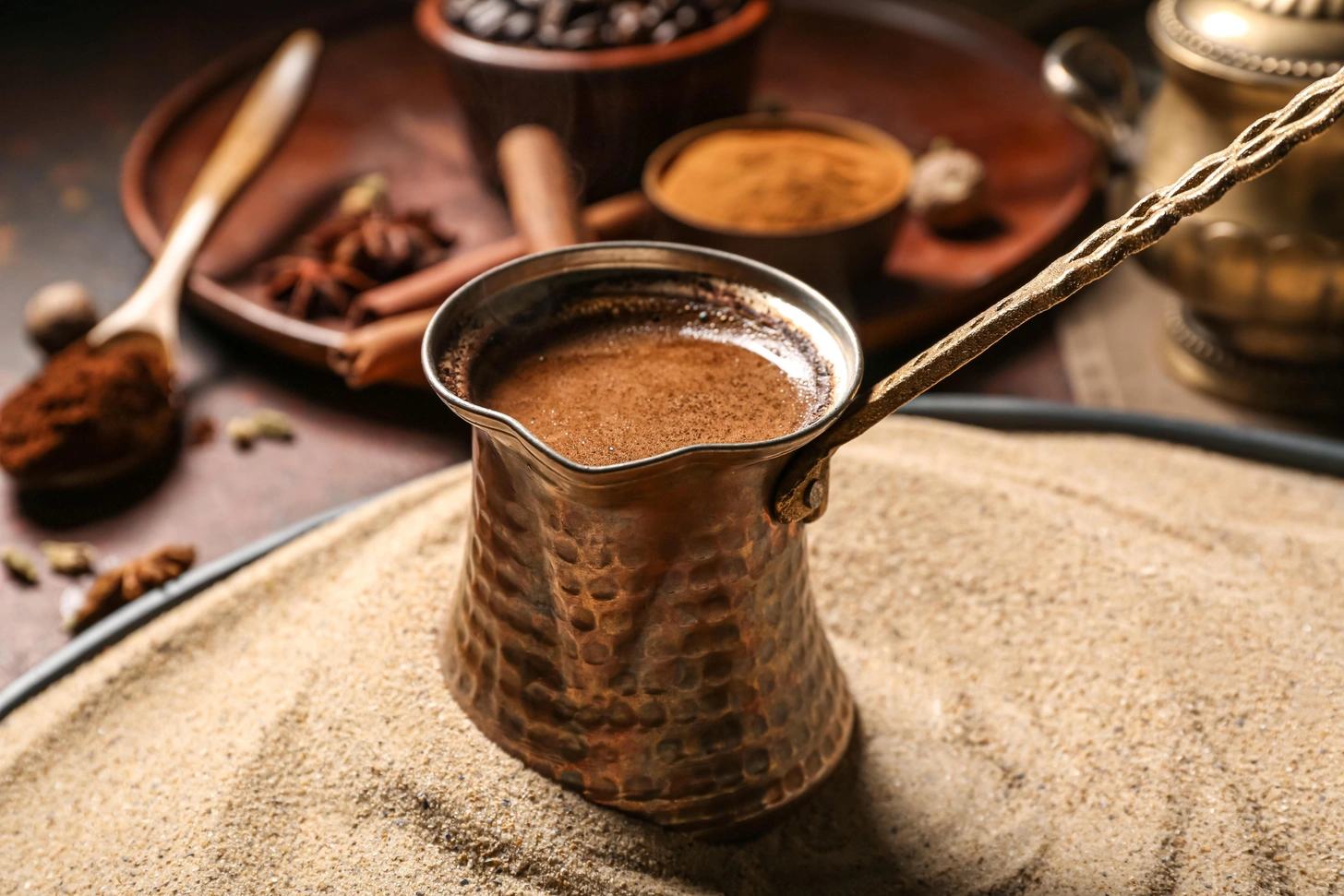
Turkish coffee is never made in haste. It heats slowly over low heat. Another traditional method uses hot sand. This allows the cezve to heat evenly from all sides. As a result, the extraction is smoother. The flavor profile becomes distinctive. Foam is considered essential. In Turkey, a thick foam layer shows the brewer’s skill. Serving coffee is also part of the ritual. A glass of water and a sweet treat usually accompany the coffee. The sweet treat is often Turkish delight or baklava. The water cleanses the palate before the first sip. The sweetness complements the coffee’s bitterness.

People order Turkish coffee according to sweetness levels. Sade means no sugar. Orta means medium sweetness. Şekerli means sweet. Another tradition is fortune-telling from coffee grounds. After finishing the coffee, the cup is turned upside down onto a saucer. Once the grounds settle, patterns on the cup’s walls are interpreted as symbols. For many Turkish families, this remains a popular social activity. A famous Turkish proverb says: “The memory of a cup of coffee lasts forty years.” In Turkish, it is “Bir kahvenin kırk yıl hatırı vardır.” This emphasizes that sharing coffee creates lasting bonds of friendship and respect.

Turkish Coffee and Its Lebanese Cousin

At first glance, Turkish and Lebanese coffee look almost identical. Both are brewed in a cezve. Neither is filtered. Both belong to the broader Middle Eastern coffee tradition. However, notable differences exist. Turkish coffee is generally denser. Its flavor is more straightforward. Traditional recipes rarely include spices. This allows the coffee’s own characteristics to take center stage. Lebanese coffee, in contrast, is often more aromatic. Cardamom is frequently added, sometimes generously. This creates a warm, spicy aroma with subtle citrus notes.

The cultural context also differs. In Turkey, coffee is closely linked to extended conversations, family gatherings, and coffeehouse culture. In Lebanon, coffee often serves as a symbol of hospitality. It is offered to guests as a matter of etiquette. Despite these differences, coffee represents far more than caffeine in both countries. It remains a slow, thoughtful ritual embedded in everyday life.

The Rise of Specialty Coffee

The twentieth century made coffee widely available. The twenty-first century has, in some ways, made it more exclusive again. This is due to the rise of specialty coffee. The term “specialty coffee” emerged in the 1970s. However, it became a global phenomenon only in recent decades. The Third Wave Coffee movement transformed how people view coffee quality and origin. Specialty coffee emphasizes transparency. Consumers are encouraged to know not only the variety and country of origin. They also learn about the specific region, farm, and altitude. Like wine, coffee is now appreciated for its terroir and flavor complexity.

Instead of bitterness alone, drinkers now seek fruity, floral, and tea-like characteristics. An Ethiopian coffee may exhibit jasmine-like notes. A Kenyan coffee may suggest red currant or pomegranate. The specialty movement has also popularized alternative brewing methods. These include V60, AeroPress, Chemex, siphon brewing, and various pour-over techniques. Baristas are seen as skilled professionals. Coffee shops have become destinations for culinary experiences.

Turkey’s Third Wave Coffee Revolution

Turkey has deep-rooted coffee traditions. Therefore, it might seem unlikely for specialty coffee to flourish there. Nevertheless, the Third Wave movement has established a significant presence over the past fifteen years. The first specialty cafés appeared in Istanbul in the early 2010s. Among the pioneers was Kronotrop Coffee Bar, founded in 2012. It introduced many Turkish consumers to alternative brewing methods and modern coffee culture.

Initially, reactions were mixed. Turkish tastes had been shaped by dark, strong coffee for centuries. Lightly roasted beans with bright acidity seemed unfamiliar. Many customers described such coffees as “too sour.” They simply differed from traditional expectations. However, by the middle of the decade, Istanbul was experiencing a genuine coffee renaissance. Independent roasters emerged. Baristas began training according to international standards. Coffee shops evolved into modern social spaces with minimalist design and open brewing stations.

Today, specialty coffee is part of everyday urban life in cities such as Istanbul, Ankara, and Izmir. Modern cafés offer pour-overs, filter coffee, cold brew, and sophisticated espresso blends. They serve these alongside traditional Turkish coffee. Outside the largest cities, specialty coffee remains relatively niche. In tourist destinations such as Antalya, specialty cafés are becoming more common. However, traditional Turkish coffee culture continues to dominate. Even so, new coffee trends are steadily taking root. This creates a unique coexistence between centuries-old traditions and contemporary specialty coffee culture.

Turkey’s coffee story is no longer defined solely by the cezve and the kahvehane. Instead, it reflects an ongoing dialogue between heritage and innovation. Traditional Turkish coffee and modern specialty coffee increasingly share the same table.

Frequently Asked Questions (FAQ)

1. What makes Turkish coffee unique?

Very fine grind, brewing in a cezve, no filtration, slow heating, essential foam, and serving with water and sweets.

2. What is a kahvehane?

A traditional Turkish coffeehouse from the 16th century. It was a social gathering place for men to play games, listen to music, and discuss news.

3. Is Turkish coffee the same as Lebanese coffee?

No. Turkish coffee is denser and without spices. Lebanese coffee often includes cardamom and uses lighter roasts.

4. When did specialty coffee arrive in Turkey?

Early 2010s. Kronotrop Coffee Bar (founded 2012) was a pioneer of the third wave movement in Turkey.

5. How did Turkish consumers react to specialty coffee at first?

Reactions were mixed. Many found lighter roasts too sour compared to traditional dark Turkish coffee.

6. Where can you find specialty coffee in Turkey today?

Major cities like Istanbul, Ankara, and Izmir. Traditional kahvehane culture still dominates in rural areas.

Qahwa World – Original reporting on Turkish coffee culture.
Published: May 30, 2026

Coffee Sweetness: 8 Hypotheses on the Sugarless Paradox

Author: Qahwa World
Date: May 29, 2026

Coffee Sweetness: Eight Hypotheses on the Sugarless Paradox

Executive Summary:

  • Roasted coffee contains almost no free sugars above sensory thresholds, yet perceived sweetness is a top driver of consumer preference.
  • Research shows trained tasters can reliably rank coffees by sweetness intensity, with differences of 4-6 points on a 15-point scale.
  • Aroma drives much of perceived sweetness through retronasal olfaction, where fruity and floral notes fool the brain.
  • Non-sugar molecules may activate sweet receptors or modulate taste, with flavoromics research hunting for key compounds.
  • Processing methods like anaerobic fermentation and carbonic maceration dramatically amplify sweetness.
  • Light to medium roasts preserve sweet precursors, while dark roasts destroy them.
  • Brewing parameters including water temperature, grind size, and water chemistry affect extraction of sweet-associated compounds.

For centuries, people have called coffee sweet. Bach was not exaggerating in his Coffee Cantata. Today, sweetness is a top driver of consumer preference in specialty coffee, often more important than acidity or body for many drinkers. Yet roasted coffee has almost no free sugars left above sensory thresholds, typically well below 100-200 mg per liter versus the roughly 2,000 mg per liter needed for detection. This is the enduring sweetness paradox in coffee.

Hypothesis 1: A Real Sensory Phenomenon

Trained tasters can reliably rank coffees by sweetness intensity. Differences of 4 to 6 points on a 15-point scale appear consistently across panels, even when controlling for other variables. This is not imagination. It is a measurable attribute that specialty coffee buyers reward.

Hypothesis 2: Aroma Drives Perceived Sweetness

Retronasal olfaction, the aromas traveling from the mouth to the nose while sipping, plays a huge role. Nose clips significantly reduce perceived sweetness. Fruity, floral, vanilla-like, and caramelized aromas fool the brain into registering sweet. This is cross-modal perception, where smell enhances taste.

Hypothesis 3: Residual Sugars Exist but Are Not the Main Driver

Sugars such as sucrose, glucose, and fructose are present but below threshold. Interestingly, some higher-sugar samples score lower in sweetness, suggesting suppression by other compounds or lack of direct correlation.

Hypothesis 4: Flavor Integration and Suppression

The brain integrates taste, aroma, mouthfeel, and memory. Sweet-associated notes like berry, stone fruit, honey, and chocolate enhance overall sweetness perception. Conversely, high bitterness, roastiness, or astringency suppress sweetness. Balance is everything. A well-processed, light to medium roast often maximizes this effect.

Hypothesis 5: Non-Sugar Molecules Activate Sweet Receptors

Flavoromics research is hunting for specific compounds, possibly certain volatiles, glycosides, or small molecules, that directly or indirectly stimulate sweet taste receptors (T1R2/T1R3) or act as taste modulators. Some compounds might have intrinsic mild sweetness or block bitterness, making everything taste rounder and sweeter.

Hypothesis 6: Processing Methods Amplify Sweetness

Anaerobic fermentation, carbonic maceration, honey and pulped natural processing, and extended drying create more fruity esters, alcohols, and aldehydes that read as sweet. Lactic fermentation can produce yogurt-like or creamy notes that boost perceived sweetness. Washed coffees can taste cleaner but sometimes less sweet than naturals or hybrids.

Hypothesis 7: Roast Degree and Maillard Chemistry

Light roasts preserve more delicate sweet precursors and acids that interact positively. Medium roasts develop caramelization and Maillard products such as furans and pyrroles that smell sweet. Dark roasts destroy sugars and create bitter, ashy compounds that mask sweetness. The sweet spot varies by origin but is rarely very dark.

Hypothesis 8: Brewing Parameters and Extraction Dynamics

Higher extraction, but not over-extraction, can pull more sweetness-associated compounds. Brew temperature, grind size, water chemistry, and ratio all matter. Slightly higher brew temperatures can enhance certain sweet volatiles, while channeling or poor agitation increases bitterness that kills sweetness.

Practical Takeaways

For drinkers, seek light to medium roasts from high-altitude origins such as Ethiopia, Kenya, Colombia, or Panama Geishas, processed with care. Brew with water around 92 to 96 degrees Celsius, fresh grind, and proper ratio. Drink black, as the sweetness shines more without milk. For producers and roasters, focus on cherry ripeness, innovative processing, and precise roasting curves. Sweetness is now a breedable, processable trait. Genetics also play a role. Some people are more sensitive to certain volatiles or have different taste receptor variants. Expectation and context, such as a beautiful pour-over setup or nice music, also amplify perception.

Frequently Asked Questions (FAQ)

1. Why does coffee taste sweet without sugar?

A combination of aroma, brain integration, processing chemistry, and possibly non-sugar molecules creates the perception of sweetness even when free sugars are below detection thresholds.

2. What processing methods increase coffee sweetness?

Anaerobic fermentation, carbonic maceration, honey processing, and extended drying produce fruity esters that enhance perceived sweetness.

3. Does roast level affect sweetness?

Yes. Light to medium roasts preserve sweet precursors, while dark roasts destroy sugars and create bitter compounds that mask sweetness.

4. How does brewing impact perceived sweetness?

Optimal extraction, water temperature (92-96°C), balanced water chemistry, and proper grind size help extract sweet-associated compounds without bitterness.

5. Is sweetness in coffee real or an illusion?

It is an emergent, complex sensory phenomenon created by chemistry, biology, and brain processing. It is not fake but rather a beautiful illusion of harmony.

6. Can sweetness be bred into coffee?

Yes. Researchers are identifying key compounds and genetic markers that could allow selective breeding for sweeter coffee varieties.

Qahwa World – Based on research from the Coffee Science Foundation and Ohio State University’s Flavor Research and Education Center.
Published: May 29, 2026

Cup of Excellence Auction Changes Coffee Farmer’s Life

Author: Qahwa World
Source: Cup of Excellence
Date: May 26, 2026

Cup of Excellence Auction Changes Coffee Farmer’s Life

Executive Summary:

  • Ramón Jarquín, a coffee producer from El Porvenir, Nicaragua, sold his coffee for only $1.50 per pound through intermediaries for years.
  • He carried his coffee 2 kilometers on his back to sell it, showing immense dedication.
  • Encouraged to join Cup of Excellence 2025, his coffee won second place and sold for $15 per pound.
  • The proceeds helped pay for life saving medical treatment for his young daughter.
  • His daughter, who had to pause school due to illness, is now healthy and back to her childhood routines.
  • The Nicaragua Cup of Excellence auction will take place on June 25, 2026.

Behind every coffee lot is something much bigger: a family, a dream, and sometimes even a second chance at life. Ramón Jarquín, a coffee producer from El Porvenir, Nicaragua, spent years selling his coffee through intermediaries for only $1.50 per pound.

He never imagined how much it was truly worth. He even carried his coffee two kilometers on his back while walking, showing the determination and hard work behind every harvest.

Encouraged to participate in Cup of Excellence 2025, Ramón entered with little expectation. Then everything changed. His coffee earned second place and sold for $15 per pound at auction, ten times his usual price.

A Life Changed Beyond the Auction

The greatest impact happened at home. The proceeds helped Ramón afford life saving treatment for his young daughter. The little girl had been struggling with health issues that deeply affected the entire family. Before receiving treatment, she was unable to enjoy the simple routines of childhood and had to put school on hold.

Thanks to this opportunity, she was able to get the care she needed. She returned to school, spent time with friends, and simply became a child again. Stories like Ramón’s remind us why this work matters. Cup of Excellence is not only about extraordinary coffee. It is about creating opportunities and changing lives.

How to Participate

You can be part of that impact at the Nicaragua Cup of Excellence Auction on June 25, 2026. Sample sets are available for purchase. Orders close soon. Secure your sample sets before the deadline.

Frequently Asked Questions (FAQ)

1. Who is Ramón Jarquín?

Ramón Jarquín is a coffee producer from El Porvenir, Nicaragua, who participated in Cup of Excellence 2025 and won second place.

2. How much did Ramón used to sell his coffee for?

He sold his coffee for only $1.50 per pound through intermediaries before the auction.

3. What price did his coffee achieve at the Cup of Excellence auction?

His coffee sold for $15 per pound, ten times his usual price.

4. How did the auction winnings change his family’s life?

The proceeds helped pay for life saving medical treatment for his young daughter, who was seriously ill.

5. When is the Nicaragua Cup of Excellence auction?

The auction will take place on June 25, 2026.

6. How can buyers participate?

Buyers can secure sample sets before orders close. Contact Cup of Excellence for more information.

Qahwa World – Based on Cup of Excellence story.
Published: May 26, 2026

DrinkIt’s Mango Foam Lands in Dubai and Summer Has a New Star

Source: DrinkIt Specialty Coffee (press release)
Author: Qahwa World – Dubai
Date: May 25, 2026

DrinkIt’s Mango Foam Lands in Dubai and Summer Has a New Star

Executive Summary

  • DrinkIt launches “Catch The Mango Wave” summer campaign in Dubai for three months starting May 26.
  • The menu features 10 drinks built around a signature mango foam made from a rare varietal from Assam-Myanmar forests.
  • Highlight drinks include Iced Mango Wave Latte, Iced Mango Coast Hojicha, Iced Mango Foam Matcha Latte, and Mango Yuzu Lemonade.
  • Food menu includes Basque cheesecake with mango, plus mango-scented candles and Chako Lab drinkware.
  • The foam has a silky, soft-serve texture that softens espresso, brightens matcha, and adds depth to lemonades.
  • DrinkIt now operates 10 cafes in Dubai with 9 more in development, expanding to Abu Dhabi next.

Mango Foam: The Star of Dubai’s Summer

DrinkIt, the digital-first specialty coffee chain, has unveiled its boldest summer campaign yet: “Catch The Mango Wave.” Running for three months from May 26, the campaign reimagines summer drinks through a unique mango foam made from a rare varietal grown in the tropical forests between Assam and Myanmar.

The foam is cloud-like, golden, and made from mango prized for its juicy golden flesh and a deeply sweet, slightly unexpected flavor. It softens espresso, brightens matcha, and adds depth to lemonades. Every drink can be customized via the DrinkIt app.

The Summer Menu: 10 Signature Drinks

The summer lineup features 10 drinks, each built around the signature mango foam. Highlight drinks include:

  • Iced Mango Wave Latte – Latte topped with creamy mango foam, smooth and softly sweet.
  • Iced Mango Coast Hojicha – Roasted hojicha with nutty caramel notes paired with mango.
  • Iced Mango Foam Matcha Latte – Iced matcha latte topped with airy mango foam.
  • Matcha Mango Latte – Japanese matcha topped with mango foam.
  • Mango Yuzu Lemonade – Matcha lemonade with mango and yuzu, citrusy and lightly sweet.
  • Mango Mood Flat White – Flat white with mango sauce and mango topping.

On the food side, the menu includes a Basque cheesecake with mango, featuring a caramelized crust and creamy texture. Beyond the menu, DrinkIt extends the experience with mango-scented candles and merchandise from Chako Lab, a brand known for stylish everyday drinkware.

Drink Key Ingredients Flavor Profile
Iced Mango Wave Latte Latte + mango foam Smooth, sweet, refreshing
Iced Mango Coast Hojicha Roasted hojicha + mango Nutty, caramel, light sweetness
Iced Mango Foam Matcha Latte Iced matcha + mango foam Smooth, sweet, balanced
Mango Yuzu Lemonade Matcha lemonade + mango + yuzu Citrusy, light sweet, grassy note
Mango Mood Flat White Flat white + mango sauce + topping Bold, smooth, balanced

An Experience Beyond the Cup

The “Catch The Mango Wave” experience extends beyond drinks to visual and sensory elements. DrinkIt has designed its cafe spaces with mango-inspired touches, including mango-shaped mirrors, surfboards, and relaxed seating that capture the energy of urban summer.

The campaign also includes mango-scented candles and a collection of stylish drinkware from Chako Lab. These touches aim to turn a routine coffee run into a memorable social and visual moment.

“Instead of the usual summer cliches of beaches and faraway escapes, we bring summer into the rhythm of the city,” said Diana Al-Zubeidi, CMO of DrinkIt. “Our summer campaign is an invitation to step out of routine, try something new, and surf the moment while it’s here.”

Expansion in Dubai and the UAE

The campaign spans DrinkIt’s growing footprint in the UAE. The chain currently operates 10 cafes in Dubai, including the newly opened Dubai Creek Harbour location, with nine more under development and Abu Dhabi next in line. From business districts to residential neighborhoods, each cafe becomes part of the city’s map.

Founded in 2016, DrinkIt is part of Dodo Brands, a global foodservice group that develops and franchises concepts worldwide. Since joining Dodo Brands in 2020, DrinkIt has grown to more than 200 coffee shops across four countries: the UAE, Kazakhstan, Azerbaijan, and Russia.

In 2025, Dodo Brands reported revenue of more than $1.8 billion, achieving 22% year-on-year growth and operating over 1,600 units across 26 countries. DrinkIt is part of the Dodo Brands portfolio alongside Dodo Pizza, one of the world’s largest pizza franchise networks.

Frequently Asked Questions (FAQ)

1. When does DrinkIt’s summer campaign start in Dubai?

The campaign starts on May 26, 2026, and runs for three months.

2. What makes the mango foam special?

It is made from a rare mango varietal from the forests between Assam and Myanmar, giving it a golden color, silky soft-serve texture, and a deeply sweet, juicy flavor.

3. How many drinks are on the summer menu?

10 drinks, including iced lattes, hojicha, matcha, lemonade, and flat white variations.

4. Are there any food items in the campaign?

Yes, a Basque cheesecake with mango is available.

5. How many DrinkIt cafes are in Dubai now?

DrinkIt operates 10 cafes in Dubai, with 9 more in development, and plans to expand to Abu Dhabi.

6. What is Dodo Brands?

A global foodservice group operating over 1,600 units in 26 countries, including DrinkIt and Dodo Pizza.

Author: Qahwa World – Dubai  |
Source: DrinkIt Specialty Coffee (press release)  |
Publication date: May 25, 2026

Panama’s coffee terroir is no longer just a story. It’s becoming science

Source: Ennio Cantergiani (l’Académie du Café – Switzerland)
Author: Qahwa World – Dubai
Date: May 24, 2026

Panama’s coffee terroir is no longer just a story. It’s becoming science

Executive Summary

  • A 2025 study in Food Science & Nutrition proved that Panamanian Geisha coffee differs by production zone using sensory analysis.
  • Samples: washed Geisha from Boquete, Renacimiento, Tierras Altas, and Potrerillos Arriba from 2023-2024 harvest.
  • Statistical analysis showed Boquete, Renacimiento, and Tierras Altas are distinguishable at 95% confidence interval.
  • Same variety, same process, different cup. That is terroir validated by science, not just poetry.
  • Differences were driven by aroma and flavor attributes, not physicochemical parameters like density or pH.
  • Panama’s Technological University (UTP) is now building a chemical fingerprint lab for coffee aromas using GC-MS technology.

From Poetic Narrative to Scientific Proof

For years, the uniqueness of Boquete coffee has been described in poetic terms – volcanic soils, mountain mists, the bajareque wind, the flanks of Barú volcano. Beautiful narrative. But is it science? In 2025, we got a serious answer.

A study published in Food Science & Nutrition (Ledezma et al., 2025) collected washed Geisha samples from four Panamanian production zones – Boquete, Renacimiento, Tierras Altas, and Potrerillos Arriba – from the 2023-2024 harvest. Standardized roasting. Standardized brewing. A screened consumer panel using the RATA (Rate-All-That-Apply) method, with correspondence analysis, multiple factor analysis, and discriminant analysis.

The Result: Terroir Statistically Confirmed

The study found that Boquete, Renacimiento, and Tierras Altas are statistically distinguishable – at a 95% confidence interval – based on aroma, flavor, and taste attributes. Same variety. Same process. Different cup. That is terroir. Interestingly, physicochemical parameters alone did not drive the differences. The signal came from sensory attributes – which tells us that the expression of terroir in Panamanian Geisha is primarily aromatic and flavor-driven, not a matter of density, pH, or Brix.

Production Zone Statistical Distinction Primary Driver
Boquete Distinguishable at 95% Sensory (aroma, flavor)
Renacimiento Distinguishable at 95% Sensory attributes
Tierras Altas Distinguishable at 95% Sensory attributes
Potrerillos Arriba Less distinct Further study needed

What Panama Is Building on Top of That

In parallel, the Technological University of Panama (UTP), funded by SENACYT, has launched pioneering research to create a chemical fingerprint of Panamanian coffee aromas using advanced analytical techniques (GC-MS) – specifically targeting the Chiriquí Highlands. For the first time, Panama now has the national infrastructure to conduct aroma analysis without sending samples abroad. The goal: scientifically protect designations of origin and give producers tools to optimize fermentation, drying, and roasting based on their specific terroir signature.

Why This Matters Beyond Panama

This is exactly the trajectory the specialty coffee world needs to follow. Wine has had appellation science for decades. Coffee is just beginning to build its equivalent – moving from storytelling to molecular evidence. For Q Graders, sensory scientists, and specialty buyers, this is a pivotal moment: the tools to validate what our palates have long suspected are finally being developed at origin.

Frequently Asked Questions (FAQ)

1. What does the Ledezma study prove about Panamanian Geisha coffee?

It proves that Boquete, Renacimiento, and Tierras Altas produce sensorially distinct coffee at 95% confidence, despite same variety and processing.

2. Are physicochemical parameters enough to distinguish terroir?

No. The study found that differences were driven by sensory attributes (aroma and flavor), not density, pH, or Brix.

3. What is the new project at the Technological University of Panama?

A project to create a chemical fingerprint of Panamanian coffee aromas using GC-MS technology, allowing local analysis without sending samples abroad.

4. What is the goal of this scientific initiative?

To scientifically protect designations of origin and provide producers with tools to optimize processing based on their specific terroir signature.

5. Why is this a milestone for the specialty coffee industry?

It moves coffee from storytelling to molecular evidence, similar to what the wine industry achieved decades ago with appellation science.

6. What is the reference for the scientific study?

Ledezma et al. (2025). Sensory Perception and Physicochemical Characteristics of Geisha Coffee From Different Production Zones in Panama. Food Science & Nutrition. DOI: 10.1002/fsn3.71278

Author: Ennio Cantergiani (l’Académie du Café – Switzerland)  |
Publication date: May 24, 2026

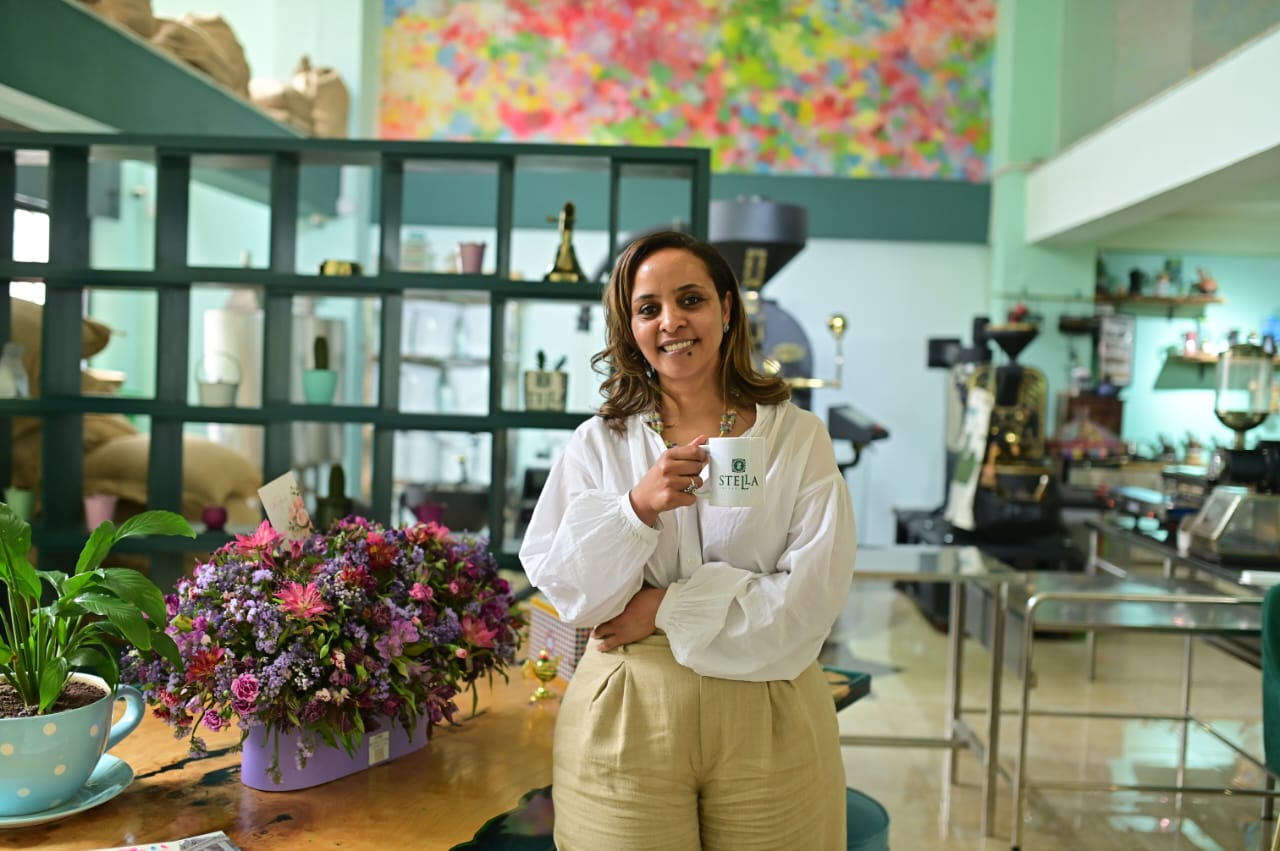
Stella: The Coffee Passport Menu Under Addis Ababa’s Guiding Star

Author: Tewodros Balcha
Source: Qahwa World×Buna Kurs – Addis Ababa
Date: May 22, 2026

Stella: The Coffee Passport Menu Under Addis Ababa’s Guiding Star

Executive Summary

  • Stella is an intimate coffee destination in Addis Ababa’s Wollo Sefer neighborhood, named after the Italian word for “star.”
  • The café offers a “coffee passport menu” featuring Ethiopian jebena, Turkish coffee, V60 pour-overs, Japanese-style iced brews, and Arabic qahwa.
  • Stella’s founder, a mother of three, grew up watching her father in Yirgacheffe and her grandmother’s ceremonial coffee rituals in Asmara.
  • Each brewing method receives its own distinct preparation and ritual, including individual jebenas and precise pour-over techniques.
  • The space includes a functioning roastery, allowing customers to experience coffee as a living craft.
  • Clients range from diplomats and expatriates to Gulf visitors, who often say Stella reminds them of Dubai or Jeddah.
  • Stella herself refuses to drink coffee when angry or exhausted, believing coffee deserves a better emotional environment.

A few kilometers from Addis Ababa Bole International Airport, tucked quietly into the constantly moving neighborhood of Wollo Sefer, there is a coffee space that feels strangely detached from the city around it.

The transition begins almost immediately upon entering. Before the coffee arrives, before the brewing equipment catches your attention, there is scent — oud, deep and woody, the kind more commonly associated with Gulf hospitality and luxury hotels in Dubai or Jeddah than with cafés in Addis Ababa. For a brief moment, the city outside seems to dissolve.

Inside, Stella unfolds slowly. The space is spacious without feeling cold, elegant without becoming performative. Warm wood dominates the interior while plants and flowers soften nearly every corner. The furniture carries a classic sensibility — colorful, though never loud — and the seating feels intentionally cozy, designed less for quick turnover and more for lingering conversations. Nothing about the atmosphere feels accidental.

In specialty coffee language, places like this are increasingly called destination cafés: spaces people visit not simply to drink coffee, but to experience hospitality, ambiance, and ritual together. Stella belongs naturally in that category.

A Coffee Philosophy Rooted in Memory

At the center of it all is Stella herself, a mother of three whose relationship with coffee began long before she ever became a coffee drinker. Her father was a green coffee exporter and supplier, and some of her earliest memories were formed during school holidays spent with him in Yirgacheffe, one of Ethiopia’s most celebrated coffee-growing regions.

While many children return from vacations remembering games or family trips, Stella remembers coffee landscapes, processing stations, farmers, and long days observing people whose lives revolved around coffee. She learned quietly, simply by watching.

When she speaks about her father, her admiration is immediate and unmistakable. “He is my superstar,” she says with a smile.

Yet the roots of Stella’s coffee philosophy stretch back even further, to Asmara, where her grandmother’s coffee held an almost legendary status within the family. Stella remembers how devoted her father was to it. Despite spending his professional life around coffee, he drank only his mother’s preparation. Somewhere within those childhood observations, a deep impression formed. Coffee, Stella realized early, could carry emotion, reverence, and memory.

Interestingly, she did not begin drinking coffee seriously until much later in life. What fascinated her first was not the beverage itself, but everything surrounding it. As a child, she helped prepare ceremonial spaces around her grandmother’s coffee gatherings, learning instinctively that ambiance mattered as much as taste. The arrangement of the room, the rhythm of serving, the atmosphere of hospitality — all of it became inseparable from coffee itself.

A Coffee Passport Menu

Three years ago, those memories evolved into Stella. Calling it simply a café, however, feels insufficient. Boutique coffee house comes closer. Coffee atelier perhaps comes closer still. Because what Stella has created feels less like a conventional menu and more like a coffee passport.

Traditional Ethiopian jebena coffee shares space with Turkish coffee, V60 pour-overs, Japanese-style iced brews, Arabic qahwa, and brewing traditions from several other corners of the world. Yet the café’s defining quality is not variety alone. It is fidelity to ritual.

In many modern cafés, brewing tools have become visual symbols more than functional traditions. A V60 cone becomes decoration. A jebena becomes aesthetic identity. At Stella, however, the ritual itself remains intact. Order traditional jebena coffee and an individual jebena is prepared specifically for you rather than poured from a shared batch. Your coffee receives its own ceremony, its own pacing, its own attention.

The same philosophy extends across every brewing method on the menu. Turkish coffee is treated with its own distinct preparation. Japanese-style iced pour-overs are brewed with precision. Arabic qahwa receives the same careful attention Gulf guests expect back home.

During my visit, I ordered an iced V60 — a Japanese-style iced pour-over brewed directly over ice to preserve aromatic clarity and brightness. The preparation reflected the larger philosophy of the space itself: deliberate, patient, and deeply attentive to detail. Nothing felt rushed. Nothing felt industrialized.

A Living Roastery and Diverse Clientele

Inside the café, a functioning roastery further deepens the experience. Customers are not separated from coffee’s transformation. Roasting aromas drift naturally through the room while conversations continue nearby, allowing visitors to experience coffee not merely as a finished beverage, but as a living craft unfolding around them in real time.

That immersive atmosphere has attracted a remarkably diverse clientele ranging from diplomats and expatriates to high-profile Ethiopian figures and a growing number of visitors from Gulf countries. According to Stella, GCC guests often react most emotionally to the experience. Many tell her they briefly forget they are in Addis Ababa altogether. Instead, the atmosphere reminds them of Dubai, Jeddah, or other familiar spaces across the Gulf.

The reaction is hardly surprising. Stella speaks about Arabic coffee culture with something close to reverence. Not only the coffee itself, but the patience, hospitality, generosity, and ritual surrounding it. Her qahwa has become especially sought after, with Arab customers frequently purchasing her roasts in bulk after discovering the level of precision and authenticity she brings to the preparation.

Coffee Deserves a Better Emotional Environment

For Stella, coffee was never meant to become a hurried grab-and-go drink swallowed between appointments. She laughs while explaining one of her personal rules: she refuses to drink coffee when angry, emotionally unsettled, or exhausted. Most people use coffee to survive stressful days. Stella prefers water instead. Coffee, in her view, deserves a better emotional environment.

Spend enough time inside Stella and it becomes clear that this place was never built around caffeine alone. It was built around feeling. Around memory. Around slowing down.

Perhaps that is why the name feels unexpectedly perfect. Stella — “star” in Italian — suits the café in more ways than one. Because somewhere in Wollo Sefer, beneath the scent of oud and freshly roasted coffee, Stella has quietly created a guiding star of her own: a world of coffee traditions gathered together under one roof, where ritual still matters and hospitality still feels sacred.

Frequently Asked Questions

Where is Stella located?

Stella is located in the Wollo Sefer neighborhood of Addis Ababa, a few kilometers from Bole International Airport.

What makes Stella unique?

Stella offers a coffee passport menu with multiple brewing traditions including Ethiopian jebena, Turkish, V60, Japanese-style iced, and Arabic qahwa, each prepared with its own distinct ritual.

Who is Stella’s founder?

Stella is a mother of three whose father was a green coffee exporter and whose grandmother’s coffee ceremonies in Asmara deeply influenced her philosophy.

What is the signature coffee at Stella?

There is no single signature; the café is known for its variety and fidelity to ritual. Her Arabic qahwa has become especially popular with Gulf visitors.

Does Stella roast its own coffee?

Yes, the café includes a functioning roastery, allowing customers to experience coffee as a living craft.

What is Stella’s personal coffee rule?

She refuses to drink coffee when angry, emotionally unsettled, or exhausted, believing coffee deserves a better emotional environment.


Author: Tewodros Balcha | Source: Qahwa World – Addis Ababa | Date: May 22, 2026

Colombian Coffee Output Rises 7.2% in 2026

Author: Qahwa World – Bogota

Source: USDA Foreign Agricultural Service – Report CO2026-0008
Date: May 20, 2026

Colombia Coffee Output Rises 7.2% in 2026

Executive Summary

  • Colombian coffee production for marketing year 2026/2027 is forecast to rise 7.2% to 13.4 million 60 kg bags.
  • The increase is driven by favorable dry conditions and the transition from La Niña to a strong El Niño, as coffee plants tolerate water stress well.
  • Lower coffee prices encourage replanting and renovation, supporting future growth.
  • Exports are forecast at 13.4 million bags, with the United States remaining the top destination with over 40% market share.
  • Domestic consumption remains stable at 2.2 million bags despite promotional campaigns and a new law declaring coffee the national beverage.
  • Ending stocks fall 22.6% to 670,000 bags due to higher exports and lower imports.
  • Nearly 90% of Colombian coffee shipments already comply with the EU Deforestation Regulation (EUDR).

The USDA Foreign Agricultural Service office in Bogota forecasts Colombian coffee production for marketing year 2026/2027 to reach 13.4 million 60 kg bags, an increase of 7.2% from the previous year. This growth is mainly attributed to favorable dry conditions after years of heavy rainfall.

Colombia is transitioning from La Niña, which caused excessive precipitation, to a strong El Niño expected after mid 2026.

Despite concerns about El Niño affecting crops, coffee plants tolerate water stress and high temperatures, especially when grown in soils with good moisture retention. Historically, coffee production performs better during El Niño events than during La Niña. To achieve this production level, the Colombian Coffee Growers Federation (Fedecafe) recommended proper fertilization, weed management to conserve soil moisture, efficient harvesting, and establishing temporary shade cover using appropriate plant species.

Production Drop in 2025/2026 Due to Heavy Rains

For marketing year 2025/2026, USDA estimates a 9.4% decline in production to 12.5 million bags compared to the previous estimate. This drop is due to excessive rainfall in coffee growing regions, which negatively affected flowering and bean development. Continuous rainfall prevents the water deficit necessary for flower induction, causes premature flower fall, and increases the incidence of coffee leaf rust due to high humidity.

The phytosanitary survey conducted by Cenicafe in January 2026 showed that the national average incidence of coffee leaf rust reached 4.5%, up from 3.9% in October 2025, but it remains within phytosanitary control levels. Coffee berry borer infestation reached 1.6% nationally, below the economic damage threshold of 2%. Notably, 87% of Colombia’s coffee area is planted with rust resistant varieties, up from only 35% in 2010.

Lower Prices Encourage Farm Renovation

Local coffee prices depend on the New York international price and the Colombian peso to US dollar exchange rate. Since late 2025, prices have decreased due to global optimism about coffee production and a lower exchange rate. As of February 2026, coffee prices stood at 2,174,143 Colombian pesos per 125 kg bag, 30% lower than the same period a year earlier.

Labor costs account for about 70% of coffee production expenses. These costs have risen due to a minimum wage increase of more than 20%, plus higher fertilizer costs resulting from the Middle East conflict. The sector also suffers from labor shortages as workers move to urban areas for more profitable employment.

However, lower prices create a strategic window for farm renovation. When prices are high, producers maximize harvest from existing trees. When prices fall, the opportunity cost of renovation declines, and long term returns from rejuvenated trees become more attractive.

Exports, Imports and Stocks

USDA forecasts exports for 2026/2027 at 13.4 million bags, an increase of 4.6% from the previous year. Colombia exports coffee to more than 40 countries. The United States remains the top destination with over 40% market share, followed by the European Union, Canada, and Japan. From October 2025 to February 2026, exports to the United States, Japan, and South Korea increased more than 6% year on year.

In contrast, imports for 2026/2027 are forecast to fall 18% to 2.0 million bags as domestic production recovers. For 2025/2026, imports were estimated at 2.4 million bags due to lower domestic production and higher demand for lower quality coffee from Brazil, Peru, and Ecuador to fulfill soluble coffee export commitments. Colombia mainly imports green coffee (84.1%), followed by soluble coffee (15.7%), and roasted coffee (0.2%).

Ending stocks are forecast to fall 22.6% to 670,000 bags in 2026/2027, due to higher exports and lower imports despite improved production.

Table 1: Colombia Coffee Production, Supply and Distribution (1,000 60 kg bags)

Item 2024/2025 Official 2025/2026 Estimate 2026/2027 Forecast
Total Production 14,800 12,500 13,400
Total Imports 980 2,404 2,004
Total Exports 13,380 12,810 13,400
Domestic Consumption 2,150 2,200 2,200
Ending Stocks 918 866 670

Domestic Consumption and Government Policies

Domestic coffee consumption is forecast to remain stable at 2.2 million bags in 2026/2027. Despite expected moderate improvements in economic activity, high inflation (6.3% in 2026) and high coffee prices limit growth. Per capita coffee consumption in Colombia is about 3.08 kg per year, which is relatively low compared to more than 6 kg in most producing countries.

Fedecafe continues to promote domestic consumption through its campaign “Look for the Colombian Coffee Quality Triangle”. The triangular “Cafe de Colombia” logo guarantees 100% Colombian origin coffee, and about 850 brands use it. The government also enacted Law 2504 of 2025, which declares coffee the national beverage, promotes its consumption, and allows public entities to purchase national coffee and include it in food programs.

In April 2024, the Coffee Price Stabilization Fund Committee established the Coffee Income Compensation Mechanism (MECIC 2024). This mechanism provides direct financial support to growers when the rolling average domestic price falls below the average production cost. It has not been activated yet because prices have remained above the reference cost.

EU Deforestation Regulation Compliance

Colombian coffee producers are actively implementing traceability measures to comply with the European Union Deforestation Regulation (EUDR) 2023/1115. Colombia exports more than 20% of its coffee production to the EU. The compliance deadline is December 30, 2025 for medium and large companies, and June 30, 2026 for micro and small enterprises.

According to Fedecafe, nearly 90% of Colombian coffee lots already comply with the EU regulation. The federation has trained producers on the new legal requirements and created a geospatial platform that allows users to map their farm coordinates.

Frequently Asked Questions

How much coffee will Colombia produce in 2026/2027?

Production is forecast to reach 13.4 million 60 kg bags, an increase of 7.2% from the previous year.

Why did production drop in 2025/2026?

Production fell 9.4% to 12.5 million bags due to excessive rainfall that affected flowering and bean development.

How does El Niño affect Colombian coffee production?

Historically, coffee production performs better during El Niño because coffee plants tolerate water stress well, especially in soils with good moisture retention.

What are the main export destinations for Colombian coffee?

The United States is the top destination with over 40% market share, followed by the European Union, Canada, and Japan.

What percentage of Colombian coffee complies with the EUDR?

Nearly 90% of Colombian coffee lots already comply with the EU Deforestation Regulation.

How do lower coffee prices affect farmer decisions?

Lower prices reduce the opportunity cost of renovation, encouraging farmers to replant old trees for higher long term productivity.


Author: Qahwa World – Bogota | Source: USDA Foreign Agricultural Service – Report CO2026-0008 | Date: May 20, 2026

Green Coffee Defects: What the Bean Reveals

Author: Dr. Steffen Schwarz
Date: May 21, 2026
Executive Summary:

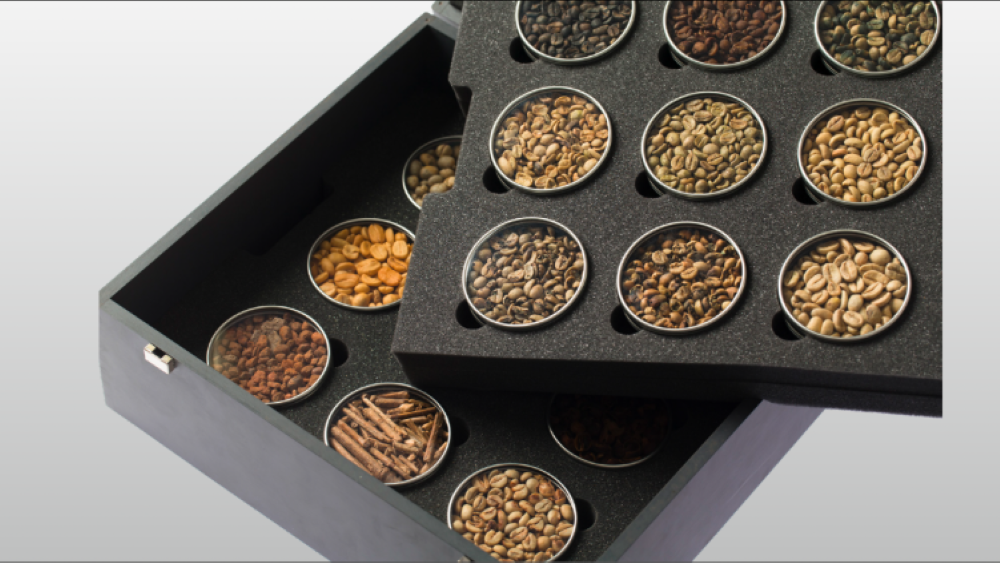
  • A green coffee defect is not an object but a trace. It is the visible end of an invisible process that may begin with overripe cherries, drought stress, insect damage, poor drying, or inadequate storage.
  • Defects have families: extrinsic (stones, sticks, husks) cause physical damage to machinery, while intrinsic (black, sour, immature, fungus-damaged, aged) change the cup profile significantly.
  • Fermentation is not the enemy; uncontrolled fermentation is. The same microbial routes that produce desirable fruit complexity can also produce sour, phenolic, or acetic defects.
  • The Rio defect, associated with 2,4,6-trichloroanisole (TCA), is a powerful example of how a chemically tiny compound can be commercially enormous, and how cultural preference determines whether it is rejected or accepted.
  • Defect recognition requires six layers: physical grading, density and moisture, green bean olfaction, sample roasting, blind cupping, and chemical analysis.
  • The most dangerous sentences in coffee quality are “I like it, therefore it is good” and “I dislike it, therefore it is defective.”

A defect in green coffee is a small event that has survived an entire supply chain. It may have begun as a cherry left too long on the branch, a drought stressed seed, an insect puncture, a heap that warmed during the night, a drying table loaded too thickly before the rain, a bag that reabsorbed moisture in a warehouse, or a fragment of stone travelling with the lot.

By the time we see it on the sorting table, the event has already been translated into colour, density, smell, chemistry, and commercial consequence. The black bean is not black because colour is its essence; it is black because respiration, microbial activity, oxidation, tissue collapse, and time have written a story into the seed.

The sour bean is not sour because it has decided to offend the cup; it is the fossil of an uncontrolled fermentation. A green coffee defect is therefore not an object but a trace. It is the visible end of an invisible process.

This is why the old habit of treating defects as a counting exercise is useful but insufficient. Counting gives trade a language. It allows a buyer in Hamburg, a dry mill in Brazil, a cooperative in Ethiopia, and a roaster in Seoul to negotiate the same bag without each needing to invent vocabulary anew. Yet the count itself does not explain the mechanism.

One full black bean may be a primary defect in a classification system; scientifically, it is also a collapsed biological archive. A stone may carry no flavour, yet it can destroy a grinder. The defect table tells us what to remove. Applied science tells us why it had to be removed, and when, surprisingly, a market may decide not to remove it at all.

Families of Defects

Some defects are extrinsic: stones, sticks, husks, parchment, pods, and foreign matter. They tell us about harvesting, separation, hulling, cleaning, and dry mill discipline. Their danger is often physical before it is sensory, because they damage machinery. Others are intrinsic: full black, partial black, full sour, partial sour, immature, withered, floater, insect damaged, fungus damaged, broken, shell, chipped, crushed, faded, and aged beans. These belong to the seed itself and have far greater potential to change the cup.

An immature bean can bring astringency, grassy bitterness, and harshness because its biochemical reserves have not reached balance. A sour bean can bring vinegar, ferment, rotten fruit, or sharp lactic acetic notes because microbial metabolism has moved into uncontrolled transformation. A black bean often carries the memory of overripeness, fallen fruit, soil contact, or severe stress. A floater, light and porous, is often underdeveloped, and its low density changes heat transfer in roasting. A broken bean is a high surface area wound, vulnerable to oxidation and contamination.

Harvest, Processing, and the Cultural Layer

At farm level, many defects begin with uneven ripeness. Coffee is not a factory product that arrives at maturity in one moment. On the same tree, green, half ripe, ripe, overripe, and dried fruit may coexist. Selective picking is chemical sorting before chemistry becomes irreversible. Processing then becomes decisive. Fermentation is not the enemy. Uncontrolled fermentation is.

The Rio defect is the perfect case study. In classical descriptions, Rio appears as medicinal, phenolic, iodine like, harsh, musty, or cellar like. It is associated with 2,4,6 trichloroanisole (TCA). A Rio note may be rejected by many specialty buyers yet expected or even loved in certain traditional markets. Science can say what is there. Culture decides what it means.

Storage Defects and Six Layers of Recognition

Storage defects are quieter and more dangerous. A coffee can pass visual inspection but still move chemically in the wrong direction. Moisture, oxygen, temperature, and time determine whether the seed preserves its aromatic potential. Good storage is not passive warehousing. It is slow chemistry management.

Recognition requires six layers: physical grading, density and moisture, green bean olfaction, sample roasting, blind cupping, and chemical analysis. The final layer remains human interpretation. Instruments detect compounds. Professionals decide risk, suitability, and value.

Frequently Asked Questions (FAQ)

1. What is a green coffee defect?

A trace of an invisible process ending in colour, density, smell, and chemistry changes.

2. What are extrinsic vs intrinsic defects?

Extrinsic are foreign materials (stones, sticks). Intrinsic are seed defects (black, sour, immature).

3. Can roasting remove defects?

No. Roasting translates defects into different sensory notes but cannot erase them.

4. What is the Rio defect?

A medicinal, phenolic off flavour linked to TCA. It is rejected by some markets but traditional in others.

5. Why are storage defects dangerous?

They are latent. Coffee can pass visual inspection but later develop papery, woody, or flat notes.

6. What is the most dangerous sentence in coffee quality?

“I like it, therefore it is good” and “I dislike it, therefore it is defective.”

Dr. Steffen Schwarz – Coffee Consulate
Published on Qahwa World: May 21, 2026

Shanghai Overtakes New York as Global Coffee Capital as Ethiopia and Vietnam Compete in China

Author: Sahl Maryam Jabra Madhin
Source: ECTA, GACC, ICO
Date: May 21, 2026

Executive Summary:

  • Shanghai now hosts over 9,115 cafes, making it the world’s leading coffee city, double New York and five times Paris.
  • China’s coffee consumption has grown 15 percent annually over the past three years.
  • Ethiopia ranks second as a coffee supplier to China after Brazil, with premium specialty coffee at $6,310 per ton.
  • Vietnam ranks third, offering robusta at $4,176 per ton, benefiting from geographic proximity (4-6 days shipping).
  • China’s zero tariff policy for Ethiopian products has boosted Ethiopian coffee exports, moving Ethiopia from 33rd to 3rd place in five years.
  • In the first ten months of the 2018 budget year, Ethiopia exported 37,711 tons of coffee to China worth $270.73 million.

For many years, the global coffee industry had its eyes fixed on New York, Milan, and Paris. Today, the new growth center of the coffee industry has shifted to Asia. Shanghai now hosts over 9,115 cafes, making it the world’s leading coffee city. This is double the number in New York and approximately five times that of Paris.

Beyond the numbers, the key story is that China’s coffee consumption has grown 15 percent annually over the past three years. This has created a major shift in the global coffee supply chain. While many businesses still focus only on Western markets, China is quietly becoming a major destination and opportunity gateway for Ethiopian and Vietnamese coffee.

Ethiopia vs Vietnam in Shanghai (2025-2026)

Indicator Ethiopia Vietnam
Import rank in China 2nd (after Brazil) 3rd
Supply volume ~50,000 tons ~36,000 tons
Price per ton $6,310 (premium) $4,176 (mid-range)
Growth rate +79.1% revenue +65.8% supply
Key advantage Zero tariff, natural varieties, specialty quality Proximity (4-6 days), lower price

How Each Coffee is Perceived in Shanghai

Ethiopia: The Quality Standard
In Shanghai’s 9,000 cafes, Ethiopian coffee is viewed like fine wine. It is mostly found in specialty coffee shops and premium chains like Blue Bottle. It is preferred for pour-over black coffee. Young Shanghai coffee enthusiasts see Ethiopian coffee as the peak of complexity, with notes of wine, chocolate, spice, fruit, or citrus. Despite its higher price, it remains highly sought after.

Vietnam: The Reliable Workhorse
Once known only for instant coffee, Vietnam has rebranded itself by producing high quality robusta. Vietnamese coffee is commonly found in large chains like Luckin or Cotti, as well as popular cafes in the Jing’an district. It is known for its strong, nutty, chocolatey flavor and is seen as a reliable, affordable option, often mixed with milk.

Zero Tariff Policy and Ethiopia’s Rise

In 2025, a major change occurred: China’s zero tariff policy for Ethiopian products. This duty free access, along with growing strategic cooperation in agriculture, technology transfer, e-commerce links, and Shanghai’s role as a trading hub, has made Ethiopian coffee more price competitive in China.

Five years ago, China was the 33rd destination for Ethiopian coffee exports. By 2017, it rose to 4th place. In the first ten months of the 2018 budget year, Ethiopia exported 37,711 tons of coffee to China, worth $270.73 million, moving up to 3rd place. This demonstrates the rapid growth of Ethiopia’s presence in the Chinese market.

Frequently Asked Questions (FAQ)

1. How many cafes does Shanghai have?

Shanghai has over 9,115 cafes, more than double New York and about five times Paris.

2. How fast is China’s coffee consumption growing?

China’s coffee consumption has grown 15 percent annually over the past three years.

3. Which countries are the top coffee suppliers to China?

Brazil ranks first, followed by Ethiopia (second) and Vietnam (third).

4. What is the price difference between Ethiopian and Vietnamese coffee?

Ethiopian coffee averages $6,310 per ton, while Vietnamese coffee averages $4,176 per ton.

5. What is the zero tariff policy?

China granted duty free access to Ethiopian products in 2025, boosting Ethiopian coffee’s price competitiveness.

6. How much coffee did Ethiopia export to China in 2018?

In the first ten months of the 2018 budget year, Ethiopia exported 37,711 tons of coffee to China, worth $270.73 million.

Sahl Maryam Jabra Madhin – Based on reports from ECTA, GACC, ICO, and Allegra World Coffee Portal.
Published: May 21, 2026