Coffee Farming in Hong Kong: A Bold Experiment in the Shadow of a Metropolis

Author: Coffee World
Source: CNN/ctvnews
Date: May 17, 2026
Executive Summary:

  • Hong Kong, a city of 7.5 million people, has begun growing coffee on Lantau Island despite urban conditions.
  • Ringo Lam, a former tech entrepreneur, started the project after bringing 100 coffee seeds from Panama six years ago.
  • About 80 of the 100 seeds sprouted, and now 25 farmers nurture approximately 400 coffee trees on Lantau.
  • The 2026 harvest yielded 10 kilograms of coffee cherries, nearly ten times the first harvest in 2023.
  • Hong Kong sits at 22 degrees north of the equator, within the global coffee belt, but lacks altitude for complex flavors.
  • Local coffee tastes smooth but less complex than specialty brews from traditional growing regions.
  • Farmers aim to raise awareness about sustainable farming and fair pay rather than compete with major producers.

A coffee roaster hums like an idling train in the attic of LCC Roastery on Hong Kong‘s Lantau Island. Owner Ringo Lam proudly displays a jar labeled “Lantau Bean,” which represents a daring dream: growing coffee in the shadow of a metropolis. For decades, Hong Kong has imported nearly all its food and beverages. But a small group of farmers and enthusiasts is proving that coffee can indeed thrive on this densely populated island.

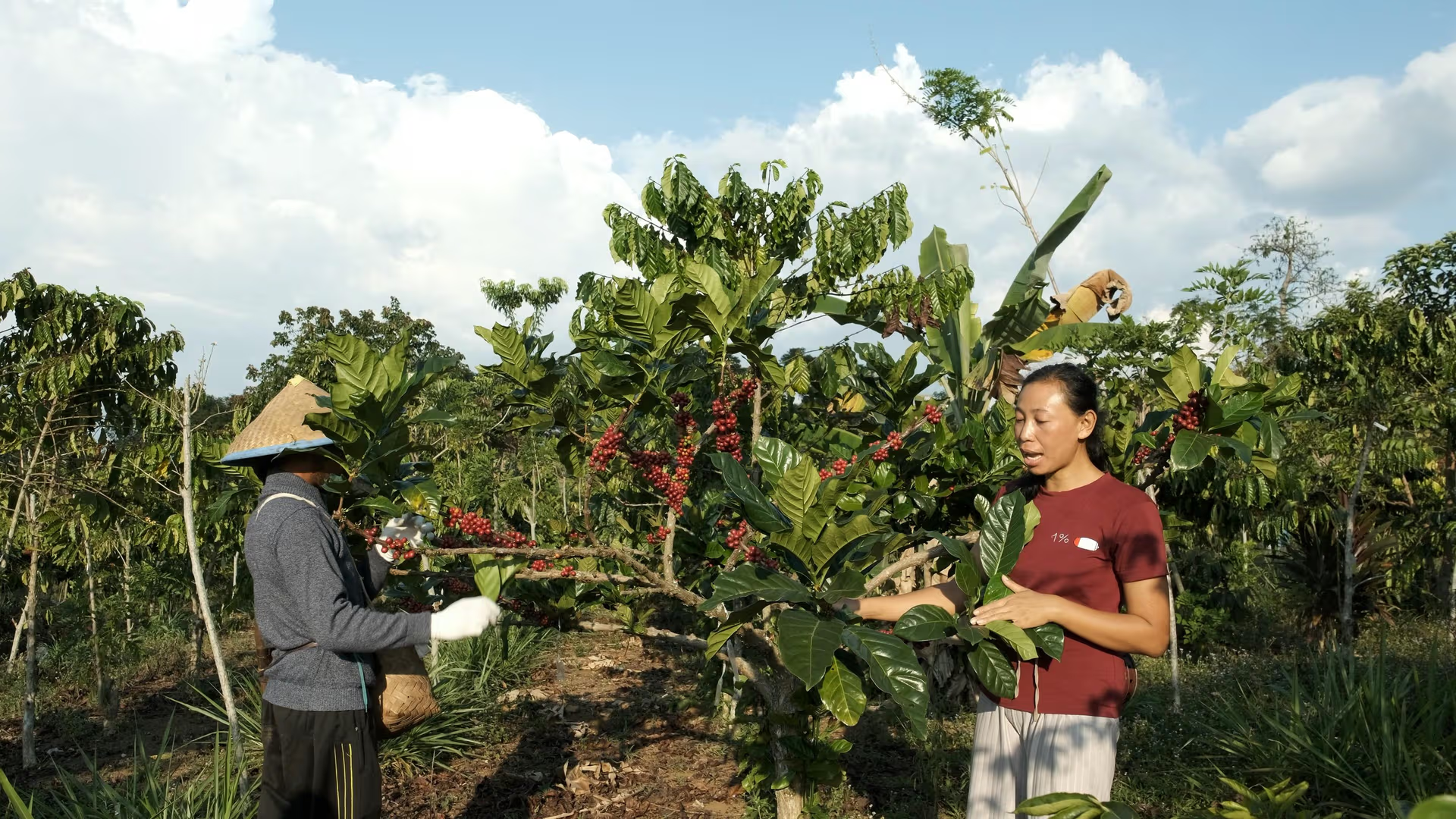
Ringo Lam, 55, previously worked as a tech entrepreneur. He now collaborates closely with farmers on Lantau, an island known for its greenery and relaxed lifestyle. The island sits just a 30 minute ferry ride from Hong Kong’s bustling city center. Lam’s goal is to cultivate the city’s own coffee beans and change public perception about what is possible in urban agriculture.

The Coffee Belt and Hong Kong’s Position

Asia produces some of the world’s finest coffee, mainly in the southeastern part of the continent. Countries like Vietnam and Indonesia benefit from tropical climates. In East Asia, coffee consumption has grown rapidly over the past decade. However, less favorable conditions, including annual periods of extreme cold, have limited crop development in countries such as Japan and China. Only a few high-altitude areas like Yunnan in mainland China or the Alishan Mountain Range in Taiwan can grow premium Arabica coffee.

Hong Kong, a Chinese city with 7.5 million residents, has more than 700 cafes. Yet it has never been seen as an ideal location for coffee cultivation. The city has a stronger cultural attachment to tea. Exorbitant land prices make it more logical to import almost all food rather than grow it. Despite these challenges, Lam’s project has succeeded.

Katie Chick, an arboriculture instructor involved in running a coffee farm linked to the University of Hong Kong, explains that coffee trees thrive within the so called “coffee belt,” approximately 25 degrees north and south of the equator. Hong Kong sits at 22 degrees north, placing it just inside that band. “Geographically speaking, Hong Kong is fit to grow. We just lack a bit of altitude,” Chick said.

From Panama Seeds to Lantau Harvest

Lam’s journey began six years ago during a trip to Panama. He visited farmers to study the coffee industry and received 100 coffee seeds to take home. Not every seed will sprout, and coffee plants often take two to three years to bear fruit. “Out of all those 100 seeds, about 80 something came out,” Lam said. He called every farmer he knew on Lantau Island, asking them to take in the seedlings.

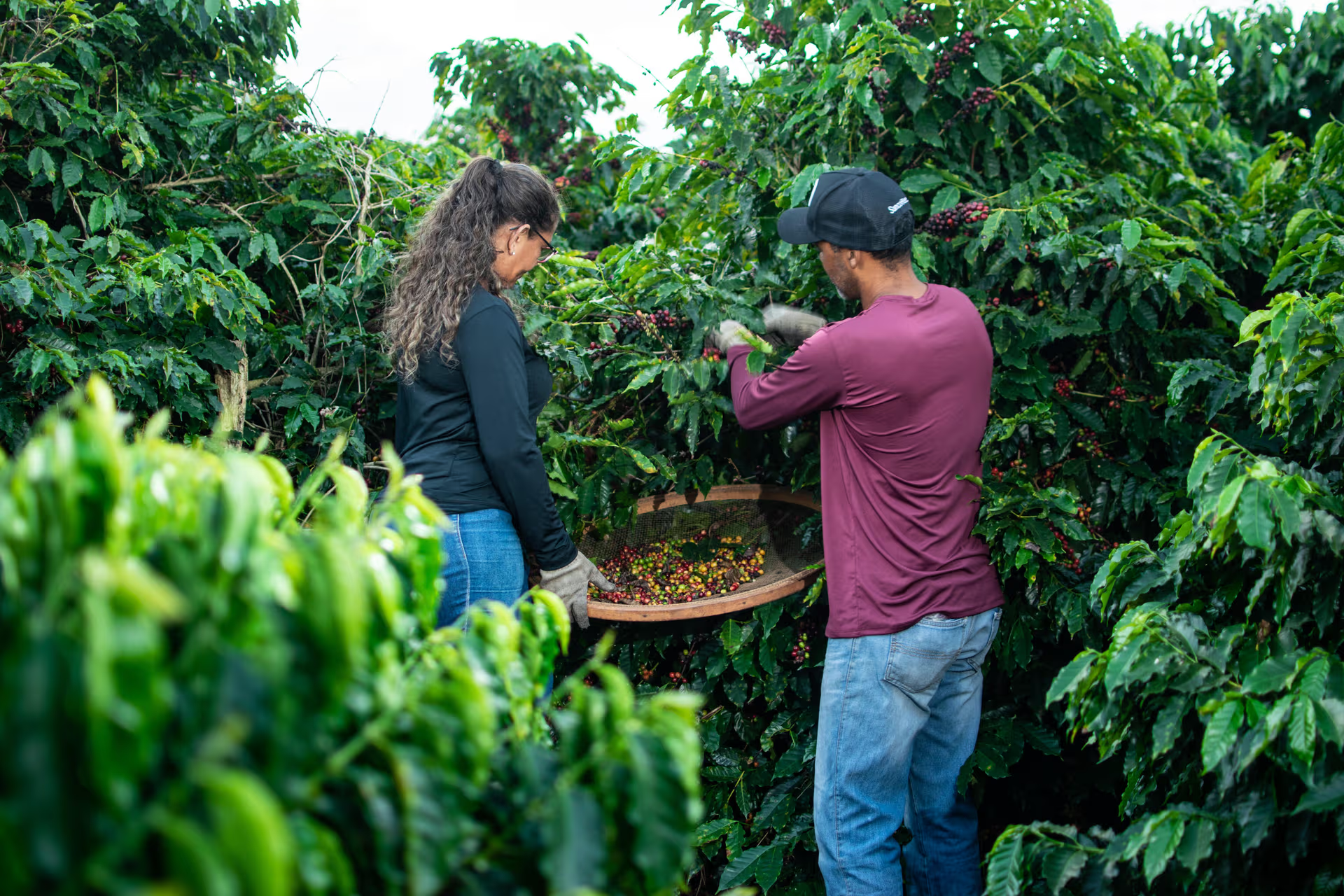
Initially, five farmers agreed. More joined later through trial and error. Today, 25 farmers nurture about 400 coffee trees on Lantau Island. Earlier this year, they harvested their largest batch of coffee cherries yet, measuring 10 kilograms. That amount is nearly ten times their first yield in 2023. An annual gathering now brings together local coffee farmers to brainstorm ways to refine their techniques.

Limited Yields and Commercial Viability

Despite this success, these farmers are not seeking to compete with Latin America or Southeast Asia. The high costs of production make large scale coffee farming hardly commercially viable in Hong Kong. The record 10 kilogram harvest would not fill a single 60 kilogram bag, which is the industry’s basic unit of trade. By comparison, farmers in Brazil, the world’s largest coffee grower, produced 63 million of those bags last year according to the United States Department of Agriculture.

CNN sampled two separate Hong Kong grown coffees. The taste was smooth and easy to drink, though lacking the complexity of specialty coffee from traditional regions. This forces local producers to innovate. They experiment with different wash processes and hold workshops to build awareness, hoping to maximize the value and impact of their home grown crops.

Key Data: Hong Kong Coffee Farming

Indicator Value
Coffee trees on Lantau Island 400
Number of farmers involved 25
2026 harvest (cherries) 10 kg
First harvest (2023) 1 kg (approx)
Hong Kong latitude 22 degrees north
Coffee belt range 25 degrees north to 25 degrees south
Farmer income per kg of beans 2 to 3 US dollars

Building Awareness and Fair Pay

Mike Sim, founder of Seed to Cup, a group that promotes local coffee, has rented a farm in Fanling, northern Hong Kong. He works to perfect his beans while running educational workshops. Last year, he partnered with a barista in a coffee making contest to showcase a batch he grew, mixed with Colombian varietal. They did not win, but Sim called it a big step forward. “We showed people that there are farms in Hong Kong now working with baristas,” he said.

Chan Fung-ming, one of Lam’s Lantau farmers, quit her job as a social worker to take over her family’s farm. Specializing in horticultural therapy, she advocates using gardening to improve well being. She hopes to use coffee to introduce farming to young people. “I think it’s a medium to bring people into the world of planting,” she said.

Lam runs a workshop that lets participants pick coffee cherries and process them from scratch. He says this offers visitors a taste of the hard work that farm workers in distant regions endure every day. For every kilogram of beans, which can produce about 44 cups of coffee, farmers receive only 2 to 3 US dollars. Lam believes that after attending his workshop, people become more willing to pay a fair price for coffee.

Frequently Asked Questions (FAQ)

1. Can coffee really grow in Hong Kong?

Yes. Hong Kong sits at 22 degrees north, within the global coffee belt. Farmers on Lantau Island have successfully grown coffee trees, with a harvest of 10 kilograms of cherries in 2026.

2. How did the Hong Kong coffee project start?

Ringo Lam brought 100 coffee seeds from Panama six years ago. About 80 sprouted, and he distributed them to farmers on Lantau Island. Today, 25 farmers grow about 400 trees.

3. How does Hong Kong grown coffee taste?

According to CNN samples, Hong Kong coffee is smooth and easy to drink, but less complex than specialty coffee from traditional high altitude regions.

4. Why doesn’t Hong Kong produce coffee commercially?

Land is extremely expensive, production costs are high, and yields are very small. The entire 2026 harvest was only 10 kilograms, far below commercial scale.

5. What is the goal of these coffee farmers?

They aim to raise awareness about sustainable farming, fair pay for workers, and reconnect city dwellers with the origins of their coffee, not to compete with major producers.

6. How much do coffee farmers earn per kilogram?

Farmers typically receive about 2 to 3 US dollars per kilogram of beans. One kilogram produces approximately 44 cups of coffee.

Coffee World – Report based on CNN/ctvnews coverage of Hong Kong coffee farming.
Published: May 17, 2026

Brazil Breeds New Coffee to Face Climate Threat

Campinas – Qahwa World

A recent report published by Reuters highlights growing efforts by Brazilian researchers to safeguard the future of arabica coffee as climate pressures intensify worldwide.

At the Campinas Agronomy Institute in southeastern Brazil, agronomist Oliveiro Guerreiro Filho is working among a diverse collection of coffee plants that differs sharply from the uniform rows seen across most commercial farms. The site brings together a wide range of species, including 15 rare and non-commercial varieties such as racemosa, liberica and stenophylla.

Researchers believe these lesser-known species may hold the genetic traits needed to strengthen arabica, which remains the most widely consumed coffee in the world.

You may like: Brazilian farmer aims to sell rare coffee for nearly $20,000 per bag

Scientists warn that arabica is increasingly vulnerable to rising temperatures and shifting weather patterns. Production in key countries, including Brazil, is expected to face mounting pressure in the coming decades.

According to a report by Rabobank, up to 20 percent of current arabica-growing areas could become unsuitable for cultivation by 2050.

In response, researchers are working to introduce genetic material from more resilient species into arabica plants. The goal is to develop new varieties that can better tolerate heat, drought and disease.

Liberica has attracted particular attention due to its ability to withstand hotter and drier conditions. Farmers in Southeast Asia, especially in Indonesia and Malaysia, have already begun testing the species on a small scale.

Jason Liew, founder of a coffee plantation in Malaysia’s Johor state, said liberica performs well in high temperatures and shows strong resistance to disease.

Brazilian researchers are focusing on transferring such traits into arabica, given its dominant position in global markets.

Guerreiro Filho said the institute has spent years working to transfer drought-tolerance genes from racemosa into arabica in an effort to produce more resilient plants.

The process is long and complex. It involves cross-breeding and exposing new hybrids to harsh conditions to identify the strongest varieties. This work can take between 20 and 30 years.

You may like to read: Coffee Pulp in Brazil: When the Coffee Cherry Refuses to Be Waste

Beyond climate resilience, researchers are also testing hybrids for improved resistance to pests and diseases while maintaining quality. Some crosses have shown stronger resistance to coffee rust, while others perform better against leaf miner larvae.

Rodolfo Oliveira of Brazil’s agricultural research agency emphasized that working with alternative coffee species is essential, noting that arabica has a very narrow genetic base, which increases its vulnerability to environmental threats.

As climate challenges continue to grow, efforts like those underway in Campinas may play a critical role in securing the future of coffee production.

Coffee Farmers in Central America Struggle to Survive Falling Prices

Dubai – Qahwa World

The Guardian published a lengthy report titled “‘Everyone feels like they are being scammed’: can Central America’s small coffee growers survive as global prices fall?”, which discussed the growing pressures facing coffee farmers in parts of Central America, particularly in El Salvador and Honduras. The report explores how climate instability, rising production costs, labour shortages and volatile global markets are reshaping coffee farming across the region.

According to the report, many small producers who have depended on coffee cultivation for generations are now confronting increasingly unpredictable conditions. Weather patterns that once followed a familiar seasonal rhythm have become less reliable, making it difficult for farmers to plan their harvest cycles and manage their farms effectively.

The report begins on a hillside in western El Salvador, where coffee farmer Oscar Leiva observes rainfall arriving in December, a month that traditionally marked the beginning of the dry season. During the latest harvest cycle, flowering occurred early and then stalled, followed by a period of intense heat. As a result, the remaining crop is uneven in quality and more expensive to produce than previous harvests.

You may like: Global Study Maps the “Carbon Footprint” of Latin American Coffee

For Leiva’s family, coffee is not simply a crop but a long-standing way of life. His mother, Esperanza Marinero, remembers when the rainy season arrived on time and harvests could be planned months ahead. Today, that certainty has disappeared. Farmers must make decisions about pruning, fertilising and hiring workers without reliable seasonal patterns, increasing the financial risks they face.

Coffee has historically played a major role in El Salvador’s economy. In the mid-1970s the country ranked among the world’s leading coffee producers, with harvests exceeding five million quintales, a unit equal to about 46 kilograms. Today, national production struggles to reach one million quintales.

The report notes that this decline reflects more than market cycles. Decades of land restructuring, climate shocks and rural migration have weakened the coffee sector and altered the agricultural landscape. Increasing climate volatility has disrupted flowering cycles, reduced yields and affected the quality of coffee, particularly for small farmers who lack financial reserves to absorb repeated losses.

Read also: Shock in the Coffee Market: Colombia’s Production Drops 36%

Cecibel Romero, a researcher focusing on coffee production, explained that the sector is experiencing overlapping challenges that extend beyond climate change alone. Rising temperatures, irregular rainfall and plant diseases such as coffee rust have exposed long-standing vulnerabilities in traditional production systems.

Romero noted that past production models often focused on maximising yields and implementing short-term solutions rather than building long-term resilience. After severe rust outbreaks in the early 2010s, many producers replanted their farms with varieties believed to be resistant. However, some of these varieties produced lower-quality beans or did not maintain their resistance over time.

As coffee’s economic importance declined in El Salvador, public support systems for the sector were also reduced. Agricultural services weakened, renovation programmes became fragmented and access to affordable credit narrowed. As a result, many producers have been left to cope with climate risks, disease outbreaks and market volatility largely on their own.

Read also:Coffee Markets Rise Amid Middle East Shipping Disruptions

Similar pressures are being felt in Honduras, the largest coffee producer in Central America. Although overall production remains higher than in El Salvador, farmers there are also dealing with rising costs and climate-related challenges.

Juan Luis Hernández, a forest engineer who has worked on environmental projects connected to the Honduran Coffee Institute, said adapting to changing conditions requires investment, time and labour. Measures such as managing shade trees, restoring soil health, protecting water sources and monitoring plant diseases all require resources that are not equally available to all farmers.

In the Honduran region of Copán, farmer Gerardo Vásquez manages an eight-hectare family farm while also advising other growers. Trained through the Honduran Coffee Institute, he works on soil analysis, selecting coffee varieties and developing agroforestry systems.

Even with this technical background, Vásquez says the economic reality of coffee farming remains difficult. Establishing one manzana of coffee — roughly 0.7 hectares — now costs about 200,000 lempiras over a period of three years.

Read also: Bridging the Gap: An Exclusive Dialogue with Vanusia Nogueira on the Global Coffee Crisis and the Path to 2026

Production costs have risen significantly in recent years. Fertiliser prices increased sharply after the pandemic, while labour shortages have pushed wages for harvest workers higher. When harvesting, processing and transport are included, farmers may spend more than 3,000 lempiras to produce a single quintal of parchment coffee.

Weather conditions can further complicate the process. Continuous rainfall makes drying coffee difficult, forcing some farmers to sell freshly picked cherries directly from the field at lower prices. Others depend on intermediaries who provide advance payments, which can limit farmers’ ability to negotiate prices later.

Climate change is also affecting where coffee can be grown successfully. Farms located below 1,000 metres above sea level are becoming more vulnerable to heat stress, pests and diseases. As a result, coffee cultivation has gradually moved to higher elevations over time.

However, relocating production to higher ground is not feasible for many smallholders, who may not have access to suitable land or the financial means to make such changes.

At Café San Rafael in Honduras, co-owner Carlos Guerra explained that the flowering cycle of coffee plants has become increasingly irregular. What once occurred within a predictable timeframe now happens in stages, extending the harvest period and raising labour costs.

Labour itself has become one of the most pressing challenges for producers. Coffee harvesting requires careful selection of ripe cherries, a process that cannot easily be mechanised. Younger workers are increasingly leaving rural areas, making it harder for farms to recruit enough labour during harvest season.

Farmers are experimenting with various adaptation strategies, including planting additional shade trees and improving soil management practices. While these measures can help protect coffee plants from heat stress, they may also reduce yields, creating a difficult balance between environmental resilience and economic viability.

Some farms attempt to offset these challenges by focusing on higher-value markets. At Café San Rafael, careful management of fermentation and drying processes helps maintain coffee quality even when harvest conditions are uneven. Operating a roastery also allows the business to manage fluctuations in supply.

However, many small farmers do not have access to such opportunities. Entering specialty coffee markets often requires certification, processing infrastructure and export connections that remain beyond the reach of numerous producers.

Emeric Seguin, director of sourcing and sustainability at a specialty coffee company working with producers in Central America, told the newspaper that mistrust is widespread within the supply chain. Farmers often feel undervalued, while buyers worry about inconsistent supply, leaving cooperatives caught between both sides.

Several initiatives are attempting to promote more resilient farming practices. In El Salvador, a coffee production school known as Renacer encourages ecological approaches that focus on soil health, shade restoration and long-term stability rather than maximising short-term yields.

Agronomist Sigfredo Corado explained that the goal is to reduce extreme fluctuations in harvests. While farms may not achieve exceptionally high yields in strong years, they are also less likely to experience severe drops in production.

Despite these efforts, the report notes that global market conditions could add further pressure. Rabobank has predicted that increasing coffee surpluses in the coming seasons could push international prices lower, potentially making coffee production less viable for smallholders.

As profitability declines, some land previously used for shaded coffee is being converted to other crops or sold for development, gradually altering landscapes that have long been associated with coffee cultivation.

For farmers such as Oscar Leiva, planning for the next season remains unavoidable despite the uncertainty. Each harvest now requires decisions to be made without the reliable patterns that once guided coffee farming.

Across Central America, producers continue searching for ways to adapt to changing environmental and economic realities, while the long-term sustainability of smallholder coffee farming remains an open question.

Saudi Arabia: 1.3 Million Coffee Trees Produce More Than 870 Tons Annually

Dubai – Qahwa World

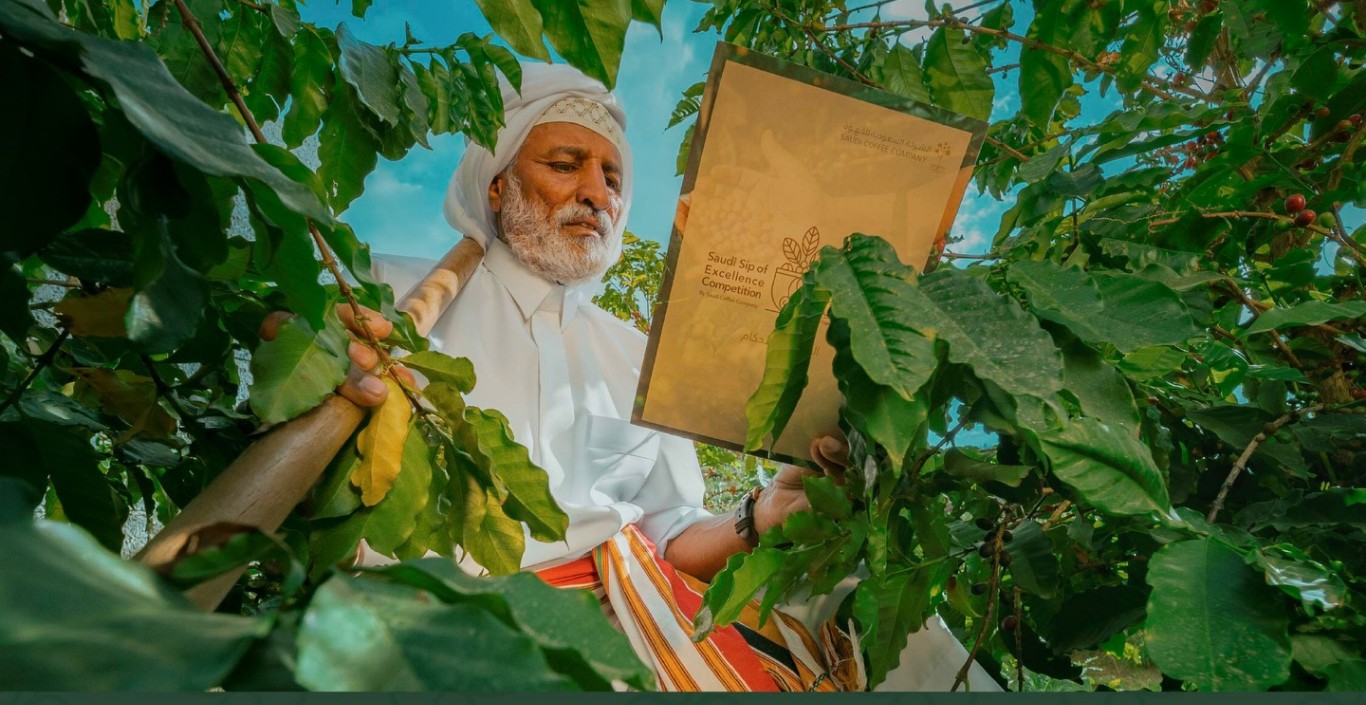
Saudi Arabia’s Ministry of Environment, Water and Agriculture has announced that the Kingdom is home to more than 1.3 million productive coffee trees, with annual output exceeding 870 tons of green coffee. The trees are concentrated across the southern and southwestern regions of the country.

According to the ministry’s data, coffee cultivation is spread across Jazan, Asir, Al Baha, Makkah, and Najran. The mountainous highlands in these regions provide favorable growing conditions, supported by suitable climate patterns and fertile soil, contributing to the quality of the harvest.

You may like:Saudi Arabia’s Coffee Renaissance: Tradition Meets Specialty Cafe Boom

Jazan leads in the number of productive coffee trees, with more than 966,000 trees generating over 642 tons annually. Asir follows with more than 243,000 productive trees, producing upwards of 175 tons per year.

In Al Baha, the number of productive coffee trees stands at around 72,000. Makkah region accounts for more than 12,000 productive trees, yielding over 10 tons annually, while Najran hosts more than 9,000 productive trees with output exceeding 7 tons per year.

The ministry described Saudi coffee as one of the country’s key national crops, highlighting its cultural and social significance, particularly in traditional hospitality and during Ramadan, when preparation methods vary across regions.

Read also: Saudi Arabia Announces First-Ever Detection of Coffee Rust Epidemic in Jazan

The figures were released as part of the ministry’s “خير أرضنا” (“The Goodness of Our Land”) campaign, aimed at promoting local agricultural products, supporting farmers, and strengthening food security in line with Saudi Vision 2030 objectives.

The ministry also encouraged consumers to support locally produced coffee, noting that increased demand contributes to rural development and the long-term sustainability of the agricultural sector.

How to Make Your Coffee Habit More Sustainable

By: Maya Maceka

Global coffee consumption continues to rise, with billions of cups consumed every day. In the United States alone, roughly two-thirds of adults drink coffee daily, making it one of the most popular beverages nationwide. While coffee is deeply embedded in daily life and culture, its growing demand comes with significant environmental and social consequences.

From deforestation and water pollution to carbon emissions and waste generated at home, coffee’s footprint extends far beyond the cup. Understanding how coffee is grown, traded, brewed, and consumed is the first step toward making more responsible choices.

This guide explores practical ways to build a more sustainable coffee routine, focusing on responsible sourcing, waste reduction, and energy-efficient brewing—small changes that can create meaningful impact when adopted widely.

Where Coffee Is Grown

Coffee comes from the Coffea plant, which thrives in warm, humid regions near the equator. It is cultivated in more than 70 countries within what is commonly known as the “coffee belt,” stretching across Latin America, Africa, the Middle East, and Southeast Asia.

High-quality coffee is often associated with higher elevations, typically between 1,000 and 2,000 meters above sea level. These regions offer moderate temperatures, reliable rainfall, and fertile soils—conditions that allow coffee cherries to mature slowly and develop more complex flavors.

Slower growth at higher altitudes can also reduce caffeine levels and pest pressure, sometimes allowing farmers to rely less on chemical treatments. When combined with shade-grown methods, high-altitude farming can support biodiversity and soil health.

Main Coffee Bean Varieties

The global market is dominated by two species: Arabica and Robusta.

Arabica accounts for the majority of coffee consumed worldwide and is valued for its smoother, often fruity or floral profile. It grows best at higher elevations but is more sensitive to temperature changes, pests, and disease, making it increasingly vulnerable to climate stress.

Robusta thrives in warmer, lower-altitude environments and is more resilient. It contains higher caffeine levels and produces a stronger, more bitter flavor. Its durability allows it to maintain yields where Arabica struggles, which is why it plays a key role in many espresso blends.

A third variety, Liberica, represents only a small fraction of global production today. Grown mainly in parts of Southeast Asia, it is known for its distinctive, woody flavor and niche appeal.

Different beans suit different brewing styles. Arabica is often favored for black coffee and pour-over methods, while Robusta is commonly used in espresso-based drinks for its body and crema. Many commercial coffees blend both.

What Makes Coffee Sustainable?

Coffee farming has far-reaching environmental and social impacts. Conventional production methods can contribute to forest loss, soil degradation, chemical runoff, and greenhouse gas emissions. At the same time, millions of smallholder farmers face economic instability despite producing most of the world’s coffee.

A large share of coffee’s total carbon footprint originates at the farming stage, with emissions tied to land-use change, fertilizers, and processing. Meanwhile, much of the financial value generated from coffee is concentrated in consuming countries rather than at origin.

Sustainable coffee seeks to address these challenges by balancing environmental protection with fair economic outcomes for farmers.

Key Sustainable Coffee Practices

Several approaches are shaping a more responsible coffee sector:

  • Shade-grown farming supports wildlife, protects soil, and helps store carbon by growing coffee under tree canopies.

  • Organic cultivation avoids synthetic chemicals, relying instead on natural soil management and pest control.

  • Regenerative agriculture focuses on restoring ecosystems by improving soil health, increasing biodiversity, and capturing carbon.

  • Certifications such as Organic, Bird-Friendly, or Regenerative Organic aim to verify responsible practices, though transparency and enforcement remain critical.

  • Fair trade and direct trade models work to improve farmer income and working conditions by setting minimum prices or reducing intermediaries.

Transitioning to these systems can be costly and challenging for farmers, particularly in the short term, but long-term benefits include resilience, ecosystem protection, and improved livelihoods.

Making Your Coffee Routine More Sustainable at Home

Most coffee drinkers now brew at home, which means household habits play a growing role in coffee’s overall environmental impact.

Choose Responsible Coffee Beans

Beans account for a large portion of coffee’s environmental footprint. Choosing coffee produced using sustainable or ethical practices can significantly reduce that impact and help support farming communities.

Avoid Instant Coffee

Instant coffee requires additional processing and higher energy use compared to whole or ground beans. Its packaging is also more resource-intensive, making it a less sustainable option overall.

Look Beyond Labels

Certifications can offer helpful guidance, but they are not foolproof. Transparency, traceability, and clear sourcing information are just as important as logos on packaging.

Support Direct-Trade and Local Roasters

Buying from roasters that work directly with producers can improve transparency, reduce supply chain emissions, and ensure farmers receive a larger share of the value.

Reducing Waste from Coffee Consumption

Even sustainably grown coffee can generate unnecessary waste if consumption habits are inefficient.

Skip Single-Use Pods

Disposable coffee pods create long-lasting waste and are difficult to recycle. Refillable pods or pod-free brewing methods are far more sustainable alternatives.

Reuse Coffee Grounds

Used coffee grounds can be composted or repurposed for gardening, deodorizing, cleaning, or creative household uses.

Use a Reusable Cup

Single-use cups are rarely recycled due to plastic linings. Bringing a reusable cup reduces waste, conserves resources, and often keeps drinks warmer for longer.

Be Mindful of Packaging

Many coffee bags contain mixed materials that limit recyclability. Packaging choices still account for a small but meaningful share of coffee’s carbon footprint.

Sustainable Brewing Methods and Equipment

Brewing methods vary widely in energy use and waste output.

Manual methods such as pour-over, French press, moka pot, Turkish coffee, and cold brew require minimal energy and produce little waste. Cold brew, in particular, allows large batches to be prepared without heat.

Electric machines can be more sustainable if they are energy-efficient, durable, and compatible with reusable filters. Features such as automatic shut-off, insulated boilers, repairable components, and verified energy certifications help reduce long-term environmental impact.

Final Thoughts

Making coffee more sustainable does not require abandoning the ritual altogether. It begins with informed choices—selecting responsibly sourced beans, reducing waste, and choosing efficient brewing methods.

Each step of coffee’s journey, from farm to cup, carries environmental and social costs. By making thoughtful adjustments, consumers can help reduce those impacts while still enjoying one of the world’s most beloved beverages. Over time, these choices can contribute to a coffee industry that is fairer, cleaner, and more resilient.