Ecuador Leads Cocoa Sector in Meeting EU Deforestation Rules

Ecuador – Qahwa World

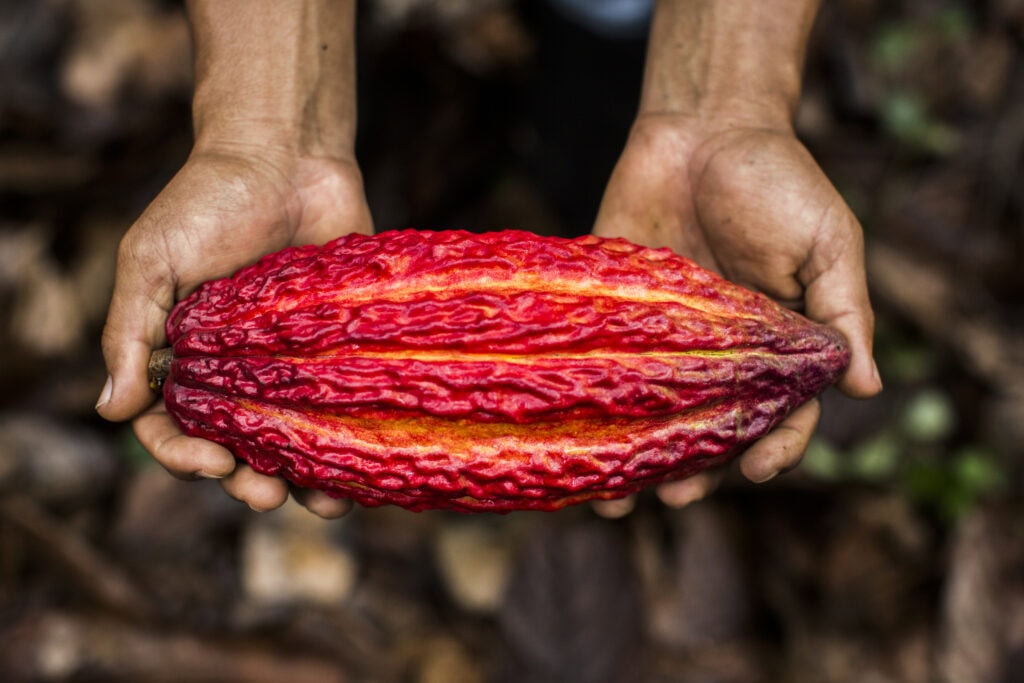
Ecuador is positioning itself as one of the most advanced countries in adapting to the European Union Deforestation Regulation (EUDR), which is scheduled to take effect on December 30, 2026. Unlike many other cocoa origins, Ecuador’s cocoa sector already exceeds 90% compliance and is approaching full alignment, according to the National Association of Cocoa Exporters. This reflects significant progress in traceability, sustainability, and transparency, all of which are essential for continued access to the European market.

The country’s progress is supported by a long-term national strategy. For five consecutive years, Ecuador has led exports of organic products to the European Union, according to the Ministry of Agriculture and Livestock. This leadership strengthens its position in a global market where environmental compliance is becoming a mandatory requirement rather than an optional standard.

The EUDR requires proof that agricultural products are not linked to deforestation. For cocoa, this means implementing geolocation systems, farm-level monitoring, and full traceability across the supply chain. Ecuador has made notable progress in these areas through coordination between exporters, producers, and public institutions, reducing the risk of exclusion from the European market.

The country is also expanding its compliance base by integrating more producers into formal systems. National programs aim to register and support up to 100,000 cocoa and coffee farmers, helping them meet EUDR requirements and avoid potential export losses. These efforts also contribute to strengthening sector formalization and improving long-term competitiveness.

The EUDR, first proposed in 2019 and approved in 2023 by the European Parliament and the Council of the European Union, represents a major shift in global agricultural trade. After two implementation delays, the regulation is still set to apply at the end of 2026, leaving a limited adjustment period for exporting countries.

Within this context, Ecuador is not only reducing compliance risks but also gaining a competitive advantage. Its high level of readiness positions it as a reliable supplier in an increasingly strict regulatory environment.

The strength of Ecuador’s position is also linked to the scale of its cocoa industry. The country produces between 380,000 and 420,000 tons of cocoa annually and is the world’s leading exporter of fine aroma cocoa, accounting for around 60% of global supply in this segment. More than 70% of production is exported, generating between 3.5 and 4 billion US dollars annually, with the European Union as the main destination.

Cocoa production is concentrated in provinces such as Los Ríos, Guayas, and Manabí, along with other important areas including Esmeraldas and El Oro, and expanding regions in the Amazon such as Sucumbíos and Orellana. The sector involves around 600,000 families, mostly smallholder farmers. Between 15% and 25% of Ecuadorian cocoa already carries sustainability or organic certification, further reinforcing its readiness for new regulatory standards.

A Record-Breaking Auction in Ecuador Reveals Shifts in the Coffee Market

Dubai – Qahwa World

The global coffee industry continues to evolve at a striking pace, shaped by a mix of record-breaking achievements, scientific discoveries, corporate expansion, and structural challenges. Recent developments from different parts of the world offer a revealing snapshot of where coffee stands today—and where it may be heading.

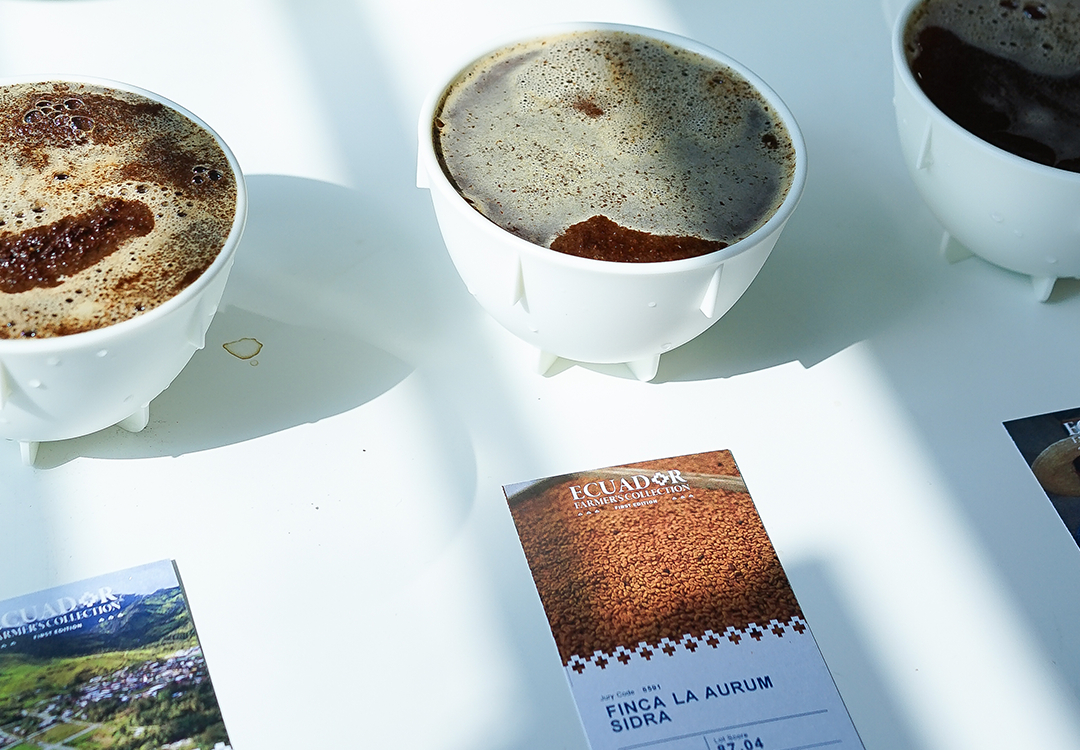
A defining moment came from Ecuador, where a specialty coffee auction set a new national benchmark. A Gesha lot reached 318 dollars per kilogram, signaling not just a headline-grabbing price, but a broader shift in how emerging origins are positioning themselves in the high-value segment of the market. Ecuador, long overshadowed by more established producers, is increasingly demonstrating its potential to compete in the ultra-premium category, where traceability, processing precision, and storytelling drive value as much as cup quality.

This upward movement in prices at the top end reflects a wider transformation. Specialty coffee is no longer a niche; it is becoming a strategic pathway for producing countries seeking to escape the volatility of commodity markets. However, such success stories also highlight a growing divide between high-end micro-lots and the broader base of producers who remain exposed to fluctuating global prices and rising production costs.

At the same time, science continues to deepen our understanding of coffee ecosystems. The identification of new fungal species on arabica plants may seem like a small discovery, yet it underscores the complexity of the biological systems surrounding coffee cultivation. These organisms play a quiet but essential role in nutrient cycling and soil regeneration, reminding the industry that long-term sustainability depends not only on climate and economics, but also on the invisible ecological networks within farms.

On the institutional front, changes in trade governance signal a push toward modernization. Updated arbitration systems and the development of remote training platforms suggest an industry adapting to new realities, where digital access and standardized procedures are becoming increasingly important. As global trade grows more complex, the ability to resolve disputes efficiently and train professionals across borders is no longer optional.

Meanwhile, major coffee companies continue to expand, reporting strong financial growth and reinforcing their global presence. This reflects steady demand in consumption markets, even as the industry faces mounting pressures. New investment discussions and franchise expansion strategies, particularly in the United States, point to a continued belief in coffee as a resilient business model, capable of attracting capital even in uncertain economic conditions.

Yet beneath this growth lies a layer of vulnerability. Legal disputes linked to product safety, as well as incidents involving equipment failure, highlight operational risks that can have significant reputational and financial consequences. In parallel, cases of illegal activity tied to coffee retail spaces, though isolated, raise questions about oversight and the integrity of supply chains at the local level.

In emerging producing regions, entrepreneurial initiatives continue to take shape. New farm projects in Southeast Asia reflect both optimism and necessity, as the next generation of producers seeks to build sustainable models from the ground up. These efforts often rely on direct support, transparency, and storytelling to connect with global audiences and secure funding.

Taken together, these developments reveal an industry defined by contrasts. Record auction prices coexist with structural inequality. Scientific progress advances alongside environmental uncertainty. Corporate growth moves in parallel with operational and regulatory challenges.

Coffee today is not just a beverage or a commodity. It is a complex global system, where climate, biology, economics, and culture intersect. Understanding its future requires looking beyond individual headlines and recognizing the deeper forces reshaping the industry from farm to cup.

South America’s 100 Best Coffee Shops 2025 – Full List Revealed

Dubai – Qahwa World

The global coffee community celebrates a new milestone as The World’s 100 Best Coffee Shops unveils the official list of South America’s 100 Best Coffee Shops 2025, recognizing the continent’s finest cafés for their excellence, creativity, and cultural impact.

After months of evaluation and travel across cities, mountains, and coffee regions, the judges compiled a single, unified ranking that reflects South America’s dynamic coffee landscape — one that continues to inspire and shape global coffee culture.

This year’s edition honors cafés that deliver exceptional quality, unique concepts, sustainable practices, and authentic coffee experiences. From traditional roasteries to modern coffee laboratories, these 100 destinations represent the beating heart of coffee craftsmanship in the region.

South America’s 100 Best Coffee Shops 2025 — Complete List

  1. Tropicalia Coffee / Colombia

  2. Kafi Wasi Café Tostaduría / Peru

  3. Holaste! Specialty Coffee / Chile

  4. Fankør / Ecuador

  5. Tributo Casa de Café – Chacao / Venezuela

  6. Fruto Café / Argentina

  7. Monotono Specialty Coffee / Peru

  8. Cupping Café / Brazil

  9. Puku Puku / Peru

  10. Eco Mapu Coffee Villarica / Chile

  11. Typica Café / Bolivia

  12. Pergamino Café Laureles / Colombia

  13. Caferatto Café Especial / Colombia

  14. Wake Up Coffee Lab / Chile

  15. Masaro Café / Peru

  16. Mulano Coffee Shop / Ecuador

  17. Origen Tostadores de Café / Peru

  18. Casa Canela / Venezuela

  19. Mugen Coffee Project / Bolivia

  20. Coffee Five / Brazil

  21. Café Guayasamín – Centro Quito / Ecuador

  22. Café de Barrio / Argentina

  23. Three Monkeys Coffee Cusco / Peru

  24. Abstrakto Café de Especialidad / Uruguay

  25. Neira Café Lab / Peru

  26. Café Local / Chile

  27. Tasta Café / Peru

  28. Oso Café / Peru

  29. Insignia Coffee / Colombia

  30. Alquimia Specialty Coffee Shop / Bolivia

  31. Antaqa Café / Peru

  32. Café 4 Llamas – Santa Cruz / Bolivia

  33. Café Micelio Puerto Varas / Chile

  34. Rua – Café de Especialidad Curado / Ecuador

  35. Café 18 – El Chicó / Colombia

  36. Cronopios Café / Ecuador

  37. Abisinia Café y Tostaduría / Peru

  38. Slow Brew Coffee Shop Cuenca / Ecuador

  39. HB Bronze Coffeebar / Bolivia

  40. Tres / Argentina

  41. Don Salazar / Peru

  42. Cuervo Café / Argentina

  43. Punto Café / Peru

  44. Famosta Café / Colombia

  45. Negro Cueva de Café / Argentina

  46. Libertario Coffee Roasters – Calle 70A / Colombia

  47. Surry Hills Coffee Palermo / Argentina

  48. Azahar Café / Colombia

  49. D’sala Caffé / Peru

  50. Café Folks / Chile

  51. Café Melosa / Venezuela

  52. Florencia y Fortunata Specialty Coffee / Peru

  53. Roaster Specialty Coffee / Bolivia

  54. Stratto Bodega de Café + Coffee Shop / Ecuador

  55. Raiz Coffee / Peru

  56. Café Buena Vista / Bolivia

  57. Buho Nómada / Chile

  58. Colo Coffee / Colombia

  59. Atmósferico Cafetería de Especialidad / Ecuador

  60. Indera Experience Cafetería de Especialidad / Ecuador

  61. Kofi & Co / Brazil

  62. Típica Café Milla de Oro / Colombia

  63. Coffee Busters Roastery / Peru

  64. Mato Café / Brazil

  65. Cafetería Tunu Katari / Peru

  66. KOF – King of the Fork / Brazil

  67. Café Ao Leu / Brazil

  68. Primates Tostadores / Chile

  69. Lucca Cafés Especiais / Brazil

  70. María Julio Coffee Shop / Colombia

  71. Kaweh Coffee Shop / Ecuador

  72. Puma Café / Peru

  73. Dagada / Ecuador

  74. Somos Specialty Coffee / Bolivia

  75. Coffeestylers / Colombia

  76. Amanecer Coffee Store / Venezuela

  77. ArtemisA Coffee & Cocktail Bar / Chile

  78. Alto Tostado Coffee Roasters – Santa Cruz / Bolivia

  79. Eleganza Coffee Roasters / Chile

  80. Ciclos Café / Peru

  81. Blacksoul Café Brewing Lab / Bolivia

  82. Marrón Café / Venezuela

  83. Laurino Coffee / Colombia

  84. Café Nexos / Venezuela

  85. 9 Gramos Café / Colombia

  86. Manva Natural Market / Venezuela

  87. Rita Specialty Coffee Armenia / Argentina

  88. Café Black Mamba / Chile

  89. Kaffei / Paraguay

  90. Elevaria Café / Peru

  91. Casa Berracos / Uruguay

  92. Senzuru Coffee / Peru

  93. Anella Café / Venezuela

  94. Kajue Café / Argentina

  95. Varietale Chapinero / Colombia

  96. Ninina / Argentina

  97. Guanacoffee / Peru

  98. Barista Coffee House / Argentina

  99. Café Bauda / Chile

  100. Calu’s / Argentina

A Continental Celebration of Coffee Excellence

The 2025 list captures the remarkable growth of specialty coffee in South America, where cafés are increasingly emphasizing sustainability, direct trade, and community connection. From Peru’s mountains to Colombia’s coffee triangle, each café has earned its place through dedication and creativity.

This recognition is more than a ranking — it’s a celebration of coffee as a cultural bridge. Each destination tells a story of farmers, roasters, and baristas working together to redefine what coffee can be.

The organizers extended their gratitude to this year’s sponsors and partners:
@cafedecolombia, @corferias, @fidatecorg, @hechoencafe, Craft Specialty Coffee, and @fedecafeterosc, for their continued support in promoting excellence and sustainability in coffee.

About the Awards

The South America’s 100 Best Coffee Shops 2025 is part of The World’s 100 Best Coffee Shops global initiative, which celebrates the finest cafés worldwide. The listings are curated by international coffee professionals who assess cafés on quality, innovation, design, and overall customer experience.

For the complete story and upcoming global rankings, visit:
https://theworlds100bestcoffeeshops.com/

The Cocoa Paradox: How Global Shocks and Dubai’s Trade Ambitions Are Reshaping a $26 Billion Industry

Dubai – Qahwa World

The global cocoa industry long synonymous with indulgence and luxury is undergoing a historic transformation. A sharp supply crunch, climate disruptions, and tightening regulations have exposed deep structural weaknesses in one of the world’s most beloved commodities. Yet, amid the volatility, new opportunities for diversification, innovation, and fairer value distribution are emerging with Dubai positioning itself as a strategic bridge between producers and consumers in the new era of cocoa trade.

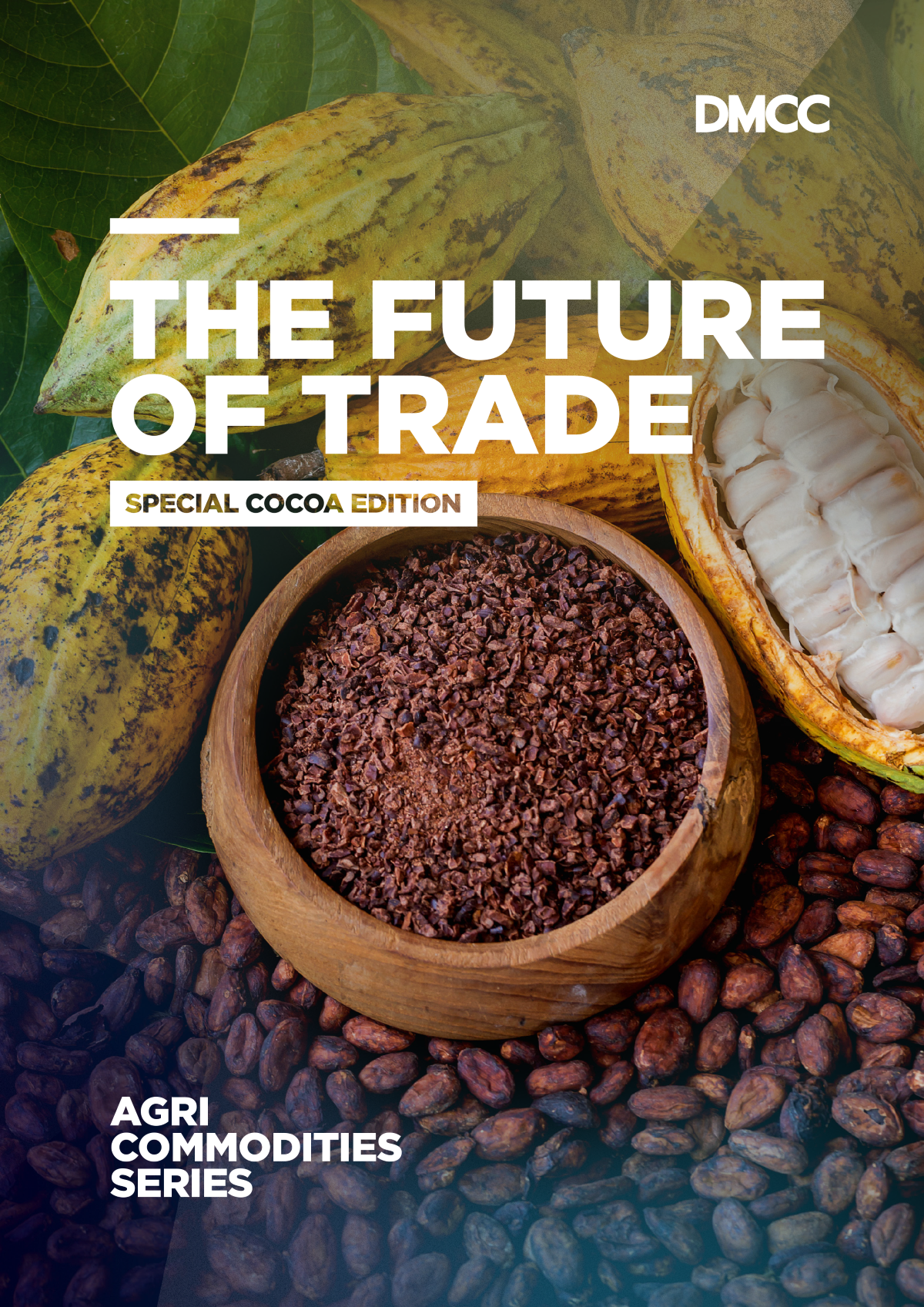
The Dubai Multi Commodities Centre (DMCC) has released a comprehensive report titled “The Future of Trade Special Cocoa Edition,” part of its Agri Commodities Series. The report examines the global cocoa market’s critical challenges from production shortages and price volatility to digital innovation, ethical sourcing, and shifting consumer demand toward wellness and sustainability. This news story is based on the key findings of the DMCC report, one of the most detailed and forward-looking analyses of the cocoa sector and Dubai’s growing role in it.

A Crisis of Supply and Unequal Returns

The global cocoa market is valued at around US$16.6 billion in 2025 and is expected to reach US$26.2 billion by 2035. However, behind this growth lies a deep imbalance. The 2023/24 crop year recorded one of the steepest production declines in decades down 13% to 4.4 million tonnes resulting in a deficit of nearly half a million tonnes and pushing prices to record highs. Cocoa grindings also fell by 5% to 4.8 million tonnes, according to the International Cocoa Organization (ICCO).

The roots of the crisis lie in West Africa, which produces over 60% of the world’s cocoa from Côte d’Ivoire, Ghana, Nigeria, and Cameroon. Devastating outbreaks of black pod and swollen shoot disease, erratic rainfall, and ageing trees have crippled production. Ghana’s regulator has already warned that output could drop another 10% in the 2025/26 season.

“Our cocoa plantations are ageing and have suffered from years of underinvestment,” says Kwadwo Boachie-Adjei, founder of Kumbi Cocoa. “Farmers lack access to quality fertilizers and seedlings because the financial resources needed to reinvest in their communities have not been flowing back at the scale required. The cycle of low productivity and limited incomes must change.”

Despite record-high international prices, farmers in Ghana and Côte d’Ivoire still receive fixed farmgate rates set by governments too low to cover replanting or disease control. “For every one-dollar chocolate bar, farmers receive just two cents,” notes Mauro Danilo Ribezzi, founder of the Ribezzi Group. “The economics of cocoa are fragile people will simply walk away.”

Meanwhile, processors and brands are struggling with soaring energy, transport, and financing costs. Companies are resorting to shrinkflation and reformulation: Mars Inc. cut 10 grams from its Galaxy bar, while Nestlé dropped the word “chocolate” from some UK products that now fall below the 20% cocoa-content threshold.

Although chocolate still dominates around 85% of cocoa demand, consumer preferences are shifting toward functional, ethical, and health-oriented products. The premium chocolate market is projected to grow from US$31.9 billion in 2024 to US$40.6 billion by 2030, while demand for raw cacao marketed as a superfood rich in antioxidants is forecast to surge from US$14.3 billion in 2024 to US$23.6 billion by 2033. Cocoa butter, a staple in cosmetics and pharmaceuticals, is set to nearly double in value to US$9.37 billion by 2032.

At the same time, the industry faces new compliance pressures. The European Union’s Deforestation-Free Products Regulation and Corporate Sustainability Due Diligence Directive require companies to prove that their cocoa is not sourced from deforested areas and that human rights are upheld throughout supply chains. Cocoa cultivation has caused over 37% forest loss in Côte d’Ivoire’s protected areas and 13% in Ghana, making traceability and digital monitoring essential for market access and premium pricing.

Dubai: A New Global Nexus for Cocoa Trade

Amid these structural pressures, Dubai is emerging as a stabilizing force in global commodity flows. Leveraging its strategic location between Africa, Asia, and Europe, the UAE has built a resilient trade ecosystem capable of absorbing global shocks. According to the DMCC report, the UAE imported US$17.3 million worth of cocoa beans in 2023 96% of which came from Côte d’Ivoire and exported US$16.4 million, mainly to Iran, Malaysia, and Saudi Arabia. While modest compared to European hubs, these figures highlight Dubai’s growing relevance in both upstream and downstream cocoa trade.

Building on the success of the DMCC Coffee Centre and Tea Centre, Dubai is now planning to launch a DMCC Cacao Centre that will offer integrated services including grading, blending, storage, branding, and structured trade finance all under one roof. The initiative aims to transform Dubai into a full-service hub for cocoa trade and value addition in the Middle East.

“The DMCC provides African producers with what they have long lacked direct access to markets and capital,” says Boachie-Adjei.

“The beauty of the DMCC ecosystem,” adds Ribezzi, “is that we don’t just operate as traders but as facilitators connecting farmers, financiers, and buyers across borders.”

The report also underscores how technology is redefining cocoa trade. Blockchain-enabled traceability ensures regulatory compliance and transparency, while mobile-first fintech platforms allow farmers to receive payments directly cutting out intermediaries and ensuring faster, fairer compensation. Emerging models such as tokenized assets and decentralized finance (DeFi) could soon unlock new credit channels for smallholders historically excluded from the banking system.

Looking further ahead, the industry is experimenting with lab-grown cocoa to overcome climate and disease risks. Startups are cultivating cocoa cells that yield mass without farms, a concept already supported by major players such as Barry Callebaut and Japan’s Meiji. Other innovators are developing cocoa-free chocolate alternatives using ingredients like carob and upcycled fibers to reduce dependency on volatile bean supply. Meanwhile, West African research programs are advancing disease-resistant and high-yield varieties through genetic innovation and agroforestry models.

The DMCC report concludes that the future of cocoa rests on five pillars: climate-adapted farming, transparent supply chains, diversified production, financial innovation, and equitable participation. It calls for producer nations to move beyond being raw suppliers and instead become true partners in global value creation.

With its neutral trade infrastructure and forward-looking policies, Dubai is poised to redefine the cocoa economy shifting it from a system marked by inequality and volatility to one built on sustainability, inclusivity, and shared prosperity.