Tepi Agricultural Research Center Distributes Improved Coffee and Spice Seedlings to Farmers

Author: Qahwa World
Source: Ethiopian News Agency (ENA)
Date: May 28, 2026

Tepi Agricultural Research Center Distributes Improved Coffee and Spice Seedlings to Farmers

Executive Summary:

  • Tepi Agricultural Research Center is distributing research proven coffee, spice, and fruit seedlings to farmers in the region.
  • More than 700,000 seedlings of cocoa, vanilla, and other spices are being prepared for the upcoming planting season.
  • The seedlings are environmentally adaptable and have demonstrated high productivity through research validation.
  • Farmers who have previously planted these varieties confirmed shorter harvest times and increased yields.
  • The center is distributing seedlings that were propagated during the dry season for the upcoming rainy season planting.
  • Local authorities confirmed that the initiative enhances farmer productivity and economic returns.

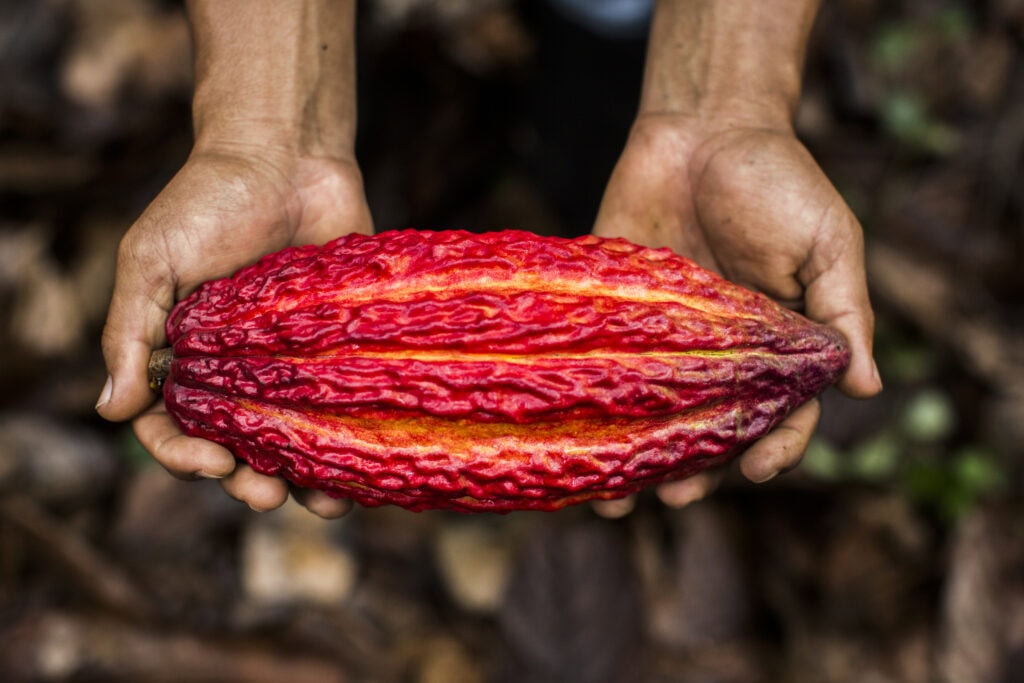
Tepi Agricultural Research Center has announced that it is distributing research proven coffee, spice, and fruit seedlings to farmers in the region. The center is preparing over 700,000 seedlings of marketable crops including cocoa, vanilla, and other spices for the upcoming rainy season planting.

Dr. Dereje Tulu, Director of Tepi Agricultural Research Center, stated that the center is currently preparing more than 700,000 spice seedlings aimed at improving farmer productivity and increasing economic returns. The seedlings, which will be planted in the coming rainy season, are environmentally adaptable and their productivity has been confirmed through research.

Research Validated Varieties for Better Productivity

According to Dr. Dereje, the seedlings distributed by the center have undergone rigorous research validation. Beyond their high productivity, they also contribute to preserving the local ecosystem. Alemseged Haileiyesus, Deputy Head of the Sheka Zone Agriculture, Forest, Environment Protection and Cooperatives Department, confirmed that the center is providing farmers with research proven spice and other seedlings. He added that this initiative successfully enhances farmer productivity and economic benefits.

Farmers Confirm Positive Results

The center continues its work by distributing seedlings propagated during the dry season for planting in the rainy season. Farmers from Yeki district, including Mohammed Taye and Ayelech Anamo, confirmed through practical experience that varieties supplied by the research center produce harvests in shorter time frames with improved productivity. They indicated that they are now working to enhance their economic returns by planting seedlings they prepared themselves alongside those provided by the center.

Frequently Asked Questions (FAQ)

1. What types of seedlings is Tepi Research Center distributing?

The center is distributing coffee, spice (including cocoa, vanilla), and fruit seedlings that have been proven through research.

2. How many seedlings are being prepared for distribution?

More than 700,000 seedlings are being prepared for the upcoming rainy season planting.

3. Are these seedlings environmentally suitable?

Yes, the seedlings are adaptable to the local environment and have been validated through research for their ecological compatibility and productivity.

4. What results have farmers reported?

Farmers confirmed that these varieties produce harvests in shorter time frames and provide higher productivity compared to traditional varieties.

5. When will the seedlings be planted?

The seedlings will be planted during the upcoming rainy season.

6. What is the goal of this initiative?

To improve farmer productivity, increase economic returns, and promote environmentally sustainable agriculture.

Qahwa World – Based on reporting from the Ethiopian News Agency (ENA).
Published: May 28, 2026

Ecuador Leads Cocoa Sector in Meeting EU Deforestation Rules

Ecuador – Qahwa World

Ecuador is positioning itself as one of the most advanced countries in adapting to the European Union Deforestation Regulation (EUDR), which is scheduled to take effect on December 30, 2026. Unlike many other cocoa origins, Ecuador’s cocoa sector already exceeds 90% compliance and is approaching full alignment, according to the National Association of Cocoa Exporters. This reflects significant progress in traceability, sustainability, and transparency, all of which are essential for continued access to the European market.

The country’s progress is supported by a long-term national strategy. For five consecutive years, Ecuador has led exports of organic products to the European Union, according to the Ministry of Agriculture and Livestock. This leadership strengthens its position in a global market where environmental compliance is becoming a mandatory requirement rather than an optional standard.

The EUDR requires proof that agricultural products are not linked to deforestation. For cocoa, this means implementing geolocation systems, farm-level monitoring, and full traceability across the supply chain. Ecuador has made notable progress in these areas through coordination between exporters, producers, and public institutions, reducing the risk of exclusion from the European market.

The country is also expanding its compliance base by integrating more producers into formal systems. National programs aim to register and support up to 100,000 cocoa and coffee farmers, helping them meet EUDR requirements and avoid potential export losses. These efforts also contribute to strengthening sector formalization and improving long-term competitiveness.

The EUDR, first proposed in 2019 and approved in 2023 by the European Parliament and the Council of the European Union, represents a major shift in global agricultural trade. After two implementation delays, the regulation is still set to apply at the end of 2026, leaving a limited adjustment period for exporting countries.

Within this context, Ecuador is not only reducing compliance risks but also gaining a competitive advantage. Its high level of readiness positions it as a reliable supplier in an increasingly strict regulatory environment.

The strength of Ecuador’s position is also linked to the scale of its cocoa industry. The country produces between 380,000 and 420,000 tons of cocoa annually and is the world’s leading exporter of fine aroma cocoa, accounting for around 60% of global supply in this segment. More than 70% of production is exported, generating between 3.5 and 4 billion US dollars annually, with the European Union as the main destination.

Cocoa production is concentrated in provinces such as Los Ríos, Guayas, and Manabí, along with other important areas including Esmeraldas and El Oro, and expanding regions in the Amazon such as Sucumbíos and Orellana. The sector involves around 600,000 families, mostly smallholder farmers. Between 15% and 25% of Ecuadorian cocoa already carries sustainability or organic certification, further reinforcing its readiness for new regulatory standards.

DMCC to Launch Cacao Centre to Accelerate USD 26.2 Billion Global Cocoa Trade Through Dubai

Dubai – Qahwa World

DMCC announces Cacao Centre to accelerate the global cocoa market projected to reach USD 26.2 billion by 2035
New centre to launch with strategic partners Kumbi Cocoa and Ribezzi Group
DMCC hosts 88 companies active across cocoa trading, chocolate manufacturing and confectionary
Builds on DMCC’s proven agri-food cluster model, expanding into cacao trading, processing and innovation
Integration with DMCC FinX will connect global cocoa trade with access to capital, financing, and wealth structuring through a single platform
DMCC – the leading international business district that drives the flow of global trade through Dubai – has announced its intention to launch a Cacao Centre, a new trade platform designed to establish an integrated cacao trading, processing and innovation ecosystem that will further position Dubai as a global hub for agri commodities trade.

The launch forms part of DMCC’s broader expansion of its agri-food commodities offering, leveraging its proven cluster model that has already reshaped global trade flows in coffee and tea. DMCC currently hosts 88 companies active across cocoa trading, chocolate manufacturing and confectionery. The new Cacao Centre will bring this activity together within a more structured platform spanning the full value chain – from sourcing and processing through to branding, distribution and access to finance.

The Centre will be launched in partnership with Kumbi Cocoa, which is focused on building direct, equitable relationships with farming cooperatives, and Ribezzi Group, a diversified conglomerate headquartered in Dubai, which will lead development and execution. Together, the parties will evaluate the feasibility of establishing integrated infrastructure in Dubai capable of storing, trading and processing cacao beans into semi-finished products such as cocoa liquor, cocoa butter, and cocoa powder. This will ultimately serve global markets while enhancing efficiency, transparency and value creation across the cocoa supply chain.

Building on the success of the DMCC Coffee Centre and DMCC Tea Centre, the new platform reflects a growing shift in global agri commodities, where value creation is increasingly driven by integrated market platforms that combine logistics, processing and access to capital. The Cacao Centre will offer state-of-the-art infrastructure and services, including grading, storage, blending, branding and packaging. These capabilities will be directly linked to trade finance solutions for cocoa boards, cooperatives and farmers through DMCC’s FinX platform, providing critical tools in a market defined by price volatility and liquidity constraints.

Ahmed Bin Sulayem, Executive Chairman and Chief Executive Officer, DMCC, said: “Cocoa today is not only about production, but about how value is structured, financed and distributed across the supply chain. With the DMCC Cacao Centre, we are building a platform around that reality. By bringing together producers, traders, manufacturers and capital within a single platform, we are creating the conditions for more value to be captured closer to origin while strengthening Dubai’s role as a global hub for agri-commodities trade. This is a natural extension of our cluster model and the next step in positioning Dubai at the centre of global food and commodities flows.”

Kwadwo Boachie-Adjei, Founder and CEO, Kumbi Cocoa, said: “Kumbi Cocoa’s mission has always been to build transparent and equitable supply chains that directly connect farmers with global markets. As a strategic partner to DMCC, we are proud to support the development of infrastructure that benefits growers while delivering high-quality, traceable cocoa to international markets.”

Mauro Ribezzi, Founder, Ribezzi Group, said: “The global cocoa market is evolving rapidly, and this initiative reflects a forward-looking approach to commodity infrastructure. By integrating sourcing, logistics, trading and processing across continents, the Cacao Centre has the potential to become a new benchmark and a catalyst for the industry.”

Globally, the cocoa market was valued at approximately USD 16.6 billion in 2025 and is projected to reach USD 26.2 billion by 2035. At the same time, the premium chocolate segment – driven by single-origin products, artisanal offerings and health-conscious formats – is expected to grow from USD 31.9 billion in 2024 to USD 40.6 billion by 2030.

Dubai’s role in the cocoa trade remains emergent but is supported by clear growth indicators. In 2023, the UAE imported USD 17.3 million in raw cocoa beans and USD 65.3 million in finished chocolate and cocoa products. Exports of raw beans reached USD 16.4 million, positioning the UAE as the 28th-largest exporter globally. While still nascent, these figures reflect accelerating trade flows across both upstream raw materials and downstream finished goods through Dubai.

Structural imbalances continue to define the global cocoa trade, with West African producers accounting for roughly three-quarters of output yet capturing only a fraction of end-market value. The DMCC Cacao Centre is designed to bridge this gap by directly connecting producers with global buyers, capital and value-added services. In parallel, Dubai’s strength in warehousing, blending and structured trade finance will act as a trade stabiliser, supported by investments in temperature-controlled logistics to safeguard quality and reduce loss. This integrated model brings infrastructure, services and capital into a single platform, enabling a more resilient, transparent and inclusive global cocoa trade.


Arabica Leads the Recovery: Coffee Outperforms Sugar, Cotton, and Cocoa in Q3 2025

Dubai – Qahwa World

The agricultural commodities sector gained 1.89% in Q3 2025, driven by strong advances in Arabica coffee and frozen concentrated orange juice (FCOJ) futures. Despite the quarterly rise, the sector remained 19.25% below its 2024 closing level, with four of five major agricultural commodities ending lower and two down more than 40%.

Arabica coffee was the best-performing agricultural commodity in Q3, climbing 22.2% amid concerns over Brazil’s crop outlook and posting a 17.23% year-to-date increase. Futures closed at $3.7485 per pound at the end of September and climbed further to $4.0875 by mid-October, marking coffee as the standout performer of 2025 so far.
The monthly chart shows sustained bullish momentum that began in late 2024.

Cocoa, however, led the downside after reaching an all-time high of $12,931 per ton in late 2024. Prices plunged 27.86% in Q3 and 42.19% since the start of 2025, closing at $6,749 per ton in September and falling below $5,900 in mid-October. Analysts point to commodity cyclicality — high prices trigger oversupply, larger inventories, and weaker demand.

World sugar futures (#11) rose 4% in Q3 but are still 16.41% lower year-to-date. Prices settled at 16.10 cents per pound at the end of September, well below the November 2023 peak of 28.14 cents. By mid-October, March 2026 contracts were trading near 15.60 cents, extending the bearish trend.

Cotton prices slipped 0.77% in Q3 and 3.85% year-to-date. Futures closed September at 65.77 cents per pound and hovered slightly lower at around 65 cents in mid-October. Cotton has trended downward since the May 2022 high of $1.5595 per pound, though current levels may offer a foundation for recovery if production contracts due to low prices.

While FCOJ gained 11.90% in Q3, it remained the worst-performing agricultural commodity year-to-date, down 51.04%. Prices fell from a December 2024 record of $5.4315 per pound to $2.4355 by the end of September and slipped below $2 in mid-October.
Analysts note that FCOJ’s limited liquidity amplifies volatility, with low open interest and trading volumes causing sharper price swings.

As Q4 begins, coffee prices remain elevated while cocoa, sugar, cotton, and FCOJ continue to slide. However, sugar and cotton may find cyclical support, as low prices typically drive production cuts, inventory drawdowns, and stronger demand — setting the stage for a rebound.

Weather conditions, crop health, trade policies, and geopolitics will continue to shape volatility across agricultural commodities. While coffee may face corrective pressure after its rally, sugar and cotton appear the most likely candidates for recovery — particularly cotton, which tends to peak in Q1–Q2 amid planting uncertainty. With prices below 66 cents per pound, cotton could emerge as the strongest recovery play for 2026.

“Agricultural commodities led the asset class in 2023 and 2024 but have fallen behind in 2025. Yet, cyclicality remains the driving force — where lows are found, the next rallies begin.”

The Cocoa Paradox: How Global Shocks and Dubai’s Trade Ambitions Are Reshaping a $26 Billion Industry

Dubai – Qahwa World

The global cocoa industry long synonymous with indulgence and luxury is undergoing a historic transformation. A sharp supply crunch, climate disruptions, and tightening regulations have exposed deep structural weaknesses in one of the world’s most beloved commodities. Yet, amid the volatility, new opportunities for diversification, innovation, and fairer value distribution are emerging with Dubai positioning itself as a strategic bridge between producers and consumers in the new era of cocoa trade.

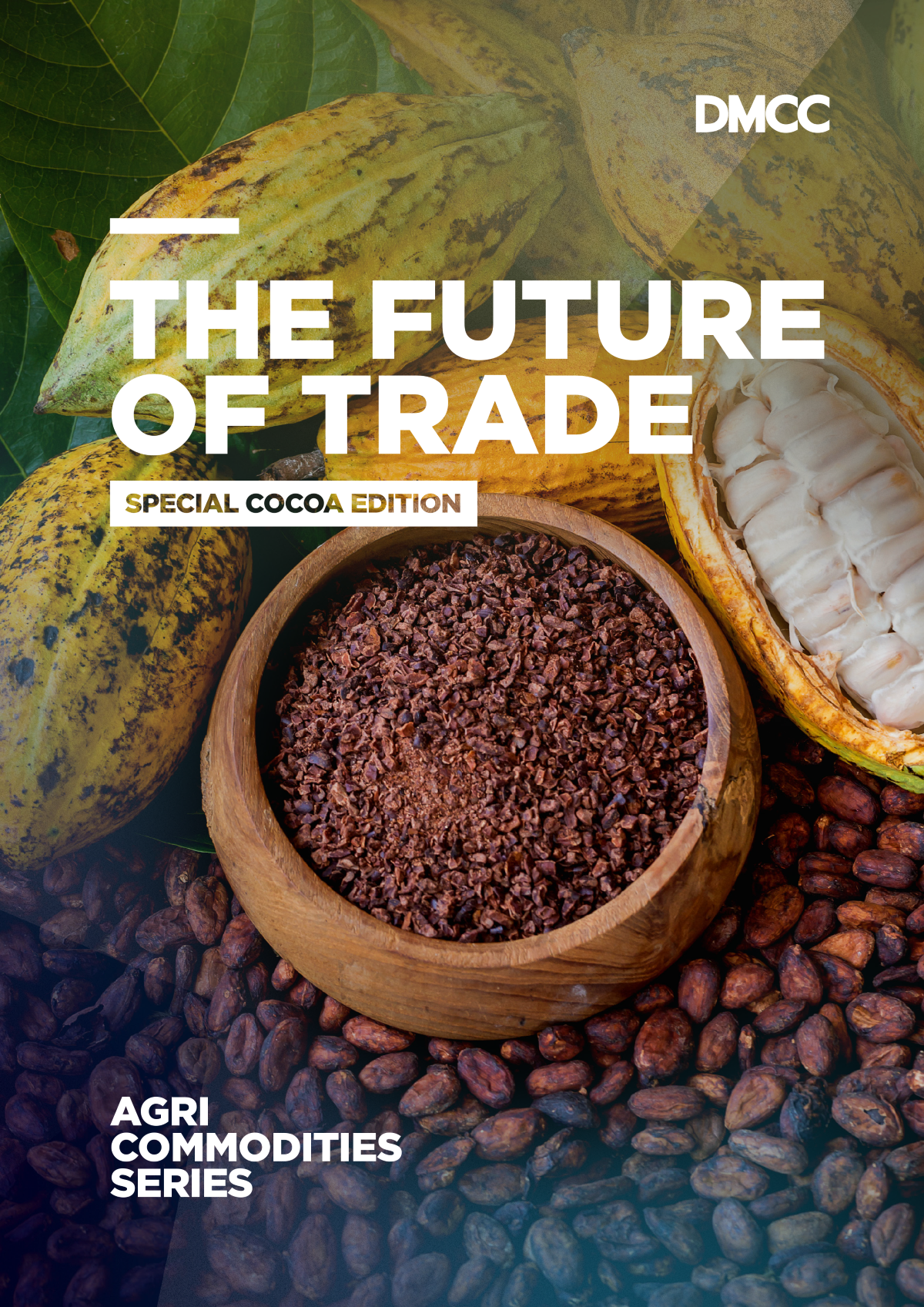
The Dubai Multi Commodities Centre (DMCC) has released a comprehensive report titled “The Future of Trade Special Cocoa Edition,” part of its Agri Commodities Series. The report examines the global cocoa market’s critical challenges from production shortages and price volatility to digital innovation, ethical sourcing, and shifting consumer demand toward wellness and sustainability. This news story is based on the key findings of the DMCC report, one of the most detailed and forward-looking analyses of the cocoa sector and Dubai’s growing role in it.

A Crisis of Supply and Unequal Returns

The global cocoa market is valued at around US$16.6 billion in 2025 and is expected to reach US$26.2 billion by 2035. However, behind this growth lies a deep imbalance. The 2023/24 crop year recorded one of the steepest production declines in decades down 13% to 4.4 million tonnes resulting in a deficit of nearly half a million tonnes and pushing prices to record highs. Cocoa grindings also fell by 5% to 4.8 million tonnes, according to the International Cocoa Organization (ICCO).

The roots of the crisis lie in West Africa, which produces over 60% of the world’s cocoa from Côte d’Ivoire, Ghana, Nigeria, and Cameroon. Devastating outbreaks of black pod and swollen shoot disease, erratic rainfall, and ageing trees have crippled production. Ghana’s regulator has already warned that output could drop another 10% in the 2025/26 season.

“Our cocoa plantations are ageing and have suffered from years of underinvestment,” says Kwadwo Boachie-Adjei, founder of Kumbi Cocoa. “Farmers lack access to quality fertilizers and seedlings because the financial resources needed to reinvest in their communities have not been flowing back at the scale required. The cycle of low productivity and limited incomes must change.”

Despite record-high international prices, farmers in Ghana and Côte d’Ivoire still receive fixed farmgate rates set by governments too low to cover replanting or disease control. “For every one-dollar chocolate bar, farmers receive just two cents,” notes Mauro Danilo Ribezzi, founder of the Ribezzi Group. “The economics of cocoa are fragile people will simply walk away.”

Meanwhile, processors and brands are struggling with soaring energy, transport, and financing costs. Companies are resorting to shrinkflation and reformulation: Mars Inc. cut 10 grams from its Galaxy bar, while Nestlé dropped the word “chocolate” from some UK products that now fall below the 20% cocoa-content threshold.

Although chocolate still dominates around 85% of cocoa demand, consumer preferences are shifting toward functional, ethical, and health-oriented products. The premium chocolate market is projected to grow from US$31.9 billion in 2024 to US$40.6 billion by 2030, while demand for raw cacao marketed as a superfood rich in antioxidants is forecast to surge from US$14.3 billion in 2024 to US$23.6 billion by 2033. Cocoa butter, a staple in cosmetics and pharmaceuticals, is set to nearly double in value to US$9.37 billion by 2032.

At the same time, the industry faces new compliance pressures. The European Union’s Deforestation-Free Products Regulation and Corporate Sustainability Due Diligence Directive require companies to prove that their cocoa is not sourced from deforested areas and that human rights are upheld throughout supply chains. Cocoa cultivation has caused over 37% forest loss in Côte d’Ivoire’s protected areas and 13% in Ghana, making traceability and digital monitoring essential for market access and premium pricing.

Dubai: A New Global Nexus for Cocoa Trade

Amid these structural pressures, Dubai is emerging as a stabilizing force in global commodity flows. Leveraging its strategic location between Africa, Asia, and Europe, the UAE has built a resilient trade ecosystem capable of absorbing global shocks. According to the DMCC report, the UAE imported US$17.3 million worth of cocoa beans in 2023 96% of which came from Côte d’Ivoire and exported US$16.4 million, mainly to Iran, Malaysia, and Saudi Arabia. While modest compared to European hubs, these figures highlight Dubai’s growing relevance in both upstream and downstream cocoa trade.

Building on the success of the DMCC Coffee Centre and Tea Centre, Dubai is now planning to launch a DMCC Cacao Centre that will offer integrated services including grading, blending, storage, branding, and structured trade finance all under one roof. The initiative aims to transform Dubai into a full-service hub for cocoa trade and value addition in the Middle East.

“The DMCC provides African producers with what they have long lacked direct access to markets and capital,” says Boachie-Adjei.

“The beauty of the DMCC ecosystem,” adds Ribezzi, “is that we don’t just operate as traders but as facilitators connecting farmers, financiers, and buyers across borders.”

The report also underscores how technology is redefining cocoa trade. Blockchain-enabled traceability ensures regulatory compliance and transparency, while mobile-first fintech platforms allow farmers to receive payments directly cutting out intermediaries and ensuring faster, fairer compensation. Emerging models such as tokenized assets and decentralized finance (DeFi) could soon unlock new credit channels for smallholders historically excluded from the banking system.

Looking further ahead, the industry is experimenting with lab-grown cocoa to overcome climate and disease risks. Startups are cultivating cocoa cells that yield mass without farms, a concept already supported by major players such as Barry Callebaut and Japan’s Meiji. Other innovators are developing cocoa-free chocolate alternatives using ingredients like carob and upcycled fibers to reduce dependency on volatile bean supply. Meanwhile, West African research programs are advancing disease-resistant and high-yield varieties through genetic innovation and agroforestry models.

The DMCC report concludes that the future of cocoa rests on five pillars: climate-adapted farming, transparent supply chains, diversified production, financial innovation, and equitable participation. It calls for producer nations to move beyond being raw suppliers and instead become true partners in global value creation.

With its neutral trade infrastructure and forward-looking policies, Dubai is poised to redefine the cocoa economy shifting it from a system marked by inequality and volatility to one built on sustainability, inclusivity, and shared prosperity.

EU Confirms Delay to Deforestation Regulation

Brussels – Qahwa World

The European Commission has confirmed a further one-year delay to the European Union Deforestation Regulation (EUDR), citing IT system capacity issues and risks of disruption to supply chains.

The regulation, which entered into force in June 2023, sets strict due diligence requirements for commodities including palm oil, cattle, soy, coffee, cocoa, timber, rubber, and derived products such as beef, furniture, and chocolate. Originally scheduled for application from December 30, 2024, implementation was already postponed once to December 2025. The new proposal extends the deadline by an additional 12 months.

“While our simplification efforts have been substantial, we have concluded that we cannot meet the original deadline without causing disruptions to our businesses and supply chains,” said European Commission trade spokesperson Olof Gill. He added that the IT platform designed to handle compliance documentation faces “serious capacity concerns given the projected load.”

Environment Commissioner Jessika Roswall stressed that the delay provides “the necessary time to get the IT system capacity that we need.” She also rejected suggestions that the decision was linked to ongoing trade talks with the United States or Indonesia, noting that the U.S. has already been recognized as posing “negligible risk” to global deforestation.

The proposal must now be approved by EU member states and the European Parliament.

The delay was welcomed by the European People’s Party (EPP), parliament’s largest group, which has long argued the regulation placed disproportionate burdens on small and medium-sized businesses, including coffee roasters, foresters, and farmers. “If the deforestation regulation had entered into force unchanged on 1 January, it would have caused unsolvable problems,” said EPP environment spokesperson Peter Liese.

Christine Schneider, the parliament’s lead negotiator on EUDR, called for a “zero-risk category” to exempt commodities and regions with no deforestation link from additional documentation requirements.

However, environmental organizations sharply criticized the move. The WWF described the delay as “a massive embarrassment for President von der Leyen and her Commission,” warning it reflects a lack of political will to ensure timely enforcement. The Greens’ agriculture coordinator Thomas Waitz called it “a dark day for global forest protection,” accusing the Commission of bowing to pressure from the agricultural and sawmill lobbies.

The Commission’s decision underscores a broader trend of prioritizing industrial competitiveness over environmental regulation. Earlier this year, a majority of EU members had already urged postponement. Critics fear that repeated delays undermine the EU’s credibility as a leader in global climate and forest protection efforts.

The debate also resonates with global commodity markets, from agriculture and biofuels to biomass and petrochemicals, where compliance costs, supply chain transparency, and IT readiness remain pressing concerns.

The world’s mood is in danger… Where are coffee and tea prices heading?

Coffee, cocoa, and tea have long held their place as cherished and integral parts of daily life for millions of people across the globe. The soothing aroma of a freshly brewed cup of coffee or a fragrant pot of tea has been a source of comfort and joy for generations. However, the tranquility and contentment derived from these beverages are now under threat, with concerns looming over the increasing prices and potential shortages of these stimulants, and this precarious situation can be attributed to various factors that have emerged as formidable challenges.

The global economic landscape has experienced significant turbulence in recent years, leaving no sector untouched, and the world of coffee, cocoa, and tea is no exception. This upheaval has created inflationary pressures that are now being felt in the pricing of these beloved commodities. The rise in prices is a cause for concern, as it affects not just the economic aspects but also the everyday rituals and habits of individuals.

Moreover, the shadow of climate change looms large over the agricultural crops that give us coffee, cocoa, and tea. These crops are primarily cultivated in tropical regions where changing weather patterns and environmental challenges are becoming increasingly prevalent. Droughts, unseasonal frosts, and other climate-related issues have taken a toll on these crops, creating an atmosphere of uncertainty and pessimism regarding future yields.

Coffee, in particular, has experienced a price surge of epic proportions over the last four years, with an astonishing 200 percent increase. Coffee enthusiasts worldwide have felt the impact of this unprecedented rise in the price of their beloved brew. The steep ascent of coffee prices is attributed to a multitude of factors, including the escalating costs of production and disruptions in the supply chain. However, a significant source of concern is the unpredictability of climate conditions in coffee-producing nations, many of which are still grappling with the effects of climate change on their agricultural practices.

To put it in perspective, recent data from the American website “Barchart” revealed that the price of coffee, specifically the Robusta variety, which is known for its robust and bitter flavor, reached a staggering $2,688 per ton in September of this year. This surge in prices has left coffee lovers and the coffee industry alike in a state of trepidation. The reasons behind this price hike are complex, intertwined with not only production costs but also supply chain challenges that have disrupted the flow of coffee from farms to cups.

Coffee is not the only commodity experiencing these dramatic price fluctuations. Tea, which is cherished for its diverse flavors and calming properties, is also being affected by these global factors. The shifts in climate patterns have the potential to impact tea production, as the delicate leaves are susceptible to variations in temperature and rainfall. With the rise in unpredictable weather events and changing climates, tea plantations may face new challenges in the coming years, which could influence the availability and pricing of this beloved beverage.

Cocoa, the magical ingredient that transforms into indulgent chocolates and treats, is not exempt from these concerns either. By the end of the first half of this year, cocoa prices reached their highest level in nearly five decades on the Intercontinental Exchange in London. This substantial price increase is a direct consequence of the difficulties faced in cocoa production, largely attributed to adverse weather conditions in the West African regions where a significant portion of the world’s cocoa is grown.

The challenges faced by coffee, cocoa, and tea extend beyond just the economic sphere. They touch upon the cultural and lifestyle aspects of millions of people who have long found solace, comfort, and pleasure in these beverages. As the world grapples with economic uncertainties and the ever-growing impact of climate change, the future of these commodities remains uncertain, leaving coffee, cocoa, and tea enthusiasts to wonder whether the cup that has been a source of solace for so long will remain as accessible and affordable as it once was.