Burundi and Rwanda Coffee Harvest Update 2026

Bujumbura  – QAHWA WORLD

Preliminary reports from Burundi and Rwanda indicate promising prospects for the 2026 coffee harvest, with an estimated combined total of around 40,000 metric tonnes (MT) of high-quality green coffee. Teams in both countries have shared insights on volume, quality, and sustainability initiatives supporting farmers.

Burundi Harvest Outlook

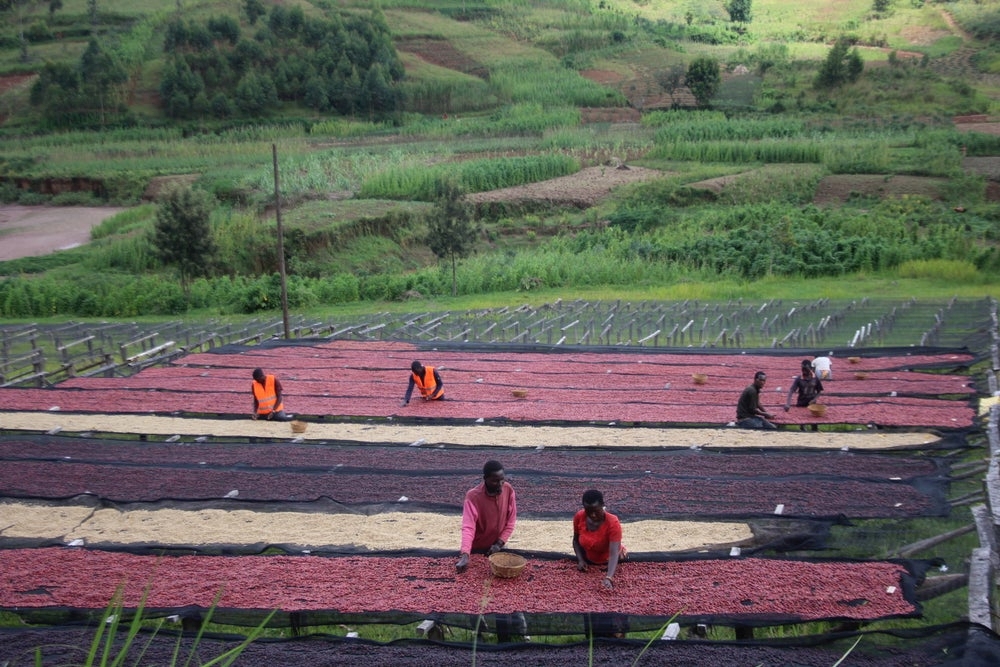
Burundi’s coffee harvest for 2026 is expected to increase by over 60% compared to 2025, reaching approximately 24,000 MT. Favourable weather since mid-August has supported strong flowering, with the harvest expected to start fully around 10 March, about one month earlier than last year. Quality monitoring at washing stations is underway, with initial observations indicating good cherry development. The harvest is expected to continue until July, depending on rainfall.

Sustainability Initiatives in Burundi

This season marks the launch of a major public-private initiative to rejuvenate coffee production. The tree stumping programme involves 14,000 farming households and around 700,000 trees. Combined with planting new seedlings, the programme aims to quadruple productivity within three to five years.

Additionally, all Burundian coffee is now offered as IMPACT-verified, Sucafina’s responsible sourcing programme. Farmers receive training and support to improve environmental and social outcomes while enhancing traceability and quality. Approximately 30,000 smallholder farmers are engaged in these sustainability programmes this year.

Rwanda Harvest Forecast

Rwanda’s 2026 harvest is projected at around 16,000 MT, lower than the previous year due to less favourable flowering conditions, but expected to maintain high quality. The harvest began in mid-February and is expected to continue until late June.

Market and Regulatory Factors

Reduced supply is likely to increase market competition. RWACOF (Sucafina in Rwanda) continues to prioritise exceptional-quality cherry and close monitoring of processing at partner washing stations. A new scalable model has been introduced to expand sourcing areas while mitigating market risks.

Sustainability Initiatives in Rwanda

Sucafina’s sustainability programmes in Rwanda include tree rejuvenation, carbon footprint mapping, and regenerative agriculture. Since 2023, 197,782 trees have been stumped, with over 155,000 in 2025 alone. Farmers received inputs such as lime and organic fertiliser, alongside structured monitoring to track “back-to-production” timelines.

The Farmer Development Program, launched with the London School of Economics, provides training, loans, and tree-planting incentives to 3,735 farmers across five service centres. Agroforestry initiatives have distributed 110,064 shade trees, integrating sustainable practices into the supply chain.

Village Savings and Loan Associations (VSLAs) have been scaled, engaging 1,529 members (51% women) and mobilising $30,884 in savings, with 67% loaned to 924 farmers. Over the next six months, Sucafina will establish a 145,000-seedling nursery, expand refresher trainings, and conduct IMPACT verification, expected to make verified coffee available by June 2026.

Africa’s Coffee Leaders Launch Climate Transformation Plan in Addis

Addis Ababa – Qahwa World × Buna Kurs

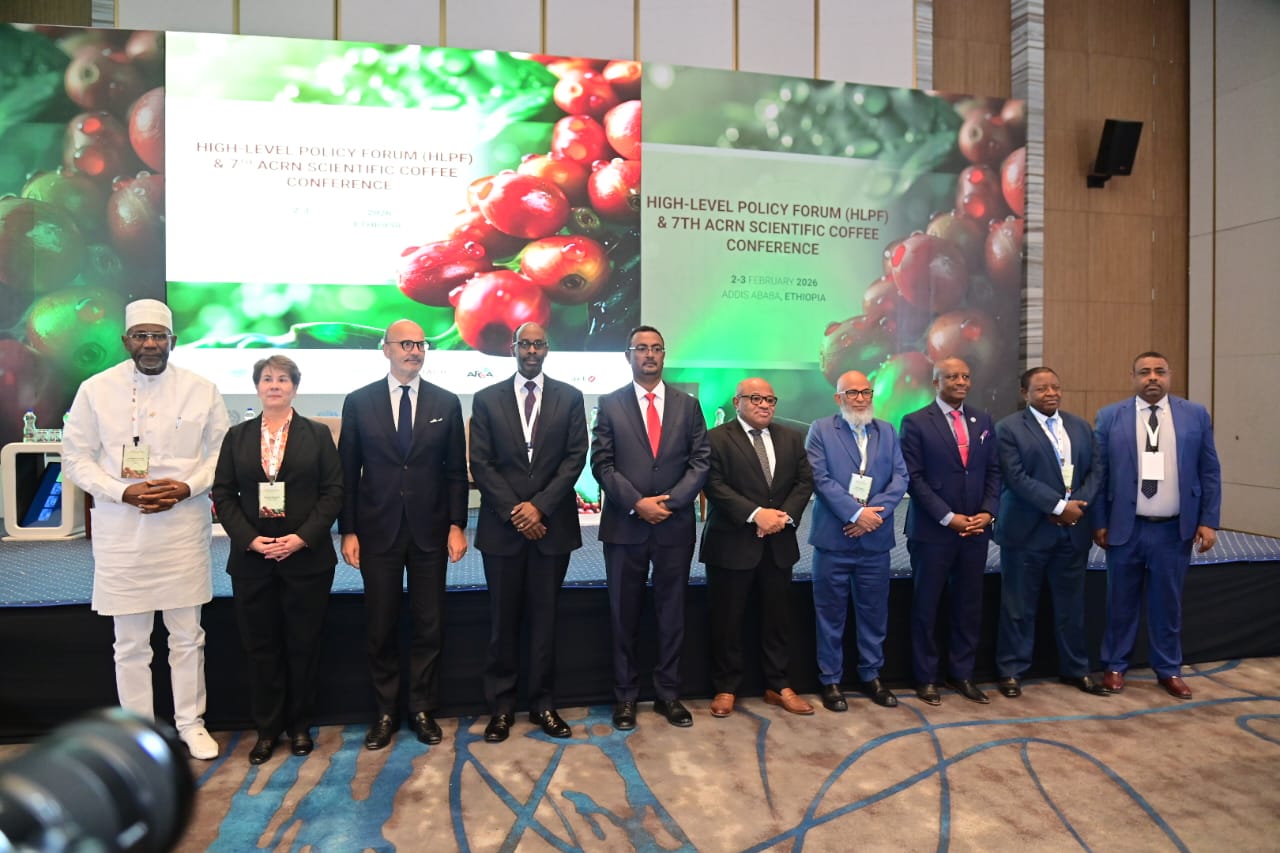
African governments, international institutions, and private sector leaders convened today in Addis Ababa for the High-Level Policy Forum held during the Third African Coffee Week. The assembly issued a strong call for coordinated action to safeguard the future of Africa’s coffee sector amid escalating climate and market pressures.

Organized by the Inter-African Coffee Organisation (IACO)—the African Union’s specialized agency for coffee—in collaboration with UNIDO, the Forum is being held under the theme: “Advancing Climate Resilience and the Transformation of the African Coffee Sector.” The event, hosted at the Skylight Hotel, brings together ministers, ambassadors, development partners, regulators, researchers, and industry executives from across Africa and beyond.

In the opening session, senior representatives of the Ethiopian government, IACO member states, the African Union, UN agencies, and international partners underscored the strategic importance of coffee to Africa’s economies and export earnings. While coffee supports millions of smallholder farmers across the continent, it faces growing risks from climate change, regulatory shifts, and limited local value addition.

The High-Level Policy Forum is anchored in the ACT Programme (Advancing Climate-Resilience and Transformation of the African Coffee Sector), a continental framework structured around five key pillars:

  1. Climate resilience

  2. Value addition and industrial transformation

  3. Compliance with international market standards

  4. Research, innovation, and knowledge sharing

  5. Social inclusion and sustainable livelihoods

Day One discussions focused on five outcome-oriented policy panels, each aimed at producing actionable recommendations and investment pathways:

  • The First Panel addressed social inclusion, emphasizing the need to place farmers, women, and youth at the center of sector transformation. Speakers highlighted inclusive business models, access to finance, and skills development as essential to long-term resilience in coffee-growing communities.

  • The Second Panel examined value addition, noting that Africa still exports the majority of its coffee as green beans. Panelists discussed the investments needed to expand local processing, roasting, and branding, specifically looking at opportunities under the African Continental Free Trade Area (AfCFTA).

  • The Third Panel was dominated by climate resilience and adaptation. Experts outlined climate-smart production systems, agroforestry, and the role of climate finance in supporting smallholder farmers, stressing that adaptation must move from pilot projects to scalable, financed solutions.

  • The Fourth Panel focused on research and innovation, calling for the integration of scientific data and digital tools into policymaking. Regional collaboration and South–South knowledge exchange were identified as key enablers of quality improvement.

  • The Final Panel addressed market access and compliance, with particular attention to the European Union Deforestation Regulation (EUDR). Speakers discussed traceability systems and how harmonized African standards can transform compliance from a barrier into a competitive advantage.

The day concluded with the official launch of the African Coffee Sustainability Standards, led by the African Organisation for Standardisation (ARSO)—a milestone aimed at strengthening market access and regulatory alignment for African producers.

The High-Level Policy Forum continues tomorrow, focusing on consolidating policy recommendations and partnership commitments under the ACT Programme.

JDE Peet’s Unveils Nature Plan for Sustainable Coffee

Dubai – Qahwa World

JDE Peet’s has introduced a new Nature Transition Plan aimed at strengthening regenerative agriculture practices and supporting deforestation-free coffee supply chains. The plan, titled Grounded in Nature, outlines a science-based approach to protecting ecosystems, improving farmer resilience, and safeguarding the long-term future of coffee production.

According to the company, the plan aligns with global nature and biodiversity frameworks and translates sustainability commitments into measurable, time-bound actions. It builds on nearly ten years of work under JDE Peet’s Common Grounds program, which has reached close to one million coffee farmers since 2015.

The initiative focuses on ensuring that coffee sourcing contributes to positive environmental outcomes while maintaining sourcing diversity across producing countries. JDE Peet’s emphasized that nature-related risks are already affecting farmers and supply chains, making coordinated action across the coffee sector increasingly urgent.

Key objectives of the Nature Transition Plan include advancing sector-wide efforts to eliminate deforestation from coffee supply chains, expanding regenerative farming practices across an additional 200,000 hectares by 2030, and progressing toward fully responsibly sourced green coffee by 2028. The company reported that responsibly sourced green coffee reached 83.2 percent globally in 2024.

The plan follows a structured approach based on assessing supply chain risks, implementing targeted farmer programs, and tracking progress through transparent measurement and reporting. JDE Peet’s also tailors its mitigation strategies to different coffee-producing regions, reflecting variations in farming systems and production intensity.

Through this roadmap, the company aims to link environmental protection with farmer livelihoods and long-term supply security, positioning nature conservation as a core pillar of the future coffee economy.

Dubai Leads the Future Dialogue of the Global Coffee Sector

Dubai – Qahwa World

In a move that reinforces Dubai’s position as a global center of gravity in the coffee economy, the city is preparing to host World of Coffee Dubai 2026, an event that seeks to outline a new chapter in the history of the industry, shifting coffee from a traditional commodity trade to a knowledge- and innovation-driven sector.

  • A Journey of Quality Through Time

The exhibition’s vision is grounded in the historical progression that shaped today’s coffee culture, while correcting misconceptions and offering authoritative reference content:

The Era of Mass Production (1890–1960):
This period was dominated by “coffee for the masses,” with the focus placed on volume and ease of preparation at the expense of quality.

The Emergence of Specialization (1960–1990):
The early signs of a shift toward higher quality appeared in the 1960s, a movement that led to the official emergence of the term “specialty coffee” in the 1970s. This era marked a growing global focus on origin, quality, and roasting methods.

The Age of Craft and Sustainability (2000–Present):
Today, the industry has entered a professional and mature phase, where coffee has become a social experience supported by technology, alongside an intensified focus on transparency and sustainability.

  • Figures and Ambitions

The fifth edition of the exhibition will take place from 18 to 20 January 2026 at the Dubai World Trade Centre. What began with just 3,000 visitors has grown into an event attracting more than 17,000 visitors and 450 international exhibitors, positioning it as the primary gateway to the regional coffee market, which is projected to reach revenues of USD 38 billion by 2030.

  • Participation Opportunities and Activities

The exhibition offers a range of opportunities for professionals, including:

Roasters Village: A dedicated area for small roasteries to showcase their products directly (AED 9,000).

Brewing Zone and Cupping Rooms: Professional platforms that enable the tasting and evaluation of rare coffees by industry experts.

Innovation Awards and Coffee Auctions: Activities that celebrate creativity and bring exporters and buyers together in a dynamic setting.

“Be a Speaker” Program: A knowledge-sharing platform that allows experts to present their insights on the future of the industry and the impact of technology and artificial intelligence.

An Invitation to Regional Cafés

The exhibition invites cafés across the region to join the World of Coffee Café Network, benefiting from direct sourcing opportunities and professional networking with more than 1,980 brands from 130 countries.

World of Coffee Dubai 2026 is not merely a trade event; it is a global platform that brings farmers together with roasters, investors with baristas, collectively shaping the future of the global coffee landscape from the heart of Dubai.

How to Make Your Coffee Habit More Sustainable

By: Maya Maceka

Global coffee consumption continues to rise, with billions of cups consumed every day. In the United States alone, roughly two-thirds of adults drink coffee daily, making it one of the most popular beverages nationwide. While coffee is deeply embedded in daily life and culture, its growing demand comes with significant environmental and social consequences.

From deforestation and water pollution to carbon emissions and waste generated at home, coffee’s footprint extends far beyond the cup. Understanding how coffee is grown, traded, brewed, and consumed is the first step toward making more responsible choices.

This guide explores practical ways to build a more sustainable coffee routine, focusing on responsible sourcing, waste reduction, and energy-efficient brewing—small changes that can create meaningful impact when adopted widely.

Where Coffee Is Grown

Coffee comes from the Coffea plant, which thrives in warm, humid regions near the equator. It is cultivated in more than 70 countries within what is commonly known as the “coffee belt,” stretching across Latin America, Africa, the Middle East, and Southeast Asia.

High-quality coffee is often associated with higher elevations, typically between 1,000 and 2,000 meters above sea level. These regions offer moderate temperatures, reliable rainfall, and fertile soils—conditions that allow coffee cherries to mature slowly and develop more complex flavors.

Slower growth at higher altitudes can also reduce caffeine levels and pest pressure, sometimes allowing farmers to rely less on chemical treatments. When combined with shade-grown methods, high-altitude farming can support biodiversity and soil health.

Main Coffee Bean Varieties

The global market is dominated by two species: Arabica and Robusta.

Arabica accounts for the majority of coffee consumed worldwide and is valued for its smoother, often fruity or floral profile. It grows best at higher elevations but is more sensitive to temperature changes, pests, and disease, making it increasingly vulnerable to climate stress.

Robusta thrives in warmer, lower-altitude environments and is more resilient. It contains higher caffeine levels and produces a stronger, more bitter flavor. Its durability allows it to maintain yields where Arabica struggles, which is why it plays a key role in many espresso blends.

A third variety, Liberica, represents only a small fraction of global production today. Grown mainly in parts of Southeast Asia, it is known for its distinctive, woody flavor and niche appeal.

Different beans suit different brewing styles. Arabica is often favored for black coffee and pour-over methods, while Robusta is commonly used in espresso-based drinks for its body and crema. Many commercial coffees blend both.

What Makes Coffee Sustainable?

Coffee farming has far-reaching environmental and social impacts. Conventional production methods can contribute to forest loss, soil degradation, chemical runoff, and greenhouse gas emissions. At the same time, millions of smallholder farmers face economic instability despite producing most of the world’s coffee.

A large share of coffee’s total carbon footprint originates at the farming stage, with emissions tied to land-use change, fertilizers, and processing. Meanwhile, much of the financial value generated from coffee is concentrated in consuming countries rather than at origin.

Sustainable coffee seeks to address these challenges by balancing environmental protection with fair economic outcomes for farmers.

Key Sustainable Coffee Practices

Several approaches are shaping a more responsible coffee sector:

  • Shade-grown farming supports wildlife, protects soil, and helps store carbon by growing coffee under tree canopies.

  • Organic cultivation avoids synthetic chemicals, relying instead on natural soil management and pest control.

  • Regenerative agriculture focuses on restoring ecosystems by improving soil health, increasing biodiversity, and capturing carbon.

  • Certifications such as Organic, Bird-Friendly, or Regenerative Organic aim to verify responsible practices, though transparency and enforcement remain critical.

  • Fair trade and direct trade models work to improve farmer income and working conditions by setting minimum prices or reducing intermediaries.

Transitioning to these systems can be costly and challenging for farmers, particularly in the short term, but long-term benefits include resilience, ecosystem protection, and improved livelihoods.

Making Your Coffee Routine More Sustainable at Home

Most coffee drinkers now brew at home, which means household habits play a growing role in coffee’s overall environmental impact.

Choose Responsible Coffee Beans

Beans account for a large portion of coffee’s environmental footprint. Choosing coffee produced using sustainable or ethical practices can significantly reduce that impact and help support farming communities.

Avoid Instant Coffee

Instant coffee requires additional processing and higher energy use compared to whole or ground beans. Its packaging is also more resource-intensive, making it a less sustainable option overall.

Look Beyond Labels

Certifications can offer helpful guidance, but they are not foolproof. Transparency, traceability, and clear sourcing information are just as important as logos on packaging.

Support Direct-Trade and Local Roasters

Buying from roasters that work directly with producers can improve transparency, reduce supply chain emissions, and ensure farmers receive a larger share of the value.

Reducing Waste from Coffee Consumption

Even sustainably grown coffee can generate unnecessary waste if consumption habits are inefficient.

Skip Single-Use Pods

Disposable coffee pods create long-lasting waste and are difficult to recycle. Refillable pods or pod-free brewing methods are far more sustainable alternatives.

Reuse Coffee Grounds

Used coffee grounds can be composted or repurposed for gardening, deodorizing, cleaning, or creative household uses.

Use a Reusable Cup

Single-use cups are rarely recycled due to plastic linings. Bringing a reusable cup reduces waste, conserves resources, and often keeps drinks warmer for longer.

Be Mindful of Packaging

Many coffee bags contain mixed materials that limit recyclability. Packaging choices still account for a small but meaningful share of coffee’s carbon footprint.

Sustainable Brewing Methods and Equipment

Brewing methods vary widely in energy use and waste output.

Manual methods such as pour-over, French press, moka pot, Turkish coffee, and cold brew require minimal energy and produce little waste. Cold brew, in particular, allows large batches to be prepared without heat.

Electric machines can be more sustainable if they are energy-efficient, durable, and compatible with reusable filters. Features such as automatic shut-off, insulated boilers, repairable components, and verified energy certifications help reduce long-term environmental impact.

Final Thoughts

Making coffee more sustainable does not require abandoning the ritual altogether. It begins with informed choices—selecting responsibly sourced beans, reducing waste, and choosing efficient brewing methods.

Each step of coffee’s journey, from farm to cup, carries environmental and social costs. By making thoughtful adjustments, consumers can help reduce those impacts while still enjoying one of the world’s most beloved beverages. Over time, these choices can contribute to a coffee industry that is fairer, cleaner, and more resilient.

WCR CEO Reviews 2025 Achievements in Coffee Innovation

An annual update from CEO Vern Long highlights scientific progress, global partnerships, and climate resilience

Dubai – Qahwa World

World Coffee Research (WCR) has described 2025 as a defining year for the organization and the wider coffee industry, citing accelerated innovation, strengthened global partnerships, and tangible progress in developing climate-resilient coffee varieties.

In his annual review, WCR Chief Executive Officer Vern Long emphasized that the organization’s achievements this year were driven by sustained investment from more than 200 member companies across 30 countries, alongside close collaboration with national coffee institutes worldwide. These partnerships enabled WCR to move improved coffee varieties from research into farmers’ fields at an unprecedented pace.

According to WCR, the focus on variety development is critical as coffee-producing regions face increasing pressure from climate change, disease, and production volatility. The organization positions its work as essential to safeguarding the long-term stability and diversity of global coffee supplies.

Key achievements in 2025

  • Improving access to proven varieties
    In Peru, WCR installed 10 new arabica seed lots of the varieties IPR 107 and Paraneima in partnership with eight local organizations. These varieties were previously identified as top performers under local conditions through WCR’s International Multilocation Variety Trial, which has been running since 2015.
    In Uganda, WCR supported the installation of 15 mother gardens and nurseries of disease-resilient robusta varieties in cooperation with the national coffee institute NaCORI, expanding farmers’ access to improved planting material.

  • Advancing global arabica breeding efforts
    WCR began arabica field trials and recorded the first harvests under the Innovea Global Coffee Breeding Network. The initiative, recognized as one of TIME magazine’s Best Inventions of 2025, is described as the most ambitious and globally coordinated coffee breeding program to date, aimed at delivering high-performing, high-quality varieties for future generations.

  • Launching robusta breeding under Innovea
    A robusta breeding program was added to the Innovea network, with Vietnam and Ghana joining as national collaborators. This expansion brings total participation to 11 countries, collectively accounting for around 40% of global coffee production. The robusta program is designed to run in parallel with arabica efforts, focusing on resilience while supporting origin diversity.

  • Strengthening scientific collaboration worldwide
    WCR reported unprecedented levels of collaboration among scientists, governments, and coffee companies. One study published in 2025 brought together researchers from 15 countries across 23 trial sites to examine how 29 arabica varieties respond to leaf rust under different growing conditions. The findings are intended to support the development of more resilient coffee trees.

Looking ahead

Despite ongoing challenges facing the coffee industry, WCR underscored that innovation and collaboration remain powerful tools for risk mitigation and long-term sustainability. As the organization enters the new year, it expressed gratitude to its global community of members and partners for their continued commitment to securing the future of coffee.

Yannis Apostolopoulos Speaks Frankly About the Past, Present, and Future of Specialty Coffee

Dubai – Qahwa World

The 5th Wave Podcast published a long interview with Yannis Apostolopoulos, CEO of the Specialty Coffee Association (SCA), under the title “The Past, Present and Future of Specialty Coffee.”
Given the importance of the insights shared, Qahwa World republishes the full conversation with minor editorial adaptation.

In today’s episode we’re speaking with Yannis Apostolopoulos, CEO of the Specialty Coffee Association.

First established in the 1980s, the SCA is the largest coffee trade body globally and represents thousands of coffee professionals – from producers to baristas – all over the world.

In this conversation, Yannis discusses the evolution of the SCA and its ongoing efforts to make coffee more sustainable, equitable, and resilient, through research, standards, and education. He also shares his perspectives on the key challenges and opportunities in the industry, from climate change and sustainability to navigating economic uncertainty and the evolving role of technology and AI.

5thwave-the-business-of-c the-past-present-and-futu
Transcribed by TurboScribe.ai. Go Unlimited to remove this message.
One of the conversations that needs to be at the forefront is about risk. Who is taking the risk and who gets compensated for that risk? Welcome back to the 5th Wave Podcast. I’m Geoffrey Young, Editor-in-Chief of 5th Wave.

In today’s episode, I’m delighted to be joined by Yanis Apostolopoulos, CEO of the Specialty Coffee Association. First established in the 1980s, the Specialty Coffee Association, or the SCA as it’s often known, is the largest global coffee trade body representing thousands of coffee professionals from producers to baristas all over the world. In our conversation, Yanis discusses the evolution of the SCA and their ongoing efforts to make coffee more sustainable, more equitable, and more resilient through research standards and education.

He also shares his perspective on the key challenges and opportunities for our industry, from climate change and sustainability to navigating economic uncertainty and the evolving role of technology and AI. Welcome, Yanis. It’s very nice to be here.

Very nice to see you, Geoffrey. We see each other around the world at different spots and really, really excited to have you here actually in the studio, in Serendipity Studios. I wonder if you’d just give us a little bit of intro just on your own career and what drew you into the world of coffee.

So first of all, thank you for having me. It’s really an honor and a pleasure to be here. Well, coffee is an interesting story.

My background is mostly in wines and spirits. And around 2009, the business I used to work for decided to get into coffee. And the more I get to know coffee, I just think that coffee has this amazing, I would say, attribute that brings people in.

And you meet people, the community, the actual beverage. It’s so unique in many ways. I think it was the first time in my career that I realized, okay, I’ve been selling wine, spirits, or soft drinks.

But this time, it’s something that it’s actually good for your health. And you can contribute in making an impact or a difference in the world by impacting the livelihoods of many people. And that’s what drew me into specialty coffee.

I got involved as a volunteer in the Greek chapter, then as a board director. And then during, I would say, the initial conversations between the merger between SCAA and SCAE, the European and the American organization, I found myself working for SCAE and leading eventually SCAE around end of 2018. Wow.

So that’s a good seven years already. Almost seven. Yeah.

Little I know that the year after I become the CEO, there would be COVID and everything would change in the world, at least when it comes to trade shows, because as you remember, it used to be just trade shows. Now we’re doing much, much more. And we at SCAE are trying to make coffee better, to make coffee more sustainable, equitable, and thriving as an endeavor for everyone in the value chain.

And we do that by doing research. We use the research to set standards. And one of our most famous standards is the capping form and the capping protocol, which we recently changed based on the work we’ve done around the coffee value assessment system.

And then we educate people around the world in using those standards and trying to make them get skills to, I would say, focus on the gaps that we have in the coffee industry. And then we do events to try to bring people together and use those opportunities to disseminate the information of our research and standards. So research events and bring people together at events.

Yeah. Yeah. I mean, it’s a formidable organization, I must say.

I was wondering if you could share how many people the SCAE educates in a given year. It’s very interesting. First of all, I have to say that it’s a collective effort.

I have an amazing team of people. They are really passionate about making coffee better. It’s a collective effort from the SCAE board that changed a lot over the years, but also the executive team.

On an annual basis, we educate over 80,000 people globally. It’s really something which I find it very interesting because a lot of people want to get engaged in the coffee industry. We have a lot of, say, churn when it comes to people who are trying to find a career in the coffee industry.

And what we’re trying is to provide tools and education to do so. It’s very interesting. And I think professions around hospitality are going to be much, much more attractive in the future, given the changes that we’re going to see in the global workplace with AI.

I think people will always enjoy experiences in food, in coffee. And coffee is a very human product at the end of the day. Exactly.

Now, thinking about those gaps, what do you think are the key issues that you and your organization are faced with out there in a world? For our industry, you get to speak to a whole array of human beings, from coffee farmers to people that produce equipment, to traders, to all the way down to the baristas, the roasters, and everything. The array of people that you talk to on a daily basis, it must give you a good instinct in terms of what are the big topics for our industry that we need to face over the next decade or two. What are you concerned with? …


Specialty Coffee Association Releases Its 2024 Annual Report

The Specialty Coffee Association (SCA) has released its 2024 Annual Report, signed by Chief Executive Officer Yannis Apostolopoulos, highlighting a transformative year marked by new quality standards, record membership growth, scientific advancements, and unprecedented global expansion in education and events — all with a strong focus on sustainability, research, and equitable value distribution across the coffee industry.

According to the report, 2024 represented a pivotal year for the SCA, as it officially adopted and published the new Coffee Value Assessment (CVA) standards, replacing the long-standing 2004 cupping form. This milestone positioned the CVA as the official protocol for global coffee quality evaluation. The association recorded more than 10,000 downloads of the CVA forms, over 1,500 learners enrolled in the “CVA for Cuppers” course, and more than 130,000 views on its CVA educational video series on YouTube. Additionally, the SCA waived course fees for over 500 coffee professionals in producing countries, ensuring broader and fairer access to professional education.

A major achievement highlighted in the report was the introduction of a new membership model offering free access to the SCA’s resources, educational programs, and events. This initiative led to exponential growth, bringing the association’s global community to over 100,000 companies and coffee professionals within just six months — a reflection of its ongoing mission to make knowledge and opportunities accessible to all who contribute to the specialty coffee industry.

The report also emphasized the strong research momentum driven by the Coffee Science Foundation (CSF), which supported six flagship projects in 2024. These included studies on physical defects in green coffee, developing a universal roast measurement system, exploring sweetness perception, analyzing the impact of packaging on consumer experience, and understanding how value is created and distributed throughout the coffee value chain. These efforts underscore the SCA’s commitment to fostering data-driven innovation and sustainability.

Globally, the SCA expanded its footprint through multiple major events. The “World of Coffee” trade shows took place in Dubai, Chicago, Busan, and Copenhagen, serving as platforms for knowledge exchange, business, and innovation. Notably, 2024 marked the first-ever World of Coffee held in Asia — in Busan, South Korea. The year also saw the launch of the Coffee Value Summit in Shenzhen, China, focusing on value creation and the implementation of the CVA. Other initiatives included “Green Coffee Connect,” fostering relationships between producers and importers, and the “Retail Buyer’s Lounge,” designed to enhance business networking during trade shows.

Following a period of financial stabilization from 2020 to 2023, the SCA strategically reinvested in 2024 to expand access to education, fund critical research, and strengthen partnerships. The association maintained a balance between program growth and fiscal responsibility, ensuring its ability to continue serving the global coffee community despite economic uncertainty.

In the area of education, the SCA organized five Educator Summits across Asia and the United States, providing platforms for trainers and educators to enhance their teaching and professional development. Comprehensive multilingual surveys were also conducted to gather feedback from trainers and learners, leading to further curriculum improvements and the development of new systems to support global education in coffee.

Looking ahead, the report outlined ambitious plans for 2025, including the launch of a comprehensive coffee evaluation program in partnership with the Coffee Quality Institute (CQI), expanded educational offerings for green coffee sellers and retailers, the creation of online forums to connect the global coffee community, and continued research into equitable value distribution and sustainability across the coffee value chain.

The 2024 Annual Report reaffirms the SCA’s role as a leading global organization uniting research, education, standards, and events to build a more sustainable, inclusive, and equitable future for the specialty coffee industry worldwide.

Breaking the Commodity Trap: A Conversation with Burke Campbell on Coffee, Sovereignty, and Nation Building

Dubai – Ali Alzakary

Coffee is more than a morning ritual—it’s a global industry steeped in history, power dynamics, and untapped potential. In this riveting interview, Burke Campbell, a Cree-Métis Canadian who traded the oil sands of Alberta for the coffee farms of Honduras, shares his journey of connecting the dots between resource extraction, economic sovereignty, and sustainable development. From his personal awakening to the parallels between Canada’s Indigenous communities and Honduran coffee farmers, to his groundbreaking work bridging Yemen’s ancient coffee legacy with modern markets, Burke’s story is one of resilience, vision, and a relentless pursuit of equity. Join us as we dive into this compelling conversation about redefining coffee’s future by reclaiming its past.

Growing up Cree with a father who worked in oil sands must have given you a unique perspective on resource extraction. What was that moment when you realized you needed to leave all that behind and head to Honduras to work in sustainable development?

It wasn’t a moment. It was a slow awakening that took years to understand.
Here’s what people don’t know about my father working in the oil sands: those oil sands are our family’s traditional trapline. That’s where my father was raised as a child, where our family sustained ourselves for generations. That land is ours. Except it isn’t anymore. My family ended up there after a series of forced migrations, and then my father ended up working the industry on his own ancestral land.
But here’s the deeper wound: my people weren’t even invited to participate. My father became the first Indigenous general foreman across any of the trades working there, and that was only possible through deep identity issues he carried. The cost of entry was losing pieces of himself.
My mother planted different seeds. She wasn’t Indigenous, but she was a social worker in Alberta who dedicated herself to working directly with Indian bands across Northern communities. Before I turned 12, we’d moved through so many of these communities that I witnessed firsthand what it looks like when your own land is developed without you, when you’re excluded from the systems built on top of what was yours, when the few who do manage to participate pay for it in ways that don’t show up on a paycheck.
So I grew up understanding both sides. My father showed me what it costs to participate in systems that weren’t built for you. My mother showed me what happens to communities watching wealth being pulled from their land while they’re shut out.
When I first arrived in Honduras, I was still incredibly naive. I didn’t see the connection between those Northern Alberta communities and the coffee farmers I was meeting. But as I spent more time on farms, I started recognizing parallel patterns: producers excluded from the value their own land creates, outside buyers controlling terms, the few farmers who do break through into specialty markets having to adapt to systems that weren’t designed with them in mind, wealth flowing out while communities remain marginalized.
That’s when it crystallized for me. I realized I had a deep social responsibility as a Canadian to use everything I’d been given – my voice, my access, my passport, my understanding of these systems – not to perpetuate another commodity chain where producers are excluded from value, but to fight for my new community in Honduras. To make sure that coffee wouldn’t do to these farming families what oil had done to the communities my mother served.
I’m Cree-Métis. I understand what it means when outsiders arrive promising prosperity. I grew up watching what happens when your own land generates wealth that you’re never invited to share.

Starting fresh in a new country at 34 couldn’t have been easy. What was the toughest part of those early days in Honduras, and what kept you going when things got rough?

I first arrived when I was 28. By 31, I was married with one child, stepfather to two others, and uncle to five more who basically lived with me as my own. So it wasn’t just starting fresh in a new country. It was suddenly responsible for eight children in a place I barely understood.
The reality is that the last 17 years have been framed around me splitting my time between working in Canada and living in Honduras. Coffee has never really fully sustained my life. It’s helped, but I’ve had to do whatever it takes to make it work.
My kids kept me going. Doing anything I could to insulate them from all the problems that come from living in such a place. Usually at the expense of my own personal stability. The toughest part wasn’t the language barrier or the cultural adjustment or even the economic precarity. It was knowing that every decision I made, every month I spent working in Canada, every risk I took with coffee, directly affected whether these kids would have what they needed.
Then COVID hit, and I was forced to stay in Canada for two years. I couldn’t get back to Honduras, couldn’t be with my family. That separation could have broken everything. Instead, it became the time when I discovered Yemen.
I became obsessed. Started digging through Ottoman archives, genetic studies, historical texts, anything I could find about Yemen’s coffee. And something clicked. Suddenly I could see it – the common thread connecting Canada, Honduras, and Yemen. Three places that seemed completely unrelated, but they all shared the same story: communities excluded from the wealth generated on their own land, knowledge systems dismissed by outside experts, people forced to participate in economies designed without them.
Yemen gave me the framework to understand what I’d been doing in Honduras all along. It wasn’t just about better prices for coffee. It was about reclaiming narrative, restoring agency, proving that the old ways aren’t backwards – they’re the future, especially as climate change forces the industry to finally pay attention to what farmers have known all along.
But I wouldn’t change a thing. Those children gave me a reason bigger than myself. They’re why I stayed when it would have been easier to leave. They’re why I kept pushing into coffee even when it didn’t make financial sense. They’re why Yemen mattered so much – because I needed to build something that could work for them, for their community, for their future. Yemen showed me how.

Building Trust with Farmers

Building trust with farmers is everything in this business. How did you earn that trust with Honduran coffee growers, and what’s been the moment that made it all feel worth it?

Building trust is the hardest part. I’m still working on it. And honestly, I’ve started to question whether “trust” is even the right word.
I saw firsthand how even direct trade with farmers was inadequate. Sure, we could achieve a price differential for one season, but then my company would want to be there the next season and the next season and the next. I watched how that created its own dependencies, its own power dynamics. It takes much more than better prices.
Yemen showed me that you need to build eternal relationships. Cultivation is a practice that comes from deep human history. Basically everything we consume today was the result of hundreds or even thousands of years of people taking wild grains and beans and completely transforming them into something that could sustain us. That knowledge, that practice, that relationship with land and plant – it’s generational. It’s eternal.
So when we talk about “building trust,” we’re still operating within a framework where I’m the outsider who needs to earn something from them. That framing itself reveals the power imbalance. Just saying that I need to build trust with farmers denotes that there’s forever going to be some economic inequality where I have power that they don’t.
I don’t think I’ve even begun to complete my goal. Because the goal isn’t trust. The goal is true economic sovereignty for farming communities. Trust is just a placeholder word for something much bigger – the ability for farmers to control their own narratives, their own value chains, their own futures. Until that happens, I’m still part of the problem, even if I’m trying to be a better part of it.
So no, there hasn’t been a moment where it all felt worth it. Because “worth it” would mean I’ve arrived somewhere, and I haven’t. The work continues.

Weaving Yemen and Honduras Together

Working with Mokha Story as Technical Advisor for Yemen’s auction house sounds fascinating. How are you weaving together Yemen’s incredible coffee story with what’s happening in Honduras?

I’m following Latif’s lead and his dream. Everything starts there.
Yemen is basically the template for the whole global commodity system. Yemen had this incredible ability to cultivate coffee and created a monopoly over it that made coffee one of the most sought-after luxury items in the world. But then I watched how that same commodity system is now used as a weapon of sorts against all origin countries. Getting the raw form of coffee – and now many other products – out of nations and into other nations so those other nations can benefit from the secondary processing.
That’s when I understood what all origin countries need to do in order to achieve truly sustainable economies. What they need to do to develop.
The technology of processing raw coffee hasn’t changed since Yemen developed coffee roasting. It’s incredibly simple, and yet mysteriously so hard to achieve. Why? Because the system is designed to keep origins exporting green beans.
I see Yemen’s deep problems and Honduras’s deep problems as just a different flavor of economic control from abroad. And the only way to change that is to see that each nation’s problems all have a common thread. The approach to solutions might be different, but the diagnosis is virtually the same.
All nations that find their raw products completely extracted for other economies are missing out on true development at an exponential, almost incalculable scale.
What I’m doing with the auction house for Yemen, and what I’m trying to build in Honduras, comes from the same understanding: we’re not just moving coffee. We’re trying to reopen the world’s oldest coffee market, guided by trading protocols developed over hundreds of years. This isn’t new. This is the oldest coffee market in the world, and we’re reopening it.
The world needs balance. And these nations need voices that are all calibrated to understanding this common inequity. That’s how Yemen and Honduras connect – not through some romanticized sister-city partnership, but through the shared recognition that we’re all fighting the same system, just with different accents.

Opening Saudi Market Channels

Opening up $80 million in Saudi market channels – that’s incredible! Was there a particular conversation or breakthrough moment where you knew this was really going to happen?

It was Latif showing me that the Saudi coffee market is quite closed to Honduras, and Honduras has a deep capacity to be a major player in the Middle East.
Saudi Arabia imports 70,000 to 90,000 tons of coffee annually, spending over $1 billion. The market is growing at 6.5% annually and is expected to reach nearly $2.3 billion by 2028. But here’s what matters: Ethiopia dominates Saudi imports with a 77% share. Honduras, despite being the world’s seventh-largest coffee exporter, barely registers in that market.
And it all comes down to awareness, trust, and education.
I believe that Honduran coffee has a place as a pillar of supply in Saudi Arabia. Honduras produces 5.5 to 5.8 million bags annually – all Arabica, grown between 1,000 and 1,600 meters. We’ve built strong quality systems, we have 120,000+ coffee farms, and we’ve proven ourselves in demanding markets like Germany, Belgium, Italy, and increasingly South Korea since our 2020 free trade agreement.
But more importantly, I believe this relationship provides an alternative market for both Saudi Arabia and Honduras. Especially in these tumultuous times of great volatility within the coffee market.
Coffee prices hit record highs in 2025 – Arabica reached $4.41 per pound, the highest ever recorded. Climate change is devastating yields in Brazil and Vietnam, which together supply over 50% of global coffee. Droughts, frosts, erratic rainfall – these aren’t temporary disruptions anymore. FAO predicts 50% of current coffee-growing land could become unviable by 2050.
In this context, Saudi Arabia relying so heavily on Ethiopian supply is a vulnerability. Honduras represents geographic diversification, stable production, and established quality infrastructure. For Honduras, the Saudi market represents diversification away from over-reliance on the US and Europe, which together take over 60% of our exports.
When global coffee stocks hit 20-year lows and prices swing 70-90% in a single year, both producing and consuming countries need more options, more partnerships, more resilience built into the system. That’s what this is about – not just opening a market, but building the kind of relationships that can weather what’s coming.

The Most Mind-Blowing Discovery

Digging through Ottoman archives and genetic studies for coffee research – what’s the most mind-blowing thing you’ve uncovered about coffee’s real history?

It’s not one discovery. It’s how four separate revelations came together to show the same thing: that what we call “coffee history” is actually a perfectly documented catastrophe.
First, the genetics. In 2021, Christophe Montagnon’s team found that 57% of Yemen’s coffee belongs to a genetic cluster that exists nowhere else on Earth. Meanwhile, every cup of coffee outside Ethiopia and Yemen traces back to 20 to 50 individual plants taken between 1616 and 1723. The genetic bottleneck is so severe that global coffee has less diversity than most endangered species. Your morning cup is more inbred than a captive breeding program.
Second, the archives. Ottoman tax records from the 1630s documented multiple coffee varieties, different grades, elevation-specific types, processing methods tied to specific outcomes. They recorded an agricultural system so sophisticated that modern agronomists still struggle to comprehend it. This wasn’t primitive farming. This was biotechnology operating at the speed of seasons, refined over eight centuries.
Third, the legal theft. In 1612, the Dutch and Ottomans signed a capitulation agreement that made coffee trade perfectly legal. Which is the most damning part. This wasn’t piracy or smuggling or romantic adventure. It was systematic appropriation through proper channels, with contracts and receipts and official stamps. The Dutch spent ninety years learning everything they needed to know, then took just the narrow slice of genetics they could manage, leaving behind the diversity and the knowledge.
Fourth, the knowledge gap. Recent genetic research shows that what Yemeni farmers called “Udaini” or “Dawairi” weren’t stable genetic varieties in the modern sense – they were vernacular names encoding generations of cultivation knowledge tied to place, microclimate, processing methods. The names themselves were technology. When the Dutch took the plants without the knowledge, they captured seeds but not understanding. They achieved cultivation but not complexity. They produced quantity but not quality.
Here’s what’s mind-blowing: these four discoveries prove the same thing. The coffee industry was built on a genetic bottleneck created by legal extraction that documented its own crime while failing to steal the actual knowledge. We have the receipts. We have the genetic evidence. We have the archives showing what was lost. And we have an industry that’s now facing climate collapse because the diversity we needed was left behind, and the knowledge that could save us is dying in the mountains we’re bombing.
The Ottoman archives don’t just show what happened. They show that everyone knew what was happening, approved it through proper legal channels, and documented the destruction with bureaucratic precision. The catastrophe we’re facing now was built into the system from the beginning, recorded in triplicate, filed correctly.
That’s what keeps me up at night. Not that coffee’s history is theft – but that the theft was so thorough, so legal, so well-documented, that we convinced ourselves it was progress. And now the genetic poverty created by that “legal” appropriation threatens the entire industry, while the solutions sit in Yemeni farmers’ fields, encoded in knowledge systems that colonial archives carefully recorded before helping to destroy them.
We have the proof. We’ve always had the proof. We just preferred the pirate stories.

Traditional Methods as the Future

In your Yemen Coffee Book, you make a strong case that old-school farming methods are actually the future, especially with climate change breathing down our necks. What convinced you of that?

The moment I realized that Yemen had an answer for basically any sort of climate stress or disease stress. That answer might have taken a few generations to cultivate, but by the time we got to the 1600s, they were ready for anything the world threw at them. And each time it was an opportunity to utilize or develop an even better coffee. It was always about quality.
Look at what the Ottoman archives documented: varieties for high terraces where frost threatens, varieties for dry eastern slopes, varieties for valleys where heat pools. The Khawlan variety that survives on 200mm of rainfall annually – that’s less than Las Vegas gets. The Haraz cultivar that produces sweet cherries in near-desert conditions. The Bani Matar strain that resists coffee berry disease without any chemical inputs.
At any temperature, at almost any elevation, at any hint of disease – they had a variety ready. Not just to survive, but to excel. They weren’t selecting for maximum yield or ease of harvest. They were selecting for quality under stress. Which means they were accidentally breeding for exactly what we need now: resilience with excellence.
The proof isn’t just historical. It’s happening right now in competitions. The 2024 Best of Yemen auction set a world record – $1,159 per kilogram for the top lot. The average was $369 per kilo. That’s not sentimentality or storytelling premium. Those coffees scored over 90 points in blind cuppings by international judges. One scored over 90 points – that’s extraordinarily rare for any coffee, anywhere.
And here’s what’s most important: these aren’t isolated exceptional lots. The entire representation of coffees from Yemen that participate in competitions score at levels no other origin can match. You can’t describe any other coffee the way you describe Yemen – thick as jam, with complexity that sommeliers struggle to articulate. That density, that intensity, that’s what eight centuries of selection under stress produces.
Yemen grows coffee with rainfall levels that experts say make cultivation impossible – between 244 and 379 millimeters per year versus the 1,400 millimeters that’s supposedly minimum. The trees don’t just survive, they thrive. And they produce coffee that makes buyers from Saudi Arabia, Japan, Europe, the US compete in auctions, driving prices to levels that prove quality isn’t about inputs – it’s about knowledge.
When coffee leaf rust devastated Central America, resistant varieties had to be rushed from seed banks. But Yemen’s terraces? The farmers there tell stories about rust coming “like fire through the mountains” generations ago. Some trees survived. They planted from those survivors. Now their coffee “laughs at rust” – what scientists call horizontal resistance that took modern breeding programs decades to try to replicate.
Climate change is accelerating everything. Rising temperatures, erratic rainfall, new disease pressures – the coffee industry is spending billions trying to engineer solutions. Meanwhile, Yemen has been running these experiments for eight hundred years. Every variety they maintained was an adaptation to stress. Every generation of selection was training coffee to survive what’s now becoming universal.
The traditional methods aren’t backwards. They’re sophisticated biological science operating at the speed of seasons. What the Dutch took ninety years to approximate, what modern research stations struggle to replicate – Yemen had already perfected it by maintaining diversity, selecting under actual field conditions, and never losing sight of quality as the ultimate measure.
That’s what convinced me. Not romanticism about tradition, but data. Genetic studies showing unique adaptation. Auction results proving quality. Climate evidence showing Yemen growing coffee in conditions that will be standard as temperatures rise. The traditional methods work better than modern alternatives because they were developed to solve harder problems than modern coffee has faced – until now.
The future looks like Yemen’s past. We just need to admit it before it’s too late to learn from it.

The Yemen-Honduras Exchange Vision

Teaching Yemeni processing techniques to Honduran farmers is such a cool cultural exchange. How’s that going, and what changes are you seeing on the ground?

It’s a dream right now. But it’s the dream that drives everything I’m doing.
I have this completely idealist vision of bringing a coffee cultivator from Honduras to Yemen on a fact-finding mission. A diplomatic mission. A ceremonial mission. I want to film it, document it, and have that information deeply affect how everyone in the world cultivates coffee – to recalibrate the entire industry’s approach.
Think about what that would mean: a Honduran farmer, someone who’s been told their whole life that modern agronomic practices are “best practices,” standing on a Yemeni terrace that’s been producing coffee for 800 years with 200 millimeters of annual rainfall. Watching how varieties are selected. Learning why certain trees are kept even when they don’t produce much in good years – because they’re insurance for bad years. Understanding that what looks like chaos is actually sophisticated risk management.
The exchange wouldn’t be about transplanting techniques. You can’t just take Yemeni methods and apply them in Honduras – the contexts are different, the challenges are different. But the principles? The philosophy of cultivation? That’s what could transform everything.
Yemen developed coffee cultivation through constraint. Honduras has been taught to develop it through input – more fertilizer, more chemicals, more irrigation, more intervention. What happens when a Honduran farmer sees that the highest-quality, highest-value coffee in the world comes from the opposite approach? From less intervention, more observation, deeper understanding of what each variety needs rather than forcing all varieties to conform to one system?
I want to document a Honduran farmer learning from a Yemeni farmer whose family has been selecting coffee for thirty-seven generations. Not as some romanticized agricultural tourism, but as serious knowledge transfer between peers. The kind of exchange that should have happened 400 years ago but didn’t because colonial powers weren’t interested in learning – they were interested in taking.
This would be different. It would acknowledge that Yemen holds knowledge the rest of the world needs. That the “primitive” methods are actually advanced biotechnology. That climate change means we need to learn from people who’ve been farming in climate extremes for centuries, not from research stations trying to engineer resilience in controlled conditions.
The changes I want to see aren’t just in Honduras. I want this exchange to recalibrate how the entire coffee industry thinks about cultivation. To shift from “how do we make coffee fit our industrial systems” to “how do we work with what coffee has already learned through centuries of adaptation.”
So no, it’s not happening yet. But that’s the mission. That’s what all of this is building toward – creating the conditions where that exchange becomes possible, where it gets documented, where it changes how we think about coffee’s future by finally paying attention to its past.
The fact-finding mission I’m dreaming about isn’t just about finding facts. It’s about finding the future by learning from the people we should have learned from all along.

Five Year Vision

Fast forward five years – where do you see this Honduras-Yemen partnership, and how do you think it’ll change the way the world thinks about coffee?

This question has really crystallized for me, especially in the last year. I’ve moved beyond thinking it’s just about ensuring growers are fairly compensated. That’s each nation’s responsibility, certainly, but now I’m more focused on nation building in coffee communities all over the world.
In coffee communities everywhere, there are deep unemployment problems. And the true economic potential lies where it always does – in how they process their primary resources. How they can control and capture the wealth of roasted coffee. How they can do things their way.
In five years, I see this relationship playing out across all originations. There’s a deep exchange of knowledge, practice, understanding, and high-resolution support where we all help each other in pursuit of creating true national sovereignty and actual sustainable development.
Because relying on aid agencies whose help stops the moment nations want to industrialize this sector of their economy has proven that it will never achieve its goals. The goals of the northern sustainability complex do not align with the goals of the southern pursuit of sustainability and economic sovereignty.
What I envision is coffee-producing nations learning from each other, teaching each other their processing techniques, sharing their market development strategies, and supporting each other’s industrialization. Yemen teaching Honduras. Honduras teaching Ethiopia. Ethiopia teaching Colombia. Not waiting for permission from the North. Not accepting a model of development that keeps them permanently dependent on exporting raw materials.
This Honduras-Yemen partnership is the template. It shows what’s possible when producing nations connect directly, share knowledge horizontally, and refuse to accept the commodity trap as inevitable. In five years, I hope to see this replicated across dozens of origin countries – all building their own roasting capacity, their own brands, their own direct market access, and their own economic sovereignty.
That’s how we change the way the world thinks about coffee. Not by asking consuming nations to be more ethical in their purchasing. But by producing nations taking control of their own economic destiny.
International Coffee Day: How It Started and Why the World Celebrates

Dubai – Qahwa World

The International Coffee Organization (ICO) has launched its global campaign to celebrate International Coffee Day (ICD), observed every year on October 1. The theme for 2025 is “Embracing Collaboration More Than Ever.” The ICO emphasized that this celebration is an opportunity to underline the vital role of collaboration across the coffee value chain — from farmers and cooperatives to traders, roasters, baristas, and consumers — ensuring sustainable livelihoods, shared prosperity, and resilient communities.

Vanúsia Nogueira, Executive Director of the ICO, stated: “Coffee is a product of many hands and many hearts. When farmers, cooperatives, researchers, roasters, traders, baristas and consumers work together, we create opportunities for income, resilience and environmental stewardship. This year’s campaign calls for practical collaboration that delivers real benefits along the whole chain.”

On this occasion, Qahwa World has prepared a comprehensive research report on International Coffee Day — its origins, history, economic and cultural significance, and its importance for the global coffee industry. This research is presented to highlight why this day is not just a celebration of a beverage, but a recognition of coffee’s role as a cultural, social, and economic force worldwide.

Origins and Establishment of International Coffee Day

International Coffee Day was officially established in 2014 during the International Coffee Council meeting in Milan, aligned with Expo 2015. The first official ICD celebration was held on October 1, 2015.

Objectives of the Day:

To unite coffee lovers around the world.

To honor and recognize coffee farmers whose livelihoods depend on this crop.

To raise global awareness about sustainability, fair trade, and challenges in the coffee sector.

To strengthen the sense of community among all participants in the coffee chain.

Historical Roots of Coffee

The history of coffee stretches back centuries, connecting continents and cultures:

Ethiopia: Coffee’s origins are often traced to Ethiopia, where wild coffee plants grew in the forests of Kaffa. Legends suggest its stimulating effects were first observed there.

Yemen: In the 15th century, coffee cultivation spread to Yemen. Sufi monks began preparing coffee as a beverage to help them stay awake during prayers, making Yemen the cradle of coffee culture.

Arab World: By the 16th century, coffee spread throughout Mecca, Cairo, Damascus, and Istanbul. Coffeehouses (qahveh khaneh) became centers of social, cultural, and intellectual life.

Europe: Coffee reached Venice in the early 17th century. It spread rapidly through Europe despite religious controversies and bans. Coffeehouses in London, known as “penny universities,” became hubs of debate and knowledge.

Asia and the Americas: By the 18th century, colonial powers introduced coffee cultivation to Asia (notably Indonesia) and Latin America (notably Brazil and the Caribbean), shaping the global coffee industry we know today.

Technological and Industrial Evolution

In the 19th century, industrialization revolutionized coffee. The invention of large-scale roasting machines and improved grinders allowed for mass production and consistent quality.

In the 20th century, new innovations such as soluble (instant) coffee emerged, led by companies like Nestlé in the 1930s. This changed global consumption patterns and made coffee more accessible.

Today, technological advances extend to specialty coffee roasting, precision brewing methods, and sustainable farming practices, reflecting the balance between tradition and innovation in the coffee world.

Celebration Dates Worldwide

Although October 1 is the official ICO date, different countries observe coffee days at varying times:

October 1: International Coffee Day (official ICO recognition, celebrated globally).

September 29: National Coffee Day in the USA, Canada, Austria, and a few other countries.

Other Coffee Days in the USA:

November 8: National Cappuccino Day

November 23: National Espresso Day

February 11: National Latte Day

These variations highlight the universal love for coffee across cultures.

Traditions and Activities

International Coffee Day is marked by a variety of events and initiatives:

ICO Campaigns: Every year, the ICO sets a central theme. In 2025, the focus is collaboration.

Coffeehouses and Roasters: Businesses worldwide host tastings, workshops, and awareness campaigns.

Social Media: Hashtags like #InternationalCoffeeDay and #ICD2025 amplify global participation, encouraging people to share their coffee experiences.

Awareness Programs: NGOs, cooperatives, and coffee associations use ICD to shed light on sustainability, fair income for farmers, and climate-related challenges.

Economic Impact of Coffee

Coffee is not just a cultural icon but also an economic powerhouse:

Consumption: Over 3 billion cups are consumed daily worldwide.

Production (2023, ICO): Approximately 170 million 60-kg bags of coffee are produced annually.

Top Producers (2023):

Brazil – 37% of global production

Vietnam – 17%

Colombia – 8%

Indonesia – 7%

Ethiopia – 5%

The Coffee Belt: Coffee production is concentrated in a tropical zone known as the Coffee Belt, spanning Latin America, Africa, and Asia-Pacific.

Trade Value: Coffee is the second most traded commodity globally after crude oil.

Social and Environmental Dimensions

The day also highlights the challenges and responsibilities facing the global coffee community:

Farmer Livelihoods: Coffee supports the livelihoods of over 125 million people worldwide, including around 25 million smallholder farmers directly dependent on it. Yet many live below the poverty line due to fluctuating prices and market instability.

Climate Change: Rising temperatures, pests such as coffee leaf rust, and deforestation threaten production worldwide.

Sustainability Efforts: Certifications such as Fairtrade, Rainforest Alliance, and organic standards are promoted during ICD to encourage responsible production and consumption.

Cultural and Social Significance

Coffee has always been more than a drink — it has been a catalyst for culture and community:

In the Arab world, early cafés became places for music, chess, storytelling, and poetry.

In Europe, coffeehouses were breeding grounds for intellectual movements, journalism, and political debate.

Today, cafés remain spaces for creativity, networking, and cultural exchange.

Interesting Facts About Coffee

Coffee trees can live up to 100 years, though their most productive years are between 7 and 20.

Coffee faced multiple bans in history — in Mecca, Istanbul, and even in 18th-century Prussia — but it always returned stronger.

One of the most expensive coffees in the world is Ospina (Colombia), valued at $1,700 per pound in 2024.

The term “penny university” reflected the role of 17th-century English coffeehouses, where intellectual discussion was accessible for the price of a cup.

Conclusion

International Coffee Day is not simply about celebrating a beloved beverage — it is about recognizing the centuries-long journey of coffee from Ethiopia and Yemen to the rest of the world, and the millions of people whose lives are intertwined with it.

By establishing ICD in 2014, the ICO created a platform for uniting coffee lovers, supporting farmers, and promoting sustainability. In 2025, under the theme “Embracing Collaboration More Than Ever,” the ICO reminds us that coffee is more than a drink — it is a shared commitment to resilience, sustainability, and global cooperation.

CHARTING THE FUTURE OF SPECIALTY COFFEE IN MENA

By: Kim Thompson , Co-founder of “RAW Coffee Company

The global coffee industry is in a period of rapid flux. Record-breaking auction prices, unprecedented mergers, volatile commodity markets, and mounting climate pressures are reshaping how coffee is grown, traded, and consumed. Against this backdrop, RAW Coffee Company is setting a clear course: to lead with integrity, strengthen our role as a trusted voice in the MENA region, and focus relentlessly on creating real value at origin.

Dubai recently made headlines with a newly opened coffee business, buying a world-record-breaking Panama Geisha lot for AED 2,218,785 ($604,080) at the 2025 Best of Panama Auction. This 98-point washed Geisha is now the highest-scoring and most expensive coffee in history, an extraordinary symbol of both the passion, volatility, and marketing spend, in our sector.

At the same time, consolidation is accelerating. Keurig Dr Pepper’s planned $18 billion merger with JDE Peet’s will create a new global giant. Coca-Cola’s $1.5 billion acquisition of Costa Coffee in 2018 gave it a ready-to-drink platform, while JAB Holding continues to expand its vast portfolio. Equipment leaders, too, are changing hands, De’Longhi’s 2023 purchase of 41% of La Marzocco and its acquisition of Eversys show how deeply coffee has become embedded in corporate strategy.

Meanwhile, climate change is placing unprecedented stress on producers. Extreme weather in Brazil and Vietnam, supply shortages, tariffs, and speculative trading are pushing prices upward and amplifying volatility. This is the new reality our industry must face.

As global forces reshape coffee, there is growing debate about the role of institutions like the Specialty Coffee Association (SCA). While the SCA has historically provided technical standards and a shared framework, the concern is that prioritizing organizational profit over producer benefit risks homogenizing coffee, reducing innovation, and diluting the very authenticity that defines specialty.

RAW Coffee Company believes our future cannot rest on certifications or corporate consolidation alone. Instead, our focus is on producers, the people whose creativity, resilience, and craftsmanship give specialty coffee its soul.

Our commitment is to go beyond sourcing. We aim to actively strengthen producers’ ability to thrive, compete, and innovate on their own terms.

  1. Foster True Direct Trade Relationships
  • Cut out intermediaries so farmers retain more of the final sales value.
  • Build trust and transparency through direct communication and fair pricing.
  1. Empower Producers with Resources and Capital
  • Invest in quality improvements, from processing to soil health, including knowledge-sharing on biochar and agronomy.
  • Support producers in developing their own roasting and direct selling businesses at origin.
  1. Facilitate Access to Tools and Services
  • Improve access to essentials like exporting licenses, international payments, and digital platforms.
  • Provide education on market trends, consumer expectations, and storytelling to strengthen their positioning.
  1. Encourage Local Value Addition
  • Champion origin-based roasteries and cafés so more value stays in producing countries.
  • Advocate for barista trainings in origin countries, developing a strong foundation for advancing coffee culture.
  1. Focus on Quality and Differentiation
  • Shift the mindset from scarcity to creativity, intention, and resourcefulness.
  • Guide producers to define their unique qualities rather than replicate trends.

As the pioneer of specialty coffee in Dubai for nearly two decades, RAW is uniquely positioned to shape the next chapter of coffee in the MENA region. Our responsibility is to amplify producer voices, maintain transparency in an era of volatility, and ensure that the values of authenticity, equity, and quality remain at the heart of our industry.

The future of coffee will not be written by corporate mergers, record-breaking auction prices or new assessment forms that do not improve outcomes for producers. It will be defined by the relationships we choose to nurture, the creativity we empower at origin, and the trust we build across the value chain. At RAW, that is where our focus will remain.


Grounds for Health Auction Returns with Rare Coffees to Support Women’s Health

Dubai, September 1, 2025 (Qahwa World) – The annual Grounds for Health Auction will return on Thursday, September 18, offering roasters around the world the chance to acquire rare, high-quality green coffees and specialty equipment while directly supporting lifesaving women’s health programs in coffee-growing communities.

This year’s auction features contributions from some of the most renowned farms in the coffee industry. Among the highlights are a washed Geisha “Guabo” lot from Hacienda La Esmeralda in Panama, exceptional coffees from Finca El Injerto in Guatemala, and Hacienda La Minita in Costa Rica. The catalog also includes premium offerings from major traders such as Walker Coffee Trading, Keffa Coffee, and San Cristobal Coffee Importers, in addition to professional coffee equipment.

All proceeds from the auction go directly to Grounds for Health, a U.S.-based nonprofit organization dedicated to preventing and detecting cervical cancer in coffee-producing regions. The group currently operates programs in Ethiopia and Kenya, where cervical cancer remains one of the leading causes of death among women, despite being entirely preventable with early screening.

“When we invest in women’s health, we invest in the future of coffee itself. Healthy women farmers mean thriving families, sustainable farms, and the exceptional coffee quality our industry depends on,” said Justin Mool, Auction Manager at Grounds for Health.

Since its launch in 2009, the auction has raised more than $1 million to fund its health initiatives. Past editions have featured notable contributions from farms such as Hacienda El Roble in Colombia and Daterra Coffee in Brazil, along with strong support from traders including Walker Coffee Trading. In the 2024 auction, nearly thirty lots of specialty coffee were offered, underlining the ongoing commitment of the global coffee community to this cause.

Roasters and industry participants can register through the official auction website to bid on coffee or equipment, or to make direct donations. Shipping costs are not included in the winning bids and must be arranged separately.