Dubai – Ali Alzakary
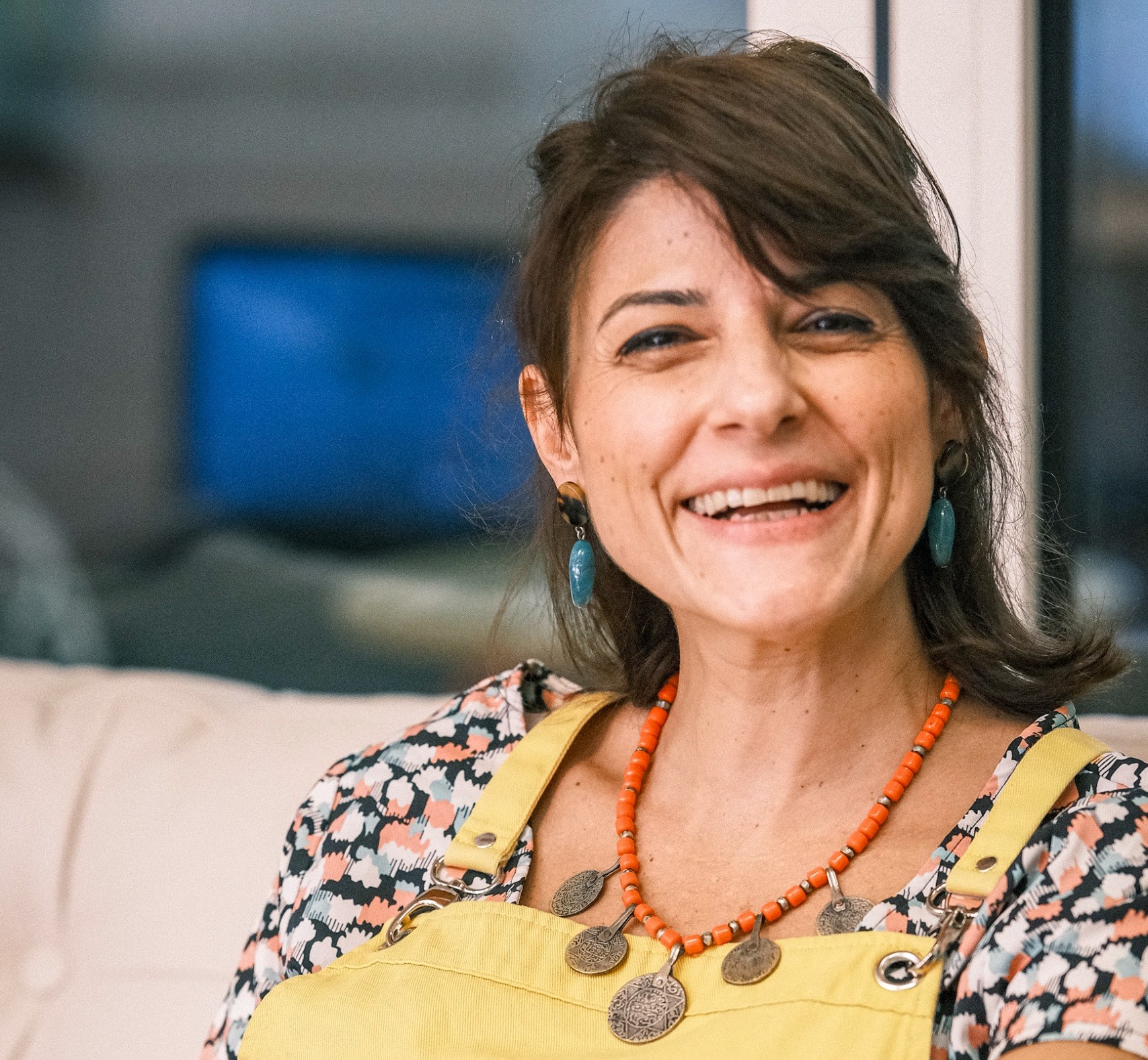
In the presence of coffee, conversation becomes a musical piece: every sip has a note, every bean a story, every hand that plants or brews leaves a lasting trace. This is how Rana Ibrahim sees coffee: not a passing drink, but a space for art, soul, and humanity. In her interview with Qahwa World, she reveals how a simple cup turned into an existential journey, and how she shaped her cafés and projects as an extension of the art she loved since childhood.
Between edda arabica, US Coffee Shop in Beirut and Qahwat Al-Souq in the town of Baakline, between teaching and experimentation, and between the paintbrush and the cup, Rana has woven a world of her own—where coffee is not merely a beverage, but a language of presence, identity, and creativity.
We invite you now to enjoy this rich and inspiring conversation with Rana Ibrahim, where coffee intersects with art and daily rituals turn into stories worth telling.
How did your journey in the world of coffee begin, and when did you realize that this field would become part of your professional and personal identity?
Coffee has always been part of my upbringing, it was something my family enjoyed every day, and eventually, it became second nature to me too.
Things began to change, though, when I moved to London. While studying Fine Arts at Central Saint Martins, I kept a studio in East London, an area that happened to be surrounded by some of the first third-wave roasters. That’s where I started looking at coffee differently. It shifted from being a routine I hardly thought about into something I began to approach with more intention.
The third-wave movement opened my eyes to the story behind every cup, where the beans come from, the people who grow them, and what that means. That perspective completely reshaped my relationship with coffee. It stopped being just about drinking it, it became about understanding it.
A big turning point came when I took my very first course, Introduction to Coffee, at Prufrock in London. My trainer was Jeremy Challender, who’s now the Dean of Studies at Barista Hustle. He asked me a simple but powerful question: “Why do you want to learn about coffee?” I remember stopping to think, because up until then, my interest was mostly about pairing coffee with food, imagining I might one day open a café. But his question pushed me to go deeper.
I eventually answered, “Because one day, I’d like to open a coffee shop.” At the time, my focus wasn’t so much on coffee itself, but more on the idea of bringing people together through food and hospitality.
Since childhood, I had always been surrounded by the food and beverage world. I worked in F&B, enjoyed being around people, and valued the connections that sharing food and drinks creates. Jeremy’s question helped me realize what tied it all together. My goal wasn’t to become a coffee trainer or educator then—it was simply to create a place of my own, a welcoming spot where good coffee and simple food could bring people together.
Years later, when I opened edda arabica, I felt I had finally found my voice in coffee. The shop became more than just a business; it was where everything I cared about ritual, art, coffee, community, and hospitality came together in one space.

If you weren’t in the coffee industry today, where do you think you would be?
To this day, I’m still deeply connected to the world I came from, I continue to paint. Art has always been a constant in my life, and I imagine I’d still be in that field if I hadn’t chosen coffee, exploring the same themes that continue to inspire me: space, culture, identity, and transformation.
Most of my creative work, whether visual or spatial, revolves around building environments thinking about how people come together, how communities take shape, and how public life is experienced. That’s why I often collaborate with public practitioners and urban thinkers; I’m fascinated by how spaces can be designed not only to function, but to hold meaning.
Even when I design a café, I approach it as if it were a canvas. I think about flow, movement, silence, and interaction. To me, every space is an opportunity for people to pause, connect, or feel a sense of belonging. That thread runs through both my art and my vision of hospitality.
Painting remains at the core of everything I do. The way I describe coffee—its body, acidity, aftertaste, often echoes how I describe art: in terms of color, form, and composition. Those languages overlap more than most people realize.
So, if I weren’t in coffee, I’d still be working with people, with space, and with form through painting, design, and storytelling. Coffee just happened to become the medium where all of these passions could converge.
What is the relationship between art and coffee for you? Do you see both as expressions of creativity?
For me, coffee and art have always been connected. Both depend on structure, rhythm, and a kind of logic—what I think of as parameters.
In coffee, you work with things like dose, yield, brew time, temperature, and grind size. Those aren’t limits; they’re the foundation that makes creativity possible. Painting works the same way. Composition, balance, color, and layering create the framework you use to express meaning.
When I’m painting, I’m focused on form, texture, space, and movement. When I’m making coffee, I’m paying attention to body, acidity, aftertaste, and mouthfeel. At their core, both are languages of expression. The way a brush moves across canvas isn’t so different from the way water flows through coffee grounds.
What ties both together is presence. You have to be fully in it—with your tools, with your intention, and with the people who will experience it. Whether it’s a painting or a cup of coffee, the result is shaped by countless small decisions that often go unnoticed by others.
That’s why I see coffee and art as parallel practices. They’re creative, yes, but they also demand discipline. Both give you freedom within structure, and both speak to the same part of me.

What distinguishes edda arabica from other cafes in Beirut? How did the idea for it come about?
edda arabica came to life in 2021, during a very uncertain moment in Lebanon, when the banking system was collapsing. Strangely enough, those difficult times brought people closer. Conversations shifted; coffee stopped being just coffee and became about presence, slowing down, and holding on to something grounding like a cup in your hands.
From the very beginning, I wanted edda to be an open space and not just in its physical design, but in its spirit. A place where I could brew coffee and people could interact, ask questions, and start conversations. Less of a transaction, more of an exchange. Of course, we’ve always cared about the fundamentals the roast, the origin, the process but chasing perfection was never the goal. What mattered was connection.
Slowly, edda became that kind of place. Baristas from other cafés would drop by after shifts, bringing beans to share, cupping together, or simply hanging out. None of it was planned, it just unfolded naturally. Over time, it turned into a gathering point for the community, where ideas and experiences were exchanged as easily as coffee.
Being in Clemenceau, right across from the American University Hospital, also shaped the space. It attracted a wide mix of people and not just those already interested in specialty coffee, but many who were new to it. Little by little, curiosity grew. People began asking questions, tasting, and understanding more about sourcing, roasting, and traceability. For many, edda became more than a ritual; it became a place to belong.
There’s also a personal story behind it. Walid, my partner, an architect and chef, was the one who asked me to open a coffee space inside one of his restaurants. The funny part is that three years earlier, I had asked him the same thing, but it didn’t happen then. When he finally asked, I couldn’t refuse. His spaces are always layered, intentional, and full of contrast, and that’s exactly why the edda bar looks the way it does. It’s not just a counter, it’s a real bar, designed with care, but for coffee.
Even the name carries weight. edda comes from Norse mythology, referring to old collections of stories, myths, and shared knowledge passed down through generations. arabica is the bean we work with. Together, edda arabica isn’t just about serving coffee, it’s about sharing stories, passing things on, and creating real connections.
Over the years, the bar has become a hub for communication, training, and exchange. It has opened up a channel for what we now call specialty coffee, but in a way that feels human, approachable, and rooted in community.
How do you evaluate the current coffee scene in Lebanon? What challenges do you face in running a specialty coffee shop in light of the economic climate?
The specialty coffee scene in Lebanon is still young and developing. We’ve made real progress, especially when you think about what the country has been through economic collapse, inflation, shortages, yet many of us are doing our best just to keep things moving forward. Compared to more established markets, there’s still a lot of groundwork to be done.
The challenges never really stop. Some days I run out of basic supplies. Tasks you expect to finish in one day might stretch into three. You’re constantly dealing with power cuts, delays, and broken supply chains—but over time, that unpredictability becomes part of daily life. It’s something we all share, which makes the stress feel a little more bearable, a little more human.
Working in that environment shifts your perspective. You start to realize that if you have water, heat, and coffee, you already have enough. Any coffee is better than no coffee, and everything beyond that is a gift. Living and working this way teaches humility. It forces you to stay flexible, to focus on the present, and to be grateful for what you do have.

What prompted you to co-found US Coffee Shop? Is it different in terms of audience or visibility?
US Coffee Shop is based right in the center of Beirut, in Starco. It feels like a new chapter, but in many ways, edda arabica made it possible. At edda, I spent a lot of time focusing on guiding, teaching people about origin, brewing, taste, and process. US carries the same spirit, but with a lighter, more playful tone. It’s younger, more vibrant, full of life. The coffee is still thoughtful, the quality is there, but it isn’t about chasing perfection. It’s about celebrating movement, community, and everyday life. With food on the menu too, it feels casual, accessible, and easy to enjoy.
What I love most is how naturally it all came together. One of my partners originally approached me for coffee consulting, and from there, the idea grew. I gathered people I trust and enjoy working with, and together we created something we all believed in. We actually started building US during the war, and despite everything, we kept going until we opened. That resilience and determination shaped the spirit of the place.
The design of the shop reflects that same energy. Even the colors are drawn from my own paintings, which makes the space feel personal bright, joyful, and full of light. And since the team from edda rotates between both cafés, the heart and essence of what we do flows seamlessly into US as well.
The people who come in are just as important to the identity of the space. The crowd is incredibly diverse designers, artists, students, Gen Z, young professionals, curious coffee drinkers. It’s not limited to a niche; it’s open to everyone. That’s what I love most about US. It feels welcoming and unpretentious, a place where people can just come as they are. At its core, it’s still about coffee but it’s also about life.
Why did you decide to launch “Barista Hustle in Arabic”? And how important is it to provide Arabic training content for coffee professionals?
Back in 2017, Jeremy Challender, now the Dean of Studies at Barista Hustle, reached out to me with the idea of launching Barista Hustle in Arabic. I immediately felt it was the right thing to do. We kept talking, refining the idea, and by 2019, we finally brought it to life.
Barista Hustle has always stood out to me because it’s such an accessible platform. It’s straightforward, engaging, and doesn’t require you to travel or spend a fortune to learn. Making it available in Arabic wasn’t just about translating words, it was about creating access and inclusion. Not everyone in our region can attend international trainings, and this gave more people the opportunity to grow their skills and knowledge without barriers.
For me, though, it was never only about baristas. I’ve always wanted to widen the circle to reach home brewers, people from different professions, or just anyone curious about coffee. It’s not only about expanding the language we use around coffee, but also about expanding who gets to be part of the conversation. Education, after all, should feel open, welcoming, and within reach for everyone.

Did you encounter any difficulties translating or transferring the training content to the Arab world? What was the interaction like?
Of course, there were challenges along the way. Translating coffee education into Arabic was never just a matter of swapping words from English. In many cases, the technical vocabulary simply didn’t exist in Arabic, so we had to create terms that felt logical, approachable, and easy to understand. On top of that, Arabic itself is not one unified language. What works in Lebanon might not resonate in Morocco or the Gulf. We had to find a balance, a modern, neutral Arabic that could reach people across the region without sounding overly formal or distant.
Another challenge was tone. Barista Hustle can be quite technical, but our goal was to make it accessible and engaging. We weren’t speaking only to professional baristas, we wanted to include home brewers, café owners, and anyone curious about coffee. The material needed to feel useful and approachable, not intimidating or exclusive.
The response from the region was incredibly encouraging. People were ready for this. We received so much positive feedback, especially from those who had never had access to structured coffee education in Arabic before. For many, it was the first time they felt truly part of the global coffee conversation and that made every bit of effort worthwhile.
What does being a Q Grader mean to you? How does this certification affect the way you taste coffee or evaluate crops?
For me, being a Q Grader is more of a responsibility than a certificate. It gave me a structured way to taste and evaluate coffee, but more than that, it taught me to pay attention differently, to how I taste, how I listen to the cup, and how I represent the work of producers. It’s not about judging from a distance; it’s about being fair, present, and honest with what’s in front of me.
The training definitely sharpens your senses. You taste with more focus and consistency. But at the same time, it humbles you. You realize coffee isn’t just about numbers or scores, it’s about people, places, climate, and intention. As a Q Grader, I try to hold both sides: the technical precision, and the human story. When I evaluate a crop, I’m not only asking, “Is this an 86 or an 87?” I’m also thinking about how it will show up in a café, how people will experience it, and how to highlight its strengths without losing the story behind it.
That’s why, for me, Q is a tool and not a title. It helps me communicate better, serve better, and stay connected to the people and work behind every cup.
And honestly, these days, I find myself enjoying coffees that aren’t about high scores at all. The story of how they arrived to me, and the journey behind them, often matters more than how refined or complex the cup is. Maybe that’s just where I am right now, especially with everything going on in the world. It reminds me to stay grounded, to stay close to the human side of coffee and to be grateful for what’s in the cup.
How would you describe your experience taking the Q Grader tests? Would you recommend it to Arab professionals?
Honestly, taking the Q Grader exam wasn’t part of my plan at all. I hadn’t set it as a goal. But then Mohammad Merhi from Cypher reached out and supported me in a way I’ll always be grateful for. I think he sensed I needed that push not only on a professional level, but personally too, especially with everything that had been happening around us in Beirut. He gave me the flexibility and space to pursue it, without adding pressure around money or timing. That gesture meant a lot. It’s those quiet, generous acts that really show you how human and supportive this coffee community can be.
The exam itself was tough intense, very detailed, and highly technical. It forces you to trust your senses, stay calm under pressure, and refine how you taste and evaluate. I would definitely encourage Arab professionals to take it, not for the title or status, but for the awareness and clarity it brings. It gives you a shared language, a framework to connect with coffee in a more intentional way, and to communicate more clearly with others across the supply chain.
That said, it’s not the only way forward. There are many different paths in coffee. But if you’re curious and want to go deeper, the Q can be a truly valuable tool.

How do you view women’s presence in the Arab coffee scene today?
There’s definitely been a shift. More women are showing up in the Arab coffee scene taking space, leading, and speaking out. You see it across the board: baristas, roasters, café owners, trainers, even producers. Women are stepping into roles that weren’t always visible before, and that presence is growing in a really powerful way.
Of course, there’s still progress to be made. Like most industries, coffee has its gaps in access, visibility, and representation, especially behind the scenes. But I’ve noticed a real change in recent years. There’s more openness, more willingness to listen and make space. And women are claiming that space naturally, not as a token gesture but as part of the fabric of the industry.
It’s a process, and it’s happening step by step. The more women show up, the more it becomes normal, not the exception. What gives me a lot of hope is the network of women forming across the region. They’re supporting each other, sharing knowledge, and building each other up. And on the other side, I’ve seen audiences, customers, peers, communities listening differently. There’s a readiness now to hear women’s voices in coffee, to value the way they lead.
For me, it’s not only about having women “present” in the room. It’s about presence with impact creating space for different leadership styles, different stories, and different ways of working. And every time women show up, that space grows more real.
What do you think of the new evaluation system by the Specialty Coffee Association?
To be honest, I haven’t had the chance to sit down and really go through it in detail yet, but I will. I’m curious, and I’m open to it.
From what I’ve seen so far, I like the direction it’s taking. It feels more human, less about chasing numbers, more about the experience itself. It still values the sensory side, but it also weaves in context, story, and intention. That really resonates with how I connect to coffee these days. For me, it’s no longer just about scores; it’s about meaning.
So, I’m looking forward to digging deeper into it and seeing how it might fit within our part of the world.

What is the story behind “Qahwat Al-Souq”? Can we consider it more of a social and cultural project than a commercial one?
Qahwat Al-Souq sits inside what used to be my father-in-law’s father’s store, one of the oldest shops in Baakline, Chouf. Back in the day, it was the kind of store that sold a bit of everything. Over time, it closed down, but the structure and character of the space remained. One day, my father-in-law came to me with an idea: to bring it back to life not as a store this time, but as a place for the community.
He wanted something modern, but still true to the town’s spirit. So we preserved much of what was already there, the old shelves, the original lighting, even the safe that no one’s ever managed to open. All of it stayed, and we built around those details.
Now, Qahwat Al-Souq has become a gathering place. Locals come together, art is displayed, music fills the space, and coffee is shared. It’s not driven by business, it’s about presence. About giving something back to a place that’s given us so much. The history, the people, and the intention behind it are what make it special.
And yes, it’s still there and I still love it just as much.
A coffee whose taste you will never forget?
Honestly, it’s hard to pick just one. Every time I think of a cup that stayed with me, five more come to mind. For me, taste is never separate from people or context, the story around the cup matters just as much as what’s in it.
One cup that really shifted things for me was a light roast by Patrick from April Roastery. It was my first real introduction to that style of coffee, and it opened up a whole new way of thinking about flavor, clarity, and balance. That cup changed something in me, I’ll never forget it.
Another memory that stands out was at 90+ in Panama, drinking coffee with Joseph. The setting was breathtaking the landscape, the atmosphere, the energy of the moment. I felt completely alive. That cup, that place, that conversation… it all stayed with me.
Then there was a surreal experience in Beirut, during the bombings. I brewed a 2018 Barista Hustle coffee I had in my freezer, with Samer. In that moment, it felt like it could be the last cup I’d ever drink. It’s impossible to forget something like that.
And then in Colombia, visiting Norman’s farm with Nikolai, his wife served us coffee at home. Nothing fancy, just a simple cup but it was full of heart, and it turned out to be one of the most special brews I’ve ever had.
So no, I can’t name just one. Each of those cups was unforgettable in its own way. And these days, I find myself drawn more to coffees that aren’t chasing high scores, but carry meaning. They’re still sensory experiences, but woven together with story, context, and intention. Maybe it’s the times we’re living in, but lately, it’s the meaning behind the cup that lingers with me most.

What advice would you give to coffee lovers who want to enter this field?
Start with curiosity and keep that curiosity alive. When I first got into coffee, I wasn’t aiming for a title or a role. I was simply curious. I brewed a lot, tasted a lot, asked endless questions, and watched how others worked. That’s still how I learn today.
You don’t need the best gear, and you don’t need to know everything before you begin. Be around people who care. Start small. Learn by doing.
Don’t feel pressured to rush into certifications or chase perfection. Those things might come later, or you might realize they’re not as important as you once thought. What matters most is understanding coffee, and building a real sense of hospitality because at the end of the day, this work is about people, not just technique.
Coffee will teach you a lot if you let it, not just about taste and brewing, but about patience, failure, resilience, and openness. So be kind to yourself, stay grounded, and most importantly, make sure you’re doing it for you. When it’s real, everything else has a way of falling into place.