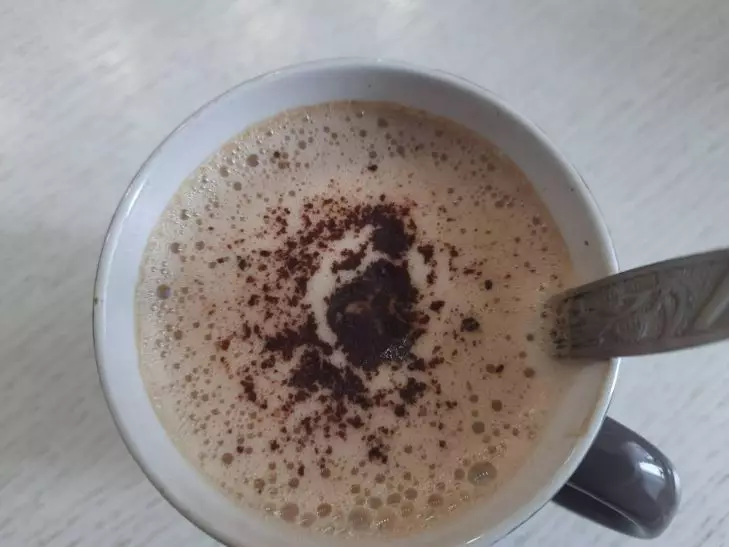
Moderate Coffee Consumption May Reduce Dementia Risk

Dubai – Qahwa World

A comprehensive new study suggests that regular consumption of caffeinated coffee and tea may help protect against dementia and support cognitive health over the long term.

The research, published in JAMA on February 9, 2026, analyzed data from over 131,000 participants followed for up to 43 years. The study included women from the Nurses’ Health Study and men from the Health Professionals Follow-up Study, excluding individuals who had cancer, Parkinson’s disease, or dementia at the start. During the follow-up period, 11,033 cases of dementia were documented.

The study found that higher intake of caffeinated coffee was linked to a significantly lower risk of developing dementia. Participants in the highest consumption group—roughly two to three cups per day—experienced about an 18% lower risk compared with those in the lowest intake group. Similarly, moderate tea consumption—one to two cups per day—was associated with comparable benefits. Decaffeinated coffee, however, showed no significant impact on dementia risk or cognitive function.

You may like: Black coffee without sugar reduces chronic inflammation

Researchers also observed improvements in cognitive performance among caffeinated coffee and tea drinkers. In the Nurses’ Health Study cohort, higher coffee intake correlated with slightly higher scores on the Telephone Interview for Cognitive Status and global cognition assessments. Subjective cognitive decline was also less common among those with moderate caffeinated beverage intake.

Dr. Dylan Wint, a neurologist at Cleveland Clinic, who was not involved in the study, noted that these findings reinforce the potential role of caffeine in brain health. “Caffeine may help reduce the accumulation of amyloid-beta, a protein implicated in Alzheimer’s disease, and it may also have other neuroprotective effects,” he explained.

While the study highlights promising associations, researchers and experts caution that more work is needed to confirm causality. Dr. Wint emphasized that maintaining brain health also requires a holistic approach, including a balanced diet, regular exercise, and mental engagement.

The study adds to a growing body of evidence that moderate consumption of caffeinated coffee and tea could be a simple, enjoyable strategy to support long-term cognitive health.


43 Years of Data: How Coffee Affects the Brain and Memory

Dubai – Qahwa World

Regular consumption of coffee and tea may do more than boost alertness—it could also play a role in maintaining cognitive health over time. This is suggested by findings from a large-scale analysis of more than 130,000 participants followed over a period of 43 years.

Throughout the study, participants regularly reported their dietary habits, health status, and changes in memory and thinking abilities. Over the course of the observation period, more than 11,000 individuals developed dementia. The analysis found that those who consumed caffeinated coffee in moderate amounts—about two to three cups per day—had an approximately 18% lower risk of developing dementia compared to those who rarely or never drank it. They also reported fewer subjective memory complaints and performed better on certain cognitive tests.

Similar patterns were observed among tea drinkers, with one to two cups per day associated with favourable outcomes. In contrast, decaffeinated coffee did not show a clear association with improved cognitive measures, suggesting that caffeine may play an important role in the observed effects.

You may like: AI and Gas Chromatography Identify Coffee Origins

Researchers link these findings to compounds found in coffee and tea, including caffeine and polyphenols, which are believed to help reduce inflammation and protect brain cells from damage. Higher levels of caffeine intake did not appear to have harmful effects in this analysis, showing results comparable to moderate consumption.

Further analysis indicated that the association between caffeine intake and cognitive health was consistent regardless of genetic predisposition to dementia, highlighting the potential influence of lifestyle factors. At the same time, researchers emphasise that coffee and tea consumption represents only one part of a broader picture that includes diet, physical activity, sleep, and overall health.

The findings suggest that moderate, regular consumption of coffee or tea may contribute to maintaining cognitive function with age, though it should not be viewed as a standalone solution for preventing dementia.

Read also: Japanese Scientists: Coffee Protects Gums from Inflammation

Ethiopia Launches Strategic New Phase for Tea Development

Addis Ababa – Qahwa World

In the Jimma Zone of Oromia, a major tea development initiative has been launched under the leadership of Dr. Meles Mekonnen and Dr. Adonya Debela, with participation from senior government officials, aiming to enhance national agricultural productivity.

Prime Minister Dr. Abiy Ahmed highlighted that this initiative represents a strategic effort to elevate Ethiopia’s tea production, strengthening the national economy and expanding domestic and international market reach.

Dr. Adonya Debela, Director General of the sector, noted that over 13,000 hectares are currently planted with tea, with plans to expand to 30,000 hectares in the near future, focusing on fertile lands in Oromia and southwestern Ethiopia.

You may like: Coffee Interpretation Center Inaugurated in Ethiopia

Officials emphasized that the project leverages natural resources and local human capacity, supported by continuous monitoring from the regional agriculture office, ensuring high productivity and quality.

Gitu Gemechu, head of Oromia’s Agriculture Bureau, added that tea development receives “strategic priority,” and the expansion will not only increase production but also enhance product quality and the region’s role in local and global markets.

Overall, the Jimma project marks a transition from traditional farming practices to organized industrial development, reflecting Ethiopia’s ambition to strengthen its position as a leading global tea producer, while engaging investors and farmers to secure long-term sustainability and economic success.

COFFEE vs. TEA: A Funny Anecdote from Sweden

The Swedish “Clinical Trial” Myth: Coffee vs. Tea. And the Winner Is…

By Ennio Cantergiani

Legend has it that King Gustav III of Sweden (reigned 1771–1792) wanted to prove that coffee was harmful. According to the tale, he allegedly took two condemned identical twins, commuted their death sentences, and subjected them to a “scientific” experiment using extreme doses:

Twin A: three pots of coffee per day

Twin B: three pots of tea per day

Two physicians supposedly supervised the experiment and reported the results to the king. Ironically, the tea twin died first—at age 83 (!). Meanwhile, the king was assassinated before seeing the final outcome, and so coffee was declared the “winner.”

That’s the meme. But here’s the uncomfortable truth: the documentation is thin to nonexistent.

  • The Historical Context

Sweden did have multiple periods of coffee restriction and prohibition. Coffee was considered a luxury import and a potential moral and economic threat. Enforcement created a lively underground coffee culture, with Stockholm police records documenting hundreds of cases involving illegal coffee selling, preparation, and consumption.

And yes, Gustav III is a real, well-documented historical figure.

But the specifics of the twin experiment raise many red flags:

No names of the twins

No prison identified

No surviving protocol

No contemporary debate traceable

It’s unusual for such a sensational “first clinical trial” to leave no trace. Even Uppsala University treats the story as unproven, explicitly noting:

“The truth of the story has not been proven.”

COFFEE vs. TEA: A Funny Anecdote from Sweden

  • Where the Story Likely Came From

The oldest description historians have located is not from the 18th century at all—it appeared in 1937, in Science News, via a claim that a museum curator found the experiment in 18th-century records.

This suggests that the story may be a 20th-century packaging of older anti-coffee sentiment, rather than a genuinely documented 18th-century experiment.

Yet, the anecdote is frequently retold in medical-history literature, often without primary evidence. Secondary sources can give the illusion of historical certainty, even when the original records are missing.

  • Why the Myth Persists

The tale is irresistibly viral:

It dramatizes moral panic around coffee

It has a deliciously ironic twist: tea loses

It includes story candy: assassination, doctors, royal hubris

It flatters modern coffee lovers: “coffee was right all along”

All while piggybacking on a kernel of truth: Sweden really did restrict coffee and police its consumption.

Bottom line: The twin experiment is almost certainly a myth—but it’s a charming, cautionary story that shows how coffee culture, historical myth, and human imagination blend into one unforgettable anecdote.

British Study: Hot Drinks Contain the Highest Levels of Microplastics

London – August 28, 2025 (Qahwa World) – A peer-reviewed study from the University of Birmingham has found that everyday hot beverages—especially tea and coffee—contain the highest concentrations of microplastics among popular drinks tested, raising fresh questions about packaging, preparation practices, and real-world exposure. The paper, published in Science of the Total Environment, analysed 155 widely available drinks sold in UK supermarkets and coffee shops and is the first to assess human exposure via total beverage intake rather than water alone.

Researchers reported microplastics in every sample. Hot tea recorded the highest average concentration at 60 ± 21 particles per litre, followed by hot coffee at 43 ± 14 particles per litre. By comparison, iced tea averaged 31 ± 7, iced coffee 37 ± 6, fruit juices 30 ± 11, energy drinks 25 ± 11, and soft drinks 17 ± 4 particles per litre. Detected particle sizes ranged from 10 to 157 μm. The study also found a statistically significant difference between hot and cold beverages, indicating that temperature enhances the leaching of microplastics from packaging into drinks.

Packaging emerged as a critical factor. The authors highlight that higher temperatures increase microplastic release from packaging and that plastic packaging contributes to the contamination observed in beverages. In hot coffee served in disposable paper cups with polypropylene (PP) caps, PP microplastics predominated—strong evidence that cup materials are a primary source. Similar packaging-linked patterns appeared for iced products sold in PET bottles.

Beyond quantifying contamination, the study models realistic exposure by combining laboratory results with a survey of UK adults’ daily drink consumption. The estimated daily intake via total beverage consumption averages 1.6–1.7 microplastic particles per kilogram of body weight per day for men and women, respectively—a materially higher figure than previous estimates based on water alone. The authors conclude that focusing exposure assessments solely on tap or bottled water underestimates total intake because other beverages contribute substantially.

Contextualising these results, the research team notes that prior work by the same group measured broadly similar microplastic levels in UK tap and bottled water, underscoring that the higher counts now seen in hot tea and coffee represent an additional exposure pathway. The paper also synthesises evidence from multiple countries showing packaging and handling as recurring factors—ranging from release from tea bags to particles in soft drinks—while emphasising the novelty of testing a broad range of hot and cold beverages from a single market and pairing those measurements with consumption data.

Mechanistically, the findings are consistent: heat accelerates the transfer of particles from polymer-lined cups and lids, while materials such as PP, PET, polystyrene, polyethylene, and others appear across drink categories, mirroring common packaging choices. The authors cite previous studies that similarly link high temperature to increased microplastic release and demonstrate that both container material and product format (for example, single-use cups or PET bottles) shape the polymer “fingerprint” detected in the drink.

Public-health implications, while still being delineated by the broader scientific community, are clear enough to prompt the study’s call for more comprehensive risk assessments and policy responses. The authors characterise this work as a critical step toward understanding real-life exposure and urge regulators and industry to consider the combined effects of packaging materials, preparation conditions, and consumption habits when setting guidelines to limit human exposure.

The Birmingham team underscores limitations that likely make their exposure estimates conservative. Analytical methods in this study quantified particles ≥10 μm; smaller microplastics and nanoplastics—potentially more bioavailable—were outside detection limits. Nevertheless, with microplastics present across all categories tested and highest in hot beverages integral to daily routines, the evidence base now more firmly indicates that the act of making and serving hot drinks in common packaging can materially influence what ends up in the cup.

For consumers and producers alike, the study’s takeaway is practical: materials and temperature matter. For policymakers, the message is systemic: exposure assessments built solely on drinking water do not reflect the way people actually consume liquids. As the authors conclude, more accurate, comprehensive, and realistic exposure studies are needed to support effective environmental and public-health interventions.

Source: University of Birmingham, “Synthetic microplastics in hot and cold beverages from the UK market: Comprehensive assessment of human exposure via total beverage intake,” Science of the Total Environment 996 (2025) 180188.

Matcha Gains Momentum as Hospitality Embraces Ritual and Wellness

Dubai, August 27, 2025 (Qahwa World) – Matcha is fast emerging as one of the most influential beverages in the global hospitality industry. Once rooted in the centuries-old tea traditions of Japan, it has now been adopted worldwide as a drink that symbolizes wellness, sustainability, and cultural sophistication. For hotels, cafés, and specialty bars, it is no longer just an alternative to coffee, but a statement of values that align with modern consumer expectations.

In recent years, the pace of change in beverage menus has accelerated. Consumers are increasingly seeking options that provide not only refreshment but also meaning. Matcha, with its history and ritualized preparation, has stepped into that space. It is being served not only in traditional bowls but also as lattes, iced beverages, and innovative cocktails, offering versatility that fits seamlessly into contemporary hospitality.

“Matcha speaks to a deeper need, the desire to slow down and reconnect, even in the midst of a busy day,” said Fabiola Ruggiero, Founder of Cose di Tè. “Its preparation is a quiet ritual. Its flavor is bold, complex, vegetal. It engages the senses — and invites a moment of presence.”

Unlike conventional teas, which are steeped and discarded, matcha is consumed in its entirety. Finely ground from shade-grown leaves, it is rich in antioxidants, amino acids, and slow-release caffeine. This makes it especially appealing to younger generations and professionals seeking calm focus and sustained energy without the spikes often associated with coffee. Nutrition experts also point to its role in supporting wellness trends that emphasize balance and mindfulness.

Ruggiero underlined that matcha is more than a healthy beverage. “It’s rare to find a product that unites health benefits, aesthetic appeal, and storytelling potential. Matcha does all three. That is why it resonates so deeply with today’s guest.”

The storytelling element is particularly relevant for the hospitality sector. By presenting matcha as part of an intentional ritual — where preparation tools are visible, tasting notes are offered, and pairings such as mochi or shortbread are served — operators can elevate the guest experience. Small details, such as presenting matcha with a focus on authenticity and care, are increasingly being recognized as defining aspects of modern luxury.

For venues, the commercial logic is clear. Matcha introduces new revenue streams during off-peak hours, appeals to customers seeking non-coffee options, and positions businesses as forward-thinking. The drink’s vibrant green color and striking presentation also add visual impact in an era where social media presence influences customer decisions. “Matcha is where ancient tradition meets future-conscious living,” Ruggiero said. “It is an invitation to pause, to reconnect, to choose differently.”

Technology is also playing a role in ensuring consistency and quality in matcha-based beverages. The Eagle One machine by Victoria Arduino has been engineered with Steam-by-Wire technology to guarantee precise temperature stability, energy efficiency, and responsive steam control. For baristas, this ensures that milk-based matcha drinks achieve the silky microfoam and balance that complement, rather than overpower, the delicate tea. Such precision has become increasingly important as venues adapt to growing demand for plant-based alternatives such as oat or almond milk.

The integration of matcha into menus reflects a broader shift in hospitality, where tradition and innovation work hand in hand. On one side, the centuries-old ritual of whisking green tea powder into water continues to carry cultural significance. On the other, modern design, technology, and hospitality concepts are helping to reintroduce matcha to new audiences in ways that feel relevant and accessible.

As the global beverage industry adapts to rapid change, matcha has moved far beyond being a temporary trend. Its combination of heritage, health benefits, versatility, and cultural narrative places it firmly at the intersection of wellness and hospitality innovation. For operators seeking to meet evolving consumer expectations, it represents not just another option on the menu, but a strategic choice that signals purpose and progress.

If you’re over fifty, you should have a cup of coffee every morning.

There’s a joke that when scientists have nothing to do, they try to find new beneficial or harmful properties of coffee and tea. In fact, coffee or tea can either improve your health or harm it, depending on the quantity you consume and your personal characteristics and lifestyle.

Scientists from Singapore found out that the habit of drinking tea or starting your morning with an invigorating cup of coffee can contribute to making your old age happy and active. For 20 years, researchers monitored the indicators of over 12,000 people. The study was conducted in three stages.

The first stage lasted from 1993 to 1998. At that time, the average age of the participants was 53 years. Each of them had to answer a questionnaire related to their health condition and lifestyle. Additionally, they had to report how often and in what quantities they drank coffee and tea.

The second stage took place from 2006 to 2010. During this period, study participants had to report how their weight and well-being had changed.

The third stage was conducted from 2014 to 2017, and by this time, the average age of the participants was already 73 years. Researchers again assessed their health status, physical strength, and mobility. In the end, researchers concluded that for coffee and tea lovers, whether black or green, the likelihood of being physically inactive in old age is less than others. There are several reasons for this, as coffee and tea contain caffeine, which is present in these drinks. Additionally, coffee and tea contain plant pigments – polyphenols – these beneficial substances act as antioxidants, have anti-inflammatory properties, and help protect the body from diabetes, heart and vascular diseases, and obesity.

The world’s mood is in danger… Where are coffee and tea prices heading?

Coffee, cocoa, and tea have long held their place as cherished and integral parts of daily life for millions of people across the globe. The soothing aroma of a freshly brewed cup of coffee or a fragrant pot of tea has been a source of comfort and joy for generations. However, the tranquility and contentment derived from these beverages are now under threat, with concerns looming over the increasing prices and potential shortages of these stimulants, and this precarious situation can be attributed to various factors that have emerged as formidable challenges.

The global economic landscape has experienced significant turbulence in recent years, leaving no sector untouched, and the world of coffee, cocoa, and tea is no exception. This upheaval has created inflationary pressures that are now being felt in the pricing of these beloved commodities. The rise in prices is a cause for concern, as it affects not just the economic aspects but also the everyday rituals and habits of individuals.

Moreover, the shadow of climate change looms large over the agricultural crops that give us coffee, cocoa, and tea. These crops are primarily cultivated in tropical regions where changing weather patterns and environmental challenges are becoming increasingly prevalent. Droughts, unseasonal frosts, and other climate-related issues have taken a toll on these crops, creating an atmosphere of uncertainty and pessimism regarding future yields.

Coffee, in particular, has experienced a price surge of epic proportions over the last four years, with an astonishing 200 percent increase. Coffee enthusiasts worldwide have felt the impact of this unprecedented rise in the price of their beloved brew. The steep ascent of coffee prices is attributed to a multitude of factors, including the escalating costs of production and disruptions in the supply chain. However, a significant source of concern is the unpredictability of climate conditions in coffee-producing nations, many of which are still grappling with the effects of climate change on their agricultural practices.

To put it in perspective, recent data from the American website “Barchart” revealed that the price of coffee, specifically the Robusta variety, which is known for its robust and bitter flavor, reached a staggering $2,688 per ton in September of this year. This surge in prices has left coffee lovers and the coffee industry alike in a state of trepidation. The reasons behind this price hike are complex, intertwined with not only production costs but also supply chain challenges that have disrupted the flow of coffee from farms to cups.

Coffee is not the only commodity experiencing these dramatic price fluctuations. Tea, which is cherished for its diverse flavors and calming properties, is also being affected by these global factors. The shifts in climate patterns have the potential to impact tea production, as the delicate leaves are susceptible to variations in temperature and rainfall. With the rise in unpredictable weather events and changing climates, tea plantations may face new challenges in the coming years, which could influence the availability and pricing of this beloved beverage.

Cocoa, the magical ingredient that transforms into indulgent chocolates and treats, is not exempt from these concerns either. By the end of the first half of this year, cocoa prices reached their highest level in nearly five decades on the Intercontinental Exchange in London. This substantial price increase is a direct consequence of the difficulties faced in cocoa production, largely attributed to adverse weather conditions in the West African regions where a significant portion of the world’s cocoa is grown.

The challenges faced by coffee, cocoa, and tea extend beyond just the economic sphere. They touch upon the cultural and lifestyle aspects of millions of people who have long found solace, comfort, and pleasure in these beverages. As the world grapples with economic uncertainties and the ever-growing impact of climate change, the future of these commodities remains uncertain, leaving coffee, cocoa, and tea enthusiasts to wonder whether the cup that has been a source of solace for so long will remain as accessible and affordable as it once was.