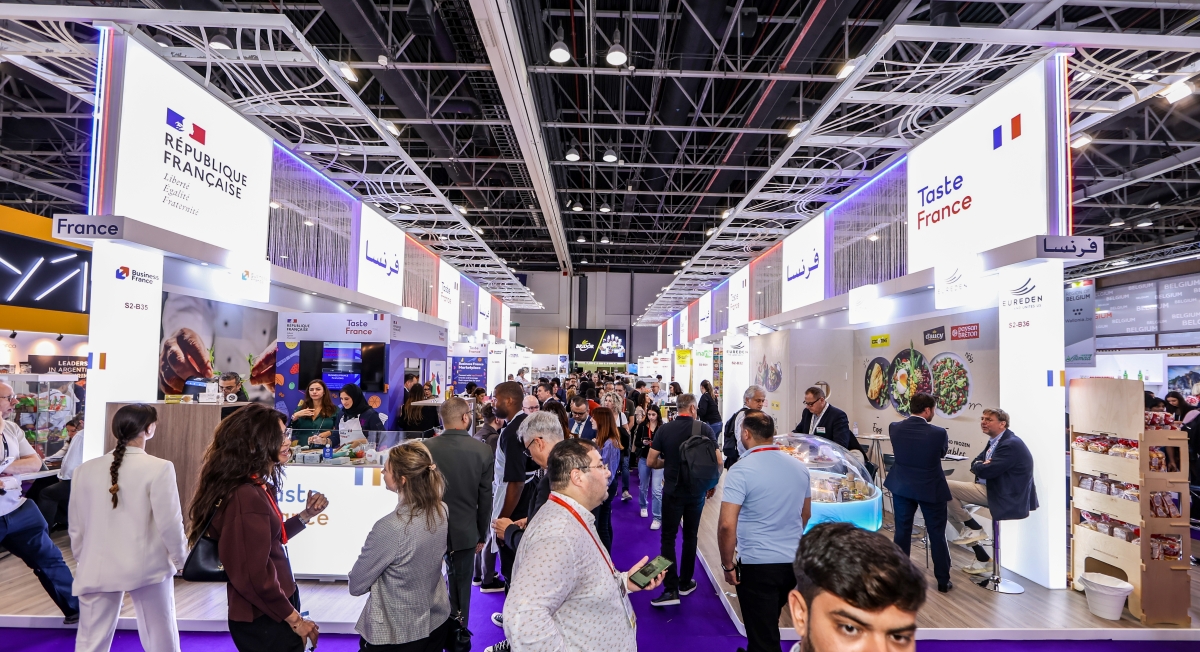
France Brings 110 Brands to “Gulfood 2026” Across Two Dubai

Dubai – Qahwa World

Business France, the French national agency for international economic development, announced its largest-ever participation at Gulfood 2026, featuring 110 French brands across four pavilions under the “Taste France” banner.

This year, the exhibition is held at two main venues: Dubai World Trade Centre and Expo Dubai, with French participants showcasing a wide range of food and beverage products, including dairy, meat, poultry, seafood, beverages, and international food specialties.

  • French Participation by Venue:

Expo Dubai – Global Foods Platform 8-80: 67 companies

Dubai World Trade Centre: 43 companies, organized by sector:

Dairy: Sheikh Rashid Hall, Stand R-H47

Meat, poultry, seafood: Sheikh Saeed Halls, Hall 3

Beverages: Za’abeel 5 Hall, Stand Z5-J21

The French pavilions focus on four key sectors and feature new launches and exclusive innovations, including packaging and portion sizes suited to fast-paced lifestyles, health-oriented products, and premium items combining taste and functional benefits.

Commenting on the participation, Axel Barrau, General Manager of Business France in the Middle East, said:
“Gulfood 2026 provides a strategic opportunity to showcase France’s strengths in agri-food, highlighting products that meet the evolving needs of the regional market, with a focus on quality, sustainability, and innovation.”

  • UAE Market Context:

The UAE imports approximately 85% of its food needs, valued at over €21.4 billion in 2024, with rising demand for ready-to-eat meals, premium and functional foods, certified organic and plant-based products, and e-commerce-friendly items.

  • Visitor Experience at the French Pavilion:

Visitors can access live cooking demonstrations, interactive tastings, and artisanal coffee and tea sessions, alongside products tailored to practical consumer needs in the region.

  • Business France Digital Marketplace:

The platform connects global buyers with over 2,800 certified French suppliers and more than 28,000 products. Around 350 regional buyers have already joined, supporting long-term business partnerships.

  • About Business France:

Business France is a French government agency promoting exports and foreign investment in France. It manages the international internship program V.I.E and operates a global network in 55 countries. In 2024, it contributed to €1.8 billion in additional exports for French SMEs and mid-sized companies and supported the creation or maintenance of over 31,010 jobs.
Keurig Dr Pepper Launches €31.85-Per-Share Offer for JDE Peet’s

Dubai —Qahwa World

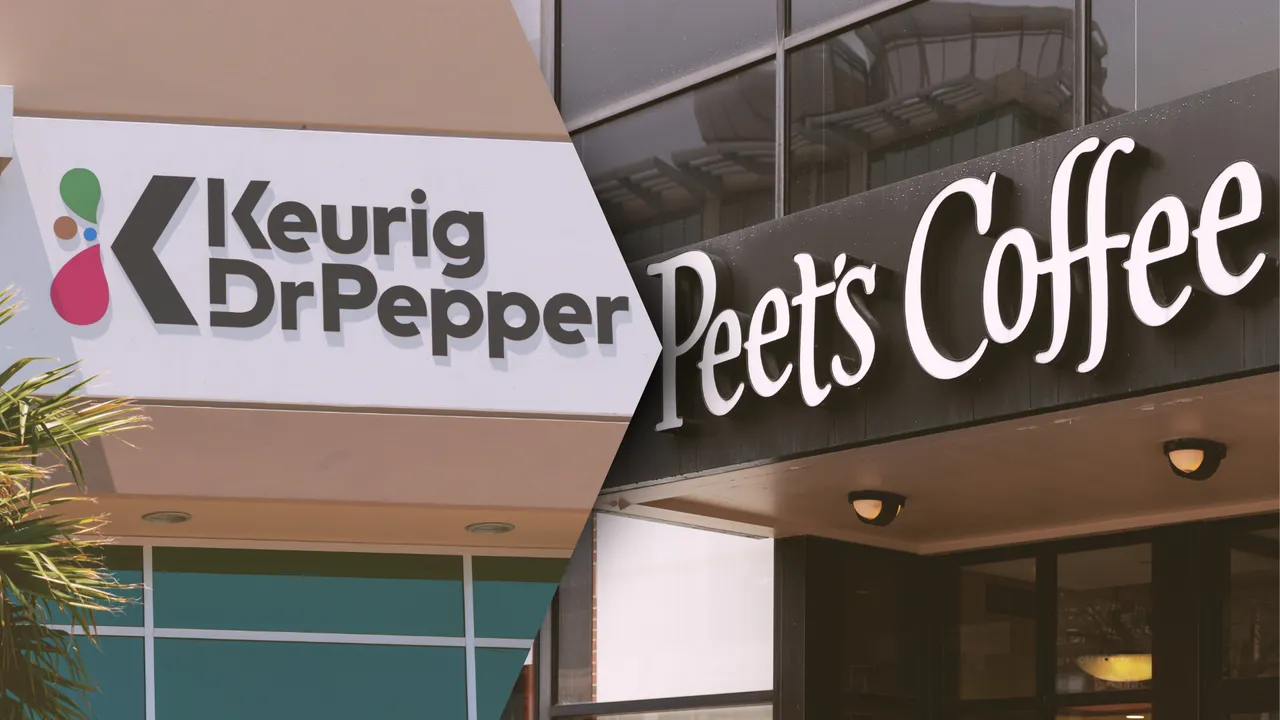
Keurig Dr Pepper Inc. has launched a recommended public cash offer to acquire all outstanding shares of Dutch coffee company JDE Peet’s N.V., valuing the company at €31.85 per share in cash.

The offer is being made through Kodiak BidCo B.V. and follows regulatory approval of the offer memorandum by the Dutch Authority for the Financial Markets. JDE Peet’s shareholders will also receive a previously announced €0.36 cash dividend per share on January 23, 2026, which will not affect the offer price.

The boards of both companies said the transaction remains on the same terms announced in August 2025 and is expected to close in early second quarter of 2026, subject to remaining conditions.

  • Board Support and Shareholder Commitments

JDE Peet’s board of directors has unanimously recommended the offer. Acorn Holdings B.V. and all members of JDE Peet’s board—together representing approximately 69% of the company’s outstanding shares—have irrevocably committed to tender their shares.

The offer period will run from January 16 to March 27, 2026, unless extended.

Keurig Dr Pepper has set a minimum acceptance threshold of 95% of JDE Peet’s shares. This threshold may be reduced to 80% if shareholders approve certain post-closing restructuring measures at an extraordinary general meeting scheduled for March 2, 2026.

  • Post-Closing Structure

If Keurig Dr Pepper secures at least 95% of the shares, it intends to initiate statutory buy-out proceedings and may proceed with a post-closing demerger. If acceptance reaches between 80% and 95%, the company plans to complete a post-closing merger to obtain full ownership of JDE Peet’s.

All required competition clearances for the transaction have already been obtained, and both the Dutch Works Council and European Works Council have been consulted in line with regulatory requirements.

  • Strategic Rationale

Following the acquisition, Keurig Dr Pepper plans to separate into two independent, U.S.-listed publicly traded companies. One would focus on North America’s non-alcoholic refreshment beverages market, while the other would operate as a global pure-play coffee business serving more than 100 countries.

JDE Peet’s is the world’s largest pure-play coffee company, selling approximately 4,400 cups of coffee per second globally. In 2024, the company reported sales of €8.8 billion.

Keurig Dr Pepper, which reported annual revenue of more than $15 billion, owns brands including Dr Pepper, Keurig, Canada Dry, Snapple and Green Mountain Coffee Roasters.

Keurig Dr Pepper Shares Plunge to Multi-Year Low After JDE Peet’s Deal

New York – Qahwa World

Keurig Dr Pepper (NASDAQ: KDP) fell 3.6% in Monday trading, hitting a multi-year low of $26.09, after BNP Paribas downgraded the stock to Underperform. The drop reflects mounting skepticism over the company’s ambitious $18.4 billion acquisition of JDE Peet’s and its plan to split into two separate businesses.

BNP Paribas analyst Kevin Gundy said the deal was “one of the worst-received transactions in the consumer sector we have ever seen,” adding that management now faces the difficult task of convincing a shareholder base that has grown impatient. The firm cut its price target to $24, citing deal risk, global coffee demand elasticity, and what it called a “credibility setback.”

Deal Overview

The transaction, valued at €15.7 billion (~US$18.4B), offers JDE Peet’s shareholders a 33% premium to the 90-day average price. Once completed, KDP will split into:

Global Coffee Co. – about $16B annual sales, the world’s largest pure-play coffee company, including brands Keurig, Jacobs, and Peet’s Coffee.

Beverage Co. – more than $11B annual sales, covering Dr Pepper, Canada Dry, and 7UP.

The combined entity will remain under KDP’s current leadership, led by CEO Tim Cofer and CFO Sudhanshu Priyadarshi.

Why Investors Are Concerned

Debt Burden: Financing the deal relies heavily on debt, with leverage projected to rise into the high-5× EBITDA range. Moody’s has already placed KDP under review for downgrade.

Execution Risks: Integrating JDE Peet’s operations while simultaneously splitting into two companies creates unprecedented complexity.

Market Reaction: JDE Peet’s stock jumped on the premium offer, but KDP has lost about 25% since the August announcement.

Demand Uncertainty: Rising coffee costs and consumer shifts may pressure single-serve coffee demand, a core KDP segment.

KDP’s Strategic Bet

Despite the skepticism, management highlights:

Global scale and reach across North America, Europe, and Asia.

Synergies worth about $400M over three years.

Sharper focus for each business post-split.

Market Impact & Outlook

The stock market, for now, is focused more on the risks than the promises. KDP’s bold gamble could reshape the global coffee and beverage industry, but investors are demanding proof that the strategy can deliver.

Matcha Gains Momentum as Hospitality Embraces Ritual and Wellness

Dubai, August 27, 2025 (Qahwa World) – Matcha is fast emerging as one of the most influential beverages in the global hospitality industry. Once rooted in the centuries-old tea traditions of Japan, it has now been adopted worldwide as a drink that symbolizes wellness, sustainability, and cultural sophistication. For hotels, cafés, and specialty bars, it is no longer just an alternative to coffee, but a statement of values that align with modern consumer expectations.

In recent years, the pace of change in beverage menus has accelerated. Consumers are increasingly seeking options that provide not only refreshment but also meaning. Matcha, with its history and ritualized preparation, has stepped into that space. It is being served not only in traditional bowls but also as lattes, iced beverages, and innovative cocktails, offering versatility that fits seamlessly into contemporary hospitality.

“Matcha speaks to a deeper need, the desire to slow down and reconnect, even in the midst of a busy day,” said Fabiola Ruggiero, Founder of Cose di Tè. “Its preparation is a quiet ritual. Its flavor is bold, complex, vegetal. It engages the senses — and invites a moment of presence.”

Unlike conventional teas, which are steeped and discarded, matcha is consumed in its entirety. Finely ground from shade-grown leaves, it is rich in antioxidants, amino acids, and slow-release caffeine. This makes it especially appealing to younger generations and professionals seeking calm focus and sustained energy without the spikes often associated with coffee. Nutrition experts also point to its role in supporting wellness trends that emphasize balance and mindfulness.

Ruggiero underlined that matcha is more than a healthy beverage. “It’s rare to find a product that unites health benefits, aesthetic appeal, and storytelling potential. Matcha does all three. That is why it resonates so deeply with today’s guest.”

The storytelling element is particularly relevant for the hospitality sector. By presenting matcha as part of an intentional ritual — where preparation tools are visible, tasting notes are offered, and pairings such as mochi or shortbread are served — operators can elevate the guest experience. Small details, such as presenting matcha with a focus on authenticity and care, are increasingly being recognized as defining aspects of modern luxury.

For venues, the commercial logic is clear. Matcha introduces new revenue streams during off-peak hours, appeals to customers seeking non-coffee options, and positions businesses as forward-thinking. The drink’s vibrant green color and striking presentation also add visual impact in an era where social media presence influences customer decisions. “Matcha is where ancient tradition meets future-conscious living,” Ruggiero said. “It is an invitation to pause, to reconnect, to choose differently.”

Technology is also playing a role in ensuring consistency and quality in matcha-based beverages. The Eagle One machine by Victoria Arduino has been engineered with Steam-by-Wire technology to guarantee precise temperature stability, energy efficiency, and responsive steam control. For baristas, this ensures that milk-based matcha drinks achieve the silky microfoam and balance that complement, rather than overpower, the delicate tea. Such precision has become increasingly important as venues adapt to growing demand for plant-based alternatives such as oat or almond milk.

The integration of matcha into menus reflects a broader shift in hospitality, where tradition and innovation work hand in hand. On one side, the centuries-old ritual of whisking green tea powder into water continues to carry cultural significance. On the other, modern design, technology, and hospitality concepts are helping to reintroduce matcha to new audiences in ways that feel relevant and accessible.

As the global beverage industry adapts to rapid change, matcha has moved far beyond being a temporary trend. Its combination of heritage, health benefits, versatility, and cultural narrative places it firmly at the intersection of wellness and hospitality innovation. For operators seeking to meet evolving consumer expectations, it represents not just another option on the menu, but a strategic choice that signals purpose and progress.