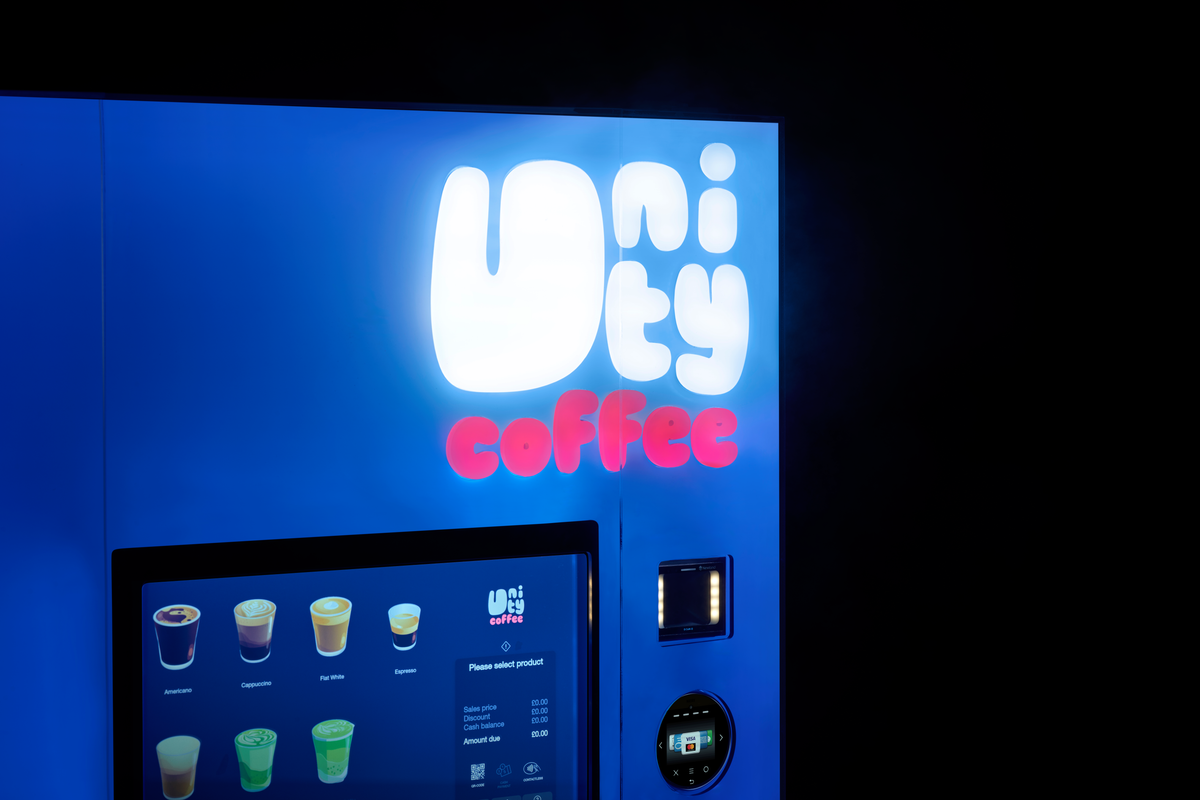
Dubai, 2 September 2025 (Qahwa World) – Scott Martin, the entrepreneur who pioneered the UK’s self-serve coffee sector, has returned with a bold new venture, Unity Coffee, which aims to disrupt the market through digital-first innovation, premium quality, and fairer value.
The brand is rolling out this month across the United Kingdom, targeting retail, travel, leisure, and education venues. With a plan to install more than 500 units in the next two years, Unity Coffee positions itself as a challenger brand ready to compete directly with industry giants.
Built on a FinTech platform, Unity Coffee is the first self-service coffee concept of its kind, offering customers a seamless mobile-first journey. Consumers can order and pay through the brand’s dedicated app while benefiting from agile pricing, real-time promotions, and personalized loyalty rewards. The machines are designed to ensure consistency across a wide menu that includes espresso, specialty coffee drinks, matcha, and hot chocolate, with both dairy and plant-based milk options.
“The coffee-to-go market has let customers down for years with overpriced drinks and tired, repetitive experiences,” said Martin. “Unity Coffee is leading a new movement, delivering exceptional coffee at fairer prices through smart technology, dynamic loyalty, and instant rewards. We’re going to take on big coffee and give the power back to the people.”
Martin is no stranger to innovation. In 1998, he co-founded Coffee Nation, which quickly grew to nearly 900 machines and captured almost half of the UK’s self-serve market. The company was acquired by Whitbread in 2011 for £59.5 million ($77.3 million) and rebranded as Costa Express. Under Martin’s leadership, the network expanded to 14,000 machines before becoming part of Coca-Cola’s £3.9 billion ($5.4 billion) acquisition of Costa Coffee in 2019.
Unity Coffee has secured backing from investors with strong expertise across hospitality, retail, manufacturing, and packaging, ensuring both financial strength and operational insight. Martin himself continues to advise on other innovative ventures, including UK specialty coffee group Grind, self-serve solutions firm BoxBar, and Singapore-based Crown Digital, the developer of the robotic barista concept ELLA.
The launch of Unity Coffee comes at a time when self-service technologies are gaining renewed attention across global retail. With its FinTech foundation, wide product range, and consumer-first approach, the brand is positioning itself not just as a coffee provider but as part of a broader digital transformation in the coffee-to-go sector.
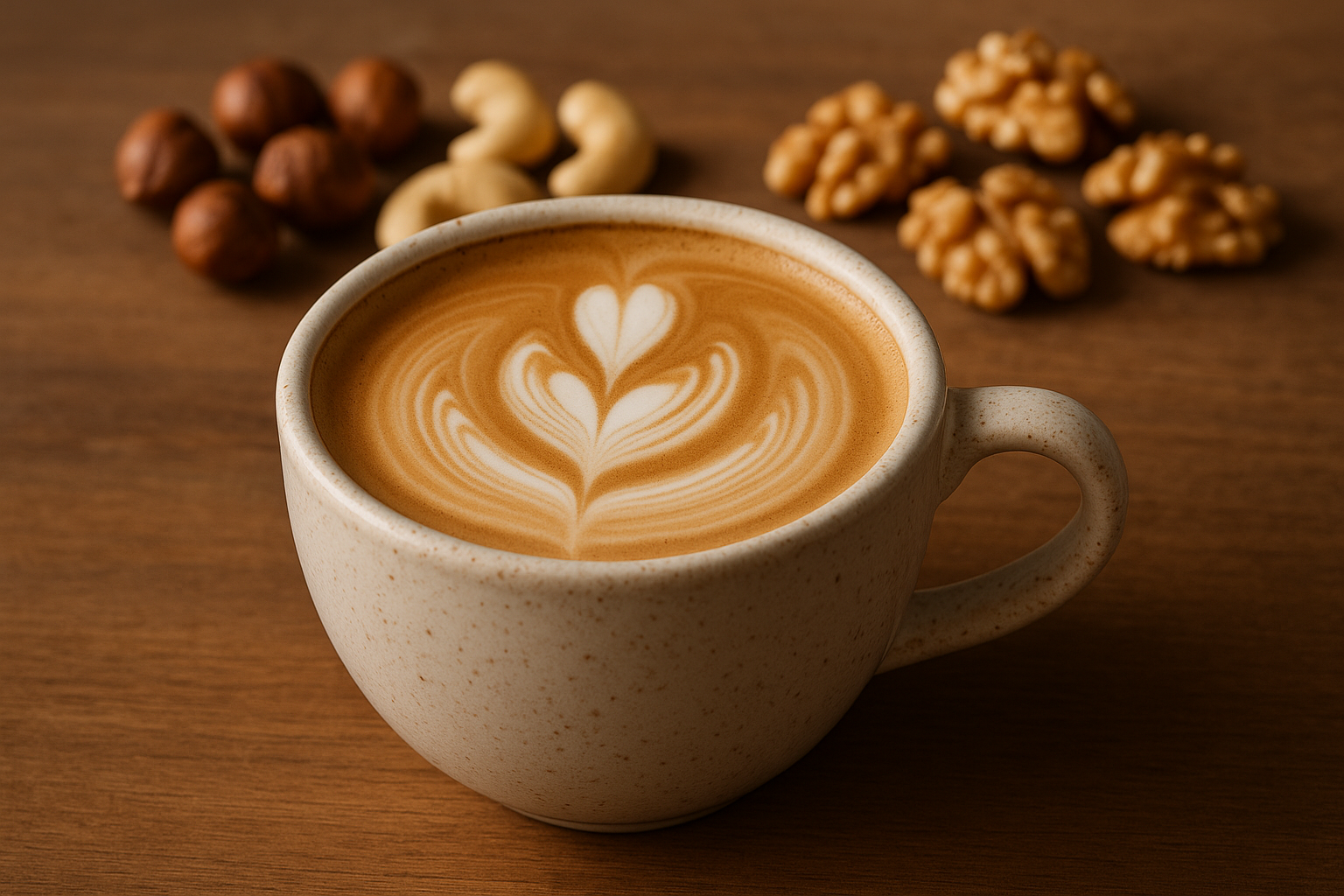
August 28, 2025 – (Qahwa World) – The coffee world has long been familiar with debates about dairy versus alternatives, but a groundbreaking study from South Korea has now provided the most detailed comparison yet of how nut-based milks perform in espresso drinks. The findings reveal that while cow’s milk remains the preferred choice for taste and texture, nut milks—particularly when roasted—offer unique health advantages and the potential for future innovation in coffee beverages.
Background: The Rise of Plant-Based Milks
Growing concerns over lactose intolerance, cholesterol, and the environmental footprint of dairy farming have fueled global demand for plant-based milk alternatives. Almond, cashew, hazelnut, and walnut milks have emerged as popular options, often promoted for their nutritional value and lower environmental impact. Yet little scientific research has explored how these nut milks behave when combined with coffee, particularly in terms of sensory appeal and chemical composition.
This new study, conducted by researchers at Dongguk University in Seoul and published in Scientific Reports, set out to fill that gap. The team prepared espresso-based beverages using roasted Brazilian arabica coffee and each of the four nut milks, in both roasted and unroasted forms, then compared them against traditional cow’s milk coffee.
The Science Behind Nut Milks in Coffee
The researchers examined multiple factors:
Fatty acid composition
Antioxidant activity
Volatile compounds (aroma contributors)
Particle size and viscosity
Color and browning index
Sensory evaluation by trained tasters
Roasting nuts before milk preparation had a profound impact. Oleic, linoleic, and linolenic acids—all beneficial unsaturated fatty acids linked to heart health—rose significantly in roasted nut milks. These drinks also exhibited higher antioxidant activity and polyphenol content, key markers associated with reduced oxidative stress in the body.
On the flip side, nut-based coffees tended to have larger particle sizes and higher viscosity compared to cow’s milk, factors that influenced mouthfeel and overall smoothness.
Volatile Compounds and Aroma Profiles
Gas chromatography identified 33 volatile compounds across the samples. Cow’s milk coffee stood out for floral and sweet notes such as furfuryl acetate and 5-methyl furfural, while nut milks contained more aldehydes and pyrroles, compounds characteristic of nutty aromas.
For example, almond milk coffee showed high levels of benzaldehyde, the chemical responsible for the distinct bitter-almond scent. Cashew and walnut-based versions contained other aldehydes linked to roasted and woody notes. These chemical profiles shaped the sensory outcomes, sometimes creating bitterness or lingering aftertastes that reduced preference scores.
Sensory Results: Dairy Still Dominates
Seventeen trained panelists evaluated all beverages for sweetness, bitterness, texture, nuttiness, and overall acceptance. Cow’s milk consistently ranked highest for sweetness, creaminess, and general preference.
Among the nut milks, cashew milk scored the highest, followed by almond and roasted hazelnut. Roasted walnut milk was the least favored. The study attributed the lower ratings of nut milks partly to aldehydes that impart undesirable flavors and to textural differences caused by larger particles.
Despite this, researchers stressed that nut milks still show strong promise:
“Nut-based milk coffee demonstrated potential as a health-promoting beverage owing to its high unsaturated fatty acid content and antioxidant effects,” the authors wrote.
Health and Sustainability Advantages
Nutritionally, nut milks have clear advantages. Compared with cow’s milk, they contained:
Lower levels of saturated fat
Higher levels of unsaturated fatty acids (linked to cardiovascular benefits)
Greater antioxidant activity (especially in roasted versions)
From an environmental perspective, the use of nuts in plant-based beverages reduces reliance on livestock farming, which is resource-intensive in terms of water, land, and greenhouse gas emissions.
The Road Ahead: Improving Flavor and Texture
While health benefits are evident, the researchers acknowledged that consumer acceptance remains limited by flavor and mouthfeel. They recommended further work to:
Control aldehyde production during processing to minimize off-flavors
Conduct additional physical experiments to refine texture and improve creaminess
Explore roasting parameters to optimize antioxidant release without compromising taste
These steps, they argue, could help close the sensory gap between nut milks and cow’s milk, paving the way for a new generation of plant-based coffee beverages that balance health, sustainability, and taste.
A Shift in the Coffee Industry?
The study’s findings come at a time when cafés worldwide are diversifying their menus with oat, soy, and nut milks to cater to vegan and health-conscious consumers. While dairy still dominates, particularly in espresso-based drinks, this research signals that the future of coffee could include more scientifically engineered plant-based options that rival dairy not only in nutrition but also in flavor.
For coffee lovers, that could mean healthier cappuccinos and lattes without sacrificing the sensory experience that makes café culture so irresistible.
Dubai, September 2, 2025 – (Qahwa World) – Black Rock Coffee Bar is targeting a valuation of up to $860.7 million in its New York initial public offering (IPO), the café chain announced on Tuesday. The Scottsdale, Arizona-based company aims to raise as much as $265 million by offering 14.7 million shares priced between $16 and $18 each.
This IPO represents a rare consumer sector listing at a time when the U.S. market is dominated by tech-focused debuts. It will also serve as a key test of investor appetite for consumer IPOs, with Dutch Bros being one of the last notable coffee chains to go public in 2021.
Founded in 2008, Black Rock Coffee remains founder-owned and operates drive-thru cafés offering hot and iced coffees as well as energy drinks such as Nitro Cold Brew and its signature Caramel Blondie. From its origins as a small stand in Oregon, the company has grown to more than 150 locations across seven states, from the Pacific Northwest to Texas.
The company sources most of its beans from Brazil, Ethiopia, Colombia, and Mexico. However, its prospectus warned that higher prices or reduced availability of arabica beans, dairy, and other commodities could negatively affect its operations. Coffee prices have surged to record highs this year, driven by droughts in Brazil and Vietnam and a U.S. move to impose 50% tariffs on beans imported from Brazil.
Additional tariff risks are linked to equipment such as refrigeration units and espresso machines.
Black Rock Coffee will list on the Nasdaq under the ticker BRCB, with J.P. Morgan, Jefferies, Morgan Stanley, and Baird serving as lead underwriters.
Dubai, September 2, 2025 – (Qahwa World) – The U.S. coffee sector is entering one of its most turbulent phases in decades as new tariffs take hold, global prices soar, and supply chains face renewed disruption. From small roasters to household-name brands, the entire industry is scrambling to cope with higher costs and mounting uncertainty — with consumers ultimately left paying the price.
Prices Climb to Record Highs
According to the latest inflation data, the average retail price of roasted coffee in the U.S. has risen 14.8% since July 2024. In total, coffee prices have jumped 84% since 2021, with the retail price of ground coffee reaching $8.41 per pound in July 2025, up from $4.56 just four years ago.
Globally, the situation is even more alarming. Coffee prices have surged 59% year-over-year, with a 34% spike in August alone. Arabica stockpiles have fallen to less than 14.5 months of supply, the lowest level in a decade, driving specialty coffee prices above $20 for a 12-ounce bag in many U.S. grocery stores.
New Tariffs Reshape the Market
On August 6, the Trump administration imposed a sweeping set of tariffs: 50% on unroasted Brazilian coffee, 10% on imports from Colombia and Ethiopia, 25% on India, and 40% on Myanmar. Mexico remains the only major origin exempt, thanks to the U.S.–Mexico–Canada Agreement (USMCA).
Brazil — the world’s largest producer, responsible for 37% of global supply — is the hardest hit. With its price advantage wiped out, many U.S. roasters are reconsidering long-term sourcing strategies.
China and the European Union are moving quickly to fill the gap. In late August, Beijing approved 183 Brazilian exporters to ship coffee under a new five-year deal, while the EU, which already sources about a third of its coffee from Brazil, has secured additional contracts. These moves could permanently shift trade flows away from the U.S. market.
Roasters and Consumers Under Pressure
The tariffs are squeezing the entire coffee supply chain. Large corporations such as Starbucks and Keurig Dr Pepper can leverage economies of scale, but thousands of smaller roasters are struggling to absorb the shock.
Independent businesses like Elevated Roast in Washington State report tariff costs amounting to 21% of total imports. The owner says he is “eating” half the costs to shield customers, but acknowledges this approach is unsustainable in the long run.
Industry experts warn that roasters operating on thin margins — especially those with existing debt — may face closures if costs continue to rise alongside higher interest rates and restricted access to credit.
Consumers, meanwhile, are being forced to adapt. Coffee remains the most consumed beverage in the U.S., with 66% of adults drinking it daily, according to the National Coffee Association. Yet surveys show changing habits: many households are stockpiling coffee, trading down to cheaper brands, or reducing café visits. At the same time, 71% of Americans report brewing at home at least once a day, compared to just 16% who exclusively rely on cafés.
Political, Legal, and Climate Uncertainty
The tariffs have also sparked political and legal battles. Members of the Congressional Coffee Caucus have called on the administration to exempt coffee imports, arguing that every $1 spent on imported coffee generates $43 in economic value across the U.S. supply chain.
Legal challenges are already under way. A federal appeals court recently ruled that the administration exceeded its authority in imposing the tariffs, but enforcement remains suspended until at least mid-October pending possible Supreme Court review.
At the same time, climate change continues to amplify supply risks. Successive droughts in Brazil and Central America have already reduced yields, and any additional shocks could push prices even higher.
What Lies Ahead
Analysts agree that unless coffee is granted a tariff exemption, volatility will persist. While major players such as Keurig Dr Pepper and JDE Peet’s are pursuing a merger that could bring long-term efficiencies, such strategies will not address immediate disruptions.
The risk, experts warn, is a wave of consolidation in which small and mid-sized roasters exit the market, reducing diversity and competition while leaving the sector more dependent on a few corporate giants.
For consumers, the dilemma remains simple yet unavoidable: adapt to higher prices, change consumption patterns, or cut back altogether. But with coffee entrenched as both a ritual and a cultural staple, scaling back may prove harder than any trade policy shift.
Dubai, September 2, 2025 – (Qahwa World) – Nestlé has appointed Philipp Navratil as its new Chief Executive Officer following the dismissal of Laurent Freixe, who was removed after an internal investigation confirmed a breach of the company’s Code of Business Conduct.
Navratil, 49, a Swiss-Austrian national, brings more than two decades of experience within Nestlé and is widely recognized for his leadership in the global coffee sector. He joined the company in 2001 and steadily advanced through international roles, including Country Manager of Nestlé Honduras in 2009, Coffee & Beverages Business Lead in Mexico in 2013, and Senior Vice President heading the Coffee Strategic Business Unit in 2020. In July 2024, he was appointed CEO of Nespresso and became a member of Nestlé’s Executive Board in January 2025.
“Philipp has an impressive track record in delivering results across diverse markets and is known for his dynamic leadership and collaborative management style,” said Nestlé Chairman Paul Bulcke, who himself is set to step down in 2026 after 47 years with the company.
Navratil assumes the top job at a critical time. Nestlé reported a 1.8% revenue decline in 2024 to CHF 91.3 billion ($10.1 billion) and a further 1.8% drop in the first half of 2025. Despite the overall slowdown, the company’s coffee business remains strong, with double-digit growth in the Americas and mid-single-digit growth in Europe during the first six months of 2025. Price increases averaging 6% across retail coffee ranges also helped drive category performance.
Industry observers say Navratil’s appointment underscores Nestlé’s reliance on its coffee portfolio — one of the group’s fastest-growing categories — to stabilize sales and restore momentum. His immediate challenge will be to rebuild investor confidence and strengthen Nestlé’s global position following a period of turbulence at the top.
Dubai, September 2, 2025 – (Qahwa World) – Nestlé has dismissed its Chief Executive Officer Laurent Freixe after nearly four decades at the Swiss food and beverage giant, citing a breach of its Code of Business Conduct. He has been immediately replaced by Philipp Navratil, the Global CEO of Nespresso.
In an official statement, Nestlé said the decision followed an investigation into an undisclosed romantic relationship between Freixe and a staff member, which violated company policy. Freixe, who joined the company in 1986, rose through the ranks to lead its European and Americas segments before heading Latin America in 2022. He was appointed Group CEO in August 2024 following the resignation of Mark Schneider. Freixe has also stepped down from the company’s Executive Board, where he had served since 2008.
“This was a necessary decision. Nestlé’s values and governance are strong foundations of our company. I thank Laurent for his years of service at Nestlé,” said Chairman Paul Bulcke, who himself will step down next year after 47 years with the group.
Navratil, a seasoned coffee executive, now takes the top job at one of the world’s largest food companies. Over the past 18 months, he has led Nespresso globally and previously held senior roles as Coffee Business Executive Officer for Nestlé Mexico and Head of its Coffee Strategic Business Unit.
“Philipp is recognised for his impressive track record of achieving results in challenging environments. Renowned for his dynamic presence, he inspires teams and leads with a collaborative, inclusive management style,” Bulcke added.
The leadership change comes at a critical moment. Nestlé is grappling with declining sales after reporting a 1.8% revenue drop in 2024 to CHF 91.3bn ($10.1bn), followed by another 1.8% fall in the first half of 2025. Despite the broader downturn, coffee has remained a strong performer. The company reported double-digit sales growth in the Americas and mid-single-digit growth in Europe during the first half of 2025, helped by a 6% average price increase across its retail coffee ranges.
Nestlé’s swift action underscores the company’s strict governance standards, but it also disrupts the stability it was seeking after Freixe’s short-lived tenure. Navratil now faces the challenge of steering the company through weak overall performance while leveraging coffee — one of Nestlé’s strongest categories — to restore momentum.
Dubai, September 1, 2025 (Qahwa World) – The annual Grounds for Health Auction will return on Thursday, September 18, offering roasters around the world the chance to acquire rare, high-quality green coffees and specialty equipment while directly supporting lifesaving women’s health programs in coffee-growing communities.
This year’s auction features contributions from some of the most renowned farms in the coffee industry. Among the highlights are a washed Geisha “Guabo” lot from Hacienda La Esmeralda in Panama, exceptional coffees from Finca El Injerto in Guatemala, and Hacienda La Minita in Costa Rica. The catalog also includes premium offerings from major traders such as Walker Coffee Trading, Keffa Coffee, and San Cristobal Coffee Importers, in addition to professional coffee equipment.
All proceeds from the auction go directly to Grounds for Health, a U.S.-based nonprofit organization dedicated to preventing and detecting cervical cancer in coffee-producing regions. The group currently operates programs in Ethiopia and Kenya, where cervical cancer remains one of the leading causes of death among women, despite being entirely preventable with early screening.
“When we invest in women’s health, we invest in the future of coffee itself. Healthy women farmers mean thriving families, sustainable farms, and the exceptional coffee quality our industry depends on,” said Justin Mool, Auction Manager at Grounds for Health.
Since its launch in 2009, the auction has raised more than $1 million to fund its health initiatives. Past editions have featured notable contributions from farms such as Hacienda El Roble in Colombia and Daterra Coffee in Brazil, along with strong support from traders including Walker Coffee Trading. In the 2024 auction, nearly thirty lots of specialty coffee were offered, underlining the ongoing commitment of the global coffee community to this cause.
Roasters and industry participants can register through the official auction website to bid on coffee or equipment, or to make direct donations. Shipping costs are not included in the winning bids and must be arranged separately.
Dubai, September 1, 2025 (Qahwa World) – India’s specialty coffee sector is witnessing rapid growth, with local brands no longer limiting themselves to the domestic market but stepping confidently onto the global stage. Leading this movement is Blue Tokai Coffee Roasters, which has announced raising $25 million in a new bridge funding round to fuel both domestic expansion and international ambitions.
Founded in Gurgaon in 2013, Blue Tokai began as a small roastery and has grown into one of India’s most recognized specialty coffee brands. Today, it operates a network of 164 cafés across the country alongside a thriving direct-to-consumer business that has brought Indian coffee to a wider audience. The funding comes at a pivotal moment as urban consumers, especially younger demographics, increasingly seek high-quality coffee experiences.
A portion of the new capital will be directed toward infrastructure development, including new roastery and bakery facilities in Bengaluru and Gurgaon. These investments will boost production capacity and support the company’s expanding retail footprint. The move also comes amid growing competition from fellow Indian specialty chains such as Third Wave Coffee and Nothing Before Coffee, which are also scaling aggressively.
Blue Tokai’s ambitions extend well beyond India. The company already operates a roastery and café in Japan, marking its first overseas venture. In July 2025, it signed a master franchise agreement with Ambrosia Gulf to expand into the Middle East, with a flagship store in Dubai set to open in the final quarter of 2025. This strategic launch places Blue Tokai in the heart of the UAE’s dynamic coffee culture, where both global brands and boutique roasters compete for market share.
According to Shivam Shahi, Co-founder and Chief Operating Officer of Blue Tokai, the company has revised its financial outlook. While earlier forecasts projected revenue of Rs 10bn ($113m) by 2027, the new plan envisions Rs 20bn ($226m) in revenue and over 800 stores within the next four years, driven by strong market response in both domestic and international markets.
The bridge round saw participation from Blue Tokai’s existing investors, including A91 Partners, Anicut, Verlinvest, and 12 Flags, underscoring continued confidence in the brand’s growth trajectory. Since 2023, the company has raised nearly $100 million in funding, including a $30m Series B in January 2023 and a $35m Series C in September 2024.
Although India has historically been a tea-driven nation, coffee culture is undergoing a dramatic shift. Young consumers are driving demand for specialty coffee, placing emphasis on quality, origin transparency, and café experiences comparable to global standards. While multinational players such as Tata Starbucks remain cautious in their expansion strategies, homegrown startups like Blue Tokai and Third Wave Coffee are racing ahead, opening dozens of outlets annually.
With this latest funding, Blue Tokai is positioning itself not only as a leader within India but also as a serious contender on the international specialty coffee scene. By combining domestic infrastructure expansion with strategic global entry points such as Japan and the UAE, the company is charting a course that could redefine the role of Indian coffee brands in the global market.
Turkish coffee is more than just a drink—it is history in a cup. Once at the heart of the Ottoman Empire, this centuries-old tradition is now making a global comeback, captivating coffee lovers far beyond Turkey’s borders.
When we think of coffee today, it might be an espresso, a latte on the go, or a cold brew. But the story of coffee begins with something older, richer, and far more ritualistic: Turkish coffee. It is not just a beverage but a 500-year-old tradition, a cultural bridge, and even honored by UNESCO as part of humanity’s living heritage.
Turkish coffee is about sharing moments. While it can be enjoyed alone, its essence lies in conversation and connection. Coffee’s story began in 15th-century Yemen among Sufi mystics, who drank it to stay awake during long prayers. The Turkish coffee method later took shape in 16th-century Istanbul, where it spread from Ottoman coffeehouses across the world.
A debate still lingers: some claim Turkish coffee is the same as Greek coffee, but many see it as an Ottoman legacy. What makes it unique is the method. It isn’t brewed but cooked slowly in a small copper pot called a cezve, then served in tiny cups alongside water and Turkish delight. The experience doesn’t end with the last sip—coffee grounds are often used for fortune readings, a playful way to share hopes and laughter.
Even today, Turkish coffee is tied to tradition. In some households, a bride-to-be serves her suitor a salty cup to test his patience before marriage. While it never reached the global fame of espresso, Turkish coffee is finding new admirers, from workshops in London to fortune readings in New York.
UNESCO Recognition
In 2013, UNESCO inscribed “Turkish coffee culture and tradition” on the Representative List of the Intangible Cultural Heritage of Humanity. The recognition celebrated not only the brewing method but also the rituals of hospitality, storytelling, and cultural identity associated with this practice. The listing confirmed Turkish coffee’s role as more than a drink: it is a living heritage passed down through families and communities.
Istanbul Coffee Festival 2025
This September, the conversation about Turkish coffee gains renewed momentum with the 11th Istanbul Coffee Festival, held from September 11–14, 2025, in Kadıköy on the Asian side of the city. The festival has become a landmark event in global coffee culture, bringing together roasters, baristas, brands, artists, and coffee enthusiasts from across the world.
Amid tastings, workshops, and cultural performances, Turkish coffee will take center stage. Organizers often highlight its UNESCO heritage status as part of the festival narrative, reminding visitors that this is not just a drink but a tradition recognized as part of humanity’s collective memory. From demonstrations of the cezve technique to fortune-reading sessions, the event celebrates Turkish coffee as both a timeless custom and a modern attraction.
More Than Caffeine
Ultimately, Turkish coffee is not about the caffeine kick—it is about slowing down, connecting with others, and savoring a shared ritual. As Istanbul hosts thousands of visitors this September, the festival becomes more than an exhibition: it is a living showcase of a heritage that continues to evolve while staying true to its roots.
Five centuries after its birth, Turkish coffee remains what it has always been: a story waiting to be discovered at the bottom of a cup.
Dubai – August 31, 2025 (Qahwa World) – Six years after acquiring Costa Coffee for £3.9 billion, Coca-Cola is now reviewing its strategic options for the chain in cooperation with investment bank Lazard. The review may result in a sale for around £2 billion, implying a near-£1.9 billion loss. Early talks with investors, including private equity firms, are underway, with indicative offers expected in autumn 2025.
The move reflects Coca-Cola’s disappointment with Costa’s performance and raises broader questions about its ambitions in the global coffee sector.
In the United Kingdom, Costa’s core market, results have fallen short of expectations. Revenues in 2023 stood at £1.22 billion, lower than the £1.3 billion recorded in 2018, while profits turned into a pre-tax loss of £9.6 million. The decline has been attributed to inflationary pressures, record-high coffee prices at the end of 2024, reduced urban footfall, and increased competition from specialist coffee chains and independent cafés. Despite these challenges, Costa still maintains a strong footprint with more than 2,800 stores in the UK and Ireland, plus over 14,000 Costa Express machines, the most profitable part of its business.
In India, Costa tells a different story. For fiscal year 2025, revenues jumped 30.7% to ₹198.5 crore, while profits rose 28.4% to ₹149.7 crore. Store count expanded from 179 to 220, with plans to add 40–50 new outlets annually in high-traffic locations such as airports and malls. Margins, however, faced slight pressure: the gross margin slipped from 76.8% to 75.4%, and average daily sales per store fell from ₹33,000 to ₹27,000. Still, India is now one of Costa’s top ten global markets, with ambitions to rank among the top five within five years.
In China, Costa has shifted strategy away from rapid store expansion toward operational quality, local product innovation, and stronger presence in convenience channels and self-service. With around 400 stores, Costa faces brand awareness challenges and high staff turnover but continues to see potential in localized offerings such as coconut-flavored coffee and milk tea variations.
In Central Europe, the chain has undergone restructuring. Lagardère Travel Retail now operates 115 stores in Poland and 10 in Latvia, following closures of underperforming outlets. In the United Arab Emirates, Costa has expanded to more than 150 stores, with a strong presence in airports, shopping centers, and fuel stations.
Meanwhile, Coca-Cola’s own financials remain robust. In Q2 2025, net income rose to $3.81 billion, compared with $2.41 billion in the same period last year, supported by pricing strength and cost discipline. Looking ahead, the company projects revenues of $55.1 billion and earnings of $14.8 billion by 2028, reflecting annual revenue growth of 5.4%. Analysts believe any divestment of Costa would be strategic rather than financial, as Coca-Cola continues to focus on higher-growth, higher-margin categories such as sugar-free soft drinks and value-added dairy.
Qahwa World continues its “Barista Terminology” series, reaching today the fourteenth installment of this educational journey dedicated to enhancing the professional and cultural knowledge of baristas. In this episode, we examine some of the most prominent coffee-producing countries worldwide, highlighting their pivotal role in shaping the history of coffee and its global cultural and economic impact.
Coffee’s origin is more than just a label—it is the foundation of its identity. Soil, climate, altitude, and processing methods shape each region’s unique character. For baristas and enthusiasts alike, understanding coffee origins means understanding the story behind every cup.
Ethiopia
Widely accepted as the birthplace of coffee.
Known for floral, fruity, and tea-like flavors.
Often features bright acidity and a light, elegant body.
Famous growing regions: Yirgacheffe, Sidama, Harrar.
Yemen
The first country to cultivate and export coffee.
Produces earthy, winey, and spicy coffees with wild complexity.
Grown in terraced mountains with minimal irrigation.
Traditional dry processing preserves deep, rustic character.
Brazil
The world’s largest coffee producer.
Known for chocolatey, nutty, and low-acid profiles.
Often used in espresso blends for its sweetness and heavy body.
Mechanized harvesting and large estates dominate production.
Colombia
Offers balanced coffees with caramel, nut, and red fruit notes.
Known for clean cup quality and medium body.
Coffee is grown across various altitudes and microclimates.
A staple for many brewing styles.
Kenya
Renowned for vibrant acidity and juicy, wine-like profiles.
Notes include blackcurrant, grapefruit, and floral tones.
Coffee auctions and grading systems support high quality.
Grown on volcanic soil at high elevations.
Guatemala
Produces complex coffees with chocolate, spice, and berry notes.
Medium to full body and pronounced acidity.
Volcanic soils and diverse microclimates offer great variety.
Antigua and Huehuetenango are standout regions.
Costa Rica
Known for clean, sweet, and bright coffees.
Common flavor notes: citrus, stone fruit, brown sugar.
Frequently uses honey and washed processes.
Strong environmental and quality controls.
Panama
Globally recognized for the Geisha variety.
Offers floral, jasmine, bergamot, and delicate fruit notes.
High-altitude farms like Boquete and Volcán yield prized lots.
Among the most expensive coffees in the world.
Indonesia
Notable regions: Sumatra, Java, Sulawesi.
Produces earthy, bold coffees with heavy body and low acidity.
Often processed using traditional wet-hulling.
Complex, deep profiles loved in dark roasts.
Honduras
Emerging as a high-quality producer.
Known for sweet, balanced, sometimes tropical fruit-forward cups.
Great for both filter and espresso use.
Strong investment in cooperatives and traceability.
Dubai, August 31, 2025 (Qahwa World) – Coffee has become the world’s fastest rising commodity in August, outpacing metals, energy resources, and construction inputs, as global markets respond to a rare convergence of adverse weather in Brazil, shifting trade policies, and evolving consumer demand.
According to data from ICE Futures, CME Group, and the Shanghai Metal Exchange, robusta prices soared by 1.5 times in August, while arabica rose by 29%. Bloomberg reports that arabica futures in New York reached their highest levels in two months, fueled by repeated cold fronts and light frosts across Brazil’s key coffee regions, including Sul de Minas and Cerrado. Analysts warn that these weather patterns not only threaten the current crop but could also limit the 2026 harvest, as premature stress flowering has already been observed. Michael McDougall of McDougall Global View noted that the market is increasingly anxious about Brazil’s ability to maintain stable output under such conditions.
The rally in prices has also been accelerated by short-term trading dynamics. Harry Howard, broker at Sucden Financial, explained that sluggish export flows from Brazil and reports of frost in growing areas prompted traders to close short positions, adding momentum to the price surge. On August 19, the most actively traded arabica futures contract rose by 2.6%, marking its longest streak of gains since April. Bloomberg data further confirms that exchange-monitored coffee stockpiles are dwindling, placing additional pressure on futures prices.
At the same time, U.S. trade policy has intensified volatility. Washington’s imposition of a 50% tariff on Brazilian goods, including coffee, has forced many American buyers to delay shipments despite holding adequate inventories for the short term. Reuters reports that arabica prices on the ICE exchange jumped by more than 30% in August following the tariff decision, while Brazilian exporters warned of mounting financial strain due to disrupted pre-shipment financing. The Wall Street Journal highlighted that this trade barrier could prolong instability in coffee pricing, with Brazilian retail markets already beginning to feel the effects of rising raw bean costs, up 25% in a single month.
Despite these pressures, global production forecasts remain cautious. Coffee Trading Academy estimates Brazil’s 2025–2026 harvest at 63.9 million 60-kg bags, down 2.1% from last year. Rabobank’s August market update echoed this outlook, citing a 13% month-on-month increase in conilon (robusta) prices and a 4% rise in arabica as evidence of tightening supply chains and mounting weather risks. Meanwhile, May shipping data showed Brazilian robusta exports down by nearly 80%, with total global exports falling 3.1% year-to-date.
The impact of rising coffee prices is also evident at the consumer level. Nielsen data reveals that between June 2024 and May 2025, retail sales of instant coffee fell by 4.9% in volume, while overall coffee sales rose by 1.3%. This indicates that consumers are increasingly turning away from lower-cost soluble coffee toward capsule, ground, and filter varieties, even as overall demand for coffee continues to expand. Bloomberg notes that younger demographics, particularly Gen Z and millennials, are driving demand in the premium instant segment, while companies like Nestlé are adapting with innovative products such as customizable coffee concentrates.
Comparisons across the wider commodity market underscore the exceptional performance of coffee. While neodymium rose 20%, lithium 9.2%, and molybdenum 7.7%, traditional energy and construction inputs saw sharp declines. Gasoline prices on the New York Mercantile Exchange fell by 13.2%, WTI crude by 8.5%, Brent crude by 8%, lumber by 19.2%, and copper by 18.3%. Against this backdrop of broad declines, coffee stands alone as the commodity dominating headlines with its explosive price trajectory.
The global coffee market now finds itself at the crossroads of climate stress, geopolitical friction, and shifting consumer expectations. Rising futures, higher retail costs, and constrained supply chains are placing new burdens on producers, roasters, and consumers alike. While markets remain volatile, one fact is clear: coffee has cemented its position as both an economic powerhouse and a cultural necessity, with its future shaped by forces that extend far beyond the cup.