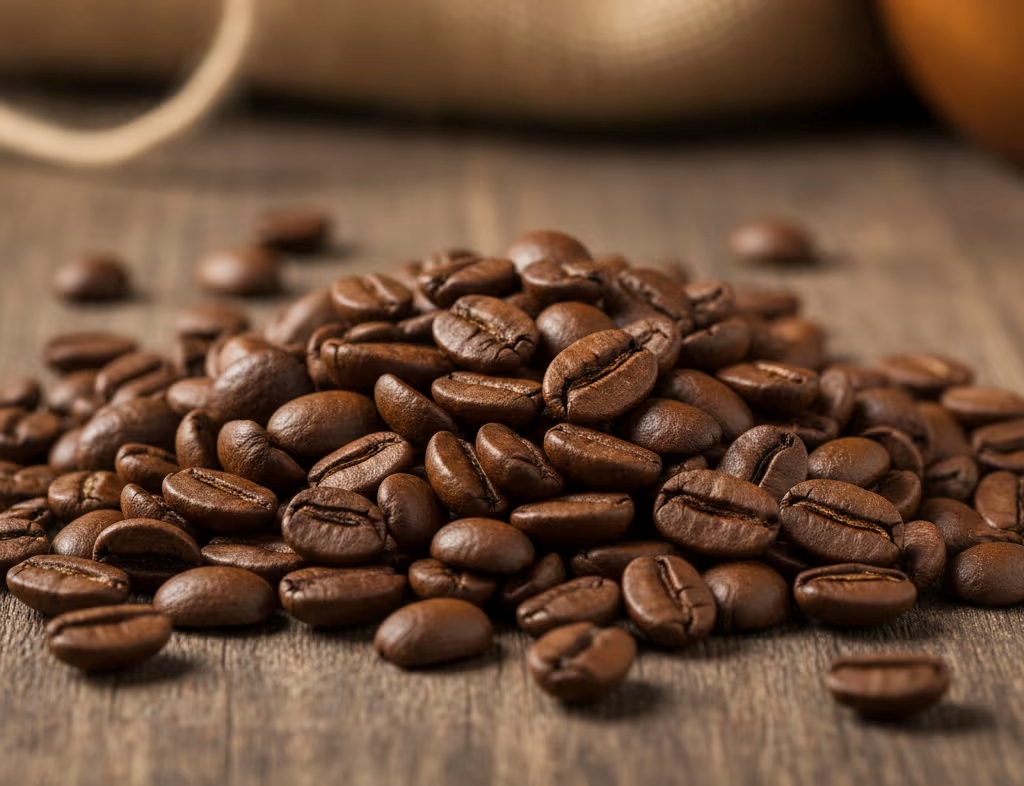
A New Era for Coffee: The EU-India Free Trade Agreement

By: Fabricio Scocco

After nearly two decades of complex negotiations, we are witnessing a historic milestone. The European Union and India have reached a comprehensive free trade agreement that is set to reshape the landscape of international commerce. By removing up to 90% of tariffs between these two regions, we are opening doors to a combined market of over 2 billion people—an economic powerhouse representing 25% of the global GDP.

For those of us operating within the specialty coffee sector, this development is more than just a policy shift; it is a critical evolution for design-driven, sustainable brands.

  • Redefining the Coffee Supply Chain

The impact on coffee trade and packaging cannot be overstated. The reduction of tariffs on key imports creates a streamlined highway for goods:For India: Exporting green coffee, raw materials, and packaging into the EU will become significantly more efficient due to reduced barriers.For Europe: Companies sourcing or co-producing in India will now have access to smoother, more cost-effective trade lanes.Competitiveness: High-end roasted coffee and innovative packaging solutions will immediately become more competitive on the global stage.

  • Strategic Collaboration and Innovation

We are entering a pivotal moment for strategic partnerships. Consider the existing synergy between We Brand Coffee (INDIA) and Takumi Collective (Netherlands). This agreement validates and accelerates such collaborations where design, sourcing, and packaging flow across borders.

By reducing logistic complexity, we can focus on what truly matters: co-manufacturing opportunities and creating packaging solutions that meet rigorous EU standards while celebrating India’s vibrant specialty coffee scene.

  • Market Outlook and Buying Behavior

As the trade landscape shifts, we anticipate several key trends in buying behavior:Sustainability Focus: Indian packaging providers will likely see a surge in demand from EU brands that prioritize sustainable materials.Exploration of Origin: EU roasters and micro-brands can now explore Indian-origin coffee with significantly less financial risk.Creative Co-development: Branding agencies in both regions will find it easier to co-develop storytelling assets and packaging designs.

  • Navigating the Risks

While the momentum is high, we must remain pragmatic. The agreement still requires official ratification from the EU Parliament and Indian authorities. Furthermore, stakeholders must stay vigilant regarding:Currency and Geopolitics: Short-term cost-benefits may be influenced by FX-driven producer shifts and geopolitical changes.

Regulatory Alignment: Close monitoring of food safety, sustainability criteria, and packaging regulations is essential.Environmental Factors: Unfavorable weather during peak harvest remains a variable that could disrupt supply levels.

  • The Bottom Line

Despite these risks, our market confidence remains medium-to-high. There is a strong mutual interest in diversifying trade and moving away from US-centric dependencies.

This agreement is the foundation for a new phase of commercial and creative cooperation. For those of us building in the coffee world—from bean to brand—this is a unique opportunity to rethink how we work across borders.

Vietnam Coffee Industry Poised to Benefit from Global Price Surge

HANOI – August 30, 2025 (Qahwa World) — Vietnam’s coffee industry is moving to capitalize on soaring global prices, with exports recording strong growth and experts urging greater investment in processing and branding to ensure long-term sustainability.

According to the Ministry of Agriculture and Environment, Vietnam’s coffee export turnover reached more than $560 million in July, bringing the total export value for the first seven months of 2025 to $3.6 billion. This represents a 20 percent year-on-year increase and underscores the industry’s ability to leverage favorable international conditions.

The growth comes amid a rally in global coffee prices. A study by the Food and Agriculture Organization reported that prices rose globally by about 40 percent in 2024, driven by unfavorable weather conditions linked to climate change. Production declines in Brazil, Colombia, and Indonesia reduced global supply, while demand in Europe, the United States, and Asia continued to expand.

A strong market position
Vietnam is the world’s largest exporter of Robusta coffee, accounting for around 40 percent of the global market. This dominance, combined with stable supply, gives the country a competitive edge at a time when many producers are struggling with weather disruptions.

Nguyen Nam Hai, president of the Vietnam Coffee and Cocoa Association, emphasized that “the international coffee market has never been as favorable as it is now. With high prices, strong demand, and Vietnam’s reliable supply, the industry is in an advantageous position.”

However, Hai and other experts caution that to take full advantage of these conditions, Vietnam must expand into deep processing and value-added products instead of relying primarily on raw bean exports.

Processing gap remains wide
While exports are rising in value, the structure of Vietnam’s coffee trade remains heavily skewed toward raw beans. Deep-processed coffee, including roasted, instant, and specialty products, currently accounts for just 12–15 percent of total exports. This is significantly lower than in Brazil and Colombia, where processed coffee represents 30–40 percent of total shipments.

Industry leaders say this gap leaves Vietnam vulnerable to fluctuations in global commodity prices. Le Hoang Diep Thao, founder and chief executive of King Coffee, told local media that investing in processing allows companies to “multiply the value of their products significantly.”

But she acknowledged that the financial barriers are steep. Instant coffee production technology alone requires capital investments running into hundreds of billions of dong, which many small and medium-sized enterprises cannot afford. In addition to high costs, technological limitations and branding weaknesses continue to slow progress.

Technology and branding challenges
Large enterprises such as Vinacafe, Trung Nguyen, and Nestlé have invested in processing facilities, but many smaller businesses lack the technological capacity to compete. The industry’s processing base remains uneven, particularly in the specialty coffee and instant coffee segments.

Branding is another critical challenge. Internationally, Vietnam is recognized for its export volume, but its consumer brands have yet to achieve significant recognition. Global buyers often associate coffee with well-known international names such as Starbucks from the United States, Lavazza from Italy, or Nestlé from Switzerland. This lack of global brand presence makes it harder for Vietnamese processed coffee to compete in premium markets.

Agricultural economist Dinh Van Thanh warned that “if Vietnam continues to depend mainly on raw exports, it will remain only an ingredient supplier for large multinational corporations.” He stressed the need for a long-term national strategy to boost processing capacity and to build a recognized coffee brand that can stand alongside global competitors.

Positive signals from the industry
Despite these challenges, signs of progress are emerging. Trung Nguyen Legend has been expanding its instant coffee exports to markets in the Middle East and Eastern Europe. Vinacafe has shifted focus toward developing sales within the ASEAN region. Meanwhile, several start-ups in Lam Dong and Gia Lai are working to establish specialty coffee brands targeting premium consumers in Japan and South Korea.

Rather than exporting raw beans, some of these start-ups are partnering with international buyers to roast and process coffee locally before shipping it abroad. According to Thao, this model doubles the selling price compared to raw beans while also ensuring farmers receive higher incomes.

Strategic recommendations
Industry specialists believe that to maintain momentum and secure its place in the global market, Vietnam must adopt a three-pronged strategy.

First, investment in deep processing technology must be accelerated. Government support through preferential credit policies could play a crucial role in enabling businesses to acquire the necessary machinery and production lines for instant and specialty coffee.

Second, Vietnam must prioritize the development of a strong national coffee brand. Experts point to models such as Thailand’s Jasmine rice and Colombia’s Arabica coffee, both of which have achieved global recognition. A similar effort in branding would enhance Vietnam’s visibility and competitiveness on the international stage.

Third, attention should be directed toward emerging markets such as the Middle East, South Asia, and Eastern Europe, where demand for coffee is growing rapidly. These regions present opportunities for processed Vietnamese coffee to establish new distribution channels and expand market share.

At a turning point
With international coffee prices at record highs and global consumption continuing to rise, Vietnam’s coffee sector stands at a turning point. The ability to move beyond raw exports and build a stronger international identity could define its future role in the global coffee trade.

As industry experts stress, Vietnam now faces a critical choice: remain a bulk supplier of raw beans, or transform into a producer of high-value, branded coffee products that command a stronger position in world markets.

China Simplifies Registration for Imported Roasted Coffee

Beijing – August 21, 2025 (Qahwa World) – A report released by the United States Department of Agriculture (USDA) titled China: Trade Alert – GACC Amends CIFER Self-Registration Process on August 20, 2025, revealed that the General Administration of Customs of China (GACC) has introduced new adjustments to the self-registration system for overseas food production enterprises. Among the product categories affected is roasted coffee, a key commodity for exporters targeting the rapidly growing Chinese market.

According to the USDA report, the changes took effect on August 14, 2025, when the Bureau of Import and Export Food Safety under GACC announced functional adjustments to the China Import Food Enterprise Registration (CIFER) system. The new requirements apply to manufacturers of products such as vegetables and their processed forms, grain-based products, tea, nuts and seeds, alcoholic beverages, beverages and frozen drinks, biscuits, pastries, bread, sugars including raw and edible sugar, lactose and syrups, candies, chocolates including cocoa butter substitutes, seasonings, roasted coffee beans, cocoa beans and their products, fruit-based products, and other miscellaneous food items.

The main adjustment is the removal of the requirement for self-registered enterprises to identify Harmonized System (HS) codes and China Inspection and Quarantine (CIQ) codes for the products they intend to export. Previously, exporters of roasted coffee beans and similar products risked rejection of applications if the codes were incorrectly entered. Under the new system, HS and CIQ codes are no longer required for self-registration of roasted coffee beans, cocoa beans, and a wide range of processed foods. However, some categories such as vegetables, vegetable products, grain products, and tea still require HS and CIQ code selection.

At the same time, the revised CIFER system introduces a mandatory page of enterprise commitments, which overseas manufacturers must complete before proceeding with registration. These commitments require applicants to confirm they are genuine manufacturers or operators of processing or cold storage facilities, explicitly excluding trading companies from applying. Applicants must be approved by, and under the effective supervision of, the food safety authority in the country of origin, and must upload valid production licenses issued by that authority. They are also required to maintain effective food safety and hygiene systems, ensure products comply with Chinese food safety laws and standards, and guarantee that the information submitted matches supporting documents in both content and authenticity.

The USDA report highlights that false declarations or inconsistencies can result in serious consequences, including revocation of Chinese registration, rejection or destruction of products, and potential investigation by the competent food safety authority in the exporting country. Enterprises must also pledge cooperation with GACC during food safety reviews, including providing additional verification materials or facilitating cross-checks with their national food safety authorities. Furthermore, registered enterprises are required to proactively assume responsibility for food safety, suspending exports to China and taking corrective measures if risks or non-compliance are detected.

The adjustments also cover additional reporting content such as production type and actual production or processing capacity, which must be provided within the CIFER system. Enterprises that have already been registered can view their specific approved products through the “Comprehensive Query – Registered in China” section of the system.

The USDA clarified that these changes do not apply to U.S. exporters of meat, poultry, dairy, infant formula, and seafood products, which remain subject to procedures established by FSIS and FDA. The new self-registration requirements are also not relevant for exporters whose products fall under the review of the GACC Department of Animal and Plant Quarantine (DAPQ) or other Chinese regulatory agencies.

By removing the need to provide HS and CIQ codes, the registration process for roasted coffee beans and other products is expected to become faster and less prone to administrative errors. However, the introduction of strict enterprise commitments underscores China’s emphasis on food safety, regulatory compliance, and accountability from overseas manufacturers. For coffee exporters, this combination of simplified technical requirements and strengthened legal obligations could reshape access to one of the world’s most dynamic and fast-growing coffee markets.